INTRODUCTION TO
PETROLEUM
REFINERY
Introduction
 Petroleum Refinery is the physical, thermal and chemical
separation of crude oil into its major distillation fractions which
are then further processed through a series of separation and
conversion steps into a finished petroleum products.
 An oil refinery or petroleum refinery is an industrial
process plant where crude oil is processed and refined into
more useful products such as petroleum
naphtha, gasoline, diesel fuel, asphalt base, heating
oil, kerosene, and liquefied petroleum gas.
 Oil refineries are typically large, sprawling industrial complexes
with extensive piping running throughout, carrying streams
Refineries in Pakistan
1. Pak-Arab Refinery Ltd. (MCR), 100,000 bbl/d (16,000 m3/d)
2. National Refinery Ltd. (NRL), 64,000 bbl/d (10,200 m3/d)
3. Attock Refinery Ltd. (ARL), 46,000 bbl/d (7,300 m3/d)
4. Byco Petroleum Pakistan Limited (Byco), 150,000 bbl/d
(24,000 m3/d)
5. Pakistan Refinery Ltd. (PRL), 50,000 bbl/d (7,900 m3/d)
6. Enar Petroleum Refining Facility (Enar), 3,000 bbl/d
(480 m3/d)
7. Indus Oil Refinery Ltd, 100,000 bbl/d (16,000 m3/d) (not yet
operational)
8. Grace Refinery Limited (GRL) (120,000 bbl/d)(Under
Construction)
9. Al Motahedon Petroleum Refineries (50,000 bbl/d)(Under
Construction)[19]
Scope of Petroleum Refinery
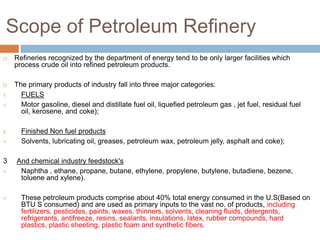
 Refineries recognized by the department of energy tend to be only larger facilities which
process crude oil into refined petroleum products.
 The primary products of industry fall into three major categories:
1. FUELS
 Motor gasoline, diesel and distillate fuel oil, liquefied petroleum gas , jet fuel, residual fuel
oil, kerosene, and coke);
2. Finished Non fuel products
 Solvents, lubricating oil, greases, petroleum wax, petroleum jelly, asphalt and coke);
3 And chemical industry feedstock's
 Naphtha , ethane, propane, butane, ethylene, propylene, butylene, butadiene, bezene,
toluene and xylene).
 These petroleum products comprise about 40% total energy consumed in the U.S(Based on
BTU S consumed) and are used as primary inputs to the vast no. of products, including
fertilizers, pesticides, paints, waxes, thinners, solvents, cleaning fluids, detergents,
refrigerants, antifreeze, resins, sealants, insulations, latex, rubber compounds, hard
plastics, plastic sheeting, plastic foam and synthetic fibers.
Scope of Petroleum Refinery
 Oil can be used in a variety of ways because it contains
hydrocarbons of varying molecular masses, forms and
lengths such
as paraffins, aromatics, naphthenes (or cycloalkanes), alkene
s and alkynes.
 While the molecules in crude oil include different non
hydrocarbons such as sulfur, nitrogen, and oxygen
compounds.
 The differences in the structure of these molecules account
for their varying physical and chemical properties, and it is
this variety that makes crude oil useful in a broad range of
Scope of Petroleum Refinery
 Oil refineries are large scale plants, processing about a
hundred thousand to several hundred thousand barrels of
crude oil a day. Because of the high capacity, many of the
units operate continuously, as opposed to processing
in batches, at steady state or nearly steady state for months
to years.
Major Products
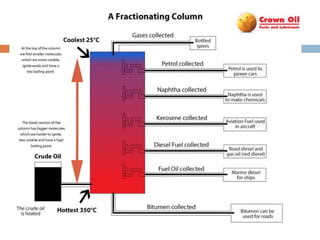
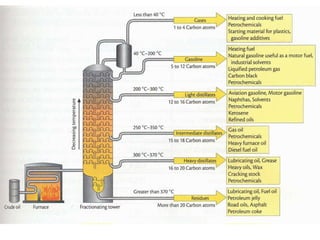
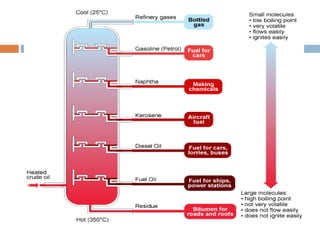
 Petroleum products are usually grouped into three categories: light distillates (LPG,
gasoline, naphtha), middle distillates (kerosene, jet fuel, diesel), heavy distillates
and residuum (heavy fuel oil, lubricating oils, wax, asphalt). This classification is
based on the way crude oil is distilled and separated into fractions
(called distillates and residuum) as in the above drawing.[2]
 Liquified petroleum gas (LPG)
 Gasoline (also known as petrol)
 Naphtha
 Kerosene and related jet aircraft fuels
 Diesel fuel
 Fuel oils
 Lubricating oils
 Paraffin wax
 Asphalt and tar
 Petroleum coke
 Further products (see also below) include
 Sulfur
 Olefines
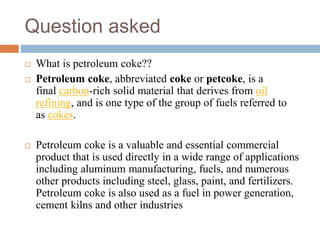
Question asked
 What is petroleum coke??
 Petroleum coke, abbreviated coke or petcoke, is a
final carbon-rich solid material that derives from oil
refining, and is one type of the group of fuels referred to
as cokes.
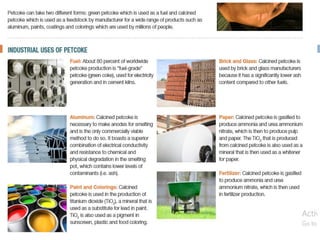
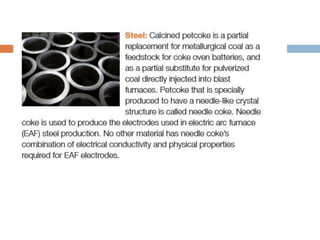
 Petroleum coke is a valuable and essential commercial
product that is used directly in a wide range of applications
including aluminum manufacturing, fuels, and numerous
other products including steel, glass, paint, and fertilizers.
Petroleum coke is also used as a fuel in power generation,
cement kilns and other industries
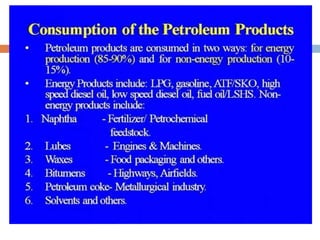
 ATF STANDS FOR Aviation turbine fuel
 SKO (Superior kerosene oil)
 Low Sulphur Heavy Stock (LSHS)

1.Introduction to petroleum refinery(1 class).pptx

  • 1.
  • 3.
    Introduction  Petroleum Refineryis the physical, thermal and chemical separation of crude oil into its major distillation fractions which are then further processed through a series of separation and conversion steps into a finished petroleum products.  An oil refinery or petroleum refinery is an industrial process plant where crude oil is processed and refined into more useful products such as petroleum naphtha, gasoline, diesel fuel, asphalt base, heating oil, kerosene, and liquefied petroleum gas.  Oil refineries are typically large, sprawling industrial complexes with extensive piping running throughout, carrying streams
  • 4.
    Refineries in Pakistan 1.Pak-Arab Refinery Ltd. (MCR), 100,000 bbl/d (16,000 m3/d) 2. National Refinery Ltd. (NRL), 64,000 bbl/d (10,200 m3/d) 3. Attock Refinery Ltd. (ARL), 46,000 bbl/d (7,300 m3/d) 4. Byco Petroleum Pakistan Limited (Byco), 150,000 bbl/d (24,000 m3/d) 5. Pakistan Refinery Ltd. (PRL), 50,000 bbl/d (7,900 m3/d) 6. Enar Petroleum Refining Facility (Enar), 3,000 bbl/d (480 m3/d) 7. Indus Oil Refinery Ltd, 100,000 bbl/d (16,000 m3/d) (not yet operational) 8. Grace Refinery Limited (GRL) (120,000 bbl/d)(Under Construction) 9. Al Motahedon Petroleum Refineries (50,000 bbl/d)(Under Construction)[19]
  • 5.
    Scope of PetroleumRefinery  Refineries recognized by the department of energy tend to be only larger facilities which process crude oil into refined petroleum products.  The primary products of industry fall into three major categories: 1. FUELS  Motor gasoline, diesel and distillate fuel oil, liquefied petroleum gas , jet fuel, residual fuel oil, kerosene, and coke); 2. Finished Non fuel products  Solvents, lubricating oil, greases, petroleum wax, petroleum jelly, asphalt and coke); 3 And chemical industry feedstock's  Naphtha , ethane, propane, butane, ethylene, propylene, butylene, butadiene, bezene, toluene and xylene).  These petroleum products comprise about 40% total energy consumed in the U.S(Based on BTU S consumed) and are used as primary inputs to the vast no. of products, including fertilizers, pesticides, paints, waxes, thinners, solvents, cleaning fluids, detergents, refrigerants, antifreeze, resins, sealants, insulations, latex, rubber compounds, hard plastics, plastic sheeting, plastic foam and synthetic fibers.
  • 6.
    Scope of PetroleumRefinery  Oil can be used in a variety of ways because it contains hydrocarbons of varying molecular masses, forms and lengths such as paraffins, aromatics, naphthenes (or cycloalkanes), alkene s and alkynes.  While the molecules in crude oil include different non hydrocarbons such as sulfur, nitrogen, and oxygen compounds.  The differences in the structure of these molecules account for their varying physical and chemical properties, and it is this variety that makes crude oil useful in a broad range of
  • 7.
    Scope of PetroleumRefinery  Oil refineries are large scale plants, processing about a hundred thousand to several hundred thousand barrels of crude oil a day. Because of the high capacity, many of the units operate continuously, as opposed to processing in batches, at steady state or nearly steady state for months to years.
  • 9.
    Major Products  Petroleumproducts are usually grouped into three categories: light distillates (LPG, gasoline, naphtha), middle distillates (kerosene, jet fuel, diesel), heavy distillates and residuum (heavy fuel oil, lubricating oils, wax, asphalt). This classification is based on the way crude oil is distilled and separated into fractions (called distillates and residuum) as in the above drawing.[2]  Liquified petroleum gas (LPG)  Gasoline (also known as petrol)  Naphtha  Kerosene and related jet aircraft fuels  Diesel fuel  Fuel oils  Lubricating oils  Paraffin wax  Asphalt and tar  Petroleum coke  Further products (see also below) include  Sulfur  Olefines
  • 14.
    Question asked  Whatis petroleum coke??  Petroleum coke, abbreviated coke or petcoke, is a final carbon-rich solid material that derives from oil refining, and is one type of the group of fuels referred to as cokes.  Petroleum coke is a valuable and essential commercial product that is used directly in a wide range of applications including aluminum manufacturing, fuels, and numerous other products including steel, glass, paint, and fertilizers. Petroleum coke is also used as a fuel in power generation, cement kilns and other industries
  • 17.
     ATF STANDSFOR Aviation turbine fuel  SKO (Superior kerosene oil)  Low Sulphur Heavy Stock (LSHS)