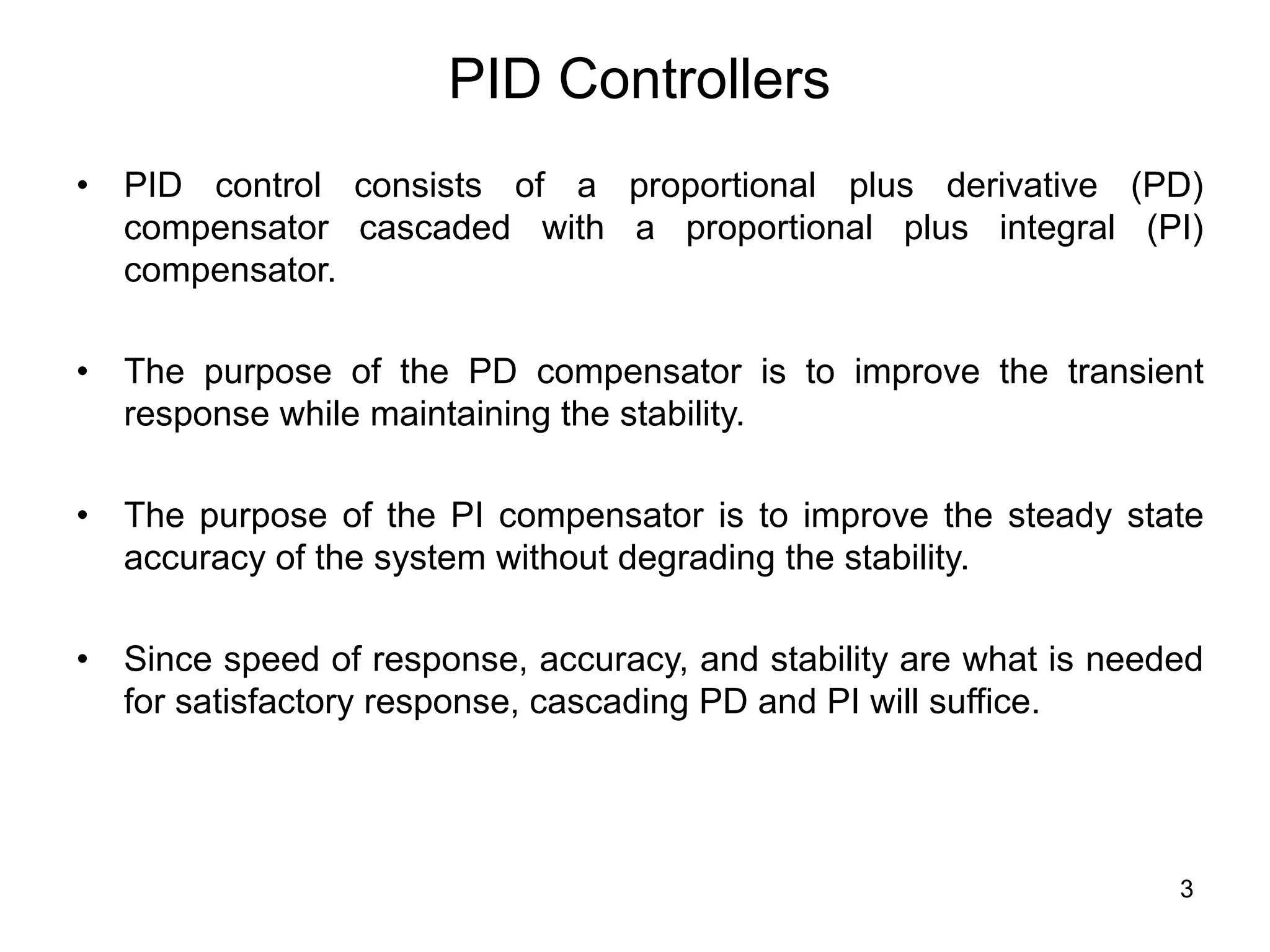
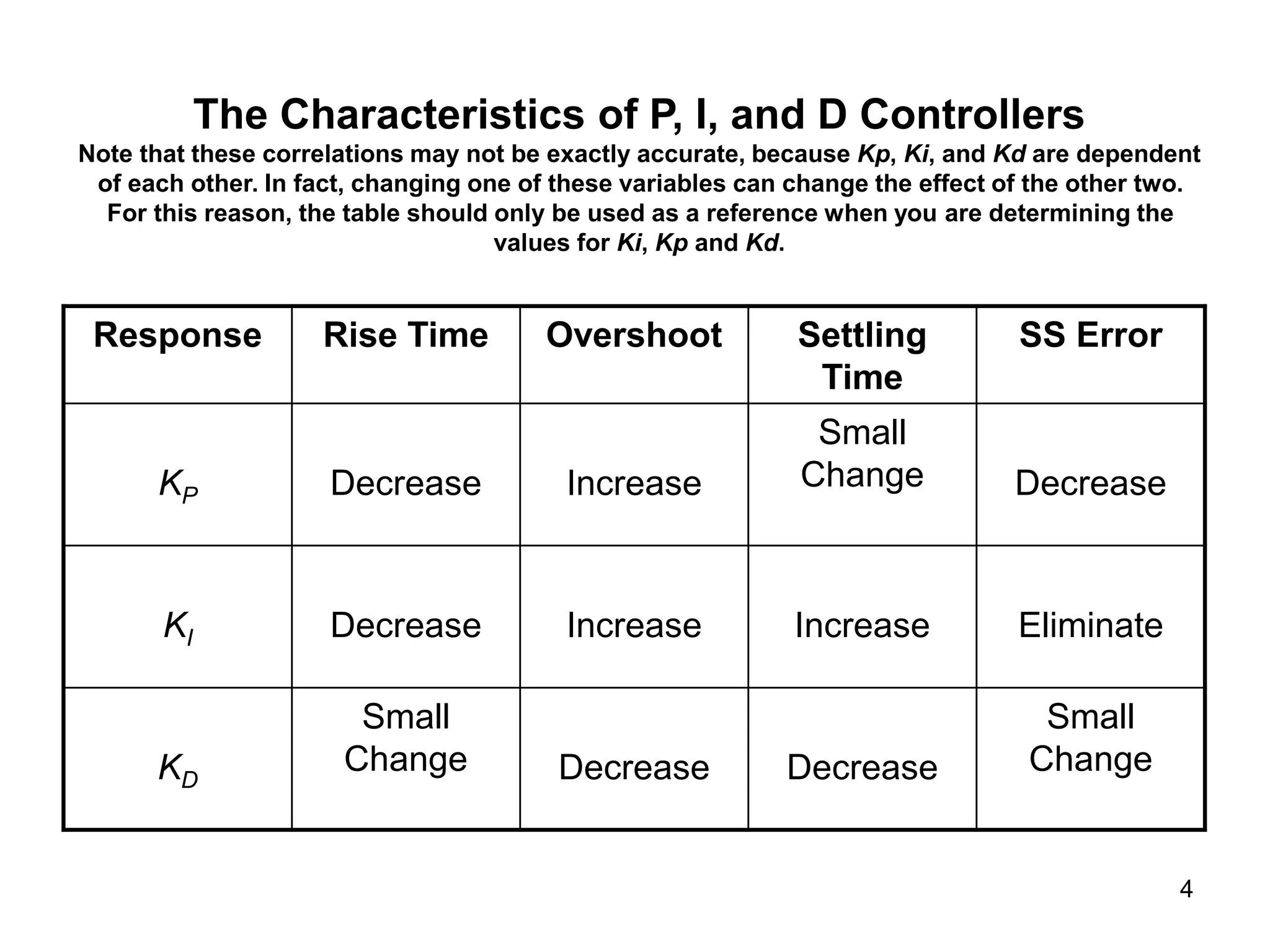
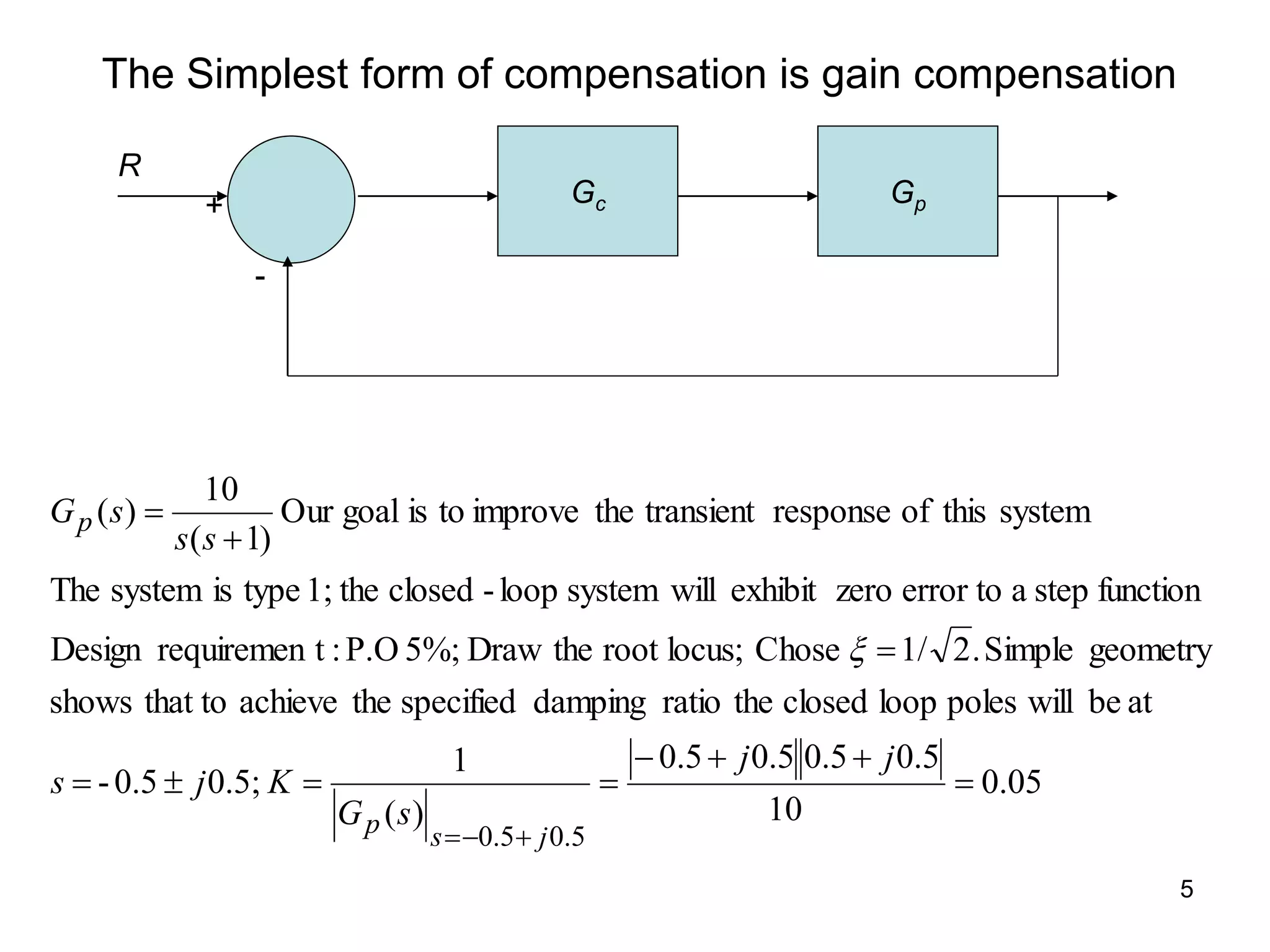
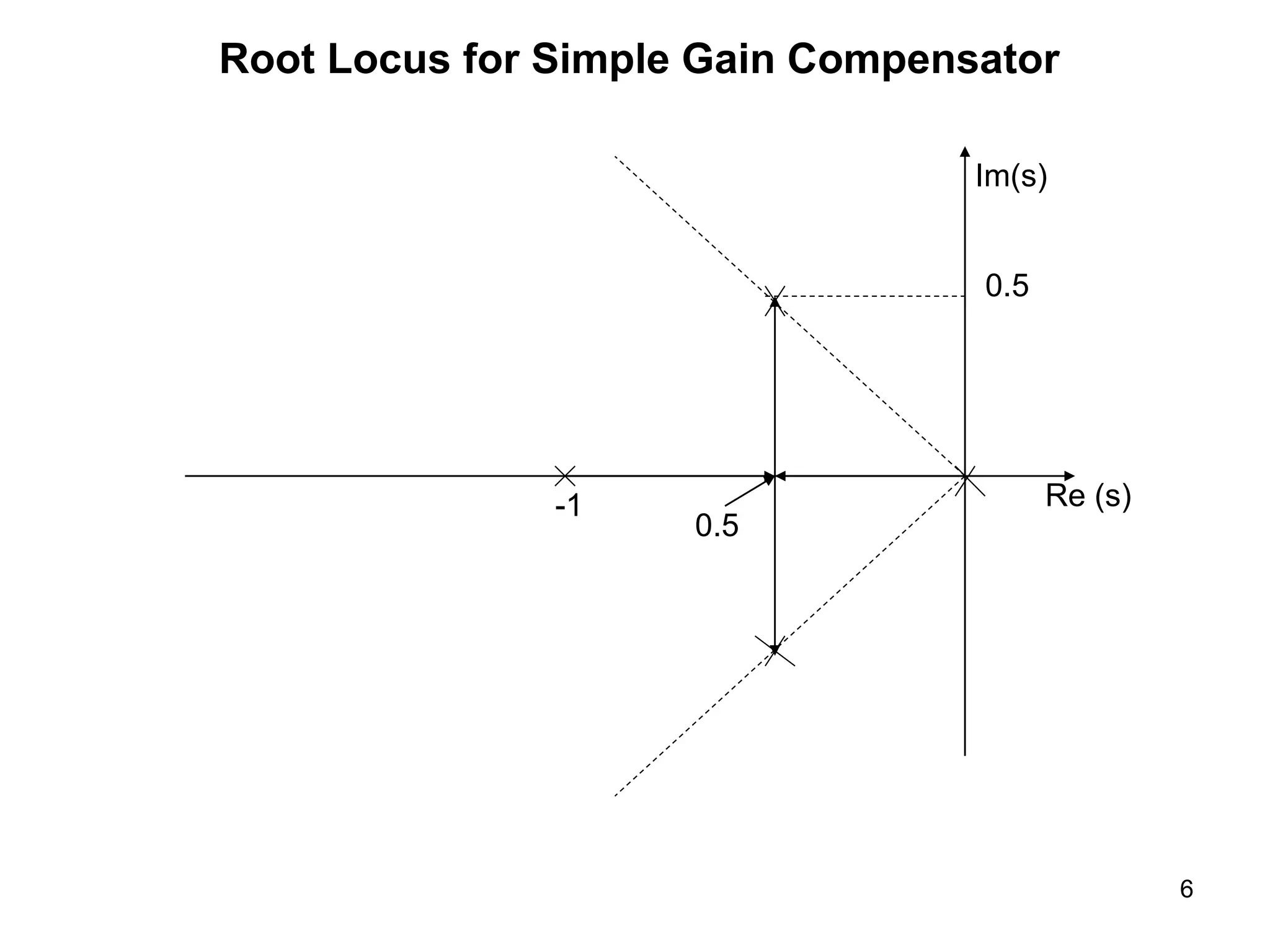
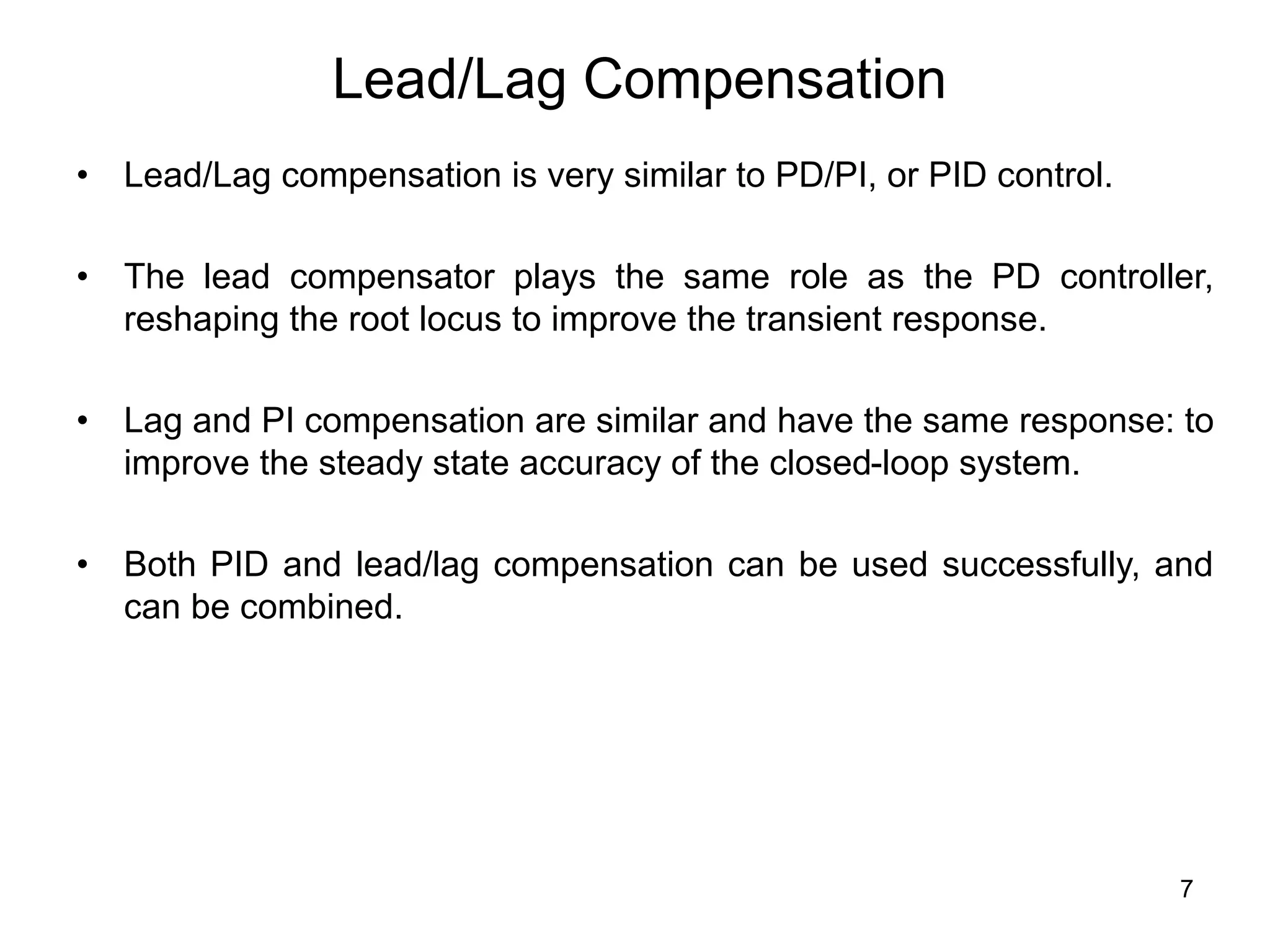
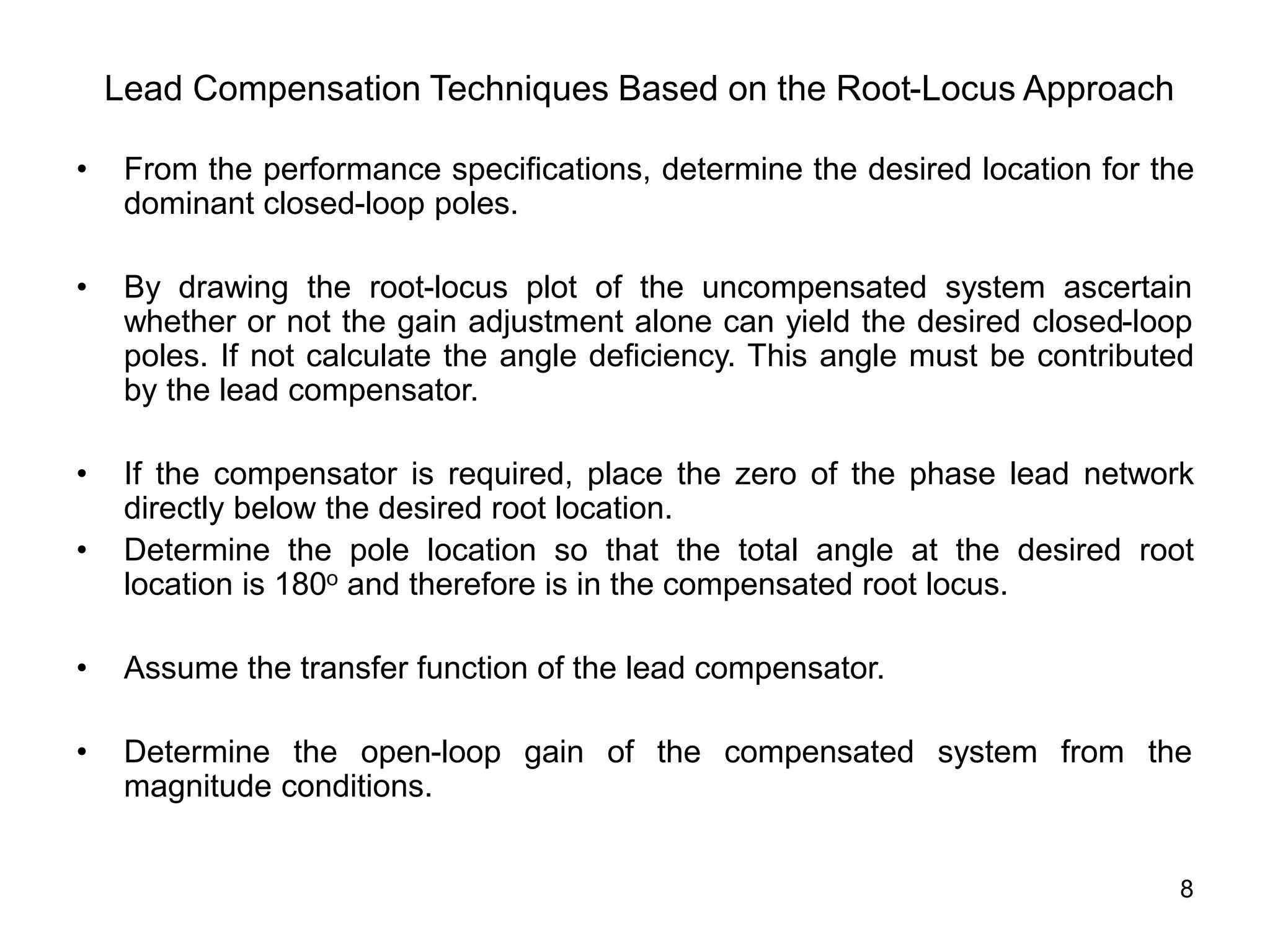
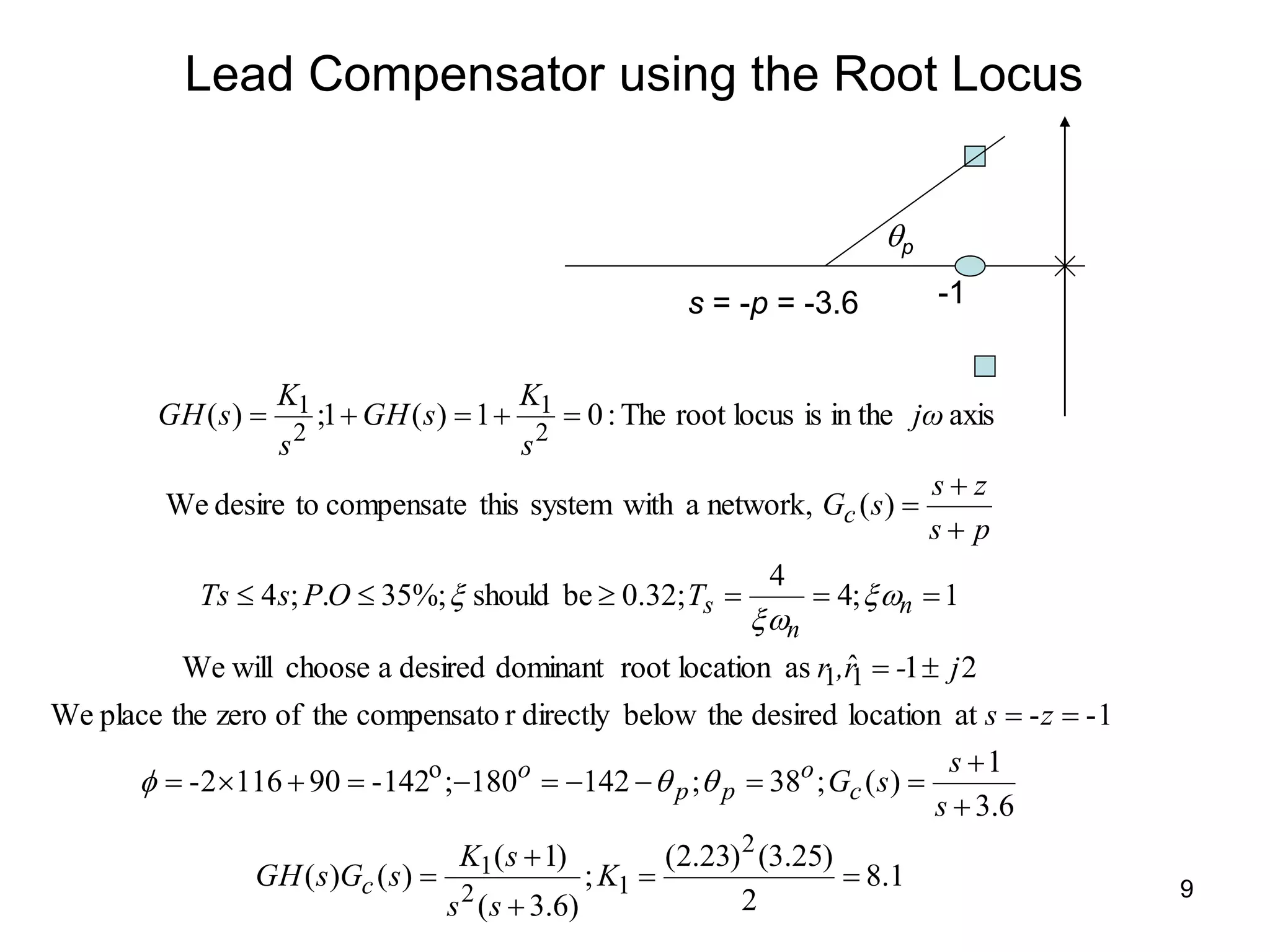
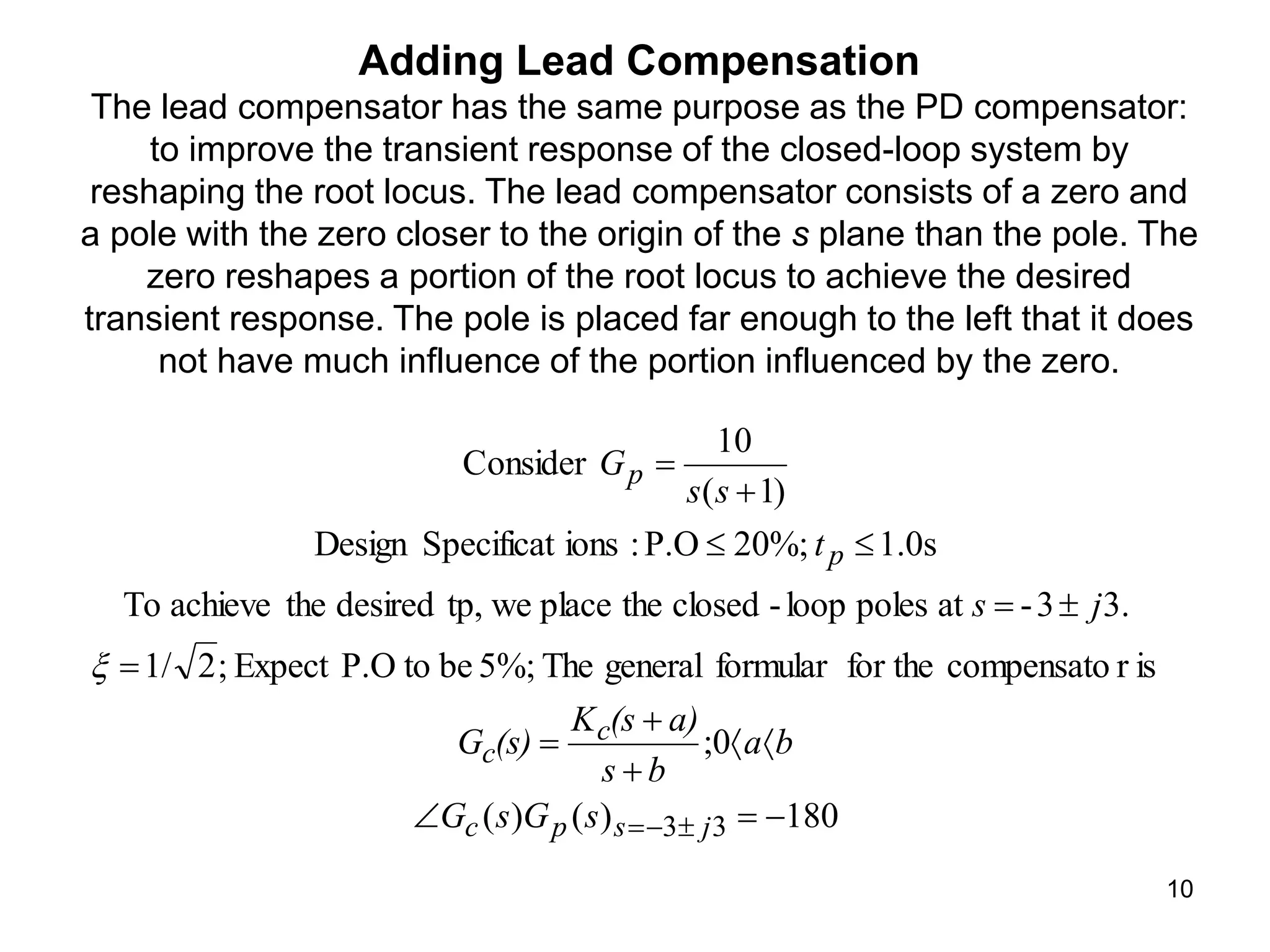
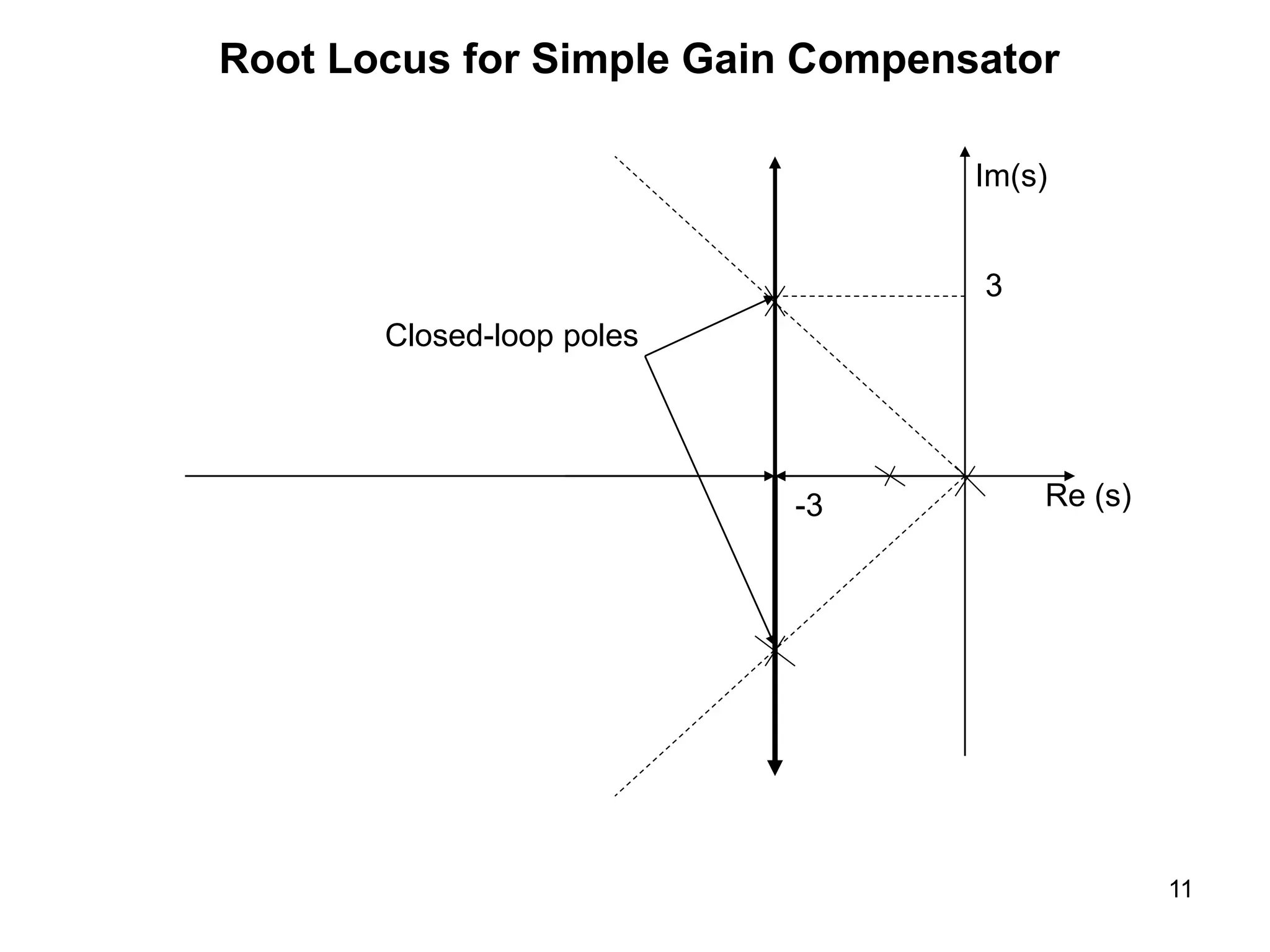
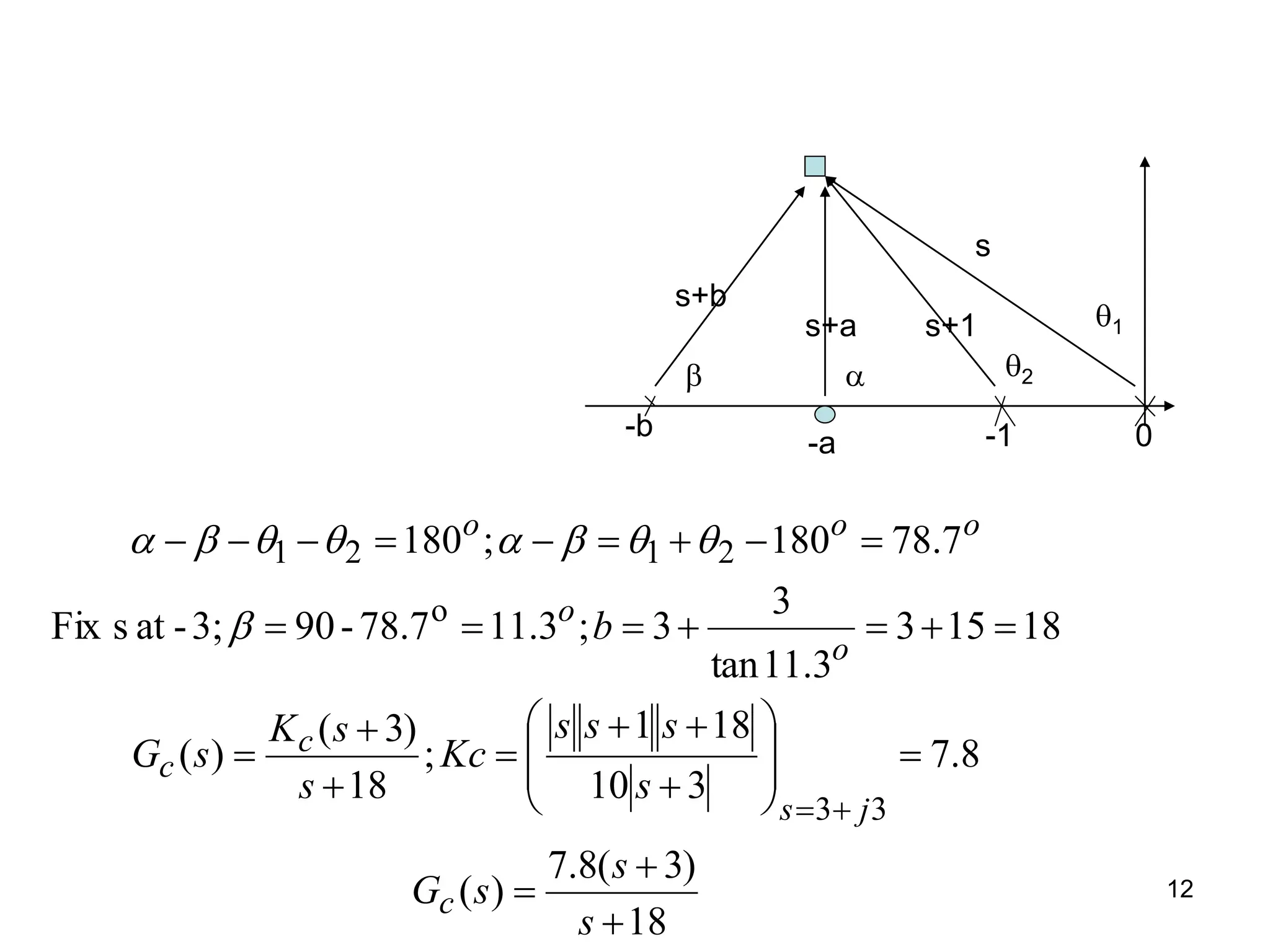
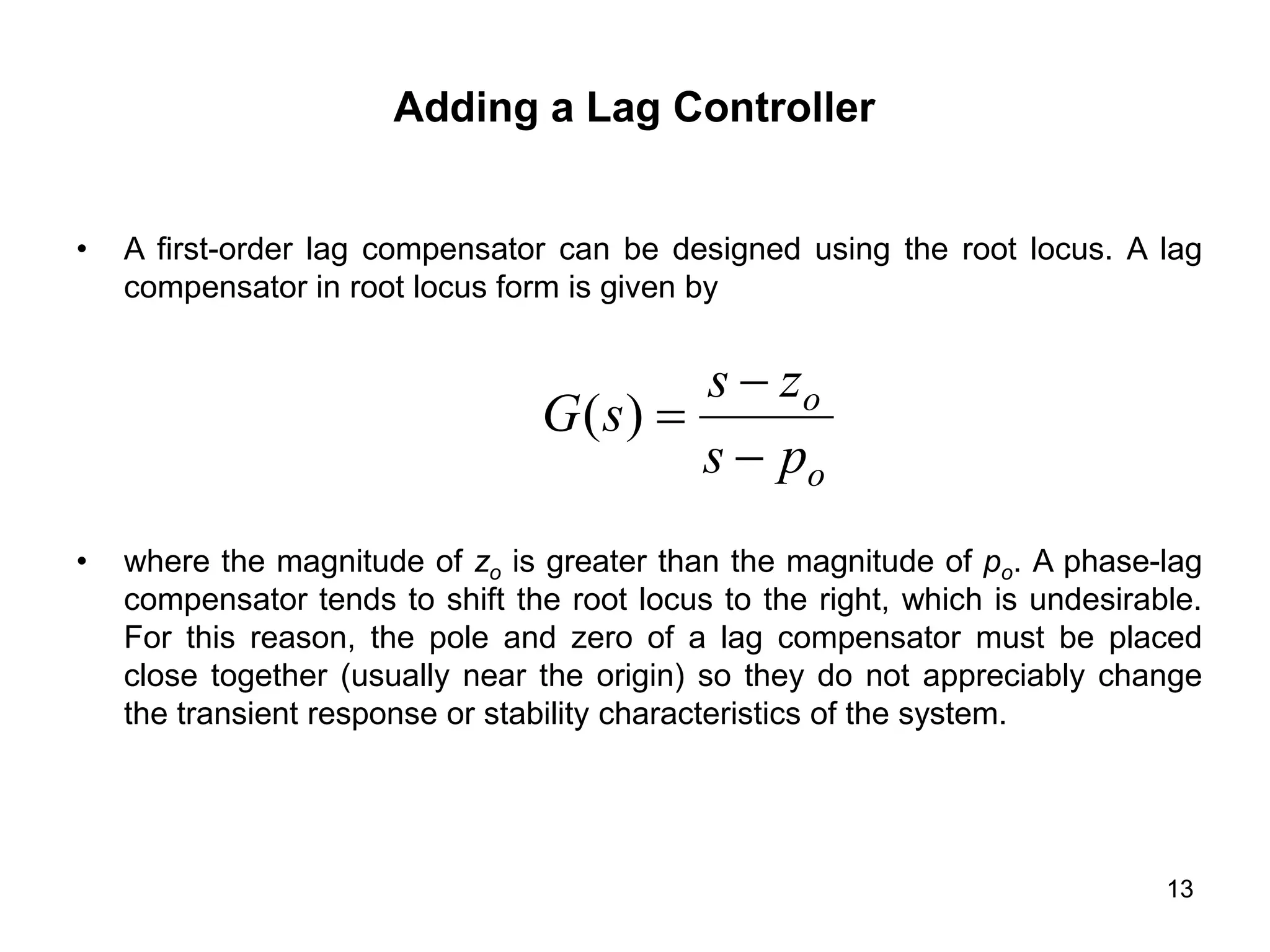
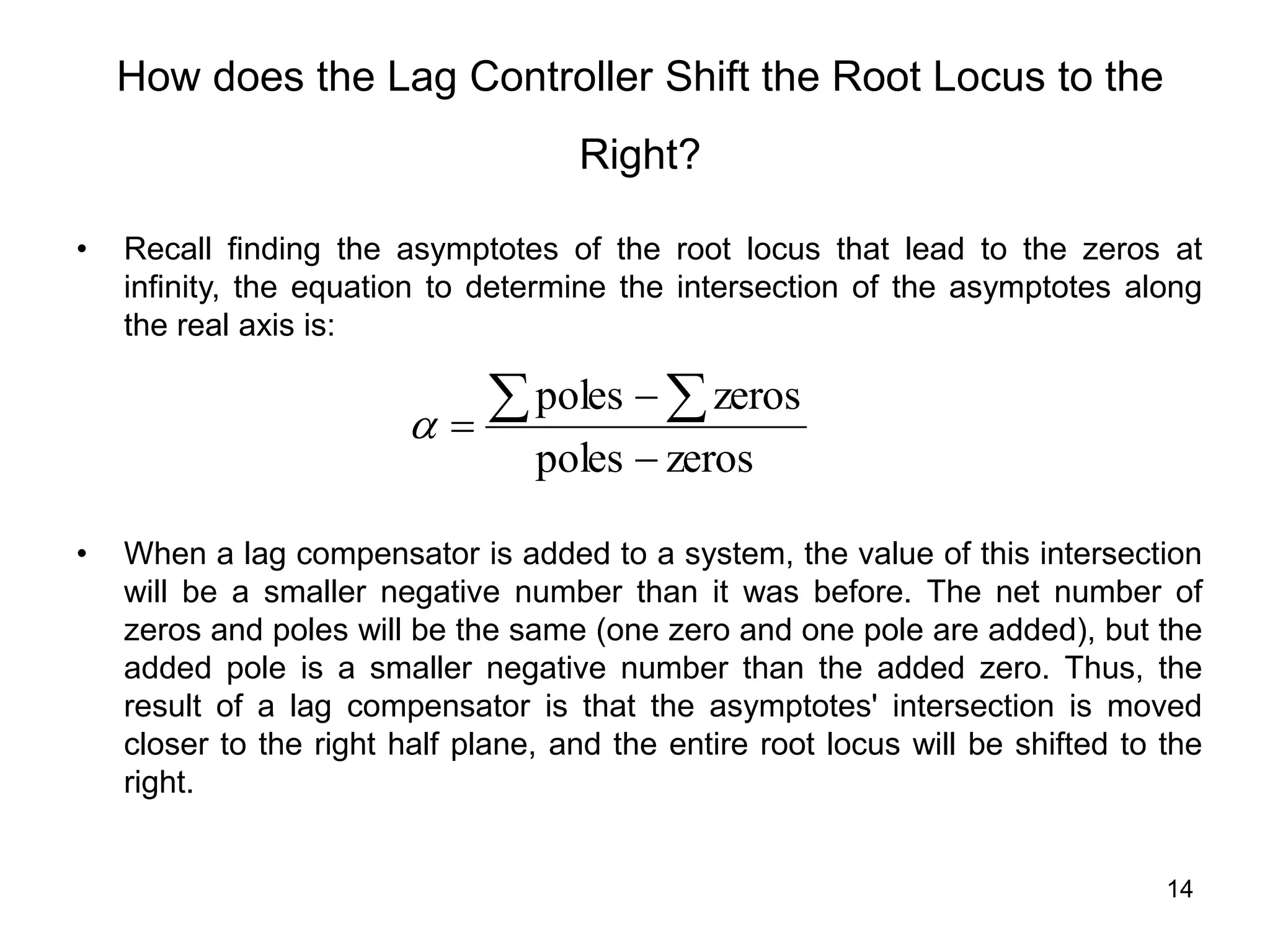
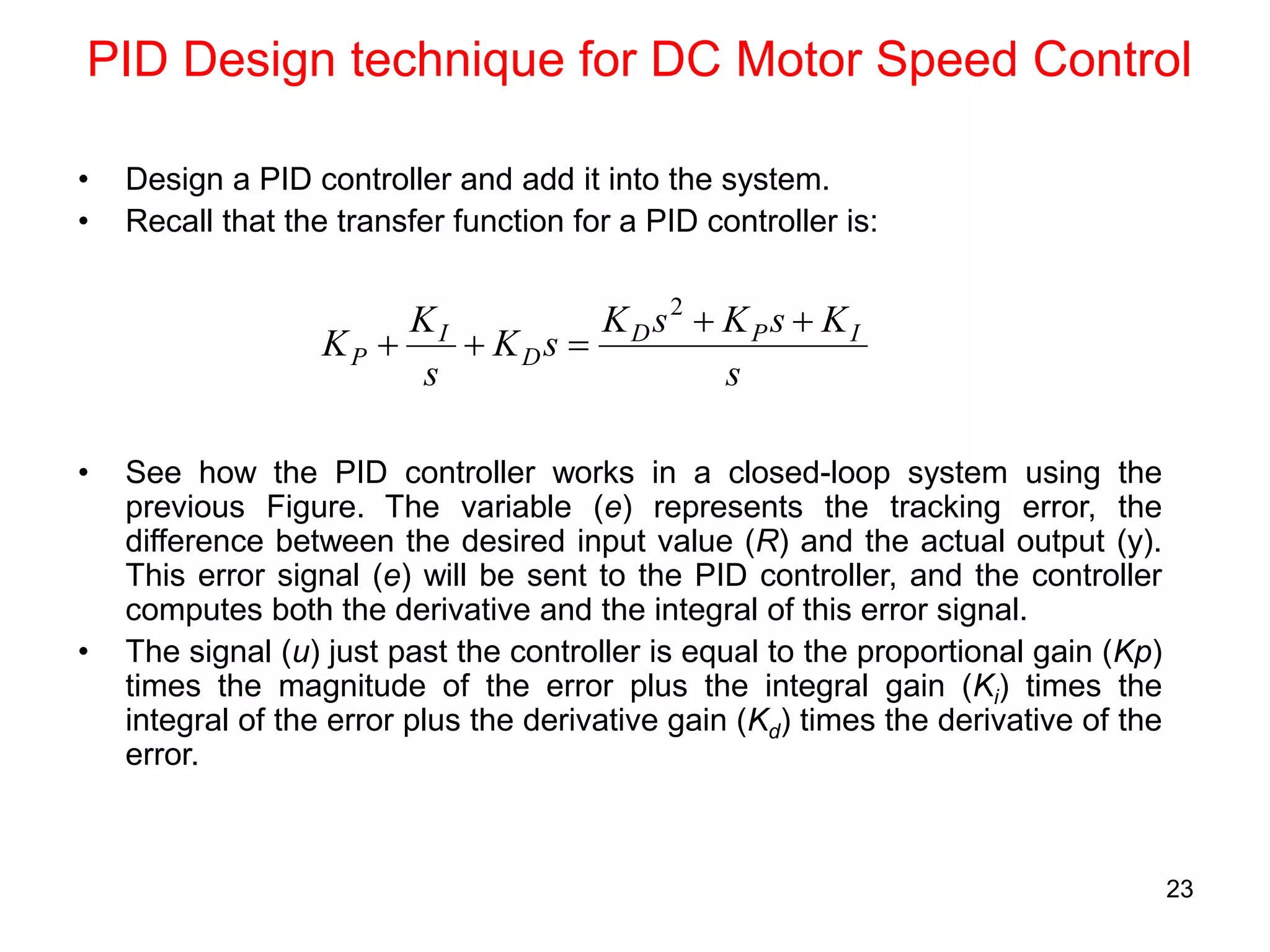
The document discusses control system design using root locus analysis and compensation techniques. It begins by introducing root locus design and its intuitive nature. PID control is then discussed from the root locus perspective. Various types of compensation including cascade, feedback, output, and input compensation are defined. PID controllers are described as consisting of cascaded PD and PI compensators to improve transient response and steady state accuracy, respectively. Lead/lag compensation is also covered as an alternative to PID control. The characteristics and effects of proportional, integral, and derivative controllers are outlined. Methods for designing lead compensation using the root locus are then presented.