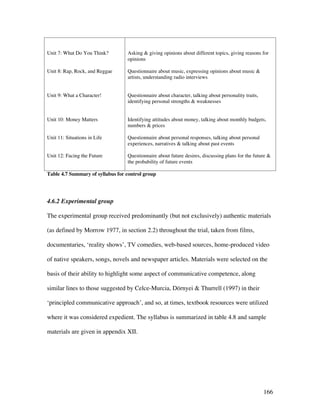
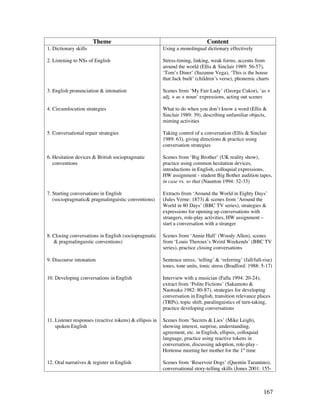
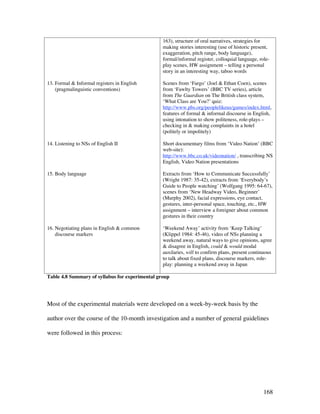
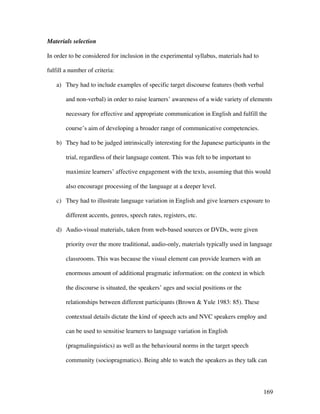
Getting real in the language classroom:
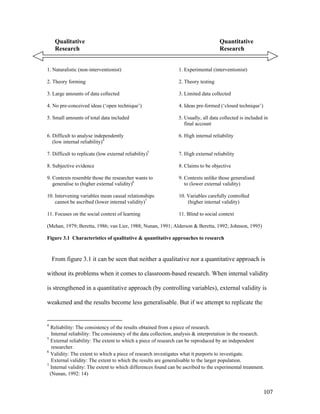
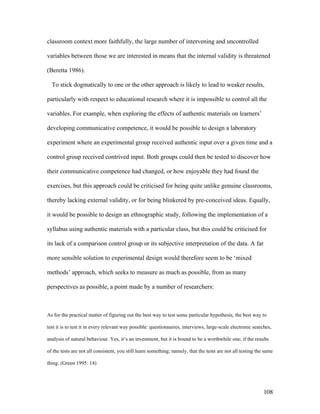
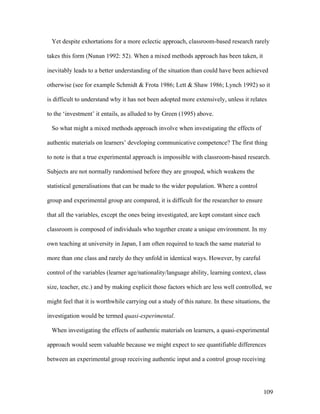
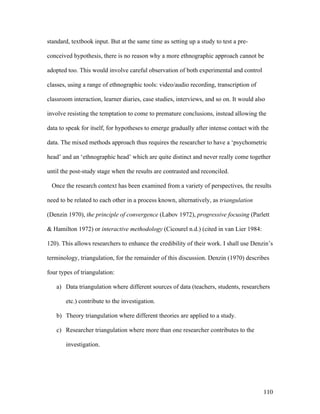
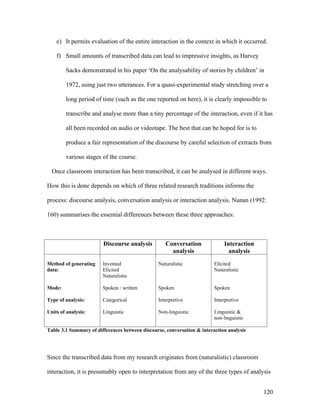
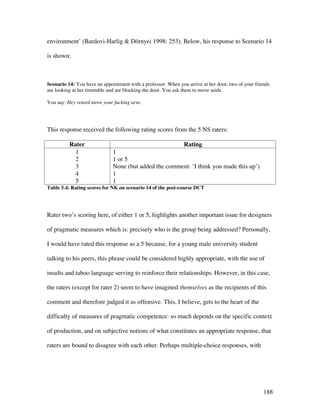
Developing Japanese students’
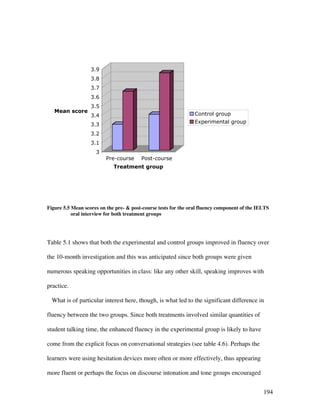
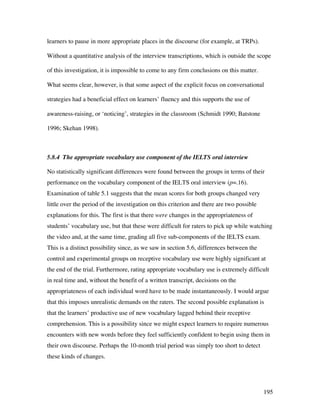
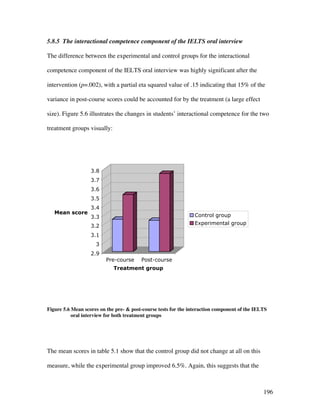
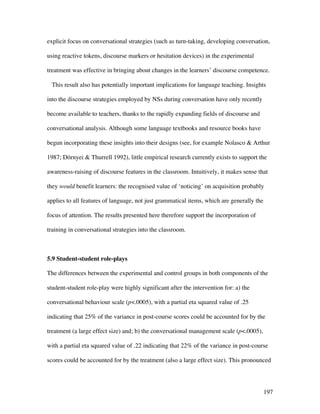
communicative competence
with authentic materials
Alexander Gilmore
Thesis submitted to the University of Nottingham for
the degree of Doctor of Philosophy
September 2007
2
ABSTRACT
The research described in this thesis reports on a 10-month quantitative/qualitative
classroom-based study, carried out at a Japanese university, investigating the potential of
authentic materials to develop learners’ communicative competence. It was hypothesised
that the ‘richer’ input provided by authentic materials, combined with appropriate
awareness-raising activities, would be better able to develop a range of communicative
competencies in learners (linguistic, pragmalinguistic, sociopragmatic, strategic and
discourse competences).
Ninety-two 2nd
year English major students, of similar proficiency levels, were assigned
to either a control or experimental group for the period of the trial. The control group
received input from two textbooks commonly used in Japanese universities, while the
experimental group received input from authentic materials (films, documentaries,
‘reality shows’, TV comedies, web-based sources, home-produced video of native
speakers, songs, novels and newspaper articles), designed to allow students to ‘notice’
features of the discourse which could help them develop some aspect of their
communicative competence. The hypothesis was tested with a batch of eight pre/post-
course measures, designed to tap into different aspects of learners’ communicative
competence or language skills: a) Listening; b) Pronunciation; c) ‘C’-Test; d) Grammar;
e) Vocabulary; f) Discourse completion task (DCT); g) IELTS oral interview; h) Student-
student role-play. These were supported with qualitative results from learners’ diaries,
case-study interviews with subjects from both groups and transcripts of classroom
interaction.
3
Univariate analysis of the pre/post-course tests, using ANCOVA, indicated statistically
significant differences between the two treatment groups, with the experimental group
out-performing the control group in five of the eight communicative competence
measures. The qualitative results of the trial helped to account for these differences in
performance, suggesting that the authentic materials, and their associated tasks, allowed
learners to notice a wider range of discourse features than those generally available in
textbook input. They also indicated a clear preference in the experimental group for
authentic materials over textbooks, suggesting that learners found them more interesting,
varied and challenging, and better able to meet their perceived future language needs.
Finally, the qualitative results demonstrated that, for learners, social goals often override
instructional goals in the classroom, suggesting that classroom-based research benefits
from both an emic and etic perspective in order to fully account for results.
4
ACKNOWLEDGEMENTS
My sincere thanks to the many people who helped with this research, and without whom
this thesis would never have been completed. In particular, I would like to thank my
supervisor, Professor Ronald Carter, for his patience, encouragement and insights into
language and pedagogy. I am also deeply indebted to my second supervisor, Professor
Zoltán Dörnyei, for the many hours he willingly gave up to help with the methodological
aspects of my investigation ~ I couldn’t have hoped for better mentors. Many thanks also
to my friend, Professor Masanori Toyota, for his insights and advice on Japanese
language and culture.
Thanks are also due to Dr. Gila Schauer (Lancaster University) who very kindly
allowed me to use her multimedia DCT in this investigation, as well as the staff and
students of Kansai Gaidai University, Japan, who participated in this research. In
particular, I would like to thank Tim Micklas, Danielle Talerico, Mark Seimelink,
Richard Cleveland, Chris Burrows, Jerry Gordon, David Althaus, Gareth Jones, Steve
Müller, Francoise Mercier, Richard Harrison, Neil Klein and David Stormer for the time
they gave up to interview students and rate the oral interviews and DCT responses. My
appreciation also goes to all the students of classes 1, 2, 3 and 4 in 2004/5 who flung
themselves enthusiastically into the lessons and classroom research. Finally, an extra
special thank you goes to my wife, Michiyo, for the hours she sacrificed translating the
Japanese interaction, and for all of her support and many compromises over the years it
has taken to complete this work.
Dedicated to the memory of my mother, Wendy Patricia McDonald, whose love, like a
distant star, continues to shine down on me long after she has gone.
5
PART I
ABSTRACT 2
ACKNOWLEDGEMENTS 4
INTRODUCTION 8
BACKGROUND TO THE STUDY 8
ORGANISATION OF THE THESIS 12
CHAPTER 1 COMMUNICATIVE COMPETENCE 14
1.1 HISTORICAL ROOTS OF THE COMMUNICATIVE COMPETENCE MODEL 14
1.2 COMPONENTS OF THE COMMUNICATIVE COMPETENCE MODEL 15
1.3 ALTERNATIVE VIEWS OF COMMUNICATIVE COMPETENCE 17
1.4 ROLES AND RELATIVE IMPORTANCE OF DIFFERENT COMPONENTS IN
LANGUAGE LEARNING 19
1.5 BEYOND THE COMMUNICATIVE COMPETENCE MODEL 22
1.6 THE REPRESENTATION OF COMMUNICATIVE COMPETENCE IN LANGUAGE
LEARNING MATERIALS 23
1.6.1 Linguistic competence 24
1.6.2 Pragmalinguistic competence 28
1.6.3 Sociopragmatic competence 32
1.6.4 Strategic competence 40
1.6.5 Discourse competence 44
1.6.6 Implications for materials design 65
CHAPTER 2 AUTHENTIC MATERIALS & AUTHENTICITY
IN FOREIGN LANGUAGE LEARNING 67
2.1 HISTORICAL OVERVIEW 67
2.2 DEFINING AUTHENTICITY 69
2.3 THE ENGLISH-AS-A-WORLD-LANGUAGE DEBATE 72
2.3.1 What is a native speaker? 73
2.3.2 Is a lingua/cultura franca model more appropriate in the classroom? 74
2.4 AUTHENTICITY AND MOTIVATION 81
2.5 TEXT DIFFICULTY AND TASK DESIGN 87
2.5.1 Text modification, comprehensibility and SLA 90
2.6 CONCLUSION 98
CHAPTER 3 RESEARCH METHODOLOGY 102
3.1 THE QUANTITATIVE, QUALITATIVE DEBATE 103
3.2 CLASSROOM-BASED RESEARCH 113
3.2.1 The multi-faceted nature of the classroom 114
3.2.2 Mixed methods approaches are time-consuming 116
3.2.3 Transcription of classroom interaction 118
3.3 ADOPTING A METHODOLOGICAL ‘FRAME OF REFERENCE’ FOR AN INVESITGATION 124
3.4 CONCLUSION: AVOIDING THE PITFALLS IN CLASSROOM-BASED RESEARCH 135
6
CHAPTER 4 MAIN STUDY 137
4.1 RESEARCH DESIGN 137
4.2 PARTICIPANTS 137
4.2.1 Student Profiles 138
4.3 TESTING INSTRUMENTS 142
4.3.1 Quantitative measures 143
4.3.2 Qualitative measures 160
4.4 TESTING PROCEDURES 161
4.5 DATA ANALYSIS 163
4.5.1 Quantitative measures 163
4.5.2 Qualitative measures 163
4.6 TRAINING PROCEDURES 164
4.6.1 Control group 164
4.6.1 Experimental group 166
CHAPTER 5 RESULTS & DISCUSSION (PART 1):
QUANTITATIVE MEASURES 173
5.1 UNIVARIATE ANALYSIS OF COVARIANCE (ANCOVA) 173
5.2 LISTENING TEST 177
5.3 RECEPTIVE PRONUNCIATION TEST 179
5.4 ‘C’-TEST 180
5.5 GRAMMAR TEST 180
5.6 RECEPTIVE VOCABULARY TEST 181
5.7 DISCOURSE COMPLETION TASK (DCT) 183
5.7.1 Hypothesis 1: A problem with the testing conditions? 184
5.7.2 Hypothesis 2: A problem with the instruments used to measure pragmatic competence? 184
5.7.3 Hypothesis 3: A problem with the pragmatics training? 189
5.8 IELTS ORAL INTERVIEW 190
5.8.1 The pronunciation component of the IELTS oral interview 191
5.8.2 The body language component of the IELTS oral interview 191
5.8.3 The fluency component of the IELTS oral interview 193
5.8.4 The appropriate vocabulary use component of the IELTS oral interview 195
5.8.5 The interactional competence component of the IELTS oral interview 196
5.9 STUDENT-STUDENT ROLE-PLAYS 197
5.9.1 The conversational behaviour component of the role-play 198
5.9.2 The conversational management component of the role-play 199
5.10 CONCLUSION 201
CHAPTER 6 RESULTS & DISCUSSION (PART 2):
QUALITATIVE MEASURES 202
6.1 LEARNERS’ DIARIES 202
6.1.1 Compliance rate 202
6.1.2 Collection procedure 205
6.1.3 Recurring issues in learners’ diaries 207
6.1.4 Summary 234
7
6.2 CASE STUDIES 235
6.2.1 Proficiency levels 236
6.2.2 The appeal of authentic materials 238
6.2.3 Challenge and support in the classroom 239
6.2.4 Effects of learners on each other 241
6.2.5 Lifestyle issues 242
6.2.6 Summary 243
CHAPTER 7 EVIDENCE OF INTERLANGUAGE DEVELOPMENT
IN THE CLASSROOM: AN EXAMPLE 244
7.1 THE SAMPLE LESSONS 245
7.1.1 The pre-listening stages 245
7.1.2 The while-listening stages 246
7.1.3 The post-listening stages 247
7.2 EVIDENCE OF INTERLANGUAGE DEVELOPMENT 250
7.2.1 Comments on the transcripts 261
7.3 CONCLUSION 263
CHAPTER 8 CONCLUSIONS, STRENGTHS, LIMITATIONS & IMPLICATIONS
OF THE STUDY 265
8.1 CONCLUSIONS 265
8.1.1 Quantitative measures 265
8.1.2 Qualitative measures 268
8.1.3 Reconciling quantitative & qualitative measures 271
8.2 STRENGTHS AND LIMITATIONS OF THE STUDY 274
8.2.1 Strengths of the study 274
8.2.2 Limitations of the study 276
8.3 IMPLICATIONS 283
8.3.1 Implications for future research 283
8.3.2 Implications for language pedagogy 285
8.4 SUMMARY 292
PART II
APPENDICES
BIBLIOGRAPHY
8
INTRODUCTION
Background to the study
When I look back on my own language learning experiences, and consider what elements
have remained in my memory over the passage of time, I realise that the majority of
experiences that have lasted are associated with authentic materials.
fjhlhlkhlkhh
The song, with its very beautiful but melancholic melody, immediately caught our
attention and it quickly became apparent from the first read-through that its central theme
Unicornio
Mi unicornio azul ayer se me perdió.
Pastando lo dejé y desapareció.
Cualquier información bien la voy a pagar.
Las flores que dejó
no me han querido hablar.
Mi unicornio azul ayer se me perdió,
no sé si se me fue, no sé si extravió, y yo no tengo
más que un unicornio azul
Si alguien sabe de él, le ruego información.
Cien mil o un millón, yo pagaré.
Mi unicornio azul se me ha perdido ayer,
se fue.
Mi unicornio y yo hicimos amistad,
un poco con amor, un poco con verdad.
Con su cuerno de añil pescaba una canción,
saberla compartir era su vocación.
Mi unicornio azul ayer se me perdió,
y puede parecer acaso una obsesión,
pero no tengo más que un unicornio azul
y aunque tuviera dos yo sólo quiero aquel.
Cualquier información, la pagaré.
Mi unicornio azul se me ha perdido ayer,
se fue.
Unicorn
My blue unicorn, I lost him yesterday.
I left him grazing and he disappeared.
For any information, I’ll pay well.
The flowers that he left behind
don't want to talk to me.
My blue unicorn, I lost him yesterday,
I don't know if he left me, or if he got lost,
and I only have one blue unicorn.
If anyone's got any news, I beg to hear it.
A hundred thousand or a million, I’ll pay.
My blue unicorn, I lost him yesterday,
he went away.
My unicorn and I became friends,
a little bit with love, a little bit with truth.
With his indigo horn, he fished for a song
knowing how to share it was his calling.
My blue unicorn, I lost him yesterday,
and it may seem perhaps like an obsession
but I only have one blue unicorn
and even if I had two I’d only want him.
For any information, I’ll pay,
My blue unicorn, I lost him yesterday,
he went away.
One example, from my Spanish classes in Mexico over 10 years
ago, is a song called ‘Unicorn’ by the Cuban songwriter Silvio
Rodriguez (1982):
9
was ‘loss’. What encouraged us to engage with the text from this point on was the
discovery of what exactly the ‘blue unicorn’ represented. Obviously it was someone, or
something, very special: unicorns are hard enough to find, but blue ones are unique
indeed. We struggled in class to arrive at an answer to this puzzle and, in the process, had
to deal with the rich vocabulary and grammatical forms used by the songwriter to express
himself, such as reflexive verbs, future tenses and irregular past forms. Our teacher
finally explained to us that the blue unicorn represented the son of Silvio’s friend, who
died in El Salvador, fighting for the guerrillas during the civil war. The powerful lyrics,
attractive melody and content, relating to real people and real events, combined to make
this learning experience highly memorable, and our desire to understand the meaning of
the text encouraged us to engage with it and deal with the lexicogrammatical obstacles in
our way. Because the words were embedded in a song, I effectively learnt them as one,
long fixed expression. Later, I was able to deconstruct this as my Spanish improved, and
use elements of it, such as ‘se fue’, in my own conversations.
In Japan, one of my clearest memories from the classroom is of reading ‘Yuki-onna’
(Snow Woman), a fairytale about two wood-cutters, Mosaku and Minokichi, who become
trapped in a forest hut during a terrible snow storm. In the night, a pale and beautiful
snow spirit enters the hut and her icy breath leaves the older Mosaku a frost-covered
corpse. Minokichi, with his youth and handsome looks, is spared from death and
promises never to mention what he has seen to anyone else in return for his life. He
escapes from the forest and, on the way back to his hometown, meets an attractive young
lady who he falls in love with, marries, and has a family. He never speaks of his
terrifying experience again until, one night, while watching his wife sew, her face brings
10
back memories of the past. He reveals his secret to her and, to his horror, his wife turns
into the snow woman before his eyes:
「お前の顔を見ていると、昔のことを思い出すんだよ。」
“When I look at your face, it reminds me of something that happened a long
time ago.”
「昔のことって、昔、何かあったんですか。」
“A long time ago, you say, what happened?”
「あれは18才の時だった。お前によく似た女を見たんだよ。」
“I was 18 years old, I saw a woman who looked just like you.”
おゆきは顔を上げずに仕事を続けながら言いました。
“Oyuki, still working, asked without looking up.
「どこでその方をご覧になったんですか。」
“Where did you see this woman?”
巳之吉はあの約束を思い出しました。
At that moment, Minokichi remembered his promise.
「いやいや、これはお前にも言えない。」
“No no, I can’t tell even you that.”
「どうして、どうして言えないんですか。私たち夫婦の間に秘密な
どないではありませんか。今までだって、何でもお互いに打ち明け
て、助け合って来たんじゃありませんか。さあ、お話しになって。
」
“Why, why can’t you tell me? There are no secrets between a husband and
wife. Up to now, we’ve always told each other everything and helped each
other. Go on tell me!”
あまりにも強く言われたので、巳之吉はとうとうあの晩のことを全
部話してしまいました。あの晩の寒さ、恐さ、それにあの女のこと
も。
Since she insisted so strongly, Minokichi finally told her everything about
that night. The cold, the fear and finally about the woman too.
「あの女は人間じゃなかった。あれは一体。。。。」
“The woman wasn’t human. I wonder what she was…….”
と、そこまで話して、巳之吉は驚きのあまり、口がきけなくなりま
した。
Before he could finish the sentence, Minokichi froze and couldn’t utter
another word.
「約束を破ったな。」
“You broke our promise!”
おゆきの姿がいつの間にか、あの恐ろしい雪女の姿に変わっていた
のです。
Oyuki turned into the terrifying Snow-woman.
「あの時、誰かに話したら殺すと言っておいたのに、どうして話し
たのだ。お前を殺さなければならない。。。。。でも、あそこに寝
ている子供たちを見ると、今、お前を殺すことはできない。。。。
子供を大切にしてください。子供にやさしくしてください。もしや
さしくしなかったら、私はすぐにわかる。。。。。」
“That night, I told you if you ever told anyone about me, I’d kill you. Why
did you tell me? Now I’ve got to kill you……..But when I see our children
sleeping over there, now I can’t kill you…..Please look after our children.
Please be kind to them. If you’re not, I’ll know immediately……..”
話しているうちにおゆきの声は小さくなりました。そしておゆきは
白い霧になって、窓から静かに出て行ってしまいました。その後、
村の人たちは二度とおゆきの姿を見なかったそうです。
While Oyuki was talking, her voice became quieter and quieter. Then Oyuki
turned into white mist and quietly disappeared through the window. After
that, the people of the village never saw Oyuki again.
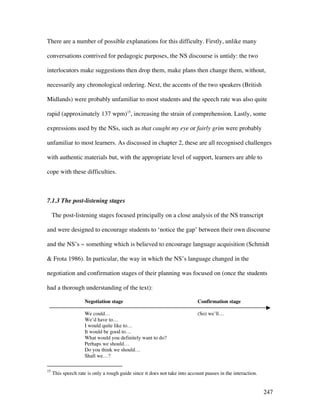
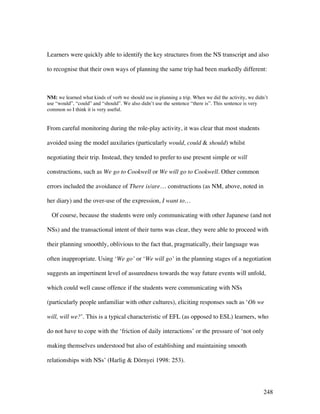
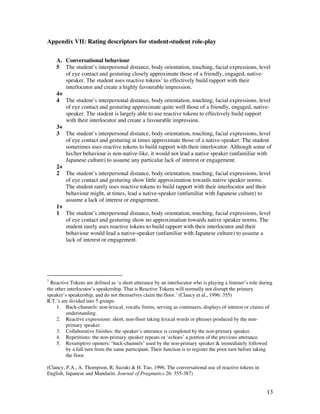
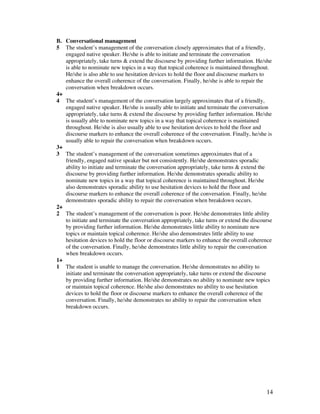
Figure 1. Depiction of Yuki-onna
11
The translation of the scene into English doesn’t do justice to the story because much of
the terror of the transformation from wife to malign spirit is achieved through the way
Yuki-onna speaks. Before the promise is broken, she uses the polite, gender-specific
language expected of an obedient wife: ‘doko de sono kata wo goran ni nattan desu ka’
(Where did you see this woman?); ‘watashi tachi fuufu no aida ni himitsu nado nai dewa
arimasen ka’ (There are no secrets between a husband and wife, are there?). This changes
to cruder, more masculine language, marked by the verb endings (yabutta, rather than
yaburimashita), sentence final particles1
(yabutta na, rather than yabutta ne), and lexical
adaptions (the use of omae instead of anatta for ‘you’). These grammatical and lexical
signals, combined with paralinguistic changes in the delivery of the lines, have a truly
spine-chilling effect. The text also highlights for the learner some of the complex ways
gender and register are marked in Japanese.
It is hardly surprising that these are the materials that have stayed in my memory when
so many others have been lost. They connected with my emotions and imagination, and
in the process created a desire to engage with and understand the texts ~ and a huge
amount of language learning was stimulated as I attempted to interpret the messages the
writers were conveying.
But there are other benefits associated with authentic materials other than their potential
to motivate students. They provide learners with a richer source of L2 input to work with,
which has two advantages: a) It is more likely to meet the varying interlanguage needs of
individual students within the class and; b) It is more likely to develop a range of
communicative competencies in learners (see chapters 1 & 2).
1
The sentence final particles ne and na have the same function as tag questions in English.
12
The tightly structured, lexicogrammatical syllabuses we have been working with in
language classrooms for decades may create the comforting impression of order and
comprehensiveness, but in reality they often only present a tiny fraction of the full
richness of the language, through the mouths of cardboard cut-out characters discussing
topics as dull as ditchwater. After over a decade of boring my learners (and myself) to
death with textbooks imposed on us by higher authorities, I have reached a point where I
would like to explore other possibilities: What would happen if we abandoned textbooks
in favour of exclusively authentic materials in the classroom? How would learners’
communicative competence develop with authentic input instead of textbooks and how
would they respond to this (often) more challenging material? This investigation aims to
explore these questions.
Organisation of the thesis
The thesis is divided into two parts, with part I containing all the main chapters and part
II the appendices and bibliography.
Chapters 1, 2 & 3 review the literature associated with the three principle concerns of
this investigation: communicative competence, authenticity and research methodology.
Chapters 4, 5, 6, 7 & 8 describe the classroom-based mixed methods research carried
out over a 10-month period at Kansai Gaidai University in Japan. Chapter 4 outlines the
setting, participants and testing instruments used in the main trial. Chapter 5 summarises
the quantitative results from inferential statistical analysis of the pre- post-course tests of
communicative competence. Chapter 6 describes the qualitative results from the learners’
diaries and case study interviews, while chapter 7 outlines a sequence of lessons from the
13
experimental input, which illustrate how the authentic materials might have led to greater
levels of overall communicative competence in the experimental group. Finally, chapter 8
outlines the conclusions of the study, and discusses its strengths, limitations and research
or pedagogical implications.
Part II includes the appendices, bibliography and a DVD containing sample video
extracts from the IELTS oral interviews, student-student role-plays and classroom
interaction.
14
CHAPTER 1. COMMUNICATIVE COMPETENCE2
1.1 Historical roots of the communicative competence model
It is no accident that models of communicative competence developed in the 70s and 80s
in parallel with calls for greater authenticity in the literature. Both stemmed from the
increasing influence of sociolinguistics on the profession and the growing realisation that
language cannot be separated from the context in which it is produced. Labov (1966) and
Hymes (1972), for example, both argued for a move away from abstract, ideal notions of
native speaker competence towards a focus on actual, contextualised performance.
Hymes strongly attacked Chomsky’s notion of an ‘ideal speaker-listener’ and his
trivialisation of performance:
It is, if I may say so, rather a Garden of Eden view. Human life seems divided between grammatical
competence, an ideal innately-derived sort of power, and performance, an exigency rather like the eating of
the apple, thrusting the perfect speaker-hearer out into a fallen world. Of this world, where meaning may be
won by the sweat of the brow, and communication is achieved in labor…little is said. The controlling
image is of an abstract, isolated individual, almost an unmotivated cognitive mechanism, not, except
incidentally, a person in a social world. (Hymes, 1972: 272)
Instead, he proposed a broader definition of competence that accounted for a speaker’s
knowledge of the language itself as well as his/her ability to use the language in a social
context. Hymes was vague as to what competence actually meant beyond a concern for
what language is possible, feasible and appropriate in a given situation but he sparked a
2
A modified version of chapters 1 & 2 was originally published in Language Teaching 40.2: 97 – 118,
April 2007, © Cambridge University Press.
15
frenzy of interest in pragmatics and a model of communicative competence slowly began
to take shape, first with Clyne (1979) and Schmidt & Richards (1980) and then, most
importantly, Canale & Swain (1980) and Canale (1983). This resulted in a framework
composed of four areas of knowledge: grammatical competence, sociolinguistic
competence, discourse competence and strategic competence. This model was further
refined by Leech (1983) who divided sociolinguistic competence into two separate
components, pragmalinguistics and sociopragmatics, and Celce-Murcia, Dörnyei &
Thurrell (1995) who re-named grammatical competence ‘linguistic competence’ in
recognition of the fact that this area includes a speaker’s lexical and phonological
knowledge as well as grammatical knowledge.
1.2 Components of the communicative competence model
Today, there seems to be general agreement in the literature on a model of
communicative competence consisting of five components:
a) Linguistic competence: This refers to a speaker’s lexical, morphological,
orthographical, syntactical and phonological knowledge of the language. In other
words, how to build up morphemes into words and words into clauses and
sentences, how to spell them in the written form or pronounce them in speech. It
only deals with the literal meaning (or locutionary force) of utterances. This is the
type of knowledge that has traditionally been the staple diet of ELT classrooms
and it is important to note that it is not rejected in the current model of
communicative competence, but rather assumes a lesser role, seen as only one
aspect of language proficiency.
16
b) Pragmalinguistic Competence: This refers to a speaker’s ability to understand or
convey communicative intent appropriately in a given context based on a
knowledge of phrases typically used by native speakers to express speech acts
such as apologies, requests, refusals and so on. This kind of competence therefore
describes a speaker’s ability to interpret the illocutionary force, or conversational
implicature (Grice 1975), of utterances, for example, understanding that ‘Could
you open the door?’ is a request rather than a question about ability to complete
an action.
c) Sociopragmatic Competence: This refers to a speaker’s knowledge of what is
socially or culturally appropriate in a particular speech community. This might
include an appreciation of politeness and social conventions, taboo topics and
non-verbal factors such as kinesics and proxemics. For example, the knowledge
that, in Japan, business cards should be exchanged at the beginning of an initial
meeting, handed to the recipient with both hands and treated with great reverence
is a kind of sociopragmatic competence.
d) Strategic Competence: This refers to a speaker’s ability to exploit verbal or non-
verbal communication strategies when communication problems arise,
compensating for deficiencies in other competences. These include four common
types:
i) Avoidance or reduction strategies such as topic avoidance or message
abandonment to try to keep conversation inside areas where the
speaker feels in control;
17
ii) Compensatory strategies such as circumlocution or mime when a word
is not known;
iii) Stalling strategies such as using hesitation devices or repetition to hold
the turn in conversation while a message is formulated;
iv) Interactional strategies such as asking for repetition or clarification
where the speaker makes use of the linguistic resources of other
interlocutors to maintain conversation.
e) Discourse Competence: This refers to a speaker’s ability to produce unified,
cohesive and coherent spoken or written discourse of different genres (Halliday &
Hasan 1989). In writing this might include the knowledge of the correct layout for
a letter or how to use anaphoric reference in a text. In speaking it would include
how to develop a conversation naturally through ‘topic shading’ where a sub-
topic from preceding talk is taken up and expanded into the main topic (Crow
1983; Bublitz 1988). It could also include knowledge of different generic
structures such as narratives, gossip or jokes (Eggins & Slade 1997) or discourse
intonation (Brazil, Coulthard & Johns 1980).
1.3 Alternative views of communicative competence
Things aren’t quite as simple as this, however. Different writers have, confusingly,
created their own terminology for essential the same components, for example
pragmalinguistic competence is called ‘sociolinguistic competence’ by van Ek (1986),
‘illocutionary competence’ by Bachman (1990) and ‘actional competence’ by Celce-
18
Murcia et al. (1995). This inability to settle on terms is perhaps indicative of the state of
flux this area of research is currently in but it hinders comparison and is rather unhelpful.
Some researchers have added extra components or merged existing ones in their
models. van Ek’s ‘framework for comprehensive foreign language learning objectives’
(1986: 33) includes a sixth component, ‘social competence’, which he defines as ‘the will
and the skill to interact with others, involving motivation, attitude, self-confidence,
empathy and the ability to handle social situations’ (ibid: 65). Personally, I believe these
areas of a speaker’s ability to be qualitatively different from those indicated above and
outside of a model of communicative competence. They relate too closely to an
individual’s personality rather than a body of knowledge that can be used to shape a
syllabus. That is not to say that these factors don’t play an important role in language
learning, of course. Cortazzi & Jin (1999) suggest adding ‘intercultural competence’ to
the four areas proposed by Canale & Swain (1980) and Canale (1983):
[…] intercultural competence is seen in social effectiveness (i.e., the ability to achieve instrumental and
social goals) and appropriateness (i.e., suitable communication in a given situation in a particular culture)
(Martin, 1993). (Cortazzi & Jin 1999: 198)
However, it seems to me that these areas of competence are already included in the model
proposed in section 1.2: ‘social effectiveness’ requires the deployment of all five types of
competence and ‘appropriateness’ corresponds to pragmalinguistic and sociopragmatic
competence. The idea of intercultural competence is important though and we shall return
to this later.
19
With respect to merging different areas of the model, Hall (1999: 137) uses the term
‘interactional competence’ which appears to combine pragmalinguistic, sociopragmatic
and discourse competences into one component. This, I also regard as unhelpful since I
believe these components to be distinct enough from each other to warrant separate
names. In addition, it further confuses what is already a complex area through the
introduction of yet another term.
1.4 Roles and relative importance of different components in language learning
What we should be looking for now is a general consensus in the field on the types of
communicative competence which exist and appropriate terminology to describe them so
that we can move forward in our understanding of how the various components interact
with each other and their relative importance in language learning.
These remain areas where very little research has been done to date. Bachman &
Palmer (1982) developed a battery of tests to measure (using their terminology)
‘grammatical competence’ (morphology and syntax), ‘pragmatic competence’
(vocabulary, cohesion and organization), and ‘sociolinguistic competence’ (sensitivity to
register, naturalness and cultural references). They found that grammatical and pragmatic
competences were closely associated with each other while sociolinguistic competence
was distinct. However, the components they included within pragmatic competence are
more commonly associated with linguistic or discourse competence so their results are
difficult to interpret within the framework proposed here. Allen et al. (1988) found no
significant differences between grammatical competence (morphology and syntax),
discourse competence (cohesion and coherence) and sociolinguistic competence
20
(sensitivity to register) in their study using factor analysis of test scores. On the other
hand, Schmidt’s (1983) three-year longitudinal study of the development of
communicative competence in Wes, a Japanese artist living in Hawaii, found that his
discourse and pragmatic competence developed significantly while his grammatical
knowledge changed very little, suggesting that these components are distinct from each
other. More recent investigations have focused principally on linguistic versus
pragmalinguistic competence and confirm the distinctness of these two components (for
example, Bardovi-Harlig & Dörnyei 1998; Kasper 2001a/b; Salsbury & Bardovi-Harlig
2001).
Turning to discourse competence, Hatch (1978) and Day (1986) note, interestingly, that
most researchers into both first and second language acquisition assume that linguistic
competence precedes discourse competence but that the opposite might in actual fact be
true:
One learns how to do conversation, one learns how to interact verbally, and out of this interaction syntactic
structures are developed. (Hatch 1978: 404)
In interactions, the discourse frames, the scripts for interactions, develop: the language appropriate to the
interaction builds on this development; and the language, in turn, refines the frame. (Day 1986: 6)
With respect to the relative importance of different areas of competence, Celce-Murcia
et al. (1995) see discourse competence as playing a central role:
Discourse competence concerns the selection, sequencing, and arrangement of words, structures, sentences
and utterances to achieve a unified spoken or written text. This is where the bottom-up lexico-grammatical
21
microlevel intersects with the top-down signals of the macrolevel of communicative intent and
sociocultural context to express attitudes and messages, and to create texts. (ibid: 13)
Bachman (1990: 103), on the other hand, expands the notion of strategic competence
and sees it as mediating between the communicative goal in a given situation and the
language resources available to a speaker. It assesses how best the speaker’s
competencies can be exploited to achieve the communicative goal, retrieves the relevant
items and plans the execution of the message. It then assesses how well the goal has been
achieved. This seems remarkably similar to the ‘core role’ assigned to discourse
competence by Celce-Murcia et al. (1995).
In summary, although there is some general agreement as to the types of competence
native speakers have at their disposal to achieve communicative goals, there is little
consensus over how distinct they are from each other, how they interact with each other
or their relative importance in successful communication. Byram (1997: 10), following
van Ek (1986), sees the components of communicative competence as different aspects of
the same concept. We can focus on one particular component of the model but it can
never be completely understood in isolation: ‘At any one point, one aspect will be central
but others, and their relationship to that aspect, will also be in view.’
In terms of language learning, however, this state of flux in the theoretical aspects of the
communicative competence model need not concern us overly. All of the components
identified in the model above are clearly important to learners if they want to
communicate successfully in the L2. Using this model as a starting point, it is clear that
current ELT materials are skewed in favour of linguistic competence at the expense of the
other four types of competence and I believe that a solution to this imbalance is well
22
overdue. Celce-Murcia, Dörnyei & Thurrell’s (1995) pedagogically motivated model of
communicative competence, in particular, provides a useful starting point for teachers,
material writers and language testers who wish to address this issue in the classroom.
1.5 Beyond the communicative competence model
Communicative competence, as it has been outlined so far, has recently been criticised by
a number of writers because it models itself on educated native speakers and takes their
communicative competence as the ultimate goal of foreign language learning. This is
problematic for a number of reasons. Firstly, there is the difficulty of defining native
speaker norms ‘in a time of large-scale migrations, cross-national and cross-cultural
encounters, and increasing linguistic and pragmatic differences among speakers of the
same language’ (Kramsch 1998b: 16). Even if we are able to agree on what constitutes
native speaker competence, many question how appropriate this model is to learners, both
because it sets the impossible target of becoming like a native speaker, something which
could potentially de-motivate learners and which devalues the social identity and
competences they have developed within their own culture (Byram 1997), and because
the communicative needs of non-native speakers (NNSs) are very different from native
speakers (NSs) existing in a particular speech community and vary according to the
social context in which they wish to operate (Saville-Troike 1989). In place of this native
speaker communicative competence, Byram & Fleming (1998: 12) propose a model
based around intercultural communicative competence (ICC):
Instead of the assumption that learners should model themselves on ‘the native speaker’, it is becoming
apparent to teachers and their learners that successful cross-cultural communication depends on the
23
acquisition of abilities to understand different modes of thinking and living, as they are embodied in the
language to be learnt, and to reconcile or mediate between different modes present in any specific
interaction. This is not the ‘communicative competence’ on which people using the same language in the
same, or closely related, cultures rely; it is an ‘intercultural communicative competence’ which has some
common ground with communicative competence, but which also has many unique characteristics.
Thus, rather than expecting learners to abandon their own social identities and
communicative competencies in an attempt to replicate some native speaker ideal, ICC
emphasises the knowledge and skills needed to understand people from other, unfamiliar
cultures and to mediate between the foreign culture and the learner’s own culture in a
way that leads to successful communication (see also Lustig & Koester 1993). This is a
variety of communicative competence that many native speakers, particularly those with
limited experience of ‘otherness’, tend to lack. As Byram & Fleming (ibid) suggest,
learners may still want to acquire many of the aspects of native speaker communicative
competence but with the goal of mediating between disparate cultures rather than
complete integration into a particular community.
1.6 The representation of communicative competence in language learning
materials
It has long been recognised that the language presented to students in textbooks is a poor
representation of the real thing, ‘far away from that real, informal kind of English which
is used very much more than any other during a normal speaking lifetime’ (Crystal &
Davy 1975: 2) and although more recently much has been done to redress the balance,
there remain numerous gaps. Research into different areas of communicative competence
through discourse or conversational analysis, pragmatics and sociolinguistics has
24
exploded and, with our deepening understanding of how people make meaning through
language, it has become clear that it is time for a fundamental change in the way we
design our syllabuses:
[…] awareness of discourse and a willingness to take on board what a language-as-discourse view implies
can only make us better and more efficient syllabus designers, task designers, dialogue-writers, materials
adaptors and evaluators of everything we do and handle in the classroom. Above all, the approach we have
advocated enables us to be more faithful to what language is and what people use it for. The moment one
starts to think of language as discourse, the entire landscape changes, usually, for ever. (McCarthy & Carter
1994: 201)
What follows, is a review of some of the relevant research that supports the need for the
paradigm shift, alluded to above. It is far from comprehensive but serves to illustrate how
inadequate many current language textbooks are in developing learners’ overall
communicative competence.
1.6.1 Linguistic competence
This area of communicative competence, as is well known, has historically dominated
foreign language teaching but the linguistic knowledge imparted to learners was largely
based on intuitions gleaned from examination of the written form and sentence-based,
classical notions of grammar. With the introduction of audio recording technology and,
subsequently, the development of procedures to transcribe and analyse authentic spoken
language (through discourse, conversation & corpus analysis), much of the focus in
applied linguistics has shifted to speech in recent years. It is not surprising, therefore, that
25
the majority of work in this area of competence focuses on the lack of adequate models
for spoken grammar in textbooks.
Holmes (1988) provides data on the relative frequencies of lexical items expressing
doubt or certainty in written and spoken corpora and, surveying four well-known ESL
textbooks, finds that the more common modal lexical items are often under-represented
in comparison to modal verbs (see also McCarthy 1991: 84). This could potentially have
serious consequences for learners because of the important pragmatic function of this
group of words. Altman (1990), using a ranking test of 7 common modal auxiliaries,
found that low-intermediate learners were unable to accurately assess the relative
strengths of ‘should’ and ‘had better’, judging the former to be much stronger than the
latter. This he blames on a bias in textbooks towards linguistic, rather than
sociolinguistic, rules. Tannen (1989) examines speakers’ use of repetition in conversation
and finds it to be a ubiquitous feature. She explains its presence not in terms of some kind
of real-time performance limitation, but rather as an important affective tool for creating
rapport between people. McCarthy (1991) agrees with this view and, in addition,
illustrates how reiteration, or reworking, of previously mentioned lexical items
(relexicalisation), allows for coherent topic development in conversation. This has
important implications for the teaching of vocabulary because it assumes that learners
need to be ‘armed’ with a wide variety of hyponyms and synonyms to converse naturally
in English, ‘using a range of vocabulary that is perhaps wider than the coursebook or
materials have allowed for’ (ibid: 68). As McCarthy goes on to point out, other languages
may not rely on relexicalisation in the same way as English does to develop discourse so
learners need to be made aware of this feature. Williams finds, in her 1990 study, that
26
native speakers of American English and Singaporean English both prefer an invariant
SVO order in Yes/No questions when talking casually to close friends or family
members. She sees this as a production strategy employed by both groups to avoid
semantically redundant syntax and urges teachers and researchers to refer back to
authentic data when making judgments on learners’ performance, rather than relying on
prescriptive notions. Powell’s (1992) analysis of spontaneous conversation from the
London-Lund corpus finds high frequencies of evaluative, vague, intense or expressive
language in informal contexts. This meets the interactional and affective needs of
speakers in informal contexts and contrasts sharply with the ‘safe, clean, harmonious,
benevolent, undisturbed, and PG-rated’ world presented to learners in textbooks
(Wajnryb 1996: 1). Channell (1994), in her book ‘Vague Language’, provides the most
comprehensive description of linguistic vagueness so far undertaken, arguing that it is a
key element in the communicative competence of native speakers and, therefore, has
important pedagogical implications. McCarthy & Carter (1994) focus on the evaluative
role of idioms in natural language and, as a result, their high occurrence in specific types
of discourse (problem-solution or narrative genres) and predictable parts of the discourse.
As the authors claim, however, textbooks rarely deal with this language in a systematic
way and idioms are often regarded as ‘something to tag onto the higher levels or terminal
stages of language courses’ or, alternatively, ‘left to the twilight world of (in publishers’
parlance) ‘supplementary materials’’ (ibid: 109). McCarthy & Carter (1995) present early
results on distinctions between spoken and written grammar found in CANCODE
(Cambridge and Nottingham Corpus of Discourse in English), a spoken corpus of around
5 million words collected between 1995 and 2000. They show how standard grammars
27
fail to account for pervasive features in spoken discourse such as ellipsis or ‘slots’ at the
beginnings and ends of clauses (‘heads’ and ‘tails’) for speaker orientation/evaluation and
stress the importance of an interactive interpretation on verb-form choices in real data.
Hughes & McCarthy (1998) argue that sentence-based grammars are inadequate to
explain speaker/writer choices at the discourse level. They show, for example, how it,
this and that, which are normally not taught together in language pedagogy, frequently
operate as alternatives in real discourse. Whereas it signals continued, ongoing topics,
this marks new or significant topics and that has a distancing or marginalising function
(see also McCarthy & Carter 1994: 91). The discourse grammar approach that they
recommend has important implications for the classroom because it relies on learners
being presented with longer stretches of text in order to interpret grammar choices made.
Wray (2000) (but see also Willis 1990, Lewis 1993, Aijmer 1996) focuses on the
importance of formulaic sequences (also referred to by others as idioms, collocations and
sentence frames) in language learning, stating that even proficient non-native learners
have difficulties distinguishing what is natural from what is grammatically possible but
non-idiomatic. She blames this on the lack of natural language models in the classroom
(despite their common occurrence in television and film) and on the problems teachers
have selecting the right formulaic sequences to present, concluding that ‘It seems difficult
to match in the classroom the ‘real world’ experience of language.’ (ibid: 468). Perhaps
this difficulty can most easily be overcome by presenting learners with carefully selected
authentic language to work with in the classroom; at least until we understand more about
the processes involved in sounding idiomatic in English. Basturkmen (2001) illustrates
how learners are often misled by descriptions of questioning found in ELT materials and
28
argues for authentic texts to be used with higher-level learners to give more realistic
models. Shortall (2003) reports that the emphasis in textbooks on adjectival comparatives
and superlatives underestimates the importance of the ‘noun + more’ construction for
comparing, as illustrated by frequency data from the British National Corpus. Carter &
McCarthy (2003) illustrate, with spoken corpus data from CANCODE, how E-language
(the ‘external’ language of real-world communication) consistently differs from I-
language (the language of introspection or Chomsky’s ideal speaker-listener). In spoken
language, question tags, relative clauses and subject-verb concord often fail to conform to
prescriptive descriptions. Their frequency data also highlight the pervasiveness of words
such as like, the morpheme –ish, and response tokens such as right, which all play an
important affective role in discourse but are rarely taught in the language classroom.
These inadequacies in the way that language is presented to learners in textbooks are
not only confined to English: similar results have also been found in French by Walz
(cited in Herschensohn 1988), and O’Conner Di Vito (1991). The most comprehensive
description of variation in authentic spoken and written English grammar to date is Carter
& McCarthy’s (2006) ‘Cambridge Grammar of English’. This will prove useful to
teachers wishing to assess the extent to which the grammar patterns in their classroom
input conform to authentic, native speaker norms.
1.6.2 Pragmalinguistic competence
There is a substantial body of work available now which points to the lack of appropriate
pragmatic models in textbooks (see, for example, Kasper 2001a: 1). This is generally
blamed on the fact that material writers have relied on intuitions about language rather
29
than empirical data and have focused on imparting lexicogrammatical knowledge at the
expense of pragmatics.
Pearson (1986) (cited in Salsbury & Bardovi-Harlig 2001) notes that
agreement/disagreement speech acts are frequently given equal emphasis in language
textbooks, perhaps painting a misleading picture for learners since native speakers are
more likely to agree with each other than disagree and frequently employ face-saving
strategies when they do disagree. Williams (1988) compared the language used for
meetings in authentic business interactions with the language taught for meetings in 30
business English textbooks. She found almost no correspondence between the two, with
only 5.2% of the 135 exponents presented in the classroom materials actually occurring
in the genuine meetings. She criticises material writers for relying on introspection rather
than empirical research when selecting which exponents to present in the classroom.
Bardovi-Harlig et al. (1991) surveyed conversational closings in 20 ESL textbooks and
found that, despite claims of naturalness or authenticity, the models presented were often
only partially complete, with the pre-closing or closing moves missing. They criticise the
lack of pragmatic information available to learners in textbook materials. Boxer &
Pickering (1995) assess the presentation of complaint speech acts in 7 EFL textbooks,
finding that all deal with direct (Ds) rather than indirect complaints (ICs) (in Ds, the
addressee is seen as being responsible for the perceived offence whereas in ICs they are
not). This is despite the fact that, in normal conversation, ICs are much more common
and play an important affective and discoursal role. They give an addressee the
opportunity to show rapport by commiserating with the speaker’s complaint and open up
the subject of ‘what’s wrong with X’ to further topical development. The authors also
30
criticise the lack of contextualisation in the textbooks examined, without which it is
impossible for learners to know in what situations, and with whom, the target language is
appropriate. They recommend that material writers rely on spontaneous authentic
interaction rather than intuition when creating textbooks in order to better reflect the
sociopragmatic norms of a culture. Bouton (1996) provides a useful overview of Nessa
Wolfson’s work on invitation speech acts in the 1980s in which she identified three types:
unambiguous invitations which are direct and specify a time, place or activity; ambiguous
invitations in which the invitation is co-constructed through negotiation by the
participants; and non-negotiable non-invitations, along the lines of ‘We must get together
some time’, which seem to function as positive politeness strategies rather than actual
invitations. Bouton compares the distribution of these 3 types of invitation in naturally
occurring language (from Wolfson’s data) with ‘Say It Naturally’ (Wall 1987), which, he
believes, provides ‘one of the better presentations of this speech act (ibid: 16). The results
are dramatically different:
Wolfson data Wall examples
Unambiguous invitations 26% 80%
Ambiguous invitations 41% 8%
Non-negotiable non-invitations 33% 0%
(Bouton 1996: 17)
The representation of invitations in the textbook clearly gives learners a distorted
picture of reality, one that is likely to have serious repercussions on their pragmatic
competence. Ambiguous invitations are used in situations where the relationship between
speakers is still ‘under negotiation’– arguably the most typical scenario to be encountered
by NNSs attempting to make friends in a new environment. Learners are also likely to
misinterpret non-negotiable non-invitations as genuine if they have never seen them in
31
the classroom, leading to disappointment or frustration when the offer is not realised.
Bouton calls for authors to incorporate far more pragmatic information into their
materials, using the wealth of data now available in the research literature. Wajnryb
(1996) examines two popular EFL textbooks for the pragmatic features of distance,
power or face threatening acts (FTAs) between speakers – factors that effect what kind of
language is appropriate in a given situation. She finds 67% of exchanges in the textbooks
are between speakers where there is high social distance and this means that the language
used tends to be explicit and textually coded because of the lack of shared knowledge
between interlocutors. As a consequence, learners may be deprived of examples of the
more implicit language used in low social distance discourse, affecting their ability to
interpret implicature (see, for example, Bouton 1990/99). Wajnryb reports that, in terms
of power, 89.5% of interactions are symmetrical in the textbooks and this limits the
examples of negotiation in the scripts, since negotiation is more typical of asymmetrical
relationships. Finally, she notes the very low incidence of FTAs in the textbooks and,
even when they do occur, the learning opportunity for ‘facework’ they provide is rarely
exploited. Bardovi-Harlig & Dörnyei (1998) compared the ability of ESL/EFL students to
recognise grammatical and pragmatic violations in 20 videotaped scenarios with one of
three conditions: with grammatical mistakes; with pragmatic mistakes; with no mistakes.
They asked subjects to identify whether or not the scenarios contained mistakes and, if
they did, how serious they were. While the ESL learners (studying English in the United
States) rated the pragmatic mistakes as more serious than the grammatical ones, exactly
the opposite pattern was found with the EFL learners (studying in Hungary and Italy).
32
The authors explain this greater pragmatic awareness in the ESL learners as stemming
from the quality of their experience with the L2:
It seems likely, then, that the pragmatic awareness of the ESL learners may have come from the friction of
their daily interactions: the pressure not only of making themselves understood but also of establishing and
maintaining smooth relationships with NSs in the host environment. (ibid: 253)
They suggest that EFL students’ pragmatic awareness could be improved by increasing
the amount of pragmatic input in the classroom and by placing a greater emphasis on this
area of communicative competence.
1.6.3 Sociopragmatic competence
Much of the work relating to sociopragmatics highlights the wide variation in behavioural
norms around the world and the risk of miscommunication, negative stereotyping and
conflict when different cultural groups interact with each other. The consequences of
sociopragmatic failure are likely to be much more serious than any kind of linguistic
problem since, whereas linguistic difficulties are normally recognised as such,
sociopragmatic problems due to cultural differences seem to be much harder for
participants to identify:
[…] when a listener does not react to a cue or is unaware of its function, interpretations may differ and
misunderstanding may occur. It is important to note that when this happens and when a difference in
interpretation is brought to a participant’s attention, it tends to be seen in attitudinal terms. A speaker is said
to be unfriendly, impertinent, rude, uncooperative, or to fail to understand. (Gumperz 1982a: 131)
33
Scollon & Scollon (1981) describe how Athabaskans, an indigenous North American
group, expect the person who initiates a conversation to immediately relinquish the floor
to the other speaker, in contrast to the normal conversational rules in English, which
allow the initiator to keep the speaking turn (see Schegloff 1968, Schegloff 1972, Sacks,
Schegloff & Jefferson 1974). This can result in negative stereotyping within both groups,
with the Athabaskans perceiving the English speakers as dominating and the English
speakers perceiving the Athabaskans as aloof (see also Clark 1998/9 for more on Native
American discourse strategies). Neu (1990) demonstrates how differences in the non-
verbal competence of Japanese and Saudi students has significant effects on their overall
assessment in oral interviews, suggesting that training in NVC deserves to have a greater
role in language learning. Gumperz (1982a) reports that newly employed Indian or
Pakistani ladies serving food in the canteen of a British airport were perceived by their
supervisor as surly or unhelpful because of their manner and use of falling intonation on
questions such as “Gravy?”. This was interpreted by NS customers as a statement, “This
is gravy”, rather than an offer, “Would you like gravy?” and therefore caused offence.
Chick (1985, 1989) analysed intercultural encounters in educational and workplace
settings between native speakers of English and Zulu in South Africa. He found that
mismatches in the frames of reference, back-channeling, turn-taking and politeness
behaviour in conversation contributed to the negative perceptions each group often had of
the other and encouraged prejudice and stereotyping (see also Bilbow 1997 for similar
negative stereotyping resulting from differing interaction styles between ethnic Chinese
and ‘expatriates’ in workplace contexts in Hong Kong). Cultural differences in
interaction patterns have also been shown to disadvantage minority groups in other
34
educational contexts (see Sato 1981, Brice Heath 1983, Johnson 1995). In a wide-ranging
survey, Argyle (1988) illustrates cultural variations in non-verbal communication,
covering areas such as facial expressions, gesturing, gaze, spatial behaviour and touch.
He claims that cultural differences in NVC are, ‘a major source of friction,
misunderstanding, and annoyance between cultural and national groups’ (ibid: 49). Cook-
Gumperz & Gumperz (1997) analysed the transcripts from interviews of British and
Pakistani workers applying for a further education program in the United Kingdom. They
found that the NNS were often unable to recognise the interviewer’s questions as cues for
them to begin narratives, recounting past accomplishments, which would allow them to
demonstrate their suitability for the course. As a result of differing expectations of how
the discourse of interviews unfolds, NNS missed opportunities to convey an ‘institutional
self’ in the fashion expected by the interviewers. This is likely to seriously affect their
chances of success. Bailey (1997) examined the divergent communicative practises of
Korean retailers and their African American customers during service encounters in Los
Angeles liquor stores. He found that while the Korean storekeepers preferred a less
involved, transactional style in the encounters, their African American customers tended
towards a more personal, interactional style of communication (see also Aston 1988 for
evidence of a preference for a more interactional style in service encounters in Italy).
Bailey argues that both groups are attempting to show politeness in their meetings but
whereas the Koreans tend to emphasise negative face, the African Americans emphasise
positive face (see Brown & Levinson 1987). These difference styles of interaction often
lead to conflict between the two ethnic groups:
35
The seeming avoidance of involvement on the part of immigrant Koreans is frequently seen by African
Americans as the disdain and arrogance of racism. The relative stress on interpersonal involvement among
African Americans in service encounters is typically perceived by immigrant Korean retailers as a sign of
selfishness, interpersonal imposition, or poor breeding (ibid: 353)
Stubbe (1998) reports on quantitative and qualitative differences in the use of verbal
supportive feedback between cultures, focussing principally on the analysis of Maori and
Pakeha3
informal conversation, taken from the Wellington Corpus of Spoken New
Zealand English. She found that Maori informants in her sample used approximately a
third less verbal feedback than Pakehas, often punctuated by quite long pauses,
supporting previous work which suggests that Maori speakers place greater emphasis on
non-verbal signals than on verbalisation. She believes that the different styles of
communication can cause irritation, confusion or complete misunderstanding, leading to
negative attitudes between the two groups which can have serious consequences,
particularly for the group with less power in New Zealand society, the Maoris (see also
Lehtonen & Sajavaara 1985 on lower rates of back-channeling and interruption in
Finnish; Clancy 1982, Lo Castro 1987, White 1989 & Yamada 1997 for evidence of
higher rates of back-channeling in Japanese).
Gilmore (1998) contrasts Japanese and English styles of interaction in casual
conversation, finding differences in turn-taking, back-channeling, pausing, gaze and
gesturing behaviour between the two groups. He discusses the detrimental effects that
these differences might have for Japanese learners attempting to participate in English
3
New Zealanders of British or European extraction.
36
conversation and suggests that awareness raising and practice of the target culture’s
interaction style could be of great benefit in the classroom.
Boxer (2002) provides an excellent review of recent research in cross-cultural
pragmatics in social, educational and workplace contexts. She concludes that, in a world
where the opportunities for people from distinct speech communities to interact are
increasing, cross-cultural understanding will become increasingly important.
Many researchers point out that in instances of cross-cultural miscommunication, such
as those illustrated above, it is usually the minority group members who have the most to
lose, denied access to valued resources or positions by gatekeepers from the dominant
group (see, for example, Loveday 1982, Gumperz 1990, Chick 1996, Schiffrin 1996).
From the perspective of foreign language learners, who will often find themselves as
minorities, being able to understand and adapt towards the sociopragmatic norms of the
target culture will therefore be crucial if they hope to gain control of the situations they
find themselves in.
But can sociopragmatics be taught? Although many sociolinguists stress the value of
teaching cultural differences in order to avoid miscommunication, the evidence in the
literature to demonstrate its effectiveness is rather limited. What there is, however, does
suggest that when learners are exposed to input illustrating cultural variation in
behavioural norms, in conjunction with awareness raising and practice activities, their
sociopragmatic competence can be improved.
Collett (1971), in his well-known study, found that it was possible to train Englishmen
in the non-verbal behaviour of Arabs. After only 10-15 minutes of specific training on
common features of Arab interaction and a single practice run, an experimental group
37
were found to approximate Arab NVC much more closely than a control group, who had
received no training, during a 5 minute interview with Arabic volunteers. Statistically
significant differences were found between the two groups in features such as
interpersonal distance and levels of eye contact or touching. The different behaviour of
the two groups of Englishmen was also found to affect the Arab subjects’ attitude to the
encounters, with nine out of ten of them stating that they would prefer to: a) share a flat
with; b) be friends with; or c) trust Englishmen from the experimental group. These
results therefore supported the hypothesis that Arabs prefer Englishmen who behave
more like themselves, a finding which is likely to be duplicated across all cultures.
Argyle (1988: 264) describes how training in NVC is a crucial part of social skills
training (SST). Professionals such as teachers, doctors and custom officers can be taught
to recognise the meaning behind facial expressions or tones of voice and politicians can
be taught to give more convincing presentations through vocal and gestural emphasis.
Although not directly related to cross-cultural communication, it does suggest that people
can learn to understand NVC better and can adapt their own body language to become
more effective communicators through awareness-raising and practice activities.
Poyatos (1992) proposes a model for the teaching of NVC (paralanguage and kinesics)
in addition to, what he terms, the standard ‘verbal language’ offered by most textbooks.
His methodology essentially involves integrating non-verbal information, organised into
categories such as emblems, adaptors and externalizers, with a more traditional,
lexicogrammatical syllabus. The NVC would be demonstrated by the teacher or through
audiovisual materials and the students given practice of the target behaviour before
38
finally being assessed on their ability to use it. Poyatos does not, however, provide any
evidence that his methodology actually improves learners’ NVC skills.
Hurley (1992) discusses the potential of film and television from the target culture to
raise students’ awareness of differences in pragmatics, prosody and NVC. He suggests
that asking students to role-play identical scenes, both before and after viewing may help
them to assess how native-like their behaviour is but stresses that the effectiveness of
techniques such as these has not been proven with empirically-based classroom research
yet (see also Swaffar & Vlatten 1997).
Kellerman (1991) claims that knowledge of the kinesic behaviour of the target language
community is a vital component in the development of learners’ communicative
competence. She argues for exposing learners to video or film in the class, rather than
just audio-taped material, but remains uncertain as to whether body language needs to be
taught explicitly or systematically.
Scollon (1999) examines the potential of television sitcoms for raising awareness of
cultural differences in patterns of conversational openings. He analysed programmes
from Hong Kong, Korea, Japan and America and found that they demonstrated variations
(in the normally subconscious rules) on how to enter a house/room and how to greet
appropriately in each culture. Scollon argues that sitcoms can be effectively employed in
the classroom to contrast and compare these differences and, by making learners
conscious of them, improves their chances of developing sociopragmatic competence
(see also Lebra 1987 on the potential of Japanese and American soap operas to raise
awareness of quantitative and qualitative differences in the use of vocalization).
39
Even if further empirical research into the teaching of a target culture’s sociopragmatics
shows that it can be effective, it is not something that should be imposed on learners (see,
for example, Loveday 1982, Littlewood 1983, Hurley 1992). They might, quite naturally,
resist attempts to be re-socialised as Siegal (1996) found with white women in Japan
studying Japanese who avoided accepted behavioural norms which they considered
demeaning or silly, such as speaking in a high pitch on the telephone or using humble
forms of the language. The most sensible approach would seem to be to raise students’
awareness of important cultural differences, to illustrate what can happen if they are
flouted and then to let learners decide for themselves how far they wish to adapt their
behaviour:
[…] sociopragmatic rules and conventions of the L2 should not be prescriptively taught – i.e. that the
learner should not be required to conform to them – but that he should as far as possible develop a
‘metapragmatic awareness’ which enables him to avoid patterns detrimental to personal relationships, while
maintaining the maximum freedom in expressing his own personality. (Aston 1988: 36)
A further issue raised by Chick (1996) is that sociopragmatic rules vary to such a
degree, depending on the context and participants involved, that it would be difficult to
select what body of knowledge it would be appropriate to include in a language course.
This focus on the variability of language in its social context, depending on constraints in
field, tenor and mode (Halliday 1978), is a common theme running through all the
research into communicative competence. The solution, in terms of developing
sociopragmatic competence, would seem to be to concentrate on giving learners the tools
40
they need to interpret different behaviour they encounter, to analyse more objectively and
critically the reasons for miscommunication through an ethnographic approach:
[…] to help students inhabit a more uncertain and critical world in which their own assumptions and
stereotypes are challenged by the constant questioning of the sources of evidence presented to them. As
linguists, their jobs and interests are likely to involve them in multilingual worlds where their whole social
being must interact with others. They need the cultural tools for making sense of new intercultural contacts
and experiences rather than positivistic facts about other countries, structures and systems which are,
despite the textbooks’ attempts to freeze-dry them and turn them into fresh-looking digestible items of
information, constantly in a process of contestation and change. (Barro, Jordan & Roberts 1998: 97)
1.6.4 Strategic competence
In language learning, strategic competence is generally understood to refer to the use of
verbal or non-verbal communication strategies (CSs) by learners to compensate for L2
deficiencies or other language-related problems. Although it has been assigned a broader
definition by some researchers as ‘the overall ability of a speaker to enhance the
effectiveness of communication’ (Canale 1983; Tarone & Yule 1987), this discussion
will limit itself to the narrower definition.
Since the 1970s, when research onto CSs first began, a variety of taxonomies and terms
have been proposed to describe them (see Dörnyei & Scott 1997 for a review). Most of
these classifications were derived from an analysis of the surface structures used by
native or non-native speakers when communication breakdown occurs, such as
circumlocution or appeals for help, but these have been criticised more recently as having
dubious validity from a psycholinguistic standpoint (for example, Bialystok 1990;
Kellerman 1991). More recent taxonomies have attempted to link CS use to Levelt’s
41
(1989; 1993; 1995) cognitive model of speech production (see Poulisse 1993; Dörnyei &
Kormos 1998) which, ultimately, should lead to a deeper understanding of the processes
at work, merging insights from linguistics and psycholinguistics into a single coherent
and scientifically valid model.
From the perspective of language pedagogy, what is of more immediate concern than
the ongoing theoretical debate is the practical implications of communicative strategies
for learners. As Dörnyei & Kormos (1998: 350) point out, alluding to work by Gass &
Varonis 1991, a significant amount of L2 communication is problematic:
[…] even a brief analysis of any spontaneous piece of L2 oral discourse will reveal that L2 speakers tend to
spend a great deal of time and effort negotiating meaning and struggling to cope with the various problems
they encounter during the course of communication.
Despite this, language textbooks tend to portray conversation as smooth and problem-
free (Wajnryb 1996; Carter 1998) and CSs are rarely represented in input or made the
focus of explicit teaching (although they do appear more in supplementary materials, for
example, Nolasco & Arthur 1987; Ellis & Sinclair 1989; Dörnyei & Thurrell 1992).
Given that a ‘core group of specific strategies’ (Bialystok 1990: 61) emerge from the
various taxonomies proposed in the literature, it would seem worthwhile investigating the
teachability of these CSs and their usefulness to learners.
But can communicative strategies be taught? Some researchers (for example, Bialystok
1990; Kellerman 1991) argue that since FL learners are already competent users of CSs
in their L1, these skills should be readily transferable into the L2 and therefore it is
language, rather than strategies, that needs to be taught. Others, see a place for
42
awareness-raising tasks, the teaching of L2 realisations of CSs, and practice activities
(Brown 1979; Canale 1983; Faerch & Kasper 1983; Willems 1987; Tarone & Yule 1989;
Rost & Ross 1991; Dörnyei 1995; Gilmore 2005). Certainly, there are strong pedagogical
justifications for this. Since CS use is normally a subconscious process, an explicit focus
on them might allow learners to notice examples when they occur in input and promote
their acquisition (Schmidt 1990). They are composed of a core group of words and
structures (Tarone & Yule 1989) which are easy to learn and extremely versatile and are
likely to give, particularly lower-level learners, greater confidence in using the L2.
Finally, practice manipulating the L2 forms in the classroom might encourage learners to
use them spontaneously and fluently in real-time interaction later.
Ultimately, this kind of debate will only be settled through empirical, classroom-based
research but that has been limited to date and much of what has been done is often
narrow in scope or lacking in experimental rigour. Wildner-Bassett (1986) found that an
explicit focus on ‘fillers’ as stalling strategies improved the quantity and quality of
learners’ use of this type of CS in post-experimental tests. Dörnyei (1995) trained
Hungarian high school students, over a six-week period, in the use of three CSs: topic
avoidance/replacement, circumlocution and fillers/hesitation devices. Subjects were
assessed orally by talking on an abstract topic, describing a cartoon strip, and defining or
describing a series of Hungarian words in English. He found that the treatment group
improved with respect to the quality of circumlocutions and the quantity of fillers used
irrespective of the learners’ proficiency level and suggests that strategy training be
incorporated early on in language programs. Cohen, Weaver & Li (1996) examined
whether instruction in a broad range of language use/learning strategies could improve
43
the speaking proficiency of French or Norwegian language students at the University of
Minnesota. The treatment group received 10 weeks of explicit training in strategy use and
were assessed on their speaking ability in three tasks: a self-description, a story re-telling
and a city description. The experimental group outperformed the control group (but only
on the third task) and the authors conclude that ‘explicitly describing, discussing and
reinforcing strategies in the classroom can have a direct payoff on student outcomes’
(ibid: 29). However, since their speaking test consisted solely of taped monologues, it
was not able to capture the negotiation of meaning characteristic of real interaction where
CSs are most important. Nakatani (2005) investigated to what extent oral communicative
strategies could be taught to Japanese females at a private college in Japan, and whether
explicit instruction led to improvements in their communicative ability. The experimental
group received 12 weeks of training in CSs and their oral proficiency was tested pre- and
post-treatment with a role-play, which was videotaped and rated by native speakers and
also transcribed for quantitative analysis. She found that the strategy training significantly
improved the oral test scores in the treatment group whereas the control students showed
no significant gains. Furthermore, her analysis of the transcribed role-play data revealed
how these gains in oral proficiency had been achieved. The experimental group were
found to make longer utterances (a measure of increased fluency), used more
achievement strategies (which are seen as active attempts to negotiate meaning, by using
CSs such as clarification or time-gaining fillers), and fewer reduction strategies (which
are seen as attempts to avoid negotiation by using CSs such as message abandonment).
In summary, the classroom-based research into CSs, largely supports the notion that
they can be taught, and that teaching them has a positive effect on learners’ strategic
44
competence. This may help to build students’ confidence to use the L2 and to stay
engaged in conversation even when communication problems occur, as they inevitably
will. By continuing to attempt to negotiate meaning, rather than abandoning the
interaction altogether, learners are likely to expose themselves to greater quantities of
comprehensible input and acquire more language:
[…] there could be considerable gains in teaching learners how to compensate for insufficient linguistic
resources by using the totality of their communicative resources creatively and appropriately. (Faerch &
Kasper 1983: 55/56)
This is likely to be particularly important at lower proficiency levels where
communication failure is more common and, since Dörnyei (1995) has shown that CSs
can be successfully taught to even pre-intermediate students, it would seem sensible to
incorporate them early into the curriculum. At present, however, strategic competence is
rarely the focus of much attention in textbooks and their largely contrived dialogues tend
to portray a world of problem-free interaction, resulting in input that has few examples of
CSs for students to learn from. Authentic interactions involving NNSs are clearly the best
source to examine for natural examples of CSs and, carefully selected, these could
provide the input needed to develop strategic competence.
1.6.5 Discourse competence
Historically, FLT has principally been concerned with static, sentence-level descriptions
of language and has paid scant attention to the social context in which it is produced. This
resulted in such teaching practices as the Grammar-Translation Method where students
were offered isolated sentences of dubious authenticity to learn from (although, to be fair,
45
literature was also considered important in this particular methodology), such as Henry
Sweet’s favourite example, ‘The philosopher pulled the lower jaw of the hen’ (Howatt
1984: 145). Discourse analysis brought with it an awareness of the higher order patterns
in text and an appreciation of the dynamic and interactive nature of language (McCarthy
& Carter 1994), out of which the notion of discourse competence emerged. This ability to
produce unified, cohesive and coherent spoken or written texts is a critical part of
learners’ overall communicative competence.
Textbooks have, without doubt, been more effective in improving learners’ discourse
competence in the written mode than the spoken. Introducing authentic examples of
written genres appears to be less problematic for material writers, and larger patterns in
the discourse of, for example, narrative and exposition texts or personal and business
letters are commonly highlighted. For this reason, the discussion here will mainly focus
on spoken discourse, in particular three areas which are noticeable by their absence in
textbooks: conversational management, spoken genres and discourse intonation.
(a) Managing conversation
Conversation, in particular casual conversation, is of critical importance to us as social
beings. We spend a large part of our lives using language to make conversation and it
plays a significant role in defining who we are, something that goes widely unrecognised:
[…] despite its sometimes aimless appearance and apparently trivial content, casual conversation is, in fact,
a highly structured, functionally motivated, semantic activity. Motivated by interpersonal needs continually
to establish who we are, how we relate to others and what we think of how the world is, casual
conversation is a critical linguistic site for the negotiation of such important dimensions of our social
46
identity as gender, generational location, sexuality, social class membership, ethnicity, and subcultural and
group affiliations […] (it) is concerned with the joint construction of social reality. (Eggins & Slade 1997:
6)
Although Communicative Language Teaching methodology has placed a lot more
emphasis on conversation and negotiating meaning than earlier methodologies, the
general trend has been to ‘practice talking’ rather than giving learners specific advice to
help them manage conversation in the L2. While time spent talking in the classroom is
likely to benefit students’ fluency, it ignores the wealth of knowledge from discourse and
conversational analysis about how we ‘do talk’ that has potential pedagogic applications.
In speech, the ability to produce coherent and cohesive discourse depends on a number
of factors such as taking turns appropriately, maintaining topical continuity or developing
new topics, making appropriate listener responses and opening or closing down the talk
effectively (see Wardaugh 1985 for a useful overview). All of this takes place, ‘under the
communicative stress […] of real time processing’ (Stubbs 1983: 36).
The systematicity of turn-taking in English was first pointed out by Sacks, Schegloff &
Jefferson (1974), who identified some general features spanning all contexts and genres:
a) Typically, only one party talks at a time.
b) Occurrences of more than one participant speaking at any time are common but
brief.
c) Transitions from one turn to the next with no (or slight) gap and no (or slight)
overlap, make up the majority.
d) Current speakers may select the next speaker or participants may self-select.
e) Repair mechanisms exist for dealing with breakdowns in the turn-taking system.
47
f) Turn changes generally occur at transition relevance places (TRPs); points in a
conversation when syntactic, semantic, visual and prosodic clues come together to
indicate that a speaker is willing to relinquish the floor.
Houtkoop & Mazeland (1985: 597), however, pointed out some inadequacies in this
model in terms of its ability to describe what they term discourse units, points in
conversation when turn-taking is suspended and larger projects such as jokes, narratives
or descriptions are produced:
[…] it appears that not all turn-taking behaviour can be explained in terms of Sacks et al.’s model. There
are stretches of talk where the completion points of turn-contructional units do not present themselves as
transition relevance places ie. as opportunities for turn-transfer […] A speaker who is producing such a
larger project not only has the right to take a turn which is constructed out of more syntactical units, but
also has the right to take as many turns as necessary to finish the project.
Slade (1997) refers to these characteristics of conversation with the catchier terms chat
and chunks, where chat segments are managed locally, turn by turn, in the manner
described by Sacks et al., while chunks, which have a global or macro structure, are
‘triggered’ by themes arising from the chat.
What conversation is ‘about’ at any point in its co-construction by participants is
referred to as topic. Although problematic to define or identify precisely,
conversationalists pay close attention to the developing topic, even if they are not
consciously aware of doing so:
That a speaker can, without any difficulty, sum up the topic of a conversation in a single sentence, suggests
that native speakers have an intuitive awareness of topic. (Gardner 1987: 132)
48
This is important to maintain the coherence of a conversation, in accordance with Grice’s
(1975) co-operative principle:
Speakers do not cast their utterances at random into the stream of conversation. Rather they link them
deliberately with the succession of contributions from all participants and place them at certain points
rather than at others. Above all they ensure that their utterances form a contribution to the topic at hand and
so can be understood by other participants as ‘topically coherent’. (Bublitz 1988: 26)
Crow (1983) suggests that, there are four ways for speakers to institute topic shifts:
a) Coherent shifts where a sub-topic in the preceding talk is taken up as the main
topic (topic shading).
b) Renewal where there is a shift back to earlier topics in the conversation, often
marked explicitly by discourse markers such as ‘Anyway, going back to…’
c) Non-coherent shifts where topic connection is not maintained.
d) Inserts where abrupt shifts do not succeed in gaining the topical floor.
Not surprisingly, he finds that coherent shifts are ‘the structurally preferred mechanism
for topic change within conversation’ (ibid: 142).
Bublitz (1988: 16/17) sees topic management as one of the principle methods for
speakers to exert control over conversation and move it in directions that suit their own
needs or goals:
[…] the participants agree on the discourse topic and the topical actions connected with it either explicitly
or, as is the rule, implicitly […] it is normally the privilege of the primary speaker to develop discourse
topic, and, if not to initiate it, then certainly to perform topical actions (such as changing the topic, closing
49
the topic, digressing from the topic etc.). The secondary speaker can violate these principles in many ways,
both subtle and obvious, in order to manipulate topics, topical actions and topic talk thus steering the
conversation into a direction which does not accord with the direction previously determined by his
interlocutor’s contributions.
Speakers frequently use reactive tokens (RTs) to help weave their turns together and
‘grease the wheels of conversation’ (Tottie 1991: 255), as they co-construct discourse.
Clancy et al. (1996: 355) define a reactive token as:
A short utterance produced by an interlocutor who is playing a listener’s role during the other interlocutor’s
speakership. That is Reactive Tokens will normally not disrupt the primary speaker’s speakership, and do
not themselves claim the floor.
RTs can fulfil several, simultaneous roles in discourse, taking on a ‘supportive
function’ to signal agreement or understanding and a ‘regulative function’ to encourage
the primary speaker to continue with the turn (see Gardner 1998 for a discussion of yeah,
Mm hm & Mm). Clancy et al. (1996) categorise RTs into five types:
a) Back-channels are non-lexical, vocalic forms, serving as continuers or claims of
interest/understanding.
b) Reactive expressions are short, non-floor taking, lexical words or phrases
produced by the non-primary speaker.
c) Collaborative finishes are completions of the primary speaker’s utterances by the
non-primary speaker.
d) Repetitions are echoes of parts of the primary speaker’s utterances by the non-
primary speaker.
50
e) Resumptive openers are back-channels used by the non-primary speaker and
immediately followed by a full turn, registering the prior turn before taking the
floor.
Reactive tokens can be viewed from a different perspective as a type of discourse
marker (see, for example, Schiffrin 1987; Fraser 1993; McCarthy & Carter 1994; Eggins
& Slade 1997). This important class of words (e.g. oh, right, well) and phrases (e.g. I
know, I mean, for a start) serve a critical role in maintaining the coherence and cohesion
of text by organising, monitoring and managing the discourse. Carter & McCarthy (2006)
give a useful overview of the forms and functions of discourse markers, noting the
important affective role they play as well as providing a means to exercise control in
conversation.
Visual signals also play a key role in managing conversation in English, as Duncan &
Niederehe (1974) pointed out in their important paper, ‘On signalling that it’s your turn
to speak’. They list four behavioural cues that tend to occur at the beginning of a
speaker’s turn:
a) A shift away in head direction.
b) Audible inhalation.
c) Initiation of gesticulation.
d) Paralinguistic over-loudness.
Learners can potentially benefit from being made aware of, and practising, these
features of conversational management, particularly when the L1 conversational patterns
differ markedly from those of the target language. The evidence that different cultures do
manage conversation in divergent ways is growing, although at present it is limited to
51
only a few ethnic groups. Sakamoto & Naotsuka (1982) use the metaphors of tennis and
bowling to describe the different styles of communication in English and Japanese,
respectively. English conversation is seen as being livelier, with the floor up for grabs by
anyone quick enough to get it and participants working together to keep the same ball
(topic) going. Japanese conversation, on the other hand, is seen as a gentler affair, with
each participant taking a turn in a regulated manner and with no obligation to continue
with the same topic as the previous floor-holder. The author, an American married to a
Japanese man, found herself experiencing problems as a result of these conflicting styles
of interaction:
No wonder everyone looked startled when I took part in Japanese conversations. I paid no attention to
whose turn it was, and kept snatching the ball halfway down the alley and throwing it back to the bowler.
Of course the conversation died. I was playing the wrong game. (ibid: 83)
Clancy (1982) and Clancy et al. (1996) comment on the highly affect-laden, fragmented
style of Japanese conversation, which contains pauses at the end of most tone units to
allow for the involvement of all participants and the verbal encouragement (aizuchi) of
the floor-holder:
[…] a speaker tends to communicate information gradually, unintrusively, allowing plenty of opportunity
for the listener to assimilate the input, ask questions if necessary, and indicate comprehension. The listener,
in turn, is concerned that the speaker feels supported, understood, and appreciated, and times feedback so
that at the conclusion of each separate unit of production, the speaker is reassured of the listener’s
continuing co-operation and participation in the interaction. (Clancy 1982: 76)
52
The high levels of back-channeling in Japanese have also been noted by many other
researchers (see, for example Lo Castro 1987; Yamada 1997; Gilmore 1998; Iwasaki &
Horie 1998). Lo Castro (ibid) points out that, since it is considered rude to interrupt a
speaker or to ask for clarification or repetition directly, auditors may express their wishes
indirectly by ceasing to back-channel.
Ulijn & Xiangling (1995) investigated turn-taking behaviour during intercultural
business negotiations involving Chinese, Finnish and Dutch participants. They found that
Chinese interrupted more, and in a more marked way, than the other two nationalities and
suggest that, although this might be perceived as impolite behaviour by others, it is
probably meant to indicate an eagerness to do business by the Chinese participants.
Strauss & Kawanishi (1996) compared the conversational patterns of Japanese, Koreans
and Americans, talking on the same topic: their experiences during the ‘Northridge
Earthquake’ in Los Angeles, 1994. The authors noted marked differences between the
groups, with the Japanese discourse having much longer stretches of simultaneous talk
with a higher frequency of assessment tokens (RTs) than the other two nationalities.
Iwasaki & Horie (1998) used the same research design as Strauss & Kawanishi to
compare Japanese and Thai conversational behaviour. They found that the Japanese
preferred to construct the floor cooperatively, without creating conflict while the Thais
were more self-assertive and made more moves to control topic development. They
explain these different styles of interaction in terms of a desire to display mutual
dependence in Japanese culture, in contrast to a desire for independence in Thai culture.
Gilmore (1998) investigated the characteristics of dinner-table conversation in Japanese
and English and found a wide range of differences in the interaction styles of the two
53
groups. In the Japanese conversation, gender differences were marked, with the males
taking the majority of turns and performing topical actions while the females took on a
supportive, listener role with a much higher rate of back-channeling than was found
either in the Japanese males or the English data. Pausing inside turns was much more
common in the Japanese dinner chat but direct gaze and gesturing were much lower, as
might be expected in a ‘non-contact culture’ (Argyle & Cook 1976).
(b) Generic structures
The ability to recognise or produce unified texts, which is an important part of the
definition of discourse competence, suggests that proficient language users have an
awareness of written and spoken genres. These larger patterns in discourse have been
recognised by a number of researchers, although terminology differs: Schank & Abelson
(1977) call them knowledge structures or scripts and Hatch, Flashner & Hunt (1986),
discourse frames. Bakhtin (1986: 52) defines spoken genres as:
[…] the typical form of the utterance associated with a particular sphere of communication […] which have
therefore developed into ‘relatively stable types’ in terms of thematic content, style and compositional
structure.
They occur across a wide range of contexts such as telephone calls, service encounters,
classroom language, language-in-action and casual conversation (McCarthy 1991) and
Rost (2002: 126) suggests that learners are exposed to a wide variety of them ‘in order to
‘develop a feel’ for the range of spoken language.’ One example that has been the focus
of particular attention and is of great potential value to learners is that of oral narratives.
54
Eggins & Slade (1997) remark on the high frequency of storytelling in their casual
conversation data, something that is not surprising given its important role in
relationship-building:
It provides conversationalists with a resource for assessing and confirming affiliations with others […] in
stories, values, attitudes and ways of seeing the world are created and represented. (ibid: 229)
Stories normally emerge naturally from chat segments of conversation and when
participants recognize that a story has begun, normal turn-taking is suspended while the
floor-holder takes the listeners through the various obligatory or optional stages expected:
an abstract, orientation, complication, evaluation, resolution and coda (Labov 1972).
This, of course, places considerable responsibility on the teller to make their contribution
relevant and interesting and competent speakers have a wide variety of techniques at their
disposal to do this, such as the use of elaboration, exaggeration or idiomatic language,
direct speech, shifts to historic present or progressive forms and the employment of ‘story
voices’ (the assignment of distinctive accents, rhythms and pitches to different
characters) (Schiffrin 1981; Polanyi 1982; Longacre 1983; Polanyi 1985; Yule 1995).
Rintell (1990) reports that learners have considerable difficulties recognising and
producing these characteristics of oral narratives.
Proficiency in written and spoken genres is important for learners for a number of
reasons. Firstly, it allows them to employ effective, top-down, reading or listening
strategies, predicting what is likely to come next and focusing their attention on critical
points in the discourse (Brown & Yule 1983; Rost 2002). For example, in a presentation,
knowledge of the typical patterns of this genre would encourage particular attention on
55
the introduction where the speaker is likely to outline the entire talk. Secondly, it allows
learners to frame their own discourse in expected ways in the L2, easing the task of
comprehension for the target group and giving NNSs control over ‘genres of power’
which can profoundly affect their acceptance and success within the target community
(Clyne 1981; Alexander 1990; Hyland 2002):
The teaching of key genres is seen as a means of helping learners gain access to ways of communicating
that have accrued cultural capital in particular communities […] The central notion here is that students
stand more chance of success in a transparent curriculum which makes the genres of power visible and
attainable through explicit induction. (Hyland 2002: 125)
(c) Discourse intonation
Just as Hughes & McCarthy (1998) argue that sentence-based grammars are inadequate
to explain speaker/writer choices at the discourse level, traditional descriptions of
intonation based on attitude or grammar fail to account for the turn-by-turn prosodic
decisions speakers make in authentic interaction to structure, highlight and background
information or to indicate convergence or divergence. Once authentic discourse becomes
the focus of a syllabus, the critical role that intonation plays in making meaning needs to
be accounted for:
In general, the further one’s interests move towards some notion of communicative competence and away
from the lesser ability to produce and understand grammatical sentences, the greater the pressure one feels
to take proper account of how intonation contributes to the communicative value of an act of speech. One
also begins to realise more and more that engagement with intonation is not merely a cosmetic exercise,
concerned with the removal of residual, and comparatively unimportant, marks of foreignness in the
56
otherwise competent utterances of an advanced learner, but that in fact it leads one to a consideration of
some quite fundamental aspects of the communicative process. (Brazil, Coulthard & Johns 1980: xiii)
Although our understanding of discourse intonation is incomplete, systematic
descriptions do exist for the English language (see for example, Brazil, Coulthard &
Johns 1980; Brazil 1985; Bradford 1988; McCarthy 1991; Brazil 1995; Clennell 1997;
Rost 2002) and have the potential to help learners develop their discourse competence.
The first characteristic worthy of focus is the way proficient speakers package up their
utterances into digestible intonation units, or tone groups. These reflect the real-time
planning constraints on speakers as they formulate their ideas moment by moment and
probably also coincide with the receiver’s short-term memory processing limitations
(Chafe 1992, cited in Rost 2002). Rost (1990) asserts that NNSs have often internalised
inappropriate ‘metrical templates’ (schema for the prosodic organisation of the target
language) and one reason for this may be that spoken language is normally represented
with the punctuation of the written form in textbooks. As Brazil (1995) points out,
representing speech organised into intonation units is likely to give the listener a better
sense of the original discourse and may help learners to develop appropriate target
language prosodic patterns. Compare, for example, two representations of the same oral
narrative (see Brazil 1995: 100 for the original version):
Example 1:
She’d been standing in the car park and it was freezing cold. And she asked her to take her round to her
daughter’s so she agreed to take her round. What else could she do? She couldn’t leave her standing in this
car park.
57
Example 2:
//she’d been STANding in the CAR park//
//and it was FREEZing COLD//
//and she asked her to TAKE her round to her DAUGHTer’s//
//so she aGREED to take her round//
//WHAT else could she DO//
//she COULDn’t leave her STANDing//
//in this CAR park//
The second model provides valuable information for the learner on how to parcel up the
discourse naturally, where to pause and which words to emphasise. It may also improve
their conversation management skills by helping them to recognise transition relevance
places (TRPs), to co-construct discourse by weaving together intonation units and to use
reactive tokens (RTs) in appropriate places. Lastly, it may help to highlight other features
of natural speech such as the tendency to chain together utterances with simple discourse
markers like and, but, or so (Wardaugh 1985) by positioning these lexical items at the
front of each tone group where they are more likely to be noticed as salient.
What information is chosen for emphasis, or prominence, marks another level of
discourse choice available to the speaker. Often, it is words carrying the informational
load (content words), which are highlighted. This can be seen when the prominent words
from the narrative above are extracted without losing the sense of the original:
standing/car park/ freezing cold/ take daughter’s/ agreed/ what do/ couldn’t standing/ car
park. This is useful for learners because, in terms of reception, it can provide the basis for
successful listening strategies, focusing on stressed words. In terms of production, it can
ease the strain on NSs of comprehension of NNS talk by ensuring that the content words
58
stand out in the flow of language. However, speakers may also choose to highlight non-
preferred words when the interaction demands it, so that, for the example narrative above
the following three deliveries of the opening utterance are all possible in other contexts:
a) //SHE’d been standing in the CAR park//
b) //she HAD been standing in the CAR park//
c) //she’d been standing IN the CAR park//
Learners need to develop sensitivity to the discourse choices available to them for
assigning prominence in intonation units and the meanings associated with different
patterns of emphasis. This is likely to be particularly difficult for learners from cultures
where prosody does not have a highlighting function, such as Japan where syntactical
changes are employed in place of intonation to create the same effect.
Clennell (1997: 122) points out the potentially serious consequences for learners of
inappropriate prosodic choices. For example, a student in a library who says: //excuse
ME// you have GIVEn me// the WRONG form//, rather than the preferred: //exCUSE
me// you’ve given me the wrong FORM//, is likely to cause offence. As we saw with
other kinds of sociopragmatic failure, when sub-conscious cultural norms are flouted in
this way, they often lead to negative stereotyping, both parties considering the other rude
(see, for example Gumperz 1982). Learners are unlikely to discover the source of their
communication problems in genuine encounters such as the one above, so awareness
raising of the use of prominence to mark topic salience would seem to be best tackled in
the classroom.
59
Tone choice represents yet another prosodic decision which speakers need to make in
genuine interactions. Within an intonation unit, the last prominent syllable, known as the
tonic syllable (Halliday 1985), is where the pitch movement begins and, in English, this
has communicative significance. It is generally agreed that there are five significant tones
in English: the rise, fall-rise, fall, rise-fall and level. However, the fall-rise and the fall,
termed the referring tones and proclaiming tones by Brazil (1985), seem to occur most
frequently and play an important role in maintaining the coherence of the on-going
discourse so it is these two tones that have the greatest pedagogic significance (Bradford
1988). The fall-rise is used by speakers to convey information that is considered to be
common ground with the hearer – something they already know or have some experience
of. The fall, in contrast, is used to tell the hearer something the speaker believes is new
information. Rost (2002: 34) claims that speakers generally maintain a pattern of two
intonation units with referring tones, followed by one with a proclaiming tone, thus
situating new information in a context where it can be readily understood by the listener.
Learners, therefore, have to continually monitor the ‘state of play’ (McCarthy 1991: 109)
of the discourse and mark information as new or given depending on the specific context
and participants. Bradford (1988: 16) provides useful practice activities to encourage
students to begin making these prosodic choices:
In this example the same words are used as responses in two different contexts. First listen, and then
practise making the responses in the two different ways.
A: There’s a very good fish restaurant where we could have dinner tonight.
B: // I had FISH // for LUNCH //
60
A: We won’t have time to eat later. So I hope you’ve had something already.
B: // I had FISH // for LUNCH //
Now go on. Use the same words to make suitable responses in the two different contexts.
Unfortunately, this kind of discourse competence has been widely ignored by material
writers and publishers.
The final principle intonation choice available to speakers as they communicate is key,
which refers to a noticeable change in pitch level on a prominent syllable in the flow of
discourse. Brazil (1985) sees speakers as having three choices for key: mid, high or low.
The mid key comes in the middle of a speaker’s pitch range and if this is used, simply
marks continuance of the ongoing discourse. High key is used for utterances which the
speaker considers to be contrary to the hearer’s expectations (contrast stress). Low key is
used for reiteration or asides and thus has a ‘backgrounding’ effect. McCarthy (1991)
points out that key also plays an important role in topic management, with high key used
to begin new topics and low key to end them (see also the work on paratones by Brown
& Yule 1983b).
For students to learn how to manage conversation effectively in the target language,
they need to have realistic models of proficient users doing the same thing, as Brown &
Yule (1983: 52) pointed out over twenty years ago. In terms of conversation
management, the kind of talk requiring the most work by participants, and therefore also
providing the best model to develop this aspect of discourse competence, is casual
conversation but this is largely ignored by textbooks, perhaps because it is seen as
unstructured and, as a result, unteachable (Eggins & Slade 1997: 315). Language
teaching materials tend to concentrate on monologues or dialogues where turn-taking is
61
structured and predictable, with some kind of transactional goal. More interactional, non
goal-oriented language, used to develop relationships, is much less common and it is
hardly surprising, therefore, to find that learners experience more difficulties with this
kind of talk. Belton (1988) found that advanced Italian NNSs of English displayed
‘virtually native speaker competence’ on transactional tasks but ‘striking dissimilarities’
with NS talk on interactional tasks and blames this on the predominantly transactional
input and tasks of EFL materials. Authentic recordings of casual conversation are the
most likely source of useful models to illustrate how proficient speakers effectively
manage discourse and build relationships, employing a range of strategies such as
recognising transition relevance places (TRPs) where they can appropriately make a bid
for the floor (Sacks, Schegloff & Jefferson 1974), employing ‘topic shading’ to ensure
that their turns are coherent with preceding talk (Crow 1983; Bublitz 1988), making
subtle topical moves which move the conversation in a direction to suit their own goals,
using reactive tokens to empathise (Clancy et al. 1996) and discourse markers to signal
how their turns relate to the ongoing conversation (Schiffrin 1987; Carter & McCarthy
2006). Once learners are aware of these strategies, they can practice using them in their
own conversations, even recording and transcribing their own discourse and comparing it
with NS samples – effectively becoming ‘mini conversational analysts’ themselves,
something recommended by a number of researchers (Brown & Yule 1983; Willis &
Willis 1996; Celce-Murcia & Olshtain 2000; Schegloff et al. 2002; Wong 2002). The
process of transcribing speech is a critical step for exploitation of spoken discourse in the
classroom because it allows us to ‘freeze’ the interaction and highlight salient features for
the learners that would otherwise be lost in the normal, transient flow of communication.
62
With respect to spoken genres in textbooks, a number of problems exist, the first of
which relates to the range of genres illustrated. In a principled approach, we would
expect to see the relative importance and frequency of generic types (for a specific target
context) reflected fairly in classroom input but this is often not the case. Eggins & Slade
(1997), for example, identified five common generic types in their casual conversation
data: storytelling (narratives, anecdotes, exemplums and recounts) (43.4%),
observation/comment (19.75%), opinion (16.8%), gossip (13.8%) and joke-telling
(6.3%). They claim that, despite the important role these structures play in establishing
peoples’ identities, they are largely unrepresented in language teaching materials
(although there are exceptions such as Viney & Viney 1996; Gairns & Redman 2002).
A second concern is with the accuracy of spoken genres represented in textbooks since
many researchers, such as Yule (1995: 185), have reported that there ‘continues to be a
substantial mismatch between what tends to be presented to learners as classroom
experiences of the target language and the actual use of that language as discourse outside
the classroom.’ Myers Scotton & Bernsten (1988) compared direction-giving in natural
conversations with textbook dialogues and found that authentic interactions were much
more complicated than the standard, three-step, model presented to students (request for
directions – direction-giving – thanks). They typically included other elements such as: a)
an opening sequence which could be a filler, a pause, a repetition of the question, an
interjection or a comment such as ‘It’s really far’; b) a pre-closing where the direction-
giver provides a kind of coda (an evaluative comment which brings the conversation
back to the present) such as ‘It’s way, way on the other side of campus from here’; c)
orientation checkers, parenthetical comments and confirmation checkers interspersed
63
throughout the exchange; d) non-fluencies, particularly in the opening sequence (see also
Psathas & Kozloff 1976 for more on the discourse structure of directions). The authors
point out that this more complicated generic structure in the natural discourse places
considerable interactional demands on the direction-seeker to ‘edit out’ essential from
non-essential information and to respond to confirmation and orientation checkers. They
suggest that learners be given authentic interactions in the classroom with awareness-
raising tasks to highlight the discourse structure of direction-giving. Wong (2002) (but
see also Wong 1984) examined model telephone dialogues in eight ESL textbooks and
assessed their faithfulness to the canonical sequencing identified by the conversational
analyst, Emanuel Schegloff, in American English (see, for example, Schegloff 1993a).
The opening segment is typically composed of four parts: a) a summons-answer
sequence, where the telephone rings and the receiver answers, typically with a ‘hello’,
which provides the caller with a voice sample for recognition purposes; b) an
identification-recognition sequence, where the caller identifies him/herself with a voice
sample such as ‘hi’ or by name, depending on the relationship with the receiver; c) a
greeting sequence; an adjacency pair, often ‘hi’ or ‘hello’, and d) a how-are-you (HAY)
sequence, where the caller normally produces the first ‘How are you?’ inquiry (to which
the receiver can reply with a neutral response, such as ‘fine’, that closes down the topic,
or a plus/minus response, such as ‘great’ or ‘terrible’, that invites further topical moves),
followed by a second ‘How are you?’ from the receiver. Wong found that none of the
textbook telephone dialogues she examined contained all four canonical sequences and
concludes, ‘As routine, simplistic, or ritualistic as telephone openings appear to be, it is
striking that they were not designed in a more authentic fashion by textbook writers.’
64
(ibid: 53/4). The lack of realistic models in course books means that learners are unlikely
to get a feel for the typical patterning of this genre, particularly how to enter and exit the
talk naturally. This is exactly the kind of information that can instill a greater sense of
control over TL interactions and engender confidence. Gilmore (2004) compared seven
textbook service encounters with their equivalent authentic interactions and found
considerable differences across a range of discourse features: length and turn-taking
patterns, lexical density and the frequency of false starts, repetition, pausing, terminal
overlap, latching, hesitation devices and back-channels. Similarly to Myers Scotton &
Bernsten (1988), the authentic samples were found to have a more complicated structure
than the regular A-B-A-B question-answer patterning displayed in the textbooks. Instead,
the smooth flow of the discourse was frequently disrupted by the ‘information giver’
seeking clarification or further information from the ‘information receiver’. Thus, in
authentic service encounters, learners may have considerably more interactional demands
placed on them than they are given to expect by classroom models.
The final concern with respect to the presentation of spoken genres in textbooks is that,
even when the model dialogues are accurate, material writers typically do not attempt to
highlight key components of the generic structure. This contrasts notably with written
genres where larger patterns, such as the introduction-main body-conclusion structure of
discursive essays, are often pointed out. Presumably, noticing generic patterns in the
spoken mode can be just as beneficial for learners’ discourse competence as it appears to
be in the written mode and, although little empirical research has been done so far on this
question, a number of writers advocate awareness-raising activities. Interest has mainly
focussed on oral narratives to date (see, for example, Slade 1986; Rintell 1990; Yule
65
1995; Corbett 1999; Jones 2001) but Hawkins (1985) (cited in Celce-Murcia, Dörnyei &
Thurrell 1995) demonstrated that learners were able to complain more effectively after a
focus on the generic structure of complaint scripts.
1.6.6 Implications for materials design
What emerges from this review of some of the literature comparing authentic and
textbook discourse is that our deepening understanding of language has profound
implications for syllabus design:
With a more accurate picture of natural discourse, we are in a better position to evaluate the descriptions
upon which we base our teaching, the teaching materials, what goes on in the classroom, and the end
products of our teaching, whether in the form of spoken or written output. (McCarthy 1991: 12)
The contrived materials of traditional textbooks have often presented learners with a
meagre, and frequently distorted, sample of the target language to work with and have
failed to meet many of their communicative needs (Schiffrin 1996). Authentic materials,
particularly audio-visual ones, offer a much richer source of input for learners and have
the potential to be exploited in different ways and on different levels to develop learners’
communicative competence.
A further point that becomes clear from the discussion above is how context-sensitive
language is. Since the discourse created in any situation is so dependent on the unique set
of characteristics (the place, participants, topic and mode) prevailing at the moment it is
produced, how can we begin to help learners cope with all the variety and uncertainty
they are likely to face during communication in the L2? The first step is to present
66
language solidly contextualised and to sensitise learners to the ways in which the
discourse reflects its context. The kinds of contexts selected for inclusion will often
mirror those most likely to be encountered by learners in their future lives (Zuengler &
Bent 1991) (although literature can still play an important role: Dissanayake & Nichter
1987; Brown 1990), and the focus of tasks will need to take into account the differences
between the learners’ culture and the target culture. For example, learners from low-
contact cultures such as Japan (who tend to touch and look at each other less: Argyle &
Cook 1976), who wish to integrate into high contact cultures are likely to need more help
adapting their non-verbal communication. Similarly, those from low-context cultures
such as Norway (who rely predominantly on verbal means to communicate meaning) will
need more help in interpreting subtle contextual clues when integrating into high-context
cultures (Hall 1989; Christopher 2004). This suggests that each classroom is quite unique
in terms of its students’ needs – internationally marketed textbooks are unlikely to meet
these needs adequately.
67
CHAPTER 2. AUTHENTIC MATERIALS AND AUTHENTICITY
IN FOREIGN LANGUAGE LEARNING
2.1 Historical overview
The use of authentic materials in foreign language learning has a long history. Henry
Sweet, for example, who taught and wrote at the end of the nineteenth century and is
regarded as one of the first linguists, made regular use of authentic texts in his books and
was well aware of their potential advantages over contrived materials:
The great advantage of natural, idiomatic texts over artificial ‘methods’ or ‘series’ is that they do justice to
every feature of the language […] The artificial systems, on the other hand, tend to cause incessant
repetition of certain grammatical constructions, certain elements of the vocabulary, certain combinations of
words to the almost total exclusion of others which are equally, or perhaps even more, essential.
(Sweet 1899: 177)
During the twentieth century, however, prevailing linguistic theories of the time
spawned a multitude of methods such as the ‘New Method’ and the ‘Audiolingual
Method’ (Richards and Rodgers 1986) which all imposed carefully structured (and
therefore contrived) materials and prescribed behaviors on teachers and learners, leading
to what Howatt (1984: 267) refers to as a ‘cult of materials’, where ‘The authority of the
approach resided in the materials themselves, not in the lessons given by the teacher
using them’.
Large-scale trials in the 1960s, comparing the merits of different methods in the
classroom, not surprisingly, proved inconclusive (see, for example, Smith 1970) since
researchers were seriously underestimating the role of teachers and learners in the
68
learning process and the profession grew disillusioned with the search for a ‘perfect
method’ (Howatt 1984; Alderson & Beretta 1992).
The issue of authenticity reappeared in the 1970’s as the debate between Chomsky
(1965) and Hymes (1972) led to a realisation that communicative competence involved
much more than knowledge of language structures and contextualised communication
began to take precedence over form. This culminated in the approach which, at least in
EFL circles, still holds sway today – Communicative Language Teaching – and paved the
way for the reintroduction of authentic texts which were valued for the ideas they were
communicating rather than the linguistic forms they illustrated. However, despite appeals
for greater authenticity in language learning going back at least 30 years (O’Neill & Scott
1974; Crystal & Davy 1975; Schmidt & Richards 1980; Morrow 1981), movements in
this direction have been slow.
The debate over the role of authenticity, as well as what it means to be authentic, has
become increasingly sophisticated and complex over the years and now embraces
research from a wide variety of fields including discourse and conversational analysis,
pragmatics, cross-cultural studies, sociolinguistics, ethnology, second language
acquisition, cognitive and social psychology, learner autonomy, information and
communication technology (ICT), motivation research and materials development.
Unfortunately, many researchers limit their reading to their own particular area of
specialization and, although this is understandable given the sheer volume of publications
within each field, it can mean that insights from one area don’t necessarily receive
attention from others. With a concept such as authenticity, which touches on so many
areas, it is important to attempt to bridge these divides and consolidate what we now
69
know so that sensible decisions can be made in terms of the role that authenticity should
have in foreign language learning in the future. In this chapter, I attempt to do this
although, given the scale of the undertaking, some areas of discussion are necessarily
superficial.
2.2 Defining authenticity
There is a considerable range of meanings associated with authenticity, and therefore it is
little surprise if the term remains ambiguous in most teachers’ minds. What is more, it is
impossible to engage in a meaningful debate over the pros and cons of authenticity until
we agree on what we are talking about. At least eight possible inter-related meanings
emerge from the literature:
a) Authenticity relates to the language produced by native speakers for native
speakers in a particular language community (Porter & Roberts 1981; Little,
Devitt & Singleton 1989).
b) Authenticity relates to the language produced by a real speaker/writer for a real
audience, conveying a real message (Morrow 1977; Porter & Roberts 1981;
Swaffar 1985; Nunan 1988/9; Benson & Voller 1997).
c) Authenticity relates to the qualities bestowed on a text by the receiver, in that
it is not seen as something inherent in a text itself, but is imparted on it by the
reader/listener (Widdowson 1978/9; Breen 1985).
d) Authenticity relates to the interaction between students and teachers and is a
‘personal process of engagement’ (van Lier 1996: 128).
70
e) Authenticity relates to the types of task chosen (Breen 1985; Bachman 1991; van
Lier 1996; Benson & Voller 1997; Lewkowicz 2000; Guariento & Morley 2001).
f) Authenticity relates to the social situation of the classroom (Breen 1985; Arnold
1991; Lee 1995; Guariento & Morley 2001; Rost 2002).
g) Authenticity relates to assessment (Bachman 1991; Bachman & Palmer 1996;
Lewkowicz 2000).
h) Authenticity relates to culture, and the ability to behave or think like a target
language group in order to be recognized and validated by them (Kramsch
1998a).
From these brief outlines we can see that the concept of authenticity can be situated in
either the text itself, in the participants, in the social or cultural situation and purposes of
the communicative act, or some combination of these. Reviewing the multitude of
meanings associated with authenticity above, it is clear that it has become a very slippery
concept to identify as our understanding of language and learning has deepened. This
raises the question, should we abandon the term on the grounds that it is too elusive to be
useful? My own preference would be to limit the concept to objectifiable criteria since,
once we start including subjective notions such as learner authentication, any discourse
can be called authentic and the term becomes meaningless. To this end, I define
authenticity in the same way as Morrow (1977: 13): ‘An authentic text is a stretch of real
language, produced by a real speaker or writer for a real audience and designed to convey
a real message of some sort.’ Using these criteria, it is possible to say whether a text is
authentic or not (within these terms) by referring to the source of the discourse and the
context of its production. The concept also has validity since, as Porter & Roberts (1981:
71
37) point out (referring specifically to listening texts but equally valid for all texts),
native speakers are usually able to identify authentic text ‘with little hesitation and
considerable accuracy’. Furthermore, by defining authenticity in this way, we are able to
begin identifying the surface features of authentic discourse and evaluating to what extent
contrived materials or learner output resemble it (see, for example, Trickey 1988;
Bachman & Palmer 1996; Gilmore 2004).
How far does this more specific definition of authenticity take us? Not a great distance.
Even if we limit our description to real language from a real speaker/writer for a real
audience with a real message, this still encompasses a huge amount of language variety.
Graded teacher-talk in the classroom, motherese, international business negotiations
between non-native speakers and scripted television soap operas would all be classified
as authentic. But all these types of authentic input can be expected to have very different
surface discourse features and some will serve as better input to stimulate language
acquisition in our learners than others. Authenticity doesn’t necessarily mean ‘good’, just
as contrivance doesn’t necessarily mean ‘bad’ (Widdowson 1979; Clarke 1989; Cook
2001; Widdowson 2003). As Cook (1997) points out, terms such as ‘authentic’,
‘genuine’, ‘real’ or ‘natural’ and their opposites ‘fake’, ‘unreal’ or ‘contrived’ are
emotionally loaded and indicate approval or disapproval whilst remaining ill-defined. I
would argue that, from the classroom teacher’s perspective, rather than chasing our tails
in pointless debate over authenticity versus contrivance, we should focus instead on
learning aims or as Hutchinson & Waters (1987: 159) call it, ‘fitness to the learning
purpose’.
72
The key issue then becomes ‘What are we trying to achieve with classroom materials?’
A logical response to this would be that the goal is to produce learners who are able to
communicate effectively in the target language of a particular speech community, that is
to say, learners who are communicatively competent. To reach this goal, I would suggest
that teachers are entitled to use any means at their disposal, regardless of the provenance
of the materials or tasks and their relative authenticity or contrivance.
2.3 The English-as-a-world-language debate
The spread of English around the world and its success as the primary medium of global
communication has considerably complicated the issue of teaching the language and the
concept of authenticity in the process. With its expansion across the globe, English has
naturally diversified into a proliferation of forms, varying in pronunciation, intonation,
grammar, vocabulary, spelling and conventions of use, as it has been adapted to suit new
surroundings so that ‘it becomes ever more difficult to characterize in ways that support
the fiction of a simple, single language’ (Strevens 1980: 79). An estimated 1 billion
people are learning English as a foreign language (Graddol 1997) and by 2010 it is
predicted that there will be 50% more speakers of English as a foreign language than
native speakers (Crystal 1997). Currently, it is believed that something like a staggering
80% of English used worldwide does not involve native speakers at all (Crystal ibid;
Prodromou 1997b). All of this has led to ‘doubts and anxieties among professionals and
the general public alike’ (Strevens ibid: 78) as the concepts of ‘native speaker’ and
‘standard English’ become ever more difficult to pin down (Crystal 2003; Carter &
McCarthy 2003).
73
2.3.1 What is a native speaker?
Most of us probably imagine a prototypical American or Englishmen when we think of a
native speaker but this model quickly begins to disintegrate under closer inspection
(Davies 1995). Even assuming that the term native speaker can be defined precisely as
those speech communities in Kachru’s (1985) ‘inner circle’, the rapid development of
‘non-native’ varieties and the use of English as an International Language has called into
question their ownership of the tongue (Alptekin & Alptekin 1984; Strevens 1987;
Bowers 1992; Widdowson 1994; Nelson 1995; Graddol 1997; Seidlhofer 1999; Jenkins
2000; Modiano 2001; House 2004). Graddol (ibid:10) criticises Kachru’s (1985) ‘inner,
outer and expanding circles’ model because ‘it locates the ‘native speakers’ and native-
speaking countries at the centre of the global use of English, and, by implication, the
sources of models of correctness’. This view is increasingly challenged ‘by the growing
assertiveness of countries adopting English as a second language that English is now
their language, through which they can express their own values and identities, create
their own intellectual property and export goods and services to other countries’ (ibid: 3).
The use of authentic language in the classroom has often been challenged because it is
typically seen as the discourse produced by those in Kachru’s inner circle (Widdowson
1994). However, when the definition of ‘native speaker’ expands to include all proficient
speakers of English, of whatever variety, this argument ceases to be valid. The question
then becomes: Whose authentic English should we use as our model, if any, or is some
form of contrived lingua/cultura franca more appropriate in the classroom? There are
74
cases to be made for either choice although the pedagogical consequences are quite
different.
2.3.2 Is a lingua/cultura franca model more appropriate in the classroom?
The concept of a ‘lingua franca’ is not something that can be readily codified but for the
purposes of ELT it is most likely to mean a reduced form of English, incorporating what
textbook writers perceive to be the most relevant features of the language for
communication between non-native speakers in international contexts. This may include
a pronunciation syllabus which only models the core phonological distinctions necessary
for intelligibility, as proposed by Jenkins (2000). It will also tend to be a more standard,
formal variety of the language devoid, as far as possible, of its cultural associations and
set in ‘cosmopolitan’ contexts like international airports and hotels (Strevens 1980;
Brown 1990; Prodromou 1996b). This has several potential advantages for the learner.
Firstly, it maximises their chances of learning a variety of English which can be
understood by a wide range of nationalities and can be put to immediate, practical use in
what we have seen is the most likely scenario: one non-native speaker talking to another
non-native speaker. Secondly, it avoids culturally loaded language, which is often
difficult to understand once removed from its context of use, and may, in any case, be
perceived as ‘utterly boring’ by learners (Prodromou 1996b: 88). Prodromou (1997b)
illustrates this point in a simple experiment. He compared the ability of students to
complete two gap fill exercises with vocabulary items, one using made-up sentences
taken from a traditional dictionary, the other real examples taken from a corpus-based
dictionary. He found, not surprisingly, that learners had considerably more difficulty
75
completing the real examples than the more self-contained, contrived ones. Furthermore,
76% of the teachers polled believed the made-up samples were more appropriate for the
classroom. In this sense, contrived language would appear to be better suited to the
learning process (see Widdowson 2003, Ch. 8 & 9 for a detailed discussion of this issue).
Thirdly, by avoiding ‘inner circle’ varieties of English in textbooks, the balance of power
shifts from native speaker to non-native speaker teachers (Seidlhofer 1999); something
many are keen to see after the accusations of linguistic imperialism put forward by the
likes of Phillipson (1992a/b) and Pennycook (1994).
Many researchers see problems with using some type of lingua franca as the model for
language teaching, however. Firstly, this approach, generally though not necessarily,
relies on the textbook writer’s intuitions about language and these are notoriously
unreliable:
[…] rules of speaking and, more generally, norms of interaction are not only culture specific, they are also
largely unconscious. What this means is that native speakers, although perfectly competent in using and
interpreting the patterns of speech behavior which prevail in there own communities, are, with the
exception of a few explicitly taught formulas, unaware of the patterned nature of their own speech
behavior. (Wolfson 1986a: 693)
This means that writers often run the risk of presenting a distorted view of the language
to learners (Sinclair 1991; Biber, Conrad & Reppen 1994). O’Connor di Vito (1991: 384)
points out that students naturally assume, unless otherwise indicated, that the language
presented to them in course books is ‘equally generalizable, equally important
communicatively, and equally productive in the target language’ so any distortions in the
76
materials will have serious knock-on effects for learners’ use of the target language. By
limiting ourselves to authentic samples of discourse, researchers argue that we are less
likely to fall into this trap. A further problem with the lingua franca model is its
emphasis on more formal varieties of English. This limits students’ exposure to the more
evaluative, interactional features of the language which tend to be associated with
informal, spoken English (Brown & Yule 1983; Richards 1990; Carter & McCarthy
1996; McCarthy & Carter 1997) and may therefore affect their ability to ‘be friendly’ in
the L2.
Cultura franca?
A third issue, related to the topic of ‘cultura franca’, is to what extent it is possible or
advisable to separate a language from its cultural associations. Pulverness (1999: 6)
points out that many modern ELT textbooks try to side-step the issue of culture altogether
by presenting their target language in ‘international contexts’ outside the domain of any
particular country but these attempts are doomed to failure for a number of reasons.
Firstly, the materials generally consist of contrived dialogues written by native speaker
authors who, despite feigning to represent other nationalities, cannot possibly dissociate
themselves from their own cultures sufficiently to do the job justice and reflect the
lexicogrammatical, topical or interactional choices natural for people from different
cultures (Dissanayake & Nichter 1987; Brown 1990; Alptekin 1993). Even if textbook
writers could realistically portray international encounters, they are still not culture-less;
for example, Japanese and Saudi businessmen at a meeting in New York carry their own
cultural expectations to the table. It would seem, then, that culture-free language is an
77
impossible goal (see, for example, Valdes 1986; Byram 1991, 1997; Kramsch 1993;
Nelson 1995) but, if this is the case, what choices are available to material writers?
Cortazzi & Jin (1999) suggest that there are three types of English language textbook on
the market: those that teach the students’ own culture (C1); those that teach the target
culture (C2); and those that teach a wide variety of other cultures that are neither source
nor target cultures (C3, 4, 5...). There are potential advantages and disadvantages for all
three of these options, which are worth examining in more detail.
Teaching the target language through the learners’ own culture may help to reinforce
their national identity in a world increasingly dominated by western paradigms:
Being at the receiving end of a virtually one-way flow of information from Anglo-American centres, the
host country runs the risk of having its own culture totally submerged, and thus imposes restrictions in
educational and cultural domains to protect its way of life. (Alptekin & Alptekin 1984: 15)
However, this view has been challenged more recently for being rather patronizing,
underestimating, as it does, the non-native speakers’ ability to take from the language
materials only what they consider useful, and to appropriate English for their own needs,
or in Kramsch & Sullivan’s (1996: 210) words, ‘the unique privilege of the NNS to poach
on the so-called authentic territory of others, and make the language their own.’ (see also
Byram 1991; Bisong 1995; Siegal 1996; Seidlhofer 1999; Gray 2000; Carter & McCarthy
2003). The desire to impose restrictions on cultural input from abroad is, in any case,
more likely to emanate from political institutions within the country seeking to maintain
control over the population (see McVeigh, 2002 for a discussion of the Japanese context).
Materials based on the C1 do, however, allow learners to practise explaining about their
78
country in English (Cortazzi & Jin 1999) and, because they start from familiar content,
provide greater support, allowing for more top-down processing (Richards 1990) which
may be particularly beneficial at lower levels of proficiency. Furthermore, in
Widdowson’s (2003) opinion at least, C1 language input better suits the social reality of
the classroom because it is real for the learners and therefore more effective in activating
the learning process.
The disadvantages with these kinds of materials are that they fail to exploit the
language learner’s natural curiosity in other cultures and, in the absence of information to
the contrary, students are likely to assume that other cultures operate in the same way as
their own (Byram 1991: 18). Also, although the intention may be to reinforce the
learners’ national identity, paradoxically, they may be prevented from doing this because
they have nothing to compare their culture with (Cortazzi & Jin 1999); true
understanding of our own culture can only come from seeing how other societies operate.
Finally, restricting the cultural input to the C1 limits the marketability of textbooks,
rendering them less cost effective for publishers (Alptekin 1993).
Which target language culture?
Materials that teach the C2 (the target culture of a speech community where English is
used as a first language) are the traditional fare of the ELT industry and, although
historically they may have included as much contrived as authentic discourse, are the
obvious place to exploit authentic texts. For many languages, such as Japanese or Danish,
it would seem natural to introduce the target culture and language concurrently since the
destinations of the learners and the communities they will need to operate in are more
79
predictable. As we have already seen, however, the situation with English is much more
complicated because of the wide variety of cultures which call the language their own.
Decisions over whose culture to represent in language teaching materials are likely to
vary from place to place. Prodromou (1992), in his survey of Greek students’ attitudes to
English-speaking cultures, found a marked preference for the British over the American
model which he accounts for in terms of the historical tensions between Greece and the
United States, but this is likely to be the reverse in Japan where students tend to have a
far greater affiliation with America. There is, of course, no reason why a wide variety of
English-speaking cultures cannot be represented in language textbooks and this might be
more fitting to its international status, while at the same time rendering publications more
marketable worldwide. In my own opinion, it is essential to include the target culture (or
rather cultures) within language teaching materials in order to serve the broader
educational goal of developing learners’ intercultural communicative competence (Byram
& Fleming 1998). In modern urban societies, characterised by their social and cultural
heterogeneity (Schiffrin 1996: 313), successful communication depends on much more
than a superficial command of a target language, it also requires an ability to see the
world from different perspectives:
What is at issue here is a modification of monocultural awareness. From being ethnocentric and aware only
of cultural phenomena as seen from their existing viewpoint, learners are to acquire an intercultural
awareness which recognises that such phenomena can be seen from a different perspective, from within a
different culture and ethnic identity. (Byram 1991: 19)
80
Authentic materials, such as television sitcoms (Scollon 1999) are uniquely placed to
bring about this shift in awareness and to heighten learners’ understanding of both their
own and the target culture. This kind of approach sees learners as comparative
ethnographers (Byram 1991; Cortazzi & Jin 1999; Pulverness 1999), forced to re-
examine their own culture-specific schemata by comparison with other patterns of
behaviour.
The risk with introducing the target culture(s) into the classroom is that we
disenfranchise learners who then ‘switch off, retreat into their inner world, to defend their
own integrity.’ (Prodromou 1988: 80). It can also disadvantage NNS teachers,
undermining their confidence (Seidlhofer 1999). Materials such as these therefore,
obviously, need to be selected carefully, with the specific needs of the learners in mind,
and handled intelligently, allowing students to move from the familiar to the unfamiliar in
a way that keeps them engaged in the learning process. They also need to provide
teachers with sufficient support to confidently deal with the syllabus.
Cortazzi & Jin’s third and last type of textbook are those that teach a wide variety of
other cultures that are neither source nor target cultures. The advantage of these kinds of
materials is that they meet the needs of the increasing number of learners who want to use
English as an International Language to speak to other non-native speakers around the
world. Similarly to the arguments made above, they can also be exploited to develop
students’ inter-cultural competence by exposing learners to unfamiliar behavioural
patterns or instances of cross-cultural miscommunication but only when the discourse is
authentic, NNS-NNS interaction (see, for example, Firth 1990; Newman 1996). Contrived
dialogues written by native speakers of English are unlikely to capture the true flavour of
81
NNS-NNS interactions so we should be wary of textbooks that embrace internationalism
only superficially in an attempt to make themselves more marketable.
One disadvantage of materials such as these is that non-native speakers of English are
often unable to express their thoughts as precisely in the L2 as they can in their mother
tongue. We therefore run the risk of providing learners with ‘dumbed down’ models of
English which, although perhaps meeting their transactional needs, fail to illustrate the
true expressive potential of the language. Carter & McCarthy (1996), in a series of
articles debating authenticity with Luke Prodromou, argue that we should never hold
back information about the language because it disempowers learners (see also Phillipson
1992a/b; Sinclair 1997).
Only a small number of researchers have bothered to ask the learners themselves what
they think about these issues. One of the few who has is Timmis (2002), who received
responses to his questionnaire on teacher and student attitudes to ‘native’ vs. ‘standard’
English from respondents in 14 different countries. He found a continued preference for
native-speaker models in his sampling, concluding that:
There is still some desire among students to conform to native-speaker norms, and this desire is not
necessarily restricted to those students who use, or anticipate using English primarily with native speakers.
(ibid: 248)
2.4 Authenticity & Motivation
Claims that authentic materials are a motivating force for learners are widespread through
the literature (Cross 1984; Deutsh 1984; Hill 1984; Wipf 1984; Swaffar 1985; Freeman &
Holden 1986; Keinbaum, Russell & Welty 1986; Little, Devitt & Singleton 1989;
82
Morrison 1989; Bacon & Finnemann 1990; González 1990; King 1990; Little &
Singleton 1991; McGarry 1995; Peacock 1997). This opinion appears to be mirrored in
the language teaching population at large, since authenticity is frequently used as a
selling point in the marketing strategies of publishers. Various justifications have been
put forward to support these claims, the most common being that authentic materials are
inherently more interesting than contrived ones because of their intent to communicate a
message rather than highlight target language (although contrived materials aren’t only
produced to focus on form) (Swaffar 1985; Freeman & Holden 1986; Hutchinson &
Waters 1987; Little, Devitt & Singleton 1989; King 1990; Little & Singleton 1991). This
position is rejected by others, however, who argue that the difficulties associated with
authentic texts (because of the vocabulary used or the cultural knowledge presumed), de-
motivate learners (Williams 1983; Freeman & Holden 1986; Prodromou 1996a;
Widdowson 1996, 1998, 2003). Cross (1984) suggests that showing learners that they can
cope with authentic materials is, in itself, intrinsically motivating which introduces the
idea of motivation as the result, rather than the cause, of achievement (Ellis 1985; Little
et al. 1989; Skehan 1989). Some attribute the motivating nature of authentic materials to
the fact that they can be selected to meet students’ specific needs, unlike textbooks which
cater to an international audience (Morrison 1989; McGarry 1995; Mishan 2005), but this
would appear to be an argument for more selection, adaptation or supplementation of
course books rather than the exclusive use of genuine texts. Finally, some see the fact that
students perceive them as ‘real’ as being the motivating force (Hill 1984; Peacock 1997).
The fact is, however, that researchers and teachers are largely unaware of learners’ true
motivations for learning a language (Oxford & Shearin 1994) and empirical research in
83
support of any of the claims outlined above is scarce (González 1990; Peacock 1997).
This is not altogether surprising given the problems associated with establishing a causal
link between authenticity and motivation. The first difficulty relates to the definitional
ambiguities surrounding the term ‘authenticity’ in the literature (see section 2.2) since,
before we can make any claims about the effects of authentic materials, we need to
ensure that we are all talking about the same thing. Most researchers use the term to refer
to cultural artifacts like books, newspapers & magazines, radio & TV broadcasts, web
sites, advertising, music and so on but this kind of discourse, which is often more
considered, or even scripted, typically has very different surface features from that
produced in spontaneous conversation between native speakers. Produced by talented
communicators to entertain a wide audience, it is also often much more interesting than
the humdrum discourse of everyday life (Porter Ladousse 1999):
Most conversations are appallingly boring. It is the participation in conversations which makes us such
avid talkers, the ‘need to know’ or ‘the need to tell’ or ‘the need to be friendly’. You can listen to hours and
hours of recorded conversation without finding anything that interests you from the point of view of what
the speakers are talking about or what they are saying about it. After all, their conversation was not
intended for the overhearer. It was intended for them as participants. (Brown & Yule 1983: 82)
Some researchers (for example Swaffar 1985) classify any text with a true
communicative objective as authentic, which could include much of that written
specifically for language learners, so we obviously need to be very careful when we
compare the results from different trials. The second problem is that the success of any
particular set of authentic materials in motivating a specific group of learners will depend
84
on how appropriate they are for the subjects in question, how they are exploited in the
class (the tasks) and how effectively the teacher is able to mediate between the materials
and the students, amongst other variables (Kienbaum et al. 1986; Omaggio 1986; Rings
1986; Rogers & Medley 1988; González 1990). Where the effects of authentic materials
are compared with those from a control group using a ‘standard textbook’, the results will
depend as much on the quality of the control text chosen as the experimental materials.
Since many modern course books contain a lot of authentic texts anyway, researchers
may end up comparing like with like. These influencing factors are seldom mentioned in
research reports and are, in any case often very difficult to judge objectively, all of which
poses a serious threat to the internal validity of this kind of classroom investigation
(Brown 1988). A further consideration is that the learners’ location and goals are likely to
affect their attitudes towards authentic materials. Those with integrative motivation
(Gardner & Lambert 1959), typically second language learners, are more likely to react
positively to authentic materials than those with instrumental motivation, typically
foreign language learners, (Dörnyei 1990; Oxford & Shearin 1994; Mishan 2005),
although this is not always the case; medical students, for example, studying ESP with no
desire to integrate into a native-speaking community, may respond more enthusiastically
to authentic medical texts than contrived textbook material. Another issue that may
influence the research results is the learners’ familiarity with authentic materials prior to
the study. González (1990) and Peacock (1997) both detected a time effect in their
research with students’ motivation increasing as they became more familiar with using
authentic materials. The length of time over which motivation is measured may therefore
be important. Lastly, there is the problem of how to accurately measure learners’
85
motivation in classroom-based studies. Most empirical research of this type has relied on
student self-report data, which runs the risk of being contaminated by the ‘approval
motive’ where ‘the respondent works out what the ‘good’ or ‘right’ answer is, and gives
it.’ (Skehan 1989: 62).
In summary then, it is clear that there are many dangers inherent in this kind of research
(Duff 2005). This does not mean, of course, that we should give up on our attempts to
establish a link between motivation and authenticity; after all, a consensus amongst
researchers on this issue could have major implications for materials design. However,
meaningful results will depend on carefully conceived experimental designs that attempt
to account for all of the variables outlined above. To my knowledge, only three empirical
studies have so far been conducted into the effects of authentic materials on motivation
(Keinbaum, Russell & Welty 1986; Gonzales 1990; Peacock 1997). Keinbaum et al.
hypothesised that a communicative methodology used in conjunction with authentic
materials could increase students’ motivation towards studying German, French and
Spanish as a foreign language. 29 American college students received either the control
or experimental treatment over a period of 30 weeks and, although no statistically
significant differences were found between groups at the end of the trial in terms of
language performance, they report that their qualitative data indicated that students were
well motivated by the use of authentic materials. Unfortunately, they do not establish
whether this was as a result of the materials or the methodology used in the experimental
group. Kienbaum and associates used an attitude survey to try and quantify differences in
motivation between the control and experimental groups but only 3 items out of 23 on the
questionnaire actually focused on the method or materials employed so their results are
86
far from convincing. Gonzalés (1990) investigated whether exposure to authentic
materials (but only as textbook supplements) would have any effect on Spanish-language
learners’ attitude, motivation and culture/language achievement. 43 students at an
American college, assigned to either control or experimental groups, received the
treatment over a period of 10 weeks but no statistically significant differences in either
‘levels of satisfaction’ (ibid: 105/6) or achievement were found. Unfortunately, the
learners’ feelings towards the use of authentic materials were only measured by one item
on a self-report Foreign Language Attitude Questionnaire. Some of the qualitative data in
the study from student feedback and instructors’ logs did indicate a positive reaction
towards the authentic supplements but to what extent this is due to the materials
themselves and not just a desire to do something other than the assigned textbook is
impossible to determine. Peacock (1997) provides the most convincing empirical results
on authenticity and motivation available to date. He used a more sophisticated model of
motivation – interest in and enthusiasm for the materials used in class; persistence with
the learning task, as indicated by levels of attention or action for extended periods of
time; and levels of concentration or enjoyment (Crookes & Schmidt 1991: 498-502) – to
investigate the effects of authentic materials on beginner-level, English language
university students in South Korea over a period of 20 days. He found highly significant
(p < 0.001) increases in both on-task behaviour and overall class motivation when
students were using authentic materials, as judged by an external observer. Student self-
reported motivation also increased significantly with the authentic input (p < 0.05) but
only after day 8 of the study, which Peacock attributes to a period of adjustment to the
experimental materials. However, although students found authentic materials more
87
motivating than contrived ones, they also found them less interesting, suggesting that
interest and attention to task or persistence with learning tasks are ‘separate components
of classroom motivation’ (ibid: 152).
In summary, despite the widespread belief in the motivating potential of authentic
materials, very little empirical support for the claim currently exists.
2.5 Text difficulty & task design
Widdowson (1978, 1983, 1996, 1998, 2003) has argued consistently that learners are
unable to authenticate real language since the classroom cannot provide the contextual
conditions for them to do so. Instead, he sees simplified texts that gradually approximate
authentic ones as more pedagogically appropriate. In Widdowson (1998: 710), he gives
the following example from The Guardian newspaper (30/11/95) to illustrate his point:
IT TAKES BOTTLE TO CROSS THE CHANNEL
Bibbing tipplers who booze-cruise across the Channel in search of revelry and wassail could be in for a
rough ride. Itchy-footed quaffers and pre-Christmas holiday-makers are being warned not to travel to
France, widespread disruption continues despite the lifting of the blockade on trapped British lorry drivers.
This does, without doubt, show the potential dangers of introducing authentic texts into
the classroom: the high lexical density, idiomatic language, low frequency vocabulary
used for satirical effect, and opaque cultural references all combine to make it
‘pragmatically inert’ (ibid: 710) for most learners. However, Widdowson chooses a
particularly extreme example to make his case and many researchers disagree with his
88
point of view, believing that all levels of learner can cope with authentic material if the
texts and tasks are carefully selected.
Rating a text’s difficulty is not an exact science and is, to some extent, dependent on
the learning context in which it is used. Anderson & Lynch (1988: 81), for example, point
out that low frequency words are generally assumed to be difficult but whether they are
or not depends on how common the lexis is in the target community (the word ‘stalker’,
for example, despite only a handful of hits on the British National Corpus, is widely
understood in Japan), the context in which the word occurs, the learners’ knowledge of
the topic and whether there are any cognates in the L2 (see also Wallace 1992: 76).
Similarly, rating text difficulty on grammatical criteria is not straightforward either, since
it will be influenced by the degree of similarity between the L1 and L2 grammatical
systems. In addition, SLA research has shown that just because a grammatical point, such
as 3rd
person ‘s’, is easy to analyse doesn’t necessarily mean that it is easy to learn
(Nunan 1988, 1989). However, it has long been recognized (see Sweet 1899) that
authentic texts are naturally graded and some general guidelines can be offered. Brown &
Yule (1983) mention a range of factors affecting text difficulty:
a) Different spoken genres can be represented on a cline of increasing inherent
difficulty (description < description/instruction < storytelling < opinion-
expressing), depending on whether they represent static, dynamic or abstract
concepts.
b) The number of elements in a text and how easily they can be distinguished from
one other, so that a short narrative with a single character and a few main events
89
will be easier to comprehend than a long one involving more characters and
events.
c) The delivery speed and accents used in spoken texts.
d) The content (grammar, vocabulary, discourse structure and presumed background
knowledge in a text).
e) The visual support offered in conjunction with listening texts (video images,
realia or transcripts).
Anderson & Lynch (1988) report on a range of other factors that have been shown in
experimental research to affect listening comprehension (although mainly with young
native-speakers), such as the way in which information is organized, topic familiarity,
and degree of explicitness. Bygate (1987: 16) points out that spoken text is generally
syntactically simpler than written text because of the performance pressures speakers
operate under. Rather than producing complex sentence structures, they tend to employ
‘parataxis’ to string simple clauses together with coordinating conjunctions (discourse
markers might be more appropriate terminology), leading to less dense text with a lower
lexical density (Ure 1971; Stubbs 1986), which can ease the task of comprehension. Text
length is mentioned by Nunan (1989) as a further factor affecting difficulty because it can
lead to reader/listener fatigue, but, as Anderson & Lynch (1988: 85) citing Wallace
(1983) note, there is not necessarily a one-to-one relationship since, ‘the longer someone
speaks on a topic the more chance there is of understanding the point of what he is trying
to say’.
A second way to control for difficulty in authentic materials, which has become
increasingly important since the 1980s and the emergence of the ‘strong’ version of the
90
communicative approach (Howatt 1984: 279), is to vary the task rather than the text
(Prabhu 1987; Nunan 1989; Willis 1996). This approach allows for only partial
understanding of texts by learners on the basis that even native speakers typically operate
with less than total comprehension (Willis 1996; Guariento & Morley 2001; Widdowson
2002):
Even native speakers do not impose a standard of total comprehension on themselves, and tolerate
vagueness. For example, on the BBC weather forecasts for shipping, millions of listeners may hear that a
wind is ‘backing south-easterly’. To a layman, ‘backing’ will mean ‘moving’ and he is quite content with
that, though aware that there is probably a finer distinction contained in the term. His comprehension is
partial, but sufficient for his needs, and in proportion to his knowledge. (Porter & Roberts 1981: 42)
From this perspective, authentic materials are seen as both encouraging a tolerance of
partial comprehension and enhancing learners’ inferencing skills (Morrison 1989; Brown
1990; Duff & Maley 1990; McRae 1996; Guariento & Morley 2001). Many writers have
demonstrated how it is possible to adapt authentic texts to different levels of learner by
varying the tasks associated with them (Windeatt 1981; Wipf 1984; Swaffar 1985; Nunan
1988, 1989; Morrison 1989; Little & Singleton 1991; Devitt 1997). They do not,
however, provide any empirical evidence that this approach is more effective than
adapting the texts themselves.
2.5.1 Text modification, comprehensibility and SLA
Nation (2001: 232) believes that incidental learning of lexis through guessing from
context should be the most important method of vocabulary acquisition for learners (as it
91
is for NSs). In order to do this effectively, he estimates that learners need to understand
95% to 98% of running words in a text (or one unknown word in every two to five lines).
Ensuring this optimal ratio suggests that text modification could have an important role to
play. However, studies investigating the effects on language acquisition of modifying
input have produced mixed results which suggest that, if there are benefits, they may vary
with factors such as learner proficiency, mode (spoken or written), type of modification
(linguistic, syntactic, articulation rate, pauses etc.), approach taken (simplification or
elaboration), text characteristics (rhetorical style, lexical density etc.), topic familiarity
and so on. In addition, comparisons between studies are frustrated by differences in the
method of assessment (multiple choice questions, recall, self-assessment, dictation, cloze
tests, etc.) and the time of assessment (during or after exposure to the text) (Leow 1993;
Yano, Long & Ross 1994; Young 1999). Yano et al. (ibid) summarize the results of
fifteen studies into the effects of simplified and elaborated input on non-native speaker
comprehension, concluding that text modification tends to have a positive effect. They
note, however, that many of these trials do not adequately distinguish between
simplifying and elaborative changes and often generalize from small samples. In their
own study, they therefore sought to determine the relative effectiveness of these two
approaches on learners’ reading comprehension in Japanese college students. They found
that both types of text modification improved learner comprehension compared to the
unmodified NS versions and conclude that text elaboration is ‘a viable alternative to
simplification’ (ibid: 214). Although this result may seem to disfavour the use of
authentic texts, it is important to remember that elaboration is likely to occur in the
classroom anyway, even when it is not explicitly designed into the materials. Teachers
92
naturally clarify, rephrase, and make connections explicit to mediate between the
materials and learners, and learners also negotiate meaning between themselves in order
to comprehend input (Hammond & Gibbons 2005).
Other researchers have tried to simplify spoken texts by altering the delivery rate or by
inserting pauses into the discourse, again with mixed results. Griffiths (1990) observed
that above average speech rates led to a significant reduction in comprehension (as did
Conrad 1989) but slower than average rates had no significant effects (see also Blau
1990; Derwing & Munro 2001). Blau (ibid) and Derwing (2006) both noted
improvements in learners’ comprehension when pauses were inserted at sentence, clause
or phrase boundaries or after key lexical items respectively. However, Derwing (1990)
found that increased total pause time had an inhibiting effect on learner comprehension.
These results do not appear, therefore, to favour contrived over authentic listening texts
as long as the authentic recordings are selected carefully to filter out above average
articulation rates. Pauses, even if they are found to be beneficial, can easily be introduced
mechanically in the class by the teacher. However, much more research is needed in this
area before we can come to any reliable conclusions. How, for example, does varying the
lexical density affect comprehension and can learners cope with higher articulation rates
in authentic speech (rather than writing) which, as we have seen, tends to be more ‘spread
out’ (Bygate 1987: 16)? Does slowing articulation rates or inserting pauses benefit
different proficiency levels to different degrees? What difference does inclusion of visual
support through the use of video make to learner comprehension?
Writers who dispute the benefits of text simplification often do so on the grounds that:
a) it makes the task of reading more difficult by reducing the number of linguistic and
93
extralinguistic cues (Grellet 1981; Johnson 1982; Clarke 1989; Willis & Willis 1996); b)
it can cause unnaturalness at the discourse level (McCarthy 1991); and c) it can prevent
learners from looking beyond the most obvious meanings of words and from acquiring
the ability to interpret representational as well as referential language (Swaffar 1985;
Vincent 1986; McRae 1996). In terms of empirical evidence against text modification,
the evidence is rather limited, however. Allen et al. (1988) found that high school foreign
language students coped well with authentic texts compared to modified texts, even
though the teachers involved in the trial had judged them to be too difficult for the
learners. Young (1999), investigating reading comprehension in Spanish language
students, noted a tendency for better recall scores on authentic, as opposed to simplified,
versions of texts and concludes that simplification is not necessarily more effective.
Leow (1993) disputes the results of studies such as those mentioned above on the basis
that they assume a causal link between comprehension and language acquisition. The
rationale is that, by simplifying input, it becomes more comprehensible and this, in turn,
eases the cognitive demands on learners and allows them to pay more attention to forms
in the input that are not part of their current interlanguage system and, thereby, acquire
more language (Krashen 1982, 1985, 1989; Long 1985; McLaughlin 1987). Leow,
instead, looked at learners’ intake (elements of the input that are noticed by the learner,
and become available for acquisition) of selected linguistic items from authentic and
simplified texts and found that, although the simplified versions were significantly more
comprehensible, they did not facilitate greater levels of intake. He concludes:
Consequently the findings of this study appear to provide empirical support for proponents of unedited
authentic written materials in the classroom. If we consider the rather small increase in intake in this study
94
by learners exposed to the simplified passage and the amount of time, effort, and expertise needed to
modify texts for the classroom, it can strongly be argued that the use of authentic texts provides a more
practical alternative to simplified texts. (ibid: 344)
We will, therefore, need more empirical evidence before we can make any strong claims
about the relationship between authentic or modified input and language acquisition.
Leow’s work is particularly interesting though, because it grounds itself firmly in SLA
theory. He hypothesizes that it is probably the learners’ own internal language system
that determines what is taken in so that ‘external manipulation of the input may not only
be haphazard but also inadequate to address what may appropriately facilitate learners’
intake’ (ibid: 342). This concurs with constructivist theories from developmental
psychology that see learning as a process of actively selecting out the data necessary for
personal development from the overwhelming range of stimuli we are constantly exposed
to:
In contrast to more traditional views which see learning as the accumulation of facts or the development of
skills, the main underlying assumption of constructivism is that individuals are actively involved right from
birth in constructing personal meaning, that is their own personal understanding, from their experiences. In
other words, everyone makes their own sense of the world and the experiences that surround them.
(Williams  Burden 1997: 21)
Nunan (1996) uses the metaphors of building a physical structure or growing a garden
to describe these different views of learning. The traditional view sees language
acquisition as a linear, step-by-step process, like laying bricks in a wall, where we can
only move on to building the next level once the previous one has ‘solidified’. This is the
95
model that the PPP methodology in language teaching aims to serve, presenting learners
with ‘graded’ linguistic items to digest one at a time, but as Skehan (1996) says, it has
now largely been discredited in the fields of linguistics and psychology. The garden
metaphor, on the other hand, sees language learning as a more organic process where
many things are learned imperfectly all the time (Nunan ibid: 370). A text-driven
approach to learning (Mishan 2005) is more in tune with this model of language
acquisition. Providing learners with ‘rich input’ from (authentic) texts, allows them to
take different things from the lesson to suit their own particular developing interlanguage
systems. As Allwright (1984), Slimani (1992) and Bygate, Skehan  Swain (2001) point
out, this is what learners do anyway, even when we force them to march lock-step in the
classroom: ‘Learners are perfectly capable of reinterpreting tasks, in such a way that the
carefully identified pedagogic goals are rendered irrelevant as a learner invests a task
with personal meaning’ (Bygate et al. ibid: 7).
Another concept emerging from SLA studies that is having an increasing impact on
materials selection and task design is noticing (Schmidt 1990; Batstone 1996; Skehan
1998). Schmidt  Frota (1986) and Schmidt (ibid) challenge Krashen’s (1985) view that
language acquisition can proceed without any attention to form, claiming that a degree of
awareness is important before items can be incorporated into the developing
interlanguage system, or as Ellis (1995: 89) puts it, ‘no noticing, no acquisition’. Intake
does not necessarily become part of the developing IL system but it is seen as making it
as far as the learner’s short/medium-term memory, from where it can interact with, and
reshape, information stored in long-term memory in a process that Piaget termed
‘assimilation’ and ‘accommodation’ (see Williams  Burden 1997: 23). Schmidt (ibid)
96
sees six influences operating on noticing (which Skehan 1998 incorporates into his
information processing model): a) Frequency of forms in the input; b) Perceptual salience
of forms in the input (how much they stand out); c) Explicit instruction; d) Individual
differences in processing abilities; e) Readiness to notice; and f) Task demands. Schmidt
 Frota (ibid), expanding on an idea first put forward by Krashen, propose a second
process that can enhance the acquisition of intake, which they term ‘noticing the gap’.
This means learners seeing a difference between their current competence and the
information available to them as intake. Ellis (1995: 89) incorporates both of these
processes into his ‘weak-interface’ model of L2 acquisition.
What impact do these models of information processing and language acquisition have
on the authenticity debate? Authentic material is likely to expose learners to a wider
variety of grammatical and lexical features but with less frequency than contrived input
specifically designed to highlight particular target language. Ellis (1999), in his summary
of studies looking at the effects of ‘enriched input’, concludes that it can help learners
acquire new forms so this may favour contrivance if we are able to accurately predict
when learners are ready to notice something. On the other hand, it could be argued that
exposing learners to a wider variety of language increases the likelihood that there is
something in the input that they are predisposed to acquire, which would favour
authenticity. A second difference relates to what exactly learners are able to notice in the
input they are exposed to in the classroom. As we saw in Chapter 2, authentic discourse is
typically very different from the language presented to learners in textbooks and this will
inevitably impact on the way their IL develops: learners can’t notice things that aren’t
made available to them in the input. Recently, a number of authors have exploited the
97
concept of noticing with authentic materials to raise learners’ awareness of features not
normally brought to their attention in textbooks. For example, Hall (1999) and
Basturkmen (2001) both highlight typical features of interactive speech and Jones (2001)
focuses on the linguistic realizations of oral narratives.
In terms of designing tasks to use with authentic materials, we will want to ensure that
we do not overload learners’ language processing systems by asking them to analyse
input for meaning and form simultaneously. This is typically done by allowing them to
focus on meaning first before shifting attention to language forms (Batstone 1996; Willis
1996; Willis 2003). Mariani (1997: 4) sees the whole issue of text difficulty and task
design from the very practical standpoint of providing challenge and support in the
classroom. He argues that all pedagogic activities can be described along two dimensions
in terms of the level of challenge and support they provide, and that different
combinations of these two factors have different learning consequences:
High Challenge
(Effective learning) (Learner frustration)
High Support Low Support
(Minimal learning) (Learner boredom)
Low Challenge
Figure 2.1 The effects of challenge  support in the classroom
The most effective classrooms are seen as those where learners have both high
challenge and high support, a view which is consistent with both Bruner’s (1983) model
of ‘scaffolding’ and Vygotsky’s (1978) notion of learning only taking place when
learners are working inside their zone of proximal development (ZPD). This is where the
98
challenge of a task is just beyond the learner’s level of competence so that it can only be
achieved with support.
Hammond  Gibbons (2005) see scaffolding as operating at both macro and micro
levels in the classroom: at the ‘designed-in level’, careful planning, selection and
sequencing of materials and tasks ensures that learning opportunities are created where
students can operate within their ZPD while at the ‘interactional level’, teachers and
learners engage with each other contingently to jointly construct meaning from those
opportunities (see also Swain, Brooks  Tocalli-Beller 2002).
These constructivist and interactionist views of learning to some extent push any
distinctions between authentic and contrived discourse to the periphery since, as long as
materials and tasks allow learners to operate within their ZPD, it could be argued that
their origin is irrelevant. However, we might speculate that authentic materials are often
superior because they provide rich input that is more likely to cater to the different stages
of development and individual differences that exist within any classroom population.
Skehan (1998) summarizes research which suggests that task design can have different
effects on the accuracy, complexity or fluency of learners’ output. In the future, then, we
can expect task design to be more in tune with information processing models from
second language acquisition research.
2.6 Conclusion
Although much of the research reviewed above points to the inadequacies of current
language textbooks and often makes specific recommendations on ways to improve them,
change has been slow to take place. Indeed, Tomlinson et al. (2001) identify a growing
resurgence of grammar-based syllabuses by major British publishers of ELT courses
99
(although these are not necessarily incompatible with authentic texts). Where change has
occurred, it generally takes the form of ‘bolt-on activities’ added to a more traditional,
structural syllabus (see, for example, the Headway series) and an evolution into a ‘multi-
syllabus’, rather than a complete break with the past (Yalden 1987; McDonough  Shaw
1993). There are a number of possible reasons for this rather conservative approach:
a) With all the wild pendulum swings our profession has been subjected to over the
last fifty years or so, there is an understandable reluctance to embrace yet another
fashionable trend.
b) The division of applied linguists and language practitioners into two distinct, and
at times hostile, bodies (for a discussion of this issue, see Strevens 1980; van Lier
1984; Allwright  Bailey 1991; Shaw 1996; Hopkins  Nettle 1994; Cook 1998;
Judd 1999; Lightbown 2000; Clemente 2001; Thornbury 2001a,b; Widdowson
2003) leads to what Clarke (1994) calls a ‘dysfunctional discourse’. Poor
communication between researchers and teachers means that potentially useful
findings from research often ‘linger in journals’ (Bouton 1996) instead of making
it into the classroom.
c) Publishers are reluctant to take risks with innovative materials or to change the
status quo, given the enormous costs involved in developing global textbooks
(Tomlinson 1998/2001). As Thornbury (1999: 15) says, ‘Form is safe. It sells
books’.
d) There are practical difficulties that discourage teachers or institutions from
abandoning textbooks in favour of authentic materials, even when this is seen as
desirable. Finding appropriate authentic texts and designing tasks for them can, in
100
itself, be an extremely time-consuming process (Crystal  Davy 1975; Kienbaum
et al. 1986; Kuo 1993; Bell  Gower 1998; Hughes  McCarthy 1998) but to be
able to exploit authentic materials to their maximum potential also requires a
familiarity with the kind of research literature reviewed in section 3. Few teachers
have either the access to these studies, or the time (inclination?) to read them
(Judd 1999) and, even if they did, the sheer volume of work available would make
it difficult to identify areas with the greatest pedagogic significance. Admittedly,
teacher friendly resource books are quickly spawned from new ideas arising in the
literature (for example, the ‘Resource Books for Teachers’ series from Oxford
University Press) and these help to bridge the gap between theory and practice.
e) Teaching learners and testing their progress becomes considerably more
complicated once a discrete-point syllabus is abandoned. As Skehan (1998: 94
remarks, the 3P’s approach ‘lends itself very neatly to accountability, since it
generates clear and tangible goals, precise syllabuses, and a comfortingly
itemizable basis for the evaluation of effectiveness’.
Woodward (1996) notes a growing dissatisfaction with current practices within the
language teaching profession and suggests that there are signs of an imminent paradigm
shift, although, as yet, there is little in the way of consensus as to what exactly we should
shift to. One possibility is a text-driven approach (Tomlinson 2001; Mishan 2005) which,
rather than starting from a predetermined list of lexicogrammatical items to be taught,
focuses on teachers (or students themselves) selecting and exploiting authentic materials
appropriate to their own particular contexts and needs, using a task-based methodology
(Prabhu 1987; Nunan 1989; Bygate, Skehan  Swain 2001; Willis 1996). The syllabus is
101
arrived at retrospectively, from what is made available for noticing in the input, and in
this sense it is more in tune with constructivist theories of language acquisition. Although
the text-driven approach would address many of the criticisms cited in this paper, it lacks
any real control over the language learning goals since the curriculum is randomly shaped
by whatever features happen to occur in the texts selected. Willis (2003: 223), however,
attempts to systematise this approach through his notion of the pedagogic corpus. He
suggests that the texts chosen for inclusion in a syllabus are analysed for coverage of key
lexical items (based, for example, on corpus frequency lists) so that words that don’t arise
naturally can be included in supplementary materials.
A second possible way forward is along the lines of van Ek’s (1986) ‘framework for
comprehensive foreign language learning objectives’ and Celce-Murcia, Dörnyei 
Thurrell’s (1997) ‘principled communicative approach’. This would use current models
of communicative competence to structure the syllabus, an approach that often favours
authentic materials because of their ability to illustrate a broader range of competencies,
but does not discount contrivance. Noticing features in the input would continue to be
crucial in this kind of approach, but rather than limiting ourselves to predominantly
lexicogrammatical items, the focus would broaden to encompass all aspects of
communicative competence – this is the approach adopted in the experimental design
reported here. The fundamental question facing us, then, is: What should we get learners
to notice in the target language? With an ever-expanding number of features vying for
inclusion, but no more class time to teach them, curriculum design is destined to become
increasingly complicated and solutions are more likely to be found at the local level
rather than through globally published textbooks.
102
CHAPTER 3. RESEARCH METHODOLOGY
The broad aims of the investigation described in this thesis stem from insights emerging
from discourse and conversation analysis over the last few decades. It is based on a belief
that current classroom materials could benefit from being informed by a ‘language as
discourse’ approach, which ‘enables us to be more faithful to what language is and what
people use it for.’ (McCarthy  Carter 1994: 201). As discussed in chapters 1  2, it
would seem that the best way to remain true to what language is and how it is used by
real people in real contexts would be to exploit authentic materials in the classroom and
to highlight relevant features of the language from these texts. But this is all theory – the
recommendations of applied linguists hunched over their computers in cramped
university offices. Researchers, who rarely have contact with real classrooms and are,
understandably, stronger on theory than practical applications. There is clearly a need
then, to test these theories out in genuine classrooms. But how can we design a research
framework that can provide answers to the questions we are asking?
A survey of the literature available on research methodology reveals a startling number
of pit-falls, problems, compromises and contradictions, which leave the reader with the
distinct impression that he or she is entering an area difficult to emerge from
professionally intact, rather like Indiana Jones going into the cave in Raiders of the Lost
Ark. But, of course, we do not really have much choice if we want to test our theories
out. The best approach would seem to be to engage in research with our eyes wide open
to potential difficulties, to operate a ‘best practice’ policy which pre-empts as many
potential criticisms as possible through careful design of the research framework. The
discussion below outlines the issues relevant to an investigation of the effects of authentic
103
materials on learning and makes some recommendations as to the best way to approach
this type of research.
3.1 The Quantitative, Qualitative Debate
Traditionally, research (in the ‘human sciences’ at least) has been composed of two
approaches: the first approach, which is quantitative and aligns itself with the ‘pure
sciences’ is known as psychometry and is defined by the Concise Oxford Dictionary as
‘the science of measuring mental capacities and processes’. The second, which is
qualitative, is usually termed ethnography and ‘involves the study of the
culture/characteristics of a group in real-world rather than laboratory settings. The
researcher makes no attempt to isolate or manipulate the phenomena under investigation,
and insights and generalisations emerge from close contact with the data rather than from
a theory of language learning and use.’ (Nunan 1992: 55)
Largely as a result of the historical dominance of the pure sciences, psychometry, with
its emphasis on measuring processes, has often been valued more than ethnographic
approaches, as Konrad Lorenz recognised in 1971:
We are living in a time in which it has become fashionable to assess the exactitude, and with it the value, of
any scientific result by the extent to which quantitative methods have taken part in producing it.
A further perceived advantage of psychometry is its focus on theory, which as van Lier
(1984: 112) notes, is held in higher esteem than more practical, ‘hands-on’ approaches:
104
The terms ‘theoretical’ and ‘applied’ carry connotations of class distinction, of an academic pecking order,
where ‘applied’ attaches to a more blue-collar variety of research worker, and ‘theoretical’ is identified
with the academic upper crust. This can lead to educational researchers not deeming it necessary to go into
classrooms themselves, or leaving the more ‘menial’ tasks of data collection, transcription, coding, and
quantification to junior colleagues or secretaries.
Recently, however, there has been a noticeable shift in attitude (in educational research
at least) towards a greater appreciation of the value of both approaches. There has also
been a growing realisation that making black-and-white distinctions between quantitative
and qualitative approaches is an oversimplification (Nunan, 1996) since ‘researchers in
no way follow the principles of a supposed paradigm without simultaneously assuming
methods and values of the alternative paradigm’ (Reichardt and Cook 1979, cited in
Chaudron 1986: 709).
I agree with this view that the distinction represents a false dichotomy: proponents of
the quantitative approach would like to imagine that they preserve the objectivity of their
investigations by developing theories first, then testing them out under controlled
conditions to prove or disprove them. They therefore see the process of discovery as
proceeding in the following way:
theory test proved
disproved revise theory re-test
In this sense, it can be regarded as theory testing whereas ethnography is more concerned
with theory forming:
105
Ethnography places great store on the collection and interpretation of data, and in marked contrast with the
experimental method, questions and hypotheses often emerge during the course of the investigation, rather
than beforehand. This is anathema to the proponents of experimental approaches to research. (Nunan 1992:
56)
But where do the psychometrician’s theories come from in the first instance? Often,
from hunches or intuitive guesses after prolonged exposure to data: in other words, in
much the same way as theories are formed in ethnographic approaches. This applies just
as much to the ‘pure sciences’ as to the ‘human sciences’. In the 1800’s, Freidrich
Kekule, a German chemist, was puzzled by the structure of benzene, a hydrocarbon
extracted from oil. We now know that benzene is a 6-carbon hexagonal ring, but at the
time of Kekule’s flash of inspiration, this was not realised. One day, while dozing in front
of his fire, Kekule dreamt of snakes chasing one another. Suddenly, one of the snakes
twisted round and took hold of its own tail and he awoke with an answer to the puzzle.
Kekule described his dream in his diary:
[….] I was sitting writing on my textbook, but the work did not progress; my thoughts
were elsewhere. I turned my chair to the fire and dozed. Again the atoms were jumbling before my eyes.
This time the smaller groups kept modestly in the background. My mental eye, rendered more acute by the
repeated visions of the kind, could now distinguish larger structures of manifold conformation; long rows
sometimes more closely fitted together all twining and twisting in snake-like motion. But look! What was
that? One of the snakes had seized hold of its own tail, and the form whirled mockingly before my eyes. As
if by a flash of lightning I awoke....
(Retrieved 22/9/07. http://p-i-a.com/Magazine/Issue19/Physics_19.htm)
106
So although both the psychometric and ethnographic approaches can be equally
intuitive, they differ in the way they seek to validate their theories. Quantitative
approaches attempt to control all the variables in an experiment, to prove a causative
relationship between two things by keeping everything else constant. They then attempt
to convince the reader of the validity of their theories through measurement of the
changes and statistical manipulation. Qualitative approaches, on the other hand, prefer to
allow the theories to reveal themselves naturally from, often, intense and prolonged
contact in the field – Shirley Brice Heath (1983), for example, spent almost a decade
living, working and playing with the families of two communities, Roadville and
Trackton, in the Piedmont Carolinas before reaching her conclusions. The reader is
persuaded of the validity of the writer’s theories by sheer weight of detail and
exemplification.
It would seem more productive then, to see purely quantitative or qualitative
approaches as being the two extremes of the same continuum, each seeking to reach the
truth but through different means (Onwuegbuzie  Leech 2005). The characteristics of
each are represented below:
107
Qualitative Quantitative
Research Research
1. Naturalistic (non-interventionist) 1. Experimental (interventionist)
2. Theory forming 2. Theory testing
3. Large amounts of data collected 3. Limited data collected
4. No pre-conceived ideas (‘open technique’) 4. Ideas pre-formed (‘closed technique’)
5. Small amounts of total data included 5. Usually, all data collected is included in
final account
6. Difficult to analyse independently 6. High internal reliability
(low internal reliability)4
7. Difficult to replicate (low external reliability)5
7. High external reliability
8. Subjective evidence 8. Claims to be objective
9. Contexts resemble those the researcher wants to 9. Contexts unlike those generalised
generalise to (higher external validity)6
to (lower external validity)
10. Intervening variables mean causal relationships 10. Variables carefully controlled
cannot be ascribed (lower internal validity)7
(higher internal validity)
11. Focuses on the social context of learning 11. Blind to social context
(Mehan, 1979; Beretta, 1986; van Lier, 1988; Nunan, 1991; Alderson  Beretta, 1992; Johnson, 1995)
Figure 3.1 Characteristics of qualitative  quantitative approaches to research
From figure 3.1 it can be seen that neither a qualitative nor a quantitative approach is
without its problems when it comes to classroom-based research. When internal validity
is strengthened in a quantitative approach (by controlling variables), external validity is
weakened and the results become less generalisable. But if we attempt to replicate the
4
Reliability: The consistency of the results obtained from a piece of research.
Internal reliability: The consistency of the data collection, analysis  interpretation in the research.
5
External reliability: The extent to which a piece of research can be reproduced by an independent
researcher.
6
Validity: The extent to which a piece of research investigates what it purports to investigate.
External validity: The extent to which the results are generalisable to the larger population.
7
Internal validity: The extent to which differences found can be ascribed to the experimental treatment.
(Nunan, 1992: 14)
108
classroom context more faithfully, the large number of intervening and uncontrolled
variables between those we are interested in means that the internal validity is threatened
(Beretta 1986).
To stick dogmatically to one or the other approach is likely to lead to weaker results,
particularly with respect to educational research where it is impossible to control all the
variables. For example, when exploring the effects of authentic materials on learners’
developing communicative competence, it would be possible to design a laboratory
experiment where an experimental group received authentic input over a given time and a
control group received contrived input. Both groups could then be tested to discover how
their communicative competence had changed, or how enjoyable they had found the
exercises, but this approach could be criticised for being quite unlike genuine classrooms,
thereby lacking external validity, or for being blinkered by pre-conceived ideas. Equally,
it would be possible to design an ethnographic study, following the implementation of a
syllabus using authentic materials with a particular class, but this could be criticised for
its lack of a comparison control group or its subjective interpretation of the data. A far
more sensible solution to experimental design would therefore seem to be ‘mixed
methods’ approach, which seeks to measure as much as possible, from as many
perspectives as possible, a point made by a number of researchers:
As for the practical matter of figuring out the best way to test some particular hypothesis, the best way to
test it is to test it in every relevant way possible: questionnaires, interviews, large-scale electronic searches,
analysis of natural behaviour. Yes, it’s an investment, but it is bound to be a worthwhile one; if the results
of the tests are not all consistent, you still learn something; namely, that the tests are not all testing the same
thing. (Green 1995: 14)
109
Yet despite exhortations for a more eclectic approach, classroom-based research rarely
takes this form (Nunan 1992: 52). When a mixed methods approach has been taken, it
inevitably leads to a better understanding of the situation than could have been achieved
otherwise (see for example Schmidt  Frota 1986; Lett  Shaw 1986; Lynch 1992) so it
is difficult to understand why it has not been adopted more extensively, unless it relates
to the ‘investment’ it entails, as alluded to by Green (1995) above.
So what might a mixed methods approach involve when investigating the effects of
authentic materials on learners’ developing communicative competence? The first thing
to note is that a true experimental approach is impossible with classroom-based research.
Subjects are not normally randomised before they are grouped, which weakens the
statistical generalisations that can be made to the wider population. Where a control
group and experimental group are compared, it is difficult for the researcher to ensure
that all the variables, except the ones being investigated, are kept constant since each
classroom is composed of individuals who together create a unique environment. In my
own teaching at university in Japan, I am often required to teach the same material to
more than one class and rarely do they unfold in identical ways. However, by careful
control of the variables (learner age/nationality/language ability, learning context, class
size, teacher, etc.) and by making explicit those factors which are less well controlled, we
might feel that it is worthwhile carrying out a study of this nature. In these situations, the
investigation would be termed quasi-experimental.
When investigating the effects of authentic materials on learners, a quasi-experimental
approach would seem valuable because we might expect to see quantifiable differences
between an experimental group receiving authentic input and a control group receiving
110
standard, textbook input. But at the same time as setting up a study to test a pre-
conceived hypothesis, there is no reason why a more ethnographic approach cannot be
adopted too. This would involve careful observation of both experimental and control
classes, using a range of ethnographic tools: video/audio recording, transcription of
classroom interaction, learner diaries, case studies, interviews, and so on. It would also
involve resisting the temptation to come to premature conclusions, instead allowing the
data to speak for itself, for hypotheses to emerge gradually after intense contact with the
data. The mixed methods approach thus requires the researcher to have a ‘psychometric
head’ and an ‘ethnographic head’ which are quite distinct and never really come together
until the post-study stage when the results are contrasted and reconciled.
Once the research context has been examined from a variety of perspectives, the results
need to be related to each other in a process known, alternatively, as triangulation
(Denzin 1970), the principle of convergence (Labov 1972), progressive focusing (Parlett
 Hamilton 1972) or interactive methodology (Cicourel n.d.) (cited in van Lier 1984:
120). This allows researchers to enhance the credibility of their work. I shall use Denzin’s
terminology, triangulation, for the remainder of this discussion. Denzin (1970) describes
four types of triangulation:
a) Data triangulation where different sources of data (teachers, students, researchers
etc.) contribute to the investigation.
b) Theory triangulation where different theories are applied to a study.
c) Researcher triangulation where more than one researcher contributes to the
investigation.
111
d) Methods triangulation where more than one method is used to collect data (test
scores, diaries, questionnaires, classroom observation, etc.).
While it might not be possible for all of these to be incorporated into a single
investigation, multiple triangulation (van Lier 1988), where feasible, should be used to
enhance the study’s credibility: ‘the greater the triangulation, the greater the confidence
in the observed findings’ (Denzin 1970: 472). In this study, some elements of all four
types of triangulation were incorporated:
a) Data triangulation: with learner, teacher and researcher participation (although
both the teacher and researcher roles were largely borne solely by the author).
b) Theory triangulation: with quantitative and qualitative approaches considered, as
well as a number of relevant theories on second language acquisition.
c) Researcher triangulation: with native English-speaking teachers conducting blind
evaluations of students’ performances in the discourse completion task, oral
interview and student-student role-play.
d) Methods triangulation: with a wide variety of methods exploited to collect data,
including pre/post-course tests designed to measure different aspects of
communicative competence (listening, pronunciation, ‘C’ test, grammar,
vocabulary, discourse completion task, oral interview  ss-ss role play), learner
diaries, an initial Personal Learning History questionnaire, case studies, likert
scales and video/audio recording  transcription of student discourse.
However, triangulation is only one of the justifications given for adopting a mixed
methods approach in the literature. Bryman (2006: 105-107) gives a comprehensive list
of possible reasons, based on a review of 232 social science articles:
112
a) Triangulation: quantitative and qualitative research is combined to triangulate
findings and give greater validity.
b) Offset: combining quantitative and qualitative research allows researchers to
offset the weaknesses and draw on the strengths of both.
c) Completeness: combining quantitative and qualitative research allows researchers
to give a more comprehensive account of events.
d) Process: qualitative research gives a better sense of process.
e) Different research questions: quantitative and qualitative research allows
researchers to answer different questions.
f) Explanation: findings from one approach are used to explain findings from the
other.
g) Unexpected results: surprising results from one approach can be understood by
employing the other approach.
h) Instrument development: qualitative research is employed to develop better
research instruments such as questionnaires and scale items.
i) Sampling: one approach is used to facilitate the sampling of respondents or cases.
j) Credibility: combining quantitative and qualitative research enhances the integrity
of findings.
k) Context: qualitative research provides contextual understanding while quantitative
research provides generalizable, externally valid findings.
l) Illustration: qualitative data helps to illustrate quantitative findings.
m) Utility: combining quantitative and qualitative research improves the usefulness
of findings to practitioners.
113
n) Confirm and discover: qualitative data is used to generate hypotheses, which are
then tested using quantitative approaches.
o) Diversity of views: researchers’ and participants’ differing views can both be
incorporated by combining quantitative and qualitative research.
p) Enhancement: the findings from one approach can augment or enhance the
findings of the other approach.
Many of these justifications will apply equally in any individual example of mixed
methods research ~ as is the case in this investigation.
3.2 Classroom-Based Research
‘the classroom is the crucible – the place where teachers and learners come together and
learning, we hope, happens.’ (Gaies 1980, cited in Allwright  Bailey 1991: 18)
The analogy of the classroom as a crucible is, undoubtedly, an apt one; in a crucible
metals or ores are combined and heated to give a product. But its final form will depend
on a large number of variables: the metals used and the impurities they contain, the
temperature, the gases present during smelting and so on. Similarly in the classroom, the
final product (learning) is affected by a large number of interacting variables but where
the analogy breaks down is that the results of the smelting process can be accurately
predicted because they deal with inorganic compounds. When it comes to studying
human behaviour, there are no such certainties. So what is it about classrooms that makes
them such difficult places to investigate? Below, I outline some of the complicating
114
factors, which need to be taken into consideration when planning and executing
classroom-based research.
3.2.1 The multi-faceted nature of the classroom
Classrooms are complex places. There are so many variables at play: the context in which
learning takes place; the participants (teachers and learners); their previous experiences,
beliefs about, and reasons for, learning; the materials used to learn with; the methods
employed to exploit those materials and the resulting interaction in the classroom. All of
these factors intertwine to make each classroom unique: any one set of materials can be
interpreted and exploited in an infinite number of ways by the individuals who make up a
class:
[…] although a syllabus may be written down for (teachers), it inevitably becomes shaped by them into
something personal which reflects their own belief systems, their thoughts and feelings about both the
content of their lessons and their learners, and their view of the world in general. In addition to this, the
curriculum that they actually deliver becomes itself interpreted in different ways by their learners, so that
the whole learning experience becomes a shared enterprise. (Williams  Burden 1997: 21)
This has been explored in classroom research by Allwright (1984) and more recently
Slimani (1992) who distributed an ‘Uptake Recall Chart’ to learners at the end of each
lesson she observed, asking them to recall, in as much detail as possible, the events of the
preceding lesson with particular reference to grammar, words and expressions,
pronunciation and spelling. Slimani’s results support a constructivist model of language
learning and she concludes that, ‘learners’ uptake is strongly idiosyncratic’ (ibid: 206).
115
So, not only is each classroom event unique in itself, shaped by the participants and
materials from which it is created, but the way that each event is perceived and exploited
by individuals for learning will also be unique. Although it will forever be impossible to
give a full and complete account of what exactly has taken place in a class, an
ethnographic element to classroom-based research at least recognises and attempts to face
these issues.
Historically, the response from researchers to the complexity of the learning context has
been one of two options. The first is to ignore classroom interaction altogether, to regard
it as a ‘black box’ (Long 1983) between input and output:
It seems to me that a great deal of research in our field is conducted in contexts where classroom noise
either is unheard or is considered irrelevant and therefore removed from the equation before the numbers
are added up and their significance determined. This lack of contact with the reality of the classroom has
driven a wedge between researcher and practitioner which threatens to become a gulf unless steps are taken
to bridge it. (Nunan 1996: 42).
Nunan (1991) reports on a survey he conducted into the methods used in fifty classroom-
oriented studies. He found that only thirty per cent were carried out in genuine language
classrooms.
The second option is to limit classroom investigations to those events that are easiest to
measure:
[…] the overall picture we have of classroom language learning from research so far is already distorted by
this bias towards the visible. We only know about what we have looked at, and what we have looked at
116
over the last two decades consists largely of whatever has been easiest to observe. (Allwright  Bailey
1991)
But of course any research which attempts to gloss over these complexities is unlikely to
get anywhere near the truth and so the only option open to the responsible researcher
would seem to be an attempt to recognise these different factors, to document them all as
far as possible and to try to reconcile them at the end of the investigation:
At some point all these factors [setting, content, interaction, participants, method] must be taken into
account, for all are relevant, many are related, and as yet we know little about their potential contribution to
L2 language development. In the classroom they all come together and produce the undefinable quality, the
dynamics of classroom work. It is clear that, unless we are to oversimplify dangerously what goes on in
classrooms, we must look at it from different angles, describe accurately and painstakingly, relate without
generalizing too soon, and above all not lose track of the global view, the multifaceted nature of classroom
work. (van Lier 1988: 8)
Essentially, what is being recommended here is an integrated, mixed methods approach
exploiting both quantitative and qualitative dimensions, as alluded to earlier, which
brings us to a further problem with classroom-based studies.
3.2.2 Mixed methods approaches are time-consuming
Whilst psychometric testing, which focuses on the products of learning, is generally quite
straightforward to implement in the classroom, ethnographic investigations, looking at
the process of learning, are usually much more time consuming. They involve techniques
such as observations of classes, audio and video recording, transcription of classroom
117
interaction, diary-keeping, case studies and interviews. All of these activities can generate
a huge amount of data, which then has to then be analysed and interpreted. With limited
resources available, the researcher has to make critical decisions about what to focus on
and in how much depth, a delicate balance to maintain:
Comprehensiveness must be seen in conjunction with exhaustiveness, or, in other words, breadth must be
related to depth. The purpose of the exercise will determine whether breadth or depth is emphasized. One
will always be stressed to some extent at the expense of the other. I can spread my jam very thinly over a
huge slice of bread, or heap it onto a tiny morsel. (van Lier 1984: 127)
The research reported on here aims to investigate the effects of authentic materials on
learning which, in order to be given a real chance of success, needs to be carried out over
a long time period – with university students, a one-year trial is the most obvious choice.
Furthermore, in order to be able to claim any link between the experimental materials and
their effects on learning, it is necessary to have a control group to compare with. All of
these requirements, combined with the demands of a mixed methods approach, mean that
the investigation will inevitably lie closer to the ‘comprehensive’ end of van Lier’s
continuum. However, if the process of data collection has been thorough, there is no
reason why the material cannot be ‘re-visited’ at a later date by other researchers who
might wish to look in more depth at a specific issue, or to validate the study’s conclusions
for themselves.
It should be clear by this stage that the designing of effective quantitative/qualitative,
classroom-based research requires considerable thought and preparation. This point is
also made by Alderson  Beretta (1992: 98), commenting on Lynch’s REST project
118
(Reading English for Science and Technology), one of only a handful of investigations to
have employed an integrated approach at that time:
[…] a quasi-experimental, control type of design is very difficult to realise in practice [...] At least it is clear
that very careful attention needs to be paid to the detail of the design, the practicality of plans for
administration of instruments and the gathering of data, long before any programme can be evaluated.
With this in mind, it is clearly important to trial the chosen instruments before the main
investigation begins.
3.2.3 Transcription of classroom interaction
The production of high quality transcriptions of classroom interaction involves a
considerable investment of time and energy. van Lier (1988: 241) estimates about 20
hours of work to produce a transcript for one lesson and Johnson (1995) concurs with
this:
Transcribing native-speaker dyads normally takes about five times the length of the interaction [...] It takes
even longer to transcribe the speech of pairs or groups of non-native speakers interacting in their second
language. Transcriptions of classroom interaction, where there are large numbers of speakers whose voices
and accents may be similar, where voices often overlap, and where some speakers will be heard more
clearly than others, can be very time-consuming indeed. (In our experience, one hour of language
classroom data can take up to twenty hours to transcribe accurately).
So is it really worth all the effort? Many researchers believe it is:
119
[…] verbatim transcripts, which display all the hesitations, false starts, pauses and overlaps of natural
speech, are extremely valuable records of interaction. Transcripts show us, in ways that coded data and
frequency counts often mask, how classroom interaction develops, as a dynamic phenomenon. (Allwright
 Bailey 1991)
van Lier (ibid) lists a number of reasons why transcriptions are so valuable:
a) Recording and transcription of classroom interaction acts as an estrangement
device. Classrooms are such familiar environments for us all, it is very difficult to
evaluate what we see objectively but through transcription we are able to become
one step removed from the discourse and to see it with fresh eyes:
[…] to frame the questions and answer them we must grope towards our invisible knowledge and
bring it into sight. Only in this way can we see the classroom with an outsider’s eye but an
insider’s knowledge, by seeing it as if it were the behaviour of people from an alien culture. Then
by an act of imagination we can both understand better what happens and conceive of alternative
possibilities. (Barnes 1975: 12-13)
b) To understand classroom interaction requires ‘intensive immersion in the data’; a
necessary part of the transcription process. Interesting phenomena often only
reveal themselves after detailed investigation of the data.
c) Transcription of classroom interaction allows other researchers to analyse the
primary data for themselves and confirm or refute claims made by the original
authors. This can help to strengthen the internal validity and reliability of the
study.
d) Transcribed data from one study can be compared with that from other studies,
which leads to ‘cumulative research’. (Classroom-based investigations are often
criticised for not being explicit enough).
120
e) It permits evaluation of the entire interaction in the context in which it occurred.
f) Small amounts of transcribed data can lead to impressive insights, as Harvey
Sacks demonstrated in his paper ‘On the analysability of stories by children’ in
1972, using just two utterances. For a quasi-experimental study stretching over a
long period of time (such as the one reported on here), it is clearly impossible to
transcribe and analyse more than a tiny percentage of the interaction, even if it has
all been recorded on audio or videotape. The best that can be hoped for is to
produce a fair representation of the discourse by careful selection of extracts from
various stages of the course.
Once classroom interaction has been transcribed, it can be analysed in different ways.
How this is done depends on which of three related research traditions informs the
process: discourse analysis, conversation analysis or interaction analysis. Nunan (1992:
160) summarises the essential differences between these three approaches:
Discourse analysis Conversation
analysis
Interaction
analysis
Method of generating
data:
Mode:
Type of analysis:
Units of analysis:
Invented
Elicited
Naturalistic
Spoken / written
Categorical
Linguistic
Naturalistic
Spoken
Interpretive
Non-linguistic
Elicited
Naturalistic
Spoken
Interpretive
Linguistic 
non-linguistic
Table 3.1 Summary of differences between discourse, conversation  interaction analysis
Since the transcribed data from my research originates from (naturalistic) classroom
interaction, it is presumably open to interpretation from any of the three types of analysis
121
mentioned above. Discourse analysis tends towards a psychometric approach,
categorising and quantifying various discourse features in the interaction while
conversation and interaction analysis are more ethnographic in nature. As such, each has
its strengths and weaknesses:
DA [discourse analysis] theorists can accuse CA [conversation analysts] of being inexplicit, or worse, plain
muddled, about the theories and conceptual categories they are employing in analysis […] CA practitioners
can retort that DA theorists are so busy with premature formalization that they pay scant attention to the
nature of the data. The main strength of the DA approach is that it promises to integrate linguistic findings
about intrasentential organization with discourse structure; while the strength of the CA position is that the
procedures employed have already proved themselves capable of yielding by far the most substantial
insights that have yet been gained into the organization of conversation. (Levison 1983: 287)
The research literature is full of examples of transcripts being exploited in quantitative
and qualitative ways to help illuminate features of interaction. Lennon (1990)
investigated the developing fluency of four subjects during a period of study in Britain by
examining transcripts and quantifying: a) Words per minute (including repetition); b)
Words per minute (excluding repetition); c) Repetitions; d) Self-corrections; e) Filled
pauses; f) Repetitions and self-corrections as a percentage of total speech; g) Unfilled
pause time as a percentage of total speech; h) Filled pause time as a percentage of total
speech; i) Mean length of speech ‘runs’ between pauses (in words); j) Percentage of T-
Units followed by a pause; k) Percentage of total pause time at all T-Unit boundaries; and
l) Mean pause time at T-Unit boundaries. Lennon found that all the subjects paused less,
spoke faster (words per minute) and had longer speech runs between pauses at the end of
their stay.
122
Schmidt’s (1983) well-known case study of Wes, a Japanese artist living in the USA,
used a series of transcribed taped conversations and monologues to investigate Wes’s
developing discourse and strategic competence. Schmidt’s approach is more ethnographic
in nature but he demonstrates quite convincingly Wes’s competence in these areas. On
the subject of Wes’s discourse competence, he comments:
The good-natured’ teasing type of humour of this passage [...] is typical of Wes’s conversations, as is his
skill in listening to what people say and picking up topics for further development. Wes is not a passive
conversationalist but nominates topics frequently. Moreover, the topics he nominates are almost always
relevant to previous topics. I have never observed any instances of conversation coming to a halt because
Wes has raised a topic (or commented on a topic already on the floor) in a way that indicated he had not
understood what the previous speaker had said or made an unfathomable connection to a new topic.
(Schmidt, 1983: 160)
To substantiate this claim, he offers the following transcript as an example:
M: I would like eggs benedict (to waitress) / that’s the specialty (to Wes)
Waitress: how about you?
Wes: here eggs benedict is good?
M:} yeah
G:} it’s the specialty
Wes: yeah? / OK / I have it (waitress leaves)
M: you never ate before?
Wes: no, I ate before / but not this hotel
M: it’s very good over here
Wes: but only just English muffin / turkey / ham and egg / right?
G: right
Wes: so how different? / how special?
123
M: because it’s very good here / maybe it’s the hollandaise / I don’t know
G: maybe it’s just the atmosphere
Wes: yeah / I think so / eggs benedict is eggs benedict / just your imagination is different / so /
this restaurant is belong to hotel?
G: no / not exactly
(Schmidt 1983: 159-60)
Schmidt also illustrates effectively Wes’s developing strategic competence through his
ability to repair communication breakdown (which is quite common due to his limited
linguistic competence) through transcribed data:
Wes: Doug / you have dream after your life?
NS: Whaddya mean?
Wes: OK / everybody have some dream / what doing / what you want / after your life / you
have it?
NS: you mean after I die?
Wes: no no / means next couple of years or long time / OK / before I have big dream / I move
to States / now I have it / this kind you have it?
NS: security I suppose / not necessarily financial / although that looms large at the present
time
(ibid: 165)
It would seem sensible, therefore, for researchers to take an eclectic approach to the
analysis of transcribed data and to exploit it in any way that illuminates the processes at
work during interaction. However, it must be remembered that transcribing interaction is
not an objective process:
124
The acts of observing, transcribing, and any form of labelling or coding, being of necessity selective,
involve interpretation. The interpretation therefore does not start when observation and descriptive work
are completed, it pervades the entire activity. (van Lier, 1984:126)
Because of this, it is important for researchers to be as explicit as possible about the
whole process.
3.3 Adopting a methodological ‘frame of reference’ for an investigation
A discourse analysis of classrooms is basically about language, and the nature of research will be largely
determined by the researcher’s views about the nature of language-in-use. It is important, for the relevance
and clarity of any study, to be as explicit as possible about these views, which the researcher carries with
him/her as basic assumptions. Together with views concerning the proper conduct of scientific activity,
here referred to as research methodological principles, they can be formulated as a methodological frame
of reference [...] The frame of reference may enable ‘consumers’ of the ‘product’ of the research to see why
the researcher chose to focus on certain aspects of the observed data more than on others [...] and why the
chosen phenomena are described in the way that they are described. (van Lier 1984: 119/20)
So far in this chapter, I have tried to follow van Lier’s very sensible advice and to be as
explicit as possible about the methodological principles underlying my research. I now
turn to the assumptions underlying the work and provide an explanation for the choice of
constructs used to explore learners’ developing communicative competence with
different types of input.
The central belief underlying the research is that traditional language courses based on
a structural syllabus tend to provide learners with an impoverished input. Through
excessive control of lexico-grammatical items and contrivance, many of the features of
125
natural language are lost and I propose that this inhibits learners’ L2 development.
Authentic materials (particularly audio-visual ones), whilst encumbered with different
sorts of disadvantages, provide richer input with greater contextualisation, visual and
acoustic information, and samples of real language used by native speakers with all of
their hesitations, repetitions, false starts, interruptions and misunderstandings; their
fights, gossip, jokes, flattery and deceit. As well as often being more interesting, it is
suggested that these types of materials are better able to develop students’ communicative
competence.
The next issue to resolve is how to operationalise this hypothesis. Clearly, the way we
choose to measure learners’ development of communicative competence will affect our
results and whether we consider the treatment successful or not. Cohen (1997), for
example, participated in a semester-long accelerated Japanese course in which his
performance according to the classroom syllabus was very successful (he was placed top
in his class). However, pragmatically he felt that he had made little progress: something
that was not revealed in the class because the teacher’s structural, rote-learning approach
was insensitive to this particular feature of language.
In this study, I have chosen to measure learners’ L2 development with reference to
Celce-Murcia, Dörnyei  Thurrell’s (1995) model of communicative competence (based
on Canale  Swain 1980), which is made up of five components: linguistic,
pragmalinguistic, sociopragmatic, strategic and discourse competences. This model
provides a useful framework for assessing the learners’ progress because it considers a
broad range of ‘knowledge areas’, necessary for natural and effective communication.
Most teachers would probably agree that to have students with competence in all five
126
areas would be a desirable outcome for a language curriculum. It is also useful because
there is evidence of learners developing competence in these areas in variable ways,
depending on their learning context. Of course, there is a certain amount of inter-
connectedness amongst the different components in the communicative competence
model, and improvements in one area are likely to have knock-on effects on others (see
chapter 1).
Given the established link between the input or context of learning and a variable
development in different types of communicative competence (although, to my
knowledge, research has so far only focused on pragmatic and linguistic competence), we
might expect measures such as these to be sensitive to post-treatment differences between
the control group and experimental group of this study.
The five components of communicative competence, in addition to learners’ language
skills, were measured both pre- and post-course using the following instruments:
a) Linguistic competence: Pronunciation test; Grammar test; Vocabulary test; C-
test
b) Strategic competence: Oral interview; Student-student role-play
c) Pragmatic competence (pragmalinguistic + sociopragmatic): Discourse
completion task; Oral interview; Student-student role-play
d) Discourse competence: Oral interview; Student-student role-play
e) Language skills: Listening test; Oral interview; Student-student role-play; C-
Test.
127
Vocabulary, grammar and pronunciation tests are all relatively uncontroversial so I do
not intend to discuss them in any detail here, but it is worth spending a little time looking
at the C-test and discourse completion tasks (DCTs). The C-test is a similar to a
traditional cloze test except that it involves deletion of the second half of every second
word, starting and ending with an intact sentence (see Klein-Braley  Raatz 1984).
Dörnyei  Katona (1992) compared the C-test with a standard cloze test and found it to
be a superior measure of general language proficiency, particularly with more
homogeneous groups (as Japanese university classes tend to be). It was found to be a
reliable and valid instrument, and avoids some of the criticisms leveled at cloze tests,
such as their difficulty to score objectively and the fact that the choices available to the
test designer (choice of text, deletion rate, starting point for deletion  scoring method)
have considerable effects on the scores (Dörnyei  Katona, ibid).
Discourse completion tasks are widely used in pragmatics research as measures of
pragmalinguistic competence. Learners have a situation described to them (such as
bumping into an old lady in a supermarket) and have to say or write down how they
would respond. Elicitation devices have included cue cards, role-play scenarios or video
clips, and responses can be written (open-ended/fill-in-the-blanks forms, multiple-choice,
ranking exercises) or spoken (recorded and transcribed). Both spoken and written forms
of the DCT have advantages and disadvantages:
The advantage of written surveys is that they can be administered efficiently, and a large amount of data
can be amassed quickly. The disadvantage is that because it is more tiring to write than to speak, responses
are likely to be shorter, and may be less carefully considered. Oral interviews, with responses tape-
recorded, take longer to administer, and require an investment of time and effort to transcribe, but the
128
results are more likely to contain richer responses – ones which consider the question in greater depth, and
from multiple perspectives. (Green 1995: 13)
Obviously, since DCTs are testing a learner’s ability to make socioculturally
appropriate responses, it is important that the context is crystal clear ~ variables such as
age, social distance, power, and imposition will all affect the appropriateness of replies.
In addition, measures need to be taken to ensure that each context is interpreted similarly
by respondents from the cultures being investigated (in this case, Anglo-Americans and
Japanese). As Bardovi-Harlig (1999: 242) points out, ‘conveying just the right amount of
information to respondents is not always easy’. Too little contextual detail and
respondents use their imaginations to fill in the missing information, effectively
answering different questions, too much and their linguistic resources may be stretched or
they may become bored. She recommends the use of film for eliciting responses because
‘it is one way to increase the likelihood that everyone is responding to the same scenario.
It increases the richness of the scenario while avoiding the pitfalls of taxing the linguistic
ability or the patience of the respondents.’ (ibid: 243)
Hudson, Detmer  Brown (1995) advise researchers to design DCTs in which the
respondents play themselves, in familiar contexts which avoid reference to family
members. It would also seem sensible to assess a variety of speech acts in order to
evaluate learners’ sociocultural competence fairly; Kasper  Schmidt (1996: 154) report
that ILP studies to date have found no speech communities which lack speech acts for
requesting, suggesting, inviting, refusing, apologising, complaining, complimenting and
thanking so perhaps these could act as a basis for DCT design. One of the earliest
attempts to design a rating scale for sociocultural competence was by Cohen  Olshtain
129
in 1981. They concluded that their efforts had, ‘produced at best a crude measure of such
competence.’ (ibid: 130). It is clear then that the validity and reliability of these
instruments is less well established than tests for grammatical or lexical proficiency.
However, since they are the only measures available to tap this area of competence, they
should not be ignored.
One of the problems of having a comparative study with two groups receiving different
treatments is the difficulty of devising tests which are equally fair to both programs.
Beretta (1986) addresses this issue in his paper ‘Program-Fair Language Teaching
Evaluation’ where he outlines five strategies available to the researcher to investigate the
effects of different programs: a) Standardized tests; b) Specific tests for each program; c)
Program-specific and program-neutral measures; d) Common/unique objectives
identified for each program; and e) Appeal to consensus. As usual, there are advantages
and disadvantages to each of these approaches and these are summarised below:
Strategy Advantages Disadvantages
Standardised test
Specific tests
Program-specific  program-
neutral tests
Common/unique objectives
Appeal to consensus
Known characteristics, may be
impartial.
Focus on test validity.
More integrated approach.
May be impartial.
May be insensitive to the
features of a particular program.
Direct comparisons between
groups often impossible.
Complicated to administer 
interpret.
Goals for each program may not
be amenable to measurement.
Prevailing consensus on
language pedagogy may change.
Table 3.2 Advantages  disadvantages of different strategies for evaluating programs (Beretta 1986)
130
In this investigation, the strategy adopted is essentially ‘appeal to consensus’; what is
being tested is external to the claims of either program and is based on a generally
accepted model of communicative competence (see Frolich, Spada  Allen 1985 for a
similar type of experimental design). Within this framework, specific tests were selected
to test different aspects of communicative competence. These avoid the criticism often
leveled at specific tests (i.e. that direct comparisons cannot be made) because in this
study, the aims, and therefore the tests, for both groups are identical (to develop the
communicative competence of the learners). It should therefore be possible to compare
the development of proficiency:
a) Between learners in the control and experimental groups over time;
b) For each individual learner over time.
As mentioned earlier, this investigation attempts to take an integrated approach, which
involves the use of both quantitative and qualitative methodologies. In taking an
ethnographic stance, we want to gather as much extra information about the process of
learning in the control and experimental groups as possible. In this qualitative approach,
we hope to see insights emerge gradually from the data. An important part of this process
is to gather information from all the participants in the study; researchers, teachers and
learners. By accumulating different points of view about the same event, we can
hopefully arrive at a fairer appraisal of what really took place. This is referred to as
taking an emic or etic perspective: an emic approach uses concepts or frameworks
derived from within the culture while an etic approach uses theories or belief systems
coming from outside the culture (Allwright  Bailey 1991). This is important because the
way a particular event is perceived by the participants can vary enormously, particularly
131
when they come from markedly different cultures (as they do in this study). For example,
in this quote taken from Allwright  Bailey (1991: 53), Sun-yu, a Taiwanese student,
describes the difficulties she faced in adapting to graduate-level education at an American
university:
When I first came here, I couldn’t believe how much Americans talked in class. In Taiwan, students never
speak in class unless the teacher calls on them. At first, I was afraid to talk in class because I thought I
might ask a question that I should know the answer, or I might say something that was already said. I was
afraid that what was interesting for me might not be interesting to the rest of the students. I kept waiting for
my teachers to call on me, but they never did. Then I realized that this way of talking was what teachers
expected, and so I would have to get used to it. I think I have talked more in classes here than all my years
of schooling in Taiwan.
A Western researcher, observing Sun-yu in class, might have jumped to the conclusion
that she was rather shy or had no opinions of her own but of course this would have been
quite wrong. So by incorporating both emic and etic perspectives in our research, we can
achieve a more balanced view. To this end, the following additional instruments were
used:
a) An initial ‘Personal Learning History’ questionnaire to elicit as much background
information as possible about each participant;
b) Learners’ diaries;
c) Case studies of three learners (strong, average and weak) from both the control
and experimental groups.
Diary studies are defined by Bailey (1990: 215) as ‘a first-person account of a language
learning or teaching experience, documented through regular, candid entries in a personal
132
journal and then analyzed for recurring patterns or salient events’. Most diary studies
investigating second language acquisition have been done by applied linguists or
language teachers, investigating their own learning (for example Rivers 1983; Schmidt 
Frota 1986; Bailey 1983; Schumann  Schumann 1977) but they are being used
increasingly with learners too these days. Although, as Nunan (1992: 118) points out,
diaries are ‘important introspective tools in language research’, collecting useful data
from learners is far from easy. Halbach (2000) reports that in his study, learner diaries
were often of poor quality, being short and incomplete. In addition, the rate of return was
low with less than fifty per cent handing in their diaries (see also Carroll 1994 for similar
compliance rates). Richards  Lockhart (1994: 18) comment that ‘the discipline of diary
keeping was a burden on time and energies of participants’. These problems can be eased
slightly by incorporating the diary writing into the lesson, leaving ten or fifteen minutes
free at the end for learners and teacher to record their thoughts about what has happened
while events are still fresh in their minds, as recommended by Bailey (1990) and Porter,
Goldstein, Leatherman  Conrad (1990). Bailey (1983; 1990) and Bailey  Ochsner
(1983) recommend a five-step procedure for implementing diary studies research (which
was also followed in this investigation):
a) Diaries begin with a full account of the diarists’ personal learning history;
b) Diarists should be encouraged to be as candid as possible in their diary entries,
despite the possibility of embarrassment;
c) This initial database is then revised for public consumption;
d) Patterns and significant events in the diary entries are identified;
e) The data is interpreted and discussed.
133
Despite the practical difficulties of implementing diary studies in the classroom, it was
a line of inquiry felt worth pursuing in this study because of its potential for tapping into
affective and personal factors which influence learning (van Lier 1988). From previous
experience of teaching in Japan, I have noticed that Japanese learners are often much
more comfortable expressing their feelings privately, in written form and therefore
expected this method of enquiry to yield some interesting data. Diary studies should be
particularly valuable for illuminating the learners’ reactions to authentic and textbook
materials and the extent to which they find them interesting, motivating or useful.
Case studies are designed to focus in on one or a handful of learners and to look in
detail at their development, or as van Lier (1984) puts it, ‘spreading your jam on a tiny
morsel’. In this way, they provide a useful contrast to the more product-oriented aspects
of the research. Nunan (1992: 88) has this to say about them:
Despite possible problems of validity and reliability, the case study has great potential as a research method
in applied linguistics, and has already established itself in the area of second language acquisition.
They are particularly valuable in this research as supplements to the diary studies, to
investigate in more detail the attitudes and impressions expressed in diary entries. To this
end, three learners from the control and experimental groups were selected and
interviewed on four occasions during the study. In an effort to be representative of the
whole group, strong, average and weak students were chosen. There are a number of
ways to structure interviews, ranging from completely controlled to completely open:
134
An unstructured interview is guided by the responses of the interviewee rather than the agenda of the
researcher. The researcher exercises little or no control, and the direction of the interview is relatively
unpredictable. In a semi-structured interview, the interviewer has a general idea of where he or she wants
the interview to go, and what should come out of it, but does not enter the interview with a list of pre-
determined questions. Topics and issues rather than questions determine the course of the interview. In the
most formal type, the structured interview, the agenda is totally predetermined by the researcher, who
works through a list of set questions in a predetermined order. (Nunan 1992: 149)
The unstructured interview then, tends to be more emic in nature, focusing on the
learners’ own perceptions of events while the structured interview is more etic, revolving
as it does around the researcher’s agenda. Done badly, both structured and unstructured
interviews can yield next to no insights; the unstructured one because the conversation
can easily veer off into areas that have no bearing on the investigation and the structured
one because the interviewer’s questions may restrict the extent to which the interviewee
can express their true feelings. It is also worth bearing in mind that the interviewer needs
to be sensitive and friendly in order to encourage open and honest responses. van Lier
(1989: 499) shows what can happen if they are not in this painful example of an oral
proficiency interview:
Interviewer: Where is your mother? What does your mother do?
Subject: She’s dead.
I: Ah – she’s dead. Very good.
I: What’s your father’s name?
S: [no response]
I: What does your father do?
Where does he work? Where does your father work?
135
Come on girl, talk! Talk! Don’t be afraid. Where does your father work?
S: [no response]
I: What do you do at home? Do you help your mother? What does your mother do?
S: [no response]
I: (into microphone) Doesn’t talk.
Nunan (1992) notes that the semi-structured interview seems to have found favour with
many researchers because it gives interviewees a certain level of control over the
direction the interview takes and also gives the interviewer more flexibility. This was the
approach taken in this study, with learners’ diaries operating as the ‘jumping off points’
into discussion.
3.4 Conclusion: Avoiding the pitfalls in classroom-based research
At the beginning of this chapter and through the detailed discussion that followed, I have
tried to emphasise the difficulties and complexities of classroom-based research. I have
also suggested that researchers should enter the process with their eyes wide open to the
potential pitfalls. Below is a summary of criticism leveled at previous classroom-based
research from the literature with suggested remedies:
136
Criticism from the literature Suggested solution
a) Quantitative studies are blind to the social
context of learning and results are not
generalisable to real classrooms while qualitative
studies are overly subjective and lack internal
reliability  validity. (Mehan 1979; Beretta 1986;
van Lier 1988; Nunan 1991; Alderson  Beretta
1992; Johnson 1995)
b) Academics often hide behind complex
presentations  gloss over problems encountered
in their research. (Dingwall 1984; Hughes 2002)
c) Research designs are flawed, researchers have
applied inappropriate statistical measures, critical
data is not reported or is hidden away. (Ritchie 
Bhatia 1996)
d) Theories about pedagogical matters are rarely
based on classroom research. (Long 1980;
Chaudron 1988)
e) Explicit methodological frames of reference not
given. (van Lier 1984)
f) Impossible to be both comprehensive 
exhaustive. (van Lier 1984)
g) A lack of detailed accounts of classroom
processes. (Chaudron 1986; Nunan 1991)
h) A distorted picture of classroom processes
because of a bias towards the visible. (Allwright
 Bailey 1991; Johnson 1995)
i) Research periods are too short in longitudinal
studies, sample sizes are too small, comparison
groups / teachers are not equivalent. (Alderson 
Beretta 1992; Ritchie  Bhatia 1996)
a) Use an integrated (mixed methods) approach,
which includes psychometric and ethnographic
instruments. Collect as much information as
possible about all aspects of the investigation and
attempt to interpret the results in a way that
satisfies the varied data through ‘triangulation’.
b) Avoid excessive jargon in reports and give a
comprehensive account of the investigation ‘warts
and all’.
c) Design research carefully, including control 
experimental groups  ensuring that statistical
measures are appropriate. Give a full account of
the procedures adopted.
d) Carry out classroom-based research to resolve
pedagogical issues.
e) Make methodological frames of reference clear
in the write-up.
f) Choose a compromise between breadth 
depth, which best satisfies the research questions
posed.
g) Give as much detail as possible about
classroom events.
h) Invest the time  energy necessary to develop
classroom-based research, which gives a more
comprehensive description of the classroom.
i) Ensure that time-length for the study is
sufficient for changes to be observable, ensure
that student numbers are large enough to produce
statistically significant results, ensure control 
experimental groups / teachers are as similar as
possible, give a full account of the research
process.
Table 3.3 Summary of problems with classroom-based research  suggested solutions
137
CHAPTER 4 MAIN STUDY
4.1 Research design
The main study was conducted over a ten-month period, from April 2004 to January
2005, at Kansai Gaidai University (Kansai Institute of Foreign Languages), in Hirakata,
Japan. Participants were enrolled on a (compulsory) Communicative English Course,
which focused principally on developing learners’ listening and speaking skills. Classes
were held twice a week in quiet, well-lit classrooms for all groups, each lesson lasting 90
minutes (a total of 82.5 hours of input over the course of the investigation), and were all
taught by one teacher (the author). Quantitative data on the students was collected pre-
and post course with a batch of eight different tests, while qualitative data was collected
at regular intervals during the trial using a variety of techniques: learner diaries, case
study interviews and transcripts of classroom interaction. All training and testing took
place during scheduled classes, except for the IELTS oral interviews and case study
interviews, which were arranged outside of class time by appointment.
4.2 Participants
A total of 92, 2nd
year English-major students from 4 separate classes took part in the
trial. The classes, identified by the numbers 1, 2, 3 and 4, represented the students with
the highest proficiency in the university, streamed by TOEFL score. Classes 1 and 3 were
assigned to the experimental treatment and classes 2 and 4 the control treatment. The
TOEFL ranges within each class are shown in table 4.1.
138
Class TOEFL Range
1
2
3
4
567-520
520-503
520-503
503-493
Table 4.1 TOEFL ranges within each class
Both the experimental and control groups consisted of 46 students each, at the
commencement of the study. However, students at Kansai Gaidai University have the
opportunity to study abroad from the end of the first term, on the International Exchange
Program, and this meant that the mortality rate during the study was high (almost 33%).
Significantly, it tended to be the most able and motivated students who dropped out of the
trial, since acceptance on the exchange program involves passing a proficiency test and
enrollment in extra lessons. Any students who did not participate in the full 10-month
trial were automatically excluded, leaving a total of 62 students (31 in the experimental
group and 31 in the control group) for the final analysis.
4.2.1 Student profiles
A total of 87 students out of 92 (94.6%) completed the ‘Personal Learning History’
questionnaire (see appendix I) at the beginning of the study and the data collected was
used to build up a more comprehensive picture of the participants. The results of this are
shown below in table 4.2.
139
Gender
Female
Male
60
27
Age (years)
Range
Mean
19-22
19.2
Nationality
Japanese
Korean
86
1
Years studying English
Range
Mean
7-15
7.9
English level (TOEFL)
Range
Mean
493-567
514.3
English level (TOEIC)
Range
Mean
570-860
702.4
Official English input per week (hours)
Range
Mean
Types of classes taken
5-16
9.3
Communicative English (listening  speaking
skills); English II (reading  writing skills);
Practical English (TOEIC preparation); Business
English; Current English; Area Studies; English
Literature; Phonetics
Enjoy studying English?
Yes
Sometimes
No
82
3
2
Preferred classroom activities? (Ranking)
Speaking
Listening
Pronunciation
Reading
Vocabulary
Writing
Grammar
19.4%
18.6%
15.6%
13%
12.4%
11%
10%
Most preferred classroom activities?
Speaking with other students
Watching movies
Listening activities
Games
Other responses
(reading activities, presentations, tests, writing essays,
speaking with teacher, learning vocabulary, cultural
information, no response)
48
12
7
5
15
Least preferred classroom activities?
Presentations
Working alone
No response
Grammar activities
Tests
Speaking with other students
Other responses
28
16
16
6
5
6
10
140
(passive lessons, difficult lessons, pronunciation
activities, easy material, ‘no topic chat’, working with
students who speak in Japanese)
What changes would you like to make in the class?
No response
More speaking activities
Frequent change of partners
No Japanese in class
Other responses
(smaller classes, more movies, pleasant learning
environment, etc.)
39
25
6
4
13
Have you ever travelled abroad?
Yes
No
57
30
Have you ever lived abroad? ( 4 months)
No
Yes
(USA, Canada, New Zealand, Hungary, Finland)
78
9
Do you speak English outside of the classroom?
No
Yes
Sometimes
53
23
11
Future plans?
Unspecified work using English
Live abroad
Unsure
English teacher
Airport work
Other
(tour guide, interpreter, patent attorney, TV director,
service industry)
21
20
16
13
11
6
Table 4.2 Summary of responses to ‘Personal Learning History’ questionnaire
The questionnaire indicates a female to male ratio of 2:1 in the study, with an average
age of 19.2 years. The vast majority of students were Japanese, with approximately 8
years of English study behind them. The TOEFL and TOEIC scores were consistent with
each other and indicated that the students’ level would be rated upper-intermediate to
advanced on Oxford University Press’s level guide:
141
Course
-----------
Student level
TOEIC TOEFL STEP/
Eiken
UCLES
exams
False beginner
High beginner
Pre-Intermediate
Intermediate
Upper-
Intermediate
Advanced
Advanced+
250
310
380
520
700
800
950+
380/85
400/100
425/115
475/150
545/210
575/210
630/265+
4
3
Pre-2
2
Pre-1
1
N/A
N/A
KET
PET
N/A
FCE
CAE
CPE
Table 4.3 Oxford University Press’ level guide (O.U.P. ELT catalogue 2004)
These results are somewhat misleading, however, since they rate students on the basis of
‘paper tests’ only. Japanese learners typically perform much better in tests than in real
communicative contexts (largely as a result of the Japanese education system in junior 
high-school) and are often unable to cope with listening and speaking tasks at the
assumed level in internationally produced textbooks.
Students typically had around 9 hours of official English input per week, only 3 hours
of which relate to the experimental/control treatment. Furthermore, around 40% of
students had some informal English input each week from native speakers outside of the
classroom. These moderating variables were impossible to control for in the trial and
their effect on the development of students’ communicative competence over the period
of the trial is not known.
142
The majority of respondents reportedly enjoyed studying English (as might be expected
for English-major students at university), and most envisaged a need for English in their
future lives, so motivation amongst participants was higher than might typically be found
in Japanese English language programs. Students demonstrated a marked preference for
listening and speaking activities in the classroom, perhaps reflecting awareness on their
part that these were the skills in most need of development. Since both experimental and
control groups in this trial received predominantly listening and speaking input in the
Communicative English classes, this also led to the expectation of high levels of
motivation.
The least preferred class activity was presentations, reflecting Japanese students’ high
levels of anxiety in language classrooms and their typical reluctance to use the L2 in
public, where their English can be judged by peers. Other least preferred activities seem
to be a reaction against earlier language learning experiences in junior and high school
(passive lessons, individual study, grammar activities, tests, etc.). These findings are
consistent with those found in the pilot study.
4.3 Testing instruments
As outlined in chapter 3, the approach taken in the classroom-based research reported on
here was both quantitative and qualitative in nature. The concern to present as
comprehensive a picture as possible of classroom events meant that a variety of different
psychometric and ethnographic measures were employed.
143
4.3.1 Quantitative measures
The quantitative measures used in the trial were designed to show the effects of the
experimental and control treatments on learners’ overall communicative competence. As
was discussed in chapter 1, the current model of communicative competence envisages
the existence of five, inter-related components: linguistic competence, strategic
competence, pragmalinguistic competence, sociopragmatic competence and discourse
competence.
A batch of eight different tests was used to tap into these different types of competence,
as well as to assess learners’ listening, speaking and reading skills. The same tests were
used for both pre- and post-course evaluation, making the assumption that the time
between tests (36 weeks) would be sufficient to counter any practice effects. This is
supported by at least one student in comments from his diary at the end of the treatment:
SN: I completely forgot that we had to take some tests again. They were exactly the same texts we had at
the beginning of this course, but I could not remember answers! Gee, how annoying!
The content of the communicative competence tests is outlined below:
a) Listening test: The listening test used was an IELTS practice test, taken from
Passport to IELTS (Hopkins  Nettle 1995: 130-132). It is composed of four
separate dialogues, each centred on an Australian female studying at a British
university:
i) Talking about a university competition.
ii) Listening to a presentation on university security.
iii) Asking for help operating a computer in the university’s computer
room.
iv) Talking about a year spent travelling around the world.
144
Four different voices (and a range of accents) are heard in the test: Julie, Julie’s
friend, a police officer and a student in the computer room. Sections i), iii) and iv)
are dialogues between a male and female which eases the problem of identifying
the interlocutors. Section ii) is a monologue. Test responses include picture
selection, gap-fill with a word or phrase, true/false and open questions, with a
total of thirty-three items.
b) Pronunciation test: The receptive pronunciation test used was taken from
Speaking Clearly (Rogerson  Gilbert 1990: 2-6). Nine sections are included in
the test, covering syllable stress, weak forms, individual sound recognition,
rhythm, word recognition and catenation, sentence stress and intonation, with a
total of sixty items.
c) ‘C’-Test: The ‘C’-Test was adapted from texts taken from four different levels of
the Headway Series (Oxford University Press) (see Appendix II). As discussed in
chapter 3, the ‘C’-test has been shown to be a reliable indicator of general L2
proficiency and is similar to a traditional cloze test except that it involves deletion
of the second half of every second word, starting and ending with an intact
sentence (Klein-Braley  Raatz 1984). Dörnyei  Katona (1992) compared the
‘C’-Test with a standard cloze test and found it to be a superior measure of
general language proficiency, particularly with more homogeneous groups (as
was the case with the participants in this trial).
The texts selected for use in the ‘C’-Test consisted of four paragraphs, of
increasing difficulty, taken from the Headway series of language textbooks, with
a total of one hundred and sixteen gaps to be completed by students:
145
• Extract 1: ‘The traditional English breakfast’, Headway Elementary (Soars
 Soars 1993: 66)
• Extract 2: ‘Billionaire Milton Petrie’, Headway Pre-Intermediate (Soars 
Soars 2000: 50)
• Extract 3: ‘My Aunt Emily’, Headway Intermediate (Soars  Soars 1996:
23)
• Extract 4: ‘The dangers of modern life’, Headway Upper-Intermediate
(Soars  Soars 1987: 49).
d) Grammar test: The grammar test used was taken from English Grammar In Use:
Intermediate Level, 2nd
Edition (Murphy 1994: 301-309). It consists of fifteen
sections and a total of one hundred and twenty one multiple-choice items. A wide
range of grammatical structures which should be familiar to a proficient user of
English are covered in the test: present, past, present perfect  future tenses;
modal auxiliaries; conditionals; passives; reported speech; questions  auxiliary
verbs; -ing  infinitive constructions; articles  nouns; pronouns  determiners;
relative clauses; adjectives  adverbs; conjunctions; prepositions.
e) Vocabulary test: The (receptive) vocabulary test used was Schmitt’s Vocabulary
Levels Test (Version 1) (Schmitt 2000) which aims to test learners’ receptive
knowledge of lexis from different frequency ranges. It consists of four sections,
each with thirty items, making a total of one hundred and twenty words tested:
146
• Section 1: 2,000 word level.
• Section 2: 3,000 word level.
• Section 3: 5,000 word level.
• Section 4: 10,000 word level.
According to Schmitt, Schmitt  Clapham (2001), the Vocabulary Levels Test
has good internal consistency, with a Cronbach alpha coefficient reported of over
.9.
f) Discourse Completion Task: The DCT used was a Multimedia Elicitation Task
(MET) developed by Gila Schauer, now at Lancaster University (see Schauer
2005). It consists of audio-visual prompts requiring students to use request speech
acts with, either same-status, or higher-status individuals. While looking at a
computer screen, students listen to an audio recording giving details of the context
for the request. After the prompt, “You say…” students record their answers on to
tape. There are sixteen scenarios in total with eight different requests to either
same status or higher status individuals:
i) Asking someone to open a window.
ii) Asking someone for directions.
iii) Asking someone to fill in a questionnaire.
iv) Asking someone to lend books or articles.
v) Asking someone to move aside.
vi) Asking someone to meet in the holidays.
vii) Asking someone to meet on a different day.
viii) Asking someone to explain a concept.
147
In the pilot study, it was found that the students’ poor listening comprehension
often prevented them understanding the scenarios in the MET. In these instances,
they tended to move on without responding to the prompt at all, meaning that the
test became more one of listening comprehension than pragmatic competence. On
the other hand, when participants were given English transcripts of the audio
prompts to support their understanding of the context, they tended to incorporate
elements of the prompt into their answers, perhaps distorting measurement of
their true pragmatic ability. In the main trial, students were therefore given only a
Japanese translation of the audio prompts as a support (see appendix III).
Students’ responses to the 16 different scenarios in the MET were tape-
recorded, transcribed and blind-rated for pragmatic appropriateness by five NS
teachers, using the rating guidelines shown in appendix IV.
The DCT’s internal consistency (the degree to which individual items in the test
‘hang together’) was investigated by calculating Cronbach’s alpha coefficient.
This was found to be .68 for the scale as a whole, which is just below the value of
.7 considered the cut-off point for reliability. Analysis of the corrected item-total
correlations indicated that scenarios 1, 2, 9  12 had particularly low values,
below .3, which suggest that they were measuring something different from the
scale as a whole. These were therefore removed from the final analysis, giving an
improved Cronbach alpha value of .8, which is considered reliable.
g) Oral interview: The oral interview used was based on a 1998 -2000 version of
the IELTS speaking test. Interviews were conducted by one of eleven different
NS teachers at Kansai Gaidai University (from America, Britain, Canada or New
148
Zealand) and recorded on both audio and videotape. The interview consisted of 5
phases and lasted a total of 11-15 minutes:
Phase 1: Introduction (1-2 minutes)
• Exchange greetings.
• Candidate’s identity checked.
• Candidate settled.
• Candidate asked basic personal questions about their life, hometown, etc.
Phase 2: Extended discourse (3-4 minutes)
• Candidate encouraged to speak at length on one of the following topics:
marriage rituals, city versus country life, festivals, leisure interests.
Phase 3: Elicitation (3-4 minutes)
• Candidate asked to elicit information from the interviewer through a role-
play activity: asking about a wedding (pre-course); asking about an
English language school (post-course).
Phase 4: Speculation  attitudes (3-4 minutes)
• Candidate encouraged to speak about academic and vocational interests
and talk about future plans.
Phase 5: Conclusion (1 minute)
• Interview brought to a close.
The video interviews for both experimental and control groups were then blind-
rated on 5 criteria (phonology, body language, fluency, context-appropriate
vocabulary  interactional competence) by three or four trained NS volunteers,
using the descriptors shown in appendix V.
h) Student-student role-play: After the pilot study and pre-course testing, it became
clear that the oral interview with a NS teacher was not giving students the
opportunity to display their speaking skills in the best light. Many students
appeared anxious meeting the NS teachers for the first time, which, to some
extent, inhibited them in the interviews. Furthermore, the IELTS oral test only
gave students control over the conversation for 3-4 minutes, in the elicitation
149
section (Phase 3) and this meant that they had limited opportunities to display
their discourse competence (making topical moves, back-channeling and so on). It
was therefore decided to add a second speaking test in the form of a student-
student role-play.
Participants read a role-play card (see appendix VI) and were then given a few
minutes preparation time, before performing the role-play in pairs. The role-plays
were video recorded and rated on two criteria, a) conversational behavior and b)
conversational management (see appendix VII), by the author.
Eight post-course role-plays, representing a total of sixteen low and high-level
students, were blind-rated by a second (trained) NS teacher and checked for inter-
rater reliability, using Pearson product-moment correlation coefficient. There was
a positive correlation between the mean scores on both components of the rating
criteria. For conversational behaviour, the Pearson correlation coefficient was
slightly lower [r=.70, n=16, p=.003], with a coefficient of determination (r
squared) value of .49 indicating that the two variables shared 49% of their
variance. Given the small sample size and the fact that an r value of .7 is
considered large (Pallant 2005: 126), this scale was considered reasonably
reliable. For conversational management, the Pearson correlation coefficient was
higher [r=.85, n=16, p.0005], with a coefficient of determination (r squared)
value of .72 indicating that the two variables shared 72% of their variance. This
scale was also, therefore, considered reliable.
150
Trialing of the communicative competence measures
This section describes, in some detail, an assessment of the quantitative measures used in
the pre- and post-course testing of students’ communicative competence from the pilot
study. Those readers willing to accept that the tests were, indeed, tapping into different
kinds of competence may prefer to move on to the summary of the quantitative tests on
page 158.
The tests selected for the investigation were initially trialed with 10 university student
volunteers. The results of a proficient non-native Japanese speaker of English (TOEIC
845, 3 years living in the UK) and an American native speaker were also included in
order to assess the sensitivity of the tests to different proficiency levels and these are
shown below:
0
20
40
60
80
100
120
Ryuji
Takako
Syu
Yuya
Sum
ie
Kum
iko
N
oriko
Sayo
Kanae
Takam
iprof.
N
N
S
N
S
Name
Score(%)
LISTENING
PRON
C'-TEST
GRAMMAR
VOCAB
DCT
Figure 4.1 Results from the pilot study trialing of communicative competence measures
As the results in figure 4.1 illustrate, the tests produced a range of scores, which appear
to effectively distinguish between different proficiency levels within the participants. As
151
expected, the native speaker consistently achieved the highest scores, with the proficient
non-native speaker also out-performing the students on most of the measures (one student
scored higher on the vocabulary test).
The scores from the DCT appeared to be successful in identifying the participants likely
to have the highest levels of pragmatic competence, with the NS and proficient NNS
(both with experience of living in English-speaking countries) significantly out-
performing the students (with no experience of living outside Japan). These results are
consistent with Bardovi-Harlig  Dörnyei (1998) who found that ESL learners, with
experience of living in an English speaking community, had greater pragmatic awareness
than EFL students, whose experience with the L2 was predominantly classroom-based
(see chapter 1).
Five of the volunteer students from the pilot study also took the IELTS oral interview
and their band scores, as judged by a NS interviewer, were in line with their mean scores
on the other measures of communicative competence, with Takami emerging as the
strongest member of the group and Kanae the weakest:
Name IELTS score8
Mean score on
other tests (%)
Takami
Sumie
Takako
Sayo
Kanae
6
(High) 5
5
5
4
64.1
61.9
59.8
55.4
33.9
Table 4.4 Proficiency ratings on IELTS oral interview compared with mean
scores on other measures for 5 volunteer students
8
IELTS band descriptors run from 1 to 9:
9 = Fluent, situationally appropriate  fully acceptable speech.
5 = Broadly able to communicate meaning on most general topics though errors in structure  vocabulary
may interfere with communication.
1 = Essentially unable to speak English.
152
Takami’s and Kanae’s oral interviews were also transcribed and compared with a NS
performing the same task in order to provide further evidence of the reliability of the
different measures (see appendix VIII). A brief read-through of the transcripts indicates a
clear qualitative difference in proficiency between the three participants with Kanae’s
conversation displaying a number of elements which reduce its overall coherence:
widespread use of Japanese to compensate for lexical deficiencies, poor pronunciation
with ‘katakana-ised’ English9
, frequent communication breakdown due to comprehension
difficulties and so on. Discourse analysis of eight individual features of the three
conversations also provides quantitative support for this impressionistic evidence:
a) Number of interviewer’s questions mis-/not understood.
b) Number of clarification or confirmation strategies employed.
c) Number of instances of Japanese used as a compensatory strategy.
d) Percentage of self-corrections.
e) Mean number of (English) words per turn.
f) Percentage and range of discourse markers employed.
g) Percentage and range of reactive tokens employed.
h) Speech rate.
Figure 4.2 shows a range of discourse features indicative of a low proficiency in English:
9
Japanese sounds normally consist of a consonant paired with a vowel: ka ki ku ke ko, ma mi mu me mo,
etc. Students with low proficiency or limited exposure to NS English therefore find it difficult to pronounce
consonant-final words and tend to add a vowel sound on to the end, producing ‘katakana-ised’ English such
as and-o, but-o or because-u.
153
0
2
4
6
8
10
12
14
16
18
20
Kanae Takami NS
Subject
Discoursefeatures
Questions mis-/not
understood
Clarification/confirmation
strategies
Use of Japanese (as %
total words)
% Self corrections
Figure 4.2 Discourse features illustrating low proficiency in the target language
Because of Kanae’s poor listening skills, she frequently misunderstood, or failed to
comprehend altogether, the interlocutor’s questions and, as a result, both she and the
interviewer were forced to use a higher number of clarification or confirmation strategies
during the interview:
40 I: What do you think your life would be like if you lived in the countryside?
41 K: Oh I want to go abroad but ah e to
42 I: If you were to live in the country [K: Living no] rather than in a city how do you think your life
43 would be different?
44 K: Oh (incomp. Japanese)
45 I: Yeah so city life country life [K: Mm] what do you think?
46 K: Ah tokai to inaka to? [I: Mm hm] wa dou chigaimaska? [I: Mm hm] e to I live in Osaka nearby
47 convenience store [I: Ah ha] yappari e to there is convenient for live [I: Ah ha] near the station
48 near the suupaa [I: Ah ha] e car many cars many [I: Ah ha] but countryside isu many forest
49 [I: Mm hm] ando natural natural there [I: Mm hm] mm is good pointo [I: Mm hm] mm I liku
50 countryside er summer ah during summer vacation [I: Mm] I went to Nagano [I: Ah] mm summer
51 vacation and winter vacation [I: Ah ha] I went to Nagano it isu ah I go I like to snowboarding
Surprisingly, clarification or confirmation strategies were employed more often by the
native speaker than Takami, but whereas both Japanese subjects use them to compensate
154
for comprehension problems, the NS participant uses them to confirm questions and
narrow their scope before answering:
7 I: Great thanks very much [C: Mm hm] alright so erm can we talk a little bit about your hometown?
8 C: My hometown?
9 I: Yeah
10 C: Er which one? I’ve got two
11 I: You’ve got two oh ok
12 C: Erm the place I was born or?
13 I: Either one [C: Oh ok] which one would you like to speak about?
Kanae’s limited L2 vocabulary knowledge, as suggested by her low score in Schmitt’s
Vocabulary Levels Test, is supported by her frequent use of Japanese in the interview to
compensate for lexical deficiencies (approximately 19% of total words spoken). In
contrast neither Takami nor the NS resorted to Japanese during their interviews, both
apparently having sufficient resources to cope with the interactional demands placed
upon them using exclusively English.
Self-correction refers to the participants’ attempts to re-phrase something they have
said mid-turn: a performance error indicating a lack of sufficient planning of the
discourse. The NS self-corrects infrequently, and when he does it is never as a result of
language difficulties but rather to re-organize (or recast, as Carter  McCarthy 2006: 173
term it) his discourse as in this example:
156 C: In Qatar however I er when I did my DELTA training [I: Mm] I met somebody who was working
157 in Qatar [I: Mm] and I think the British Council have closed down [I: Really?] their branch there
158 [I: Oh] I th I think yeah
This is a natural characteristic of spontaneous, unplanned conversation. Kanae, in
contrast, self-corrects more often and when she does, the cause is usually localised
problems with language forms, rather than issues with higher-level organisation of the
155
discourse. This suggests, as do the communicative competence tests, a lack of control of
syntactical and lexical features in the L2:
127 chigau jujitsu true my mother [I: Mm hm] want to ah wanto me to go to Gaidai university [I: I
128 see] she ah her dream [I: Mm hm] isu attend attendance attendo airport airporto attendanto [I: Ah
129 ha] mm mukashi kara no her dream [I: Ah ha] sore ga me [I: Ah ha] buto “whoa” nan te iu kana
Figure 4.3 below shows a range of discourse features from the three conversations
indicative of a high proficiency in English:
0
5
10
15
20
25
30
35
Kanae Takami NS
Subject
Discoursefeatures
Mean number (English)
words/turn
% Discourse markers
Range discourse markers
% Reactive tokens
Range reactive tokens
Figure 4.3 Discourse features illustrating high proficiency in the target language
As can be seen, the mean number of (English) words per turn increases with proficiency
in a predictable fashion, and in line with estimates of communicative competence from
the quantitative measures employed in this investigation. The same is also true of the
number and range of discourse markers10
or reactive tokens11
used by the three subjects.
10
Discourse markers are defined by Carter  McCarthy (2006: 208) as ‘words and phrases which function
to link segments of the discourse to one another in ways which reflect choices of monitoring, organization
and management exercised by the speaker.’
156
These features all indicate an increasing command of English from left to right across the
chart, with the ability to verbally express thoughts with precision and in greater depth, to
effectively control lexical and syntactic structures, to plan and organize the discourse and
to monitor and provide feedback on the interlocutor’s turns.
The final chart in figure 4.4 below shows the mean speech rate of the three subjects in
words per minute (wpm), estimated from the audio recordings of the IELTS interviews:
11
Reactive tokens is the term used here to replace what are sometimes referred to as back-channels in the
literature. The term ‘back-channel’ was first coined by Yngve in 1970 and refers “to the sounds (and
gestures) made in conversation by the current non-speaker, which grease the wheels of conversation but
constitute no claim to take over the turn.” (Tottie 1991: 255). Back-channels fulfill several, simultaneous
roles in discourse; they have a ‘supportive function’, signalling agreement and understanding and a
‘regulative function’, encouraging a speaker to continue with his or her turn. Over the years, the number of
items covered by the term ‘back-channel’ seems to have expanded as researchers realised that lexical items
and even short phrases could also be uttered by interlocutors in the course of a conversation without
making a claim to the floor. Effectively, the edges between a back-channel and a turn have become blurred
as Duncan  Niederehe (1974: 237) remark: “for some of the longer back-channels, particularly brief
restatements, the boundary between back-channels and speaking turns became uncertain. On an intuitive
basis, some of these longer back-channels appeared to take on the quality of a turn”.
Clancy et al. (1996: 355) have relegated the word ‘back-channel’ to a sub-group and prefer instead to use
the term ‘reactive token’ (RT) which they define as:
“A short utterance produced by an interlocutor who is playing a listener’s role during the other
interlocutor’s speakership. That is Reactive Tokens will normally not disrupt the primary speaker’s
speakership, and do not themselves claim the floor”.
They divide reactive tokens into five groups:
a) Back-channels ~ a non-lexical, vocalic form, serving as a continuer, display of interest or claim of
understanding.
b) Reactive expressions ~ a short, non-floor taking lexical word or phrase produced by the non-primary
speaker.
c) Collaborative finishes ~ a speaker’s utterance is completed by a non-primary speaker.
d) Repetitions ~ a non-primary speaker repeats or ‘echoes’ a portion of a previous utterance.
e) Resumptive openers ~ ‘back-channels’ used by a non-primary speaker and immediately followed by a
full turn from the same participant. Their function is to register the prior turn before taking the floor.
157
Speech rate
0
50
100
150
200
250
Kanae Takami NS
Subject
Speechrate
(wordsperminute)
Speech rate
Figure 4.4 Speech rate of subjects in IELTS oral interview
As can be seen, the speech rate of the NS (204 wpm) was well above that of the two NNS
students (62 wpm  73 wpm respectively) so his superior results on the discourse
features surveyed in figures 4.2 and 4.3 were achieved at the same time as producing
much more language. Takami’s greater proficiency in the L2 is only partially reflected in
his over-all speech rate, which is only slightly higher than Kanae’s. This is likely to be as
a result of a greater emphasis on memorization and test-taking than productive skills and
fluency within the Japanese education system. It highlights the importance of including a
spoken component in the testing procedure in order to give a fair representation of
students’ over-all communicative competence.
The communicative competence tests (with the exception of the IELTS oral interview)
were administered in one sitting for the pilot trialing and took approximately 3 hours for
the volunteers to complete. Students were visibly exhausted afterwards and this suggested
158
that it would have been advisable to administer them over more than one day. For the
main study it was therefore decided to divide the testing into two sittings, held during the
first two periods of class time at the beginning and end of the year.
Summary of quantitative tests
The piloting of the quantitative tests suggested that they were sensitive to different levels
of proficiency in the learners and were able to tap in to the different components of
communicative competence. They also demonstrated that the time needed to implement
the measures in the classroom was acceptable, given the practical limitations of the
investigation. Table 4.5 below summarises how students’ communicative competence or
language skills were tested in the trial:
Competence / language skill Test
A. Linguistic competence
B. Strategic competence
C. Pragmatic competence
(pragmalinguistic +
sociopragmatic)
D. Discourse competence
E. Skills (listening, speaking,
reading).
• Pronunciation test
• Grammar test
• Vocabulary test
• ‘C’-test
• Oral interview (phonology  vocabulary sections)
• Oral interview (interactional competence section)
• ss-ss role play (conversational management section)
• DCT
• Oral interview (body language, context appropriate
vocabulary use sections).
• ss-ss role play (conversational behaviour section)
• Oral interview (interactional competence  phonology
sections)
• ss-ss role play (conversational management section)
• Listening test
• Oral interview
• ss-ss role-play
• ‘C’-test
Table 4.5 Summary of measures to investigate learners’ communicative competence  language
skills
159
Table 4.6 summarises the key features of variables used in the quantitative tests and how
these were operationalised:
Measure Item type Number
of items
Measuring what? Values
A. Listening Test
B. Pronunciation
Test
C. ‘C’-Test
D. Grammar Test
E. Vocabulary
Test
F. DCT
G. IELTS Oral
Interview:
1. Phonology
2. Body language
3. Fluency
4. Vocabulary use
5. Interactional
competence
Picture
selection, gap-
fill, T/F 
comprehension
questions.
Syllables, stress,
phonemes,
rhythm,
intonation 
sentence
discrimination
tasks.
Gap-fill of texts
with deletion of
the 2nd
half of
every 2nd
word,
starting 
finishing with
intact sentences.
Multiple-choice
questions.
Matching words
to definitions.
Native speaker
ratings of
students’ oral
responses to
scenarios.
Native speaker
ratings of
students’ oral
proficiency.
33
60
116
121
120
16
5
Listening comprehension of
natural English in a variety of
spoken genres.
Recognition of syllable stress,
weak forms, individual phonemes,
rhythm, catenation, sentence
stress  intonation patterns.
General L2 proficiency  reading
comprehension of 4 paragraphs of
increasing difficulty (Elementary
– Upper Intermediate level).
Comprehension of a wide range
of grammatical structures.
Receptive knowledge of lexis
from four different frequency
ranges.
Appropriateness of students’ oral
production of 8 request speech
acts (on a scale of 1-5) to same or
higher status interlocutors.
Oral proficiency of students (on a
scale of 1-5) for 5 criteria:
phonology, body language,
fluency, context-appropriate
vocabulary use  interactional
competence.
Raw scores out
of 33.
Raw scores out
of 60.
Raw scores out
of 116.
Raw scores out
of 121.
Raw scores out
of 120.
Mean scores for
5 native
speakers (on a
scale of 1-5) for
16 scenarios.
Mean scores for
3 or 4 native
speakers (on a
scale of 1-5) for
the 5 criteria.
160
H. ss-ss Role-
play:
1. Conversational
behaviour
2. Conversational
management
Native speaker
ratings of
students’
performances.
2 Approximation of students’ role-
play performances to native
speaker norms on 2 criteria:
‘Conversational Behaviour’
(interpersonal distance, body
orientation, touching, facial
expressions, eye contact,
gesturing  reactive tokens) and
‘Conversational Management’
(appropriate initiation 
termination, turn-taking,
conversational management, topic
nomination  topical coherence,
hesitation devices, discourse
markers  conversational repair
strategies).
Raw scores
from 1-5 for the
2 criteria.
Table 4.6 Summary of key features of variables in the quantitative tests
4.3.2 Qualitative measures
The ethnographic measures employed in the trial were designed to complement the
psychometric testing, by giving some insight into the learners’ own perspectives on
classroom events, that is, by providing an emic perspective. This was done in three
different ways:
a) Learner diaries: Participants were asked to keep a learner diary (in their
own time) for the duration of the trial, recording their impressions of
classroom events; both what they believed had been studied during the
lessons and their impressions of the input. Appendix IX shows the advice
students were given for completing their diary entries. The learner diaries
were collected in twice a term by the teacher and comments given, in
order to encourage students to continue recording their thoughts
throughout the period of investigation. As in the pilot study, significant
161
events from the diaries were recorded and recurring themes identified (see
appendix X).
b) Case studies: At the beginning of the trial, 3 students from the control
group and 3 from the experimental group (of low, average or high
proficiency) were selected as case studies. They were interviewed 4 times
during the course of the investigation, using their diaries as ‘jumping off
points’ into a semi-structured discussion of classroom events. Interviews
took place in either the classroom after lessons or, when time allowed, in
the teacher’s office, by appointment. Participants’ comments were
recorded and transcribed for analysis (see appendix XI). Unfortunately, 2
of the case-study students dropped out of the class at the end of the first
term so complete data is only available for 4 learners.
c) Recording of classroom interaction: At various points during the
investigation, learners were recorded interacting with each other during
pair-work activities and samples of their discourse transcribed for closer
analysis.
4.4 Testing procedures
All pre- and post-course quantitative testing (except for the student-student role-play)
was carried out in the first and last 2 weeks of the trial. Students completed the
multimedia DCT while the rest of the class was taking the grammar, vocabulary and ‘C’-
Test papers. Two computers and tape-recorders were set up, initially in the classroom, to
streamline the process but learners were notably self-conscious ‘talking to a computer’ in
162
the presence of others. In addition, other students in the class were clearly listening to the
DCT cues in an attempt to prepare their own responses, as these comments from the
learners’ diaries illustrate:
RM: I was very shy when I was taking speaking test today!! Because everybody was behind me and they
could hear my speaking. I don’t have self-confidence yet, so I was afraid what they were thinking. Almost
all students in class 1 can speak so fluently. That’s why I was nervous. I thought I could do better if I did it
in another room, not in front of everyone. A girl in class 1, who doesn’t take speaking test yet, said to me
that she was able to listen the questions and she was thinking the answers a little, so when she take the test,
she would prepare some answers. My turn was first, so I thought it’s not fair!!
ES: [DCT] I didn’t do the speaking test today, so I asked my friends who took that test. They said it wasn’t
so difficult, but they were nervous to take the test before classmates. I guess it would better to take an exam
alone. We can display our real abilities because we can relax. Besides, we can hear questions and answers
when someone takes the test before us. I think it’s not fair.
In response to this, the computers were moved outside the classroom, into the adjacent
corridor. This was by no means ideal either, since it was a cold location, and test-takers
were disturbed by other students passing by (often noisily) in the corridors. Conditions
were, however, identical for both control and experimental groups.
The IELTS oral interviews were conducted, by appointment, with one of the volunteer
NS teachers in the university’s staffroom. Again, this was not ideal since the room was
often noisy, particularly during breaks, and the microphones on the video cameras picked
up a lot of background noise, making the process of rating students more difficult. It also
limited the privacy of the interviews in, what was already, a stressful situation. However,
conditions were identical for both control and experimental groups.
The student-student role-plays were conducted at the beginning of the 2nd
term
(September 2004) and post-course (January 2005) in available classrooms within the
university. Learners were paired off randomly and given only a few minutes preparation
time, to avoid the inevitable attempt by students to plan their discourse together, and the
role-plays video recorded for rating purposes.
163
The qualitative measures were conducted, as described in Section 4.3.1, throughout the
course of the trial.
4.5 Data analysis
4.5.1 Quantitative measures
The statistical software package used for analysis of the pre- and post-course test results
was SPSS for Mac OS X, version 11.0.4 (2005). Analysis of covariance (ANCOVA) on
the individual dependent variables was conducted to investigate exactly what aspects of
students’ communicative competence showed differences, when comparing the control
and experimental groups. Both general assumptions and those specific to ANCOVA,
which underlie the parametric techniques used in this investigation, were first checked
(see, for example, Pallant 2005).
4.5.2 Qualitative measures
The learner diaries were analysed using the 5-step procedure recommended by Bailey
(1983; 1990) and Bailey  Ochsner (1983) (see chapter 3), which involved extracting
and categorising ‘significant events’ from the diaries. For the case studies, the interviews
with students were recorded and transcribed (see appendix XI), and relevant comments
identified. Classroom interaction was also recorded and transcribed (see sections 6.1.3 
7.2) but in this case, since the goal was a more careful analysis of the discourse, greater
detail (hesitation devices, pauses, concurrent speech, etc.) was recorded in the
transcriptions (for advice on transcription procedures, see Grundy 2000).
164
4.6 Training procedures
Training for both control and experimental groups focused principally on developing
learners’ listening and speaking skills since these were the areas of priority on the
Communicative English Course participants were enrolled in. However, the type of input
students were exposed to, the independent variable, differed significantly.
4.6.1 Control group
The control group worked methodically through the two selected textbooks, Inside
English (Maggs, Kay, Jones  Kerr 2004) and Face to Face (Fuller  Fuller 1999), with
some supplementation from other teaching resource books where it was felt necessary.
These particular texts were chosen because they were judged to contain predominantly
contrived texts, designed for pedagogic exploitation, which helped to create a sharp
contrast between the input which the experimental and control groups received. Both
books are organized topically, and claim to teach all four skills. Their content is
summarized in table 4.7:
165
Textbook / Unit Theme Content
Inside English
Unit 1: Smile
Unit 2: Celebrate
Unit 3: Dance
Unit 4: Call
Unit 5: Review
Unit 6: Lifestyle
Unit 7: Animals
Unit 8: Weird
Unit 9: Wheels
Unit 10: Review 2
Face to Face
Unit 1: All About the “Real” Me
Unit 2: Friends Forever
Unit 3: Finding a “Special” Friend
Unit 4: Shopping for Bargains
Unit 5: Dreaming About Summer
Unit 6: I’d Better Get a Job
Talking about happiness  stress, describing characters  faces,
imperatives  phrasal verbs, /s/  /z/ sounds
Talking about festivals  traditions, passives, stative/action verbs,
expressions with go
Talking about going out, for, since  been, present perfect tense,
informal language, weak forms
Talking about telephones, offers  requests, polite questions,
telephone language, register, intonation in requests
Review of Units 1 – 4
Talking about longevity, life predictions  food, future time clauses,
will for prediction, food idioms, sounds  spelling
Talking about animals  their characteristics, relative clauses,
conditionals, prepositions, homophones
Talking about coincidences or strange experiences, narrative tenses,
make/take + noun structures, dipthong sounds
Talking about transportation, used to, giving opinions, advice 
suggestions, driving vocabulary, spoken forms of verbs
Review of units 6 – 9
Questionnaire about self, exchanging personal information, likes 
dislikes
Questionnaire about friends  friendship, talking about friends 
personal experiences
Dating questionnaire, filling a dating profile form, discussing dating
preferences
Shopping questionnaire, talking about shopping experiences,
recognizing prices in English
Questionnaire about summer vacations, talking about travel
Questionnaire about job preferences, answering job interview
questions, completing job application forms, interview role-play
166
Unit 7: What Do You Think?
Unit 8: Rap, Rock, and Reggae
Unit 9: What a Character!
Unit 10: Money Matters
Unit 11: Situations in Life
Unit 12: Facing the Future
Asking  giving opinions about different topics, giving reasons for
opinions
Questionnaire about music, expressing opinions about music 
artists, understanding radio interviews
Questionnaire about character, talking about personality traits,
identifying personal strengths  weaknesses
Identifying attitudes about money, talking about monthly budgets,
numbers  prices
Questionnaire about personal responses, talking about personal
experiences, narratives  talking about past events
Questionnaire about future desires, discussing plans for the future 
the probability of future events
Table 4.7 Summary of syllabus for control group
4.6.2 Experimental group
The experimental group received predominantly (but not exclusively) authentic materials
(as defined by Morrow 1977, in section 2.2) throughout the trial, taken from films,
documentaries, ‘reality shows’, TV comedies, web-based sources, home-produced video
of native speakers, songs, novels and newspaper articles. Materials were selected on the
basis of their ability to highlight some aspect of communicative competence, along
similar lines to those suggested by Celce-Murcia, Dörnyei  Thurrell (1997) in their
‘principled communicative approach’, and so, at times, textbook resources were utilized
where it was considered expedient. The syllabus is summarized in table 4.8 and sample
materials are given in appendix XII.
167
Theme Content
1. Dictionary skills
2. Listening to NSs of English
3. English pronunciation  intonation
4. Circumlocution strategies
5. Conversational repair strategies
6. Hesitation devices  British sociopragmatic
conventions
7. Starting conversations in English
(sociopragmatic pragmalinguistic conventions)
8. Closing conversations in English (sociopragmatic
 pragmalinguistic conventions)
9. Discourse intonation
10. Developing conversations in English
11. Listener responses (reactive tokens)  ellipsis in
spoken English
12. Oral narratives  register in English
Using a monolingual dictionary effectively
Stress-timing, linking, weak forms, accents from
around the world (Ellis  Sinclair 1989: 56-57),
‘Tom’s Diner’ (Suzanne Vega), ‘This is the house
that Jack built’ (children’s verse), phonemic charts
Scenes from ‘My Fair Lady’ (George Cukor), ‘as +
adj. + as + noun’ expressions, acting out scenes
What to do when you don’t know a word (Ellis 
Sinclair 1989: 39), describing unfamiliar objects,
miming activities
Taking control of a conversation (Ellis  Sinclair
1989: 63), giving directions  practice using
conversation strategies
Scenes from ‘Big Brother’ (UK reality show),
practice using common hesitation devices,
introductions in English, colloquial expressions,
HW assignment - student Big Bother audition tapes,
in case vs. so that (Naunton 1994: 32-33)
Extracts from ‘Around the World in Eighty Days’
(Jules Verne: 1873)  scenes from ‘Around the
World in 80 Days’ (BBC TV series), strategies 
expressions for opening up conversations with
strangers, role-play activities, HW assignment –
start a conversation with a stranger
Scenes from ‘Annie Hall’ (Woody Allen), scenes
from ‘Louis Theroux’s Weird Weekends’ (BBC TV
series), practice closing conversations
Sentence stress, ‘telling’  ‘referring’ (fall/fall-rise)
tones, tone units, tonic stress (Bradford: 1988: 5-17)
Interview with a musician (Falla 1994: 20-24),
extract from ‘Polite Fictions’ (Sakamoto 
Naotsuka 1982: 80-87), strategies for developing
conversation in English, transition relevance places
(TRPs), topic shift, paralinguistics of turn-taking,
practice developing conversations
Scenes from ‘Secrets  Lies’ (Mike Leigh),
showing interest, surprise, understanding,
agreement, etc. in English, ellipsis, colloquial
language, practice using reactive tokens in
conversation, discussing adoption, role-play -
Hortense meeting her mother for the 1st
time
Scenes from ‘Reservoir Dogs’ (Quentin Tarantino),
conversational story-telling skills (Jones 2001: 155-
163), structure of oral narratives, strategies for
making stories interesting (use of historic present,
exaggeration, pitch range, body language),
formal/informal register, colloquial language, role-
play scenes, HW assignment – telling a personal
story in an interesting way, taboo words
168
13. Formal  Informal registers in English
(pragmalinguistic conventions)
14. Listening to NSs of English II
15. Body language
16. Negotiating plans in English  common
discourse markers
163), structure of oral narratives, strategies for
making stories interesting (use of historic present,
exaggeration, pitch range, body language),
formal/informal register, colloquial language, role-
play scenes, HW assignment – telling a personal
story in an interesting way, taboo words
Scenes from ‘Fargo’ (Joel  Ethan Coen), scenes
from ‘Fawlty Towers’ (BBC TV series), article
from The Guardian on The British class system,
‘What Class are You?’ quiz:
http://www.pbs.org/peoplelikeus/games/index.html,
features of formal  informal discourse in English,
using intonation to show politeness, role-plays –
checking in  making complaints in a hotel
(politely or impolitely)
Short documentary films from ‘Video Nation’ (BBC
web-site):
http://www.bbc.co.uk/videonation/ , transcribing NS
English, Video Nation presentations
Extracts from ‘How to Communicate Successfully’
(Wright 1987: 35-42), extracts from ‘Everybody’s
Guide to People watching’ (Wolfgang 1995: 64-67),
scenes from ‘New Headway Video, Beginner’
(Murphy 2002), facial expressions, eye contact,
gestures, inter-personal space, touching, etc., HW
assignment – interview a foreigner about common
gestures in their country
‘Weekend Away’ activity from ‘Keep Talking’
(Klippel 1984: 45-46), video of NSs planning a
weekend away, natural ways to give opinions, agree
 disagree in English, could  would modal
auxilaries, will to confirm plans, present continuous
to talk about fixed plans, discourse markers, role-
play: planning a weekend away in Japan
Table 4.8 Summary of syllabus for experimental group
Most of the experimental materials were developed on a week-by-week basis by the
author over the course of the 10-month investigation and a number of general guidelines
were followed in this process:
169
Materials selection
In order to be considered for inclusion in the experimental syllabus, materials had to
fulfill a number of criteria:
a) They had to include examples of specific target discourse features (both verbal
and non-verbal) in order to raise learners’ awareness of a wide variety of elements
necessary for effective and appropriate communication in English and fulfill the
course’s aim of developing a broader range of communicative competencies.
b) They had to be judged intrinsically interesting for the Japanese participants in the
trial, regardless of their language content. This was felt to be important to
maximize learners’ affective engagement with the texts, assuming that this would
also encourage processing of the language at a deeper level.
c) They had to illustrate language variation in English and give learners exposure to
different accents, genres, speech rates, registers, etc.
d) Audio-visual materials, taken from web-based sources or DVDs, were given
priority over the more traditional, audio-only, materials typically used in language
classrooms. This was because the visual element can provide learners with an
enormous amount of additional pragmatic information: on the context in which
the discourse is situated, the speakers’ ages and social positions or the
relationships between different participants (Brown  Yule 1983: 85). These
contextual details dictate the kind of speech acts and NVC speakers employ and
can be used to sensitise learners to language variation in English
(pragmalinguistics) as well as the behavioural norms in the target speech
community (sociopragmatics). Being able to watch the speakers as they talk can
170
also support learners’ listening comprehension since the ‘extra articulatory effort’
(ibid: 86) on stressed syllables, reflected in mouth movements, facial expressions
and gestures, provides valuable information on which words are ‘content words’
(those ‘carrying’ the key information).
e) The intensive language work with transcripts, planned for the post-listening stages
of activities, meant that only relatively short scenes (up to approximately 10
minutes) were selected for inclusion. It was hoped that the material covered in
class would motivate students to continue watching the DVDs in their own time
in order to give them valuable extensive listening practice.
f) Heavily edited extracts, with frequent cuts, were avoided since the rapid changes
in speaker and context that they produce was felt to increase the difficulty of
comprehension.
g) Extracts from films, documentaries, etc., had to be able to ‘stand alone’ in the
classroom. In other words, scenes had to make sense, when isolated from the rest
of the work, without the need for excessive introduction or contextualization.
h) DVDs were given preference since they have several advantages over other types
of audio-visual medium. Selected scenes can be quickly found during lessons
since DVDs are organized into ‘chapters’ and fast-forward, rewind and search
functions are superior to video. In addition, most DVDs also come with the option
of English sub-titles, which can be used with particularly challenging material.
Finding authentic materials to fulfill all of these criteria can be a time-consuming
process but once appropriate scenes have been identified and transcribed, they can be
placed in a ‘materials bank’ and used over many years.
171
Transcription procedures
In order to facilitate the intensive language work suggested for the post-listening stages
of lessons, and encourage learners to become ‘mini conversational analysts’ (as
recommended in chapter 2), the spoken discourse has to be ‘frozen’ in transcripts.
Decisions therefore have to be made in terms of how much detail to include in the written
representation of speech. A ‘thick description’ of discourse (Geertz 1973) could include
phonological, turn-taking, or NVC features, as well as the actual words spoken. However,
too much information can be off-putting for learners so it was decided to keep the
transcriptions simple on pedagogic grounds, unless there was a particular reason to
include more detail.12
Transcription lines were numbered for ease of reference during
lessons and double-spaced to give students space for note taking on any discourse
features of interest.
Task design
The materials were designed to include the pre-, while- and post-listening tasks typical in
mainstream Communicative Language Teaching methodology.
Pre-listening tasks focused on raising learners’ interest in the topics, introducing
difficult vocabulary and providing any necessary cultural background knowledge. These
kinds of activities help students develop schemas and scripts for the texts they are about
to watch, which can support, or ‘scaffold’ (Bruner 1983), learning. In some materials,
such as ‘Freeze! Don’t move!’ (appendix XII), learners were first asked to write and role-
play their own versions of scenarios occurring on the DVDs. This not only helped their
comprehension in the listening tasks, but also encouraged them to ‘notice the gap’
12
There are some powerful arguments for not representing spoken discourse as written text, using
sentences and traditional punctuation (see section 1.6.5), but these were put aside for the purposes of this
investigation.
172
between their own interlanguage and the NS discourse, something which is believed to
enhance the acquisition of intake (Schmidt  Frota 1986).
While-listening tasks normally focused on the meaning of the discourse first, before
shifting to form, to avoid overloading learners’ language processing systems. They also
typically began with gist listening questions, followed by more detailed comprehension
questions to encourage effective listening strategies.
Post-listening tasks were designed to ‘revisit’ the material in a new way. This involved
a wide variety of task types, such as recycling vocabulary, focusing on target discourse
features, or getting students to use target language in speaking activities.
The overall goal of the experimental materials was to provide learners with interesting,
challenging and varied authentic texts as input, which would also raise their awareness of
a range of discourse features important in the development of communicative
competence. The syllabus attempted to maintain a balance between the different aspects
of the communicative competence model (linguistic, pragmalinguistic, sociopragmatic,
strategic and discourse competencies) although the specific needs of the participants
meant that some areas were given more attention than others. Since language proficiency
has both knowledge and skills elements associated with it, learners were also given
numerous opportunities to listen to, or use, the target language in communicative tasks.
173
CHAPTER 5. RESULTS  DISCUSSION (PART I):
QUANTITATIVE MEASURES
This chapter represents the first of three providing an overview of the results from the
ten-month, classroom-based investigation into Japanese learners’ development of
communicative competence. Since a mixed methods approach was adopted, using both
quantitative and qualitative techniques, the results have been organised along similar
lines with this chapter discussing the quantitative dimensions and chapters 6 and 7
looking at the qualitative dimensions.
To begin with in this chapter, the results of the quantitative aspects of the investigation
are summarised in section 5.1, before the individual measures are presented and
discussed in detail in sections 5.2 - 5.9.
5.1 Univariate analysis of covariance (ANCOVA)
A one-way between-groups analysis of covariance was conducted to compare the
effectiveness of the two different interventions designed to develop students’
communicative competence. The independent variable was the type of intervention
(textbook input or authentic input), and the dependent variables consisted of scores from
the eight communicative competence measures after the intervention was completed.
Participants’ scores on the pre-intervention administration of the eight communicative
competence measures were used as the covariates in this analysis. Preliminary checks
were conducted to ensure that there was no violation of the assumptions of normality,
linearity, homogeneity of variances, homogeneity of regression slopes, and reliable
measurement of the covariate.
174
After adjusting for pre-intervention scores, there were significant differences between
the two intervention groups on post-intervention scores on: a) The listening component;
b) The receptive pronunciation component; c) The receptive vocabulary component; d)
The body language component of the IELTS oral interview; e) The oral fluency
component of the IELTS oral interview; f) The interactional competence component of
the IELTS oral interview; g) The conversational behaviour component of the student-
student role-play; and, h) The conversational management component of the student-
student role-play.
However, after adjusting for pre-intervention scores, there were no significant
differences between the two intervention groups on post-intervention scores on: a) The
‘C’-Test component; b) The grammar component; c) The DCT component; d) The
pronunciation component of the IELTS oral interview; e) The vocabulary component of
the IELTS oral interview.
Table 5.1 summarises pre- and post-course mean scores and standard deviations for
measures of communicative competence as a function of input condition.
175
Source Pre-course
M SD
Post-course
M SD
Listening
Experimental group
Control group
Receptive pronunciation
Experimental group
Control group
‘C’-Test
Experimental group
Control group
Grammar
Experimental group
Control group
Receptive vocabulary
Experimental group
Control group
DCT
Experimental group
Control group
IELTS (pronunciation)
Experimental group
Control group
IELTS (body language)
Experimental group
Control group
IELTS (fluency)
Experimental group
Control group
IELTS (vocabulary)
Experimental group
Control group
IELTS (interaction)
Experimental group
Control group
Role-play (conv. behaviour)
Experimental group
Control group
Role-play (conv. management)
Experimental group
Control group
16.71 4.66
15.36 3.92
45.83 4.19
44.48 2.99
84.43 12.29
78.97 9.75
106.97 10.99
100.13 12.53
73.42 11.90
75.0 8.32
2.86 .40
2.77 .30
3.82 .50
3.51 .46
3.80 .58
3.39 .67
3.64 .61
3.28 .57
3.70 .50
3.39 .44
3.52 .71
3.25 .78
4.17 .80
3.26 .53
4.06 .92
3.26 .51
21.95 4.83
19.23 3.81
48.58 3.49
45.42 3.60
95.10 9.83
89.71 7.70
109.32 7.78
106.87 8.27
85.19 9.59
78.13 8.24
3.05 .31
2.87 .37
4.01 .53
3.74 .43
4.06 .57
3.58 .53
3.84 .62
3.39 .51
3.78 .56
3.50 .37
3.75 .72
3.24 .56
4.48 .54
3.45 .55
4.40 .62
3.47 .55
Table 5.1 Pre-  post-course mean scores  standard deviations for communicative competence
measures as a function of input condition
Table 5.2 summarises the analysis of covariance of post-course communicative
competence measures as a function of input condition, with pre-course communicative
competence scores as covariates.
176
Source df SS MS F Effect size1
Listening
Receptive pronunciation
‘C’-Test
Grammar
Receptive vocabulary
DCT
IELTS (total)
IELTS (pronunciation)
IELTS (body language)
IELTS (fluency)
IELTS (vocabulary)
IELTS (interaction)
Role-play (total)
Role-play (conv. behaviour)
Role-play (conv. management)
1
1
1
1
1
1
1
1
1
1
1
1
1
1
1
55.58
114.28
116.37
1.12
922.82
.15
.72
.16
1.26
.86
.27
2.29
3.10
3.44
3.15
55.58
114.28
116.37
1.12
922.82
.15
.72
.16
1.26
.86
.27
2.29
3.10
3.44
3.15
4.44*
11.84**
2.69
.022
14.81**
1.73
6.84*
1.62
8.93**
5.01*
2.02
10.25**
17.58**
17.74**
14.65**
.07
.17
.04
.0005
.20
.03
.11
.03
.14
.08
.03
.15
.25
.25
.22
*p  .05 ** p  .01
1
Eta squared
Table 5.2 Analysis of covariance of post-course communicative competence scores as a function of
input condition (with pre-course communicative competence scores as covariates)
These results suggest strongly that, after statistically controlling for differences in
proficiency levels between groups, learners receiving the experimental treatment
(authentic materials) developed their communicative competence to a greater degree than
those receiving the control treatment (textbook materials).
By performing separate statistical analyses on each of the various tests used in the trial,
we are able to ‘tease apart’ the individual components of communicative competence and
investigate exactly how the two groups differed from each other after the intervention. As
we have seen, the results of the analyses show that the experimental group out-performed
the control group on five of the eight measures: the listening test, the receptive
pronunciation test, the vocabulary test, the IELTS oral interview and the student-student
177
role-play, while the ‘C’-Test, grammar test and DCT showed no significant differences.
The following discussion looks at each of these measures in turn.
5.2 Listening test
As the results in table 5.2 show, the difference between the experimental and control
groups in terms of listening proficiency was significant after the intervention (p=.039),
with a partial eta squared value of .07 indicating that 7% of the variance in post-course
scores could be accounted for by the treatment (a moderate effect size). Figure 5.1
illustrates the changes in listening proficiency for the two treatment groups visually:
0
5
10
15
20
25
Mean score
Pre-course Post-course
Treatment group
Control group
Experimental group
Figure 5.1 Mean scores on the pre-  post-course listening tests for both treatment groups
The quantity of listening input in both groups was similar over the 10-month study and,
bearing in mind that a considerable proportion of the actual L2 listening practice students
received in the classroom came from the same NS teacher, it is quite surprising to find
any difference at all between the groups. There are two possible explanations for this.
178
The first is that the increased focus on phonological aspects of English (such as stress-
timing, weak forms, linking and intonation units) in the experimental group succeeded in
raising learners’ awareness of these features of natural discourse and indirectly benefited
their listening comprehension. Some students commented on this in their diaries:
TK: My listening skill has rather improved because I lerned the features of English. By focusing on the
stressed word, the pitch, and something like that, I got to understand spoken English well.
The second possibility relates to the quality of the listening input learners were exposed
to in the classroom. The textbook listening materials tended to have a slower speech rate
and to display fewer features of natural, native-speaker discourse and therefore did not
prepare the students for the listening test (which was natural-like) as well as the authentic
materials. Again, some learners’ diary entries suggest this as the source of improvement
in their listening skills:
RM: In addition, when I watch movies and news in English and listen to them, I found my ears were
getting used to the natural speed and I did understand.
The most likely explanation is that the difference in listening comprehension between the
two groups was due to a combination of both these factors but this is speculation.
Whatever the cause, the increased difficulty of the authentic listening materials used in
the experimental group certainly did not appear to have a detrimental effect on learners’
developing listening skills and this raises the question of how necessary it is to simplify
listening texts for learners at intermediate to advanced levels of proficiency.
179
5.3 Receptive pronunciation test
The differences between the experimental and control groups in terms of their receptive
comprehension of phonological features was highly significant after the intervention
(p=.001), with a partial eta squared value of .17 indicating that 17% of the variance in
post-course scores could be accounted for by the treatment (a large effect size). Figure
5.2 illustrates the changes in receptive pronunciation comprehension for the two
treatment groups visually:
42
43
44
45
46
47
48
49
Mean score
Pre-course Post-course
Treatment group
Control group
Experimental group
Figure 5.2 Mean scores on the pre-  post-course pronunciation tests for both treatment groups
Since more time was spent focusing on phonology issues in the experimental class, it is
hardly surprising to see this difference and it supports the widely held belief that
encouraging students to ‘notice’ features of the target language (whether grammatical,
180
lexical or phonological) can stimulate language acquisition (Schmidt 1990; Batstone
1996; Skehan 1998). In addition to the increased focus on phonology in the experimental
group, the authentic input probably gave students more opportunities to see these features
of natural language put into practice since, as mentioned in Section 5.1.1, the contrived
textbook listening materials often presented phonologically distorted samples of the L2 in
an effort to ease the process of comprehension.
5.4 ‘C’-Test
No statistically significant differences were found between the groups in terms of their
performance on the ‘C’-Test (p=.11). This is not particularly surprising since this test
focuses primarily on students’ reading skills whereas the intervention was designed
predominantly to develop students’ listening and speaking skills. Table 5.1 indicates that
the mean scores on the ‘C’-Test increased at a similar rate for both experimental and
control groups (12.6% and 13.6% respectively) and this can largely be attributed to input
the learners received from other classes over the period of the trial.
5.5 Grammar test
No significant differences were found between groups in terms of their performance on
the grammar test (p=.88). Table 5.1 indicates that the mean scores on the grammar test
increased only slightly for both experimental and control groups (2.2% and 6.7%
respectively) and, again, this is not surprising since students’ grammatical competence
was already quite well developed, after around 8 years of English instruction largely
focused on grammatical aspects of the language. The control group received more
181
grammar-focused input in their classes, since it was an integral part of the textbook
syllabus (see table 4.5) but, even so, it did not lead to any significant increases in their
grammatical competence and this is probably because the grammatical items covered
were already familiar to the learners and therefore only served the function of reviewing
old material. This highlights one of the problems for teachers using published course
books in Japan, which is that learners tend to be quite advanced grammatically, but are
not sufficiently prepared to cope with the listening or speaking materials associated with
upper-intermediate or advanced textbooks produced for the international market. In other
words, the Japanese education system, as it currently stands, does not produce learners
who are balanced in terms of their communicative competence.
5.6 Receptive vocabulary test
The differences between the experimental and control groups in terms of their receptive
comprehension of vocabulary was highly significant after the intervention (p.0005),
with a partial eta squared value of .20 indicating that 20% of the variance in post-course
scores could be accounted for by the treatment (a large effect size). Figure 5.3 illustrates
the changes in receptive vocabulary comprehension for the two treatment groups
visually:
182
66
68
70
72
74
76
78
80
82
84
86
Mean score
Pre-course Post-course
Treatment group
Control group
Experimental group
Figure 5.3 Mean scores on the pre-  post-course vocabulary tests for both treatment groups
The marked difference between the two groups post-course is quite surprising, bearing in
mind that the treatment condition only accounted for around 33% of the formal English
input students received over the 10-month investigation period (see Section 4.2.1), and
suggests that the authentic materials were highly effective in developing learners’
receptive comprehension of vocabulary. There are a number of possible reasons for this.
Firstly, the authentic materials exposed learners to ‘richer input’ than the textbooks, with
a greater number and wider range of vocabulary items, and therefore increased their
chances of encountering and acquiring new words. Secondly, the predominant use of
audio-visual materials in the experimental group (exploiting scenes from DVDs) meant
183
that new lexis was highly contextualized when it was presented to learners, and this is
likely to have facilitated its acquisition. Thirdly, since it is hypothesized that the authentic
materials provided more motivating input than the textbooks were able to do, it could be
that learners’ engaged more in the learning experience in the experimental group (see
Peacock 1997 for support on this issue). Although students’ levels of engagement with
classroom materials were not measured directly in this investigation, the diary studies,
reported on in Section X, do suggest that learners were highly motivated by the authentic
materials. Subjectively speaking, from a teacher’s perspective, I would also say that the
general behaviour of students in the experimental group also supports the notion of
higher levels of motivation. Experienced teachers are, I would argue, very attuned to their
learners, and in-class observation of learner-behaviour by them can provide quite an
accurate estimate of levels of engagement and motivation (this would be an interesting
direction for future research on motivation to explore).
5.7 Discourse completion task (DCT)
No significant differences were found between groups in terms of their performance on
the discourse completion task (p=.19). This was disappointing, and unexpected, since the
experimental treatment included materials and tasks specifically designed to develop
learners’ pragmatic competence (see table 4.6  appendix XI). There are at least three
possible explanations for this lack of difference.
184
5.7.1 Hypothesis 1: A problem with the testing conditions?
Talking to a computer in the draughty corridors of a university, whilst being tape-
recorded, doesn’t exactly create the perfect conditions for the elicitation of speech acts
and there is evidence from the learners’ diaries that these testing conditions caused
students a lot of stress (see also appendix IX):
RM: [DCT] I completely couldn’t do my best in computer test because it was almost the last part of class
and many people were in the corridor. I couldn’t hear well and everything was disturbing me…
unfortunately.
MT: [DCT] First I did a test with computer. I don’t like this test, actually. I got upset and forgot every
words for the moment. I didn’t do good.
YK: Some people took speaking test [DCT]. It was quite hard too and I got so embarrassed when some
students past by me. He was like “What’s going on??”
SF: [DCT] I think speaking to your computer is shameful a bit.
It is quite likely then, that the testing conditions prevented learners performing to the best
of their abilities. However, since both control and experimental groups were tested under
identical conditions, we would still expect to see a difference if one really existed (as was
found with the, equally stressful, student-student role-plays). This, therefore, is unlikely
to be the reason for the lack of statistically significant differences on the DCT.
5.7.2 Hypothesis 2: A problem with the instruments used to measure pragmatic
competence?
The second possibility is that the discourse completion task was simply not sensitive
enough to detect changes in the learners’ pragmatic competence. In an early attempt to
design a reliable measure of pragmatic competence using a DCT, Cohen  Olshtain
(1981: 130) concluded that their efforts had ‘produced at best a crude measure of such
185
competence’ and, although the DCT used in this study benefited from lessons learnt from
trialing earlier models, perhaps it remains a blunt instrument? Every attempt was,
however, taken to make the DCT a reliable measure of pragmatic competence:
a) A multi-media elicitation task was used so that students were able to see the
context of the required speech act for each situation on the computer screen, at the
same time as hearing the prompt. This was done to limit the extent to which
respondents were required to fill in missing contextual details from their
imaginations, which tends to distort the results.
b) Rather than asking students to select appropriate responses from multiple-choice
answers, they were allowed to answer the prompts in their own words in an effort
to produce a more sensitive measure.
c) Students were asked to produce oral, rather than written, responses to the
situational prompts and these were recorded and transcribed for rating purposes.
This process proved to be considerably more time-consuming, but was felt
worthwhile because past research suggests that oral responses are a more realistic
indicator of pragmatic competence than written responses, which tend to be
shorter and less detailed.
The DCT did, however, have several weaknesses, which could have accounted for a
failure to detect differences in learners’ pragmatic competence. The native speaker raters
were only given written transcriptions of learners’ utterances, rather than the taped
responses themselves, which meant that all the paralinguistic details, such as tone of
voice, pitch changes or loudness (which are an important component of affective speech)
were lost and learners were rated only on the actual words they used.
186
Secondly, the DCT only focused on the use of a single speech act (requests) with same-
status or higher-status individuals, rather than a range of different speech acts. ILP
studies to date have found no speech communities which lack speech acts for requesting,
suggesting, inviting, refusing, apologising, complaining, complimenting and thanking
(Kasper  Schmidt 1996), so perhaps these could act as a basis for DCT design.
Thirdly, although the NS raters received quite detailed instructions and guidance on the
rating procedure (see appendix IV), their scores for the pragmatic appropriateness of
students’ responses differed markedly at times. An estimate of the DCT’s reliability was
obtained by comparing the author’s post-course ratings with those of all other NS raters,
using Pearson product-moment correlation coefficient. There was a positive correlation
between the mean scores [r=.60, n=59, p.0005] but a coefficient of determination (r2
)
value of .36 means that the two variables shared only 36% of their variance, suggesting
the DCT had low levels of reliability.
As a further estimate of the test’s reliability, a native speaker’s responses to the DCT
were added in for the post-course rating as a control measure (the NS raters were not
aware of this since all responses were rated blind). The raters did rate the NS’s responses
as the most appropriate, giving her a mean score of 4.35, well above the combined total
mean of 3.1 for the students in the treatment groups. However, they sometimes varied
dramatically in their ratings of the NS’s responses: in some scenarios giving a score
between 1 and 5 for the same utterance. Scenario 5 of the DCT displayed particularly
wide variations so it might be worthwhile examining this in more detail to investigate the
reasons for disparity in raters’ scores. The DCT prompt for scenario 5 is shown below,
along with the NS’s response:
187
Scenario 5: You have to hand in an essay to the secretary. The secretary’s office is closing soon and you
are already running late. When you get to her office, two professors are standing in front of it. You ask
them to let you through.
You say: Excuse me could you please move aside so I could come in please?
This response received the following rating scores from the 20 NS raters:
Rating score Number of raters
5
4
3
2
1
3
4
8
5
0
Table 5.3: Rating scores for NS on scenario 5 of the DCT
It would seem that what is happening here is that the raters are compensating for the lack
of paralinguistic information available in the transcriptions of the learners’ utterances (in
terms of exactly how they were delivered), by imposing their own interpretation of the
original sentence stress and intonation as they read the responses. Exactly what they
imagine the original utterance to have been like probably varies considerably with each
individual rater, so that their final judgment of pragmatic appropriateness rests more on
the manner they envisage the utterance being spoken in than the words themselves,
thereby leading to the discrepancies seen.
Another illuminating example is the following post-course DCT response from NK,
one of the highest proficiency students in the study, with a TOEFL score of 523. This
student had lived in New Zealand for 3 years and would therefore be expected to have
higher levels of pragmatic competence than the majority of his classmates, through ‘the
friction of (his) daily interactions: the pressure of not only making (himself) understood
but also of establishing and maintaining smooth relationships with NSs in the host
188
environment’ (Bardovi-Harlig  Dörnyei 1998: 253). Below, his response to Scenario 14
is shown:
Scenario 14: You have an appointment with a professor. When you arrive at her door, two of your friends
are looking at her timetable and are blocking the door. You ask them to move aside.
You say: Hey retard move your fucking arse.
This response received the following rating scores from the 5 NS raters:
Rater Rating
1
2
3
4
5
1
1 or 5
None (but added the comment: ‘I think you made this up’)
1
1
Table 5.4: Rating scores for NK on scenario 14 of the post-course DCT
Rater two’s scoring here, of either 1 or 5, highlights another important issue for designers
of pragmatic measures which is: precisely who is the group being addressed? Personally,
I would have rated this response as a 5 because, for a young male university student
talking to his peers, this phrase could be considered highly appropriate, with the use of
insults and taboo language serving to reinforce their relationships. However, in this case,
the raters (except for rater 2) seem to have imagined themselves as the recipients of this
comment and therefore judged it as offensive. This, I believe, gets to the heart of the
difficulty of measures of pragmatic competence: so much depends on the specific context
of production, and on subjective notions of what constitutes an appropriate response, that
raters are bound to disagree with each other. Perhaps multiple-choice responses, with
189
only 1 pragmatically appropriate answer and 4 NNS distracters, would result in a more
reliable measure, as well as being much faster to implement?
In a final attempt to improve the reliability of the DCT, modified means were
calculated for each respondent, by taking the 5 NS’s ratings for pre-  post-course tests
and removing the highest and lowest scores from each scenario. The results for the
modified means were, however, identical to the original scores so it was concluded that
the DCT had not detected any differences in the control  experimental groups.
5.7.3 Hypothesis 3: A problem with the pragmatics training?
A third possible explanation for the lack of significant differences between the control
and experimental groups on the DCT is simply that the pragmatics training did not lead to
the desired increase in students’ pragmatic competence. Although the materials used with
the experimental group did look at issues of register (see table 4.6), request speech acts
were not dealt with specifically and it could be that development of pragmatic
competence relies more on the memorization of specific fixed phrases for particular
contexts than on real-time construction of utterances. If this were the case, more general
advice in the classroom on producing pragmatically appropriate English might lead to
higher levels of awareness of pragmatic issues, but it would not, in itself, necessarily
translate into better performances on a DCT. There is some evidence from learners’
diaries that this may have been the case:
MW: I also didn’t do a good job in computer test [DCT]. Although I have learned how to speak Polite and
Casual English, I could not use it properly.
190
SN: [DCT] The computer test I had today was terrible, I got disappointed at myself… I tried to show
several skills I had studied through this course such as formal  informal way of speaking English, yet I
could not. If I could take the test again, I’d love to!!
AO: I did the role playing and computer test. I wanted to use some expressions which I studied in your
class, but when it came to say something, I could not do well. It was regrettable.
These comments do indicate that the pragmatics training resulted in, at least some of
the learners in the experimental group, becoming more aware of register issues but
perhaps more input, or more time, is needed before this awareness translates into
improved performances on pragmatic measures.
Finally, it should be pointed out that, although the results from the DCT showed no
statistically significant differences between the treatment groups, sub-scores on the
IELTS oral interview and student-student role-play also measured pragmatic aspects and
there is evidence from these measures that some aspects of the pragmatics training, such
as opening and closing conversations, were effective.
5.8 IELTS oral interview
The differences between the experimental and control groups for the combined means of
all 5 components of the IELTS oral interview were significant after the intervention
(p=.011), with a partial eta squared value of .11 indicating that 11% of the variance in
post-course scores could be accounted for by the treatment (a moderate effect size).
However, the statistical analysis of the individual components of the IELTS test shown
below, gives a clearer picture of changes in the learners’ communicative competence
over the 10-month trial.
191
5.8.1 The pronunciation component of the IELTS oral interview
No statistically significant differences were found between the groups in terms of their
performance on the pronunciation component of the IELTS oral interview (p=.21). Table
5.1 shows that the pronunciation mean scores for both groups in the IELTS test did
increase slightly over the trial period and this was to be expected since there was some
pronunciation focus in both syllabi. The experimental group received more explicit
training on phonological features of English, and this appears to have had a larger effect
on their comprehension (with a highly significant difference seen in the receptive
pronunciation test) than their production. Perhaps improvements in productive
pronunciation require more intensive periods of training than the 9 hours or so learners in
the experimental group received, or longer periods of consolidation than the 10-month
duration of the trial.
5.8.2 The body language component of the IELTS oral interview
The difference between the experimental and control groups for the body language
component of the IELTS oral interview was significant after the intervention (p=.004),
with a partial eta squared value of .14 indicating that 14% of the variance in post-course
scores could be accounted for by the treatment (a large effect size). Figure 5.4 illustrates
the changes in appropriateness of students’ body language for the two treatment groups
visually:
192
3
3.2
3.4
3.6
3.8
4
4.2
Mean score
Pre-course Post-course
Treatment group
Control group
Experimental group
Figure 5.4 Mean scores on the pre-  post-course tests for the body language component of the
IELTS oral interview for both treatment groups
This suggests that the sociopragmatic training (on facial expressions, gestures, eye
contact  proxemics) implemented in the experimental group did successfully encourage
learners to alter their behaviour towards the norms of the target speech community.
This is an important result because little empirical evidence exists (at least in the field
of applied linguistics) for the success of this kind of training (although see Collett 1971
for a notable exception). NVC is widely recognised as being crucial for successful
communication, and when people from very different cultures interact, sociopragmatic
misunderstandings are frequent, and often serious, yet this area is rarely given any
mention in current language teaching methodologies. If we want to take the notion of
193
communicative competence seriously in our profession, then it is crucial that we begin to
broaden our training programs to include all of its different dimensions and not just those
we are most familiar with. The results presented here suggest that NVC training in the
classroom can improve learners’ sociopragmatic competence and I would strongly argue
for its inclusion when there are wide disparities between the students’ culture and the
target culture.
5.8.3 The fluency component of the IELTS oral interview
The difference between the experimental and control groups for the fluency component
of the IELTS oral interview was significant after the intervention (p=.029), with a partial
eta squared value of .08 indicating that 8% of the variance in post-course scores could be
accounted for by the treatment (a moderate effect size). Figure 5.5 illustrates the changes
in students’ oral fluency for the two treatment groups visually:
194
3
3.1
3.2
3.3
3.4
3.5
3.6
3.7
3.8
3.9
Mean score
Pre-course Post-course
Treatment group
Control group
Experimental group
Figure 5.5 Mean scores on the pre-  post-course tests for the oral fluency component of the IELTS
oral interview for both treatment groups
Table 5.1 shows that both the experimental and control groups improved in fluency over
the 10-month investigation and this was anticipated since both groups were given
numerous speaking opportunities in class: like any other skill, speaking improves with
practice.
What is of particular interest here, though, is what led to the significant difference in
fluency between the two groups. Since both treatments involved similar quantities of
student talking time, the enhanced fluency in the experimental group is likely to have
come from the explicit focus on conversational strategies (see table 4.6). Perhaps the
learners were using hesitation devices more often or more effectively, thus appearing
more fluent or perhaps the focus on discourse intonation and tone groups encouraged
195
learners to pause in more appropriate places in the discourse (for example, at TRPs).
Without a quantitative analysis of the interview transcriptions, which is outside the scope
of this investigation, it is impossible to come to any firm conclusions on this matter.
What seems clear, however, is that some aspect of the explicit focus on conversational
strategies had a beneficial effect on learners’ fluency and this supports the use of
awareness-raising, or ‘noticing’, strategies in the classroom (Schmidt 1990; Batstone
1996; Skehan 1998).
5.8.4 The appropriate vocabulary use component of the IELTS oral interview
No statistically significant differences were found between the groups in terms of their
performance on the vocabulary component of the IELTS oral interview (p=.16).
Examination of table 5.1 suggests that the mean scores for both groups changed very
little over the period of the investigation on this criterion and there are two possible
explanations for this. The first is that there were changes in the appropriateness of
students’ vocabulary use, but that these were difficult for raters to pick up while watching
the video and, at the same time, grading all five sub-components of the IELTS exam.
This is a distinct possibility since, as we saw in section 5.6, differences between the
control and experimental groups on receptive vocabulary use were highly significant at
the end of the trial. Furthermore, rating appropriate vocabulary use is extremely difficult
in real time and, without the benefit of a written transcript, decisions on the
appropriateness of each individual word have to be made instantaneously. I would argue
that this imposes unrealistic demands on the raters. The second possible explanation is
that the learners’ productive use of new vocabulary lagged behind their receptive
comprehension. This is a possibility since we might expect learners to require numerous
encounters with new words before they feel sufficiently confident to begin using them in
their own discourse. Perhaps the 10-month trial period was simply too short to detect
these kinds of changes.
196
5.8.5 The interactional competence component of the IELTS oral interview
The difference between the experimental and control groups for the interactional
competence component of the IELTS oral interview was highly significant after the
intervention (p=.002), with a partial eta squared value of .15 indicating that 15% of the
variance in post-course scores could be accounted for by the treatment (a large effect
size). Figure 5.6 illustrates the changes in students’ interactional competence for the two
treatment groups visually:
2.9
3
3.1
3.2
3.3
3.4
3.5
3.6
3.7
3.8
Mean score
Pre-course Post-course
Treatment group
Control group
Experimental group
Figure 5.6 Mean scores on the pre-  post-course tests for the interaction component of the IELTS
oral interview for both treatment groups
The mean scores in table 5.1 show that the control group did not change at all on this
measure, while the experimental group improved 6.5%. Again, this suggests that the
197
explicit focus on conversational strategies (such as turn-taking, developing conversation,
using reactive tokens, discourse markers or hesitation devices) in the experimental
treatment was effective in bringing about changes in the learners’ discourse competence.
This result also has potentially important implications for language teaching. Insights
into the discourse strategies employed by NSs during conversation have only recently
become available to teachers, thanks to the rapidly expanding fields of discourse and
conversational analysis. Although some language textbooks and resource books have
begun incorporating these insights into their designs (see, for example Nolasco  Arthur
1987; Dörnyei  Thurrell 1992), little empirical research currently exists to support the
awareness-raising of discourse features in the classroom. Intuitively, it makes sense that
they would benefit learners: the recognised value of ‘noticing’ on acquisition probably
applies to all features of language, not just grammatical items, which are generally the
focus of attention. The results presented here therefore support the incorporation of
training in conversational strategies into the classroom.
5.9 Student-student role-plays
The differences between the experimental and control groups in both components of the
student-student role-play were highly significant after the intervention for: a) the
conversational behaviour scale (p.0005), with a partial eta squared value of .25
indicating that 25% of the variance in post-course scores could be accounted for by the
treatment (a large effect size) and; b) the conversational management scale (p.0005),
with a partial eta squared value of .22 indicating that 22% of the variance in post-course
scores could be accounted for by the treatment (also a large effect size). This pronounced
198
difference between the two treatment groups was seen despite the fact that the period of
investigation was half that of the other communicative competence measures (the first
role-play was conducted in September, rather than April 2004).
5.9.1 The conversational behaviour component of the role-play
Figure 5.7 illustrates the changes in students’ conversational behaviour on the ss-ss role-
play for the two treatment groups visually:
0
0.5
1
1.5
2
2.5
3
3.5
4
4.5
Mean score
Pre-course Post-course
Treatment group
Control group
Experimental group
Figure 5.7 Mean scores on the pre-  post-course tests for the conversational behaviour component
of the ss-ss role-play for both treatment groups
As appendix VII illustrates, the conversational behaviour measure focused on
sociopragmatic aspects of the students’ performance and was therefore similar to the
199
body language component of the IELTS oral interview, except that the interaction was
NNS-NNS, rather than NS-NNS. The results provide further support that NVC training
can produce a marked change in student behaviour, towards NS norms, in relatively short
periods of time. The difference in performance between the two groups was largely
anticipated since the experimental treatment involved specific advice on, and practice
with, the features measured by this rating descriptor but it is encouraging to see that the
learners were so readily able to incorporate these behaviours into their own productive
repertoires. Because the role-play involved Japanese interacting with other Japanese, the
changes in behaviour evidenced were obviously more for the benefit of the camera and
the observing teacher than for each other. But this kind of ‘play acting’ is precisely what
is required for learners to appear more competent, sociopragmatically, in a target culture.
It is clear from the learners’ diaries that some of them found it difficult to adapt their
NVC towards Western norms:
SN: Body languages we employ are one of the clearest examples which show us how Japanese and British
are different when we communicate. As I told you before, it is still a bit difficult for me to act like a
foreigner. Japanese use by far fewer body languages than European or American, I think, of course,
knowing how they behave when communicates is important in order to make a proper understanding what
they really want to mean.
But, however strange the NVC patterns might feel to the students themselves, they are
likely to appear entirely normal to the target population and, hopefully, will lead to a
positive evaluation and greater levels of acceptance into the speech community.
5.9.2 The conversational management component of the role-play
Figure 5.8 illustrates the changes in students’ conversational management on the ss-ss
role-play for the two treatment groups visually:
200
0
0.5
1
1.5
2
2.5
3
3.5
4
4.5
Mean score
Pre-course Post-course
Treatment group
Control group
Experimental group
Figure 5.8 Mean scores on the pre-  post-course tests for the conversational management
component of the ss-ss role-play for both treatment groups
As appendix VII illustrates, the conversational management component of the role-play
focused principally on discoursal aspects of the students’ performance, and was therefore
similar to the interactional competence component of the IELTS oral interview. The role-
play was, however, considered a more sensitive measure of students’ discourse
competence because learners had more opportunities to take responsibility for topical
coherence and topic development in the absence of a NS interlocutor. The results for this
measure strongly support the earlier conclusion that an explicit focus on conversational
strategies can benefit learners’ discourse competence. Whereas the control group were
only given opportunities to speak together in pair or group-work activities, the
201
experimental group received specific advice on how conversation works in English, as
well as practice incorporating these strategies into their own conversations.
The significant difference between the two groups in terms of their role-play
performances therefore supports a language teaching methodology that aims at explicit
awareness raising and practice of discourse features, rather than one that simply provides
students with speaking opportunities, as traditional ‘conversation classes’ tend to.
5.10 Conclusion
The results in this chapter indicate that the experimental programme was significantly
more effective in developing participants’ overall communicative competence than the
control treatment. This, therefore, validates the theoretical assumptions upon which the
experimental syllabus was based and provides strong support for a change in the way that
classroom language learning is conceptualised and implemented.
202
CHAPTER 6. RESULTS  DISCUSSION (PART II):
QUALITATIVE MEASURES
The decision to include qualitative evidence (from learners’ diaries and case studies) in
the investigation was made in response to criticisms often directed at classroom-based
research in the literature. These accuse many reports of being biased towards ‘the visible’
and blind to the social context of learning, leading to a distorted picture of classroom
processes (Mehan 1979; Beretta 1986; van Lier 1988; Allwright  Bailey 1991; Nunan
1991; Alderson  Beretta 1992; Johnson 1995). My unique position as both researcher
and teacher in this investigation meant that, not only was I not blind to the social context
of learning, I was actually a part of it. This does, of course, bring its own complications.
As I mentioned in Chapter 3, ‘mixed methods’ research requires the researcher to have
essentially two heads, a ‘psychometric head’ and an ‘ethnographic head’. The
psychometric aspects of the investigation demand a researcher’s more objective (etic)
perspective on events, while the ethnographic aspects benefit from the teacher’s more
subjective (emic) perspective. In this Chapter then, as the use of the 1st
person pronoun
suggests, I relinquish all attempts at objectivity and describe events as my students and I
experienced them, as a co-constructors of the social reality of the classroom.
6.1 Learners’ diaries
6.1.1 Compliance rates
As Halbach (2000) reports, collecting data from learners is far from easy. He found that
diaries were often of poor quality, overly brief and lacking in detail, and that compliance
rates were less than 50% (see also Carroll 1994, for similar results). In this study,
203
however, the compliance rate was much higher (84.2%), although the diaries varied quite
dramatically in quantity (from two to fifty pages) and quality (from extremely brief
summaries, commenting on only the content of classes, to detailed and thoughtful notes
on students’ impressions of materials). The two diary extracts below (both from students
in the experimental treatment group) illustrate differences in the quality and usefulness of
responses received:
YS:
Nov. 30th
(Mon) As usual. Everyone was talking excitedly.
Dec. 1st
(Wed) I had a stomachache, so I didn’t concentrate on the work.
Dec. 6th
(Mon) Nothing especially. But I lost my paper. It’s very kind of you to give us sub-paper.
Dec. 13th
(Mon) I don’t remember.
RM:
9.29.04 Today, we first checked our homework. According to the sheet, English conversation is a bit like
playing tennis. It was interesting to know that I have to be competitive in English conversation. I agree that
most Japanese people are likely to wait till a turn to talk comes to them. So I thought I have to try to be
more active in the conversation when I speak English. After that, we learnt more about how to develop the
conversation. I realized that native English speakers are really good at expanding the answers. As for me,
I’m not good at it so I think I should try to find an interesting subject in the conversation and expand it. The
last thing we did was to talk on a certain topic. Alex put us into a group. First I talked to Tomoe on
holidays. I tried to expand the answer and asked as many questions as I could. Joe gave us a feedback on
the conversation and he told me it was really natural so I was really happy.
This unfortunate reality imposes an unavoidable bias on the diary studies, in that the
‘significant events’ recorded in appendix IX tend to represent the views of the more
motivated members of the class (or, at least, the more vocal and opinionated). YS, whose
terse diary extracts are shown above, was an exceptionally introverted student who,
despite my best efforts, did not respond at all well to any of the activities offered up in
the Communicative English class. He gave the distinct impression that he would rather
have been reading a good book than talking to other students, and was, in fact, frequently
reprimanded for doing just that during lessons. My own view is that, because of his
introverted personality, YS would be unlikely to have approved of any type of
204
communicative activity, whether a part of the experimental or control treatment.
However, his voice is largely lost from this investigation because his rebellion against the
classroom activities largely manifested itself in silence and withdrawal. Having said that,
YS was by no means a typical member of the class and it is hoped that the students’
comments discussed in this chapter represent a wide range of views from the classroom.
As Richards  Lockhart (1994: 18) remark, the discipline of diary keeping is ‘a burden
on the time and energies of participants’ so methods need to be developed to encourage
learners to respond in detail. Bailey (1990) and Porter et al. (1990) recommend leaving
time at the end of class for learners to record their thoughts while events are still fresh in
their minds and, although this is useful advice, it proved impractical in this study due to
time contraints. Instead, I collected in and read the diaries twice a term, and responded to
students’ comments and questions with remarks in the margins, in order to encourage
them to continue their diary keeping throughout the course.
In actual fact, learners did not need much persuasion to write diary entries, indeed
many of them seemed to find relief in this outlet for their thoughts and feelings since the
Japanese classroom imposes the restraint of ‘social discretion’ on its members. Lebra
(1987: 347), in his important paper ‘The cultural significance of silence in Japanese
communication’, describes this as the ‘silence considered necessary or desirable in order
to gain social acceptance or to avoid social penalty’. As a teacher in Japan, I am more
than familiar with this form of Japanese reserve: it is the source of learners’ reluctance to
‘play by the rules’ (or, at least my rules) in the classroom and answer my questions freely,
causing lessons to grind to a halt, with an uncomfortable silence, as I wait for replies, and
frequently leaving me with no option but to provide the answers myself. For this reason,
205
Japanese classrooms do not tend to follow the Initiation-Response-Feedback (IRF)
model, reportedly typical of western classrooms (Sinclair  Coulthard 1992). The tension
which this causes in Japanese classrooms, has also been noted by other foreign teachers:
When I privately asked students whom I had come to know why they would “pretend not to know,” why
they would not answer in class, or would refuse to say anything, they usually said that they “were afraid of
making mistakes,” “were afraid of instructors,” “thinking too hard,” “I’m too nervous,” “I feel tense.”
Others explained that being in the classroom is a “strained situation” or has a “strange atmosphere”. Some
students had a negative attitude toward those who answered in class: “a person who answers cannot be a
nice person”; “such students are imprudent”; “students who answer are being bold.” (McVeigh 2002: 99)
Lebra (ibid: 353) sees diary writing as a useful medium to release this socially imposed
tension and his insights into the Japanese psyche help to explain the high compliance
rates for diary keeping in this study:
Since silence occurs in face-to-face interaction with another person(s), the frustrated silent ‘speaker’ may
choose to break the silence through a sort of monologue which takes the form of writing. It is no
coincidence that many Japanese keep or try to keep diaries – at least more than Americans to the best of my
knowledge. In a type of psychotherapy called Morita therapy, which does not rely upon vocal
communication between therapist and patient, the patient is required to keep a diary and the therapist writes
his comment in the margin.
6.1.2 Collection procedure
Following Bailey (1983; 1990) and Bailey  Ochsner (1983), a five-step procedure for
collection of diary data was used:
206
1. Diaries begin with a full account of the diarists’ personal learning history (see
Section 4.2.1).
2. Diarists are encouraged to be as candid as possible in their diary entries (see
appendix VIII).
3. The initial database is revised for public consumption.
4. Patterns and significant events in the diary entries are identified (see appendix
IX).
5. The data is interpreted and discussed.
As with any qualitative study, only small amounts of the total data could be included in
the final account, making step 3 above particularly crucial since it determines what
information from the diaries is chosen for public viewing. This is a subjective process,
invisible in the final report and therefore open to researcher abuse or bias. However, since
the diaries need to be ‘distilled’ into a digestible form for public consumption, it is a
necessary step in the procedure.
The approach adopted in this study was to focus on recording comments from the
diaries, which included learners’ impressions, opinions and feelings on the classes, rather
than just factual information. Appendix IX shows the complete record of significant
events extracted from the learners’ diaries and these have been organised into ‘recurring
issues’ (Krishnan  Hwee Hoon 2002) identified in the diaries.
207
6.1.3 Recurring issues in learners’ diaries
Learners’ diary entries generally fell into one of four main categories, although the
sorting process was sometimes complicated by the fact that some comments could
simultaneously belong in more than one group. When this was the case, classification
was determined according to what the writer seemed to be emphasising most. The four
thematic areas of focus were: a) Comments relating to aspects of the input or activities
learners ‘noticed’ in the classroom (components of the communicative competence model
or language skills); b) Comments relating to the learning environment (the teacher, other
learners, tension in the classroom, external concerns); c) Comments relating to aspects of
the lessons learners found motivating or de-motivating; and d) Comments relating to the
pre- and post-course tests or testing procedures.
Table 6.1 below shows the number of comments found for each of these recurring
issues, for both experimental and control groups in the study.
208
Recurring issues Experimental group
(number of comments)
Control group
(number of comments)
A. Noticing
1. Linguistic competence
2. Pragmalinguistic competence
3. Sociopragmatic competence
4. Strategic competence
5. Discourse competence
6. Listening
7. Speaking
8. Reading
B. Learning environment
1. The teacher
2. Other learners
3. Tension in the classroom
4. External concerns
C. Motivated/de-motivated
by…?
1. Motivating materials 
activities
2. De-motivating materials 
activities
D. Pre-  post-course tests
Total number of comments
Approximate number of words
15
25
60
20
34
25
5
1
5
10
8
4
73
15
16
316
15,880
55
2
7
1
0
16
10
0
5
8
23
13
82
26
10
258
8,670
Table 6.1 Summary of types of recurring issues found in learners’ diaries
The patterns indicated in the recurring issues broadly follow those that would be expected
from the different types of treatment the two groups received. The control group tended
to notice features relating to linguistic competence (grammar, vocabulary or
209
pronunciation), reflecting the bias of the textbook materials towards this kind of
information. The experimental group, on the other hand, noticed a much wider range of
features, reflecting both the richer input that the authentic materials provided and the
focus of the tasks designed to go with them. In terms of the ‘four skills’, the majority of
the comments centred on listening and speaking skills development since these were the
main focus in the Communicative English course provided to both groups.
A significant number of comments in students’ diaries focused on the learning
environment within the classroom and the relationships of learners with each other and
the teacher. These highlight the critical role that the social context can have on learning,
something which is particularly interesting since it is a moderating variable rarely
mentioned in quantitative research reports.
Another common theme represented in the diaries relates to which materials and
activities students either liked or didn’t like. As Krishnan  Hwee Hoon (2002: 232)
point out, these reflect a range of ‘learning agendas’ which can be usefully incorporated
into curriculum planning to tailor courses more specifically to learners’ needs. In this
study, however, the treatment was pre-determined, so the comments were used solely to
provide evidence of the success or failure of the two treatment conditions. The number of
positive comments was similar for both groups but there were around twice as many
negative comments (on the materials, activities or classroom environment) in the control
group, perhaps indicating higher levels of overall dissatisfaction. This is supported by
feedback from the only two participants in the trial who switched from the control group
to the experimental group, KM and YN (they were therefore excluded from the
quantitative analysis):
210
KM: Honestly I thought your class was boring in first semester because the class was mainly text activity. I
thought “this is communicative English III so I don’t want to study the same way as high school or
communicative English I and II”. I considered the class as easy class. Once I think so, it is difficult to keep
high motivation to improve English skill in the class. I wanted more challenging and enjoyable class. In
second semister, my mind was dramatically changed. Your class I were based on discussion and video
activity without textbooks. This was really enjoyable and challenging.
YN: Class I [experimental group] and II [control group] are very different. Class I is more positive.
The final category in table 6.1 shows learners’ comments on the pre- and post-course
tests and these suggest that students were under considerable pressure whilst taking (at
least some of) the tests. The different categories of recurring issues are investigated in
more detail in the following discussion with illustrating example extracts. However, any
readers wishing to reach their own conclusions can see the entire data set in appendix IX.
Noticing in the classroom: components of communicative competence
Noticing proceeded largely in line with expectations, reflecting the different kinds of
input and activities exploited in the two treatment groups. The experimental group
noticed, and commented on, a much wider range of features relating to different aspects
of communicative competence since the authentic materials provided a richer source of
input and the tasks also encouraged awareness-raising of them.
Fewer linguistic competence features were mentioned as there was less explicit focus
on this area, but the most common ones referred to the use of informal language or to
pronunciation issues:
EA: Also there were some slangs that I have never know like grand, love every minutes and so on. So this
class was very useful for me to know and learn new sentences.
211
TY: I know very well that I always speak flatly when I speak English. I think that’s why I don’t distinguish
the way I speak Japanese from the way I speak English. So when I speak English making the pitch range, I
feel uncomfortable and strange anyway. I have to get rid of this bad habit and want to speak more fluently.
As in these two examples, the majority of students responded very positively to learning
about colloquial language and English prosody: both areas largely ignored in the
textbooks Japanese are likely to encounter during their studies at school or university.
Formal, rather than informal, vocabulary tends to be presented to learners in their
language models since it is widely regarded as having greater prestige, but this often
results in students producing utterances, such as ‘I have been associating with my
girlfriend for a year’, which are inappropriate for the contexts they most often use the L2
and can make them appear distant or aloof.
Pragmalinguistic features were often mentioned and these tended to be associated with
issues of register or opening and closing down conversation:
SN: Did I tell you about my part-time job? I have worked at Ito-Yokado as a clerk of customer-service.
Sometimes foreign people come to ask something to me. I can somehow catch what they say, and try to
respond in a polite way, for of course they are customers. Then I freeze. How should I say? Is it ok and
polite to say such a such? Of course in the end, I can manage it but some worries won’t leave me. Now that
I know some politer ways, they will be of some help.
TK: Today, we learnt how to close a conversation. For example, “Well… I’ve got to go”, “OK then, thank
you for your help!” and so on. Actually, I was surprised that there were so many ending clauses. Now I
know them, so I want to use them when I talk with foreigners!
These examples are interesting because they illustrate a problem very specific to Japanese
learners. As Loveday (1982) points out, Japanese tends to be quite codified and rigid, in
terms of what language is appropriate for a given context. English, in comparison, tends
to prefer more varied and individualised responses, illustrating a ‘need for a more
personalized reaction’ from interlocutors (ibid: 7). This is likely to be the source of SN’s
212
hesitancy in dealing with English speaking customers: he seems to be searching for that
one, appropriate speech act and worries whether or not he has got it right, seemingly
unaware of the fact that any of a range of responses would do just as well. It is also likely
to be the source of TK’s (and others’) surprise at the range of possible closings in English
conversation. The realization of this ‘pragmalinguistic freedom’ in the English language
might very well relieve Japanese learners of some of the tension they feel in L2
communication, as well as leading to increased fluency as they self-monitor less.
Furthermore, it could benefit learners’ sociopragmatic competence by illustrating the
value we put on individualism over collectivism and how this manifests itself in the
language. HH’s comments below suggest a growing awareness in the experimental group
of language variation in English:
HH: I think my English skill has improved by studying in this class. We talked about many kinds of things,
so I became able to speak correct English at each situations and make dialogues naturally. I also learned
many ways to say, for example, Formal, Informal, Polite, Rude and Argue types. They are useful and very
interesting for me.
Sociopragmatic features were mentioned frequently in the experimental group’s
feedback. Comments often related to aspects of non-verbal communication (NVC):
MiW: Today, we practiced how to introduce ourselves by using shake hands, hug, kiss one cheek. Japanese
never do kiss in greeting. Therefore, I was ashamed to do so. However, I wanted to get used to the way of
it!!
RI: I must not speak English as same as when I speak Japanese. I need a lot of gesture, eye contact, and a
tone of voice… The way of speaking English is more exaggerated and overreacted!
ES: The role play was fun. I enjoyed playing with my partners. But I was still embarrassed to do eye
contact. I’m not used to do that. I need to practice eye contact or facial gestures more.
TK: Body language is also the important part of conversation. Body language makes conversation more
exciting. Shaking hands is the most common. When I met A’s speaking partner [foreign students at the
213
university are often paired up with a Japanese student for language practice], I introduced myself to him
and shook hands at the same time. I felt happy to use what I learned in the class immediately.
These comments suggest a desire on the part of students to adapt their NVC towards
target culture norms, although they seem to find it difficult to do so. Reluctance to adapt
behavioural patterns is often noted in the literature (Hinkel 1996; Siegal 1996) but the
majority of students in this study seemed quite positive towards changing their NVC
when communicating in English. Perhaps this is reflection of the novelty of the area for
the learners, as well as the EFL, rather than ESL, environment for language learning in
this study. Faced with different patterns of NVC every day whilst living abroad, may alter
students’ attitudes to these sociopragmatic features.
Learners also frequently commented on differences in styles of interaction between
Japanese and westerners:
RM: [NSs planning a week-end away] Mark  Alison are very nice and funny husband and wife!! I found
that their way to decide the plan was different from the way I did with my pertner. Both Mark and Alison
gave their opinions clearly. In other words, they equally insist where they want to go and where they don’t.
Ours was like the one person mainly decide and the other just agrees
.
RM: In Japanese conversation, harmony is important and Japanese cultural aspects shows that sense of
“pause” is also Japanese cultural beauty. I don’t say which is better, English or Japanese. For me, both is
interesting.
ES: [being assertive in conversation] Today’s class was quite sporting. We were constantly talking during
the class. I tried very hard to be dominant in my group, but I failed. My group’s members were all talkative
and Westernized. I couldn’t be as bold as them. One of the reasons would be my background. My father is
a traditional Kyoto person and my mother is an old-fashioned person grown in a countryside. I’m sure my
family is completely typical Japanese family. If I talk as I did in today’s class in my home, I might be
chased out the home. My family won’t allow me to talk like that. It is quite natural that I couldn’t do in
today’s class because I’ve been grown in the traditional Japanese family for 20 years. Therefore, I need to
change my character in family and classes.
TY: “Japanese conversation has been compared to ten-pin bowling”. But I think there is a reason for that.
Japanese tend to think “cutting in the conversation” can be selfish. I think that’s why Japanese don’t join
the conversation very much. They care about how everyone look at themselves more than English speakers.
So, today’s class was really interesting because I could see the difference between Japanese and English
speakers through the study of developing conversation.
214
RM: [starting conversations] It was obvious that when listener gives more information, the conversation is
successful and I was surprised that Americans doesn’t mind about speaking their personal affairs even
about their divorcing. I think in Japan, we hide those personal aspects as much as we can. So I thought it
was needed to make and decide the topics depend on the person we talk to.
These comments suggest an increasing intercultural awareness within the experimental
group, which, it is hoped, would enable them to integrate into the target culture more
easily. In other words, the authentic materials seem to be encouraging development of
students’ Intercultural communicative competence (Byram 1991: 19).
Issues associated with students’ strategic competence were also common in the
experimental group’s diary entries. A number of the comments hint at the sense of shame
Japanese seem to feel when there is a breakdown in communication:
MH: I’m really bad at communication strategies. When I was in U.S., I always had problems with it. I had
to explain (describe) what it was like in the situation that I don’t know the word. I tried hard, but took so
long to explain or describe. So I was depended on my electronic dictionary. Today’s lesson was useful for
me. And it is true that we tend to run away from the problems like you said. I do too even I don’t want to
do that. I am learning many things in your class!!
TY: Today’s class was really interesting for me. “A Tokyo Story” [teacher’s personal story] was very fun.
At the same time, I thought that there’re many Japanese who do the same thing as the girl in the story [run
away when there is a breakdown in communication]. I work at fast-food restaurant as a part-time job, I
often see the people who in trouble like this. People who aren’t good at English often tend to get panic
easily.
TK: I have thought that asking again what you said is not good. I was afraid that if I asked repeatedly,
partner might be angry or disappointed and think, “Do you really listen to me?” It was wrong idea. If I
don’t ask anything, the problems become deeper and deeper. Before that, I’m going to ask and confirm
information. I think it makes the conversation more interesting.
MT: I also pretended to understand what my host family said when I was staying in America, and it was no
good. And when I took an interview [IELTS oral interview], I did it once and I was confused afterward. So
I stopped to ask what she mean. She never behave bad to me, and told me very kindly. At that time I
realized that I shouldn’t hesitate to humiliate myself. So today’s class was very useful for me.
This sentiment is also reflected in the Japanese saying ‘kiku wa ittoki no haji. Kikanu wa
isshou no haji’, which roughly translates as ‘To ask once is shameful, but to not ask is
215
shameful for a lifetime’ (meaning it is better to ask when you don’t understand because
the shame is less). This sense of ‘humiliation’, as MT puts it, tends to make Japanese
extremely uncooperative participants in the process of negotiation of meaning when
communication breakdown occurs. As a learner of Japanese, attempts to clarify
misunderstandings or to seek ‘scaffolding’ assistance are regularly sabotaged by NS
interlocutors who either refuse, or don’t know how, to cooperate in the process of
conversational repair. This considerably slows the foreign learners’ acquisition of
Japanese in everyday situations because the opportunities for learning, which instances of
communication breakdown provide, are rarely taken advantage of.
The source of the Japanese speaker’s sense of shame in these situations is something of
a mystery but I would suggest three likely candidates. Firstly, the Japanese have a long
history of cultural isolation, most clearly manifested in the sakoku (‘closed country’)
policy from 1641 to 1853, when the death penalty was imposed on any foreigners or
Japanese attempting to enter or leave the country. These isolationist tendencies have
limited Japanese exposure to unfamiliar languages and cultures and have therefore also
minimised the frequency of communication breakdown. Perhaps, then, part of the sense
of shame comes from the rarity of communication breakdown in people’s everyday
conversation. Another possible reason stems from the Japanese desire to maintain
harmony in conversation. Barnlund, in his well-known paper ‘The public self and private
self in Japan and the United States’ (1975: 56), found that Japanese responses to the
statement ‘what I wish I were like in relationships’ included: I try to be as polite as
possible; I don’t say all of what I think; I try to keep the conversation pleasant; I try to
behave smoothly; I try not to disagree. This contrasts sharply with casual speech in
216
English where supporting responses tend to have the effect of closing down conversation,
while confronting responses help to drive the discourse forward (Eggins  Slade 1997:
182). A final possible source of the difficulty Japanese have with conversation
breakdown lies in the rigidity built into the language, referred to earlier in this section.
With fewer linguistic choices available to express a given concept, perhaps some
Japanese struggle to find ways to rephrase their ideas in any other way than one they have
already used.
Another conversational strategy often commented on in the experimental group’s diary
extracts was the use of hesitation devices:
RI: When I used hesitation devices like “Erm”, “let me think”, “anyway” and so on, I seemed to be a
person like an English native speaker. I would like to use these hesitations positively as I would speak
English.
MiW: Today, we practiced how to use hesitation words. The English way of hesitate is different from
Japanese. I need to be careful when I speak English because I usually say “E-to” or “Uh-n”.
These indicate a positive attitude amongst students towards learning this kind of strategy
and a desire on their part to speak ‘naturally’. As MiW also illustrates above, many
learners continue to use Japanese hesitation devices when using the L2, apparently
unaware of how unnatural this makes their English sound. An explicit focus on this
strategy in the classroom helps to counter this bad habit and because the range of
hesitation devices is limited to a handful of utterances, students can be taught what they
need to know very quickly.
217
Common issues in the experimental group relating to discourse competence included
the use of ‘listener responses’ (back-channels), ‘sign-posting language’ (discourse
markers) and topical development or cohesion:
YK: Today we studied various listener responses, and I thought that I was happy when listener widely
responded to my conversation. I’m glad to know that there are a lot of listener responses.
YM: Today, we focused on ‘sign-posting language’ first. It was quite hard to classify into right categories.
I think that is showing that I’m not familiar with them. There were some words that I didn’t know such as
‘If you ask me’ and ‘To put it bluntly’, so it was a great opportunity for me to learn and practice using
them!! I will surely try to use them when I speak English, which hopefully could make people impressed.
RI: I studied how I could keep conversation (going) naturally. It is effective for an interviewer to ask the
opening question; how, what, where and when. Besides, a listener should expand his answers. If so,
conversation will be kept (going) naturally. I could continue to talk with friends more naturally than I had
thought. I think I want to try such conversation with any other people.
Again, the reaction of students to learning these discourse strategies was extremely
positive, with most considering them ‘interesting’, ‘more natural’ or ‘useful’. Japanese
learners often experience problems developing conversation in English, as the extract
from a university pair-work activity below illustrates. Here, S1 and S2 talk together
about their hobbies:
1S2 You you are good at pia playing piano?
2S1 Yes (laughs) er can you cook?
3S2 Er I’m good at peeling the apple skin
4S1 Really? (laughs) Aah I can’t do that
(Author’s data 2002)
S1, rather than developing the topic of playing the piano put forward by S2, quickly
abandons her attempt and switches to a completely new theme. This kind of discourse,
displaying a lack of topical development/coherence, is a regular occurrence in student
218
classroom interaction and can have serious consequences in their relationships because it
increases the interactional demands placed on the conversational partner. Native speakers
in a target community are likely to quickly tire of this constant closing down of topics
and look for new conversation partners, thus depriving students of opportunities to make
friends.
The control group, receiving textbook input, not surprisingly commented on
predominantly linguistic features in their diaries (pronunciation, grammar items and
vocabulary):
YK: At last [finally] you made us pronounce correct way as usual. It’s really helpful!!
MT: We learned the difference “Do you ever…?” and “Have you ever…?” I didn’t know the difference so
I was very happy to understand the difference.
SF: I learned the names of many parts of human’s body. It increased my vocabulary a lot!!
HM: I learned some idioms. I like “my cup of tea”. But, I prefer “my cup of hot chocolate”. That’s very
pretty. I remembered the idiom now, so I want to use it when I find a guy who is my type.
The comments are usually positive and learners seem to have found much of the input
valuable, but in terms of developing their overall communicative competence the
materials were clearly limiting when compared with the experimental treatment.
The four skills
Most comments on the four skills in diary entries for the experimental group centred on
listening activities. A number of students commented on comprehension difficulties with
the authentic materials, more often due to the speech rate or unfamiliar accents than
unfamiliar vocabulary:
219
MY: [My Fair Lady] I couldn’t understand almost all of what character talked about. Their speed of talking
is very fast for me. I barely recognize the contents of the movie by watching and guessing. I wanted
English captions.
YK: Today, we listened to native English speaker’s conversation. I could hardly understand what they said,
so I was shocked a little. I haven’t ever listened to the British’s conversations, so I think I couldn’t hear
that. But I want to learn to listen to it, so I think this is a good opportunity.
ES: I didn’t understand the conversation of Weekend Away between Mark and Alison well. I couldn’t
catch the phrases or vocabularies when I listened to the conversation. Therefore I was surprised to look at
the tapescript that was composed of well-known vocabularies.
Some students believed that their listening skills had not improved because the activities
had been above their level of competence:
ES: Although listening skill is still in low, I believe my speaking improved gradually. I don’t think I gained
something helpful for listening skill from the class… I couldn’t catch up with the conversation in Big
Brother or Video Nation. I hope I can find more proper materials to my level.
YS: I think my listening skill has not changed very much since before, there were many times I could not
understand what people say in the films.
This view was not, however, supported by the results from the quantitative analysis, as
we saw in Section 5.2. Others commented that, through exposure to authentic texts, they
believed they were beginning to adjust to the natural speech rate of English:
RM: In addition, when I watch movies and news in English and listen to them, I found my ears were
getting used to the natural speed and I did understand.
A number of students commented on the value of the ‘listening strategies’ training
(listening for stressed words, weak forms, catenation, etc.) in helping them to cope with
authentic listening materials:
220
SN: Today’s class was really useful for me, for I’m not so good at pronunciation, and sometimes it’s really
hard for me to understand what a native speaker is talking because of their speaking speed or squashed
sounds. I’m not going to say that I will be a parfect listener after today’s class, but at least, it gave me a
kind of tip about how I can infer the whole story from stressed words.
TK: My listening skill has rather improved because I lerned the features of English. By focusing on the
stressed word, the pitch, and something like that, I got to understand spoken English well.
Comments from the control group’s diaries focused mainly on listening and speaking
skills. Some students commented on the difficulty of listening activities in the textbooks:
SF: I listened two women’s speaking from a tape, and answered the questions. I could hardly understand
them. I depressed a lot.
Other listening tasks were considered easy, but this seemed to boost students’ confidence:
MN: Sometimes listening quiz was easy. But if all of the quizes were difficult, I think it demoralized us
and we felt that we didn’t want to do it anymore. So, it was good to challenge various types of listening!
There was unanimous support amongst the control group for the regular pair/group-work
speaking activities, mirroring the preferences voiced in the Personal Learning Histories
(Section 4.2.1):
SF: This course was effective to improve my listening and speaking in that it gave me chances to use what
I had learned practically. Japanese students don’t have much opportunity to listen and speak English.
Hence, although they study English for a long time, they can’t talk with foreigners, so I think it was lucky
for me that I could attend your class this year.
221
The learning environment
Many comments, from the diaries of both experimental and control groups, related to the
social dynamics at work within the classroom. These highlight the critical role that
relationships (both teacher-student and student-student) have on learning and are all the
more important because they are often ignored by researchers in reports of classroom
research and also by teachers (see Dörnyei  Csizér 1998).
The teacher’s personality and teaching style were clearly important considerations for
some learners:
NN: I was a little nervous before you came to the class, but when I saw you, I felt relaxed because you
were smiling. I enjoyed your first lesson and I like the peaceful atmosphere of your teaching, so I’d like
you to keep it through this year.
RM: It’s really nice to see you, Alex (Could I call you Alex??). Today was the first class of this course, so
I’ve been wondering what the teacher is like. I was happy to know you are very friendly and smile all the
time. That makes me enjoy, without feeling nervous.
SF: Hi Alex! Nice to meet you! Before class, I wondered if you were grim teacher. But you looked
cheerful!! So I was relieved.
Other comments illustrate the powerful effects that learners’ relationships with each other
can have on learning in the classroom:
NK: Today we continued to talk about job. My partner was H. She is a new friend! It is nice to have a
conversation with someone I’ve never talk in classes.
MK: Today, especially I could enjoy this role-play because my partners are very nice. When partners are
bad this kind of activities become torture itself.
In this respect, the learners’ goals in the classroom are quite distinct from the teacher’s
and tend to be more socially than linguistically oriented. This is also noticeable in
222
transcripts of classroom interaction such as the extracts shown below, which were
recorded during the pilot study and are based on a series of lessons trialing the materials
to develop learners’ oral narrative skills (see section H, appendix XII). Here, two male
students, S1 and S2, work together to construct a dialogue based on a factual account of a
narrative event. The teacher’s aim was to prepare learners for a listening task from
Quentin Tarantino’s film ‘Reservoir Dogs’, by presenting key vocabulary from the scene
and also familiarizing them with the story outline. However, this goal is sabotaged to
some degree by the students who, in their desire to socialize with each other, re-cast the
task to suit their own needs:
S1, S2: Male students
US: Unidentified student in class
(…): Transcription remarks
[…]: Concurrent speech
italics: Japanese
bold: English translation
1 S1: ha he ho ho nani ni shiyoka A piece of paper
ha he ho ho what shall we do?
2 S2: A piece of paper
3 S1: sou nanka omoshiroi hanashi wo tsukurashite morauyo
Yes I’ll make an interesting story
4 S2: so omoshiroku shiyo omoshiroku naruka (laughs) konna shinkokuna kore ga omoshiroitte iunara
Yes let’s do that make it interesting? I don’t understand how we can make
5 ore wa rikai dekihin we don’t understand what why this is funny
this serious story interesting
6 S1: What do we now here it’s my it’s my it’s my car (S2 laughs) I’m sorry and I want to ride ride pato
7 car once finish (pato car = patrol car)
8 S2: (laughs) Oh really oh that’s terrible
9 S1: Patokaate nihongo patroruka ka?
Is ‘pat car’ Japanese? Is it ‘patrol car’ in English?
10 S2: Ah pata Patrol car [S1: Patrol car]
Oh that’s patrol car
11 S1: (Checking dictionary) Be available patrol car rashii chuuka
patrol car-ish or
12 Police car no hou ga iissu
Police car would be better
13 S2: Mm police car sq squad car
14 S1: nani sore squad car
What’s squad car?
15 S2: iya soo ya issho ni kangaete
Can’t we think about this together?
223
16 S1: Pair yaro
We’re working as a pair aren’t we?
17 S2: Pair detan yaro kangaetekure
If you’re my partner please think of something
18 S1: B work in pairs
19 US: Omoshourokusuru
Are you making it interesting?
20 S2: sou sou sou
Yeah
In lines 1 to 5, the students begin by discussing how they can turn the list of events into
an interesting story13
. S1 suggests an alternative sequence of events for the narrative in
line 6, with the driver apologizing to the policeman for his bad behaviour and explaining
that it was only so that he could get himself arrested and have a ride in a patrol car. This
solution, as well as being witty, has the added benefit of avoiding the need to create a
long, complicated dialogue in English (the significance of the word ‘finish’ in line 7) so
S1 feels doubly pleased with himself and amuses S2 (line 8). In lines 9 to 14, the
discussion turns to the word pato car (patrol car). The students are aware that often
English loan words become distorted in Japanese, frequently being shortened so that, for
example, convenience store becomes conbini. Consequently they guess (correctly) that
pato is not a correct form in English. S1, after checking his dictionary, suggests police
car as a more appropriate choice and S2 puts forward the alternative option of squad car.
In line 15, S2 complains about S1’s lack of cooperation in the pair work activity. The
reason for this comment is difficult to interpret from the transcript alone but is in actual
fact brought on by S1’s continuing attention to his electronic dictionary, rather than S2.
In lines 16 and 17, the pair continue to bicker over their contributions to the activity. In
line 19, another student asks the pair if they have managed to make their story interesting
13
The scenario is based on a policeman stopping a driver in the United States. He approaches the car with
his gun drawn and nearly shoots the man in the car because he keeps reaching towards his glove box, rather
than keeping his hands on the dashboard.
224
and S2 replies enthusiastically that they have. They continue, some 150 lines later, in a
similar vein but now the story becomes twisted as it transpires that the driver has actually
stolen the policeman’s patrol car:
1 S2: And I approach and approached I approachedu it with a gun drawn hajime nante kakarouka
how shall we start?
2 S1: koko wa nan (incomprehensible) futari de kaiwa hajimarun
This part shall we have two people talking?
3 S2: so so so (laugh) sakki no yatsuka (laugh) sakki no yatsuka aa yu chan yo ai ya 2 ban no yatsu
That’s right that’s what we were talking about before the no. 2 guy
4 zenzen haitte kitenai hitori de zura tte
isn’t talking at all is he?
5 S1: kikijouzu yan (S1  S2 laugh)
He’s a good listener
6 S2: aha uhu mitai na
Ah it looks like it doesn’t it?
7 S1: (to the microphone) kikijouzu is means mm a person is good at listening to the story from someone
8 S2: (laughs) I walked around to the
9 S1: Ah no no no no good listener good listener (S2 laughs)
10 S2: Side and zutto kore kaiteru dake yakedo iin
I’ve just been writing is that ok?
11 S1: iin janai no
No problem
12 S2: Pointed my gun the at the driver mazu I say I say don’t move kono ato ni nan tte itte tara iin kana
what should he say after that I wonder?
13 Why you stole why why ka
14 S1: Why
15 S2: (laughs) Why you stole why you stole yana my car patrol car? eh? chigau ??
eh? eh? is that wrong?
16 S1: Eh?
17 S2: nan yattakke nande nande tottan yatta ore
What was that? Why did he steal the car?
18 S1: ha
19 S2: nande patrol car patoca er tottan yattakke
Why did he steal the car?
20 S1: pat car noritakatta kara
Because he wanted a ride in a patrol car
21 S2: sairen narashitakattan dayo mitai na soko noke soko noke oira ga toru mitai na
He wanted to use the police siren to show how important he is “Get out of the way
22 sonna ki na Get out get out I’ll I’m coming (S1  S2 laugh)
everybody! I’m a VIP!”
This banter between S1 and S2 is more interactional than transactional in nature and
helps them to strengthen their relationship. Re-casting the task in this way of course
225
means that the students are able to enjoy themselves a great deal, as is obvious from the
transcript, but it also means that many of the teacher’s original learning aims are not
achieved. By the end of the activity, S1 and S2 had not clarified much of the target
language, nor had they developed the necessary schemas and scripts to allow more top-
down processing and ease comprehension difficulties when watching the Reservoir Dog’s
scene.
Japanese students tend to find it quite difficult to get to know each other (although they
would like to), and generally avoid sitting down next to unfamiliar classmates unless
directed to do so. This, unfortunately, puts more responsibility on the teacher for
facilitating healthy relationships within the classroom. There are, however, differing
attitudes to teacher intervention in this aspect of classroom dynamics. Some students
enjoyed the opportunity to meet new people, while others resented it:
SN: Special secret advice I can give you is… to make boys  girls pairs when doing activities! Boys are
always motivated by girls, girls, girls!
MI: I suggest you to change the students’ seats every time, and have students have discussions with all the
class members. Thanks to these, they could be partners with every student and know more each other.
MK: I like your class, because I can talk with my classmates and get to know them more and more. Many
people are still shy, but I want to make as many friends as I can in this class!!
YS: We changed a person who sit together because some didn’t want to sit their partner. So, we’ll have to
sit other person every class. But I don’t want to do so. I like Y, and I want to sit with her. If we change our
partner every class, I think that new problems will happen.
Many comments from both groups also suggest high levels of tension in the class, and the
frequency of words such as ‘tense’, ‘nervous’, ‘afraid’ and ‘embarrassing’ is noticeable.
This is something that I believe teachers in Japan tend to be largely unaware of, because
these feelings are generally hidden from public scrutiny. The diaries seemed to provide
226
students with an outlet for their worries, which were most often associated with one of
three general themes; ‘making mistakes’, ‘feeling inferior’ or ‘fitting in’:
MT: We see the scenario and checked the words. There was a lot of words that I’m not sure that the
meaning is correct. It was embarrassing that I ask the meaning of a word that is easy and I should know, but
it is not useful for me if I didn’t ask.
TM: And we talked about giving opinions. I think saying my opinion is important, but I was very shy. So,
it’s difficult for me to say my opinions.
YS: Today is first lesson of this class. There are no person who I know. There are no person who know me.
I’m very nervous.
KN: Today, I was very nervous and worried about my speaking skill. While I could speak when talking
with my friends, I couldn’t in the class. A friend beside me spoke so fluently, so I was very depressed,
envied him and accused myself of confidenceness [lack of self-confidence].
KK: I said “my favourite shopping place is DAIEI, supermarket” [a cheap supermarket in Japan] to my
group mate. They laughed, but I was serious. I’ll say “my favourite is Costco” next time [a more socially
acceptable answer].
To some extent, these factors are outside the control of the teacher and depend on the
personalities that make-up any particular class. However, with a better idea of the social
dynamics at work within the class (for example by close monitoring of learners’
interactions with each other or feedback through diaries) teachers can take measures to
alleviate these tensions. It can be pointed out to students that mistakes are a natural part
of the process of language learning and that, for teachers, they are useful because they
help them to tailor the input to meet learners’ needs. The teacher’s style of error
correction can also encourage a positive attitude in the class, by keeping feedback on
mistakes light-hearted and non-judgmental. Employing a wide range of interaction
patterns in the classroom with pair or group work and mingling activities can also
encourage students to get to know everyone and improve relationships.
227
Finally, the influence of external concerns can be seen in some diary entries:
MK: I have lots of homework in other classes, so I usually go to bed around past 2:00. I’m tired.
NK: But to be honest, today I couldn’t really focus on the class because the news of the final interview of
studying abroad was noticed at p.m. 1:00. I was worrying it. But now I’m happy. I passed!!
MK: Today, we learned how to use “kiss” and “hug” and when we should use them. It was good class, but
I couldn’t concentrate. Because, I left my very important homework at home. During the class, my heart
was full of this problem. I finished this homework by the all-night work, so I was regretting very much. I’m
so, so, sorry for today’s my behavior.
YSh: Today, it was typhoon, so some students were absent from school. I thought that I would be so, but I
went to school. Before I arrived to school, I was tired, I was worried about the outside conditions during the
class.
The social factors discussed above are powerful influences on the success or failure of
any particular treatment condition, yet they are often both invisible and outside the
control of the researcher. They are also likely to vary substantially from class to class and
country to country: in Mexican classrooms, for example, the problem is more often
getting students to stop talking to each other, while in Japan it is getting them to start
talking. I therefore believe that it is important for classroom-based studies to be as
explicit as possible about the social conditions prevailing during the research. This will
allow the reader to judge for themselves the impact of these moderating variables on the
results and also the relevance of the work to their own teaching context.
Motivation in the classroom
As table 6.1 shows, learners from the experimental and control groups seem to have been
more often motivated than de-motivated by the activities and materials they were exposed
to during the 10-month trial. Both types of treatment can therefore be regarded as being
228
successful in this regard, although not always for the same reasons. This illustrates how
the actual materials used in the class make up only a part of the learners’ overall
evaluation. Other factors can be equally influential, such as how the teacher mediates
between materials and students (designing tasks, omitting or supplementing to meet
learners’ needs), the amount of control the teacher exercises over classroom events, the
atmosphere the teacher seeks to foster in lessons, the relationships between learners in the
class, their attitudes to learning and so on.
The experimental group appeared highly motivated by the ‘real world’ aspect of
authentic materials and how the content could be usefully applied in their own lives:
RI: All of the materials you gave me was practical. Sometimes I check them to remember how I should say
something in formal situation, etc… My listening and speaking skills could be improved in your lesson.
Before participating in your class, my English was terrible! It was very Japanese English and quite
unnatural. However, I really think that now I can speak English more naturally than before thanks to your
lessons. You taught me how I should speak English for native English. It was very hard but quite useful for
me. I like your teaching! Your lessons are unique, interesting and active!
YM: I learned a lot of things that I haven’t know before! Obviously, speaking has improved. I think that
because I learned many techniques which make my English sound more natural. For example, it was great
to learn ‘listener responds’ [reactive tokens], ‘sign-posting languages’ [discourse markers] and so on. Also,
it was good to study polite English and formal English because I will definitely need them in the future.
Many comments display great enthusiasm for the use of authentic input for its own sake,
which is hardly surprising given its potential to engage learners on a deeper level than
anything most ELT materials writers are likely to produce in language textbooks, where
their focus is often on using texts as vehicles to illustrate form, rather than to inform or
entertain. Movies and songs were particularly appreciated and there are glimpses of their
powerful emotional effects in the diaries:
229
RM: I definitely enjoyed watching videos. Every videos that you brought to our class was very interesting
such as Big Brother and Babe. In these videos, there are full of things we can learn.
SN: Still on “Fawlty Towers”: today we could watch the video with subtitles, so that I could catch every
joke! Last class I caught most of them, but sometimes they, especially Basil, spoke too quick, for me to
understand. However, every time I missed them, audiences in TV laughed! How frustrating! There must be
something funny!
RI: I really felt that your class is very fun. The lesson of “Tom’s Diner” was interesting. I could learn
where I should put stresses or how to take rhythms while I enjoyed myself. I had hummed the song of
Tom’s Diner after finishing the class.
SS: [Annie Hall] I quite enjoyed watching the video, I liked Annie’s character. ‘Hi! Bye!’ and ‘la-di-da la-
di-da…’ are interesting. After this lesson, I kept saying those words to my friends (classmates) and they
laughed at me.
Aspects of the lessons which seemed to de-motivate tended to be associated with difficult
materials or activities which exposed learners to class scrutiny:
YM: I didn’t like the class which focused on the parts that I’m not good at because they were hard… I
understand I can’t improve my English without practice but it was boring.
TT: Today, we watched the video [students’ video auditions for Big Brother]. I was really embarrassed
during I was saying something stupid on the screen. I was not sure, how many times I wanted to die. How
many times I regretted that I didn’t hire an assassine to kill the video. It was the longest three minutes in
whole in my life. I think I aged some years.
In the control group, students were also motivated by ‘useful’ or ‘interesting’ input:
MN: We played customer and clerk [role-play]. It is very useful because we can use these conversations
when we visit foreign countries.
KK: Today’s class was usefull for our future. Good theme. I will learn how to write resume in case I apply
job in other country.
TU: Today’s theme was “work” which I really have interests… Since the topic was interesting, I had fun
when we discussed it.
SF: We learned about iguanas a lot. I found out that they are vegetarians, triple in length in a year, and can
live long relatively. I didn’t like their ugly appearance, but I felt like having them as a pet after I heard they
get on people’s heads when they are frightened of something.
230
They were most commonly de-motivated by dull or unfamiliar topics and materials
considered too easy:
YK: We talked about a party and dancing but actually I don’t like dance or discos. So I was reluctant to
talk about it and its topic was boring.
MK: Sometimes it is easy to do for university students. Get rid of too-easy materials.
YT: If the materials are more a little difficult, students will be motivated.
Comments such as these illustrate the difficulty of matching textbooks produced for an
international market with the needs of a specific group of learners, both in terms of level
and interests. Few university students in Japan go to nightclubs so, while this might be a
stimulating topic to many young people, it was widely disliked here. Finding an
appropriate textbook to match the group’s level was made more difficult for two reasons.
Firstly, poor streaming procedures, which rely too heavily on measuring grammatical
aspects of English, mean that learners are often placed inappropriately and this can lead
to dissatisfaction in the class:
TU: Actually, I didn’t like the time to do groupe discussion, because some member of the class were too
quiet to attend the discussion. When I asked them an opinion, they never returned or returned in Japanese.
So, I strongly want university to devide students classes by more reliable examination (e.g. oral interview).
I know it’s tough, or maybe impossible, but I want it.
CM: Today, I was partnered with S. Her pronunciation is beautiful and she speaks English fluently, so, I
was shy of speaking.
Secondly, because the Japanese school system teaches predominantly lexico-grammatical
aspects of English, in order to prepare students for poorly designed university entrance
exams (which focus on the same, traditional elements), university learners are typically
231
unbalanced in terms of their overall communicative competence. They often have
extensive knowledge of English, and can perform very well on multiple-choice tests (as
the results of the grammar test in table 5.1 illustrate), but poor language skills so that in
face-to-face communication, they are wholly inadequate. This means that, as in this case,
a textbook that meets learners’ listening and speaking skills needs, will often not meet
their lexical or grammatical needs.
Many of the comments above relating to motivational issues are perhaps unremarkable
for experienced teachers, who through trial and error in the classroom have become
sensitized to what motivates and de-motivates their students. They do, however, fit very
well with stimulus appraisal models of language learning (Scherer 1984; Schumann
1997), which see input as being appraised by learners along five criteria:
i) Novelty: input has novel or unexpected patterns;
ii) Pleasantness: pleasant events encourage engagement  unpleasant events
encourage avoidance;
iii) Goal/need significance: relevance of input to students’ goals or needs;
iv) Coping mechanisms: ability of students to cope with learning events or to
avoid and change outcomes;
v) Self or social image: compatibility of learning events with social or cultural
norms.
Positive appraisals on these criteria are thought to encourage greater cognitive effort and
engagement with input, leading to more learning, while negative appraisals result in
avoidance and, therefore, less learning. While both treatment groups in the investigation
evaluated their classes positively for the most part, I believe that the authentic materials
232
were better able to satisfy the appraisal criteria of novelty, pleasantness and goal/need
significance and that this resulted in higher overall levels of satisfaction, increased
engagement with the input and, consequently, more learning taking place within the
experimental group. It might have been predicted that the last two criteria (coping
mechanisms and self or social image) would be more positively evaluated by the control
group since the textbook input they received was often less difficult and more in line with
students’ expectations. However, there is no real evidence of this in their feedback.
Many of the remarks made by learners in their diaries also support constructivist
theories of language learning which see learners as actively selecting out information that
has personal meaning from the varied input they are exposed to (Williams  Burden
1997: 21). What they identify as valuable is often information that they believe will help
them reach their future goals (sounding ‘natural’, making foreign friends, being polite,
and so on).
Communicative competence tests
Many of the worries, mentioned above, also surface in learners’ responses to the pre- and
post-course tests:
RM: I took an interview test [IELTS oral interview] by Mr Flynn last Fryday. I was a little bit nervous, so
I’m afraid if I made mistake…
NM: [ss-ss roleplay] We had another work today. It was a conversation with a friend. Because you
recorded our conversation on video, so I felt stressed. There were some silences in our conversation. It was
difficult for me. I don’t want to record. Do you have a plan like today’s activity in this semester?
CM: The most stressful thing that we had today was roleplay [student-student role-play]. I couldn’t
concentrate on the other (grammar, word) tests since my mind was full of anxiety.
233
The desire to succeed led some students to attempt to cheat in order to improve their
scores:
ES: Role-playing test was also terrible today. I and my partner’s conversation was not active. Actually, my
partner had asked me what topics should we talk about yesterday. However, our plan made no sense.
RM: A girl in class 1, who doesn’t take speaking test yet, said to me that she was able to listen the
questions and she was thinking the answers a little, so when she take the test, she would prepare some
answers. My turn was first, so I thought it’s not fair!!
This kind of behaviour is often seen in Japanese classes, but predominantly with speaking
tests, where students seem to want to limit some of the unpredictability inherent in casual
conversation by pre-planning or memorising. Perhaps this can also be explained by the
more rigid and formulaic nature of the Japanese language discussed above. When
learners speak English, they find themselves deprived of clear ‘one context-one speech
act’ pragmalinguistic guidelines and this has a disquieting effect. Like a prisoner who
has, for years, walked the same route around the exercise yard and is suddenly released
might be unsure where to walk. This kind of control of peoples’ behaviour, linguistic and
non-linguistic, permeates all aspects of Japanese society. One of my favourite parks in
Tokyo was a beautiful walled garden with a lake in the middle and carefully tended grass
lawns and woods around it. However, the experience of visiting was always somewhat
spoilt for me because, rather than being free to wander wherever the fancy took me, my
route was imposed upon me by ropes, which restricted me to the gravelled paths, and
signs, which dictated a clockwise circumlocution of the lake. Westerners, who tend to
place a higher value on concepts such as ‘liberty’ or ‘freedom of choice’ than ‘order’ or
234
‘social harmony’, naturally rebel against this kind of imposition and I often chose to walk
anti-clockwise around the lake, purely as an act of rebellion.
If these personal impressions, from an outsider looking in on another culture, are
anywhere near the truth, there is a possibility that learners would benefit from an explicit
focus on these deep-rooted sociopragmatic differences in the classroom. Perhaps in
showing them that speaking English can be like wandering in a park, where they are free
to sit on the grass, swim the lake or pick the daisies, we can free them from some of their
anxieties. They will, of course, need new ‘orienteering skills’ to navigate this unfamiliar
terrain, and this is why I believe training students to use communicative strategies is so
important. These give learners the tools to cope with the less predictable nature of
English discourse and the greater likelihood of communication breakdown.
6.1.4 Summary
The thoughts and feelings expressed by learners in their diaries are a fascinating insight
into a very different perspective on classroom events from the one the researcher
provides. They help to account for the results seen in the quantitative aspects of the study
and ground them solidly in a research context, allowing others to better judge the
relevance of the results to their own teaching contexts. The diary entries suggest the
existence of a wide range of moderating variables, which are often invisible in classroom-
based research, particularly when it only takes the researcher’s etic perspective into
account. Since these variables are largely outside the control of the researcher, and
specific to the social context of the investigation, I would suggest that this kind of
235
qualitative evidence can play an invaluable role in determining the validity and reliability
of quantitative results.
6.2 Case Studies
The case studies were designed to explore six learners’ reactions to the experimental and
control treatments in more detail, using their Personal Learning Histories or diaries as
‘jumping off points’ in face-to-face interviews. Three learners were selected from each
group, representing high, medium or low proficiency students, based on their scores in
the pre-course communicative competence tests, as shown in table 6.214
.
Student Treatment group Proficiency level Mean score on
pre-course tests
MY
MK
YK
MH
MU
HY
Experimental
Experimental
Experimental
Control
Control
Control
High
Medium
Low
High
Medium
Low
82.1%
59.7%
55.1%
75.3%
65.8%
57.0%
Table 6.2 Summary of case-study students
Appendix X shows transcripts of the four sets of interviews conducted with the case
study students in June, July and November 2004, and January 2005. A read-through of
these indicates that, unsurprisingly, learners’ comments here generally support the trends
outlined in the diary reports (section 6.1). To avoid unnecessary repetition, only
14
Two of the students (MK from the experimental group and MH from the control group) dropped out of
the course at the end of the first term so data from the full 10-month investigation is only available for four
of the participants.
236
comments that are seen as providing new insights into the learners or learning processes
are discussed here.
6.2.1 Proficiency levels
The case study interviews give a sense of the wide range of proficiency levels within the
control and experimental treatment groups, despite similar TOEFL scores (used as the
basis for streaming students at Kansai Gaidai University). This suggests that the TOEFL
test is providing a rather crude measure of learners’ true communicative competence.
This is probably because it places excessive emphasis on easily measured features of the
language (such as lexico-grammatical knowledge) at the expense of less accessible
features (such as listening and speaking skills), as one of the learners commented in her
diary:
NN: I always think that the score of TOEFL isn’t a good criterion of judging one’s real English level,
especially in speaking ability, so the test you gave… was more useful than TOEFL, I thought.
The difficulties of catering for different needs within the classroom are therefore
compounded, unnecessarily, by ineffective streaming procedures.
Two of the case-study students, MY and YK from the experimental group, clearly
illustrate the wide variations in proficiency (see appendix XI). MY is a ‘returnee’ who
spent over five years living in Canada as a child and has native-like fluency and
pronunciation, although, as she said, she lacked vocabulary:
24MY: And vocabulary, I don’t think I have much vocabulary
25 because like in Canada I was very small so. When I take tests, you know in the
26 last parts there’s like long stories and most of the hard vocabularies I can’t really
27 understand so I think I have to work on that.
237
YK, on the other hand, is unable to produce any long turns in the interview at all, often
speaking in a whisper, almost undetectable by the microphone and interspersed with long
pauses, as if attempting to become invisible (a strategy often employed by less confident
students in the classroom). By her own account, she struggled with lessons to the extent
that she often could not even understand her teachers’ instructions:
21 I: So what do you think of your classes this year?
22 YK: I don’t enjoy them. I can’t listen to the teacher so I don’t know what to do.
Predictably, she had more difficulty coping with the authentic materials than MY and
estimated that her initial comprehension of DVD scenes was around 20%, although she
pointed out that the visual contextualisation of the films helped:
41 YK: Yeah I don’t understand at all but the picture tell me.
YK’s problems with the material seem to be more with the speech rates or accents since,
when she read the transcripts, she realised that much of the vocabulary and grammar was
already familiar to her:
44 I: So if you listen and read together is it easy to understand?
45 YK: Yes I can’t listen to the native speaker. When I see the print I was surprised
46 because I didn’t know they say.
47 I: Ah but when you read it you can understand?
48 YK: Yeah.
238
This suggests, again, that it is lack of exposure to natural English models that is the
source of many learners’ comprehension difficulties, rather than knowledge of the
language system itself.
Because of YK’s difficulties with the level of the class, we might have predicted that
she would have expressed a desire for simpler, more controlled input but, surprisingly,
she still stated a clear preference for authentic materials over textbook materials:
49 I: So this term we haven’t used a course book. If you compare the things we have
50 studied this term with using a course book, which one do you think is better?
51 YK: I think text isn’t needed because I want to improve my speaking and listening
52 skill. I think if I will use book it’s hard to speak more smoothly with native speakers.
This stated preference for authenticity was common throughout learners’ diaries and case
study interviews. So what, exactly, was the appeal of authentic materials for learners?
6.2.2 The appeal of authentic materials
The attraction of authentic materials in the classroom seems to stem from two principle
sources. Firstly, because they are seen as ‘real’, they are also considered more useful for
learners’ future communicative needs:
37MY: I think it’s like more interesting and more new your stuff. I think
38 it’s useful when you go abroad, learning slang so I thought it was good.
95 I: So it’s quite difficult to understand [scenes from movies] so do you think we shouldn’t use it?
96 MY: Ah but I prefer to watch because you are the teacher so usually you talk at plain
97 English or slowly but maybe you speak more faster when you talk to native
98 English speaker so we can know how the normal speed.
16 I: So you agree that the pattern of conversation in Japanese is different do you?
17 YK: Yeah.
18 I: So is that useful information?
239
19 YK: Yeah.
20 I: Why?
21 YK: To talk with English it is important.
22 I: So with listener responses you said ‘I’m glad to know there are a lot of listener
23 responses’ [response tokens]. Why did you write that?
24 YK: To use the listener response I can speak good like English.
These kinds of responses mirror those of Timmis (2002), who found, in his survey of
learners’ attitudes to ‘native’ vs. ‘standard’ English in 14 different countries, a continued
desire amongst learners to conform to native-speaker norms.
A second reason for the preference of authentic materials is that the content itself is
seen as more varied and interesting:
25 I: So if you compare what we’ve been doing with a normal course book, how do
26 they compare? How would you prefer to be studying English?
27 MY: I think it’s more interesting like the things we’re doing right now because we
28 don’t just do listening or reading, it’s not just one category of English, it’s like all
29 kinds so I thought it was useful.
It would seem then, that although abandoning the ‘discrete item’ input of more traditional
syllabuses has certain disadvantages (such as reducing the perceived order of, and control
over, course content and complicating the process of evaluation), the use of authentic
materials has many benefits for more advanced learners.
6.2.3 Challenge and support in the classroom
Mariani (1997) sees the level of challenge and support provided by materials and tasks in
the classroom as critical elements for successful language acquisition. If materials are too
easy, learners cannot develop their interlanguage effectively and become bored, while if
they are too difficult or not adequately ‘scaffolded’, they are inaccessible and learners
240
become frustrated (see section 2.5.1). Many comments in the case study interviews
suggest that learners were also very sensitive to this balance between challenge and
support in the classroom:
138 I: Because as a teacher I’ve got 2 choices, either I could give you simpler listenings
139 like maybe from a book like this so you could understand everything or I could
140 give you listenings which aren’t adapted for learners so maybe you can only
141 understand 60%. If you compare those 2 what would you prefer to get?
142MY:I’d prefer the 50% understanding one.
143 I: Why’s that? Maybe you’d feel better if you understood everything.
144MY:Yeah but that means we already know all the stuff so there’s not much to learn. If
145 you only know 50% and then we analyse and we understand the other 50% we
146 learn more.
50 MK: No but last year my class almost like that. The reading class is the teacher brings
51 the books and he translate the English to Japanese and we just wrote we just
52 memorised.
53 I: So you didn’t like that?
54 MK: It’s easy, I couldn’t think my English improved by that reading class.
40 I: But for example in the class would you prefer easy listenings or listenings like
41 this if you could choose?
42 YK: This.
43 I: Really? Why is that?
44 YK: Because it isn’t study if I can understand everything.
45 I: Oh so this is more of a challenge for you?
46 YK: Yes.
84 MU: Sometimes in the book [Inside English] the same thing is in the book what we
85 did last year so we repeating.
86 I: For example?
87 MU: Like present perfect.
88 I: So some of the grammar points?
89 MU: Yes yes.
There is, perhaps, nothing surprising in these comments, since we all expect a reasonable
return on our investments of time, money and energy for the activities that fill our days.
However, classroom activities are rarely assessed from this perspective, on their potential
to challenge or support learners. When they are, we may reach the conclusion that
241
authentic materials, used intelligently with appropriate tasks, are often better able to meet
learners’ needs than internationally marketed textbooks.
6.2.4 Effects of learners on each other
Many of the comments from the qualitative data highlight how the attitudes to learning,
which prevail amongst a particular group of learners, can have a powerful effect on the
individuals within that group. One example of this, seen in the case-study interviews,
relates to learners’ willingness to use English in pair or group-work activities. With
monolingual classes, such as those in this investigation, it is often difficult to persuade
students to use the L2 with each other, and if the majority choose not to, the minority
tend to acquiesce through a strong desire to fit in:
110 HY:Yes when I was 1st
year student I was in level 6 class but many student speak
111 Japanese when native teacher told us to speak English. Now many student try to
112 speak English so this is good effect for me. So if I keep trying to speak English
113 my English will be better than now.
3 MU: Yeah my speaking has got better I believe because compared to class when I was
4 1st
year people have a lot of motivation in this class so they spoke a lot of English
5 so I tried to speak.
55 MU: Some student try to speak Japanese when you don’t watch them so you should
56 make rule like if you speak Japanese you pay.
Another example relates to learners’ willingness to collaborate with each other in
activities. ELT classes tend to favour pair and group-work, in an effort to promote
negotiation of meaning and to develop listening and speaking skills, but learners are not
always cooperative participants in this process:
242
45HY: some students make sentences by themselves but others try to
46 work together and most of partner didn’t know do the work by myself or with
47 partner.
These influences on the classroom are often difficult for teachers to notice and are largely
outside of their control. They help to explain how the same materials, taught by the same
teacher can have such dramatically different results with different classes.
6.2.5 Lifestyle issues
Students often see higher education as a time to relax, make friends or earn money, after
the pressures of high school and the ‘examination hell’ of taking university entrance
exams. Since the risk of failing to graduate is quite low, many opt to devote more of their
time to hobbies or part-time work than their studies:
1 I: So I just wanted to talk to you about things you put in your diary and about the
2 course and how you feel about it but I notice you’ve missed a lot of classes
3 recently. What’s been happening?
4 MY: I’ve been working part-time job.
5 I: What a lot?
6 MY: I guess a lot it’s kind of hard to keep up with the balance
7 I: What’s your part-time job?
8 MY: I work at a karaoke bar.
9 I: So it’s quite a lot of late nights is it?
10 MY: Mm.
11 I: So you have trouble getting up in the mornings?
12 MY: Yeah.
13 I: Are you missing a lot of other classes or just mine?
14 MY: I guess I’m missing some others.
15 I: How many hours a week are you working?
16 MY: About 30 or 40.
17 I: 30 or 40 hours a week? That’s a lot.
18 MY: Maybe too much.
243
This is another issue largely outside the control of individual teachers, and the increasing
difficulties universities are experiencing attracting students in Japan means they are
reluctant to make changes which would decrease their popularity – as harsher
examinations no doubt would. These factors, combined with the long commuting
distances students often endure, mean that teachers are likely to continue to face the
problems of tiredness and absenteeism in the future.
6.2.6 Summary
In general, the case studies raised similar issues to those identified in learners’ diaries and
supported the results reached in section 6.1. Although the interviews did, at times,
provide deeper insights into learners’ thoughts and feelings, they were less illuminating
than had been hoped. This may have been due their rather hurried nature, squeezed into
short lesson breaks or at the end of long days studying. It could also simply be the case
that learners might have difficulty explaining (particularly in the L2) why they feel the
way they do. Overall, participants seemed more comfortable, as well as more fluent,
expressing themselves through the written medium.
244
CHAPTER 7 EVIDENCE OF INTERLANGUAGE
DEVELOPMENT IN THE CLASSROOM:
AN EXAMPLE
The results of the inferential statistical analysis carried out in chapter 5 indicated that the
experimental group out-performed the control group on five out of the eight
communicative competence measures: the listening test, the receptive pronunciation test,
the vocabulary test, the IELTS oral interview and the student-student role-play. These
gains are likely to reflect long-term, rather than short-term acquisition since, in most
cases, the input stimulating their language development was received long before the
final, post-course tests were carried out.
These quantitative tests are superior to qualitative investigations in that we can say,
with reasonable certainty, that the differences between the two groups are real and can be
generalised to the wider population (in this case, Japanese university students), which
makes a strong case for the use of authentic materials in the classroom. Unfortunately,
however, by condensing 10 months of classroom events down to a single set of statistical
results, it is impossible to see how these changes in communicative competence occurred.
This is where a more qualitative approach can help. Presumably, if we examine any
discourse from the classroom in more detail, we will be able to identify examples of just
how developments in learners’ interlanguage came about. Of course, these examples will
only reflect speech events for a few individuals in a few, isolated, instances so it is
difficult to say with any certainty how representative they are of the whole group over the
10-month period of investigation. However, they might provide us with some insights,
which we can tentatively apply more broadly.
245
7.1 The sample lessons
The sequence of lessons described in this chapter occurred towards the end of the 10-
month investigation and focused on teaching learners appropriate ways to negotiate plans
by giving opinions, agreeing and disagreeing, using the context of organising a weekend
trip away by the sea.
7.1.1 The pre-listening stages
Students were given the following map of an imaginary coastal area, along with an
information card containing further details, taken from the resource book ‘Keep Talking’
(Klippel 1984: 45-46):
246
After pre-teaching some of the lower frequency vocabulary (quarry, fossils, strong
currents, etc.) students exchanged information from their cards in groups of six in order
to familiarise themselves with the coastal area and the attractions available. They were
then put into pairs and given the following instructions, before carrying out the role play:
“You have just arrived at the railway station in Beachton. It’s 6pm. You’re leaving Beachton again on
Monday morning at 9am. Plan your weekend away together, deciding where you will go, where you will
stay and what you will do. Write your schedule down”.
At this stage, none of the target language for negotiating plans was presented since the
aim was to see how well students could cope with the task at that point in time. One pair
from the experimental group (Class 1), RI  MY, were tape-recorded during this first
attempt at the role-play and their conversation transcribed.
7.1.2 The while-listening stages
In the next class, students had the opportunity to watch a video of a NS English couple,
Mark and Alison, performing exactly the same role-play, organizing their week-end away
(see appendix XII, section K). Because they were already very familiar with the context,
the demands of the listening task were reduced. However, students still found it very
difficult to complete the initial task, noting down where Mark and Alison decided to go
or stay, as ES commented in her diary:
ES: I didn’t understand the conversation of Weekend Away between Mark and Alison well. I couldn’t
catch the phrases or vocabularies when I listened to the conversation. Therefore I was surprised to look at
the tapescript that was composed of well-known vocabularies.
247
There are a number of possible explanations for this difficulty. Firstly, unlike many
conversations contrived for pedagogic purposes, the NS discourse is untidy: the two
interlocutors make suggestions then drop them, make plans then change them, without,
necessarily any chronological ordering. Next, the accents of the two speakers (British
Midlands) were probably unfamiliar to most students and the speech rate was also quite
rapid (approximately 137 wpm)15
, increasing the strain of comprehension. Lastly, some
expressions used by the NSs, such as that caught my eye or fairly grim were probably
unfamiliar to most learners. As discussed in chapter 2, these are all recognised challenges
with authentic materials but, with the appropriate level of support, learners are able to
cope with these difficulties.
7.1.3 The post-listening stages
The post-listening stages focused principally on a close analysis of the NS transcript
and were designed to encourage students to ‘notice the gap’ between their own discourse
and the NS’s ~ something which is believed to encourage language acquisition (Schmidt
 Frota 1986). In particular, the way in which the NS’s language changed in the
negotiation and confirmation stages of their planning was focused on (once the students
had a thorough understanding of the text):
Negotiation stage Confirmation stage
We could… (So) we’ll…
We’d have to…
I would quite like to…
It would be good to…
What would you definitely want to do?
Perhaps we should…
Do you think we should…
Shall we…?
15
This speech rate is only a rough guide since it does not take into account pauses in the interaction.
248
Learners were quickly able to identify the key structures from the NS transcript and also
to recognise that their own ways of planning the same trip had been markedly different:
NM: we learned what kinds of verb we should use in planning a trip. When we did the activity, we didn’t
use “would”, “could” and “should”. We also didn’t use the sentence “there is”. This sentence is very
common so I think it is very useful.
From careful monitoring during the role-play activity, it was clear that most students
avoided using the model auxilaries (particularly would, could  should) whilst
negotiating their trip. Instead, they tended to prefer to use present simple or will
constructions, such as We go to Cookwell or We will go to Cookwell. Other common
errors included the avoidance of There is/are… constructions (as NM, above, noted in
her diary) and the over-use of the expression, I want to…
Of course, because the students were only communicating with other Japanese (and not
NSs) and the transactional intent of their turns was clear, they were able to proceed with
their planning smoothly, oblivious to the fact that, pragmatically, their language was
often inappropriate. Using ‘We go’ or ‘We will go’ in the planning stages of a negotiation
suggests an impertinent level of assuredness towards the way future events will unfold,
which could well cause offence if the students were communicating with NSs
(particularly people unfamiliar with other cultures), eliciting responses such as ‘Oh we
will, will we?’. This is a typical characteristic of EFL (as opposed to ESL) learners, who
do not have to cope with the ‘friction of daily interactions’ or the pressure of ‘not only
making themselves understood but also of establishing and maintaining smooth
relationships with NSs’ (Harlig  Dörnyei 1998: 253).
249
As well as a lack of pragmatic competence, students also often experienced difficulties
at the discoursal level. Rather than jointly constructing their weekend trip, some students
seemed to adopt a more Japanese style of interaction, mutually agreeing on a ‘leader’,
who would then make all of the decisions and perform most of the topical actions while
the other member of the pair would take on a more passive, supporting role. Again, this
was something that the more aware students were able to identify for themselves, after
seeing the NS model conversation:
RM: Mark  Alison are very nice and funny husband and wife!! I found that their way to decide the plan
was different from the way I did with my pertner. Both Mark and Alison gave their opinions clearly. In
other words, they eaqually insist where they want to go and where they don’t. Ours was like the one person
mainly decide and the other just agrees.
RI: [Alison  Mark’s roleplay] I learned a lot of expressions and words I haven’t used ever. For instance, I
haven’t said “definitely” though I know its word when I agree… I was also surprised that English people
often say something together. In Japan, usually one doesn’t say anything and listen while the other speaks.
Therefore, in my case, it’s very hard to interrupt other people.
This unequal sharing of the ‘conversational leg work’, as I have said, is quite a common
characteristic of Japanese discourse (Sakamoto  Naotsuka 1982; Gilmore 1998) but is
likely to be perceived negatively in an English speech community, with students being
considered ‘overly passive’, rather than ‘co-operative’. As I have argued throughout this
work, the lack of pragmatic, strategic and discourse competence displayed by Japanese
students can have serious effects on their ability to succeed in the L2 speech community
and are frequently under-emphasised in language teaching.
The detailed analysis of the NS transcript allowed for valuable classroom discussion on
a wide number of issues, including:
(i) The subtle differences between can/could and will/would lexical choices;
(ii) The reason ‘I want to…’ might be considered impolite;
250
(iii) Identification of useful expressions, which could be ‘poached’ from the model
dialogue (There is/are… ; I fancy + verb –ing; I definitely want to…; etc.);
(iv) The reason will (rather than the contracted form, ’ll) can be impolite;
(v) The reason will is used in the confirmation, rather than negotiation stages;
(vi) The differences in the way Japanese and English conversation is constructed
and the cultural expectations underpinning these differences.
The final stage in the sequence of lessons on negotiating plans was for students to
perform the ‘Weekend Away’ role-play again with a different partner and try to improve
the naturalness of their discussion, using what they had learnt from the NS model
transcript. One of the students recorded in the 1st
role-play attempt (RI) was again
recorded with her new partner and this was also transcribed for closer analysis.
7.2 Evidence of interlanguage development
The aim of the sequence of activities described in section 7.1 was to raise students’
awareness of target language items and L2 pragmatic/discoursal conventions and,
therefore, stimulate noticing and language acquisition. The classroom events certainly
encouraged the desired noticing, as extracts from the learner diaries show:
SN: When we made a plan, I faced a trouble. That is how to make proper use of “will”, “be going to ~” and
past tense such as “would” “could” and “should”. I actually did not know the difference between them, that
is, when to use which one. However somehow I finally could find out what “will” and “be going to ~”
really means. I wonder why no Japanese teacher told us those important differences.
YM: Next, we looked at ‘Weekend Away’. I was kind of surprised at various ways of making suggestions,
giving + asking opinions and agreeing + disagreeing. It was great to learn the differences in meanings when
we use ‘would, should, could’ and ‘we’ll, we’re going to…’ It was a bit difficult to understand them, but it
made sense at the end, so now I can use them correctly. I think I will practice using them and expand the
ways of talking in English.
251
The question then, was whether this noticing would result in any noticeable changes in
the learners’ L2 output. Often, when fluency (or ‘freer practice’) activities follow on
immediately after presentation of new language, learners are unable to use the target
forms and instead find other ways to complete the tasks (one of the common criticisms of
the PPP approach). This suggests that repeated exposure, over a longer period of time, is
necessary before new forms can be incorporated into learners’ interlanguage systems and
become available for productive use. However, in the sequence of lessons under
investigation here, most of the grammatical patterns were already familiar to students.
Rather than it being a linguistic competence issue, with the forms themselves causing
them difficulties, it was a pragmatic issue, with problems matching the appropriate forms
to contexts of use (the inevitable result of an over-reliance on memorisation of de-
contextualised grammar forms in the Japanese education system). It might be possible in
this case, therefore, to detect some immediate changes in the naturalness of students’
output. In order to test this theory, both the pre-  post-treatment role-plays were
transcribed for analysis and these are shown below:
‘Weekend Away’ Role-play Transcript (Pre-treatment)
(…): Transcription remarks
[…]: Concurrent speech
…: Pause (unspecified length)
italics: Japanese
RI  MY
1 RI: When we we arrive at 6pm Beachton and maybe we we want to have
2 dinner
3 MY: Mm yeah so
4 RI: So mm
5 MY: Ah so we might go to [RI: Mm] either a restaurant
6 RI: Restaurant ah this is nice pub good food they they serve good food but it’s
7 far from
8 MY: It’s it’s I think it’s really far [RI: Oh yeah] because this is 20 km (looking
252
9 at the scale on the map) which means it’s like very very far (laughs)
10 RI: So really maybe around this area Beachton I have dinner we we have
11 dinner
12 MY: At a restaurant near here and after we we might go to the disco
13 RI: Disco (both laugh) really?
14 MY: ‘Cos there’s lots of disco (both laugh)
15 RI: You you want go to disco? [MY: Mm] yes let’s let’s go let’s go after
16 dinner
17 MY: Mm
18 RI: (Writing down) Ah Friday night… pm dinner in Beachton and after…
19 until er all night?
20 MY: No now
21 RI: Disco in Beachton and where where should I we [MY: Stay] stay?
22 MY: Er (incomp.) this place is full of people so we have to
23 RI: Oh so so you have booked booked?
24 MY: Yeah we’ve booked already
25 RI: Thank you
26 MY: So we stay at this Beachton hotel
27 RI: And so Saturday Sunday morning where
28 MY: Saturday morning
29 RI: Mm?
30 MY: Saturday morning
31 RI: Yes
32 MY: We
33 RI: I want mm I want to go to Cra Cro
34 MY: Cookwell
35 RI: Ah I want to… er where which places do you want?
36 MY: Mm maybe we might go… Do you have a car?
37 RI: No ah er there are the special special weekend ticket for all buses and
38 trains for five five dollars [MY: Five dollars five] pounds? Maybe very
39 cheap so we can use
40 MY: The bus?
41 RI: Bus or train
42 MY: And go to… [RI: To] Oldfield and we OK we use the bus and go to
43 Oldfield O-Oldfield… and then we borrow a bicycle [RI: Oh] (both laugh)
44 RI: OK so go to Oldfield… to train? By train?
45 MY: By bus
46 RI: Bus bus and hire
47 MY: Hire bicycle
48 RI: Bicycle and by bicycle where?
49 MY: We go to Little Bampton
50 RI: Ah yes I want to go… very nice scenery there (writing down) go to Little
51 Bampton by bi by bicycle
52 MY: And see see the village and church
53 RI: Yeah
54 MY: And then we we go on a bus and go to Cookwell ah touii kana (both
55 laugh)
56 RI: Cookwell? Ah
57 MY: Maybe we go to Cookwell on Sunday
58 RI: Yes
59 MY: And
60 RI: But I want to also on Sunday I I w I want to visit cave
61 MY: Cave?
62 RI: Cave
63 MY: But it’s closed on Sunday
64 RI: Oh closed?
253
65 MY: So maybe we’ll go to the cave today on Saturday
66 RI: But there are no hotels around there
67 MY: But there’s BB in Gloster [RI: Oh so you] so maybe maybe we use a bus
68 to the… so do you want to go to the safari park?
69 RI: Mm not so much
70 MY: OK then we will use a bus and go to the cave [RI: Cave] use the bus
71 RI: Go to the cave
72 MY: Go to the cave
73 RI: By bus and after
74 MY: After that
75 RI: Visiting the er we go to Gloster?
76 MY: Gloster and stay at BB… and…
77 RI: Sunday? Er
78 MY: Sunday we… maybe we can… maybe we can walk to Cockwell Cookwell
79 [RI: Oh walk?] because there’s a path
80 RI: Oh yes (both laugh) it’s a little far but
81 MY: A a little
82 RI: It’s OK (MY laughs) it’s very healthy [MY: Yes] (RI laughs) yes got go 83
go to
84 MY: Go to Cookwell and [RI: Cookwell] and the festival
85 RI: By walk
86 MY: Cookwell festival
87 RI: Ah yes it may be fantastic
88 MY: And…
89 RI: (writing down) Festival in Cookwell
90 MY: And then er
91 RI: Maybe
92 MY: Go to castle? [RI: Mm] And see the… go to the beauty spot in the castle
93 RI: Ah but to 40 4 pm
94 MY: Eh he until before [RI: Ah] 4pm
95 RI: And there is there time to visit?
96 MY: So
97 RI: Maybe OK maybe we have time… castle
98 MY: Mm and then… and stay at the Trout
99 RI: Ah OK Trout
100 MY: Then yeah
101 RI: The Trout and we will have nice dinner [MY: Yeah] and fun
102 MY: Yeah and then the next morning we go back to Beachton end in Beachton
103 RI: Oh yes by bus? Train
104 MY: Maybe go by [RI: Bus] bus and then [RI: Leave?] leave Beachton
105 RI: OK… write down? (both laugh) Almost all of places we will visit
106 MY: Mm?
107 RI: We will visit almost all place
108 MY: Yes
109 Teacher: Busy weekend?
110 RI: Yes
111 MY: Yes very busy
------------------------------------------------
254
‘Weekend Away’ Role-play Transcript (Post-treatment)
RI  MW
1 RI: So
2 MW: So on Friday 6pm Beachton?
3 RI: Mm this
4 MW: There?
5 RI: Yeah
6 MW: And Monday 9 9am Beachton?
7 RI: Where are we going to stay?
8 MW: Ah on
9 RI: Friday night?
10 MW: On Friday night… so Friday night
11 RI: Maybe in Beachton [MW: Yes] there there are a lot of BB [MW: Ah]
12 there but many people stay there
13 MW: So we should stay Beachton on Friday night
14 RI: Mm if we stay Beachton we we should book in advance book Beachton…
15 we so we stay in Beachton on Friday night
16 MW: Ah what… what could we do [RI: Mm] on Beachton? Only staying or?
17 RI: Oh ah there’s there’s a disco [MW: Ah disco] disco many disco so we we
18 enjoy disco
19 MW: Ah yes… fine it’s fine so [RI: Yes] on Friday night let’s stay at Beachton
20 and Friday night how about going disco?
21 RI: Yes that’s good
22 MW: Yes you are very good at dancing so [RI: (laughs) No] it’s nice
23 RI: So so on Saturday morning… Saturday morning how about Saturday
24 morning what what are you going to? [MW: Ah] What do you wanna go?
25 MW: Ah this is a beauty spot this this
26 RI: Ah not so much
27 MW: Not so much?
28 RI: Better than
29 MW: Better than Little Bampton
30 RI: Little Little Bampton very picture picture village picture I can’t explain
31 but
32 MW: Ah has a church?
33 RI: Yeah beautiful church and nature beautiful nature
34 MW: But actually I’m not interested a church (RI laughs) interested in church
35 RI: Yes how about safari park?
36 MW: Safari park ah safari park is there a… safari park?
37 RI: Just only 5 pounds [MW: 5 pounds?] 5 dollars?
38 MW: Ah it’s very cheap
39 RI: Cheap cheap yeah we could go there
40 MW: Ah do you want to go safari park?
41 RI: Actually not so not (both laugh) because a little cheap so maybe I think
42 it’s not so interesting
43 MW: How how about visit Loch Ness Castle?
44 RI: Yes yes Sunday but open [MW: Ah but] Sunday just Sunday [MW: Just
45 Sunday?] yes so Sunday [MW: Sunday] on Sunday we could go visit
46 [MW: Loch Ness Castle] Loch Castle so ah
47 MW: So… so
48 RI: And Cook in Cookwell there’s a festival
49 MW: Festival really?
50 RI: Shopping we can we can go shopping interesting maybe
51 MW: Hopefully I like to go shopping
255
52 RI: Mm yes maybe you you like shopping
53 MW: Yes so I suppose you wanna go Cookwell?
54 RI: Yes so on Saturday [MW: Mm] we we could we’ll go there [MW: Yeah]
55 Cookwell and enjoy festival
56 MW: Oh yes enjoy festival Saturday go to Cookwell
57 RI: And on Saturday night where we where are we going to stay?
58 MW: Stay?
59 RI: Maybe near
60 MW: Cookwell is Trout
61 RI: Trout or yeah Trout the Trout is very nice food er the Trout has very good
62 nice food
63 MW: OK I see so Trout on Saturday night at the [RI: Trout] yes let’s stay Trout
64 RI: Yes but only a few rooms so
65 MW: Oh yeah I see you mean [RI: if I yes] we should book early?
66 RI: Yes yes before before staying
67 MW: Mm OK good idea
68 RI: And Sunday
69 MW: Sunday morning let’s go to Loch Ness Castle
70 RI: Yes
71 MW: Good idea
72 RI: And anything else? How how about erm quarry
73 MW: Quarry?
74 RI: Quarry quarry there is stones and fossil
75 MW: Ah OK fossil? Ah
76 RI: Or erm also we could visit the cave
77 MW: Cave? Ah
78 RI: Ah but Sunday will be closed
79 MW: Ah closed ah sadly we couldn’t visit on Sunday
80 RI: Ah… ah in Oldfield there’s there’s a lot of old farm
81 MW: Old farm? Ah
82 RI: Clothes and furniture [MW: Ah] we could buy
83 MW: Yes sounds nice
84 RI: Mm but but this place also a petrol
85 MW: Mm? Petrol station
86 RI: Station?
87 MW: Camping… ah could could we camping on Oldfield?
88 RI: Mm camping?
89 MW: Camping let’s
90 RI: Ah yes
91 MW: Er do you like camping?
92 RI: Yes yes
93 MW: Ah how about on
94 RI: Sunday night?
95 MW: Yes camping?
96 RI: Camping (laughs)
97 MW: On Sunday night
98 RI: OK but but we have we have to leave [MW: Yes] on Monday
99 MW: Night er Monday
100 RI: Early morning
101 MW: Early morning ah
102 RI: So ah
103 MW: Ah no no doubt I maybe I couldn’t get up early (both laugh)
104 RI: Yes so [MW: so] we we had better stay Beachton
105 MW: Again
106 RI: Yeah on Saturday night
107 MW: On Saturday yes
256
108 RI: If you you wanna go camping [MW: Camping?] ah how about Friday
109 night or
110 MW: Ah
111 RI: Ah no no no Saturday night?
112 MW: Saturday night?
113 RI: Saturday night
114 MW: But Saturday night is Trout
115 RI: Cookwell?
116 MW: Cookwell
117 RI: So Cookwell and on Saturday night go back over here er very com
118 complex (laughs)
119 MW: I’d rather stay the Trout [RI: Mm] on Saturday night
120 RI: We we couldn’t
121 MW: Mm ee yo
122 RI: On on Sunday how about anything else?
123 MW: Ah on Sunday
124 RI: What do you wanna?
125 MW: Stinkton is only
126 RI: Mm
127 MW: Just castle
128 RI: Oh
129 MW: Ah footbath
130 RI: Footbath what what is footbath?
131 MW: Yeah
132 RI: Footbath
133 MW: Name of
134 RI: Like hot spring no? [MW: Ah] I guess (asking teacher) What what is a
135 footbath?
136 MW: Footbath
137 Teacher: Footpath? [MW: footpath] For walking [RI: Ah walking]
138 MW: Walking
139 Teacher: Yeah not for not for cars
140 MW: Ah yes
141 RI: So path walking do you like walking?
142 MW: Ah actually I don’t like walking but recently I I seldom playing sports or
143 doing doing… walking
144 RI: So so er er so you think you you have to [MW: Yes] do sport?
145 MW: Ah yes… mm
146 RI: So mm after visiting the castle we can we could walking [MW: Walking]
147 we could go we could walk ah but very far
148 MW: Ah mm… mm ah ah how after visiting castle how about how about
149 walking to Beachton?
150 RI: (laughs) Ah very far
151 MW: Is it not?
152 RI: Not so possible [MW: Yeah] ah (laughs) Do you wanna try?
153 MW: Mm no it’s too
154 RI: Maybe we mm we can go
155 MW: Ah I wanna do boat… boat hire?
156 RI: Ah boat hire ah and you [MW: Ah] use maybe we can use this boat [MW:
157 Ah] so so after visiting castle
158 MW: After visiting the castle
159 RI: By foot?
160 MW: Ah yes let’s go to Stinkton and
161 RI: Stinkton and we hire we could hire the boat
162 MW: Boat and back to Beachton
163 RI: Beachton
257
164 MW: Ah yes that’s nice
165 RI: Yes
166 MW: So
167 RI: Yeah great
168 MW: So remember on on Friday night we we will stay Beachton and going
169 disco
170 RI: And yes disco enjoy disco and Saturday morning we we’ll
171 MW: We’ll go
172 RI: Ah Cookwell
173 MW: And we will enjoy
174 RI: Festival festival
175 MW: Festival and shopping
176 RI: And on Saturday night [MW: Saturday night] we could we will [MW:
177 Stay Trout] stay Trout and enjoy dinner
178 MW: Yeah and so Saturday morning we’ll visit Loch Ness Castle and after
179 visiting
180 RI: We we’ll walk [MW: Stinkton] Stinkton and hire [MW: Hire the boat] the
181 boat to Beachton
182 MW: Mm to Beachton
183 RI: And stay
184 MW: And stay Beachton [RI: On Sunday] to sleep (both laugh)
185 RI: OK
186 MW: Mm yes it’s nice
An initial read-through of the two ss-ss role-play transcripts does not reveal any
particularly remarkable differences between them: both seem to achieve the task quite
successfully, in transactional and interactional terms, without resorting to L1 use to any
degree. This was largely anticipated since the pair recorded on the 1st
attempt (RI MY)
were both two of the most proficient English speakers in Class 1 (the top level in the
university). MY, one of the case-study students, had also spent 5 years living in Canada
so was distinctly superior to most other students (see appendix XI). It is worth bearing in
mind, then, that this example represents one of the better 1st
attempts in the class.
A more detailed analysis of the transcripts, however, begins to reveal some significant
differences between the pre- and post-treatment attempts. Firstly, the 2nd
attempt is almost
twice as long (1024 words vs. 665 words), indicating a more elaborated negotiation,
which closely approximates the length of the NS discussion (979 words). Secondly, the
speech rate increases from approximately 59 wpm in the 1st
try, to 69 wpm in the 2nd
try,
258
suggesting increasing fluency in performing the task. Again, this was anticipated since
task performance will naturally tend to improve with repetition (Skehan 1998). To what
extent the observed improvement in these particular discourse features was a result of
simply repeating the task, as opposed to the awareness-raising activities carried out in
class, is impossible to say because there was no control group.
In order to further investigate differences between the two role-play attempts, key target
language for negotiating plans was identified and extracted from the transcripts and
compared with the language used by the NSs in their discussion. A total of 93
words/phrases were recovered from the three transcripts and the number of occurrences
of these in each role-play attempt is shown below in Table 7.116
:
Target language (negotiating plans) Occurrences
NS Version
Occurrences
NNS Version
(1st
)
Occurrences
NNS Version
(2nd
)
1. Could (all occurrences)
2. That’s…
3. There’s (lots of) + noun
4. Yeah
5. We/you could (n’t)
6. OK
7. Would/(‘d) (all occurrences)
8. Can (all occurrences)
9. We’ll + infinitive (decision stage)
10. Should (all occurrences)
11. We should + infinitive
12. Mm
13. Mm hm
14. They have (n’t)…
15. You can/can’t + infinitive
16. Do you think we should + infinitive?
17. I fancy + verb-ing
18. Shall we + infinitive?
19. That would be + adj.
20. We need to + infinitive
12
11
10
10
9
8
7
6
6
5
5
4
4
3
3
2
2
2
2
2
0
0
3 (4.5)
7 (10.5)
0
7 (10.5)
0
3 (4.5)
0
1 (1.5)
0
12 (18)
0
0
0
0
0
0
0
0
16
2
5
12
13
5
1
6
4
3
3
20
0
0
0
0
0
0
0
0
16
i) Adjusted figures for the 1st
NNS role-play, multiplied by 1.5 to take into account its shorter length, are
shown in parentheses.
ii) Asterisk ‘*’ before phrases indicates dispreferred choices for either grammatical or pragmatic reasons.
259
21. We/you can either… or…
22. We’re + verb-ing
23. We’re here/there
24. What do we know about + noun?
25. All we want to be doing is + verb-ing
26. Are we going to + infinitive
27. Could (n’t) we + infinitive?
28. Could do.
29. I can live without that
30. I do want to + infinitive
31. I think we’ll probably be + adj.
32. I would quite like to + infinitive
33. If it’s going to be + adj., then…
34. It’ll be + adj.
35. It’s got + noun
36. It’s nice
37. Let’s + infinitive
38. Perhaps go to + noun
39. So the attractions are…
40. So you definitely don’t want to + infin.
41. That’s OK
42. That’s sorted then
43. The + noun + is unlikely to be + adj.
44. There are + noun
45. We may as well + infinitive
46. We/you have to + infinitive
47. We’d have to + infinitive
48. Well I definitely want to + infinitive
49. We’ve got to + infinitive
50. We’ve only got the option of +verb-ing
51. What are the things that we really want to do?
52. What do you + state verb
53. What would you definitely want to + infinitive
54. You decide
55. You said you definitely wanted to + infinitive
56. *(Maybe) I/we + infinitive
57. *(Maybe) we can + infinitive
58. *…do you want?
59. *Go to + noun
60. *Hopefully I like + verb
61. *I want to/wanna + infinitive
62. *Maybe you like + noun?
63. *We might go to + noun
64. *We will + infinitive
65. *We’ll + infinitive (negotiating stage)
66. *Which places do you want?
67. *You want + infinitive?
68. Actually + -ve expression
69. Anything else?
70. Do you like + noun?
71. Do you want to + infinitive?
72. Good idea
73. Great
74. How about + verb-ing?
75. I think it’s + adj.
76. I/you/we have to + infinitive
2
2
2
2
1
1
1
1
1
1
1
1
1
1
1
1
1
1
1
1
1
1
1
1
1
1
1
1
1
1
1
1
1
1
1
0
0
0
0
0
0
0
0
0
0
0
0
0
0
0
0
0
0
0
0
0
0
0
0
0
0
0
0
0
0
0
0
0
0
0
0
0
2 (3)
0
0
0
0
0
0
2 (3)
0
1 (1.5)
0
0
0
0
0
0
0
0
0
0
3 (4.5)
1 (1.5)
2 (3)
0
6 (9)
0
3 (4.5)
4 (6)
1 (1.5)
1 (1.5)
1 (1.5)
0
0
0
1 (1.5)
0
0
0
1 (1.5)
1 (1.5)
0
0
0
0
0
0
2
0
0
0
0
0
0
0
0
2
5
0
0
0
0
0
0
1
0
2
0
0
0
0
0
2
0
0
0
3
5
0
1
1
1
1
0
3
1
0
0
3
2
2
4
2
1
10
1
2
260
77. I’d rather + infinitive
78. Is there + noun?
79. It may be + adj.
80. It’s OK
81. Not so + adj./adverb
82. Not so much
83. Noun + has + adj. + noun
84. Shall (all occurrences)
85. So I suppose you want to + infinitive?
86. So really maybe…
87. Sounds nice
88. We had better + infinitive
89. What are you going to + infinitive
90. What could we + infinitive?
91. Where should I/we + infinitive?
92. Where/what are we going to + infinitive?
93. Yes
0
0
0
0
0
0
0
2
0
0
0
0
0
0
0
0
0
0
1 (1.5)
1 (1.5)
1 (1.5)
1 (1.5)
1 (1.5)
0
0
0
1 (1.5)
0
0
0
0
1 (1.5)
0
12 (18)
1
1
0
0
5
2
2
0
1
0
1
1
1
1
0
3
35
Table 7.1 Number of occurrences of target language for negotiating plans in NS  NNS role-plays
Of course, placing too much emphasis on the significance of these figures would be
dangerous since, in all three role-plays, talk was being created contingently, turn by turn,
by the interlocutors. Each of the three speech events was unique to the particular context
and the particular participants involved and it is impossible to say with any surety how
typical these features would be in a larger population. For example, the NS interaction
could have been affected by any number of factors, including:
a) The husband-wife relationship of the NSs;
b) Their nationality or regional location;
c) Gender differences;
d) The ‘make-believe’ aspects of the role-play;
e) Performing for the benefit of a video camera; and so on,
As Schegloff (1993b: 117) makes clear, the jury is still out with respect to the relevance
of quantitative approaches to conversational analysis:
261
It may turn out that there is nothing both distinctive and defensible to be gained from quantitative studies of
talk-in-interaction. Should that happen, we could face a curious irony [….] In contrast to much of the
subject matter of the social sciences – which has been taken to be fundamentally indeterminate at the level
of individual occurrences and orderly only at the aggregate statistical level – conduct in talk-in-interaction
could then appear to be demonstrably orderly at the level of the singular occurrence only and, in effect, not
orderly in any distinctive, relevant, or precisely determinable way in the aggregate. As of now, I do not
believe this conclusion is warranted; the proper grounding and payoffs of quantification have not yet been
thoroughly explored.
The following observations are therefore made in the light of the knowledge that they
may be illustrating idiosyncratic differences that cannot be generalized to a wider
population. My own gut instinct however, is that this is not the case but readers will have
to come to their own conclusions.
7.2.1 Comments on the transcripts
The first characteristic noticeable from table 7.1 is the large variety of target language
expressions used by the NSs to negotiate their weekend away. However, many of these
only occur once or twice in the transcript and are therefore unlikely to be noticed by
students, unless made salient through orphographic means (bolding, italics,
CAPITALISATION, etc.) or explicit focus in the classroom. As discussed in chapter 2,
this is typical of authentic language, which has not been contrived specifically to present
target forms, and can be viewed as either a strength or a weakness, depending on your
point of view. Fewer forms, repeated more in a text might increase the chances of
noticing and uptake by learners. On the other hand, a wider variety of phrases might
increase the chances of students discovering new forms, which appeal on a personal
262
level, and stimulate acquisition (for example RI, in her diary, comments on the
expression definitely). In this case, despite the wide variety of phrases employed, it is the
collocations that are likely to be new for students, rather than the lexis itself so the text is
unlikely to cause excessive difficulties.
Next, focusing on dispreferred target language expressions produced in the NNS
transcripts (indicated by *), the number of occurrences drops from around 33 in the 1st
role-play to 15 in the 2nd
attempt. In particular, instances of ‘I want to + infinitive’, or ‘we
will (‘ll) + infinitive’ are reduced and this suggests that the noticing work done in the
classroom on the negative pragmatic consequences of using these forms has had an
effect.
Use of the modal auxiliaries could, would and should also increases markedly from the
1st
role-play attempt to the 2nd
(from 1 to 20), with could in particular being used much
more post-treatment. This also provides strong support for the notion that the work done
in the classroom on these forms has had a direct and beneficial effect on learners’ output.
The phrase ‘How about + verb-ing’, to make suggestions, is not used at all in the 1st
role-play but has 10 occurrences in the 2nd
attempt. Interestingly, this language did not
show up in NS transcript either, but instead was elicited onto the whiteboard in the class
as an appropriate form to use when planning. This illustrates how input for acquisition
can originate not only from materials brought into the classroom but also the work that
goes on around them, with students or the teacher offering up other alternatives to those
seen in the texts.
The back-channels Mm and Mm hm are also interesting because whereas the NSs use
both forms sparingly and in equal proportions, the NNSs in both the 1st
and 2nd
role-plays
263
use only Mm, but use it a lot with 18 and 20 occurrences respectively. A similar pattern is
seen with yeah and yes where the NS transcript shows only 10 examples of the first form
and none of the second, while the NNS transcripts show a preference for yes and have
occurrences of both forms totaling 28 and 47 respectively. These differences seem to
reflect the ‘highly affect-laden interactional style’ (Clancy et al. 1996: 381) typical of
Japanese discourse and are in line with the higher levels of back-channelling reported by
many researchers (Clancy 1982; LoCastro 1987; Yamada 1997; Gilmore 1998). If this
does reflect transfer of L1 interactional patterns onto the L2, it is not something that
necessarily needs changing since it would be unlikely to have a negative impact on
students’ ability to communicate effectively with English NSs.
7.3 Conclusion
The closer analysis of classroom events in this chapter provides some useful insights into
the processes at work in this investigation and helps to explain the statistically significant
differences seen between the experimental and control groups in the analysis of
covariance. The authentic audio-visual materials exploited in this class can be seen to be
a rich source of input for learners, providing them with information on lexico-
grammatical, pragmatic and discoursal features of natural conversation rarely highlighted
in language textbooks. Students were able to identify differences between their own
output and the native speaker model and use this information to make beneficial changes
in their 2nd
role-play attempts, which demonstrate increasing communicative competence.
Through many small steps forward, such as those illustrated here, the learners in the
experimental group were able to develop a broader range of communicative
264
competencies than their peers in the control group, where the textbook input available for
acquisition was predominantly lexico-grammatical.
265
CHAPTER 8. CONCLUSIONS, STRENGTHS, LIMITATIONS 
IMPLICATIONS OF THE STUDY
8.1 Conclusions
This longitudinal, classroom-based study investigated the effects of authentic input vs.
textbook input on Japanese university students’ developing communicative competence
over a period of 10 months at Kansai Gaidai University, Japan. By taking a pragmatic
approach and incorporating both quantitative and qualitative techniques into the
investigation (often referred to as mixed methods or multi-strategy research), it was
hoped that the study would more effectively illustrate the complex and multi-faceted
nature of language learning in the classroom. This has, I believe, been the case with
insights emerging which would have remained hidden, had either a purely quantitative or
qualitative approach been taken.
8.1.1 Quantitative measures
At the end of the treatment period, one-way between-groups analysis of covariance
(ANCOVA), which statistically controls for differences in proficiency levels between
participants, indicated that the experimental group had out-performed the control group
on five out of eight measures of communicative competence, with statistically significant
differences on the listening test, the receptive pronunciation test, the receptive vocabulary
test, the oral interview and the student-student role-play. No statistically significant
differences were seen between the two groups on the ‘C’-Test, the grammar test or the
discourse completion task. For the ‘C’-Test, this was not surprising since it is primarily a
measure of students’ reading skills: an area that was not focused on in either group to any
266
extent. For the grammar test, the control group were expected to improve more than the
experimental group because they received greater quantities of grammar input in the
textbooks used. The fact that there were no significant differences between the two
groups can probably be accounted for by the fact that their grammatical competence was
already well developed at the start of the investigation (with mean scores of 83.4% and
89.1% respectively on the grammar test), which meant there was less room for
improvement in this area. In addition, some students in the control group commented in
their diaries that much of the grammar input in the textbooks was already familiar and
perhaps, therefore, did not provide enough challenge. This highlights one problem with
internationally marketed language course books, which is that they do not always meet
the needs of a specific group of learners. In this case, although the speaking and listening
tasks provided an appropriate level of challenge, the grammar tasks often did not.
The lack of any statistically significant difference on the discourse completion task was
surprising since the experimental group received considerably more pragmatic input over
the course of the investigation and were therefore expected to develop more pragmatic
competence. Although they did demonstrate an increasing awareness of pragmatic issues
in their diary entries, this did not seem to translate into more appropriate request speech
acts on the DCT. Three possible reasons were suggested for this:
i) A problem with the testing conditions.
ii) A lack of reliability of the testing instrument (the DCT).
iii) Ineffective pragmatics training.
The most likely causes were a combination of ii) and iii) and this has implications for
both research and language teaching (see section 8.3 below).
267
It should be pointed out that although the DCT results showed no difference in
pragmatic competence between the two groups, the conversational management
component of the student-student role-play did indicate that the experimental group were
better able to initiate and terminate their conversations appropriately; an area focused on
explicitly during the trial. This suggests that some aspects of the pragmatics training were
successful.
Modifying variables were carefully controlled so that the two groups were, firstly, as
similar as possible (nationality, age, gender  English proficiency) and, secondly,
received identical treatments (learning context, teacher, lesson length) except for the type
of input (the independent variable). This means that we can be reasonably confident in
attributing the superior development of communicative competence in the experimental
group to the authentic input and its accompanying tasks. These results were anticipated
for two reasons:
i) The ‘richer’ authentic input was better able to illustrate different aspects of
communicative competence, which could then become the focus of tasks.
ii) Tasks were designed to highlight a wide variety of discourse features, not
normally focused on in language textbooks, and then to give students practice
in using them. By encouraging learners to, first, notice new features of the L2
and, then, to use them in their output, two important conditions for language
acquisition were satisfied.
I believe these findings have important and wide-ranging implications for language
teaching (see section 8.3.2).
268
8.1.2 Qualitative measures
The qualitative data for the investigation came from three principal sources: a) learner
diaries, documenting what participants believed had happened in classes and their
reactions to the materials or activities; b) case studies with six students of high, medium,
or low proficiency from the experimental and control groups, using diary comments as
‘jumping off’ points into more detailed, semi-structured interviews; and c) a closer
description of a series of lessons focusing on developing learners’ negotiation skills.
The learner diaries were extremely effective in eliciting students’ thoughts and feelings
about the classes and the compliance rates of 84.2% were much higher than those often
reported in the literature. This was probably due to the unique classroom environment
which tends to prevail in Japan, where social constraints impose silence on students. The
diaries allowed learners to engage in a dialogue with the teacher that would have been
impossible otherwise, and many of them seem to have appreciated the chance to voice
their own thoughts and feelings through this medium.
Significant events were extracted from the learners’ diaries and organised into four
categories of ‘recurring issues’:
i) Comments relating to aspects of the input or activities learners ‘noticed’ in the
classroom (components of the communicative competence model or language
skills);
ii) Comments relating to the learning environment (the teacher, other learners,
tension in the classroom, external concerns);
iii) Comments relating to aspects of the lessons learners found motivating or de-
motivating;
269
iv) Comments relating to the pre- and post-course tests or testing procedures.
Including the students’ own emic perspectives in this way provided insights that would
otherwise have been unavailable to the researcher, and often complemented the
quantitative results. The diary extracts relating to i) above suggested that the
experimental treatment had been successful in raising students’ awareness of the different
components of the communicative competence model: linguistic competence,
pragmalinguistic competence, sociopragmatic competence, strategic competence and
discourse competence. This ‘noticing’ appears to have facilitated the acquisition of both
linguistic and paralinguistic features often inaccessible to learners through traditional
language textbooks and helps to account for the statistically significant differences
between the experimental and control groups in the post-course communicative
competence tests. Comments relating to ii) illustrated how social goals in the classroom
can often override pedagogic goals and represent an important modifying variable in
classroom-based research. Since the social context is not something that can be controlled
by the researcher, I believe it is essential to be as explicit as possible about the learning
environment within which quantitative studies are grounded. Comments relating to iii)
provided support for stimulus appraisal models of language learning (Scherer 1984;
Schumann 1997), which see input as being appraised by learners along five criteria:
novelty, pleasantness, goal/need significance, coping mechanisms and self or social
image. Positive appraisals of input are believed to encourage greater cognitive effort and
greater engagement, leading to more learning, while negative appraisals result in
avoidance. Although both treatment groups appeared to be quite motivated by the classes
they received during the trial, evidence from the learners’ diaries and case-study
270
interviews suggests a strong preference for authentic materials in the experimental group.
It was postulated that the reason for this was that they were better able to satisfy the
appraisal criteria of novelty, pleasantness and goal/need significance (Schumann 1997)
and that this resulted in higher overall levels of satisfaction, increased engagement with
the input and, consequently, more learning taking place. Finally, comments relating to iv)
suggested that learners found the speaking tests (either the oral interview, DCT or
student-student role-play) particularly stressful and sometimes employed strategies for
reducing the inherent unpredictability of these tasks, such as trying to hear DCT prompts
before taking the test, or pre-preparing conversation topics for the role-play.
The results of the case studies, in contrast to the diary reports, were rather disappointing
since they provided few additional insights into the learners’ thoughts and feelings on
classroom events. This was explained in terms of Japanese students’ preference for
written, as opposed to spoken, modes of communication and the rather rushed nature of
the case study interviews, which were often ‘squeezed in’ at the end of classes. Having
said this, one important point to emerge from the one-to-one interviews with case study
students was their marked preference for authentic materials over textbook materials,
despite the challenges this posed. Even YK, the least proficient learner in the
experimental group, was quite insistent on this issue. It would seem then, that despite
theoretical objections to the use of authentic materials in the classroom, particularly by
Widdowson (1994; 2003; etc), learners themselves are clear about the advantages they
provide. Perhaps it could be argued that learners sometimes don’t know what’s good for
them, but I would see this as academic arrogance: learners are better placed than anyone
to say what input best meets their specific interlanguage needs and language goals.
271
Finally, chapter 7 provided a closer description of a series of lessons aimed at
developing students’ ability to negotiate plans appropriately in English. This illustrated
how using authentic materials with the experimental group allowed learners to ‘notice the
gap’ (Schmidt  Frota 1986) between their own discourse and that in the native speaker
model. The sample role-play transcripts, recorded at the beginning and end of the
sequence of lessons, suggested that the awareness raising activities had been successful in
developing learners’ communicative competence in a number of ways:
i) Linguistically, by expanding their vocabulary repertoire;
ii) Pragmatically, by encouraging more appropriate choices of modal auxiliaries
at the different stages of the negotiation;
iii) Discoursally, by encouraging learners to jointly negotiate their plans and share
the ‘conversational leg work’.
By focusing in on some sample lessons in this way, the emphasis shifted more towards
the processes involved in language acquisition, in a way that complements the ‘product
bias’ of the quantitative analysis, and allowed us to see how the statistically significant
differences seen between the experimental and control groups might have come about.
8.1.3 Reconciling quantitative  qualitative measures
The use of both quantitative and qualitative approaches in classroom-based research
inevitably reveals more about language learning than either approach could do singularly.
However, they present the researcher with two distinct views of what took place, which
do not necessarily sit comfortably side by side. In this sense, they demand some form of
reconciliation at the end of the study. In chapter 3, I quoted Bryman (2006), who gives a
272
comprehensive list of possible reasons for using mixed methods and these provide a
useful framework for illustrating how the two approaches complemented each other in
this trial:
a) Triangulation: Combining quantitative and qualitative approaches in this
investigation certainly enhanced the validity of the study. The diary comments and
case-study interviews from the experimental group suggested that students were
noticing a wide variety of features from the authentic input and this increased
awareness helped to explain the statistically significant differences between the two
groups at the end of the investigation. Furthermore, the closer description of a
sequence of lessons in chapter 7 allowed us to focus in on the processes of language
acquisition at work during the trial. This showed how highlighting the differences
between the learner and NS discourse resulted in more pragmatically and discoursally
appropriate language being produced. If such small steps forward were occurring
throughout the trial, it is easy to see how the experimental treatment might have led to
superior results in the post-course communicative competence measures. Similarly,
the use of quantitative approaches enhanced the validity of the qualitative results,
which, although providing interesting insights into individual participants, cannot
themselves be generalised to the wider population. In this way, the two approaches
are similar to different lenses on a microscope: qualitative methods are like high-
powered lenses, focusing in on events and allowing us to see the details, while
quantitative methods, on the other hand, are more like low-powered lenses which
show us the whole picture (see Onwuegbuzie  Leech 2005: 383).
273
b) Offset: This reason is closely tied up with the rationale for triangulation discussed
above since both approaches have strengths and weaknesses, which can be offset
by combining them together. In this case, the descriptive power of the qualitative
methods complemented the generalising power of the quantitative methods.
c) Completeness: Combining quantitative and qualitative research without doubt
provided a more comprehensive account of events in the classroom. The diary
reports, case study interviews and transcripts of classroom interaction allowed us
to see things from the learners’ (emic) perspective and showed how, often, social
goals took precedence over pedagogic goals for them. By providing a clearer
picture of the social context in which the investigation took place, other
researchers are better placed to judge the relevance of the results to their own
teaching environments.
d) Different research questions: The quantitative methodology was primarily
concerned with discovering real differences between the two treatment groups
which could be generalized to the wider population and sought to answer the
question: Is the ‘richer’ input provided by authentic materials, combined with
appropriate awareness-raising activities, better able to develop a range of
communicative competencies in learners than textbook input? The qualitative
research, on the other hand, was primarily concerned with the context of learning
and how the learners themselves viewed events, in order to answer the question:
What caused the observable differences in communicative competence between
the two treatment groups?
274
e) Unexpected results: The diary comments were extremely useful in helping to
explain the lack of any statistically significant differences between the two
treatment groups on the DCT, suggesting that the experimental group had greater
pragmatic awareness by the end of the course but were unable to apply this in real
time to produce more appropriate requests.
f) Sampling: Results from the pre-course communicative competence tests were
used to select case study students of high, medium and low proficiency so that
learners’ views were more fairly represented.
g) Utility: By providing a more comprehensive picture of what took place in the
classroom, practitioners have a clearer idea of how the results relate to their own
learning contexts.
h) Diversity of views: By combining methods, a wide variety of different
participants’ views could be incorporated into the investigation: the researcher’s,
the teacher’s, the learners’ and the NS raters’.
8.2 Strengths  limitations of the study
8.2.1 Strengths of the study
By considering many of the criticisms commonly levelled at classroom-oriented research
at the experimental design stage (see chapter 3), I believe that this study was able to
avoid many of the potential pitfalls seen in earlier work. Firstly, the investigation was
carried out entirely in genuine classroom contexts (Nunan 1991 estimated that this was
the case in only 30% of studies he analysed), which means that the results have higher
275
external validity and other readers are more easily able to generalise the findings to their
own pedagogical contexts.
Secondly, the longitudinal study was continued for a comparatively long time period
(10 months) with a reasonably large sample size (62 students), increasing the likelihood
of detecting real changes in learners’ communicative competence. Alderson  Beretta
1992 and Ritchie  Bhatia 1996 both criticise many longitudinal studies for being too
short, something which is understandable given the financial or time constraints often
associated with research projects, but which threatens the validity of results.
Next, the use of both quantitative and qualitative (mixed methods) approaches in the
investigation, although extremely time-consuming to implement, provided a more
comprehensive picture of what happened in the investigation and enhanced the findings
in the ways outlined in section 8.1.3.
The investigation also benefited from the fact that relatively few constraints were
imposed on the researcher/teacher by the educational institutions involved in the project.
With ethical considerations coming increasingly to the fore in many countries, it is often
impossible for teachers to use their own students for research purposes. This, in my
opinion, is not only excessive, it also increases the difficulty of finding out what is really
happening in the classroom. For example, in the longitudinal investigation reported on
here, it is highly unlikely that an outside researcher with limited access to the university,
teacher and learners involved would have been able to provide as detailed an account as
that given here. Research is necessarily intrusive because that is what is required if we are
to get anywhere near the truth: a photojournalist operating in a war zone intrudes into
other peoples’ misery when he or she takes pictures of a family grieving their dead.
276
Should they too be asked to limit their activities and respect the rights of their subjects? If
they did, our understanding of the realities of war would be severely curtailed. Although,
in the context of classroom research, I do, of course, support participants’ rights to
anonymity or to opt out of the investigation altogether, I feel that restrictions being
imposed in some parts of the world now (particularly the United States) go too far.
The classrooms used in this particular investigation had the advantage of being well
equipped, with video/DVD players and projectors installed in all rooms. This was
particularly important for the experimental group, who regularly used audio-visual
materials to focus on sociopragmatic features of the input, such as NSs’ non-verbal
communication. Obviously, in many language learning contexts these kinds of facilities
are not available and this potentially limits the relevance of this work for many teachers.
Since the exploitation of authentic materials in the classroom has largely become possible
because of technological advances such as DVD and the internet, institutions with access
to only chalkboard and textbook resources would find it very difficult to implement the
kind of syllabus recommended here.
8.2.2 Limitations of the study
As discussed above, the classroom-based research carried out in this study aimed to
provide as comprehensive a picture as possible of what happened during the trial.
Although I believe this enhanced the findings considerably, it also brought with it a
number of problems. Firstly, the time-consuming nature of collecting so much data
means that it is harder for others to replicate: few researchers are likely to have the
unrestricted access to learners and resources that I was fortunate enough to be given.
277
Secondly, the sheer quantity of data generated by examining so many different aspects of
the learning context creates difficulties in the writing-up stages. There is a certain amount
of tension between providing a comprehensive account of events while still remaining
within the accepted limits for a thesis of around 80,000 words.
The study’s central hypothesis, relating to students’ development of communicative
competence, also brought with it similar difficulties, created by the demand for
comprehensiveness. Since the communicative competence model is made up of five
distinct components, it required a large number of different tests in order to be able to
assess it fairly (eight in total, or thirteen including the various sub-components). Again,
this makes the study more difficult to replicate since the pre- and post-course tests were
very time-consuming to implement and noticeably strained the good will of the
participants.
Since it appears from the literature available on communicative competence that the
various components can be developed separately from each other to some degree (see
chapter 1), it is obviously important to try to measure all of them in order to gain an
accurate picture of each student’s true proficiency level. This, however, leads to a further
complication with the statistical analysis: that of the controversial subject of the
Bonferroni adjustment. This states that when an experimental design looks at the effect of
an independent variable on a number of dependent variables and multiple comparisons
are made between 2 groups, there is an increased risk of finding significant results purely
by chance (i.e. of making a Type 1 error). By analogy, the more rolls of the dice we have,
the more likelihood there is of getting a six. To avoid this, some statisticians recommend
applying a Bonferroni adjustment, which sets the alpha value at a more stringent level,
278
calculated by dividing the selected alpha level by the number of comparisons made. So,
the more comparisons we make in an investigation, the less likely we are to reach
statistical significance because the selected alpha level becomes more and more difficult
to reach. For example, in this study the alpha level was set at .05 (a standard figure for
the social sciences) and this led to the conclusion that 5 of the 8 measures of
communicative competence showed statistically significant differences. However, if a
Bonferroni adjustment were made, the alpha level needed to reach statistical significance
would become .00625 (.05 divided by 8), meaning that only three of the eight measures
would be considered significant (the receptive pronunciation test, the receptive
vocabulary test and the student role-play). Now, if each of the sub-components of the
IELTS oral interview and student-student role-play were also regarded as separate
comparisons, the total number of dependent variables would rise from 8 to 13, and the
alpha level would then need to be set at .0039 (.05 divided by 13). In this scenario, only
five of the thirteen measures would be considered significant (the receptive pronunciation
test, the receptive vocabulary test, the conversational behaviour  conversational
management components of the student role-play, and the interaction component of the
oral interview).
It can be seen then that exactly which results are considered significant in a study is
open to different interpretations, depending on whether or not a Bonferroni adjustment is
applied. This creates something of a paradox in social science research because the more
comprehensive we try to be (making multiple comparisons between groups), the less
likely we are to reach statistical significance (if a Bonferroni adjustment is applied). Thus
279
it would seem that while mixed methods approaches encourage more comprehensive
testing, statistical procedures, incorporating Bonferroni adjustments, encourage less.
Having said this, there is still a great deal of controversy surrounding the issue of
Bonferroni adjustments, and many researchers believe that it should not be applied when
assessing evidence about specific hypotheses. Perneger (1998: 1236), writing in the
British Medical Journal, claims that the view widely held by epidemiologists is that
‘Bonferroni adjustments are, at best, unnecessary and, at worst, deleterious to sound
statistical inference’. He justifies this position on a number of counts:
i) The study-wide error rate applies only to the hypothesis that the two
groups are identical on all the variables (the universal null hypothesis). If
one or more of the p values is less than the set alpha level (which is true in
this study), the universal null hypothesis is rejected. In this case, we can
say that the two groups are not equal for all the variables, but we are
unable to say which, or even how many, variables differ. This information
is of little interest to researchers who want to assess each variable in its
own right.
ii) Bonferroni adjustments imply that comparisons between groups need to be
interpreted differently, depending on how many tests are carried out. If
results are, cynically, ‘sliced up like salami’ (ibid), with one p value
published at a time in journals, or if less ‘helpful’ results are jettisoned at
the writing-up stage, significance can, theoretically, be massaged in the
direction the researcher desires. This defies common sense: evidence in
280
data should be interpreted based on what it shows, not on how many other
tests are performed.
iii) Using Bonferroni adjustments increases the likelihood of making a type II
error (stating that there are no significant differences between groups
when, in fact, there are); they do not, therefore, guarantee a more prudent
interpretation of results.
Adjustments for multiple tests were, in actual fact, originally intended to aid decision-
making in repetitive situations, such as identifying defective products in factories, where
all the items being compared are identical. It was not intended to be used for assessing
evidence about specific hypotheses and for the above reasons, I have chosen to ignore it
in this study.
Since the chosen research design imposed considerable demands on the author –
designing materials for the experimental syllabus, teaching both treatment groups for the
duration of the investigation, implementing the pre- and post-course tests and conducting
the qualitative studies – some things which would have benefited the study were left
undone. For example, had the teacher documented his own personal impressions of
events in a diary throughout the trial, it would have provided a useful comparison to those
of the learners. In addition, more recording and transcribing of student-student interaction
during the trial may also have told us more about the processes at work in the classroom
which resulted in the statistically significant differences observed between the two
groups. Regular recording in the classroom would have had the added benefit of
familiarising students with the equipment more, possibly leading to less self-monitoring
in their speech. As it was, the learners were tape recorded so rarely that they remained
281
very conscious of the microphones and often provided a running commentary on their
discussion for the benefit of the tape, as these two extracts of classroom interaction from
the pilot study indicate:
S1: Ariehan (speaking into the microphone) ariehan means impossible (S2 laughs)
Impossible impossible
S1: Moment sorry I’m sorry [S2: Don’t worry] (speaking into microphone) I’m sorry Hige sorry.
Koizumi sorry Harakatashi Harakatashi is government person and it’s a it’s the time is taishou.
S2: (laughs) zatsugaku ya zatsugaku ippai haitteru
This tape is full of interesting things
Next, the case-study interviews might have produced better results had they been carried
out in a more relaxed environment; as it was, they were often squeezed into the breaks
between lessons and were therefore rather rushed. Finally, had more time been available,
it would have been preferable to have designed a DCT specifically for this investigation,
testing a wider range of speech acts such as those for requesting, suggesting, inviting,
refusing, apologising, complaining, complimenting and thanking which have been found
to occur in all speech communities explored to date (Kasper  Schmidt 1996).
Another weakness of the investigation relates to difficulties experienced in training NS
volunteers for the interviewing and rating tasks. Work practices in Japan mean that
teachers very often rush from one university to another during the day and have very little
time available for training sessions. This meant that, at times, their understanding of what
was required of them was not as thorough as I would have liked, threatening the
reliability of the testing instruments. For example, in the IELTS oral interviews, some
interviewers adopted a fairly confrontational style while others were more relaxed and
friendly. This undoubtedly affected the learners’ responses and, quite possibly, their
282
overall rating on this measure. Had more time been available for training, the NS
volunteers could have watched some model interviews and rehearsed their interviewing
technique to ensure consistency across the board.
A high mortality rate (of almost 33%) and student absenteeism were other difficulties
that had to be contended with during the trial. Fortunately however, the number of
students in each group did not drop so low as to invalidate the inferential statistical
analysis. This is always a risk in the classroom-based research and is largely beyond the
control of the researcher. The only way to safeguard against this problem is to include as
many participants in the trial as possible although, again, this is something we often have
no control over.
It is important to remember that the results reported in this investigation represent a
comparison between authentic materials and language textbooks selected by the author.
The textbooks used with the control group were chosen for their relatively contrived,
more traditional content, in order to create a sharp contrast in the input received by the
two treatment groups. Of course, had more progressive textbooks been used, such as
Natural English (Gairns  Redman 2002), quite different results might have been seen.
Similarly, the quality of the materials designed by the author for the experimental group
is another important consideration. When generalising out to a wider population,
therefore, readers must, to some extent, judge for themselves the importance of the
findings and their relevance to other teaching contexts.
283
8.3 Implications
8.3.1 Implications for future research
In an editorial in the first volume of the Journal of Mixed Methods Research, January
2007, Tashakkori  Creswell discuss the importance of establishing the value of mixed
methods research, and ways in which it can provide greater insights than quantitative or
qualitative approaches alone. I believe that this work illustrates very clearly the benefits
of a multi-strategy approach to classroom-based research and contradicts the views of
purists such as Smith (1983) and Smith  Heshusius (1986), who contend that
quantitative and qualitative methods cannot be combined on the basis that they stem from
different ontologic and epistemologic assumptions about the nature of research (Bryman
1984; Onwuegbuzie  Leech 2005; Dörnyei 2007).
In this study, a more pragmatic approach was adopted and methods were selected on
the basis of their potential to throw light onto different aspects of language learning,
rather than their theoretical affiliations. As discussed in section 8.1.3, combining
qualitative and quantitative methods within the same study allows us to zoom in and
zoom out on particular areas of interest, and the results from one approach are often able
to help explain those from the other. I believe, therefore, that future classroom-based
research would benefit more from combining quantitative and qualitative methods in
order to better explain the complex and multi-faceted nature of language learning:
The social phenomena that we study ‘on the ground’ in the real world are unarguably complex, dynamic,
and contextually diverse. The need to understand these phenomena, to make sense of contemporary social
problems and to find promising solutions to them remains pressing, if not urgent. We therefore need to use
all of our methodological expertise and skills in this endeavour for contemporary understanding of social
284
issues. We need to marshal all of our multiple ways of knowing and their associated multiple ways of
valuing, in the service of credible and useful understanding. (Greene, Benjamin  Goodyear 2001)
Although the results of this investigation suggest that the authentic materials and their
associated tasks were more effective than the language textbooks in developing learners’
communicative competence, more empirical longitudinal studies in other contexts are
needed before we can make any strong claims. Even if the differences found in this study
are confirmed elsewhere, it is highly likely that results would be influenced by the
nationality or proficiency level of the participants, the kinds of materials or tasks included
in the comparison, the attitudes and abilities of the teachers who deliver the courses, and
other modifying variables. Only through repeat trials, where these variables are very
carefully described, will the picture become clearer.
Earlier studies have shown that the various components of the communicative
competence model are amenable to training (see chapter 1). However, as far as I am
aware, this is the first investigation to have attempted to describe the effects of input on
all five components simultaneously with the same group of learners. For practical
reasons, this is important because it is a more faithful representation of the realities of
language learning in the classroom. In addition, as yet little is known about how the
different communicative competence components interact with, and influence each other.
Nor do we know how much emphasis to put on each area of communicative competence
at different stages of a learner’s language development. I have argued, for example, that
Japanese students would benefit from a focus on strategic competence at a much earlier
stage in their learning, since the number of communication strategies needed is relatively
285
limited and increased strategic competence would benefit their confidence and maximise
their exposure to comprehensible input.
Finally, further work is needed to develop reliable and practical tests to assess
communicative competence in a comprehensive manner. Although measures of linguistic
competence (grammar, pronunciation, vocabulary, spelling, etc.) are well established, this
is not the case for the other components of the model. For example, the DCT used in this
study was extremely time-consuming to implement and proved to be a rather unreliable
measure of learners’ pragmatic competence.
8.3.2 Implications for language pedagogy
The results of this study suggest that not only were the authentic materials used in the
investigation better able to develop a broader range of communicative competences in
learners, they were also strongly preferred by the participants in the experimental group.
It has also been suggested that language textbooks, published for the international market,
are less effective for a number of reasons:
i) Although their precise syllabuses with clear aims give the perception of
comprehensiveness, they often only develop a very narrow range of
communicative competences since lexicogrammatical features tend to
dominate the content.
ii) Their graded syllabuses, moving from what is considered ‘easy’ to ‘difficult’
content, give the impression that we know more about second language
acquisition than is actually the case. Items which are easy to analyse, such as
3rd
person ‘s’, can be hard for students to learn and others which are more
286
difficult, such as the Spanish subjunctive in Que te vaya bien, can be readily
acquired as fixed expressions. In addition, since learners’ interlanguage
systems develop idiosyncratically and difficulty is largely affected by the
extent of our background knowledge of a topic, grading materials to suit a
particular group of learners is extremely hit or miss.
iii) The ‘lock-step’ approach to language learning, where items are presented and
‘learned’ thoroughly before moving on, is inconsistent with SLA theory and
tends to lead to dull activities or materials.
iv) They are often less interesting for learners since the topics are not selected to
meet their specific needs or interests (as was seen with the dance theme in the
control group). According to Schumann (1997), three important components
of our ‘stimulus appraisal system’ (which determines to what extent we
engage with input) are novelty, pleasantness and goal/need significance.
Authentic materials chosen by teachers and learners themselves are more
likely to be positively evaluated and lead to sustained deep learning (see
chapter 6).
v) Controversial (but often more stimulating) issues are avoided since they risk
causing offence, and therefore reducing sales, in some cultures.
vi) Input in course books is often contrived by material writers with language
aims taking precedence, which can result in dull texts, lacking in naturalness.
vii) Both teachers and learners are less committed to materials forced onto them
than those they are able to select themselves.
287
How should we respond to this in the classroom? I would argue for the need for a
paradigm shift, as suggested by Woodward (1996), but the critical question is what
exactly we shift to? One possible solution is to abandon attempts to organise content
around a structural syllabus (particularly at higher proficiency levels) and to instead
provide learners with ‘rich’ samples of authentic input, with the potential to develop a
wider range of communicative competencies and better meet their specific needs and
interests. The communicative competence model could be used to inform the syllabus,
ensuring that learners’ linguistic, strategic, pragmatic and discourse competencies were
all developed appropriately. This is precisely what the study reported on here attempted
to do and, as we have seen, the results appear to be very promising.
However, a number of difficulties stand in the way of implementing this kind of
syllabus. Firstly, it assumes that teachers and learners have access to a range of authentic
materials in both spoken and written modes: something that is rapidly becoming more
feasible with the widespread availability of DVDs and the internet, but is still not
possible in many parts of the world.
Next, it assumes that language teachers have a deep understanding of the factors
affecting learners’ communicative competence and the necessary expertise to identify and
exploit authentic materials to effectively meet their needs. Sadly, this is often not the
case, particularly in Japan where native speakers of English are often automatically
considered language experts and, within the university education system, any Master’s
degree is generally considered adequate. NNS teachers may also be disadvantaged since
it is naturally more difficult for them to judge pragmalinguistic or sociopragmatic
appropriateness. Current pre-service teacher training programmes for ESOL, such as the
288
ubiquitous CELTA course, still tend to emphasise lexicogrammatical features above all
others, perpetuating the status quo.
Furthermore, a communicative competence-centred approach using authentic materials
can be extremely time-consuming to implement. Initially, it requires some kind of needs
analysis to determine how best to develop learners’ overall competence and decisions
need to be made in terms of how much emphasis to place on the different components of
the model. As discussed in chapter 1, students’ needs are likely to vary considerably
depending on factors such as their proficiency level, their previous learning experiences,
differences between their own culture and the target culture, and so on. For example,
Japanese students, unused to ‘negotiating meaning’, are more likely to need a focus on
communication strategies than European students. After this, appropriate materials,
which can illustrate the identified target features, need to be collected (by teachers or the
learners themselves). As I pointed out in section 4.6.2, criteria for selection of authentic
materials to use in the classroom can also be very demanding. Once materials have been
collected, transcripts of audiovisual material need to be prepared and tasks designed to
highlight or practise the discourse features of particular interest. These can, of course, be
shared amongst teachers in a particular institution to reduce the workload. In fact, it is
advisable to construct a ‘materials bank’, indexed to identify topics or target features
covered and skills practised. The texts collected in this way can be used to build up a
corpus, using software such as Wordsmith Tools (Oxford University Press). This has
several benefits for the users:
289
i) It allows word frequencies to be calculated to help ensure tests are a fair
reflection of material covered in a course (Willis 2003 has some
interesting ideas on this kind of ‘pedagogic corpus’);
ii) Keywords can be used to compare the corpus with a reference corpus,
such as the BNC, in order to establish how representative the language
illustrated in it is of a particular target speech community;
iii) The texts can be tagged to allow rapid identification of materials which
contain target vocabulary, grammar items, speech acts or other discourse
features;
iv) Concordance lines can be generated from the corpus to provide further
illustrations of particular language points or discourse features (hesitation
devices, discourse markers, etc.) in the classroom.
The final difficulty associated with this kind of approach is the design of tests, which
are both a fair reflection of the course content and practical to implement. Since the
syllabus is not pre-conceived, but is rather co-constructed by participants during the
course, what takes place in the classroom cannot be predicted beforehand and must be
examined retrospectively. Fair assessment can therefore only occur if tests are designed
specifically for each course. In addition, any syllabus that aims to develop a broad range
of communicative competences in learners must also endeavour to test them too. If we
continue to assess only those features of the language that are easily measured (often
lexicogrammatical items), the ‘backwash effect’ will ensure that students and teachers
remain firmly focused on them at the expense of other areas. This remains problematic
since reliable measures of strategic, pragmalinguistic, sociopragmatic and discourse
290
competencies have not been established yet. Strategic competence is difficult to assess
because instances of communication breakdown are usually infrequent and unpredictable
in conversation so tests would probably need to involve some kind of elicitation.
Pragmalinguistic competence is also extremely difficult to assess, as we have seen in this
investigation. DCTs are very time-consuming to implement and native speakers often
disagree on the level of appropriateness of students’ responses, when judging pragmatic
rather than grammatical features. Perhaps some form of multiple-choice test would be
practical though: for example, students could see various scenarios played out on video
and then select the best utterance to complete the scene from a range of choices varying
in pragmatic appropriateness. This would mean that they could all be tested
simultaneously and the scores quickly calculated. Measuring sociopragmatic competence
normally involves analysing students’ behaviour in a particular context. Role-play
scenarios are probably the best method for assessing this area, with either the teacher
rating pairs as they perform or video recording to rate at a later stage. I normally record
the role-plays so that students can watch them and rate each other’s performances in
class, an activity which they often find enjoyable and which encourages them to focus on
this area of communicative competence. Discourse competence is difficult to assess
because it requires analysis of longer stretches of spoken or written discourse. With
writing samples, this means focusing on the overall structure of a piece of work and
assessing how cohesive/coherent it is or how well it approximates the generic model.
With spoken samples, it means analysing conversational turns for cohesion or coherence
or identifying whether longer turns (for example in oral narratives) include all the
obligatory parts. This is very difficult to do accurately without transcripts of the
291
conversation (something which is, of course, impractical in the classroom) and also
requires a high degree of language awareness from the assessor. Despite the difficulties in
assessing learners’ overall communicative competence outlined here, this is an issue
which needs to be engaged with and discussed so that practical solutions can be found.
A final point emerging from the qualitative aspects of this investigation was that social
dynamics within the classroom play a critical role in language learning. If this is the case,
teachers obviously need to make a concerted effort to understand the social forces at
work in their classes, and to manage them in ways which maximise learning. This is
difficult to do in any learning environment but is particularly problematic in Japan since:
a. Students tend to be shy and often avoid interaction with other members of
the class (other than their best friends) or the teacher if they are able to;
b. They are unused to taking responsibility for their own learning and tend to
rely on the teacher to dictate what to do, how to do it and who to do it
with;
c. Social pressures in Japanese classrooms discourage students from
expressing their opinions or feelings openly: often in this study I was
surprised by diary entries which expressed great enthusiasm for lessons,
despite the fact that students had remained pan-faced and apparently
unimpressed throughout the class itself.
I believe that, in reality, teachers really have very little idea about what is actually going
on in their classrooms. So many of the states and processes which affect language
acquisition are hidden from view: students’ needs and feelings; their learning goals; their
interlanguage systems; the relationships between different members of the group; their
292
preferred learning styles and their overall communicative competence. In addition,
teachers are normally so preoccupied with the logistics of running a lesson, that they have
little time to focus on the social dynamics of the class. Monitoring student interaction
during pair or group-work activities is a common technique employed to assess what is
happening but this only provides ‘snatches’ of discourse which actually tell us very little.
Recording and transcribing classroom interaction, as we saw in chapters 6 and 7, can be
extremely illuminating but it is unrealistic to expect busy teachers to do this on a regular
basis. If we want to better understand the processes at work in the classroom, I believe
the best option available to us is the increased use of learner diaries. As we have seen,
they are practical to implement and often provide insights which, if acted upon by the
teacher, can greatly enhance language acquisition. They also show students that we are
interested in their opinions and are willing to change classes to meet their needs, both of
which are likely to increase motivation.
8.4 Summary
This study was inspired by the belief that language learning has the potential to achieve
much more if it can only break out of the mould in which it has been set for so long.
Insights emerging from a wide variety of fields, such as discourse or conversational
analysis, pragmatics and ethnology, have deepened our understanding of what language
is and what it means to be communicatively competent and, as McCarthy  Carter
(1994) say, the landscape has indeed changed forever. Unfortunately, the practical
implications of all of this are yet to make any real impact in ESOL classrooms. For my
own part, I am quite convinced about the need for a paradigm shift in language learning
293
but the question is to what extent learners, teachers, institutions and publishers resist or
facilitate change: there are great pressures at work which function to maintain the status
quo. I hope that this investigation will encourage teachers to explore new ways of doing
things and put the fizz back in to their classrooms.
PART II
APPENDICES 2
APPENDIX I PERSONAL LEARNING HISTORY QUESTIONNAIRE 2
APPENDIX II ‘C’-TEST 3
APPENDIX III DCT SCENARIOS (JAPANESE TRANSLATION) 4
APPENDIX IV DCT RATING GUIDELINES 6
APPENDIX V RATING DESCRIPTORS FOR IELTS ORAL INTERVIEW 10
APPENDIX VI STUDENT-STUDENT ROLE-PLAY CARD 12
APPENDIX VII RATING DESCRIPTORS FOR STUDENT-STUDENT ROLE-PLAY 13
APPENDIX VIII IELTS ORAL INTERVIEW TRANSCRIPTS 15
APPENDIX IX GUIDELINES FOR COMPLETING LEARNER DIARIES 24
APPENDIX X SIGNIFICANT EVENTS FROM LEARNERS’ DIARIES 25
Part A. Experimental group 25
Part B. Control group 46
APPENDIX XI CASE STUDY INTERVIEW TRANSCRIPTS 60
APPENDIX XII SAMPLE MATERIALS USED IN EXPERIMENTAL TREATMENT GROUP 86
BIBLIOGRAPHY 127
2
APPENDICES
Appendix I: ‘Personal Learning History’ questionnaire
1. Name?
2. Male Female
3. Age?
4. Nationality?
5. Length of time studying English?
6. English level (Eiken, TOEIC, IELTS etc)?
7. Hours per week studying English in the classroom? What type of class?
8. Do you enjoy learning English? Why/Why not?
9. What areas of English do you prefer to study?
Number them from 1-7 (1 = most like, 7 = least like):
Listening __ Speaking __ Reading __ Writing __ Grammar __
Vocabulary __ Pronunciation __
10. What classroom activities do you most like? Why?
11. What classroom activities do you least like? Why?
12. If you could change your classes to make them better or more useful, what would
you change? Why?
13. Have you travelled or lived abroad? Where? How long for?
14. Do you use English outside the classroom? Where? How many hours per week?
1 5 .F u t u r e p l a n s a n d r e a s o n s f o r l e a r n i n g E n g l i s h ?
3
Appendix II: ‘C’-Test
Extract 1:
A traditional English breakfast is a very big meal – sausages, bacon, eggs, tomatoes,
mushrooms…But now____ many peo____ just ha____ cereal wi____ milk a____ sugar, or
to____ with marm____, jam, o____ honey. Marmalade a____ jam a____ not t____ same!
Marm____ is ma____ from ora____ and j____ is ma____ from ot____ fruit. T____ traditional
brea____ drink i____ tea, wh____ people ha____ with co____ milk. So____ people ha____
coffee, of____ instant cof____, which i____ made wi____ just h____ water. Many visitors to
Britain find this coffee disgusting!
(30 spaces)
Extract 2:
Every morning, billionaire Milton Petrie walked from his New York apartment and bought a
newspaper from the ragged old man on the street corner. One mor____ the m____ wasn’t th____.
Petrie lea____ that h____ was ve_____ ill i____ the ci____ hospital. Immed____ he pa____ his
hos____ bill a____ later, wh____ the m____ died, pa____ for h____ funeral. The old man was
just one of the many people that Milton Petrie helped with his money.
(16 spaces)
Extract 3:
Of all my relatives, I like my Aunt Emily the best. She’s m____ mother’s youn____ sister. S____
has ne____ married, a____ she li____ alone i____ a sm____ village ne____ Bath. Sh____ in
h____ late fif____, but sh____ still qu____ young i____ spirit. S____ has a fa____ complexion,
th____ brown ha____ which s____ wears i____ a b____, and da____ brown ey____. She h____ a
ki____ face, a____ when y____ meet h____, the fi____ thing y____ notice i____ her lov____,
warm sm____. Her fa____ is a lit____ wrinkled n____, but I th____ she i____ still rat____
attractive. She is the sort of person you can always go to if you have a problem.
(40 spaces)
Extract 4:
Every day is fraught with danger. You wa____ in t____ morning, ru____ to t____ window a____
take a de____ breath. Do____! Hasn’t any____ told y____ about t____ air be____ polluted
wi____ lead fr____ petrol? Ne____ you g____ to t____ bathroom. Af____ touching t____
lavatory han____, your inno____-looking ha____ are cov____ in bact____, which ev____ a
go____ wash wo____ entirely rem____. You si____, and g____ dressed. Go____ heavens!
Didn’t you realize that all that nylon won’t let your skin breathe?
(30 spaces)
References:
Extract 1: Headway Elementary (Soars  Soars 1993: OUP), page 66.
Extract 2: New Headway English Course; Pre-Intermediate (Soars  Soars 2000: OUP), page 50.
Extract 3: New Headway English Course; Intermediate (Soars  Soars 1996: OUP), page 23.
Extract 4: Headway Upper-Intermediate (Soars  Soars 1987: OUP), page 49.
Score = / 116
4
Appendix III: DCT Scenarios (Japanese translation)
Sample Scenario:
あなたはセミナーの前に友達とコーヒーを飲んでいます。そろそろセミナーに出る時間ではないかと時計を
見ようとしたところ、時計を忘れたことに気付きました。あなたは友達になんと聞きますか。
Scenario 1
あなたはセミナーに出席しています。とてもいい天気で教室は暑くなってきました。教授が窓のそばに立っ
ています。教授に窓を開けてもらうように頼みましょう。
Scenario 2
あなたは学部の廊下にいます。次のセミナーはTrent
Buildingで行われますが、どこにあるのか分かりません。Jones教授があなたに向かって歩いてきます。Tr
ent Buildingの場所を教えてもらいましょう。
Scenario 3
あなたは学生の誰かにあなたのプロジェクトに必要なアンケートに答えてもらわなくてはなりません。あな
たは友達のLucyに頼むことに決めました。Lucyが自分自身のプロジェクトでとても忙しいことは知ってい
ますが、彼女があなたのプロジェクトのためには適任だと感じています。セミナー終了後、彼女のところに
行ってアンケートに答えてもらえるようにお願いましょう。
Scenario 4
あなたは論文に必要な記事や書物を集めるのに苦労しています。図書館でもほとんど見つけることができず
、このままでは論文がかけなくなるのではないだろうかと不安に感じています。あなたに論文のテーマを与
えた教授はその分野の専門家で、セミナーを行っています。セミナーが終了後、彼女のところに行ってあな
たに記事をいくつか持ってきてもらうように頼みましょう。また、あなたが時間がなく急いでいる旨も伝え
ておきましょう。
Scenario 5
あなたは論文をセクレタリーに提出しなくてはなりません。彼女の事務所はもうすぐ閉まりそうですし、あ
なたは既に遅れています。事務所に着いたところ、二人の教授が立ち話をして入口を塞いでいます。中に入
れてもらえるように教授に頼みましょう。
Scenario 6
あなたは論文を手伝ってもらうために4時に友達に会う約束をしていましたが、その日の朝ひどい歯痛で目
覚め歯医者に行かなくてはならなくなったのですが、4時しか空いていません。友達はとても忙しい人です
が、あなたが近いうちに論文を提出しなくてはならないために別の約束をキャンセルしていました。彼のセ
ミナーが終わるのを待って4時からの約束を明日に変更してもらえないか頼んでみましょう。
Scenario 7
あなたは友達とカフェテリアで軽食を取っています。友達の一人が大学の新しい規則について何か話してい
ますが、周りがうるさいためよく聞こえません。友達にもう少し大きい声で話してくれるよう頼みましょう
。
Scenario 8
あなたは今教授の研究室にいます。今日は休暇に入る前の最終日です。あなたは論文を終わらせるため、休
暇もノッティンガムに残る予定です。あなたは論文のテーマに苦労し誰かの助けが必要だと感じています。
休暇中に教授と会うことはできないか頼みましょう。
Scenario 9
あなたは今セミナーに参加しています。教室に強い陽射しが射し込み、とても暑いです。あなたの友達が窓
の近くに座っています。窓を開けてくれるよう頼みましょう。
5
Scenario 10
あなたは論文に必要な記事や書物を集めるのに苦労しています。図書館でもほとんど見つけることができず
、このままでは論文がかけなくなるのではないだろうかと不安に感じています。あなたの友達は似たテーマ
の論文作成の真っ最中で、いくつかの本を買っていました。図書館にはそのような本はありませんでした。
あなたは今友達と学部の廊下に立っています。友達にその本を貸してもらい、翌日持ってきてもらえるよう
に頼みましょう。
Scenario 11
あなたはプロジェクトを行っていて、教授に長いアンケートに答えてもらう必要があります。彼女はとても
忙しい人ですが、プロジェクトを終わらせるためにはどうしてもアンケートに答えてもらわなくてはなりま
せん。授業終了後、彼女の研究室に行きアンケートに答えてもらえるようお願いしましょう。
Scenario 12
あなたは図書館の前で立っています。次のセミナーはPortland
Buildingで行われます。友達があなたに近づいてきました。Portland Buildingの場所を聞きましょう。
Scenario 13
あなたはいつも忙しくしている客員教授と会う約束をしていました。あなたは当日の朝目覚めたらひどい風
邪で体調がよくありません。教授のセミナーに参加しましたが体調が悪化し、とてもその後彼と会えそうに
ありません。セミナーの休憩時間に教授のところに行ってほかの日に変更できないか頼んでみましょう。
Scenario 14
あなたは教授と会う約束をしています。研究室の入口に着いた時、二人の友達が貼ってある時間割を見てい
て入口が塞がっています。中に入れてもらえるよう頼みましょう。
Scenario 15
今日は休暇に入る前の最終日です。あなたは次の試験に備えるため、休暇もノッティンガムに残る予定です
。あなたは試験必須項目のコンセプトの一つについて苦労しています。あなたの友達はそのコンセプトにつ
いて良く分かっていますが、2日後に帰省するためとても忙しそうです。セミナー終了後会ってコンセプト
について説明してもらえるよう頼みましょう。
Scenario 16
あなたは今セミナーに参加しています。教授が新しいコンセプトについて説明していますが、よく聞こえま
せん。大きい声で話してもらえるよう頼みましょう。
6
Appendix IV: DCT rating guidelines
NAME:
DATE:
1. Look at the pictures on the computer screen and respond to the cues given.
2. Now score the learner responses from 1 – 5
5 = The response is wholly appropriate and polite. It does not contain anything you would find
odd or unnatural. You would be happy to say the same thing in the situation described.
4 = The response is appropriate and polite but there are minor problems that indicate the
respondent might not be a native speaker.
3 = The response is mostly appropriate or polite but the problems are slightly more serious. You
would not be offended if you heard this but you would realise that it was not a native speaker.
2 = The response is not appropriate or polite and you would be slightly offended if you heard this
or would find it odd.
1 = The response is wholly inappropriate or impolite. There are severe problems and you would be
offended or confused if you heard this.
3. The focus of this test is on contextual appropriateness rather than grammatical  lexical
accuracy (although they are linked to some extent). Try to keep the context of the utterance and
the people being addressed in mind as you score. Scenarios test students’ ability to respond
appropriately when talking either to a) a friend or b) a teacher: try to rate with this in mind.
4. An example of a rating of 1, 3 and 5 is given before each scenario to guide you.
5. Please rate ‘no response’ as 1.
6. (incomp.) = answer incomprehensible.
… = pause
Thank you very much for your help with this research!
Sample scenario:
You are having coffee with a friend before your seminar. You want to check whether you have to leave
soon, when you realize that you don’t have your watch with you. You ask your friend for the time.
You say:
Scenario 1:
Examples:
5 Excuse me professor it’s really hot in here. Could you open the window please?
3 Excuse me please open the window.
1 Hey open that.
You are attending a seminar. It is a very sunny day and the classroom is hot. The professor is standing near
the window. You ask him to open it.
You say:
Scenario 2:
5 Excuse me Professor Jones could you tell me where the Trent Building is please?
3 Where is the Trent Building?
1 Hey you where is Trent Building?
You are in the corridor of your department. Your next seminar is taking place in the Trent Building, but
you don’t know where the Trent Building is. One of your professors, Professor Jones, is walking down the
corridor towards you. You ask him for directions to the Trent building.
You say:
7
Scenario 3:
5 Lucy I know you’re really busy at the moment but I was wondering if you could complete this
questionnaire for me? I’d really appreciate it if you could.
3 Excuse me I have a question for you can you…can you answer my question?
1 Er thank you but I have to…
You have to ask a student to complete a questionnaire for one of your projects. You decide to ask Lucy, a
friend of yours. You know that she is very busy with her own projects at the moment, but you feel that she
is the best person for your assignment. At the end of the seminar, you turn to her and ask her to complete
the questionnaire for you.
You say:
Scenario 4:
5 Excuse me professor… I’m having problems finding research materials for my essay. Would it be
possible for you to bring in some books or articles I could use?
3 Excuse excuse me I can’t find some articles could you tell me some articles please?
1 Which is the best articles for to write the essay are you think? Give it to me.
You are having difficulties finding articles and books for one of your essays. You hardly found anything in
the library and fear that you will not be able to write the essay. Your professor, who gave you the essay
topic and who is a specialist in this area, is conducting a seminar. After the seminar is over, you go up to
her and ask her to bring in some articles for you. You also tell her that it is urgent.
You say:
Scenario 5:
5 Excuse me please.
3 Excuse me please let please er… please let me through please let me go through.
1 Erm I’m sorry to be in late but can you pass this essay for the secretary?
You have to hand in an essay to the secretary. The secretary’s office is closing soon and you are already
running late. When you get to her office, two professors are standing in front of it. You ask them to let you
through.
You say:
Scenario 6:
5 Hi Mike… listen I know you cancelled another appointment to meet me this afternoon but I woke
up this morning with terrible toothache and I can only see the dentist at four today. Do you think
we could rearrange our meeting for another day?
3 Sorry I I have to go to dentist so I I don’t I can’t met I can’t meet you today so please meet meet
tomorrow.
1 Mm good afternoon goodbye.
You arranged to meet a friend of yours at 4pm to help you with your essay. However, on the morning of
your meeting, you wake up with a terrible toothache and the dentist can only see you at 4pm. Your friend
has cancelled another meeting to see you this afternoon and is very busy, because he has to hand in his
essay soon. You wait for him after his seminar and ask him to meet you tomorrow instead.
You say:
Scenario 7:
5 Sorry? I can’t hear you very well. Can you speak up a bit please?
3 Sorry I… can’t hear… your speaking so please speak more louder.
1 No… you more louder.
8
You and some friends are having a snack in the cafeteria. One of your friends is telling you something
about new university regulations for your course. But you cannot hear her very well, as it is quite noisy.
You ask her to speak louder.
You say:
Scenario 8:
5 Excuse me professor. I know it’s during the holidays but I was wondering if you had any free time
would it be possible to meet with you and get some help with my essay?
3 I can’t… I can’t work this essay myself so… could you help me about this essay?
1 You will help me with essay.
You are in your professor’s office. It is the last day before the university holidays. You are staying in
Nottingham during the holidays to finish your essays. You are having difficulties with your topic and fear
that you will need some more help. You ask your professor for a meeting during the holidays.
You say:
Scenario 9:
5 Hey can you open the window a bit please? It’s boiling in here.
3 Can you open the window? If you can please.
1 Open the window now.
You are attending a seminar. The sun is shining into the classroom and it is very hot. A friend of yours is
sitting next to the window. You turn to your friend and ask him to open it.
You say:
Scenario 10:
5 Hey I’m having problems finding good sources my research topic. Do you think I could borrow
some books from you? If it’s ok could you bring them in for me tomorrow? Thanks a lot.
3 I also I also write my essay but I I I couldn’t I couldn’t find article and books so you have you
have similar books so erm erm erm could you bring it next day?
1 I can’t wait.
You are having difficulty finding articles and books for one of your essays. You hardly found anything in
the library and fear that you will not be able to write the essay. A friend of yours is in the middle of writing
an essay on a similar topic and has bought several books on this topic. The library does not have these
books. You and your friend are standing in the corridor of your department. You turn to her and ask her to
lend you the books and bring them in for you the next day.
You say:
Scenario 11:
5 Excuse me professor… I know that you’re really busy at the moment but I was wondering if you
could complete this questionnaire for me? I’d really appreciate it.
3 I have to ask someone to completely the questionnaire so if you possible please answer the
questions.
1 Can you ask can you ask me… can you ask that?
You are running a project for which you would like your professor to complete a lengthy questionnaire.
She is a very busy person, but the questionnaire is essential for your project. At the end of class, you go up
to the professor’s desk and ask her to complete the questionnaire for you.
You say:
Scenario 12:
5 Hey how’s it going? Erm do you know where the Portland Building is?
3 I don’t I don’t know where Portland Building is so tell me tell me the way to Portland Building.
1 Where is?
9
You are standing in front of the library. Your next seminar is taking place in the Portland Building, but you
don’t know where the Portland Building is. A friend of yours is walking towards you. You ask him for
directions to the Portland Building.
You say:
Scenario 13:
5 Excuse me professor… I’m terribly sorry but I’m feeling quite ill today so I don’t think I’ll be able
to meet with you this afternoon. Would it be possible for us to make an appointment for tomorrow
instead?
3 Excuse me excuse me… we have have… excuse me we are going to meeting with a… meeting but
I have cold with a fever so… so may I may I visit to you another day?
1 Do er I I have I have ever to another appointment.
You arranged a meeting with a visiting professor, who is always very busy. On the morning of the meeting
you wake up with a fever and a terrible cold. You attend his seminar, but feel too ill to meet him
afterwards. You go to him during a short break and ask him for another appointment.
You say:
Scenario 14:
5 Excuse me can I get through?
3 Sorry I… sorry I have to meet professor so… so I will go through.
1 Move aside.
You have an appointment with a professor. When you arrive at her door, two of your friends are looking at
her timetable and are blocking the door. You ask them to move aside.
You say:
Scenario 15:
5 Hey I know you’re really busy but I really need your help. Can you spare me a bit of time before
you go away to explain a few things?
3 I want I want to prepare prepare for my exam but I don’t know I don’t know the concept of the
exam so if you have enough time to meet me… please tell me please tell me the concept of the
exam.
1 Teach me the concept erm… and quickly.
It is the last day before the university holidays. You are staying in Nottingham during the holidays to
prepare for your exams, but you are having difficulties with one of the concepts that is essential for the
exams. Your friend understands the concept, but is flying home in 2 days and is quite busy. You turn to him
after the seminar is over and ask him to meet you and explain the concept to you.
You say:
Scenario 16:
5 Excuse me but I’m having difficulty hearing. Could you speak a bit louder please?
3 I would appreciate if you speak more loud.
1 Hey speak up.
You are attending a seminar. The professor is explaining a new concept, but you cannot hear her very well.
You ask her to speak louder.
You say:
10
Appendix V: Rating descriptors for IELTS oral interview
1. Pronunciation/Intonation/Stress
5 The student’s pronunciation, intonation patterns and sentence stress are very natural and close to
native speaker performance although there might be a slight non-intrusive accent.
4+
4 The student’s pronunciation, intonation patterns and sentence stress are quite natural and rarely
impede comprehension.
3+
3 The student’s pronunciation, intonation patterns and sentence stress are clearly influenced by the
1st
language and, at times, may impede comprehension.
2+
2 The student’s pronunciation, intonation patterns and sentence stress are clearly influenced by the
1st
language and often impede comprehension.
1+
1 The student’s pronunciation, intonation patterns and sentence stress are identical to the 1st
language and make comprehension extremely difficult or impossible.
2. Body Language
5 The student’s facial expressions, gestures and level of eye contact closely approximate those of a
friendly, engaged, native-speaker interlocutor and lead to a highly favourable impression.
4+
4 The student’s facial expressions, gestures and level of eye contact approximate quite well those of
a friendly, engaged, native-speaker interlocutor. Although some body language may be unnatural,
the student’s behaviour still leads to a favourable impression.
3+
3 The student’s facial expressions, gestures and level of eye contact at times approximate those of a
native-speaker interlocutor. Although some of his/her behaviour is typically Japanese, it would not
lead a native speaker (unfamiliar with Japanese culture) to assume any particular lack of interest or
engagement.
2+
2 The student’s facial expressions, gestures and level of eye contact are typically Japanese but show
occasional approximation towards native speaker norms. The behaviour might, at times, lead a
native speaker (unfamiliar with Japanese culture) to assume a lack of interest or engagement.
1+
1 The student’s facial expressions, gestures and level of eye contact are typically Japanese and show
no approximation towards native-speaker norms. The behaviour would lead a native speaker
(unfamiliar with Japanese culture) to assume a lack of interest or engagement.
3. Fluency
5 The student’s speech is fluent. The speech rate is natural and pauses occur between rather than
within ‘thought groups’. Any pausing observed is for collecting thoughts rather than constructing
utterances and is at a level acceptable for native speakers.
4+
4 The student’s speech is generally fluent. The speech rate is natural most of the time and pauses
usually occur between rather than within ‘thought groups’.
3+
3 The student’s speech is fluent some of the time but not consistently. The speech rate and
level/place of pausing is natural at times but may deteriorate when topics are challenging.
2+
2 The student has poor fluency. The speech rate is slow and pauses are frequent and inappropriate as
the candidate searches for words.
1+
1 The student is essentially unable to speak English. Utterances are limited to a few, isolated words
or short, memorised phrases with long pauses in between.
11
4. Context Appropriate Vocabulary Use
5 The student’s use of vocabulary is wholly appropriate and natural for the context and closely
approximates the language a native speaker would use.
4+
4 The student’s use of vocabulary is mostly appropriate and natural for the context but there are
minor problems, which indicate that he/she might not be a native speaker.
3+
3 The student’s use of vocabulary is sometimes appropriate and natural for the context but not
consistently. It is obvious that he/she is not a native speaker from his/her choice of vocabulary.
2+
2 The student’s use of vocabulary is largely inappropriate and unnatural for the context and might
cause confusion or offence.
1+
1 The student’s use of vocabulary is wholly inappropriate and unnatural for the context and would
cause confusion or offence.
5. Interactional Competence
5 The student’s interaction with the interlocutor closely approximates that of a native speaker.
He/she is able to take turns, extend the discourse and use ‘reactive tokens’, discourse markers and
hesitation devices appropriately. He/she is also able to effectively repair the conversation when
breakdown occurs.
4+
4 The student’s interaction with the interlocutor largely approximates that of a native speaker.
He/she is usually able to take turns, extend the discourse and use ‘reactive tokens’, discourse
markers and hesitation devices appropriately. He/she is also usually able to repair the conversation
when breakdown occurs.
3+
3 The student’s interaction with the interlocutor sometimes approximates that of a native speaker but
not consistently. He/she demonstrates sporadic ability to take turns, extend the discourse and use
‘reactive tokens’, discourse markers and hesitation devices appropriately and to repair the
conversation when breakdown occurs.
2+
2 The student’s interaction with the interlocutor is poor. He/she demonstrates little ability to take
turns, extend the discourse and use ‘reactive tokens’, discourse markers and hesitation devices
appropriately or to repair the conversation when breakdown occurs.
1+
1 The student has little or no interaction with the interlocutor. He/she demonstrates no ability to take
turns, extend the discourse and use ‘reactive tokens’, discourse markers and hesitation devices
appropriately or to repair the conversation when breakdown occurs.
12
Appendix VI: Student-student role-play card
Meeting a Friend
You are walking down the street in Osaka when you suddenly meet a friend from
university who you haven’t seen for a while. Greet your friend, catch up on his/her
news and then say goodbye. Your conversation should last about 3 minutes.
13
Appendix VII: Rating descriptors for student-student role-play
A. Conversational behaviour
5 The student’s interpersonal distance, body orientation, touching, facial expressions, level
of eye contact and gesturing closely approximate those of a friendly, engaged, native-
speaker. The student uses reactive tokens1
to effectively build rapport with their
interlocutor and create a highly favourable impression.
4+
4 The student’s interpersonal distance, body orientation, touching, facial expressions, level
of eye contact and gesturing approximate quite well those of a friendly, engaged, native-
speaker. The student is largely able to use reactive tokens to effectively build rapport
with their interlocutor and create a favourable impression.
3+
3 The student’s interpersonal distance, body orientation, touching, facial expressions, level
of eye contact and gesturing at times approximate those of a native-speaker. The student
sometimes uses reactive tokens to build rapport with their interlocutor. Although some of
his/her behaviour is non-native-like, it would not lead a native speaker (unfamiliar with
Japanese culture) to assume any particular lack of interest or engagement.
2+
2 The student’s interpersonal distance, body orientation, touching, facial expressions, level
of eye contact and gesturing show little approximation towards native speaker norms.
The student rarely uses reactive tokens to build rapport with their interlocutor and their
behaviour might, at times, lead a native-speaker (unfamiliar with Japanese culture) to
assume a lack of interest or engagement.
1+
1 The student’s interpersonal distance, body orientation, touching, facial expressions, level
of eye contact and gesturing show no approximation towards native speaker norms. The
student rarely uses reactive tokens to build rapport with their interlocutor and their
behaviour would lead a native-speaker (unfamiliar with Japanese culture) to assume a
lack of interest or engagement.
1
Reactive Tokens are defined as ‘a short utterance by an interlocutor who is playing a listener’s role during
the other interlocutor’s speakership. That is Reactive Tokens will normally not disrupt the primary
speaker’s speakership, and do not themselves claim the floor.’ (Clancy et al., 1996: 355)
R.T.’s are divided into 5 groups:
1. Back-channels: non-lexical, vocalic forms, serving as continuers, displays of interest or claims of
understanding.
2. Reactive expressions: short, non-floor taking lexical words or phrases produced by the non-
primary speaker.
3. Collaborative finishes: the speaker’s utterance is completed by the non-primary speaker.
4. Repetitions: the non-primary speaker repeats or ‘echoes’ a portion of the previous utterance.
5. Resumptive openers: ‘back-channels’ used by the non-primary speaker  immediately followed
by a full turn from the same participant. Their function is to register the prior turn before taking
the floor.
(Clancy, P.A., A. Thompson, R. Suzuki  H. Tao. 1996. The conversational use of reactive tokens in
English, Japanese and Mandarin. Journal of Pragmatics 26: 355-387)
14
B. Conversational management
5 The student’s management of the conversation closely approximates that of a friendly,
engaged native speaker. He/she is able to initiate and terminate the conversation
appropriately, take turns  extend the discourse by providing further information. He/she
is able to nominate new topics in a way that topical coherence is maintained throughout.
He/she is also able to use hesitation devices to hold the floor and discourse markers to
enhance the overall coherence of the conversation. Finally, he/she is able to repair the
conversation when breakdown occurs.
4+
4 The student’s management of the conversation largely approximates that of a friendly,
engaged native speaker. He/she is usually able to initiate and terminate the conversation
appropriately, take turns  extend the discourse by providing further information. He/she
is usually able to nominate new topics in a way that topical coherence is maintained
throughout. He/she is also usually able to use hesitation devices to hold the floor and
discourse markers to enhance the overall coherence of the conversation. Finally, he/she is
usually able to repair the conversation when breakdown occurs.
3+
3 The student’s management of the conversation sometimes approximates that of a
friendly, engaged native speaker but not consistently. He/she demonstrates sporadic
ability to initiate and terminate the conversation appropriately, take turns  extend the
discourse by providing further information. He/she demonstrates sporadic ability to
nominate new topics in a way that topical coherence is maintained throughout. He/she
also demonstrates sporadic ability to use hesitation devices to hold the floor and
discourse markers to enhance the overall coherence of the conversation. Finally, he/she
demonstrates sporadic ability to repair the conversation when breakdown occurs.
2+
2 The student’s management of the conversation is poor. He/she demonstrates little ability
to initiate and terminate the conversation appropriately, take turns or extend the discourse
by providing further information. He/she demonstrates little ability to nominate new
topics or maintain topical coherence. He/she also demonstrates little ability to use
hesitation devices to hold the floor or discourse markers to enhance the overall coherence
of the conversation. Finally, he/she demonstrates little ability to repair the conversation
when breakdown occurs.
1+
1 The student is unable to manage the conversation. He/she demonstrates no ability to
initiate and terminate the conversation appropriately, take turns or extend the discourse
by providing further information. He/she demonstrates no ability to nominate new topics
or maintain topical coherence. He/she also demonstrates no ability to use hesitation
devices to hold the floor or discourse markers to enhance the overall coherence of the
conversation. Finally, he/she demonstrates no ability to repair the conversation when
breakdown occurs.
15
Appendix VIII: IELTS oral interview transcripts for the lowest  highest
proficiency students in pilot study, compared with a NS performing the same task
A. Kanae (lowest proficiency)
1 Interviewer: There we go hello
2 Kanae : Hello
3 I: How are you doing? [K: Eh?] How are you today?
4 K: How are you er ah I’m fine thank you
5 I: Good I’m Danielle
6 K: I’m Kanae
7 I: Nice to meet you
8 K: Nice to meet you
9 I: Nice to meet you too so today we’re gonna do erm an interview for Alex and this is going to test
10 your oral skills in different ways so erm let’s see why don’t you tell me a little bit about yourself?
11 K: Mm me? [I: Eh he] er my name is Kanae M. I ah I am eh? I am tw twenty years old I live
12 in Osaka er I go to go to by I go to the Gaidai university [I: eh he] by train
13 I: ok
14 K: Er I like er Englishu but I don’t speak English very well (3 seconds) mm I (3 seconds) I should
15 study Englishu hard
16 I: What what year are you in school?
17 K: Ah TOEIC score?
18 I: No what year are you a first year student a second year student third year student fourth year
19 student?
20 K: Ah three
21 I: Third year student?
22 K: San nen sei
23 I: ok and er what class are you taking with Alex?
24 K: Eh? er yes hyougen ne eh?
25 I: What class are you taking are you taking communicative writing?
26 K: Hyougen no Englishu hyougen
27 I: Expression?
28 K: Difference eh
29 I: Expression?
30 K: Expression? Ah expressionu (incomp.) English [I: ok sure] how to expression in Englishu [I: ok]
31 yeah
32 I: Great are you enjoying the class?
33 K: Yes
34 I: Oh good glad to hear it erm so you said that you lived in Osaka how long have you been living in
35 Osaka?
36 K: Eh twenty years
37 I: Oh your whole life? [K: Mm] oh ok and erm have you ever thought about living in the country or
38 living somewhere else?
39 K: No
40 I: What do you think your life would be like if you lived in the countryside?
41 K: Oh I want to go abroad but ah e to
42 I: If you were to live in the country [K: Living no] rather than in a city how do you think your life
43 would be different?
44 K: Oh (incomp. Japanese)
45 I: Yeah so city life country life [K: Mm] what do you think?
46 K: Ah tokai to inaka to? [I: Mm hm] wa dou chigaimaska? [I: Mm hm] e to I live in Osaka nearby
47 convenience store [I: Ah ha] yappari e to there is convenient for live [I: Ah ha] near the station
48 near the suupaa [I: Ah ha] e car many cars many [I: Ah ha] but countryside isu many forest
49 [I: Mm hm] ando natural natural there [I: Mm hm] mm is good pointo [I: Mm hm] mm I liku
50 countryside er summer ah during summer vacation [I: Mm] I went to Nagano [I: Ah] mm summer
51 vacation and winter vacation [I: Ah ha] I went to Nagano it isu ah I go I like to snowboarding
16
52 [I: Oh] my ah I belong to summer ah snowboarding circle
53 I: Oh really?
54 K: Mm ee I like sn in Osaka I e chigau snowboarding I don’to snowboarding [I: Ah ah ha] mm
55 Nagano is very goodo
56 I: I see I’ve never been to Nagano erm how long have you been snowboarding?
57 K: e to Three years
58 I: Three years?
59 K: Three years
60 I: And how did you get involved in snowboarding? How did you come to snowboard?
61 K: How did you to
62 I: Erm er like why why did you decide to learn how to snowboard?
63 K: Ah Liku? Eh? Donna youna tokoro ga suki ka?
64 I: Erm well like why snowboarding [K: Why?] instead of skiing or some other sport?
65 K: Ah e why? [I: Mm hm] e becausu e to many people together e to some e to ne tama tama
66 [I: Mm hm] I join to the snowboarding circle [I: Ah ha] hajime the first time e I scare chigau
67 I [I: Scared to snowboard?] yes buto nanako e to slide slide [I: Turn?] turn turn de only one
68 only one te iu ka friendsu with friends buto hitori hitori de jouzu ni narutakute e to I renshu
69 practice snowboarding [I: Ah ha] de one more er very well [I: Ah] was very do do [I: Ah ha] so
70 one more I in in a year [I: Ah ha] er three times [I: Mm hm] I went to Nagano [I: Ah] to
71 snowboarding [I: Ah ha] my every year [I: Ah ha] sore denan te iu ka naa ne many friends
72 [I: Ah ha] I’m want to make many friends [I: Mm ] same [I: Ah ha] hobby
73 I: Right ok great thank you very much [K: (laughs) thank you] ok we’re going to move into a role
74 play exercise now and what I want you to do is take a look at this erm I am going I’m going to a
75 wedding and I want you to ask me questions about the wedding here are some ideas that you can
76 use to formulate questions (20 seconds)
77 K: Mm yeah
78 I: ok
79 K: ok
80 I: So let’s go ahead and begin
81 K: Ah [I: Roleplay] ah roleplay [I: Roleplay] mm
82 I: So you know that I’m going to a wedding [K: mm mm mm] so ask me questions about the
83 wedding
84 K: Yeah wedding? [I: Mm hm] e to (2 secs) who is getting married?
85 I: My brother is getting married
86 K: Ah your brother? [I: Mm hm] ee where did the pla ah where do the place and the time eh of the
87 wedding?
88 I: Erm let’s see the location is going to be at a church and at the local registry office because we
89 have to register our marriage license and the wedding is going to be at eleven am
90 K: Ah oh he how long how long he has known the couple?
91 I: How long have I known the couple? Erm well I just met my brother’s fiancée six months ago
92 K: Mm ah six months ago ah ha motto kaiwa conversation? [I: Mm hm] eh
93 I: So you can ask other questions
94 K: These? Oh ok how the couple meet each other?
95 I: Erm the couple met on a holiday three years ago (3 seconds)
96 K: What’s the gift (3 seconds) you going to buy?
97 I: You know I’m thinking about that now but I haven’t decided. Do you have any suggestions?
98 What do you think I should buy them?
99 K: Ah nani ka I’d recommend? [I: Mm hm] Ah I recommend apron
100 I: Apron oh that would be nice
101 K: e brother’s wife [I: Ah ha] to brother’s wife e to you’re brother ni wa (10 secs) mm cooking seto
102 I: Oh cooking set [K: Mm ] ok
103 K: e to couple is is cooking chigau na [I: ok] together de [I: I see] mm
104 I: ok thank you that’s a nice suggestion both of those are great all right so we’re gonna move into
105 another section here erm you had mentioned that you’re majoring in English
106 K: Maji?
107 I: Right your major
17
108 K: Ah major?
109 I: Is English correct?
110 K: English major?
111 I: Major at school you’re studying English right?
112 K: Ah major what is a major?
113 I: Major is what you study [K: Ah] at university
114 K: Ah ha ha Englishu [I: Ah ha] eibeigo
115 I: ok
116 K: English only
117 I: English only and why did you choose English as your major?
118 K: Eh mm because e to I I was I can’to Englishu eh I can’t speak English well buto I want to speak
119 Englishu er (2 secs) buto ‘til now I didn’t study English mm
120 I: Did you study English in high school?
121 K: Yes (laughs) English I studied Englishu e to I when I go to university haitte kara I didn’t study
122 Englishu [I: Ah ha] de ando ima now e to I e to speaku Englishu is very importanto
123 I: Eh he why why is that?
124 K: Why? Mm various country people make friends [I: ok] ando various various culture [I: Ah ha] is I
125 studied mm I suunta grow up [I: Ah ha] grow up grow up ka? Dekiru I can grow up [I: Ah ha] for
126 man for woman [I: Ah ha] sou kara English is importanto kedo nan de yarou the true[I: Mm hm] a
127 chigau jujitsu true my mother [I: Mm hm] want to ah wanto me to go to Gaidai university [I: I
128 see] she ah her dream [I: Mm hm] isu attend attendance attendo airport airporto attendanto [I: Ah
129 ha] mm mukashi kara no her dream [I: Ah ha] sore ga me [I: Ah ha] buto “whoa” nan te iu kana
130 I: (K laughs) What’s your dream?
131 K: My Me? [I: What’s your dream?] E to sore mou it is very goodo buto English ga Englishu I can’to
132 I can’t speak English dakara nani kana ma finally I marry to someone [I: Mm hm] happy
133 wedding [I: Ah ha] (12 seconds) nani yumei e to now [I: Mm hm] is student?
134 I: Me?
135 K: Yeah
136 I: No I I teach
137 K: Teacher teacher? Communicatu ka?
138 I: Communicative
139 K: Ah teacher
140 I: Teacher
141 K: Nattehatta
142 I: Oh did I want to become a teacher?
143 K: Narita katta?
144 I: Ah ah I I didn’t make a conscious decision
145 K: Conscious to?
146 I: Conscious meaning I want to be a teacher so I’ll do this this and this to become a teacher more I
147 have been teaching a long time [K: Mm] and became a teacher [K: Mm] so not thinking about it
148 very hard but became a teacher so [K: Mm] so do you want to become a flight attendant?
149 K: A little
150 I: A little bit
151 K: Mm buto Englishu more more [I: Oh] study English [I: Oh] san three san nen sei dakara [I: Oh]
152 ato mou han toshi [I: Right] ne half a year [I: Right] shushoku dakara aseteru (laughs)
153 I: ok I understand well thank you so much for coming today [K: yeah] and participating in this
154 project of Alex’s erm that’s it and you can go back to class now
155 K: Yeah thank you
156 I: Thank you so much
157 K: Thank you very much
18
B. Takami (highest proficiency)
1 Interviewer: Hi I’m Danielle
2 Takami: I’m Takami
3 I: Nice to meet you Takami
4 T: Nice to meet you
5 I: What year are you in school here?
6 T: Huh?
7 I: What year are you in school?
8 T: Ah third year
9 I: Third year [T: Yeah] and you’re a student of Alex’s I take it?
10 T: Yeah
11 I: What class are you taking with Alex?
12 T: Er expression class
13 I: Expression? How [T: English expression] ok how are you enjoying the class?
14 T: Ah (laughs) er (2 secs) ah we can write lots of English [I: Eh he] er how to write English sentence
15 [I: Mm] yeah it’s different from Japanese style [I: Eh he] yeah so I enjoy
16 I: Eh he oh great erm so you said you’re a third year student so let’s see erm where do you live?
17 T: Er I live in Hirakata now but er my hometown is in Aichi
18 I: In Aichi [T: yeah] what’s Aichi like? I’ve never been there
19 T: Er do you know Nagoya?
20 I: Er not really [T: ah] is it near Nagoya?
21 T: Yeah yeah yeah er (2 secs) it’s er middle of Japan [I: Oh] yeah and my hometown is er famous for
22 ceramics
23 I: Oh ok what’s the name of your town?
24 T: Er Setto
25 I: I know setto ware [T: Yeah?] yeah (laughs) but I’ve never been [T: Oh] to Aichi so yeah
26 T: You should try (laughs)
27 I: Yeah yeah setto ware’s really nice er is is Setto what kind of town is Setto?
28 T: What kind?
29 I: Yeah is it kind of a countryside town or city with lots of big buildings? [T: mm] How would you
30 describe it?
31 T: Mm it’s er (coughs) mm it’s kind of city [I: Mm hm] but er it’s old town [I: Ah ok] so mm er little
32 bit small town
33 I: Ah ha and how many people are in your family?
34 T: Ah there are five people including me [I: Mm hm] father mother mm younger sister younger
35 brother
36 I: What how old are your brothers and sisters?
37 T: Erm my sister is er nineteen years old and my brother is er sixteen years
38 I: ok so Aichi seems to be a a long ways away from Gaidai
39 T: Yeah
40 I: How is it that you decided to come to Gaidai University?
41 T: Ah in fact er I’d like to enter into other university in Aichi do you know Nanzen University? [I:
42 No] No? erm I’d like to enter that university but I er failed [I: Ah] failed to the examination [I: Eh
43 he] (laughs) so I came this university [I: Mm hm] (coughs) anyway er I’d like to study English [I:
44 Eh he] so er Nanzen University has also foreign language course [I: Eh he] so maybe I have I’d
45 like to speak English
46 I: I see ok erm tell me what do you like to do in your free time?
47 T: Free time (laughs) er er I usually play the guitar or listen to music
48 I: Ah ha what kind of music do you like?
49 T: Erm I like er I like rock music or (3 seconds) or pop music
50 I: Who are your favourite bands?
51 T: Erm do you know Radio Head? [I: Mm hm] and Nirvana
52 I: And who?
53 T: Nir Nirvana
54 I: Ah Nirvana [T: Yeah yeah] mm hm
19
55 T: Er Seager Ross do you know Seager Ross ? er Iceland [I: ok] and ambient [I: Ah ha] (incomp.)
56 I: Oh ok erm and you said your other hobby was playing [T: Guitar] guitar erm how long have you
57 been playing?
58 T: Er since high school (4 seconds) yeah
59 I: What kind of music do you like to play?
60 T: Er rock music (laughs) (4 seconds) and also er I’d like to play ambient [I: Mm hm] er but I have
61 but I don’t have to enough money to buy er other device [I: Ah ah ha] so basically I I have to settle
62 settle settle rock
63 I: Oh I see ok right now what we’re gonna do is we’re gonna do a role play exercise erm in this role
64 play you are a student who has missed the four the first morning erm when the first morning of a
65 new course so the first day of class unfortunately you missed it and on that day the instructor
66 presented information about the course set up what the objectives were when the exams are gonna
67 be held all that kind of thing so what I want you to do is I want you to pretend that I am your
68 teacher for that course and you are the student who missed that day and I want you to ask me
69 questions about the course (12 seconds) so any time you’re ready (35 seconds)
70 T: Do I have to ask all these questions?
71 I: Yeah that’ll be good
72 T: Erm ok er excuse me [I: Mm hm](9 seconds) er how many lessons er do I have to have every day?
73 I: Er the class will meet four times a day there are three classes in the morning and one class in the
74 afternoon
75 T: ok er what about the time of lesson
76 I: The lessons will start at nine o’clock in the morning and each lesson will last an hour [T: And] and
77 then the afternoon lessons will start at two and they’ll last for an hour and thirty minutes
78 T: Yes (9 seconds) er (coughs) and how many students er are there in my group?
79 I: There are ten students in each group
80 T: Er ah and how how does the group erm form?
81 I: The groups will be determined by the level of English [T: Yes] so it’s dependent upon the level of
82 English of each student
83 T: (incomp.) (12 seconds) erm what are the trips to in college?
84 I: There will be at least one trip a fortnight that will be arranged and there will be some extra trips on
85 the weekends depending on student demand
86 T: Mm (9 seconds) erm what about the homework erm what kind of homework?
87 I: Erm homework is optional
88 T: Optional? [I: Yeah] Er (2 secs) thank you
89 I: You’re welcome I’ll see you in class ok great so we’re gonna do another exercise erm you’d
90 mentioned to me that you wanted to go to a university in Aichi prefecture erm how do you think
91 things would be different for you if you had gone to that university instead of coming to Kansai
92 Gaidai?
93 T: Er mm the most important thing is the money [I: Oh ok] because I live alone now so I pay erm
94 house pay [I: Rent?] house rent yeah [I: Mm hm] and er spend food or other things [I: Ah ha] yeah
95 so my problem (sound lost as cassette changes side)
96 I: Have you thought about finding a roommate?
97 T: A roommate ah it is not popular in Japan er I don’t know the case of America but in Japan
98 basically er we usually live alone or we er er go to university from er near our home er hometown
99 hometown
100 I: You had said that you were majoring in English why did you choose English as your major?
101 T: Er because er just I like English [I: Mm hm] and really want to know about er other country’s
102 culture or er something like that [I: Mm hm] so er I er I major in English
103 I: Mm hm how do you do you think you’ll use you’re English after you graduate?
104 T: Erm after graduate? [I: Ah ha] er I haven’t decided
105 I: What would you like to do after you graduate?
106 T: Mm I I’m taking the teacher’s course [I: Oh] so I’d like to be a English teacher in junior high
107 school or high school
108 I: Ah ha great ok well thank you very much for coming and participating in this interview
109 (T laughs) and that’s it for today
110 T: Thank you
20
C. Craig (native speaker sample)
1 Interviewer: Good afternoon
2 Craig: Hello
3 I: My name’s er Fleur Gamush
4 C: Hi nice to meet you I’m Craig
5 I: Craig erm have you got your er identity card there?
6 C: Yep there you are
7 I: Great thanks very much [C: Mm hm] alright so erm can we talk a little bit about your hometown?
8 C: My hometown?
9 I: Yeah
10 C: Er which one? I’ve got two
11 I: You’ve got two oh ok
12 C: Erm the place I was born or?
13 I: Either one [C: Oh ok] which one would you like to speak about?
14 C: Erm I’ll talk about
15 I: Which one do you consider your hometown?
16 C: Erm well that’s a very good question (I laughs) ‘cos I’m not quite sure ok [I: Yeah] we’ll we’ll go
17 for the place I was born [I: ok] it’s er it’s called Crewe it’s in the north of England it’s er
18 between Liverpool and Manchester [I: Mm hm] erm it’s not really a city it’s it’s a very big town
19 and the only thing it’s famous for is its railway erm when people are traveling from the south of
20 England up to the the very north of England or Scotland everybody goes through Crewe [I: ok]
21 it’s this massive great big railway station there [I: Mm] and it’s really known for its trains
22 I: So that’s what it’s known for
23 C: Yeah and my my whole family from my parents were both born there my grandparents and my
24 also my great grandparents as well [I: Wow great] it’s a real dynasty
25 I: Yeah [C: Mm] and how long did you live there?
26 C: Er until I was ten
27 I: Mm have you been back since?
28 C: Ah no I haven’t [I: No?] but er I can’t really get homesick because I don’t really remember it that
29 clearly but er I’d like to go back and visit my roots
30 I: Oh ok so erm if we can move on now I’d like you to erm tell me a little bit about marriage rituals
31 in your country
32 C: Marriage rituals [I: Yeah] in my country ok
33 I: So can you describe a a usual traditional wedding from[C: Erm mm hm] from your culture?
34 C: ok well er in the church there’ll be the standing in front of the priest there’ll be the bride and
35 groom erm usually on the groom’s right er just behind him er usually there’s a guy called the best
36 man erm and then one two or three er groomsmen [I: Mm hm] then on the bride’s left just behind
37 her there’ll be somebody called the matron of honour and then usually two bridesmaids erm on the
38 the matron of honour and the best man are usually the erm the bride and groom’s sort of best
39 friend or their or their brother or sister somebody who’s really close to them the marriage the
40 marriage ceremony itself usually takes about let’s say about half an hour I suppose erm and then
41 after the wedding the bride and groom and also the the matron of honour the bridesmaids and
42 just the best man and the groomsmen the so called bridal party will leave the church and then go
43 somewhere for a photo session and then all of the guests at the wedding and then the bridal party
44 all meet up several hours later at a place and they have a like a big dinner party which is called a
45 reception [I: Mm hm mm hm] mm
46 I: Is there anything you’re expected to do as a guest?
47 C: Erm
48 I: If you went to a wedding in your country?
49 C: Er look happy (laughs) [I: Mm hm] er no a ap apart from that nothing really I mean some guests at
50 the wedding er who have some sort of relationship erm sorry er if if they’re a relative if they’ve
51 got some some sort of familial relationship with the bride and groom [I: Mm] have to give a
52 speech [I: Mm] for example the bride’s father [I: Mm hm] has to give a speech [I: Mm hm] I
21
53 can’t remember if the groom’s father no I don’t think the groom’s father does give one it’s
54 the bride’s father who’s in that [I: Mm yeah] yeah erm
55 I: And what about in terms of clothing or gifts or that kind of thing anything you’re expected to
56 wear?
57 C: As a guest?
58 I: Yeah as a guest
59 C: Well sure you’ve got to dress formally [I: Mm] and people would raise eyebrows if you turned up
60 in jeans and a T-shirt [I: Mm] so if you’re if you’re a man then you should wear a suit and a tie
61 [I: Mm hm] erm ladies sh should wear some sort of formal dress
62 I: Mm hm and what is it ok to bring money or would you bring gifts?
63 C: Erm ok [I: or nothing at all] it’s it’s usually gifts it’s [I: ok] better than money er well if I think
64 of the weddings that I’ve been to [I: Mm hm] er I know in other cultures erm money is sometimes
65 more appropriate but [I: Mm hm] we prefer to give gifts
66 I: Mm hm ok well thanks for that we’ll move on to the next part and this part is er a role-play
67 [C: Mm hm] so er I am a colleague of yours [C: Mm hm] and you need to find out this
68 information [C: ok] from me so take a few minutes or a few seconds to read it [C: Mm hm] and
69 then (13 seconds)
70 C: ok
71 I: ok? Good
72 C: Alright so your friends are getting married?
73 I: Yeah yeah
74 C: Mm hm who are they?
75 I: Erm my er it’s actually my my brother [C: Oh right ok] that’s getting married
76 C: So a family wedding
77 I: Yeah yeah it’s a family wedding this weekend [C: Mm hm] which will be very nice [C: Mm]
78 erm I’m looking forward to it
79 C: Ah ha and how long have you known his fiancée?
80 I: Erm ooh not not so long I met her only about six months ago [C: Mm hm] mm [C: ok] so I don’t
81 know her that well
82 C: Ah ha where’s er where’s she from is she from New Zealand too?
83 I: Er she she is yes
84 C: Oh sorry are you from you ah
85 I: I’m from New Zealand
86 C: I’m sorry I’m listening from your accent [I: Yeah yeah yep] so I could tell you’re from New
87 Zealand
88 I: She’s also a New Zealander yeah that’s right [C: Mm hm] mm so yeah they’ve not known each
89 other that long
90 C: Oh ok [I: Yeah] so are they both living in New Zealand or does your brother live overseas like
91 you?
92 I: Er no no they’re in New Zealand yeah yeah so they’re they’re [C: Eh he] planning on er living
93 there [C: Eh he] so that’s where they work and
94 C: ok and that’s where they’re having the wedding?
95 I: They are they are [C: Yeah] it’s in er a local church yeah in New Zealand yeah
96 C: Ah ha right and er so when is it it’s next week-end?
97 I: That’s right at eleven o’clock yeah in the morning this next Saturday
98 C: Next Saturday [I: Mm hm] ah ok so when are you flying down?
99 I: Tomorrow
100 C: (laughs) Have you have you have you bought a present yet?
101 I: Erm tch yeah I did actually I bought them a a a digital camera
102 C: Ah that’ll be nice [I: Mm] are you going to give them the digital camera before the wedding or
103 after it?
104 I: Well that’s yeah maybe that’s a good idea maybe I should give it before eh?
105 C: Possibly yeah
106 I: So they can er so they can actually have some photos yeah yeah
107 C: Yeah so so how did they meet each other?
108 I: They met on holiday three years ago [C: Really?] yeah so they’ve been together quite a long
22
109 time but er [C: Mm hm what] but I only met her six months ago I guess that’s from being
110 overseas
111 C: Ah ok what so they were both traveling er [I: In Europe] by themselves or they were with other
112 groups of friends?
113 I: Mm I don’t really know if she was by herself or not [C: Mm] yeah er he he was with his mates
114 but they were in they were in Europe when they met mm
115 C: Mm ok sounds great
116 I: Great [I: Yeah] thanks alright now for the er for the final part erm I’d like to ask you a little bit
117 about your future plans [C: Mm hm] what are you planning to do erm job-wise in the future?
118 C: Er job-wise in the future? [I: Mm] erm at the moment I’m I’m not quite sure [I: Mm hm]
119 erm I’ve got sort of two or three paths open to me [I: Mm hm] erm one of them is actually to
120 keep working er for the company I’m with at the moment [I: Mm hm] erm I quite like working
121 here so [I: Mm] I might continue to do that [I: Mm hm] I dunno possibly one day take it over
122 [I: Mm hm] erm also I’m I’m starting to do CELTA training at the moment er so er well I I’m
123 going into training to be a CELTA trainer [I: Mm hm mm hm] so er that would be good for me if I
124 left Japan I could use that I think [I: Yeah] I think I’d prefer to do teacher training if I’m gonna
125 move to another country [I: Right yeah] erm rather than just pure EFL teaching [I: Yeah yeah] er
126 so I I might do that
127 I: Better (incomp.)
128 C: Yeah that’s right or erm another thing I’m thinking of doing is actually while I’m doing this
129 CELTA training is also starting a masters [I: Oh really? Mm] as well
130 I: Whereabouts are you thinking about doing it?
131 C: Erm I’ll probably do it a distance course either er Woolangong University [I: Mm hm] in Australia
132 [I: Mm hm] or Macquarie University [I: Mm] in Australia or possibly Nottingham or Birmingham
133 [I: Ah ok yeah] in England but the Nottingham and Birmingham ones are very very expensive
134 I: They’re pricey aren’t they I heard that?
135 C: They’re very pricey [I: Mm] erm and with an MA er if I were to stay in Japan erm then I could
136 I might possibly go into university work or on the other hand actually I I might go somewhere like
137 erm the Middle East for example which is [I: Yeah] equally as lucrative [I: Yeah] in in this kind of
138 work
139 I: Yeah nice holidays as well
140 C: Yes that’s right very [I: Over there] nice holidays
141 I: Well in all universities [C: Mm hm] sort of (incomp.)
142 C: The only thing is at the moment in in the Middle East your options are are limited with the
143 [I: Which country?] socio-political yeah yeah yeah which countries you can go to
144 I: Which would you consider?
145 C: Dubai
146 I: Dubai mm UAE
147 C: I I think d yeah Dubai or the UAE erm are probably the safest ones at the moment [I: Mm mm]
148 I’ve spoken to people who taught in Yemen [I: Mm] er before [I: Mm but that’s before] but
149 Yemen’s been very dicey [I: Yeah for a long time] erm for about the past ten ten years
150 I: Oman is another option I think
151 C: Ah sorry that’s what I meant actually [I: ok yeah yeah] not Yemen Oman yeah
152 I: Oman and I know I’ve known a few people in Qatar as well
153 C: Oh have you?
154 I: Mm but I think the best deal you’re gonna get is in the UAE and particularly in Dubai [C: Mm]
155 mm
156 C: In Qatar however I er when I did my DELTA training [I: Mm] I met somebody who was working
157 in Qatar [I: Mm] and I think the British Council have closed down [I: Really?] their branch there
158 [I: Oh] I th I think yeah
159 I: I knew another friend in Bahrain who got sent home for four months during the latest [C: Ah]
160 problems but is back there now so [C: Mm] I dunno
161 C: Mm
162 I: Mm so erm so a possible MA a possible move of countries [C: Mm yeah it’s] it’s a bit up in the air
163 C: It’s always been up in the air erm [I: Yeah mm] actually (both laugh) the only time I’ve ever really
164 been er a hundred per cent certain about what I wanted to do with the next few years of my life is
23
165 when I was a teenager [I: Mm] and er I er at university I decided that I wanted to come to Japan
166 I: Oh ok wow well thanks very much for talking to me Craig [C: ok] that’s the end of the interview
167 C: Right thanks
168 I: Bye bye
169 C: Bye
24
Appendix IX: Guidelines for completing learner diaries
Learner Diary
The aim of the learner diary is to find out your HONEST feelings and opinions about
these lessons. I would appreciate it if you could spend a few minutes after each class
completing them. Hopefully, your ideas will help me to understand how I can improve
the class: I will collect your diaries in about once a month to read your comments.
What you write in your diary is completely confidential and any of your comments made
public will be anonymous (i.e. your name will not be mentioned). Please try to explain
exactly how you feel even if it might be embarrassing!
What should you write in your diary?
Think back to the lesson and try to write down everything that happened. How did you
feel about it? Did you enjoy it or hate it? Why do you feel like this? What did you learn
in the class? Was it useful? Why/why not? How could the class have been better? Please
try to write in English but if you can’t express something clearly, write in Japanese and
ask the teacher to help you translate it later.
Here is an example of the kind of things you could write in your diary (but you are free to
write anything you choose!):
22nd
August, 2003
Today, we watched a video about hiring a car in Britain. First, we talked to our partner
about our own experiences of hiring a car ~ I have never hired a car so I didn’t have
anything to say and I felt a bit bored waiting for the activity to finish. Next, we studied
some vocabulary about hiring a car. I learnt some new words which are useful if I travel
abroad. After that we watched a video about hiring a car. It was quite difficult to
understand because they spoke very fast and used some difficult words but I could
understand 80% after the 3rd
listening. I think that my listening skills are improving
slowly but I felt tired after listening to the video for 45 minutes.
25
Appendix X: Significant events from learners’ diaries (organized into recurring
themes)
Notes on transcription:
• The transcriptions are faithful copies of students’ own words.
• The names have been removed to protect participants’ anonymity.
• Author’s comments are sometimes included to clarify comments and are shown in [square
parentheses].
• Comments referred to in Chapter 6 are shown in bold.
Part A. Experimental Group
Noticing in the classroom
Components of communicative competence:
a) Linguistic competence features
1. EA: Also there were some slangs that I have never know like grand, love every
minutes and so on. So this class was very useful for me to know and learn new
sentences.
2. EA: There were some words I didn’t know in “Around the World in 80 Days”. I have
never heard the words ‘peaches and cream’, so at first, I thought “What’s ‘peaches and
cream’? ‘Strawberry and cream’ is thinkable.” In my opinion, strawberry is much better
to be with cream like a shortcake. So I thought it’s a different of culture.
3. SN: Today’s class taught me that I had difficulty in using proper intonation according to
contexts. I think I can tell which words are important and have to be stressed, but when I
try to speak, it sounds a bit strange, wrong-stressed. I know intonation is one of the most
important parts in English conversations, especially with native speakers. Our teacher
told us without intonation, they cannot understand what a speaker really wants to say. So
I would like to improve my intonation, make it sound more naturally and clearly. I have
not concentrated on it before, since now I’ll try to pay attention to it.
4. SN: [Weekend Away role play] When we made a plan, I faced a trouble. That is how to
make proper use of “will” , “be going to ~” and past tense such as “would” “could” and
“should”. I actually did not know the difference between them, that is, when to use which
one. However somehow I finally could find out what “will” and “be going to ~” really
means. I wonder why no Japanese teacher told us those important differences.
5. RI: Intonation and pitch change play an important role in asking questions politely. I
learned it for the first time, and I was very surprised. Probably I have spoken English in a
rude way because my English may be flat. I should speak English exaggeratedly!
6. YM: Next, we looked at ‘Weekend Away’. I was kind of surprised at various ways of
making suggestions, giving + asking opinions and agreeing + disagreeing. It was great to
learn the differences in meanings when we use ‘would, should, could’ and ‘we’ll, we’re
going to…’ It was a bit difficult to understand them, but it made sense at the end, so now
I can use them correctly. I think I will practice using them and expand the ways of talking
in English.
7. YH: Next, we listened to the tape and answered the questions. It was difficult a little
because Japanese don’t care about intonation. So, I have to care about intonation when I
speak English.
8. KH: Also we learned about stress and intonation. When I read aloud, the sentence that I
read is not melodious but monotonous. Intonation is the point that I want to improve, but
it’s difficult.
9. KH: And we learned vocabulary from Alex and PJ’s audition tapes. These expressions
are spoken language, so I just copy and use them. It’s very useful.
26
10. TY: I know very well that I always speak flatly when I speak English. I think that’s
why I don’t distinguish the way I speak Japanese from the way I speak English. So
when I speak English making the pitch range, I feel uncomfortable and strange
anyway. I have to get rid of this bad habit and want to speak more fluently.
11. MT: We learned about linking and using weak forms. It was difficult a bit, but I found it
very useful.
12. JY: Today, I learned how to be a great dictionary user… I was awful user… Through this
questions, I understand that “ | ” means that the stress would be next vowl. And I realized
that English English dictionary is easier to understand English when I’m reading English
sentences. It’s better not to translate to Japanese and I’d like to use E.E. dictionary more
often than E.J. dictionary.
13. HH: We watched the video again and checked the intonation and body language. The
intonation changed many times, so it was difficult. We learned the word patterns. “Say”
was changed various words, tell, scream, go, I’m like and so on are the examples of that.
It was interesting.
14. NM: we learned what kinds of verb we should use in planning a trip. When we did the
activity, we didn’t use “would”, “could” and “should”. We also didn’t use the sentence
“there is”. This sentence is very common so I think it is very useful.
15. NM: Happy New Year! Today, we practiced the way of planning. We had two weeks
holiday, so I forgot it. I think I could plan the weekend away better. The sentences, “there
is…” and “there are…” are very useful. I tried to use them many times.
b) Pragmalinguistic competence features
1. MH: I didn’t recognize to say “Can I practice my English with you” is not nice. I might
used it before. I had no idea to talk to people from other countries.
2. NN: Ending conversation phrases are good to know. If I don’t know these phrases, I can’t
undrstand the person whom I talk to wants to end the conversation and will make him/her
uncomfortable so I’m glad to know these expressions.
3. YN: I have wanted to know differences between very formal English and casual English,
and I could find some casual English out of the program, such as “how ya doin’?” I
would like to understand about the differences and types more in detail.
4. YN: The video we watch today seemed a little strange to me. I felt what made Mellow T
such a strange man. However, the ending of their conversation was probably a good one
because Mellow T gathered that Louis tried to finish talking very well from his words. In
addition, I learned a new expression from his words, “it’s been an education”.
5. MW: Today, we watched the movie of Big Brother. I learned greetings. I knew some
greetings. However, I didn’t know how native speaker say for the first time. I want to use
many kinds of greeting when I greet.
6. MW: We watched the film “Annie Hall” and practiced how to end conversations. I didn’t
know the better way of ending conversations, so today’s lesson was very good for me.
And this film looked interesting. However, I didn’t know why Annie came to like Alfie
because my impression about him is not nice. It is difficult to understand his humor and
his looks is not good. So, I want to watch this film and solve this question.
7. RM: Learning the polite way to say is very important. Although English has less
different way to be polite than Japanese has, the more polite, the better.
8. RM: I enjoyed being polite and rude as a customer for a hotel. I think being polite is
more difficult than being rude regardless the language we speak… when I have a chance
to go to a hotel and talk to reception, I’ll try to do it politely and at the same time observe
receptionist’s way of speaking.
9. SN: Did I tell you about my part-time job? I have worked at Ito-Yokado as a clerk
of customer-service. Sometimes foreign people come to ask something to me. I can
somehow catch what they say, and try to respond in a polite way, for of course they
are customers. Then I freeze. How should I say? Is it ok and polite to say such a
such? Of course in the end, I can manage it but some worries won’t leave me. Now
that I know some politer ways, they will be of some help.
27
10. TK: Today, we learnt how to close a conversation. For example, “Well… I’ve got to
go”, “OK then, thank you for your help!” and so on. Actually, I was surprised that
there were so many ending clauses. Now I know them, so I want to use them when I
talk with foreigners!
11. TK: We looked at answers of questions on the Fawlty Towers’ tapescript. We put P or I
[polite or impolite] in the box. In fact, I mostly got correct answers, but I got some wrong
answer because I looked at only grammar of the tape script when I answered the
questions. I found out that it was important to listen to the intonation! Intonation shows
politeness and impoliteness more even though the sentences are so polite grammatically.
12. TK: Today we learned “Formal  Informal English”. I could understand the differences
between them when I looked at sentences, but it was still hard to suit formal and informal
English to every situation.
13. RI: I was surprised that there were many expressions in spoken language. I like
especially an expression of “I love every second of it!”
14. RI: a few months ago, I noticed that Mr Gilmore usually said “have a look” instead of
“look”. I thought that the phrase of “have a ~” was more casual and more common than
just “look”. I’d also love to use its phrase.
15. MY: We made a dialog polite and impolite. I sometimes use impolite words in a formal
situation without knowing they are impolite. I have to be careful in my choice of words
according to circumstances. I’ll use the expressions I learned today like “Would you
mind ~?” and “I was wondering if ~?”
16. YM: Today, we focused on polite and less polite English. I’ve never taken a lecture on
this topic before even though I’ve been interested to learn, so it was a good opportunity
for me today. I knew that there are levels of politeness in English also, but I didn’t know
we can affect how polite we sound by the way we speak. It was funny to find that Alex
changed his voice higher, softer and smaller when he said something polite.
17. YM: Next, we did a roleplay in both polite and impolite way. I first acted an impolite
guest checking in. It was quite fun because I teased Yu (a receptionist) a lot. It was also
comfortable because I didn’t have to care about politeness; I could say however I want.
On the other hand, I felt a little bit nervous when I acted man in polite way because it had
to sound like I was educated. So I tried to change my intonation to make it sound more
polite. Now I learned the way to speak polite English, so I hope I’ll be able to use it some
day in a proper situation.
18. KH: At the end of conversation, when I wanted to end and leave there, I always said,
“Oh sorry I have to leave, bye”, something like that. I don’t have variation of ending
conversation, so I’m really happy to learn about it.
19. KH: [starting a conversation with a stranger] Last Wednesday, I spoke to a foreigner on
my way home. She sit next to me on the train. I smiled at her, then she smiled at me, too.
She looked like traveller, so I said, “Are you travelling alone?” “Yes” “Oh, where are you
going?” “I’m going to Kyoto”. I understood she didn’t want to keep talking. And I had to
get off at the next station. So I said, “Really?” But sorry, I have to get off at the next
station, I’ve enjoyed talking to you. Thank you, bye.” “Bye” she said.
20. YK: Today, we watched Fawlty Towers’ video. And we studied the way of speaking of
polite and impolite. The way of speaking of Basil was easy to distinguish polite from
impolite. And I found “would you” or “please” was good for the way of polite speaking.
21. YK: We studied about the difference between polite sentence and impolite sentence. I
didn’t change the sentence both polite situation and impolite situation. For example, if I
want someone to turn off the air conditioner, I always say “Please turn off the air
conditioner”, not use “Could”, “Would” or “Would you mind…”. But today, I learned a
lot of polite sentence. So I will use them next time.
22. TY: Today we studied the difference between the polite speaking and not polite
(friendly) speaking. I was surprised and shocked because I sometimes had spoken in
impolite ways to teachers. So I’ll try never to use such words. I was also surprised
because there are many expressions to describe one thing!
23. AO: We studied ending conversation. I didn’t know how to end conversation, so it was
useful topic for me.
28
24. JY: We kept on cover up polite and less polite… we acted out both polite and impolite
way. The polite version was very difficult and strange because I usually don’t use those
words and phrases, and I’m not used to them.
25. HH: I think my English skill has improved by studying in this class. We talked
about many kinds of things, so I became able to speak correct English at each
situations and make dialogues naturally. I also learned many ways to say, for
example, Formal, Informal, Polite, Rude and Argue types. They are useful and very
interesting for me.
c) Sociopragmatic competence features
1. MH: We learned how to end conversations from this video, and how to continue. I have
to be careful when I talk to foreigners whether they want to finish the conversation or not.
2. SS: I hear many English native people in Japan say Japanese people run away or shake
their necks which means saying no or refusing, when they ask a direction to somewhere.
They don’t even try to say something. They should try to communicate. They’re not good
at communicating with unknown people like you said. They’re afraid of it.
3. SS: Introduction strategy was very helpful. I often tend to say same things to everyone
when I introduce myself. I could learn some expressions. Also I knew there were many
ways to introduce myself by using my body that we don’t do in Japan.
4. SS: It was good to learn the end of conversation in Com. Eng. Class. I knew how to end
the conversation and what foreigner does when they don’t want to talk I with.
5. YN: I listened to my partners’ talking carefully, I would like to follow their good points.
One partner used gesture many times, and the other partner seldom withdrew other
people’s gaze.
6. TT: And today I noticed Japanese nationality in myself because even though Alex told us
Don’t wait and be selfish, I waited the speaker to speak unconsciously. How funny!
7. MW: Then we practised how to act when we meet people for the first time. The members
of my group were all cheerful and we hugged each other. I often hug people without
regard to age or sex. I’ve already met lots of people around the world at Gaidai, and I will
meet more people, so I should pay attention to how those people act when they meet
other people for the first time.
8. MW: I just don’t know how to end conversations when I want to be alone. Some
Japanese are too humble to end conversations. We should be honest, and end a
conversation in a polite way. It wouldn’t hurt the other speaker.
9. YS: We watched video (debate). It was too noisy. I didn’t like the debate which was done
in the video.
10. MiW: Today, we practiced how to introduce ourselves by using shake hands, hug, kiss
one cheek. Japanese never do kiss in greeting. Therefore, I was ashamed to do so.
However, I wanted to get used to the way of it!!
11. RM: Due to the cultural differences, I was a little bit surprised to know that there are
different ways to start conversation which are acceptable or not. In particular, I was
surprised that “Can I ask you some questions?” was unacceptable. I thought this is polite
to start a conversation with a stranger. However, I understand that this is not good way
because this way gives no choice to a person to be spoken to.
12. RM: In Japanese conversation, harmony is important and Japanese cultural aspects
shows that sense of “pause” is also Japanese cultural beauty. I don’t say which is
better, English or Japanese. For me, both is interesting.
13. RM: The other day, when I was talking with some friends in English (Japanese was only
me), I was only listening to them without saying my opinion. I let them speak and waited
as Japanese do. Then, one of them said, “Are you bored?” No, I was not. But language
cultural difference brought such misunderstanding. Well, maybe I didn’t show interesting
that much by saying “ah-ha”, “really?”, something like that. I’m trying to change my way
of getting into conversation in Japanese or English.
14. RM: Arguments, gesture – Jade should learn how to argue if she wants to make herself
understood. She was like a small kid. Comparing with Japanes way of arguring was
29
interesting. After all, I think Japanese are not good at urguring. Some people get very
quiet, not trying to say a word to imply anger. But it may not be efficient way.
15. RM: Mark  Alison are very nice and funny husband and wife!! I found that their
way to decide the plan was different from the way I did with my pertner. Both Mark
and Alison gave their opinions clearly. In other words, they eaqually insist where
they want to go and where they don’t. Ours was like the one person mainly decide
and the other just agrees.
16. SN: Still on “Big Brother” we practiced how to greet with someone, such as shaking
hands, hug and kiss. We, as a group of 7 people played an greeting drama. Then I
wondered why foreign people could easily hug and kiss somebody and why not
Japanese?
17. SN: Today we watched the movie “Around the World in 80 Days” and studied how to
start conversations with others and develop them. In the movie, Michael had tried to have
conversations with others actively. Though some attempts, of course, failed to continue, I
learned something new from him. It is a kind of positiveness that he had. He never
stopped talking to others in spite of his former failures. This is exactly what I lack! I think
that I’m afraid of failing or being hurt by being rebuffed (partly because I’m Japanese?)
However, if others thought the same as me, conversations would never start, wouldn’t
they? It’s terrible!! So I change my mind and will try to be more active in starting
conversations.
18. SN: [Secrets  Lies] In the video, a social worker used response-words effectively,
succeeded in making conversations smooth. However one thing I couldn’t stand her is
chewing gum while talking to other. It is impolite, isn’t it?
19. SN: About telling stories, we learned some technics. One of them, talking like “did I tell
you about ~?” to show others that “I am going to talk so do not interrupt me”, surprised
me, for Japanese rarely do so, that is, we tend to share our talks and give the other turns.
20. SN: Body languages we employ are one of the clearest examples which show us how
Japanese and British are different when we communicate. As I told you before, it is
still a bit difficult for me to act like a foreigner. Japanese use by far fewer body
languages than European or American, I think, of course, knowing how they behave
when communicates is important in order to make a proper understanding what
they really want to mean.
21. SN: Today my dream came true! We could watch “Big Brother” again! It was said to the
same season as B.B. we watched last semester, but I wonder if it was true. Were there
any fat stupid loud girl? Anyway, I was strongly impressed by a girl who had acted like a
geek whose name I forgot. When she had a quarrel, she always shouted loudly so that my
head was about to blow up. More importantly, I could not catch what they said any more
without the script. They spoke crazy quickly. I never want to argue with foreign people!
22. TK: I often make a conversation finish inadvertently when I ask somebody to explain
something to me. I often tend to pretend delibrately that I understand what they say. It is
because I usually feel that people seem to be angry when I ask them to repeat a same
thing for several times. But, today I became relief because you told us that it was a
normal thing to do it in English countries until they understand completely.
23. TK: As watching this movie, we reviewed the last lesson: how to start conversation.
Through this video, I realized that it was very effective way for starting conversation to
talk about something around me or weather. For example, “it’s a beautiful day, isn’t it?”
or “this ship is quiet, isn’t this? Where are other passengers?” and so on.
24. RI: I must not speak English as same as when I speak Japanese. I need a lot of
gesture, eye contact, and a tone of voice… The way of speaking English is more
exaggerated and overreacted!
25. RI: I’m trying to react exaggeratedly when I talk with international students. They almost
always use gesture and facial expressions, don’t they? I reckon it is easier for people to
understand what they’re trying to say or how they feel than Japanese.
26. RI: Even now, class is important in Britain, isn’t it? I have never cared who is upper
class or working class in Japan. I’m from a very rural area in Mie, so in fact I’m working
class, isn’t it? Do people usually regard lower class as poor in Britain?
30
27. RI: I was surprised at the fact that hugging and kissing close friends or relatives isn’t
common in the West. I have imagined that Westerners always hug and kiss each other
when they meet.
28. RI: In my opinion, Japanese had better have more gesture, eye contact and so on. We,
Japanese, don’t express much more feelings… I don’t know why. Maybe, it’s because of
cultural aspects, but I think it’s not good way to communicate.
29. RI: In my opinion, English people are vigorous when they argue something with anger. I
don’t used to arguing like English, so I will be beaten immediately by their spirit.
However, I was glad to hear that English weren’t really angry. I’m rarely angry… If I
argue with foreigners, I would say something with more pitch change, much more body
language, and so on.
30. RI: [Alison  Mark’s roleplay] I learned a lot of expressions and words I haven’t used
ever. For instance, I haven’t said “definitely” though I know its word when I agree… I
was also surprised that English people often say something together. In Japan, usually
one doesn’t say anything and listen while the other speaks. Therefore, in my case, it’s
very hard to interrupt other people.
31. ES: The role play was fun. I enjoyed playing with my partners. But I was still
embarrassed to do eye contact. I’m not used to do that. I need to practice eye
contact or facial gestures more.
32. ES: [being assertive in conversation] Today’s class was quite sporting. We were
constantly talking during the class. I tried very hard to be dominant in my group,
but I failed. My group’s members were all talkative and Westernized. I couldn’t be
as bold as them. One of the reasons would be my background. My father is a
traditional Kyoto person and my mother is an old-fashioned person grown in a
countryside. I’m sure my family is completely typical Japanese family. If I talk as I
did in today’s class in my home, I might be chased out the home. My family won’t
allow me to talk like that. It is quite natural that I couldn’t do in today’s class
because I’ve been grown in the traditional Japanese family for 20 years. Therefore,
I need to change my character in family and classes.
33. MY: I found that in a conversation between English speakers, there’re a lot of things that
aren’t in a Japanese conversation. By using body language and intonation, we can get
attention of others and convince them easier.
34. YM: It was quite interesting to know that I have to be competitive in English
conversation. I agree that most Japanese people are likely to wait till a turn to talk comes
to them. So I thought I have to try to be more active in the conversation when I speak
English.
35. YM: Today, we made a presentation on each topic from “Video Nation”…By the way, I
felt lonely when I asked questions to other people because nobody answered to them. I
understood how you feel, Alex…So I will participate in class more from now on. It was
nice to experience your place!!
36. YM: Next, we tried to answer true false questions about eye contact, inter-personal space
and touching. It was really hard!! I’ve got wrong answers (about half of them were
wrong). I guess that was because I had my own stereotype of Westerners. I had thought
that everybody in the West likes to kiss and hug and to move their hands when they
speak. I learned that there are many people in the world!!
37. RM: [starting conversations] It was obvious that when listener gives more
information, the conversation is successful and I was surprised that Americans
doesn’t mind about speaking their personal affairs even about their divorcing. I
think in Japan, we hide those personal aspects as much as we can. So I thought it
was needed to make and decide the topics depend on the person we talk to.
38. RM: On Friday, on my way home from the school, I saw a foreigner on the train. First, I
was anxious about talking to her, however I took courage. I used some strategies that
we’ve learned in class. “Lovely day, isn’t it?” I said. First, she gazed at me however, she
was so kind to answer me “Yeah, it is” with her big smile. She is about fourty or so, I
guess (of course, I didn’t ask her age). We had a great conversation in about twenty
minutes.
31
39. RM: We got very interesting and surprising information about body language. We were
separated in 3 groups and in each group we had to answer about eye contact, inter-
personal space and touching. In each country the body language differs and it also differs
based on how close they are. When I talk to or listen to someone, I used to look the other
person’s eye because without it, I can’t concentrate on the conversation much. However,
in Japan, it might be too strong so we have to use appropriate body language in each
country and in each situation.
40. AN: 1) I believe my English, especially cultural knowledge and vocabulary range has
improved.
41. KH: It is true that Japanese don’t use many gestures when they are talking. But it’s
natural for us. So to tell what I want to say only with gesture is very difficult. However I
enjoyed this game and understood gesture is important.
42. KH: Today, we learned about starting conversations. When my friend and I went to CIE
lounge, we always couldn’t speak to overseas students because we didn’t have
confidence to and didn’t know how to speak to some foreigners. So, today’s lesson is
very useful for me, I think. I have heard that Japanese seldom speak to stranger if they
are on the train and sit side by side. However in Africa people begin to talk with people
even if they are strangers. I don’t think Japanese know the way to start conversations
neither in Japanese nor in English. So the lesson is helpful.
43. KH: We watched Julia and David’s date on the video, and saw their facial expression.
And then we wrote the dialogue to go with one of the scenes in small groups. This work
was so difficult, but I enjoyed it. Westerners’ facial expression is more clear than
Japanese one, however it was not easy, so I understood why native speakers, especially
teachers, often said they didn’t know what Japanese students thought.
44. KH: I think Westerners’ feeling expression seems to be exaggerated, but it’s very natural
for Westerners. Japanese are often said they are poor at expression of feeling. That could
be true. However, I don’t think it’s bad because it’s our Japanese culture. It’s quite
difficult for foreigners to understand it, but I think Japanese style is o.k. unless foreigners
misunderstand.
45. KH: In this course, I’ve learned a lot of cultural things, such as behavior, gesture,
feelings, and so on. So I appreciate you about it.
46. YK: Japanese is usually weak on eye-contact, and so do I, but foreign people
misunderstand that the person who don’t do eye contact don’t want to talk with them. It is
unhappy. So I am trying to do eye contact.
47. YK: Today, we learned the way of telling stories. And we watched a part of the movie. In
the movie, almost all of the part, one person spoke. But the story attracted me because the
way he spoke was really exaggerated. He used the body languages and eye contact and so
on. And I found that exaggeration was important when we spoke English.
48. YK: Today, we watched the video of “Big Brother”. Because I like Big Brother, it was
happy for me, and I thought I wanted to watch it. The characters of Big Brother used a lot
of gestures. I wonder why they used so much gestures. And I found there were many
different between the British and Japanese.
49. TK: Body language is also the important part of conversation. Body language makes
conversation more exciting. Shaking hands is the most common. When I met A’s
speaking partner [foreign students at the university are often paired up with a
Japanese student for language practice], I introduced myself to him and shook
hands at the same time. I felt happy to use what I learned in the class immediately.
50. TY: “Japanese conversation has been compared to ten-pin bowling”. But I think
there is a reason for that. Japanese tend to think “cutting in the conversation” can
be selfish. I think that’s why Japanese don’t join the conversation very much. They
care about how everyone look at themselves more than English speakers. So, today’s
class was really interesting because I could see the difference between Japanese and
English speakers through the study of developing conversation.
51. TY: Today we watched the comedy “Fawlty Towers”. I watched it for the first time, but I
really enjoyed it because it was really fun. I learned some new things in this class. I was
surprised to know that English speakers also use foreign language (French) to make
32
themselves look intelligent. I think it’s interesting because Japanese use English words
for the same reason. (I think that’s one of the reason “Japanese English” come out. Most
of them are wrong e.g. “office lady” - “a (woman) office worker”).
52. NM: I think I could use some hesitation devices. But to continue to speak was difficult.
Why Japanese become silent when they are thinking? I think it is the difference of
culture.
53. NM: [HW starting a conversation with a foreigner] The other day when I talked with my
friends, a foreigner came and said, “Can I sit here?” and sat down next to me. She studied
Japanese, so I spoke to her. “Is it homework?” The she said yes. I asked “Is it difficult?”
She said yes and asked me some questions. I taught them and she was pleased. We
enjoyed talking about each other. When the chimes rang, I said “I should go. I’ve enjoyed
talking to you.” She said she also enjoyed. Then we said bye. Before talking I felt
nervous, but I enjoyed.
54. NM: Today, we learned how to make a good conversation. I learned interviewer have to
ask more information per question. The next question should be connected with the topic.
I learned Japanese conversation often like ten-pin bowling. I think it because Japanese
people often change the topic like bowling ball.
55. NM: We talked about “Body Language”. I think Japanese people don’t use gestures so
often like Westerners. We don’t show our real feelings by facial expressions like
Westerners. I think Westerners are very honest. Gestures have various meanings in each
countries, so it is difficult to understand correctly.
56. NM: We watched foreigner is planning trip. They made suggestions and gave opinion
many times. They also asked opinion each other. When we tried to plan, we couldn’t it
well. The words they used are different from ours. I think today’s video was interesting
because we could see general foreigner’s way of planning.
57. MT: We learned about Body Language. I’m very surprised that I had some
misunderstandings of using body language.
58. JY: I don’t know that there are many forms of showing polite and impolite to the other in
English as well as Japanese. However, English shows polite not only with words and
phrases but also with intonations and behaviours. It’s not difficult for me to distinguish
polite and impolite of intonation but when it comes to express it with mouth, I found it
very tough today, so I should concentrate on that from today.
59. JY: We compared English arguement and Japanese arguement . The most surprise was
that argueing is common in English. Japanese don’t argue a lot so it is weird and
surprising.
60. HH: Today we learned about “the features of arguments”. At first, we listened to the
argue of Jade, Jonny  Kate from Big Brother. When they got angry, they spoke very
fastly and a lot of bad words, so it was very threatening. It was also very harder than
Japanese and Western people shows their feeling on face, so it is more understandable
than Japanese.
d) Strategic competence features
1. MH: I’m really bad at communication strategies. When I was in U.S., I always had
problems with it. I had to explain (describe) what it was like in the situation that I
don’t know the word. I tried hard, but took so long to explain or describe. So I was
depended on my electronic dictionary. Today’s lesson was useful for me. And it is
true that we tend to run away from the problems like you said. I do too even I don’t
want to do that. I am learning many things in your class!!
2. SS: I sometimes pretend to understand even when I speak in Japanese and don’t
ask.When I was in NZ, I did it many times because of my Japanese character and often
caused some problems. So I try not to do any more.
3. NN: I think that gestures may be an important factor for me when I communicate with
people in English… Gestures often send more messages than words. I’m going to
Australia in August, so I would like to use the strategies I learned today at shops (I want
to use ‘watchamacallit’!).
33
4. NN: I think learning hesitations is very useful because I’m often at a loss for words when
I speak. So I want to try not to make any pauses in conversation by using them.
5. YN: [Circumlocution strategies] I had never thought of what I learned today. When I
explain something, I had never done it rationally… I think I will have to explain many
things if I go abroad, so I will try to remember as many ways to explain something as I
can.
6. YN: When we practice taking control of a conversation, I noticed that I used some of the
strategies unconsciously when I talked with students from abroad. I thought the most
important strategy was Repeating Information. I’ll use this because this is very easy way
to make something clear and to reduce misunderstandings.
7. MiW: Today we practiced to communicate by using gesture. It was difficult for me to tell
water-sking. However, Alex helped me. Thank you very much. I knew we could
communicate even if we didn’t use language. Therefore, don’t be in a bind when we
communicate with someone who speaks different language.
8. MiW: Today, we practiced how to use hesitation words. The English way of
hesistate is different from Japanese. I need to be careful when I speak English
because I usually say “E-to” or “Uh-n”.
9. RM: When I have a conversation in English with international friends, I usually use
those hesitation devices. I’ve been using unconsciously, but maybe I got with listening
English conversation a lot. However, is it not good to use hesitation devices too much? I
think, it might make listener uncomfortable a little bit. What do you think?
10. TK: I noticed through this activity that the “gesture” was immensely important for
communication. To gesture is the easiest way to let somebody understand what I want to
say! I’m going to try to be an English people who are good at gesturing.
11. RI: When I used hesitation devices like “Erm”, “let me think”, “anyway” and so on,
I seemed to be a person like an English native speaker. I would like to use these
hesitations positively as I would speak English.
12. ES: [communication strategies] Today’s practice was useful to me. It is more difficult to
explain something in English than I expected. I think we can apply today’s lesson in
many situation.
13. MY: Today we learned hesitation. Before this class, I didn’t know what to do when I am
at a loss for words. I just stopped talking to think what to say. However, by knowing
these hesitation devices, I can continue my talking. So, this lesson was very useful to me.
I will remember as many hesitation devices as I can and use them when I talk with chatty
foreign people.
14. MW: The homework was to underline the hesitation words in the script of Alex’s and
PJ’s audition tapes. I found that both of them use numerous numbers and kinds of
hesitation devices, so from that I could understand how they are important to keep a
conversation and take a time to think of the next words.
15. YS: I think that Japanese people are silence when they speak English, too. In my case, I’d
been silence when I was asked question at Nova (before, I went to Nova). It was because
I couldn’t think in English and use hesitation devices. I used more Japanese hesitation
devices than English. But, I learned many English that, I wanna try to use them when I
speak English speaker. If I use it, I think the conversation is more natural.
16. YK: Today, we learned about “hesitation devices”. It was ‘er’, ‘erm’, ‘you know’ and so
on. I didn’t care about them until we learned them, but once I think of English speakers,
they often say them. By using the hesitation divices, I can be a good English speaker, I
think.
17. TK: I have thought that asking again what you said is not good. I was afraid that if I
asked repeatedly, partner might be angry or disappointed and think, “Do you really
listen to me?” It was wrong idea. If I don’t ask anything, the problems become
deeper and deeper. Before that, I’m going to ask and confirm information. I think it
makes the conversation more interesting.
18. TY: Today’s class was really interesting for me. “A Tokyo Story” [teacher’s
personal story] was very fun. At the same time, I thought that there’re many
Japanese who do the same thing as the girl in the story [run away when there is a
34
breakdown in communication]. I work at fast-food restaurant as a part-time job, I
often see the people who in trouble like this. People who aren’t good at English often
tend to get panic easily.
19. MT: Today we learned what we can do when we don’t know a word. Alex said that
Japanese people pretend to know a thing which they don’t know or understand. And Alex
is annoyed when Japanese took such an attitude. I also pretended to understand what
my host family said when I was staying in America, and it was no good. And when I
took an interview, I did it once and I was confused afterward. So I stopped to ask
what she mean. She never behave bad to me, and told me very kindly. At that time I
realized that I shouldn’t hesitate to humiliate myself. So today’s class was very
useful for me.
20. HH: We looked at some pictures and decided how they felt. I made many mistakes so I
thought it is difficult to catch their feeling from the facial expression… I learned a lot,
and I thought Western expression changed more and more than Japanese one.
e) Discourse competence features
1. MiW: Today, we learned listener responses. I noticed I hardly use responses such as
“can’t you”, “Oh dear”, “Cor blimey” and so on. So I want to be good at using these.
2. MiW: Today, I learned important things; the use of sign-posting language. I want to use
this when I speak English.
3. RM: I didn’t care about the ellipsis that much before. But, I found we use ellipsis a lot
when we speak. Not only English but also Japanese have the way to say a sentence
shorter. Japanese have more ellipsis, I think. For example, Japanese miss a subject a lot,
which is hard for non-native of Japanese.
4. RM: In order to speak English as natural as native speakers, what I learned today was
important. When I speak with my friends, I think I tend to use “Hedgers”. After all, that
means I’m Japanese. But actually not only Japanese but also foreigners try to soften their
words.
5. SN: the interview showed us a good example of successful conversations. There are
several factors which are important for making better conversations such as good
reactions, expanding answers, or open questions. I wonder why we have difficulty in
using these technics, though we can do so naturally when speak with our Japanese
friends.
6. SN: How to make conversations successful depends on both questioners and respondents.
As our teacher said, yes, Japanese tend to answer just “yes” or “no”, and that’s all,
especially to those who we don’t know so much. So, I thought I should try to expand
answers and express myself spontaneously.
7. SN: Oh excellent! Today’s lesson is informative for me. Because we studied about lots of
response-words, some of which I had never known such as “Cor blimey” or “Gosh”.
Additionally, to my shame, I have really few vocabulary of response-words! Oh dear!
Every time others tell me something surprising to me, I never fail to say “Really?”
Though, probably, I know what to say other than “Really?”, it always come out of my
mouth, unconsciously.
8. TK: Continuing, developing and dominating conversations are quite hard!! Especially,
dominating conversations!! I have to think quickly what I want to say and say it as
quickly as possible in English to dominate conversations. Sometimes, there’s no chance
to break in the conversations. But, the activities I did in today’s class were really
interesting though they were difficult for me!
9. RI: I studied how I could keep conversation (going) naturally. It is effective for an
interviewer to ask the opening question; how, what, where and when. Besides, a
listener should expand his answers. If so, conversation will be kept (going) naturally.
I could continue to talk with friends more naturally than I had thought. I think I
want to try such conversation with any other people.
10. RI: I thought that English which was spoken in a natural speed was very fast, so it was
very hard for me to listen to. Jenny Ford was responding some words such as “good” or
35
“right” twice on end. It may be more natural, I expect. I’d like to express my responding
way like that.
11. RI: I thought it was very hard to get complete information from ellipsis… There are a lot
of broken English or dialects in Secrets  Lies.
12. RI: I’m not accustomed to using the sign-posting language yet, but I’m definitely going
to acquire it.
13. ES: Interview is really difficult. I often don’t know what to ask even in Japanese
interview. I may be not a curious person. I’m poor at activating a conversation even in
Japanese, so English interview is much harder… I don’t know how to find topics in an
interview.
14. MY: Today we learned many kinds of ending conversations. There were some ending
conversations which I hadn’t known before. Now I know hesitation devices, starting
conversations, and ending conversations, so my talk will be much better than before.
15. MY: We watched a video “Freeze! Don’t Move!” The speech of the speaker contains a
introduction and a summary. I always don’t care about them but my speech would be
more nice with them. It was also good to know that by making a verb present continuous,
a speech become more dramatic.
16. YM: Today, we focused on ‘sign-posting language’ first. It was quite hard to classify
into right categories. I think that is showing that I’m not familiar with them. There
were some words that I didn’t know such as ‘If you ask me’ and ‘To put it bluntly’,
so it was a great opportunity for me to learn and practice using them!! I will surely
try to use them when I speak English, which hopefully could make people
impressed.
17. YM: Next, we watched scenes from ‘Fargo’. I’ve never seen it before so it was kind of
interesting to see. I learned that we could make it formal by not only the words we use,
but also intonations and our facial expressions. It was great to know those features!!
18. RM: We watched the video that Alison  Mark are talking about weekend trip as we did
in last class. I found their way of making plan is very great and differs a lot from the way
we did. They discussed using much more suggesting and especially it was very creative
and natural. They agree and disagree with each other’s suggestions not so strong but
convincing. I hope I also have a conversation naturally in English like theirs.
19. RM: Today we corrected the answer for sign-posting language. I think it’s very useful to
“trick” somebody who is talking with me that I’m a great speaker of English. I rarely use
“reformulators” but I think it’s important to make everything sure.
20. RM: We checked our weekend trip scripts with the other partner from last time. I think
by using the strategies we learned, our skill, especially negotiating and agree/disagree
skills are rather improved.
21. AN: Today, we worked on Listener Responses. There are so many Listener Responses 
each has some meanings so it’s difficult to remember. But I found some new words like
“Marvellous”.
22. YH: Today, we compared English conversation with Japanese conversation. I studied
that developing conversation about one main topic was very important. Today’s class was
useful for Japanese.
23. YH: [discourse markers] Today, we learned about “Sign-posting Languages”. I had many
wrong answers, but I try to remember them. Native speakers really use a lot of them.
Before now, I used few kinds of them. So, I will remember the various kinds of sign-
posting languages, use them.
24. KH: [developing conversation] When I speak English, I hardly continue to talk with one
topic. I know it’s because I don’t have enough vocabulary to say something I want to say.
But I learned the way to make and keep a conversation today, so I try to do that when I
talk with someone who speaks English.
25. KH: First of all we learned sign-posting language. I have heard these words many times
but I was not quite sure what they meaned and when they were used in conversation.
Now I learned about that, so I really want to use these words naturally.
36
26. YK: Today we studied various listener responses, and I thought that I was happy
when listener widely responded to my conversation. I’m glad to know that there are
a lot of listener responses.
27. YK: [discourse markers] Today, we learned about “sign-posting language”. And I felt, it
was difficult for me to categorise the words. But thankfully, I could know how important
the word were. So I definitely thought I tried to use these words from now.
28. AO: [reactive tokens] We learned a new topic: Listener’s Responses. I was surprised to
know there are so many ways of listener’s responses. I always use “Oh!” “Really?”
29. MT: Listener responses was very interesting. I am sometimes in trouble even in Japanese
conversation how to respond. It will help me a lot from now on.
30. MT: Yes, it has improved especially in vocabulary. I didn’t know much of Sign-Posting
Language and Listener Responses, so they were useful.
31. JY: We talked about what is the good interview and how to make good interview. What
is the good interviewers do is that they connect questions to the previous answers. I think
it is very important to do interview but it is difficult for Japenese…
32. JY: We talked about how are conversations different between Japanese  English.
Japanese often don’t make conversations long. It is like question - answer. But in
English, people keep conversations long like asking a question - answers it - expand
answer - question on topic or sub-topic. They repeat them again  again and once there
are not any questions or answer they change topic using the words like “so”, “now”, etc.
We exercised them in the class today. I talked about my hometown with my partner. I
tried to expand the answers but it was a little bit difficult because I don’t usually create
new answers when I speak English. I need to feel it and experience it from today.
33. HH: We learned about “Making Conversation II”. English conversation is fast so we
need to predict when a speaker finish. In Japan pause in the conversation is common, but
conversation in English doesn’t like pause. I’m quite used to the pause so it is difficult to
keep the conversation moving quickly.
34. TY: Today I learned sign-posting language. If I could use them it would sounds like
more fluently, so I’ll try to put them in conversation. What I was interested in was
there are many kinds of “opinion markers”. I think that in Japan, there aren’t as
many as you have. Anyway, I enjoyed your class very much! I like your class the best
because it’s useful.
The Four Skills:
a) Listening
1. NN: Listening to natural speed English is not easy, but I feel I found a point which makes
listening easier: listen to stressed word mainly. I’ve always tried to listen to every word
because somehow I feel uneasy about not listening to all of the speaker said. However, I
knew I don’t have to listen to every word so I will change my way of listening English
gradually.
2. EA: We watched “My Fair Lady” today. I have never seen it before, so I was happy to
watch it. However… I couldn’t understand some words because it was too fast
sometimes. Especially, the first scene was more difficult to understand than any other
scenes. So if I have plenty time, I would like to watch it with English subtitles. I have no
idea whether I can stand or not if I get the lesson of Higgins!
3. RM: I was glad when I almost understood the interview without the discription of it. My
ears are getting used to the natural speed of spoken English. The more I spend my time
with listening natural English speed, the better I can catch up.
4. RM: In addition, when I watch movies and news in English and listen to them, I
found my ears were getting used to the natural speed and I did understand.
5. SN: Today’s class was really useful for me, for I’m not so good at pronunciation,
and sometimes it’s really hard for me to understand what a native speaker is talking
because of their speaking speed or squashed sounds. I’m not going to say that I will
be a parfect listener after today’s class, but at least, it gave me a kind of tip about
how I can infer the whole story from stressed words.
37
6. RI: I discovered a new way of listening. I was surprised and glad that I could listen
English easier than I had done before. If I can notice even a strong syllable, I can almost
understand about what people talks.
7. ES: Why do native English people speak so fast? I’m not used to a conversation at a fast
tempo because I’ve been grown up in Kyoto. People in Kyoto speak very slowly and
elegantly even if they argued something. I thought I should get used to a fast tempo of
English.
8. ES: The English subtitle was very helpful. I couldn’t understand Michael’s English
without the subtitle. So I’d like you to put the English subtitle when we watch a video.
9. ES: To listen to “Annie Hall” was difficult. When I listened to it without watching the
screen, I couldn’t understand at all. The character’s English was so fast that I couldn’t
catch up with them. Moreover, the meanings of the character’s lines were deep. Maybe
their lines contain some jokes. I wanted to understand the meanings clearly.
10. ES: I didn’t understand the conversation of Weekend Away between Mark and
Alison well. I couldn’t catch the phrases or vocabularies when I listened to the
conversation. Therefore I was surprised to look at the tapescript that was composed
of well-known vocabularies.
11. ES: Yes, my English improved because of this class. Although listening skill is still in
low, I believe my speaking improved gradually. I don’t think I gained something
helpful for listening skill from the class… I couldn’t catch up with the conversation
in Big Brother or Video Nation. I hope I can find more proper materials to my level.
12. MY: [My Fair Lady] I couldn’t understand almost all of what character talked
about. Their speed of talking is very fast for me. I barely recognize the contents of
the movie by watching and guessing. I wanted English captions.
13. MY: Today, we watched “My Fair Lady” again with a tapescript. Although I couldn’t
catch character’s lines last time, I understood them clearly this time. Reading the
tapescript with classmates was a lot of fun.
14. RM: [Video Nation] the man’s way of speaking was so hard to understand. I thought he
had a strong accent. Like Japanese, English also has great variety of accents based on the
place.
15. YS: Today, we watched a part of ‘Secrets  Lies’ and answered questions in the sheet.
Hortense and Jenny Ford’s conversation was fast, so I couldn’t hear so much. So, I
catched the situation by their gestures. I noticed that Jenny repeated ‘listener responses’.
16. YS: I think my listening skill has not changed very much since before, there were
many times I could not understand what people say in the films.
17. KH: …we learned weak form of words. If we speak English like native speakers, we
have to learn it. But it’s too difficult to listen what a native speaker say because of weak
forms. I think weak forms of words is troublesome for non native speakers especially for
me.
18. YK: Today, we listened to native English speaker’s conversation. I could hardly
understand what they said, so I was shocked a little. I haven’t ever listened to the
British’s conversations, so I think I couldn’t hear that. But I want to learn to listen
to it, so I think this is a good opportunity.
19. TK: My listening skill has rather improved because I lerned the features of English.
By focusing on the stressed word, the pitch, and something like that, I got to
understand spoken English well.
20. TY: By the way, I couldn’t catch what they spoke almost anything. Because they spoke
too fast for me. I can catch what teachers say almost all, but I can’t understand the
conversations on TV, and radio. I don’t know why this happens. Is there no way but to
get used to it?
21. NM: We listened Alex’s and PJ’s talking. They speak very fast and use many hesitation
devices, so I couldn’t listen almost. So I think I should practice listening more.
22. AO: We watched the video “Big Brother”. I didn’t know about it at all. But it sounds
interesting. When we listen to introductions of members and match their names with their
ages and hometowns, I had a difficulty listening. I didn’t understand very much. I thought
I want to improve my listening skill more.
38
23. AO: I think my English is a little improved. You taught us so many ways to
communicate with people well in English. So I got a lot of knowledge, and I think writing
 reading English is improved. But listening and speaking is not good. When I watched
the movie without titles (?) (Japanese or English), I hardly understand what characters
say. In order to understand it, I watched one film again and again, but I cannot success in
getting their words. I have to train more.
24. MT: When I see Fawlty Towers, it was hard to hear it but I realized that I must get used
to the pace of native speaker speak and understand.
25. MT: They were all interesting, and as for me, it was challenging. They speaks so fast.
However I enjoyed them.Watching parts of movie and singing a song has improved my
listening skill. Also linking was effective. It helped me a lot when I couldn’t catch clear
words. I could imagine and make sense what they said.
b) Speaking
1. RM: …in particular, speaking skills has been improved. Since we have more
opportunities to speak English, my speaking skills got better, I think. What we learned
was focused on the practical skills of speaking.
2. SN: I think my English skills have improved totally, specifically my speaking skill.
3. KH: I’ve been studying intonation in the class, but it’s hard to master it. I know words,
intonation, and body language in English as knowledge, but I can’t use them naturally
unless I try to use them consciously.
4. TK: I think my English has improved in so many ways, especially in speaking and
cultural knowledge. I learned much about the way of expression, for example, polite
English.
5. JY: I improved in speaking particularly. I improved my skill of informal speaking and
formal speaking and also got used to using “would” and “could” at a situation of planing.
c) Reading
1. YS: I noticed that reading conversation writing [tapescripts from films] is not interesting if I
don’t speak rhythmically. So, I think that I’ll try to speak with using intonation as possible as
I can, I want to do so and speak more cheerfully.
d) Writing
Learning environment
a) The teacher
1. SS: Today it’s first time to take communicative Eng. I’ve heard my best friend who is in
4th
class say the teacher is so nice! So I was looking forward to take this course. The
teacher, Alex is so cool as my friend said. He’s so friendly and funny.
2. NN: I was a little nervous before you came to the class, but when I saw you, I felt
relaxed because you were smiling. I enjoyed your first lesson and I like the peaceful
atmosphere of your teaching, so I’d like you to keep it through this year.
3. TT: Maybe I leave your lesson. Thank you for nice lessons and the nicest homeworks.
Your bright morning smill was always enough bright to wake my mind.
4. RM: It’s really nice to see you, Alex (Could I call you Alex??). Today was the first
class of this course, so I’ve been wondering what the teacher is like. I was happy to
know you are very friendly and smile all the time. That makes me enjoy, without
feeling nervous.
5. RI: I really enjoy myself in this class. It is nice that you teach us with pleasure and
intelligibilities.
b) Other learners
39
1. MK: Today, my partner was not absent, so I had to work with him. I tried to do the work
along with him. But, we couldn’t. I couldn’t enjoy this class, again. So I told you I’m
gonna change my partner. I can’t stand doing work with him any more. I want you
understand this: I don’t hate him or I don’t think he is a bad person. He is a person I can’t
get along with.
2. MK: Today, especially I could enjoy this role-play because my partners are very
nice. When partners are bad this kind of activities become torture itself.
3. SN: I think that we (or I?) sometimes feel uneasy with [class]mates who we don’t know
very much. Because I and some mates have been friends since the 1st
grade, and sadly it
seems that we tend to be with those who have been already friends. And then! I think this
Communicative English II class can give us the best chance to be friends with them.
4. SN: Special secret advice I can give you is… to make boys  girls pairs when doing
activities! Boys are always motivated by girls, girls, girls!
5. MY: Today, we practiced how to explain things with a few partners. Conversations with
classmates are so enjoyable, so I want more time to talk with classmates in classes.
6. YN: [changed classes after 1st term from control to experimental groups] Class I and II
are very different. Class I is more positive.
7. YS: We changed a person who sit together because some didn’t want to sit their
partner. So, we’ll have to sit other person every class. But I don’t want to do so. I
like Y, and I want to sit with her. If we change our partner every class, I think that
new problems will happen.
8. KO: I can relax with boys. But with girls, I sometimes feel nervous. That seems bad.
However, I will do much effort to speak with girls. I bet that help my English improved.
9. NM: Today, we watched Big Brother audition tape. I was looking forward to watch the
video except mine. I think everyone tried hard. I enjoyed watching very much. I could
know about classmates more. In the next class, we’ll watch the rest of it including mine,
so I don’t want to attend the class. I don’t want to watch myself.
10. MI: I suggest you to change the students’ seats every time, and have students have
discussions with all the class members. Thanks to these, they could be partners with
every student and know more each other.
c) Tension in the classroom
1. RM: This course is good for me because this course is the only class of English that I can
enjoy without being nervous.
2. RM: We need to relax and laugh. As I told you, this class is good for me to relax,
especially this semester. Because I’m kind of stressed with too much courses.
3. ES: I’d like to become friends with many students in my new class. I’m a little shy, but I
would talk with others. Actually, I was so shy that I couldn’t take part in class of last
year.
4. YS: I think that I can’t gradually speak English in class, I may be afraid of speaking
English. I always admire my classmates who can speak English very well!
5. YH: [HW – start a conversation with a stranger] I talked to a stranger sitting next to me.
“Have you got the time please?” And she taught me. Next, I asked “Are you shopping
alone today?” She said “Yes”. Then, we talked about what we want to buy. After that, she
asked me, “Are you a student?” So I answered. And then, I knew she teaches English in
Japan. And we ended the conversation. Since I’m not good at developing the
conversation, it was good that she talked a lot. I was tensed up very much.
6. NM: First, I was nervous because some of the classmates spoke English frequently
[fluently?].
7. MI: Now I think I can use some slangs and speak more naturally than before. The
regrettable thing was that I couldn’t be positive or talkative very well.
8. MT: We see the scenario and checked the words. There was a lot of words that I’m
not sure that the meaning is correct. It was embarrassing that I ask the meaning of a
word that is easy and I should know, but it is not useful for me if I didn’t ask.
40
d) External concerns
1. MK: Today, we learned how to use “kiss” and “hug” and when we should use them.
It was good class, but I couldn’t concentrate. Because, I left my very important
homework at home. During the class, my heart was full of this problem. I finished
this homework by the all-night work, so I was regretting very much. I’m so, so,
sorry for today’s my behavior.
2. YS: I had a stomach ache so I didn’t concentrate on the work.
3. YSh: Today, I was cold because of the air conditioner, so I couldn’t be concentrated in
the class.
4. YSh: Today, it was typhoon, so some students were absent from school. I thought
that I would be so, but I went to school. Before I arrived to school, I was tired, I was
worried about the outside conditions during the class. Yuka and Marie can speak
English very well, so I didn’t want to speak English a little.
What motivated students (activities, materials)?
1. MH: The movie (TV program) called “The big brother” was like “Real World (MTV)”. I
wanted to watch it!! I was so suprised that there are so many different diarects in
England. It was interesting to hear all different diarects.
2. MH: I like this class because it’s fun, and I can learn many things that are practical.
3. SS: You praised one of my sentences, which made me happy  more interesting to make
up sentences. You’re a good teacher! Your way of teaching is everybody’s hope!!
4. SS: Today was continue of Big Brother. I listened to Alex  PJ’s speech. I really enjoyed
watching 12 new people in DVD because they were different and some had very strong
character! For example, when I listened to PJ’s speech, I couldn’t follow him because he
spoke very fast, but when I read the script, I was like what?! He was so strange but I had
a lot of fun to read it.
5. SS: I quite enjoyed watching the video, I liked Annie’s character. ‘Hi! Bye!’ and ‘la-
di-da la-di-da…’ are interesting. After this lesson, I kept saying those words to my
friends (classmates) and they laughed at me.
6. NN: [My Fair Lady] I think it’s notable and interesting that the rich people and labor
have considerably different pronunciation in England. Does the difference still exist?
7. EA: [BB] I am expecting that the video will be fun to watch! What I want to say to PJ,
one of the mates of Big Brother, is “You spoke too much”. At first, he was wondering
what to say in two minutes, but at last he spoke and spoke with many hesitation. It was ok
because it was fun to check hesitation he used, but too long!
8. EA: Also there were some slangs that I have never know like grand, love every minutes
and so on. So this class was very useful for me to know and learn new sentences.
9. MK: Today, we made some dialogues along given situations. When I do this kind of
activities with my partner, I can’t help making them funny. So, I could do this work very
pleasantly. I can’t do work pleasantly at other classes, so I like your class.
10. MK: Anyway, this semester, I could enjoy this class very much since my teacher is the
best I ever had and some of my classmates are very nice.
11. MW: We saw ‘My Fair Lady’ again. After that we played rolls of the characters from the
movie. It was very interesting. It’s a good way to imitate real English even though it was
difficult to speak English like Eliza.
12. MW: I think it a good way to use interesting texts when we study grammer or phrases
because it makes study fun.
13. MiW: Today’s class was very funny!! First we checked our homework. I learned weak
form was very different. Next, we learned rythm of English. We listened to the song that
has regular rythm. After this, we sang this song!! It was really fun for me!! Today, I
could learn English rythm with enjoying. I like today’s class.
14. MiW: Today we watched the movie; “My Fair Lady”. I knew this movie, but I had never
watched this. Therefore, it was very interesting for me to see this. Professor Higgins
lesson was useful to us, especially “How kind of you to let me come”. When I speak
41
English, my English don’t have stress and rhythm. I made up my mind to make a
conscious effort.
15. MiW: We watched the movie of “My Fair Lady”. I could know many new words. It was
very fun to act this movie with friends. I was role of Eliza, I felt as if I was able to be
Ordlly Hepbarn [Audrey Hepburn]. This is joke!! I wanted to watch this movie more!!
16. MiW: we watched the audition tapes of Big Brother member. I didn’t like PJ because he
was a narcissist.
17. MiW: Today was the final day… Thank you for your teaching!! I liked your smile. A
yearly class went on quicklly… I think I could improve my skill in the respect of
extending my knowledge. I had learnd so many things. For example, starting and ending
conversation, polite and less polite English and so on. Your lessons is really convenient
for speaking English more natural and interesting and being a better communicater.
18. RM: As for Big Brother, it was very hard to listen their English because they speak fast.
But, anyway, Big Brother must be fun for me!! I want to watch the continuation!! I even
think I want to join them!!
19. RM: Watching a movie with English subtitles (or without) is one of good ways to study
English practically. Many people say they learn casual English from movies.
20. RM: About the story of Secrets and Lies, finding the natural mother would be very tough
decision, if the adoptive parents were nice and she had happy childhood.
21. RM: The comedy we watched [Fawlty Towers] is really funny. Although it was sarcastic
to change the reaction and way of speaking depending on the class, it’s good for fun. I
just enjoyed.
22. RM: I liked almost all of the materials. As for the movies, and other video materials, I
enjoyed them while improving listening skills. I prefer materials which I can enjoy its
content while I also can learn the practical English to speak and listen. So, I think the
materials were used effectively.
23. RM: When I speak English with international friends and teachers, I had many chances
to practice what we learned in this course. That was the most effective aspect of this
course. The more we learned important skills of English conversation, the better I came
to communicate in English.
24. SN: Now, I think that Movies are really useful, interesting, and easy-to-learn tools… In
fact, I learned some expressions or words from them, for the English in movies are
exactly natural speaking English. I think it’s not just me who likes movies as texts, so
why don’t we use them more if we have extra times?
25. SN: Still on “Fawlty Towers”: today we could watch the video with subtitles, so that
I could catch every joke! Last class I caught most of them, but sometimes they,
especially Basil, spoke too quick, for me to understand. However, every time I
missed them, audiences in TV laughed! How frustrating! There must be something
funny!
26. TK: I think materials were totally useful because they contained much information and
new things for me to learn.
27. RI: I really felt that your class is very fun. The lesson of “Tom’s Diner” was
interesting. I could learn where I should put stresses or how to take rhythms while I
enjoyed myself. I had hummed the song of Tom’s Diner after finishing the class.
28. RI: I always use hesitation and ending conversation you taught me when I speak English.
It’s very useful!
29. RI: I like Video Nation, so I’ll sometimes watch it to practise listening English and also
to be fun!
30. RI: I think my English has improved more or less. My English became more natural
because of learning “you know”, “well”, or linking, intonation and so on. I couldn’t learn
those things in high or junior high, so those way of expression are very useful to me.
Formal and informal expression can be also effective for me. I could use them separetely
depending on the situations; meeting professor, talking with friends and so on. 2) It was
interesting!… I could practice listening English with natural speed. All of the materials
you gave me was practical. Sometimes I check them to remember how I should say
something in formal situation, etc… 4) My listening and speaking skills could be
42
improved in your lesson. Before participating in your class, my English was terrible!
It was very Japanese English and quite unnatural. However, I really think that now
I can speak English more naturally than before thanks to your lessons. You taught
me how I should speak English for native English. It was very hard but quite useful
for me. 5) I like your teaching! Your lessons are unique, interesting and active!
31. ES: I always envy my friends when they talk about their foreigner friends or host
families because I’ve never been abroad! I don’t want to feel inferior to them anymore, so
I’d like to study abroad so that I can be confident in myself.
32. ES: Today’s lesson was a karaoke. I loved the music of “Tom’s Diner”… I loved the
rhythm of the song so much that it echoed in my brain a while after the class.
33. ES: [BB] I hate this kind of TV program, but maybe it is a good opportunity to watch
foreign popular program. It was useful for me to listen to English spoken in a real life,
not in a drama or movie.
34. ES: Today’s class was so fun! I’d never practised gestures of greeting such as hug or
shaking hands. I could learn a lot from today’s class.
35. ES: “Fawlty Towers” was very funny. I love watching this kind of drama. I feel like
listening to the comedy dialog. I don’t feel like listening to serious stories carefully, so
comedy helps me to stimulate my listening ability.
36. ES: I’m interested in the class system in Britain, therefore, studying about upper-class’s
or working class’s favourite things is quite amazing. There are some different points from
Japan… I like comparing different cultures.
37. MY: Today, we practiced how to explain things with a few partners. Conversations with
classmates are so enjoyable, so I want more time to talk with classmates in classes.
38. MY: We presented about a topic we had chosen on Video Nation. This presentation was
so interesting because not only can we practice listening, but also we can learn about
British people’s thoughts and events. I want to do a presentation like this again if I have
an opportunity. I’ll access Video Nation’s HP and use it to improve my listening skill.
39. MY: The variety of the expression increased and my speech became rich. 2) I like the
materials because the explanations are so clear and contains many things that I haven’t
known.
40. YM: We listened to the song “Tom’s Diner”. I liked it a lot. It had a strong rhythm which
kept the same beats. It still remains on my mind. I found English was hard to speak
because of the rhythm today. So from now on, I’m going to focus on the rhythm which
English has, and make my English more fluent.
41. YM: Today we watched the ‘Big Brother’ audition tape. I really enjoyed watching it
except my part! I was not expecting to see it today, so it was kinda ‘surprising attack’ for
me. I didn’t want to see my face being on the big screen, so I was facing down on the
desk until it was over. I also didn’t want to listen my song, so I stoped my ears! I was
blushing. Well, once my turn was over, I was so comfortable to see the others. After I
watched the performance of everyone, I thought that everyone had great characters, and I
was surprised that they were all talented!!
42. YM: Next, we were put into a group of four, and talked on topics we chose. It was really
fun. I tried to speak a lot, but at the same time I cared about the others if they were
talking enough or not. At the end of the class, however, I was so competitive to speak
because of Akira!! He just didn’t stop talking @ all, so I tried to ask questions like using
why!! I usually don’t speak that fast, so I bit my tongue. But it was really fun!!
43. YM: I learned a lot of things that I haven’t know before! Obviously, speaking has
improved. I think that because I learned many techniques which make my English
sound more natural. For example, it was great to learn ‘listener responds’, ‘sign-
posting languages’ and so on. Also, it was good to study polite English and formal
English because I will definitely need them in the future.
44. KT: Other lesson tends to focus on very formal English and this course wasn’t. The skills
we learnt this year was more useful and necessary in our life outside the class e.g. like
talking to a English friends.
45. RM: We watched an interesting video “Purple Violin”. It was quite interesting and I
could learn lots of strategies in the video. To become an interviewer we must become
43
very good and skilled listener, I realized. Moreover, we had to make the conversations
wide and deep as much as we can. While the speaker talks, we have to think of next
questions or comment immediately and at the same time. It might be very difficult and
hard work, but when I master it, it might make me very great person in communications.
46. RM: I think in this class, we could learn mainly a lot about listening  speaking and
especially the way of expressing our feeling by using gestures and changing the voice
tone. Since I learned them, I observe carefully the native speaker’s natural way of
speaking and their expressions. I definitely enjoyed watching videos. Every videos that
you brought to our class was very interesting such as Big Brother and Babe. In these
videos, there are full of things we can learn.
47. KM: [changed classes after 1st term from control to experimental groups] Honestly I
thought your class was boring in first semester because the class was mainly text activity.
I thought “this is communicative English III so I don’t want to study the same way as
high school or communicative English I and II”. I considered the class as easy class.
Once I think so, it is difficult to keep high motivation to improve English skill in the
class. I wanted more challenging and enjoyable class. In second semister, my mind was
dramatically changed. Your class I were based on discussion and video activity without
textbooks. This was really enjoyable and challenging.
48. KM: In 1st
semester, I learned English communication on textbook. In 2nd
semester I
learned by video or prints. I felt that video activity is better than textbook activity. I don’t
know why but maybe it is because that in video we can learn not only by sound but also
by visual. Also, I had more discussion in 2nd
semester I think this is other reason why I
prefer 2nd
semester. Students in class 1 are better English speaker than students in class 2.
This would be good for me to learn English efficiently.
49. YS: The DVD (Fawlty Towers) seemed to be funny, but I couldn’t understand the
conversation. So I could laugh not by the conversation words, but the situation in the
screen.
50. YS: Then we watched Fawlty Towers. English in the movie was very difficult, but with
subtitles, I could understand. I want to be able to hear all English in this movie and laugh
someday!!
51. YH: There were a lot of interesting materials. Especially we used many films. I wanted
to see to the ends. In the films, native speakers appears. So, we could learn natural
English. Sometimes it was difficult for me to listen. But it was good exercises. I could
enjoy this year. I couldn’t learn speaking last year, but in this course, there were a lot of
occasions to communicate with other people. So, it was very fun.
52. KH: Today, we watched the last scene of “Around the World in 80 Days”. To travel
around the world in 80 days is successful!! I don’t believe that it could be done. But it’s
very wonderful and interesting.
53. KH: [students’ BB audition tapes] To speak for 3 minutes is not easy for me. But after
watching my video, I understood what is not good for me or how I should speak. If there
was no opportunity like that I couldn’t notice about it.
54. KH: I didn’t know I could listen native speaker’s speech on internet easily. It’s very
useful to study, especially listening so I’d like to use useful links like it.
55. KH: In this course, we used lots of and kinds of materials. Most of them were interesting.
Your materials were so unique that I could enjoy them. But I wanted to watch the films
from the beginning to the end.
56. YK: The materials were sometimes difficult, but they were interesting and useful. Alex
gave me a lot of chances to speak and listen to English, it was very effective.
57. TK: We sang a song, focusing on its rhythm. It was very interesting. After singing the
song, I heard the speech made by native speakers like a song.
58. TK: Anyway, I enjoyed your class very much! I like your class the best because it’s
useful.
59. TY: Yes I think speaking has improved a lot. I like roll-playing with students because it
was practicing to speak English.
60. NM: We watched a part of movie “My Fair Lady”…We watched this movie a bit today
and I want to watch to the last. I think this movie teach us how to pronounce correctly. I
44
can’t listen to every word but I want to practice listening English by watching some
movies. I enjoyed today’s activity.
61. NM: Today we learned about communication strategy. It is difficult to communicate with
foreign people. Today’s activity is very useful for us when we communicate with foreign
people.
62. NM: We learned how to tell the story. I was surprised to know that when policeman
approach the driver, they point a gun at the driver in America. It’s amazing that American
people keep gun in glove box.
63. NM: We practiced to complain politely at a hotel. If we go to foreign countries, we may
face such situation. So I think this activity was very useful.
64. NM: [presentation/dictation from Video Nation] Today, we did presentation. Our video
is about “singing dog”. It was difficult to catch all the speaker’s words. We did our best.
The master of the dog says her dog sing well. In fact, the dog won first prize in a
competition. But I don’t think he sing. I think he is just howling. That point is interesting.
65. NM: I think today’s lesson is important. If I could use formal English, it would fantastic.
I would like to try to speak formal English.
66. NM: In this course, we studied by using of movie, music and so on. So I enjoyed learning
English. Sometimes topic was difficult, homework was hard, but most of the lessons was
interesting and useful. When I talk with foreigners, I would like to use the techniques
which I learned in this class. I’m glad to study English with you.
67. AO: Today, we learned how to use the dictionary. It was useful and interesting time for
me. I rarely used English-English dictionary before. But I felt I could understand words’
meaning better than when I used English-Japanese ones. I’m interested in other pages
except pages which have meanings of words, too. The dictionary will be useful to study
English.
68. AO: We also watched the Big Brother’s audition tape of Alex’s and PJ’s. I did my best to
understand what they said, but they speak fast, so it was difficult. And we found out the
meaning which we didn’t understand in their tapes, and checked. It was a little
interesting, because there are many expression I knew for the first time.
69. MT: It was useful to learn exaggerative vocabulary. It was very interesting.
70. JY: The articles about body language was very interesting. An American psychologist’s
study that “man sat down next to people in a park when there were other empty seats
nearby, the in most case the other people got up and walk away”, this was surprising for
me. Watching from TV on movie I had been thinking that Western people would start a
conversation because they are like to speak each other. In today’s class there are lots of
discovery!
71. JY: I enjoyed learning from the videos and DVD. It was interesting. Also acting out the
situations was challenging and useful.
72. JY: We didn’t watch the movie to the end so I was concerned about it. I’m going to
watch it at home soon.
73. HH: The materials we used are interesting and fresh for me. I enjoyed most of them.
Especially making conversations and learning with films.
What demotivated ss (activities, materials)?
1. TT: Today, at the end of the class, we were given the most difficult homework in our 14
years student life. It was that we have to make our own application videos for Big
Brother and we would watch the videos together in class. I really don’t know what to do
about it and I really want to run away from the world. I absolutely don’t want to do such
homework from bottom of my heart!!
2. TT: Today, we watched the video. I was really embarrassed during I was saying
something stupid on the screen. I was not sure, how many times I wanted to die.
How many times I regretted that I didn’t hire an assassine to kill the video. It was
the longest three minutes in whole in my life. I think I aged some years.
3. MK: Sometimes, it’s not easy to talk with other students who can speak very fluently. I
feel so because basically I am negative thinking person maybe.
45
4. YS: Final comments: 1) I think my English didn’t change 2) Boring 3) I didn’t have such
a memory 4) I could see other’s body language 5) I don’t have nothing to suggest 6) no
other comments.
5. RM: It was very hard to listen to Mellow T’s English. Since I don’t like rap music and
it’s hard to understand rapper like Mellow T (gangster), it was not so interesting, actually.
6. TK: The activity I didn’t enjoy was video recording because I hated to be recorded by
someone and watched it!!
7. YM: I didn’t like the class which focused on the parts that I’m not good at because
they were hard… I understand I can’t improve my English without practice but it
was boring.
8. AN: To tell the truth, I didn’t like “Fawlty Towers”. I didn’t think it’s funny, also it was
hard for me to understand.
9. YS: You said, “We’ll make a speech for Big Brother and record the speech on video,
then we’ll watch them”. I was very surprised. For me, it wasn’t happy subject. It’s ok
only to record it on video, but… I don’t want my classmates to watch my speech.
10. YS: In English II class [reading  writing class], the teacher speaks so much, so I
become tired and not to like hearing English a little. I don’t have enough English skill to
understand the teacher speaks.
11. YH: I don’t like speak in front of other people. So, I don’t want classmates to watch my
video tape. I’m so unwilling to do it that I want to cry…
12. KH: Today’s lesson was a bit boring. I want to talk with every classmate. Now, we sit
the same place and with the same partner. I would like to have a chance to do some
activities with other partner. If you give us the chance, we can be more friendly and we
can make good mood to speak.
13. KH: You said Japanese were very quiet and didn’t speak a lot. I don’t think so and it
made me a little angry. I think Japanese just don’t have the confidence to speak English
like me, so I hope you don’t say that.
14. MI: Not enjoy: It was when I took a partner who wanted to speak Japanese than English
during role-playing.
15. MT: We learned telling story again. I don’t like it. I like making stories and writing it
down. But I don’t like telling because I can’t express feeling. I can’t act well. In addition,
I didn’t understand the story I don’t understand where is interesting though that’s because
I’m Japanese and thinking Japanese way.
Comments on pre-  post-course tests
1. NN: I always think that the score of TOEFL isn’t a good criterion of judging one’s real
English level, especially in speaking ability, so the test you gave… was more useful than
TOEFL, I thought.
2. MiW: I also didn’t do a good job in computer test [DCT]. Although I have learned how
to speak Polite and Casual English, I could not use it properly.
3. RM: I was very shy when I was taking speaking test today!! Because everybody was
behind me and they could hear my speaking. I don’t have self-confidence yet, so I was
afraid what they were thinking. Almost all students in class 1 can speak so fluently.
That’s why I was nervous. I thought I could do better if I did it in another room, not in
front of everyone. A girl in class 1, who doesn’t take speaking test yet, said to me that
she was able to listen the questions and she was thinking the answers a little, so
when she take the test, she would prepare some answers. My turn was first, so I
thought it’s not fair!!
4. RM: I took an interview test [IELTS oral interview] by Mr Flynn last Fryday. I was
a little bit nervous, so I’m afraid if I made mistake…
5. SN: [ss-ss roleplay] In our play, I was really at a loss to ask him questions, for Yu always
said “No” to me. I thought he should have said yes to get conversations more lively even
if it were not true.
46
6. SN: I completely forgot that we had to take some tests again. They were exactly the same
texts we had at the beginning of this course, but I could not remember answers! Gee, how
annoying!
7. SN: [DCT] The computer test I had today was terrible, I got disappointed at myself… I
tried to show several skills I had studied through this course such as formal  informal
way of speaking English, yet I could not. If I could take the test again, I’d love to!!
8. ES: [DCT] I didn’t do the speaking test today, so I asked my friends who took that test.
They said it wasn’t so difficult, but they were nervous to take the test before classmates. I
guess it would better to take an exam alone. We can display our real abilities because we
can relax. Besides, we can hear questions and answers when someone takes the test
before us. I think it’s not fair.
9. ES: Role-playing test was also terrible today. I and my partner’s conversation was
not active. Actually, my partner had asked me what topics should we talk about
yesterday. However, our plan made no sense.
10. YM: Well, I also did role play today. My partner was T. I don’t still get used to be
recorded, so I was kind of nervous while I was doing the role play. T seemed to have a
cold, so I was sorry for him. After I finished, I regretted it in some parts. I thought I could
have use closing phrase and more sign-posting languages.
11. RM: [DCT] I completely couldn’t do my best in computer test because it was almost the
last part of class and many people were in the corridor. I couldn’t hear well and
everything was disturbing me… unfortunately.
12. AN: Today I took computer exam. I didn’t feel I did better job than before at all. I felt a
little embarased doing, I mean speaking loudly in the hallway.
13. NM: [ss-ss roleplay] We had another work today. It was a conversation with a
friend. Because you recorded our conversation on video, so I felt stressed. There
were some silences in our conversation. It was difficult for me. I don’t want to
record. Do you have a plan like today’s activity in this semester?
14. AO: I did the role playing and computer test. I wanted to use some expressions which I
studied in your class, but when it came to say something, I could not do well. It was
regrettable.
15. MT: [DCT] First I did a test with computer. I don’t like this test, actually. I got upset and
forgot every words for the moment. I didn’t do good.
16. HH: When it comes to the computer test [DCT], I felt tense, because there were some
students around me. I could use the polite English, so lessons are useful!
Part B. Control Group
Noticing in the classroom
Components of communicative competence:
a) Linguistic competence features
1. YK: Oh! Good news! I found first time the difference between “be going to” and “will”.
That’s so interesting. I usually use these with unconscious but I glad to know that!!
2. YK: We learned what’s the difference between just normal adjs and extreme ones. We
learned a lot!! And we talked about sth with extreme adjs. That’s fun.
3. YK: I learned what differences between present continuous and present simple. I’m quite
sure that I understand!! It’s helpful.
4. YK: At last [finally] you made us pronounce correct way as usual. It’s really
helpful!!
5. YK: Today’s theme is Call. I think it’s really useful. I wanna work out of Japan. So
maybe I can use “put sb through” or something. I wanna learn more useful expression.
47
So… Next we talked what I like or dislike on a cell phone. I learned “cut off” and radio
waves!! I always wondered how I can say this in Eng. finally I got ya!!
6. SF: Next, we learned differences between “the passive” and “the active”. I was by way of
understanding the feature of “the passive”, but I couldn’t explain why I think one
sentence is right, and the other sentence is strange. I learned making proper use of them.
The keyword is “emphasise”, I think.
7. SF: We also made a sentence using “in case”. I felt it is functional a lot. I’ll try to
remember it in case I need to use it. It was pouring with rain today, so it was right for me
to bring my umbrella in case it rains!
8. SF: I learned the names of many parts of human’s body. It increased my vocabulary
a lot!!
9. SF: I learned an order of describing a person. I was amazed at the fact that there is a rule
like that in English… Today’s lesson was very beneficial for me because having a lot of
expression to describe people is useful, and often used in my life.
10. SF: Today, learning about Northern England dialects such as nan and lads was very
beneficial for me.
11. SF: Today, I learned English grammar from you, and played a game using it. I was
taught it when I was junior high school student, but I felt it difficult and didn’t understand
it at that time. However, I felt it very easy so I thought students should be taught English
grammar in English.
12. SF: Today’s class was about “work”. First, I wrote down what you said, and made
sentences for each word. There were four words which I met for the first time: superiors,
open-minded, uptight and spouse.
13. SF: Through studying about animals, I learned homophones, defining relative clauses,
and non-definite relative clauses. I felt studying homophones in English is very fun! I had
learned about relative clauses, but I didn’t know distinction between defining relative
clauses and non-defining ones, so today’s class was beneficial for me!! Today, I learned
many words concerning animals, but especially words about person who is compared to
an animal were very interesting!! I’m not a bookworm, but I have to read a novel “The
Great Gatsby”, so last night I stayed up late like a night owl. However, I’m not sleepy
today!
14. SF: Next, I made 4 questions, and asked them to my partner to practice a use of the past
perfect. It was troublesome thing for me because I don’t have to care the difference
between the past and the past perfect in Japanese.
15. SF: It was surprising for me that often was stronger than quite often because I had been
thinking that “quite” meant “very”.
16. SF: I learned the difference among a car, that car, and the car, and it was beneficial to me
because I thought using them properly would make conversation smooth.
17. TM: We learned “-ing” and “-ed”. Sometimes I confused. Now I can see their differences
clearly.
18. TU: I could learn many new vocabularies. The words of parts of body and face are very
useful. Half of them are actually I knew before the class.
19. TU: Getting to know how to use “always ~ never” (frequency) is very good for me.
20. MK: We studied about –ing/-ed, which were really easy to study. I thought almost
everyone in my class knew about a use of them.
21. MK: I think my grammar has improved.
22. AH: Next, we had a listening practice. Lorna was talking about her problems on phone.
In her telephone conversation, we learned some new expressions. My head is hurting =
My head is killing me. I don’t have any money = I’ve run out of money. The neighbours
are annoying me = My neighbours are driving me crazy. They are very useful!!
23. YK: Next, we talked about Rio de Janeiro and studied normal adjectives and extreme
adjectives. We also learned how to use very, really and absolutely. I thought today’s class
was really meaningful and I enjoyed learning them.
24. YK: We had homework about idioms and I didn’t know most of them. Therefore, this
homework is really useful to know new idioms.
25. YK: In grammer, we learned many differences and it’s very good.
48
26. HM: I learned some idioms. I like “my cup of tea”. But, I prefer “my cup of hot
chocolate”. That’s very pretty. I remembered the idiom now, so I want to use it
when I find a guy who is my type.
27. HM: Today’s lesson gave me a new discovery, because I could know some correct
pronunciation of words. There were some words that I misunderstood to remember. I
think it’s interesting that there are some words that have different sounds between
America and England. But I wanna remember English pronunciation, because I’ll go to
Australia.
28. HM: I also think grammar has improved, because you explained it in details.
29. Yosuke Tanaka: I made sentences using the words which is related with friends. It is
effective way to memorize words for me.
30. MN: We studied about –ing and –ed. I’m not good at using them. It is difficult! Because
I didn’t know which I should use them. Of course right now I can understand it! To study
grammar is very useful for writing!!
31. MN: Then we learned grammar of defining and non-defining relative clause. I’m not
good at English grammar, so it was very useful.
32. MN: We also learned about “Conditionals”. To tell the truth, I don’t know when to use
them very much. So, I couldn’t use these sentences in the conversations. But thanks to
today’s class, I could know how to use them well!! I’ll try to use them to express my
feelings.
33. MN: today’s most interesting subject was “onomatopeic words”. Some of them are
unfamiliar and difficult to express. Because I’d never used onomatopeic words in daily
conversation. Also it is different from Japanese. I really enjoyed today’s subject.
34. MN: At first we talked about the scale of frequency. I was surprised when I found the
word with “quite” means less frequency than the one without it.
35. NY: Today, when I said “My dog is very luxurious”, my teacher said that was wrong.
And I learned that I should use “spoilt” in that situation. I think there’re a lot of words
that I am misunderstanding.
36. NY: I remembered that my teacher told me that “had better” is stronger than “should”
when I was a high school student. “Had better” intend that you must do indirectly. Is that
true??
37. MT: We learned the difference “Do you ever…?” and “Have you ever…?” I didn’t
know the difference so I was very happy to understand the difference.
38. MT: Today, we learned the present perfect tense. I didn’t know when the present perfect
tense would be used until today’s class, but I could understand a little.
39. YI: I was very glad to know the order of adjective. I had confused about this.
40. YI: We studied also about vocabulary about birth, marriage and death. There were a few
words I’d already known. I realized that I have a small vocabulary of English.
41. NI: Today we learned onomatopoeic word. Japanese has a lot of onomatopoeic words
and I like using them when I write a sentence or talk with someone. However, I hardly
knew English ones. Also, they are quite different from Japanese ones. They are helpful to
imagine a sight so that I was interested in them. Different way of expressing sound is
interesting.
42. NK: Today we learned the passive voice. It’s not negative meaning! [In Japanese,
passive usually has negative semantic prosody].
43. NK: Today we learned vocabulary about body. These vocabulary is useful to express our
feeling.
44. NK: Today we enjoyed a game in English. The width of pitch of English is larger than
that of Japanese. So maybe it is difficult for native speaker to understand Japanese
English. We cannot say which good language is. I like both Japanese and English.
45. NK: Today we talked about cook. It was difficult for me to tell boil and steam, for
example, before this class, because we often use “ yuderu” or “yaku” and there is no such
a specific word. Now I understand them better so I want to choose a correct word depend
on occasions.
46. NK: I realized that I have poor vocabulary about animals so I decided to get it.
49
47. Yuka Tatsumi: When I talk with Japanese in English, I badly use katakana English
[English with Japanese pronunciation]. So, I want to take care not to do so.
48. YT: I didn’t know that there were such many words mean ‘friends’. Although one
meaning often expresses one word in Japanese, that is wrong in English.
49. YT: Differences between future tenses was hard to be used properly, but I thought we
should notice them. There were still lots of things that I hadn’t learned before.
50. YT: Words which are concerned with occupation were difficult a bit for me. Although I
often overheard such words, making a sentence with them needed us to beat our brains.
51. YT: Grammer that I learned in this class was very usefull.
52. TS: Next, we learned about idioms. I understood some idioms meaning ambiguously but
I didn’t understand completely. I felt if I want to speak English, I must study idioms
more. And I thought English expression is very interesting!
53. TS: I seldom use the present perfect in conversation, essay, etc, but today I learned it so I
try to use it.
54. MH: And we learned the difference between state verbs and action verbs. I understood
the difference between them. It was useful for Japanese. From now on I will pay attention
to these small differences more ever.
55. MN: English people speak making strong stress and weak stress but Japanese don’t.
Today we practiced to speak English making strong point and weak point. It’s quite hard
for me because I talk Japanese flatly. I found that making stress in speaking English so
important otherwise English people don’t understand my English.
b) Pragmalinguistic competence features
1. MK: It was useful to know how to suggest my opinions. I’ve never used ‘Why don’t
you…?’ so I want to use it next time when I need to suggest something.
2. MN: We learned about “suggestions”. When I use them, I always confuse which one I
should use. So today’s class was useful to me.
c) Sociopragmatic competence features
1. SF: Next, we talk types of smile. How many kinds of smile we have!! I learned listener
smile, polite smile, miserable smile and true smile. Certainly they are different each
other. Japanese including me tend to make social smiles, so I often think Japanese are
liar.
2. SF: Next. We talked about an attitude of Japanese students in class. Japanese students
have been studied passively, so I think it is difficult for them to change their attitude right
away; however, I feel I have to be more active because I’m here to improve my English
skill.
3. SF: I also got cultural knowledge of foreign countries from you which was very
interesting to me.
4. AH: I think my cultural knowledge has improved thanks to this class.
5. SO: Today, we talked about the teenage cult. I don’t wear like punk(er)? but I like punk
music. It is interesting and fun. Also, I can feel happy when I listen to it. Japanese
teenagers tend to do same thing as other people or their friends. I try not to be the same as
others.
6. YS: Yes, to some extent I can know the way of English thinking little.
7. NI: Today we listened to music and talked about the impression. I think expressing our
impression by words is really difficult for Japanese. I have read a book that shows
difference of education between Japan and Western countries. The book explained that in
Western countries, children learn the way of criticism but in Japan children don’t learn it
so that Japanese can’t express the impression by words. I agree the book. For example,
when I go to the movies or the musium with friends, we remark the impression but it’s
sometimes only “good, so-so or not good”. When I went to England, my host mother
asked me how the picture was good. I was really upset. How…? So it was difficult to
express the impression of music in English. I keenly realized the need of such kind of
50
lesson since early childhood because if we can’t express the impression by words in
Japanese, we can’t it in English, of course.
d) Strategic competence features
1. NI: I used Japanese when my talk in English was not understood, so I think I’d like
to use only English with gesture from now on when I communicate with friends and
teacher in class.
e) Discourse competence features
The Four Skills:
a) Listening
1. SF: I listened two women’s speaking from a tape, and answered the questions. I
could hardly understand them. I depressed a lot. My partner, Maki, well understood
them. She speaks English very fluently!! I hear she’ve studied abroad for a year when she
was high school student.
2. SF: We listened four people speaking, and answered some questions. It was easy to
listen. I was relieved.
3. SF: I’m sure my English has improved this year because of your class. At the beginning
of the year, I couldn’t understand what you said, and speak English at all, but now I think
I can.
4. TU: Today, we could have oppotunity to dictate the conversations about telephon
number. I was weak at number expression. So it’s good.
5. TU: Tape recording was very easy (comfortable) to listen. I could understand whole.
6. AH: Today we used the text book ‘Face to Face’. Dave was talking with a counselor to
get advice about dating, and he was trying to find his ideal person to date with. He was
excited when he was speaking, so I thought he should calm himself.
7. AH: You told us some interesting story of your own experience in English, so maybe my
listening ability was improved as well.
8. YK: I think you can speak a little faster to improve students listening skills. They’ll
understand you.
9. MN: Today’s listening is fast! But I think I have to get used to this speed.
10. MN: Sometimes listening quiz was easy. But if all of the quizes were difficult, I think
it demoralized us and we felt that we didn’t want to do it anymore. So, it was good
to challenge various types of listening!
11. TM: Today, we did dictation. I couldn’t write very much because you spoke very fast.
12. MK: At first, I had a hard time understanding British English because I wasn’t used to it.
However, you speak clearly and slowly, so I could get to understand it gradualy.
13. YT: After that, we listened teacher’s accident story, taking notes. Because I had practiced
noted down information many times, my skill seemed to be improved a little.
14. YT: I think my English has improved this year because of these classes. Compared with
last year, it becomes easier for me to get what people say in English. My skill of listening
has bettered. My top marks of TOEFL became 560, although that of last year was 500.
15. HK: Next, we listen to the tape about Sara’s visit to Rio’s Carnival. Speaking speed was
so appropriate for me that I could understand it relatively easily.
16. TM: Then we did dictation. I made 21 mistakes in it. I was shocked. So, I do my best to
improve my listening skill.
b) Speaking
1. SF: In your class, I came to speak English more than last year. Everyone speaks English,
so I feel I’m in good environment to speak English actively!
2. SF: recently I’m used to speaking English gradually by the grace of your class!!
51
3. SF: This course was effective to improve my listening and speaking in that it gave
me chances to use what I had learned practically. Japanese students don’t have
much opportunity to listen and speak English. Hence, although they study English
for a long time, they can’t talk with foreigners, so I think it was lucky for me that I
could attend your class this year.
4. HT: This class gave me opportunity to communicate with my classmates in English a lot.
5. HM: I think I could improve my English ability, especially speaking.
6. MN: Because I can speak more fluently than before when I talk with my friend in
English. In the class, there were many activities which talk or discuss with classmates.
7. TM: In this course, I had to talk in English at least a few times every class, and you
spoke English. So, I think they had influences on improving my listening and speaking
skills absolutely.
8. TM: I think my English has improved this year. My speaking skill improved a little. Still
now, I can’t speak English very well and when I talk with people in English, I’m very
nervous, but I think I improved my attitude toward speaking and talking a little.
9. NI: I think my English has improved this year. Especially, speaking has improved. At the
beginning of this course around April, I couldn’t speak anything at all during pair
conversation. However, as the lesson goes on, I became to tell my partner what I want to
say to some extent. Therefore I realized that my speaking has improved.
10. YT: We thought and wrote down ‘like and dislike of mobile phones’. They are familiar
things for us, so we had a lot of opinions about them.
c) Reading
d) Writing
Learning environment
a) The teacher
1. SF: Hi Alex! Nice to meet you! Before class, I wondered if you were grim teacher.
But you looked cheerful!! So I was relieved.
2. TU: The biggest reason why I could enjoy the class was you. I loved your character and
way of teaching.
3. MK: I think it is always nice that you listen to each group’s conversation and after, you
write mistakes on the whiteboard that you hear.
4. YT: I like your funny character and I’m sorry but I was shy in the class.
5. NY: My teacher always correct the sentences we said. That’s very good because I will
[would] use them in future unless somebody corrects them.
b) Other learners
1. YK: First of all, we discuss “what makes happy and dipressed. That was fun but class
were really quiet.
2. SO: It wasn’t really effective for me because my partners had difficulty understanding
my English and I had to speak really slow.
3. YT: At “Dating Profile Form” we took pair work. It was enjoyable because I could know
about women’s idea.
4. MK: I like your class, because I can talk with my classmates and get to know them
more and more. Many people are still shy, but I want to make as many friends as I
can in this class!!
5. MK: It’s nice to sit someone different every class. I usually sat next to someone who I
really know, but these days I sit someone who I never talked or who I don’t know very
well. I made more friends.
6. KK: Because of the other member’s girl’s talk, I cannot talk well today.
7. NK: Today we continued to talk about job. My partner was H. She is a new friend!
It is nice to have a conversation with someone I’ve never talk in classes.
52
8. CM: Every members in my class are good examples for me to follow. They act as an
encouragement to me. I have to be active not to be left by them.
c) Tension in the classroom
1. YK: We played a game which we can practice the way to say “contrast stress” “Don’t
you mean…??” like this. I thought everyone were shy or something. Every time I think
nobody talking in this class. It’s quite weird…
2. SF: I really enjoyed this year because I could relax and talk with you and my friends in
English without a dread of making mistakes.
3. TU: Today’s theme “Dance” was my favorite things. So I liked today’s class…But I felt
that other students didn’t like this kind of theme. I think Japanese university’s students
are too shy. Don’t you think so?
4. HT: We had a lot of time to discuss with partners. It benefited me well. Japanese are shy.
Making their partners is better than making groups.
5. MN: But I’m sorry that I couldn’t answer when you ask us questions. I was afraid of
making a mistake. Then, you always said to us that it wasn’t a bad thing to make a
mistake. It encouraged me very much. I’ll try to speak much more in the class from now
on!!
6. MN: Then, when I discussed in a large group, I couldn’t enjoy very much. Because there
were various people who had different opinions or interests, of course. So, for example,
when we discussed our favorite musician, I couldn’t talk about myself and I hid my real
opinion. Everyone doesn’t know the musician and some people doesn’t like Japanese-pop
music. But I know I shouldn’t be afraid!
7. NY: Today, we talked about jobs. Both of my partners said that they didn’t want to be a
teacher. They said they couldn’t stand in front of many students. I also agreed with them.
8. NY: Today, we dictated one sentence. The content was that Japanese people don’t argue
or insist their opinions. The teacher of English II says same thing. I think everybody
knows that and wants to change, but they (also me) are afraid of making mistakes.
Because Japanese students are educated by teaching perfect is best.
9. TM: And we talked about giving opinions. I think saying my opinion is important,
but I was very shy. So, it’s difficult for me to say my opinions.
10. YS: Today is first lesson of this class. There are no person who I know. There are no
person who know me. I’m very nervous.
11. MK: Today, I felt really sorry for you because we don’t talk in class. Maybe that makes
you not happy. If I were you, I would feel unhappy. We are just listening so sometimes I
try to speak out, but we are still quiet. Japanese are shy, but we should ask questions +
answer teacher’s question. I think this is our problem.
12. MK: Today, I was a little bit sad because my partner seems that she is not interested in
working together as a partner. I think she is too shy.
13. KK: Your comment “double chin in Japanese” made me laugh, but in the intermission
before English 2 class, some class mate said your comment was unfit for class. I don’t
think so but some people said it. You’d better to word carefully.”
14. KK: I know you’re always make a preparation for class but it was a little boring class for
me. I think we’re quite shy. We need some work to break the shy idea. I think it bring a
good merit for this class.
15. KK: I said “my favourite shopping place is DAIEI, supermarket” [a cheap
supermarket in Japan] to my group mate. They laughed, but I was serious. I’ll say
“my favourite is Costco” next time.
16. KK: I made the big mistake in this part. Alex said “on page 55” but I did page 45! My
brain didn’t work well in the morning.
17. NI: We seldom express our opinion actively in class and sometimes don’t say real
intention. Japanese cannot help but do in that way to some extent, I think. Because our
learning style in class had always been passive since elementary school. In addition, we
had no time to discuss something. Also in Japanes society, people flatter not to hurt
others.
53
18. CM: Today, I was partnered with S. Her pronunciation is beautiful and she speaks
English fluently, so, I was shy of speaking.
19. YT: In first class, my mind was full of anxiety. Because my class of last year wasn’t such
a high level and I felt it was a mistake I was in this class. Today, I could feel relaxed
although my fear remains.
20. YT: Although talks with a group were a good way to communication, I hesitated a little
because there were only men, except me in my group.
21. KN: Today, I was very nervous and worried about my speaking skill. While I could
speak when talking with my friends, I couldn’t in the class. A friend beside me
spoke so fluently, so I was very depressed, envied him and accused myself of
confidenceness.
22. KN: Then, we were formed in groups of three or four and introduced each other. Though
I had no time introduce myself and was disappointed a bit, I was happy to know them
well. I think I am getting accustomed to the class slowly and feel calm.
23. MN: Speak in English with my friends is a little ashamed but I did my best not to stop
talking in English.
d) External concerns
1. HM: Today’s lesson was very challenging for me, because I was hungry at that time!
2. NY: Today, I was very sleepy, and I couldn’t concentrate the lesson.
3. MK: I have lots of homework in other classes, so I usually go to bed around past
2:00. I’m tired.
4. MK: I don’t like coming here by train every day. I’m tired of it. However, I’ve got no
choice.
5. KK: And classroom was really dampish [humid]. It is really stressful.
6. KK: Before the class, I made a deposit in my savings account, I received my part time
job pay yesterday. I was thinking what I spend for while this class.
7. KK: I couldn’t study well this day, because my home town was under water [local
flooding]. I was thinking about it in class. Sorry of my rudeness.
8. NK: But to be honest, today I couldn’t really focus on the class because the news of
the final interview of studying abroad was noticed at p.m. 1:00. I was worrying it.
But now I’m happy. I passed!!
9. NK: I had cold. I have a sore throat and headache. You also seemed to have cold today.
Take care.
10. KN: Today, to tell the truth, I couldn’t join the class actively because I was very worried
about having a lot of things to do. I should have concentrated more.
11. KN: Today, I was very sleepy because I had slept just for two hours.
12. KN: In these days, I had many worries and felt down, but I became happy a little to listen
to this song. Today, I had been depressed, but I became active when I studied in this
class.
13. KN: Today, I had a high fever of 38 degrees this morning, so swam and had a bad cough
in class… I couldn’t listen to the movie about the ballet and explain it to the partner.
Now, I’m so sorry to him. I must recover as soon as possible not to bother my classmates.
What motivated ss (activities, materials)?
1. YK: We list up some Japanese celebrations and with my partner I discussed like what to
do on the celebration day or something like that and we changed a partner and explained
each other. That was fun.
2. YK: Today we talked about friends. There are many types of friends like soul mates,
close friends… We don’t have that many words for friends in Japanese so that’s very
interesting.
3. YK: We got a lot of opportunity to talk in English with my friends so I think that’s good.
4. YK: We moved on text book. We got to answer some questions which is really easy but
some slang are really interesting. I wanna learn more slangs which are useful for us.
54
5. SF: Today’s class was very fun! I feel I can make friends with others in your class,
because you pair off me with other students.
6. SF: [commenting on a photo in the textbook] I thought if people die [dye] the river into
green, the environment will be destroyed. Do they use safety materials? I wonder about
it.
7. SF: Next we listened four people speaking about their birthday. I pitied Kay because she
became 30 years old. I became 20 year-old on May 9, and I was really depressed.
8. SF: Today, I was surprised to know that blind date is prevailing in foreign countries. I
can’t imagine to date with someone I don’t know!!
9. SF: I read an article about an full-moon party in Koh Phangan, and talked about the
nightlife in Japan, and our experience of going dancing and clubbing. However, I have
never gone dancing as well as clubbing, so Maiko told me many things about them. It
was very interesting information for me!
10. SF: Today’s class was about cooking. First, I chose the ways of cooking banana which I
like to try and don’t like to try. I have eaten it only raw, so a variety of recipe was
interesting to me. Especially, I want to try the recipe that I bake bananas in the oven in
their skin.
11. SF: I also learned the differences among 3 types of conditionals. I always think your
class is beneficial for me because I can review much concretely and plainly what I’ve
studied.
12. SF: We learned about iguanas a lot. I found out that they are vegetarians, triple in
length in a year, and can live long relatively. I didn’t like their ugly appearance, but
I felt like having them as a pet after I heard they get on people’s heads when they
are frightened of something.
13. SF: Next, I studied about teenage cults like punk, hippies, and skinheads. I didn’t know
hippies and skinhead, so it was very surprising for me that hippies often drugged, and
skinheads hate everybody. There are many theory to explain why youth cults happen, but
I think young people don’t want to be obedient but want to resist everything.
14. SF: Today, we talked about weird things such as crop circles. There were 6 theories
about crop circles in my text, and I put them number in order of certainty. At first, I
thought theory that hoaxers made them was the most convincing, but my opinion changed
after I listened to an interview with crop circle expert. People couldn’t make such an
enormous and elaborate circle in a few hours, but I couldn’t believe another theory that
aliens made them. If so, I hope their message is favorable to us!!
15. SF: I read an article written by Bill Bryson, and thought it was very fun because I found
out that an apple and matches could be a bomb!! I’ll memorize that to prepare for the
contingency.
16. SF: Next, I talked about my feeling about money with my partner. I as well as her liked
money very much, so we had a lively conversation.
17. SF: I think the two texts we used were suitable for the communicative English because
both of them were full of topics to make conversation. I like “Inside English” very much
since it has lots of interesting topics. I felt “Face to Face” was good for enriching my
vocabulary because it has many words. I’m going to keep these texts in case I’m in
trouble in the future.
18. TM: Today, I had many chances to talk, so it was good lesson. Interview is a good way
to practice talking in English. I think it is good to divide students A and B because I don’t
know what will the other students ask me.
19. TM: We watched “Billy Elliot”. I really like that way of class. I can enjoy with an image.
I would like to watch more images. It is easier to understand situations and fun!
20. TU: It was my first time to use the textbook “Face to Face”. Actually, the class activity
was really nice, because I like to speak and communicate with someone in English. And
we had an opportunity to get know about my classmates. So today’s class was totally
interesting, I think.
21. TU: With my partner, I did the pazzle of comic. It was very difficult but interesting.
When I got to know the answer, I felt satisfaction. It was very challenging, so I liked it.
55
22. TU: Today’s topic was very interesting. Because we all have interests about boyfriends
and girlfriends.
23. TU: Today’s theme was “work” which I really have interests… Since the topic was
interesting, I had fun when we discussed it.
24. YH: we listened a song that name is “Don’t worry be happy”. Almost of my group
member don’t like this music, but I like it. This lyric and gay rhythm really make me
happy!!
25. YH: Today, we listened conversation that was a girl speaking. The story was so funny
such as a joke, so I like the listening exercise.
26. YH: Some parts are interisting and some parts are boring. I enjoyed communicate with
teacher and classmate. Because I could know about classmate through some interview.
27. MK: I don’t know your way of teaching yet, but I think I don’t want to have class doing
childish stuff like hangman. I did it last year and everyone in my class seemed to be fed
up with it. So I hope you will teach us practical English in a good way.
28. HT: To know someone’s favorite type of girls or boys is interesting. I was excited. I
don’t have girlfriend. I want one.
29. HT: I really understood how terrible my lifestyle is. I like smoking, drinking and staying
up late. I haven’t had a lot of meat and vegetables. I decided to improve my diet.
30. HT: Today I had a lot of time to talk with my partner. I exactly felt my communicative
skill improved…Practice is very precious.
31. AH: Next, we changed the members and discussed shopping. This topic was easy for us
to talk over, so I enjoyed it today!
32. YK: I think a group of four makes a conversation better rather than a group of two. I
recommend we make a big group more often.
33. YK: We talked about phones and cellular phone. I think these are very close to us, so we
had a lot of opinions.
34. YK: I think my English has improved, especially cultural knowledge through your
classes. You talked about England or world which I hadn’t known and it was a little
cultural shock for me. I really liked to listen to your experiences.
35. HM: I also think I could know English cultural knowledge. It was very interesting.
36. YT: I want to learn more useful phrase which I can use in daily conversation.
37. YT: I enjoyed group discussion. I could find other’s opinions.
38. YT: [materials] That was useful and gave me new ideas but some part were boring.
39. MN: I like to talk with my partner because I can know real her.
40. MN: We played customer and clerk [role-play]. It is very useful because we can use
these conversations when we visit foreign countries.
41. MN: We also studied this subject by reading an article. It showed some concrete reasons
which made teenage cults. This kind of subject is very familiar to us and I really enjoyed
studying.
42. MN: We studied about “Weird” in today’s class… Then, I like this kind of discussion. It
has no correct answer and I can know how my classmates think about that. Of cous, there
were various ideas and some of them surprised me. So, I can enjoy this subject.
43. MN: We studied about Music today, and I was very excited!! Because I like listening
music very much.
44. MN: We studied about wheels. At first, we listened to your own story. It was interesting
story and I was surprised to hear that you repair your Mini by yourself. (Was it difficult?)
45. MN: After that we discussed our own opinions about money with partners. When we
think money, we only imagine cash. But foreigners usually use not only cash but also
cards and cheques, I think. It’s interesting difference!
46. MN: Next, we were talking about “desert”. In my idea, desert is a very very hot place and
the oasis has beautiful landscape. But I was surprised when I heard there are sometimes
flash floods!! Then, you have many precious experiences in various countries. I envy
you!! The pictures are really nice and I could know the real desert from it. I always enjoy
your interesting stories! (Thank you for telling us).
56
47. MN: I enjoyed talking about subjects with a partner, especially making a travel plan and
imagining own stories. Because there was no answer and we could do it freely. It
improved my imagination.
48. MN: I think all of the materials are nice! The text book has many subjects to discuss.
49. NY: Today we talked about the healthy or fitted person. I was surprised to hear that my
teacher was a vegetarian!! I want to be vegetarian, but I can’t stop eating meat. And I
have a question! Don’t you eat fish, shell, ham, sausage, too??
50. NY: Today, I learned about iguana. I was surprised to hear that an iguana will triple in
length in one year. That sounds uncomfortable to me. Some people say that iguanas are
very cute, but I don’t like them. They give me gooseflesh.
51. NY: I enjoyed the movie “Babe” and “Christmas Carol”. Especially “Christmas Carol”
was so difficult to understand because there was no caption in the screen, but I could
guess in the each situation.
52. MT: In this class, we did a lot of listenings and had conversations so there are great
effect to improving our English skill.
53. MT: The material we used is good because the books are full of English which is used in
daily life and there are interesting topic.
54. YS: This day, we learn about scooter. I’m surprise that in foreign country, licence don’t
need when people ride scooter. I don’t like it, because when I drive the car, scooter is
very hindrance.
55. YS: I enjoy activities that we talk about myself. I cannot enjoy activities that we image
something, making story etc…
56. MT: I liked the textbooks we used because the topics were related to our daily lives. The
level of them were ok. I was interested in all topics.
57. MK: I like the book called “Inside English” better because this is not old fashioned
textbook. It’s fun to use this.
58. YI: We studied about crop circle. I was surprised at the pictures on the the text because I
have never seen such a big and strange shaped crop circles on TV and in any pictures. I
believe that these crop circles are made by aliens.
59. YI: There were many chances to speak and listening English and the content was
interesting, so it was good to enjoy studying English.
60. KK: I like group work. It wake me up.
61. KK: My partner, K was absent today. I did the work with the other class mate. Changing
partner brought my attitude change and I could refreshed.
62. KK: Today’s class is little better than usual class. Every class mate could speak out a lot
with partner.
63. KK: I’d like to learn more about England. I read the books about theme, but I want to
feel real English taste. “Live from London”, Japan Times [newspaper], is my favourite.
64. KK: N  I were talked a lot in English. We talked about the theme that Alex gave us.
We digress the talk soon. It is real communication!
65. KK: Today’s class was usefull for our future. Good theme. I will learn how to write
resume in case I apply job in other country.
66. NI: Today we learned about a short phone conversation. As I have never called foreigner,
I want to try today’s conversation some day.
67. NI: As I like cooking, I’d like to read foreign cooking book someday. Therefore, today’s
lesson will be really useful for me.
68. NI: Today, we talked about job interview. Answering these questions was difficult for
me but it was really good practice for my future since we have to take such interview
next year. I don’t know whether the interview is taken in English or in Japanese.
However, I realized that I can’t answer them even in Japanese. I have to practice from
now on.
69. NI: The material we used in the class is easy and interesting. I enjoyed two books
because I could learn foreign culture as well as English. In addition, they are not so
difficult that I enjoyed reading at any time. I particularly enjoyed conversation with
partner. It helped my improvement of speaking ability that is my weal point.
57
70. NK: Today we changed our seats! I really enjoyed talking with my new pare. It’s a good
idea to change seats every time, because I can talk with a lot of friends.
71. NK: Movie is also useful [for learning English]. Sometimes there are lots of slang and it
is difficult to understand for me but I want to know a lot of spoken English.
72. NK: Learning English with music is not like study but fun, so I am enjoying doing it.
73. NK: Textbooks were apparently easy but there were lots of things I hadn’t known. “Face
to Face” is made for Japanese so it is easy to understand.
74. CM: I felt strongly that I don’t have skills which is useful for my future. In this case,
future means communicating, going abroad or having a job. I’m afraid of that.
75. CM: Today, we learned more about the foreign festival. I’ve heard of Rio carnival, but
I’ve never been to Rio carnival. I think it’s really fantastic. I want to visit. I want to visit
many festival in Japan this year, too. I want to learn more about cultures all around the
world.
76. CM: I enjoyed talking with a partner, which is useful for communication. My shyness
doesn’t mean boring.
77. YT: Next topic was ‘Have you played a trick (joke) on a friend?’ I thought that people in
Japan hardly tricked other people compared with American, so I felt it unfamiliar.
However, it was amusing to hear such stories.
78. YT: Today, we did various kinds of things and I was a little tired. But I felt as if this class
had been shorter than ever… I think it is good to feel that time passed faster. If I feel
bored or don’t enjoy the class, it will surely seem long.
79. YT: Today’s topic was ‘Shopping’… I thought today’s lesson was very useful for student
who would go or study abroad in future.
80. YT: I explained about close friend, N. She is a friend when I was childhood. It is
interesting to speak about friends. I want to make a lot of friends!!
81. HK: Next we listened to a cheerful song. It was easy to listen to and memorable. I really
enjoyed the song, even hummed afterward.
82. MN: Sitting with somebody different is good. There’s not much chance to talk with all of
my class mates. I’m going to try to sit with all my class mates. This is my goal.
What de-motivated students (activities, materials)?
1. YK: We got to read an article about full-moon party. Those question we did was pretty
easy. We talked a lot. That was good for me! But class was so quiet today, including
me?!
2. TU: I think I always do the pair activities with same person. Now, I want you to change
your way of numbering when you make some groups in the class.
3. TU: I think there are some class members who don’t try to show their enthusiasms when
we do pair activities. I want you to encourage them.
4. TU: Today’s theme ‘music’ is my favorite thing. Through the group activity, I got to
know that my classmates are generally low enthusiastic toward music, except some
members. In such reason, I’m not satisfied with discussion in a group.
5. TU: Actually, I didn’t like the time to do groupe discussion, because some member
of the class were too quiet to attend the discussion. When I asked them an opinion,
they never returned or returned in Japanese. So, I strongly want university to
devide students classes by more reliable examination (e.g. oral interview). I know
it’s tough, or maybe impossible, but I want it.
6. TU: We used two books (texts) mainly. Both were fine. Especially, listening stuffs were
fun to listen. But I wanted to use newer books which include current topics or etc.
7. YH: Today’s lesson is a set of wheels. I think the topic is not so fun for me because I
don’t have a set of wheels, car or motorbike.
8. MK: We studied with textbook and handouts. Honestly, I felt a bit tired of this kind of
study.
9. MK: We talked about jobs. But it wasn’t interesting for me because I’ve never had a job.
10. MK: [materials] Sometimes it is easy to do for university students. Get rid of too-
easy materials.
58
11. HT: Most of materials were useful. Some of them were boring and easy. Grammar we
studied in this course was easy and almost known to everyone. So, this course might as
well focus on communication.
12. AH: The materials were interesting, but some topic were not enjoyable for me.
13. YK: We talked about a party and dancing but actually I don’t like dance or discos.
So I was reluctant to talk about it and its topic was boring.
14. YK: Both textbooks were interesting… However both texts were easy.
15. SO: The text was little bit too easy. I hope it’ll get harder later on.
16. YT: These days we don’t have much communication. I want to do more comunications.
17. NY: We discussed about music today, too. Everybody in my group is not interested in
enka [Japanese folk music]. I can’t understand why old people in Japan like enka. I
wonder I will also like enka as I get older.
18. KK: The dice game we played in the latter part of class was little bored for me. Almost
all of the student looked fun but it was bored for me.
19. KK: I answer the question with my partner. I don’t like this kind of lesson, more talk
with the other class mate and more talkative theme is better.
20. KK: After that we listened to the annoying song “Don’t Worry, Be Happy”.
21. KK: We used the Inside English worked on Section 3, Dancing… It seemed that most
class mate weren’t interested in this topic. Class was almost dead. It was very sleepy
class.
22. KK: There were a lot of chances to speak out and talk in class but, I don’t think my
English has improved in the class. I did these topics in my high  Communicative 1-2
[1st
year university courses]. I prefer more academic communicative English. It’s good
for “Communicative English” but, I think contents are little easy for 20 years old upper
level class student. To make the corse more effective for students, change the text book
and add some activity, like academic discussion or watching TV shows in class and talk
about it (but too many video class is boring).
23. NI: topic about dance was not interesting for me. Most of Japanese don’t always dance.
Also my partner and I don’t dance. Therefore there isn’t nothing to speak and we couldn’t
have a lively conversation.
24. YT: Although it was good to do work with new partner, the subject was boring for me.
Because I didn’t have little interest in dance and nightlife. I thought almost all the
classmates were the same as me. So, I felt this class was less interesting than ever
[usual?]
25. YT: If the materials are more a little difficult, students will be motivated.
26. YK: A boy next to me seemed to be sleepy. He said he danced in a disco until 4:00 A.M.
I was a bit bored.
Comments on pre-  post-course tests
1. YK: Some people took speaking test [DCT]. It was quite hard too and I got so
embarrassed when some students past by me. He was like “What’s going on??”
2. SF: [DCT] I think speaking to your computer is shameful a bit.
3. MN: Today’s class was the test day. We did the same test in April. At that time, it was
very difficult for me. But today, I felt it was easier than before. Of course, some part was
still difficult. I could listen to the most of listening section and in the pronounce section,
the stress and emphasized part wre easy to find! I’m very happy because I could improve
my English skills through the year even if it is a small progress.
4. MN: [DCT] Last time, I was so nervous and couldn’t say what I wanted to answer. So,
this time I tried to calm down. I think I did better though I restarted some answers. I hope
I can speak English more correctly in the real situation.
5. TM: [student-student role-play] I and my classmate went to another class for role-
playing. I was very nervous and role-playing was miserable. I think I must practice more.
6. YS: [DCT] I answered the question with computer. I thought it is a good idea. However,
it’s difficult. I can’t speak in different ways depending on whom she is speaking to. I
think English is less severe than Japanese as regards an honorific expression.
59
7. CM: The most stressful thing that we had today was roleplay [student-student role-
play]. I couldn’t concentrate on the other (grammar, word) tests since my mind was
full of anxiety.
8. CM: The computer test [DCT] was the most formidable test for me today. I don’t know
whether I could do well since I was ashamed to be listened to me and wanted to finish
early.
9. YT: Before this class, we received the result of our test. My score was the average grade.
However, my listening level was lower than any other section. Although I had disliked
taking the test, it was good and useful for us to know our weak and strong points.
10. TS: [DCT] I did speaking test!! It was easier than I thought. But I couldn’t answer some
questions. And I answered same answer to some questions. It was a pity… But when I
finished its test, I took a deep breath. I was very nervous until I did this test.
60
Appendix XI: Case study interview transcripts
Transcription notes:
1. I = interviewer (author), MY/MK/YK/MH/MU/HY = case study students.
2. Author’s comments on transcriptions indicated by [square parentheses].
3. Transcripts are not verbatim accounts: hesitations, false starts, repetitions, back-channeling etc.
have been omitted for the sake of brevity. In addition, some sections including interviewer
comments, digressions or inaudible speech have been left out.
1st
Interview (June 2004)
MY (Experimental group: Class 1)
1 I: You’ve been learning English for 13 years so when did you start learning
2 English?
3 M: I started maybe when I was 5 because I lived in Canada for my parents’ business
4 I: So how old were you when you were in Canada?
5 M: I think when I was 5 and I stayed for about 5 years so maybe 10, 11 when I left
6 I: So your English was pretty good by the time you left?
7 M: I think so
8 I: Did you go to a normal Canadian school?
9 M: Yes
10 I: So English lessons must have been really easy for you back in Japan?
11 M: Mm hm because I came back when I was in 6th
grade and then we started learning
12 English from year 7 and then we started from ABCs so that was quite easy
13 I: So why did you decide to do English at Gaidai [university]?
14 M: Well I wanted to learn more and English was the only thing I could really do
15 I: Well that’s a good reason. What are your other classes like?
16 M: English 2 is a little bit hard and there’s always lots of homework and the reading
17 is hard. Practical English we’re doing things for the TOEIC and reading we’re
18 reading this book
19 I: So you talked about things you like doing in class so you put speaking and
20 listening first and grammar and pronunciation last. Why do you feel like that?
21 M: Mostly I like speaking with people in English and about this class is
22 Communicative English so I thought speaking is necessary for this class and
23 listening well, in the tests like TOEIC or TOEFL I get pretty good grades on
24 listening so I like listening. And vocabulary, I don’t think I have much vocabulary
25 because like in Canada I was very small so. When I take tests, you know in the
26 last parts there’s like long stories and most of the hard vocabularies I can’t really
27 understand so I think I have to work on that. Writing is because, well I like
28 writing sometimes not all of the time so I put that 4th
. Reading I don’t like reading
29 much actually I don’t even read that much in Japanese. And pronunciation, I
30 thought it’s not very important for me
31 I: I understand well you learnt English at the right time, when you’re young it’s easy
32 to pick up so you don’t have the same problems as other people
33 M: And grammar well I don’t really remember the grammar constructions like how to
34 connect it I just know what goes first or and I mostly get that right so I don’t need
35 grammar so much, I don’t know if that’s good or bad but
36 I: Well if you can do it then you don’t need to learn the rules do you? OK so just
37 talking about the class, what do you think of what we’ve been doing in
38 Communicative English? Are you enjoying it or?
39 M: Yes
40 I: You can be completely honest, don’t just tell me what I want to hear
41 M: Yeah I enjoy the class. Last year the Communicative English 1 and 2 was really
42 really easy and it was things we learned when we were in junior high but this year
61
43 I think the level goes right up
44 I: Is that a good thing?
45 M: Yeah that’s a good thing and the context is interesting
46 I: What do you mean by the context?
47 M: Like what we do, the topics
48 I: Why are they interesting?
49 M: It’s not just from the book what we do is not just speaking or pronunciation it has
50 lots of reading listening all sorts of types
51 I: So lots of variety?
52 M: Yeah
53 I: Do you struggle sometimes to understand the dvds?
54 M: My Fair Lady that movie, the first part when the professor and the girl met, that
55 was really hard to understand, what they were saying and I couldn’t understand
56 most of what they were saying but the other parts were ok. And the dvd Big
57 Brother, I like that kind of shows, what are they called reality shows? So I
58 enjoyed watching that. I think it’s kind of for young people
59 I: So you’re not struggling to understand you can get the main idea?
60 M: Yeah
61 I: So if you compare what we’re doing with using a course book how do they
62 compare?
63 M: Like I said, I think I prefer the thing we’re doing right now not just from the
64 textbook because I think it’s more interesting and we don’t just learn the things
65 that are in the book but we can learn from other materials
66 I: So what more are you learning from the materials we’re using that you don’t learn
67 from a book?
68 M: I can’t explain, I don’t know how to say
69 I: There is a difference but you’re not sure what. You said in your diary ‘We read
70 the script of My Fair Lady, I couldn’t exactly understand what we were trying to
71 do’. What did you mean by that?
72 M: I can’t really understand what we were supposed to learn from reading the script
73 I: So it seemed a bit pointless to you, did it?
74 M: Mm
75 I: Well the reason I get you to do that is it forces you to look more closely at what
76 they’re saying. If you just listen and read you can skip things you don’t
77 understand so it makes you look at it more carefully and the second thing is it’s
78 good practice for speaking in a natural way, trying to get the intonation the same
79 as on the video and the pronunciation of the words, that was the point of doing it
80 M: All right
81 I: So you’re quite enjoying what we’re doing. Is there anything you would change if
82 you could?
83 M: Nothing in particular, I don’t think
84 I: And do you think your English is improving with the kinds of things we do in
85 class?
86 M: Yes yes
87 I: OK thank you very much
MK (Experimental group: Class 1)
1 I: So you’ve been studying for about 8 years, English. You started when?
2 M: Junior high school
3 I: Junior high school so same time as everybody else?
4 M: Yes almost
5 I: So did you have any native speaker teachers?
6 M: No
7 I: So the first contact with native speaker teachers was university?
8 M: No, in high school just one time
9 I: What did you think of your English classes at junior high school?
62
10 M: Actually I don’t remember because I was not good student, I wasn’t serious at all.
11 I hate English class so but I think it’s good class maybe the teacher is good, the
12 lesson I think was good but high school is actually not good class. We did just
13 easy study so there is no speaking class no listening class just grammar class
14 I: You didn’t like that?
15 M: Not so much. I wasn’t good student but my score was the highest in class, I don’t
16 know why
17 I: So now you like studying English don’t you?
18 M: Yes
19 I: What changed your mind about English?
20 M: Actually I hated English when I was junior high school because it kind of difficult
21 and I couldn’t do well. My score was always bad but at high school my score was
22 pretty good so I could think to study English because I could get good score
23 I: Is that why you decided to study it at university?
24 M: Yes but the most reason why I study English is maybe I like American culture, I
25 like overseas drama like Friends or E.R.
26 I: You prefer them to Japanese dramas do you?
27 M: Yes
28 I: Why is that?
29 M: Maybe I like American culture
30 I: So different areas that you like to study, you put speaking/listening first then
31 bottom writing and grammar. Why do you feel like that?
32 M: Because I’m bad at grammar. My grammar score is the worst in this class.
33 Because I didn’t study when I was junior high school we studied the basic
34 English. I didn’t study so I don’t have basic skill in English, basic grammar.
35 I: So the other classes you’re taking at the moment, which ones do you enjoy the
36 most?
37 M: Mm Communicative English class because it’s not too difficult. I think the
38 English 2 class is kind of difficult for me sometimes
39 I: What are you doing in English 2?
40 M: Writing and reading, newspaper articles
41 I: What about your other classes, TOEIC class and business English?
42 M: Business English class I think it’s easy because English 2 class is too difficult so I
43 feel the other class is kind of easy
44 I: So you don’t like classes that are too hard?
45 M: Sometimes
46 I: So you said your favourite activity is chatting with classmates. Why do you like
47 doing that?
48 M: Funnier than just studying
49 I: So you like to be active? Are a lot of your classes like that, just listening?
50 M: No but last year my class almost like that. The reading class is the teacher brings
51 the books and he translate the English to Japanese and we just wrote we just
52 memorised
53 I: So you didn’t like that?
54 M: It’s easy, I couldn’t think my English improved by that reading class
55 I: You said things you don’t like ‘no topic chat’ what does that mean?
56 M: Maybe I talked specific theme, the today’s topic is blah blah blah so we have to
57 learn this. Maybe I don’t like free talk
58 I: What’s the problem with free talk?
59 M: We can do free talk not in the class. At the class I want to talk about some specific
60 topics. We can free talk not in the class, anytime
61 I: So you’ve been to New Orleans for 4 months was that like a homestay?
62 M: Study programme from September until December
63 I: Where did you stay?
64 M: In a dormitory with American roommates
65 I: So they are your American friends who you keep in contact with?
63
66 M: Yes
67 I: And what did you think of New Orleans?
68 M: New Orleans is hot and kind of dangerous city, a lot of crime. Actually at the
69 September one of the Japanese female tourists was killed, throw away in the river,
70 21
71 I: That’s terrible. Did they catch the person that did it?
72 M: Yes
73 I: So your plans for the future, you want to be a teacher of Japanese?
74 M: But I found it’s very hard to be Japanese teacher so I changed my plan. I wanna
75 be a translator, tour guide in Japan
76 I: So let’s talk about the class. What do you think of what we’ve been doing?
77 M: I think very good class because every topic is useful and we share our opinion to
78 classmate
79 I: So you enjoy sharing ideas?
80 M: Yes!
81 I: What about watching videos?
82 M: Ah, it’s very useful and My Fair Lady because today I studied My Fair Lady in
83 other English class so… Big Brother is very funny and we can know the overseas
84 atmosphere, what kind of they like
85 I: Is that different? What struck you about it?
86 M: Like their audition tape vet funny, it’s kind of crazy so
87 I: Is it different from Japan?
88 M: More normal, too crazy like them
89 I: So what about the difficulty of what we watch, do you find it difficult to follow?
90 M: Mm very difficult, I couldn’t catch a lot what they are talking. My Fair Lady I
91 couldn’t understand almost the first scene. People are on the street and they are
92 talking to each other, it’s too difficult
93 I: You have the script so you can listen and read, does that help you?
94 M: Yes, it helps me a lot
95 I: So it’s quite difficult to understand so do you think we shouldn’t use it?
96 M: Ah but I prefer to watch because you are the teacher so usually you talk at plain
97 English or slowly but maybe you speak more faster when you talk to native
98 English speaker so we can know how the normal speed
99 I: So you think it’s important to see the real way that
100M: Conversation mm
101 I: Even if it’s difficult?
102M: Maybe
103 I: So we watch it two or three times, don’t we so how much do you think you can
104 understand by the end?
105M: Maybe 75% or 80%. When we look the script I can understand but sometimes
106 even I looking script I can’t catch
107 I: So how does that make you feel? Does it make you feel depressed?
108M: If other classmates could understand I depressed but if my friend also couldn’t
109 understand so ohh
110 I: So how do you think what we’re doing compares with using a course book?
111M: I prefer not text, using only text because we can study a lot of topics not just from
112 the textbook or I don’t know. If we studied by textbook maybe we don’t have
113 opportunity to see like Big Brother or My Fair Lady
114 I: Is it helping your English to improve do you think?
115M: Like hesitating expressions maybe I have to use it when I speak. I think it helpful
116 to speak to give conversation ‘cos we don’t study the conversation skill from the
117 English 2 class so this Communicative English class is important
118 I: Is there anything you would change in the class if you could change anything?
119M: Maybe I think we should have the opportunity to talk to other classmates more
120 and when we do some activity at end when we check the answers you said right
121 answers so I think it’s not good to study because every time you say the answer
64
122 I: Rather than asking you?
123M: I’m happy for that but I think you shouldn’t say all the answer sometimes you can
124 ask us
125 I: The reason I probably don’t do that very often is it’s very slow. If I ask ‘What’s
126 your answer?’ there’s lots of whispering together it takes a long time and slows
127 the whole class down. It’s always very slow with Japanese students, that’s why I
128 always kind of avoid it
129M: I love your way of teaching
130 I: You don’t have to say that just because it’s on tape. All right M thank you
131 very much we’ll stop there
YK (Experimental group: Class 3)
1 I: I’ve got your Personal Learning History that you gave me before so let’s just talk
2 a little bit about this first so you said you’ve been studying English for about 8
3 years so you started in junior high school did you?
4 Y: No elementary school
5 I: So how old were you when you started?
6 Y: 12
7 I: 12 years old so the same time as everybody else?
8 Y: 1 year early
9 I: So did you go to a private language school?
10 Y: Yeah a Juku [night school]
11 I: So did you have any NS teachers before university?
12 Y: I was taught by Canadian for 2 year
13 I: So why did you decide to study English at university?
14 Y: I like English and I want to be good and speak to lots of foreigners
15 I: Why do you like talking to foreigners?
16 Y: I don’t know from long ago I like English
17 I: So did you enjoy studying English at school?
18 Y: Yeah I like
19 I: So which English classes have you got now?
20 Y: Now reading, grammar
21 I: So what do you think of your classes this year?
22 Y: I don’t enjoy them. I can’t listen to the teacher so I don’t know what to do
23 I: So what do you do? Ask your friend?
24 Y: Ask to friend or
25 I: Just sit there? Yeah? That’s not good, if you don’t understand don’t feel
26 frightened to ask the teacher. So what about our class, are you finding that
27 difficult?
28 Y: No but sometimes I don’t know what to do
29 I: How do you feel about that? Do you feel embarrassed?
30 Y: Yeah
31 I: But you shouldn’t feel embarrassed because it’s natural not understanding, it’s not
32 your language. So what do you think of the kind of classes that we’re doing Y?
33 We’re not using a textbook. Are you OK? Don’t cry! Really because it’s not just
34 you who has problems in the class. Don’t forget you’re in the top 4 classes in
35 Kansai Gaidai, that’s really good isn’t it? So we’re not using a textbook in class,
36 we’re watching dvds and things what do you think about those, do you enjoy it or
37 not?
38 Y: I like the topics
39 I: You were saying the listening is quite difficult for you so obviously with the dvd
40 it’s designed for native speakers not for students so do you find it difficult to understand?
41 Y: Yeah I don’t understand at all but the picture tell me
42 I: So OK maybe the first time is difficult but we watch 2 or 3 times and then you
43 have the tapescript to read. At the end do you more or less understand?
65
Y: No
44 I: So what about the questions I give you to answer when you’re watching, can you
45 answer them or not?
46 Y: Yeah
47 I: Yeah? So you don’t understand nothing, more than that. So if it’s difficult to
49 understand do you feel like ‘I don’t want to watch these dvds’?
50 Y: No
51 I: No? So it’s difficult but you still like to watch it?
52 Y: Yeah yeah
53 I: Yeah? So if you compare what we do in our class with using a textbook which do
54 you prefer?
55 Y: I prefer what we use here because if I study a textbook I may sleep
56 I: So you find them boring do you?
57 Y: Boring and [incomp.]
58 I: So reading all the time it makes you sleepy does it?
59 Y: Yeah
60 I: The activities that we’re doing, do they help you to improve your English?
61 Y: Yeah
62 I: Yeah? What have you liked especially so far?
63 Y: You teach me how to speak and if native speaker it be good so I can approach
64 native speaker
65 I: Right so you like to see real English?
66 Y: Yeah
67 I: So you feel your English is becoming closer to native speaker style
68 Y: Yeah
69 I: So have you got any questions you want to ask me about?
70 Y: I want to speak many classes students. I always speak to my next person.
71 I: So you want to change more?
72 Y: Yeah
MH (Control Group: Class 2)
1 I: So you’ve been studying English for 7 years you said
2 M: Yes from junior high school
3 I: And have you had native speaker teachers before?
4 M: In high school the ATL teacher who came our class once a month
5 I: Oh so not much, Were they American?
6 M: Australian
7 I: So your 1st
real contact with native speaker teachers was at university was it?
8 M: Yeah yeah
9 I: So what nationality teachers did you have last year?
10 M: American
11 I: So this year you’re doing English 2, Reading 2, Practical English etc. Tell me
12 about your other classes, what are you doing and how are they?
13 M: English 2 now we’re doing research paper. The teacher wrote down many
14 countries name and we choose the country and we research about the country and
15 make the research paper so it’s difficult
16 I: Why is it difficult?
17 M: I don’t know exactly what to write about. I can’t decide what should I write.
18 Many information is on the internet or in books so how to organise
19 I: But do you enjoy it?
20 M: Oh yes it’s challenging but enjoyable. In English 2 class we should not speak
21 Japanese so if one of us speak Japanese all of our points get down so we can’t
22 speak Japanese
23 I: So what about Reading 2 what are you doing?
24 M: Reading 2 teacher is Japanese but he’s clever and he knows modal very well and
66
25 he teaches us very well so in his reading class we’re now reading American
26 novels so he teaches us deeper comprehension, very interesting
27 I: So what are you reading?
28 M: Strawberry Season
29 I: And Practical English, what’s that?
30 M: Practical English is to get high score in TOEIC test so we’re practicing listening
31 or reading TOEIC test
32 I: So looking at what you prefer to study, you put reading and writing number 1 and
33 2. You like those best?
34 M: Yeah I like reading and writing difficult but I like it
35 I: And you put vocabulary and grammar 6 and 7. Why did you put those bottom?
36 M: Vocabulary is my weak point so I don’t like but I have to
37 I: So you put speaking quite low it’s 5th
you don’t like speaking very much?
38 M: Not dislike just weak point
39 I: So the things you’ve put you don’t like are the weaker things for you?
40 M: Yeah
41 I: And you’ve never traveled abroad
42 M: No no
43 I: And you don’t get the chance to speak English outside the class
44 M: In Nara many foreign people come so many foreign people ask me where is the
45 nani nani nani
46 I: Right, ask for directions. So you have quite a lot of practice in Nara?
47 M: Yes
48 I: So taking about the Communicative English class, what have you thought of the
49 course so far?
50 M: Interesting so we have many talking activities so it’s so useful for me because I
51 can’t speak well
52 I: Are there any things you like or don’t like especially?
53 M: Sorry nothing
54 I: What do you think of the 2 coursebooks?
55 M: We use this book few pages in one class so I think a little more pages
56 I: What you want to go faster through it, is that what you mean?
57 M: Yeah and more practice so our talking time is a little too long so we talk but for
58 example today’s activity ‘Dancing’ for example Japanese students don’t dancing
59 so much so we don’t have anything to say so we want to skip, not skip but a little
60 faster
61 I: Sometimes it’s difficult to know how quick to go because quite often students are
62 a bit slow to think of ideas but I understand what you mean about dancing, not
63 such a good topic
64 M: For Japanese, yeah
65 I: What about the other book Face to Face?
66 M: Well, I love this kind of book. So far we have learned who we are or what’s the
67 best friend, to know ourselves so it’s so interesting so we have never done before,
68 quite different from our experience we have
69 I: Previous experience yeah
MU (Control group: Class 2)
1 I: So you’ve been learning English for 7 years so you started in junior high school
2 did you?
3 M: Yes
4 I: So did you have any native speaker teachers?
5 M: No
6 I: So your first native speaker teacher was at university was it?
7 M: Yes my hometown is very country [rural] so I saw foreigners so I saw 2 or 3
8 foreigners in my hometown
9 I: Where’s your hometown?
67
10 M: Okayama
11 I: So what other classes have you got in the university?
12 M: English 2
13 I: English 2 yeah, what do you do in English 2
14 M: Reading or writing, and Practical English
15 I: What’s that about?
16 M: It’s for TOEIC test
17 I: So what do you think of the classes that you’ve got this year?
18 M: English 2 is very difficult. We can’t use dictionary in the class and every time I
19 find the word that I don’t know the meaning ask the teacher and teacher tells me
20 the meaning
21 I: Ah you’re not allowed to check?
22 M: So I’m very shy so I can’t ask the teacher in front of people
23 I: Ah so you just don’t say anything
24 M: Yes
25 I: I see, that’s not a good idea really is it? So what do you do, do you check when
26 you go home?
27 M: Yes
28 I: Why are you so shy M?
29 M: When I’m reading something I don’t care if I find the words that I don’t
30 understand so if I cannot understand the meaning but I can read so
31 I: Mm that’s a good strategy. What about Practical English, are you enjoying that?
32 M: Practical English is in Japanese so she explains in Japanese so it’s easy but her
33 English is very good especially pronunciation so it’s good for me to study
34 pronunciation
35 I: So you like studying English do you?
36 M: Yes
37 I: So why did you decide to study English at Gaidai?
38 M: At first my friend borrowed a cd, Spice Girls so I wanted to sing their songs
39 without seeing card so
40 I: So it was music that inspired you?
41 M: Yes
42 I: So you put about things that you prefer, you like speaking and listening as your
43 favourites and vocabulary and grammar last, why did you put this order?
44 M: When I’m home I’m reading something
45 I: What reading out loud?
46 M: Yes and study pronunciation
47 I: So is that how you practice at home?
48 M: Yes I like speaking alone in my home
49 I: Oh do you? Well that’s good practice
50 M: I like listening foreigners speak because their English isn’t very good and I can
51 study pronunciation too. Always listening to cd is my favourite
52 I: What of people singing or talking?
53 M: Talking
54 I: Well you’ve put vocabulary and grammar bottom. Why did you put those lowest?
55 M: I didn’t like grammar when I was high school student.
56 I: Why didn’t you like grammar?
57 M: I couldn’t understand grammar so passive or past participle but after I entered
58 university my grammar is better
59 I: So you’ve been to China for a week, you’ve never been to an English-speaking
60 country?
61 M: No
62 I: Is there anywhere you’d like to go?
63 M: I want to go to Turkey
64 I: Ah interesting country. What about English-speaking countries?
65 M: I want to go to England because my mother like Beatles, my mother wants to go
68
66 to England so I want her to take me
67 I: To Liverpool? All right talking about the class M, are you enjoying what
68 we’re doing or not?
69 M: I enjoy
70 I: What things do you like and what do you like less?
71 M: I like to practice conversation with partner or group work I like
72 I: What do you think of the course books that we’ve got?
73 M: I like one of them [Face to Face]. I don’t like this [Inside English] because my ear
74 is very bad
75 I: Why is it bad?
76 M: When I was junior high school student doctor said you are hard of hearing
77 I: What in both ears or just one?
78 M: Just one so when I am home and listening to cds I raise up volume until I can
79 listen but in class I can’t turn up the volume
80 I: Ah sometimes it’s too low for you is it?
81 M: Yes
82 I: So what about the level of the books? Do you think the level is too easy or
83 difficult?
84 M: Sometimes in the book the same thing is in the book what we did last year so we
85 repeating
86 I: For example?
87 M: Like present perfect
88 I: So some of the grammar points?
89 M: Yes yes
90 I: So your favourite kind of activity is group work or speaking activities?
91 M: Yes
92 I: And your least favourite is listening?
93 M: Yes
94 I: Because it’s hard to hear
95 M: Yes
96 I: So do you think your English is improving this year?
97 M: Maybe sometimes you checked our pronunciation /r/ and /l/. The way you teach
98 us is very easy to understand so my pronunciation is improving
99 I: ok so just having a look in your diary you said for grammar it’s more
100 understandable to be explained by a foreign teacher. Why is that do you think?
101 Because I would have thought a Japanese teacher could explain it better
102M: Japanese teacher try to teach us the grammar technically so read the grammar
103 book and it says this [rules] so this sentence is like this but foreign teacher teach
104 us not from book because they are NS so they understand well about the grammar
105 so
106 I: So the way of explaining is different is it?
107M: Yes
108 I: A lot of your comments in the diary are about vocabulary that you’ve noticed that
109 you think is useful for you for the future, like you’ve said describing feet you said
110 ‘I think foot is only foot but it can be separated into 10 parts’ so a lot of your
111 comments are talking about words. Is that an importing thing for you learning
112 new words?
113M: In future I want to read a book without dictionary so I learn vocabulary as many
114 as possible
115 I: So in the book we have lots of different kinds of activities. What’s your favourite
116 kind of activity?
117M: Speaking
118 I: Why do you like that so much?
119M: Those students next to me Y is very cheerful and I enjoy to talk with her and
120 I can’t practice speaking outside the class so, I can reading writing but speaking I
121 cant do
69
122 I: Right so that’s what you like to practice in the class?
123M: Yes
124 I: So you’re fairly happy with what we’re doing in the class?
125M: Yes
126 I: Is there anything you would change?
127M: No
128 I: All right thank you very much
HY (Control group: Class 4)
1 I: You said you’d been learning English for about 7 years so you started at junior
2 high school did you?
3 H: Yes
4 I: And did you have any native speaker teachers at junior high school or high school?
5 H: I had 1 native speaker since I was in junior high school so
6 I: What nationality?
7 H: When I was a 1st
year student he was Canadian and from the 2nd
year the teacher
8 changed, the teacher was maybe American. And since I was in high school I was
9 in the international course so 3 native speakers taught me but twice a week
10 I: Tell me a bit about the classes you’re taking at the moment. Are you enjoying
11 them?
12 H: English 2 is very hard for me
13 I: What are you doing in English 2?
14 H: Writing essay and reading. Reading book is very difficult, I think the book is little
15 old English
16 I: What are you reading?
17 H: This [shows her book]
18 I: Oh so short stories do you think they are old-fashioned. Do you think that’s good
19 or bad?
20 H: Very bad because I don’t know, I can’t read the story easily that is good to
21 improve my English skill but I can’t understand the meaning of the story
22 I: A lot of words you don’t know?
23 H: Yes
24 I: What about the other classes?
25 H: Practical English is the class for TOEIC this class like high school class
26 I: What’s a high school class like?
27 H: Teacher tell us the homework and we solve question about grammar and reading
28 and in the class the teacher said answer and we check my answer
29 I: And what do you think of that?
30 H: This class for TOEIC is good but I don’t like the class so much because this class
31 is very boring because only teacher is speaking and only check the homework so I
32 want to do many question
33 I: And what about Current English?
34 H: This class is difficult for me too. Second year in this university is very hard for
35 me so in this class we learn about Iraq or Japanese politics and we use newspaper
36 as a text so this is difficult
37 I: Have you got a Japanese teacher for that?
38 H: No maybe British
39 I: So you put you enjoy speaking pronunciation and listening. Why did you put
40 those as the ones you like most?
41 H: Because I have studied English for 7 years but I have been to Australia for 2
42 weeks for home-stay but I can’t speak English
43 I: What’s the reason for that do you think?
44 H: When junior high school and high school I don’t have time to speak English
45 because in English class we only read English and translate into Japanese and
46 memorise so many words and grammar question so I didn’t
47 I: You didn’t have the chance to improve your speaking
70
48 H: Yes
49 I: I see so let’s talk about the Communicative English course H, are you
50 enjoying it? What do you think of the class?
51 H: I enjoy the class than before. At first I can’t hear your English because this is the
52 First time to have a teacher from Britain in university so first I confused
53 I: So it’s better now is it?
54 H: Yes
55 I: So tell me about the course in a bit more detail. What kind of things have we done
56 that you liked? What kinds of things have we done that you don’t like so much?
57 H: I like to talk with partner like today to change partner is good for me because I
58 can hear many students speaking English and I can speak many students.
59 Sometimes after talking you write some words on the blackboard
60 I: What mistakes and things?
61 H: Yes that is very useful I think because the teacher I was taught last year said
62 nothing about that so I couldn’t notice my English where is
63 I: Where the problems were?
64 H: Yes
65 I: So you like to have your English corrected?
66 H: Yes
67 I: Anything else that you like or don’t like?
68 H: I don’t have dislike point so far
69 I: You put you don’t like reading or writing. Why did you put that?
70 H: Because I can read by myself and in English 2 class we read a lot and write essay
71 so I thought that I want to improve other skill in this class
72 I: So what do you think of the books we’re using?
73 H: To be able to know other country and culture is good but I sometimes think which
74 book use which day
75 I: Oh because you’re bringing both every time? I usually plan the class just before I
76 teach so sometimes it’s difficult to tell you which book I’m going to use, sorry
77 H
78 H: It’s ok
79 I: Do you like both books or do you prefer one more than the other?
80 H: I like this book [Inside English] because this book is about not only grammar but
81 also other things but I can learn about grammar too by learning about other things
82 I: So you like to learn grammar do you?
83 H: I don’t like grammar but if I learn grammar during speaking or other thing it’s ok
84 I: So it’s mixed in with other things so that ok?
85 H: Yes, when I was at high school there was a grammar class. We study about only
86 grammar in that class, that was very stressful
87 I: A bit dull was it just grammar?
88 H: Yes many students fell asleep
89 I: So there’s more variety in this book is there?
90 H: Yes and when we use this book you tells your story, that is interesting
91 I: You like hearing my stories?
92 H: Yes
93 I: So what do you think of the other book, Face to Face?
94 H: Face to Face is good to communicate with other student
95 I: Lots of speaking activities, aren’t there?
96 H: Yes, I like it
97 I: What about the level of the two books? Do you think the level is ok?
98 H: I think it’s ok but Face to Face is easier than this book
99 I: So is Inside English difficult or is it about the right level for you?
100 H: I think this is just the right level
101 I: So Face to Face is a little bit easy is it?
102 H: This seems a little easy but ok
103 I: So is there anything you would change in the class?
71
104 H: I want to change the seats every class
105 I: So you want to talk to different people?
106 H: Yes
107 I: Anything else? So do you think your English is improving in this course?
108 H: I don’t know yet but I sometimes feel that I try to speak English than before
109 I: You’re trying more? Try harder than before?
110 H: Yes when I was 1st
year student I was in level 6 class but many student speak
111 Japanese when native teacher told us to speak English. Now many student try to
112 speak English so this is good effect for me. So if I keep trying to speak English
113 my English will be better than now
114 I: Is there anything else you want to ask me H
115 H: No
116 I: ok thank you very much for coming today
117 H: Thank you
2nd
Interview (July 2004)
MY (Experimental group: Class 1)
1 I: How have you enjoyed the classes this term? What have you liked, what have you
2 not liked?
3 M: Well I thought the part where we did the stress was really hard. I got some of the
4 questions wrong
5 I: Was it useful?
6 M: Yeah I think so. We can understand which part is important if we listen carefully.
7 I thought the ending conversations or starting them was useful because I think that
8 a lot of Japanese people get it wrong, like they don’t know how to start a
9 conversation, they don’t know when to end a conversation or how
10 I: Why do they get it wrong do you think?
11 M: Well I guess it’s kind of different in Japan. I think that Japanese people don’t
12 really start a conversation with strangers so much but I don’t think it’s not like
13 they don’t want to
14 I: No, too shy or, it’s just not part of the culture is it?
15 M: No so maybe they just don’t know how or what to say first
16 I: Anything else?
17 M: I’m not sure
18 I: What about the listening materials, did you find it difficult to understand?
19 M: I think it was about right
20 I: Because one of the problems with using that kind of material is that it’s fast, isn’t
21 it? And sometimes they use a lot of difficult vocabulary
22 M: But you always give us the script so we can follow
23 I: But not 1st
time
24 M: Yeah but we watch it like 2nd
time we kind of get the idea
25 I: So if you compare what we’ve been doing with a normal course book, how do
26 they compare? How would you prefer to be studying English?
27 M: I think it’s more interesting like the things we’re doing right now because we
28 don’t just do listening or reading, it’s not just one category of English, it’s like all
29 kinds so I thought it was useful
30 I: What about the vocabulary in it? There’s a lot more slang isn’t there in the
31 materials we’re using?
32 M: Yeah
33 I: Is that a good thing or a bad thing? I mean like there’s bad language and informal
34 language whereas maybe in a course book you’d have more formal maybe more
35 polite language
36 M: Yeah but we’ve been learning those vocabularies since we were at junior high or
37 high school so I think it’s like more interesting and more new your stuff. I think
72
38 it’s useful when you go abroad, learning slang so I thought it was good
39 I: Is there anything that you haven’t liked very much this term?
40 M: Not really I don’t think so
41 I: So if you could change anything, what would you change next term?
42 M: I don’t know, I haven’t really thought about it
43 I: Any other comments you want to make?
44 M: Not really no
45 I: Right, we’ll stop it there then. Thank you very much
46 M: Thank you
MK (Experimental group: Class 1)
1 I: So you’ve had a whole term now in the class. How do you feel about the lessons?
2 M: I enjoy the whole of this class like Big Brother it was kind of difficult to
3 [incomp.] I wanted to prepare more
4 I: Did you enjoy watching them?
5 M: Watching is very good fun but you know to record my video [homework
6 assignment] was difficult
7 I: I think everybody felt like that. What else in particular did you like?
8 M: I could know other student hobby or their ability
9 I: What else in the course did you like in particular?
10 M: Role play how to start conversation and how to end, how to distinguish when
11 other people want to talk to me or he doesn’t want to talk to me
12 I: Ah like the signals that they use?
13 M: Yeah. Intonation highlighting was good to know but couldn’t understand some
14 question. Did you read my diary? I wrote
15 I: So what was the problem there, whether it was a fall or a fall-rise?
16 M: I don’t know why I have to highlight the word [discussion of specific example
17 follows]
18 I: So that was useful was it?
19 M: Yeah
20 I: Was there anything about the 1st
term that you didn’t enjoy so much?
21 M: The thing about Rap
22 I: Why because you didn’t like Rap?
23 M: Yeah but that class that video talks about how to end a conversation so it was
24 good, I don’t know I think I could enjoy all the class
25 I: Nothing in particular you didn’t enjoy?
26 M: No sometimes the partner was not good
27 I: What about the videos that we saw did you find them difficult to understand?
28 M: Not so much the most difficult movie was My Fair Lady
29 I: So what percentage of it would you say you could understand, of the videos in
30 general?
31 M: 80%
32 I: That’s good. So you feel more confident now?
33 M: Just listen. I’m very nervous about the next term CIE, preparing for overseas.
34 There is difficult writing class, I’m not good at grammar so what should I do?
YK (Experimental group: Class 3)
1 I: So Y, have you enjoyed what we’ve studied this term?
2 Y: Yeah I enjoy the classes but sometimes I feel sleepy. I don’t sleep enough so I
3 become to feel sleepy in class
4 I: Why don’t you sleep enough?
5 Y: My house is far from the school so getting up early
6 I: What time do you get up?
7 Y: 5 am. I sleep 2 o’ clock
8 I: Why 2 o’clock?
9 Y: Homework
73
10 I: So you’re only sleeping for 3 or 4 hours a day
11 Y: Yeah
12 I: So why are you sleeping? Is it because the classes are boring or you’re tired?
13 Y: Both but not always. Print of intonation when we learn intonation we used paper
14 then I became sleepy I want you to, I don’t like study paper so Big Brother makes
15 me wake up. It’s very good so I wake up
16 I: More active things?
17 Y: Yeah
18 I: The thing is sometimes I want you to learn something new for example learning
19 about intonation patterns is a new for you and it’s a little bit difficult so you need
20 the print to understand the idea. So if we only practice, like role-play, that’s good
21 for your speaking but you’re not learning any new information so sometimes I
22 want to give you prints so that you can learn new things. What things have you
23 enjoyed most this term?
24 Y: I liked Big Brother. I wanted to watch the whole thing. I want to know their life in
25 Big Brother
26 I: Maybe we’ll watch it again next term
27 Y: I like these class so we played a role as stranger
28 I: What meeting a stranger?
29 Y: Yeah it was fun
30 I: Did you try to start a conversation with a stranger?
31 Y: No
32 I: What about things that you didn’t like so much?
33 Y: Maybe intonation is difficult so I was bored
34 I: What about listening to native speakers. Did you find it difficult to understand
35 what they were saying?
36 Y: So so, but I think I improve a little
37 I: Your listening skill? So it’s getting easier is it?
38 Y: Yeah
39 I: So when you watch the videos, if you don’t understand everything do you feel
40 frustrated or do you feel it’s ok because I understand more or less?
41 Y: A little frustrated
42 I: When I give you the print with the words on it does that help?
43 Y: Yes
44 I: So if you listen and read together is it easy to understand?
45 Y: Yes I can’t listen to the native speaker. When I see the print I was surprised
46 because I didn’t know they say
47 I: Ah but when you read it you can understand?
48 Y: Yeah
49 I: So this term we haven’t used a course book. If you compare the things we have
50 studied this term with using a course book, which one do you think is better?
51 Y: I think text isn’t needed because I want to improve my speaking and listening
52 skill. I think if I will use book it’s hard to speak more smoothly with native spkrs
53 I: So you prefer the materials we have used this term?
54 Y: Yeah
55 I: Even though they are difficult, that’s ok? So when you 1st
watch without the
56 script, what percentage do you understand?
57 Y: Maybe 20%
58 I: So after we’ve finished and you watch it 3 or 4 times and you read the script what
59 percentage do you understand then?
60 Y: 90
61 I: Oh so more or less everything?
62 Y: Yes
63 I: So you feel happy with that?
64 Y: Yeah
65 I: So if you could change anything next term what would you change?
74
66 Y: I want you to decide the partner. First interview I told you I want to change
67 partner. It means I don’t decide
68 I: You want me to decide?
69 Y: Yeah, every class
70 I: Why don’t you want to decide yourself?
71 Y: I always sit the same place
72 I: But why do you sit together you four or five? Were you in the same class before?
73 Y: No but 1st
you decided the seats and we are there every week with other girls so it
74 was difficult for us to move around
75 I: ok, I’ll think about that maybe I’ll make new pairs and try and mix you up more.
76 What about the vocabulary you’re learning? It’s more informal because we’re
77 watching films, there’s a lot of slang. What do you think about that? Do you think
78 it’ s useful or do you prefer more formal vocabulary?
79 Y: I want to know more informal words because the words you use I want to know
80 I: If we were using a course book, the listening exercises would be easier. Would you like that?
81 Y: I want to learn not textbook English but really English speaker so I prefer the
82 informal
83 I: So if you can choose easy textbook listening exercises or difficult native speaker
84 listenings which one do you prefer?
85 Y: Native speaker
86 I: Because?
87 Y: Because it is really English
88 I: Is there anything else you want to ask me?
89 Y: No
HY (Control group: Class 4)
1 I: So we’ve had a whole term now so tell me what you think
2 H: Some class before we watched video about ballet
3 I: Oh Billy Elliot
4 H: Yes. One student watched and one student just listened and I listened but after
5 that I wanted to watch the whole thing
6 I: Well it’s easy to watch in Tsutaya or something like that so you can watch the
7 whole film from the video store
8 H: Playing working with some students like group is good, I like that. I think I can
9 talk more than working with one partner
10 I: Oh really? Why’s that?
11 H: Because if we work with some students, about 4 or 5 students, so if someone
12 speaks something other students say something and everyone started to speak
13 I: So it’s easier to have a conversation with 4 or 5 people?
14 H: Yes
15 I: Well the idea is that if there are 2 people you can talk for 50% of the time but if
16 there are 4 or 5 people you can only talk for 25% of the time so that’s the reason
17 we do a lot of pairwork
18 H: I think so too
19 I: What about the course books H, have you found them interesting?
20 H: Yes, we studied about Warsaw in Poland that was interesting
21 I: Yeah, the best shopping street
22 H: How to shop
23 I: The dialogues and conversations in shops? Did you like that?
24 H: Yes I think that was very useful when I go abroad
25 I: What about the two course books that we’ve been doing, the orange one [Inside
26 English] and the white one [Face to Face]. Which one do you like the best?
27 H: I like the orange one because when we use the orange book we often talk about
28 around the world
29 I: Other places
30 H: Yes I’m interested in foreign countries so that is good
75
31 I: But the white book is all topics about Japan isn’t it yeah? Those are topics that
32 you know about so do you think it’s easier to talk about those topics?
33 H: Yes I think the white book is easier than the orange book but sometimes I don’t
34 know what to answer to the question
35 I: What about the level of the books? Do you think the level is too easy, too hard or
36 just right?
37 H: Sometimes I feel the class little difficult but most of the time it’s just my level
38 I: So H if you could change anything next term what changes would you
39 make?
40 H: I want to learn how to pronounce fluently and how can I speak or pronounce
41 fluently or well and I don’t know
42 I: That’s ok. If you think back over this term, what things did you like the best and
43 what things did you like the least?
44 H: I can’t remember all of the class. I like to learn about foreign countries and play
45 game and I like least… I don’t have dislike. I can’t speak English but I like
46 speaking
47 I: Which things do you like less?
48 H: I don’t like reading so much
49 I: But you like the reading about Poland
50 H: Yes but if the content is not so interesting I don’t like
51 I: ok so you don’t like reading boring things
52 H: Yes
3rd
Interview (November 2004)
MY (Experimental group: Class 1)
1 I: So I just wanted to talk to you about things you put in your diary and about the
2 course and how you feel about it but I notice you’ve missed a lot of classes
3 recently. What’s been happening?
4 M: I’ve been working part-time job
5 I: What a lot?
6 M: I guess a lot it’s kind of hard to keep up with the balance
7 I: What’s your part-time job?
8 M: I work at a karaoke bar
9 I: So it’s quite a lot of late nights is it?
10 M: Mm
11 I: So you have trouble getting up in the mornings?
12 M: Yeah
13 I: Are you missing a lot of other classes or just mine?
14 M: I guess I’m missing some others
15 I: How many hours a week are you working?
16 M: About 30 or 40
17 I: 30 or 40 hours a week? That’s a lot
18 M: Maybe too much
19 I: That’s like a full-time job isn’t it?
20 M: Yeah I work after school
21 I: Why are you working so much? Are you trying to save up money?
22 M: Yeah I’m trying to go abroad I don’t know when but
23 I: To live or study or?
24 M: Study I guess
25 I: So you want money for that?
26 M: Mm
27 I: So during the holiday you didn’t speak any English?
28 M: I guess not too much
29 I: So do you find it difficult when you come back?
30 M: Understanding isn’t that hard but it takes time for me to respond
76
31 I: Talking about dominating the conversation you said ‘It was hard not to pause in
32 the conversations’. Do you think English conversation is different from Japanese
33 style?
34 M: English people are more talkative like they like to talk. Japanese people they’re
35 not too open so especially when you’re not too close it’s hard to [incomp.] topic
36 and talk about it a long time
37 I: Do you think it’s useful focusing on things like that in the class?
38 M: I think it helps when they go abroad. I’m not sure if they’ll do the same when
39 they’re speaking Japanese but I think it’ll help when they’re speaking English
40 they’ll be able to dominate the conversation
41 I: So the listener response stuff was any of that new to you?
42 M: I’ve heard of most of them but I only use a few of them. I don’t have the chance
43 we’ve heard of it but we don’t really use it because we’re not too familiar with
44 speaking those expressions. And also I think the words and expressions they use
45 in English are small like they don’t have a lot of varieties. We use the same
46 expressions or the same vocabulary. It’s not like we don’t know other expressions
47 when we hear them we know what they mean but I guess it’s because we only use
48 a little bit of English
49 I: Yeah we call that active and passive vocabulary. So the stuff we did on pronouns
50 and ellipsis did you find that difficult?
51 M: Not really pronouns was I guess it was kind of obvious most of them so I could
52 guess but ellipsis it kind of sounds like it’s already a sentence
53 I: It is a sentence but spoken ones are different from written ones
54 M: I guess ellipsis was kind of hard to guess.
55 I: What about the stuff we did on telling stories?
56 M: I thought it was useful but it was hard to make them interesting
57 I: Hard to make your stories interesting
58 M: Like the one we did with the police and the driver it was hard to make it
59 interesting and after I wrote it and looked at the video the video was really
60 different from what I wrote
61 I: Did you think what you saw on the video was a more interesting story?
62 M: Yeah it was more natural
63 I: So what was missing from your story that the video had?
64 M: I’m not sure, it was missing the background information also it didn’t seem that
65 natural
66 I: So do you think information like that comparing your story with a native speaker
67 story is a useful activity to do in class?
68 M: Yeah ‘cos we can understand how different they are. It seems like Japanese
69 people aren’t really creative like making stories
70 I: No you don’t get many opportunities to be creative in school [ A long discussion
71 on different types of class follows]. One of the problems for me as a teacher is
72 that I know if I ask a question I won’t get an answer from the students so these
73 days either I ask a question to one specific person but that can be a very slow way
74 to teach
75 M: Yeah it’s kind of because we feel like if we say the wrong answer I’ll get in
76 trouble
77 I: But that’s the wrong attitude for class because making mistakes is normal in a
78 classroom because you’re learning. If you didn’t make mistakes you wouldn’t
79 have to be in the class
80 M: Yeah like we know but we’re kind of embarrassed to say
81 I: So about the course in general what do you think about it?
82 M: I like watching the play we watched, what was it?
83 I: Fawlty Towers?
84 M: Yeah it was really funny. In the class we get to see a lot of interesting videos
85 I: We don’t just just watch them though do we? Usually there is a reason for it.
86 Would you prefer just to be able to watch to enjoy? What do you think about the
77
87 way that we have analysed the conversations?
88 M: I think because we enjoy the video it makes it more interesting to work on what
89 we’re focusing on
90 I: So if you could choose just watching video or watching and analyzing what
91 would you choose? Because to analyse it takes a lot of time, doesn’t it so you
92 could watch the whole of the episode or just watch a scene and then think about it
93 or read and analyse the language
94 M: Well just watching the video I think we will enjoy it but we won’t get much, we
95 won’t learn much about what we’re really trying to learn
96 I: So you think it’s the right balance do you?
97 M: Yeah
98 I: If you could use a normal textbook instead of using this material which would you
99 prefer now?
100M: You mean do it every class?
101 I: Yeah
102M: I prefer what we’re doing right now because we have opportunities to think about
103 it ourselves and talk to each other about
104 I: But you probably have opportunities to talk to each other in here [an example
105 textbook]
106M: But in a textbook it seems like it’s already there
107 I: So there’s nothing for you to create, is that what you mean? All right this one
108 Talk A Lot is all about Japan so the idea is to get you talking a lot but it’s
109 different from what we’re doing because this is just to practice talking whereas
110 what we’re doing is analysing language and how it works
111M: I guess it’s more harder to do this but I think it’s more interesting because we get
112 to learn more about the things we’re talking about
113 I: You like that?
114M: Yeah it’s not just talking. There’s more to learn
115 I: What about the level because like today it was quite hard to catch what’s going
116 on. When we watched Fawlty Towers today how much would you say you
117 understood of it?
118M: 60 to 70%
119 I: That’s quite high. Did you understand a lot of the jokes?
120M: Maybe half
121 I: So watching something like that is quite tricky, it’s for native speakers so it’s not
122 slowed down and the vocabulary is not carefully selected for a learner so that
123 makes it harder. Do you find that de-motivating?
124M: I’m not sure but for me not really
125 I: So if you only understand 60% that doesn’t make you feel depressed or like you
126 want to give up?
127M: Not really
128 I: So how does it make you feel when you don’t understand?
129M: Well I’d like to watch it again to know what they say
130 I: So usually the 1st
time you watch it you don’t understand everything that’s natural
131 but then afterwards we look at it again in detail and analyse and then when you
132 watch it again of course you understand a lot more, don’t you? So by the end how
133 much would you say you understand?
134M: Almost 100%
135 I: So do you think that way of doing listening is useful? Do you think it’s improving
136 your listening skills?
137M: Yeah
138 I: Because as a teacher I’ve got 2 choices, either I could give you simpler listenings
139 like maybe from a book like this so you could understand everything or I could
140 give you listenings which aren’t adapted for learners so maybe you can only
141 understand 60%. If you compare those 2 what would you prefer to get?
142M: I’d prefer the 50% understanding one
78
143 I: Why’s that? Maybe you’d feel better if you understood everything
144M: Yeah but that means we already know all the stuff so there’s not much to learn. If
145 you only know 50% and then we analyse and we understand the other 50% we
146 learn more
147 I: The type of language you get in here is quite different from the type of language
148 that you get in Fawlty Towers or something like that, for example in the Tarantino
149 there’s a lot of swearing and so the vocabulary you’re learning is quite different.
150 What do you think about that?
151M: Most of what we learn is vocabulary. We don’t know a lot of swearing we only
152 hear them in movies and we don’t learn them in class
153 I: Is it a bit shocking to learn that in class?
154M: No not really but it’s kind of surprising
155 I: Do you think it’s good to learn that kind of vocabulary?
156M: Yeah if we were planning on going abroad or speaking to a native speaker as a
157 friend we may use those words so I’m just seeing how to use them, to get to know
158 I: So you approve of learning slang?
159M: Yeah
160 I: So is there anything you would like to change about the classes if you could?
161M: I can’t really think
162 I: So how about your English do you think it’s improving and what areas are
163 improving?
164M: I’m learning more vocabulary and new expressions because we have time to
165 speak English in class my communication skills are improving
166 I: What about your listening skills are they getting better?
167M: Yeah I think so I hope so actually
YK (Experimental group: Class 3)
1 I: [Reading comments from student’s diary] So what did you think of the role-play?
2 Was it difficult to do?
3 Y: Yes because I can’t remember words
4 I: So when you watched the video of Purple Violin it was difficult to understand?
5 Y: Yeah I watch description I understand a lot of words
6 I: So is that new information for you about listener responses [back-channeling]?
7 Y: Yes
8 I: Is that useful?
9 Y: Yeah very much because people who speak English are glad to hear the listener
10 responses
11 I: Yeah well it makes you sound more friendly I think. You said ‘I found that when
12 we talk with people we must link the topic’. Do you think in Japanese you do the
13 same thing?
14 Y: Maybe I try to link the topic when I talk with my friend but it is less than in
15 English. It’s not as important as in English.
16 I: So you agree that the pattern of conversation in Japanese is different do you?
17 Y: Yeah
18 I: So is that useful information?
19 Y: Yeah
20 I: Why?
21 Y: To talk with English it is important
22 I: So with listener responses you said ‘I’m glad to know there are a lot of listener
23 responses’. Why did you write that?
24 Y: To use the listener response I can speak good like English
25 I: Like a native speaker so do you like that? You want to sound like a native
26 speaker?
27 Y: Yeah
28 I: So when you watched Secrets and Lies it was quite difficult to understand?
29 Y: Yeah
79
30 I: So we watched it 3 or 4 times so at the end could you understand more do you
31 think?
32 Y: Yeah but when I watch with script I understood but if I didn’t have the script I
33 almost I don’t understand
34 I: So how does that make you feel in the class? If it’s difficult do you feel
35 depressed?
36 Y: When we saw the movie other students maybe understood. It was depressed I
37 think
38 I: Ah because other students understood more than you?
39 Y: Yes
40 I: But for example in the class would you prefer easy listenings or listenings like
41 this if you could choose?
42 Y: This
43 I: Really? Why is that?
44 Y: Because it isn’t study if I can understand everything
45 I: Oh so this is more of a challenge for you?
46 Y: Yes
47 I: So is it helping you improve your English listening to films?
48 Y: No because sometime I can’t understand what Alex says. First semester I could
49 understand what you said
50 I: More than the 2nd
semester?
51 Y: Yes
52 I: Really? That’s strange. Am I speaking faster?
53 Y: Sometimes if you’re excited conversation then I couldn’t understand
54 I: ok I’ll try not to get excited. So we’ve been looking at how to tell stories. Was
55 that useful for you?
56 Y: Yes. I can find the way of telling my story. In Japan we don’t use body language
57 so I’m happy
58 I: So this term have you enjoyed the classes?
59 Y: Yeah
60 I: What things have you enjoyed or not enjoyed?
61 Y: I can know the listener responses or the way of telling stories so it is useful for me
62 but not enjoy is sometimes I don’t know what to do because I don’t uderstand
63 what you say
64 I: But you know if you don’t understand please ask me to repeat it. It’s not a
65 problem for me. I would prefer if you tell me when you don’t understand
66 Y: Yeah
67 I: Now if you could choose to study from a normal textbook or study like this,
68 which would you prefer?
69 Y: I think it is better now because real conversation in English I can know and it’s
70 better
71 I: So you like to see real English in class?
72 Y: Yes
73 I: So do you think the English in Textbooks is not real English?
74 Y: In the class of the textbook I think it is less of us to speak English
75 I: Less chance for you to speak English if you study a normal textbook?
76 Y: Yes
77 I: So you think in this course you have more chance to speak?
78 Y: Yeah
79 I: You like that?
80 Y: Yeah
81 I: So is there anything you would like to change in the class?
82 Y: No
83 I: And you’re happy studying native speaker style English even though it’s
84 difficult?
85 Y: Yeah
80
MU (Control group: Class 2)
1 I: So you said ‘it was useful to practice intonation in English’. Have you studied
2 much about intonation?
3 M: No I need practice
4 I: How is your listening M? Is it a problem for you?
5 M: My listening skills still is I think superior to another but last time I took TOEFL
6 test I didn’t do well in listening
7 I: You’re talking about the role-playing the scene was very vague
8 M: I think
9 I: Yeah the reason it was vague was I wanted it to be like a real conversation so if I
10 said to you ‘talk about this this and this’ then it’s not a real conversation so I was
11 testing how well you can make a real conversation. You say about your
12 grandfather ‘in my head I had a lot of things I wanted to tell my partner but I
13 couldn’t, I’m afraid of making mistakes when I’m talking’. Why are you afraid of
14 making mistakes?
15 M: Why? Now I’ve been studying English for about 8 or 9 years so I think other
16 students is better speaker than me
17 I: So you’re embarrassed?
18 M: Yes
19 I: But all students make mistakes that’s natural
20 M: But especially I’m poor at English grammar and now I’m taking Practical English
21 1 with 1st
year students so but I make a more mistake than 1st
years
22 I: You say your speaking and writing are becoming worse this term
23 M: Yes
24 I: Do you really think that?
25 M: Yes A said English 2 teacher is little bit not bad but compared with our ex-
26 teacher not so good. He’s talking and talking all the class by himself so we cannot
27 practice speaking
28 I: So on the last page October 22nd
you said ‘when you told your story to your
29 partner you were concentrating on telling the story so I used improper word
30 grammar or tense but I cannot tell the story smoothly if I concentrate on
31 vocabulary or grammar’. So you think you have to choose either telling it
32 smoothly or having correct grammar?
33 M: At this time I can’t do both
34 I: So which do you think is more important?
35 M: I think to tell a story is more important
36 I: So have you been enjoying the classes this term in general?
37 M: Yes
38 I: Which book are you enjoying the most, the orange book [Inside English] or the
39 white book [Face to Face]?
40 M: Face to Face
41 I: Face to Face? You like it more?
42 M: Yes
43 I: What do you like about it?
44 M: This book give us questions about 1 topic so we can talk about a topic more easily
45 I: So what things have you enjoyed the most this term?
46 M: But I like movies so I enjoyed Babe
47 I: You liked watching Babe I see. What do you think of the books? Is the level ok?
48 M: Some people say in this book we have to do what we already did in high school
49 I: So the grammar is a bit easy is it?
50 M: Yes some students say
51 I: Do you think that?
52 M: Sometimes but I’m poor at grammar so I’m happy to study. But this book is easy
53 [Inside English] but listening is difficult
54 I: In here? So if you could change the class what changes would you make?
81
55 M: This class?
56 I: Is there anything you would change?
57 M: No I’m satisfied with this class
58 I: So there’s nothing you would change?
59 M: I want to have more chance to speak in front of people
60 I: Like presentations? Why is that?
61 M: I want to be teacher so I want to get used to being in front of people
62 I: Is there anything else you want to say?
63 M: No
HY (Control group: Class 4)
1 I: So the role-play that we did you said it was embarrassing?
2 H: Yes
3 I: You said ‘I wanted to talk about being busy but I couldn’t because I didn’t know
4 how to express that’ what did you mean by that?
5 H: I had many things to do like homework essay and other things and I couldn’t
6 sleep so I was very busy
7 I: So why couldn’t you express that? You can express it to me now can’t you
8 H: Yes but when I was recorded I was very tension and confused
9 I: I see so it’s because of the video camera?
10 H: Yes
11 I: So you said ‘the next time seemed better because I prepared some sentences for
12 the conversation’. Ah because you did the role-play twice so you think the 2nd
one
13 went better?
14 H: Yes I consult a dictionary when I watching Babe
15 I: So you enjoyed the lesson we did about kitchen things did you?
16 H: Yes because there are a lot of laughing
17 I: At my pictures
18 H: And that class was very practical so in the future we can use the class
19 I: So useful to learn
20 H: Yes
21 I: So you said ‘since the 2nd
term I sometimes think my English speaking ability
22 might be improved little by little because talking English became more enjoyable
23 than the 1st
term’. Can you explain what you mean by that?
24 H: I don’t know exactly why I feel enjoyable but I think I can express my feeling or
25 what I want to say better than 1st
term. In 1st
term I didn’t feel good so much in
26 conversation class because I couldn’t speak as other student
27 I: So it made you feel bad?
28 H: Yes but in 2nd
term I decided to speak more without hesitation
29 I: So you changed your mind a little bit did you?
30 H: Yes
31 I: What made you change your mind?
32 H: From long time ago I wanted to be able to speak English fluently but when I was
33 a freshman many other student in class talk in Japanese and teacher told not to
34 speak Japanese but most of them speak in Japanese but now in this class many of
35 students try to speak in English. I think it’s good opportunity and since August I
36 take pre-departure class for study abroad and there are more student who have
37 motivation to speak English so I want to study abroad so I have to practice more I
38 think so I changed
39 I: I don’t really understand why people study English and then speak Japanese to
40 each other in the classes. Why do you think they do it?
41 H: Because talking in Japanese is very easy and we can tell exact thing which we
42 have in mind but in English we can’t tell everything we think and some students
43 really want to talk in English but I think feel shy because other students talk in
44 Japanese
45 I: So if too many people are speaking Japanese everyone will speak it
82
46 H: Yes
47 I: So in the job interview you had a severe interviewer did you? Who was that?
48 H: K and N
49 I: Was it a good experience?
50 H: Yes
51 I: You said you were a bit depressed because you couldn’t answer the questions
52H: Yes his question was very difficult he said ‘please demonstrate a flight attendant
53 here so please announce the statement before the plane taking off’ so I don't know
54 I: This term have you enjoyed the lessons on the whole?
55 H: Yes
56 I: What things have you enjoyed the most?
57 H: Like game today we had card and pick up one card and talk about that topic and I
58 like that
59 I: What do you like about that?
60 H: Because we can practice what we think about that and when we talk we use
61 dictionary and we can know about many words to describe our feeling and
62 sometimes you correct our answer like for example you correct the
63 misunderstanding I use luxury to express being bit so that is good
64 I: So you like your mistakes to be corrected?
65 H: Yes
66 I: Is there anything you haven’t enjoyed so much? What do you think of the books
67 we’ve been using? Do you like those textbooks?
68 H: Yes but sometimes I feel little boring because I don’t like make sentences with
69 using words so much. It’s difficult and there is 2 types of student, one type of
70 student try to make sentences together another student tries to make by oneself
71 I: If you’re working with them it’s difficult
72 H: Yes
73 I: That’s true I know some people don’t like to work in pairs. So which textbook do
74 you prefer the orange one [Inside English] or the white one [Face to Face]?
75 H: In speaking I like white one but when we know about other culture I like orange
76 one so in using orange textbook sometimes I don’t know what to answer because I
77 don’t have enough knowledge about topic
78 I: So that’s why the white one is better for speaking because you already know
79 about that topic?
80 H: Yes but I think to know other culture is important
81 I: So do you think your English is improving this year?
82 H: Little by little
83 I: What’s improving in particular?
84 H: I think listening is improving. My TOEFL score listening section is getting higher
85 I: What about the other sections?
86 H: I think the other sections is almost the same as previous
87 I: So is there anything that you would like to change on the course?
88 H: I don’t have thing to be changed but I want to know when I consult a Japanese-
89 English dictionary in speaking there are many words which mean same meaning
90 I: Synonyms?
91 H: Yes I don’t know which word to choose so I want to know
[Lengthy discussion on dictionary use follows]
4th
Interview (January 2005)
YK (Experimental group: Class 3)
1 I: So do you think your English has improved this year because of the course?
2 Y: Yeah
3 I: What’s improved especially do you think?
83
4 Y: Listening and cultural knowledge
5 I: What about your speaking has that improved?
6 Y: I don’t speak English much so I don’t think my speaking skill is up
7 I: So what about the materials we used in class? Did you like the handouts we used?
8 Y: Yeah your material were sometimes difficult but it’s interesting and useful for me
9 I: What was useful about it?
10 Y: Your material shows the starting conversation or ending conversation. The thing
11 we use when are English people for example hesitation devices
12 I: So what did you especially enjoy or not enjoy and why?
13 Y: I like Big Brother very much. I can know the really life in England
14 I: What were big differences do you think?
15 Y: Maybe the Big Brother in Japan everyone don’t appear their real
16 I: So don’t show their true self?
17 Y: Yeah
18 I: Was there anything you didn’t enjoy much?
19 Y: I don’t remember
20 I: So how effective was it in improving your listening and speaking skills?
21 Y: You gave me chance to listening to English a lot of chance so
22 I: You think that’s helped?
23 Y: Yeah
24 I: It was quite fast English though so do you think you can listen to natural English
25 more than before now?
26 Y: Maybe
27 I: So you said before that it was good to have difficult listenings. Do you still think
28 that?
29 Y: I still have the problem but maybe less
30 I: So what would you suggest for me to change to improve this course for next
31 year’s students?
32 Y: Maybe your way is very interesting and not boring so I don’t think you should
33 change
34 I: So have you got any other comments you’d like to make? Have you enjoyed this
35 course?
36 Y: Yes
37 I: Because it was hard for you wasn’t it? Because maybe your level was a bit lower
38 than some students so I’m quite interested to know how you feel. Would you like
39 it to be easier or do you think the level was ok?
40 Y: I feel my level don’t match class 3
MU (Control group: Class 2)
1 I: OK M what about question number 1. Do you think your English has
2 improved over this year?
3 M: Yeah my speaking has got better I believe because compared to class when I was
4 1st
year people have a lot of motivation in this class so they spoke a lot of English
5 so I tried to speak
6 I: Because you know a lot of English don’t you? On the test you scored pretty
7 highly so inside your head there’s a lot of English but the problem is actually
8 getting it out, isn’t it?
9 M: Yes
10 I: So you think speaking is the main thing that’s improved this year?
11 M: Yeah and writing. When I hand in my essays you checked them and made it clear
12 what is the problem grammar or spelling so I understood very clearly what is the
13 mistake
14 I: You found that useful to have that feedback?
15 M: Yes
16 I: So what about the materials we used in class the two books. What did you think
84
17 of those overall?
18 M: Both of them are interesting. Usually many teachers let us buy two books and
19 they use only one but this class we used both of them
20 I: So it wasn’t a waste of money. Did you like them or not and which one did you
21 prefer?
22 M: Face to Face there are a lot of questions. We were given a lot of question
23 beforehand and we can talk about that question so
24 I: Why did that help?
25 M: It makes easier to discuss about one topic
26 I: What did you think of the orange book?
27 M: We can study about the culture or food or a lot of things from orange book so it’s
28 useful
29 I: So you liked them both did you?
30 M: Yeah
31 I: What did you think about the level of the books were they too easy too difficult or
32 just right
33 M: Orange one I think it’s a little easy
34 I: Everything about it?
35 M: Not everything but grammar. Everyone in the class said we have already studied
36 about for example past participles
37 I: What about the listening or reading?
38 M: I think the listening in the orange book is very slowly so it made for Japanese not
39 native speakers so
40 I: Is that a good thing or bad thing?
41 M: Bad when we take TOEFL the listening is faster so we can’t practice in the class
42 I: So what did you particularly enjoy or not enjoy this year and why?
43 M: I like writing essay but most of the work is fun
44 I: Anything special you remember really liking or really not liking?
45 M: There’s no work I don’t like so I like to talk with partner
46 I: So you like lots of speaking practice in class
47 M: Yes
48 I: So how effective is this course do you think your listening and speaking skills
49 have improved by doing this course?
50 M: Listening is not so improved but speaking has improved. The tape is very easy to
51 listen so I can’t realize whether I have improved or the tape is easier
52 I: Was that both books?
53 M: Particularly orange one
54 I: So if you could change this course what would you change?
55 M: Some student try to speak Japanese when you don’t watch them so you should
56 make rule like if you speak Japanese you pay
57 I: Yeah lots of people suggest that but it’s really hard to stop people if they want to
58 speak Japanese it’s really hard to stop them. Anything else would you change the
59 books?
60 M: You should prepare another listening tape
61 I: Did you want more difficult grammar or do you think you don’t need grammar
62 any more
63 M: A little grammar is ok
64 I: Anything else any other comments
65 M: Not like other teachers you often walk around the class so we can ask a question
66 to you easily so I think it’s good
67 I: You like me to walk around? Yes I think students don’t want to ask if everybody
68 else is listening do they?
HY (Control group: Class 4)
1 I: So do you think your English has improved this year because of these classes?
2 H: Yes I think my English was improved through this year because I think mostly it’s
85
3 because of this interview. At first actually I was reluctant to have this interview
4 because I like English but I’m not good at speaking English and I couldn’t express
5 what I thought. But as I said before I’m going to study abroad and I want to be
6 able to speak English so I thought this is a good opportunity
7 I: What speaking with me?
8 H: Yes and I thought I have to be more aggressive [assertive] to learn and after
9 changing my mind to learn English and speaking English seems more interesting
10 and enjoying even though I couldn’t express all of my feeling. Now I enjoy
11 speaking
12 I: So what areas have you improved the most this year do you think?
13 H: From this class? I think speaking and basic grammar like ‘a’ ‘the’ something like
14 that
15 I: Some students said the grammar was really boring because it was too easy but for
16 you it was useful was it?
17 H: I’m boring and I think it’s easy but even though I think it’s easy I couldn’t write
18 those sentences perfectly so now I make less mistake than before so I think it’s
19 good
20 I: What about the materials we used in class, the 2 books, were they boring,
21 interesting, too easy, too difficult?
22 H: I think they are a little easy now but at first that was just level for me and orange
23 book is very interesting to know about other culture and other country but I didn’t
24 know much about foreign country so it was hard to talk with partners about
25 foreign culture and Face to Face was good to talk with partner but that book
26 seems easy
27 I: What about the listening activities in the books? How was the level?
28 H: Until last year I have not been taught by English teacher so I learned US English
29 or Australian English or Canadian English so I couldn’t get what you said. Now
30 it’s ok but it was very hard but to learn many kinds of English is very good for
31 me. Now I can talk to British people
32 I: What about the listening activities in the books? What did you think of those?
33 H: In Face to Face I think the tape speaks to slowly
34 I: Is that a good thing or a bad thing?
35 H: Good to hear but not good for improve
36 I: What about the listenings in the orange book?
37 H: I don’t remember much
38 I: So over the year what did you especially enjoy or not enjoy?
39 H: I enjoyed speaking especially for 2nd
term and other activities team or talking with
40 partners
41 I: So mostly the speaking activities?
42 H: Yes speaking and I didn’t like making sentences with new words
43 I: Why not?
44 H: Because I know that it’s important to know how to use the words but it’s little
45 boring for me and some students make sentences by themselves but others try to
46 work together and most of partner didn’t know do the work by myself or with
47 partner
48 I: What about your listening has it improved?
49 H: Yes I think somewhat improved because I couldn’t get what you said at the
50 beginning of the class but now I can understand what you say but if people speak
51 too fast I can’t hear
52 I: So what would you suggest I change to improve this course for next year’s
53 students? Is there anything you would recommend?
54 H: I liked this class but I wanted to try some presentation
55 I: Anything else?
56 H: Nothing special
86
Appendix XII: Sample materials used in experimental treatment group
A. Dictionary skills (using Oxford Advanced Learner’s Dictionary, 6th
Edition)
How Good a Dictionary User Are You?
Try this quiz to find out how good a dictionary user you are:
1. If an area is suffering from a drought, what is it lacking?
A. food B. water C. air
2. How long is a fortnight?
A. one night B. four nights C. two weeks
3. The people were really friendly. What part of speech is friendly in this sentence?
A. adjective B. adverb C. preposition
4. What phrasal verb could you use to replace extinguish in the following sentence?
It took firefighters four hours to extinguish the blaze.
A. put away B. put out C. put off
5. What is the opposite of sensible?
A. senseless B. insensitive C. silly
6. If two people meet and get on like a house on fire what happens?
A. they fall in love B. they become good friends C. they start to argue
7. What does GP stand for?
A. guinea pig B. general practitioner C. general post
8. Which of the following words does not rhyme with court?
A. fought B. port C. curt
9. What is the past participle of lay?
A. laid B. lain C. lay
10. Which syllable is stressed in the word economize?
A. the first B. the second C. the fourth
11. Which of the following nouns is countable?
A. luggage B. baggage C. holdall
12. What is the adjective related to humility?
A. humble B. human C. humid
13. What is the US English word for fridge?
A. freezer B. icebox C. ice cube
14. What is the plural of criterion?
A. criterions B. criteria C. criterion
15. When does the verb eat take a direct object?
87
A. always B. never C. sometimes
16. What part of speech is square in this sentence? You’ll have to square it with your manager first.
A. verb B. noun C. adjective
17. Which entry in the dictionary tells you the meaning of square given above?
A. 3 B. 9 C. 10
18. What is the correct phonetic spelling of dictionary?
A. B. C.
19. If something or somebody gives you the creeps, how do you feel?
A. excited B. frightened C. shy
20. Which preposition should go in the space? How did the children react ___ the news?
A. with B. against C. to
21. Where can you find pictures of types of animal?
A. A7 B. B3 C. C2
22. Where can you find a map of Australia?
A. A8 B. B14 C. C8
23. Where can you find a list of countries and nationalities?
A. Appendix 1 B. Appendix 2 C. Appendix 3
24. Does an American resume look the same as a British resume?
A. yes B. no C. I don’t know
25. Match the definitions on the left with the terms on the right and then number them to show the
order in which they would appear in a dictionary entry. The first one has been done for you as an
example:
• The word in bold blue type example
• Adj/noun/verb/adv definition
• Look forward to sth/doing sth derivative
• It began to rain heavily. idiom
• (be) above board part of speech
• -heavily headword
• /kræb/ phrasal verb
• the meaning of the word pronunciation
That’s the end of the quiz ~ you might like to do the study pages B1 to B16 to learn more about your
dictionary.
88
B. English pronunciation  intonation
My Fair Lady
The Story:
Eliza Doolittle, a poor flower girl in London, has been taken in by Professor Higgins, and his friend
Colonel Pickering, to learn to speak English like a lady but she is having problems with her
pronunciation…
A. Professor Higgins makes Eliza practise the following sentences:
• The rain in Spain stays mainly in the plain.
• In Hertford, Hereford and Hampshire, hurricanes hardly ever happen.
• How kind of you to let me come.
• With blackest moss, the flower pots, were thickly crusted one and all.
Why do you think Higgins has chosen these sentences for Eliza to practise? Watch the video and check
your answers.
B. Now watch again and answer these questions:
Section 1:
1. What is the problem with Eliza’s pronunciation of ‘The rain in Spain stays mainly in the plain’?
2. How does the flame help Eliza with her pronunciation?
3. Professor Higgins says “Have you no ear at all?” What does this mean?
Section 2:
1. What is the problem with Eliza’s pronunciation of ‘How kind of you to let me come’?
2. What is the problem when Pickering says ‘Did you try the plain cake’?
3. What does Higgins mean by ‘I couldn’t touch it’?
4. Why is Eliza upset?
Section 3:
1. What is the difference between ‘I can’t understand’ and ‘I can’t understand a word’?
2. What is the problem with Eliza?
Section 4:
1. Higgins says ‘I know your nerves are as raw as meat in a butcher’s window’. What does this
mean? (Hint: find ‘raw nerves’ in your dictionary).
2. What does Eliza want to conquer?
3. What does Higgins mean when he says ‘I think she’s got it’?
C. Practice Professor Higgins’ sentences yourself – can you get the pronunciation right?
D. Watch the scene again and read the script below. Underline any new words or expressions you find and
check the meaning.
Section 1:
1 Professor Higgins: All right Eliza, say it again.
2 Eliza: The rain in Spain stays mainly in the plain.
89
3 Prof. Higgins: The rain in Spain stays mainly in the plain.
4 Eliza: Didn’t I say that?
5 Prof. Higgins: No Eliza, you didn’t ‘say’ that. You didn’t even say that. Now every night before you get
7 into bed where you used to say your prayers, I want you to say ‘The rain in Spain stays mainly in the
8 plain’ fifty times. You’ll get much further with the Lord if you learn not to offend his ears. Now for your
9 H’s. Pickering, this is going to be ghastly!
10 Pickering: Control yourself Higgins, give the girl a chance.
11 Prof. Higgins: Oh well, I suppose we can’t expect her to get it right the first time. Come here Eliza and
12 watch closely. Now, do you see that flame? Every time you pronounce the letter H correctly, the flame
13 will waver and every time you drop your H, the flame will remain stationary. That’s how you’ll know
14 you’ve done it correctly. In time your ear will hear the difference, you’ll see it better in the mirror. Now,
15 listen carefully: ‘In Hertford, Hereford and Hampshire, hurricanes hardly ever happen’. Now, repeat that
16 after me: ‘In Hertford, Hereford and Hampshire, hurricanes hardly ever happen’.
17 Eliza: ‘In ’ertford, ’ereford and ’ampshire, ’urricanes ’ardly hever ’appen’.
18 Prof. Higgins: Oh no no no. Have you no ear at all?
19 Eliza: Shall I do it over?
20 Prof. Higgins: No please start from the very beginning. Just do this go ‘ha ha ha ha’.
21 Eliza: Ha ha ha ha.
22 Prof. Higgins: Well go on go on go on.
23 Eliza: Ha ha ha ha…
24 Prof. Higgins: Does the same thing hold true in India, Pickering? This peculiar habit of only dropping a
25 letter like the letter H and using it where it doesn’t belong like ‘hever’ instead of ‘ever’.
(song)
Section 2:
26 Prof. Higgins: Again Eliza: ‘How kind of you to let me come’.
27 Eliza: ‘How kind of you to let me come’.
28 Prof. Higgins: No! Kind of you, kind of you, kind. ‘How kind of you to let me come’.
29 Eliza: ‘How kind of you to let me come’.
30 Prof. Higgins: No no no no kind of you, kind of you, like cup of tea, kind of you say say ‘cup of tea’.
31 Eliza: Cup of tea.
32 Prof. Higgins: No no a cup of tea. It’s awfully good cake this, I wonder where Mrs Pearce gets it.
33 Pickering: Mm first rate and those strawberry tarts are delicious.
34 Prof. Higgins: Mm.
35 Pickering: Did you try the plain cake?
36 Prof. Higgins: (sighs) Try it again.
37 Pickering: Did you try the…
38 Prof. Higgins: Pickering! Again Eliza.
90
39 Eliza: Cup of tea.
40 Prof. Higgins: Oh no! Can’t you hear the difference? Look, put your tongue forward until it squeezes
41 on the top of your lower teeth, then say ‘cup’.
42 Eliza: Cup.
43 Prof. Higgins: Then say ‘of’.
44 Eliza: Of.
45 Prof. Higgins: Then say ‘cup cup cup cup of of of of’.
46 Eliza: Cup cup cup cup of of of of.
47 Pickering: By Jove Higgins, that was a glorious tea. Why don’t you finish that last strawberry tart? I
48 couldn’t eat another thing!
49 Prof. Higgins: No, I couldn’t touch it.
50 Pickering: Shame to waste it.
51 Prof. Higgins: Oh it won’t be wasted. I know someone who’s immensely fond of strawberry tarts.
52 Cheep cheep cheep cheep.
53 Eliza: Oh!
(song)
Section 3:
54 Prof. Higgins: Four, five, six marbles. Now, I want you to read this and I want you to enunciate every
55 word just as if the marbles were not in your mouth. ‘With blackest moss, the flower pots, were thickly
56 crusted one and all’. Each word clear as a bell.
57 Eliza: With blackest moss, the flower pots, I can’t, I can’t!
58 Pickering: I say Higgins, are those pebbles really necessary?
59 Prof. Higgins: If they were necessary for Demosthanes, they are necessary for Eliza Doolittle. Go on
60 Eliza.
61 Eliza: With blackest moss, the flower pots, were thickly crusted one and…
62 Prof. Higgins: I can’t understand a word, not a word!
63 Eliza: With blackest moss, the flower pots, were thickly crusted one and all.
64 Pickering: Higgins, perhaps the poem’s a little difficult for the girl. Why don’t you try something
65 simpler like ‘The Owl and the Pussy Cat’? Oh yes, that’s a charming one.
66 Prof. Higgins: Pickering, I can’t hear a word the girl’s saying! What’s the matter?
67 Eliza: I swallowed one.
68 Prof. Higgins: Oh it doesn’t matter, I’ve got plenty more. Open your mouth, one, two…
(song)
Section 4:
69 Prof. Higgins: The rain in Spain stays mainly in the plain.
70 Eliza: I can’t! I’m so tired, I’m so tired.
71 Pickering: For God’s sake Higgins! It must be three o’clock in the morning. Do be reasonable!
91
72 Prof. Higgins: I am always reasonable. Eliza, if I can go on with a blistering headache, you can.
73 Eliza: I’ve got an ’eadache too.
74 Prof. Higgins: Oh here. I know your head aches, I know you’re tired, I know your nerves are as raw as
75 meat in a butcher’s window. But think what you’re trying to accomplish. Just think what you’re dealing
76 with – the majesty and grandeur of the English language is the greatest possession we have. The noblest
77 thoughts that ever flowed through the hearts of men are contained in its extraordinary, imaginative and
78 musical mixtures of sounds and that’s what you’ve set yourself out to conquer Eliza, and conquer it you
79 will (sighs). Now try it again.
80 Eliza: The rain in Spain stays mainly in the plain.
81 Prof. Higgins: What was that?
82 Eliza: The rain in Spain stays mainly in the plain.
83 Prof. Higgins: Again!
84 Eliza: The rain in Spain stays mainly in the plain.
85 Prof. Higgins: I think she’s got it! I think she’s got it!
(song)
E. As….as…
“As raw as meat in a butcher’s window”
Lots of expressions in English use this pattern. Match phrases on the left with ones on the right’
• As smooth as a razor
• As cold as silk (a baby’s bottom)
• As high as a mouse
• As sharp as a bell
• As quiet as a sheet
• As white as a kite
• As clear as ice
Can you make some sentences using these expressions?
F. Work with a partner and make your own pronunciation practice sentences like Professor Higgins. Think
about problem sounds, linking, weak forms, sentence stress and intonation. Try your sentences out on
another group!
92
C. Hesitation devices  British sociopragmatic conventions
Big Brother
A. You are going to see some scenes from a British programme called ‘Big Brother’. Answer the
following questions as you watch:
1. What is the programme about exactly?
2. Why is the show called Big Brother?
3. Fill in the missing numbers and dates in this sentence:
Although over ____________ people applied for Big Brother and over ______________
people made it through to the audition stage, only _____ housemates were finally selected to
be on the programme. They entered the Big Brother house on ______________.
4. The housemates are meeting each other for the first time ~ Do you think they will a)
shake hands b) wave c) hug d) kiss one cheek e) kiss both cheeks f) just smile. What
greetings do you think they will use? Circle the expressions you hear in the box below:
*I’m pleased to meet you *Nice to meet ya *Hello *(Name only)
*Pleased to meet ya *It’s a pleasure to make your acquaintance *How ya doin’?
*I’m (name) *How do you do? *How’s it goin’? *How are you?
*You all right? *Can I introduce you to… *This is (name) *What’s your name?
*My name is (name) *May I introduce myself?
5. Match the Big Brother housemates with their ages and hometowns:
Age Name Hometown
27
22
23
25
21
36
22
23
29
20
43
22
Alex
Jonny
Lee
PJ
Sandy
Spencer
Adele
Alison
Jade
Kate
Lynne
Sunita
Leicester
Southport
Hornechurch
London
Cambridge
Birmingham
Earl’s Court, London
Aberdeen
Bermondsey, London
County Durham
Birmingham
Beckenham, Kent
B. You will see Alex and PJ’s audition tapes for Big Brother 3. They have 2 minutes to explain why
they want to be on the programme and use a lot of hesitation devices to give themselves ‘thinking
time’. Watch the video and tick the hesitation devices you hear them use ~ which ones are used
the most?
• Well…
• Erm…
93
• Er…
• So…
• Actually…
• Anyway…
• You know…
• You see…
• I mean…
• In fact…
• As a matter of fact…
• Let’s see (now)…
• Let me think…
• I’ll have to think about that…
• To be honest…
• The thing is…
• What I’m trying to say is…
• How shall/can I put it…
• Basically…
• Obviously…
C. Answer these questions true or false:
Alex:
1. He has got a lot of work on at the moment.
2. He became a famous model after the Armani Campaign.
3. He was in Australia for a year and a half.
4. He saw the advertisement for Big Brother in a newspaper.
PJ:
5. He didn’t apply last year because he had a girlfriend at the time.
6. He would like to win the prize money of seventy thousand pounds.
7. He’s at medical school at the moment.
8. He’s going to start a job in Bournemouth at the end of September.
D. Would you like to be on Big Brother? Why? Why not?
Plan and record a 3 minute video audition tape to send to Big Brother. Try to think of reasons why
you should be chosen for the programme and make your video as memorable as possible! DO
NOT memorise what you want to say; use hesitation devices if you need to think of what to say
next.
Audition Tapes ~ Big Brother
Alex: 1 Hi, my name’s Alex Sibley and er I’m twenty-two and I live in Hornechurch in
2 Essex. Erm, I’m a, I’m a model, I’ve been modelling about four years er and to
3 be honest with you works a little bit scarce at the moment and er, I’m just
4 looking for new things. Erm, in October I shot the Armani Campaign which was
5 like my big break but unfortunately when the er airplanes crashed into the Twin
6 Towers, all eyes were focused in on that and my big break went unnoticed so
7 after all that hard work of four years of trying to get somewhere but I’m not
8 bothered anyway I want to look for new things, I can’t really be a model my
9 whole life, I need to get a real job one day, but I would like to be on Big
10 Brother, erm mainly because I was in Australia for a couple of well about a
11 year and a half and I came back to England to this Big Brother phenomena an I
94
12 I loved it, I loved every minute of it, I was even watching it on the internet and
13 obviously a couple of weeks ago I saw the erm, the advertisement on TV for it
14 and I’m going to give it a go so here’s my my video and er I hope we can work
15 with each other. So that’s me, Alex Sibley, saying good-bye to you.
PJ: 1 Right, my name’s PJ as you’ve probably guessed being as you’re looking at my
2 file. Er, right I’ve got two minutes so what shall I say? Erm, this application’s
3 probably going to be a bit late actually because I’ve had this, I’ve had the form
4 for a month but I haven’t really got round to doing it basically because I’ve just
5 been trying to think about what I could do, sort of, be a bit in your face like, I’ve
6 actually got the whisky down there just in case I need a shot, you know just in
7 case I have to run into the sea naked, er, I’ve also got the pogo stick just in case
8 I have to do any tasks but basically I just can’t be bothered so I’m just going to
9 do, I’m just going to speak to you for about two minutes which is about what?
10 Another minute and a half left. Erm, I would’ve applied last year but I had sort
11 of a girlfriend so she wasn’t very keen on that, so I’ve had to dump her, poor
12 sod, erm so that’s why I’m applying now. Er, Big Brother, er, the reasons why
13 I want to get onto it obviously erm, I wouldn’t mind the seventy grand or
14 whatever it is to win er, but also I’ve got this bet with my mates, right I don’t
15 probably look like it to you er, I probably look more like erm a kebab shop
16 owner or something but a-, apparently, I seem to do all right with the women,
17 well in fact I do. Erm, so I’ve always said to my mates that if I was ever sort of
18 famous and I could get into the Met Bar for one night, that I could probably get
19 off with a celebrity now that hasn’t actually sort of happened at the moment
20 being as I’m still at law school so I haven’t had much chance to get down the
21 Met Bar but er I presume that after my f- big er, you know, impending fame
22 with Big Brother that I’ll be a- able to go there every Friday, you know
23 probably meet Natalie Embruglia, something like that, and er basically prove
24 my mates wrong. Er, I haven’t really got much to say to be honest, basically
25 that I, you know except that want to really get on Big Brother, obviously
26 everyone is going to be saying that on the video, er, you know, “look how
27 crazy I am, look how wild I am, I’m gonna do this, I’m gonna do that”, erm,
28 but basically what I can promise is that if you throw a fit bird in about my age,
29 twenty-one to thirty, erm I will have sex with her in about a week erm, which
30 would be quite good for your viewing figures, erm, also quite good for me
31 actually (laughs) erm, what else have I, I’ve also got a body like Craig’s but I
32 can’t really show it at the moment because my window cleaner’s going to
95
33 come round in a minute and I don’t really want him perving all over me erm,
34 so that will be good for your viewing figures as well. Erm, er basically I can,
35 hopefully I can get along with a lot of people, erm, I’d like to think that so I
36 should be all right in the house and basically I’ve got a rubbish mortgage
37 coming this er, at the end of September when I start my job down in
38 Bournemouth so I really er, I just want to have a good time before er, I get into
39 all the serious parts of my life and things like that. Well you never know, you
40 know, if I do win bro-, Big Brother I can just sack the law off and become a
41 famous l- er, I don’t know, porn star or sumit, or the first ‘it’lad. What do you
42 reckon about that? Erm, I doubt that though, I don’t think I’ve got the sort of,
44 hair to be honest. Anyway, well this is basically crap, you’re probably
45 throwing it in the bin as we speak, erm, so I’d best go. I’ll see you soon, yeah?
Big Brother Audition Tapes ~ Vocabulary
A. Find words in the tapescript which have the same meaning as those below:
1. A chance to become famous (Alex, line 5).
2. To not mind/care (Alex, line 8).
3. To really like something (Alex, line 12).
4. To try something (Alex, line 14).
5. To not find the time for something (PJ, line 4).
6. To not feel like doing something (PJ, line 8).
7. To not be enthusiastic about something (PJ, line 11).
8. Thousand (PJ, line 13).
9. Friends (PJ, line 14).
10. To be popular with women (PJ, line 16).
11. To start a sexual relationship with somebody (PJ, line 19).
12. An attractive woman (PJ, line 28).
13. What do you think? (PJ, line 42).
14. Not good/rubbish (PJ, line 44).
B. Just in case…So that…
PJ: “I’ve actually got the whisky down there just in case I need a shot, you know, just in case I
have to run into the sea naked.”
We can use in case + simple present tense to talk about the future, e.g. Take an umbrella in case
it rains. This means the same as: Take an umbrella so (that) you won’t get wet.
Join the following sentences using ‘in case’ or ‘so that’, make any necessary changes:
1. You should insure your house. You may have a fire.
2. The film star wore dark glasses. He didn’t want anyone to recognize him.
3. She packed the glasses carefully. She didn’t want them to get broken in the post.
4. You should always have a jack and carry a spare tyre. You may have a puncture.
5. The thief wore gloves. He didn’t want to leave any fingerprints.
6. The station has an elevator. JR want everyone to be able to get onto the platform.
7. You should take traveller’s cheques. If they get stolen, you can get some new ones.
8. You should take your dictionary with you to class. There are a lot of difficult words and you
might not understand them.
(Adapted from Think First Certificate, 1993: Longman)
96
D. Starting conversations in English
Starting Conversations
A. Starting conversations with strangers can be difficult so it is a good idea to practice different
strategies. With your partner, think of different phrases you could use to start a conversation with a
stranger.
B. Decide whether the sentences below are acceptable (A) or unacceptable (U) ways of starting a
conversation:
1. Can I ask you some questions?
2. Lovely day/awful weather, isn’t it?
3. Is anyone sitting here?
4. Are you travelling alone today?
5. Can I practice my English with you?
6. Excuse me, have you got a light?
7. Have you got the time please?
8. Quiet here today, isn’t it?
9. How old are you?
10. The train fares have gone up again!
11. Good football match, isn’t it?
Common strategies for starting conversations include: talking about something around you;
talking about the weather; making a common complaint; asking for a small favour. If the other
person gives short answers and avoids eye contact, it probably means they are not interested in
talking to you. However, if they look at you, smile and add further comments, it is a signal that
they are happy to develop the conversation.
C. Imagine you are in the following situations. Write some short dialogues to show how you would
start and develop the conversation. Act them out to another group.
• You are sitting at a table in a café in Cairo, drinking tea and smoking a ‘hubbly bubbly’. You
start talking to a man sitting at the table next to yours who is also smoking.
• You are on a train in India, travelling from Bombay to Madras. You start a conversation with
an Indian woman travelling in the same carriage.
• You are sitting in the restaurant on a boat travelling from China to Japan. There are almost no
passengers around. The waitress brings you your drink and you start a conversation with her.
• You are on a train in America, travelling to New York. You start talking to the man sitting
next to you.
• You are in the port in Felixstowe, England and ask a lorry driver for a lift to the train station.
He agrees and you get in the truck. You start a conversation with him.
D. Watch the scenes from ‘Around the World in Eighty Days’ with Michael Palin and write down his
‘opening strategies’. Is he successful in starting a conversation? Why/why not?
E. Read and act out Michael’s conversations below:
(Café, Cairo)
1 Michael: Hello can I have a tea like that please? (waiter serves tea) Thank you erm I
2 I didn’t order this.
3 Waiter: Oui
4 Michael: No does this come with the tea? Erm I don’t know if I should do this I
5 gave up smoking 20 years ago. I really ought to try one er what do I do?
6 Mm it’s very pleasant. This is very nice.
7 Man: Yes.
8 Michael: Do you take it into your lungs?
97
9 Man: No.
10 Michael: No no just into your… Oh I see yeah when you see the bubbles going
11 you’re on your way. Yeah it’s very mild isn’t it? I always thought these
12 were fierce. I thought you were all getting out of your minds on these!
(Train from Bombay to Madras, India)
1 Michael: Are you travelling all the way to Madras?
2 Woman: Yes from Bombay to Madras.
3 Michael: Ah what will the erm what will the south be like? I’ve never been there
4 before.
5 Woman: Well a lot more pleasant than Bombay it’s er it’s less hurried people have
6 a little more time for you probably just about as hot as this. It’s like
7 another country the the whole culture is different the languages are
8 obviously… the south has the Dravidian languages and if we didn’t speak
9 English or three or four Indian languages we wouldn’t be able to
10 communicate at all.
11 Michael: Yes I’ve just been boning up on my Hindi which is going to be fairly
12 useless for me.
13 Woman: I’m afraid that’s not going to help you very much in Madras in fact I I
14 would advise you not to say very much in Hindi.
15 Michael: It is such an extraordinarily large country. What does unite India? What is
16 the expression of Indian patriotism?
17 Woman: That really is a tough one to answer. I I don’t know what makes India
18 India. Right now probably er
19 Michael: Cricket?
20 Woman: Probably the independence struggle most recently.
(Ferry from Shanghai to Yokohama)
1 Michael: Can you tell me erm is this a Japanese boat?
2 Woman: No Chinese boat.
3 Michael: Ah sorry so you and the crew are Chinese?
4 Woman: Yes
5 Michael: But the passengers are Japanese.
6 Woman: Japanese and Chinese.
7 Michael: Where where are all the passengers? Is this a very quiet boat… at the
8 moment?
9 Woman: Yes thank you.
10 Michael: Ah the sea is very calm at the moment.
11 Woman: Sometimes.
12 Michael: Sometimes it is it is rough?
13 Woman: Yes.
14 Michael: Feel seasick?
15 Woman: Never mind.
16 Michael: (laughs) Thank you.
17 Woman: Thank you.
(Train, Glenwood Springs to New York, USA)
1 Michael: Where are you from?
2 Man: Ah Omaha Nebraska.
3 Michael: Yeah
4 Man: The Strategic Air Command is Omaha’s claim to fame. That’s where the
5 the president and the people lie during a national emergency er to blow up
6 the rest of the world (laughs) so.
7 Michael: Can I ask you do you do you have a family who travel with you? Are you
8 married?
9 Man: Like I say I’m divorced now I I formally travelled with my wife back and
98
10 forth to Chicago but er now it’s just me.
11 Michael: When did you divorce?
12 Man: Er officially about three four months ago. I mean it’s not that we were
13 peaches and cream getting along but I didn’t think we were in a situation
14 where we were getting along that badly. I did everything I could to salvage
15 the relationship but…
16 Narrator: Americans will tell you anything and some of the stories are as long as the
17 line itself but time for talk is one of the pleasures of the train.
(Lorry, Felixstowe to the train station, England)
1 Michael: Excuse me, you’re not going anywhere near a railway station are you?
2 Man: Felixstowe.
3 Michael: That’d be fine thanks (gets in lorry) ooh thanks a lot that’s great.
4 Man: It’s all right.
5 Michael: I bet this doesn’t happen to you that often.
6 Man: No no (laughs)
7 Michael: I just see these lorries I’ve seen them all round the world drawing up and I
8 thought it’s time I went in one. I thought I’ll get a British driver so that I
9 can have a nice chat see how things have been in the last 80 days…
10 Beautiful morning isn’t it?
11 Man: Lovely absolutely lovely.
F. Answer the questions below:
1. What does ‘getting out of your minds’ mean? (line 12, Cairo)
2. How is Madras different to Bombay?
3. Why is English useful in India?
4. Why do you think the Indian woman advises Michael not to use Hindi in Madras?
5. What is Omaha famous for?
6. What does ‘peaches and cream getting along’ mean? (line 13, USA)
7. What does Michael say about Americans?
8. Why did Michael choose a British lorry driver to ask for a lift?
G. Michael’s conversations in the café in Cairo and on the ferry to Japan are particularly
unsuccessful. Rewrite them, imagining you are talking to him, and help him to develop the
conversation.
Role-play ~ Student A
Situation 1
You are sitting on a park bench with your dog by your feet. A stranger sits down next to you and tries to
start a conversation. Help him/her to develop the conversation.
Situation 2
You are alone at a party, sitting in the living room and drinking a beer. A stranger approaches you but you
don’t feel like talking so avoid any eye contact and answer with short responses. If they continue talking to
you, say, “I think I’ll go and get another drink” and leave.
99
Situation 3
It is the first day for you at a new university. You arrive early and go to your class. Another student is
already waiting there so you try to start up a conversation with him/her. If they seem happy to talk, develop
the conversation, if they seem reluctant, end the conversation politely and leave.
Situation 4
You are on the shinkansen from Tokyo to Osaka. A stranger sits down next to you and tries to start a
conversation. Help him/her to develop the conversation.
Situation 5
You are sitting in a café, drinking coffee. The man/woman sitting near you asks you for a small favour.
Help them with the favour but you don’t feel like talking so avoid eye contact (keep trying to read your
book/newspaper) and answer their questions with short responses.
Role-play ~ Student B
Situation 1
You are sitting on a park bench with your dog by your feet. A stranger sits down next to you and tries to
start a conversation. You don’t feel like talking so avoid any eye contact and answer with short responses.
If they continue talking to you, say “I’m sorry but I’d just like some peace and quiet if you don’t mind!”
Situation 2
You are at a party and see an interesting person sitting alone in the living room. Sit down next to them and
start up a conversation. If they seem happy to talk, develop the conversation, if they seem reluctant, end the
conversation politely and leave.
Situation 3
It is the first day for you at a new university. You arrive early and are standing outside your class waiting
for the teacher to come. Another student arrives and tries to start up a conversation with you. Help him/her
to develop the conversation.
Situation 4
You are on the shinkansen from Tokyo to Osaka. A stranger sits down next to you and tries to start a
conversation. You don’t feel like talking so avoid any eye contact and answer with short responses. If they
continue talking to you, say “I’m sorry but I’ve got quite a lot of work to do.”
Situation 5
You walk into a café and sit down at a table next to a stranger. Ask them a small favour to start a
conversation and then try to develop it. If they seem happy to talk, develop the conversation, if they seem
reluctant, end the conversation politely.
100
Role-play ~ Student C
Situation 1
You are walking in a park and sit down on a bench next to a stranger with a dog. Try to start up a
conversation. If they seem happy to talk, develop the conversation, if they seem reluctant, end the
conversation politely and leave.
Situation 2
You are alone at a party, sitting in the living room and drinking a beer. A stranger approaches you and
he/she looks very nice. Help him/her to develop the conversation.
Situation 3
It is the first day for you at a new university. You arrive early and are standing outside your class waiting
for the teacher to come. Another student arrives and tries to start up a conversation with you. You don’t feel
like talking so avoid any eye contact and answer with short responses. If they continue talking to you, say
“Sorry, I’ve forgotten I need to buy a pen” and leave.
Situation 4
You are travelling to Osaka (a new city for you) and get on the shinkansen in Tokyo and sit next to a
stranger. Try to start up a conversation. If they seem happy to talk, develop the conversation, if they seem
reluctant, end the conversation politely.
Situation 5
You are sitting in a café, drinking coffee. The man/woman sitting near you asks you for a small favour.
Help them and then try to develop the conversation.
101
E. Closing conversations in English
Well Bye… Ending Conversations
A. You are going to watch a scene from the film ‘Annie Hall’ by Woody Allen. In this scene, Alfie and
Annie meet for the first time in a tennis match. Answer the following questions:
1. Who has got a car, Alfie or Annie?
2. Where does Annie live?
3. Does Alfie drive? Why/why not?
4. What does Annie mean by “Oh my God! Look, there’s a parking space!”?
5. What does Alfie think of Annie’s driving?
6. Where did Annie get her tie?
B. Complete the following parts of the conversation using the phrases in the box:
Alfie: So how long you known Janet? Where do you know her from?
Annie:
Alfie: Oh you’re an actress?
Annie:
Alfie: Well you’re not from New York right?
Annie:
Alfie: Right where?
Annie:
Alfie: Er, you’re driving a tad rapidly
Annie:
Alfie: No no thanks
Alfie: Well thank you
Annie:
Alfie: You’re you’re a wonderful tennis player
Annie:
Alfie: You’re the worst driver I’ve ever seen in my life that’s any place Europe any place Asia
Annie:
Alfie: And I love what you’re wearing
• Yeah don’t worry I’m a very good driver. So listen hey, you want some gum anyway?
• No Chipperwafol
• Oh I’m in her acting class
• Wisconsin
• Well, I do commercials sort of, you know
• I know it’s really silly isn’t it?
• Oh thank you
• Yeah my grammy
• Yeah
• Oh you do yeah? Oh well it’s er this is er, this tie was a present from grammy Hall
• Oh (laughs)
• Yeah I know
102
Annie:
Alfie: Who grammy grammy Hall?
Annie:
Alfie: You’re kid what you’re kidding what did you do grow up in a Norman Rockwell painting?
Annie:
Alfie: You’re grammy?
Annie:
Watch the scene again and check your answers.
C. Vocabulary: match the words on the left with the correct definition.
• Dumb
• A lift
• A jerk
• Uptown
• Downtown
• A tad
• Hostility
• The curb
• Gear
• Grammy
• Be beat
• An idiot
• City centre
• A bit
• Unfriendly or aggressive feelings
• Not the city centre
• Be tired
• Informal word for grandmother
• Things
• The edge of the path (raised)
• A ride in a car
• Stupid
D. Ending conversations:
Situation 1:
A: Well, it was nice talking to you. (closing)
B: Yes you too. Oh, are you coming to Bob’s party on Saturday by the way?
(closing not accepted)
A: Of course!
B: OK I’ll see you there. (closing)
A: Great (closing)
A: Bye. (farewell)
B: Bye (farewell)
Situation 2:
A: Well, it was nice talking to you. (closing)
B: Yes, you too. See you later. (closing accepted)
A: Bye. (farewell)
B: Bye (farewell)
When we end a conversation, we usually signal that we want to stop with a closing phrase which tells the
other speaker that we plan to finish. If they have nothing left to say, they will use a closing phrase too (see
situation 2 above) but if there is something else they want to say, this is their last chance to do it (see
situation 1 above).
In the scene from ‘Annie Hall’, Alfie and Annie make closings a number of times but they do not really
want to say goodbye so the closings are not followed by farewells. How many examples of this can you
find in the tapescript?
103
Well, bye ~ Annie Hall
1 Annie: Hi, hi hi
2 Alfie: Eh? Oh hi, hi
3 Annie: Well, bye (laughs)
4 Alfie: You you play very well
5 Annie: Oh yeah? So do you. Oh God what a hm, what a dumb thing to say right? I mean you say (laughs)
6 ‘You play well’ and then right away I have to say you play well oh oh God Annie, well, oh well
7 la-di-da la-di-da la-la yeah
8 Alfie: Er you, you want a lift?
9 Annie: Oh why? Er Y you got a car?
10 Alfie: N no I’m I was going to take a cab
11 Annie: Oh no I have a car
12 Alfie:You have a car? So hm I don’t understand why if you have a car so then then why did you say ‘Do
13 you have a car?’ like you wanted a lift?
14 Annie: I don’t I don’t oh jeaz I don’t know I wasn’t (laughs) it’s it’s I got this VW out there. What a
15 jerk yeah. Would you like a lift?
16 Alfie: W-w sure w-which way are you going?
17 Annie: Me oh downtown
18 Alfie: Down I’m I’m going uptown
19 Annie: Oh well you know I’m going uptown too
20 Alfie: Well you just said you were going downtown
21 Annie: Yeah well you know but I could
22 Alfie: Oh sorry sorry
23 Annie: I’m New York town too I mean I live uptown. What the hell you know it would be nice to have
24 your company you know I mean I hate driving alone
25 Alfie: Yeah
26 Alfie: So how long you known Janet? Where do you know her from?
27 Annie: Oh I’m in her acting class
28 Alfie: Oh you’re an actress?
29 Annie: Well, I do commercials sort of you know
30 Alfie: Well you’re not from New York right?
31 Annie: No Chipperwafol
32 Alfie: Right where?
33 Annie: Wisconsin
34 Alfie: Er, you’re driving a tad rapidly
35 Annie: Yeah don’t worry I’m a very good driver. So listen hey, you want some gum anyway?
36 Alfie: No no thanks
37 Annie: It’s easy I
38 Alfie: No no no no would you would you watch the road. I’ll get it. Leave it to me I’ll get you a piece
39 Annie: So listen do you drive?
40 Alfie: Do I drive? No er I I’ve got a problem with driving.
41 Annie: Oh you do?
42 Alfie: Yeah I’ve got a license but I’ve got too much hostility
43 Annie: Oh right
44 Alfie: Nice car you keep it nice. Can I ask you is this is this a sandwich?
45 Annie: What? Oh yeah
46 Annie: I live over here. Oh my God! Look there’s a parking space!
47 Alfie: That’s ok we we can walk to the curb from here that’s fine.You want your tennis stuff?
48 Annie: Huh?
49 Alfie: D’you want your gear?
50 Annie: Oh yeah, good thanks, thanks a lot yeah
51 Alfie: Well thank you
52 Annie: Oh thank you
53 Alfie: You’re you’re a wonderful tennis player
104
54 Annie: Oh (laughs)
55 Alfie: You’re the worst driver I’ve ever seen in my life that’s any place Europe any place Asia
56 Annie: Yeah
57 Alfie: And I love what you’re wearing
58 Annie: Oh you do yeah? oh well it’s er this is er, this tie was a present from grammy Hall
59 Alfie: Who grammy grammy Hall?
60 Annie: Yeah my grammy
61 Alfie: You’re kid what you’re kidding what did you do grow up in a Norman Rockwell painting?
62 Annie: Yeah I know
63 Alfie: You’re grammy?
64 Annie: I know it’s really silly isn’t it?
65 Alfie: Jesus you know my grammy never gave gifts you know she was too busy getting raped by
66 Kossacks.
67 Annie: Yeah well
68 Alfie: Well, thank you again… I’ll see ya
69 Annie: Oh yeah yeah.  Hey well listen hey d’you want to come upstairs and er have a glass of
70 wine or something? Oh no I mean you don’t have to you’re probably beat and everything
71 Alfie: No no that’d be fine I don’t mind sure
72 Annie: Sure
73 Alfie: That’d be fine I’ve got time I’ve got nothing er nothing until my analyst appointment
74 Annie: Oh what you see an analyst?
75 Alfie: Oh yeah just for fifteen years
76 Annie: Fifteen years?
Well Bye… Ending Conversations II
A. “Well, thank you”
How many other ways of closing a conversation can you think of?
B. Here are some common ways to close down a conversation:
1. Saying you have to do something:
OK (then)…
Right (then)…
Well (anyway)…
(I suppose)…
So…
I’ve got to…
I must (n’t)…
I ought (n’t) to…
I’d better (not)…
I should (n’t)…
go/get going/ be off/run/get back/get on.
let you go.
take up any more of your time.
finish my essay (give another excuse).
2. Thanking the other person for something:
OK (then)…
Right (then)…
Well (anyway)…
So…
thanks/thank you
(very much/a lot)
for…
your help.
your time.
agreeing to …
3. Saying you enjoyed the conversation:
OK (then)…
Right (then)…
Well (anyway)…
So…
I’ve enjoyed…
it’s been nice…
it was good…
talking to you.
seeing you again.
catching up with your news.
105
4. Talking about the future:
OK (then)…
Right (then)…
Well (anyway)…
So…
we’ll have to get together again soon.
hope to see you again soon.
let me know how it goes/you get on.
I’ll see you tomorrow/next week/etc.
I hope everything goes well/ok.
take care (of yourself).
look after yourself.
C. How would the other speaker reply to the closing expressions above?
D. Imagine you meet your partner on the university campus and have a short conversation with them. Close
down the conversation after a few minutes and say goodbye.
106
F. Developing conversations in English
Making Conversation
Michael: So what did you do when you left college?
Ed: I tried to make a career as a painter but it was too difficult so I went back to music.
Michael: And that’s when you started busking?
Ed: That’s right. I started playing on the streets in England and then I travelled around Europe
and the States. I met a lot of different musicians in different countries and learnt some of
the styles of music that they played.
Michael: Could you play us some?
Ed: Sure, yes. This is a typical Breton melody.
(Extract from Headway Video Pre-Intermediate: OUP)
In English, making conversation is like playing tennis:
• When I introduce a topic, I expect you to hit it back, to add something  carry it further.
• The more lively the conversation gets, the more interesting it is.
• Whoever is nearest hits the ball.
• Nobody stops the game to give you a turn; you are responsible for yourself.
• Everyone tries to keep the game going  nobody keeps the ball for long.
To keep the conversation going we often follow this pattern:
Question Answer Expand answer Question on topic or sub-topic
a) Find examples of this pattern in the conversation above.
b) With your partner, write a conversation about your hometown, following this pattern.
c) Now have a conversation and try to keep it going as long as possible. You could start the
conversation by talking about one of these topics (or choose your own!): free time, pets, holidays,
hopes for the future.
d) You are going to interview your partner on video. Decide what subject you will talk about and
plan some questions.
Continuing the Conversation
“I have found, in my experience with Americans, that they are friendly and that they seem to talk easily
with each other. When I talk to them, I often wonder what to talk about. I say ‘Hello’ and ‘How are you?’
After that, I don’t know what to say.”
Immigrant, after 10 years in the USA (The Culture Puzzle: Prentice-Hall).
Do you have the same problem as this person? Why is it difficult to talk to foreigners?
A. Once you have successfully started a conversation with someone, you need to find topics to get to know
the other person better. Decide whether the topics below are appropriate (A) or inappropriate (I):
107
• Jobs/work: What do you do?
• Money: How much did your house/car cost? How much do you earn?
• Age: How old are you?
• Studies: What are you studying? How do you like your classes?
• Free time: What are you doing this weekend? Have you got any plans for the holiday?
• Religion: What religion are you? Do you believe in God?
• Family: Have you got any brothers/sisters/children? Are you married?
• Physical appearance: How much do you weigh? Is that your natural hair colour?
• Sports: Did you see the match yesterday? Who won the game on Saturday?
• Possessions: Nice car! Ooh I like your skirt! That’s a gorgeous bag!
• Yourself: I only arrived here a few days ago. A strange thing happened to me today…
• Politics: Who do you vote for?
B. Role play: you are going to act out different situations where you meet and try to begin and continue
conversations with strangers. Be careful! Some of the people might not want to talk to you so watch out for
signals of acceptance or rejection!
108
G. Reactive tokens  ellipsis in English
Secrets  Lies
A. You are going to watch a scene from a film called Secrets  Lies by the British director Mike
Leigh. Before you watch, match the following words from the scene to their definitions:
• Prison cell
• Moaning on
• Red tape
• Have a shufti
• An optometrist
• To put something off
• To pop in/back
• Irreplaceable
• Environment
• Expectations
• Under the impression
• The snag
• Go somewhere quickly, suddenly/for a short time
• Official rules which are unpopular
• To look at something
• A small room to keep criminals locked up
• Complaining
• What you believe will happen
• To think something
• The problem
• Physical conditions around you
• An eye specialist
• Impossible to replace
• To change something to a later date
B. In this scene, Hortense visits Jenny Ford ~ watch and try to find out what they are talking about.
Who do you think Jenny Ford is?
C. Watch the scene again and answer the questions below.
1. What time of day is it?
2. What does Jenny keep putting off? How can Hortense help her?
3. Does Hortense live with anyone else?
4. When did Hortense’s mother die?
5. Did Hortense have a happy childhood?
6. Who is Hortense looking for?
7. What does Jenny give to Hortense?
8. Why do you think Jenny leaves the room?
D. Jenny Ford is a very sympathetic listener and uses a lot of ‘listener responses’ while she talks to
Hortense. Read the tapescript below  try to write in appropriate responses in the spaces. Then
listen again  check your answers.
109
1 Jenny: Hortense, hello Jenny Ford. Nice to meet you. Come this way.
2 Hortense: Oh hi
3 Jenny: How are you? All right?
4 Hortense: Fine thank you.
5 Jenny: _________ Sorry about this prison cell, we’ve been moaning on about it for years but
6 there you go. Have a seat, make yourself at home. Now, before we go any further,
7 have you got any ID? Passport? Driving license?
8 Hortense: Yeah
9 Jenny: Have to get used to all this red tape. Would you like a Rolo?
10 Hortense: No thank you.
11 Jenny: You sure?
12 Hortense: Yeah. There you go (hands over her ID).
13 Jenny: Hm, have a shufti. That’s great Hortense thanks.
14 Hortense: Thank you.
15 Jenny: You on your lunch break?
16 Hortense: Yeah, an extended one.
17 Jenny: Have you had any lunch?
18 Hortense: No, not yet.
19 Jenny: No, me neither. So what do you do?
20 Hortense: I’m an optometrist.
21 Jenny: _________ _________ that’s one of those things you keep putting off and putting off
22 isn’t it? And I’ve got to the stage now with the Guardian crossword where I’m, I’m
23 going like this so I think the time has come don’t you? I’ll have to pop in, you can
24 give me a test. Where do you live?
25 Hortense: Kilburn.
26 Jenny: _________ _________ In a flat?
27 Hortense: Yes.
28 Jenny: Do you share?
29 Hortense: No, I live on my own.
30 Jenny: _________ I lived on my own for about six years before I was married. It’s all right
31 isn’t it?
32 Hortense: Yeah.
33 Jenny: Right Hortense. Let’s talk a little bit about you shall we? Now obviously you’ve been
34 giving a great deal of thought to things and you’ve come to a decision which is good.
35 But for me, the question is “Why now?”
36 Hortense: I just feel that it’s the right time that’s all.
37 Jenny: _________ _________ You thinking about getting married?
38 Hortense: No.
39 Jenny: D’you have children?
40 Hortense: No.
41 Jenny: You thinking about having children?
42 Hortense: No.
43 Jenny: _______________Are you sharing this with your parents? Do they know that you’re
44 here today and how do they feel about it?
45 Hortense: They’re both dead actually.
46 Jenny: _________
47 Hortense: Yeah, mum died two months ago now.
48 Jenny: __________________ __________________ Was it sudden?
49 Hortense: Yeah.
50 Jenny: Perhaps that’s what’s made you start on this?
51 Hortense: I don’t know.
52 Jenny: It’s possible.
53 Hortense: I’m not trying to replace her, she’s irreplaceable, well they both are.
54 Jenny: _________ _________ And when you were growing up was it was it a happy
55 environment?
56 Hortense: Yes, very.
110
57 Jenny: _________ ______and did you erm, were you able to discuss the fact that you’d been
58 Hortense: No, it was never really an issue.
59 Jenny: _________ _________ so you’ve only just found out?
60 Hortense: Oh no, they told me when I was little.
61 Jenny: _________ _________ and do you remember how you felt about that?
62 Hortense: Well it’s not exactly something you forget is it?
63 Jenny: _________ __________________ So how did you feel?
64 Hortense: Well, we all just got on with it as a family, d’ya know what I mean?
65 Jenny: _________ Perhaps you should’ve discussed it.
66 Hortense: My parents loved me and that was all that matters, isn’t it?
67 Jenny: _________ _________ So now that we’ve got you here, what are your expectations?
68 Hortense: Basically, I just want to know.
69 Jenny: _________ _____________ Let me share something with you Hortense. Somewhere
70 out there and we don’t know where, is your birth mother. Now, she’s probably
71 married, perhaps not. She may have other children. She might be dead. She may even
72 be in Australia or somewhere, we just don’t know but what we do know is that at the
73 time she gave you up for adoption, she was under the impression that she would
74 probably never see you again. Now, as I know you’re very well aware the law has
75 changed since then and you are now legally entitled to seek your birth mother out.
76 But the snag is, she may not want to see you. So I don’t want you to raise your hopes
77 too high at this stage.
78 Hortense: Sure.
79 Jenny: OK? Have a look at this.
80 Hortense: What is it?
81 Jenny: It’s all about you. I tell you what, I’ll leave it with you and I’ll pop back in a few
82 minutes. Can I get you anything?
83 Hortense: No, thank you.
If you were adopted, would you look for your ‘birth mother’? Why/why not? In Britain, children now have
the right to find out who their real parents are ~ do you agree with this law? How do you think ‘birth
mothers’ feel when they are suddenly contacted by their children after about twenty years?
Listener Responses
When you are listening to someone in an English conversation, it is important to respond to what they say
with ‘listener responses’. These are short noises, words or phrases which show that you are listening
carefully, that you are interested and that you want them to continue. If you don’t do this, the speaker will
soon feel discouraged and will probably end the conversation. There are a wide range of listener responses
in English ~ try to memorise a variety of them and use them as much as you can.
A. Put the listener responses below into the correct category, depending on their function.
Mm
Yes/yeah
Great
Is it?
Does he?
That’s nice
I’m sorry to hear
that
Cor blimey
Sure
True
Cool
No
Oh
Right
Oh dear
How interesting
Me neither
What’s that?
Can they?
Wonderful
Lovely
Definitely
Gosh
Really?
That’s terrible
Amazing
Mm hm
ok
Will she?
Unbelievable
Did you?
Fine
Certainly
Perfect
Fantastic
Is that right?
Oh no
Well done
Good
Wow
Of course
Quite
Exactly
Brilliant
Marvelous
What a shame
I see
Me too
Oh God
I know
How awful
Eh he
(Repeat a key
word)
Absolutely
Excellent
111
Showing surprise or interest:
Showing understanding:
Bad news:
Good news:
Agreeing:
Getting more detail:
B. Making short questions using the grammar pattern: auxiliary verb + subject is an important way to
show interest. Respond to the following speakers using this pattern (the first one has been done as
an example).
1. She used to be a nurse you know.
Did she?
2. He was sent to prison when he was ten.
3. I could swim by the age of two.
4. They’re going to get married next week.
5. She’ll definitely pass the exam.
6. You can come too if you want.
7. He loves strawberries.
8. He won’t live for more than another year.
9. She’s a good-looking woman.
10. I can’t take any more.
C. What’s the difference between ‘I see’ and ‘I know’?
D. Your intonation is very important when you use ‘listener responses’. Practice saying the
expressions with the correct intonation.
E. In pairs, prepare a role-play where you meet a friend and catch up on each other’s news ~
try to use as many ‘listener responses’ as you can in your conversation.
112
H. Oral narratives  register in English
Telling Stories
B. Work in pairs  imagine you are policemen in America. Policeman 1 is going to tell a story to
Policeman 2. Try to make your story as interesting and funny as possible, Policeman 2 should try
to sound interested in the story. Here are the details:
• The other day, you stopped a suspicious car with an American man (called Chuck) and an
oriental woman in it, the man was driving.
• You parked behind the car and approached it with your gun drawn.
• You walked round to the driver’s side and pointed your gun at the driver and told him not
to move.
The driver replied, “I know, I know” but continued to move his right hand towards the glove box.
• You warned the driver again, saying you would shoot him if he didn’t put his hands on the
dashboard.
• The driver’s girlfriend told him to listen to you and to put his hands on the dashboard.
• Finally, the driver put his hands on the dash but he was nearly shot by you!
• Chuck was trying to get his registration out of the glove box.
C. Write down your dialogue  practise acting it out in a natural way.
D. Now watch this scene from Reservoir Dogs (Quentin Tarantino). How was it different from
your story? Think about:
(a) the different parts of the story
(b) the grammar patterns
(c) the vocabulary
(d) the intonation
(e) the body language
E. Parts of a Story
Stories often contain the following parts:
Part 1. An introduction, saying what the story is about, for example,
“A weird thing happened to me last week” or “Talking about holidays, did I ever tell you about
my trip to Everest?”
Part 2. Background information: Who? When? Where? What?
Part 3. The ‘action’: What happened? Then what happened? What’s the climax?
Part 4. The reaction: the speaker  listeners react to the story. For example “Wow, that’s
amazing!” or “God, how awful!”
Part 5. A summary: joins the story back to the present time, for example, “And I’ve never flown
again since that day” or “And that was the last time I ever saw her”.
A. What is happening in this picture?
1. What do you think the policeman is saying
to the driver?
2. What is ‘police procedure’ in your country
when a car is stopped? How do you think it is
different in America?
3. What do people usually keep in their car’s
glove box in your country? How about in
America?
113
Can you find these parts in the scene from Reservoir Dogs? Are any missing? Try to write the
missing parts.
Grammar Patterns
Put the verbs from the story in the correct column below:
Past
simple
Present
simple
Present
continuous
Present
perfect
Future
Which tense are most of the verbs in? Why?
Vocabulary
In stories, people often exaggerate their language to make it more interesting, for example “The
fish I caught was enormous” instead of “The fish I caught was big”.
Find exaggerated words in the story which mean:
Normal words Exaggerated words
Foolish man
Moving slowly
Say
Shoot you
Pretty
Woman
How many words can you find which mean ‘to say’?
How does Policeman 1 check his friend is still listening?
What words does Policeman 1 use to continue his story?
Why does Policeman 1 use direct speech in his story (e.g. And I said “…” )?
How does his way of speaking change in the direct speech on lines 6-7 and 14-16?
Intonation
If we tell our stories with flat intonation, people won’t listen to us so it is important to use a wide
pitch range. Listen to the scene again and draw arrows on the tapescript to show where there are
big changes in intonation. For example:
So hey, so, so anyway, I’ve got my gun drawn right? And I’ve got it pointed right at this guy, and
I tell him “Freeze, don’t fuckin’ move”
114
Body Language
In English, we often use a lot of body language when we tell stories to make them ‘come alive’
and to keep the listeners interested. Watch the scene again without sound and make notes on
Policeman 1  Policeman 2’s body language. Think about eye contact, gestures  interpersonal
space.
F. In pairs, practise acting out this scene using a good range of intonation  body language.
G. Look at your original story again. Try to improve it using what you’ve learnt here.
H. Policeman 1 is telling this story to male colleagues. Would his way of telling the story change
if he were talking to a female superior? How?
Imagine you are at a formal dinner party and you want to tell this story to your boss’s wife.
Rewrite the story, starting like this:
So anyway, I’ve got my gun drawn, you see? And I’ve got it pointed right at this man, and I tell
him “Freeze, don’t move”…
I. Now think of a story you can tell in class. Write it down and practise telling it in an exciting
way. Think about (a) parts of a story, (b) grammar, (c) vocabulary, (d) intonation and (e) body
language.
B. Transcript from ‘Freeze!’ ~ ‘Reservoir Dogs’ (Tarantino)
1 Policeman 1:So hey, so, so anyway, I’ve got my gun drawn right?
2 And I’ve got it pointed right at this guy, and I tell him “Freeze, don’t fuckin’ move”
3 and this little idiot’s looking right at me, nodding his head yeah and he’s sayin’
4 “I know, I know, I know” but meanwhile, his right hand is creeping towards the glove box. And I
5 scream at him, I go, “Asshole, I’m gonna fuckin’ blow you away right now!
6 Put your hands on the dash” and he’s still lookin’ at me, nodding his head, you know.
7 “I know buddy, I know, I know” and meanwhile, you know, his hand is still goin’ for the
8 glove box and I said, “Buddy, I’m gonna shoot you in the face if you don’t put your hands on
9 the fucking dash”. And then this guy’s girlfriend, this real sexy Oriental bitch, you know, she
10 starts screaming at him, “Chuck, Chuck, what are you doin’? Listen to the officer and put
11 your hands on the dash!” So, you know, then like, like nothing. The guy snaps out of it
12 and casually puts his hands on the dash.
13 Policeman 2: What was he goin’ for?
14 Policeman 1: His fucking registration.
15 Policeman 2: Ha! Ha ha ha! You’re kiddin’?
16 Policeman 1: No man, stupid fuckin’ citizen doesn’t know how close he came to
17 getting’ blown away. That close, man.
115
I: Formal  informal registers in English
Formal  Informal English
A. Introduction:
• Formal English is the type of language used for serious public purposes, particularly in written
communication, and can be found, for example, in official reports, business letters, public notices
and important speeches.
• Informal English is the type of English we use for personal reasons, particularly in spoken
communication, and can be found, for example, in conversations between friends, popular
television programmes and private letters.
• Using the right level of formality/informality in the right situation is very important if you want to
be a successful communicator. What’s wrong with these sentences? How should they be changed?
(In a letter to a teacher): Dear Sir, How are my kids getting on?
(Talking to a visiting friend): “We regret the unavailability of fresh coffee.”
B. Decide whether the following features are formal or informal and write F or I in the box:
1. More basic vocabulary with a lot of phrasal verbs used instead of Latin and Greek-based words,
for example ‘put off’ instead of ‘postpone’ or ‘do up’ instead of ‘redecorate’. 
2. More Latin and Greek-based words, for example: ‘ameliorate’ (to improve) or ‘comprehend’ (to
understand). 
3. Use of slang and swear words, for example: ‘the missus’ (my wife) or ‘bugger off’ (go away). 
4. More vague language, for example: ‘thingie’, ‘something like that’, ‘kind of’, ‘and so on’, etc. 
5. More use of the passive, for example: ‘It is suggested’ instead of ‘I suggest’. 
6. More use of family names or titles rather than first names, for example: ‘Dr Parker/sir’ or ‘Mrs
Jones/madam’ rather than ‘Nick’ or ‘Mary’. 
7. More contractions, for example: ‘I’m’ instead of ‘I am’. 
8. More exaggeration and use of adjectives, for example: ‘I nearly died’, ‘it cost a fortune’, ‘
fantastic’, ‘awful’, ‘amazing’. 
9. Longer politeness expressions, for example: ‘Thank you very much indeed’ instead of ‘thanks’. 
10. More ellipsis (words or phrases left out because they are unnecessary), for example: ‘Seen Joe?’
instead of ‘Have you seen Joe?’ 
11. More complicated grammar structures and long, complex sentences, for example: ‘The police are
attempting to discover the location of the missing vehicle’ instead of ‘They’re trying to find out
where the car’s gone’. 
12. More personal information, for example: ‘I’m going to my sister’s wedding’ instead of ‘I have an
important engagement’. 
116
C. Look at the skeleton conversations below and rewrite them in a very formal or very informal
style.
(i) Carl Showalter has just driven into a long-stay car park in an airport but decides not to stay there
and he tries to leave. He talks to the car park attendant.
Man: How are you?
Carl: Decided…not…park.
Man: Not…park?
Carl: Yes…just arrived…decided…not…travel.
Man: Sorry…still pay… four dollars.
Carl: Just arrived!
Man: Minimum charge…four dollars.
Carl: Here…four dollars.
(ii) Marge Gunderson is a police officer. She is questioning Shep Proudfoot (an
American Indian who has just been released from prison) about a telephone call
he received at home.
Marge: Remember…telephone call…Wednesday night?
Shep: No.
Marge: Live…1425 Freemont Terrace?
Shep: Yes.
Marge: Other people…live… there?
Shep: No.
Marge: Telephone call…past 3am. Hard…believe…don’t remember.
You…problems…drugs…other problems…now…on parole.
Shep: Meaning?
Marge: Meet criminals…break parole… return…prison. You…no
connection…murders…before…don’t want that…Remember…people…phoned?
D. Watch these scenes from the film ‘Fargo’ by the Coen brothers. Are the characters speaking
in a formal or informal way? What features helped you to decide?
(i)
1 Man: Hi how ya doin’?
2 Carl: Yeah I decided not to park here.
3 Man: What do ya mean? You decided not to park here?
4 Carl: Yeah I just came in and I decided not to park here so…
5 Man: But well I I’m sorry sir it…
6 Carl: Yeah I decided not to er I er… you know not er I decided not to take the trip as it turns
117
7 out so…
8 Man: Well I’m sorry sir we’ve still got to charge you the four dollars.
9 Carl: I just pulled in here. I just fucking pulled in here.
10 Man: Well but see there’s there’s a minimum charge of four dollars. Long-term parking
11 charges by the day.
12 Carl: I guess you think you’re er you know like an authority figure? With that stupid fucking
13 uniform huh buddy? Fucking clip-on tie there big fucking man huh? You know these are
14 the limits of your life man. Ruler of your little fucking gate here, here there’s your four
15 dollars you pathetic piece of shit.
(ii)
1 Marge: So do you remember getting a call Wednesday night?
2 Shep: Nope.
3 Marge: You do reside there at 1425 Freemont Terrace?
4 Shep: Yep.
5 Marge: Anyone else residing there?
6 Shep: No.
7 Marge: Well Mr Proudfoot this call came in past three in the morning. It’s just hard for me to
8 believe you don’t remember anyone calling. Now I know you’ve had some problems
9 struggling with the narcotics, some other entanglements, currently on parole.
10 Shep: So?
11 Marge: Well associating with criminals, if you’re the one they talked to, that right there would be
12 a violation of your parole… would end you up back in Stillwater. Now I saw some rough
13 stuff on your priors but nothing in the nature of a homicide. I know you don’t wanna be
14 an accessory to something like that! So you think you might remember who those folks
15 were who called ya?
Vocabulary
• Pull in: to stop your car
• Buddy: friend
• Reside: live
• Narcotics: drugs
• Entanglements: problems
• On parole: released from prison early
• Homicide: murder
• An accessory: a person connected to a crime
• Folks: people
118
Fawlty Towers
Basil Fawlty and his wife Sybil own a small hotel in the South of England. Their waiter, Manuel is from
Spain and doesn’t speak much English…
A. In these two scenes, two guests arrive at the hotel to check in ~ watch and decide whether Basil is
polite or rude to each man. Why do you think he is being polite or rude in each case?
B. Watch again and answer the questions below:
Scene 1
1. Does Mr Brown want a single or a double room? What does he mean by ‘I feel lucky
today’ ?
2. Why does Basil say there are no free rooms? Is he telling the truth?
3. Why does Basil say ‘If you can’ and ‘in Spain’ ?
4. Does Basil speak good Spanish? How about Mr Brown?
5. What does Basil mean by ‘as you seem to get on so well together’ ?
Scene 2
6. How long does Melbury want to stay? Has he made a reservation?
7. Who does Basil speak to on the phone ? What do they talk about?
8. Why doesn’t Melbury write his first name on the form?
9. What kind of rooms are available at the hotel?
10.
76 Basil: Naturally, naturally, naturelment.
77 Melbury: I shall er I shall be staying for one or two nights.
78 Basil: Oh please please (rings bell) Manuel… Well it’s it’s rather grey today, isn’t it?
79 Melbury: Oh yes it is rather.
80 Basil: Yes of course usually down here it’s quite beautiful but today is a is a real old er rotter.
‘Naturelment’ is French and means ‘naturally’, ‘rotter’ is a rather old-fashioned word meaning ‘bad’ (from
the verb ‘to rot’). Why does Basil choose to use these words do you think?
11. What does Basil mean by ‘It would be quicker to train a monkey’ (line 111)?
C. Read the tape script below to check your answers to the questions.
D. In the boxes in the tapescript,  , decide whether what is said is polite (P) or impolite (I). What
clues helped you to decide in each case? Write them in the space provided. The first one has been
done as an example.
E. Rewrite the sentences you think are impolite to make them more polite.
119
Scene1
1 Brown: Hello, got a room?
2 Basil: I beg your pardon?
3 Brown: Got a room for tonight mate?  Too informal: contractions  use of ‘mate.’
4 Basil: I shall have to see sir, a single?
5 Brown: Yeah, no make it a double, I feel lucky today. (Looks at Polly) Hello!
6 Polly: Good morning.
7 Brown: Only joking.
8 Basil: No, we haven’t.
9 Brown: What?
10 Basil: We haven’t any rooms, good day.
11 Sybil: Number seven is free Basil.
12 Basil: What? No er Mr Tone is in number seven dear.
13 Sybil: No, he left while you were putting the picture up Basil. You have luggage sir?
14 Brown: Er just one case. In the car, the white sports.
15 Sybil: Fill this in would you sir?  _______________________________________
16 Basil: (Speaking to himself) If you can.  ___________________________________
17 Sybil: Hope you enjoy your stay Mr Brown.
18 Basil: Ah Manuel, would you fetch this gentleman’s case from the car outside and take it to
19 room seven?  _______________________________________________
20 Manuel: Er is not easy for me.
21 Basil: What?
22 Manuel: Is not easy for me entender.
23 Basil: Ah it’s not easy for you to understand. Manuel – we’re training him, he’s from
24 Barcelona, in Spain – obtener la valisa.
25 Manuel: Que?
26 Basil: La valisa en el er auto bianco er sportif y a la sala siete por favor, pronto!
27 Manuel: Is impossible!
28 Basil: What?  ___________________________________________________
29 Manuel: Is impossible entender.
30 Basil: Look it’s perfectly simple!  _______________________________________
31 Brown: Manuel, si vas y busca mi equipaje qui este in mi automobile blanco y lo traer a la sala
32 numero siete.
33Manuel: Senor habla Espanol.
34 Brown: Solo un poco lo siento pero he olvidado mucho.
35 Manuel: No senor habla muy bien muy muy bien formidable!
36 Brown: Gracias gracias.
37 Manuel: Lo voy a coger ahora.
38 Basil: Well if there’s anything else I’m sure Manuel will be able to tell you, as you seem to get
39 on so well together.  ___________________________________________
40 Brown: Er key.  ___________________________________________________
Scene 2
41 Basil: Yes? Yes? Well yes?  __________________________________________
42 Melbury: Well I was wondering if you could offer me accommodation for a few nights? 
____________________________________________________________________
43 Basil: Well have you booked?
44 Melbury: I’m sorry
45 Basil: Have you booked? Have you booked?
46 Melbury: Well no.
47 Basil: Oh dear.
48 Melbury: Why are you full?
49 Basil: No no we’re not full, we’re not full, of course we’re not full.  ___________________
50 Melbury: Well I’d like a…
51 Basil: One moment one moment please! Yes?  _______________________________
52 Melbury: A single room.
120
53 Basil: Your name please could I have your name?  _____________________________
54 Melbury: Er Melbury.
55 Basil: (Telephone rings) One second please, hello? Ah yes Mr O’Reilly, well it’s perfectly
56 simple er when I asked you to build me a wall I was rather hoping that instead of just er
57 dumping the bricks in a pile you might have found time to cement them together you
58 know, one on top of the other in the traditional fashion. (Speaking to Melbury) Could you
59 fill it in please? Oh splendid, ah yes yes yes ah but when Mr O’Reilly? (Speaking to
60 Melbury) There there there! Yes yes yes but when? Yes yes yes yes ah the flu yes.
61 (Speaking to Melbury) Both names please. Yes I should have guessed Mr O’Reilly, that
62 and the potato famine I suppose.
63 Melbury: I erm beg your pardon?  _________________________________________
64 Basil: Would you put both your names please? Well would you give me a date?
65 Melbury: I only use one.
66 Basil: You don’t have a first name?
67 Melbury: No I am Lord Melbury so I simply sign Melbury.
68 Basil: Go away. I’m so sorry to have kept you waiting your lordship I do apologize now is there
69 something er something anything that I can do for you anything anything? 
________________________________________________________________________
70 Melbury: Yes well I have filled this in.
71 Basil: Oh please don’t bother with that, now a room? A special room? A single? A double? A
72 suite, well we don’t have any suites but we have some beautiful doubles.
73 Melbury: No no no no just a single.
74 Basil: Just a single absolutely how very wise if I may say so your honour.  _______________
____________________________________________________________
75 Melbury: With a bath.
76 Basil: Naturally, naturally, naturelment.
77 Melbury: I shall er I shall be staying for one or two nights.
78 Basil: Oh please please (rings bell) Manuel… Well it’s it’s rather grey today, isn’t it?
79 Melbury: Oh yes it is rather.
80 Basil: Yes of course usually down here it’s quite beautiful but today is a is a real old… er rotter.
81 (Rings bell) Manuel. Still, it’s good for the wheat.
82 Melbury: Oh yes, I suppose so.
83 Basil: Oh yes, I hear it’s coming on wonderfully at the moment huh thank God oh I love the
84 wheat! Oh there’s no sight like a field of wheat waving in the… waving (rings bell)
85 Manuel! … Well how are you? I mean if it’s not a personal question well it is a
86 personal… look let me get your cases for you.
87 Melbury: Oh yes thank you very much, they’re just outside.
88 Basil: Thank you splendid, I won’t be one moment (he collects Melbury’s cases). Ah Lord
89 Melbury may I may I introduce my wife?  ______________________________
90 Melbury: Yes we have met.
91 Basil: Ah my wife may I introduce his Lordship?
92 Sybil: Thank you Basil, we’ve sorted it out now.
93 Basil: Splendid splendid.
94 Melbury: Er now I wonder could I deposit this case with you? It’s just a few valuables.
95 Basil: Valuables? Of course please let me take it now. I’ll have it put in the safe straight away er
96 Sybil er would you put this in the safe please?
97 Sybil: I’m just off to the kitchens Basil.
98 Basil: Yes, well if you’re too busy.
99 Sybil: Nice to have met you Lord Melbury. Hope you enjoy your stay.
100 Melbury: Thank you so much.
101 Basil: I’ll do it then, then I’ll do the picture. I’ll put this away in one moment your Lord. Er
102 Manuel, er would you take these cases to room twenty one?
103 Manuel: Que?
104 Basil: Take to room twenty one.
105 Manuel: No entender.
106 Basil: Prender las casos en… oh it doesn’t matter, I’ll do it right thank you Manuel.
121
107 Manuel: Oh I take them.
108 Basil: No no no, go and wait.
109 Manuel: Wait?
110 Basil: Wait! In there! Go and wait go and be a waiter in there!  ______________________
111 I do apologize your Lordship, I’m afraid he’s only just joined us. It’d be quicker to train a
112 monkey… Oh do er please follow me I mean if you’re if you’re ready, there’s no hurry.
113 Melbury: Oh yes yes yes no fine.
Polite  Less Polite English
Sometimes we have to be more polite than at other times ~ we usually want to show more politeness
towards important people or strangers. We can decide how polite to be according to how close we are to
the other person. It is not necessary to be too polite with friends, equals or family members, for example if
you say, “I was wondering if I could possibly use your bathroom Mrs Jones?” to your friend, it would
sound sarcastic. On the other hand, if you say, “Hey Jane, where’s the lav? (the toilet)” to an old lady, it
would sound rude so choosing the right level of politeness is important.
Below are listed some important ways we can change the level of politeness:
1. The more words you use, the more polite a sentence becomes, for example:
Order: The door!
Imperative: Close the door.
Imperative + please: Please close the door.
Question: Can you (please) close the door?
Question + explanation: Can you close the door, please? It’s rather cold.
Unreal past forms: Could you close the door, please?
Would you mind closing the door, please?
Extra polite: I was wondering if you’d mind closing the door, please?
2. The way you speak (or your intonation) can affect how polite you sound. In general, the pitch
starts high to show politeness (see Headway Intermediate Pronunciation, p19-p21).
3. If you bother someone, you can:
a) Apologize for disturbing them, e.g.: I’m (terribly) sorry to disturb you but…
b) Show you are reluctant, e.g.: I hate to bother you but…
c) Give a strong reason, e.g: There’s simply no-one else I could ask.
d) Make the favour seem smaller than it is, e.g: Could I make a very quick phone call
please? I won’t be a second.
4. If you make requests, give the other person a chance to refuse, e.g.: It would be really nice if you
could, but don’t worry if you’re too busy.
5. If you reject a request or an idea, start with a positive comment first, e.g.: Well you’re right in a
way but… or Well you’ve got the general idea but…
6. Exaggerate interest, agreement or sympathy with the other person, e.g.: Really! Or: You’re
absolutely right there! Or: Oh no! That must have been awful!
7. Giving compliments and praise, e.g.: The reason I asked you is because you’re so good at
organizing things…
8. Have plenty of eye contact, smile and nod your head to show interest and agreement.
A. The dialogue below is between a hotel guest, checking in and a receptionist. Complete the conversation
using the key words given, making it very polite or rather impolite:
122
Receptionist: Here/key. Room 10/ 1st
floor. Good view of harbour. Help bags?
Guest: No
Receptionist: ok
(The guest goes up to his/her room and finds there are no towels in the bathroom. He/she phones the
reception to complain).
Receptionist: Reception.
Guest: No towels/bathroom
Receptionist: Sorry/bring some up
Guest: ok
(The receptionist takes some towels up to the guest’s room  knocks on the door.)
Guest: Enter
Receptionist: Here/towels
Guest: ok
Receptionist: Everything ok?
Guest: Yes
Receptionist: Enjoy/stay
Guest: ok
B. Make (polite) complaints for the following situations:
Student A: You are a hotel guest and have just checked into your room
(room 10) at the Old Custom House Hotel. Choose one of the
problems below and phone the reception to complain.
 There’s no soap in the bathroom.
 There’s no toilet paper in the bathroom.
 The TV in your room doesn’t work.
 The bed-sheets in your room are dirty.
 The guest in the room next to yours is making a lot of noise.
Student B: You are the receptionist at the Old Custom Hotel. Student A phones you to complain
about something. Apologize and help them with their problem.
123
J: Non-verbal communication
How much do you know about body language?
Are the following questions true (T) or false (F)?
A. Eye contact
1. In the West, a lack of eye contact is seen as cold or disinterested.
2. Southern Europeans look at each other more than Northern Europeans.
3. In normal conversation in the West, we spend about 80% of the time looking at each other.
4. When we speak to someone, we usually look at them when we begin and finish speaking in
particular.
5. The speaker looks at the listener more than the listener looks at the speaker.
6. We look at people more when we really like them or when we are angry with them but our other
facial expressions are different.
7. It is difficult for us to hide our feelings with our eyes.
8. The eyelids communicate more than the eyes themselves.
B. Inter-personal space
1. People can show dominance by being in a higher position than others or by sitting behind a large
desk.
2. Westerners like to sit opposite each other when they are talking.
3. People usually stand closer to each other when they are attracted or when they are angry.
4. People from South America and the Middle East stand further apart when they talk to each other
than Americans do.
5. In America, if a stranger sits down next to a person in a park when there are free benches nearby,
they will usually start a conversation.
6. Westerners don’t like strangers to get closer than 50 cm.
C. Touching
1. Americans and North Europeans don’t touch each other much.
2. Children touch their mothers more than their fathers.
3. Men touch their friends’ faces, necks and forearms more than women do.
4. Men touch their friends’ hands more than other parts of the body.
5. People in France touch each other more than people in England.
6. People who are very good friends usually shake hands.
7. In the West, patting someone on the arm, shoulder or back is a sign of affection.
8. Hugging and kissing close friends or relatives is common in the West.
Now read about eye contact, inter-personal space or touching in ‘How to Communicate Successfully’
(Andrew Wright, 1987). Check your answers together in groups of three.
124
Gestures Assignment
The kinds of gestures people use and the sounds they make differ from country to country. Interview
someone from another country and ask them the questions below (it might be helpful for you to take some
digital photos of your interviewee’s gestures, if you can!) Report your findings to the class.
1. Nationality:
2. Age:
3. Profession:
4. Describe some common hand gestures you use. In what situations and with who do you use these
gestures? What do they mean? Give some examples.
5. Describe some hand gestures you like to receive from other people. In what situations are they
used? What do they mean? Give some examples.
6. Describe some hand gestures you don’t like to receive from other people. In what situations are
they used? What do they mean? Give some examples.
7. Are there any sounds you make to show other people how you are feeling (e.g. sounds of
frustration or sounds to get someone’s attention etc.)? What do they mean?
8. Are there any other hand gestures (not described above) which you find obnoxious, vulgar or
impolite? In what situations are these used? What do they mean? Give some examples.
(Adapted from ‘Everybody’s Guide to People Watching’: Aaron Wolfgang, 1995)
125
K. Negotiating plans
Weekend Away
A. Listen to Mark and Alison planning their weekend trip away and look at your map of the
area around Beachton. Make a note of the places they plan to a) stay the night and b) visit:
Friday:
Saturday:
Sunday:
B. Listen again and answer these questions:
1. What does Alison mean by ‘talk over me’?
2. What information did Alison forget to tell Mark?
3. What does Alison definitely want to do?
4. Why does Mark think the safari park is not worth visiting?
5. Does Mark want to go to the sport’s day in Stinkton?
6. Why doesn’t Mark want to go to the craft market in Oldfield?
7. Why do they decide not to visit the church in Little Bampton?
8. Why do they decide not to stay in The Trout on Sunday evening?
C. Listen again and read the tapescript; underline any words or expressions which are new for
you and check the meaning in your dictionary.
D. Check the tapescript and make a list of the ways Mark and Alison
a) make suggestions:
b) give opinions:
c) ask for opinions:
d) agree  disagree:
e) Confirm their plans:
Compare Mark  Alison’s discussion with yours; how is it different?
Tapescript: Weekend Away
1 Alex: So just make write down on your pieces of paper er where you’re going to stay what
2 you’re going to do what’s your [Alison: The itinerary?] what’s your itinerary yeah.
3 Mark: OK so we’re here right are we going to stay in polluted [Alison: Just a second] Beachton
4 where the hotels are all pre-booked? There are some Bed and Breakfast so we could
5 grope around for one of those.
6 Alison: Do we know where we arrive?
126
7 Alex: Er it’s te erm [Mark: In Beachton?] yeah Friday evening it’s about six p.m.
8 Alison: Right. Erm oh it’s Friday so there probably won’t be any spaces in the Bed and Breakfast.
9 We could try? All we want to be doing is sleep is having a meal and then go to bed.
10 Mark: OK so [Alison: So it doesn’t matter it doesn’t matter that Beachton is polluted.] decide
11 what we want to do on Saturday then you decide where you want to stay.
12 Alison: (laughs) Do you think you could talk over me again? Erm I fancy [Mark: OK there’s a
13 safari park that’s open on Saturday] I fancy the safari park… yeah.
14 Mark: There’s a [Alison: A sports] Stinkton swimming pool and erm sport’s fair on Saturday
15 no.
16 Alison: Oh I forgot to tell you erm… where is it? There’s erm Cook Cookwell Festival that’s on
17 at the weekend and they have folk music a fair sheepdog trials and dancing.
18 Mark: OK well that’s definitely for later on [Alison: That caught my eye.] ‘cos you’d need to be
19 drunk.
20 Alison: (laughs) So we’d have to go there after going to The Trout.
21 Mark: Definitely.
22 Alison: Erm what did what do we know about the castle? Guided tours on Sunday.
23 Mark: So you can’t go there Saturday anyway and you have [Alison: Well shall we?] you have
24 to book the guided tours.
25 Alison: Right so the attractions are go to the Lochness Castle go to the quarry go to the erm…
26 festival go to the safari park er
27 Mark: Can we assume the weather is current?
28 Alex: Yeah.
29 Mark: OK it’s going to be a good day tomorrow so tomorrow’s outdoor things. We can either go
30 to craft’s market in the morning and then out later [Alison: Mm] or just go out.
31 Alison: Well I definitely want to go to the erm Cookwell Festival… that would be good to do.
32 Maybe we could go there somewhere else in the morning Saturday so perhaps we should
33 go to the craft fair in the morning and then mm but I would quite like to go to the safari
34 park as well. What do you think?
35 Mark: The safari park is unlikely to be very good. If it’s only five pounds to get in that’s going
36 to be fairly grim. The festival’s in Cookwell?
37 Alison: Yeah.
38 Mark: OK.
39 Alison: The thing is we could sleep in Cookwell look they have Bed and Breakfast there so we
40 could get up we could stay there Friday night so that we’re there Saturday morning.
41 Mark: Well look there’s a good walk along the river from Cookwell to Gloster and back there’s
42 Bed and Breakfast in Gloster so you could stay in Gloster and then walk from there to
43 Cookwell.
44 Alison: Could do.
45 Mark: Then you’re there for the… festival.
46 Alison: Festival and you’ve got the erm… What do we know about The Trout?
47 Mark: And there’s a few rooms there’s not many rooms but it’s nice.
48 Alison: Well do you think we should think about priorities? What are the things that we really
49 want to see?
50 Mark: I thought you had. You said you definitely wanted to go to the Cookwell Festival.
51 Alison: I do want to go to the festival.
52 Mark: There you go that’s sorted then.
53 Alison: Erm so what would you definitely want to do?
54 Mark: Well that’s what I’m suggesting if it’s going to be nice weather tomorrow [Alison: OK so
55 we] then it would be good to go for a walk.
56 Alison: So we’ll stay in Gloster so we’ll arrive Friday night and we’ll catch a bus to Gloster.
57 Mark: So we’ll get our five pound ticket [Alison: Yeah] that gets us to Gloster tonight.
58 Alison: Yeah and then we’ll go to the festival tomorrow and erm so let’s write that down festival
59 and then shall we?
60 Mark: You can ring The Trout tomorrow [Alison: We could go there erm we could go there for
61 supper, couldn’t we?] or when we get to Gloster tonight and find out whether they’ve got
62 rooms and if they haven’t there’s BB’s in Cookwell.
127
63 Alison: For the Saturday night?
64 Mark: Mm hm.
65 Alison: Do you think we should fit in going to the sport’s day as well?
66 Mark: No it’ll be rubbish. And you can either go to the castle on Sunday or go fossiling.
67 Alison: So you definitely don’t want to go to the safari park?
68 Mark: Mm hm.
69 Alison: That’s ok I I can live without that erm… You know this craft place craft market?
70 Mark: Mm.
71 Alison: That’s only on on Saturdays.
72 Mark: Mm.
73 Alison: So the Sunday really we’ve got…
74 Mark: That’s that’s a posh way of saying ‘jumble sale’ (laugh).
75 Alison: So on the Sunday we’ve only got the option of going to the castle or the quarry, is that
76 right? Yeah it is.
77 Mark: Also if you look at Oldfield look there’s factories around it. It’s got two churches a gay
78 pub (laugh) and factories.
79 Alison: There’s a nice little church there in Little Bampton so I mean that would be quite a nice
80 place to visit. I think we’ll probably be busy though perhaps go to the castle [Mark: Mm
81 hm] and erm fossiling?
82 Mark: Mm hm.
83 Alison: Right we should jot these things down then.
84 Mark: So that means that on Sunday night we’re staying at The Trout or in Cookwell.
85 Alison: Yeah. The Trout no we’re going to the castle we need to book the castle… does it say?
86 Mark: If you want if you want to go to the castle.
87 Alison: On Sat on Saturday. And then Sunday night …we may as well stay back at The Trout…
88 if they’ve got rooms do you think?
89 Mark: Well we need to leave Beachton on Monday morning at ten.
90 Alex: Yeah ten.
91 Alison: That’s true perhaps we should get back to Beachton so we you know it’s an easy morning
92 Monday?
93 Mark: Mm hm.
94 Alison: OK I think I think we’ve covered everything there we’ve planned our weekend.
128
BIBLIOGRAPHY
Aijmer, K. (1996). Conversational routines in English. Harlow, Essex: Addison Wesley Longman.
Alexander, R. (1990). An applied linguistic look at some aspects of the pragmatics of natural
discourse. ELR Journal: vol.2: 61-77.
Alderson, J.  A. Beretta. (eds.). (1992). Evaluating Second Language Education. Cambridge:
Cambridge University Press.
Allen, E., E. B. Bernhardt, M. T. Berry  M. Demel. (1988). Comprehension and text genre: An
analysis of secondary foreign language readers’. Modern Language Journal 72: 63-72.
Allwright, R. (1984). Why don’t learners learn what teachers teach? The interaction hypothesis.
In D. Singleton  D. Little (eds.), Language Learning in Formal and Informal Contexts. Dublin:
IRAAL, 3-18.
Allwright, D.  K. Bailey. (1991). Classroom: An introduction to classroom research for language
teachers. Cambridge: Cambridge University Press.
Alptekin, C. and M. Alptekin. (1984). The question of culture: EFL teaching in non-English speaking
countries. ELT Journal: 38.1: 14-20.
Alptekin, C. (1993). Target-language culture in EFL materials. ELT Journal 47.2: 136-143.
Altman, R. (1990). Giving and taking advice without offense. In R. C. Scarcella, E. J. Anderson  S.
D. Krashen (eds.), Developing Communicative Competence in a Second Language. New York:
Newbury House.
Anderson, A.  T. Lynch (1988). Listening. Oxford: Oxford University Press.
Argyle, M. (1988). Bodily communication. London: Routledge.
Argyle, M.  M. Cook (1976). Gaze and mutual gaze. Cambridge: Cambridge University Press.
Arnold, E. (1991). Authenticity Revisited: How Real is Real? English for Specific Purposes, Vol. 10:
237-244.
Arnold, J. (ed.). (1999). Affect in Language Learning. Cambridge: Cambridge University Press.
Aston, G. (1988). Learning Comity. Bologna: Editrice CLUEB.
Bachman, L. (1990). Fundamental considerations in language testing. Oxford: Oxford University
Press.
Bachman, L. (1991). What does language testing have to offer? TESOL Quarterly, 25: 671-704.
Bachman, L.  A. Palmer (1982). The construct validation of some components of communicative
proficiency. TESOL Quarterly 16: 449-465.
Bachman, L.  A. Palmer (1996). Language testing in practice. Oxford: Oxford University Press.
Bacon, S.  M. Finnemann (1990). A Study of the attitudes, motives, and strategies of university
foreign language students and their disposition to authentic oral and written input. The Modern
Language Journal 74.4: 459-473.
Bailey, K. M. (1983). Competitiveness and anxiety in adult second language learning: Looking at and
through the diary studies. In H. W. Seliger  M. H. Long (eds.). Classroom oriented research in
second language acquisition. Rowley, MA: Newbury House, 67-102.
Bailey, K. M. (1990). The use of diary studies in teacher education programs. In J. C. Richards  D.
Nunan (eds.), Second language teacher education. Cambridge: Cambridge University Press, 215-
226.
Bailey, B. (1997). Communication of respect in interethnic service encounters. Language in Society
26: 327-356.
Bailey, K. M.  R. Ochsner (1983). A methodological review of the diary studies: Windmill tilting or
social science? In K. M. Bailey, M. H. Long  S. Peck (eds.), Second Language Acquisition
Studies. Rowley, Mass.: Newbury House, 188-198.
Bakhtin, M. M. (1986). Speech Genres and Other Late Essays. Translated by V.W. McGee. Austin:
University of Texas Press.
Bardovi-Harlig, K. (1999). Researching Method. Pragmatics  Language Learning, Vol. 9: 237-263.
Bardovi-Harlig, K., B. A. S. Hartford, R. Mahan-Taylor, M. J. Morgan  D. W. Reynolds (1991).
Developing pragmatic awareness: Closing the conversation. ELT Journal 45.1, 4–15.
Bardovi-Harlig, K. (1996). Pragmatics and language teaching: Bringing pragmatics and pedagogy
together. Pragmatics and Language Learning Vol. 7: 21-39.
129
Bardovi-Harlig, K.  Z. Dörnyei (1998). Do language learners recognize pragmatic violations?
Pragmatic versus grammatical awareness in instructed L2 learning’. TESOL Quarterly, Vol. 32.2:
233-262.
Barnlund, D. C. (1975). Public and private self in Japan and the United States. Tokyo, Japan: The
Simul Press.
Barro, A., S. Jordan  C. Roberts (1998). Cultural practice in everyday life: the language learner as
ethnographer. In M. Byram  M. Fleming (eds.), Language Learning in Intercultural Perspective:
Approaches through drama and ethnography. Cambridge: Cambridge University Press, 76-97.
Basturkmen, H. (2001). Descriptions of spoken language for higher level learners: The example of
questioning. ELT Journal, 55.1: 4-13.
Batstone, R. (1996). Noticing. ELT Journal 50.3: 273.
Bell, J.  R. Gower (1998). Writing course materials for the world: A great compromise. In B.
Tomlinson (ed.), Materials development in language teaching. Cambridge: Cambridge University
Press, 116–129.
Belton, A. (1988). Lexical naturalness in native and non-native discourse. ELR Journal, Vol.2: 79-106.
Benson, P.  P. Voller (eds.) (1997). Autonomy and independence in language learning. London:
Longman.
Beretta, A. (1986). Program-fair language teaching evaluation. TESOL Quarterly, Vol. 20. 3: 431-444.
Bialystok, E. (1990). Communication Strategies. Oxford: Blackwell.
Biber, D., S. Conrad  R. Reppen (1994). Corpus-based approaches to issues in applied linguistics.
Applied Linguistics: 15.2: 169-189.
Bisong, J. (1995). Language choice and cultural imperialism: a Nigerian perspective. ELT Journal:
49.2: 122-132.
Bilbow, G. T. (1997). Cross-cultural impression management in the multicultural workplace: The
special case of Hong Kong. Journal of Pragmatics 28: 461-487.
Blau, E. K. (1990). The effects of syntax, speed, and pauses on listening comprehension. TESOL
Quarterly 24.4, 746-753.
Bouton, L. F. (1990). The effective use of implicature in English: Why and how it should be taught in
the ESL classroom. In L. F. Bouton  Y. Kachru (eds.), Pragmatics and Language Learning
Monograph Series, vol. 1. Urbana, IL: University of Illinois, 43-52.
Bouton, L. F. (1996). Pragmatics and language learning. In L. F. Bouton (ed.), Pragmatics and
Language Learning Vol. 7, Urbana-Champaign: DEIL, University of Illinois, 1-20.
Bouton, L. F. (1999). Developing nonnative speaker skills in interpreting conversational implicatures
in English. In E. Hinkel (ed.), Culture in Second Language Teaching and Learning. Cambridge:
Cambridge University Press, 47-70.
Bowers, R. (1992). Memories, metaphors, maxims, and myths: Language learning and cultural
awareness. ELT Journal: 46.1: 29-38.
Boxer, B. (2002). Discourse issues in cross-cultural pragmatics. Annual Review of Applied Linguistics
22, 150-167.
Boxer, D.  L. Pickering (1995). Problems in the presentation of speech acts in ELT materials: The
case of complaints. ELT Journal 49.1: 44-58.
Bradford, B. (1988). Intonation in context. Cambridge: Cambridge University Press.
Brazil, D., M. Coulthard  C. Johns. (1980). Discourse intonation and language teaching. London:
Longman.
Brazil, D. (1985). The communicative value of intonation in English. Discourse analysis monograph
no. 8. Birmingham: The University of Birmingham, English Language Research.
Brazil, D. (1995). A grammar of speech. Oxford: Oxford University Press.
Breen, M. (1985). Authenticity in the language classroom. Applied Linguistics: 6.1: 60-70.
Brice Heath, S. (1983). Ways with words. Cambridge: Cambridge University Press.
Brown, J. D. (1988). Understanding research in second language learning. Cambridge: Cambridge
University Press.
Brown, G. (1990). Cultural values: The interpretation of discourse. ELT Journal 44.1: 11-17.
Brown, J. (1979). Vocabulary: Learning to be imprecise. Modern English Teacher 17.1: 25-27.
Brown, G.  G. Yule (1983a). Teaching the spoken language. Cambridge: Cambridge University
Press.
Brown, G.  G. Yule (1983b). Discourse analysis. Cambridge: Cambridge University Press.
130
Brown, P.  S. Levinson (1987). Politeness: Some universals in language usage. Cambridge:
Cambridge University Press.
Bruner, J. (1983). Child’s talk: Learning to use language. New York: Norton.
Bryman, A. (1984). The debate about quantitative and qualitative research: A question of method or
epistemology? British Journal of Sociology 35: 78-92.
Bryman, A. (2006). Integrating quantitative and qualitative research: How is it done? Qualitative
Research 6.1: 97-113.
Bublitz, W. (1988). Supportive fellow speakers and cooperative conversations. Amsterdam: John
Benjamins.
Bygate, M. (1987). Speaking. Oxford: Oxford University Press.
Bygate, M., P. Skehan  M. Swain (eds.) (2001). Researching Pedagogic Tasks. Harlow, England:
Longman.
Byram, M. (1991). Teaching culture and language: Towards an integrated model. In D. Buttjes  M.
Byram (eds.), Mediating languages and cultures. Clevedon: Multilingual Matters, 17-32.
Byram, M. (1997). Teaching and assessing intercultural communicative competence. Clevedon:
Multilingual Matters.
Byram, M.  M. Fleming (eds.) (1998). Language learning in intercultural perspective. Cambridge:
Cambridge University Press.
Canale, M. (1983). From communicative competence to communicative language pedagogy. In J.
Richards  R. Schmidt (eds.). Language and communication. London: Longman, 2-27.
Canale, M.  M. Swain (1980). Theoretical bases of communicative approaches to second language
teaching and testing. Applied Linguistics 1: 1-47.
Carroll, M. (1994). Journal writing as a learning and research tool in the adult classroom. TESOL
Journal 4.1: 19-22.
Carter, R. (1998). Orders of reality: CANCODE, communication, and culture. ELT Journal 52.1:
43-56
Carter, R.  M. McCarthy (1996). Correspondence Section. ELT Journal: 50.4: 369-371.
Carter, R.  M. McCarthy (1999). Exploring spoken English. Cambridge: Cambridge University Press.
Carter, R.  M. McCarthy (2003). If you ever hear a native speaker, please let us know!! Plenary
paper presented at the IATEFL Conference, Brighton, U.K.
Carter, R.  M. McCarthy (2006). Cambridge grammar of English: A comprehensive guide to spoken
and written grammar and usage. Cambridge: Cambridge University Press.
Celce-Murcia, M., Z. Dörnyei  S. Thurrell (1995). Communicative competence: A pedagogically
motivated model with content specifications. Issues in Applied Linguistics, 6.2: 5-35.
Celce-Murcia, M., Z. Dörnyei  S. Thurrell (1997). Direct approaches in L2 instruction: A turning
point in Communicative Language Teaching? TESOL Quarterly 31.1: 141-152.
Celce-Murcia, M.  E. Olshtain (eds.) (2000). Discourse and context in language teaching.
Cambridge: Cambridge University Press.
Channell, J. (1994). Vague language. Oxford: Oxford University Press.
Chaudron, C. (1988). Second language classrooms. Cambridge: Cambridge University Press.
Chaudron, C. (1986). The interaction of quantitative and qualitative approaches to research: A view of
the second language classroom. TESOL Quarterly 20: 709-17.
Chick, K. (1985). The interactional accomplishment of discrimination in South Africa. Lang. Soc. 14:
299-326
Chick, K. (1989). Intercultural miscommunication as a source of friction in the workplace and in
educational settings in South Africa. In O. Garcia  R. Otheguy (eds.), English across cultures,
cultures across English. NY: Mouton de Gruyter, 139-160.
Chick, K. (1996). Intercultural communication. In S. McKay  N. Hornberger (eds.), Sociolinguistics
and language teaching. Cambridge: Cambridge University Press, 329-348.
Chomsky, N. (1965). Aspects of the theory of syntax. Boston: MIT Press.
Christopher, E. (2004). Differences between Thai and Norwegian students’ communication problems
at MacQuarie University, Sydney Australia. Paper presented at ANZCA04 conference, Sydney,
July 2004.
Clancy, P. (1982). Written and spoken style in Japanese narratives. In D. Tannen (ed.). Spoken and
written language: Exploring orality  literacy. Norwood, N.J.: Ablex.
Clancy, P., A. Thompson, R. Suzuki  H. Tao (1996). The conversational use of reactive tokens in
131
English, Japanese and Mandarin. Journal of Pragmatics 26, 355-387.
Clarke, D. (1989). Communicative theory and its influence on materials production. Language
Teaching 22.2: 73-86.
Clarke, D. C. (1998-9). Communication between cultures: Navajo discourse strategies in interethnic
interactions. Intercultural Communication Studies VIII-1: 11-32.
Clarke, M. (1994). The dysfunctions of the theory/practice discourse. TESOL Quarterly 28.1, 9–26.
Clement, A. (2001). On Thornbury’s ‘Unbearable Lightness’. ELT Journal 55.4: 397-401.
Clennell, C. (1997). Raising the pedagogic status of discourse intonation teaching. ELT Journal 51.2:
117-125.
Clyne, M. (1979). Communicative competencies in contact’. ITL 43: 17-37.
Clyne, M. (1981). Culture and discourse structure. Journal of Pragmatics: 61-66.
Cohen, A. D. (1997). Developing pragmatic ability: Insights from the accelerated study of Japanese. In
H. M. Cook, K. Hijirida,  M. Tahara (eds.), New trends and issues in teaching Japanese language
and culture. (Technical Report #15). Honolulu: University of Hawai'i, Second Language Teaching
and Curriculum Center, 137-163.
Cohen, A.  E. Olshtain (1981). Developing a measure of sociocultural competence: The case of
apology. Language Learning 31.1: 113-134.
Cohen, A. D., S. J. Weaver, T. Y. Li (1996). The impact of strategies-based instruction on speaking a
foreign language (Research report). Minneapolis, MN: Center for Advanced Research on
Language Acquisition, University of Minnesota.
Collet, P. 1971. Training Englishmen in the non-verbal behaviour of Arabs: An experiment on
intercultural communication. International Journal of Psychology 6.3: 209-215.
Conrad, L. (1989). The effects of time-compressed speech on native and EFL listening comprehension.
Studies in Second Language Acquisition 11.1: 1-16.
Cook, G. (1997). Language play, language learning. ELT Journal: 51.3: 224-231.
Cook, G. (1998). The uses of reality: a reply to Ronald Carter. ELT Journal 52.1: 57-63.
Cook, G. (2001). ‘The philosopher pulled the lower jaw of the hen.’ Ludicrous invented sentences in
language teaching.’ Applied Linguistics, 22.3: 366-387.
Cook, G.  B. Seidlhofer (eds.) (1995). Principle and practice in applied linguistics. Oxford: Oxford
University Press.
Cook-Gumperz, J.  J. Gumperz (1997). Narrative explanations: Accounting for past experience in
interviews. Journal of Narrative and Life History 7 (1-4): 291-298.
Corbett, J. (1999). ‘ Chewing the fat’ is a cultural issue. IATEFL Issues: May 1999: 2-3.
Cortazzi, M.  L. Jin (1999). Cultural mirrors: materials and methods in the EFL classroom. In E.
Hinkel, Culture in second language teaching and learning. Cambridge: Cambridge University
Press, 196-219.
Crookes, G.  R. W. Schmidt (1991). Motivation: reopening the research agenda. Language Learning
41.4: 469-512.
Cross, D. (1984). News and activity in the media. In B. Jones (ed.), Using authentic resources in
teaching French. London: Centre for Information on Language Teaching and Research, 19–28.
Crow, B. (1983). Topic shifts in couples’ conversations. In R. Craig  K. Tracey (eds.),
Conversational coherence: Form, structure and strategy. Beverly Hills: Sage Publications,
136-156.
Crystal, D. and D. Davy (1975). Advanced conversational English. Harlow, Essex: Longman.
Crystal, D. (2003). The Cambridge encyclopedia of the English language (2nd
edn.). Cambridge:
Cambridge University Press.
Crystal, D. (1997). English as a global language. Cambridge: Cambridge University Press.
Davies, A. (1995). Proficiency or the native speaker: what are we trying to achieve in ELT? In G.
Cook  B. Seidlhofer (eds.), Principles and practice in applied linguistics: Studies in honour of
HG Widdowson. Oxford: Oxford University Press, 145-157.
Day, R. (ed.). (1986). Talking to learn: Conversation in second language acquisition. Rowley, MA:
Newbury House.
Denzin, N. K. (1970). The research act in sociology. Chigago: Aldine.
Derwing, T. M. (1990). Speech rate is no simple matter: Rate adjustment and NS-NNS communicative
success. Studies in Second Language Acquisition 12.3, 303-313.
Derwing, T. M. (2006). The effects of word frequency and pausing on listening comprehension and
132
recall. In G. E. Wiebe , G. Libben, T. Priestly, R. Smyth  H. S. Wang (eds.), Phonology,
morphology, and the empirical imperative: Papers in honour of Bruce L. Derwing. Taipei,
Taiwan: Crane Publishing Co. Ltd, 483-500.
Derwing, T.  M. Munro (2001). What speaking rates do non-native listeners prefer?’ Applied
Linguistics: 22.3: 324-337.
Deutsh, R. A. (1984). Advertisements: An overlooked resource in the foreign language classroom.
Hastings-0n-Hudson, NY: American Council on the Teaching of Foreign Languages. (ERIC No.
ED 253 055).
Devitt, S. (1997). Interacting with authentic texts: Multilayered processes. The Modern Language
Journal 81.4: 457-469.
Dissanayake, W.  M. Nichter (1987). Native sensibility and literary discourse. In L. Smith (ed.).
Discourse across cultures: Strategies in world Englishes. New York: Prentice Hall, 114-122.
Dörnyei, Z. (1990). Conceptualizing motivation in foreign-language learning. Language Learning 40:
45-78.
Dörnyei, Z. (1995). On the teachability of communication strategies. TESOL Quarterly 29.1, 55-85.
Dörnyei, Z. (2007). Research methods in applied linguistics. Oxford: Oxford University Press.
Dörnyei, Z.  L. Katona (1992). Validation of the C-test amongst Hungarian EFL learners. Language
Testing 9: 187-206.
Dörnyei, Z.  J. Kormos (1998). Problem-solving mechanisms in L2 communication. SSLA 20:
349-385
Dörnyei, Z.,  M. L. Scott (1997). Communication strategies in a second language: Definitions and
taxonomies. Language Learning 47.1: 173-209.
Dörnyei, Z.  S. Thurrell (1992). Conversation and dialogues in action. Hemel Hempstead, Herts.:
Prentice Hall.
Duff, A.  A. Maley (1990). Literature. Oxford: Oxford University Press.
Duff, P. (2005). Research approaches in applied linguistics. In R. B. Kaplan (ed.), The Oxford
handbook of applied linguistics. New York: Oxford University Press, 13–23.
Duncan, S.  G. Niederehe (1974). On signaling that it’s your turn to speak. Journal of Experimental
Social Psychology 10: 234-247.
Eggins, S. and D. Slade (1997). Analysing casual conversation. Cassell: London.
Ellis, G.  B. Sinclair (1989). Learning to learn English. Cambridge: Cambridge University Press.
Ellis, R. (1985). Understanding second language acquisition. Oxford: Oxford University Press.
Ellis, R. (1995). Interpretation tasks for grammar teaching. TESOL Quarterly 29.1: 87-106.
Ellis, R. (1999). Input-based approaches to teaching grammar: a review of classroom-oriented
research. Annual Review of Applied Linguistics 19: 64-80.
Faerch, C.  G. Kasper. (eds.) (1983). Strategies in interlanguage communication. Harlow, Essex:
Longman.
Falla, T. (1994). Headway video (Pre-Intermediate). Oxford: Oxford University Press.
Field, A. (2000). Discovering statistics using SPSS for Windows. London: Sage Publications.
Firth, A. (1990). ‘Lingua franca’ negotiations: Towards an interactional approach. World Englishes
9.3: 269-280.
Fraser, B. (1993). Discourse markers across language. Pragmatics and Language Learning
Monograph Series, Vol. 4: 1-16.
Freeman, D.  S. Holden (1986). Authentic listening materials. In S. Holden (ed.), Techniques of
Teaching. London: Modern English Publications, 67–69.
Frölich, M., N. Spada  P. Allen (1985). Differences in the communicative orientation of L2
classrooms . TESOL Quarterly 19: 27-57.
Fuller, D.  C. Fuller (1999). Face to face. Tokyo: MacMillan.
Garcia, O.  R. Otheguy (eds.) (1989). English across cultures, cultures across English. NY: Mouton
de Gruyter.
Gardner, R. C.  W. E. Lambert (1959). Motivational variables in second language acquisition.
Canadian Journal of Psychology 13: 266-272.
Gardner, R. (1987). The identification and role of topic in spoken interaction. Semiotica 65: 129-141.
Gardner, R. (1998). Between speaking and listening: The vocalisation of understandings. Applied
Linguistics: 19.2: 204-224.
Gairns, R.  S. Redman (2002). Natural English. Oxford: Oxford University Press.
133
Gass, S. M.  E. M. Varonis (1991). Miscommunication in nonnative discourse. In N. Coupland, H.
Giles  J. M. Wiemann (eds.). “Miscommunication” and problematic talk. Newbury Park, CA:
Sage, 121-145.
Geertz, C. (1973). Thick description: Toward an interpretive theory of culture. In The interpretation of
cultures: Selected essays. New York: Basic Books, 3-30.
Gilmore, A. (1998). Discourse strategies across cultures – An investigation of casual conversation in
English and Japanese. M.A. dissertation, University of Nottingham, U.K.
Gilmore, A. (2004). A comparison of textbook and authentic interactions. ELT Journal 58.4: 363-374.
Gilmore, A. (2005). Developing students’ strategic competence. OnCue 13.1, 27-30.
Gilmore, A. (2007). State-of-the-art article: Authentic materials and authenticity in foreign language
learning. Language Teaching, 40.2: 97-118.
Gonzalez, O. G. (1990). Teaching language and culture with authentic materials. Ph.D. dissertation,
West Virginia University, U.S.A.
Graddol, D. (1997). The future of English? London: British Council.
Gray, J. (2000). The ELT coursebook as cultural artefact: How teachers censor and adapt. ELT Journal
54.3: 274-283.
Green, G. (1995). The right tool for the job: Techniques for analysis of natural language use. In L. F.
Bouton (ed.), Pragmatics and Language Learning (Monograph series 6). Urbana: Division of
English as an International Language, University of Illinois, 1-18.
Green, S. B.  N. J. Salkind (2004). Using SPSS for Windows and Macintosh (4th
Edition). New
Jersey: Pearson Prentice Hall.
Greene, J. C., L. Benjamin  L. Goodyear (2001). The merits of mixing methods in evaluation.
Evaluation 7.1: 25-44.
Grellet, F. (1981). Developing reading skills. Cambridge: Cambridge University Press.
Grice, H. P. (1975). Logic and conversation. In P. Cole  J. Morgan (eds.). Syntax and Semantics,
Volume 9: Pragmatics. New York: Academic Press, 41-58.
Griffiths, R. (1990). Speech rate and NNS comprehension: A preliminary study in time-benefit
analysis. Language Learning 40.3: 311-336.
Grundy, P. (2000). Doing pragmatics (2nd
edition). London: Arnold.
Guariento, W.  J. Morley (2001). Text and task authenticity in the EFL classroom. ELT Journal 55/4:
347-353.
Gumperz, J. (1982a). Discourse strategies. Cambridge: Cambridge University Press.
Gumperz, J. (1982b). Language and social identity. Cambridge: Cambridge University Press.
Gumperz, J. (1990). The conversational analysis of interethnic communication. In Scarcella, R., E.
Anderson  S. Krashen (eds.), Developing communicative competence in a second language. New
York: Newbury House, 223-238.
Halbach, A. (2000). Finding out about students’ learning strategies by looking at their diaries: a case
study. System 28: 85-96.
Hall, E.T. (1989). Beyond culture. New York: Anchor Books.
Hall, K. (1999). A prosaics of interaction: The development of interactional competence in another
language. In E. Hinkel (ed.), Culture in second language teaching and learning. Cambridge:
Cambridge University Press, 137-151.
Halliday, M.A.K. (1978). Language as social semiotic. London: Edward Arnold.
Halliday, M.A.K. (1985). An introduction to functional grammar. London: Edward Arnold.
Halliday, M.  R. Hassan (1989). Language, context, and text: Aspects of language in a social-
semiotic perspective. Oxford: Oxford University Press.
Hammond, J.  P. Gibbons (2005). Putting scaffolding to work: The contribution of scaffolding in
articulating ESL education. Prospect 20.1: 6-30.
Hatch, E. (1978). Discourse analysis and second language acquisition. In E. Hatch (ed.), Second
Language acquisition: A book of readings. Rowley, Mass.: Newbury House: 401-435.
Hatch, E., V. Flashner  L. Hunt (1986). The experience model and language teaching. In R. Day
(ed.), Talking to learn: Conversation in second language acquisition. Rowley, MA: Newbury
House, 5-22.
Hatch, E.  A. Lazarton (1991). The research manual: Design and statistics for applied linguistics.
Rowley: Newbury House Publishers Inc.
Herschensohn, J. (1988). Linguistic accuracy of textbook grammar. The Modern Language Journal 72,
134
iv: 409-414.
Hill, B. (1984). Using television. In B. Jones (ed.), Using authentic resources in teaching French:
34-43
Hinkel, E. (ed.) (1999). Culture in second language teaching and learning. Cambridge: Cambridge
University Press.
Holmes, J. (1988). Doubt and certainty in ESL textbooks. Applied Linguistics 9.1: 21-44.
House, J. (2004). Unity in Diversity: English as a lingua franca for Europe. Paper
presented at the BAAL Conference 2004, King’s College, London, U.K.
Howatt, A. (1984). A history of English language teaching. Oxford: Oxford University Press.
Hopkins, D.  M. Nettle (1994). Second language acquisition research: A response to Rod Ellis. ELT
Journal 48.2: 157-161.
Hopkins, D.  M. Nettle (1995). Passport to IELTS. London: Prentice Hall.
Houtkoop, H.  H. Mazeland (1985). Turns and discourse units in everyday conversation. Journal of
Pragmatics 9: 595-619.
Hughes, R. (2002). Teaching and researching speaking. Harlow, Essex: Longman.
Hudson, T., E. Detmer  J. D. Brown. (1995). Developing prototypic measures of cross-cultural
pragmatics. Honolulu, HI: Second Language Teaching  Curriculum Center, University of
Hawaii Press.
Hughes, R.  M. McCarthy (1998). From sentence to discourse: Discourse grammar and English
language teaching. TESOL Quarterly 32.2: 263-287.
Hurley, D. (1992). Issues in teaching pragmatics, prosody, and non-verbal communication. Applied
Linguistics 13: 259-281.
Hutchinson, T.  A. Waters (1987). English for specific purposes. Cambridge: Cambridge University
Press.
Hyland, K. (2002). Genre: Language, context and literacy. In M. McGroaty, (ed.) Annual Review of
Applied Linguistics. Vol. 22: 113-135.
Hymes, D. (1972). On communicative competence. In J. B. Pride  J. Holmes (eds.), Socio-
linguistics: Selected readings. Harmondsworth: Penguin Books, 269-293.
Iwasaki, S.  P. Horie (1998). The ‘Northridge Earthquake’ conversations: Conversational patterns in
Japanese and Thai and their cultural significance. Discourse  Society, 9.4: 501-529.
Jenkins, J. (2000). The phonology of English as an international language. Oxford: Oxford University
Press.
Johnson, P. (1982). Effects on reading comprehension of building background knowledge. TESOL
Quarterly 16.4: 503-516.
Johnson, K. (1995). Understanding communication in second language classrooms. Cambridge:
Cambridge University Press.
Jones, R. (2001). A consciousness-raising approach to the teaching of conversational storytelling skills.
ELT Journal, 55.2: 155-163.
Judd, E. (1999). Some issues in the teaching of pragmatic competence. In E. Hinkel (ed.), Culture in
second language teaching and learning. Cambridge: Cambridge University Press, 152-166.
Kachru, B. (1985). Standards, codification and sociolinguistic realism: the English language in the
outer circle. In R. Quirk  H. G. Widdowson (eds.), English in the world: Teaching and learning
the language and literatures. Cambridge: Cambridge University Press, 11-30.
Kasper, G. (2001a). Learning pragmatics in the L2 classroom. In L. F. Bouton (ed.), Pragmatics and
language learning monograph series, Vol. 10. Urbana, IL: Division of English as an International
Language, University of Illinois at Urbana-Champaign, 1-22.
Kasper, G. (2001b). Four perspectives on L2 pragmatic development. Applied Linguistics 22.4:
502-530.
Kasper, G.  R. Schmidt. (1996). Developmental issues in interlanguage pragmatics. Studies in
Second Language Acquisition 18: 149-169.
Kellerman, E. (1991). Compensatory strategies in second language research: A critique, a revision, and
some (non-) implications for the classroom. In R. Phillipson, E. Kellerman, L. Selinker, M.
Sharwood Smith  M. Swain (eds.), Foreign/second language pedagogy research: A
commemorative volume for Claus Faerch. Clevedon, UK: Multilingual Matters, 142-161.
Kienbaum, B. E., A. J. Russell  S. Welty (1986). Communicative competence in foreign language
135
learning with authentic materials: Final project report. Washington: Center for International
Education, Purdue University.
King, C. P. (1990). A linguistic and a cultural competence: Can they live happily together? Foreign
Language Annals 23.1, 65–70.
Klein-Braley, C.  E. Raatz. (1984). A Survey on the C test. Language Testing 1: 134-146.
Klippel, F. (1984). Keep talking: Communicative fluency activities for language teaching. Cambridge:
Cambridge University Press.
Kramsch, C. (1993). Context and culture in language teaching. Oxford: Oxford University Press.
Kramsch, C. (1998a). Language and culture. Oxford: Oxford University Press.
Kramsch, C. (1998b). The privilege of the intercultural speaker. In Byram  Fleming (eds.), Language
Learning in Intercultural Perspective. Cambridge: Cambridge University Press, 16-31.
Kramsch, C.  P. Sullivan (1996). Appropriate pedagogy. ELT Journal: 50.3: 199-212.
Krashen, S. (1982). Principles and practice in second language acquisition. Oxford: Pergamon Press.
Krashen, S. (1985). The input hypothesis. London: Longman.
Krashen, S. (1989). Language acquisition and language education. Hemel Hempstead: Prentice Hall
International.
Krishnan, L. A.  L. Hwee Hoon (2002). Diaries: Listening to ‘voices’ from the multicultural
classroom. ELT Journal 56.3: 227-239.
Kuo, C. (1993). Problematic issues in EST materials development. English for Specific Purposes, Vol.
12: 171-181.
Labov, W. (1966). The social stratification of English in New York City. Washington, D.C.: Center for
Applied Linguistics.
Labov, W. (1972). Language in the inner city. Oxford: Basil Blackwell.
Lebra, T. (1987). The cultural significance of silence in Japanese communication. Multilingua 6.4:
343-357.
Lee, W. (1995). Authenticity revisited: text authenticity and learner authenticity. ELT Journal: 49.4:
323-328.
Leech, G. N. (1983). Principles of pragmatics. London: Longman.
Lehtonen, J.  K. Sajavaara (1985). The silent Finn. In D. Tannen  M. Saville-Troike (eds.).
Perspectives on Silence. Norwood, N.J.: Ablex, 193-201.
Lennon, P. (1990). Investigating fluency in EFL: A quantitative approach? Language Learning 40.3:
387-417.
Leow, R. P. (1993). To simplify or not to simplify: A look at intake. Studies in Second Language
Acquisition 15: 333-355.
Lett  Shaw. 1986. ???
Levelt, W. J. M. (1989). Speaking: From intention to articulation. Cambridge, MA: MIT Press.
Levelt, W. J. M. (1993). Language use in normal speakers and its disorders. In G. Blanken, J.
Dittermann, H. Grimm, J.C. Marshall  C.W. Wallesch (eds.), Linguistic disorders and
pathologies. Berlin: de Gruyter, 1-15.
Levelt, W. J. M. (1995). The ability to speak: From intentions to spoken words. European Review 3:
13-23.
Levison, S. C. (1983). Pragmatics. Cambridge: Cambridge University Press.
Lewis, M. (1993). The lexical approach: The state of ELT and the way forward. Hove, England:
Language Teaching Publications.
Lewkowicz, J. (2000). Authenticity in language testing: some outstanding questions. Language
Testing, 17.1: 43-64.
Lightbown, P. (2000). Anniversary article: Classroom SLA research and second language teaching.
Applied Linguistics 21.4: 431-462.
Little, D.  D. Singleton (1991). Authentic texts, pedagogical grammar and language awareness in
foreign language learning. In C. James  P. Garrett (eds.), Language awareness in the classroom.
London: Longman, 123-132.
Little, D., S. Devitt  D. Singleton (1989). Learning foreign languages from authentic texts: theory
and practice. Authentik in association with CILT.
Littlewood, W. (1983). Contrastive pragmatics and the foreign language learner’s personality. Applied
Linguistics: 4.3: 200-206.
LoCastro, V. (1987). Aizuchi: A Japanese conversational routine. In L. Smith (ed.). Discourse Across
136
Cultures: Strategies in World Englishes. London: Prentice Hall, 101-113.
Long, M. H. (1980). Inside the black box: Methodological issues in classroom research on language
learning. Language Learning 30.1: 1-42.
Long, M. H. (1985). Input and second language acquisition theory. In S. M. Gass  C. G. Madden
(eds.), Input in second language acquisition. Rowley, MA: Newbury House, 377-393.
Longacre, R. E. (1983). The grammar of discourse: Notional and surface structures. New York:
Plenum.
Lorenz, K. (1971).
Loveday, L. (1982). Communicative interference: a framework for contrastively analysing L2
communicative competence exemplified with the linguistic behaviour of Japanese performing in
English. IRAL 20.1: 1-16.
Lustig, M.  J. Koester (1993). Intercultural competence: Interpersonal communication across
cultures. Harper Collins.
Maggs, P., S. Kay, V. Jones  P. Kerr (2004). Inside English. Oxford: MacMillan.
Mariani, L. (1997). Teacher support and teacher challenge in promoting learner autonomy.
Perspectives Vol. XXIII, No.2: 1-10.
McCarthy, M. (1991). Discourse analysis for language teachers. Cambridge: Cambridge University
Press.
McCarthy, M.  R. Carter (1994). Language as discourse. Harlow, Essex: Longman.
McCarthy, M.  R. Carter (1995). Spoken grammar: What is it and how can we teach it? ELT Journal
49.3: 207-218.
McCarthy, M.  R. Carter (1997). Octopus or Hydra?. IATEFL Newsletter No. 137: 16-17.
McDonough, J.  C. Shaw (1993). Materials and methods in ELT. Oxford: Blackwell.
McGarry, D. (1995). Learner autonomy: The role of authentic texts. Dublin: Authentik.
McKay, S.  N. Hornberger (eds.) (1996). Sociolinguistics and language teaching. Cambridge:
Cambridge University Press.
McLaughlin, B. (1987). Theories of second language learning. London: Edward Arnold.
McRae, J. (1996). Representational language learning: From language awareness to text awareness. In
R. Carter  J. McRae (eds.), Language, literature and the learner. London: Longman, 16-40.
McVeigh, B. J. (2002). Japanese higher education as myth. NY: M. E. Sharpe.
Mehan, H. (1979). Learning lessons: Social organization in the classroom. Cambridge: Harvard
University Press.
Mishan, F. (2005). Designing authenticity into language learning materials. Bristol: Intellect.
Modiano, M. (2001). Linguistic imperialism, cultural integrity, and EIL. ELT Journal 55.4: 339-347.
Morrison, B. (1989). Using news broadcasts for authentic listening comprehension. ELT Journal: 43/1:
14-18
Morrow, K. (1977). Authentic texts and ESP. In Holden, S. (ed.), English for specific purposes.
London: Modern English Publications, 13-17.
Morrow, K. (1981). Principles of communicative methodology. In K. Johnson  K. Morrow (eds.),
Communication in the classroom. Harlow, England: Longman, 59-69.
Murphy, J. (2002). New Headway video (Elementary). Oxford: Oxford University Press.
Murphy, R. (1994). English grammar in use: Intermediate level (2nd
Edition). Cambridge: Cambridge
University Press.
Myers Scotton, C. and J. Bernsten (1988). Natural conversations as a model for textbook dialogue.
Applied Linguistics: 9.4: 372-384.
Nakatani, Y. (2005). The effects of awareness-raising training on oral communication strategy use. The
Modern Language Journal 89, i: 76-91.
Nation, I. S. P. (2001). Learning vocabulary in another language. Cambridge: Cambridge University
Press.
Naunton, J. (1994). Think first certificate. Harlow: Longman.
Nelson, G. (1995). Considering culture: Guidelines for ESL/EFL textbook writers. In P. Byrd (ed.),
Material writer’s guide. New York: Heinle  Heinle Publishers, 23-42.
Neu, J. (1990). Assessing the role of nonverbal communication in the acquisition of communicative
competence in L2. In R. Scarcella, E. Anderson  S. Krashen (eds.). Developing communicative
competence in a second language. New York: Newbury House, 121-137.
Newman, B. (1996). Global chatter: The reality of ‘business English’. English Today 46.12 (2), 16-19.
137
Nolasco, R.  L. Arthur (1987). Conversation. Oxford: Oxford University Press.
Norris, J.  L. Ortega (2000). Effectiveness of L2 instruction: A research synthesis and quantitative
meta-analysis. Language Learning 50.3: 417-528.
Nunan, D. (1988). Syllabus design. Oxford: Oxford University Press.
Nunan, D. (1989). Designing tasks for the communicative classroom. Cambridge: Cambridge
University Press.
Nunan, D. (1991). Language teaching methodology. Hemel Hempstead, Herts.: Prentice Hall.
Nunan, D. (1992). Research methods in language learning. Cambridge: Cambridge University Press.
Nunan, D. (1996). Issues in second language acquisition research: examining substance and procedure.
In W. Ritchie  T. K. Bhatia (eds.). Handbook of second language acquisition. San Diego:
Academic Press, 349-374.
O’Connor Di Vito, N. (1991). Incorporating native speaker norms in second language materials.
Applied Linguistics: 383-395.
Omaggio, A. C. (1986). Teaching language in context: Proficiency-oriented instruction. Boston:
Heinle  Heinle.
O’Neill, R.  R. Scott (1974). Viewpoints. London: Longman.
Onwuegbuzie, A. J.  N. L. Leech (2005). On becoming a pragmatic researcher: The importance of
combining quantitative and qualitative research methodologies. International Journal of Social
Research Methodology 8.5: 375-387.
Oxford, R.  J. Shearin (1994). Language learning motivation: Expanding the theoretical framework.
The Modern Language Journal 78.1: 12-28.
Pallant, J. (2005). SPSS survival manual (2nd
Edition). Maidenhead: Open University Press.
Partlett, M.  D. Hamilton (1972). Evaluation as Illumination. In D. Hamilton (ed.). Beyond the
Numbers Game. London: MacMillan, 6-22.
Peacock, M. (1997). The effect of authentic materials on the motivation of EFL learners. ELT Journal:
51.2: 144-156.
Pennycook, A. (1994). The cultural politics of English as an international language. Harlow:
Longman.
Perneger, T. V. (1998). What’s wrong with Bonferroni adjustments. British Medical Journal 316:
1236-1238.
Phillipson, R. (1992a). ELT: The native speaker’s burden? ELT Journal: 46.1: 12-18.
Phillipson, R. (1992b). Linguistic imperialism. Oxford: Oxford University Press.
Porter, D.  J. Roberts (1981). Authentic listening activities. ELT Journal 36.1: 37-47.
Porter, A. P., L. M. Goldstein, J. Leatherman  S. Conrad (1990). An ongoing dialogue: Learning logs
for teacher preparation. In J. C. Richards  D. Nunan (eds.), Second language teacher education.
New York: Cambridge University Press, 227-240.
Porter Ladousse, G. (1999). Review of exploring spoken English. ELT Journal: 53.2: 139-141.
Poulisse, N. (1993). A theoretical account of lexical communication strategies. In R. Schreuder  B.
Weltens (eds.), The bilingual lexicon. Amsterdam: John Benjamins, 157-189.
Poulisse, N. (1994). Communication strategies in a second language. In The encyclopedia of language
and linguistics (Vol. 2). Oxford: Pergamon Press, 620-624.
Polanyi, L. (1982). Literary complexity in everyday storytelling. In D. Tannen (ed.), Spoken and
written language: Exploring orality and literacy. Norwood, NJ: Ablex, 155-170.
Polanyi, L. (1985). Conversational storytelling. In T.A. van Dijk (ed.), Handbook of Discourse and
Dialogue (Vol. 3), 183-201.
Powell, M. (1992). Semantic/pragmatic regularities in informal lexis: British speakers in spontaneous
conversational settings. Text 12.1: 19-58.
Poyatos, F. (1992). Nonverbal communication in foreign-language teaching: Theoretical and
methodological perspectives. In A. Helbo (ed.), Evaluation and language teaching. Bern: Peter
Lang, 115-143.
Prabhu, N. (1987). Second language pedagogy. Oxford: Oxford University Press.
Pride, J. B.  J. Holmes (eds.) (1972). Socio-linguistics: Selected readings. Harmondsworth: Penguin
Books.
Prodromou, L. (1988). English as cultural action. ELT Journal: 42.2: 73-83.
Prodromou, L. (1992). What culture? Which culture? Cross-cultural factors in language learning. ELT
Journal 46.1: 39-50.
138
Prodromou, L. (1996a). Correspondence Section. ELT Journal: 50.1: 88-89.
Prodromou, L. (1996b). Correspondence Section. ELT Journal: 50.4: 371-373.
Prodromou, L. (1997a). Global English and its struggle against the octopus. IATEFL Newsletter 135:
12-14.
Prodromou, L. (1997b). From corpus to octopus. IATEFL Newsletter 137: 18-21.
Psathas, G.  M. Kozloff (1976). The structure of directions. Semiotica 17.2: 111-130.
Pulverness, A. (1999). Context or pretext? Cultural content and the coursebook. Folio 5.2: 5-11.
Richards, J. (1990). The language teaching matrix. Cambridge: Cambridge University Press.
Richards, J.  C. Lockhart (1994). Reflective teaching in second language classrooms. Cambridge:
Cambridge University Press..
Richards, J. C.  T. S. Rodgers (1986). Approaches and methods in language teaching. Cambridge:
Cambridge University Press.
Richards, J.  R. Schmidt (eds.) (1983). Language and communication. London: Longman
Rings, L. (1986). Authentic language and authentic conversational texts. Foreign Language Annals
19.3, 203–208.
Rings, L. (1992). Authentic spoken texts as examples of language variation: grammatical, situational,
and cultural teaching models. International Review of Applied Linguistics 30.1: 21-33.
Rintell, E. (1990). That’s incredible: Stories of emotion told by second language learners and native
speakers. In R. Scarcella, E. Anderson  S. Krashen (eds.), Developing communicative
competence in a second language. New York: Newbury House, 75-93.
Ritchie, W.  T. Bhatia (eds.) (1996). Handbook of second language acquisition. San Diego:
Academic Press.
Rivers, W. (1983). Communicating naturally in a second language: theory and practice in language
teaching. Cambridge: Cambridge University Press.
Rogers, C. V.  F. W. Medley (1988). Language with a purpose: Using authentic materials in the
foreign language classroom. Foreign Language Annals 21.5: 467-478.
Rogerson, P.  J. B. Gilbert (1990). Speaking clearly. Cambridge: Cambridge University Press.
Rose, K. (1997). Pragmatics in the classroom: Theoretical concerns and practical possibilities.
Pragmatics and Language Learning 8: 267-295.
Rose, K.  Kasper, G. (eds.) (2001). Pragmatics in language teaching. Cambridge: Cambridge
University Press.
Rost, M. (1990). Listening in language learning. Harlow: Longman.
Rost, M. (2002). Teaching and researching listening. London: Longman.
Rost, M.  S. Ross (1991). Learner use of strategies in interaction: Typology and teachability.
Language Learning 41: 235-273.
Sacks, H. (1972). On the analysability of stories by children. In J. J. Gumpertz  D. Hymes (eds.),
Directions in sociolinguistics. New York: Holt, 325-345.
Sacks, H., E. Schegloff  G. Jefferson (1974). A simplest systematics for the organization of turn-
taking for conversation. Language 50.4: 696-735.
Sakamoto, N.  R. Naotsuka (1982). Polite fictions. Tokyo: Kinseido.
Salsbury, T.  K. Bardovi-Harlig (2001). “I know your mean, but I don’t think so”: Disagreements in
L2 English. Pragmatics and Language Learning 10: 131-151.
Sato, C. (1981). Ethnic styles in classroom discourse. In M. Hines  W. Rutherford (eds.), On TESOL
’81. Washington, DC: 11-24.
Saville-Troike, M. (ed.) (1989). The ethnography of communication: An introduction (2nd
Edition).
Oxford: Blackwell.
Scarcella, R., E. Anderson  S. Krashen (eds.) (1990). Developing communicative competence in a
second language. New York: Newbury House.
Schank, R.  R. Abelson (1977). Scripts, plans, goals and understanding: An inquiry into human
knowledge structures. Hillsdale, New Jersey: Lawrence Erlbaum Associates.
Schegloff, E. A. (1968). Sequencing in conversational openings. American Anthropologist 70: 1075-
1095.
Schegloff, E. A. (1972). Notes on a conversational practice: formulating place. In D. Sudnow (ed.),
Studies in Social Interaction. New York: Free Press, 75-119.
Schegloff, E. A. (1993a). Telephone conversation. In R. Asher (ed.), Encyclopedia of language and
linguistics Vol. 9, Oxford: Pergamon Press, 4547–4549.
139
Schegloff, E. A. (1993b). Reflections on quantification in the study of conversation. Research on
Language and Social Interaction 26.1: 99-128.
Schegloff, E. A.  H. Sacks (1973). Opening up closings. Semiotica 8.4: 289-327.
Schegloff, E. A., I. Koshik, S. Jacoby  D. Olsher (2002). Conversation analysis and applied
linguistics. Annual Review of Applied Linguistics 22, 3-31.
Scherer, K. R. (1984). Emotion as a multi-component process: A model and some cross-cultural data.
In P. Shaver (ed.), Review of personality and social psychology: Vol. 5. Emotions, relationships
and health. Beverly Hills, CA: Sage, 37-63.
Schiffrin, D. (1981). Tense and variation in narrative. Language 57.1, 45-62.
Schiffrin, D. (1987). Discourse markers. Cambridge: Cambridge University Press.
Schiffrin, D. (1996). Interactional sociolinguistics. In S. McKay  N. Hornberger (eds.),
Sociolinguistics and language teaching. Cambridge: Cambridge University Press, 307-328.
Schmidt, R. (1983). Interaction, acculturation, and the acquisition of communicative competence: A
case study of an adult. In N. Wolfson  E. Judd (eds.), Sociolinguistics and language acquisition.
Rowley, MA: Newbury House, 137-174.
Schmidt, R. (1990). The role of consciousness in second language learning. Applied Linguistics: 11.2:
129-152.
Schmidt, R.  S. Frota (1986). Developing basic conversational ability in a second language: A case
study of an adult learner of Portuguese. In R. Day (ed.), Talking to learn: Conversation in second
language acquisition. Rowley, Mass.: Newbury House, 237–326.
Schmidt, R.  J. Richards (1980). Speech acts and second language learning. Applied Linguistics, 1.2:
127-157.
Schmitt, N. (2000). Vocabulary in language teaching. Cambridge: Cambridge University Press.
Schmitt, N., D. Schmitt  C. Clapham (2001). Developing and exploring the behaviour of two new
versions of the vocabulary levels test. Language Testing 18.1: 55-88.
Schumann, F.  J. Schumann (1977). Diary of a language learner: An introspective study of second
language learning. In H. D. Brown, C. Yorio,  R. Crymes (eds.), On TESOL '77: Teaching and
learning English as a second language: Trends in research and practice. Washington: TESOL,
241-249.
Schumann, J. H. (1997). The neurobiology of affect in language. Oxford: Blackwell Publishers.
Scollon, R.  S.B.K. Scollon (1981). Athabaskan-English interethnic communication. In Scollon, R. 
S. B. K. Scollon (eds.), Narrative, literacy, and face in interethnic communication. Norwood, N.J.:
Ablex, 11-36.
Scollon, R. (1999). Cultural codes for calls: The use of commercial television in teaching culture in the
classroom. In E. Hinkel (ed.), Culture in second language teaching and learning. Cambridge:
Cambridge University Press, 181-195.
Seidlhofer, B. (1999). Double standards: Teacher education in the expanding circle. World Englishes,
18.2: 233-245.
Selinker, L. (1972). Interlanguage. International Review of Applied Linguistics 10, 209-231.
Shaw, P. (1996). Voices for improved learning: the ethnographer as co-agent of pedagogic change. In
K. M. Bailey  D. Nunan (eds.), Voices from the language classroom: Qualitative research in
second language education. Cambridge: Cambridge University Press, 318–337.
Shortall, T. (2003). Corpus-driven grammar and the ELT syllabus. The Language Teacher 27.7: 27-29.
Siegal, M. (1996). The role of learner subjectivity in second language sociolinguistic competence:
Western women learning Japanese. Applied Linguistics 17.3: 356-382.
Sinclair, J. M. (1991). Corpus, concordance, collocation. Oxford: Oxford University Press.
Sinclair, J. M. (1997). Corpus evidence in language description. In A. Wichman, S. Fligelstone, T.
McEnery  G. Knowles (eds.), Teaching and language corpora. London: Longman, 27–39.
Sinclair, J. M.  M. Coulthard (1992). Towards an analysis of discourse. In M. Coulthard (ed.),
Advances in spoken discourse analysis. London: Routledge, 1-34.
Skehan, P. (1989). Individual differences in second-language learning. London: Edward Arnold.
Skehan, P. (1996). Second language acquisition research and task-based instruction. In J. Willis  D.
Willis (eds.), Challenge and change in language teaching. Oxford: Heinemann, 17-30.
Skehan, P. (1998). A cognitive approach to language learning. Oxford: Oxford University Press.
Slade, D. (1986). Teaching casual conversation to adult ESL learners. Prospect 2.1: 68-87.
Slade, D. (1997). Stories and gossip in English: The macro-structure of casual talk. Prospect 12.2,
140
43-71.
Slimani, A. (1992). Evaluation of classroom interaction. In J. C. Alderson  A. Beretta (eds.),
Evaluating second language education. Cambridge: Cambridge University Press, 197–221.
Smith, P. D. Jr. (1970). A comparison of the cognitive and audiolingual approaches to foreign
language instruction – The Pennsylvania project. Philadelphia: The Center for Curriculum
Development, Inc.
Smith, J. K. (1983). Quantitative versus qualitative research: An attempt to clarify the issue.
Educational Researcher 12: 6-13.
Smith, L. (ed.) (1987). Discourse across cultures: Strategies in world Englishes. New York: Prentice
Hall.
Smith, J. K.  L. Heshusius (1986). Closing down the conversation: The end of the quantitative-
qualitative debate among educational enquirers. Educational Researcher 15: 4-13.
Stevens, J. (2002). Applied multivariate statistics for the social sciences (4th
Edition). London:
Lawrence Erlbaum Associates.
Y. Kawanishi (1996). Assessment strategies in Japanese, Korean, and American English.
Japanese/Korean Linguistics 5: 149-165.
Strevens, P. (1980). Teaching English as an international language. Oxford: Pergamon Press.
Strevens, P. (1987). Cultural barriers to language learning. In L. Smith (ed.), Discourse across
cultures: Strategies in world Englishes. New York: Prentice Hall, 169–177.
Stubbe, M. (1998). Are you listening? Cultural influences on the use of supportive verbal feedback in
conversation. Journal of Pragmatics, 29: 257-289.
Stubbs, M. (1986). Lexical density: A technique and some findings. In M. Coulthard (ed.), Talking
about text. Birmingham: English Language Research, 27-42.
Stubbs, M. (1983). Discourse analysis: The sociolinguistic analysis of natural language. Chicago:
University of Chicago Press.
Swaffar, J. (1985). Reading authentic texts in a foreign language: A cognitive model. The Modern
Language Journal 69.1: 15-34.
Swaffar, J.  A. Vlatten (1997). A sequential model for video viewing in the foreign language
curriculum. The Modern Language Journal 81.2: 175-185.
Swain, M., L. Brooks  A. Tocalli-Beller (2002). Peer-peer dialogue as a means of second language
learning. Annual Review of Applied Linguistics 22: 171-185.
Sweet, H. (1899). The practical study of languages. London: Oxford University Press.
Taborn, S. (1983). The transactional dialogue: misjudged, misused, misunderstood. ELT Journal 37.3:
207-212.
Tannen, D. (1989). Talking voices: Repetition, dialogue, and imagery in conversational discourse.
Cambridge: Cambridge University Press.
Tarone, E.  G. Yule (1987). Communication strategies in East-West interactions. In L. Smith (ed.),
Discourse across cultures: Strategies in world Englishes. New York: Prentice Hall, 49-65.
Tarone, E.  G. Yule (1989). Focus on the language learner. Oxford: Oxford University Press.
Tashakkori, A.  J. W. Creswell (2007). The new era of mixed methods. Journal of Mixed Methods
Research 1.1: 3-7.
Thornbury, S. (1997). Reformulation and reconstruction: tasks that promote ‘noticing’. ELT Journal
51.4: 326-335.
Thornbury, S. (1997). Comments on Marianne Celce-Murcia, Zoltan Dornyei, and Sarah Thurrell’s
“Direct Approaches in L2 Instruction: A Turning Point in Communicative Language Teaching?”
TESOL Quarterly 32.1: 109-116.
Thornbury, S. (1999). Window-dressing vs cross-dressing in the EFL sub-culture. Folio 5.2: 15-17.
Thornbury, S. (2001a). The unbearable lightness of EFL. ELT Journal 55.4: 391-396.
Thornbury, S. (2001b). Lighten up. A reply to Angeles Clemente. ELT Journal 55.4: 403-404.
Timmis, I. (2002). Native-speaker norms and international English: a classroom view. ELT Journal:
56.3: 240-249.
Tomlinson, B. (ed.) (1998). Materials development in language teaching. Cambridge: Cambridge
University Press.
Tomlinson, B. (2001). Materials development. In R. Carter  D. Nunan (eds.), Teaching English to
speakers of other languages. Cambridge: Cambridge University Press, 66–71.
Tomlinson, B. (ed.) (2003). Developing materials for language teaching. Continuum: London.
141
Tomlinson, B., B. Dat, H. Masuhara  R. Rubdy (2001). EFL courses for adults. ELT Journal 55.1:
80-101.
Tottie, G. (1991). Conversational style in British and American English: The case of back-channels. In
K. Aijimer  B. Altenberg (eds.). English Corpus Linguistics: Studies in honour of Jan Svartvik.
London: Longman, 254-271.
Trickey, D. (1988). Establishing criteria for naturalness in student-student interaction in EFL. ELR
Journal 2: 107-140.
Ulijn, J.  L. Xiangling (1995). Is interrupting impolite? Some temporal aspects of turn-taking in
Chinese-Western and other intercultural business encounters. Text 15.4: 589-627.
Ure, J. (1971). Lexical density and register differentiation. In G. E. Perrin  I. L. M. Trim (eds.),
Applications of linguistics. Cambridge: Cambridge University Press, 443-452.
Valdes, J. (ed.) (1986). Culture bound. Cambridge: Cambridge University Press.
van Ek, J. A. (1986). Objectives for foreign language learning, Vol.1: Scope. Strasbourg: Council of
Europe.
van Lier, L. (1984). Discourse analysis and classroom research: a methodological perspective. Int’l. J.
Soc. Lang. 49: 111-133.
van Lier, L. (1988). The classroom and the language learner. Harlow, Essex: Longman.
van Lier, L. (1989). Reeling, writhing, drawling. Stretching. And fainting in coils: Oral proficiency
interviews as conversation. TESOL Quarterly 23.3: 489-508.
van Lier, L. (1996). Interaction in the language curriculum: Awareness, autonomy and authenticity.
Essex: Longman.
VanPatten, B.  T. Cadierno (1993). Input processing and second language acquisition: A role for
instruction. The Modern Language Journal 77, i: 45-57.
Verne, J. (1873). Around the world in eighty days. London: Sampson Low, Marston Low  Searle.
Vincent, M. (1986). Simple text and reading text. In C. Brumfit  R. Carter (eds.), Literature and
language teaching. Oxford: Oxford University Press, 208–215.
Vygotsky, L. S. (1978). Mind in society: The development of higher psychological processes. Edited
by M. Cole, V. John-Steiner, S. Scribner  E. Souberman. Cambridge, MA: Harvard University
Press.
Viney, P.  K. Viney (1996). Handshake: a course in communication. Oxford: Oxford University
Press.
Wajnryb, R. (1996). Death, taxes and jeopardy: Systematic omissions in EFL texts, or life was never
meant to be an adjacency pair. Paper presented at the 9th
Educational Conference, Sydney.
Wall, A. P. (1987). Say it naturally. Boston, Massachusetts: Heinle  Heinle Publishers.
Wallace, M. J. (1983). Survey of listening materials. Appendix to Scottish education department
Interim report: Listening comprehension project.
Wallace, C. (1992). Reading. Oxford: Oxford University Press.
Wardhaugh, R. (1985). How conversation works. Oxford: Basil Blackwell.
White, S. (1989). Backchannels across cultures: A study of Americans and Japanese. Language in
Society 18.1: 59-76.
Widdowson, H.G. (1978). Teaching language as communication. Oxford: Oxford University Press.
Widdowson, H.G. (1979). Explorations in applied linguistics 1. Oxford: Oxford University Press.
Widdowson, H.G. (1983). Talking shop: H.G. Widdowson on literature and ELT. ELT Journal 37.1:
30-35.
Widdowson, H.G. (1994). The ownership of English. TESOL Quarterly 28.2: 377-388.
Widdowson, H.G. (1996). Comment: Authenticity and autonomy in ELT. ELT Journal 50.1: 67-68.
Widdowson, H.G. (1998). Context, community, and authentic language. TESOL Quarterly 32.4:
705-716.
Widdowson, H.G. (2000). On the limitations of linguistics applied. Applied Linguistics: 21.1: 3-25.
Widdowson, H.G. (2002). Text and pretext in language use and learning. Paper presented at British
Council, Osaka, November, 2002.
Widdowson, H.G. (2003). Defining issues in English language teaching. Oxford: Oxford University
Press.
Wildner-Bassett, M. (1986). Teaching 'polite noises': Improving advanced adult learners' repertoire of
gambits. In G. Kasper (ed.), Learning, teaching and communication in the foreign language
classroom. Århus: Aarhus University Press, 163-178.
142
Willems, G. (1987). Communication strategies and their significance in foreign language teaching.
System 15: 351-364.
Williams, E. (1983). Communicative reading. In K. Johnson  D. Porter (eds.), Perspectives in
communicative language teaching. London: Academic Press, 171–188.
Williams, J. (1990). Another look at yes/no questions: Native speakers and non-native speakers.
Applied Linguistics 11.2: 159-182.
Williams, M. (1988). Language taught for meetings and language used in meetings: Is there anything
in common? Applied Linguistics 9.1: 45-58.
Williams, M.  R. Burden (1997). Psychology for language teachers: A social constructivist
approach. Cambridge: Cambridge University Press.
Willis, D. (1990). The lexical syllabus. London: Harper Collins.
Willis, D. (2003). Rules, patterns and words. Cambridge: Cambridge University Press.
Willis, J. (1996). A framework for task-based learning. Harlow: Addison Wesley Longman.
Willis, J.  D. Willis (1996). Challenge and change in language teaching. Oxford: Heinemann.
Windeatt, S. (1981). A project in self-access learning for English language and study skills. Practical
Papers in English Language Education. Lancaster: University of Lancaster: 43-82.
Wipf, J. A. (1984). Shortwave radio and the second language class. Modern Language Journal 68:
7-11
Wolfson, N.  E. Judd (eds.) (1983). Sociolinguistics and language acquisition. Rowley, MA:
Newbury House.
Wolfson, N. (1986a). Research methodology and the question of validity. TESOL Quarterly 20.4:
689-699
Wolfson, N. (1986b). Compliments in cross-cultural perspective. In J. Valdes (ed.), Culture bound.
Cambridge: Cambridge University Press, 112-121.
Wolfson, N. (1989). Perspectives. Boston MA: Heinle  Heinle Publishers.
Wong, J. (1984). Using conversational analysis to evaluate telephone conversations in English as a
second language textbooks. Master’s thesis, University of California, Los Angeles.
Wong, J. (2002). “Applying” conversation analysis in applied linguistics: Evaluating dialogue in
English as a second language textbooks. International Review of Applied Linguistics 40.1, 37–60.
Woodward, T. (1996). Paradigm shift and the language teaching profession. In J. Willis  D. Willis
(eds.), Challenge and change in language teaching. Oxford: Heinemann, 4–9.
Wray, A. (2000). Formulaic sequences in second language teaching: Principle and practice. Applied
Linguistics 21.4, 463-489.
Wright, A. (1987). How to communicate successfully. Cambridge: Cambridge University Press.
Wright, T.  R. Bolitho (1993). Language awareness: A missing link in language teacher education?
ELT Journal 47.4: 292-304.
Wolfgang, A. (1995). Everybody’s guide to people watching. Yarmouth, Maine: Intercultural Press.
Yamada, H. (1997). Different games, different rules – Why Americans and Japanese misunderstand
each other. Oxford: Oxford University Press.
Yalden, J. (1987). The communicative syllabus. Englewood Cliffs, N.J.: Prentice-Hall.
Yano, Y., M. H. Long  S. Ross (1994). The effects of simplified and elaborated texts on foreign
language reading comprehension. Language Learning 44: 189-219.
Young, D. (1999). Linguistic simplification of SL reading material: Effective instructional practice?
The Modern Language Journal 83.3: 350-365.
Young, R. (2002). Discourse approaches to oral language assessment. Annual Review of Applied
Linguistics 22: 243-262.
Yule, G. (1995). The paralinguistics of reference: representation in reported discourse. In G. Cook 
B. Seidlhofer (eds.), Principle and practice in applied linguistics. Oxford: Oxford University
Press, 185-196.
Zuengler, J.  B. Bent (1991). Relative knowledge of content domain: An influence on native-non-
native conversations. Applied Linguistics: 12/4: 397-415.

17914

  • 1.
    Getting real inthe language classroom: Developing Japanese students’ communicative competence with authentic materials Alexander Gilmore Thesis submitted to the University of Nottingham for the degree of Doctor of Philosophy September 2007
  • 2.
    2 ABSTRACT The research describedin this thesis reports on a 10-month quantitative/qualitative classroom-based study, carried out at a Japanese university, investigating the potential of authentic materials to develop learners’ communicative competence. It was hypothesised that the ‘richer’ input provided by authentic materials, combined with appropriate awareness-raising activities, would be better able to develop a range of communicative competencies in learners (linguistic, pragmalinguistic, sociopragmatic, strategic and discourse competences). Ninety-two 2nd year English major students, of similar proficiency levels, were assigned to either a control or experimental group for the period of the trial. The control group received input from two textbooks commonly used in Japanese universities, while the experimental group received input from authentic materials (films, documentaries, ‘reality shows’, TV comedies, web-based sources, home-produced video of native speakers, songs, novels and newspaper articles), designed to allow students to ‘notice’ features of the discourse which could help them develop some aspect of their communicative competence. The hypothesis was tested with a batch of eight pre/post- course measures, designed to tap into different aspects of learners’ communicative competence or language skills: a) Listening; b) Pronunciation; c) ‘C’-Test; d) Grammar; e) Vocabulary; f) Discourse completion task (DCT); g) IELTS oral interview; h) Student- student role-play. These were supported with qualitative results from learners’ diaries, case-study interviews with subjects from both groups and transcripts of classroom interaction.
  • 3.
    3 Univariate analysis ofthe pre/post-course tests, using ANCOVA, indicated statistically significant differences between the two treatment groups, with the experimental group out-performing the control group in five of the eight communicative competence measures. The qualitative results of the trial helped to account for these differences in performance, suggesting that the authentic materials, and their associated tasks, allowed learners to notice a wider range of discourse features than those generally available in textbook input. They also indicated a clear preference in the experimental group for authentic materials over textbooks, suggesting that learners found them more interesting, varied and challenging, and better able to meet their perceived future language needs. Finally, the qualitative results demonstrated that, for learners, social goals often override instructional goals in the classroom, suggesting that classroom-based research benefits from both an emic and etic perspective in order to fully account for results.
  • 4.
    4 ACKNOWLEDGEMENTS My sincere thanksto the many people who helped with this research, and without whom this thesis would never have been completed. In particular, I would like to thank my supervisor, Professor Ronald Carter, for his patience, encouragement and insights into language and pedagogy. I am also deeply indebted to my second supervisor, Professor Zoltán Dörnyei, for the many hours he willingly gave up to help with the methodological aspects of my investigation ~ I couldn’t have hoped for better mentors. Many thanks also to my friend, Professor Masanori Toyota, for his insights and advice on Japanese language and culture. Thanks are also due to Dr. Gila Schauer (Lancaster University) who very kindly allowed me to use her multimedia DCT in this investigation, as well as the staff and students of Kansai Gaidai University, Japan, who participated in this research. In particular, I would like to thank Tim Micklas, Danielle Talerico, Mark Seimelink, Richard Cleveland, Chris Burrows, Jerry Gordon, David Althaus, Gareth Jones, Steve Müller, Francoise Mercier, Richard Harrison, Neil Klein and David Stormer for the time they gave up to interview students and rate the oral interviews and DCT responses. My appreciation also goes to all the students of classes 1, 2, 3 and 4 in 2004/5 who flung themselves enthusiastically into the lessons and classroom research. Finally, an extra special thank you goes to my wife, Michiyo, for the hours she sacrificed translating the Japanese interaction, and for all of her support and many compromises over the years it has taken to complete this work. Dedicated to the memory of my mother, Wendy Patricia McDonald, whose love, like a distant star, continues to shine down on me long after she has gone.
  • 5.
    5 PART I ABSTRACT 2 ACKNOWLEDGEMENTS4 INTRODUCTION 8 BACKGROUND TO THE STUDY 8 ORGANISATION OF THE THESIS 12 CHAPTER 1 COMMUNICATIVE COMPETENCE 14 1.1 HISTORICAL ROOTS OF THE COMMUNICATIVE COMPETENCE MODEL 14 1.2 COMPONENTS OF THE COMMUNICATIVE COMPETENCE MODEL 15 1.3 ALTERNATIVE VIEWS OF COMMUNICATIVE COMPETENCE 17 1.4 ROLES AND RELATIVE IMPORTANCE OF DIFFERENT COMPONENTS IN LANGUAGE LEARNING 19 1.5 BEYOND THE COMMUNICATIVE COMPETENCE MODEL 22 1.6 THE REPRESENTATION OF COMMUNICATIVE COMPETENCE IN LANGUAGE LEARNING MATERIALS 23 1.6.1 Linguistic competence 24 1.6.2 Pragmalinguistic competence 28 1.6.3 Sociopragmatic competence 32 1.6.4 Strategic competence 40 1.6.5 Discourse competence 44 1.6.6 Implications for materials design 65 CHAPTER 2 AUTHENTIC MATERIALS & AUTHENTICITY IN FOREIGN LANGUAGE LEARNING 67 2.1 HISTORICAL OVERVIEW 67 2.2 DEFINING AUTHENTICITY 69 2.3 THE ENGLISH-AS-A-WORLD-LANGUAGE DEBATE 72 2.3.1 What is a native speaker? 73 2.3.2 Is a lingua/cultura franca model more appropriate in the classroom? 74 2.4 AUTHENTICITY AND MOTIVATION 81 2.5 TEXT DIFFICULTY AND TASK DESIGN 87 2.5.1 Text modification, comprehensibility and SLA 90 2.6 CONCLUSION 98 CHAPTER 3 RESEARCH METHODOLOGY 102 3.1 THE QUANTITATIVE, QUALITATIVE DEBATE 103 3.2 CLASSROOM-BASED RESEARCH 113 3.2.1 The multi-faceted nature of the classroom 114 3.2.2 Mixed methods approaches are time-consuming 116 3.2.3 Transcription of classroom interaction 118 3.3 ADOPTING A METHODOLOGICAL ‘FRAME OF REFERENCE’ FOR AN INVESITGATION 124 3.4 CONCLUSION: AVOIDING THE PITFALLS IN CLASSROOM-BASED RESEARCH 135
  • 6.
    6 CHAPTER 4 MAINSTUDY 137 4.1 RESEARCH DESIGN 137 4.2 PARTICIPANTS 137 4.2.1 Student Profiles 138 4.3 TESTING INSTRUMENTS 142 4.3.1 Quantitative measures 143 4.3.2 Qualitative measures 160 4.4 TESTING PROCEDURES 161 4.5 DATA ANALYSIS 163 4.5.1 Quantitative measures 163 4.5.2 Qualitative measures 163 4.6 TRAINING PROCEDURES 164 4.6.1 Control group 164 4.6.1 Experimental group 166 CHAPTER 5 RESULTS & DISCUSSION (PART 1): QUANTITATIVE MEASURES 173 5.1 UNIVARIATE ANALYSIS OF COVARIANCE (ANCOVA) 173 5.2 LISTENING TEST 177 5.3 RECEPTIVE PRONUNCIATION TEST 179 5.4 ‘C’-TEST 180 5.5 GRAMMAR TEST 180 5.6 RECEPTIVE VOCABULARY TEST 181 5.7 DISCOURSE COMPLETION TASK (DCT) 183 5.7.1 Hypothesis 1: A problem with the testing conditions? 184 5.7.2 Hypothesis 2: A problem with the instruments used to measure pragmatic competence? 184 5.7.3 Hypothesis 3: A problem with the pragmatics training? 189 5.8 IELTS ORAL INTERVIEW 190 5.8.1 The pronunciation component of the IELTS oral interview 191 5.8.2 The body language component of the IELTS oral interview 191 5.8.3 The fluency component of the IELTS oral interview 193 5.8.4 The appropriate vocabulary use component of the IELTS oral interview 195 5.8.5 The interactional competence component of the IELTS oral interview 196 5.9 STUDENT-STUDENT ROLE-PLAYS 197 5.9.1 The conversational behaviour component of the role-play 198 5.9.2 The conversational management component of the role-play 199 5.10 CONCLUSION 201 CHAPTER 6 RESULTS & DISCUSSION (PART 2): QUALITATIVE MEASURES 202 6.1 LEARNERS’ DIARIES 202 6.1.1 Compliance rate 202 6.1.2 Collection procedure 205 6.1.3 Recurring issues in learners’ diaries 207 6.1.4 Summary 234
  • 7.
    7 6.2 CASE STUDIES235 6.2.1 Proficiency levels 236 6.2.2 The appeal of authentic materials 238 6.2.3 Challenge and support in the classroom 239 6.2.4 Effects of learners on each other 241 6.2.5 Lifestyle issues 242 6.2.6 Summary 243 CHAPTER 7 EVIDENCE OF INTERLANGUAGE DEVELOPMENT IN THE CLASSROOM: AN EXAMPLE 244 7.1 THE SAMPLE LESSONS 245 7.1.1 The pre-listening stages 245 7.1.2 The while-listening stages 246 7.1.3 The post-listening stages 247 7.2 EVIDENCE OF INTERLANGUAGE DEVELOPMENT 250 7.2.1 Comments on the transcripts 261 7.3 CONCLUSION 263 CHAPTER 8 CONCLUSIONS, STRENGTHS, LIMITATIONS & IMPLICATIONS OF THE STUDY 265 8.1 CONCLUSIONS 265 8.1.1 Quantitative measures 265 8.1.2 Qualitative measures 268 8.1.3 Reconciling quantitative & qualitative measures 271 8.2 STRENGTHS AND LIMITATIONS OF THE STUDY 274 8.2.1 Strengths of the study 274 8.2.2 Limitations of the study 276 8.3 IMPLICATIONS 283 8.3.1 Implications for future research 283 8.3.2 Implications for language pedagogy 285 8.4 SUMMARY 292 PART II APPENDICES BIBLIOGRAPHY
  • 8.
    8 INTRODUCTION Background to thestudy When I look back on my own language learning experiences, and consider what elements have remained in my memory over the passage of time, I realise that the majority of experiences that have lasted are associated with authentic materials. fjhlhlkhlkhh The song, with its very beautiful but melancholic melody, immediately caught our attention and it quickly became apparent from the first read-through that its central theme Unicornio Mi unicornio azul ayer se me perdió. Pastando lo dejé y desapareció. Cualquier información bien la voy a pagar. Las flores que dejó no me han querido hablar. Mi unicornio azul ayer se me perdió, no sé si se me fue, no sé si extravió, y yo no tengo más que un unicornio azul Si alguien sabe de él, le ruego información. Cien mil o un millón, yo pagaré. Mi unicornio azul se me ha perdido ayer, se fue. Mi unicornio y yo hicimos amistad, un poco con amor, un poco con verdad. Con su cuerno de añil pescaba una canción, saberla compartir era su vocación. Mi unicornio azul ayer se me perdió, y puede parecer acaso una obsesión, pero no tengo más que un unicornio azul y aunque tuviera dos yo sólo quiero aquel. Cualquier información, la pagaré. Mi unicornio azul se me ha perdido ayer, se fue. Unicorn My blue unicorn, I lost him yesterday. I left him grazing and he disappeared. For any information, I’ll pay well. The flowers that he left behind don't want to talk to me. My blue unicorn, I lost him yesterday, I don't know if he left me, or if he got lost, and I only have one blue unicorn. If anyone's got any news, I beg to hear it. A hundred thousand or a million, I’ll pay. My blue unicorn, I lost him yesterday, he went away. My unicorn and I became friends, a little bit with love, a little bit with truth. With his indigo horn, he fished for a song knowing how to share it was his calling. My blue unicorn, I lost him yesterday, and it may seem perhaps like an obsession but I only have one blue unicorn and even if I had two I’d only want him. For any information, I’ll pay, My blue unicorn, I lost him yesterday, he went away. One example, from my Spanish classes in Mexico over 10 years ago, is a song called ‘Unicorn’ by the Cuban songwriter Silvio Rodriguez (1982):
  • 9.
    9 was ‘loss’. Whatencouraged us to engage with the text from this point on was the discovery of what exactly the ‘blue unicorn’ represented. Obviously it was someone, or something, very special: unicorns are hard enough to find, but blue ones are unique indeed. We struggled in class to arrive at an answer to this puzzle and, in the process, had to deal with the rich vocabulary and grammatical forms used by the songwriter to express himself, such as reflexive verbs, future tenses and irregular past forms. Our teacher finally explained to us that the blue unicorn represented the son of Silvio’s friend, who died in El Salvador, fighting for the guerrillas during the civil war. The powerful lyrics, attractive melody and content, relating to real people and real events, combined to make this learning experience highly memorable, and our desire to understand the meaning of the text encouraged us to engage with it and deal with the lexicogrammatical obstacles in our way. Because the words were embedded in a song, I effectively learnt them as one, long fixed expression. Later, I was able to deconstruct this as my Spanish improved, and use elements of it, such as ‘se fue’, in my own conversations. In Japan, one of my clearest memories from the classroom is of reading ‘Yuki-onna’ (Snow Woman), a fairytale about two wood-cutters, Mosaku and Minokichi, who become trapped in a forest hut during a terrible snow storm. In the night, a pale and beautiful snow spirit enters the hut and her icy breath leaves the older Mosaku a frost-covered corpse. Minokichi, with his youth and handsome looks, is spared from death and promises never to mention what he has seen to anyone else in return for his life. He escapes from the forest and, on the way back to his hometown, meets an attractive young lady who he falls in love with, marries, and has a family. He never speaks of his terrifying experience again until, one night, while watching his wife sew, her face brings
  • 10.
    10 back memories ofthe past. He reveals his secret to her and, to his horror, his wife turns into the snow woman before his eyes: 「お前の顔を見ていると、昔のことを思い出すんだよ。」 “When I look at your face, it reminds me of something that happened a long time ago.” 「昔のことって、昔、何かあったんですか。」 “A long time ago, you say, what happened?” 「あれは18才の時だった。お前によく似た女を見たんだよ。」 “I was 18 years old, I saw a woman who looked just like you.” おゆきは顔を上げずに仕事を続けながら言いました。 “Oyuki, still working, asked without looking up. 「どこでその方をご覧になったんですか。」 “Where did you see this woman?” 巳之吉はあの約束を思い出しました。 At that moment, Minokichi remembered his promise. 「いやいや、これはお前にも言えない。」 “No no, I can’t tell even you that.” 「どうして、どうして言えないんですか。私たち夫婦の間に秘密な どないではありませんか。今までだって、何でもお互いに打ち明け て、助け合って来たんじゃありませんか。さあ、お話しになって。 」 “Why, why can’t you tell me? There are no secrets between a husband and wife. Up to now, we’ve always told each other everything and helped each other. Go on tell me!” あまりにも強く言われたので、巳之吉はとうとうあの晩のことを全 部話してしまいました。あの晩の寒さ、恐さ、それにあの女のこと も。 Since she insisted so strongly, Minokichi finally told her everything about that night. The cold, the fear and finally about the woman too. 「あの女は人間じゃなかった。あれは一体。。。。」 “The woman wasn’t human. I wonder what she was…….” と、そこまで話して、巳之吉は驚きのあまり、口がきけなくなりま した。 Before he could finish the sentence, Minokichi froze and couldn’t utter another word. 「約束を破ったな。」 “You broke our promise!” おゆきの姿がいつの間にか、あの恐ろしい雪女の姿に変わっていた のです。 Oyuki turned into the terrifying Snow-woman. 「あの時、誰かに話したら殺すと言っておいたのに、どうして話し たのだ。お前を殺さなければならない。。。。。でも、あそこに寝 ている子供たちを見ると、今、お前を殺すことはできない。。。。 子供を大切にしてください。子供にやさしくしてください。もしや さしくしなかったら、私はすぐにわかる。。。。。」 “That night, I told you if you ever told anyone about me, I’d kill you. Why did you tell me? Now I’ve got to kill you……..But when I see our children sleeping over there, now I can’t kill you…..Please look after our children. Please be kind to them. If you’re not, I’ll know immediately……..” 話しているうちにおゆきの声は小さくなりました。そしておゆきは 白い霧になって、窓から静かに出て行ってしまいました。その後、 村の人たちは二度とおゆきの姿を見なかったそうです。 While Oyuki was talking, her voice became quieter and quieter. Then Oyuki turned into white mist and quietly disappeared through the window. After that, the people of the village never saw Oyuki again. Figure 1. Depiction of Yuki-onna
  • 11.
    11 The translation ofthe scene into English doesn’t do justice to the story because much of the terror of the transformation from wife to malign spirit is achieved through the way Yuki-onna speaks. Before the promise is broken, she uses the polite, gender-specific language expected of an obedient wife: ‘doko de sono kata wo goran ni nattan desu ka’ (Where did you see this woman?); ‘watashi tachi fuufu no aida ni himitsu nado nai dewa arimasen ka’ (There are no secrets between a husband and wife, are there?). This changes to cruder, more masculine language, marked by the verb endings (yabutta, rather than yaburimashita), sentence final particles1 (yabutta na, rather than yabutta ne), and lexical adaptions (the use of omae instead of anatta for ‘you’). These grammatical and lexical signals, combined with paralinguistic changes in the delivery of the lines, have a truly spine-chilling effect. The text also highlights for the learner some of the complex ways gender and register are marked in Japanese. It is hardly surprising that these are the materials that have stayed in my memory when so many others have been lost. They connected with my emotions and imagination, and in the process created a desire to engage with and understand the texts ~ and a huge amount of language learning was stimulated as I attempted to interpret the messages the writers were conveying. But there are other benefits associated with authentic materials other than their potential to motivate students. They provide learners with a richer source of L2 input to work with, which has two advantages: a) It is more likely to meet the varying interlanguage needs of individual students within the class and; b) It is more likely to develop a range of communicative competencies in learners (see chapters 1 & 2). 1 The sentence final particles ne and na have the same function as tag questions in English.
  • 12.
    12 The tightly structured,lexicogrammatical syllabuses we have been working with in language classrooms for decades may create the comforting impression of order and comprehensiveness, but in reality they often only present a tiny fraction of the full richness of the language, through the mouths of cardboard cut-out characters discussing topics as dull as ditchwater. After over a decade of boring my learners (and myself) to death with textbooks imposed on us by higher authorities, I have reached a point where I would like to explore other possibilities: What would happen if we abandoned textbooks in favour of exclusively authentic materials in the classroom? How would learners’ communicative competence develop with authentic input instead of textbooks and how would they respond to this (often) more challenging material? This investigation aims to explore these questions. Organisation of the thesis The thesis is divided into two parts, with part I containing all the main chapters and part II the appendices and bibliography. Chapters 1, 2 & 3 review the literature associated with the three principle concerns of this investigation: communicative competence, authenticity and research methodology. Chapters 4, 5, 6, 7 & 8 describe the classroom-based mixed methods research carried out over a 10-month period at Kansai Gaidai University in Japan. Chapter 4 outlines the setting, participants and testing instruments used in the main trial. Chapter 5 summarises the quantitative results from inferential statistical analysis of the pre- post-course tests of communicative competence. Chapter 6 describes the qualitative results from the learners’ diaries and case study interviews, while chapter 7 outlines a sequence of lessons from the
  • 13.
    13 experimental input, whichillustrate how the authentic materials might have led to greater levels of overall communicative competence in the experimental group. Finally, chapter 8 outlines the conclusions of the study, and discusses its strengths, limitations and research or pedagogical implications. Part II includes the appendices, bibliography and a DVD containing sample video extracts from the IELTS oral interviews, student-student role-plays and classroom interaction.
  • 14.
    14 CHAPTER 1. COMMUNICATIVECOMPETENCE2 1.1 Historical roots of the communicative competence model It is no accident that models of communicative competence developed in the 70s and 80s in parallel with calls for greater authenticity in the literature. Both stemmed from the increasing influence of sociolinguistics on the profession and the growing realisation that language cannot be separated from the context in which it is produced. Labov (1966) and Hymes (1972), for example, both argued for a move away from abstract, ideal notions of native speaker competence towards a focus on actual, contextualised performance. Hymes strongly attacked Chomsky’s notion of an ‘ideal speaker-listener’ and his trivialisation of performance: It is, if I may say so, rather a Garden of Eden view. Human life seems divided between grammatical competence, an ideal innately-derived sort of power, and performance, an exigency rather like the eating of the apple, thrusting the perfect speaker-hearer out into a fallen world. Of this world, where meaning may be won by the sweat of the brow, and communication is achieved in labor…little is said. The controlling image is of an abstract, isolated individual, almost an unmotivated cognitive mechanism, not, except incidentally, a person in a social world. (Hymes, 1972: 272) Instead, he proposed a broader definition of competence that accounted for a speaker’s knowledge of the language itself as well as his/her ability to use the language in a social context. Hymes was vague as to what competence actually meant beyond a concern for what language is possible, feasible and appropriate in a given situation but he sparked a 2 A modified version of chapters 1 & 2 was originally published in Language Teaching 40.2: 97 – 118, April 2007, © Cambridge University Press.
  • 15.
    15 frenzy of interestin pragmatics and a model of communicative competence slowly began to take shape, first with Clyne (1979) and Schmidt & Richards (1980) and then, most importantly, Canale & Swain (1980) and Canale (1983). This resulted in a framework composed of four areas of knowledge: grammatical competence, sociolinguistic competence, discourse competence and strategic competence. This model was further refined by Leech (1983) who divided sociolinguistic competence into two separate components, pragmalinguistics and sociopragmatics, and Celce-Murcia, Dörnyei & Thurrell (1995) who re-named grammatical competence ‘linguistic competence’ in recognition of the fact that this area includes a speaker’s lexical and phonological knowledge as well as grammatical knowledge. 1.2 Components of the communicative competence model Today, there seems to be general agreement in the literature on a model of communicative competence consisting of five components: a) Linguistic competence: This refers to a speaker’s lexical, morphological, orthographical, syntactical and phonological knowledge of the language. In other words, how to build up morphemes into words and words into clauses and sentences, how to spell them in the written form or pronounce them in speech. It only deals with the literal meaning (or locutionary force) of utterances. This is the type of knowledge that has traditionally been the staple diet of ELT classrooms and it is important to note that it is not rejected in the current model of communicative competence, but rather assumes a lesser role, seen as only one aspect of language proficiency.
  • 16.
    16 b) Pragmalinguistic Competence:This refers to a speaker’s ability to understand or convey communicative intent appropriately in a given context based on a knowledge of phrases typically used by native speakers to express speech acts such as apologies, requests, refusals and so on. This kind of competence therefore describes a speaker’s ability to interpret the illocutionary force, or conversational implicature (Grice 1975), of utterances, for example, understanding that ‘Could you open the door?’ is a request rather than a question about ability to complete an action. c) Sociopragmatic Competence: This refers to a speaker’s knowledge of what is socially or culturally appropriate in a particular speech community. This might include an appreciation of politeness and social conventions, taboo topics and non-verbal factors such as kinesics and proxemics. For example, the knowledge that, in Japan, business cards should be exchanged at the beginning of an initial meeting, handed to the recipient with both hands and treated with great reverence is a kind of sociopragmatic competence. d) Strategic Competence: This refers to a speaker’s ability to exploit verbal or non- verbal communication strategies when communication problems arise, compensating for deficiencies in other competences. These include four common types: i) Avoidance or reduction strategies such as topic avoidance or message abandonment to try to keep conversation inside areas where the speaker feels in control;
  • 17.
    17 ii) Compensatory strategiessuch as circumlocution or mime when a word is not known; iii) Stalling strategies such as using hesitation devices or repetition to hold the turn in conversation while a message is formulated; iv) Interactional strategies such as asking for repetition or clarification where the speaker makes use of the linguistic resources of other interlocutors to maintain conversation. e) Discourse Competence: This refers to a speaker’s ability to produce unified, cohesive and coherent spoken or written discourse of different genres (Halliday & Hasan 1989). In writing this might include the knowledge of the correct layout for a letter or how to use anaphoric reference in a text. In speaking it would include how to develop a conversation naturally through ‘topic shading’ where a sub- topic from preceding talk is taken up and expanded into the main topic (Crow 1983; Bublitz 1988). It could also include knowledge of different generic structures such as narratives, gossip or jokes (Eggins & Slade 1997) or discourse intonation (Brazil, Coulthard & Johns 1980). 1.3 Alternative views of communicative competence Things aren’t quite as simple as this, however. Different writers have, confusingly, created their own terminology for essential the same components, for example pragmalinguistic competence is called ‘sociolinguistic competence’ by van Ek (1986), ‘illocutionary competence’ by Bachman (1990) and ‘actional competence’ by Celce-
  • 18.
    18 Murcia et al.(1995). This inability to settle on terms is perhaps indicative of the state of flux this area of research is currently in but it hinders comparison and is rather unhelpful. Some researchers have added extra components or merged existing ones in their models. van Ek’s ‘framework for comprehensive foreign language learning objectives’ (1986: 33) includes a sixth component, ‘social competence’, which he defines as ‘the will and the skill to interact with others, involving motivation, attitude, self-confidence, empathy and the ability to handle social situations’ (ibid: 65). Personally, I believe these areas of a speaker’s ability to be qualitatively different from those indicated above and outside of a model of communicative competence. They relate too closely to an individual’s personality rather than a body of knowledge that can be used to shape a syllabus. That is not to say that these factors don’t play an important role in language learning, of course. Cortazzi & Jin (1999) suggest adding ‘intercultural competence’ to the four areas proposed by Canale & Swain (1980) and Canale (1983): […] intercultural competence is seen in social effectiveness (i.e., the ability to achieve instrumental and social goals) and appropriateness (i.e., suitable communication in a given situation in a particular culture) (Martin, 1993). (Cortazzi & Jin 1999: 198) However, it seems to me that these areas of competence are already included in the model proposed in section 1.2: ‘social effectiveness’ requires the deployment of all five types of competence and ‘appropriateness’ corresponds to pragmalinguistic and sociopragmatic competence. The idea of intercultural competence is important though and we shall return to this later.
  • 19.
    19 With respect tomerging different areas of the model, Hall (1999: 137) uses the term ‘interactional competence’ which appears to combine pragmalinguistic, sociopragmatic and discourse competences into one component. This, I also regard as unhelpful since I believe these components to be distinct enough from each other to warrant separate names. In addition, it further confuses what is already a complex area through the introduction of yet another term. 1.4 Roles and relative importance of different components in language learning What we should be looking for now is a general consensus in the field on the types of communicative competence which exist and appropriate terminology to describe them so that we can move forward in our understanding of how the various components interact with each other and their relative importance in language learning. These remain areas where very little research has been done to date. Bachman & Palmer (1982) developed a battery of tests to measure (using their terminology) ‘grammatical competence’ (morphology and syntax), ‘pragmatic competence’ (vocabulary, cohesion and organization), and ‘sociolinguistic competence’ (sensitivity to register, naturalness and cultural references). They found that grammatical and pragmatic competences were closely associated with each other while sociolinguistic competence was distinct. However, the components they included within pragmatic competence are more commonly associated with linguistic or discourse competence so their results are difficult to interpret within the framework proposed here. Allen et al. (1988) found no significant differences between grammatical competence (morphology and syntax), discourse competence (cohesion and coherence) and sociolinguistic competence
  • 20.
    20 (sensitivity to register)in their study using factor analysis of test scores. On the other hand, Schmidt’s (1983) three-year longitudinal study of the development of communicative competence in Wes, a Japanese artist living in Hawaii, found that his discourse and pragmatic competence developed significantly while his grammatical knowledge changed very little, suggesting that these components are distinct from each other. More recent investigations have focused principally on linguistic versus pragmalinguistic competence and confirm the distinctness of these two components (for example, Bardovi-Harlig & Dörnyei 1998; Kasper 2001a/b; Salsbury & Bardovi-Harlig 2001). Turning to discourse competence, Hatch (1978) and Day (1986) note, interestingly, that most researchers into both first and second language acquisition assume that linguistic competence precedes discourse competence but that the opposite might in actual fact be true: One learns how to do conversation, one learns how to interact verbally, and out of this interaction syntactic structures are developed. (Hatch 1978: 404) In interactions, the discourse frames, the scripts for interactions, develop: the language appropriate to the interaction builds on this development; and the language, in turn, refines the frame. (Day 1986: 6) With respect to the relative importance of different areas of competence, Celce-Murcia et al. (1995) see discourse competence as playing a central role: Discourse competence concerns the selection, sequencing, and arrangement of words, structures, sentences and utterances to achieve a unified spoken or written text. This is where the bottom-up lexico-grammatical
  • 21.
    21 microlevel intersects withthe top-down signals of the macrolevel of communicative intent and sociocultural context to express attitudes and messages, and to create texts. (ibid: 13) Bachman (1990: 103), on the other hand, expands the notion of strategic competence and sees it as mediating between the communicative goal in a given situation and the language resources available to a speaker. It assesses how best the speaker’s competencies can be exploited to achieve the communicative goal, retrieves the relevant items and plans the execution of the message. It then assesses how well the goal has been achieved. This seems remarkably similar to the ‘core role’ assigned to discourse competence by Celce-Murcia et al. (1995). In summary, although there is some general agreement as to the types of competence native speakers have at their disposal to achieve communicative goals, there is little consensus over how distinct they are from each other, how they interact with each other or their relative importance in successful communication. Byram (1997: 10), following van Ek (1986), sees the components of communicative competence as different aspects of the same concept. We can focus on one particular component of the model but it can never be completely understood in isolation: ‘At any one point, one aspect will be central but others, and their relationship to that aspect, will also be in view.’ In terms of language learning, however, this state of flux in the theoretical aspects of the communicative competence model need not concern us overly. All of the components identified in the model above are clearly important to learners if they want to communicate successfully in the L2. Using this model as a starting point, it is clear that current ELT materials are skewed in favour of linguistic competence at the expense of the other four types of competence and I believe that a solution to this imbalance is well
  • 22.
    22 overdue. Celce-Murcia, Dörnyei& Thurrell’s (1995) pedagogically motivated model of communicative competence, in particular, provides a useful starting point for teachers, material writers and language testers who wish to address this issue in the classroom. 1.5 Beyond the communicative competence model Communicative competence, as it has been outlined so far, has recently been criticised by a number of writers because it models itself on educated native speakers and takes their communicative competence as the ultimate goal of foreign language learning. This is problematic for a number of reasons. Firstly, there is the difficulty of defining native speaker norms ‘in a time of large-scale migrations, cross-national and cross-cultural encounters, and increasing linguistic and pragmatic differences among speakers of the same language’ (Kramsch 1998b: 16). Even if we are able to agree on what constitutes native speaker competence, many question how appropriate this model is to learners, both because it sets the impossible target of becoming like a native speaker, something which could potentially de-motivate learners and which devalues the social identity and competences they have developed within their own culture (Byram 1997), and because the communicative needs of non-native speakers (NNSs) are very different from native speakers (NSs) existing in a particular speech community and vary according to the social context in which they wish to operate (Saville-Troike 1989). In place of this native speaker communicative competence, Byram & Fleming (1998: 12) propose a model based around intercultural communicative competence (ICC): Instead of the assumption that learners should model themselves on ‘the native speaker’, it is becoming apparent to teachers and their learners that successful cross-cultural communication depends on the
  • 23.
    23 acquisition of abilitiesto understand different modes of thinking and living, as they are embodied in the language to be learnt, and to reconcile or mediate between different modes present in any specific interaction. This is not the ‘communicative competence’ on which people using the same language in the same, or closely related, cultures rely; it is an ‘intercultural communicative competence’ which has some common ground with communicative competence, but which also has many unique characteristics. Thus, rather than expecting learners to abandon their own social identities and communicative competencies in an attempt to replicate some native speaker ideal, ICC emphasises the knowledge and skills needed to understand people from other, unfamiliar cultures and to mediate between the foreign culture and the learner’s own culture in a way that leads to successful communication (see also Lustig & Koester 1993). This is a variety of communicative competence that many native speakers, particularly those with limited experience of ‘otherness’, tend to lack. As Byram & Fleming (ibid) suggest, learners may still want to acquire many of the aspects of native speaker communicative competence but with the goal of mediating between disparate cultures rather than complete integration into a particular community. 1.6 The representation of communicative competence in language learning materials It has long been recognised that the language presented to students in textbooks is a poor representation of the real thing, ‘far away from that real, informal kind of English which is used very much more than any other during a normal speaking lifetime’ (Crystal & Davy 1975: 2) and although more recently much has been done to redress the balance, there remain numerous gaps. Research into different areas of communicative competence through discourse or conversational analysis, pragmatics and sociolinguistics has
  • 24.
    24 exploded and, withour deepening understanding of how people make meaning through language, it has become clear that it is time for a fundamental change in the way we design our syllabuses: […] awareness of discourse and a willingness to take on board what a language-as-discourse view implies can only make us better and more efficient syllabus designers, task designers, dialogue-writers, materials adaptors and evaluators of everything we do and handle in the classroom. Above all, the approach we have advocated enables us to be more faithful to what language is and what people use it for. The moment one starts to think of language as discourse, the entire landscape changes, usually, for ever. (McCarthy & Carter 1994: 201) What follows, is a review of some of the relevant research that supports the need for the paradigm shift, alluded to above. It is far from comprehensive but serves to illustrate how inadequate many current language textbooks are in developing learners’ overall communicative competence. 1.6.1 Linguistic competence This area of communicative competence, as is well known, has historically dominated foreign language teaching but the linguistic knowledge imparted to learners was largely based on intuitions gleaned from examination of the written form and sentence-based, classical notions of grammar. With the introduction of audio recording technology and, subsequently, the development of procedures to transcribe and analyse authentic spoken language (through discourse, conversation & corpus analysis), much of the focus in applied linguistics has shifted to speech in recent years. It is not surprising, therefore, that
  • 25.
    25 the majority ofwork in this area of competence focuses on the lack of adequate models for spoken grammar in textbooks. Holmes (1988) provides data on the relative frequencies of lexical items expressing doubt or certainty in written and spoken corpora and, surveying four well-known ESL textbooks, finds that the more common modal lexical items are often under-represented in comparison to modal verbs (see also McCarthy 1991: 84). This could potentially have serious consequences for learners because of the important pragmatic function of this group of words. Altman (1990), using a ranking test of 7 common modal auxiliaries, found that low-intermediate learners were unable to accurately assess the relative strengths of ‘should’ and ‘had better’, judging the former to be much stronger than the latter. This he blames on a bias in textbooks towards linguistic, rather than sociolinguistic, rules. Tannen (1989) examines speakers’ use of repetition in conversation and finds it to be a ubiquitous feature. She explains its presence not in terms of some kind of real-time performance limitation, but rather as an important affective tool for creating rapport between people. McCarthy (1991) agrees with this view and, in addition, illustrates how reiteration, or reworking, of previously mentioned lexical items (relexicalisation), allows for coherent topic development in conversation. This has important implications for the teaching of vocabulary because it assumes that learners need to be ‘armed’ with a wide variety of hyponyms and synonyms to converse naturally in English, ‘using a range of vocabulary that is perhaps wider than the coursebook or materials have allowed for’ (ibid: 68). As McCarthy goes on to point out, other languages may not rely on relexicalisation in the same way as English does to develop discourse so learners need to be made aware of this feature. Williams finds, in her 1990 study, that
  • 26.
    26 native speakers ofAmerican English and Singaporean English both prefer an invariant SVO order in Yes/No questions when talking casually to close friends or family members. She sees this as a production strategy employed by both groups to avoid semantically redundant syntax and urges teachers and researchers to refer back to authentic data when making judgments on learners’ performance, rather than relying on prescriptive notions. Powell’s (1992) analysis of spontaneous conversation from the London-Lund corpus finds high frequencies of evaluative, vague, intense or expressive language in informal contexts. This meets the interactional and affective needs of speakers in informal contexts and contrasts sharply with the ‘safe, clean, harmonious, benevolent, undisturbed, and PG-rated’ world presented to learners in textbooks (Wajnryb 1996: 1). Channell (1994), in her book ‘Vague Language’, provides the most comprehensive description of linguistic vagueness so far undertaken, arguing that it is a key element in the communicative competence of native speakers and, therefore, has important pedagogical implications. McCarthy & Carter (1994) focus on the evaluative role of idioms in natural language and, as a result, their high occurrence in specific types of discourse (problem-solution or narrative genres) and predictable parts of the discourse. As the authors claim, however, textbooks rarely deal with this language in a systematic way and idioms are often regarded as ‘something to tag onto the higher levels or terminal stages of language courses’ or, alternatively, ‘left to the twilight world of (in publishers’ parlance) ‘supplementary materials’’ (ibid: 109). McCarthy & Carter (1995) present early results on distinctions between spoken and written grammar found in CANCODE (Cambridge and Nottingham Corpus of Discourse in English), a spoken corpus of around 5 million words collected between 1995 and 2000. They show how standard grammars
  • 27.
    27 fail to accountfor pervasive features in spoken discourse such as ellipsis or ‘slots’ at the beginnings and ends of clauses (‘heads’ and ‘tails’) for speaker orientation/evaluation and stress the importance of an interactive interpretation on verb-form choices in real data. Hughes & McCarthy (1998) argue that sentence-based grammars are inadequate to explain speaker/writer choices at the discourse level. They show, for example, how it, this and that, which are normally not taught together in language pedagogy, frequently operate as alternatives in real discourse. Whereas it signals continued, ongoing topics, this marks new or significant topics and that has a distancing or marginalising function (see also McCarthy & Carter 1994: 91). The discourse grammar approach that they recommend has important implications for the classroom because it relies on learners being presented with longer stretches of text in order to interpret grammar choices made. Wray (2000) (but see also Willis 1990, Lewis 1993, Aijmer 1996) focuses on the importance of formulaic sequences (also referred to by others as idioms, collocations and sentence frames) in language learning, stating that even proficient non-native learners have difficulties distinguishing what is natural from what is grammatically possible but non-idiomatic. She blames this on the lack of natural language models in the classroom (despite their common occurrence in television and film) and on the problems teachers have selecting the right formulaic sequences to present, concluding that ‘It seems difficult to match in the classroom the ‘real world’ experience of language.’ (ibid: 468). Perhaps this difficulty can most easily be overcome by presenting learners with carefully selected authentic language to work with in the classroom; at least until we understand more about the processes involved in sounding idiomatic in English. Basturkmen (2001) illustrates how learners are often misled by descriptions of questioning found in ELT materials and
  • 28.
    28 argues for authentictexts to be used with higher-level learners to give more realistic models. Shortall (2003) reports that the emphasis in textbooks on adjectival comparatives and superlatives underestimates the importance of the ‘noun + more’ construction for comparing, as illustrated by frequency data from the British National Corpus. Carter & McCarthy (2003) illustrate, with spoken corpus data from CANCODE, how E-language (the ‘external’ language of real-world communication) consistently differs from I- language (the language of introspection or Chomsky’s ideal speaker-listener). In spoken language, question tags, relative clauses and subject-verb concord often fail to conform to prescriptive descriptions. Their frequency data also highlight the pervasiveness of words such as like, the morpheme –ish, and response tokens such as right, which all play an important affective role in discourse but are rarely taught in the language classroom. These inadequacies in the way that language is presented to learners in textbooks are not only confined to English: similar results have also been found in French by Walz (cited in Herschensohn 1988), and O’Conner Di Vito (1991). The most comprehensive description of variation in authentic spoken and written English grammar to date is Carter & McCarthy’s (2006) ‘Cambridge Grammar of English’. This will prove useful to teachers wishing to assess the extent to which the grammar patterns in their classroom input conform to authentic, native speaker norms. 1.6.2 Pragmalinguistic competence There is a substantial body of work available now which points to the lack of appropriate pragmatic models in textbooks (see, for example, Kasper 2001a: 1). This is generally blamed on the fact that material writers have relied on intuitions about language rather
  • 29.
    29 than empirical dataand have focused on imparting lexicogrammatical knowledge at the expense of pragmatics. Pearson (1986) (cited in Salsbury & Bardovi-Harlig 2001) notes that agreement/disagreement speech acts are frequently given equal emphasis in language textbooks, perhaps painting a misleading picture for learners since native speakers are more likely to agree with each other than disagree and frequently employ face-saving strategies when they do disagree. Williams (1988) compared the language used for meetings in authentic business interactions with the language taught for meetings in 30 business English textbooks. She found almost no correspondence between the two, with only 5.2% of the 135 exponents presented in the classroom materials actually occurring in the genuine meetings. She criticises material writers for relying on introspection rather than empirical research when selecting which exponents to present in the classroom. Bardovi-Harlig et al. (1991) surveyed conversational closings in 20 ESL textbooks and found that, despite claims of naturalness or authenticity, the models presented were often only partially complete, with the pre-closing or closing moves missing. They criticise the lack of pragmatic information available to learners in textbook materials. Boxer & Pickering (1995) assess the presentation of complaint speech acts in 7 EFL textbooks, finding that all deal with direct (Ds) rather than indirect complaints (ICs) (in Ds, the addressee is seen as being responsible for the perceived offence whereas in ICs they are not). This is despite the fact that, in normal conversation, ICs are much more common and play an important affective and discoursal role. They give an addressee the opportunity to show rapport by commiserating with the speaker’s complaint and open up the subject of ‘what’s wrong with X’ to further topical development. The authors also
  • 30.
    30 criticise the lackof contextualisation in the textbooks examined, without which it is impossible for learners to know in what situations, and with whom, the target language is appropriate. They recommend that material writers rely on spontaneous authentic interaction rather than intuition when creating textbooks in order to better reflect the sociopragmatic norms of a culture. Bouton (1996) provides a useful overview of Nessa Wolfson’s work on invitation speech acts in the 1980s in which she identified three types: unambiguous invitations which are direct and specify a time, place or activity; ambiguous invitations in which the invitation is co-constructed through negotiation by the participants; and non-negotiable non-invitations, along the lines of ‘We must get together some time’, which seem to function as positive politeness strategies rather than actual invitations. Bouton compares the distribution of these 3 types of invitation in naturally occurring language (from Wolfson’s data) with ‘Say It Naturally’ (Wall 1987), which, he believes, provides ‘one of the better presentations of this speech act (ibid: 16). The results are dramatically different: Wolfson data Wall examples Unambiguous invitations 26% 80% Ambiguous invitations 41% 8% Non-negotiable non-invitations 33% 0% (Bouton 1996: 17) The representation of invitations in the textbook clearly gives learners a distorted picture of reality, one that is likely to have serious repercussions on their pragmatic competence. Ambiguous invitations are used in situations where the relationship between speakers is still ‘under negotiation’– arguably the most typical scenario to be encountered by NNSs attempting to make friends in a new environment. Learners are also likely to misinterpret non-negotiable non-invitations as genuine if they have never seen them in
  • 31.
    31 the classroom, leadingto disappointment or frustration when the offer is not realised. Bouton calls for authors to incorporate far more pragmatic information into their materials, using the wealth of data now available in the research literature. Wajnryb (1996) examines two popular EFL textbooks for the pragmatic features of distance, power or face threatening acts (FTAs) between speakers – factors that effect what kind of language is appropriate in a given situation. She finds 67% of exchanges in the textbooks are between speakers where there is high social distance and this means that the language used tends to be explicit and textually coded because of the lack of shared knowledge between interlocutors. As a consequence, learners may be deprived of examples of the more implicit language used in low social distance discourse, affecting their ability to interpret implicature (see, for example, Bouton 1990/99). Wajnryb reports that, in terms of power, 89.5% of interactions are symmetrical in the textbooks and this limits the examples of negotiation in the scripts, since negotiation is more typical of asymmetrical relationships. Finally, she notes the very low incidence of FTAs in the textbooks and, even when they do occur, the learning opportunity for ‘facework’ they provide is rarely exploited. Bardovi-Harlig & Dörnyei (1998) compared the ability of ESL/EFL students to recognise grammatical and pragmatic violations in 20 videotaped scenarios with one of three conditions: with grammatical mistakes; with pragmatic mistakes; with no mistakes. They asked subjects to identify whether or not the scenarios contained mistakes and, if they did, how serious they were. While the ESL learners (studying English in the United States) rated the pragmatic mistakes as more serious than the grammatical ones, exactly the opposite pattern was found with the EFL learners (studying in Hungary and Italy).
  • 32.
    32 The authors explainthis greater pragmatic awareness in the ESL learners as stemming from the quality of their experience with the L2: It seems likely, then, that the pragmatic awareness of the ESL learners may have come from the friction of their daily interactions: the pressure not only of making themselves understood but also of establishing and maintaining smooth relationships with NSs in the host environment. (ibid: 253) They suggest that EFL students’ pragmatic awareness could be improved by increasing the amount of pragmatic input in the classroom and by placing a greater emphasis on this area of communicative competence. 1.6.3 Sociopragmatic competence Much of the work relating to sociopragmatics highlights the wide variation in behavioural norms around the world and the risk of miscommunication, negative stereotyping and conflict when different cultural groups interact with each other. The consequences of sociopragmatic failure are likely to be much more serious than any kind of linguistic problem since, whereas linguistic difficulties are normally recognised as such, sociopragmatic problems due to cultural differences seem to be much harder for participants to identify: […] when a listener does not react to a cue or is unaware of its function, interpretations may differ and misunderstanding may occur. It is important to note that when this happens and when a difference in interpretation is brought to a participant’s attention, it tends to be seen in attitudinal terms. A speaker is said to be unfriendly, impertinent, rude, uncooperative, or to fail to understand. (Gumperz 1982a: 131)
  • 33.
    33 Scollon & Scollon(1981) describe how Athabaskans, an indigenous North American group, expect the person who initiates a conversation to immediately relinquish the floor to the other speaker, in contrast to the normal conversational rules in English, which allow the initiator to keep the speaking turn (see Schegloff 1968, Schegloff 1972, Sacks, Schegloff & Jefferson 1974). This can result in negative stereotyping within both groups, with the Athabaskans perceiving the English speakers as dominating and the English speakers perceiving the Athabaskans as aloof (see also Clark 1998/9 for more on Native American discourse strategies). Neu (1990) demonstrates how differences in the non- verbal competence of Japanese and Saudi students has significant effects on their overall assessment in oral interviews, suggesting that training in NVC deserves to have a greater role in language learning. Gumperz (1982a) reports that newly employed Indian or Pakistani ladies serving food in the canteen of a British airport were perceived by their supervisor as surly or unhelpful because of their manner and use of falling intonation on questions such as “Gravy?”. This was interpreted by NS customers as a statement, “This is gravy”, rather than an offer, “Would you like gravy?” and therefore caused offence. Chick (1985, 1989) analysed intercultural encounters in educational and workplace settings between native speakers of English and Zulu in South Africa. He found that mismatches in the frames of reference, back-channeling, turn-taking and politeness behaviour in conversation contributed to the negative perceptions each group often had of the other and encouraged prejudice and stereotyping (see also Bilbow 1997 for similar negative stereotyping resulting from differing interaction styles between ethnic Chinese and ‘expatriates’ in workplace contexts in Hong Kong). Cultural differences in interaction patterns have also been shown to disadvantage minority groups in other
  • 34.
    34 educational contexts (seeSato 1981, Brice Heath 1983, Johnson 1995). In a wide-ranging survey, Argyle (1988) illustrates cultural variations in non-verbal communication, covering areas such as facial expressions, gesturing, gaze, spatial behaviour and touch. He claims that cultural differences in NVC are, ‘a major source of friction, misunderstanding, and annoyance between cultural and national groups’ (ibid: 49). Cook- Gumperz & Gumperz (1997) analysed the transcripts from interviews of British and Pakistani workers applying for a further education program in the United Kingdom. They found that the NNS were often unable to recognise the interviewer’s questions as cues for them to begin narratives, recounting past accomplishments, which would allow them to demonstrate their suitability for the course. As a result of differing expectations of how the discourse of interviews unfolds, NNS missed opportunities to convey an ‘institutional self’ in the fashion expected by the interviewers. This is likely to seriously affect their chances of success. Bailey (1997) examined the divergent communicative practises of Korean retailers and their African American customers during service encounters in Los Angeles liquor stores. He found that while the Korean storekeepers preferred a less involved, transactional style in the encounters, their African American customers tended towards a more personal, interactional style of communication (see also Aston 1988 for evidence of a preference for a more interactional style in service encounters in Italy). Bailey argues that both groups are attempting to show politeness in their meetings but whereas the Koreans tend to emphasise negative face, the African Americans emphasise positive face (see Brown & Levinson 1987). These difference styles of interaction often lead to conflict between the two ethnic groups:
  • 35.
    35 The seeming avoidanceof involvement on the part of immigrant Koreans is frequently seen by African Americans as the disdain and arrogance of racism. The relative stress on interpersonal involvement among African Americans in service encounters is typically perceived by immigrant Korean retailers as a sign of selfishness, interpersonal imposition, or poor breeding (ibid: 353) Stubbe (1998) reports on quantitative and qualitative differences in the use of verbal supportive feedback between cultures, focussing principally on the analysis of Maori and Pakeha3 informal conversation, taken from the Wellington Corpus of Spoken New Zealand English. She found that Maori informants in her sample used approximately a third less verbal feedback than Pakehas, often punctuated by quite long pauses, supporting previous work which suggests that Maori speakers place greater emphasis on non-verbal signals than on verbalisation. She believes that the different styles of communication can cause irritation, confusion or complete misunderstanding, leading to negative attitudes between the two groups which can have serious consequences, particularly for the group with less power in New Zealand society, the Maoris (see also Lehtonen & Sajavaara 1985 on lower rates of back-channeling and interruption in Finnish; Clancy 1982, Lo Castro 1987, White 1989 & Yamada 1997 for evidence of higher rates of back-channeling in Japanese). Gilmore (1998) contrasts Japanese and English styles of interaction in casual conversation, finding differences in turn-taking, back-channeling, pausing, gaze and gesturing behaviour between the two groups. He discusses the detrimental effects that these differences might have for Japanese learners attempting to participate in English 3 New Zealanders of British or European extraction.
  • 36.
    36 conversation and suggeststhat awareness raising and practice of the target culture’s interaction style could be of great benefit in the classroom. Boxer (2002) provides an excellent review of recent research in cross-cultural pragmatics in social, educational and workplace contexts. She concludes that, in a world where the opportunities for people from distinct speech communities to interact are increasing, cross-cultural understanding will become increasingly important. Many researchers point out that in instances of cross-cultural miscommunication, such as those illustrated above, it is usually the minority group members who have the most to lose, denied access to valued resources or positions by gatekeepers from the dominant group (see, for example, Loveday 1982, Gumperz 1990, Chick 1996, Schiffrin 1996). From the perspective of foreign language learners, who will often find themselves as minorities, being able to understand and adapt towards the sociopragmatic norms of the target culture will therefore be crucial if they hope to gain control of the situations they find themselves in. But can sociopragmatics be taught? Although many sociolinguists stress the value of teaching cultural differences in order to avoid miscommunication, the evidence in the literature to demonstrate its effectiveness is rather limited. What there is, however, does suggest that when learners are exposed to input illustrating cultural variation in behavioural norms, in conjunction with awareness raising and practice activities, their sociopragmatic competence can be improved. Collett (1971), in his well-known study, found that it was possible to train Englishmen in the non-verbal behaviour of Arabs. After only 10-15 minutes of specific training on common features of Arab interaction and a single practice run, an experimental group
  • 37.
    37 were found toapproximate Arab NVC much more closely than a control group, who had received no training, during a 5 minute interview with Arabic volunteers. Statistically significant differences were found between the two groups in features such as interpersonal distance and levels of eye contact or touching. The different behaviour of the two groups of Englishmen was also found to affect the Arab subjects’ attitude to the encounters, with nine out of ten of them stating that they would prefer to: a) share a flat with; b) be friends with; or c) trust Englishmen from the experimental group. These results therefore supported the hypothesis that Arabs prefer Englishmen who behave more like themselves, a finding which is likely to be duplicated across all cultures. Argyle (1988: 264) describes how training in NVC is a crucial part of social skills training (SST). Professionals such as teachers, doctors and custom officers can be taught to recognise the meaning behind facial expressions or tones of voice and politicians can be taught to give more convincing presentations through vocal and gestural emphasis. Although not directly related to cross-cultural communication, it does suggest that people can learn to understand NVC better and can adapt their own body language to become more effective communicators through awareness-raising and practice activities. Poyatos (1992) proposes a model for the teaching of NVC (paralanguage and kinesics) in addition to, what he terms, the standard ‘verbal language’ offered by most textbooks. His methodology essentially involves integrating non-verbal information, organised into categories such as emblems, adaptors and externalizers, with a more traditional, lexicogrammatical syllabus. The NVC would be demonstrated by the teacher or through audiovisual materials and the students given practice of the target behaviour before
  • 38.
    38 finally being assessedon their ability to use it. Poyatos does not, however, provide any evidence that his methodology actually improves learners’ NVC skills. Hurley (1992) discusses the potential of film and television from the target culture to raise students’ awareness of differences in pragmatics, prosody and NVC. He suggests that asking students to role-play identical scenes, both before and after viewing may help them to assess how native-like their behaviour is but stresses that the effectiveness of techniques such as these has not been proven with empirically-based classroom research yet (see also Swaffar & Vlatten 1997). Kellerman (1991) claims that knowledge of the kinesic behaviour of the target language community is a vital component in the development of learners’ communicative competence. She argues for exposing learners to video or film in the class, rather than just audio-taped material, but remains uncertain as to whether body language needs to be taught explicitly or systematically. Scollon (1999) examines the potential of television sitcoms for raising awareness of cultural differences in patterns of conversational openings. He analysed programmes from Hong Kong, Korea, Japan and America and found that they demonstrated variations (in the normally subconscious rules) on how to enter a house/room and how to greet appropriately in each culture. Scollon argues that sitcoms can be effectively employed in the classroom to contrast and compare these differences and, by making learners conscious of them, improves their chances of developing sociopragmatic competence (see also Lebra 1987 on the potential of Japanese and American soap operas to raise awareness of quantitative and qualitative differences in the use of vocalization).
  • 39.
    39 Even if furtherempirical research into the teaching of a target culture’s sociopragmatics shows that it can be effective, it is not something that should be imposed on learners (see, for example, Loveday 1982, Littlewood 1983, Hurley 1992). They might, quite naturally, resist attempts to be re-socialised as Siegal (1996) found with white women in Japan studying Japanese who avoided accepted behavioural norms which they considered demeaning or silly, such as speaking in a high pitch on the telephone or using humble forms of the language. The most sensible approach would seem to be to raise students’ awareness of important cultural differences, to illustrate what can happen if they are flouted and then to let learners decide for themselves how far they wish to adapt their behaviour: […] sociopragmatic rules and conventions of the L2 should not be prescriptively taught – i.e. that the learner should not be required to conform to them – but that he should as far as possible develop a ‘metapragmatic awareness’ which enables him to avoid patterns detrimental to personal relationships, while maintaining the maximum freedom in expressing his own personality. (Aston 1988: 36) A further issue raised by Chick (1996) is that sociopragmatic rules vary to such a degree, depending on the context and participants involved, that it would be difficult to select what body of knowledge it would be appropriate to include in a language course. This focus on the variability of language in its social context, depending on constraints in field, tenor and mode (Halliday 1978), is a common theme running through all the research into communicative competence. The solution, in terms of developing sociopragmatic competence, would seem to be to concentrate on giving learners the tools
  • 40.
    40 they need tointerpret different behaviour they encounter, to analyse more objectively and critically the reasons for miscommunication through an ethnographic approach: […] to help students inhabit a more uncertain and critical world in which their own assumptions and stereotypes are challenged by the constant questioning of the sources of evidence presented to them. As linguists, their jobs and interests are likely to involve them in multilingual worlds where their whole social being must interact with others. They need the cultural tools for making sense of new intercultural contacts and experiences rather than positivistic facts about other countries, structures and systems which are, despite the textbooks’ attempts to freeze-dry them and turn them into fresh-looking digestible items of information, constantly in a process of contestation and change. (Barro, Jordan & Roberts 1998: 97) 1.6.4 Strategic competence In language learning, strategic competence is generally understood to refer to the use of verbal or non-verbal communication strategies (CSs) by learners to compensate for L2 deficiencies or other language-related problems. Although it has been assigned a broader definition by some researchers as ‘the overall ability of a speaker to enhance the effectiveness of communication’ (Canale 1983; Tarone & Yule 1987), this discussion will limit itself to the narrower definition. Since the 1970s, when research onto CSs first began, a variety of taxonomies and terms have been proposed to describe them (see Dörnyei & Scott 1997 for a review). Most of these classifications were derived from an analysis of the surface structures used by native or non-native speakers when communication breakdown occurs, such as circumlocution or appeals for help, but these have been criticised more recently as having dubious validity from a psycholinguistic standpoint (for example, Bialystok 1990; Kellerman 1991). More recent taxonomies have attempted to link CS use to Levelt’s
  • 41.
    41 (1989; 1993; 1995)cognitive model of speech production (see Poulisse 1993; Dörnyei & Kormos 1998) which, ultimately, should lead to a deeper understanding of the processes at work, merging insights from linguistics and psycholinguistics into a single coherent and scientifically valid model. From the perspective of language pedagogy, what is of more immediate concern than the ongoing theoretical debate is the practical implications of communicative strategies for learners. As Dörnyei & Kormos (1998: 350) point out, alluding to work by Gass & Varonis 1991, a significant amount of L2 communication is problematic: […] even a brief analysis of any spontaneous piece of L2 oral discourse will reveal that L2 speakers tend to spend a great deal of time and effort negotiating meaning and struggling to cope with the various problems they encounter during the course of communication. Despite this, language textbooks tend to portray conversation as smooth and problem- free (Wajnryb 1996; Carter 1998) and CSs are rarely represented in input or made the focus of explicit teaching (although they do appear more in supplementary materials, for example, Nolasco & Arthur 1987; Ellis & Sinclair 1989; Dörnyei & Thurrell 1992). Given that a ‘core group of specific strategies’ (Bialystok 1990: 61) emerge from the various taxonomies proposed in the literature, it would seem worthwhile investigating the teachability of these CSs and their usefulness to learners. But can communicative strategies be taught? Some researchers (for example, Bialystok 1990; Kellerman 1991) argue that since FL learners are already competent users of CSs in their L1, these skills should be readily transferable into the L2 and therefore it is language, rather than strategies, that needs to be taught. Others, see a place for
  • 42.
    42 awareness-raising tasks, theteaching of L2 realisations of CSs, and practice activities (Brown 1979; Canale 1983; Faerch & Kasper 1983; Willems 1987; Tarone & Yule 1989; Rost & Ross 1991; Dörnyei 1995; Gilmore 2005). Certainly, there are strong pedagogical justifications for this. Since CS use is normally a subconscious process, an explicit focus on them might allow learners to notice examples when they occur in input and promote their acquisition (Schmidt 1990). They are composed of a core group of words and structures (Tarone & Yule 1989) which are easy to learn and extremely versatile and are likely to give, particularly lower-level learners, greater confidence in using the L2. Finally, practice manipulating the L2 forms in the classroom might encourage learners to use them spontaneously and fluently in real-time interaction later. Ultimately, this kind of debate will only be settled through empirical, classroom-based research but that has been limited to date and much of what has been done is often narrow in scope or lacking in experimental rigour. Wildner-Bassett (1986) found that an explicit focus on ‘fillers’ as stalling strategies improved the quantity and quality of learners’ use of this type of CS in post-experimental tests. Dörnyei (1995) trained Hungarian high school students, over a six-week period, in the use of three CSs: topic avoidance/replacement, circumlocution and fillers/hesitation devices. Subjects were assessed orally by talking on an abstract topic, describing a cartoon strip, and defining or describing a series of Hungarian words in English. He found that the treatment group improved with respect to the quality of circumlocutions and the quantity of fillers used irrespective of the learners’ proficiency level and suggests that strategy training be incorporated early on in language programs. Cohen, Weaver & Li (1996) examined whether instruction in a broad range of language use/learning strategies could improve
  • 43.
    43 the speaking proficiencyof French or Norwegian language students at the University of Minnesota. The treatment group received 10 weeks of explicit training in strategy use and were assessed on their speaking ability in three tasks: a self-description, a story re-telling and a city description. The experimental group outperformed the control group (but only on the third task) and the authors conclude that ‘explicitly describing, discussing and reinforcing strategies in the classroom can have a direct payoff on student outcomes’ (ibid: 29). However, since their speaking test consisted solely of taped monologues, it was not able to capture the negotiation of meaning characteristic of real interaction where CSs are most important. Nakatani (2005) investigated to what extent oral communicative strategies could be taught to Japanese females at a private college in Japan, and whether explicit instruction led to improvements in their communicative ability. The experimental group received 12 weeks of training in CSs and their oral proficiency was tested pre- and post-treatment with a role-play, which was videotaped and rated by native speakers and also transcribed for quantitative analysis. She found that the strategy training significantly improved the oral test scores in the treatment group whereas the control students showed no significant gains. Furthermore, her analysis of the transcribed role-play data revealed how these gains in oral proficiency had been achieved. The experimental group were found to make longer utterances (a measure of increased fluency), used more achievement strategies (which are seen as active attempts to negotiate meaning, by using CSs such as clarification or time-gaining fillers), and fewer reduction strategies (which are seen as attempts to avoid negotiation by using CSs such as message abandonment). In summary, the classroom-based research into CSs, largely supports the notion that they can be taught, and that teaching them has a positive effect on learners’ strategic
  • 44.
    44 competence. This mayhelp to build students’ confidence to use the L2 and to stay engaged in conversation even when communication problems occur, as they inevitably will. By continuing to attempt to negotiate meaning, rather than abandoning the interaction altogether, learners are likely to expose themselves to greater quantities of comprehensible input and acquire more language: […] there could be considerable gains in teaching learners how to compensate for insufficient linguistic resources by using the totality of their communicative resources creatively and appropriately. (Faerch & Kasper 1983: 55/56) This is likely to be particularly important at lower proficiency levels where communication failure is more common and, since Dörnyei (1995) has shown that CSs can be successfully taught to even pre-intermediate students, it would seem sensible to incorporate them early into the curriculum. At present, however, strategic competence is rarely the focus of much attention in textbooks and their largely contrived dialogues tend to portray a world of problem-free interaction, resulting in input that has few examples of CSs for students to learn from. Authentic interactions involving NNSs are clearly the best source to examine for natural examples of CSs and, carefully selected, these could provide the input needed to develop strategic competence. 1.6.5 Discourse competence Historically, FLT has principally been concerned with static, sentence-level descriptions of language and has paid scant attention to the social context in which it is produced. This resulted in such teaching practices as the Grammar-Translation Method where students were offered isolated sentences of dubious authenticity to learn from (although, to be fair,
  • 45.
    45 literature was alsoconsidered important in this particular methodology), such as Henry Sweet’s favourite example, ‘The philosopher pulled the lower jaw of the hen’ (Howatt 1984: 145). Discourse analysis brought with it an awareness of the higher order patterns in text and an appreciation of the dynamic and interactive nature of language (McCarthy & Carter 1994), out of which the notion of discourse competence emerged. This ability to produce unified, cohesive and coherent spoken or written texts is a critical part of learners’ overall communicative competence. Textbooks have, without doubt, been more effective in improving learners’ discourse competence in the written mode than the spoken. Introducing authentic examples of written genres appears to be less problematic for material writers, and larger patterns in the discourse of, for example, narrative and exposition texts or personal and business letters are commonly highlighted. For this reason, the discussion here will mainly focus on spoken discourse, in particular three areas which are noticeable by their absence in textbooks: conversational management, spoken genres and discourse intonation. (a) Managing conversation Conversation, in particular casual conversation, is of critical importance to us as social beings. We spend a large part of our lives using language to make conversation and it plays a significant role in defining who we are, something that goes widely unrecognised: […] despite its sometimes aimless appearance and apparently trivial content, casual conversation is, in fact, a highly structured, functionally motivated, semantic activity. Motivated by interpersonal needs continually to establish who we are, how we relate to others and what we think of how the world is, casual conversation is a critical linguistic site for the negotiation of such important dimensions of our social
  • 46.
    46 identity as gender,generational location, sexuality, social class membership, ethnicity, and subcultural and group affiliations […] (it) is concerned with the joint construction of social reality. (Eggins & Slade 1997: 6) Although Communicative Language Teaching methodology has placed a lot more emphasis on conversation and negotiating meaning than earlier methodologies, the general trend has been to ‘practice talking’ rather than giving learners specific advice to help them manage conversation in the L2. While time spent talking in the classroom is likely to benefit students’ fluency, it ignores the wealth of knowledge from discourse and conversational analysis about how we ‘do talk’ that has potential pedagogic applications. In speech, the ability to produce coherent and cohesive discourse depends on a number of factors such as taking turns appropriately, maintaining topical continuity or developing new topics, making appropriate listener responses and opening or closing down the talk effectively (see Wardaugh 1985 for a useful overview). All of this takes place, ‘under the communicative stress […] of real time processing’ (Stubbs 1983: 36). The systematicity of turn-taking in English was first pointed out by Sacks, Schegloff & Jefferson (1974), who identified some general features spanning all contexts and genres: a) Typically, only one party talks at a time. b) Occurrences of more than one participant speaking at any time are common but brief. c) Transitions from one turn to the next with no (or slight) gap and no (or slight) overlap, make up the majority. d) Current speakers may select the next speaker or participants may self-select. e) Repair mechanisms exist for dealing with breakdowns in the turn-taking system.
  • 47.
    47 f) Turn changesgenerally occur at transition relevance places (TRPs); points in a conversation when syntactic, semantic, visual and prosodic clues come together to indicate that a speaker is willing to relinquish the floor. Houtkoop & Mazeland (1985: 597), however, pointed out some inadequacies in this model in terms of its ability to describe what they term discourse units, points in conversation when turn-taking is suspended and larger projects such as jokes, narratives or descriptions are produced: […] it appears that not all turn-taking behaviour can be explained in terms of Sacks et al.’s model. There are stretches of talk where the completion points of turn-contructional units do not present themselves as transition relevance places ie. as opportunities for turn-transfer […] A speaker who is producing such a larger project not only has the right to take a turn which is constructed out of more syntactical units, but also has the right to take as many turns as necessary to finish the project. Slade (1997) refers to these characteristics of conversation with the catchier terms chat and chunks, where chat segments are managed locally, turn by turn, in the manner described by Sacks et al., while chunks, which have a global or macro structure, are ‘triggered’ by themes arising from the chat. What conversation is ‘about’ at any point in its co-construction by participants is referred to as topic. Although problematic to define or identify precisely, conversationalists pay close attention to the developing topic, even if they are not consciously aware of doing so: That a speaker can, without any difficulty, sum up the topic of a conversation in a single sentence, suggests that native speakers have an intuitive awareness of topic. (Gardner 1987: 132)
  • 48.
    48 This is importantto maintain the coherence of a conversation, in accordance with Grice’s (1975) co-operative principle: Speakers do not cast their utterances at random into the stream of conversation. Rather they link them deliberately with the succession of contributions from all participants and place them at certain points rather than at others. Above all they ensure that their utterances form a contribution to the topic at hand and so can be understood by other participants as ‘topically coherent’. (Bublitz 1988: 26) Crow (1983) suggests that, there are four ways for speakers to institute topic shifts: a) Coherent shifts where a sub-topic in the preceding talk is taken up as the main topic (topic shading). b) Renewal where there is a shift back to earlier topics in the conversation, often marked explicitly by discourse markers such as ‘Anyway, going back to…’ c) Non-coherent shifts where topic connection is not maintained. d) Inserts where abrupt shifts do not succeed in gaining the topical floor. Not surprisingly, he finds that coherent shifts are ‘the structurally preferred mechanism for topic change within conversation’ (ibid: 142). Bublitz (1988: 16/17) sees topic management as one of the principle methods for speakers to exert control over conversation and move it in directions that suit their own needs or goals: […] the participants agree on the discourse topic and the topical actions connected with it either explicitly or, as is the rule, implicitly […] it is normally the privilege of the primary speaker to develop discourse topic, and, if not to initiate it, then certainly to perform topical actions (such as changing the topic, closing
  • 49.
    49 the topic, digressingfrom the topic etc.). The secondary speaker can violate these principles in many ways, both subtle and obvious, in order to manipulate topics, topical actions and topic talk thus steering the conversation into a direction which does not accord with the direction previously determined by his interlocutor’s contributions. Speakers frequently use reactive tokens (RTs) to help weave their turns together and ‘grease the wheels of conversation’ (Tottie 1991: 255), as they co-construct discourse. Clancy et al. (1996: 355) define a reactive token as: A short utterance produced by an interlocutor who is playing a listener’s role during the other interlocutor’s speakership. That is Reactive Tokens will normally not disrupt the primary speaker’s speakership, and do not themselves claim the floor. RTs can fulfil several, simultaneous roles in discourse, taking on a ‘supportive function’ to signal agreement or understanding and a ‘regulative function’ to encourage the primary speaker to continue with the turn (see Gardner 1998 for a discussion of yeah, Mm hm & Mm). Clancy et al. (1996) categorise RTs into five types: a) Back-channels are non-lexical, vocalic forms, serving as continuers or claims of interest/understanding. b) Reactive expressions are short, non-floor taking, lexical words or phrases produced by the non-primary speaker. c) Collaborative finishes are completions of the primary speaker’s utterances by the non-primary speaker. d) Repetitions are echoes of parts of the primary speaker’s utterances by the non- primary speaker.
  • 50.
    50 e) Resumptive openersare back-channels used by the non-primary speaker and immediately followed by a full turn, registering the prior turn before taking the floor. Reactive tokens can be viewed from a different perspective as a type of discourse marker (see, for example, Schiffrin 1987; Fraser 1993; McCarthy & Carter 1994; Eggins & Slade 1997). This important class of words (e.g. oh, right, well) and phrases (e.g. I know, I mean, for a start) serve a critical role in maintaining the coherence and cohesion of text by organising, monitoring and managing the discourse. Carter & McCarthy (2006) give a useful overview of the forms and functions of discourse markers, noting the important affective role they play as well as providing a means to exercise control in conversation. Visual signals also play a key role in managing conversation in English, as Duncan & Niederehe (1974) pointed out in their important paper, ‘On signalling that it’s your turn to speak’. They list four behavioural cues that tend to occur at the beginning of a speaker’s turn: a) A shift away in head direction. b) Audible inhalation. c) Initiation of gesticulation. d) Paralinguistic over-loudness. Learners can potentially benefit from being made aware of, and practising, these features of conversational management, particularly when the L1 conversational patterns differ markedly from those of the target language. The evidence that different cultures do manage conversation in divergent ways is growing, although at present it is limited to
  • 51.
    51 only a fewethnic groups. Sakamoto & Naotsuka (1982) use the metaphors of tennis and bowling to describe the different styles of communication in English and Japanese, respectively. English conversation is seen as being livelier, with the floor up for grabs by anyone quick enough to get it and participants working together to keep the same ball (topic) going. Japanese conversation, on the other hand, is seen as a gentler affair, with each participant taking a turn in a regulated manner and with no obligation to continue with the same topic as the previous floor-holder. The author, an American married to a Japanese man, found herself experiencing problems as a result of these conflicting styles of interaction: No wonder everyone looked startled when I took part in Japanese conversations. I paid no attention to whose turn it was, and kept snatching the ball halfway down the alley and throwing it back to the bowler. Of course the conversation died. I was playing the wrong game. (ibid: 83) Clancy (1982) and Clancy et al. (1996) comment on the highly affect-laden, fragmented style of Japanese conversation, which contains pauses at the end of most tone units to allow for the involvement of all participants and the verbal encouragement (aizuchi) of the floor-holder: […] a speaker tends to communicate information gradually, unintrusively, allowing plenty of opportunity for the listener to assimilate the input, ask questions if necessary, and indicate comprehension. The listener, in turn, is concerned that the speaker feels supported, understood, and appreciated, and times feedback so that at the conclusion of each separate unit of production, the speaker is reassured of the listener’s continuing co-operation and participation in the interaction. (Clancy 1982: 76)
  • 52.
    52 The high levelsof back-channeling in Japanese have also been noted by many other researchers (see, for example Lo Castro 1987; Yamada 1997; Gilmore 1998; Iwasaki & Horie 1998). Lo Castro (ibid) points out that, since it is considered rude to interrupt a speaker or to ask for clarification or repetition directly, auditors may express their wishes indirectly by ceasing to back-channel. Ulijn & Xiangling (1995) investigated turn-taking behaviour during intercultural business negotiations involving Chinese, Finnish and Dutch participants. They found that Chinese interrupted more, and in a more marked way, than the other two nationalities and suggest that, although this might be perceived as impolite behaviour by others, it is probably meant to indicate an eagerness to do business by the Chinese participants. Strauss & Kawanishi (1996) compared the conversational patterns of Japanese, Koreans and Americans, talking on the same topic: their experiences during the ‘Northridge Earthquake’ in Los Angeles, 1994. The authors noted marked differences between the groups, with the Japanese discourse having much longer stretches of simultaneous talk with a higher frequency of assessment tokens (RTs) than the other two nationalities. Iwasaki & Horie (1998) used the same research design as Strauss & Kawanishi to compare Japanese and Thai conversational behaviour. They found that the Japanese preferred to construct the floor cooperatively, without creating conflict while the Thais were more self-assertive and made more moves to control topic development. They explain these different styles of interaction in terms of a desire to display mutual dependence in Japanese culture, in contrast to a desire for independence in Thai culture. Gilmore (1998) investigated the characteristics of dinner-table conversation in Japanese and English and found a wide range of differences in the interaction styles of the two
  • 53.
    53 groups. In theJapanese conversation, gender differences were marked, with the males taking the majority of turns and performing topical actions while the females took on a supportive, listener role with a much higher rate of back-channeling than was found either in the Japanese males or the English data. Pausing inside turns was much more common in the Japanese dinner chat but direct gaze and gesturing were much lower, as might be expected in a ‘non-contact culture’ (Argyle & Cook 1976). (b) Generic structures The ability to recognise or produce unified texts, which is an important part of the definition of discourse competence, suggests that proficient language users have an awareness of written and spoken genres. These larger patterns in discourse have been recognised by a number of researchers, although terminology differs: Schank & Abelson (1977) call them knowledge structures or scripts and Hatch, Flashner & Hunt (1986), discourse frames. Bakhtin (1986: 52) defines spoken genres as: […] the typical form of the utterance associated with a particular sphere of communication […] which have therefore developed into ‘relatively stable types’ in terms of thematic content, style and compositional structure. They occur across a wide range of contexts such as telephone calls, service encounters, classroom language, language-in-action and casual conversation (McCarthy 1991) and Rost (2002: 126) suggests that learners are exposed to a wide variety of them ‘in order to ‘develop a feel’ for the range of spoken language.’ One example that has been the focus of particular attention and is of great potential value to learners is that of oral narratives.
  • 54.
    54 Eggins & Slade(1997) remark on the high frequency of storytelling in their casual conversation data, something that is not surprising given its important role in relationship-building: It provides conversationalists with a resource for assessing and confirming affiliations with others […] in stories, values, attitudes and ways of seeing the world are created and represented. (ibid: 229) Stories normally emerge naturally from chat segments of conversation and when participants recognize that a story has begun, normal turn-taking is suspended while the floor-holder takes the listeners through the various obligatory or optional stages expected: an abstract, orientation, complication, evaluation, resolution and coda (Labov 1972). This, of course, places considerable responsibility on the teller to make their contribution relevant and interesting and competent speakers have a wide variety of techniques at their disposal to do this, such as the use of elaboration, exaggeration or idiomatic language, direct speech, shifts to historic present or progressive forms and the employment of ‘story voices’ (the assignment of distinctive accents, rhythms and pitches to different characters) (Schiffrin 1981; Polanyi 1982; Longacre 1983; Polanyi 1985; Yule 1995). Rintell (1990) reports that learners have considerable difficulties recognising and producing these characteristics of oral narratives. Proficiency in written and spoken genres is important for learners for a number of reasons. Firstly, it allows them to employ effective, top-down, reading or listening strategies, predicting what is likely to come next and focusing their attention on critical points in the discourse (Brown & Yule 1983; Rost 2002). For example, in a presentation, knowledge of the typical patterns of this genre would encourage particular attention on
  • 55.
    55 the introduction wherethe speaker is likely to outline the entire talk. Secondly, it allows learners to frame their own discourse in expected ways in the L2, easing the task of comprehension for the target group and giving NNSs control over ‘genres of power’ which can profoundly affect their acceptance and success within the target community (Clyne 1981; Alexander 1990; Hyland 2002): The teaching of key genres is seen as a means of helping learners gain access to ways of communicating that have accrued cultural capital in particular communities […] The central notion here is that students stand more chance of success in a transparent curriculum which makes the genres of power visible and attainable through explicit induction. (Hyland 2002: 125) (c) Discourse intonation Just as Hughes & McCarthy (1998) argue that sentence-based grammars are inadequate to explain speaker/writer choices at the discourse level, traditional descriptions of intonation based on attitude or grammar fail to account for the turn-by-turn prosodic decisions speakers make in authentic interaction to structure, highlight and background information or to indicate convergence or divergence. Once authentic discourse becomes the focus of a syllabus, the critical role that intonation plays in making meaning needs to be accounted for: In general, the further one’s interests move towards some notion of communicative competence and away from the lesser ability to produce and understand grammatical sentences, the greater the pressure one feels to take proper account of how intonation contributes to the communicative value of an act of speech. One also begins to realise more and more that engagement with intonation is not merely a cosmetic exercise, concerned with the removal of residual, and comparatively unimportant, marks of foreignness in the
  • 56.
    56 otherwise competent utterancesof an advanced learner, but that in fact it leads one to a consideration of some quite fundamental aspects of the communicative process. (Brazil, Coulthard & Johns 1980: xiii) Although our understanding of discourse intonation is incomplete, systematic descriptions do exist for the English language (see for example, Brazil, Coulthard & Johns 1980; Brazil 1985; Bradford 1988; McCarthy 1991; Brazil 1995; Clennell 1997; Rost 2002) and have the potential to help learners develop their discourse competence. The first characteristic worthy of focus is the way proficient speakers package up their utterances into digestible intonation units, or tone groups. These reflect the real-time planning constraints on speakers as they formulate their ideas moment by moment and probably also coincide with the receiver’s short-term memory processing limitations (Chafe 1992, cited in Rost 2002). Rost (1990) asserts that NNSs have often internalised inappropriate ‘metrical templates’ (schema for the prosodic organisation of the target language) and one reason for this may be that spoken language is normally represented with the punctuation of the written form in textbooks. As Brazil (1995) points out, representing speech organised into intonation units is likely to give the listener a better sense of the original discourse and may help learners to develop appropriate target language prosodic patterns. Compare, for example, two representations of the same oral narrative (see Brazil 1995: 100 for the original version): Example 1: She’d been standing in the car park and it was freezing cold. And she asked her to take her round to her daughter’s so she agreed to take her round. What else could she do? She couldn’t leave her standing in this car park.
  • 57.
    57 Example 2: //she’d beenSTANding in the CAR park// //and it was FREEZing COLD// //and she asked her to TAKE her round to her DAUGHTer’s// //so she aGREED to take her round// //WHAT else could she DO// //she COULDn’t leave her STANDing// //in this CAR park// The second model provides valuable information for the learner on how to parcel up the discourse naturally, where to pause and which words to emphasise. It may also improve their conversation management skills by helping them to recognise transition relevance places (TRPs), to co-construct discourse by weaving together intonation units and to use reactive tokens (RTs) in appropriate places. Lastly, it may help to highlight other features of natural speech such as the tendency to chain together utterances with simple discourse markers like and, but, or so (Wardaugh 1985) by positioning these lexical items at the front of each tone group where they are more likely to be noticed as salient. What information is chosen for emphasis, or prominence, marks another level of discourse choice available to the speaker. Often, it is words carrying the informational load (content words), which are highlighted. This can be seen when the prominent words from the narrative above are extracted without losing the sense of the original: standing/car park/ freezing cold/ take daughter’s/ agreed/ what do/ couldn’t standing/ car park. This is useful for learners because, in terms of reception, it can provide the basis for successful listening strategies, focusing on stressed words. In terms of production, it can ease the strain on NSs of comprehension of NNS talk by ensuring that the content words
  • 58.
    58 stand out inthe flow of language. However, speakers may also choose to highlight non- preferred words when the interaction demands it, so that, for the example narrative above the following three deliveries of the opening utterance are all possible in other contexts: a) //SHE’d been standing in the CAR park// b) //she HAD been standing in the CAR park// c) //she’d been standing IN the CAR park// Learners need to develop sensitivity to the discourse choices available to them for assigning prominence in intonation units and the meanings associated with different patterns of emphasis. This is likely to be particularly difficult for learners from cultures where prosody does not have a highlighting function, such as Japan where syntactical changes are employed in place of intonation to create the same effect. Clennell (1997: 122) points out the potentially serious consequences for learners of inappropriate prosodic choices. For example, a student in a library who says: //excuse ME// you have GIVEn me// the WRONG form//, rather than the preferred: //exCUSE me// you’ve given me the wrong FORM//, is likely to cause offence. As we saw with other kinds of sociopragmatic failure, when sub-conscious cultural norms are flouted in this way, they often lead to negative stereotyping, both parties considering the other rude (see, for example Gumperz 1982). Learners are unlikely to discover the source of their communication problems in genuine encounters such as the one above, so awareness raising of the use of prominence to mark topic salience would seem to be best tackled in the classroom.
  • 59.
    59 Tone choice representsyet another prosodic decision which speakers need to make in genuine interactions. Within an intonation unit, the last prominent syllable, known as the tonic syllable (Halliday 1985), is where the pitch movement begins and, in English, this has communicative significance. It is generally agreed that there are five significant tones in English: the rise, fall-rise, fall, rise-fall and level. However, the fall-rise and the fall, termed the referring tones and proclaiming tones by Brazil (1985), seem to occur most frequently and play an important role in maintaining the coherence of the on-going discourse so it is these two tones that have the greatest pedagogic significance (Bradford 1988). The fall-rise is used by speakers to convey information that is considered to be common ground with the hearer – something they already know or have some experience of. The fall, in contrast, is used to tell the hearer something the speaker believes is new information. Rost (2002: 34) claims that speakers generally maintain a pattern of two intonation units with referring tones, followed by one with a proclaiming tone, thus situating new information in a context where it can be readily understood by the listener. Learners, therefore, have to continually monitor the ‘state of play’ (McCarthy 1991: 109) of the discourse and mark information as new or given depending on the specific context and participants. Bradford (1988: 16) provides useful practice activities to encourage students to begin making these prosodic choices: In this example the same words are used as responses in two different contexts. First listen, and then practise making the responses in the two different ways. A: There’s a very good fish restaurant where we could have dinner tonight. B: // I had FISH // for LUNCH //
  • 60.
    60 A: We won’thave time to eat later. So I hope you’ve had something already. B: // I had FISH // for LUNCH // Now go on. Use the same words to make suitable responses in the two different contexts. Unfortunately, this kind of discourse competence has been widely ignored by material writers and publishers. The final principle intonation choice available to speakers as they communicate is key, which refers to a noticeable change in pitch level on a prominent syllable in the flow of discourse. Brazil (1985) sees speakers as having three choices for key: mid, high or low. The mid key comes in the middle of a speaker’s pitch range and if this is used, simply marks continuance of the ongoing discourse. High key is used for utterances which the speaker considers to be contrary to the hearer’s expectations (contrast stress). Low key is used for reiteration or asides and thus has a ‘backgrounding’ effect. McCarthy (1991) points out that key also plays an important role in topic management, with high key used to begin new topics and low key to end them (see also the work on paratones by Brown & Yule 1983b). For students to learn how to manage conversation effectively in the target language, they need to have realistic models of proficient users doing the same thing, as Brown & Yule (1983: 52) pointed out over twenty years ago. In terms of conversation management, the kind of talk requiring the most work by participants, and therefore also providing the best model to develop this aspect of discourse competence, is casual conversation but this is largely ignored by textbooks, perhaps because it is seen as unstructured and, as a result, unteachable (Eggins & Slade 1997: 315). Language teaching materials tend to concentrate on monologues or dialogues where turn-taking is
  • 61.
    61 structured and predictable,with some kind of transactional goal. More interactional, non goal-oriented language, used to develop relationships, is much less common and it is hardly surprising, therefore, to find that learners experience more difficulties with this kind of talk. Belton (1988) found that advanced Italian NNSs of English displayed ‘virtually native speaker competence’ on transactional tasks but ‘striking dissimilarities’ with NS talk on interactional tasks and blames this on the predominantly transactional input and tasks of EFL materials. Authentic recordings of casual conversation are the most likely source of useful models to illustrate how proficient speakers effectively manage discourse and build relationships, employing a range of strategies such as recognising transition relevance places (TRPs) where they can appropriately make a bid for the floor (Sacks, Schegloff & Jefferson 1974), employing ‘topic shading’ to ensure that their turns are coherent with preceding talk (Crow 1983; Bublitz 1988), making subtle topical moves which move the conversation in a direction to suit their own goals, using reactive tokens to empathise (Clancy et al. 1996) and discourse markers to signal how their turns relate to the ongoing conversation (Schiffrin 1987; Carter & McCarthy 2006). Once learners are aware of these strategies, they can practice using them in their own conversations, even recording and transcribing their own discourse and comparing it with NS samples – effectively becoming ‘mini conversational analysts’ themselves, something recommended by a number of researchers (Brown & Yule 1983; Willis & Willis 1996; Celce-Murcia & Olshtain 2000; Schegloff et al. 2002; Wong 2002). The process of transcribing speech is a critical step for exploitation of spoken discourse in the classroom because it allows us to ‘freeze’ the interaction and highlight salient features for the learners that would otherwise be lost in the normal, transient flow of communication.
  • 62.
    62 With respect tospoken genres in textbooks, a number of problems exist, the first of which relates to the range of genres illustrated. In a principled approach, we would expect to see the relative importance and frequency of generic types (for a specific target context) reflected fairly in classroom input but this is often not the case. Eggins & Slade (1997), for example, identified five common generic types in their casual conversation data: storytelling (narratives, anecdotes, exemplums and recounts) (43.4%), observation/comment (19.75%), opinion (16.8%), gossip (13.8%) and joke-telling (6.3%). They claim that, despite the important role these structures play in establishing peoples’ identities, they are largely unrepresented in language teaching materials (although there are exceptions such as Viney & Viney 1996; Gairns & Redman 2002). A second concern is with the accuracy of spoken genres represented in textbooks since many researchers, such as Yule (1995: 185), have reported that there ‘continues to be a substantial mismatch between what tends to be presented to learners as classroom experiences of the target language and the actual use of that language as discourse outside the classroom.’ Myers Scotton & Bernsten (1988) compared direction-giving in natural conversations with textbook dialogues and found that authentic interactions were much more complicated than the standard, three-step, model presented to students (request for directions – direction-giving – thanks). They typically included other elements such as: a) an opening sequence which could be a filler, a pause, a repetition of the question, an interjection or a comment such as ‘It’s really far’; b) a pre-closing where the direction- giver provides a kind of coda (an evaluative comment which brings the conversation back to the present) such as ‘It’s way, way on the other side of campus from here’; c) orientation checkers, parenthetical comments and confirmation checkers interspersed
  • 63.
    63 throughout the exchange;d) non-fluencies, particularly in the opening sequence (see also Psathas & Kozloff 1976 for more on the discourse structure of directions). The authors point out that this more complicated generic structure in the natural discourse places considerable interactional demands on the direction-seeker to ‘edit out’ essential from non-essential information and to respond to confirmation and orientation checkers. They suggest that learners be given authentic interactions in the classroom with awareness- raising tasks to highlight the discourse structure of direction-giving. Wong (2002) (but see also Wong 1984) examined model telephone dialogues in eight ESL textbooks and assessed their faithfulness to the canonical sequencing identified by the conversational analyst, Emanuel Schegloff, in American English (see, for example, Schegloff 1993a). The opening segment is typically composed of four parts: a) a summons-answer sequence, where the telephone rings and the receiver answers, typically with a ‘hello’, which provides the caller with a voice sample for recognition purposes; b) an identification-recognition sequence, where the caller identifies him/herself with a voice sample such as ‘hi’ or by name, depending on the relationship with the receiver; c) a greeting sequence; an adjacency pair, often ‘hi’ or ‘hello’, and d) a how-are-you (HAY) sequence, where the caller normally produces the first ‘How are you?’ inquiry (to which the receiver can reply with a neutral response, such as ‘fine’, that closes down the topic, or a plus/minus response, such as ‘great’ or ‘terrible’, that invites further topical moves), followed by a second ‘How are you?’ from the receiver. Wong found that none of the textbook telephone dialogues she examined contained all four canonical sequences and concludes, ‘As routine, simplistic, or ritualistic as telephone openings appear to be, it is striking that they were not designed in a more authentic fashion by textbook writers.’
  • 64.
    64 (ibid: 53/4). Thelack of realistic models in course books means that learners are unlikely to get a feel for the typical patterning of this genre, particularly how to enter and exit the talk naturally. This is exactly the kind of information that can instill a greater sense of control over TL interactions and engender confidence. Gilmore (2004) compared seven textbook service encounters with their equivalent authentic interactions and found considerable differences across a range of discourse features: length and turn-taking patterns, lexical density and the frequency of false starts, repetition, pausing, terminal overlap, latching, hesitation devices and back-channels. Similarly to Myers Scotton & Bernsten (1988), the authentic samples were found to have a more complicated structure than the regular A-B-A-B question-answer patterning displayed in the textbooks. Instead, the smooth flow of the discourse was frequently disrupted by the ‘information giver’ seeking clarification or further information from the ‘information receiver’. Thus, in authentic service encounters, learners may have considerably more interactional demands placed on them than they are given to expect by classroom models. The final concern with respect to the presentation of spoken genres in textbooks is that, even when the model dialogues are accurate, material writers typically do not attempt to highlight key components of the generic structure. This contrasts notably with written genres where larger patterns, such as the introduction-main body-conclusion structure of discursive essays, are often pointed out. Presumably, noticing generic patterns in the spoken mode can be just as beneficial for learners’ discourse competence as it appears to be in the written mode and, although little empirical research has been done so far on this question, a number of writers advocate awareness-raising activities. Interest has mainly focussed on oral narratives to date (see, for example, Slade 1986; Rintell 1990; Yule
  • 65.
    65 1995; Corbett 1999;Jones 2001) but Hawkins (1985) (cited in Celce-Murcia, Dörnyei & Thurrell 1995) demonstrated that learners were able to complain more effectively after a focus on the generic structure of complaint scripts. 1.6.6 Implications for materials design What emerges from this review of some of the literature comparing authentic and textbook discourse is that our deepening understanding of language has profound implications for syllabus design: With a more accurate picture of natural discourse, we are in a better position to evaluate the descriptions upon which we base our teaching, the teaching materials, what goes on in the classroom, and the end products of our teaching, whether in the form of spoken or written output. (McCarthy 1991: 12) The contrived materials of traditional textbooks have often presented learners with a meagre, and frequently distorted, sample of the target language to work with and have failed to meet many of their communicative needs (Schiffrin 1996). Authentic materials, particularly audio-visual ones, offer a much richer source of input for learners and have the potential to be exploited in different ways and on different levels to develop learners’ communicative competence. A further point that becomes clear from the discussion above is how context-sensitive language is. Since the discourse created in any situation is so dependent on the unique set of characteristics (the place, participants, topic and mode) prevailing at the moment it is produced, how can we begin to help learners cope with all the variety and uncertainty they are likely to face during communication in the L2? The first step is to present
  • 66.
    66 language solidly contextualisedand to sensitise learners to the ways in which the discourse reflects its context. The kinds of contexts selected for inclusion will often mirror those most likely to be encountered by learners in their future lives (Zuengler & Bent 1991) (although literature can still play an important role: Dissanayake & Nichter 1987; Brown 1990), and the focus of tasks will need to take into account the differences between the learners’ culture and the target culture. For example, learners from low- contact cultures such as Japan (who tend to touch and look at each other less: Argyle & Cook 1976), who wish to integrate into high contact cultures are likely to need more help adapting their non-verbal communication. Similarly, those from low-context cultures such as Norway (who rely predominantly on verbal means to communicate meaning) will need more help in interpreting subtle contextual clues when integrating into high-context cultures (Hall 1989; Christopher 2004). This suggests that each classroom is quite unique in terms of its students’ needs – internationally marketed textbooks are unlikely to meet these needs adequately.
  • 67.
    67 CHAPTER 2. AUTHENTICMATERIALS AND AUTHENTICITY IN FOREIGN LANGUAGE LEARNING 2.1 Historical overview The use of authentic materials in foreign language learning has a long history. Henry Sweet, for example, who taught and wrote at the end of the nineteenth century and is regarded as one of the first linguists, made regular use of authentic texts in his books and was well aware of their potential advantages over contrived materials: The great advantage of natural, idiomatic texts over artificial ‘methods’ or ‘series’ is that they do justice to every feature of the language […] The artificial systems, on the other hand, tend to cause incessant repetition of certain grammatical constructions, certain elements of the vocabulary, certain combinations of words to the almost total exclusion of others which are equally, or perhaps even more, essential. (Sweet 1899: 177) During the twentieth century, however, prevailing linguistic theories of the time spawned a multitude of methods such as the ‘New Method’ and the ‘Audiolingual Method’ (Richards and Rodgers 1986) which all imposed carefully structured (and therefore contrived) materials and prescribed behaviors on teachers and learners, leading to what Howatt (1984: 267) refers to as a ‘cult of materials’, where ‘The authority of the approach resided in the materials themselves, not in the lessons given by the teacher using them’. Large-scale trials in the 1960s, comparing the merits of different methods in the classroom, not surprisingly, proved inconclusive (see, for example, Smith 1970) since researchers were seriously underestimating the role of teachers and learners in the
  • 68.
    68 learning process andthe profession grew disillusioned with the search for a ‘perfect method’ (Howatt 1984; Alderson & Beretta 1992). The issue of authenticity reappeared in the 1970’s as the debate between Chomsky (1965) and Hymes (1972) led to a realisation that communicative competence involved much more than knowledge of language structures and contextualised communication began to take precedence over form. This culminated in the approach which, at least in EFL circles, still holds sway today – Communicative Language Teaching – and paved the way for the reintroduction of authentic texts which were valued for the ideas they were communicating rather than the linguistic forms they illustrated. However, despite appeals for greater authenticity in language learning going back at least 30 years (O’Neill & Scott 1974; Crystal & Davy 1975; Schmidt & Richards 1980; Morrow 1981), movements in this direction have been slow. The debate over the role of authenticity, as well as what it means to be authentic, has become increasingly sophisticated and complex over the years and now embraces research from a wide variety of fields including discourse and conversational analysis, pragmatics, cross-cultural studies, sociolinguistics, ethnology, second language acquisition, cognitive and social psychology, learner autonomy, information and communication technology (ICT), motivation research and materials development. Unfortunately, many researchers limit their reading to their own particular area of specialization and, although this is understandable given the sheer volume of publications within each field, it can mean that insights from one area don’t necessarily receive attention from others. With a concept such as authenticity, which touches on so many areas, it is important to attempt to bridge these divides and consolidate what we now
  • 69.
    69 know so thatsensible decisions can be made in terms of the role that authenticity should have in foreign language learning in the future. In this chapter, I attempt to do this although, given the scale of the undertaking, some areas of discussion are necessarily superficial. 2.2 Defining authenticity There is a considerable range of meanings associated with authenticity, and therefore it is little surprise if the term remains ambiguous in most teachers’ minds. What is more, it is impossible to engage in a meaningful debate over the pros and cons of authenticity until we agree on what we are talking about. At least eight possible inter-related meanings emerge from the literature: a) Authenticity relates to the language produced by native speakers for native speakers in a particular language community (Porter & Roberts 1981; Little, Devitt & Singleton 1989). b) Authenticity relates to the language produced by a real speaker/writer for a real audience, conveying a real message (Morrow 1977; Porter & Roberts 1981; Swaffar 1985; Nunan 1988/9; Benson & Voller 1997). c) Authenticity relates to the qualities bestowed on a text by the receiver, in that it is not seen as something inherent in a text itself, but is imparted on it by the reader/listener (Widdowson 1978/9; Breen 1985). d) Authenticity relates to the interaction between students and teachers and is a ‘personal process of engagement’ (van Lier 1996: 128).
  • 70.
    70 e) Authenticity relatesto the types of task chosen (Breen 1985; Bachman 1991; van Lier 1996; Benson & Voller 1997; Lewkowicz 2000; Guariento & Morley 2001). f) Authenticity relates to the social situation of the classroom (Breen 1985; Arnold 1991; Lee 1995; Guariento & Morley 2001; Rost 2002). g) Authenticity relates to assessment (Bachman 1991; Bachman & Palmer 1996; Lewkowicz 2000). h) Authenticity relates to culture, and the ability to behave or think like a target language group in order to be recognized and validated by them (Kramsch 1998a). From these brief outlines we can see that the concept of authenticity can be situated in either the text itself, in the participants, in the social or cultural situation and purposes of the communicative act, or some combination of these. Reviewing the multitude of meanings associated with authenticity above, it is clear that it has become a very slippery concept to identify as our understanding of language and learning has deepened. This raises the question, should we abandon the term on the grounds that it is too elusive to be useful? My own preference would be to limit the concept to objectifiable criteria since, once we start including subjective notions such as learner authentication, any discourse can be called authentic and the term becomes meaningless. To this end, I define authenticity in the same way as Morrow (1977: 13): ‘An authentic text is a stretch of real language, produced by a real speaker or writer for a real audience and designed to convey a real message of some sort.’ Using these criteria, it is possible to say whether a text is authentic or not (within these terms) by referring to the source of the discourse and the context of its production. The concept also has validity since, as Porter & Roberts (1981:
  • 71.
    71 37) point out(referring specifically to listening texts but equally valid for all texts), native speakers are usually able to identify authentic text ‘with little hesitation and considerable accuracy’. Furthermore, by defining authenticity in this way, we are able to begin identifying the surface features of authentic discourse and evaluating to what extent contrived materials or learner output resemble it (see, for example, Trickey 1988; Bachman & Palmer 1996; Gilmore 2004). How far does this more specific definition of authenticity take us? Not a great distance. Even if we limit our description to real language from a real speaker/writer for a real audience with a real message, this still encompasses a huge amount of language variety. Graded teacher-talk in the classroom, motherese, international business negotiations between non-native speakers and scripted television soap operas would all be classified as authentic. But all these types of authentic input can be expected to have very different surface discourse features and some will serve as better input to stimulate language acquisition in our learners than others. Authenticity doesn’t necessarily mean ‘good’, just as contrivance doesn’t necessarily mean ‘bad’ (Widdowson 1979; Clarke 1989; Cook 2001; Widdowson 2003). As Cook (1997) points out, terms such as ‘authentic’, ‘genuine’, ‘real’ or ‘natural’ and their opposites ‘fake’, ‘unreal’ or ‘contrived’ are emotionally loaded and indicate approval or disapproval whilst remaining ill-defined. I would argue that, from the classroom teacher’s perspective, rather than chasing our tails in pointless debate over authenticity versus contrivance, we should focus instead on learning aims or as Hutchinson & Waters (1987: 159) call it, ‘fitness to the learning purpose’.
  • 72.
    72 The key issuethen becomes ‘What are we trying to achieve with classroom materials?’ A logical response to this would be that the goal is to produce learners who are able to communicate effectively in the target language of a particular speech community, that is to say, learners who are communicatively competent. To reach this goal, I would suggest that teachers are entitled to use any means at their disposal, regardless of the provenance of the materials or tasks and their relative authenticity or contrivance. 2.3 The English-as-a-world-language debate The spread of English around the world and its success as the primary medium of global communication has considerably complicated the issue of teaching the language and the concept of authenticity in the process. With its expansion across the globe, English has naturally diversified into a proliferation of forms, varying in pronunciation, intonation, grammar, vocabulary, spelling and conventions of use, as it has been adapted to suit new surroundings so that ‘it becomes ever more difficult to characterize in ways that support the fiction of a simple, single language’ (Strevens 1980: 79). An estimated 1 billion people are learning English as a foreign language (Graddol 1997) and by 2010 it is predicted that there will be 50% more speakers of English as a foreign language than native speakers (Crystal 1997). Currently, it is believed that something like a staggering 80% of English used worldwide does not involve native speakers at all (Crystal ibid; Prodromou 1997b). All of this has led to ‘doubts and anxieties among professionals and the general public alike’ (Strevens ibid: 78) as the concepts of ‘native speaker’ and ‘standard English’ become ever more difficult to pin down (Crystal 2003; Carter & McCarthy 2003).
  • 73.
    73 2.3.1 What isa native speaker? Most of us probably imagine a prototypical American or Englishmen when we think of a native speaker but this model quickly begins to disintegrate under closer inspection (Davies 1995). Even assuming that the term native speaker can be defined precisely as those speech communities in Kachru’s (1985) ‘inner circle’, the rapid development of ‘non-native’ varieties and the use of English as an International Language has called into question their ownership of the tongue (Alptekin & Alptekin 1984; Strevens 1987; Bowers 1992; Widdowson 1994; Nelson 1995; Graddol 1997; Seidlhofer 1999; Jenkins 2000; Modiano 2001; House 2004). Graddol (ibid:10) criticises Kachru’s (1985) ‘inner, outer and expanding circles’ model because ‘it locates the ‘native speakers’ and native- speaking countries at the centre of the global use of English, and, by implication, the sources of models of correctness’. This view is increasingly challenged ‘by the growing assertiveness of countries adopting English as a second language that English is now their language, through which they can express their own values and identities, create their own intellectual property and export goods and services to other countries’ (ibid: 3). The use of authentic language in the classroom has often been challenged because it is typically seen as the discourse produced by those in Kachru’s inner circle (Widdowson 1994). However, when the definition of ‘native speaker’ expands to include all proficient speakers of English, of whatever variety, this argument ceases to be valid. The question then becomes: Whose authentic English should we use as our model, if any, or is some form of contrived lingua/cultura franca more appropriate in the classroom? There are
  • 74.
    74 cases to bemade for either choice although the pedagogical consequences are quite different. 2.3.2 Is a lingua/cultura franca model more appropriate in the classroom? The concept of a ‘lingua franca’ is not something that can be readily codified but for the purposes of ELT it is most likely to mean a reduced form of English, incorporating what textbook writers perceive to be the most relevant features of the language for communication between non-native speakers in international contexts. This may include a pronunciation syllabus which only models the core phonological distinctions necessary for intelligibility, as proposed by Jenkins (2000). It will also tend to be a more standard, formal variety of the language devoid, as far as possible, of its cultural associations and set in ‘cosmopolitan’ contexts like international airports and hotels (Strevens 1980; Brown 1990; Prodromou 1996b). This has several potential advantages for the learner. Firstly, it maximises their chances of learning a variety of English which can be understood by a wide range of nationalities and can be put to immediate, practical use in what we have seen is the most likely scenario: one non-native speaker talking to another non-native speaker. Secondly, it avoids culturally loaded language, which is often difficult to understand once removed from its context of use, and may, in any case, be perceived as ‘utterly boring’ by learners (Prodromou 1996b: 88). Prodromou (1997b) illustrates this point in a simple experiment. He compared the ability of students to complete two gap fill exercises with vocabulary items, one using made-up sentences taken from a traditional dictionary, the other real examples taken from a corpus-based dictionary. He found, not surprisingly, that learners had considerably more difficulty
  • 75.
    75 completing the realexamples than the more self-contained, contrived ones. Furthermore, 76% of the teachers polled believed the made-up samples were more appropriate for the classroom. In this sense, contrived language would appear to be better suited to the learning process (see Widdowson 2003, Ch. 8 & 9 for a detailed discussion of this issue). Thirdly, by avoiding ‘inner circle’ varieties of English in textbooks, the balance of power shifts from native speaker to non-native speaker teachers (Seidlhofer 1999); something many are keen to see after the accusations of linguistic imperialism put forward by the likes of Phillipson (1992a/b) and Pennycook (1994). Many researchers see problems with using some type of lingua franca as the model for language teaching, however. Firstly, this approach, generally though not necessarily, relies on the textbook writer’s intuitions about language and these are notoriously unreliable: […] rules of speaking and, more generally, norms of interaction are not only culture specific, they are also largely unconscious. What this means is that native speakers, although perfectly competent in using and interpreting the patterns of speech behavior which prevail in there own communities, are, with the exception of a few explicitly taught formulas, unaware of the patterned nature of their own speech behavior. (Wolfson 1986a: 693) This means that writers often run the risk of presenting a distorted view of the language to learners (Sinclair 1991; Biber, Conrad & Reppen 1994). O’Connor di Vito (1991: 384) points out that students naturally assume, unless otherwise indicated, that the language presented to them in course books is ‘equally generalizable, equally important communicatively, and equally productive in the target language’ so any distortions in the
  • 76.
    76 materials will haveserious knock-on effects for learners’ use of the target language. By limiting ourselves to authentic samples of discourse, researchers argue that we are less likely to fall into this trap. A further problem with the lingua franca model is its emphasis on more formal varieties of English. This limits students’ exposure to the more evaluative, interactional features of the language which tend to be associated with informal, spoken English (Brown & Yule 1983; Richards 1990; Carter & McCarthy 1996; McCarthy & Carter 1997) and may therefore affect their ability to ‘be friendly’ in the L2. Cultura franca? A third issue, related to the topic of ‘cultura franca’, is to what extent it is possible or advisable to separate a language from its cultural associations. Pulverness (1999: 6) points out that many modern ELT textbooks try to side-step the issue of culture altogether by presenting their target language in ‘international contexts’ outside the domain of any particular country but these attempts are doomed to failure for a number of reasons. Firstly, the materials generally consist of contrived dialogues written by native speaker authors who, despite feigning to represent other nationalities, cannot possibly dissociate themselves from their own cultures sufficiently to do the job justice and reflect the lexicogrammatical, topical or interactional choices natural for people from different cultures (Dissanayake & Nichter 1987; Brown 1990; Alptekin 1993). Even if textbook writers could realistically portray international encounters, they are still not culture-less; for example, Japanese and Saudi businessmen at a meeting in New York carry their own cultural expectations to the table. It would seem, then, that culture-free language is an
  • 77.
    77 impossible goal (see,for example, Valdes 1986; Byram 1991, 1997; Kramsch 1993; Nelson 1995) but, if this is the case, what choices are available to material writers? Cortazzi & Jin (1999) suggest that there are three types of English language textbook on the market: those that teach the students’ own culture (C1); those that teach the target culture (C2); and those that teach a wide variety of other cultures that are neither source nor target cultures (C3, 4, 5...). There are potential advantages and disadvantages for all three of these options, which are worth examining in more detail. Teaching the target language through the learners’ own culture may help to reinforce their national identity in a world increasingly dominated by western paradigms: Being at the receiving end of a virtually one-way flow of information from Anglo-American centres, the host country runs the risk of having its own culture totally submerged, and thus imposes restrictions in educational and cultural domains to protect its way of life. (Alptekin & Alptekin 1984: 15) However, this view has been challenged more recently for being rather patronizing, underestimating, as it does, the non-native speakers’ ability to take from the language materials only what they consider useful, and to appropriate English for their own needs, or in Kramsch & Sullivan’s (1996: 210) words, ‘the unique privilege of the NNS to poach on the so-called authentic territory of others, and make the language their own.’ (see also Byram 1991; Bisong 1995; Siegal 1996; Seidlhofer 1999; Gray 2000; Carter & McCarthy 2003). The desire to impose restrictions on cultural input from abroad is, in any case, more likely to emanate from political institutions within the country seeking to maintain control over the population (see McVeigh, 2002 for a discussion of the Japanese context). Materials based on the C1 do, however, allow learners to practise explaining about their
  • 78.
    78 country in English(Cortazzi & Jin 1999) and, because they start from familiar content, provide greater support, allowing for more top-down processing (Richards 1990) which may be particularly beneficial at lower levels of proficiency. Furthermore, in Widdowson’s (2003) opinion at least, C1 language input better suits the social reality of the classroom because it is real for the learners and therefore more effective in activating the learning process. The disadvantages with these kinds of materials are that they fail to exploit the language learner’s natural curiosity in other cultures and, in the absence of information to the contrary, students are likely to assume that other cultures operate in the same way as their own (Byram 1991: 18). Also, although the intention may be to reinforce the learners’ national identity, paradoxically, they may be prevented from doing this because they have nothing to compare their culture with (Cortazzi & Jin 1999); true understanding of our own culture can only come from seeing how other societies operate. Finally, restricting the cultural input to the C1 limits the marketability of textbooks, rendering them less cost effective for publishers (Alptekin 1993). Which target language culture? Materials that teach the C2 (the target culture of a speech community where English is used as a first language) are the traditional fare of the ELT industry and, although historically they may have included as much contrived as authentic discourse, are the obvious place to exploit authentic texts. For many languages, such as Japanese or Danish, it would seem natural to introduce the target culture and language concurrently since the destinations of the learners and the communities they will need to operate in are more
  • 79.
    79 predictable. As wehave already seen, however, the situation with English is much more complicated because of the wide variety of cultures which call the language their own. Decisions over whose culture to represent in language teaching materials are likely to vary from place to place. Prodromou (1992), in his survey of Greek students’ attitudes to English-speaking cultures, found a marked preference for the British over the American model which he accounts for in terms of the historical tensions between Greece and the United States, but this is likely to be the reverse in Japan where students tend to have a far greater affiliation with America. There is, of course, no reason why a wide variety of English-speaking cultures cannot be represented in language textbooks and this might be more fitting to its international status, while at the same time rendering publications more marketable worldwide. In my own opinion, it is essential to include the target culture (or rather cultures) within language teaching materials in order to serve the broader educational goal of developing learners’ intercultural communicative competence (Byram & Fleming 1998). In modern urban societies, characterised by their social and cultural heterogeneity (Schiffrin 1996: 313), successful communication depends on much more than a superficial command of a target language, it also requires an ability to see the world from different perspectives: What is at issue here is a modification of monocultural awareness. From being ethnocentric and aware only of cultural phenomena as seen from their existing viewpoint, learners are to acquire an intercultural awareness which recognises that such phenomena can be seen from a different perspective, from within a different culture and ethnic identity. (Byram 1991: 19)
  • 80.
    80 Authentic materials, suchas television sitcoms (Scollon 1999) are uniquely placed to bring about this shift in awareness and to heighten learners’ understanding of both their own and the target culture. This kind of approach sees learners as comparative ethnographers (Byram 1991; Cortazzi & Jin 1999; Pulverness 1999), forced to re- examine their own culture-specific schemata by comparison with other patterns of behaviour. The risk with introducing the target culture(s) into the classroom is that we disenfranchise learners who then ‘switch off, retreat into their inner world, to defend their own integrity.’ (Prodromou 1988: 80). It can also disadvantage NNS teachers, undermining their confidence (Seidlhofer 1999). Materials such as these therefore, obviously, need to be selected carefully, with the specific needs of the learners in mind, and handled intelligently, allowing students to move from the familiar to the unfamiliar in a way that keeps them engaged in the learning process. They also need to provide teachers with sufficient support to confidently deal with the syllabus. Cortazzi & Jin’s third and last type of textbook are those that teach a wide variety of other cultures that are neither source nor target cultures. The advantage of these kinds of materials is that they meet the needs of the increasing number of learners who want to use English as an International Language to speak to other non-native speakers around the world. Similarly to the arguments made above, they can also be exploited to develop students’ inter-cultural competence by exposing learners to unfamiliar behavioural patterns or instances of cross-cultural miscommunication but only when the discourse is authentic, NNS-NNS interaction (see, for example, Firth 1990; Newman 1996). Contrived dialogues written by native speakers of English are unlikely to capture the true flavour of
  • 81.
    81 NNS-NNS interactions sowe should be wary of textbooks that embrace internationalism only superficially in an attempt to make themselves more marketable. One disadvantage of materials such as these is that non-native speakers of English are often unable to express their thoughts as precisely in the L2 as they can in their mother tongue. We therefore run the risk of providing learners with ‘dumbed down’ models of English which, although perhaps meeting their transactional needs, fail to illustrate the true expressive potential of the language. Carter & McCarthy (1996), in a series of articles debating authenticity with Luke Prodromou, argue that we should never hold back information about the language because it disempowers learners (see also Phillipson 1992a/b; Sinclair 1997). Only a small number of researchers have bothered to ask the learners themselves what they think about these issues. One of the few who has is Timmis (2002), who received responses to his questionnaire on teacher and student attitudes to ‘native’ vs. ‘standard’ English from respondents in 14 different countries. He found a continued preference for native-speaker models in his sampling, concluding that: There is still some desire among students to conform to native-speaker norms, and this desire is not necessarily restricted to those students who use, or anticipate using English primarily with native speakers. (ibid: 248) 2.4 Authenticity & Motivation Claims that authentic materials are a motivating force for learners are widespread through the literature (Cross 1984; Deutsh 1984; Hill 1984; Wipf 1984; Swaffar 1985; Freeman & Holden 1986; Keinbaum, Russell & Welty 1986; Little, Devitt & Singleton 1989;
  • 82.
    82 Morrison 1989; Bacon& Finnemann 1990; González 1990; King 1990; Little & Singleton 1991; McGarry 1995; Peacock 1997). This opinion appears to be mirrored in the language teaching population at large, since authenticity is frequently used as a selling point in the marketing strategies of publishers. Various justifications have been put forward to support these claims, the most common being that authentic materials are inherently more interesting than contrived ones because of their intent to communicate a message rather than highlight target language (although contrived materials aren’t only produced to focus on form) (Swaffar 1985; Freeman & Holden 1986; Hutchinson & Waters 1987; Little, Devitt & Singleton 1989; King 1990; Little & Singleton 1991). This position is rejected by others, however, who argue that the difficulties associated with authentic texts (because of the vocabulary used or the cultural knowledge presumed), de- motivate learners (Williams 1983; Freeman & Holden 1986; Prodromou 1996a; Widdowson 1996, 1998, 2003). Cross (1984) suggests that showing learners that they can cope with authentic materials is, in itself, intrinsically motivating which introduces the idea of motivation as the result, rather than the cause, of achievement (Ellis 1985; Little et al. 1989; Skehan 1989). Some attribute the motivating nature of authentic materials to the fact that they can be selected to meet students’ specific needs, unlike textbooks which cater to an international audience (Morrison 1989; McGarry 1995; Mishan 2005), but this would appear to be an argument for more selection, adaptation or supplementation of course books rather than the exclusive use of genuine texts. Finally, some see the fact that students perceive them as ‘real’ as being the motivating force (Hill 1984; Peacock 1997). The fact is, however, that researchers and teachers are largely unaware of learners’ true motivations for learning a language (Oxford & Shearin 1994) and empirical research in
  • 83.
    83 support of anyof the claims outlined above is scarce (González 1990; Peacock 1997). This is not altogether surprising given the problems associated with establishing a causal link between authenticity and motivation. The first difficulty relates to the definitional ambiguities surrounding the term ‘authenticity’ in the literature (see section 2.2) since, before we can make any claims about the effects of authentic materials, we need to ensure that we are all talking about the same thing. Most researchers use the term to refer to cultural artifacts like books, newspapers & magazines, radio & TV broadcasts, web sites, advertising, music and so on but this kind of discourse, which is often more considered, or even scripted, typically has very different surface features from that produced in spontaneous conversation between native speakers. Produced by talented communicators to entertain a wide audience, it is also often much more interesting than the humdrum discourse of everyday life (Porter Ladousse 1999): Most conversations are appallingly boring. It is the participation in conversations which makes us such avid talkers, the ‘need to know’ or ‘the need to tell’ or ‘the need to be friendly’. You can listen to hours and hours of recorded conversation without finding anything that interests you from the point of view of what the speakers are talking about or what they are saying about it. After all, their conversation was not intended for the overhearer. It was intended for them as participants. (Brown & Yule 1983: 82) Some researchers (for example Swaffar 1985) classify any text with a true communicative objective as authentic, which could include much of that written specifically for language learners, so we obviously need to be very careful when we compare the results from different trials. The second problem is that the success of any particular set of authentic materials in motivating a specific group of learners will depend
  • 84.
    84 on how appropriatethey are for the subjects in question, how they are exploited in the class (the tasks) and how effectively the teacher is able to mediate between the materials and the students, amongst other variables (Kienbaum et al. 1986; Omaggio 1986; Rings 1986; Rogers & Medley 1988; González 1990). Where the effects of authentic materials are compared with those from a control group using a ‘standard textbook’, the results will depend as much on the quality of the control text chosen as the experimental materials. Since many modern course books contain a lot of authentic texts anyway, researchers may end up comparing like with like. These influencing factors are seldom mentioned in research reports and are, in any case often very difficult to judge objectively, all of which poses a serious threat to the internal validity of this kind of classroom investigation (Brown 1988). A further consideration is that the learners’ location and goals are likely to affect their attitudes towards authentic materials. Those with integrative motivation (Gardner & Lambert 1959), typically second language learners, are more likely to react positively to authentic materials than those with instrumental motivation, typically foreign language learners, (Dörnyei 1990; Oxford & Shearin 1994; Mishan 2005), although this is not always the case; medical students, for example, studying ESP with no desire to integrate into a native-speaking community, may respond more enthusiastically to authentic medical texts than contrived textbook material. Another issue that may influence the research results is the learners’ familiarity with authentic materials prior to the study. González (1990) and Peacock (1997) both detected a time effect in their research with students’ motivation increasing as they became more familiar with using authentic materials. The length of time over which motivation is measured may therefore be important. Lastly, there is the problem of how to accurately measure learners’
  • 85.
    85 motivation in classroom-basedstudies. Most empirical research of this type has relied on student self-report data, which runs the risk of being contaminated by the ‘approval motive’ where ‘the respondent works out what the ‘good’ or ‘right’ answer is, and gives it.’ (Skehan 1989: 62). In summary then, it is clear that there are many dangers inherent in this kind of research (Duff 2005). This does not mean, of course, that we should give up on our attempts to establish a link between motivation and authenticity; after all, a consensus amongst researchers on this issue could have major implications for materials design. However, meaningful results will depend on carefully conceived experimental designs that attempt to account for all of the variables outlined above. To my knowledge, only three empirical studies have so far been conducted into the effects of authentic materials on motivation (Keinbaum, Russell & Welty 1986; Gonzales 1990; Peacock 1997). Keinbaum et al. hypothesised that a communicative methodology used in conjunction with authentic materials could increase students’ motivation towards studying German, French and Spanish as a foreign language. 29 American college students received either the control or experimental treatment over a period of 30 weeks and, although no statistically significant differences were found between groups at the end of the trial in terms of language performance, they report that their qualitative data indicated that students were well motivated by the use of authentic materials. Unfortunately, they do not establish whether this was as a result of the materials or the methodology used in the experimental group. Kienbaum and associates used an attitude survey to try and quantify differences in motivation between the control and experimental groups but only 3 items out of 23 on the questionnaire actually focused on the method or materials employed so their results are
  • 86.
    86 far from convincing.Gonzalés (1990) investigated whether exposure to authentic materials (but only as textbook supplements) would have any effect on Spanish-language learners’ attitude, motivation and culture/language achievement. 43 students at an American college, assigned to either control or experimental groups, received the treatment over a period of 10 weeks but no statistically significant differences in either ‘levels of satisfaction’ (ibid: 105/6) or achievement were found. Unfortunately, the learners’ feelings towards the use of authentic materials were only measured by one item on a self-report Foreign Language Attitude Questionnaire. Some of the qualitative data in the study from student feedback and instructors’ logs did indicate a positive reaction towards the authentic supplements but to what extent this is due to the materials themselves and not just a desire to do something other than the assigned textbook is impossible to determine. Peacock (1997) provides the most convincing empirical results on authenticity and motivation available to date. He used a more sophisticated model of motivation – interest in and enthusiasm for the materials used in class; persistence with the learning task, as indicated by levels of attention or action for extended periods of time; and levels of concentration or enjoyment (Crookes & Schmidt 1991: 498-502) – to investigate the effects of authentic materials on beginner-level, English language university students in South Korea over a period of 20 days. He found highly significant (p < 0.001) increases in both on-task behaviour and overall class motivation when students were using authentic materials, as judged by an external observer. Student self- reported motivation also increased significantly with the authentic input (p < 0.05) but only after day 8 of the study, which Peacock attributes to a period of adjustment to the experimental materials. However, although students found authentic materials more
  • 87.
    87 motivating than contrivedones, they also found them less interesting, suggesting that interest and attention to task or persistence with learning tasks are ‘separate components of classroom motivation’ (ibid: 152). In summary, despite the widespread belief in the motivating potential of authentic materials, very little empirical support for the claim currently exists. 2.5 Text difficulty & task design Widdowson (1978, 1983, 1996, 1998, 2003) has argued consistently that learners are unable to authenticate real language since the classroom cannot provide the contextual conditions for them to do so. Instead, he sees simplified texts that gradually approximate authentic ones as more pedagogically appropriate. In Widdowson (1998: 710), he gives the following example from The Guardian newspaper (30/11/95) to illustrate his point: IT TAKES BOTTLE TO CROSS THE CHANNEL Bibbing tipplers who booze-cruise across the Channel in search of revelry and wassail could be in for a rough ride. Itchy-footed quaffers and pre-Christmas holiday-makers are being warned not to travel to France, widespread disruption continues despite the lifting of the blockade on trapped British lorry drivers. This does, without doubt, show the potential dangers of introducing authentic texts into the classroom: the high lexical density, idiomatic language, low frequency vocabulary used for satirical effect, and opaque cultural references all combine to make it ‘pragmatically inert’ (ibid: 710) for most learners. However, Widdowson chooses a particularly extreme example to make his case and many researchers disagree with his
  • 88.
    88 point of view,believing that all levels of learner can cope with authentic material if the texts and tasks are carefully selected. Rating a text’s difficulty is not an exact science and is, to some extent, dependent on the learning context in which it is used. Anderson & Lynch (1988: 81), for example, point out that low frequency words are generally assumed to be difficult but whether they are or not depends on how common the lexis is in the target community (the word ‘stalker’, for example, despite only a handful of hits on the British National Corpus, is widely understood in Japan), the context in which the word occurs, the learners’ knowledge of the topic and whether there are any cognates in the L2 (see also Wallace 1992: 76). Similarly, rating text difficulty on grammatical criteria is not straightforward either, since it will be influenced by the degree of similarity between the L1 and L2 grammatical systems. In addition, SLA research has shown that just because a grammatical point, such as 3rd person ‘s’, is easy to analyse doesn’t necessarily mean that it is easy to learn (Nunan 1988, 1989). However, it has long been recognized (see Sweet 1899) that authentic texts are naturally graded and some general guidelines can be offered. Brown & Yule (1983) mention a range of factors affecting text difficulty: a) Different spoken genres can be represented on a cline of increasing inherent difficulty (description < description/instruction < storytelling < opinion- expressing), depending on whether they represent static, dynamic or abstract concepts. b) The number of elements in a text and how easily they can be distinguished from one other, so that a short narrative with a single character and a few main events
  • 89.
    89 will be easierto comprehend than a long one involving more characters and events. c) The delivery speed and accents used in spoken texts. d) The content (grammar, vocabulary, discourse structure and presumed background knowledge in a text). e) The visual support offered in conjunction with listening texts (video images, realia or transcripts). Anderson & Lynch (1988) report on a range of other factors that have been shown in experimental research to affect listening comprehension (although mainly with young native-speakers), such as the way in which information is organized, topic familiarity, and degree of explicitness. Bygate (1987: 16) points out that spoken text is generally syntactically simpler than written text because of the performance pressures speakers operate under. Rather than producing complex sentence structures, they tend to employ ‘parataxis’ to string simple clauses together with coordinating conjunctions (discourse markers might be more appropriate terminology), leading to less dense text with a lower lexical density (Ure 1971; Stubbs 1986), which can ease the task of comprehension. Text length is mentioned by Nunan (1989) as a further factor affecting difficulty because it can lead to reader/listener fatigue, but, as Anderson & Lynch (1988: 85) citing Wallace (1983) note, there is not necessarily a one-to-one relationship since, ‘the longer someone speaks on a topic the more chance there is of understanding the point of what he is trying to say’. A second way to control for difficulty in authentic materials, which has become increasingly important since the 1980s and the emergence of the ‘strong’ version of the
  • 90.
    90 communicative approach (Howatt1984: 279), is to vary the task rather than the text (Prabhu 1987; Nunan 1989; Willis 1996). This approach allows for only partial understanding of texts by learners on the basis that even native speakers typically operate with less than total comprehension (Willis 1996; Guariento & Morley 2001; Widdowson 2002): Even native speakers do not impose a standard of total comprehension on themselves, and tolerate vagueness. For example, on the BBC weather forecasts for shipping, millions of listeners may hear that a wind is ‘backing south-easterly’. To a layman, ‘backing’ will mean ‘moving’ and he is quite content with that, though aware that there is probably a finer distinction contained in the term. His comprehension is partial, but sufficient for his needs, and in proportion to his knowledge. (Porter & Roberts 1981: 42) From this perspective, authentic materials are seen as both encouraging a tolerance of partial comprehension and enhancing learners’ inferencing skills (Morrison 1989; Brown 1990; Duff & Maley 1990; McRae 1996; Guariento & Morley 2001). Many writers have demonstrated how it is possible to adapt authentic texts to different levels of learner by varying the tasks associated with them (Windeatt 1981; Wipf 1984; Swaffar 1985; Nunan 1988, 1989; Morrison 1989; Little & Singleton 1991; Devitt 1997). They do not, however, provide any empirical evidence that this approach is more effective than adapting the texts themselves. 2.5.1 Text modification, comprehensibility and SLA Nation (2001: 232) believes that incidental learning of lexis through guessing from context should be the most important method of vocabulary acquisition for learners (as it
  • 91.
    91 is for NSs).In order to do this effectively, he estimates that learners need to understand 95% to 98% of running words in a text (or one unknown word in every two to five lines). Ensuring this optimal ratio suggests that text modification could have an important role to play. However, studies investigating the effects on language acquisition of modifying input have produced mixed results which suggest that, if there are benefits, they may vary with factors such as learner proficiency, mode (spoken or written), type of modification (linguistic, syntactic, articulation rate, pauses etc.), approach taken (simplification or elaboration), text characteristics (rhetorical style, lexical density etc.), topic familiarity and so on. In addition, comparisons between studies are frustrated by differences in the method of assessment (multiple choice questions, recall, self-assessment, dictation, cloze tests, etc.) and the time of assessment (during or after exposure to the text) (Leow 1993; Yano, Long & Ross 1994; Young 1999). Yano et al. (ibid) summarize the results of fifteen studies into the effects of simplified and elaborated input on non-native speaker comprehension, concluding that text modification tends to have a positive effect. They note, however, that many of these trials do not adequately distinguish between simplifying and elaborative changes and often generalize from small samples. In their own study, they therefore sought to determine the relative effectiveness of these two approaches on learners’ reading comprehension in Japanese college students. They found that both types of text modification improved learner comprehension compared to the unmodified NS versions and conclude that text elaboration is ‘a viable alternative to simplification’ (ibid: 214). Although this result may seem to disfavour the use of authentic texts, it is important to remember that elaboration is likely to occur in the classroom anyway, even when it is not explicitly designed into the materials. Teachers
  • 92.
    92 naturally clarify, rephrase,and make connections explicit to mediate between the materials and learners, and learners also negotiate meaning between themselves in order to comprehend input (Hammond & Gibbons 2005). Other researchers have tried to simplify spoken texts by altering the delivery rate or by inserting pauses into the discourse, again with mixed results. Griffiths (1990) observed that above average speech rates led to a significant reduction in comprehension (as did Conrad 1989) but slower than average rates had no significant effects (see also Blau 1990; Derwing & Munro 2001). Blau (ibid) and Derwing (2006) both noted improvements in learners’ comprehension when pauses were inserted at sentence, clause or phrase boundaries or after key lexical items respectively. However, Derwing (1990) found that increased total pause time had an inhibiting effect on learner comprehension. These results do not appear, therefore, to favour contrived over authentic listening texts as long as the authentic recordings are selected carefully to filter out above average articulation rates. Pauses, even if they are found to be beneficial, can easily be introduced mechanically in the class by the teacher. However, much more research is needed in this area before we can come to any reliable conclusions. How, for example, does varying the lexical density affect comprehension and can learners cope with higher articulation rates in authentic speech (rather than writing) which, as we have seen, tends to be more ‘spread out’ (Bygate 1987: 16)? Does slowing articulation rates or inserting pauses benefit different proficiency levels to different degrees? What difference does inclusion of visual support through the use of video make to learner comprehension? Writers who dispute the benefits of text simplification often do so on the grounds that: a) it makes the task of reading more difficult by reducing the number of linguistic and
  • 93.
    93 extralinguistic cues (Grellet1981; Johnson 1982; Clarke 1989; Willis & Willis 1996); b) it can cause unnaturalness at the discourse level (McCarthy 1991); and c) it can prevent learners from looking beyond the most obvious meanings of words and from acquiring the ability to interpret representational as well as referential language (Swaffar 1985; Vincent 1986; McRae 1996). In terms of empirical evidence against text modification, the evidence is rather limited, however. Allen et al. (1988) found that high school foreign language students coped well with authentic texts compared to modified texts, even though the teachers involved in the trial had judged them to be too difficult for the learners. Young (1999), investigating reading comprehension in Spanish language students, noted a tendency for better recall scores on authentic, as opposed to simplified, versions of texts and concludes that simplification is not necessarily more effective. Leow (1993) disputes the results of studies such as those mentioned above on the basis that they assume a causal link between comprehension and language acquisition. The rationale is that, by simplifying input, it becomes more comprehensible and this, in turn, eases the cognitive demands on learners and allows them to pay more attention to forms in the input that are not part of their current interlanguage system and, thereby, acquire more language (Krashen 1982, 1985, 1989; Long 1985; McLaughlin 1987). Leow, instead, looked at learners’ intake (elements of the input that are noticed by the learner, and become available for acquisition) of selected linguistic items from authentic and simplified texts and found that, although the simplified versions were significantly more comprehensible, they did not facilitate greater levels of intake. He concludes: Consequently the findings of this study appear to provide empirical support for proponents of unedited authentic written materials in the classroom. If we consider the rather small increase in intake in this study
  • 94.
    94 by learners exposedto the simplified passage and the amount of time, effort, and expertise needed to modify texts for the classroom, it can strongly be argued that the use of authentic texts provides a more practical alternative to simplified texts. (ibid: 344) We will, therefore, need more empirical evidence before we can make any strong claims about the relationship between authentic or modified input and language acquisition. Leow’s work is particularly interesting though, because it grounds itself firmly in SLA theory. He hypothesizes that it is probably the learners’ own internal language system that determines what is taken in so that ‘external manipulation of the input may not only be haphazard but also inadequate to address what may appropriately facilitate learners’ intake’ (ibid: 342). This concurs with constructivist theories from developmental psychology that see learning as a process of actively selecting out the data necessary for personal development from the overwhelming range of stimuli we are constantly exposed to: In contrast to more traditional views which see learning as the accumulation of facts or the development of skills, the main underlying assumption of constructivism is that individuals are actively involved right from birth in constructing personal meaning, that is their own personal understanding, from their experiences. In other words, everyone makes their own sense of the world and the experiences that surround them. (Williams Burden 1997: 21) Nunan (1996) uses the metaphors of building a physical structure or growing a garden to describe these different views of learning. The traditional view sees language acquisition as a linear, step-by-step process, like laying bricks in a wall, where we can only move on to building the next level once the previous one has ‘solidified’. This is the
  • 95.
    95 model that thePPP methodology in language teaching aims to serve, presenting learners with ‘graded’ linguistic items to digest one at a time, but as Skehan (1996) says, it has now largely been discredited in the fields of linguistics and psychology. The garden metaphor, on the other hand, sees language learning as a more organic process where many things are learned imperfectly all the time (Nunan ibid: 370). A text-driven approach to learning (Mishan 2005) is more in tune with this model of language acquisition. Providing learners with ‘rich input’ from (authentic) texts, allows them to take different things from the lesson to suit their own particular developing interlanguage systems. As Allwright (1984), Slimani (1992) and Bygate, Skehan Swain (2001) point out, this is what learners do anyway, even when we force them to march lock-step in the classroom: ‘Learners are perfectly capable of reinterpreting tasks, in such a way that the carefully identified pedagogic goals are rendered irrelevant as a learner invests a task with personal meaning’ (Bygate et al. ibid: 7). Another concept emerging from SLA studies that is having an increasing impact on materials selection and task design is noticing (Schmidt 1990; Batstone 1996; Skehan 1998). Schmidt Frota (1986) and Schmidt (ibid) challenge Krashen’s (1985) view that language acquisition can proceed without any attention to form, claiming that a degree of awareness is important before items can be incorporated into the developing interlanguage system, or as Ellis (1995: 89) puts it, ‘no noticing, no acquisition’. Intake does not necessarily become part of the developing IL system but it is seen as making it as far as the learner’s short/medium-term memory, from where it can interact with, and reshape, information stored in long-term memory in a process that Piaget termed ‘assimilation’ and ‘accommodation’ (see Williams Burden 1997: 23). Schmidt (ibid)
  • 96.
    96 sees six influencesoperating on noticing (which Skehan 1998 incorporates into his information processing model): a) Frequency of forms in the input; b) Perceptual salience of forms in the input (how much they stand out); c) Explicit instruction; d) Individual differences in processing abilities; e) Readiness to notice; and f) Task demands. Schmidt Frota (ibid), expanding on an idea first put forward by Krashen, propose a second process that can enhance the acquisition of intake, which they term ‘noticing the gap’. This means learners seeing a difference between their current competence and the information available to them as intake. Ellis (1995: 89) incorporates both of these processes into his ‘weak-interface’ model of L2 acquisition. What impact do these models of information processing and language acquisition have on the authenticity debate? Authentic material is likely to expose learners to a wider variety of grammatical and lexical features but with less frequency than contrived input specifically designed to highlight particular target language. Ellis (1999), in his summary of studies looking at the effects of ‘enriched input’, concludes that it can help learners acquire new forms so this may favour contrivance if we are able to accurately predict when learners are ready to notice something. On the other hand, it could be argued that exposing learners to a wider variety of language increases the likelihood that there is something in the input that they are predisposed to acquire, which would favour authenticity. A second difference relates to what exactly learners are able to notice in the input they are exposed to in the classroom. As we saw in Chapter 2, authentic discourse is typically very different from the language presented to learners in textbooks and this will inevitably impact on the way their IL develops: learners can’t notice things that aren’t made available to them in the input. Recently, a number of authors have exploited the
  • 97.
    97 concept of noticingwith authentic materials to raise learners’ awareness of features not normally brought to their attention in textbooks. For example, Hall (1999) and Basturkmen (2001) both highlight typical features of interactive speech and Jones (2001) focuses on the linguistic realizations of oral narratives. In terms of designing tasks to use with authentic materials, we will want to ensure that we do not overload learners’ language processing systems by asking them to analyse input for meaning and form simultaneously. This is typically done by allowing them to focus on meaning first before shifting attention to language forms (Batstone 1996; Willis 1996; Willis 2003). Mariani (1997: 4) sees the whole issue of text difficulty and task design from the very practical standpoint of providing challenge and support in the classroom. He argues that all pedagogic activities can be described along two dimensions in terms of the level of challenge and support they provide, and that different combinations of these two factors have different learning consequences: High Challenge (Effective learning) (Learner frustration) High Support Low Support (Minimal learning) (Learner boredom) Low Challenge Figure 2.1 The effects of challenge support in the classroom The most effective classrooms are seen as those where learners have both high challenge and high support, a view which is consistent with both Bruner’s (1983) model of ‘scaffolding’ and Vygotsky’s (1978) notion of learning only taking place when learners are working inside their zone of proximal development (ZPD). This is where the
  • 98.
    98 challenge of atask is just beyond the learner’s level of competence so that it can only be achieved with support. Hammond Gibbons (2005) see scaffolding as operating at both macro and micro levels in the classroom: at the ‘designed-in level’, careful planning, selection and sequencing of materials and tasks ensures that learning opportunities are created where students can operate within their ZPD while at the ‘interactional level’, teachers and learners engage with each other contingently to jointly construct meaning from those opportunities (see also Swain, Brooks Tocalli-Beller 2002). These constructivist and interactionist views of learning to some extent push any distinctions between authentic and contrived discourse to the periphery since, as long as materials and tasks allow learners to operate within their ZPD, it could be argued that their origin is irrelevant. However, we might speculate that authentic materials are often superior because they provide rich input that is more likely to cater to the different stages of development and individual differences that exist within any classroom population. Skehan (1998) summarizes research which suggests that task design can have different effects on the accuracy, complexity or fluency of learners’ output. In the future, then, we can expect task design to be more in tune with information processing models from second language acquisition research. 2.6 Conclusion Although much of the research reviewed above points to the inadequacies of current language textbooks and often makes specific recommendations on ways to improve them, change has been slow to take place. Indeed, Tomlinson et al. (2001) identify a growing resurgence of grammar-based syllabuses by major British publishers of ELT courses
  • 99.
    99 (although these arenot necessarily incompatible with authentic texts). Where change has occurred, it generally takes the form of ‘bolt-on activities’ added to a more traditional, structural syllabus (see, for example, the Headway series) and an evolution into a ‘multi- syllabus’, rather than a complete break with the past (Yalden 1987; McDonough Shaw 1993). There are a number of possible reasons for this rather conservative approach: a) With all the wild pendulum swings our profession has been subjected to over the last fifty years or so, there is an understandable reluctance to embrace yet another fashionable trend. b) The division of applied linguists and language practitioners into two distinct, and at times hostile, bodies (for a discussion of this issue, see Strevens 1980; van Lier 1984; Allwright Bailey 1991; Shaw 1996; Hopkins Nettle 1994; Cook 1998; Judd 1999; Lightbown 2000; Clemente 2001; Thornbury 2001a,b; Widdowson 2003) leads to what Clarke (1994) calls a ‘dysfunctional discourse’. Poor communication between researchers and teachers means that potentially useful findings from research often ‘linger in journals’ (Bouton 1996) instead of making it into the classroom. c) Publishers are reluctant to take risks with innovative materials or to change the status quo, given the enormous costs involved in developing global textbooks (Tomlinson 1998/2001). As Thornbury (1999: 15) says, ‘Form is safe. It sells books’. d) There are practical difficulties that discourage teachers or institutions from abandoning textbooks in favour of authentic materials, even when this is seen as desirable. Finding appropriate authentic texts and designing tasks for them can, in
  • 100.
    100 itself, be anextremely time-consuming process (Crystal Davy 1975; Kienbaum et al. 1986; Kuo 1993; Bell Gower 1998; Hughes McCarthy 1998) but to be able to exploit authentic materials to their maximum potential also requires a familiarity with the kind of research literature reviewed in section 3. Few teachers have either the access to these studies, or the time (inclination?) to read them (Judd 1999) and, even if they did, the sheer volume of work available would make it difficult to identify areas with the greatest pedagogic significance. Admittedly, teacher friendly resource books are quickly spawned from new ideas arising in the literature (for example, the ‘Resource Books for Teachers’ series from Oxford University Press) and these help to bridge the gap between theory and practice. e) Teaching learners and testing their progress becomes considerably more complicated once a discrete-point syllabus is abandoned. As Skehan (1998: 94 remarks, the 3P’s approach ‘lends itself very neatly to accountability, since it generates clear and tangible goals, precise syllabuses, and a comfortingly itemizable basis for the evaluation of effectiveness’. Woodward (1996) notes a growing dissatisfaction with current practices within the language teaching profession and suggests that there are signs of an imminent paradigm shift, although, as yet, there is little in the way of consensus as to what exactly we should shift to. One possibility is a text-driven approach (Tomlinson 2001; Mishan 2005) which, rather than starting from a predetermined list of lexicogrammatical items to be taught, focuses on teachers (or students themselves) selecting and exploiting authentic materials appropriate to their own particular contexts and needs, using a task-based methodology (Prabhu 1987; Nunan 1989; Bygate, Skehan Swain 2001; Willis 1996). The syllabus is
  • 101.
    101 arrived at retrospectively,from what is made available for noticing in the input, and in this sense it is more in tune with constructivist theories of language acquisition. Although the text-driven approach would address many of the criticisms cited in this paper, it lacks any real control over the language learning goals since the curriculum is randomly shaped by whatever features happen to occur in the texts selected. Willis (2003: 223), however, attempts to systematise this approach through his notion of the pedagogic corpus. He suggests that the texts chosen for inclusion in a syllabus are analysed for coverage of key lexical items (based, for example, on corpus frequency lists) so that words that don’t arise naturally can be included in supplementary materials. A second possible way forward is along the lines of van Ek’s (1986) ‘framework for comprehensive foreign language learning objectives’ and Celce-Murcia, Dörnyei Thurrell’s (1997) ‘principled communicative approach’. This would use current models of communicative competence to structure the syllabus, an approach that often favours authentic materials because of their ability to illustrate a broader range of competencies, but does not discount contrivance. Noticing features in the input would continue to be crucial in this kind of approach, but rather than limiting ourselves to predominantly lexicogrammatical items, the focus would broaden to encompass all aspects of communicative competence – this is the approach adopted in the experimental design reported here. The fundamental question facing us, then, is: What should we get learners to notice in the target language? With an ever-expanding number of features vying for inclusion, but no more class time to teach them, curriculum design is destined to become increasingly complicated and solutions are more likely to be found at the local level rather than through globally published textbooks.
  • 102.
    102 CHAPTER 3. RESEARCHMETHODOLOGY The broad aims of the investigation described in this thesis stem from insights emerging from discourse and conversation analysis over the last few decades. It is based on a belief that current classroom materials could benefit from being informed by a ‘language as discourse’ approach, which ‘enables us to be more faithful to what language is and what people use it for.’ (McCarthy Carter 1994: 201). As discussed in chapters 1 2, it would seem that the best way to remain true to what language is and how it is used by real people in real contexts would be to exploit authentic materials in the classroom and to highlight relevant features of the language from these texts. But this is all theory – the recommendations of applied linguists hunched over their computers in cramped university offices. Researchers, who rarely have contact with real classrooms and are, understandably, stronger on theory than practical applications. There is clearly a need then, to test these theories out in genuine classrooms. But how can we design a research framework that can provide answers to the questions we are asking? A survey of the literature available on research methodology reveals a startling number of pit-falls, problems, compromises and contradictions, which leave the reader with the distinct impression that he or she is entering an area difficult to emerge from professionally intact, rather like Indiana Jones going into the cave in Raiders of the Lost Ark. But, of course, we do not really have much choice if we want to test our theories out. The best approach would seem to be to engage in research with our eyes wide open to potential difficulties, to operate a ‘best practice’ policy which pre-empts as many potential criticisms as possible through careful design of the research framework. The discussion below outlines the issues relevant to an investigation of the effects of authentic
  • 103.
    103 materials on learningand makes some recommendations as to the best way to approach this type of research. 3.1 The Quantitative, Qualitative Debate Traditionally, research (in the ‘human sciences’ at least) has been composed of two approaches: the first approach, which is quantitative and aligns itself with the ‘pure sciences’ is known as psychometry and is defined by the Concise Oxford Dictionary as ‘the science of measuring mental capacities and processes’. The second, which is qualitative, is usually termed ethnography and ‘involves the study of the culture/characteristics of a group in real-world rather than laboratory settings. The researcher makes no attempt to isolate or manipulate the phenomena under investigation, and insights and generalisations emerge from close contact with the data rather than from a theory of language learning and use.’ (Nunan 1992: 55) Largely as a result of the historical dominance of the pure sciences, psychometry, with its emphasis on measuring processes, has often been valued more than ethnographic approaches, as Konrad Lorenz recognised in 1971: We are living in a time in which it has become fashionable to assess the exactitude, and with it the value, of any scientific result by the extent to which quantitative methods have taken part in producing it. A further perceived advantage of psychometry is its focus on theory, which as van Lier (1984: 112) notes, is held in higher esteem than more practical, ‘hands-on’ approaches:
  • 104.
    104 The terms ‘theoretical’and ‘applied’ carry connotations of class distinction, of an academic pecking order, where ‘applied’ attaches to a more blue-collar variety of research worker, and ‘theoretical’ is identified with the academic upper crust. This can lead to educational researchers not deeming it necessary to go into classrooms themselves, or leaving the more ‘menial’ tasks of data collection, transcription, coding, and quantification to junior colleagues or secretaries. Recently, however, there has been a noticeable shift in attitude (in educational research at least) towards a greater appreciation of the value of both approaches. There has also been a growing realisation that making black-and-white distinctions between quantitative and qualitative approaches is an oversimplification (Nunan, 1996) since ‘researchers in no way follow the principles of a supposed paradigm without simultaneously assuming methods and values of the alternative paradigm’ (Reichardt and Cook 1979, cited in Chaudron 1986: 709). I agree with this view that the distinction represents a false dichotomy: proponents of the quantitative approach would like to imagine that they preserve the objectivity of their investigations by developing theories first, then testing them out under controlled conditions to prove or disprove them. They therefore see the process of discovery as proceeding in the following way: theory test proved disproved revise theory re-test In this sense, it can be regarded as theory testing whereas ethnography is more concerned with theory forming:
  • 105.
    105 Ethnography places greatstore on the collection and interpretation of data, and in marked contrast with the experimental method, questions and hypotheses often emerge during the course of the investigation, rather than beforehand. This is anathema to the proponents of experimental approaches to research. (Nunan 1992: 56) But where do the psychometrician’s theories come from in the first instance? Often, from hunches or intuitive guesses after prolonged exposure to data: in other words, in much the same way as theories are formed in ethnographic approaches. This applies just as much to the ‘pure sciences’ as to the ‘human sciences’. In the 1800’s, Freidrich Kekule, a German chemist, was puzzled by the structure of benzene, a hydrocarbon extracted from oil. We now know that benzene is a 6-carbon hexagonal ring, but at the time of Kekule’s flash of inspiration, this was not realised. One day, while dozing in front of his fire, Kekule dreamt of snakes chasing one another. Suddenly, one of the snakes twisted round and took hold of its own tail and he awoke with an answer to the puzzle. Kekule described his dream in his diary: [….] I was sitting writing on my textbook, but the work did not progress; my thoughts were elsewhere. I turned my chair to the fire and dozed. Again the atoms were jumbling before my eyes. This time the smaller groups kept modestly in the background. My mental eye, rendered more acute by the repeated visions of the kind, could now distinguish larger structures of manifold conformation; long rows sometimes more closely fitted together all twining and twisting in snake-like motion. But look! What was that? One of the snakes had seized hold of its own tail, and the form whirled mockingly before my eyes. As if by a flash of lightning I awoke.... (Retrieved 22/9/07. http://p-i-a.com/Magazine/Issue19/Physics_19.htm)
  • 106.
    106 So although boththe psychometric and ethnographic approaches can be equally intuitive, they differ in the way they seek to validate their theories. Quantitative approaches attempt to control all the variables in an experiment, to prove a causative relationship between two things by keeping everything else constant. They then attempt to convince the reader of the validity of their theories through measurement of the changes and statistical manipulation. Qualitative approaches, on the other hand, prefer to allow the theories to reveal themselves naturally from, often, intense and prolonged contact in the field – Shirley Brice Heath (1983), for example, spent almost a decade living, working and playing with the families of two communities, Roadville and Trackton, in the Piedmont Carolinas before reaching her conclusions. The reader is persuaded of the validity of the writer’s theories by sheer weight of detail and exemplification. It would seem more productive then, to see purely quantitative or qualitative approaches as being the two extremes of the same continuum, each seeking to reach the truth but through different means (Onwuegbuzie Leech 2005). The characteristics of each are represented below:
  • 107.
    107 Qualitative Quantitative Research Research 1.Naturalistic (non-interventionist) 1. Experimental (interventionist) 2. Theory forming 2. Theory testing 3. Large amounts of data collected 3. Limited data collected 4. No pre-conceived ideas (‘open technique’) 4. Ideas pre-formed (‘closed technique’) 5. Small amounts of total data included 5. Usually, all data collected is included in final account 6. Difficult to analyse independently 6. High internal reliability (low internal reliability)4 7. Difficult to replicate (low external reliability)5 7. High external reliability 8. Subjective evidence 8. Claims to be objective 9. Contexts resemble those the researcher wants to 9. Contexts unlike those generalised generalise to (higher external validity)6 to (lower external validity) 10. Intervening variables mean causal relationships 10. Variables carefully controlled cannot be ascribed (lower internal validity)7 (higher internal validity) 11. Focuses on the social context of learning 11. Blind to social context (Mehan, 1979; Beretta, 1986; van Lier, 1988; Nunan, 1991; Alderson Beretta, 1992; Johnson, 1995) Figure 3.1 Characteristics of qualitative quantitative approaches to research From figure 3.1 it can be seen that neither a qualitative nor a quantitative approach is without its problems when it comes to classroom-based research. When internal validity is strengthened in a quantitative approach (by controlling variables), external validity is weakened and the results become less generalisable. But if we attempt to replicate the 4 Reliability: The consistency of the results obtained from a piece of research. Internal reliability: The consistency of the data collection, analysis interpretation in the research. 5 External reliability: The extent to which a piece of research can be reproduced by an independent researcher. 6 Validity: The extent to which a piece of research investigates what it purports to investigate. External validity: The extent to which the results are generalisable to the larger population. 7 Internal validity: The extent to which differences found can be ascribed to the experimental treatment. (Nunan, 1992: 14)
  • 108.
    108 classroom context morefaithfully, the large number of intervening and uncontrolled variables between those we are interested in means that the internal validity is threatened (Beretta 1986). To stick dogmatically to one or the other approach is likely to lead to weaker results, particularly with respect to educational research where it is impossible to control all the variables. For example, when exploring the effects of authentic materials on learners’ developing communicative competence, it would be possible to design a laboratory experiment where an experimental group received authentic input over a given time and a control group received contrived input. Both groups could then be tested to discover how their communicative competence had changed, or how enjoyable they had found the exercises, but this approach could be criticised for being quite unlike genuine classrooms, thereby lacking external validity, or for being blinkered by pre-conceived ideas. Equally, it would be possible to design an ethnographic study, following the implementation of a syllabus using authentic materials with a particular class, but this could be criticised for its lack of a comparison control group or its subjective interpretation of the data. A far more sensible solution to experimental design would therefore seem to be ‘mixed methods’ approach, which seeks to measure as much as possible, from as many perspectives as possible, a point made by a number of researchers: As for the practical matter of figuring out the best way to test some particular hypothesis, the best way to test it is to test it in every relevant way possible: questionnaires, interviews, large-scale electronic searches, analysis of natural behaviour. Yes, it’s an investment, but it is bound to be a worthwhile one; if the results of the tests are not all consistent, you still learn something; namely, that the tests are not all testing the same thing. (Green 1995: 14)
  • 109.
    109 Yet despite exhortationsfor a more eclectic approach, classroom-based research rarely takes this form (Nunan 1992: 52). When a mixed methods approach has been taken, it inevitably leads to a better understanding of the situation than could have been achieved otherwise (see for example Schmidt Frota 1986; Lett Shaw 1986; Lynch 1992) so it is difficult to understand why it has not been adopted more extensively, unless it relates to the ‘investment’ it entails, as alluded to by Green (1995) above. So what might a mixed methods approach involve when investigating the effects of authentic materials on learners’ developing communicative competence? The first thing to note is that a true experimental approach is impossible with classroom-based research. Subjects are not normally randomised before they are grouped, which weakens the statistical generalisations that can be made to the wider population. Where a control group and experimental group are compared, it is difficult for the researcher to ensure that all the variables, except the ones being investigated, are kept constant since each classroom is composed of individuals who together create a unique environment. In my own teaching at university in Japan, I am often required to teach the same material to more than one class and rarely do they unfold in identical ways. However, by careful control of the variables (learner age/nationality/language ability, learning context, class size, teacher, etc.) and by making explicit those factors which are less well controlled, we might feel that it is worthwhile carrying out a study of this nature. In these situations, the investigation would be termed quasi-experimental. When investigating the effects of authentic materials on learners, a quasi-experimental approach would seem valuable because we might expect to see quantifiable differences between an experimental group receiving authentic input and a control group receiving
  • 110.
    110 standard, textbook input.But at the same time as setting up a study to test a pre- conceived hypothesis, there is no reason why a more ethnographic approach cannot be adopted too. This would involve careful observation of both experimental and control classes, using a range of ethnographic tools: video/audio recording, transcription of classroom interaction, learner diaries, case studies, interviews, and so on. It would also involve resisting the temptation to come to premature conclusions, instead allowing the data to speak for itself, for hypotheses to emerge gradually after intense contact with the data. The mixed methods approach thus requires the researcher to have a ‘psychometric head’ and an ‘ethnographic head’ which are quite distinct and never really come together until the post-study stage when the results are contrasted and reconciled. Once the research context has been examined from a variety of perspectives, the results need to be related to each other in a process known, alternatively, as triangulation (Denzin 1970), the principle of convergence (Labov 1972), progressive focusing (Parlett Hamilton 1972) or interactive methodology (Cicourel n.d.) (cited in van Lier 1984: 120). This allows researchers to enhance the credibility of their work. I shall use Denzin’s terminology, triangulation, for the remainder of this discussion. Denzin (1970) describes four types of triangulation: a) Data triangulation where different sources of data (teachers, students, researchers etc.) contribute to the investigation. b) Theory triangulation where different theories are applied to a study. c) Researcher triangulation where more than one researcher contributes to the investigation.
  • 111.
    111 d) Methods triangulationwhere more than one method is used to collect data (test scores, diaries, questionnaires, classroom observation, etc.). While it might not be possible for all of these to be incorporated into a single investigation, multiple triangulation (van Lier 1988), where feasible, should be used to enhance the study’s credibility: ‘the greater the triangulation, the greater the confidence in the observed findings’ (Denzin 1970: 472). In this study, some elements of all four types of triangulation were incorporated: a) Data triangulation: with learner, teacher and researcher participation (although both the teacher and researcher roles were largely borne solely by the author). b) Theory triangulation: with quantitative and qualitative approaches considered, as well as a number of relevant theories on second language acquisition. c) Researcher triangulation: with native English-speaking teachers conducting blind evaluations of students’ performances in the discourse completion task, oral interview and student-student role-play. d) Methods triangulation: with a wide variety of methods exploited to collect data, including pre/post-course tests designed to measure different aspects of communicative competence (listening, pronunciation, ‘C’ test, grammar, vocabulary, discourse completion task, oral interview ss-ss role play), learner diaries, an initial Personal Learning History questionnaire, case studies, likert scales and video/audio recording transcription of student discourse. However, triangulation is only one of the justifications given for adopting a mixed methods approach in the literature. Bryman (2006: 105-107) gives a comprehensive list of possible reasons, based on a review of 232 social science articles:
  • 112.
    112 a) Triangulation: quantitativeand qualitative research is combined to triangulate findings and give greater validity. b) Offset: combining quantitative and qualitative research allows researchers to offset the weaknesses and draw on the strengths of both. c) Completeness: combining quantitative and qualitative research allows researchers to give a more comprehensive account of events. d) Process: qualitative research gives a better sense of process. e) Different research questions: quantitative and qualitative research allows researchers to answer different questions. f) Explanation: findings from one approach are used to explain findings from the other. g) Unexpected results: surprising results from one approach can be understood by employing the other approach. h) Instrument development: qualitative research is employed to develop better research instruments such as questionnaires and scale items. i) Sampling: one approach is used to facilitate the sampling of respondents or cases. j) Credibility: combining quantitative and qualitative research enhances the integrity of findings. k) Context: qualitative research provides contextual understanding while quantitative research provides generalizable, externally valid findings. l) Illustration: qualitative data helps to illustrate quantitative findings. m) Utility: combining quantitative and qualitative research improves the usefulness of findings to practitioners.
  • 113.
    113 n) Confirm anddiscover: qualitative data is used to generate hypotheses, which are then tested using quantitative approaches. o) Diversity of views: researchers’ and participants’ differing views can both be incorporated by combining quantitative and qualitative research. p) Enhancement: the findings from one approach can augment or enhance the findings of the other approach. Many of these justifications will apply equally in any individual example of mixed methods research ~ as is the case in this investigation. 3.2 Classroom-Based Research ‘the classroom is the crucible – the place where teachers and learners come together and learning, we hope, happens.’ (Gaies 1980, cited in Allwright Bailey 1991: 18) The analogy of the classroom as a crucible is, undoubtedly, an apt one; in a crucible metals or ores are combined and heated to give a product. But its final form will depend on a large number of variables: the metals used and the impurities they contain, the temperature, the gases present during smelting and so on. Similarly in the classroom, the final product (learning) is affected by a large number of interacting variables but where the analogy breaks down is that the results of the smelting process can be accurately predicted because they deal with inorganic compounds. When it comes to studying human behaviour, there are no such certainties. So what is it about classrooms that makes them such difficult places to investigate? Below, I outline some of the complicating
  • 114.
    114 factors, which needto be taken into consideration when planning and executing classroom-based research. 3.2.1 The multi-faceted nature of the classroom Classrooms are complex places. There are so many variables at play: the context in which learning takes place; the participants (teachers and learners); their previous experiences, beliefs about, and reasons for, learning; the materials used to learn with; the methods employed to exploit those materials and the resulting interaction in the classroom. All of these factors intertwine to make each classroom unique: any one set of materials can be interpreted and exploited in an infinite number of ways by the individuals who make up a class: […] although a syllabus may be written down for (teachers), it inevitably becomes shaped by them into something personal which reflects their own belief systems, their thoughts and feelings about both the content of their lessons and their learners, and their view of the world in general. In addition to this, the curriculum that they actually deliver becomes itself interpreted in different ways by their learners, so that the whole learning experience becomes a shared enterprise. (Williams Burden 1997: 21) This has been explored in classroom research by Allwright (1984) and more recently Slimani (1992) who distributed an ‘Uptake Recall Chart’ to learners at the end of each lesson she observed, asking them to recall, in as much detail as possible, the events of the preceding lesson with particular reference to grammar, words and expressions, pronunciation and spelling. Slimani’s results support a constructivist model of language learning and she concludes that, ‘learners’ uptake is strongly idiosyncratic’ (ibid: 206).
  • 115.
    115 So, not onlyis each classroom event unique in itself, shaped by the participants and materials from which it is created, but the way that each event is perceived and exploited by individuals for learning will also be unique. Although it will forever be impossible to give a full and complete account of what exactly has taken place in a class, an ethnographic element to classroom-based research at least recognises and attempts to face these issues. Historically, the response from researchers to the complexity of the learning context has been one of two options. The first is to ignore classroom interaction altogether, to regard it as a ‘black box’ (Long 1983) between input and output: It seems to me that a great deal of research in our field is conducted in contexts where classroom noise either is unheard or is considered irrelevant and therefore removed from the equation before the numbers are added up and their significance determined. This lack of contact with the reality of the classroom has driven a wedge between researcher and practitioner which threatens to become a gulf unless steps are taken to bridge it. (Nunan 1996: 42). Nunan (1991) reports on a survey he conducted into the methods used in fifty classroom- oriented studies. He found that only thirty per cent were carried out in genuine language classrooms. The second option is to limit classroom investigations to those events that are easiest to measure: […] the overall picture we have of classroom language learning from research so far is already distorted by this bias towards the visible. We only know about what we have looked at, and what we have looked at
  • 116.
    116 over the lasttwo decades consists largely of whatever has been easiest to observe. (Allwright Bailey 1991) But of course any research which attempts to gloss over these complexities is unlikely to get anywhere near the truth and so the only option open to the responsible researcher would seem to be an attempt to recognise these different factors, to document them all as far as possible and to try to reconcile them at the end of the investigation: At some point all these factors [setting, content, interaction, participants, method] must be taken into account, for all are relevant, many are related, and as yet we know little about their potential contribution to L2 language development. In the classroom they all come together and produce the undefinable quality, the dynamics of classroom work. It is clear that, unless we are to oversimplify dangerously what goes on in classrooms, we must look at it from different angles, describe accurately and painstakingly, relate without generalizing too soon, and above all not lose track of the global view, the multifaceted nature of classroom work. (van Lier 1988: 8) Essentially, what is being recommended here is an integrated, mixed methods approach exploiting both quantitative and qualitative dimensions, as alluded to earlier, which brings us to a further problem with classroom-based studies. 3.2.2 Mixed methods approaches are time-consuming Whilst psychometric testing, which focuses on the products of learning, is generally quite straightforward to implement in the classroom, ethnographic investigations, looking at the process of learning, are usually much more time consuming. They involve techniques such as observations of classes, audio and video recording, transcription of classroom
  • 117.
    117 interaction, diary-keeping, casestudies and interviews. All of these activities can generate a huge amount of data, which then has to then be analysed and interpreted. With limited resources available, the researcher has to make critical decisions about what to focus on and in how much depth, a delicate balance to maintain: Comprehensiveness must be seen in conjunction with exhaustiveness, or, in other words, breadth must be related to depth. The purpose of the exercise will determine whether breadth or depth is emphasized. One will always be stressed to some extent at the expense of the other. I can spread my jam very thinly over a huge slice of bread, or heap it onto a tiny morsel. (van Lier 1984: 127) The research reported on here aims to investigate the effects of authentic materials on learning which, in order to be given a real chance of success, needs to be carried out over a long time period – with university students, a one-year trial is the most obvious choice. Furthermore, in order to be able to claim any link between the experimental materials and their effects on learning, it is necessary to have a control group to compare with. All of these requirements, combined with the demands of a mixed methods approach, mean that the investigation will inevitably lie closer to the ‘comprehensive’ end of van Lier’s continuum. However, if the process of data collection has been thorough, there is no reason why the material cannot be ‘re-visited’ at a later date by other researchers who might wish to look in more depth at a specific issue, or to validate the study’s conclusions for themselves. It should be clear by this stage that the designing of effective quantitative/qualitative, classroom-based research requires considerable thought and preparation. This point is also made by Alderson Beretta (1992: 98), commenting on Lynch’s REST project
  • 118.
    118 (Reading English forScience and Technology), one of only a handful of investigations to have employed an integrated approach at that time: […] a quasi-experimental, control type of design is very difficult to realise in practice [...] At least it is clear that very careful attention needs to be paid to the detail of the design, the practicality of plans for administration of instruments and the gathering of data, long before any programme can be evaluated. With this in mind, it is clearly important to trial the chosen instruments before the main investigation begins. 3.2.3 Transcription of classroom interaction The production of high quality transcriptions of classroom interaction involves a considerable investment of time and energy. van Lier (1988: 241) estimates about 20 hours of work to produce a transcript for one lesson and Johnson (1995) concurs with this: Transcribing native-speaker dyads normally takes about five times the length of the interaction [...] It takes even longer to transcribe the speech of pairs or groups of non-native speakers interacting in their second language. Transcriptions of classroom interaction, where there are large numbers of speakers whose voices and accents may be similar, where voices often overlap, and where some speakers will be heard more clearly than others, can be very time-consuming indeed. (In our experience, one hour of language classroom data can take up to twenty hours to transcribe accurately). So is it really worth all the effort? Many researchers believe it is:
  • 119.
    119 […] verbatim transcripts,which display all the hesitations, false starts, pauses and overlaps of natural speech, are extremely valuable records of interaction. Transcripts show us, in ways that coded data and frequency counts often mask, how classroom interaction develops, as a dynamic phenomenon. (Allwright Bailey 1991) van Lier (ibid) lists a number of reasons why transcriptions are so valuable: a) Recording and transcription of classroom interaction acts as an estrangement device. Classrooms are such familiar environments for us all, it is very difficult to evaluate what we see objectively but through transcription we are able to become one step removed from the discourse and to see it with fresh eyes: […] to frame the questions and answer them we must grope towards our invisible knowledge and bring it into sight. Only in this way can we see the classroom with an outsider’s eye but an insider’s knowledge, by seeing it as if it were the behaviour of people from an alien culture. Then by an act of imagination we can both understand better what happens and conceive of alternative possibilities. (Barnes 1975: 12-13) b) To understand classroom interaction requires ‘intensive immersion in the data’; a necessary part of the transcription process. Interesting phenomena often only reveal themselves after detailed investigation of the data. c) Transcription of classroom interaction allows other researchers to analyse the primary data for themselves and confirm or refute claims made by the original authors. This can help to strengthen the internal validity and reliability of the study. d) Transcribed data from one study can be compared with that from other studies, which leads to ‘cumulative research’. (Classroom-based investigations are often criticised for not being explicit enough).
  • 120.
    120 e) It permitsevaluation of the entire interaction in the context in which it occurred. f) Small amounts of transcribed data can lead to impressive insights, as Harvey Sacks demonstrated in his paper ‘On the analysability of stories by children’ in 1972, using just two utterances. For a quasi-experimental study stretching over a long period of time (such as the one reported on here), it is clearly impossible to transcribe and analyse more than a tiny percentage of the interaction, even if it has all been recorded on audio or videotape. The best that can be hoped for is to produce a fair representation of the discourse by careful selection of extracts from various stages of the course. Once classroom interaction has been transcribed, it can be analysed in different ways. How this is done depends on which of three related research traditions informs the process: discourse analysis, conversation analysis or interaction analysis. Nunan (1992: 160) summarises the essential differences between these three approaches: Discourse analysis Conversation analysis Interaction analysis Method of generating data: Mode: Type of analysis: Units of analysis: Invented Elicited Naturalistic Spoken / written Categorical Linguistic Naturalistic Spoken Interpretive Non-linguistic Elicited Naturalistic Spoken Interpretive Linguistic non-linguistic Table 3.1 Summary of differences between discourse, conversation interaction analysis Since the transcribed data from my research originates from (naturalistic) classroom interaction, it is presumably open to interpretation from any of the three types of analysis
  • 121.
    121 mentioned above. Discourseanalysis tends towards a psychometric approach, categorising and quantifying various discourse features in the interaction while conversation and interaction analysis are more ethnographic in nature. As such, each has its strengths and weaknesses: DA [discourse analysis] theorists can accuse CA [conversation analysts] of being inexplicit, or worse, plain muddled, about the theories and conceptual categories they are employing in analysis […] CA practitioners can retort that DA theorists are so busy with premature formalization that they pay scant attention to the nature of the data. The main strength of the DA approach is that it promises to integrate linguistic findings about intrasentential organization with discourse structure; while the strength of the CA position is that the procedures employed have already proved themselves capable of yielding by far the most substantial insights that have yet been gained into the organization of conversation. (Levison 1983: 287) The research literature is full of examples of transcripts being exploited in quantitative and qualitative ways to help illuminate features of interaction. Lennon (1990) investigated the developing fluency of four subjects during a period of study in Britain by examining transcripts and quantifying: a) Words per minute (including repetition); b) Words per minute (excluding repetition); c) Repetitions; d) Self-corrections; e) Filled pauses; f) Repetitions and self-corrections as a percentage of total speech; g) Unfilled pause time as a percentage of total speech; h) Filled pause time as a percentage of total speech; i) Mean length of speech ‘runs’ between pauses (in words); j) Percentage of T- Units followed by a pause; k) Percentage of total pause time at all T-Unit boundaries; and l) Mean pause time at T-Unit boundaries. Lennon found that all the subjects paused less, spoke faster (words per minute) and had longer speech runs between pauses at the end of their stay.
  • 122.
    122 Schmidt’s (1983) well-knowncase study of Wes, a Japanese artist living in the USA, used a series of transcribed taped conversations and monologues to investigate Wes’s developing discourse and strategic competence. Schmidt’s approach is more ethnographic in nature but he demonstrates quite convincingly Wes’s competence in these areas. On the subject of Wes’s discourse competence, he comments: The good-natured’ teasing type of humour of this passage [...] is typical of Wes’s conversations, as is his skill in listening to what people say and picking up topics for further development. Wes is not a passive conversationalist but nominates topics frequently. Moreover, the topics he nominates are almost always relevant to previous topics. I have never observed any instances of conversation coming to a halt because Wes has raised a topic (or commented on a topic already on the floor) in a way that indicated he had not understood what the previous speaker had said or made an unfathomable connection to a new topic. (Schmidt, 1983: 160) To substantiate this claim, he offers the following transcript as an example: M: I would like eggs benedict (to waitress) / that’s the specialty (to Wes) Waitress: how about you? Wes: here eggs benedict is good? M:} yeah G:} it’s the specialty Wes: yeah? / OK / I have it (waitress leaves) M: you never ate before? Wes: no, I ate before / but not this hotel M: it’s very good over here Wes: but only just English muffin / turkey / ham and egg / right? G: right Wes: so how different? / how special?
  • 123.
    123 M: because it’svery good here / maybe it’s the hollandaise / I don’t know G: maybe it’s just the atmosphere Wes: yeah / I think so / eggs benedict is eggs benedict / just your imagination is different / so / this restaurant is belong to hotel? G: no / not exactly (Schmidt 1983: 159-60) Schmidt also illustrates effectively Wes’s developing strategic competence through his ability to repair communication breakdown (which is quite common due to his limited linguistic competence) through transcribed data: Wes: Doug / you have dream after your life? NS: Whaddya mean? Wes: OK / everybody have some dream / what doing / what you want / after your life / you have it? NS: you mean after I die? Wes: no no / means next couple of years or long time / OK / before I have big dream / I move to States / now I have it / this kind you have it? NS: security I suppose / not necessarily financial / although that looms large at the present time (ibid: 165) It would seem sensible, therefore, for researchers to take an eclectic approach to the analysis of transcribed data and to exploit it in any way that illuminates the processes at work during interaction. However, it must be remembered that transcribing interaction is not an objective process:
  • 124.
    124 The acts ofobserving, transcribing, and any form of labelling or coding, being of necessity selective, involve interpretation. The interpretation therefore does not start when observation and descriptive work are completed, it pervades the entire activity. (van Lier, 1984:126) Because of this, it is important for researchers to be as explicit as possible about the whole process. 3.3 Adopting a methodological ‘frame of reference’ for an investigation A discourse analysis of classrooms is basically about language, and the nature of research will be largely determined by the researcher’s views about the nature of language-in-use. It is important, for the relevance and clarity of any study, to be as explicit as possible about these views, which the researcher carries with him/her as basic assumptions. Together with views concerning the proper conduct of scientific activity, here referred to as research methodological principles, they can be formulated as a methodological frame of reference [...] The frame of reference may enable ‘consumers’ of the ‘product’ of the research to see why the researcher chose to focus on certain aspects of the observed data more than on others [...] and why the chosen phenomena are described in the way that they are described. (van Lier 1984: 119/20) So far in this chapter, I have tried to follow van Lier’s very sensible advice and to be as explicit as possible about the methodological principles underlying my research. I now turn to the assumptions underlying the work and provide an explanation for the choice of constructs used to explore learners’ developing communicative competence with different types of input. The central belief underlying the research is that traditional language courses based on a structural syllabus tend to provide learners with an impoverished input. Through excessive control of lexico-grammatical items and contrivance, many of the features of
  • 125.
    125 natural language arelost and I propose that this inhibits learners’ L2 development. Authentic materials (particularly audio-visual ones), whilst encumbered with different sorts of disadvantages, provide richer input with greater contextualisation, visual and acoustic information, and samples of real language used by native speakers with all of their hesitations, repetitions, false starts, interruptions and misunderstandings; their fights, gossip, jokes, flattery and deceit. As well as often being more interesting, it is suggested that these types of materials are better able to develop students’ communicative competence. The next issue to resolve is how to operationalise this hypothesis. Clearly, the way we choose to measure learners’ development of communicative competence will affect our results and whether we consider the treatment successful or not. Cohen (1997), for example, participated in a semester-long accelerated Japanese course in which his performance according to the classroom syllabus was very successful (he was placed top in his class). However, pragmatically he felt that he had made little progress: something that was not revealed in the class because the teacher’s structural, rote-learning approach was insensitive to this particular feature of language. In this study, I have chosen to measure learners’ L2 development with reference to Celce-Murcia, Dörnyei Thurrell’s (1995) model of communicative competence (based on Canale Swain 1980), which is made up of five components: linguistic, pragmalinguistic, sociopragmatic, strategic and discourse competences. This model provides a useful framework for assessing the learners’ progress because it considers a broad range of ‘knowledge areas’, necessary for natural and effective communication. Most teachers would probably agree that to have students with competence in all five
  • 126.
    126 areas would bea desirable outcome for a language curriculum. It is also useful because there is evidence of learners developing competence in these areas in variable ways, depending on their learning context. Of course, there is a certain amount of inter- connectedness amongst the different components in the communicative competence model, and improvements in one area are likely to have knock-on effects on others (see chapter 1). Given the established link between the input or context of learning and a variable development in different types of communicative competence (although, to my knowledge, research has so far only focused on pragmatic and linguistic competence), we might expect measures such as these to be sensitive to post-treatment differences between the control group and experimental group of this study. The five components of communicative competence, in addition to learners’ language skills, were measured both pre- and post-course using the following instruments: a) Linguistic competence: Pronunciation test; Grammar test; Vocabulary test; C- test b) Strategic competence: Oral interview; Student-student role-play c) Pragmatic competence (pragmalinguistic + sociopragmatic): Discourse completion task; Oral interview; Student-student role-play d) Discourse competence: Oral interview; Student-student role-play e) Language skills: Listening test; Oral interview; Student-student role-play; C- Test.
  • 127.
    127 Vocabulary, grammar andpronunciation tests are all relatively uncontroversial so I do not intend to discuss them in any detail here, but it is worth spending a little time looking at the C-test and discourse completion tasks (DCTs). The C-test is a similar to a traditional cloze test except that it involves deletion of the second half of every second word, starting and ending with an intact sentence (see Klein-Braley Raatz 1984). Dörnyei Katona (1992) compared the C-test with a standard cloze test and found it to be a superior measure of general language proficiency, particularly with more homogeneous groups (as Japanese university classes tend to be). It was found to be a reliable and valid instrument, and avoids some of the criticisms leveled at cloze tests, such as their difficulty to score objectively and the fact that the choices available to the test designer (choice of text, deletion rate, starting point for deletion scoring method) have considerable effects on the scores (Dörnyei Katona, ibid). Discourse completion tasks are widely used in pragmatics research as measures of pragmalinguistic competence. Learners have a situation described to them (such as bumping into an old lady in a supermarket) and have to say or write down how they would respond. Elicitation devices have included cue cards, role-play scenarios or video clips, and responses can be written (open-ended/fill-in-the-blanks forms, multiple-choice, ranking exercises) or spoken (recorded and transcribed). Both spoken and written forms of the DCT have advantages and disadvantages: The advantage of written surveys is that they can be administered efficiently, and a large amount of data can be amassed quickly. The disadvantage is that because it is more tiring to write than to speak, responses are likely to be shorter, and may be less carefully considered. Oral interviews, with responses tape- recorded, take longer to administer, and require an investment of time and effort to transcribe, but the
  • 128.
    128 results are morelikely to contain richer responses – ones which consider the question in greater depth, and from multiple perspectives. (Green 1995: 13) Obviously, since DCTs are testing a learner’s ability to make socioculturally appropriate responses, it is important that the context is crystal clear ~ variables such as age, social distance, power, and imposition will all affect the appropriateness of replies. In addition, measures need to be taken to ensure that each context is interpreted similarly by respondents from the cultures being investigated (in this case, Anglo-Americans and Japanese). As Bardovi-Harlig (1999: 242) points out, ‘conveying just the right amount of information to respondents is not always easy’. Too little contextual detail and respondents use their imaginations to fill in the missing information, effectively answering different questions, too much and their linguistic resources may be stretched or they may become bored. She recommends the use of film for eliciting responses because ‘it is one way to increase the likelihood that everyone is responding to the same scenario. It increases the richness of the scenario while avoiding the pitfalls of taxing the linguistic ability or the patience of the respondents.’ (ibid: 243) Hudson, Detmer Brown (1995) advise researchers to design DCTs in which the respondents play themselves, in familiar contexts which avoid reference to family members. It would also seem sensible to assess a variety of speech acts in order to evaluate learners’ sociocultural competence fairly; Kasper Schmidt (1996: 154) report that ILP studies to date have found no speech communities which lack speech acts for requesting, suggesting, inviting, refusing, apologising, complaining, complimenting and thanking so perhaps these could act as a basis for DCT design. One of the earliest attempts to design a rating scale for sociocultural competence was by Cohen Olshtain
  • 129.
    129 in 1981. Theyconcluded that their efforts had, ‘produced at best a crude measure of such competence.’ (ibid: 130). It is clear then that the validity and reliability of these instruments is less well established than tests for grammatical or lexical proficiency. However, since they are the only measures available to tap this area of competence, they should not be ignored. One of the problems of having a comparative study with two groups receiving different treatments is the difficulty of devising tests which are equally fair to both programs. Beretta (1986) addresses this issue in his paper ‘Program-Fair Language Teaching Evaluation’ where he outlines five strategies available to the researcher to investigate the effects of different programs: a) Standardized tests; b) Specific tests for each program; c) Program-specific and program-neutral measures; d) Common/unique objectives identified for each program; and e) Appeal to consensus. As usual, there are advantages and disadvantages to each of these approaches and these are summarised below: Strategy Advantages Disadvantages Standardised test Specific tests Program-specific program- neutral tests Common/unique objectives Appeal to consensus Known characteristics, may be impartial. Focus on test validity. More integrated approach. More integrated approach. May be impartial. May be insensitive to the features of a particular program. Direct comparisons between groups often impossible. Complicated to administer interpret. Goals for each program may not be amenable to measurement. Prevailing consensus on language pedagogy may change. Table 3.2 Advantages disadvantages of different strategies for evaluating programs (Beretta 1986)
  • 130.
    130 In this investigation,the strategy adopted is essentially ‘appeal to consensus’; what is being tested is external to the claims of either program and is based on a generally accepted model of communicative competence (see Frolich, Spada Allen 1985 for a similar type of experimental design). Within this framework, specific tests were selected to test different aspects of communicative competence. These avoid the criticism often leveled at specific tests (i.e. that direct comparisons cannot be made) because in this study, the aims, and therefore the tests, for both groups are identical (to develop the communicative competence of the learners). It should therefore be possible to compare the development of proficiency: a) Between learners in the control and experimental groups over time; b) For each individual learner over time. As mentioned earlier, this investigation attempts to take an integrated approach, which involves the use of both quantitative and qualitative methodologies. In taking an ethnographic stance, we want to gather as much extra information about the process of learning in the control and experimental groups as possible. In this qualitative approach, we hope to see insights emerge gradually from the data. An important part of this process is to gather information from all the participants in the study; researchers, teachers and learners. By accumulating different points of view about the same event, we can hopefully arrive at a fairer appraisal of what really took place. This is referred to as taking an emic or etic perspective: an emic approach uses concepts or frameworks derived from within the culture while an etic approach uses theories or belief systems coming from outside the culture (Allwright Bailey 1991). This is important because the way a particular event is perceived by the participants can vary enormously, particularly
  • 131.
    131 when they comefrom markedly different cultures (as they do in this study). For example, in this quote taken from Allwright Bailey (1991: 53), Sun-yu, a Taiwanese student, describes the difficulties she faced in adapting to graduate-level education at an American university: When I first came here, I couldn’t believe how much Americans talked in class. In Taiwan, students never speak in class unless the teacher calls on them. At first, I was afraid to talk in class because I thought I might ask a question that I should know the answer, or I might say something that was already said. I was afraid that what was interesting for me might not be interesting to the rest of the students. I kept waiting for my teachers to call on me, but they never did. Then I realized that this way of talking was what teachers expected, and so I would have to get used to it. I think I have talked more in classes here than all my years of schooling in Taiwan. A Western researcher, observing Sun-yu in class, might have jumped to the conclusion that she was rather shy or had no opinions of her own but of course this would have been quite wrong. So by incorporating both emic and etic perspectives in our research, we can achieve a more balanced view. To this end, the following additional instruments were used: a) An initial ‘Personal Learning History’ questionnaire to elicit as much background information as possible about each participant; b) Learners’ diaries; c) Case studies of three learners (strong, average and weak) from both the control and experimental groups. Diary studies are defined by Bailey (1990: 215) as ‘a first-person account of a language learning or teaching experience, documented through regular, candid entries in a personal
  • 132.
    132 journal and thenanalyzed for recurring patterns or salient events’. Most diary studies investigating second language acquisition have been done by applied linguists or language teachers, investigating their own learning (for example Rivers 1983; Schmidt Frota 1986; Bailey 1983; Schumann Schumann 1977) but they are being used increasingly with learners too these days. Although, as Nunan (1992: 118) points out, diaries are ‘important introspective tools in language research’, collecting useful data from learners is far from easy. Halbach (2000) reports that in his study, learner diaries were often of poor quality, being short and incomplete. In addition, the rate of return was low with less than fifty per cent handing in their diaries (see also Carroll 1994 for similar compliance rates). Richards Lockhart (1994: 18) comment that ‘the discipline of diary keeping was a burden on time and energies of participants’. These problems can be eased slightly by incorporating the diary writing into the lesson, leaving ten or fifteen minutes free at the end for learners and teacher to record their thoughts about what has happened while events are still fresh in their minds, as recommended by Bailey (1990) and Porter, Goldstein, Leatherman Conrad (1990). Bailey (1983; 1990) and Bailey Ochsner (1983) recommend a five-step procedure for implementing diary studies research (which was also followed in this investigation): a) Diaries begin with a full account of the diarists’ personal learning history; b) Diarists should be encouraged to be as candid as possible in their diary entries, despite the possibility of embarrassment; c) This initial database is then revised for public consumption; d) Patterns and significant events in the diary entries are identified; e) The data is interpreted and discussed.
  • 133.
    133 Despite the practicaldifficulties of implementing diary studies in the classroom, it was a line of inquiry felt worth pursuing in this study because of its potential for tapping into affective and personal factors which influence learning (van Lier 1988). From previous experience of teaching in Japan, I have noticed that Japanese learners are often much more comfortable expressing their feelings privately, in written form and therefore expected this method of enquiry to yield some interesting data. Diary studies should be particularly valuable for illuminating the learners’ reactions to authentic and textbook materials and the extent to which they find them interesting, motivating or useful. Case studies are designed to focus in on one or a handful of learners and to look in detail at their development, or as van Lier (1984) puts it, ‘spreading your jam on a tiny morsel’. In this way, they provide a useful contrast to the more product-oriented aspects of the research. Nunan (1992: 88) has this to say about them: Despite possible problems of validity and reliability, the case study has great potential as a research method in applied linguistics, and has already established itself in the area of second language acquisition. They are particularly valuable in this research as supplements to the diary studies, to investigate in more detail the attitudes and impressions expressed in diary entries. To this end, three learners from the control and experimental groups were selected and interviewed on four occasions during the study. In an effort to be representative of the whole group, strong, average and weak students were chosen. There are a number of ways to structure interviews, ranging from completely controlled to completely open:
  • 134.
    134 An unstructured interviewis guided by the responses of the interviewee rather than the agenda of the researcher. The researcher exercises little or no control, and the direction of the interview is relatively unpredictable. In a semi-structured interview, the interviewer has a general idea of where he or she wants the interview to go, and what should come out of it, but does not enter the interview with a list of pre- determined questions. Topics and issues rather than questions determine the course of the interview. In the most formal type, the structured interview, the agenda is totally predetermined by the researcher, who works through a list of set questions in a predetermined order. (Nunan 1992: 149) The unstructured interview then, tends to be more emic in nature, focusing on the learners’ own perceptions of events while the structured interview is more etic, revolving as it does around the researcher’s agenda. Done badly, both structured and unstructured interviews can yield next to no insights; the unstructured one because the conversation can easily veer off into areas that have no bearing on the investigation and the structured one because the interviewer’s questions may restrict the extent to which the interviewee can express their true feelings. It is also worth bearing in mind that the interviewer needs to be sensitive and friendly in order to encourage open and honest responses. van Lier (1989: 499) shows what can happen if they are not in this painful example of an oral proficiency interview: Interviewer: Where is your mother? What does your mother do? Subject: She’s dead. I: Ah – she’s dead. Very good. I: What’s your father’s name? S: [no response] I: What does your father do? Where does he work? Where does your father work?
  • 135.
    135 Come on girl,talk! Talk! Don’t be afraid. Where does your father work? S: [no response] I: What do you do at home? Do you help your mother? What does your mother do? S: [no response] I: (into microphone) Doesn’t talk. Nunan (1992) notes that the semi-structured interview seems to have found favour with many researchers because it gives interviewees a certain level of control over the direction the interview takes and also gives the interviewer more flexibility. This was the approach taken in this study, with learners’ diaries operating as the ‘jumping off points’ into discussion. 3.4 Conclusion: Avoiding the pitfalls in classroom-based research At the beginning of this chapter and through the detailed discussion that followed, I have tried to emphasise the difficulties and complexities of classroom-based research. I have also suggested that researchers should enter the process with their eyes wide open to the potential pitfalls. Below is a summary of criticism leveled at previous classroom-based research from the literature with suggested remedies:
  • 136.
    136 Criticism from theliterature Suggested solution a) Quantitative studies are blind to the social context of learning and results are not generalisable to real classrooms while qualitative studies are overly subjective and lack internal reliability validity. (Mehan 1979; Beretta 1986; van Lier 1988; Nunan 1991; Alderson Beretta 1992; Johnson 1995) b) Academics often hide behind complex presentations gloss over problems encountered in their research. (Dingwall 1984; Hughes 2002) c) Research designs are flawed, researchers have applied inappropriate statistical measures, critical data is not reported or is hidden away. (Ritchie Bhatia 1996) d) Theories about pedagogical matters are rarely based on classroom research. (Long 1980; Chaudron 1988) e) Explicit methodological frames of reference not given. (van Lier 1984) f) Impossible to be both comprehensive exhaustive. (van Lier 1984) g) A lack of detailed accounts of classroom processes. (Chaudron 1986; Nunan 1991) h) A distorted picture of classroom processes because of a bias towards the visible. (Allwright Bailey 1991; Johnson 1995) i) Research periods are too short in longitudinal studies, sample sizes are too small, comparison groups / teachers are not equivalent. (Alderson Beretta 1992; Ritchie Bhatia 1996) a) Use an integrated (mixed methods) approach, which includes psychometric and ethnographic instruments. Collect as much information as possible about all aspects of the investigation and attempt to interpret the results in a way that satisfies the varied data through ‘triangulation’. b) Avoid excessive jargon in reports and give a comprehensive account of the investigation ‘warts and all’. c) Design research carefully, including control experimental groups ensuring that statistical measures are appropriate. Give a full account of the procedures adopted. d) Carry out classroom-based research to resolve pedagogical issues. e) Make methodological frames of reference clear in the write-up. f) Choose a compromise between breadth depth, which best satisfies the research questions posed. g) Give as much detail as possible about classroom events. h) Invest the time energy necessary to develop classroom-based research, which gives a more comprehensive description of the classroom. i) Ensure that time-length for the study is sufficient for changes to be observable, ensure that student numbers are large enough to produce statistically significant results, ensure control experimental groups / teachers are as similar as possible, give a full account of the research process. Table 3.3 Summary of problems with classroom-based research suggested solutions
  • 137.
    137 CHAPTER 4 MAINSTUDY 4.1 Research design The main study was conducted over a ten-month period, from April 2004 to January 2005, at Kansai Gaidai University (Kansai Institute of Foreign Languages), in Hirakata, Japan. Participants were enrolled on a (compulsory) Communicative English Course, which focused principally on developing learners’ listening and speaking skills. Classes were held twice a week in quiet, well-lit classrooms for all groups, each lesson lasting 90 minutes (a total of 82.5 hours of input over the course of the investigation), and were all taught by one teacher (the author). Quantitative data on the students was collected pre- and post course with a batch of eight different tests, while qualitative data was collected at regular intervals during the trial using a variety of techniques: learner diaries, case study interviews and transcripts of classroom interaction. All training and testing took place during scheduled classes, except for the IELTS oral interviews and case study interviews, which were arranged outside of class time by appointment. 4.2 Participants A total of 92, 2nd year English-major students from 4 separate classes took part in the trial. The classes, identified by the numbers 1, 2, 3 and 4, represented the students with the highest proficiency in the university, streamed by TOEFL score. Classes 1 and 3 were assigned to the experimental treatment and classes 2 and 4 the control treatment. The TOEFL ranges within each class are shown in table 4.1.
  • 138.
    138 Class TOEFL Range 1 2 3 4 567-520 520-503 520-503 503-493 Table4.1 TOEFL ranges within each class Both the experimental and control groups consisted of 46 students each, at the commencement of the study. However, students at Kansai Gaidai University have the opportunity to study abroad from the end of the first term, on the International Exchange Program, and this meant that the mortality rate during the study was high (almost 33%). Significantly, it tended to be the most able and motivated students who dropped out of the trial, since acceptance on the exchange program involves passing a proficiency test and enrollment in extra lessons. Any students who did not participate in the full 10-month trial were automatically excluded, leaving a total of 62 students (31 in the experimental group and 31 in the control group) for the final analysis. 4.2.1 Student profiles A total of 87 students out of 92 (94.6%) completed the ‘Personal Learning History’ questionnaire (see appendix I) at the beginning of the study and the data collected was used to build up a more comprehensive picture of the participants. The results of this are shown below in table 4.2.
  • 139.
    139 Gender Female Male 60 27 Age (years) Range Mean 19-22 19.2 Nationality Japanese Korean 86 1 Years studyingEnglish Range Mean 7-15 7.9 English level (TOEFL) Range Mean 493-567 514.3 English level (TOEIC) Range Mean 570-860 702.4 Official English input per week (hours) Range Mean Types of classes taken 5-16 9.3 Communicative English (listening speaking skills); English II (reading writing skills); Practical English (TOEIC preparation); Business English; Current English; Area Studies; English Literature; Phonetics Enjoy studying English? Yes Sometimes No 82 3 2 Preferred classroom activities? (Ranking) Speaking Listening Pronunciation Reading Vocabulary Writing Grammar 19.4% 18.6% 15.6% 13% 12.4% 11% 10% Most preferred classroom activities? Speaking with other students Watching movies Listening activities Games Other responses (reading activities, presentations, tests, writing essays, speaking with teacher, learning vocabulary, cultural information, no response) 48 12 7 5 15 Least preferred classroom activities? Presentations Working alone No response Grammar activities Tests Speaking with other students Other responses 28 16 16 6 5 6 10
  • 140.
    140 (passive lessons, difficultlessons, pronunciation activities, easy material, ‘no topic chat’, working with students who speak in Japanese) What changes would you like to make in the class? No response More speaking activities Frequent change of partners No Japanese in class Other responses (smaller classes, more movies, pleasant learning environment, etc.) 39 25 6 4 13 Have you ever travelled abroad? Yes No 57 30 Have you ever lived abroad? ( 4 months) No Yes (USA, Canada, New Zealand, Hungary, Finland) 78 9 Do you speak English outside of the classroom? No Yes Sometimes 53 23 11 Future plans? Unspecified work using English Live abroad Unsure English teacher Airport work Other (tour guide, interpreter, patent attorney, TV director, service industry) 21 20 16 13 11 6 Table 4.2 Summary of responses to ‘Personal Learning History’ questionnaire The questionnaire indicates a female to male ratio of 2:1 in the study, with an average age of 19.2 years. The vast majority of students were Japanese, with approximately 8 years of English study behind them. The TOEFL and TOEIC scores were consistent with each other and indicated that the students’ level would be rated upper-intermediate to advanced on Oxford University Press’s level guide:
  • 141.
    141 Course ----------- Student level TOEIC TOEFLSTEP/ Eiken UCLES exams False beginner High beginner Pre-Intermediate Intermediate Upper- Intermediate Advanced Advanced+ 250 310 380 520 700 800 950+ 380/85 400/100 425/115 475/150 545/210 575/210 630/265+ 4 3 Pre-2 2 Pre-1 1 N/A N/A KET PET N/A FCE CAE CPE Table 4.3 Oxford University Press’ level guide (O.U.P. ELT catalogue 2004) These results are somewhat misleading, however, since they rate students on the basis of ‘paper tests’ only. Japanese learners typically perform much better in tests than in real communicative contexts (largely as a result of the Japanese education system in junior high-school) and are often unable to cope with listening and speaking tasks at the assumed level in internationally produced textbooks. Students typically had around 9 hours of official English input per week, only 3 hours of which relate to the experimental/control treatment. Furthermore, around 40% of students had some informal English input each week from native speakers outside of the classroom. These moderating variables were impossible to control for in the trial and their effect on the development of students’ communicative competence over the period of the trial is not known.
  • 142.
    142 The majority ofrespondents reportedly enjoyed studying English (as might be expected for English-major students at university), and most envisaged a need for English in their future lives, so motivation amongst participants was higher than might typically be found in Japanese English language programs. Students demonstrated a marked preference for listening and speaking activities in the classroom, perhaps reflecting awareness on their part that these were the skills in most need of development. Since both experimental and control groups in this trial received predominantly listening and speaking input in the Communicative English classes, this also led to the expectation of high levels of motivation. The least preferred class activity was presentations, reflecting Japanese students’ high levels of anxiety in language classrooms and their typical reluctance to use the L2 in public, where their English can be judged by peers. Other least preferred activities seem to be a reaction against earlier language learning experiences in junior and high school (passive lessons, individual study, grammar activities, tests, etc.). These findings are consistent with those found in the pilot study. 4.3 Testing instruments As outlined in chapter 3, the approach taken in the classroom-based research reported on here was both quantitative and qualitative in nature. The concern to present as comprehensive a picture as possible of classroom events meant that a variety of different psychometric and ethnographic measures were employed.
  • 143.
    143 4.3.1 Quantitative measures Thequantitative measures used in the trial were designed to show the effects of the experimental and control treatments on learners’ overall communicative competence. As was discussed in chapter 1, the current model of communicative competence envisages the existence of five, inter-related components: linguistic competence, strategic competence, pragmalinguistic competence, sociopragmatic competence and discourse competence. A batch of eight different tests was used to tap into these different types of competence, as well as to assess learners’ listening, speaking and reading skills. The same tests were used for both pre- and post-course evaluation, making the assumption that the time between tests (36 weeks) would be sufficient to counter any practice effects. This is supported by at least one student in comments from his diary at the end of the treatment: SN: I completely forgot that we had to take some tests again. They were exactly the same texts we had at the beginning of this course, but I could not remember answers! Gee, how annoying! The content of the communicative competence tests is outlined below: a) Listening test: The listening test used was an IELTS practice test, taken from Passport to IELTS (Hopkins Nettle 1995: 130-132). It is composed of four separate dialogues, each centred on an Australian female studying at a British university: i) Talking about a university competition. ii) Listening to a presentation on university security. iii) Asking for help operating a computer in the university’s computer room. iv) Talking about a year spent travelling around the world.
  • 144.
    144 Four different voices(and a range of accents) are heard in the test: Julie, Julie’s friend, a police officer and a student in the computer room. Sections i), iii) and iv) are dialogues between a male and female which eases the problem of identifying the interlocutors. Section ii) is a monologue. Test responses include picture selection, gap-fill with a word or phrase, true/false and open questions, with a total of thirty-three items. b) Pronunciation test: The receptive pronunciation test used was taken from Speaking Clearly (Rogerson Gilbert 1990: 2-6). Nine sections are included in the test, covering syllable stress, weak forms, individual sound recognition, rhythm, word recognition and catenation, sentence stress and intonation, with a total of sixty items. c) ‘C’-Test: The ‘C’-Test was adapted from texts taken from four different levels of the Headway Series (Oxford University Press) (see Appendix II). As discussed in chapter 3, the ‘C’-test has been shown to be a reliable indicator of general L2 proficiency and is similar to a traditional cloze test except that it involves deletion of the second half of every second word, starting and ending with an intact sentence (Klein-Braley Raatz 1984). Dörnyei Katona (1992) compared the ‘C’-Test with a standard cloze test and found it to be a superior measure of general language proficiency, particularly with more homogeneous groups (as was the case with the participants in this trial). The texts selected for use in the ‘C’-Test consisted of four paragraphs, of increasing difficulty, taken from the Headway series of language textbooks, with a total of one hundred and sixteen gaps to be completed by students:
  • 145.
    145 • Extract 1:‘The traditional English breakfast’, Headway Elementary (Soars Soars 1993: 66) • Extract 2: ‘Billionaire Milton Petrie’, Headway Pre-Intermediate (Soars Soars 2000: 50) • Extract 3: ‘My Aunt Emily’, Headway Intermediate (Soars Soars 1996: 23) • Extract 4: ‘The dangers of modern life’, Headway Upper-Intermediate (Soars Soars 1987: 49). d) Grammar test: The grammar test used was taken from English Grammar In Use: Intermediate Level, 2nd Edition (Murphy 1994: 301-309). It consists of fifteen sections and a total of one hundred and twenty one multiple-choice items. A wide range of grammatical structures which should be familiar to a proficient user of English are covered in the test: present, past, present perfect future tenses; modal auxiliaries; conditionals; passives; reported speech; questions auxiliary verbs; -ing infinitive constructions; articles nouns; pronouns determiners; relative clauses; adjectives adverbs; conjunctions; prepositions. e) Vocabulary test: The (receptive) vocabulary test used was Schmitt’s Vocabulary Levels Test (Version 1) (Schmitt 2000) which aims to test learners’ receptive knowledge of lexis from different frequency ranges. It consists of four sections, each with thirty items, making a total of one hundred and twenty words tested:
  • 146.
    146 • Section 1:2,000 word level. • Section 2: 3,000 word level. • Section 3: 5,000 word level. • Section 4: 10,000 word level. According to Schmitt, Schmitt Clapham (2001), the Vocabulary Levels Test has good internal consistency, with a Cronbach alpha coefficient reported of over .9. f) Discourse Completion Task: The DCT used was a Multimedia Elicitation Task (MET) developed by Gila Schauer, now at Lancaster University (see Schauer 2005). It consists of audio-visual prompts requiring students to use request speech acts with, either same-status, or higher-status individuals. While looking at a computer screen, students listen to an audio recording giving details of the context for the request. After the prompt, “You say…” students record their answers on to tape. There are sixteen scenarios in total with eight different requests to either same status or higher status individuals: i) Asking someone to open a window. ii) Asking someone for directions. iii) Asking someone to fill in a questionnaire. iv) Asking someone to lend books or articles. v) Asking someone to move aside. vi) Asking someone to meet in the holidays. vii) Asking someone to meet on a different day. viii) Asking someone to explain a concept.
  • 147.
    147 In the pilotstudy, it was found that the students’ poor listening comprehension often prevented them understanding the scenarios in the MET. In these instances, they tended to move on without responding to the prompt at all, meaning that the test became more one of listening comprehension than pragmatic competence. On the other hand, when participants were given English transcripts of the audio prompts to support their understanding of the context, they tended to incorporate elements of the prompt into their answers, perhaps distorting measurement of their true pragmatic ability. In the main trial, students were therefore given only a Japanese translation of the audio prompts as a support (see appendix III). Students’ responses to the 16 different scenarios in the MET were tape- recorded, transcribed and blind-rated for pragmatic appropriateness by five NS teachers, using the rating guidelines shown in appendix IV. The DCT’s internal consistency (the degree to which individual items in the test ‘hang together’) was investigated by calculating Cronbach’s alpha coefficient. This was found to be .68 for the scale as a whole, which is just below the value of .7 considered the cut-off point for reliability. Analysis of the corrected item-total correlations indicated that scenarios 1, 2, 9 12 had particularly low values, below .3, which suggest that they were measuring something different from the scale as a whole. These were therefore removed from the final analysis, giving an improved Cronbach alpha value of .8, which is considered reliable. g) Oral interview: The oral interview used was based on a 1998 -2000 version of the IELTS speaking test. Interviews were conducted by one of eleven different NS teachers at Kansai Gaidai University (from America, Britain, Canada or New
  • 148.
    148 Zealand) and recordedon both audio and videotape. The interview consisted of 5 phases and lasted a total of 11-15 minutes: Phase 1: Introduction (1-2 minutes) • Exchange greetings. • Candidate’s identity checked. • Candidate settled. • Candidate asked basic personal questions about their life, hometown, etc. Phase 2: Extended discourse (3-4 minutes) • Candidate encouraged to speak at length on one of the following topics: marriage rituals, city versus country life, festivals, leisure interests. Phase 3: Elicitation (3-4 minutes) • Candidate asked to elicit information from the interviewer through a role- play activity: asking about a wedding (pre-course); asking about an English language school (post-course). Phase 4: Speculation attitudes (3-4 minutes) • Candidate encouraged to speak about academic and vocational interests and talk about future plans. Phase 5: Conclusion (1 minute) • Interview brought to a close. The video interviews for both experimental and control groups were then blind- rated on 5 criteria (phonology, body language, fluency, context-appropriate vocabulary interactional competence) by three or four trained NS volunteers, using the descriptors shown in appendix V. h) Student-student role-play: After the pilot study and pre-course testing, it became clear that the oral interview with a NS teacher was not giving students the opportunity to display their speaking skills in the best light. Many students appeared anxious meeting the NS teachers for the first time, which, to some extent, inhibited them in the interviews. Furthermore, the IELTS oral test only gave students control over the conversation for 3-4 minutes, in the elicitation
  • 149.
    149 section (Phase 3)and this meant that they had limited opportunities to display their discourse competence (making topical moves, back-channeling and so on). It was therefore decided to add a second speaking test in the form of a student- student role-play. Participants read a role-play card (see appendix VI) and were then given a few minutes preparation time, before performing the role-play in pairs. The role-plays were video recorded and rated on two criteria, a) conversational behavior and b) conversational management (see appendix VII), by the author. Eight post-course role-plays, representing a total of sixteen low and high-level students, were blind-rated by a second (trained) NS teacher and checked for inter- rater reliability, using Pearson product-moment correlation coefficient. There was a positive correlation between the mean scores on both components of the rating criteria. For conversational behaviour, the Pearson correlation coefficient was slightly lower [r=.70, n=16, p=.003], with a coefficient of determination (r squared) value of .49 indicating that the two variables shared 49% of their variance. Given the small sample size and the fact that an r value of .7 is considered large (Pallant 2005: 126), this scale was considered reasonably reliable. For conversational management, the Pearson correlation coefficient was higher [r=.85, n=16, p.0005], with a coefficient of determination (r squared) value of .72 indicating that the two variables shared 72% of their variance. This scale was also, therefore, considered reliable.
  • 150.
    150 Trialing of thecommunicative competence measures This section describes, in some detail, an assessment of the quantitative measures used in the pre- and post-course testing of students’ communicative competence from the pilot study. Those readers willing to accept that the tests were, indeed, tapping into different kinds of competence may prefer to move on to the summary of the quantitative tests on page 158. The tests selected for the investigation were initially trialed with 10 university student volunteers. The results of a proficient non-native Japanese speaker of English (TOEIC 845, 3 years living in the UK) and an American native speaker were also included in order to assess the sensitivity of the tests to different proficiency levels and these are shown below: 0 20 40 60 80 100 120 Ryuji Takako Syu Yuya Sum ie Kum iko N oriko Sayo Kanae Takam iprof. N N S N S Name Score(%) LISTENING PRON C'-TEST GRAMMAR VOCAB DCT Figure 4.1 Results from the pilot study trialing of communicative competence measures As the results in figure 4.1 illustrate, the tests produced a range of scores, which appear to effectively distinguish between different proficiency levels within the participants. As
  • 151.
    151 expected, the nativespeaker consistently achieved the highest scores, with the proficient non-native speaker also out-performing the students on most of the measures (one student scored higher on the vocabulary test). The scores from the DCT appeared to be successful in identifying the participants likely to have the highest levels of pragmatic competence, with the NS and proficient NNS (both with experience of living in English-speaking countries) significantly out- performing the students (with no experience of living outside Japan). These results are consistent with Bardovi-Harlig Dörnyei (1998) who found that ESL learners, with experience of living in an English speaking community, had greater pragmatic awareness than EFL students, whose experience with the L2 was predominantly classroom-based (see chapter 1). Five of the volunteer students from the pilot study also took the IELTS oral interview and their band scores, as judged by a NS interviewer, were in line with their mean scores on the other measures of communicative competence, with Takami emerging as the strongest member of the group and Kanae the weakest: Name IELTS score8 Mean score on other tests (%) Takami Sumie Takako Sayo Kanae 6 (High) 5 5 5 4 64.1 61.9 59.8 55.4 33.9 Table 4.4 Proficiency ratings on IELTS oral interview compared with mean scores on other measures for 5 volunteer students 8 IELTS band descriptors run from 1 to 9: 9 = Fluent, situationally appropriate fully acceptable speech. 5 = Broadly able to communicate meaning on most general topics though errors in structure vocabulary may interfere with communication. 1 = Essentially unable to speak English.
  • 152.
    152 Takami’s and Kanae’soral interviews were also transcribed and compared with a NS performing the same task in order to provide further evidence of the reliability of the different measures (see appendix VIII). A brief read-through of the transcripts indicates a clear qualitative difference in proficiency between the three participants with Kanae’s conversation displaying a number of elements which reduce its overall coherence: widespread use of Japanese to compensate for lexical deficiencies, poor pronunciation with ‘katakana-ised’ English9 , frequent communication breakdown due to comprehension difficulties and so on. Discourse analysis of eight individual features of the three conversations also provides quantitative support for this impressionistic evidence: a) Number of interviewer’s questions mis-/not understood. b) Number of clarification or confirmation strategies employed. c) Number of instances of Japanese used as a compensatory strategy. d) Percentage of self-corrections. e) Mean number of (English) words per turn. f) Percentage and range of discourse markers employed. g) Percentage and range of reactive tokens employed. h) Speech rate. Figure 4.2 shows a range of discourse features indicative of a low proficiency in English: 9 Japanese sounds normally consist of a consonant paired with a vowel: ka ki ku ke ko, ma mi mu me mo, etc. Students with low proficiency or limited exposure to NS English therefore find it difficult to pronounce consonant-final words and tend to add a vowel sound on to the end, producing ‘katakana-ised’ English such as and-o, but-o or because-u.
  • 153.
    153 0 2 4 6 8 10 12 14 16 18 20 Kanae Takami NS Subject Discoursefeatures Questionsmis-/not understood Clarification/confirmation strategies Use of Japanese (as % total words) % Self corrections Figure 4.2 Discourse features illustrating low proficiency in the target language Because of Kanae’s poor listening skills, she frequently misunderstood, or failed to comprehend altogether, the interlocutor’s questions and, as a result, both she and the interviewer were forced to use a higher number of clarification or confirmation strategies during the interview: 40 I: What do you think your life would be like if you lived in the countryside? 41 K: Oh I want to go abroad but ah e to 42 I: If you were to live in the country [K: Living no] rather than in a city how do you think your life 43 would be different? 44 K: Oh (incomp. Japanese) 45 I: Yeah so city life country life [K: Mm] what do you think? 46 K: Ah tokai to inaka to? [I: Mm hm] wa dou chigaimaska? [I: Mm hm] e to I live in Osaka nearby 47 convenience store [I: Ah ha] yappari e to there is convenient for live [I: Ah ha] near the station 48 near the suupaa [I: Ah ha] e car many cars many [I: Ah ha] but countryside isu many forest 49 [I: Mm hm] ando natural natural there [I: Mm hm] mm is good pointo [I: Mm hm] mm I liku 50 countryside er summer ah during summer vacation [I: Mm] I went to Nagano [I: Ah] mm summer 51 vacation and winter vacation [I: Ah ha] I went to Nagano it isu ah I go I like to snowboarding Surprisingly, clarification or confirmation strategies were employed more often by the native speaker than Takami, but whereas both Japanese subjects use them to compensate
  • 154.
    154 for comprehension problems,the NS participant uses them to confirm questions and narrow their scope before answering: 7 I: Great thanks very much [C: Mm hm] alright so erm can we talk a little bit about your hometown? 8 C: My hometown? 9 I: Yeah 10 C: Er which one? I’ve got two 11 I: You’ve got two oh ok 12 C: Erm the place I was born or? 13 I: Either one [C: Oh ok] which one would you like to speak about? Kanae’s limited L2 vocabulary knowledge, as suggested by her low score in Schmitt’s Vocabulary Levels Test, is supported by her frequent use of Japanese in the interview to compensate for lexical deficiencies (approximately 19% of total words spoken). In contrast neither Takami nor the NS resorted to Japanese during their interviews, both apparently having sufficient resources to cope with the interactional demands placed upon them using exclusively English. Self-correction refers to the participants’ attempts to re-phrase something they have said mid-turn: a performance error indicating a lack of sufficient planning of the discourse. The NS self-corrects infrequently, and when he does it is never as a result of language difficulties but rather to re-organize (or recast, as Carter McCarthy 2006: 173 term it) his discourse as in this example: 156 C: In Qatar however I er when I did my DELTA training [I: Mm] I met somebody who was working 157 in Qatar [I: Mm] and I think the British Council have closed down [I: Really?] their branch there 158 [I: Oh] I th I think yeah This is a natural characteristic of spontaneous, unplanned conversation. Kanae, in contrast, self-corrects more often and when she does, the cause is usually localised problems with language forms, rather than issues with higher-level organisation of the
  • 155.
    155 discourse. This suggests,as do the communicative competence tests, a lack of control of syntactical and lexical features in the L2: 127 chigau jujitsu true my mother [I: Mm hm] want to ah wanto me to go to Gaidai university [I: I 128 see] she ah her dream [I: Mm hm] isu attend attendance attendo airport airporto attendanto [I: Ah 129 ha] mm mukashi kara no her dream [I: Ah ha] sore ga me [I: Ah ha] buto “whoa” nan te iu kana Figure 4.3 below shows a range of discourse features from the three conversations indicative of a high proficiency in English: 0 5 10 15 20 25 30 35 Kanae Takami NS Subject Discoursefeatures Mean number (English) words/turn % Discourse markers Range discourse markers % Reactive tokens Range reactive tokens Figure 4.3 Discourse features illustrating high proficiency in the target language As can be seen, the mean number of (English) words per turn increases with proficiency in a predictable fashion, and in line with estimates of communicative competence from the quantitative measures employed in this investigation. The same is also true of the number and range of discourse markers10 or reactive tokens11 used by the three subjects. 10 Discourse markers are defined by Carter McCarthy (2006: 208) as ‘words and phrases which function to link segments of the discourse to one another in ways which reflect choices of monitoring, organization and management exercised by the speaker.’
  • 156.
    156 These features allindicate an increasing command of English from left to right across the chart, with the ability to verbally express thoughts with precision and in greater depth, to effectively control lexical and syntactic structures, to plan and organize the discourse and to monitor and provide feedback on the interlocutor’s turns. The final chart in figure 4.4 below shows the mean speech rate of the three subjects in words per minute (wpm), estimated from the audio recordings of the IELTS interviews: 11 Reactive tokens is the term used here to replace what are sometimes referred to as back-channels in the literature. The term ‘back-channel’ was first coined by Yngve in 1970 and refers “to the sounds (and gestures) made in conversation by the current non-speaker, which grease the wheels of conversation but constitute no claim to take over the turn.” (Tottie 1991: 255). Back-channels fulfill several, simultaneous roles in discourse; they have a ‘supportive function’, signalling agreement and understanding and a ‘regulative function’, encouraging a speaker to continue with his or her turn. Over the years, the number of items covered by the term ‘back-channel’ seems to have expanded as researchers realised that lexical items and even short phrases could also be uttered by interlocutors in the course of a conversation without making a claim to the floor. Effectively, the edges between a back-channel and a turn have become blurred as Duncan Niederehe (1974: 237) remark: “for some of the longer back-channels, particularly brief restatements, the boundary between back-channels and speaking turns became uncertain. On an intuitive basis, some of these longer back-channels appeared to take on the quality of a turn”. Clancy et al. (1996: 355) have relegated the word ‘back-channel’ to a sub-group and prefer instead to use the term ‘reactive token’ (RT) which they define as: “A short utterance produced by an interlocutor who is playing a listener’s role during the other interlocutor’s speakership. That is Reactive Tokens will normally not disrupt the primary speaker’s speakership, and do not themselves claim the floor”. They divide reactive tokens into five groups: a) Back-channels ~ a non-lexical, vocalic form, serving as a continuer, display of interest or claim of understanding. b) Reactive expressions ~ a short, non-floor taking lexical word or phrase produced by the non-primary speaker. c) Collaborative finishes ~ a speaker’s utterance is completed by a non-primary speaker. d) Repetitions ~ a non-primary speaker repeats or ‘echoes’ a portion of a previous utterance. e) Resumptive openers ~ ‘back-channels’ used by a non-primary speaker and immediately followed by a full turn from the same participant. Their function is to register the prior turn before taking the floor.
  • 157.
    157 Speech rate 0 50 100 150 200 250 Kanae TakamiNS Subject Speechrate (wordsperminute) Speech rate Figure 4.4 Speech rate of subjects in IELTS oral interview As can be seen, the speech rate of the NS (204 wpm) was well above that of the two NNS students (62 wpm 73 wpm respectively) so his superior results on the discourse features surveyed in figures 4.2 and 4.3 were achieved at the same time as producing much more language. Takami’s greater proficiency in the L2 is only partially reflected in his over-all speech rate, which is only slightly higher than Kanae’s. This is likely to be as a result of a greater emphasis on memorization and test-taking than productive skills and fluency within the Japanese education system. It highlights the importance of including a spoken component in the testing procedure in order to give a fair representation of students’ over-all communicative competence. The communicative competence tests (with the exception of the IELTS oral interview) were administered in one sitting for the pilot trialing and took approximately 3 hours for the volunteers to complete. Students were visibly exhausted afterwards and this suggested
  • 158.
    158 that it wouldhave been advisable to administer them over more than one day. For the main study it was therefore decided to divide the testing into two sittings, held during the first two periods of class time at the beginning and end of the year. Summary of quantitative tests The piloting of the quantitative tests suggested that they were sensitive to different levels of proficiency in the learners and were able to tap in to the different components of communicative competence. They also demonstrated that the time needed to implement the measures in the classroom was acceptable, given the practical limitations of the investigation. Table 4.5 below summarises how students’ communicative competence or language skills were tested in the trial: Competence / language skill Test A. Linguistic competence B. Strategic competence C. Pragmatic competence (pragmalinguistic + sociopragmatic) D. Discourse competence E. Skills (listening, speaking, reading). • Pronunciation test • Grammar test • Vocabulary test • ‘C’-test • Oral interview (phonology vocabulary sections) • Oral interview (interactional competence section) • ss-ss role play (conversational management section) • DCT • Oral interview (body language, context appropriate vocabulary use sections). • ss-ss role play (conversational behaviour section) • Oral interview (interactional competence phonology sections) • ss-ss role play (conversational management section) • Listening test • Oral interview • ss-ss role-play • ‘C’-test Table 4.5 Summary of measures to investigate learners’ communicative competence language skills
  • 159.
    159 Table 4.6 summarisesthe key features of variables used in the quantitative tests and how these were operationalised: Measure Item type Number of items Measuring what? Values A. Listening Test B. Pronunciation Test C. ‘C’-Test D. Grammar Test E. Vocabulary Test F. DCT G. IELTS Oral Interview: 1. Phonology 2. Body language 3. Fluency 4. Vocabulary use 5. Interactional competence Picture selection, gap- fill, T/F comprehension questions. Syllables, stress, phonemes, rhythm, intonation sentence discrimination tasks. Gap-fill of texts with deletion of the 2nd half of every 2nd word, starting finishing with intact sentences. Multiple-choice questions. Matching words to definitions. Native speaker ratings of students’ oral responses to scenarios. Native speaker ratings of students’ oral proficiency. 33 60 116 121 120 16 5 Listening comprehension of natural English in a variety of spoken genres. Recognition of syllable stress, weak forms, individual phonemes, rhythm, catenation, sentence stress intonation patterns. General L2 proficiency reading comprehension of 4 paragraphs of increasing difficulty (Elementary – Upper Intermediate level). Comprehension of a wide range of grammatical structures. Receptive knowledge of lexis from four different frequency ranges. Appropriateness of students’ oral production of 8 request speech acts (on a scale of 1-5) to same or higher status interlocutors. Oral proficiency of students (on a scale of 1-5) for 5 criteria: phonology, body language, fluency, context-appropriate vocabulary use interactional competence. Raw scores out of 33. Raw scores out of 60. Raw scores out of 116. Raw scores out of 121. Raw scores out of 120. Mean scores for 5 native speakers (on a scale of 1-5) for 16 scenarios. Mean scores for 3 or 4 native speakers (on a scale of 1-5) for the 5 criteria.
  • 160.
    160 H. ss-ss Role- play: 1.Conversational behaviour 2. Conversational management Native speaker ratings of students’ performances. 2 Approximation of students’ role- play performances to native speaker norms on 2 criteria: ‘Conversational Behaviour’ (interpersonal distance, body orientation, touching, facial expressions, eye contact, gesturing reactive tokens) and ‘Conversational Management’ (appropriate initiation termination, turn-taking, conversational management, topic nomination topical coherence, hesitation devices, discourse markers conversational repair strategies). Raw scores from 1-5 for the 2 criteria. Table 4.6 Summary of key features of variables in the quantitative tests 4.3.2 Qualitative measures The ethnographic measures employed in the trial were designed to complement the psychometric testing, by giving some insight into the learners’ own perspectives on classroom events, that is, by providing an emic perspective. This was done in three different ways: a) Learner diaries: Participants were asked to keep a learner diary (in their own time) for the duration of the trial, recording their impressions of classroom events; both what they believed had been studied during the lessons and their impressions of the input. Appendix IX shows the advice students were given for completing their diary entries. The learner diaries were collected in twice a term by the teacher and comments given, in order to encourage students to continue recording their thoughts throughout the period of investigation. As in the pilot study, significant
  • 161.
    161 events from thediaries were recorded and recurring themes identified (see appendix X). b) Case studies: At the beginning of the trial, 3 students from the control group and 3 from the experimental group (of low, average or high proficiency) were selected as case studies. They were interviewed 4 times during the course of the investigation, using their diaries as ‘jumping off points’ into a semi-structured discussion of classroom events. Interviews took place in either the classroom after lessons or, when time allowed, in the teacher’s office, by appointment. Participants’ comments were recorded and transcribed for analysis (see appendix XI). Unfortunately, 2 of the case-study students dropped out of the class at the end of the first term so complete data is only available for 4 learners. c) Recording of classroom interaction: At various points during the investigation, learners were recorded interacting with each other during pair-work activities and samples of their discourse transcribed for closer analysis. 4.4 Testing procedures All pre- and post-course quantitative testing (except for the student-student role-play) was carried out in the first and last 2 weeks of the trial. Students completed the multimedia DCT while the rest of the class was taking the grammar, vocabulary and ‘C’- Test papers. Two computers and tape-recorders were set up, initially in the classroom, to streamline the process but learners were notably self-conscious ‘talking to a computer’ in
  • 162.
    162 the presence ofothers. In addition, other students in the class were clearly listening to the DCT cues in an attempt to prepare their own responses, as these comments from the learners’ diaries illustrate: RM: I was very shy when I was taking speaking test today!! Because everybody was behind me and they could hear my speaking. I don’t have self-confidence yet, so I was afraid what they were thinking. Almost all students in class 1 can speak so fluently. That’s why I was nervous. I thought I could do better if I did it in another room, not in front of everyone. A girl in class 1, who doesn’t take speaking test yet, said to me that she was able to listen the questions and she was thinking the answers a little, so when she take the test, she would prepare some answers. My turn was first, so I thought it’s not fair!! ES: [DCT] I didn’t do the speaking test today, so I asked my friends who took that test. They said it wasn’t so difficult, but they were nervous to take the test before classmates. I guess it would better to take an exam alone. We can display our real abilities because we can relax. Besides, we can hear questions and answers when someone takes the test before us. I think it’s not fair. In response to this, the computers were moved outside the classroom, into the adjacent corridor. This was by no means ideal either, since it was a cold location, and test-takers were disturbed by other students passing by (often noisily) in the corridors. Conditions were, however, identical for both control and experimental groups. The IELTS oral interviews were conducted, by appointment, with one of the volunteer NS teachers in the university’s staffroom. Again, this was not ideal since the room was often noisy, particularly during breaks, and the microphones on the video cameras picked up a lot of background noise, making the process of rating students more difficult. It also limited the privacy of the interviews in, what was already, a stressful situation. However, conditions were identical for both control and experimental groups. The student-student role-plays were conducted at the beginning of the 2nd term (September 2004) and post-course (January 2005) in available classrooms within the university. Learners were paired off randomly and given only a few minutes preparation time, to avoid the inevitable attempt by students to plan their discourse together, and the role-plays video recorded for rating purposes.
  • 163.
    163 The qualitative measureswere conducted, as described in Section 4.3.1, throughout the course of the trial. 4.5 Data analysis 4.5.1 Quantitative measures The statistical software package used for analysis of the pre- and post-course test results was SPSS for Mac OS X, version 11.0.4 (2005). Analysis of covariance (ANCOVA) on the individual dependent variables was conducted to investigate exactly what aspects of students’ communicative competence showed differences, when comparing the control and experimental groups. Both general assumptions and those specific to ANCOVA, which underlie the parametric techniques used in this investigation, were first checked (see, for example, Pallant 2005). 4.5.2 Qualitative measures The learner diaries were analysed using the 5-step procedure recommended by Bailey (1983; 1990) and Bailey Ochsner (1983) (see chapter 3), which involved extracting and categorising ‘significant events’ from the diaries. For the case studies, the interviews with students were recorded and transcribed (see appendix XI), and relevant comments identified. Classroom interaction was also recorded and transcribed (see sections 6.1.3 7.2) but in this case, since the goal was a more careful analysis of the discourse, greater detail (hesitation devices, pauses, concurrent speech, etc.) was recorded in the transcriptions (for advice on transcription procedures, see Grundy 2000).
  • 164.
    164 4.6 Training procedures Trainingfor both control and experimental groups focused principally on developing learners’ listening and speaking skills since these were the areas of priority on the Communicative English Course participants were enrolled in. However, the type of input students were exposed to, the independent variable, differed significantly. 4.6.1 Control group The control group worked methodically through the two selected textbooks, Inside English (Maggs, Kay, Jones Kerr 2004) and Face to Face (Fuller Fuller 1999), with some supplementation from other teaching resource books where it was felt necessary. These particular texts were chosen because they were judged to contain predominantly contrived texts, designed for pedagogic exploitation, which helped to create a sharp contrast between the input which the experimental and control groups received. Both books are organized topically, and claim to teach all four skills. Their content is summarized in table 4.7:
  • 165.
    165 Textbook / UnitTheme Content Inside English Unit 1: Smile Unit 2: Celebrate Unit 3: Dance Unit 4: Call Unit 5: Review Unit 6: Lifestyle Unit 7: Animals Unit 8: Weird Unit 9: Wheels Unit 10: Review 2 Face to Face Unit 1: All About the “Real” Me Unit 2: Friends Forever Unit 3: Finding a “Special” Friend Unit 4: Shopping for Bargains Unit 5: Dreaming About Summer Unit 6: I’d Better Get a Job Talking about happiness stress, describing characters faces, imperatives phrasal verbs, /s/ /z/ sounds Talking about festivals traditions, passives, stative/action verbs, expressions with go Talking about going out, for, since been, present perfect tense, informal language, weak forms Talking about telephones, offers requests, polite questions, telephone language, register, intonation in requests Review of Units 1 – 4 Talking about longevity, life predictions food, future time clauses, will for prediction, food idioms, sounds spelling Talking about animals their characteristics, relative clauses, conditionals, prepositions, homophones Talking about coincidences or strange experiences, narrative tenses, make/take + noun structures, dipthong sounds Talking about transportation, used to, giving opinions, advice suggestions, driving vocabulary, spoken forms of verbs Review of units 6 – 9 Questionnaire about self, exchanging personal information, likes dislikes Questionnaire about friends friendship, talking about friends personal experiences Dating questionnaire, filling a dating profile form, discussing dating preferences Shopping questionnaire, talking about shopping experiences, recognizing prices in English Questionnaire about summer vacations, talking about travel Questionnaire about job preferences, answering job interview questions, completing job application forms, interview role-play
  • 166.
    166 Unit 7: WhatDo You Think? Unit 8: Rap, Rock, and Reggae Unit 9: What a Character! Unit 10: Money Matters Unit 11: Situations in Life Unit 12: Facing the Future Asking giving opinions about different topics, giving reasons for opinions Questionnaire about music, expressing opinions about music artists, understanding radio interviews Questionnaire about character, talking about personality traits, identifying personal strengths weaknesses Identifying attitudes about money, talking about monthly budgets, numbers prices Questionnaire about personal responses, talking about personal experiences, narratives talking about past events Questionnaire about future desires, discussing plans for the future the probability of future events Table 4.7 Summary of syllabus for control group 4.6.2 Experimental group The experimental group received predominantly (but not exclusively) authentic materials (as defined by Morrow 1977, in section 2.2) throughout the trial, taken from films, documentaries, ‘reality shows’, TV comedies, web-based sources, home-produced video of native speakers, songs, novels and newspaper articles. Materials were selected on the basis of their ability to highlight some aspect of communicative competence, along similar lines to those suggested by Celce-Murcia, Dörnyei Thurrell (1997) in their ‘principled communicative approach’, and so, at times, textbook resources were utilized where it was considered expedient. The syllabus is summarized in table 4.8 and sample materials are given in appendix XII.
  • 167.
    167 Theme Content 1. Dictionaryskills 2. Listening to NSs of English 3. English pronunciation intonation 4. Circumlocution strategies 5. Conversational repair strategies 6. Hesitation devices British sociopragmatic conventions 7. Starting conversations in English (sociopragmatic pragmalinguistic conventions) 8. Closing conversations in English (sociopragmatic pragmalinguistic conventions) 9. Discourse intonation 10. Developing conversations in English 11. Listener responses (reactive tokens) ellipsis in spoken English 12. Oral narratives register in English Using a monolingual dictionary effectively Stress-timing, linking, weak forms, accents from around the world (Ellis Sinclair 1989: 56-57), ‘Tom’s Diner’ (Suzanne Vega), ‘This is the house that Jack built’ (children’s verse), phonemic charts Scenes from ‘My Fair Lady’ (George Cukor), ‘as + adj. + as + noun’ expressions, acting out scenes What to do when you don’t know a word (Ellis Sinclair 1989: 39), describing unfamiliar objects, miming activities Taking control of a conversation (Ellis Sinclair 1989: 63), giving directions practice using conversation strategies Scenes from ‘Big Brother’ (UK reality show), practice using common hesitation devices, introductions in English, colloquial expressions, HW assignment - student Big Bother audition tapes, in case vs. so that (Naunton 1994: 32-33) Extracts from ‘Around the World in Eighty Days’ (Jules Verne: 1873) scenes from ‘Around the World in 80 Days’ (BBC TV series), strategies expressions for opening up conversations with strangers, role-play activities, HW assignment – start a conversation with a stranger Scenes from ‘Annie Hall’ (Woody Allen), scenes from ‘Louis Theroux’s Weird Weekends’ (BBC TV series), practice closing conversations Sentence stress, ‘telling’ ‘referring’ (fall/fall-rise) tones, tone units, tonic stress (Bradford: 1988: 5-17) Interview with a musician (Falla 1994: 20-24), extract from ‘Polite Fictions’ (Sakamoto Naotsuka 1982: 80-87), strategies for developing conversation in English, transition relevance places (TRPs), topic shift, paralinguistics of turn-taking, practice developing conversations Scenes from ‘Secrets Lies’ (Mike Leigh), showing interest, surprise, understanding, agreement, etc. in English, ellipsis, colloquial language, practice using reactive tokens in conversation, discussing adoption, role-play - Hortense meeting her mother for the 1st time Scenes from ‘Reservoir Dogs’ (Quentin Tarantino), conversational story-telling skills (Jones 2001: 155- 163), structure of oral narratives, strategies for making stories interesting (use of historic present, exaggeration, pitch range, body language), formal/informal register, colloquial language, role- play scenes, HW assignment – telling a personal story in an interesting way, taboo words
  • 168.
    168 13. Formal Informal registers in English (pragmalinguistic conventions) 14. Listening to NSs of English II 15. Body language 16. Negotiating plans in English common discourse markers 163), structure of oral narratives, strategies for making stories interesting (use of historic present, exaggeration, pitch range, body language), formal/informal register, colloquial language, role- play scenes, HW assignment – telling a personal story in an interesting way, taboo words Scenes from ‘Fargo’ (Joel Ethan Coen), scenes from ‘Fawlty Towers’ (BBC TV series), article from The Guardian on The British class system, ‘What Class are You?’ quiz: http://www.pbs.org/peoplelikeus/games/index.html, features of formal informal discourse in English, using intonation to show politeness, role-plays – checking in making complaints in a hotel (politely or impolitely) Short documentary films from ‘Video Nation’ (BBC web-site): http://www.bbc.co.uk/videonation/ , transcribing NS English, Video Nation presentations Extracts from ‘How to Communicate Successfully’ (Wright 1987: 35-42), extracts from ‘Everybody’s Guide to People watching’ (Wolfgang 1995: 64-67), scenes from ‘New Headway Video, Beginner’ (Murphy 2002), facial expressions, eye contact, gestures, inter-personal space, touching, etc., HW assignment – interview a foreigner about common gestures in their country ‘Weekend Away’ activity from ‘Keep Talking’ (Klippel 1984: 45-46), video of NSs planning a weekend away, natural ways to give opinions, agree disagree in English, could would modal auxilaries, will to confirm plans, present continuous to talk about fixed plans, discourse markers, role- play: planning a weekend away in Japan Table 4.8 Summary of syllabus for experimental group Most of the experimental materials were developed on a week-by-week basis by the author over the course of the 10-month investigation and a number of general guidelines were followed in this process:
  • 169.
    169 Materials selection In orderto be considered for inclusion in the experimental syllabus, materials had to fulfill a number of criteria: a) They had to include examples of specific target discourse features (both verbal and non-verbal) in order to raise learners’ awareness of a wide variety of elements necessary for effective and appropriate communication in English and fulfill the course’s aim of developing a broader range of communicative competencies. b) They had to be judged intrinsically interesting for the Japanese participants in the trial, regardless of their language content. This was felt to be important to maximize learners’ affective engagement with the texts, assuming that this would also encourage processing of the language at a deeper level. c) They had to illustrate language variation in English and give learners exposure to different accents, genres, speech rates, registers, etc. d) Audio-visual materials, taken from web-based sources or DVDs, were given priority over the more traditional, audio-only, materials typically used in language classrooms. This was because the visual element can provide learners with an enormous amount of additional pragmatic information: on the context in which the discourse is situated, the speakers’ ages and social positions or the relationships between different participants (Brown Yule 1983: 85). These contextual details dictate the kind of speech acts and NVC speakers employ and can be used to sensitise learners to language variation in English (pragmalinguistics) as well as the behavioural norms in the target speech community (sociopragmatics). Being able to watch the speakers as they talk can
  • 170.
    170 also support learners’listening comprehension since the ‘extra articulatory effort’ (ibid: 86) on stressed syllables, reflected in mouth movements, facial expressions and gestures, provides valuable information on which words are ‘content words’ (those ‘carrying’ the key information). e) The intensive language work with transcripts, planned for the post-listening stages of activities, meant that only relatively short scenes (up to approximately 10 minutes) were selected for inclusion. It was hoped that the material covered in class would motivate students to continue watching the DVDs in their own time in order to give them valuable extensive listening practice. f) Heavily edited extracts, with frequent cuts, were avoided since the rapid changes in speaker and context that they produce was felt to increase the difficulty of comprehension. g) Extracts from films, documentaries, etc., had to be able to ‘stand alone’ in the classroom. In other words, scenes had to make sense, when isolated from the rest of the work, without the need for excessive introduction or contextualization. h) DVDs were given preference since they have several advantages over other types of audio-visual medium. Selected scenes can be quickly found during lessons since DVDs are organized into ‘chapters’ and fast-forward, rewind and search functions are superior to video. In addition, most DVDs also come with the option of English sub-titles, which can be used with particularly challenging material. Finding authentic materials to fulfill all of these criteria can be a time-consuming process but once appropriate scenes have been identified and transcribed, they can be placed in a ‘materials bank’ and used over many years.
  • 171.
    171 Transcription procedures In orderto facilitate the intensive language work suggested for the post-listening stages of lessons, and encourage learners to become ‘mini conversational analysts’ (as recommended in chapter 2), the spoken discourse has to be ‘frozen’ in transcripts. Decisions therefore have to be made in terms of how much detail to include in the written representation of speech. A ‘thick description’ of discourse (Geertz 1973) could include phonological, turn-taking, or NVC features, as well as the actual words spoken. However, too much information can be off-putting for learners so it was decided to keep the transcriptions simple on pedagogic grounds, unless there was a particular reason to include more detail.12 Transcription lines were numbered for ease of reference during lessons and double-spaced to give students space for note taking on any discourse features of interest. Task design The materials were designed to include the pre-, while- and post-listening tasks typical in mainstream Communicative Language Teaching methodology. Pre-listening tasks focused on raising learners’ interest in the topics, introducing difficult vocabulary and providing any necessary cultural background knowledge. These kinds of activities help students develop schemas and scripts for the texts they are about to watch, which can support, or ‘scaffold’ (Bruner 1983), learning. In some materials, such as ‘Freeze! Don’t move!’ (appendix XII), learners were first asked to write and role- play their own versions of scenarios occurring on the DVDs. This not only helped their comprehension in the listening tasks, but also encouraged them to ‘notice the gap’ 12 There are some powerful arguments for not representing spoken discourse as written text, using sentences and traditional punctuation (see section 1.6.5), but these were put aside for the purposes of this investigation.
  • 172.
    172 between their owninterlanguage and the NS discourse, something which is believed to enhance the acquisition of intake (Schmidt Frota 1986). While-listening tasks normally focused on the meaning of the discourse first, before shifting to form, to avoid overloading learners’ language processing systems. They also typically began with gist listening questions, followed by more detailed comprehension questions to encourage effective listening strategies. Post-listening tasks were designed to ‘revisit’ the material in a new way. This involved a wide variety of task types, such as recycling vocabulary, focusing on target discourse features, or getting students to use target language in speaking activities. The overall goal of the experimental materials was to provide learners with interesting, challenging and varied authentic texts as input, which would also raise their awareness of a range of discourse features important in the development of communicative competence. The syllabus attempted to maintain a balance between the different aspects of the communicative competence model (linguistic, pragmalinguistic, sociopragmatic, strategic and discourse competencies) although the specific needs of the participants meant that some areas were given more attention than others. Since language proficiency has both knowledge and skills elements associated with it, learners were also given numerous opportunities to listen to, or use, the target language in communicative tasks.
  • 173.
    173 CHAPTER 5. RESULTS DISCUSSION (PART I): QUANTITATIVE MEASURES This chapter represents the first of three providing an overview of the results from the ten-month, classroom-based investigation into Japanese learners’ development of communicative competence. Since a mixed methods approach was adopted, using both quantitative and qualitative techniques, the results have been organised along similar lines with this chapter discussing the quantitative dimensions and chapters 6 and 7 looking at the qualitative dimensions. To begin with in this chapter, the results of the quantitative aspects of the investigation are summarised in section 5.1, before the individual measures are presented and discussed in detail in sections 5.2 - 5.9. 5.1 Univariate analysis of covariance (ANCOVA) A one-way between-groups analysis of covariance was conducted to compare the effectiveness of the two different interventions designed to develop students’ communicative competence. The independent variable was the type of intervention (textbook input or authentic input), and the dependent variables consisted of scores from the eight communicative competence measures after the intervention was completed. Participants’ scores on the pre-intervention administration of the eight communicative competence measures were used as the covariates in this analysis. Preliminary checks were conducted to ensure that there was no violation of the assumptions of normality, linearity, homogeneity of variances, homogeneity of regression slopes, and reliable measurement of the covariate.
  • 174.
    174 After adjusting forpre-intervention scores, there were significant differences between the two intervention groups on post-intervention scores on: a) The listening component; b) The receptive pronunciation component; c) The receptive vocabulary component; d) The body language component of the IELTS oral interview; e) The oral fluency component of the IELTS oral interview; f) The interactional competence component of the IELTS oral interview; g) The conversational behaviour component of the student- student role-play; and, h) The conversational management component of the student- student role-play. However, after adjusting for pre-intervention scores, there were no significant differences between the two intervention groups on post-intervention scores on: a) The ‘C’-Test component; b) The grammar component; c) The DCT component; d) The pronunciation component of the IELTS oral interview; e) The vocabulary component of the IELTS oral interview. Table 5.1 summarises pre- and post-course mean scores and standard deviations for measures of communicative competence as a function of input condition.
  • 175.
    175 Source Pre-course M SD Post-course MSD Listening Experimental group Control group Receptive pronunciation Experimental group Control group ‘C’-Test Experimental group Control group Grammar Experimental group Control group Receptive vocabulary Experimental group Control group DCT Experimental group Control group IELTS (pronunciation) Experimental group Control group IELTS (body language) Experimental group Control group IELTS (fluency) Experimental group Control group IELTS (vocabulary) Experimental group Control group IELTS (interaction) Experimental group Control group Role-play (conv. behaviour) Experimental group Control group Role-play (conv. management) Experimental group Control group 16.71 4.66 15.36 3.92 45.83 4.19 44.48 2.99 84.43 12.29 78.97 9.75 106.97 10.99 100.13 12.53 73.42 11.90 75.0 8.32 2.86 .40 2.77 .30 3.82 .50 3.51 .46 3.80 .58 3.39 .67 3.64 .61 3.28 .57 3.70 .50 3.39 .44 3.52 .71 3.25 .78 4.17 .80 3.26 .53 4.06 .92 3.26 .51 21.95 4.83 19.23 3.81 48.58 3.49 45.42 3.60 95.10 9.83 89.71 7.70 109.32 7.78 106.87 8.27 85.19 9.59 78.13 8.24 3.05 .31 2.87 .37 4.01 .53 3.74 .43 4.06 .57 3.58 .53 3.84 .62 3.39 .51 3.78 .56 3.50 .37 3.75 .72 3.24 .56 4.48 .54 3.45 .55 4.40 .62 3.47 .55 Table 5.1 Pre- post-course mean scores standard deviations for communicative competence measures as a function of input condition Table 5.2 summarises the analysis of covariance of post-course communicative competence measures as a function of input condition, with pre-course communicative competence scores as covariates.
  • 176.
    176 Source df SSMS F Effect size1 Listening Receptive pronunciation ‘C’-Test Grammar Receptive vocabulary DCT IELTS (total) IELTS (pronunciation) IELTS (body language) IELTS (fluency) IELTS (vocabulary) IELTS (interaction) Role-play (total) Role-play (conv. behaviour) Role-play (conv. management) 1 1 1 1 1 1 1 1 1 1 1 1 1 1 1 55.58 114.28 116.37 1.12 922.82 .15 .72 .16 1.26 .86 .27 2.29 3.10 3.44 3.15 55.58 114.28 116.37 1.12 922.82 .15 .72 .16 1.26 .86 .27 2.29 3.10 3.44 3.15 4.44* 11.84** 2.69 .022 14.81** 1.73 6.84* 1.62 8.93** 5.01* 2.02 10.25** 17.58** 17.74** 14.65** .07 .17 .04 .0005 .20 .03 .11 .03 .14 .08 .03 .15 .25 .25 .22 *p .05 ** p .01 1 Eta squared Table 5.2 Analysis of covariance of post-course communicative competence scores as a function of input condition (with pre-course communicative competence scores as covariates) These results suggest strongly that, after statistically controlling for differences in proficiency levels between groups, learners receiving the experimental treatment (authentic materials) developed their communicative competence to a greater degree than those receiving the control treatment (textbook materials). By performing separate statistical analyses on each of the various tests used in the trial, we are able to ‘tease apart’ the individual components of communicative competence and investigate exactly how the two groups differed from each other after the intervention. As we have seen, the results of the analyses show that the experimental group out-performed the control group on five of the eight measures: the listening test, the receptive pronunciation test, the vocabulary test, the IELTS oral interview and the student-student
  • 177.
    177 role-play, while the‘C’-Test, grammar test and DCT showed no significant differences. The following discussion looks at each of these measures in turn. 5.2 Listening test As the results in table 5.2 show, the difference between the experimental and control groups in terms of listening proficiency was significant after the intervention (p=.039), with a partial eta squared value of .07 indicating that 7% of the variance in post-course scores could be accounted for by the treatment (a moderate effect size). Figure 5.1 illustrates the changes in listening proficiency for the two treatment groups visually: 0 5 10 15 20 25 Mean score Pre-course Post-course Treatment group Control group Experimental group Figure 5.1 Mean scores on the pre- post-course listening tests for both treatment groups The quantity of listening input in both groups was similar over the 10-month study and, bearing in mind that a considerable proportion of the actual L2 listening practice students received in the classroom came from the same NS teacher, it is quite surprising to find any difference at all between the groups. There are two possible explanations for this.
  • 178.
    178 The first isthat the increased focus on phonological aspects of English (such as stress- timing, weak forms, linking and intonation units) in the experimental group succeeded in raising learners’ awareness of these features of natural discourse and indirectly benefited their listening comprehension. Some students commented on this in their diaries: TK: My listening skill has rather improved because I lerned the features of English. By focusing on the stressed word, the pitch, and something like that, I got to understand spoken English well. The second possibility relates to the quality of the listening input learners were exposed to in the classroom. The textbook listening materials tended to have a slower speech rate and to display fewer features of natural, native-speaker discourse and therefore did not prepare the students for the listening test (which was natural-like) as well as the authentic materials. Again, some learners’ diary entries suggest this as the source of improvement in their listening skills: RM: In addition, when I watch movies and news in English and listen to them, I found my ears were getting used to the natural speed and I did understand. The most likely explanation is that the difference in listening comprehension between the two groups was due to a combination of both these factors but this is speculation. Whatever the cause, the increased difficulty of the authentic listening materials used in the experimental group certainly did not appear to have a detrimental effect on learners’ developing listening skills and this raises the question of how necessary it is to simplify listening texts for learners at intermediate to advanced levels of proficiency.
  • 179.
    179 5.3 Receptive pronunciationtest The differences between the experimental and control groups in terms of their receptive comprehension of phonological features was highly significant after the intervention (p=.001), with a partial eta squared value of .17 indicating that 17% of the variance in post-course scores could be accounted for by the treatment (a large effect size). Figure 5.2 illustrates the changes in receptive pronunciation comprehension for the two treatment groups visually: 42 43 44 45 46 47 48 49 Mean score Pre-course Post-course Treatment group Control group Experimental group Figure 5.2 Mean scores on the pre- post-course pronunciation tests for both treatment groups Since more time was spent focusing on phonology issues in the experimental class, it is hardly surprising to see this difference and it supports the widely held belief that encouraging students to ‘notice’ features of the target language (whether grammatical,
  • 180.
    180 lexical or phonological)can stimulate language acquisition (Schmidt 1990; Batstone 1996; Skehan 1998). In addition to the increased focus on phonology in the experimental group, the authentic input probably gave students more opportunities to see these features of natural language put into practice since, as mentioned in Section 5.1.1, the contrived textbook listening materials often presented phonologically distorted samples of the L2 in an effort to ease the process of comprehension. 5.4 ‘C’-Test No statistically significant differences were found between the groups in terms of their performance on the ‘C’-Test (p=.11). This is not particularly surprising since this test focuses primarily on students’ reading skills whereas the intervention was designed predominantly to develop students’ listening and speaking skills. Table 5.1 indicates that the mean scores on the ‘C’-Test increased at a similar rate for both experimental and control groups (12.6% and 13.6% respectively) and this can largely be attributed to input the learners received from other classes over the period of the trial. 5.5 Grammar test No significant differences were found between groups in terms of their performance on the grammar test (p=.88). Table 5.1 indicates that the mean scores on the grammar test increased only slightly for both experimental and control groups (2.2% and 6.7% respectively) and, again, this is not surprising since students’ grammatical competence was already quite well developed, after around 8 years of English instruction largely focused on grammatical aspects of the language. The control group received more
  • 181.
    181 grammar-focused input intheir classes, since it was an integral part of the textbook syllabus (see table 4.5) but, even so, it did not lead to any significant increases in their grammatical competence and this is probably because the grammatical items covered were already familiar to the learners and therefore only served the function of reviewing old material. This highlights one of the problems for teachers using published course books in Japan, which is that learners tend to be quite advanced grammatically, but are not sufficiently prepared to cope with the listening or speaking materials associated with upper-intermediate or advanced textbooks produced for the international market. In other words, the Japanese education system, as it currently stands, does not produce learners who are balanced in terms of their communicative competence. 5.6 Receptive vocabulary test The differences between the experimental and control groups in terms of their receptive comprehension of vocabulary was highly significant after the intervention (p.0005), with a partial eta squared value of .20 indicating that 20% of the variance in post-course scores could be accounted for by the treatment (a large effect size). Figure 5.3 illustrates the changes in receptive vocabulary comprehension for the two treatment groups visually:
  • 182.
    182 66 68 70 72 74 76 78 80 82 84 86 Mean score Pre-course Post-course Treatmentgroup Control group Experimental group Figure 5.3 Mean scores on the pre- post-course vocabulary tests for both treatment groups The marked difference between the two groups post-course is quite surprising, bearing in mind that the treatment condition only accounted for around 33% of the formal English input students received over the 10-month investigation period (see Section 4.2.1), and suggests that the authentic materials were highly effective in developing learners’ receptive comprehension of vocabulary. There are a number of possible reasons for this. Firstly, the authentic materials exposed learners to ‘richer input’ than the textbooks, with a greater number and wider range of vocabulary items, and therefore increased their chances of encountering and acquiring new words. Secondly, the predominant use of audio-visual materials in the experimental group (exploiting scenes from DVDs) meant
  • 183.
    183 that new lexiswas highly contextualized when it was presented to learners, and this is likely to have facilitated its acquisition. Thirdly, since it is hypothesized that the authentic materials provided more motivating input than the textbooks were able to do, it could be that learners’ engaged more in the learning experience in the experimental group (see Peacock 1997 for support on this issue). Although students’ levels of engagement with classroom materials were not measured directly in this investigation, the diary studies, reported on in Section X, do suggest that learners were highly motivated by the authentic materials. Subjectively speaking, from a teacher’s perspective, I would also say that the general behaviour of students in the experimental group also supports the notion of higher levels of motivation. Experienced teachers are, I would argue, very attuned to their learners, and in-class observation of learner-behaviour by them can provide quite an accurate estimate of levels of engagement and motivation (this would be an interesting direction for future research on motivation to explore). 5.7 Discourse completion task (DCT) No significant differences were found between groups in terms of their performance on the discourse completion task (p=.19). This was disappointing, and unexpected, since the experimental treatment included materials and tasks specifically designed to develop learners’ pragmatic competence (see table 4.6 appendix XI). There are at least three possible explanations for this lack of difference.
  • 184.
    184 5.7.1 Hypothesis 1:A problem with the testing conditions? Talking to a computer in the draughty corridors of a university, whilst being tape- recorded, doesn’t exactly create the perfect conditions for the elicitation of speech acts and there is evidence from the learners’ diaries that these testing conditions caused students a lot of stress (see also appendix IX): RM: [DCT] I completely couldn’t do my best in computer test because it was almost the last part of class and many people were in the corridor. I couldn’t hear well and everything was disturbing me… unfortunately. MT: [DCT] First I did a test with computer. I don’t like this test, actually. I got upset and forgot every words for the moment. I didn’t do good. YK: Some people took speaking test [DCT]. It was quite hard too and I got so embarrassed when some students past by me. He was like “What’s going on??” SF: [DCT] I think speaking to your computer is shameful a bit. It is quite likely then, that the testing conditions prevented learners performing to the best of their abilities. However, since both control and experimental groups were tested under identical conditions, we would still expect to see a difference if one really existed (as was found with the, equally stressful, student-student role-plays). This, therefore, is unlikely to be the reason for the lack of statistically significant differences on the DCT. 5.7.2 Hypothesis 2: A problem with the instruments used to measure pragmatic competence? The second possibility is that the discourse completion task was simply not sensitive enough to detect changes in the learners’ pragmatic competence. In an early attempt to design a reliable measure of pragmatic competence using a DCT, Cohen Olshtain (1981: 130) concluded that their efforts had ‘produced at best a crude measure of such
  • 185.
    185 competence’ and, althoughthe DCT used in this study benefited from lessons learnt from trialing earlier models, perhaps it remains a blunt instrument? Every attempt was, however, taken to make the DCT a reliable measure of pragmatic competence: a) A multi-media elicitation task was used so that students were able to see the context of the required speech act for each situation on the computer screen, at the same time as hearing the prompt. This was done to limit the extent to which respondents were required to fill in missing contextual details from their imaginations, which tends to distort the results. b) Rather than asking students to select appropriate responses from multiple-choice answers, they were allowed to answer the prompts in their own words in an effort to produce a more sensitive measure. c) Students were asked to produce oral, rather than written, responses to the situational prompts and these were recorded and transcribed for rating purposes. This process proved to be considerably more time-consuming, but was felt worthwhile because past research suggests that oral responses are a more realistic indicator of pragmatic competence than written responses, which tend to be shorter and less detailed. The DCT did, however, have several weaknesses, which could have accounted for a failure to detect differences in learners’ pragmatic competence. The native speaker raters were only given written transcriptions of learners’ utterances, rather than the taped responses themselves, which meant that all the paralinguistic details, such as tone of voice, pitch changes or loudness (which are an important component of affective speech) were lost and learners were rated only on the actual words they used.
  • 186.
    186 Secondly, the DCTonly focused on the use of a single speech act (requests) with same- status or higher-status individuals, rather than a range of different speech acts. ILP studies to date have found no speech communities which lack speech acts for requesting, suggesting, inviting, refusing, apologising, complaining, complimenting and thanking (Kasper Schmidt 1996), so perhaps these could act as a basis for DCT design. Thirdly, although the NS raters received quite detailed instructions and guidance on the rating procedure (see appendix IV), their scores for the pragmatic appropriateness of students’ responses differed markedly at times. An estimate of the DCT’s reliability was obtained by comparing the author’s post-course ratings with those of all other NS raters, using Pearson product-moment correlation coefficient. There was a positive correlation between the mean scores [r=.60, n=59, p.0005] but a coefficient of determination (r2 ) value of .36 means that the two variables shared only 36% of their variance, suggesting the DCT had low levels of reliability. As a further estimate of the test’s reliability, a native speaker’s responses to the DCT were added in for the post-course rating as a control measure (the NS raters were not aware of this since all responses were rated blind). The raters did rate the NS’s responses as the most appropriate, giving her a mean score of 4.35, well above the combined total mean of 3.1 for the students in the treatment groups. However, they sometimes varied dramatically in their ratings of the NS’s responses: in some scenarios giving a score between 1 and 5 for the same utterance. Scenario 5 of the DCT displayed particularly wide variations so it might be worthwhile examining this in more detail to investigate the reasons for disparity in raters’ scores. The DCT prompt for scenario 5 is shown below, along with the NS’s response:
  • 187.
    187 Scenario 5: Youhave to hand in an essay to the secretary. The secretary’s office is closing soon and you are already running late. When you get to her office, two professors are standing in front of it. You ask them to let you through. You say: Excuse me could you please move aside so I could come in please? This response received the following rating scores from the 20 NS raters: Rating score Number of raters 5 4 3 2 1 3 4 8 5 0 Table 5.3: Rating scores for NS on scenario 5 of the DCT It would seem that what is happening here is that the raters are compensating for the lack of paralinguistic information available in the transcriptions of the learners’ utterances (in terms of exactly how they were delivered), by imposing their own interpretation of the original sentence stress and intonation as they read the responses. Exactly what they imagine the original utterance to have been like probably varies considerably with each individual rater, so that their final judgment of pragmatic appropriateness rests more on the manner they envisage the utterance being spoken in than the words themselves, thereby leading to the discrepancies seen. Another illuminating example is the following post-course DCT response from NK, one of the highest proficiency students in the study, with a TOEFL score of 523. This student had lived in New Zealand for 3 years and would therefore be expected to have higher levels of pragmatic competence than the majority of his classmates, through ‘the friction of (his) daily interactions: the pressure of not only making (himself) understood but also of establishing and maintaining smooth relationships with NSs in the host
  • 188.
    188 environment’ (Bardovi-Harlig Dörnyei 1998: 253). Below, his response to Scenario 14 is shown: Scenario 14: You have an appointment with a professor. When you arrive at her door, two of your friends are looking at her timetable and are blocking the door. You ask them to move aside. You say: Hey retard move your fucking arse. This response received the following rating scores from the 5 NS raters: Rater Rating 1 2 3 4 5 1 1 or 5 None (but added the comment: ‘I think you made this up’) 1 1 Table 5.4: Rating scores for NK on scenario 14 of the post-course DCT Rater two’s scoring here, of either 1 or 5, highlights another important issue for designers of pragmatic measures which is: precisely who is the group being addressed? Personally, I would have rated this response as a 5 because, for a young male university student talking to his peers, this phrase could be considered highly appropriate, with the use of insults and taboo language serving to reinforce their relationships. However, in this case, the raters (except for rater 2) seem to have imagined themselves as the recipients of this comment and therefore judged it as offensive. This, I believe, gets to the heart of the difficulty of measures of pragmatic competence: so much depends on the specific context of production, and on subjective notions of what constitutes an appropriate response, that raters are bound to disagree with each other. Perhaps multiple-choice responses, with
  • 189.
    189 only 1 pragmaticallyappropriate answer and 4 NNS distracters, would result in a more reliable measure, as well as being much faster to implement? In a final attempt to improve the reliability of the DCT, modified means were calculated for each respondent, by taking the 5 NS’s ratings for pre- post-course tests and removing the highest and lowest scores from each scenario. The results for the modified means were, however, identical to the original scores so it was concluded that the DCT had not detected any differences in the control experimental groups. 5.7.3 Hypothesis 3: A problem with the pragmatics training? A third possible explanation for the lack of significant differences between the control and experimental groups on the DCT is simply that the pragmatics training did not lead to the desired increase in students’ pragmatic competence. Although the materials used with the experimental group did look at issues of register (see table 4.6), request speech acts were not dealt with specifically and it could be that development of pragmatic competence relies more on the memorization of specific fixed phrases for particular contexts than on real-time construction of utterances. If this were the case, more general advice in the classroom on producing pragmatically appropriate English might lead to higher levels of awareness of pragmatic issues, but it would not, in itself, necessarily translate into better performances on a DCT. There is some evidence from learners’ diaries that this may have been the case: MW: I also didn’t do a good job in computer test [DCT]. Although I have learned how to speak Polite and Casual English, I could not use it properly.
  • 190.
    190 SN: [DCT] Thecomputer test I had today was terrible, I got disappointed at myself… I tried to show several skills I had studied through this course such as formal informal way of speaking English, yet I could not. If I could take the test again, I’d love to!! AO: I did the role playing and computer test. I wanted to use some expressions which I studied in your class, but when it came to say something, I could not do well. It was regrettable. These comments do indicate that the pragmatics training resulted in, at least some of the learners in the experimental group, becoming more aware of register issues but perhaps more input, or more time, is needed before this awareness translates into improved performances on pragmatic measures. Finally, it should be pointed out that, although the results from the DCT showed no statistically significant differences between the treatment groups, sub-scores on the IELTS oral interview and student-student role-play also measured pragmatic aspects and there is evidence from these measures that some aspects of the pragmatics training, such as opening and closing conversations, were effective. 5.8 IELTS oral interview The differences between the experimental and control groups for the combined means of all 5 components of the IELTS oral interview were significant after the intervention (p=.011), with a partial eta squared value of .11 indicating that 11% of the variance in post-course scores could be accounted for by the treatment (a moderate effect size). However, the statistical analysis of the individual components of the IELTS test shown below, gives a clearer picture of changes in the learners’ communicative competence over the 10-month trial.
  • 191.
    191 5.8.1 The pronunciationcomponent of the IELTS oral interview No statistically significant differences were found between the groups in terms of their performance on the pronunciation component of the IELTS oral interview (p=.21). Table 5.1 shows that the pronunciation mean scores for both groups in the IELTS test did increase slightly over the trial period and this was to be expected since there was some pronunciation focus in both syllabi. The experimental group received more explicit training on phonological features of English, and this appears to have had a larger effect on their comprehension (with a highly significant difference seen in the receptive pronunciation test) than their production. Perhaps improvements in productive pronunciation require more intensive periods of training than the 9 hours or so learners in the experimental group received, or longer periods of consolidation than the 10-month duration of the trial. 5.8.2 The body language component of the IELTS oral interview The difference between the experimental and control groups for the body language component of the IELTS oral interview was significant after the intervention (p=.004), with a partial eta squared value of .14 indicating that 14% of the variance in post-course scores could be accounted for by the treatment (a large effect size). Figure 5.4 illustrates the changes in appropriateness of students’ body language for the two treatment groups visually:
  • 192.
    192 3 3.2 3.4 3.6 3.8 4 4.2 Mean score Pre-course Post-course Treatmentgroup Control group Experimental group Figure 5.4 Mean scores on the pre- post-course tests for the body language component of the IELTS oral interview for both treatment groups This suggests that the sociopragmatic training (on facial expressions, gestures, eye contact proxemics) implemented in the experimental group did successfully encourage learners to alter their behaviour towards the norms of the target speech community. This is an important result because little empirical evidence exists (at least in the field of applied linguistics) for the success of this kind of training (although see Collett 1971 for a notable exception). NVC is widely recognised as being crucial for successful communication, and when people from very different cultures interact, sociopragmatic misunderstandings are frequent, and often serious, yet this area is rarely given any mention in current language teaching methodologies. If we want to take the notion of
  • 193.
    193 communicative competence seriouslyin our profession, then it is crucial that we begin to broaden our training programs to include all of its different dimensions and not just those we are most familiar with. The results presented here suggest that NVC training in the classroom can improve learners’ sociopragmatic competence and I would strongly argue for its inclusion when there are wide disparities between the students’ culture and the target culture. 5.8.3 The fluency component of the IELTS oral interview The difference between the experimental and control groups for the fluency component of the IELTS oral interview was significant after the intervention (p=.029), with a partial eta squared value of .08 indicating that 8% of the variance in post-course scores could be accounted for by the treatment (a moderate effect size). Figure 5.5 illustrates the changes in students’ oral fluency for the two treatment groups visually:
  • 194.
    194 3 3.1 3.2 3.3 3.4 3.5 3.6 3.7 3.8 3.9 Mean score Pre-course Post-course Treatmentgroup Control group Experimental group Figure 5.5 Mean scores on the pre- post-course tests for the oral fluency component of the IELTS oral interview for both treatment groups Table 5.1 shows that both the experimental and control groups improved in fluency over the 10-month investigation and this was anticipated since both groups were given numerous speaking opportunities in class: like any other skill, speaking improves with practice. What is of particular interest here, though, is what led to the significant difference in fluency between the two groups. Since both treatments involved similar quantities of student talking time, the enhanced fluency in the experimental group is likely to have come from the explicit focus on conversational strategies (see table 4.6). Perhaps the learners were using hesitation devices more often or more effectively, thus appearing more fluent or perhaps the focus on discourse intonation and tone groups encouraged
  • 195.
    195 learners to pausein more appropriate places in the discourse (for example, at TRPs). Without a quantitative analysis of the interview transcriptions, which is outside the scope of this investigation, it is impossible to come to any firm conclusions on this matter. What seems clear, however, is that some aspect of the explicit focus on conversational strategies had a beneficial effect on learners’ fluency and this supports the use of awareness-raising, or ‘noticing’, strategies in the classroom (Schmidt 1990; Batstone 1996; Skehan 1998). 5.8.4 The appropriate vocabulary use component of the IELTS oral interview No statistically significant differences were found between the groups in terms of their performance on the vocabulary component of the IELTS oral interview (p=.16). Examination of table 5.1 suggests that the mean scores for both groups changed very little over the period of the investigation on this criterion and there are two possible explanations for this. The first is that there were changes in the appropriateness of students’ vocabulary use, but that these were difficult for raters to pick up while watching the video and, at the same time, grading all five sub-components of the IELTS exam. This is a distinct possibility since, as we saw in section 5.6, differences between the control and experimental groups on receptive vocabulary use were highly significant at the end of the trial. Furthermore, rating appropriate vocabulary use is extremely difficult in real time and, without the benefit of a written transcript, decisions on the appropriateness of each individual word have to be made instantaneously. I would argue that this imposes unrealistic demands on the raters. The second possible explanation is that the learners’ productive use of new vocabulary lagged behind their receptive comprehension. This is a possibility since we might expect learners to require numerous encounters with new words before they feel sufficiently confident to begin using them in their own discourse. Perhaps the 10-month trial period was simply too short to detect these kinds of changes.
  • 196.
    196 5.8.5 The interactionalcompetence component of the IELTS oral interview The difference between the experimental and control groups for the interactional competence component of the IELTS oral interview was highly significant after the intervention (p=.002), with a partial eta squared value of .15 indicating that 15% of the variance in post-course scores could be accounted for by the treatment (a large effect size). Figure 5.6 illustrates the changes in students’ interactional competence for the two treatment groups visually: 2.9 3 3.1 3.2 3.3 3.4 3.5 3.6 3.7 3.8 Mean score Pre-course Post-course Treatment group Control group Experimental group Figure 5.6 Mean scores on the pre- post-course tests for the interaction component of the IELTS oral interview for both treatment groups The mean scores in table 5.1 show that the control group did not change at all on this measure, while the experimental group improved 6.5%. Again, this suggests that the
  • 197.
    197 explicit focus onconversational strategies (such as turn-taking, developing conversation, using reactive tokens, discourse markers or hesitation devices) in the experimental treatment was effective in bringing about changes in the learners’ discourse competence. This result also has potentially important implications for language teaching. Insights into the discourse strategies employed by NSs during conversation have only recently become available to teachers, thanks to the rapidly expanding fields of discourse and conversational analysis. Although some language textbooks and resource books have begun incorporating these insights into their designs (see, for example Nolasco Arthur 1987; Dörnyei Thurrell 1992), little empirical research currently exists to support the awareness-raising of discourse features in the classroom. Intuitively, it makes sense that they would benefit learners: the recognised value of ‘noticing’ on acquisition probably applies to all features of language, not just grammatical items, which are generally the focus of attention. The results presented here therefore support the incorporation of training in conversational strategies into the classroom. 5.9 Student-student role-plays The differences between the experimental and control groups in both components of the student-student role-play were highly significant after the intervention for: a) the conversational behaviour scale (p.0005), with a partial eta squared value of .25 indicating that 25% of the variance in post-course scores could be accounted for by the treatment (a large effect size) and; b) the conversational management scale (p.0005), with a partial eta squared value of .22 indicating that 22% of the variance in post-course scores could be accounted for by the treatment (also a large effect size). This pronounced
  • 198.
    198 difference between thetwo treatment groups was seen despite the fact that the period of investigation was half that of the other communicative competence measures (the first role-play was conducted in September, rather than April 2004). 5.9.1 The conversational behaviour component of the role-play Figure 5.7 illustrates the changes in students’ conversational behaviour on the ss-ss role- play for the two treatment groups visually: 0 0.5 1 1.5 2 2.5 3 3.5 4 4.5 Mean score Pre-course Post-course Treatment group Control group Experimental group Figure 5.7 Mean scores on the pre- post-course tests for the conversational behaviour component of the ss-ss role-play for both treatment groups As appendix VII illustrates, the conversational behaviour measure focused on sociopragmatic aspects of the students’ performance and was therefore similar to the
  • 199.
    199 body language componentof the IELTS oral interview, except that the interaction was NNS-NNS, rather than NS-NNS. The results provide further support that NVC training can produce a marked change in student behaviour, towards NS norms, in relatively short periods of time. The difference in performance between the two groups was largely anticipated since the experimental treatment involved specific advice on, and practice with, the features measured by this rating descriptor but it is encouraging to see that the learners were so readily able to incorporate these behaviours into their own productive repertoires. Because the role-play involved Japanese interacting with other Japanese, the changes in behaviour evidenced were obviously more for the benefit of the camera and the observing teacher than for each other. But this kind of ‘play acting’ is precisely what is required for learners to appear more competent, sociopragmatically, in a target culture. It is clear from the learners’ diaries that some of them found it difficult to adapt their NVC towards Western norms: SN: Body languages we employ are one of the clearest examples which show us how Japanese and British are different when we communicate. As I told you before, it is still a bit difficult for me to act like a foreigner. Japanese use by far fewer body languages than European or American, I think, of course, knowing how they behave when communicates is important in order to make a proper understanding what they really want to mean. But, however strange the NVC patterns might feel to the students themselves, they are likely to appear entirely normal to the target population and, hopefully, will lead to a positive evaluation and greater levels of acceptance into the speech community. 5.9.2 The conversational management component of the role-play Figure 5.8 illustrates the changes in students’ conversational management on the ss-ss role-play for the two treatment groups visually:
  • 200.
    200 0 0.5 1 1.5 2 2.5 3 3.5 4 4.5 Mean score Pre-course Post-course Treatmentgroup Control group Experimental group Figure 5.8 Mean scores on the pre- post-course tests for the conversational management component of the ss-ss role-play for both treatment groups As appendix VII illustrates, the conversational management component of the role-play focused principally on discoursal aspects of the students’ performance, and was therefore similar to the interactional competence component of the IELTS oral interview. The role- play was, however, considered a more sensitive measure of students’ discourse competence because learners had more opportunities to take responsibility for topical coherence and topic development in the absence of a NS interlocutor. The results for this measure strongly support the earlier conclusion that an explicit focus on conversational strategies can benefit learners’ discourse competence. Whereas the control group were only given opportunities to speak together in pair or group-work activities, the
  • 201.
    201 experimental group receivedspecific advice on how conversation works in English, as well as practice incorporating these strategies into their own conversations. The significant difference between the two groups in terms of their role-play performances therefore supports a language teaching methodology that aims at explicit awareness raising and practice of discourse features, rather than one that simply provides students with speaking opportunities, as traditional ‘conversation classes’ tend to. 5.10 Conclusion The results in this chapter indicate that the experimental programme was significantly more effective in developing participants’ overall communicative competence than the control treatment. This, therefore, validates the theoretical assumptions upon which the experimental syllabus was based and provides strong support for a change in the way that classroom language learning is conceptualised and implemented.
  • 202.
    202 CHAPTER 6. RESULTS DISCUSSION (PART II): QUALITATIVE MEASURES The decision to include qualitative evidence (from learners’ diaries and case studies) in the investigation was made in response to criticisms often directed at classroom-based research in the literature. These accuse many reports of being biased towards ‘the visible’ and blind to the social context of learning, leading to a distorted picture of classroom processes (Mehan 1979; Beretta 1986; van Lier 1988; Allwright Bailey 1991; Nunan 1991; Alderson Beretta 1992; Johnson 1995). My unique position as both researcher and teacher in this investigation meant that, not only was I not blind to the social context of learning, I was actually a part of it. This does, of course, bring its own complications. As I mentioned in Chapter 3, ‘mixed methods’ research requires the researcher to have essentially two heads, a ‘psychometric head’ and an ‘ethnographic head’. The psychometric aspects of the investigation demand a researcher’s more objective (etic) perspective on events, while the ethnographic aspects benefit from the teacher’s more subjective (emic) perspective. In this Chapter then, as the use of the 1st person pronoun suggests, I relinquish all attempts at objectivity and describe events as my students and I experienced them, as a co-constructors of the social reality of the classroom. 6.1 Learners’ diaries 6.1.1 Compliance rates As Halbach (2000) reports, collecting data from learners is far from easy. He found that diaries were often of poor quality, overly brief and lacking in detail, and that compliance rates were less than 50% (see also Carroll 1994, for similar results). In this study,
  • 203.
    203 however, the compliancerate was much higher (84.2%), although the diaries varied quite dramatically in quantity (from two to fifty pages) and quality (from extremely brief summaries, commenting on only the content of classes, to detailed and thoughtful notes on students’ impressions of materials). The two diary extracts below (both from students in the experimental treatment group) illustrate differences in the quality and usefulness of responses received: YS: Nov. 30th (Mon) As usual. Everyone was talking excitedly. Dec. 1st (Wed) I had a stomachache, so I didn’t concentrate on the work. Dec. 6th (Mon) Nothing especially. But I lost my paper. It’s very kind of you to give us sub-paper. Dec. 13th (Mon) I don’t remember. RM: 9.29.04 Today, we first checked our homework. According to the sheet, English conversation is a bit like playing tennis. It was interesting to know that I have to be competitive in English conversation. I agree that most Japanese people are likely to wait till a turn to talk comes to them. So I thought I have to try to be more active in the conversation when I speak English. After that, we learnt more about how to develop the conversation. I realized that native English speakers are really good at expanding the answers. As for me, I’m not good at it so I think I should try to find an interesting subject in the conversation and expand it. The last thing we did was to talk on a certain topic. Alex put us into a group. First I talked to Tomoe on holidays. I tried to expand the answer and asked as many questions as I could. Joe gave us a feedback on the conversation and he told me it was really natural so I was really happy. This unfortunate reality imposes an unavoidable bias on the diary studies, in that the ‘significant events’ recorded in appendix IX tend to represent the views of the more motivated members of the class (or, at least, the more vocal and opinionated). YS, whose terse diary extracts are shown above, was an exceptionally introverted student who, despite my best efforts, did not respond at all well to any of the activities offered up in the Communicative English class. He gave the distinct impression that he would rather have been reading a good book than talking to other students, and was, in fact, frequently reprimanded for doing just that during lessons. My own view is that, because of his introverted personality, YS would be unlikely to have approved of any type of
  • 204.
    204 communicative activity, whethera part of the experimental or control treatment. However, his voice is largely lost from this investigation because his rebellion against the classroom activities largely manifested itself in silence and withdrawal. Having said that, YS was by no means a typical member of the class and it is hoped that the students’ comments discussed in this chapter represent a wide range of views from the classroom. As Richards Lockhart (1994: 18) remark, the discipline of diary keeping is ‘a burden on the time and energies of participants’ so methods need to be developed to encourage learners to respond in detail. Bailey (1990) and Porter et al. (1990) recommend leaving time at the end of class for learners to record their thoughts while events are still fresh in their minds and, although this is useful advice, it proved impractical in this study due to time contraints. Instead, I collected in and read the diaries twice a term, and responded to students’ comments and questions with remarks in the margins, in order to encourage them to continue their diary keeping throughout the course. In actual fact, learners did not need much persuasion to write diary entries, indeed many of them seemed to find relief in this outlet for their thoughts and feelings since the Japanese classroom imposes the restraint of ‘social discretion’ on its members. Lebra (1987: 347), in his important paper ‘The cultural significance of silence in Japanese communication’, describes this as the ‘silence considered necessary or desirable in order to gain social acceptance or to avoid social penalty’. As a teacher in Japan, I am more than familiar with this form of Japanese reserve: it is the source of learners’ reluctance to ‘play by the rules’ (or, at least my rules) in the classroom and answer my questions freely, causing lessons to grind to a halt, with an uncomfortable silence, as I wait for replies, and frequently leaving me with no option but to provide the answers myself. For this reason,
  • 205.
    205 Japanese classrooms donot tend to follow the Initiation-Response-Feedback (IRF) model, reportedly typical of western classrooms (Sinclair Coulthard 1992). The tension which this causes in Japanese classrooms, has also been noted by other foreign teachers: When I privately asked students whom I had come to know why they would “pretend not to know,” why they would not answer in class, or would refuse to say anything, they usually said that they “were afraid of making mistakes,” “were afraid of instructors,” “thinking too hard,” “I’m too nervous,” “I feel tense.” Others explained that being in the classroom is a “strained situation” or has a “strange atmosphere”. Some students had a negative attitude toward those who answered in class: “a person who answers cannot be a nice person”; “such students are imprudent”; “students who answer are being bold.” (McVeigh 2002: 99) Lebra (ibid: 353) sees diary writing as a useful medium to release this socially imposed tension and his insights into the Japanese psyche help to explain the high compliance rates for diary keeping in this study: Since silence occurs in face-to-face interaction with another person(s), the frustrated silent ‘speaker’ may choose to break the silence through a sort of monologue which takes the form of writing. It is no coincidence that many Japanese keep or try to keep diaries – at least more than Americans to the best of my knowledge. In a type of psychotherapy called Morita therapy, which does not rely upon vocal communication between therapist and patient, the patient is required to keep a diary and the therapist writes his comment in the margin. 6.1.2 Collection procedure Following Bailey (1983; 1990) and Bailey Ochsner (1983), a five-step procedure for collection of diary data was used:
  • 206.
    206 1. Diaries beginwith a full account of the diarists’ personal learning history (see Section 4.2.1). 2. Diarists are encouraged to be as candid as possible in their diary entries (see appendix VIII). 3. The initial database is revised for public consumption. 4. Patterns and significant events in the diary entries are identified (see appendix IX). 5. The data is interpreted and discussed. As with any qualitative study, only small amounts of the total data could be included in the final account, making step 3 above particularly crucial since it determines what information from the diaries is chosen for public viewing. This is a subjective process, invisible in the final report and therefore open to researcher abuse or bias. However, since the diaries need to be ‘distilled’ into a digestible form for public consumption, it is a necessary step in the procedure. The approach adopted in this study was to focus on recording comments from the diaries, which included learners’ impressions, opinions and feelings on the classes, rather than just factual information. Appendix IX shows the complete record of significant events extracted from the learners’ diaries and these have been organised into ‘recurring issues’ (Krishnan Hwee Hoon 2002) identified in the diaries.
  • 207.
    207 6.1.3 Recurring issuesin learners’ diaries Learners’ diary entries generally fell into one of four main categories, although the sorting process was sometimes complicated by the fact that some comments could simultaneously belong in more than one group. When this was the case, classification was determined according to what the writer seemed to be emphasising most. The four thematic areas of focus were: a) Comments relating to aspects of the input or activities learners ‘noticed’ in the classroom (components of the communicative competence model or language skills); b) Comments relating to the learning environment (the teacher, other learners, tension in the classroom, external concerns); c) Comments relating to aspects of the lessons learners found motivating or de-motivating; and d) Comments relating to the pre- and post-course tests or testing procedures. Table 6.1 below shows the number of comments found for each of these recurring issues, for both experimental and control groups in the study.
  • 208.
    208 Recurring issues Experimentalgroup (number of comments) Control group (number of comments) A. Noticing 1. Linguistic competence 2. Pragmalinguistic competence 3. Sociopragmatic competence 4. Strategic competence 5. Discourse competence 6. Listening 7. Speaking 8. Reading B. Learning environment 1. The teacher 2. Other learners 3. Tension in the classroom 4. External concerns C. Motivated/de-motivated by…? 1. Motivating materials activities 2. De-motivating materials activities D. Pre- post-course tests Total number of comments Approximate number of words 15 25 60 20 34 25 5 1 5 10 8 4 73 15 16 316 15,880 55 2 7 1 0 16 10 0 5 8 23 13 82 26 10 258 8,670 Table 6.1 Summary of types of recurring issues found in learners’ diaries The patterns indicated in the recurring issues broadly follow those that would be expected from the different types of treatment the two groups received. The control group tended to notice features relating to linguistic competence (grammar, vocabulary or
  • 209.
    209 pronunciation), reflecting thebias of the textbook materials towards this kind of information. The experimental group, on the other hand, noticed a much wider range of features, reflecting both the richer input that the authentic materials provided and the focus of the tasks designed to go with them. In terms of the ‘four skills’, the majority of the comments centred on listening and speaking skills development since these were the main focus in the Communicative English course provided to both groups. A significant number of comments in students’ diaries focused on the learning environment within the classroom and the relationships of learners with each other and the teacher. These highlight the critical role that the social context can have on learning, something which is particularly interesting since it is a moderating variable rarely mentioned in quantitative research reports. Another common theme represented in the diaries relates to which materials and activities students either liked or didn’t like. As Krishnan Hwee Hoon (2002: 232) point out, these reflect a range of ‘learning agendas’ which can be usefully incorporated into curriculum planning to tailor courses more specifically to learners’ needs. In this study, however, the treatment was pre-determined, so the comments were used solely to provide evidence of the success or failure of the two treatment conditions. The number of positive comments was similar for both groups but there were around twice as many negative comments (on the materials, activities or classroom environment) in the control group, perhaps indicating higher levels of overall dissatisfaction. This is supported by feedback from the only two participants in the trial who switched from the control group to the experimental group, KM and YN (they were therefore excluded from the quantitative analysis):
  • 210.
    210 KM: Honestly Ithought your class was boring in first semester because the class was mainly text activity. I thought “this is communicative English III so I don’t want to study the same way as high school or communicative English I and II”. I considered the class as easy class. Once I think so, it is difficult to keep high motivation to improve English skill in the class. I wanted more challenging and enjoyable class. In second semister, my mind was dramatically changed. Your class I were based on discussion and video activity without textbooks. This was really enjoyable and challenging. YN: Class I [experimental group] and II [control group] are very different. Class I is more positive. The final category in table 6.1 shows learners’ comments on the pre- and post-course tests and these suggest that students were under considerable pressure whilst taking (at least some of) the tests. The different categories of recurring issues are investigated in more detail in the following discussion with illustrating example extracts. However, any readers wishing to reach their own conclusions can see the entire data set in appendix IX. Noticing in the classroom: components of communicative competence Noticing proceeded largely in line with expectations, reflecting the different kinds of input and activities exploited in the two treatment groups. The experimental group noticed, and commented on, a much wider range of features relating to different aspects of communicative competence since the authentic materials provided a richer source of input and the tasks also encouraged awareness-raising of them. Fewer linguistic competence features were mentioned as there was less explicit focus on this area, but the most common ones referred to the use of informal language or to pronunciation issues: EA: Also there were some slangs that I have never know like grand, love every minutes and so on. So this class was very useful for me to know and learn new sentences.
  • 211.
    211 TY: I knowvery well that I always speak flatly when I speak English. I think that’s why I don’t distinguish the way I speak Japanese from the way I speak English. So when I speak English making the pitch range, I feel uncomfortable and strange anyway. I have to get rid of this bad habit and want to speak more fluently. As in these two examples, the majority of students responded very positively to learning about colloquial language and English prosody: both areas largely ignored in the textbooks Japanese are likely to encounter during their studies at school or university. Formal, rather than informal, vocabulary tends to be presented to learners in their language models since it is widely regarded as having greater prestige, but this often results in students producing utterances, such as ‘I have been associating with my girlfriend for a year’, which are inappropriate for the contexts they most often use the L2 and can make them appear distant or aloof. Pragmalinguistic features were often mentioned and these tended to be associated with issues of register or opening and closing down conversation: SN: Did I tell you about my part-time job? I have worked at Ito-Yokado as a clerk of customer-service. Sometimes foreign people come to ask something to me. I can somehow catch what they say, and try to respond in a polite way, for of course they are customers. Then I freeze. How should I say? Is it ok and polite to say such a such? Of course in the end, I can manage it but some worries won’t leave me. Now that I know some politer ways, they will be of some help. TK: Today, we learnt how to close a conversation. For example, “Well… I’ve got to go”, “OK then, thank you for your help!” and so on. Actually, I was surprised that there were so many ending clauses. Now I know them, so I want to use them when I talk with foreigners! These examples are interesting because they illustrate a problem very specific to Japanese learners. As Loveday (1982) points out, Japanese tends to be quite codified and rigid, in terms of what language is appropriate for a given context. English, in comparison, tends to prefer more varied and individualised responses, illustrating a ‘need for a more personalized reaction’ from interlocutors (ibid: 7). This is likely to be the source of SN’s
  • 212.
    212 hesitancy in dealingwith English speaking customers: he seems to be searching for that one, appropriate speech act and worries whether or not he has got it right, seemingly unaware of the fact that any of a range of responses would do just as well. It is also likely to be the source of TK’s (and others’) surprise at the range of possible closings in English conversation. The realization of this ‘pragmalinguistic freedom’ in the English language might very well relieve Japanese learners of some of the tension they feel in L2 communication, as well as leading to increased fluency as they self-monitor less. Furthermore, it could benefit learners’ sociopragmatic competence by illustrating the value we put on individualism over collectivism and how this manifests itself in the language. HH’s comments below suggest a growing awareness in the experimental group of language variation in English: HH: I think my English skill has improved by studying in this class. We talked about many kinds of things, so I became able to speak correct English at each situations and make dialogues naturally. I also learned many ways to say, for example, Formal, Informal, Polite, Rude and Argue types. They are useful and very interesting for me. Sociopragmatic features were mentioned frequently in the experimental group’s feedback. Comments often related to aspects of non-verbal communication (NVC): MiW: Today, we practiced how to introduce ourselves by using shake hands, hug, kiss one cheek. Japanese never do kiss in greeting. Therefore, I was ashamed to do so. However, I wanted to get used to the way of it!! RI: I must not speak English as same as when I speak Japanese. I need a lot of gesture, eye contact, and a tone of voice… The way of speaking English is more exaggerated and overreacted! ES: The role play was fun. I enjoyed playing with my partners. But I was still embarrassed to do eye contact. I’m not used to do that. I need to practice eye contact or facial gestures more. TK: Body language is also the important part of conversation. Body language makes conversation more exciting. Shaking hands is the most common. When I met A’s speaking partner [foreign students at the
  • 213.
    213 university are oftenpaired up with a Japanese student for language practice], I introduced myself to him and shook hands at the same time. I felt happy to use what I learned in the class immediately. These comments suggest a desire on the part of students to adapt their NVC towards target culture norms, although they seem to find it difficult to do so. Reluctance to adapt behavioural patterns is often noted in the literature (Hinkel 1996; Siegal 1996) but the majority of students in this study seemed quite positive towards changing their NVC when communicating in English. Perhaps this is reflection of the novelty of the area for the learners, as well as the EFL, rather than ESL, environment for language learning in this study. Faced with different patterns of NVC every day whilst living abroad, may alter students’ attitudes to these sociopragmatic features. Learners also frequently commented on differences in styles of interaction between Japanese and westerners: RM: [NSs planning a week-end away] Mark Alison are very nice and funny husband and wife!! I found that their way to decide the plan was different from the way I did with my pertner. Both Mark and Alison gave their opinions clearly. In other words, they equally insist where they want to go and where they don’t. Ours was like the one person mainly decide and the other just agrees . RM: In Japanese conversation, harmony is important and Japanese cultural aspects shows that sense of “pause” is also Japanese cultural beauty. I don’t say which is better, English or Japanese. For me, both is interesting. ES: [being assertive in conversation] Today’s class was quite sporting. We were constantly talking during the class. I tried very hard to be dominant in my group, but I failed. My group’s members were all talkative and Westernized. I couldn’t be as bold as them. One of the reasons would be my background. My father is a traditional Kyoto person and my mother is an old-fashioned person grown in a countryside. I’m sure my family is completely typical Japanese family. If I talk as I did in today’s class in my home, I might be chased out the home. My family won’t allow me to talk like that. It is quite natural that I couldn’t do in today’s class because I’ve been grown in the traditional Japanese family for 20 years. Therefore, I need to change my character in family and classes. TY: “Japanese conversation has been compared to ten-pin bowling”. But I think there is a reason for that. Japanese tend to think “cutting in the conversation” can be selfish. I think that’s why Japanese don’t join the conversation very much. They care about how everyone look at themselves more than English speakers. So, today’s class was really interesting because I could see the difference between Japanese and English speakers through the study of developing conversation.
  • 214.
    214 RM: [starting conversations]It was obvious that when listener gives more information, the conversation is successful and I was surprised that Americans doesn’t mind about speaking their personal affairs even about their divorcing. I think in Japan, we hide those personal aspects as much as we can. So I thought it was needed to make and decide the topics depend on the person we talk to. These comments suggest an increasing intercultural awareness within the experimental group, which, it is hoped, would enable them to integrate into the target culture more easily. In other words, the authentic materials seem to be encouraging development of students’ Intercultural communicative competence (Byram 1991: 19). Issues associated with students’ strategic competence were also common in the experimental group’s diary entries. A number of the comments hint at the sense of shame Japanese seem to feel when there is a breakdown in communication: MH: I’m really bad at communication strategies. When I was in U.S., I always had problems with it. I had to explain (describe) what it was like in the situation that I don’t know the word. I tried hard, but took so long to explain or describe. So I was depended on my electronic dictionary. Today’s lesson was useful for me. And it is true that we tend to run away from the problems like you said. I do too even I don’t want to do that. I am learning many things in your class!! TY: Today’s class was really interesting for me. “A Tokyo Story” [teacher’s personal story] was very fun. At the same time, I thought that there’re many Japanese who do the same thing as the girl in the story [run away when there is a breakdown in communication]. I work at fast-food restaurant as a part-time job, I often see the people who in trouble like this. People who aren’t good at English often tend to get panic easily. TK: I have thought that asking again what you said is not good. I was afraid that if I asked repeatedly, partner might be angry or disappointed and think, “Do you really listen to me?” It was wrong idea. If I don’t ask anything, the problems become deeper and deeper. Before that, I’m going to ask and confirm information. I think it makes the conversation more interesting. MT: I also pretended to understand what my host family said when I was staying in America, and it was no good. And when I took an interview [IELTS oral interview], I did it once and I was confused afterward. So I stopped to ask what she mean. She never behave bad to me, and told me very kindly. At that time I realized that I shouldn’t hesitate to humiliate myself. So today’s class was very useful for me. This sentiment is also reflected in the Japanese saying ‘kiku wa ittoki no haji. Kikanu wa isshou no haji’, which roughly translates as ‘To ask once is shameful, but to not ask is
  • 215.
    215 shameful for alifetime’ (meaning it is better to ask when you don’t understand because the shame is less). This sense of ‘humiliation’, as MT puts it, tends to make Japanese extremely uncooperative participants in the process of negotiation of meaning when communication breakdown occurs. As a learner of Japanese, attempts to clarify misunderstandings or to seek ‘scaffolding’ assistance are regularly sabotaged by NS interlocutors who either refuse, or don’t know how, to cooperate in the process of conversational repair. This considerably slows the foreign learners’ acquisition of Japanese in everyday situations because the opportunities for learning, which instances of communication breakdown provide, are rarely taken advantage of. The source of the Japanese speaker’s sense of shame in these situations is something of a mystery but I would suggest three likely candidates. Firstly, the Japanese have a long history of cultural isolation, most clearly manifested in the sakoku (‘closed country’) policy from 1641 to 1853, when the death penalty was imposed on any foreigners or Japanese attempting to enter or leave the country. These isolationist tendencies have limited Japanese exposure to unfamiliar languages and cultures and have therefore also minimised the frequency of communication breakdown. Perhaps, then, part of the sense of shame comes from the rarity of communication breakdown in people’s everyday conversation. Another possible reason stems from the Japanese desire to maintain harmony in conversation. Barnlund, in his well-known paper ‘The public self and private self in Japan and the United States’ (1975: 56), found that Japanese responses to the statement ‘what I wish I were like in relationships’ included: I try to be as polite as possible; I don’t say all of what I think; I try to keep the conversation pleasant; I try to behave smoothly; I try not to disagree. This contrasts sharply with casual speech in
  • 216.
    216 English where supportingresponses tend to have the effect of closing down conversation, while confronting responses help to drive the discourse forward (Eggins Slade 1997: 182). A final possible source of the difficulty Japanese have with conversation breakdown lies in the rigidity built into the language, referred to earlier in this section. With fewer linguistic choices available to express a given concept, perhaps some Japanese struggle to find ways to rephrase their ideas in any other way than one they have already used. Another conversational strategy often commented on in the experimental group’s diary extracts was the use of hesitation devices: RI: When I used hesitation devices like “Erm”, “let me think”, “anyway” and so on, I seemed to be a person like an English native speaker. I would like to use these hesitations positively as I would speak English. MiW: Today, we practiced how to use hesitation words. The English way of hesitate is different from Japanese. I need to be careful when I speak English because I usually say “E-to” or “Uh-n”. These indicate a positive attitude amongst students towards learning this kind of strategy and a desire on their part to speak ‘naturally’. As MiW also illustrates above, many learners continue to use Japanese hesitation devices when using the L2, apparently unaware of how unnatural this makes their English sound. An explicit focus on this strategy in the classroom helps to counter this bad habit and because the range of hesitation devices is limited to a handful of utterances, students can be taught what they need to know very quickly.
  • 217.
    217 Common issues inthe experimental group relating to discourse competence included the use of ‘listener responses’ (back-channels), ‘sign-posting language’ (discourse markers) and topical development or cohesion: YK: Today we studied various listener responses, and I thought that I was happy when listener widely responded to my conversation. I’m glad to know that there are a lot of listener responses. YM: Today, we focused on ‘sign-posting language’ first. It was quite hard to classify into right categories. I think that is showing that I’m not familiar with them. There were some words that I didn’t know such as ‘If you ask me’ and ‘To put it bluntly’, so it was a great opportunity for me to learn and practice using them!! I will surely try to use them when I speak English, which hopefully could make people impressed. RI: I studied how I could keep conversation (going) naturally. It is effective for an interviewer to ask the opening question; how, what, where and when. Besides, a listener should expand his answers. If so, conversation will be kept (going) naturally. I could continue to talk with friends more naturally than I had thought. I think I want to try such conversation with any other people. Again, the reaction of students to learning these discourse strategies was extremely positive, with most considering them ‘interesting’, ‘more natural’ or ‘useful’. Japanese learners often experience problems developing conversation in English, as the extract from a university pair-work activity below illustrates. Here, S1 and S2 talk together about their hobbies: 1S2 You you are good at pia playing piano? 2S1 Yes (laughs) er can you cook? 3S2 Er I’m good at peeling the apple skin 4S1 Really? (laughs) Aah I can’t do that (Author’s data 2002) S1, rather than developing the topic of playing the piano put forward by S2, quickly abandons her attempt and switches to a completely new theme. This kind of discourse, displaying a lack of topical development/coherence, is a regular occurrence in student
  • 218.
    218 classroom interaction andcan have serious consequences in their relationships because it increases the interactional demands placed on the conversational partner. Native speakers in a target community are likely to quickly tire of this constant closing down of topics and look for new conversation partners, thus depriving students of opportunities to make friends. The control group, receiving textbook input, not surprisingly commented on predominantly linguistic features in their diaries (pronunciation, grammar items and vocabulary): YK: At last [finally] you made us pronounce correct way as usual. It’s really helpful!! MT: We learned the difference “Do you ever…?” and “Have you ever…?” I didn’t know the difference so I was very happy to understand the difference. SF: I learned the names of many parts of human’s body. It increased my vocabulary a lot!! HM: I learned some idioms. I like “my cup of tea”. But, I prefer “my cup of hot chocolate”. That’s very pretty. I remembered the idiom now, so I want to use it when I find a guy who is my type. The comments are usually positive and learners seem to have found much of the input valuable, but in terms of developing their overall communicative competence the materials were clearly limiting when compared with the experimental treatment. The four skills Most comments on the four skills in diary entries for the experimental group centred on listening activities. A number of students commented on comprehension difficulties with the authentic materials, more often due to the speech rate or unfamiliar accents than unfamiliar vocabulary:
  • 219.
    219 MY: [My FairLady] I couldn’t understand almost all of what character talked about. Their speed of talking is very fast for me. I barely recognize the contents of the movie by watching and guessing. I wanted English captions. YK: Today, we listened to native English speaker’s conversation. I could hardly understand what they said, so I was shocked a little. I haven’t ever listened to the British’s conversations, so I think I couldn’t hear that. But I want to learn to listen to it, so I think this is a good opportunity. ES: I didn’t understand the conversation of Weekend Away between Mark and Alison well. I couldn’t catch the phrases or vocabularies when I listened to the conversation. Therefore I was surprised to look at the tapescript that was composed of well-known vocabularies. Some students believed that their listening skills had not improved because the activities had been above their level of competence: ES: Although listening skill is still in low, I believe my speaking improved gradually. I don’t think I gained something helpful for listening skill from the class… I couldn’t catch up with the conversation in Big Brother or Video Nation. I hope I can find more proper materials to my level. YS: I think my listening skill has not changed very much since before, there were many times I could not understand what people say in the films. This view was not, however, supported by the results from the quantitative analysis, as we saw in Section 5.2. Others commented that, through exposure to authentic texts, they believed they were beginning to adjust to the natural speech rate of English: RM: In addition, when I watch movies and news in English and listen to them, I found my ears were getting used to the natural speed and I did understand. A number of students commented on the value of the ‘listening strategies’ training (listening for stressed words, weak forms, catenation, etc.) in helping them to cope with authentic listening materials:
  • 220.
    220 SN: Today’s classwas really useful for me, for I’m not so good at pronunciation, and sometimes it’s really hard for me to understand what a native speaker is talking because of their speaking speed or squashed sounds. I’m not going to say that I will be a parfect listener after today’s class, but at least, it gave me a kind of tip about how I can infer the whole story from stressed words. TK: My listening skill has rather improved because I lerned the features of English. By focusing on the stressed word, the pitch, and something like that, I got to understand spoken English well. Comments from the control group’s diaries focused mainly on listening and speaking skills. Some students commented on the difficulty of listening activities in the textbooks: SF: I listened two women’s speaking from a tape, and answered the questions. I could hardly understand them. I depressed a lot. Other listening tasks were considered easy, but this seemed to boost students’ confidence: MN: Sometimes listening quiz was easy. But if all of the quizes were difficult, I think it demoralized us and we felt that we didn’t want to do it anymore. So, it was good to challenge various types of listening! There was unanimous support amongst the control group for the regular pair/group-work speaking activities, mirroring the preferences voiced in the Personal Learning Histories (Section 4.2.1): SF: This course was effective to improve my listening and speaking in that it gave me chances to use what I had learned practically. Japanese students don’t have much opportunity to listen and speak English. Hence, although they study English for a long time, they can’t talk with foreigners, so I think it was lucky for me that I could attend your class this year.
  • 221.
    221 The learning environment Manycomments, from the diaries of both experimental and control groups, related to the social dynamics at work within the classroom. These highlight the critical role that relationships (both teacher-student and student-student) have on learning and are all the more important because they are often ignored by researchers in reports of classroom research and also by teachers (see Dörnyei Csizér 1998). The teacher’s personality and teaching style were clearly important considerations for some learners: NN: I was a little nervous before you came to the class, but when I saw you, I felt relaxed because you were smiling. I enjoyed your first lesson and I like the peaceful atmosphere of your teaching, so I’d like you to keep it through this year. RM: It’s really nice to see you, Alex (Could I call you Alex??). Today was the first class of this course, so I’ve been wondering what the teacher is like. I was happy to know you are very friendly and smile all the time. That makes me enjoy, without feeling nervous. SF: Hi Alex! Nice to meet you! Before class, I wondered if you were grim teacher. But you looked cheerful!! So I was relieved. Other comments illustrate the powerful effects that learners’ relationships with each other can have on learning in the classroom: NK: Today we continued to talk about job. My partner was H. She is a new friend! It is nice to have a conversation with someone I’ve never talk in classes. MK: Today, especially I could enjoy this role-play because my partners are very nice. When partners are bad this kind of activities become torture itself. In this respect, the learners’ goals in the classroom are quite distinct from the teacher’s and tend to be more socially than linguistically oriented. This is also noticeable in
  • 222.
    222 transcripts of classroominteraction such as the extracts shown below, which were recorded during the pilot study and are based on a series of lessons trialing the materials to develop learners’ oral narrative skills (see section H, appendix XII). Here, two male students, S1 and S2, work together to construct a dialogue based on a factual account of a narrative event. The teacher’s aim was to prepare learners for a listening task from Quentin Tarantino’s film ‘Reservoir Dogs’, by presenting key vocabulary from the scene and also familiarizing them with the story outline. However, this goal is sabotaged to some degree by the students who, in their desire to socialize with each other, re-cast the task to suit their own needs: S1, S2: Male students US: Unidentified student in class (…): Transcription remarks […]: Concurrent speech italics: Japanese bold: English translation 1 S1: ha he ho ho nani ni shiyoka A piece of paper ha he ho ho what shall we do? 2 S2: A piece of paper 3 S1: sou nanka omoshiroi hanashi wo tsukurashite morauyo Yes I’ll make an interesting story 4 S2: so omoshiroku shiyo omoshiroku naruka (laughs) konna shinkokuna kore ga omoshiroitte iunara Yes let’s do that make it interesting? I don’t understand how we can make 5 ore wa rikai dekihin we don’t understand what why this is funny this serious story interesting 6 S1: What do we now here it’s my it’s my it’s my car (S2 laughs) I’m sorry and I want to ride ride pato 7 car once finish (pato car = patrol car) 8 S2: (laughs) Oh really oh that’s terrible 9 S1: Patokaate nihongo patroruka ka? Is ‘pat car’ Japanese? Is it ‘patrol car’ in English? 10 S2: Ah pata Patrol car [S1: Patrol car] Oh that’s patrol car 11 S1: (Checking dictionary) Be available patrol car rashii chuuka patrol car-ish or 12 Police car no hou ga iissu Police car would be better 13 S2: Mm police car sq squad car 14 S1: nani sore squad car What’s squad car? 15 S2: iya soo ya issho ni kangaete Can’t we think about this together?
  • 223.
    223 16 S1: Pairyaro We’re working as a pair aren’t we? 17 S2: Pair detan yaro kangaetekure If you’re my partner please think of something 18 S1: B work in pairs 19 US: Omoshourokusuru Are you making it interesting? 20 S2: sou sou sou Yeah In lines 1 to 5, the students begin by discussing how they can turn the list of events into an interesting story13 . S1 suggests an alternative sequence of events for the narrative in line 6, with the driver apologizing to the policeman for his bad behaviour and explaining that it was only so that he could get himself arrested and have a ride in a patrol car. This solution, as well as being witty, has the added benefit of avoiding the need to create a long, complicated dialogue in English (the significance of the word ‘finish’ in line 7) so S1 feels doubly pleased with himself and amuses S2 (line 8). In lines 9 to 14, the discussion turns to the word pato car (patrol car). The students are aware that often English loan words become distorted in Japanese, frequently being shortened so that, for example, convenience store becomes conbini. Consequently they guess (correctly) that pato is not a correct form in English. S1, after checking his dictionary, suggests police car as a more appropriate choice and S2 puts forward the alternative option of squad car. In line 15, S2 complains about S1’s lack of cooperation in the pair work activity. The reason for this comment is difficult to interpret from the transcript alone but is in actual fact brought on by S1’s continuing attention to his electronic dictionary, rather than S2. In lines 16 and 17, the pair continue to bicker over their contributions to the activity. In line 19, another student asks the pair if they have managed to make their story interesting 13 The scenario is based on a policeman stopping a driver in the United States. He approaches the car with his gun drawn and nearly shoots the man in the car because he keeps reaching towards his glove box, rather than keeping his hands on the dashboard.
  • 224.
    224 and S2 repliesenthusiastically that they have. They continue, some 150 lines later, in a similar vein but now the story becomes twisted as it transpires that the driver has actually stolen the policeman’s patrol car: 1 S2: And I approach and approached I approachedu it with a gun drawn hajime nante kakarouka how shall we start? 2 S1: koko wa nan (incomprehensible) futari de kaiwa hajimarun This part shall we have two people talking? 3 S2: so so so (laugh) sakki no yatsuka (laugh) sakki no yatsuka aa yu chan yo ai ya 2 ban no yatsu That’s right that’s what we were talking about before the no. 2 guy 4 zenzen haitte kitenai hitori de zura tte isn’t talking at all is he? 5 S1: kikijouzu yan (S1 S2 laugh) He’s a good listener 6 S2: aha uhu mitai na Ah it looks like it doesn’t it? 7 S1: (to the microphone) kikijouzu is means mm a person is good at listening to the story from someone 8 S2: (laughs) I walked around to the 9 S1: Ah no no no no good listener good listener (S2 laughs) 10 S2: Side and zutto kore kaiteru dake yakedo iin I’ve just been writing is that ok? 11 S1: iin janai no No problem 12 S2: Pointed my gun the at the driver mazu I say I say don’t move kono ato ni nan tte itte tara iin kana what should he say after that I wonder? 13 Why you stole why why ka 14 S1: Why 15 S2: (laughs) Why you stole why you stole yana my car patrol car? eh? chigau ?? eh? eh? is that wrong? 16 S1: Eh? 17 S2: nan yattakke nande nande tottan yatta ore What was that? Why did he steal the car? 18 S1: ha 19 S2: nande patrol car patoca er tottan yattakke Why did he steal the car? 20 S1: pat car noritakatta kara Because he wanted a ride in a patrol car 21 S2: sairen narashitakattan dayo mitai na soko noke soko noke oira ga toru mitai na He wanted to use the police siren to show how important he is “Get out of the way 22 sonna ki na Get out get out I’ll I’m coming (S1 S2 laugh) everybody! I’m a VIP!” This banter between S1 and S2 is more interactional than transactional in nature and helps them to strengthen their relationship. Re-casting the task in this way of course
  • 225.
    225 means that thestudents are able to enjoy themselves a great deal, as is obvious from the transcript, but it also means that many of the teacher’s original learning aims are not achieved. By the end of the activity, S1 and S2 had not clarified much of the target language, nor had they developed the necessary schemas and scripts to allow more top- down processing and ease comprehension difficulties when watching the Reservoir Dog’s scene. Japanese students tend to find it quite difficult to get to know each other (although they would like to), and generally avoid sitting down next to unfamiliar classmates unless directed to do so. This, unfortunately, puts more responsibility on the teacher for facilitating healthy relationships within the classroom. There are, however, differing attitudes to teacher intervention in this aspect of classroom dynamics. Some students enjoyed the opportunity to meet new people, while others resented it: SN: Special secret advice I can give you is… to make boys girls pairs when doing activities! Boys are always motivated by girls, girls, girls! MI: I suggest you to change the students’ seats every time, and have students have discussions with all the class members. Thanks to these, they could be partners with every student and know more each other. MK: I like your class, because I can talk with my classmates and get to know them more and more. Many people are still shy, but I want to make as many friends as I can in this class!! YS: We changed a person who sit together because some didn’t want to sit their partner. So, we’ll have to sit other person every class. But I don’t want to do so. I like Y, and I want to sit with her. If we change our partner every class, I think that new problems will happen. Many comments from both groups also suggest high levels of tension in the class, and the frequency of words such as ‘tense’, ‘nervous’, ‘afraid’ and ‘embarrassing’ is noticeable. This is something that I believe teachers in Japan tend to be largely unaware of, because these feelings are generally hidden from public scrutiny. The diaries seemed to provide
  • 226.
    226 students with anoutlet for their worries, which were most often associated with one of three general themes; ‘making mistakes’, ‘feeling inferior’ or ‘fitting in’: MT: We see the scenario and checked the words. There was a lot of words that I’m not sure that the meaning is correct. It was embarrassing that I ask the meaning of a word that is easy and I should know, but it is not useful for me if I didn’t ask. TM: And we talked about giving opinions. I think saying my opinion is important, but I was very shy. So, it’s difficult for me to say my opinions. YS: Today is first lesson of this class. There are no person who I know. There are no person who know me. I’m very nervous. KN: Today, I was very nervous and worried about my speaking skill. While I could speak when talking with my friends, I couldn’t in the class. A friend beside me spoke so fluently, so I was very depressed, envied him and accused myself of confidenceness [lack of self-confidence]. KK: I said “my favourite shopping place is DAIEI, supermarket” [a cheap supermarket in Japan] to my group mate. They laughed, but I was serious. I’ll say “my favourite is Costco” next time [a more socially acceptable answer]. To some extent, these factors are outside the control of the teacher and depend on the personalities that make-up any particular class. However, with a better idea of the social dynamics at work within the class (for example by close monitoring of learners’ interactions with each other or feedback through diaries) teachers can take measures to alleviate these tensions. It can be pointed out to students that mistakes are a natural part of the process of language learning and that, for teachers, they are useful because they help them to tailor the input to meet learners’ needs. The teacher’s style of error correction can also encourage a positive attitude in the class, by keeping feedback on mistakes light-hearted and non-judgmental. Employing a wide range of interaction patterns in the classroom with pair or group work and mingling activities can also encourage students to get to know everyone and improve relationships.
  • 227.
    227 Finally, the influenceof external concerns can be seen in some diary entries: MK: I have lots of homework in other classes, so I usually go to bed around past 2:00. I’m tired. NK: But to be honest, today I couldn’t really focus on the class because the news of the final interview of studying abroad was noticed at p.m. 1:00. I was worrying it. But now I’m happy. I passed!! MK: Today, we learned how to use “kiss” and “hug” and when we should use them. It was good class, but I couldn’t concentrate. Because, I left my very important homework at home. During the class, my heart was full of this problem. I finished this homework by the all-night work, so I was regretting very much. I’m so, so, sorry for today’s my behavior. YSh: Today, it was typhoon, so some students were absent from school. I thought that I would be so, but I went to school. Before I arrived to school, I was tired, I was worried about the outside conditions during the class. The social factors discussed above are powerful influences on the success or failure of any particular treatment condition, yet they are often both invisible and outside the control of the researcher. They are also likely to vary substantially from class to class and country to country: in Mexican classrooms, for example, the problem is more often getting students to stop talking to each other, while in Japan it is getting them to start talking. I therefore believe that it is important for classroom-based studies to be as explicit as possible about the social conditions prevailing during the research. This will allow the reader to judge for themselves the impact of these moderating variables on the results and also the relevance of the work to their own teaching context. Motivation in the classroom As table 6.1 shows, learners from the experimental and control groups seem to have been more often motivated than de-motivated by the activities and materials they were exposed to during the 10-month trial. Both types of treatment can therefore be regarded as being
  • 228.
    228 successful in thisregard, although not always for the same reasons. This illustrates how the actual materials used in the class make up only a part of the learners’ overall evaluation. Other factors can be equally influential, such as how the teacher mediates between materials and students (designing tasks, omitting or supplementing to meet learners’ needs), the amount of control the teacher exercises over classroom events, the atmosphere the teacher seeks to foster in lessons, the relationships between learners in the class, their attitudes to learning and so on. The experimental group appeared highly motivated by the ‘real world’ aspect of authentic materials and how the content could be usefully applied in their own lives: RI: All of the materials you gave me was practical. Sometimes I check them to remember how I should say something in formal situation, etc… My listening and speaking skills could be improved in your lesson. Before participating in your class, my English was terrible! It was very Japanese English and quite unnatural. However, I really think that now I can speak English more naturally than before thanks to your lessons. You taught me how I should speak English for native English. It was very hard but quite useful for me. I like your teaching! Your lessons are unique, interesting and active! YM: I learned a lot of things that I haven’t know before! Obviously, speaking has improved. I think that because I learned many techniques which make my English sound more natural. For example, it was great to learn ‘listener responds’ [reactive tokens], ‘sign-posting languages’ [discourse markers] and so on. Also, it was good to study polite English and formal English because I will definitely need them in the future. Many comments display great enthusiasm for the use of authentic input for its own sake, which is hardly surprising given its potential to engage learners on a deeper level than anything most ELT materials writers are likely to produce in language textbooks, where their focus is often on using texts as vehicles to illustrate form, rather than to inform or entertain. Movies and songs were particularly appreciated and there are glimpses of their powerful emotional effects in the diaries:
  • 229.
    229 RM: I definitelyenjoyed watching videos. Every videos that you brought to our class was very interesting such as Big Brother and Babe. In these videos, there are full of things we can learn. SN: Still on “Fawlty Towers”: today we could watch the video with subtitles, so that I could catch every joke! Last class I caught most of them, but sometimes they, especially Basil, spoke too quick, for me to understand. However, every time I missed them, audiences in TV laughed! How frustrating! There must be something funny! RI: I really felt that your class is very fun. The lesson of “Tom’s Diner” was interesting. I could learn where I should put stresses or how to take rhythms while I enjoyed myself. I had hummed the song of Tom’s Diner after finishing the class. SS: [Annie Hall] I quite enjoyed watching the video, I liked Annie’s character. ‘Hi! Bye!’ and ‘la-di-da la- di-da…’ are interesting. After this lesson, I kept saying those words to my friends (classmates) and they laughed at me. Aspects of the lessons which seemed to de-motivate tended to be associated with difficult materials or activities which exposed learners to class scrutiny: YM: I didn’t like the class which focused on the parts that I’m not good at because they were hard… I understand I can’t improve my English without practice but it was boring. TT: Today, we watched the video [students’ video auditions for Big Brother]. I was really embarrassed during I was saying something stupid on the screen. I was not sure, how many times I wanted to die. How many times I regretted that I didn’t hire an assassine to kill the video. It was the longest three minutes in whole in my life. I think I aged some years. In the control group, students were also motivated by ‘useful’ or ‘interesting’ input: MN: We played customer and clerk [role-play]. It is very useful because we can use these conversations when we visit foreign countries. KK: Today’s class was usefull for our future. Good theme. I will learn how to write resume in case I apply job in other country. TU: Today’s theme was “work” which I really have interests… Since the topic was interesting, I had fun when we discussed it. SF: We learned about iguanas a lot. I found out that they are vegetarians, triple in length in a year, and can live long relatively. I didn’t like their ugly appearance, but I felt like having them as a pet after I heard they get on people’s heads when they are frightened of something.
  • 230.
    230 They were mostcommonly de-motivated by dull or unfamiliar topics and materials considered too easy: YK: We talked about a party and dancing but actually I don’t like dance or discos. So I was reluctant to talk about it and its topic was boring. MK: Sometimes it is easy to do for university students. Get rid of too-easy materials. YT: If the materials are more a little difficult, students will be motivated. Comments such as these illustrate the difficulty of matching textbooks produced for an international market with the needs of a specific group of learners, both in terms of level and interests. Few university students in Japan go to nightclubs so, while this might be a stimulating topic to many young people, it was widely disliked here. Finding an appropriate textbook to match the group’s level was made more difficult for two reasons. Firstly, poor streaming procedures, which rely too heavily on measuring grammatical aspects of English, mean that learners are often placed inappropriately and this can lead to dissatisfaction in the class: TU: Actually, I didn’t like the time to do groupe discussion, because some member of the class were too quiet to attend the discussion. When I asked them an opinion, they never returned or returned in Japanese. So, I strongly want university to devide students classes by more reliable examination (e.g. oral interview). I know it’s tough, or maybe impossible, but I want it. CM: Today, I was partnered with S. Her pronunciation is beautiful and she speaks English fluently, so, I was shy of speaking. Secondly, because the Japanese school system teaches predominantly lexico-grammatical aspects of English, in order to prepare students for poorly designed university entrance exams (which focus on the same, traditional elements), university learners are typically
  • 231.
    231 unbalanced in termsof their overall communicative competence. They often have extensive knowledge of English, and can perform very well on multiple-choice tests (as the results of the grammar test in table 5.1 illustrate), but poor language skills so that in face-to-face communication, they are wholly inadequate. This means that, as in this case, a textbook that meets learners’ listening and speaking skills needs, will often not meet their lexical or grammatical needs. Many of the comments above relating to motivational issues are perhaps unremarkable for experienced teachers, who through trial and error in the classroom have become sensitized to what motivates and de-motivates their students. They do, however, fit very well with stimulus appraisal models of language learning (Scherer 1984; Schumann 1997), which see input as being appraised by learners along five criteria: i) Novelty: input has novel or unexpected patterns; ii) Pleasantness: pleasant events encourage engagement unpleasant events encourage avoidance; iii) Goal/need significance: relevance of input to students’ goals or needs; iv) Coping mechanisms: ability of students to cope with learning events or to avoid and change outcomes; v) Self or social image: compatibility of learning events with social or cultural norms. Positive appraisals on these criteria are thought to encourage greater cognitive effort and engagement with input, leading to more learning, while negative appraisals result in avoidance and, therefore, less learning. While both treatment groups in the investigation evaluated their classes positively for the most part, I believe that the authentic materials
  • 232.
    232 were better ableto satisfy the appraisal criteria of novelty, pleasantness and goal/need significance and that this resulted in higher overall levels of satisfaction, increased engagement with the input and, consequently, more learning taking place within the experimental group. It might have been predicted that the last two criteria (coping mechanisms and self or social image) would be more positively evaluated by the control group since the textbook input they received was often less difficult and more in line with students’ expectations. However, there is no real evidence of this in their feedback. Many of the remarks made by learners in their diaries also support constructivist theories of language learning which see learners as actively selecting out information that has personal meaning from the varied input they are exposed to (Williams Burden 1997: 21). What they identify as valuable is often information that they believe will help them reach their future goals (sounding ‘natural’, making foreign friends, being polite, and so on). Communicative competence tests Many of the worries, mentioned above, also surface in learners’ responses to the pre- and post-course tests: RM: I took an interview test [IELTS oral interview] by Mr Flynn last Fryday. I was a little bit nervous, so I’m afraid if I made mistake… NM: [ss-ss roleplay] We had another work today. It was a conversation with a friend. Because you recorded our conversation on video, so I felt stressed. There were some silences in our conversation. It was difficult for me. I don’t want to record. Do you have a plan like today’s activity in this semester? CM: The most stressful thing that we had today was roleplay [student-student role-play]. I couldn’t concentrate on the other (grammar, word) tests since my mind was full of anxiety.
  • 233.
    233 The desire tosucceed led some students to attempt to cheat in order to improve their scores: ES: Role-playing test was also terrible today. I and my partner’s conversation was not active. Actually, my partner had asked me what topics should we talk about yesterday. However, our plan made no sense. RM: A girl in class 1, who doesn’t take speaking test yet, said to me that she was able to listen the questions and she was thinking the answers a little, so when she take the test, she would prepare some answers. My turn was first, so I thought it’s not fair!! This kind of behaviour is often seen in Japanese classes, but predominantly with speaking tests, where students seem to want to limit some of the unpredictability inherent in casual conversation by pre-planning or memorising. Perhaps this can also be explained by the more rigid and formulaic nature of the Japanese language discussed above. When learners speak English, they find themselves deprived of clear ‘one context-one speech act’ pragmalinguistic guidelines and this has a disquieting effect. Like a prisoner who has, for years, walked the same route around the exercise yard and is suddenly released might be unsure where to walk. This kind of control of peoples’ behaviour, linguistic and non-linguistic, permeates all aspects of Japanese society. One of my favourite parks in Tokyo was a beautiful walled garden with a lake in the middle and carefully tended grass lawns and woods around it. However, the experience of visiting was always somewhat spoilt for me because, rather than being free to wander wherever the fancy took me, my route was imposed upon me by ropes, which restricted me to the gravelled paths, and signs, which dictated a clockwise circumlocution of the lake. Westerners, who tend to place a higher value on concepts such as ‘liberty’ or ‘freedom of choice’ than ‘order’ or
  • 234.
    234 ‘social harmony’, naturallyrebel against this kind of imposition and I often chose to walk anti-clockwise around the lake, purely as an act of rebellion. If these personal impressions, from an outsider looking in on another culture, are anywhere near the truth, there is a possibility that learners would benefit from an explicit focus on these deep-rooted sociopragmatic differences in the classroom. Perhaps in showing them that speaking English can be like wandering in a park, where they are free to sit on the grass, swim the lake or pick the daisies, we can free them from some of their anxieties. They will, of course, need new ‘orienteering skills’ to navigate this unfamiliar terrain, and this is why I believe training students to use communicative strategies is so important. These give learners the tools to cope with the less predictable nature of English discourse and the greater likelihood of communication breakdown. 6.1.4 Summary The thoughts and feelings expressed by learners in their diaries are a fascinating insight into a very different perspective on classroom events from the one the researcher provides. They help to account for the results seen in the quantitative aspects of the study and ground them solidly in a research context, allowing others to better judge the relevance of the results to their own teaching contexts. The diary entries suggest the existence of a wide range of moderating variables, which are often invisible in classroom- based research, particularly when it only takes the researcher’s etic perspective into account. Since these variables are largely outside the control of the researcher, and specific to the social context of the investigation, I would suggest that this kind of
  • 235.
    235 qualitative evidence canplay an invaluable role in determining the validity and reliability of quantitative results. 6.2 Case Studies The case studies were designed to explore six learners’ reactions to the experimental and control treatments in more detail, using their Personal Learning Histories or diaries as ‘jumping off points’ in face-to-face interviews. Three learners were selected from each group, representing high, medium or low proficiency students, based on their scores in the pre-course communicative competence tests, as shown in table 6.214 . Student Treatment group Proficiency level Mean score on pre-course tests MY MK YK MH MU HY Experimental Experimental Experimental Control Control Control High Medium Low High Medium Low 82.1% 59.7% 55.1% 75.3% 65.8% 57.0% Table 6.2 Summary of case-study students Appendix X shows transcripts of the four sets of interviews conducted with the case study students in June, July and November 2004, and January 2005. A read-through of these indicates that, unsurprisingly, learners’ comments here generally support the trends outlined in the diary reports (section 6.1). To avoid unnecessary repetition, only 14 Two of the students (MK from the experimental group and MH from the control group) dropped out of the course at the end of the first term so data from the full 10-month investigation is only available for four of the participants.
  • 236.
    236 comments that areseen as providing new insights into the learners or learning processes are discussed here. 6.2.1 Proficiency levels The case study interviews give a sense of the wide range of proficiency levels within the control and experimental treatment groups, despite similar TOEFL scores (used as the basis for streaming students at Kansai Gaidai University). This suggests that the TOEFL test is providing a rather crude measure of learners’ true communicative competence. This is probably because it places excessive emphasis on easily measured features of the language (such as lexico-grammatical knowledge) at the expense of less accessible features (such as listening and speaking skills), as one of the learners commented in her diary: NN: I always think that the score of TOEFL isn’t a good criterion of judging one’s real English level, especially in speaking ability, so the test you gave… was more useful than TOEFL, I thought. The difficulties of catering for different needs within the classroom are therefore compounded, unnecessarily, by ineffective streaming procedures. Two of the case-study students, MY and YK from the experimental group, clearly illustrate the wide variations in proficiency (see appendix XI). MY is a ‘returnee’ who spent over five years living in Canada as a child and has native-like fluency and pronunciation, although, as she said, she lacked vocabulary: 24MY: And vocabulary, I don’t think I have much vocabulary 25 because like in Canada I was very small so. When I take tests, you know in the 26 last parts there’s like long stories and most of the hard vocabularies I can’t really 27 understand so I think I have to work on that.
  • 237.
    237 YK, on theother hand, is unable to produce any long turns in the interview at all, often speaking in a whisper, almost undetectable by the microphone and interspersed with long pauses, as if attempting to become invisible (a strategy often employed by less confident students in the classroom). By her own account, she struggled with lessons to the extent that she often could not even understand her teachers’ instructions: 21 I: So what do you think of your classes this year? 22 YK: I don’t enjoy them. I can’t listen to the teacher so I don’t know what to do. Predictably, she had more difficulty coping with the authentic materials than MY and estimated that her initial comprehension of DVD scenes was around 20%, although she pointed out that the visual contextualisation of the films helped: 41 YK: Yeah I don’t understand at all but the picture tell me. YK’s problems with the material seem to be more with the speech rates or accents since, when she read the transcripts, she realised that much of the vocabulary and grammar was already familiar to her: 44 I: So if you listen and read together is it easy to understand? 45 YK: Yes I can’t listen to the native speaker. When I see the print I was surprised 46 because I didn’t know they say. 47 I: Ah but when you read it you can understand? 48 YK: Yeah.
  • 238.
    238 This suggests, again,that it is lack of exposure to natural English models that is the source of many learners’ comprehension difficulties, rather than knowledge of the language system itself. Because of YK’s difficulties with the level of the class, we might have predicted that she would have expressed a desire for simpler, more controlled input but, surprisingly, she still stated a clear preference for authentic materials over textbook materials: 49 I: So this term we haven’t used a course book. If you compare the things we have 50 studied this term with using a course book, which one do you think is better? 51 YK: I think text isn’t needed because I want to improve my speaking and listening 52 skill. I think if I will use book it’s hard to speak more smoothly with native speakers. This stated preference for authenticity was common throughout learners’ diaries and case study interviews. So what, exactly, was the appeal of authentic materials for learners? 6.2.2 The appeal of authentic materials The attraction of authentic materials in the classroom seems to stem from two principle sources. Firstly, because they are seen as ‘real’, they are also considered more useful for learners’ future communicative needs: 37MY: I think it’s like more interesting and more new your stuff. I think 38 it’s useful when you go abroad, learning slang so I thought it was good. 95 I: So it’s quite difficult to understand [scenes from movies] so do you think we shouldn’t use it? 96 MY: Ah but I prefer to watch because you are the teacher so usually you talk at plain 97 English or slowly but maybe you speak more faster when you talk to native 98 English speaker so we can know how the normal speed. 16 I: So you agree that the pattern of conversation in Japanese is different do you? 17 YK: Yeah. 18 I: So is that useful information?
  • 239.
    239 19 YK: Yeah. 20I: Why? 21 YK: To talk with English it is important. 22 I: So with listener responses you said ‘I’m glad to know there are a lot of listener 23 responses’ [response tokens]. Why did you write that? 24 YK: To use the listener response I can speak good like English. These kinds of responses mirror those of Timmis (2002), who found, in his survey of learners’ attitudes to ‘native’ vs. ‘standard’ English in 14 different countries, a continued desire amongst learners to conform to native-speaker norms. A second reason for the preference of authentic materials is that the content itself is seen as more varied and interesting: 25 I: So if you compare what we’ve been doing with a normal course book, how do 26 they compare? How would you prefer to be studying English? 27 MY: I think it’s more interesting like the things we’re doing right now because we 28 don’t just do listening or reading, it’s not just one category of English, it’s like all 29 kinds so I thought it was useful. It would seem then, that although abandoning the ‘discrete item’ input of more traditional syllabuses has certain disadvantages (such as reducing the perceived order of, and control over, course content and complicating the process of evaluation), the use of authentic materials has many benefits for more advanced learners. 6.2.3 Challenge and support in the classroom Mariani (1997) sees the level of challenge and support provided by materials and tasks in the classroom as critical elements for successful language acquisition. If materials are too easy, learners cannot develop their interlanguage effectively and become bored, while if they are too difficult or not adequately ‘scaffolded’, they are inaccessible and learners
  • 240.
    240 become frustrated (seesection 2.5.1). Many comments in the case study interviews suggest that learners were also very sensitive to this balance between challenge and support in the classroom: 138 I: Because as a teacher I’ve got 2 choices, either I could give you simpler listenings 139 like maybe from a book like this so you could understand everything or I could 140 give you listenings which aren’t adapted for learners so maybe you can only 141 understand 60%. If you compare those 2 what would you prefer to get? 142MY:I’d prefer the 50% understanding one. 143 I: Why’s that? Maybe you’d feel better if you understood everything. 144MY:Yeah but that means we already know all the stuff so there’s not much to learn. If 145 you only know 50% and then we analyse and we understand the other 50% we 146 learn more. 50 MK: No but last year my class almost like that. The reading class is the teacher brings 51 the books and he translate the English to Japanese and we just wrote we just 52 memorised. 53 I: So you didn’t like that? 54 MK: It’s easy, I couldn’t think my English improved by that reading class. 40 I: But for example in the class would you prefer easy listenings or listenings like 41 this if you could choose? 42 YK: This. 43 I: Really? Why is that? 44 YK: Because it isn’t study if I can understand everything. 45 I: Oh so this is more of a challenge for you? 46 YK: Yes. 84 MU: Sometimes in the book [Inside English] the same thing is in the book what we 85 did last year so we repeating. 86 I: For example? 87 MU: Like present perfect. 88 I: So some of the grammar points? 89 MU: Yes yes. There is, perhaps, nothing surprising in these comments, since we all expect a reasonable return on our investments of time, money and energy for the activities that fill our days. However, classroom activities are rarely assessed from this perspective, on their potential to challenge or support learners. When they are, we may reach the conclusion that
  • 241.
    241 authentic materials, usedintelligently with appropriate tasks, are often better able to meet learners’ needs than internationally marketed textbooks. 6.2.4 Effects of learners on each other Many of the comments from the qualitative data highlight how the attitudes to learning, which prevail amongst a particular group of learners, can have a powerful effect on the individuals within that group. One example of this, seen in the case-study interviews, relates to learners’ willingness to use English in pair or group-work activities. With monolingual classes, such as those in this investigation, it is often difficult to persuade students to use the L2 with each other, and if the majority choose not to, the minority tend to acquiesce through a strong desire to fit in: 110 HY:Yes when I was 1st year student I was in level 6 class but many student speak 111 Japanese when native teacher told us to speak English. Now many student try to 112 speak English so this is good effect for me. So if I keep trying to speak English 113 my English will be better than now. 3 MU: Yeah my speaking has got better I believe because compared to class when I was 4 1st year people have a lot of motivation in this class so they spoke a lot of English 5 so I tried to speak. 55 MU: Some student try to speak Japanese when you don’t watch them so you should 56 make rule like if you speak Japanese you pay. Another example relates to learners’ willingness to collaborate with each other in activities. ELT classes tend to favour pair and group-work, in an effort to promote negotiation of meaning and to develop listening and speaking skills, but learners are not always cooperative participants in this process:
  • 242.
    242 45HY: some studentsmake sentences by themselves but others try to 46 work together and most of partner didn’t know do the work by myself or with 47 partner. These influences on the classroom are often difficult for teachers to notice and are largely outside of their control. They help to explain how the same materials, taught by the same teacher can have such dramatically different results with different classes. 6.2.5 Lifestyle issues Students often see higher education as a time to relax, make friends or earn money, after the pressures of high school and the ‘examination hell’ of taking university entrance exams. Since the risk of failing to graduate is quite low, many opt to devote more of their time to hobbies or part-time work than their studies: 1 I: So I just wanted to talk to you about things you put in your diary and about the 2 course and how you feel about it but I notice you’ve missed a lot of classes 3 recently. What’s been happening? 4 MY: I’ve been working part-time job. 5 I: What a lot? 6 MY: I guess a lot it’s kind of hard to keep up with the balance 7 I: What’s your part-time job? 8 MY: I work at a karaoke bar. 9 I: So it’s quite a lot of late nights is it? 10 MY: Mm. 11 I: So you have trouble getting up in the mornings? 12 MY: Yeah. 13 I: Are you missing a lot of other classes or just mine? 14 MY: I guess I’m missing some others. 15 I: How many hours a week are you working? 16 MY: About 30 or 40. 17 I: 30 or 40 hours a week? That’s a lot. 18 MY: Maybe too much.
  • 243.
    243 This is anotherissue largely outside the control of individual teachers, and the increasing difficulties universities are experiencing attracting students in Japan means they are reluctant to make changes which would decrease their popularity – as harsher examinations no doubt would. These factors, combined with the long commuting distances students often endure, mean that teachers are likely to continue to face the problems of tiredness and absenteeism in the future. 6.2.6 Summary In general, the case studies raised similar issues to those identified in learners’ diaries and supported the results reached in section 6.1. Although the interviews did, at times, provide deeper insights into learners’ thoughts and feelings, they were less illuminating than had been hoped. This may have been due their rather hurried nature, squeezed into short lesson breaks or at the end of long days studying. It could also simply be the case that learners might have difficulty explaining (particularly in the L2) why they feel the way they do. Overall, participants seemed more comfortable, as well as more fluent, expressing themselves through the written medium.
  • 244.
    244 CHAPTER 7 EVIDENCEOF INTERLANGUAGE DEVELOPMENT IN THE CLASSROOM: AN EXAMPLE The results of the inferential statistical analysis carried out in chapter 5 indicated that the experimental group out-performed the control group on five out of the eight communicative competence measures: the listening test, the receptive pronunciation test, the vocabulary test, the IELTS oral interview and the student-student role-play. These gains are likely to reflect long-term, rather than short-term acquisition since, in most cases, the input stimulating their language development was received long before the final, post-course tests were carried out. These quantitative tests are superior to qualitative investigations in that we can say, with reasonable certainty, that the differences between the two groups are real and can be generalised to the wider population (in this case, Japanese university students), which makes a strong case for the use of authentic materials in the classroom. Unfortunately, however, by condensing 10 months of classroom events down to a single set of statistical results, it is impossible to see how these changes in communicative competence occurred. This is where a more qualitative approach can help. Presumably, if we examine any discourse from the classroom in more detail, we will be able to identify examples of just how developments in learners’ interlanguage came about. Of course, these examples will only reflect speech events for a few individuals in a few, isolated, instances so it is difficult to say with any certainty how representative they are of the whole group over the 10-month period of investigation. However, they might provide us with some insights, which we can tentatively apply more broadly.
  • 245.
    245 7.1 The samplelessons The sequence of lessons described in this chapter occurred towards the end of the 10- month investigation and focused on teaching learners appropriate ways to negotiate plans by giving opinions, agreeing and disagreeing, using the context of organising a weekend trip away by the sea. 7.1.1 The pre-listening stages Students were given the following map of an imaginary coastal area, along with an information card containing further details, taken from the resource book ‘Keep Talking’ (Klippel 1984: 45-46):
  • 246.
    246 After pre-teaching someof the lower frequency vocabulary (quarry, fossils, strong currents, etc.) students exchanged information from their cards in groups of six in order to familiarise themselves with the coastal area and the attractions available. They were then put into pairs and given the following instructions, before carrying out the role play: “You have just arrived at the railway station in Beachton. It’s 6pm. You’re leaving Beachton again on Monday morning at 9am. Plan your weekend away together, deciding where you will go, where you will stay and what you will do. Write your schedule down”. At this stage, none of the target language for negotiating plans was presented since the aim was to see how well students could cope with the task at that point in time. One pair from the experimental group (Class 1), RI MY, were tape-recorded during this first attempt at the role-play and their conversation transcribed. 7.1.2 The while-listening stages In the next class, students had the opportunity to watch a video of a NS English couple, Mark and Alison, performing exactly the same role-play, organizing their week-end away (see appendix XII, section K). Because they were already very familiar with the context, the demands of the listening task were reduced. However, students still found it very difficult to complete the initial task, noting down where Mark and Alison decided to go or stay, as ES commented in her diary: ES: I didn’t understand the conversation of Weekend Away between Mark and Alison well. I couldn’t catch the phrases or vocabularies when I listened to the conversation. Therefore I was surprised to look at the tapescript that was composed of well-known vocabularies.
  • 247.
    247 There are anumber of possible explanations for this difficulty. Firstly, unlike many conversations contrived for pedagogic purposes, the NS discourse is untidy: the two interlocutors make suggestions then drop them, make plans then change them, without, necessarily any chronological ordering. Next, the accents of the two speakers (British Midlands) were probably unfamiliar to most students and the speech rate was also quite rapid (approximately 137 wpm)15 , increasing the strain of comprehension. Lastly, some expressions used by the NSs, such as that caught my eye or fairly grim were probably unfamiliar to most learners. As discussed in chapter 2, these are all recognised challenges with authentic materials but, with the appropriate level of support, learners are able to cope with these difficulties. 7.1.3 The post-listening stages The post-listening stages focused principally on a close analysis of the NS transcript and were designed to encourage students to ‘notice the gap’ between their own discourse and the NS’s ~ something which is believed to encourage language acquisition (Schmidt Frota 1986). In particular, the way in which the NS’s language changed in the negotiation and confirmation stages of their planning was focused on (once the students had a thorough understanding of the text): Negotiation stage Confirmation stage We could… (So) we’ll… We’d have to… I would quite like to… It would be good to… What would you definitely want to do? Perhaps we should… Do you think we should… Shall we…? 15 This speech rate is only a rough guide since it does not take into account pauses in the interaction.
  • 248.
    248 Learners were quicklyable to identify the key structures from the NS transcript and also to recognise that their own ways of planning the same trip had been markedly different: NM: we learned what kinds of verb we should use in planning a trip. When we did the activity, we didn’t use “would”, “could” and “should”. We also didn’t use the sentence “there is”. This sentence is very common so I think it is very useful. From careful monitoring during the role-play activity, it was clear that most students avoided using the model auxilaries (particularly would, could should) whilst negotiating their trip. Instead, they tended to prefer to use present simple or will constructions, such as We go to Cookwell or We will go to Cookwell. Other common errors included the avoidance of There is/are… constructions (as NM, above, noted in her diary) and the over-use of the expression, I want to… Of course, because the students were only communicating with other Japanese (and not NSs) and the transactional intent of their turns was clear, they were able to proceed with their planning smoothly, oblivious to the fact that, pragmatically, their language was often inappropriate. Using ‘We go’ or ‘We will go’ in the planning stages of a negotiation suggests an impertinent level of assuredness towards the way future events will unfold, which could well cause offence if the students were communicating with NSs (particularly people unfamiliar with other cultures), eliciting responses such as ‘Oh we will, will we?’. This is a typical characteristic of EFL (as opposed to ESL) learners, who do not have to cope with the ‘friction of daily interactions’ or the pressure of ‘not only making themselves understood but also of establishing and maintaining smooth relationships with NSs’ (Harlig Dörnyei 1998: 253).
  • 249.
    249 As well asa lack of pragmatic competence, students also often experienced difficulties at the discoursal level. Rather than jointly constructing their weekend trip, some students seemed to adopt a more Japanese style of interaction, mutually agreeing on a ‘leader’, who would then make all of the decisions and perform most of the topical actions while the other member of the pair would take on a more passive, supporting role. Again, this was something that the more aware students were able to identify for themselves, after seeing the NS model conversation: RM: Mark Alison are very nice and funny husband and wife!! I found that their way to decide the plan was different from the way I did with my pertner. Both Mark and Alison gave their opinions clearly. In other words, they eaqually insist where they want to go and where they don’t. Ours was like the one person mainly decide and the other just agrees. RI: [Alison Mark’s roleplay] I learned a lot of expressions and words I haven’t used ever. For instance, I haven’t said “definitely” though I know its word when I agree… I was also surprised that English people often say something together. In Japan, usually one doesn’t say anything and listen while the other speaks. Therefore, in my case, it’s very hard to interrupt other people. This unequal sharing of the ‘conversational leg work’, as I have said, is quite a common characteristic of Japanese discourse (Sakamoto Naotsuka 1982; Gilmore 1998) but is likely to be perceived negatively in an English speech community, with students being considered ‘overly passive’, rather than ‘co-operative’. As I have argued throughout this work, the lack of pragmatic, strategic and discourse competence displayed by Japanese students can have serious effects on their ability to succeed in the L2 speech community and are frequently under-emphasised in language teaching. The detailed analysis of the NS transcript allowed for valuable classroom discussion on a wide number of issues, including: (i) The subtle differences between can/could and will/would lexical choices; (ii) The reason ‘I want to…’ might be considered impolite;
  • 250.
    250 (iii) Identification ofuseful expressions, which could be ‘poached’ from the model dialogue (There is/are… ; I fancy + verb –ing; I definitely want to…; etc.); (iv) The reason will (rather than the contracted form, ’ll) can be impolite; (v) The reason will is used in the confirmation, rather than negotiation stages; (vi) The differences in the way Japanese and English conversation is constructed and the cultural expectations underpinning these differences. The final stage in the sequence of lessons on negotiating plans was for students to perform the ‘Weekend Away’ role-play again with a different partner and try to improve the naturalness of their discussion, using what they had learnt from the NS model transcript. One of the students recorded in the 1st role-play attempt (RI) was again recorded with her new partner and this was also transcribed for closer analysis. 7.2 Evidence of interlanguage development The aim of the sequence of activities described in section 7.1 was to raise students’ awareness of target language items and L2 pragmatic/discoursal conventions and, therefore, stimulate noticing and language acquisition. The classroom events certainly encouraged the desired noticing, as extracts from the learner diaries show: SN: When we made a plan, I faced a trouble. That is how to make proper use of “will”, “be going to ~” and past tense such as “would” “could” and “should”. I actually did not know the difference between them, that is, when to use which one. However somehow I finally could find out what “will” and “be going to ~” really means. I wonder why no Japanese teacher told us those important differences. YM: Next, we looked at ‘Weekend Away’. I was kind of surprised at various ways of making suggestions, giving + asking opinions and agreeing + disagreeing. It was great to learn the differences in meanings when we use ‘would, should, could’ and ‘we’ll, we’re going to…’ It was a bit difficult to understand them, but it made sense at the end, so now I can use them correctly. I think I will practice using them and expand the ways of talking in English.
  • 251.
    251 The question then,was whether this noticing would result in any noticeable changes in the learners’ L2 output. Often, when fluency (or ‘freer practice’) activities follow on immediately after presentation of new language, learners are unable to use the target forms and instead find other ways to complete the tasks (one of the common criticisms of the PPP approach). This suggests that repeated exposure, over a longer period of time, is necessary before new forms can be incorporated into learners’ interlanguage systems and become available for productive use. However, in the sequence of lessons under investigation here, most of the grammatical patterns were already familiar to students. Rather than it being a linguistic competence issue, with the forms themselves causing them difficulties, it was a pragmatic issue, with problems matching the appropriate forms to contexts of use (the inevitable result of an over-reliance on memorisation of de- contextualised grammar forms in the Japanese education system). It might be possible in this case, therefore, to detect some immediate changes in the naturalness of students’ output. In order to test this theory, both the pre- post-treatment role-plays were transcribed for analysis and these are shown below: ‘Weekend Away’ Role-play Transcript (Pre-treatment) (…): Transcription remarks […]: Concurrent speech …: Pause (unspecified length) italics: Japanese RI MY 1 RI: When we we arrive at 6pm Beachton and maybe we we want to have 2 dinner 3 MY: Mm yeah so 4 RI: So mm 5 MY: Ah so we might go to [RI: Mm] either a restaurant 6 RI: Restaurant ah this is nice pub good food they they serve good food but it’s 7 far from 8 MY: It’s it’s I think it’s really far [RI: Oh yeah] because this is 20 km (looking
  • 252.
    252 9 at thescale on the map) which means it’s like very very far (laughs) 10 RI: So really maybe around this area Beachton I have dinner we we have 11 dinner 12 MY: At a restaurant near here and after we we might go to the disco 13 RI: Disco (both laugh) really? 14 MY: ‘Cos there’s lots of disco (both laugh) 15 RI: You you want go to disco? [MY: Mm] yes let’s let’s go let’s go after 16 dinner 17 MY: Mm 18 RI: (Writing down) Ah Friday night… pm dinner in Beachton and after… 19 until er all night? 20 MY: No now 21 RI: Disco in Beachton and where where should I we [MY: Stay] stay? 22 MY: Er (incomp.) this place is full of people so we have to 23 RI: Oh so so you have booked booked? 24 MY: Yeah we’ve booked already 25 RI: Thank you 26 MY: So we stay at this Beachton hotel 27 RI: And so Saturday Sunday morning where 28 MY: Saturday morning 29 RI: Mm? 30 MY: Saturday morning 31 RI: Yes 32 MY: We 33 RI: I want mm I want to go to Cra Cro 34 MY: Cookwell 35 RI: Ah I want to… er where which places do you want? 36 MY: Mm maybe we might go… Do you have a car? 37 RI: No ah er there are the special special weekend ticket for all buses and 38 trains for five five dollars [MY: Five dollars five] pounds? Maybe very 39 cheap so we can use 40 MY: The bus? 41 RI: Bus or train 42 MY: And go to… [RI: To] Oldfield and we OK we use the bus and go to 43 Oldfield O-Oldfield… and then we borrow a bicycle [RI: Oh] (both laugh) 44 RI: OK so go to Oldfield… to train? By train? 45 MY: By bus 46 RI: Bus bus and hire 47 MY: Hire bicycle 48 RI: Bicycle and by bicycle where? 49 MY: We go to Little Bampton 50 RI: Ah yes I want to go… very nice scenery there (writing down) go to Little 51 Bampton by bi by bicycle 52 MY: And see see the village and church 53 RI: Yeah 54 MY: And then we we go on a bus and go to Cookwell ah touii kana (both 55 laugh) 56 RI: Cookwell? Ah 57 MY: Maybe we go to Cookwell on Sunday 58 RI: Yes 59 MY: And 60 RI: But I want to also on Sunday I I w I want to visit cave 61 MY: Cave? 62 RI: Cave 63 MY: But it’s closed on Sunday 64 RI: Oh closed?
  • 253.
    253 65 MY: Somaybe we’ll go to the cave today on Saturday 66 RI: But there are no hotels around there 67 MY: But there’s BB in Gloster [RI: Oh so you] so maybe maybe we use a bus 68 to the… so do you want to go to the safari park? 69 RI: Mm not so much 70 MY: OK then we will use a bus and go to the cave [RI: Cave] use the bus 71 RI: Go to the cave 72 MY: Go to the cave 73 RI: By bus and after 74 MY: After that 75 RI: Visiting the er we go to Gloster? 76 MY: Gloster and stay at BB… and… 77 RI: Sunday? Er 78 MY: Sunday we… maybe we can… maybe we can walk to Cockwell Cookwell 79 [RI: Oh walk?] because there’s a path 80 RI: Oh yes (both laugh) it’s a little far but 81 MY: A a little 82 RI: It’s OK (MY laughs) it’s very healthy [MY: Yes] (RI laughs) yes got go 83 go to 84 MY: Go to Cookwell and [RI: Cookwell] and the festival 85 RI: By walk 86 MY: Cookwell festival 87 RI: Ah yes it may be fantastic 88 MY: And… 89 RI: (writing down) Festival in Cookwell 90 MY: And then er 91 RI: Maybe 92 MY: Go to castle? [RI: Mm] And see the… go to the beauty spot in the castle 93 RI: Ah but to 40 4 pm 94 MY: Eh he until before [RI: Ah] 4pm 95 RI: And there is there time to visit? 96 MY: So 97 RI: Maybe OK maybe we have time… castle 98 MY: Mm and then… and stay at the Trout 99 RI: Ah OK Trout 100 MY: Then yeah 101 RI: The Trout and we will have nice dinner [MY: Yeah] and fun 102 MY: Yeah and then the next morning we go back to Beachton end in Beachton 103 RI: Oh yes by bus? Train 104 MY: Maybe go by [RI: Bus] bus and then [RI: Leave?] leave Beachton 105 RI: OK… write down? (both laugh) Almost all of places we will visit 106 MY: Mm? 107 RI: We will visit almost all place 108 MY: Yes 109 Teacher: Busy weekend? 110 RI: Yes 111 MY: Yes very busy ------------------------------------------------
  • 254.
    254 ‘Weekend Away’ Role-playTranscript (Post-treatment) RI MW 1 RI: So 2 MW: So on Friday 6pm Beachton? 3 RI: Mm this 4 MW: There? 5 RI: Yeah 6 MW: And Monday 9 9am Beachton? 7 RI: Where are we going to stay? 8 MW: Ah on 9 RI: Friday night? 10 MW: On Friday night… so Friday night 11 RI: Maybe in Beachton [MW: Yes] there there are a lot of BB [MW: Ah] 12 there but many people stay there 13 MW: So we should stay Beachton on Friday night 14 RI: Mm if we stay Beachton we we should book in advance book Beachton… 15 we so we stay in Beachton on Friday night 16 MW: Ah what… what could we do [RI: Mm] on Beachton? Only staying or? 17 RI: Oh ah there’s there’s a disco [MW: Ah disco] disco many disco so we we 18 enjoy disco 19 MW: Ah yes… fine it’s fine so [RI: Yes] on Friday night let’s stay at Beachton 20 and Friday night how about going disco? 21 RI: Yes that’s good 22 MW: Yes you are very good at dancing so [RI: (laughs) No] it’s nice 23 RI: So so on Saturday morning… Saturday morning how about Saturday 24 morning what what are you going to? [MW: Ah] What do you wanna go? 25 MW: Ah this is a beauty spot this this 26 RI: Ah not so much 27 MW: Not so much? 28 RI: Better than 29 MW: Better than Little Bampton 30 RI: Little Little Bampton very picture picture village picture I can’t explain 31 but 32 MW: Ah has a church? 33 RI: Yeah beautiful church and nature beautiful nature 34 MW: But actually I’m not interested a church (RI laughs) interested in church 35 RI: Yes how about safari park? 36 MW: Safari park ah safari park is there a… safari park? 37 RI: Just only 5 pounds [MW: 5 pounds?] 5 dollars? 38 MW: Ah it’s very cheap 39 RI: Cheap cheap yeah we could go there 40 MW: Ah do you want to go safari park? 41 RI: Actually not so not (both laugh) because a little cheap so maybe I think 42 it’s not so interesting 43 MW: How how about visit Loch Ness Castle? 44 RI: Yes yes Sunday but open [MW: Ah but] Sunday just Sunday [MW: Just 45 Sunday?] yes so Sunday [MW: Sunday] on Sunday we could go visit 46 [MW: Loch Ness Castle] Loch Castle so ah 47 MW: So… so 48 RI: And Cook in Cookwell there’s a festival 49 MW: Festival really? 50 RI: Shopping we can we can go shopping interesting maybe 51 MW: Hopefully I like to go shopping
  • 255.
    255 52 RI: Mmyes maybe you you like shopping 53 MW: Yes so I suppose you wanna go Cookwell? 54 RI: Yes so on Saturday [MW: Mm] we we could we’ll go there [MW: Yeah] 55 Cookwell and enjoy festival 56 MW: Oh yes enjoy festival Saturday go to Cookwell 57 RI: And on Saturday night where we where are we going to stay? 58 MW: Stay? 59 RI: Maybe near 60 MW: Cookwell is Trout 61 RI: Trout or yeah Trout the Trout is very nice food er the Trout has very good 62 nice food 63 MW: OK I see so Trout on Saturday night at the [RI: Trout] yes let’s stay Trout 64 RI: Yes but only a few rooms so 65 MW: Oh yeah I see you mean [RI: if I yes] we should book early? 66 RI: Yes yes before before staying 67 MW: Mm OK good idea 68 RI: And Sunday 69 MW: Sunday morning let’s go to Loch Ness Castle 70 RI: Yes 71 MW: Good idea 72 RI: And anything else? How how about erm quarry 73 MW: Quarry? 74 RI: Quarry quarry there is stones and fossil 75 MW: Ah OK fossil? Ah 76 RI: Or erm also we could visit the cave 77 MW: Cave? Ah 78 RI: Ah but Sunday will be closed 79 MW: Ah closed ah sadly we couldn’t visit on Sunday 80 RI: Ah… ah in Oldfield there’s there’s a lot of old farm 81 MW: Old farm? Ah 82 RI: Clothes and furniture [MW: Ah] we could buy 83 MW: Yes sounds nice 84 RI: Mm but but this place also a petrol 85 MW: Mm? Petrol station 86 RI: Station? 87 MW: Camping… ah could could we camping on Oldfield? 88 RI: Mm camping? 89 MW: Camping let’s 90 RI: Ah yes 91 MW: Er do you like camping? 92 RI: Yes yes 93 MW: Ah how about on 94 RI: Sunday night? 95 MW: Yes camping? 96 RI: Camping (laughs) 97 MW: On Sunday night 98 RI: OK but but we have we have to leave [MW: Yes] on Monday 99 MW: Night er Monday 100 RI: Early morning 101 MW: Early morning ah 102 RI: So ah 103 MW: Ah no no doubt I maybe I couldn’t get up early (both laugh) 104 RI: Yes so [MW: so] we we had better stay Beachton 105 MW: Again 106 RI: Yeah on Saturday night 107 MW: On Saturday yes
  • 256.
    256 108 RI: Ifyou you wanna go camping [MW: Camping?] ah how about Friday 109 night or 110 MW: Ah 111 RI: Ah no no no Saturday night? 112 MW: Saturday night? 113 RI: Saturday night 114 MW: But Saturday night is Trout 115 RI: Cookwell? 116 MW: Cookwell 117 RI: So Cookwell and on Saturday night go back over here er very com 118 complex (laughs) 119 MW: I’d rather stay the Trout [RI: Mm] on Saturday night 120 RI: We we couldn’t 121 MW: Mm ee yo 122 RI: On on Sunday how about anything else? 123 MW: Ah on Sunday 124 RI: What do you wanna? 125 MW: Stinkton is only 126 RI: Mm 127 MW: Just castle 128 RI: Oh 129 MW: Ah footbath 130 RI: Footbath what what is footbath? 131 MW: Yeah 132 RI: Footbath 133 MW: Name of 134 RI: Like hot spring no? [MW: Ah] I guess (asking teacher) What what is a 135 footbath? 136 MW: Footbath 137 Teacher: Footpath? [MW: footpath] For walking [RI: Ah walking] 138 MW: Walking 139 Teacher: Yeah not for not for cars 140 MW: Ah yes 141 RI: So path walking do you like walking? 142 MW: Ah actually I don’t like walking but recently I I seldom playing sports or 143 doing doing… walking 144 RI: So so er er so you think you you have to [MW: Yes] do sport? 145 MW: Ah yes… mm 146 RI: So mm after visiting the castle we can we could walking [MW: Walking] 147 we could go we could walk ah but very far 148 MW: Ah mm… mm ah ah how after visiting castle how about how about 149 walking to Beachton? 150 RI: (laughs) Ah very far 151 MW: Is it not? 152 RI: Not so possible [MW: Yeah] ah (laughs) Do you wanna try? 153 MW: Mm no it’s too 154 RI: Maybe we mm we can go 155 MW: Ah I wanna do boat… boat hire? 156 RI: Ah boat hire ah and you [MW: Ah] use maybe we can use this boat [MW: 157 Ah] so so after visiting castle 158 MW: After visiting the castle 159 RI: By foot? 160 MW: Ah yes let’s go to Stinkton and 161 RI: Stinkton and we hire we could hire the boat 162 MW: Boat and back to Beachton 163 RI: Beachton
  • 257.
    257 164 MW: Ahyes that’s nice 165 RI: Yes 166 MW: So 167 RI: Yeah great 168 MW: So remember on on Friday night we we will stay Beachton and going 169 disco 170 RI: And yes disco enjoy disco and Saturday morning we we’ll 171 MW: We’ll go 172 RI: Ah Cookwell 173 MW: And we will enjoy 174 RI: Festival festival 175 MW: Festival and shopping 176 RI: And on Saturday night [MW: Saturday night] we could we will [MW: 177 Stay Trout] stay Trout and enjoy dinner 178 MW: Yeah and so Saturday morning we’ll visit Loch Ness Castle and after 179 visiting 180 RI: We we’ll walk [MW: Stinkton] Stinkton and hire [MW: Hire the boat] the 181 boat to Beachton 182 MW: Mm to Beachton 183 RI: And stay 184 MW: And stay Beachton [RI: On Sunday] to sleep (both laugh) 185 RI: OK 186 MW: Mm yes it’s nice An initial read-through of the two ss-ss role-play transcripts does not reveal any particularly remarkable differences between them: both seem to achieve the task quite successfully, in transactional and interactional terms, without resorting to L1 use to any degree. This was largely anticipated since the pair recorded on the 1st attempt (RI MY) were both two of the most proficient English speakers in Class 1 (the top level in the university). MY, one of the case-study students, had also spent 5 years living in Canada so was distinctly superior to most other students (see appendix XI). It is worth bearing in mind, then, that this example represents one of the better 1st attempts in the class. A more detailed analysis of the transcripts, however, begins to reveal some significant differences between the pre- and post-treatment attempts. Firstly, the 2nd attempt is almost twice as long (1024 words vs. 665 words), indicating a more elaborated negotiation, which closely approximates the length of the NS discussion (979 words). Secondly, the speech rate increases from approximately 59 wpm in the 1st try, to 69 wpm in the 2nd try,
  • 258.
    258 suggesting increasing fluencyin performing the task. Again, this was anticipated since task performance will naturally tend to improve with repetition (Skehan 1998). To what extent the observed improvement in these particular discourse features was a result of simply repeating the task, as opposed to the awareness-raising activities carried out in class, is impossible to say because there was no control group. In order to further investigate differences between the two role-play attempts, key target language for negotiating plans was identified and extracted from the transcripts and compared with the language used by the NSs in their discussion. A total of 93 words/phrases were recovered from the three transcripts and the number of occurrences of these in each role-play attempt is shown below in Table 7.116 : Target language (negotiating plans) Occurrences NS Version Occurrences NNS Version (1st ) Occurrences NNS Version (2nd ) 1. Could (all occurrences) 2. That’s… 3. There’s (lots of) + noun 4. Yeah 5. We/you could (n’t) 6. OK 7. Would/(‘d) (all occurrences) 8. Can (all occurrences) 9. We’ll + infinitive (decision stage) 10. Should (all occurrences) 11. We should + infinitive 12. Mm 13. Mm hm 14. They have (n’t)… 15. You can/can’t + infinitive 16. Do you think we should + infinitive? 17. I fancy + verb-ing 18. Shall we + infinitive? 19. That would be + adj. 20. We need to + infinitive 12 11 10 10 9 8 7 6 6 5 5 4 4 3 3 2 2 2 2 2 0 0 3 (4.5) 7 (10.5) 0 7 (10.5) 0 3 (4.5) 0 1 (1.5) 0 12 (18) 0 0 0 0 0 0 0 0 16 2 5 12 13 5 1 6 4 3 3 20 0 0 0 0 0 0 0 0 16 i) Adjusted figures for the 1st NNS role-play, multiplied by 1.5 to take into account its shorter length, are shown in parentheses. ii) Asterisk ‘*’ before phrases indicates dispreferred choices for either grammatical or pragmatic reasons.
  • 259.
    259 21. We/you caneither… or… 22. We’re + verb-ing 23. We’re here/there 24. What do we know about + noun? 25. All we want to be doing is + verb-ing 26. Are we going to + infinitive 27. Could (n’t) we + infinitive? 28. Could do. 29. I can live without that 30. I do want to + infinitive 31. I think we’ll probably be + adj. 32. I would quite like to + infinitive 33. If it’s going to be + adj., then… 34. It’ll be + adj. 35. It’s got + noun 36. It’s nice 37. Let’s + infinitive 38. Perhaps go to + noun 39. So the attractions are… 40. So you definitely don’t want to + infin. 41. That’s OK 42. That’s sorted then 43. The + noun + is unlikely to be + adj. 44. There are + noun 45. We may as well + infinitive 46. We/you have to + infinitive 47. We’d have to + infinitive 48. Well I definitely want to + infinitive 49. We’ve got to + infinitive 50. We’ve only got the option of +verb-ing 51. What are the things that we really want to do? 52. What do you + state verb 53. What would you definitely want to + infinitive 54. You decide 55. You said you definitely wanted to + infinitive 56. *(Maybe) I/we + infinitive 57. *(Maybe) we can + infinitive 58. *…do you want? 59. *Go to + noun 60. *Hopefully I like + verb 61. *I want to/wanna + infinitive 62. *Maybe you like + noun? 63. *We might go to + noun 64. *We will + infinitive 65. *We’ll + infinitive (negotiating stage) 66. *Which places do you want? 67. *You want + infinitive? 68. Actually + -ve expression 69. Anything else? 70. Do you like + noun? 71. Do you want to + infinitive? 72. Good idea 73. Great 74. How about + verb-ing? 75. I think it’s + adj. 76. I/you/we have to + infinitive 2 2 2 2 1 1 1 1 1 1 1 1 1 1 1 1 1 1 1 1 1 1 1 1 1 1 1 1 1 1 1 1 1 1 1 0 0 0 0 0 0 0 0 0 0 0 0 0 0 0 0 0 0 0 0 0 0 0 0 0 0 0 0 0 0 0 0 0 0 0 0 0 2 (3) 0 0 0 0 0 0 2 (3) 0 1 (1.5) 0 0 0 0 0 0 0 0 0 0 3 (4.5) 1 (1.5) 2 (3) 0 6 (9) 0 3 (4.5) 4 (6) 1 (1.5) 1 (1.5) 1 (1.5) 0 0 0 1 (1.5) 0 0 0 1 (1.5) 1 (1.5) 0 0 0 0 0 0 2 0 0 0 0 0 0 0 0 2 5 0 0 0 0 0 0 1 0 2 0 0 0 0 0 2 0 0 0 3 5 0 1 1 1 1 0 3 1 0 0 3 2 2 4 2 1 10 1 2
  • 260.
    260 77. I’d rather+ infinitive 78. Is there + noun? 79. It may be + adj. 80. It’s OK 81. Not so + adj./adverb 82. Not so much 83. Noun + has + adj. + noun 84. Shall (all occurrences) 85. So I suppose you want to + infinitive? 86. So really maybe… 87. Sounds nice 88. We had better + infinitive 89. What are you going to + infinitive 90. What could we + infinitive? 91. Where should I/we + infinitive? 92. Where/what are we going to + infinitive? 93. Yes 0 0 0 0 0 0 0 2 0 0 0 0 0 0 0 0 0 0 1 (1.5) 1 (1.5) 1 (1.5) 1 (1.5) 1 (1.5) 0 0 0 1 (1.5) 0 0 0 0 1 (1.5) 0 12 (18) 1 1 0 0 5 2 2 0 1 0 1 1 1 1 0 3 35 Table 7.1 Number of occurrences of target language for negotiating plans in NS NNS role-plays Of course, placing too much emphasis on the significance of these figures would be dangerous since, in all three role-plays, talk was being created contingently, turn by turn, by the interlocutors. Each of the three speech events was unique to the particular context and the particular participants involved and it is impossible to say with any surety how typical these features would be in a larger population. For example, the NS interaction could have been affected by any number of factors, including: a) The husband-wife relationship of the NSs; b) Their nationality or regional location; c) Gender differences; d) The ‘make-believe’ aspects of the role-play; e) Performing for the benefit of a video camera; and so on, As Schegloff (1993b: 117) makes clear, the jury is still out with respect to the relevance of quantitative approaches to conversational analysis:
  • 261.
    261 It may turnout that there is nothing both distinctive and defensible to be gained from quantitative studies of talk-in-interaction. Should that happen, we could face a curious irony [….] In contrast to much of the subject matter of the social sciences – which has been taken to be fundamentally indeterminate at the level of individual occurrences and orderly only at the aggregate statistical level – conduct in talk-in-interaction could then appear to be demonstrably orderly at the level of the singular occurrence only and, in effect, not orderly in any distinctive, relevant, or precisely determinable way in the aggregate. As of now, I do not believe this conclusion is warranted; the proper grounding and payoffs of quantification have not yet been thoroughly explored. The following observations are therefore made in the light of the knowledge that they may be illustrating idiosyncratic differences that cannot be generalized to a wider population. My own gut instinct however, is that this is not the case but readers will have to come to their own conclusions. 7.2.1 Comments on the transcripts The first characteristic noticeable from table 7.1 is the large variety of target language expressions used by the NSs to negotiate their weekend away. However, many of these only occur once or twice in the transcript and are therefore unlikely to be noticed by students, unless made salient through orphographic means (bolding, italics, CAPITALISATION, etc.) or explicit focus in the classroom. As discussed in chapter 2, this is typical of authentic language, which has not been contrived specifically to present target forms, and can be viewed as either a strength or a weakness, depending on your point of view. Fewer forms, repeated more in a text might increase the chances of noticing and uptake by learners. On the other hand, a wider variety of phrases might increase the chances of students discovering new forms, which appeal on a personal
  • 262.
    262 level, and stimulateacquisition (for example RI, in her diary, comments on the expression definitely). In this case, despite the wide variety of phrases employed, it is the collocations that are likely to be new for students, rather than the lexis itself so the text is unlikely to cause excessive difficulties. Next, focusing on dispreferred target language expressions produced in the NNS transcripts (indicated by *), the number of occurrences drops from around 33 in the 1st role-play to 15 in the 2nd attempt. In particular, instances of ‘I want to + infinitive’, or ‘we will (‘ll) + infinitive’ are reduced and this suggests that the noticing work done in the classroom on the negative pragmatic consequences of using these forms has had an effect. Use of the modal auxiliaries could, would and should also increases markedly from the 1st role-play attempt to the 2nd (from 1 to 20), with could in particular being used much more post-treatment. This also provides strong support for the notion that the work done in the classroom on these forms has had a direct and beneficial effect on learners’ output. The phrase ‘How about + verb-ing’, to make suggestions, is not used at all in the 1st role-play but has 10 occurrences in the 2nd attempt. Interestingly, this language did not show up in NS transcript either, but instead was elicited onto the whiteboard in the class as an appropriate form to use when planning. This illustrates how input for acquisition can originate not only from materials brought into the classroom but also the work that goes on around them, with students or the teacher offering up other alternatives to those seen in the texts. The back-channels Mm and Mm hm are also interesting because whereas the NSs use both forms sparingly and in equal proportions, the NNSs in both the 1st and 2nd role-plays
  • 263.
    263 use only Mm,but use it a lot with 18 and 20 occurrences respectively. A similar pattern is seen with yeah and yes where the NS transcript shows only 10 examples of the first form and none of the second, while the NNS transcripts show a preference for yes and have occurrences of both forms totaling 28 and 47 respectively. These differences seem to reflect the ‘highly affect-laden interactional style’ (Clancy et al. 1996: 381) typical of Japanese discourse and are in line with the higher levels of back-channelling reported by many researchers (Clancy 1982; LoCastro 1987; Yamada 1997; Gilmore 1998). If this does reflect transfer of L1 interactional patterns onto the L2, it is not something that necessarily needs changing since it would be unlikely to have a negative impact on students’ ability to communicate effectively with English NSs. 7.3 Conclusion The closer analysis of classroom events in this chapter provides some useful insights into the processes at work in this investigation and helps to explain the statistically significant differences seen between the experimental and control groups in the analysis of covariance. The authentic audio-visual materials exploited in this class can be seen to be a rich source of input for learners, providing them with information on lexico- grammatical, pragmatic and discoursal features of natural conversation rarely highlighted in language textbooks. Students were able to identify differences between their own output and the native speaker model and use this information to make beneficial changes in their 2nd role-play attempts, which demonstrate increasing communicative competence. Through many small steps forward, such as those illustrated here, the learners in the experimental group were able to develop a broader range of communicative
  • 264.
    264 competencies than theirpeers in the control group, where the textbook input available for acquisition was predominantly lexico-grammatical.
  • 265.
    265 CHAPTER 8. CONCLUSIONS,STRENGTHS, LIMITATIONS IMPLICATIONS OF THE STUDY 8.1 Conclusions This longitudinal, classroom-based study investigated the effects of authentic input vs. textbook input on Japanese university students’ developing communicative competence over a period of 10 months at Kansai Gaidai University, Japan. By taking a pragmatic approach and incorporating both quantitative and qualitative techniques into the investigation (often referred to as mixed methods or multi-strategy research), it was hoped that the study would more effectively illustrate the complex and multi-faceted nature of language learning in the classroom. This has, I believe, been the case with insights emerging which would have remained hidden, had either a purely quantitative or qualitative approach been taken. 8.1.1 Quantitative measures At the end of the treatment period, one-way between-groups analysis of covariance (ANCOVA), which statistically controls for differences in proficiency levels between participants, indicated that the experimental group had out-performed the control group on five out of eight measures of communicative competence, with statistically significant differences on the listening test, the receptive pronunciation test, the receptive vocabulary test, the oral interview and the student-student role-play. No statistically significant differences were seen between the two groups on the ‘C’-Test, the grammar test or the discourse completion task. For the ‘C’-Test, this was not surprising since it is primarily a measure of students’ reading skills: an area that was not focused on in either group to any
  • 266.
    266 extent. For thegrammar test, the control group were expected to improve more than the experimental group because they received greater quantities of grammar input in the textbooks used. The fact that there were no significant differences between the two groups can probably be accounted for by the fact that their grammatical competence was already well developed at the start of the investigation (with mean scores of 83.4% and 89.1% respectively on the grammar test), which meant there was less room for improvement in this area. In addition, some students in the control group commented in their diaries that much of the grammar input in the textbooks was already familiar and perhaps, therefore, did not provide enough challenge. This highlights one problem with internationally marketed language course books, which is that they do not always meet the needs of a specific group of learners. In this case, although the speaking and listening tasks provided an appropriate level of challenge, the grammar tasks often did not. The lack of any statistically significant difference on the discourse completion task was surprising since the experimental group received considerably more pragmatic input over the course of the investigation and were therefore expected to develop more pragmatic competence. Although they did demonstrate an increasing awareness of pragmatic issues in their diary entries, this did not seem to translate into more appropriate request speech acts on the DCT. Three possible reasons were suggested for this: i) A problem with the testing conditions. ii) A lack of reliability of the testing instrument (the DCT). iii) Ineffective pragmatics training. The most likely causes were a combination of ii) and iii) and this has implications for both research and language teaching (see section 8.3 below).
  • 267.
    267 It should bepointed out that although the DCT results showed no difference in pragmatic competence between the two groups, the conversational management component of the student-student role-play did indicate that the experimental group were better able to initiate and terminate their conversations appropriately; an area focused on explicitly during the trial. This suggests that some aspects of the pragmatics training were successful. Modifying variables were carefully controlled so that the two groups were, firstly, as similar as possible (nationality, age, gender English proficiency) and, secondly, received identical treatments (learning context, teacher, lesson length) except for the type of input (the independent variable). This means that we can be reasonably confident in attributing the superior development of communicative competence in the experimental group to the authentic input and its accompanying tasks. These results were anticipated for two reasons: i) The ‘richer’ authentic input was better able to illustrate different aspects of communicative competence, which could then become the focus of tasks. ii) Tasks were designed to highlight a wide variety of discourse features, not normally focused on in language textbooks, and then to give students practice in using them. By encouraging learners to, first, notice new features of the L2 and, then, to use them in their output, two important conditions for language acquisition were satisfied. I believe these findings have important and wide-ranging implications for language teaching (see section 8.3.2).
  • 268.
    268 8.1.2 Qualitative measures Thequalitative data for the investigation came from three principal sources: a) learner diaries, documenting what participants believed had happened in classes and their reactions to the materials or activities; b) case studies with six students of high, medium, or low proficiency from the experimental and control groups, using diary comments as ‘jumping off’ points into more detailed, semi-structured interviews; and c) a closer description of a series of lessons focusing on developing learners’ negotiation skills. The learner diaries were extremely effective in eliciting students’ thoughts and feelings about the classes and the compliance rates of 84.2% were much higher than those often reported in the literature. This was probably due to the unique classroom environment which tends to prevail in Japan, where social constraints impose silence on students. The diaries allowed learners to engage in a dialogue with the teacher that would have been impossible otherwise, and many of them seem to have appreciated the chance to voice their own thoughts and feelings through this medium. Significant events were extracted from the learners’ diaries and organised into four categories of ‘recurring issues’: i) Comments relating to aspects of the input or activities learners ‘noticed’ in the classroom (components of the communicative competence model or language skills); ii) Comments relating to the learning environment (the teacher, other learners, tension in the classroom, external concerns); iii) Comments relating to aspects of the lessons learners found motivating or de- motivating;
  • 269.
    269 iv) Comments relatingto the pre- and post-course tests or testing procedures. Including the students’ own emic perspectives in this way provided insights that would otherwise have been unavailable to the researcher, and often complemented the quantitative results. The diary extracts relating to i) above suggested that the experimental treatment had been successful in raising students’ awareness of the different components of the communicative competence model: linguistic competence, pragmalinguistic competence, sociopragmatic competence, strategic competence and discourse competence. This ‘noticing’ appears to have facilitated the acquisition of both linguistic and paralinguistic features often inaccessible to learners through traditional language textbooks and helps to account for the statistically significant differences between the experimental and control groups in the post-course communicative competence tests. Comments relating to ii) illustrated how social goals in the classroom can often override pedagogic goals and represent an important modifying variable in classroom-based research. Since the social context is not something that can be controlled by the researcher, I believe it is essential to be as explicit as possible about the learning environment within which quantitative studies are grounded. Comments relating to iii) provided support for stimulus appraisal models of language learning (Scherer 1984; Schumann 1997), which see input as being appraised by learners along five criteria: novelty, pleasantness, goal/need significance, coping mechanisms and self or social image. Positive appraisals of input are believed to encourage greater cognitive effort and greater engagement, leading to more learning, while negative appraisals result in avoidance. Although both treatment groups appeared to be quite motivated by the classes they received during the trial, evidence from the learners’ diaries and case-study
  • 270.
    270 interviews suggests astrong preference for authentic materials in the experimental group. It was postulated that the reason for this was that they were better able to satisfy the appraisal criteria of novelty, pleasantness and goal/need significance (Schumann 1997) and that this resulted in higher overall levels of satisfaction, increased engagement with the input and, consequently, more learning taking place. Finally, comments relating to iv) suggested that learners found the speaking tests (either the oral interview, DCT or student-student role-play) particularly stressful and sometimes employed strategies for reducing the inherent unpredictability of these tasks, such as trying to hear DCT prompts before taking the test, or pre-preparing conversation topics for the role-play. The results of the case studies, in contrast to the diary reports, were rather disappointing since they provided few additional insights into the learners’ thoughts and feelings on classroom events. This was explained in terms of Japanese students’ preference for written, as opposed to spoken, modes of communication and the rather rushed nature of the case study interviews, which were often ‘squeezed in’ at the end of classes. Having said this, one important point to emerge from the one-to-one interviews with case study students was their marked preference for authentic materials over textbook materials, despite the challenges this posed. Even YK, the least proficient learner in the experimental group, was quite insistent on this issue. It would seem then, that despite theoretical objections to the use of authentic materials in the classroom, particularly by Widdowson (1994; 2003; etc), learners themselves are clear about the advantages they provide. Perhaps it could be argued that learners sometimes don’t know what’s good for them, but I would see this as academic arrogance: learners are better placed than anyone to say what input best meets their specific interlanguage needs and language goals.
  • 271.
    271 Finally, chapter 7provided a closer description of a series of lessons aimed at developing students’ ability to negotiate plans appropriately in English. This illustrated how using authentic materials with the experimental group allowed learners to ‘notice the gap’ (Schmidt Frota 1986) between their own discourse and that in the native speaker model. The sample role-play transcripts, recorded at the beginning and end of the sequence of lessons, suggested that the awareness raising activities had been successful in developing learners’ communicative competence in a number of ways: i) Linguistically, by expanding their vocabulary repertoire; ii) Pragmatically, by encouraging more appropriate choices of modal auxiliaries at the different stages of the negotiation; iii) Discoursally, by encouraging learners to jointly negotiate their plans and share the ‘conversational leg work’. By focusing in on some sample lessons in this way, the emphasis shifted more towards the processes involved in language acquisition, in a way that complements the ‘product bias’ of the quantitative analysis, and allowed us to see how the statistically significant differences seen between the experimental and control groups might have come about. 8.1.3 Reconciling quantitative qualitative measures The use of both quantitative and qualitative approaches in classroom-based research inevitably reveals more about language learning than either approach could do singularly. However, they present the researcher with two distinct views of what took place, which do not necessarily sit comfortably side by side. In this sense, they demand some form of reconciliation at the end of the study. In chapter 3, I quoted Bryman (2006), who gives a
  • 272.
    272 comprehensive list ofpossible reasons for using mixed methods and these provide a useful framework for illustrating how the two approaches complemented each other in this trial: a) Triangulation: Combining quantitative and qualitative approaches in this investigation certainly enhanced the validity of the study. The diary comments and case-study interviews from the experimental group suggested that students were noticing a wide variety of features from the authentic input and this increased awareness helped to explain the statistically significant differences between the two groups at the end of the investigation. Furthermore, the closer description of a sequence of lessons in chapter 7 allowed us to focus in on the processes of language acquisition at work during the trial. This showed how highlighting the differences between the learner and NS discourse resulted in more pragmatically and discoursally appropriate language being produced. If such small steps forward were occurring throughout the trial, it is easy to see how the experimental treatment might have led to superior results in the post-course communicative competence measures. Similarly, the use of quantitative approaches enhanced the validity of the qualitative results, which, although providing interesting insights into individual participants, cannot themselves be generalised to the wider population. In this way, the two approaches are similar to different lenses on a microscope: qualitative methods are like high- powered lenses, focusing in on events and allowing us to see the details, while quantitative methods, on the other hand, are more like low-powered lenses which show us the whole picture (see Onwuegbuzie Leech 2005: 383).
  • 273.
    273 b) Offset: Thisreason is closely tied up with the rationale for triangulation discussed above since both approaches have strengths and weaknesses, which can be offset by combining them together. In this case, the descriptive power of the qualitative methods complemented the generalising power of the quantitative methods. c) Completeness: Combining quantitative and qualitative research without doubt provided a more comprehensive account of events in the classroom. The diary reports, case study interviews and transcripts of classroom interaction allowed us to see things from the learners’ (emic) perspective and showed how, often, social goals took precedence over pedagogic goals for them. By providing a clearer picture of the social context in which the investigation took place, other researchers are better placed to judge the relevance of the results to their own teaching environments. d) Different research questions: The quantitative methodology was primarily concerned with discovering real differences between the two treatment groups which could be generalized to the wider population and sought to answer the question: Is the ‘richer’ input provided by authentic materials, combined with appropriate awareness-raising activities, better able to develop a range of communicative competencies in learners than textbook input? The qualitative research, on the other hand, was primarily concerned with the context of learning and how the learners themselves viewed events, in order to answer the question: What caused the observable differences in communicative competence between the two treatment groups?
  • 274.
    274 e) Unexpected results:The diary comments were extremely useful in helping to explain the lack of any statistically significant differences between the two treatment groups on the DCT, suggesting that the experimental group had greater pragmatic awareness by the end of the course but were unable to apply this in real time to produce more appropriate requests. f) Sampling: Results from the pre-course communicative competence tests were used to select case study students of high, medium and low proficiency so that learners’ views were more fairly represented. g) Utility: By providing a more comprehensive picture of what took place in the classroom, practitioners have a clearer idea of how the results relate to their own learning contexts. h) Diversity of views: By combining methods, a wide variety of different participants’ views could be incorporated into the investigation: the researcher’s, the teacher’s, the learners’ and the NS raters’. 8.2 Strengths limitations of the study 8.2.1 Strengths of the study By considering many of the criticisms commonly levelled at classroom-oriented research at the experimental design stage (see chapter 3), I believe that this study was able to avoid many of the potential pitfalls seen in earlier work. Firstly, the investigation was carried out entirely in genuine classroom contexts (Nunan 1991 estimated that this was the case in only 30% of studies he analysed), which means that the results have higher
  • 275.
    275 external validity andother readers are more easily able to generalise the findings to their own pedagogical contexts. Secondly, the longitudinal study was continued for a comparatively long time period (10 months) with a reasonably large sample size (62 students), increasing the likelihood of detecting real changes in learners’ communicative competence. Alderson Beretta 1992 and Ritchie Bhatia 1996 both criticise many longitudinal studies for being too short, something which is understandable given the financial or time constraints often associated with research projects, but which threatens the validity of results. Next, the use of both quantitative and qualitative (mixed methods) approaches in the investigation, although extremely time-consuming to implement, provided a more comprehensive picture of what happened in the investigation and enhanced the findings in the ways outlined in section 8.1.3. The investigation also benefited from the fact that relatively few constraints were imposed on the researcher/teacher by the educational institutions involved in the project. With ethical considerations coming increasingly to the fore in many countries, it is often impossible for teachers to use their own students for research purposes. This, in my opinion, is not only excessive, it also increases the difficulty of finding out what is really happening in the classroom. For example, in the longitudinal investigation reported on here, it is highly unlikely that an outside researcher with limited access to the university, teacher and learners involved would have been able to provide as detailed an account as that given here. Research is necessarily intrusive because that is what is required if we are to get anywhere near the truth: a photojournalist operating in a war zone intrudes into other peoples’ misery when he or she takes pictures of a family grieving their dead.
  • 276.
    276 Should they toobe asked to limit their activities and respect the rights of their subjects? If they did, our understanding of the realities of war would be severely curtailed. Although, in the context of classroom research, I do, of course, support participants’ rights to anonymity or to opt out of the investigation altogether, I feel that restrictions being imposed in some parts of the world now (particularly the United States) go too far. The classrooms used in this particular investigation had the advantage of being well equipped, with video/DVD players and projectors installed in all rooms. This was particularly important for the experimental group, who regularly used audio-visual materials to focus on sociopragmatic features of the input, such as NSs’ non-verbal communication. Obviously, in many language learning contexts these kinds of facilities are not available and this potentially limits the relevance of this work for many teachers. Since the exploitation of authentic materials in the classroom has largely become possible because of technological advances such as DVD and the internet, institutions with access to only chalkboard and textbook resources would find it very difficult to implement the kind of syllabus recommended here. 8.2.2 Limitations of the study As discussed above, the classroom-based research carried out in this study aimed to provide as comprehensive a picture as possible of what happened during the trial. Although I believe this enhanced the findings considerably, it also brought with it a number of problems. Firstly, the time-consuming nature of collecting so much data means that it is harder for others to replicate: few researchers are likely to have the unrestricted access to learners and resources that I was fortunate enough to be given.
  • 277.
    277 Secondly, the sheerquantity of data generated by examining so many different aspects of the learning context creates difficulties in the writing-up stages. There is a certain amount of tension between providing a comprehensive account of events while still remaining within the accepted limits for a thesis of around 80,000 words. The study’s central hypothesis, relating to students’ development of communicative competence, also brought with it similar difficulties, created by the demand for comprehensiveness. Since the communicative competence model is made up of five distinct components, it required a large number of different tests in order to be able to assess it fairly (eight in total, or thirteen including the various sub-components). Again, this makes the study more difficult to replicate since the pre- and post-course tests were very time-consuming to implement and noticeably strained the good will of the participants. Since it appears from the literature available on communicative competence that the various components can be developed separately from each other to some degree (see chapter 1), it is obviously important to try to measure all of them in order to gain an accurate picture of each student’s true proficiency level. This, however, leads to a further complication with the statistical analysis: that of the controversial subject of the Bonferroni adjustment. This states that when an experimental design looks at the effect of an independent variable on a number of dependent variables and multiple comparisons are made between 2 groups, there is an increased risk of finding significant results purely by chance (i.e. of making a Type 1 error). By analogy, the more rolls of the dice we have, the more likelihood there is of getting a six. To avoid this, some statisticians recommend applying a Bonferroni adjustment, which sets the alpha value at a more stringent level,
  • 278.
    278 calculated by dividingthe selected alpha level by the number of comparisons made. So, the more comparisons we make in an investigation, the less likely we are to reach statistical significance because the selected alpha level becomes more and more difficult to reach. For example, in this study the alpha level was set at .05 (a standard figure for the social sciences) and this led to the conclusion that 5 of the 8 measures of communicative competence showed statistically significant differences. However, if a Bonferroni adjustment were made, the alpha level needed to reach statistical significance would become .00625 (.05 divided by 8), meaning that only three of the eight measures would be considered significant (the receptive pronunciation test, the receptive vocabulary test and the student role-play). Now, if each of the sub-components of the IELTS oral interview and student-student role-play were also regarded as separate comparisons, the total number of dependent variables would rise from 8 to 13, and the alpha level would then need to be set at .0039 (.05 divided by 13). In this scenario, only five of the thirteen measures would be considered significant (the receptive pronunciation test, the receptive vocabulary test, the conversational behaviour conversational management components of the student role-play, and the interaction component of the oral interview). It can be seen then that exactly which results are considered significant in a study is open to different interpretations, depending on whether or not a Bonferroni adjustment is applied. This creates something of a paradox in social science research because the more comprehensive we try to be (making multiple comparisons between groups), the less likely we are to reach statistical significance (if a Bonferroni adjustment is applied). Thus
  • 279.
    279 it would seemthat while mixed methods approaches encourage more comprehensive testing, statistical procedures, incorporating Bonferroni adjustments, encourage less. Having said this, there is still a great deal of controversy surrounding the issue of Bonferroni adjustments, and many researchers believe that it should not be applied when assessing evidence about specific hypotheses. Perneger (1998: 1236), writing in the British Medical Journal, claims that the view widely held by epidemiologists is that ‘Bonferroni adjustments are, at best, unnecessary and, at worst, deleterious to sound statistical inference’. He justifies this position on a number of counts: i) The study-wide error rate applies only to the hypothesis that the two groups are identical on all the variables (the universal null hypothesis). If one or more of the p values is less than the set alpha level (which is true in this study), the universal null hypothesis is rejected. In this case, we can say that the two groups are not equal for all the variables, but we are unable to say which, or even how many, variables differ. This information is of little interest to researchers who want to assess each variable in its own right. ii) Bonferroni adjustments imply that comparisons between groups need to be interpreted differently, depending on how many tests are carried out. If results are, cynically, ‘sliced up like salami’ (ibid), with one p value published at a time in journals, or if less ‘helpful’ results are jettisoned at the writing-up stage, significance can, theoretically, be massaged in the direction the researcher desires. This defies common sense: evidence in
  • 280.
    280 data should beinterpreted based on what it shows, not on how many other tests are performed. iii) Using Bonferroni adjustments increases the likelihood of making a type II error (stating that there are no significant differences between groups when, in fact, there are); they do not, therefore, guarantee a more prudent interpretation of results. Adjustments for multiple tests were, in actual fact, originally intended to aid decision- making in repetitive situations, such as identifying defective products in factories, where all the items being compared are identical. It was not intended to be used for assessing evidence about specific hypotheses and for the above reasons, I have chosen to ignore it in this study. Since the chosen research design imposed considerable demands on the author – designing materials for the experimental syllabus, teaching both treatment groups for the duration of the investigation, implementing the pre- and post-course tests and conducting the qualitative studies – some things which would have benefited the study were left undone. For example, had the teacher documented his own personal impressions of events in a diary throughout the trial, it would have provided a useful comparison to those of the learners. In addition, more recording and transcribing of student-student interaction during the trial may also have told us more about the processes at work in the classroom which resulted in the statistically significant differences observed between the two groups. Regular recording in the classroom would have had the added benefit of familiarising students with the equipment more, possibly leading to less self-monitoring in their speech. As it was, the learners were tape recorded so rarely that they remained
  • 281.
    281 very conscious ofthe microphones and often provided a running commentary on their discussion for the benefit of the tape, as these two extracts of classroom interaction from the pilot study indicate: S1: Ariehan (speaking into the microphone) ariehan means impossible (S2 laughs) Impossible impossible S1: Moment sorry I’m sorry [S2: Don’t worry] (speaking into microphone) I’m sorry Hige sorry. Koizumi sorry Harakatashi Harakatashi is government person and it’s a it’s the time is taishou. S2: (laughs) zatsugaku ya zatsugaku ippai haitteru This tape is full of interesting things Next, the case-study interviews might have produced better results had they been carried out in a more relaxed environment; as it was, they were often squeezed into the breaks between lessons and were therefore rather rushed. Finally, had more time been available, it would have been preferable to have designed a DCT specifically for this investigation, testing a wider range of speech acts such as those for requesting, suggesting, inviting, refusing, apologising, complaining, complimenting and thanking which have been found to occur in all speech communities explored to date (Kasper Schmidt 1996). Another weakness of the investigation relates to difficulties experienced in training NS volunteers for the interviewing and rating tasks. Work practices in Japan mean that teachers very often rush from one university to another during the day and have very little time available for training sessions. This meant that, at times, their understanding of what was required of them was not as thorough as I would have liked, threatening the reliability of the testing instruments. For example, in the IELTS oral interviews, some interviewers adopted a fairly confrontational style while others were more relaxed and friendly. This undoubtedly affected the learners’ responses and, quite possibly, their
  • 282.
    282 overall rating onthis measure. Had more time been available for training, the NS volunteers could have watched some model interviews and rehearsed their interviewing technique to ensure consistency across the board. A high mortality rate (of almost 33%) and student absenteeism were other difficulties that had to be contended with during the trial. Fortunately however, the number of students in each group did not drop so low as to invalidate the inferential statistical analysis. This is always a risk in the classroom-based research and is largely beyond the control of the researcher. The only way to safeguard against this problem is to include as many participants in the trial as possible although, again, this is something we often have no control over. It is important to remember that the results reported in this investigation represent a comparison between authentic materials and language textbooks selected by the author. The textbooks used with the control group were chosen for their relatively contrived, more traditional content, in order to create a sharp contrast in the input received by the two treatment groups. Of course, had more progressive textbooks been used, such as Natural English (Gairns Redman 2002), quite different results might have been seen. Similarly, the quality of the materials designed by the author for the experimental group is another important consideration. When generalising out to a wider population, therefore, readers must, to some extent, judge for themselves the importance of the findings and their relevance to other teaching contexts.
  • 283.
    283 8.3 Implications 8.3.1 Implicationsfor future research In an editorial in the first volume of the Journal of Mixed Methods Research, January 2007, Tashakkori Creswell discuss the importance of establishing the value of mixed methods research, and ways in which it can provide greater insights than quantitative or qualitative approaches alone. I believe that this work illustrates very clearly the benefits of a multi-strategy approach to classroom-based research and contradicts the views of purists such as Smith (1983) and Smith Heshusius (1986), who contend that quantitative and qualitative methods cannot be combined on the basis that they stem from different ontologic and epistemologic assumptions about the nature of research (Bryman 1984; Onwuegbuzie Leech 2005; Dörnyei 2007). In this study, a more pragmatic approach was adopted and methods were selected on the basis of their potential to throw light onto different aspects of language learning, rather than their theoretical affiliations. As discussed in section 8.1.3, combining qualitative and quantitative methods within the same study allows us to zoom in and zoom out on particular areas of interest, and the results from one approach are often able to help explain those from the other. I believe, therefore, that future classroom-based research would benefit more from combining quantitative and qualitative methods in order to better explain the complex and multi-faceted nature of language learning: The social phenomena that we study ‘on the ground’ in the real world are unarguably complex, dynamic, and contextually diverse. The need to understand these phenomena, to make sense of contemporary social problems and to find promising solutions to them remains pressing, if not urgent. We therefore need to use all of our methodological expertise and skills in this endeavour for contemporary understanding of social
  • 284.
    284 issues. We needto marshal all of our multiple ways of knowing and their associated multiple ways of valuing, in the service of credible and useful understanding. (Greene, Benjamin Goodyear 2001) Although the results of this investigation suggest that the authentic materials and their associated tasks were more effective than the language textbooks in developing learners’ communicative competence, more empirical longitudinal studies in other contexts are needed before we can make any strong claims. Even if the differences found in this study are confirmed elsewhere, it is highly likely that results would be influenced by the nationality or proficiency level of the participants, the kinds of materials or tasks included in the comparison, the attitudes and abilities of the teachers who deliver the courses, and other modifying variables. Only through repeat trials, where these variables are very carefully described, will the picture become clearer. Earlier studies have shown that the various components of the communicative competence model are amenable to training (see chapter 1). However, as far as I am aware, this is the first investigation to have attempted to describe the effects of input on all five components simultaneously with the same group of learners. For practical reasons, this is important because it is a more faithful representation of the realities of language learning in the classroom. In addition, as yet little is known about how the different communicative competence components interact with, and influence each other. Nor do we know how much emphasis to put on each area of communicative competence at different stages of a learner’s language development. I have argued, for example, that Japanese students would benefit from a focus on strategic competence at a much earlier stage in their learning, since the number of communication strategies needed is relatively
  • 285.
    285 limited and increasedstrategic competence would benefit their confidence and maximise their exposure to comprehensible input. Finally, further work is needed to develop reliable and practical tests to assess communicative competence in a comprehensive manner. Although measures of linguistic competence (grammar, pronunciation, vocabulary, spelling, etc.) are well established, this is not the case for the other components of the model. For example, the DCT used in this study was extremely time-consuming to implement and proved to be a rather unreliable measure of learners’ pragmatic competence. 8.3.2 Implications for language pedagogy The results of this study suggest that not only were the authentic materials used in the investigation better able to develop a broader range of communicative competences in learners, they were also strongly preferred by the participants in the experimental group. It has also been suggested that language textbooks, published for the international market, are less effective for a number of reasons: i) Although their precise syllabuses with clear aims give the perception of comprehensiveness, they often only develop a very narrow range of communicative competences since lexicogrammatical features tend to dominate the content. ii) Their graded syllabuses, moving from what is considered ‘easy’ to ‘difficult’ content, give the impression that we know more about second language acquisition than is actually the case. Items which are easy to analyse, such as 3rd person ‘s’, can be hard for students to learn and others which are more
  • 286.
    286 difficult, such asthe Spanish subjunctive in Que te vaya bien, can be readily acquired as fixed expressions. In addition, since learners’ interlanguage systems develop idiosyncratically and difficulty is largely affected by the extent of our background knowledge of a topic, grading materials to suit a particular group of learners is extremely hit or miss. iii) The ‘lock-step’ approach to language learning, where items are presented and ‘learned’ thoroughly before moving on, is inconsistent with SLA theory and tends to lead to dull activities or materials. iv) They are often less interesting for learners since the topics are not selected to meet their specific needs or interests (as was seen with the dance theme in the control group). According to Schumann (1997), three important components of our ‘stimulus appraisal system’ (which determines to what extent we engage with input) are novelty, pleasantness and goal/need significance. Authentic materials chosen by teachers and learners themselves are more likely to be positively evaluated and lead to sustained deep learning (see chapter 6). v) Controversial (but often more stimulating) issues are avoided since they risk causing offence, and therefore reducing sales, in some cultures. vi) Input in course books is often contrived by material writers with language aims taking precedence, which can result in dull texts, lacking in naturalness. vii) Both teachers and learners are less committed to materials forced onto them than those they are able to select themselves.
  • 287.
    287 How should werespond to this in the classroom? I would argue for the need for a paradigm shift, as suggested by Woodward (1996), but the critical question is what exactly we shift to? One possible solution is to abandon attempts to organise content around a structural syllabus (particularly at higher proficiency levels) and to instead provide learners with ‘rich’ samples of authentic input, with the potential to develop a wider range of communicative competencies and better meet their specific needs and interests. The communicative competence model could be used to inform the syllabus, ensuring that learners’ linguistic, strategic, pragmatic and discourse competencies were all developed appropriately. This is precisely what the study reported on here attempted to do and, as we have seen, the results appear to be very promising. However, a number of difficulties stand in the way of implementing this kind of syllabus. Firstly, it assumes that teachers and learners have access to a range of authentic materials in both spoken and written modes: something that is rapidly becoming more feasible with the widespread availability of DVDs and the internet, but is still not possible in many parts of the world. Next, it assumes that language teachers have a deep understanding of the factors affecting learners’ communicative competence and the necessary expertise to identify and exploit authentic materials to effectively meet their needs. Sadly, this is often not the case, particularly in Japan where native speakers of English are often automatically considered language experts and, within the university education system, any Master’s degree is generally considered adequate. NNS teachers may also be disadvantaged since it is naturally more difficult for them to judge pragmalinguistic or sociopragmatic appropriateness. Current pre-service teacher training programmes for ESOL, such as the
  • 288.
    288 ubiquitous CELTA course,still tend to emphasise lexicogrammatical features above all others, perpetuating the status quo. Furthermore, a communicative competence-centred approach using authentic materials can be extremely time-consuming to implement. Initially, it requires some kind of needs analysis to determine how best to develop learners’ overall competence and decisions need to be made in terms of how much emphasis to place on the different components of the model. As discussed in chapter 1, students’ needs are likely to vary considerably depending on factors such as their proficiency level, their previous learning experiences, differences between their own culture and the target culture, and so on. For example, Japanese students, unused to ‘negotiating meaning’, are more likely to need a focus on communication strategies than European students. After this, appropriate materials, which can illustrate the identified target features, need to be collected (by teachers or the learners themselves). As I pointed out in section 4.6.2, criteria for selection of authentic materials to use in the classroom can also be very demanding. Once materials have been collected, transcripts of audiovisual material need to be prepared and tasks designed to highlight or practise the discourse features of particular interest. These can, of course, be shared amongst teachers in a particular institution to reduce the workload. In fact, it is advisable to construct a ‘materials bank’, indexed to identify topics or target features covered and skills practised. The texts collected in this way can be used to build up a corpus, using software such as Wordsmith Tools (Oxford University Press). This has several benefits for the users:
  • 289.
    289 i) It allowsword frequencies to be calculated to help ensure tests are a fair reflection of material covered in a course (Willis 2003 has some interesting ideas on this kind of ‘pedagogic corpus’); ii) Keywords can be used to compare the corpus with a reference corpus, such as the BNC, in order to establish how representative the language illustrated in it is of a particular target speech community; iii) The texts can be tagged to allow rapid identification of materials which contain target vocabulary, grammar items, speech acts or other discourse features; iv) Concordance lines can be generated from the corpus to provide further illustrations of particular language points or discourse features (hesitation devices, discourse markers, etc.) in the classroom. The final difficulty associated with this kind of approach is the design of tests, which are both a fair reflection of the course content and practical to implement. Since the syllabus is not pre-conceived, but is rather co-constructed by participants during the course, what takes place in the classroom cannot be predicted beforehand and must be examined retrospectively. Fair assessment can therefore only occur if tests are designed specifically for each course. In addition, any syllabus that aims to develop a broad range of communicative competences in learners must also endeavour to test them too. If we continue to assess only those features of the language that are easily measured (often lexicogrammatical items), the ‘backwash effect’ will ensure that students and teachers remain firmly focused on them at the expense of other areas. This remains problematic since reliable measures of strategic, pragmalinguistic, sociopragmatic and discourse
  • 290.
    290 competencies have notbeen established yet. Strategic competence is difficult to assess because instances of communication breakdown are usually infrequent and unpredictable in conversation so tests would probably need to involve some kind of elicitation. Pragmalinguistic competence is also extremely difficult to assess, as we have seen in this investigation. DCTs are very time-consuming to implement and native speakers often disagree on the level of appropriateness of students’ responses, when judging pragmatic rather than grammatical features. Perhaps some form of multiple-choice test would be practical though: for example, students could see various scenarios played out on video and then select the best utterance to complete the scene from a range of choices varying in pragmatic appropriateness. This would mean that they could all be tested simultaneously and the scores quickly calculated. Measuring sociopragmatic competence normally involves analysing students’ behaviour in a particular context. Role-play scenarios are probably the best method for assessing this area, with either the teacher rating pairs as they perform or video recording to rate at a later stage. I normally record the role-plays so that students can watch them and rate each other’s performances in class, an activity which they often find enjoyable and which encourages them to focus on this area of communicative competence. Discourse competence is difficult to assess because it requires analysis of longer stretches of spoken or written discourse. With writing samples, this means focusing on the overall structure of a piece of work and assessing how cohesive/coherent it is or how well it approximates the generic model. With spoken samples, it means analysing conversational turns for cohesion or coherence or identifying whether longer turns (for example in oral narratives) include all the obligatory parts. This is very difficult to do accurately without transcripts of the
  • 291.
    291 conversation (something whichis, of course, impractical in the classroom) and also requires a high degree of language awareness from the assessor. Despite the difficulties in assessing learners’ overall communicative competence outlined here, this is an issue which needs to be engaged with and discussed so that practical solutions can be found. A final point emerging from the qualitative aspects of this investigation was that social dynamics within the classroom play a critical role in language learning. If this is the case, teachers obviously need to make a concerted effort to understand the social forces at work in their classes, and to manage them in ways which maximise learning. This is difficult to do in any learning environment but is particularly problematic in Japan since: a. Students tend to be shy and often avoid interaction with other members of the class (other than their best friends) or the teacher if they are able to; b. They are unused to taking responsibility for their own learning and tend to rely on the teacher to dictate what to do, how to do it and who to do it with; c. Social pressures in Japanese classrooms discourage students from expressing their opinions or feelings openly: often in this study I was surprised by diary entries which expressed great enthusiasm for lessons, despite the fact that students had remained pan-faced and apparently unimpressed throughout the class itself. I believe that, in reality, teachers really have very little idea about what is actually going on in their classrooms. So many of the states and processes which affect language acquisition are hidden from view: students’ needs and feelings; their learning goals; their interlanguage systems; the relationships between different members of the group; their
  • 292.
    292 preferred learning stylesand their overall communicative competence. In addition, teachers are normally so preoccupied with the logistics of running a lesson, that they have little time to focus on the social dynamics of the class. Monitoring student interaction during pair or group-work activities is a common technique employed to assess what is happening but this only provides ‘snatches’ of discourse which actually tell us very little. Recording and transcribing classroom interaction, as we saw in chapters 6 and 7, can be extremely illuminating but it is unrealistic to expect busy teachers to do this on a regular basis. If we want to better understand the processes at work in the classroom, I believe the best option available to us is the increased use of learner diaries. As we have seen, they are practical to implement and often provide insights which, if acted upon by the teacher, can greatly enhance language acquisition. They also show students that we are interested in their opinions and are willing to change classes to meet their needs, both of which are likely to increase motivation. 8.4 Summary This study was inspired by the belief that language learning has the potential to achieve much more if it can only break out of the mould in which it has been set for so long. Insights emerging from a wide variety of fields, such as discourse or conversational analysis, pragmatics and ethnology, have deepened our understanding of what language is and what it means to be communicatively competent and, as McCarthy Carter (1994) say, the landscape has indeed changed forever. Unfortunately, the practical implications of all of this are yet to make any real impact in ESOL classrooms. For my own part, I am quite convinced about the need for a paradigm shift in language learning
  • 293.
    293 but the questionis to what extent learners, teachers, institutions and publishers resist or facilitate change: there are great pressures at work which function to maintain the status quo. I hope that this investigation will encourage teachers to explore new ways of doing things and put the fizz back in to their classrooms.
  • 294.
    PART II APPENDICES 2 APPENDIXI PERSONAL LEARNING HISTORY QUESTIONNAIRE 2 APPENDIX II ‘C’-TEST 3 APPENDIX III DCT SCENARIOS (JAPANESE TRANSLATION) 4 APPENDIX IV DCT RATING GUIDELINES 6 APPENDIX V RATING DESCRIPTORS FOR IELTS ORAL INTERVIEW 10 APPENDIX VI STUDENT-STUDENT ROLE-PLAY CARD 12 APPENDIX VII RATING DESCRIPTORS FOR STUDENT-STUDENT ROLE-PLAY 13 APPENDIX VIII IELTS ORAL INTERVIEW TRANSCRIPTS 15 APPENDIX IX GUIDELINES FOR COMPLETING LEARNER DIARIES 24 APPENDIX X SIGNIFICANT EVENTS FROM LEARNERS’ DIARIES 25 Part A. Experimental group 25 Part B. Control group 46 APPENDIX XI CASE STUDY INTERVIEW TRANSCRIPTS 60 APPENDIX XII SAMPLE MATERIALS USED IN EXPERIMENTAL TREATMENT GROUP 86 BIBLIOGRAPHY 127
  • 295.
    2 APPENDICES Appendix I: ‘PersonalLearning History’ questionnaire 1. Name? 2. Male Female 3. Age? 4. Nationality? 5. Length of time studying English? 6. English level (Eiken, TOEIC, IELTS etc)? 7. Hours per week studying English in the classroom? What type of class? 8. Do you enjoy learning English? Why/Why not? 9. What areas of English do you prefer to study? Number them from 1-7 (1 = most like, 7 = least like): Listening __ Speaking __ Reading __ Writing __ Grammar __ Vocabulary __ Pronunciation __ 10. What classroom activities do you most like? Why? 11. What classroom activities do you least like? Why? 12. If you could change your classes to make them better or more useful, what would you change? Why? 13. Have you travelled or lived abroad? Where? How long for? 14. Do you use English outside the classroom? Where? How many hours per week? 1 5 .F u t u r e p l a n s a n d r e a s o n s f o r l e a r n i n g E n g l i s h ?
  • 296.
    3 Appendix II: ‘C’-Test Extract1: A traditional English breakfast is a very big meal – sausages, bacon, eggs, tomatoes, mushrooms…But now____ many peo____ just ha____ cereal wi____ milk a____ sugar, or to____ with marm____, jam, o____ honey. Marmalade a____ jam a____ not t____ same! Marm____ is ma____ from ora____ and j____ is ma____ from ot____ fruit. T____ traditional brea____ drink i____ tea, wh____ people ha____ with co____ milk. So____ people ha____ coffee, of____ instant cof____, which i____ made wi____ just h____ water. Many visitors to Britain find this coffee disgusting! (30 spaces) Extract 2: Every morning, billionaire Milton Petrie walked from his New York apartment and bought a newspaper from the ragged old man on the street corner. One mor____ the m____ wasn’t th____. Petrie lea____ that h____ was ve_____ ill i____ the ci____ hospital. Immed____ he pa____ his hos____ bill a____ later, wh____ the m____ died, pa____ for h____ funeral. The old man was just one of the many people that Milton Petrie helped with his money. (16 spaces) Extract 3: Of all my relatives, I like my Aunt Emily the best. She’s m____ mother’s youn____ sister. S____ has ne____ married, a____ she li____ alone i____ a sm____ village ne____ Bath. Sh____ in h____ late fif____, but sh____ still qu____ young i____ spirit. S____ has a fa____ complexion, th____ brown ha____ which s____ wears i____ a b____, and da____ brown ey____. She h____ a ki____ face, a____ when y____ meet h____, the fi____ thing y____ notice i____ her lov____, warm sm____. Her fa____ is a lit____ wrinkled n____, but I th____ she i____ still rat____ attractive. She is the sort of person you can always go to if you have a problem. (40 spaces) Extract 4: Every day is fraught with danger. You wa____ in t____ morning, ru____ to t____ window a____ take a de____ breath. Do____! Hasn’t any____ told y____ about t____ air be____ polluted wi____ lead fr____ petrol? Ne____ you g____ to t____ bathroom. Af____ touching t____ lavatory han____, your inno____-looking ha____ are cov____ in bact____, which ev____ a go____ wash wo____ entirely rem____. You si____, and g____ dressed. Go____ heavens! Didn’t you realize that all that nylon won’t let your skin breathe? (30 spaces) References: Extract 1: Headway Elementary (Soars Soars 1993: OUP), page 66. Extract 2: New Headway English Course; Pre-Intermediate (Soars Soars 2000: OUP), page 50. Extract 3: New Headway English Course; Intermediate (Soars Soars 1996: OUP), page 23. Extract 4: Headway Upper-Intermediate (Soars Soars 1987: OUP), page 49. Score = / 116
  • 297.
    4 Appendix III: DCTScenarios (Japanese translation) Sample Scenario: あなたはセミナーの前に友達とコーヒーを飲んでいます。そろそろセミナーに出る時間ではないかと時計を 見ようとしたところ、時計を忘れたことに気付きました。あなたは友達になんと聞きますか。 Scenario 1 あなたはセミナーに出席しています。とてもいい天気で教室は暑くなってきました。教授が窓のそばに立っ ています。教授に窓を開けてもらうように頼みましょう。 Scenario 2 あなたは学部の廊下にいます。次のセミナーはTrent Buildingで行われますが、どこにあるのか分かりません。Jones教授があなたに向かって歩いてきます。Tr ent Buildingの場所を教えてもらいましょう。 Scenario 3 あなたは学生の誰かにあなたのプロジェクトに必要なアンケートに答えてもらわなくてはなりません。あな たは友達のLucyに頼むことに決めました。Lucyが自分自身のプロジェクトでとても忙しいことは知ってい ますが、彼女があなたのプロジェクトのためには適任だと感じています。セミナー終了後、彼女のところに 行ってアンケートに答えてもらえるようにお願いましょう。 Scenario 4 あなたは論文に必要な記事や書物を集めるのに苦労しています。図書館でもほとんど見つけることができず 、このままでは論文がかけなくなるのではないだろうかと不安に感じています。あなたに論文のテーマを与 えた教授はその分野の専門家で、セミナーを行っています。セミナーが終了後、彼女のところに行ってあな たに記事をいくつか持ってきてもらうように頼みましょう。また、あなたが時間がなく急いでいる旨も伝え ておきましょう。 Scenario 5 あなたは論文をセクレタリーに提出しなくてはなりません。彼女の事務所はもうすぐ閉まりそうですし、あ なたは既に遅れています。事務所に着いたところ、二人の教授が立ち話をして入口を塞いでいます。中に入 れてもらえるように教授に頼みましょう。 Scenario 6 あなたは論文を手伝ってもらうために4時に友達に会う約束をしていましたが、その日の朝ひどい歯痛で目 覚め歯医者に行かなくてはならなくなったのですが、4時しか空いていません。友達はとても忙しい人です が、あなたが近いうちに論文を提出しなくてはならないために別の約束をキャンセルしていました。彼のセ ミナーが終わるのを待って4時からの約束を明日に変更してもらえないか頼んでみましょう。 Scenario 7 あなたは友達とカフェテリアで軽食を取っています。友達の一人が大学の新しい規則について何か話してい ますが、周りがうるさいためよく聞こえません。友達にもう少し大きい声で話してくれるよう頼みましょう 。 Scenario 8 あなたは今教授の研究室にいます。今日は休暇に入る前の最終日です。あなたは論文を終わらせるため、休 暇もノッティンガムに残る予定です。あなたは論文のテーマに苦労し誰かの助けが必要だと感じています。 休暇中に教授と会うことはできないか頼みましょう。 Scenario 9 あなたは今セミナーに参加しています。教室に強い陽射しが射し込み、とても暑いです。あなたの友達が窓 の近くに座っています。窓を開けてくれるよう頼みましょう。
  • 298.
    5 Scenario 10 あなたは論文に必要な記事や書物を集めるのに苦労しています。図書館でもほとんど見つけることができず 、このままでは論文がかけなくなるのではないだろうかと不安に感じています。あなたの友達は似たテーマ の論文作成の真っ最中で、いくつかの本を買っていました。図書館にはそのような本はありませんでした。 あなたは今友達と学部の廊下に立っています。友達にその本を貸してもらい、翌日持ってきてもらえるよう に頼みましょう。 Scenario 11 あなたはプロジェクトを行っていて、教授に長いアンケートに答えてもらう必要があります。彼女はとても 忙しい人ですが、プロジェクトを終わらせるためにはどうしてもアンケートに答えてもらわなくてはなりま せん。授業終了後、彼女の研究室に行きアンケートに答えてもらえるようお願いしましょう。 Scenario12 あなたは図書館の前で立っています。次のセミナーはPortland Buildingで行われます。友達があなたに近づいてきました。Portland Buildingの場所を聞きましょう。 Scenario 13 あなたはいつも忙しくしている客員教授と会う約束をしていました。あなたは当日の朝目覚めたらひどい風 邪で体調がよくありません。教授のセミナーに参加しましたが体調が悪化し、とてもその後彼と会えそうに ありません。セミナーの休憩時間に教授のところに行ってほかの日に変更できないか頼んでみましょう。 Scenario 14 あなたは教授と会う約束をしています。研究室の入口に着いた時、二人の友達が貼ってある時間割を見てい て入口が塞がっています。中に入れてもらえるよう頼みましょう。 Scenario 15 今日は休暇に入る前の最終日です。あなたは次の試験に備えるため、休暇もノッティンガムに残る予定です 。あなたは試験必須項目のコンセプトの一つについて苦労しています。あなたの友達はそのコンセプトにつ いて良く分かっていますが、2日後に帰省するためとても忙しそうです。セミナー終了後会ってコンセプト について説明してもらえるよう頼みましょう。 Scenario 16 あなたは今セミナーに参加しています。教授が新しいコンセプトについて説明していますが、よく聞こえま せん。大きい声で話してもらえるよう頼みましょう。
  • 299.
    6 Appendix IV: DCTrating guidelines NAME: DATE: 1. Look at the pictures on the computer screen and respond to the cues given. 2. Now score the learner responses from 1 – 5 5 = The response is wholly appropriate and polite. It does not contain anything you would find odd or unnatural. You would be happy to say the same thing in the situation described. 4 = The response is appropriate and polite but there are minor problems that indicate the respondent might not be a native speaker. 3 = The response is mostly appropriate or polite but the problems are slightly more serious. You would not be offended if you heard this but you would realise that it was not a native speaker. 2 = The response is not appropriate or polite and you would be slightly offended if you heard this or would find it odd. 1 = The response is wholly inappropriate or impolite. There are severe problems and you would be offended or confused if you heard this. 3. The focus of this test is on contextual appropriateness rather than grammatical lexical accuracy (although they are linked to some extent). Try to keep the context of the utterance and the people being addressed in mind as you score. Scenarios test students’ ability to respond appropriately when talking either to a) a friend or b) a teacher: try to rate with this in mind. 4. An example of a rating of 1, 3 and 5 is given before each scenario to guide you. 5. Please rate ‘no response’ as 1. 6. (incomp.) = answer incomprehensible. … = pause Thank you very much for your help with this research! Sample scenario: You are having coffee with a friend before your seminar. You want to check whether you have to leave soon, when you realize that you don’t have your watch with you. You ask your friend for the time. You say: Scenario 1: Examples: 5 Excuse me professor it’s really hot in here. Could you open the window please? 3 Excuse me please open the window. 1 Hey open that. You are attending a seminar. It is a very sunny day and the classroom is hot. The professor is standing near the window. You ask him to open it. You say: Scenario 2: 5 Excuse me Professor Jones could you tell me where the Trent Building is please? 3 Where is the Trent Building? 1 Hey you where is Trent Building? You are in the corridor of your department. Your next seminar is taking place in the Trent Building, but you don’t know where the Trent Building is. One of your professors, Professor Jones, is walking down the corridor towards you. You ask him for directions to the Trent building. You say:
  • 300.
    7 Scenario 3: 5 LucyI know you’re really busy at the moment but I was wondering if you could complete this questionnaire for me? I’d really appreciate it if you could. 3 Excuse me I have a question for you can you…can you answer my question? 1 Er thank you but I have to… You have to ask a student to complete a questionnaire for one of your projects. You decide to ask Lucy, a friend of yours. You know that she is very busy with her own projects at the moment, but you feel that she is the best person for your assignment. At the end of the seminar, you turn to her and ask her to complete the questionnaire for you. You say: Scenario 4: 5 Excuse me professor… I’m having problems finding research materials for my essay. Would it be possible for you to bring in some books or articles I could use? 3 Excuse excuse me I can’t find some articles could you tell me some articles please? 1 Which is the best articles for to write the essay are you think? Give it to me. You are having difficulties finding articles and books for one of your essays. You hardly found anything in the library and fear that you will not be able to write the essay. Your professor, who gave you the essay topic and who is a specialist in this area, is conducting a seminar. After the seminar is over, you go up to her and ask her to bring in some articles for you. You also tell her that it is urgent. You say: Scenario 5: 5 Excuse me please. 3 Excuse me please let please er… please let me through please let me go through. 1 Erm I’m sorry to be in late but can you pass this essay for the secretary? You have to hand in an essay to the secretary. The secretary’s office is closing soon and you are already running late. When you get to her office, two professors are standing in front of it. You ask them to let you through. You say: Scenario 6: 5 Hi Mike… listen I know you cancelled another appointment to meet me this afternoon but I woke up this morning with terrible toothache and I can only see the dentist at four today. Do you think we could rearrange our meeting for another day? 3 Sorry I I have to go to dentist so I I don’t I can’t met I can’t meet you today so please meet meet tomorrow. 1 Mm good afternoon goodbye. You arranged to meet a friend of yours at 4pm to help you with your essay. However, on the morning of your meeting, you wake up with a terrible toothache and the dentist can only see you at 4pm. Your friend has cancelled another meeting to see you this afternoon and is very busy, because he has to hand in his essay soon. You wait for him after his seminar and ask him to meet you tomorrow instead. You say: Scenario 7: 5 Sorry? I can’t hear you very well. Can you speak up a bit please? 3 Sorry I… can’t hear… your speaking so please speak more louder. 1 No… you more louder.
  • 301.
    8 You and somefriends are having a snack in the cafeteria. One of your friends is telling you something about new university regulations for your course. But you cannot hear her very well, as it is quite noisy. You ask her to speak louder. You say: Scenario 8: 5 Excuse me professor. I know it’s during the holidays but I was wondering if you had any free time would it be possible to meet with you and get some help with my essay? 3 I can’t… I can’t work this essay myself so… could you help me about this essay? 1 You will help me with essay. You are in your professor’s office. It is the last day before the university holidays. You are staying in Nottingham during the holidays to finish your essays. You are having difficulties with your topic and fear that you will need some more help. You ask your professor for a meeting during the holidays. You say: Scenario 9: 5 Hey can you open the window a bit please? It’s boiling in here. 3 Can you open the window? If you can please. 1 Open the window now. You are attending a seminar. The sun is shining into the classroom and it is very hot. A friend of yours is sitting next to the window. You turn to your friend and ask him to open it. You say: Scenario 10: 5 Hey I’m having problems finding good sources my research topic. Do you think I could borrow some books from you? If it’s ok could you bring them in for me tomorrow? Thanks a lot. 3 I also I also write my essay but I I I couldn’t I couldn’t find article and books so you have you have similar books so erm erm erm could you bring it next day? 1 I can’t wait. You are having difficulty finding articles and books for one of your essays. You hardly found anything in the library and fear that you will not be able to write the essay. A friend of yours is in the middle of writing an essay on a similar topic and has bought several books on this topic. The library does not have these books. You and your friend are standing in the corridor of your department. You turn to her and ask her to lend you the books and bring them in for you the next day. You say: Scenario 11: 5 Excuse me professor… I know that you’re really busy at the moment but I was wondering if you could complete this questionnaire for me? I’d really appreciate it. 3 I have to ask someone to completely the questionnaire so if you possible please answer the questions. 1 Can you ask can you ask me… can you ask that? You are running a project for which you would like your professor to complete a lengthy questionnaire. She is a very busy person, but the questionnaire is essential for your project. At the end of class, you go up to the professor’s desk and ask her to complete the questionnaire for you. You say: Scenario 12: 5 Hey how’s it going? Erm do you know where the Portland Building is? 3 I don’t I don’t know where Portland Building is so tell me tell me the way to Portland Building. 1 Where is?
  • 302.
    9 You are standingin front of the library. Your next seminar is taking place in the Portland Building, but you don’t know where the Portland Building is. A friend of yours is walking towards you. You ask him for directions to the Portland Building. You say: Scenario 13: 5 Excuse me professor… I’m terribly sorry but I’m feeling quite ill today so I don’t think I’ll be able to meet with you this afternoon. Would it be possible for us to make an appointment for tomorrow instead? 3 Excuse me excuse me… we have have… excuse me we are going to meeting with a… meeting but I have cold with a fever so… so may I may I visit to you another day? 1 Do er I I have I have ever to another appointment. You arranged a meeting with a visiting professor, who is always very busy. On the morning of the meeting you wake up with a fever and a terrible cold. You attend his seminar, but feel too ill to meet him afterwards. You go to him during a short break and ask him for another appointment. You say: Scenario 14: 5 Excuse me can I get through? 3 Sorry I… sorry I have to meet professor so… so I will go through. 1 Move aside. You have an appointment with a professor. When you arrive at her door, two of your friends are looking at her timetable and are blocking the door. You ask them to move aside. You say: Scenario 15: 5 Hey I know you’re really busy but I really need your help. Can you spare me a bit of time before you go away to explain a few things? 3 I want I want to prepare prepare for my exam but I don’t know I don’t know the concept of the exam so if you have enough time to meet me… please tell me please tell me the concept of the exam. 1 Teach me the concept erm… and quickly. It is the last day before the university holidays. You are staying in Nottingham during the holidays to prepare for your exams, but you are having difficulties with one of the concepts that is essential for the exams. Your friend understands the concept, but is flying home in 2 days and is quite busy. You turn to him after the seminar is over and ask him to meet you and explain the concept to you. You say: Scenario 16: 5 Excuse me but I’m having difficulty hearing. Could you speak a bit louder please? 3 I would appreciate if you speak more loud. 1 Hey speak up. You are attending a seminar. The professor is explaining a new concept, but you cannot hear her very well. You ask her to speak louder. You say:
  • 303.
    10 Appendix V: Ratingdescriptors for IELTS oral interview 1. Pronunciation/Intonation/Stress 5 The student’s pronunciation, intonation patterns and sentence stress are very natural and close to native speaker performance although there might be a slight non-intrusive accent. 4+ 4 The student’s pronunciation, intonation patterns and sentence stress are quite natural and rarely impede comprehension. 3+ 3 The student’s pronunciation, intonation patterns and sentence stress are clearly influenced by the 1st language and, at times, may impede comprehension. 2+ 2 The student’s pronunciation, intonation patterns and sentence stress are clearly influenced by the 1st language and often impede comprehension. 1+ 1 The student’s pronunciation, intonation patterns and sentence stress are identical to the 1st language and make comprehension extremely difficult or impossible. 2. Body Language 5 The student’s facial expressions, gestures and level of eye contact closely approximate those of a friendly, engaged, native-speaker interlocutor and lead to a highly favourable impression. 4+ 4 The student’s facial expressions, gestures and level of eye contact approximate quite well those of a friendly, engaged, native-speaker interlocutor. Although some body language may be unnatural, the student’s behaviour still leads to a favourable impression. 3+ 3 The student’s facial expressions, gestures and level of eye contact at times approximate those of a native-speaker interlocutor. Although some of his/her behaviour is typically Japanese, it would not lead a native speaker (unfamiliar with Japanese culture) to assume any particular lack of interest or engagement. 2+ 2 The student’s facial expressions, gestures and level of eye contact are typically Japanese but show occasional approximation towards native speaker norms. The behaviour might, at times, lead a native speaker (unfamiliar with Japanese culture) to assume a lack of interest or engagement. 1+ 1 The student’s facial expressions, gestures and level of eye contact are typically Japanese and show no approximation towards native-speaker norms. The behaviour would lead a native speaker (unfamiliar with Japanese culture) to assume a lack of interest or engagement. 3. Fluency 5 The student’s speech is fluent. The speech rate is natural and pauses occur between rather than within ‘thought groups’. Any pausing observed is for collecting thoughts rather than constructing utterances and is at a level acceptable for native speakers. 4+ 4 The student’s speech is generally fluent. The speech rate is natural most of the time and pauses usually occur between rather than within ‘thought groups’. 3+ 3 The student’s speech is fluent some of the time but not consistently. The speech rate and level/place of pausing is natural at times but may deteriorate when topics are challenging. 2+ 2 The student has poor fluency. The speech rate is slow and pauses are frequent and inappropriate as the candidate searches for words. 1+ 1 The student is essentially unable to speak English. Utterances are limited to a few, isolated words or short, memorised phrases with long pauses in between.
  • 304.
    11 4. Context AppropriateVocabulary Use 5 The student’s use of vocabulary is wholly appropriate and natural for the context and closely approximates the language a native speaker would use. 4+ 4 The student’s use of vocabulary is mostly appropriate and natural for the context but there are minor problems, which indicate that he/she might not be a native speaker. 3+ 3 The student’s use of vocabulary is sometimes appropriate and natural for the context but not consistently. It is obvious that he/she is not a native speaker from his/her choice of vocabulary. 2+ 2 The student’s use of vocabulary is largely inappropriate and unnatural for the context and might cause confusion or offence. 1+ 1 The student’s use of vocabulary is wholly inappropriate and unnatural for the context and would cause confusion or offence. 5. Interactional Competence 5 The student’s interaction with the interlocutor closely approximates that of a native speaker. He/she is able to take turns, extend the discourse and use ‘reactive tokens’, discourse markers and hesitation devices appropriately. He/she is also able to effectively repair the conversation when breakdown occurs. 4+ 4 The student’s interaction with the interlocutor largely approximates that of a native speaker. He/she is usually able to take turns, extend the discourse and use ‘reactive tokens’, discourse markers and hesitation devices appropriately. He/she is also usually able to repair the conversation when breakdown occurs. 3+ 3 The student’s interaction with the interlocutor sometimes approximates that of a native speaker but not consistently. He/she demonstrates sporadic ability to take turns, extend the discourse and use ‘reactive tokens’, discourse markers and hesitation devices appropriately and to repair the conversation when breakdown occurs. 2+ 2 The student’s interaction with the interlocutor is poor. He/she demonstrates little ability to take turns, extend the discourse and use ‘reactive tokens’, discourse markers and hesitation devices appropriately or to repair the conversation when breakdown occurs. 1+ 1 The student has little or no interaction with the interlocutor. He/she demonstrates no ability to take turns, extend the discourse and use ‘reactive tokens’, discourse markers and hesitation devices appropriately or to repair the conversation when breakdown occurs.
  • 305.
    12 Appendix VI: Student-studentrole-play card Meeting a Friend You are walking down the street in Osaka when you suddenly meet a friend from university who you haven’t seen for a while. Greet your friend, catch up on his/her news and then say goodbye. Your conversation should last about 3 minutes.
  • 306.
    13 Appendix VII: Ratingdescriptors for student-student role-play A. Conversational behaviour 5 The student’s interpersonal distance, body orientation, touching, facial expressions, level of eye contact and gesturing closely approximate those of a friendly, engaged, native- speaker. The student uses reactive tokens1 to effectively build rapport with their interlocutor and create a highly favourable impression. 4+ 4 The student’s interpersonal distance, body orientation, touching, facial expressions, level of eye contact and gesturing approximate quite well those of a friendly, engaged, native- speaker. The student is largely able to use reactive tokens to effectively build rapport with their interlocutor and create a favourable impression. 3+ 3 The student’s interpersonal distance, body orientation, touching, facial expressions, level of eye contact and gesturing at times approximate those of a native-speaker. The student sometimes uses reactive tokens to build rapport with their interlocutor. Although some of his/her behaviour is non-native-like, it would not lead a native speaker (unfamiliar with Japanese culture) to assume any particular lack of interest or engagement. 2+ 2 The student’s interpersonal distance, body orientation, touching, facial expressions, level of eye contact and gesturing show little approximation towards native speaker norms. The student rarely uses reactive tokens to build rapport with their interlocutor and their behaviour might, at times, lead a native-speaker (unfamiliar with Japanese culture) to assume a lack of interest or engagement. 1+ 1 The student’s interpersonal distance, body orientation, touching, facial expressions, level of eye contact and gesturing show no approximation towards native speaker norms. The student rarely uses reactive tokens to build rapport with their interlocutor and their behaviour would lead a native-speaker (unfamiliar with Japanese culture) to assume a lack of interest or engagement. 1 Reactive Tokens are defined as ‘a short utterance by an interlocutor who is playing a listener’s role during the other interlocutor’s speakership. That is Reactive Tokens will normally not disrupt the primary speaker’s speakership, and do not themselves claim the floor.’ (Clancy et al., 1996: 355) R.T.’s are divided into 5 groups: 1. Back-channels: non-lexical, vocalic forms, serving as continuers, displays of interest or claims of understanding. 2. Reactive expressions: short, non-floor taking lexical words or phrases produced by the non- primary speaker. 3. Collaborative finishes: the speaker’s utterance is completed by the non-primary speaker. 4. Repetitions: the non-primary speaker repeats or ‘echoes’ a portion of the previous utterance. 5. Resumptive openers: ‘back-channels’ used by the non-primary speaker immediately followed by a full turn from the same participant. Their function is to register the prior turn before taking the floor. (Clancy, P.A., A. Thompson, R. Suzuki H. Tao. 1996. The conversational use of reactive tokens in English, Japanese and Mandarin. Journal of Pragmatics 26: 355-387)
  • 307.
    14 B. Conversational management 5The student’s management of the conversation closely approximates that of a friendly, engaged native speaker. He/she is able to initiate and terminate the conversation appropriately, take turns extend the discourse by providing further information. He/she is able to nominate new topics in a way that topical coherence is maintained throughout. He/she is also able to use hesitation devices to hold the floor and discourse markers to enhance the overall coherence of the conversation. Finally, he/she is able to repair the conversation when breakdown occurs. 4+ 4 The student’s management of the conversation largely approximates that of a friendly, engaged native speaker. He/she is usually able to initiate and terminate the conversation appropriately, take turns extend the discourse by providing further information. He/she is usually able to nominate new topics in a way that topical coherence is maintained throughout. He/she is also usually able to use hesitation devices to hold the floor and discourse markers to enhance the overall coherence of the conversation. Finally, he/she is usually able to repair the conversation when breakdown occurs. 3+ 3 The student’s management of the conversation sometimes approximates that of a friendly, engaged native speaker but not consistently. He/she demonstrates sporadic ability to initiate and terminate the conversation appropriately, take turns extend the discourse by providing further information. He/she demonstrates sporadic ability to nominate new topics in a way that topical coherence is maintained throughout. He/she also demonstrates sporadic ability to use hesitation devices to hold the floor and discourse markers to enhance the overall coherence of the conversation. Finally, he/she demonstrates sporadic ability to repair the conversation when breakdown occurs. 2+ 2 The student’s management of the conversation is poor. He/she demonstrates little ability to initiate and terminate the conversation appropriately, take turns or extend the discourse by providing further information. He/she demonstrates little ability to nominate new topics or maintain topical coherence. He/she also demonstrates little ability to use hesitation devices to hold the floor or discourse markers to enhance the overall coherence of the conversation. Finally, he/she demonstrates little ability to repair the conversation when breakdown occurs. 1+ 1 The student is unable to manage the conversation. He/she demonstrates no ability to initiate and terminate the conversation appropriately, take turns or extend the discourse by providing further information. He/she demonstrates no ability to nominate new topics or maintain topical coherence. He/she also demonstrates no ability to use hesitation devices to hold the floor or discourse markers to enhance the overall coherence of the conversation. Finally, he/she demonstrates no ability to repair the conversation when breakdown occurs.
  • 308.
    15 Appendix VIII: IELTSoral interview transcripts for the lowest highest proficiency students in pilot study, compared with a NS performing the same task A. Kanae (lowest proficiency) 1 Interviewer: There we go hello 2 Kanae : Hello 3 I: How are you doing? [K: Eh?] How are you today? 4 K: How are you er ah I’m fine thank you 5 I: Good I’m Danielle 6 K: I’m Kanae 7 I: Nice to meet you 8 K: Nice to meet you 9 I: Nice to meet you too so today we’re gonna do erm an interview for Alex and this is going to test 10 your oral skills in different ways so erm let’s see why don’t you tell me a little bit about yourself? 11 K: Mm me? [I: Eh he] er my name is Kanae M. I ah I am eh? I am tw twenty years old I live 12 in Osaka er I go to go to by I go to the Gaidai university [I: eh he] by train 13 I: ok 14 K: Er I like er Englishu but I don’t speak English very well (3 seconds) mm I (3 seconds) I should 15 study Englishu hard 16 I: What what year are you in school? 17 K: Ah TOEIC score? 18 I: No what year are you a first year student a second year student third year student fourth year 19 student? 20 K: Ah three 21 I: Third year student? 22 K: San nen sei 23 I: ok and er what class are you taking with Alex? 24 K: Eh? er yes hyougen ne eh? 25 I: What class are you taking are you taking communicative writing? 26 K: Hyougen no Englishu hyougen 27 I: Expression? 28 K: Difference eh 29 I: Expression? 30 K: Expression? Ah expressionu (incomp.) English [I: ok sure] how to expression in Englishu [I: ok] 31 yeah 32 I: Great are you enjoying the class? 33 K: Yes 34 I: Oh good glad to hear it erm so you said that you lived in Osaka how long have you been living in 35 Osaka? 36 K: Eh twenty years 37 I: Oh your whole life? [K: Mm] oh ok and erm have you ever thought about living in the country or 38 living somewhere else? 39 K: No 40 I: What do you think your life would be like if you lived in the countryside? 41 K: Oh I want to go abroad but ah e to 42 I: If you were to live in the country [K: Living no] rather than in a city how do you think your life 43 would be different? 44 K: Oh (incomp. Japanese) 45 I: Yeah so city life country life [K: Mm] what do you think? 46 K: Ah tokai to inaka to? [I: Mm hm] wa dou chigaimaska? [I: Mm hm] e to I live in Osaka nearby 47 convenience store [I: Ah ha] yappari e to there is convenient for live [I: Ah ha] near the station 48 near the suupaa [I: Ah ha] e car many cars many [I: Ah ha] but countryside isu many forest 49 [I: Mm hm] ando natural natural there [I: Mm hm] mm is good pointo [I: Mm hm] mm I liku 50 countryside er summer ah during summer vacation [I: Mm] I went to Nagano [I: Ah] mm summer 51 vacation and winter vacation [I: Ah ha] I went to Nagano it isu ah I go I like to snowboarding
  • 309.
    16 52 [I: Oh]my ah I belong to summer ah snowboarding circle 53 I: Oh really? 54 K: Mm ee I like sn in Osaka I e chigau snowboarding I don’to snowboarding [I: Ah ah ha] mm 55 Nagano is very goodo 56 I: I see I’ve never been to Nagano erm how long have you been snowboarding? 57 K: e to Three years 58 I: Three years? 59 K: Three years 60 I: And how did you get involved in snowboarding? How did you come to snowboard? 61 K: How did you to 62 I: Erm er like why why did you decide to learn how to snowboard? 63 K: Ah Liku? Eh? Donna youna tokoro ga suki ka? 64 I: Erm well like why snowboarding [K: Why?] instead of skiing or some other sport? 65 K: Ah e why? [I: Mm hm] e becausu e to many people together e to some e to ne tama tama 66 [I: Mm hm] I join to the snowboarding circle [I: Ah ha] hajime the first time e I scare chigau 67 I [I: Scared to snowboard?] yes buto nanako e to slide slide [I: Turn?] turn turn de only one 68 only one te iu ka friendsu with friends buto hitori hitori de jouzu ni narutakute e to I renshu 69 practice snowboarding [I: Ah ha] de one more er very well [I: Ah] was very do do [I: Ah ha] so 70 one more I in in a year [I: Ah ha] er three times [I: Mm hm] I went to Nagano [I: Ah] to 71 snowboarding [I: Ah ha] my every year [I: Ah ha] sore denan te iu ka naa ne many friends 72 [I: Ah ha] I’m want to make many friends [I: Mm ] same [I: Ah ha] hobby 73 I: Right ok great thank you very much [K: (laughs) thank you] ok we’re going to move into a role 74 play exercise now and what I want you to do is take a look at this erm I am going I’m going to a 75 wedding and I want you to ask me questions about the wedding here are some ideas that you can 76 use to formulate questions (20 seconds) 77 K: Mm yeah 78 I: ok 79 K: ok 80 I: So let’s go ahead and begin 81 K: Ah [I: Roleplay] ah roleplay [I: Roleplay] mm 82 I: So you know that I’m going to a wedding [K: mm mm mm] so ask me questions about the 83 wedding 84 K: Yeah wedding? [I: Mm hm] e to (2 secs) who is getting married? 85 I: My brother is getting married 86 K: Ah your brother? [I: Mm hm] ee where did the pla ah where do the place and the time eh of the 87 wedding? 88 I: Erm let’s see the location is going to be at a church and at the local registry office because we 89 have to register our marriage license and the wedding is going to be at eleven am 90 K: Ah oh he how long how long he has known the couple? 91 I: How long have I known the couple? Erm well I just met my brother’s fiancée six months ago 92 K: Mm ah six months ago ah ha motto kaiwa conversation? [I: Mm hm] eh 93 I: So you can ask other questions 94 K: These? Oh ok how the couple meet each other? 95 I: Erm the couple met on a holiday three years ago (3 seconds) 96 K: What’s the gift (3 seconds) you going to buy? 97 I: You know I’m thinking about that now but I haven’t decided. Do you have any suggestions? 98 What do you think I should buy them? 99 K: Ah nani ka I’d recommend? [I: Mm hm] Ah I recommend apron 100 I: Apron oh that would be nice 101 K: e brother’s wife [I: Ah ha] to brother’s wife e to you’re brother ni wa (10 secs) mm cooking seto 102 I: Oh cooking set [K: Mm ] ok 103 K: e to couple is is cooking chigau na [I: ok] together de [I: I see] mm 104 I: ok thank you that’s a nice suggestion both of those are great all right so we’re gonna move into 105 another section here erm you had mentioned that you’re majoring in English 106 K: Maji? 107 I: Right your major
  • 310.
    17 108 K: Ahmajor? 109 I: Is English correct? 110 K: English major? 111 I: Major at school you’re studying English right? 112 K: Ah major what is a major? 113 I: Major is what you study [K: Ah] at university 114 K: Ah ha ha Englishu [I: Ah ha] eibeigo 115 I: ok 116 K: English only 117 I: English only and why did you choose English as your major? 118 K: Eh mm because e to I I was I can’to Englishu eh I can’t speak English well buto I want to speak 119 Englishu er (2 secs) buto ‘til now I didn’t study English mm 120 I: Did you study English in high school? 121 K: Yes (laughs) English I studied Englishu e to I when I go to university haitte kara I didn’t study 122 Englishu [I: Ah ha] de ando ima now e to I e to speaku Englishu is very importanto 123 I: Eh he why why is that? 124 K: Why? Mm various country people make friends [I: ok] ando various various culture [I: Ah ha] is I 125 studied mm I suunta grow up [I: Ah ha] grow up grow up ka? Dekiru I can grow up [I: Ah ha] for 126 man for woman [I: Ah ha] sou kara English is importanto kedo nan de yarou the true[I: Mm hm] a 127 chigau jujitsu true my mother [I: Mm hm] want to ah wanto me to go to Gaidai university [I: I 128 see] she ah her dream [I: Mm hm] isu attend attendance attendo airport airporto attendanto [I: Ah 129 ha] mm mukashi kara no her dream [I: Ah ha] sore ga me [I: Ah ha] buto “whoa” nan te iu kana 130 I: (K laughs) What’s your dream? 131 K: My Me? [I: What’s your dream?] E to sore mou it is very goodo buto English ga Englishu I can’to 132 I can’t speak English dakara nani kana ma finally I marry to someone [I: Mm hm] happy 133 wedding [I: Ah ha] (12 seconds) nani yumei e to now [I: Mm hm] is student? 134 I: Me? 135 K: Yeah 136 I: No I I teach 137 K: Teacher teacher? Communicatu ka? 138 I: Communicative 139 K: Ah teacher 140 I: Teacher 141 K: Nattehatta 142 I: Oh did I want to become a teacher? 143 K: Narita katta? 144 I: Ah ah I I didn’t make a conscious decision 145 K: Conscious to? 146 I: Conscious meaning I want to be a teacher so I’ll do this this and this to become a teacher more I 147 have been teaching a long time [K: Mm] and became a teacher [K: Mm] so not thinking about it 148 very hard but became a teacher so [K: Mm] so do you want to become a flight attendant? 149 K: A little 150 I: A little bit 151 K: Mm buto Englishu more more [I: Oh] study English [I: Oh] san three san nen sei dakara [I: Oh] 152 ato mou han toshi [I: Right] ne half a year [I: Right] shushoku dakara aseteru (laughs) 153 I: ok I understand well thank you so much for coming today [K: yeah] and participating in this 154 project of Alex’s erm that’s it and you can go back to class now 155 K: Yeah thank you 156 I: Thank you so much 157 K: Thank you very much
  • 311.
    18 B. Takami (highestproficiency) 1 Interviewer: Hi I’m Danielle 2 Takami: I’m Takami 3 I: Nice to meet you Takami 4 T: Nice to meet you 5 I: What year are you in school here? 6 T: Huh? 7 I: What year are you in school? 8 T: Ah third year 9 I: Third year [T: Yeah] and you’re a student of Alex’s I take it? 10 T: Yeah 11 I: What class are you taking with Alex? 12 T: Er expression class 13 I: Expression? How [T: English expression] ok how are you enjoying the class? 14 T: Ah (laughs) er (2 secs) ah we can write lots of English [I: Eh he] er how to write English sentence 15 [I: Mm] yeah it’s different from Japanese style [I: Eh he] yeah so I enjoy 16 I: Eh he oh great erm so you said you’re a third year student so let’s see erm where do you live? 17 T: Er I live in Hirakata now but er my hometown is in Aichi 18 I: In Aichi [T: yeah] what’s Aichi like? I’ve never been there 19 T: Er do you know Nagoya? 20 I: Er not really [T: ah] is it near Nagoya? 21 T: Yeah yeah yeah er (2 secs) it’s er middle of Japan [I: Oh] yeah and my hometown is er famous for 22 ceramics 23 I: Oh ok what’s the name of your town? 24 T: Er Setto 25 I: I know setto ware [T: Yeah?] yeah (laughs) but I’ve never been [T: Oh] to Aichi so yeah 26 T: You should try (laughs) 27 I: Yeah yeah setto ware’s really nice er is is Setto what kind of town is Setto? 28 T: What kind? 29 I: Yeah is it kind of a countryside town or city with lots of big buildings? [T: mm] How would you 30 describe it? 31 T: Mm it’s er (coughs) mm it’s kind of city [I: Mm hm] but er it’s old town [I: Ah ok] so mm er little 32 bit small town 33 I: Ah ha and how many people are in your family? 34 T: Ah there are five people including me [I: Mm hm] father mother mm younger sister younger 35 brother 36 I: What how old are your brothers and sisters? 37 T: Erm my sister is er nineteen years old and my brother is er sixteen years 38 I: ok so Aichi seems to be a a long ways away from Gaidai 39 T: Yeah 40 I: How is it that you decided to come to Gaidai University? 41 T: Ah in fact er I’d like to enter into other university in Aichi do you know Nanzen University? [I: 42 No] No? erm I’d like to enter that university but I er failed [I: Ah] failed to the examination [I: Eh 43 he] (laughs) so I came this university [I: Mm hm] (coughs) anyway er I’d like to study English [I: 44 Eh he] so er Nanzen University has also foreign language course [I: Eh he] so maybe I have I’d 45 like to speak English 46 I: I see ok erm tell me what do you like to do in your free time? 47 T: Free time (laughs) er er I usually play the guitar or listen to music 48 I: Ah ha what kind of music do you like? 49 T: Erm I like er I like rock music or (3 seconds) or pop music 50 I: Who are your favourite bands? 51 T: Erm do you know Radio Head? [I: Mm hm] and Nirvana 52 I: And who? 53 T: Nir Nirvana 54 I: Ah Nirvana [T: Yeah yeah] mm hm
  • 312.
    19 55 T: ErSeager Ross do you know Seager Ross ? er Iceland [I: ok] and ambient [I: Ah ha] (incomp.) 56 I: Oh ok erm and you said your other hobby was playing [T: Guitar] guitar erm how long have you 57 been playing? 58 T: Er since high school (4 seconds) yeah 59 I: What kind of music do you like to play? 60 T: Er rock music (laughs) (4 seconds) and also er I’d like to play ambient [I: Mm hm] er but I have 61 but I don’t have to enough money to buy er other device [I: Ah ah ha] so basically I I have to settle 62 settle settle rock 63 I: Oh I see ok right now what we’re gonna do is we’re gonna do a role play exercise erm in this role 64 play you are a student who has missed the four the first morning erm when the first morning of a 65 new course so the first day of class unfortunately you missed it and on that day the instructor 66 presented information about the course set up what the objectives were when the exams are gonna 67 be held all that kind of thing so what I want you to do is I want you to pretend that I am your 68 teacher for that course and you are the student who missed that day and I want you to ask me 69 questions about the course (12 seconds) so any time you’re ready (35 seconds) 70 T: Do I have to ask all these questions? 71 I: Yeah that’ll be good 72 T: Erm ok er excuse me [I: Mm hm](9 seconds) er how many lessons er do I have to have every day? 73 I: Er the class will meet four times a day there are three classes in the morning and one class in the 74 afternoon 75 T: ok er what about the time of lesson 76 I: The lessons will start at nine o’clock in the morning and each lesson will last an hour [T: And] and 77 then the afternoon lessons will start at two and they’ll last for an hour and thirty minutes 78 T: Yes (9 seconds) er (coughs) and how many students er are there in my group? 79 I: There are ten students in each group 80 T: Er ah and how how does the group erm form? 81 I: The groups will be determined by the level of English [T: Yes] so it’s dependent upon the level of 82 English of each student 83 T: (incomp.) (12 seconds) erm what are the trips to in college? 84 I: There will be at least one trip a fortnight that will be arranged and there will be some extra trips on 85 the weekends depending on student demand 86 T: Mm (9 seconds) erm what about the homework erm what kind of homework? 87 I: Erm homework is optional 88 T: Optional? [I: Yeah] Er (2 secs) thank you 89 I: You’re welcome I’ll see you in class ok great so we’re gonna do another exercise erm you’d 90 mentioned to me that you wanted to go to a university in Aichi prefecture erm how do you think 91 things would be different for you if you had gone to that university instead of coming to Kansai 92 Gaidai? 93 T: Er mm the most important thing is the money [I: Oh ok] because I live alone now so I pay erm 94 house pay [I: Rent?] house rent yeah [I: Mm hm] and er spend food or other things [I: Ah ha] yeah 95 so my problem (sound lost as cassette changes side) 96 I: Have you thought about finding a roommate? 97 T: A roommate ah it is not popular in Japan er I don’t know the case of America but in Japan 98 basically er we usually live alone or we er er go to university from er near our home er hometown 99 hometown 100 I: You had said that you were majoring in English why did you choose English as your major? 101 T: Er because er just I like English [I: Mm hm] and really want to know about er other country’s 102 culture or er something like that [I: Mm hm] so er I er I major in English 103 I: Mm hm how do you do you think you’ll use you’re English after you graduate? 104 T: Erm after graduate? [I: Ah ha] er I haven’t decided 105 I: What would you like to do after you graduate? 106 T: Mm I I’m taking the teacher’s course [I: Oh] so I’d like to be a English teacher in junior high 107 school or high school 108 I: Ah ha great ok well thank you very much for coming and participating in this interview 109 (T laughs) and that’s it for today 110 T: Thank you
  • 313.
    20 C. Craig (nativespeaker sample) 1 Interviewer: Good afternoon 2 Craig: Hello 3 I: My name’s er Fleur Gamush 4 C: Hi nice to meet you I’m Craig 5 I: Craig erm have you got your er identity card there? 6 C: Yep there you are 7 I: Great thanks very much [C: Mm hm] alright so erm can we talk a little bit about your hometown? 8 C: My hometown? 9 I: Yeah 10 C: Er which one? I’ve got two 11 I: You’ve got two oh ok 12 C: Erm the place I was born or? 13 I: Either one [C: Oh ok] which one would you like to speak about? 14 C: Erm I’ll talk about 15 I: Which one do you consider your hometown? 16 C: Erm well that’s a very good question (I laughs) ‘cos I’m not quite sure ok [I: Yeah] we’ll we’ll go 17 for the place I was born [I: ok] it’s er it’s called Crewe it’s in the north of England it’s er 18 between Liverpool and Manchester [I: Mm hm] erm it’s not really a city it’s it’s a very big town 19 and the only thing it’s famous for is its railway erm when people are traveling from the south of 20 England up to the the very north of England or Scotland everybody goes through Crewe [I: ok] 21 it’s this massive great big railway station there [I: Mm] and it’s really known for its trains 22 I: So that’s what it’s known for 23 C: Yeah and my my whole family from my parents were both born there my grandparents and my 24 also my great grandparents as well [I: Wow great] it’s a real dynasty 25 I: Yeah [C: Mm] and how long did you live there? 26 C: Er until I was ten 27 I: Mm have you been back since? 28 C: Ah no I haven’t [I: No?] but er I can’t really get homesick because I don’t really remember it that 29 clearly but er I’d like to go back and visit my roots 30 I: Oh ok so erm if we can move on now I’d like you to erm tell me a little bit about marriage rituals 31 in your country 32 C: Marriage rituals [I: Yeah] in my country ok 33 I: So can you describe a a usual traditional wedding from[C: Erm mm hm] from your culture? 34 C: ok well er in the church there’ll be the standing in front of the priest there’ll be the bride and 35 groom erm usually on the groom’s right er just behind him er usually there’s a guy called the best 36 man erm and then one two or three er groomsmen [I: Mm hm] then on the bride’s left just behind 37 her there’ll be somebody called the matron of honour and then usually two bridesmaids erm on the 38 the matron of honour and the best man are usually the erm the bride and groom’s sort of best 39 friend or their or their brother or sister somebody who’s really close to them the marriage the 40 marriage ceremony itself usually takes about let’s say about half an hour I suppose erm and then 41 after the wedding the bride and groom and also the the matron of honour the bridesmaids and 42 just the best man and the groomsmen the so called bridal party will leave the church and then go 43 somewhere for a photo session and then all of the guests at the wedding and then the bridal party 44 all meet up several hours later at a place and they have a like a big dinner party which is called a 45 reception [I: Mm hm mm hm] mm 46 I: Is there anything you’re expected to do as a guest? 47 C: Erm 48 I: If you went to a wedding in your country? 49 C: Er look happy (laughs) [I: Mm hm] er no a ap apart from that nothing really I mean some guests at 50 the wedding er who have some sort of relationship erm sorry er if if they’re a relative if they’ve 51 got some some sort of familial relationship with the bride and groom [I: Mm] have to give a 52 speech [I: Mm] for example the bride’s father [I: Mm hm] has to give a speech [I: Mm hm] I
  • 314.
    21 53 can’t rememberif the groom’s father no I don’t think the groom’s father does give one it’s 54 the bride’s father who’s in that [I: Mm yeah] yeah erm 55 I: And what about in terms of clothing or gifts or that kind of thing anything you’re expected to 56 wear? 57 C: As a guest? 58 I: Yeah as a guest 59 C: Well sure you’ve got to dress formally [I: Mm] and people would raise eyebrows if you turned up 60 in jeans and a T-shirt [I: Mm] so if you’re if you’re a man then you should wear a suit and a tie 61 [I: Mm hm] erm ladies sh should wear some sort of formal dress 62 I: Mm hm and what is it ok to bring money or would you bring gifts? 63 C: Erm ok [I: or nothing at all] it’s it’s usually gifts it’s [I: ok] better than money er well if I think 64 of the weddings that I’ve been to [I: Mm hm] er I know in other cultures erm money is sometimes 65 more appropriate but [I: Mm hm] we prefer to give gifts 66 I: Mm hm ok well thanks for that we’ll move on to the next part and this part is er a role-play 67 [C: Mm hm] so er I am a colleague of yours [C: Mm hm] and you need to find out this 68 information [C: ok] from me so take a few minutes or a few seconds to read it [C: Mm hm] and 69 then (13 seconds) 70 C: ok 71 I: ok? Good 72 C: Alright so your friends are getting married? 73 I: Yeah yeah 74 C: Mm hm who are they? 75 I: Erm my er it’s actually my my brother [C: Oh right ok] that’s getting married 76 C: So a family wedding 77 I: Yeah yeah it’s a family wedding this weekend [C: Mm hm] which will be very nice [C: Mm] 78 erm I’m looking forward to it 79 C: Ah ha and how long have you known his fiancée? 80 I: Erm ooh not not so long I met her only about six months ago [C: Mm hm] mm [C: ok] so I don’t 81 know her that well 82 C: Ah ha where’s er where’s she from is she from New Zealand too? 83 I: Er she she is yes 84 C: Oh sorry are you from you ah 85 I: I’m from New Zealand 86 C: I’m sorry I’m listening from your accent [I: Yeah yeah yep] so I could tell you’re from New 87 Zealand 88 I: She’s also a New Zealander yeah that’s right [C: Mm hm] mm so yeah they’ve not known each 89 other that long 90 C: Oh ok [I: Yeah] so are they both living in New Zealand or does your brother live overseas like 91 you? 92 I: Er no no they’re in New Zealand yeah yeah so they’re they’re [C: Eh he] planning on er living 93 there [C: Eh he] so that’s where they work and 94 C: ok and that’s where they’re having the wedding? 95 I: They are they are [C: Yeah] it’s in er a local church yeah in New Zealand yeah 96 C: Ah ha right and er so when is it it’s next week-end? 97 I: That’s right at eleven o’clock yeah in the morning this next Saturday 98 C: Next Saturday [I: Mm hm] ah ok so when are you flying down? 99 I: Tomorrow 100 C: (laughs) Have you have you have you bought a present yet? 101 I: Erm tch yeah I did actually I bought them a a a digital camera 102 C: Ah that’ll be nice [I: Mm] are you going to give them the digital camera before the wedding or 103 after it? 104 I: Well that’s yeah maybe that’s a good idea maybe I should give it before eh? 105 C: Possibly yeah 106 I: So they can er so they can actually have some photos yeah yeah 107 C: Yeah so so how did they meet each other? 108 I: They met on holiday three years ago [C: Really?] yeah so they’ve been together quite a long
  • 315.
    22 109 time buter [C: Mm hm what] but I only met her six months ago I guess that’s from being 110 overseas 111 C: Ah ok what so they were both traveling er [I: In Europe] by themselves or they were with other 112 groups of friends? 113 I: Mm I don’t really know if she was by herself or not [C: Mm] yeah er he he was with his mates 114 but they were in they were in Europe when they met mm 115 C: Mm ok sounds great 116 I: Great [I: Yeah] thanks alright now for the er for the final part erm I’d like to ask you a little bit 117 about your future plans [C: Mm hm] what are you planning to do erm job-wise in the future? 118 C: Er job-wise in the future? [I: Mm] erm at the moment I’m I’m not quite sure [I: Mm hm] 119 erm I’ve got sort of two or three paths open to me [I: Mm hm] erm one of them is actually to 120 keep working er for the company I’m with at the moment [I: Mm hm] erm I quite like working 121 here so [I: Mm] I might continue to do that [I: Mm hm] I dunno possibly one day take it over 122 [I: Mm hm] erm also I’m I’m starting to do CELTA training at the moment er so er well I I’m 123 going into training to be a CELTA trainer [I: Mm hm mm hm] so er that would be good for me if I 124 left Japan I could use that I think [I: Yeah] I think I’d prefer to do teacher training if I’m gonna 125 move to another country [I: Right yeah] erm rather than just pure EFL teaching [I: Yeah yeah] er 126 so I I might do that 127 I: Better (incomp.) 128 C: Yeah that’s right or erm another thing I’m thinking of doing is actually while I’m doing this 129 CELTA training is also starting a masters [I: Oh really? Mm] as well 130 I: Whereabouts are you thinking about doing it? 131 C: Erm I’ll probably do it a distance course either er Woolangong University [I: Mm hm] in Australia 132 [I: Mm hm] or Macquarie University [I: Mm] in Australia or possibly Nottingham or Birmingham 133 [I: Ah ok yeah] in England but the Nottingham and Birmingham ones are very very expensive 134 I: They’re pricey aren’t they I heard that? 135 C: They’re very pricey [I: Mm] erm and with an MA er if I were to stay in Japan erm then I could 136 I might possibly go into university work or on the other hand actually I I might go somewhere like 137 erm the Middle East for example which is [I: Yeah] equally as lucrative [I: Yeah] in in this kind of 138 work 139 I: Yeah nice holidays as well 140 C: Yes that’s right very [I: Over there] nice holidays 141 I: Well in all universities [C: Mm hm] sort of (incomp.) 142 C: The only thing is at the moment in in the Middle East your options are are limited with the 143 [I: Which country?] socio-political yeah yeah yeah which countries you can go to 144 I: Which would you consider? 145 C: Dubai 146 I: Dubai mm UAE 147 C: I I think d yeah Dubai or the UAE erm are probably the safest ones at the moment [I: Mm mm] 148 I’ve spoken to people who taught in Yemen [I: Mm] er before [I: Mm but that’s before] but 149 Yemen’s been very dicey [I: Yeah for a long time] erm for about the past ten ten years 150 I: Oman is another option I think 151 C: Ah sorry that’s what I meant actually [I: ok yeah yeah] not Yemen Oman yeah 152 I: Oman and I know I’ve known a few people in Qatar as well 153 C: Oh have you? 154 I: Mm but I think the best deal you’re gonna get is in the UAE and particularly in Dubai [C: Mm] 155 mm 156 C: In Qatar however I er when I did my DELTA training [I: Mm] I met somebody who was working 157 in Qatar [I: Mm] and I think the British Council have closed down [I: Really?] their branch there 158 [I: Oh] I th I think yeah 159 I: I knew another friend in Bahrain who got sent home for four months during the latest [C: Ah] 160 problems but is back there now so [C: Mm] I dunno 161 C: Mm 162 I: Mm so erm so a possible MA a possible move of countries [C: Mm yeah it’s] it’s a bit up in the air 163 C: It’s always been up in the air erm [I: Yeah mm] actually (both laugh) the only time I’ve ever really 164 been er a hundred per cent certain about what I wanted to do with the next few years of my life is
  • 316.
    23 165 when Iwas a teenager [I: Mm] and er I er at university I decided that I wanted to come to Japan 166 I: Oh ok wow well thanks very much for talking to me Craig [C: ok] that’s the end of the interview 167 C: Right thanks 168 I: Bye bye 169 C: Bye
  • 317.
    24 Appendix IX: Guidelinesfor completing learner diaries Learner Diary The aim of the learner diary is to find out your HONEST feelings and opinions about these lessons. I would appreciate it if you could spend a few minutes after each class completing them. Hopefully, your ideas will help me to understand how I can improve the class: I will collect your diaries in about once a month to read your comments. What you write in your diary is completely confidential and any of your comments made public will be anonymous (i.e. your name will not be mentioned). Please try to explain exactly how you feel even if it might be embarrassing! What should you write in your diary? Think back to the lesson and try to write down everything that happened. How did you feel about it? Did you enjoy it or hate it? Why do you feel like this? What did you learn in the class? Was it useful? Why/why not? How could the class have been better? Please try to write in English but if you can’t express something clearly, write in Japanese and ask the teacher to help you translate it later. Here is an example of the kind of things you could write in your diary (but you are free to write anything you choose!): 22nd August, 2003 Today, we watched a video about hiring a car in Britain. First, we talked to our partner about our own experiences of hiring a car ~ I have never hired a car so I didn’t have anything to say and I felt a bit bored waiting for the activity to finish. Next, we studied some vocabulary about hiring a car. I learnt some new words which are useful if I travel abroad. After that we watched a video about hiring a car. It was quite difficult to understand because they spoke very fast and used some difficult words but I could understand 80% after the 3rd listening. I think that my listening skills are improving slowly but I felt tired after listening to the video for 45 minutes.
  • 318.
    25 Appendix X: Significantevents from learners’ diaries (organized into recurring themes) Notes on transcription: • The transcriptions are faithful copies of students’ own words. • The names have been removed to protect participants’ anonymity. • Author’s comments are sometimes included to clarify comments and are shown in [square parentheses]. • Comments referred to in Chapter 6 are shown in bold. Part A. Experimental Group Noticing in the classroom Components of communicative competence: a) Linguistic competence features 1. EA: Also there were some slangs that I have never know like grand, love every minutes and so on. So this class was very useful for me to know and learn new sentences. 2. EA: There were some words I didn’t know in “Around the World in 80 Days”. I have never heard the words ‘peaches and cream’, so at first, I thought “What’s ‘peaches and cream’? ‘Strawberry and cream’ is thinkable.” In my opinion, strawberry is much better to be with cream like a shortcake. So I thought it’s a different of culture. 3. SN: Today’s class taught me that I had difficulty in using proper intonation according to contexts. I think I can tell which words are important and have to be stressed, but when I try to speak, it sounds a bit strange, wrong-stressed. I know intonation is one of the most important parts in English conversations, especially with native speakers. Our teacher told us without intonation, they cannot understand what a speaker really wants to say. So I would like to improve my intonation, make it sound more naturally and clearly. I have not concentrated on it before, since now I’ll try to pay attention to it. 4. SN: [Weekend Away role play] When we made a plan, I faced a trouble. That is how to make proper use of “will” , “be going to ~” and past tense such as “would” “could” and “should”. I actually did not know the difference between them, that is, when to use which one. However somehow I finally could find out what “will” and “be going to ~” really means. I wonder why no Japanese teacher told us those important differences. 5. RI: Intonation and pitch change play an important role in asking questions politely. I learned it for the first time, and I was very surprised. Probably I have spoken English in a rude way because my English may be flat. I should speak English exaggeratedly! 6. YM: Next, we looked at ‘Weekend Away’. I was kind of surprised at various ways of making suggestions, giving + asking opinions and agreeing + disagreeing. It was great to learn the differences in meanings when we use ‘would, should, could’ and ‘we’ll, we’re going to…’ It was a bit difficult to understand them, but it made sense at the end, so now I can use them correctly. I think I will practice using them and expand the ways of talking in English. 7. YH: Next, we listened to the tape and answered the questions. It was difficult a little because Japanese don’t care about intonation. So, I have to care about intonation when I speak English. 8. KH: Also we learned about stress and intonation. When I read aloud, the sentence that I read is not melodious but monotonous. Intonation is the point that I want to improve, but it’s difficult. 9. KH: And we learned vocabulary from Alex and PJ’s audition tapes. These expressions are spoken language, so I just copy and use them. It’s very useful.
  • 319.
    26 10. TY: Iknow very well that I always speak flatly when I speak English. I think that’s why I don’t distinguish the way I speak Japanese from the way I speak English. So when I speak English making the pitch range, I feel uncomfortable and strange anyway. I have to get rid of this bad habit and want to speak more fluently. 11. MT: We learned about linking and using weak forms. It was difficult a bit, but I found it very useful. 12. JY: Today, I learned how to be a great dictionary user… I was awful user… Through this questions, I understand that “ | ” means that the stress would be next vowl. And I realized that English English dictionary is easier to understand English when I’m reading English sentences. It’s better not to translate to Japanese and I’d like to use E.E. dictionary more often than E.J. dictionary. 13. HH: We watched the video again and checked the intonation and body language. The intonation changed many times, so it was difficult. We learned the word patterns. “Say” was changed various words, tell, scream, go, I’m like and so on are the examples of that. It was interesting. 14. NM: we learned what kinds of verb we should use in planning a trip. When we did the activity, we didn’t use “would”, “could” and “should”. We also didn’t use the sentence “there is”. This sentence is very common so I think it is very useful. 15. NM: Happy New Year! Today, we practiced the way of planning. We had two weeks holiday, so I forgot it. I think I could plan the weekend away better. The sentences, “there is…” and “there are…” are very useful. I tried to use them many times. b) Pragmalinguistic competence features 1. MH: I didn’t recognize to say “Can I practice my English with you” is not nice. I might used it before. I had no idea to talk to people from other countries. 2. NN: Ending conversation phrases are good to know. If I don’t know these phrases, I can’t undrstand the person whom I talk to wants to end the conversation and will make him/her uncomfortable so I’m glad to know these expressions. 3. YN: I have wanted to know differences between very formal English and casual English, and I could find some casual English out of the program, such as “how ya doin’?” I would like to understand about the differences and types more in detail. 4. YN: The video we watch today seemed a little strange to me. I felt what made Mellow T such a strange man. However, the ending of their conversation was probably a good one because Mellow T gathered that Louis tried to finish talking very well from his words. In addition, I learned a new expression from his words, “it’s been an education”. 5. MW: Today, we watched the movie of Big Brother. I learned greetings. I knew some greetings. However, I didn’t know how native speaker say for the first time. I want to use many kinds of greeting when I greet. 6. MW: We watched the film “Annie Hall” and practiced how to end conversations. I didn’t know the better way of ending conversations, so today’s lesson was very good for me. And this film looked interesting. However, I didn’t know why Annie came to like Alfie because my impression about him is not nice. It is difficult to understand his humor and his looks is not good. So, I want to watch this film and solve this question. 7. RM: Learning the polite way to say is very important. Although English has less different way to be polite than Japanese has, the more polite, the better. 8. RM: I enjoyed being polite and rude as a customer for a hotel. I think being polite is more difficult than being rude regardless the language we speak… when I have a chance to go to a hotel and talk to reception, I’ll try to do it politely and at the same time observe receptionist’s way of speaking. 9. SN: Did I tell you about my part-time job? I have worked at Ito-Yokado as a clerk of customer-service. Sometimes foreign people come to ask something to me. I can somehow catch what they say, and try to respond in a polite way, for of course they are customers. Then I freeze. How should I say? Is it ok and polite to say such a such? Of course in the end, I can manage it but some worries won’t leave me. Now that I know some politer ways, they will be of some help.
  • 320.
    27 10. TK: Today,we learnt how to close a conversation. For example, “Well… I’ve got to go”, “OK then, thank you for your help!” and so on. Actually, I was surprised that there were so many ending clauses. Now I know them, so I want to use them when I talk with foreigners! 11. TK: We looked at answers of questions on the Fawlty Towers’ tapescript. We put P or I [polite or impolite] in the box. In fact, I mostly got correct answers, but I got some wrong answer because I looked at only grammar of the tape script when I answered the questions. I found out that it was important to listen to the intonation! Intonation shows politeness and impoliteness more even though the sentences are so polite grammatically. 12. TK: Today we learned “Formal Informal English”. I could understand the differences between them when I looked at sentences, but it was still hard to suit formal and informal English to every situation. 13. RI: I was surprised that there were many expressions in spoken language. I like especially an expression of “I love every second of it!” 14. RI: a few months ago, I noticed that Mr Gilmore usually said “have a look” instead of “look”. I thought that the phrase of “have a ~” was more casual and more common than just “look”. I’d also love to use its phrase. 15. MY: We made a dialog polite and impolite. I sometimes use impolite words in a formal situation without knowing they are impolite. I have to be careful in my choice of words according to circumstances. I’ll use the expressions I learned today like “Would you mind ~?” and “I was wondering if ~?” 16. YM: Today, we focused on polite and less polite English. I’ve never taken a lecture on this topic before even though I’ve been interested to learn, so it was a good opportunity for me today. I knew that there are levels of politeness in English also, but I didn’t know we can affect how polite we sound by the way we speak. It was funny to find that Alex changed his voice higher, softer and smaller when he said something polite. 17. YM: Next, we did a roleplay in both polite and impolite way. I first acted an impolite guest checking in. It was quite fun because I teased Yu (a receptionist) a lot. It was also comfortable because I didn’t have to care about politeness; I could say however I want. On the other hand, I felt a little bit nervous when I acted man in polite way because it had to sound like I was educated. So I tried to change my intonation to make it sound more polite. Now I learned the way to speak polite English, so I hope I’ll be able to use it some day in a proper situation. 18. KH: At the end of conversation, when I wanted to end and leave there, I always said, “Oh sorry I have to leave, bye”, something like that. I don’t have variation of ending conversation, so I’m really happy to learn about it. 19. KH: [starting a conversation with a stranger] Last Wednesday, I spoke to a foreigner on my way home. She sit next to me on the train. I smiled at her, then she smiled at me, too. She looked like traveller, so I said, “Are you travelling alone?” “Yes” “Oh, where are you going?” “I’m going to Kyoto”. I understood she didn’t want to keep talking. And I had to get off at the next station. So I said, “Really?” But sorry, I have to get off at the next station, I’ve enjoyed talking to you. Thank you, bye.” “Bye” she said. 20. YK: Today, we watched Fawlty Towers’ video. And we studied the way of speaking of polite and impolite. The way of speaking of Basil was easy to distinguish polite from impolite. And I found “would you” or “please” was good for the way of polite speaking. 21. YK: We studied about the difference between polite sentence and impolite sentence. I didn’t change the sentence both polite situation and impolite situation. For example, if I want someone to turn off the air conditioner, I always say “Please turn off the air conditioner”, not use “Could”, “Would” or “Would you mind…”. But today, I learned a lot of polite sentence. So I will use them next time. 22. TY: Today we studied the difference between the polite speaking and not polite (friendly) speaking. I was surprised and shocked because I sometimes had spoken in impolite ways to teachers. So I’ll try never to use such words. I was also surprised because there are many expressions to describe one thing! 23. AO: We studied ending conversation. I didn’t know how to end conversation, so it was useful topic for me.
  • 321.
    28 24. JY: Wekept on cover up polite and less polite… we acted out both polite and impolite way. The polite version was very difficult and strange because I usually don’t use those words and phrases, and I’m not used to them. 25. HH: I think my English skill has improved by studying in this class. We talked about many kinds of things, so I became able to speak correct English at each situations and make dialogues naturally. I also learned many ways to say, for example, Formal, Informal, Polite, Rude and Argue types. They are useful and very interesting for me. c) Sociopragmatic competence features 1. MH: We learned how to end conversations from this video, and how to continue. I have to be careful when I talk to foreigners whether they want to finish the conversation or not. 2. SS: I hear many English native people in Japan say Japanese people run away or shake their necks which means saying no or refusing, when they ask a direction to somewhere. They don’t even try to say something. They should try to communicate. They’re not good at communicating with unknown people like you said. They’re afraid of it. 3. SS: Introduction strategy was very helpful. I often tend to say same things to everyone when I introduce myself. I could learn some expressions. Also I knew there were many ways to introduce myself by using my body that we don’t do in Japan. 4. SS: It was good to learn the end of conversation in Com. Eng. Class. I knew how to end the conversation and what foreigner does when they don’t want to talk I with. 5. YN: I listened to my partners’ talking carefully, I would like to follow their good points. One partner used gesture many times, and the other partner seldom withdrew other people’s gaze. 6. TT: And today I noticed Japanese nationality in myself because even though Alex told us Don’t wait and be selfish, I waited the speaker to speak unconsciously. How funny! 7. MW: Then we practised how to act when we meet people for the first time. The members of my group were all cheerful and we hugged each other. I often hug people without regard to age or sex. I’ve already met lots of people around the world at Gaidai, and I will meet more people, so I should pay attention to how those people act when they meet other people for the first time. 8. MW: I just don’t know how to end conversations when I want to be alone. Some Japanese are too humble to end conversations. We should be honest, and end a conversation in a polite way. It wouldn’t hurt the other speaker. 9. YS: We watched video (debate). It was too noisy. I didn’t like the debate which was done in the video. 10. MiW: Today, we practiced how to introduce ourselves by using shake hands, hug, kiss one cheek. Japanese never do kiss in greeting. Therefore, I was ashamed to do so. However, I wanted to get used to the way of it!! 11. RM: Due to the cultural differences, I was a little bit surprised to know that there are different ways to start conversation which are acceptable or not. In particular, I was surprised that “Can I ask you some questions?” was unacceptable. I thought this is polite to start a conversation with a stranger. However, I understand that this is not good way because this way gives no choice to a person to be spoken to. 12. RM: In Japanese conversation, harmony is important and Japanese cultural aspects shows that sense of “pause” is also Japanese cultural beauty. I don’t say which is better, English or Japanese. For me, both is interesting. 13. RM: The other day, when I was talking with some friends in English (Japanese was only me), I was only listening to them without saying my opinion. I let them speak and waited as Japanese do. Then, one of them said, “Are you bored?” No, I was not. But language cultural difference brought such misunderstanding. Well, maybe I didn’t show interesting that much by saying “ah-ha”, “really?”, something like that. I’m trying to change my way of getting into conversation in Japanese or English. 14. RM: Arguments, gesture – Jade should learn how to argue if she wants to make herself understood. She was like a small kid. Comparing with Japanes way of arguring was
  • 322.
    29 interesting. After all,I think Japanese are not good at urguring. Some people get very quiet, not trying to say a word to imply anger. But it may not be efficient way. 15. RM: Mark Alison are very nice and funny husband and wife!! I found that their way to decide the plan was different from the way I did with my pertner. Both Mark and Alison gave their opinions clearly. In other words, they eaqually insist where they want to go and where they don’t. Ours was like the one person mainly decide and the other just agrees. 16. SN: Still on “Big Brother” we practiced how to greet with someone, such as shaking hands, hug and kiss. We, as a group of 7 people played an greeting drama. Then I wondered why foreign people could easily hug and kiss somebody and why not Japanese? 17. SN: Today we watched the movie “Around the World in 80 Days” and studied how to start conversations with others and develop them. In the movie, Michael had tried to have conversations with others actively. Though some attempts, of course, failed to continue, I learned something new from him. It is a kind of positiveness that he had. He never stopped talking to others in spite of his former failures. This is exactly what I lack! I think that I’m afraid of failing or being hurt by being rebuffed (partly because I’m Japanese?) However, if others thought the same as me, conversations would never start, wouldn’t they? It’s terrible!! So I change my mind and will try to be more active in starting conversations. 18. SN: [Secrets Lies] In the video, a social worker used response-words effectively, succeeded in making conversations smooth. However one thing I couldn’t stand her is chewing gum while talking to other. It is impolite, isn’t it? 19. SN: About telling stories, we learned some technics. One of them, talking like “did I tell you about ~?” to show others that “I am going to talk so do not interrupt me”, surprised me, for Japanese rarely do so, that is, we tend to share our talks and give the other turns. 20. SN: Body languages we employ are one of the clearest examples which show us how Japanese and British are different when we communicate. As I told you before, it is still a bit difficult for me to act like a foreigner. Japanese use by far fewer body languages than European or American, I think, of course, knowing how they behave when communicates is important in order to make a proper understanding what they really want to mean. 21. SN: Today my dream came true! We could watch “Big Brother” again! It was said to the same season as B.B. we watched last semester, but I wonder if it was true. Were there any fat stupid loud girl? Anyway, I was strongly impressed by a girl who had acted like a geek whose name I forgot. When she had a quarrel, she always shouted loudly so that my head was about to blow up. More importantly, I could not catch what they said any more without the script. They spoke crazy quickly. I never want to argue with foreign people! 22. TK: I often make a conversation finish inadvertently when I ask somebody to explain something to me. I often tend to pretend delibrately that I understand what they say. It is because I usually feel that people seem to be angry when I ask them to repeat a same thing for several times. But, today I became relief because you told us that it was a normal thing to do it in English countries until they understand completely. 23. TK: As watching this movie, we reviewed the last lesson: how to start conversation. Through this video, I realized that it was very effective way for starting conversation to talk about something around me or weather. For example, “it’s a beautiful day, isn’t it?” or “this ship is quiet, isn’t this? Where are other passengers?” and so on. 24. RI: I must not speak English as same as when I speak Japanese. I need a lot of gesture, eye contact, and a tone of voice… The way of speaking English is more exaggerated and overreacted! 25. RI: I’m trying to react exaggeratedly when I talk with international students. They almost always use gesture and facial expressions, don’t they? I reckon it is easier for people to understand what they’re trying to say or how they feel than Japanese. 26. RI: Even now, class is important in Britain, isn’t it? I have never cared who is upper class or working class in Japan. I’m from a very rural area in Mie, so in fact I’m working class, isn’t it? Do people usually regard lower class as poor in Britain?
  • 323.
    30 27. RI: Iwas surprised at the fact that hugging and kissing close friends or relatives isn’t common in the West. I have imagined that Westerners always hug and kiss each other when they meet. 28. RI: In my opinion, Japanese had better have more gesture, eye contact and so on. We, Japanese, don’t express much more feelings… I don’t know why. Maybe, it’s because of cultural aspects, but I think it’s not good way to communicate. 29. RI: In my opinion, English people are vigorous when they argue something with anger. I don’t used to arguing like English, so I will be beaten immediately by their spirit. However, I was glad to hear that English weren’t really angry. I’m rarely angry… If I argue with foreigners, I would say something with more pitch change, much more body language, and so on. 30. RI: [Alison Mark’s roleplay] I learned a lot of expressions and words I haven’t used ever. For instance, I haven’t said “definitely” though I know its word when I agree… I was also surprised that English people often say something together. In Japan, usually one doesn’t say anything and listen while the other speaks. Therefore, in my case, it’s very hard to interrupt other people. 31. ES: The role play was fun. I enjoyed playing with my partners. But I was still embarrassed to do eye contact. I’m not used to do that. I need to practice eye contact or facial gestures more. 32. ES: [being assertive in conversation] Today’s class was quite sporting. We were constantly talking during the class. I tried very hard to be dominant in my group, but I failed. My group’s members were all talkative and Westernized. I couldn’t be as bold as them. One of the reasons would be my background. My father is a traditional Kyoto person and my mother is an old-fashioned person grown in a countryside. I’m sure my family is completely typical Japanese family. If I talk as I did in today’s class in my home, I might be chased out the home. My family won’t allow me to talk like that. It is quite natural that I couldn’t do in today’s class because I’ve been grown in the traditional Japanese family for 20 years. Therefore, I need to change my character in family and classes. 33. MY: I found that in a conversation between English speakers, there’re a lot of things that aren’t in a Japanese conversation. By using body language and intonation, we can get attention of others and convince them easier. 34. YM: It was quite interesting to know that I have to be competitive in English conversation. I agree that most Japanese people are likely to wait till a turn to talk comes to them. So I thought I have to try to be more active in the conversation when I speak English. 35. YM: Today, we made a presentation on each topic from “Video Nation”…By the way, I felt lonely when I asked questions to other people because nobody answered to them. I understood how you feel, Alex…So I will participate in class more from now on. It was nice to experience your place!! 36. YM: Next, we tried to answer true false questions about eye contact, inter-personal space and touching. It was really hard!! I’ve got wrong answers (about half of them were wrong). I guess that was because I had my own stereotype of Westerners. I had thought that everybody in the West likes to kiss and hug and to move their hands when they speak. I learned that there are many people in the world!! 37. RM: [starting conversations] It was obvious that when listener gives more information, the conversation is successful and I was surprised that Americans doesn’t mind about speaking their personal affairs even about their divorcing. I think in Japan, we hide those personal aspects as much as we can. So I thought it was needed to make and decide the topics depend on the person we talk to. 38. RM: On Friday, on my way home from the school, I saw a foreigner on the train. First, I was anxious about talking to her, however I took courage. I used some strategies that we’ve learned in class. “Lovely day, isn’t it?” I said. First, she gazed at me however, she was so kind to answer me “Yeah, it is” with her big smile. She is about fourty or so, I guess (of course, I didn’t ask her age). We had a great conversation in about twenty minutes.
  • 324.
    31 39. RM: Wegot very interesting and surprising information about body language. We were separated in 3 groups and in each group we had to answer about eye contact, inter- personal space and touching. In each country the body language differs and it also differs based on how close they are. When I talk to or listen to someone, I used to look the other person’s eye because without it, I can’t concentrate on the conversation much. However, in Japan, it might be too strong so we have to use appropriate body language in each country and in each situation. 40. AN: 1) I believe my English, especially cultural knowledge and vocabulary range has improved. 41. KH: It is true that Japanese don’t use many gestures when they are talking. But it’s natural for us. So to tell what I want to say only with gesture is very difficult. However I enjoyed this game and understood gesture is important. 42. KH: Today, we learned about starting conversations. When my friend and I went to CIE lounge, we always couldn’t speak to overseas students because we didn’t have confidence to and didn’t know how to speak to some foreigners. So, today’s lesson is very useful for me, I think. I have heard that Japanese seldom speak to stranger if they are on the train and sit side by side. However in Africa people begin to talk with people even if they are strangers. I don’t think Japanese know the way to start conversations neither in Japanese nor in English. So the lesson is helpful. 43. KH: We watched Julia and David’s date on the video, and saw their facial expression. And then we wrote the dialogue to go with one of the scenes in small groups. This work was so difficult, but I enjoyed it. Westerners’ facial expression is more clear than Japanese one, however it was not easy, so I understood why native speakers, especially teachers, often said they didn’t know what Japanese students thought. 44. KH: I think Westerners’ feeling expression seems to be exaggerated, but it’s very natural for Westerners. Japanese are often said they are poor at expression of feeling. That could be true. However, I don’t think it’s bad because it’s our Japanese culture. It’s quite difficult for foreigners to understand it, but I think Japanese style is o.k. unless foreigners misunderstand. 45. KH: In this course, I’ve learned a lot of cultural things, such as behavior, gesture, feelings, and so on. So I appreciate you about it. 46. YK: Japanese is usually weak on eye-contact, and so do I, but foreign people misunderstand that the person who don’t do eye contact don’t want to talk with them. It is unhappy. So I am trying to do eye contact. 47. YK: Today, we learned the way of telling stories. And we watched a part of the movie. In the movie, almost all of the part, one person spoke. But the story attracted me because the way he spoke was really exaggerated. He used the body languages and eye contact and so on. And I found that exaggeration was important when we spoke English. 48. YK: Today, we watched the video of “Big Brother”. Because I like Big Brother, it was happy for me, and I thought I wanted to watch it. The characters of Big Brother used a lot of gestures. I wonder why they used so much gestures. And I found there were many different between the British and Japanese. 49. TK: Body language is also the important part of conversation. Body language makes conversation more exciting. Shaking hands is the most common. When I met A’s speaking partner [foreign students at the university are often paired up with a Japanese student for language practice], I introduced myself to him and shook hands at the same time. I felt happy to use what I learned in the class immediately. 50. TY: “Japanese conversation has been compared to ten-pin bowling”. But I think there is a reason for that. Japanese tend to think “cutting in the conversation” can be selfish. I think that’s why Japanese don’t join the conversation very much. They care about how everyone look at themselves more than English speakers. So, today’s class was really interesting because I could see the difference between Japanese and English speakers through the study of developing conversation. 51. TY: Today we watched the comedy “Fawlty Towers”. I watched it for the first time, but I really enjoyed it because it was really fun. I learned some new things in this class. I was surprised to know that English speakers also use foreign language (French) to make
  • 325.
    32 themselves look intelligent.I think it’s interesting because Japanese use English words for the same reason. (I think that’s one of the reason “Japanese English” come out. Most of them are wrong e.g. “office lady” - “a (woman) office worker”). 52. NM: I think I could use some hesitation devices. But to continue to speak was difficult. Why Japanese become silent when they are thinking? I think it is the difference of culture. 53. NM: [HW starting a conversation with a foreigner] The other day when I talked with my friends, a foreigner came and said, “Can I sit here?” and sat down next to me. She studied Japanese, so I spoke to her. “Is it homework?” The she said yes. I asked “Is it difficult?” She said yes and asked me some questions. I taught them and she was pleased. We enjoyed talking about each other. When the chimes rang, I said “I should go. I’ve enjoyed talking to you.” She said she also enjoyed. Then we said bye. Before talking I felt nervous, but I enjoyed. 54. NM: Today, we learned how to make a good conversation. I learned interviewer have to ask more information per question. The next question should be connected with the topic. I learned Japanese conversation often like ten-pin bowling. I think it because Japanese people often change the topic like bowling ball. 55. NM: We talked about “Body Language”. I think Japanese people don’t use gestures so often like Westerners. We don’t show our real feelings by facial expressions like Westerners. I think Westerners are very honest. Gestures have various meanings in each countries, so it is difficult to understand correctly. 56. NM: We watched foreigner is planning trip. They made suggestions and gave opinion many times. They also asked opinion each other. When we tried to plan, we couldn’t it well. The words they used are different from ours. I think today’s video was interesting because we could see general foreigner’s way of planning. 57. MT: We learned about Body Language. I’m very surprised that I had some misunderstandings of using body language. 58. JY: I don’t know that there are many forms of showing polite and impolite to the other in English as well as Japanese. However, English shows polite not only with words and phrases but also with intonations and behaviours. It’s not difficult for me to distinguish polite and impolite of intonation but when it comes to express it with mouth, I found it very tough today, so I should concentrate on that from today. 59. JY: We compared English arguement and Japanese arguement . The most surprise was that argueing is common in English. Japanese don’t argue a lot so it is weird and surprising. 60. HH: Today we learned about “the features of arguments”. At first, we listened to the argue of Jade, Jonny Kate from Big Brother. When they got angry, they spoke very fastly and a lot of bad words, so it was very threatening. It was also very harder than Japanese and Western people shows their feeling on face, so it is more understandable than Japanese. d) Strategic competence features 1. MH: I’m really bad at communication strategies. When I was in U.S., I always had problems with it. I had to explain (describe) what it was like in the situation that I don’t know the word. I tried hard, but took so long to explain or describe. So I was depended on my electronic dictionary. Today’s lesson was useful for me. And it is true that we tend to run away from the problems like you said. I do too even I don’t want to do that. I am learning many things in your class!! 2. SS: I sometimes pretend to understand even when I speak in Japanese and don’t ask.When I was in NZ, I did it many times because of my Japanese character and often caused some problems. So I try not to do any more. 3. NN: I think that gestures may be an important factor for me when I communicate with people in English… Gestures often send more messages than words. I’m going to Australia in August, so I would like to use the strategies I learned today at shops (I want to use ‘watchamacallit’!).
  • 326.
    33 4. NN: Ithink learning hesitations is very useful because I’m often at a loss for words when I speak. So I want to try not to make any pauses in conversation by using them. 5. YN: [Circumlocution strategies] I had never thought of what I learned today. When I explain something, I had never done it rationally… I think I will have to explain many things if I go abroad, so I will try to remember as many ways to explain something as I can. 6. YN: When we practice taking control of a conversation, I noticed that I used some of the strategies unconsciously when I talked with students from abroad. I thought the most important strategy was Repeating Information. I’ll use this because this is very easy way to make something clear and to reduce misunderstandings. 7. MiW: Today we practiced to communicate by using gesture. It was difficult for me to tell water-sking. However, Alex helped me. Thank you very much. I knew we could communicate even if we didn’t use language. Therefore, don’t be in a bind when we communicate with someone who speaks different language. 8. MiW: Today, we practiced how to use hesitation words. The English way of hesistate is different from Japanese. I need to be careful when I speak English because I usually say “E-to” or “Uh-n”. 9. RM: When I have a conversation in English with international friends, I usually use those hesitation devices. I’ve been using unconsciously, but maybe I got with listening English conversation a lot. However, is it not good to use hesitation devices too much? I think, it might make listener uncomfortable a little bit. What do you think? 10. TK: I noticed through this activity that the “gesture” was immensely important for communication. To gesture is the easiest way to let somebody understand what I want to say! I’m going to try to be an English people who are good at gesturing. 11. RI: When I used hesitation devices like “Erm”, “let me think”, “anyway” and so on, I seemed to be a person like an English native speaker. I would like to use these hesitations positively as I would speak English. 12. ES: [communication strategies] Today’s practice was useful to me. It is more difficult to explain something in English than I expected. I think we can apply today’s lesson in many situation. 13. MY: Today we learned hesitation. Before this class, I didn’t know what to do when I am at a loss for words. I just stopped talking to think what to say. However, by knowing these hesitation devices, I can continue my talking. So, this lesson was very useful to me. I will remember as many hesitation devices as I can and use them when I talk with chatty foreign people. 14. MW: The homework was to underline the hesitation words in the script of Alex’s and PJ’s audition tapes. I found that both of them use numerous numbers and kinds of hesitation devices, so from that I could understand how they are important to keep a conversation and take a time to think of the next words. 15. YS: I think that Japanese people are silence when they speak English, too. In my case, I’d been silence when I was asked question at Nova (before, I went to Nova). It was because I couldn’t think in English and use hesitation devices. I used more Japanese hesitation devices than English. But, I learned many English that, I wanna try to use them when I speak English speaker. If I use it, I think the conversation is more natural. 16. YK: Today, we learned about “hesitation devices”. It was ‘er’, ‘erm’, ‘you know’ and so on. I didn’t care about them until we learned them, but once I think of English speakers, they often say them. By using the hesitation divices, I can be a good English speaker, I think. 17. TK: I have thought that asking again what you said is not good. I was afraid that if I asked repeatedly, partner might be angry or disappointed and think, “Do you really listen to me?” It was wrong idea. If I don’t ask anything, the problems become deeper and deeper. Before that, I’m going to ask and confirm information. I think it makes the conversation more interesting. 18. TY: Today’s class was really interesting for me. “A Tokyo Story” [teacher’s personal story] was very fun. At the same time, I thought that there’re many Japanese who do the same thing as the girl in the story [run away when there is a
  • 327.
    34 breakdown in communication].I work at fast-food restaurant as a part-time job, I often see the people who in trouble like this. People who aren’t good at English often tend to get panic easily. 19. MT: Today we learned what we can do when we don’t know a word. Alex said that Japanese people pretend to know a thing which they don’t know or understand. And Alex is annoyed when Japanese took such an attitude. I also pretended to understand what my host family said when I was staying in America, and it was no good. And when I took an interview, I did it once and I was confused afterward. So I stopped to ask what she mean. She never behave bad to me, and told me very kindly. At that time I realized that I shouldn’t hesitate to humiliate myself. So today’s class was very useful for me. 20. HH: We looked at some pictures and decided how they felt. I made many mistakes so I thought it is difficult to catch their feeling from the facial expression… I learned a lot, and I thought Western expression changed more and more than Japanese one. e) Discourse competence features 1. MiW: Today, we learned listener responses. I noticed I hardly use responses such as “can’t you”, “Oh dear”, “Cor blimey” and so on. So I want to be good at using these. 2. MiW: Today, I learned important things; the use of sign-posting language. I want to use this when I speak English. 3. RM: I didn’t care about the ellipsis that much before. But, I found we use ellipsis a lot when we speak. Not only English but also Japanese have the way to say a sentence shorter. Japanese have more ellipsis, I think. For example, Japanese miss a subject a lot, which is hard for non-native of Japanese. 4. RM: In order to speak English as natural as native speakers, what I learned today was important. When I speak with my friends, I think I tend to use “Hedgers”. After all, that means I’m Japanese. But actually not only Japanese but also foreigners try to soften their words. 5. SN: the interview showed us a good example of successful conversations. There are several factors which are important for making better conversations such as good reactions, expanding answers, or open questions. I wonder why we have difficulty in using these technics, though we can do so naturally when speak with our Japanese friends. 6. SN: How to make conversations successful depends on both questioners and respondents. As our teacher said, yes, Japanese tend to answer just “yes” or “no”, and that’s all, especially to those who we don’t know so much. So, I thought I should try to expand answers and express myself spontaneously. 7. SN: Oh excellent! Today’s lesson is informative for me. Because we studied about lots of response-words, some of which I had never known such as “Cor blimey” or “Gosh”. Additionally, to my shame, I have really few vocabulary of response-words! Oh dear! Every time others tell me something surprising to me, I never fail to say “Really?” Though, probably, I know what to say other than “Really?”, it always come out of my mouth, unconsciously. 8. TK: Continuing, developing and dominating conversations are quite hard!! Especially, dominating conversations!! I have to think quickly what I want to say and say it as quickly as possible in English to dominate conversations. Sometimes, there’s no chance to break in the conversations. But, the activities I did in today’s class were really interesting though they were difficult for me! 9. RI: I studied how I could keep conversation (going) naturally. It is effective for an interviewer to ask the opening question; how, what, where and when. Besides, a listener should expand his answers. If so, conversation will be kept (going) naturally. I could continue to talk with friends more naturally than I had thought. I think I want to try such conversation with any other people. 10. RI: I thought that English which was spoken in a natural speed was very fast, so it was very hard for me to listen to. Jenny Ford was responding some words such as “good” or
  • 328.
    35 “right” twice onend. It may be more natural, I expect. I’d like to express my responding way like that. 11. RI: I thought it was very hard to get complete information from ellipsis… There are a lot of broken English or dialects in Secrets Lies. 12. RI: I’m not accustomed to using the sign-posting language yet, but I’m definitely going to acquire it. 13. ES: Interview is really difficult. I often don’t know what to ask even in Japanese interview. I may be not a curious person. I’m poor at activating a conversation even in Japanese, so English interview is much harder… I don’t know how to find topics in an interview. 14. MY: Today we learned many kinds of ending conversations. There were some ending conversations which I hadn’t known before. Now I know hesitation devices, starting conversations, and ending conversations, so my talk will be much better than before. 15. MY: We watched a video “Freeze! Don’t Move!” The speech of the speaker contains a introduction and a summary. I always don’t care about them but my speech would be more nice with them. It was also good to know that by making a verb present continuous, a speech become more dramatic. 16. YM: Today, we focused on ‘sign-posting language’ first. It was quite hard to classify into right categories. I think that is showing that I’m not familiar with them. There were some words that I didn’t know such as ‘If you ask me’ and ‘To put it bluntly’, so it was a great opportunity for me to learn and practice using them!! I will surely try to use them when I speak English, which hopefully could make people impressed. 17. YM: Next, we watched scenes from ‘Fargo’. I’ve never seen it before so it was kind of interesting to see. I learned that we could make it formal by not only the words we use, but also intonations and our facial expressions. It was great to know those features!! 18. RM: We watched the video that Alison Mark are talking about weekend trip as we did in last class. I found their way of making plan is very great and differs a lot from the way we did. They discussed using much more suggesting and especially it was very creative and natural. They agree and disagree with each other’s suggestions not so strong but convincing. I hope I also have a conversation naturally in English like theirs. 19. RM: Today we corrected the answer for sign-posting language. I think it’s very useful to “trick” somebody who is talking with me that I’m a great speaker of English. I rarely use “reformulators” but I think it’s important to make everything sure. 20. RM: We checked our weekend trip scripts with the other partner from last time. I think by using the strategies we learned, our skill, especially negotiating and agree/disagree skills are rather improved. 21. AN: Today, we worked on Listener Responses. There are so many Listener Responses each has some meanings so it’s difficult to remember. But I found some new words like “Marvellous”. 22. YH: Today, we compared English conversation with Japanese conversation. I studied that developing conversation about one main topic was very important. Today’s class was useful for Japanese. 23. YH: [discourse markers] Today, we learned about “Sign-posting Languages”. I had many wrong answers, but I try to remember them. Native speakers really use a lot of them. Before now, I used few kinds of them. So, I will remember the various kinds of sign- posting languages, use them. 24. KH: [developing conversation] When I speak English, I hardly continue to talk with one topic. I know it’s because I don’t have enough vocabulary to say something I want to say. But I learned the way to make and keep a conversation today, so I try to do that when I talk with someone who speaks English. 25. KH: First of all we learned sign-posting language. I have heard these words many times but I was not quite sure what they meaned and when they were used in conversation. Now I learned about that, so I really want to use these words naturally.
  • 329.
    36 26. YK: Todaywe studied various listener responses, and I thought that I was happy when listener widely responded to my conversation. I’m glad to know that there are a lot of listener responses. 27. YK: [discourse markers] Today, we learned about “sign-posting language”. And I felt, it was difficult for me to categorise the words. But thankfully, I could know how important the word were. So I definitely thought I tried to use these words from now. 28. AO: [reactive tokens] We learned a new topic: Listener’s Responses. I was surprised to know there are so many ways of listener’s responses. I always use “Oh!” “Really?” 29. MT: Listener responses was very interesting. I am sometimes in trouble even in Japanese conversation how to respond. It will help me a lot from now on. 30. MT: Yes, it has improved especially in vocabulary. I didn’t know much of Sign-Posting Language and Listener Responses, so they were useful. 31. JY: We talked about what is the good interview and how to make good interview. What is the good interviewers do is that they connect questions to the previous answers. I think it is very important to do interview but it is difficult for Japenese… 32. JY: We talked about how are conversations different between Japanese English. Japanese often don’t make conversations long. It is like question - answer. But in English, people keep conversations long like asking a question - answers it - expand answer - question on topic or sub-topic. They repeat them again again and once there are not any questions or answer they change topic using the words like “so”, “now”, etc. We exercised them in the class today. I talked about my hometown with my partner. I tried to expand the answers but it was a little bit difficult because I don’t usually create new answers when I speak English. I need to feel it and experience it from today. 33. HH: We learned about “Making Conversation II”. English conversation is fast so we need to predict when a speaker finish. In Japan pause in the conversation is common, but conversation in English doesn’t like pause. I’m quite used to the pause so it is difficult to keep the conversation moving quickly. 34. TY: Today I learned sign-posting language. If I could use them it would sounds like more fluently, so I’ll try to put them in conversation. What I was interested in was there are many kinds of “opinion markers”. I think that in Japan, there aren’t as many as you have. Anyway, I enjoyed your class very much! I like your class the best because it’s useful. The Four Skills: a) Listening 1. NN: Listening to natural speed English is not easy, but I feel I found a point which makes listening easier: listen to stressed word mainly. I’ve always tried to listen to every word because somehow I feel uneasy about not listening to all of the speaker said. However, I knew I don’t have to listen to every word so I will change my way of listening English gradually. 2. EA: We watched “My Fair Lady” today. I have never seen it before, so I was happy to watch it. However… I couldn’t understand some words because it was too fast sometimes. Especially, the first scene was more difficult to understand than any other scenes. So if I have plenty time, I would like to watch it with English subtitles. I have no idea whether I can stand or not if I get the lesson of Higgins! 3. RM: I was glad when I almost understood the interview without the discription of it. My ears are getting used to the natural speed of spoken English. The more I spend my time with listening natural English speed, the better I can catch up. 4. RM: In addition, when I watch movies and news in English and listen to them, I found my ears were getting used to the natural speed and I did understand. 5. SN: Today’s class was really useful for me, for I’m not so good at pronunciation, and sometimes it’s really hard for me to understand what a native speaker is talking because of their speaking speed or squashed sounds. I’m not going to say that I will be a parfect listener after today’s class, but at least, it gave me a kind of tip about how I can infer the whole story from stressed words.
  • 330.
    37 6. RI: Idiscovered a new way of listening. I was surprised and glad that I could listen English easier than I had done before. If I can notice even a strong syllable, I can almost understand about what people talks. 7. ES: Why do native English people speak so fast? I’m not used to a conversation at a fast tempo because I’ve been grown up in Kyoto. People in Kyoto speak very slowly and elegantly even if they argued something. I thought I should get used to a fast tempo of English. 8. ES: The English subtitle was very helpful. I couldn’t understand Michael’s English without the subtitle. So I’d like you to put the English subtitle when we watch a video. 9. ES: To listen to “Annie Hall” was difficult. When I listened to it without watching the screen, I couldn’t understand at all. The character’s English was so fast that I couldn’t catch up with them. Moreover, the meanings of the character’s lines were deep. Maybe their lines contain some jokes. I wanted to understand the meanings clearly. 10. ES: I didn’t understand the conversation of Weekend Away between Mark and Alison well. I couldn’t catch the phrases or vocabularies when I listened to the conversation. Therefore I was surprised to look at the tapescript that was composed of well-known vocabularies. 11. ES: Yes, my English improved because of this class. Although listening skill is still in low, I believe my speaking improved gradually. I don’t think I gained something helpful for listening skill from the class… I couldn’t catch up with the conversation in Big Brother or Video Nation. I hope I can find more proper materials to my level. 12. MY: [My Fair Lady] I couldn’t understand almost all of what character talked about. Their speed of talking is very fast for me. I barely recognize the contents of the movie by watching and guessing. I wanted English captions. 13. MY: Today, we watched “My Fair Lady” again with a tapescript. Although I couldn’t catch character’s lines last time, I understood them clearly this time. Reading the tapescript with classmates was a lot of fun. 14. RM: [Video Nation] the man’s way of speaking was so hard to understand. I thought he had a strong accent. Like Japanese, English also has great variety of accents based on the place. 15. YS: Today, we watched a part of ‘Secrets Lies’ and answered questions in the sheet. Hortense and Jenny Ford’s conversation was fast, so I couldn’t hear so much. So, I catched the situation by their gestures. I noticed that Jenny repeated ‘listener responses’. 16. YS: I think my listening skill has not changed very much since before, there were many times I could not understand what people say in the films. 17. KH: …we learned weak form of words. If we speak English like native speakers, we have to learn it. But it’s too difficult to listen what a native speaker say because of weak forms. I think weak forms of words is troublesome for non native speakers especially for me. 18. YK: Today, we listened to native English speaker’s conversation. I could hardly understand what they said, so I was shocked a little. I haven’t ever listened to the British’s conversations, so I think I couldn’t hear that. But I want to learn to listen to it, so I think this is a good opportunity. 19. TK: My listening skill has rather improved because I lerned the features of English. By focusing on the stressed word, the pitch, and something like that, I got to understand spoken English well. 20. TY: By the way, I couldn’t catch what they spoke almost anything. Because they spoke too fast for me. I can catch what teachers say almost all, but I can’t understand the conversations on TV, and radio. I don’t know why this happens. Is there no way but to get used to it? 21. NM: We listened Alex’s and PJ’s talking. They speak very fast and use many hesitation devices, so I couldn’t listen almost. So I think I should practice listening more. 22. AO: We watched the video “Big Brother”. I didn’t know about it at all. But it sounds interesting. When we listen to introductions of members and match their names with their ages and hometowns, I had a difficulty listening. I didn’t understand very much. I thought I want to improve my listening skill more.
  • 331.
    38 23. AO: Ithink my English is a little improved. You taught us so many ways to communicate with people well in English. So I got a lot of knowledge, and I think writing reading English is improved. But listening and speaking is not good. When I watched the movie without titles (?) (Japanese or English), I hardly understand what characters say. In order to understand it, I watched one film again and again, but I cannot success in getting their words. I have to train more. 24. MT: When I see Fawlty Towers, it was hard to hear it but I realized that I must get used to the pace of native speaker speak and understand. 25. MT: They were all interesting, and as for me, it was challenging. They speaks so fast. However I enjoyed them.Watching parts of movie and singing a song has improved my listening skill. Also linking was effective. It helped me a lot when I couldn’t catch clear words. I could imagine and make sense what they said. b) Speaking 1. RM: …in particular, speaking skills has been improved. Since we have more opportunities to speak English, my speaking skills got better, I think. What we learned was focused on the practical skills of speaking. 2. SN: I think my English skills have improved totally, specifically my speaking skill. 3. KH: I’ve been studying intonation in the class, but it’s hard to master it. I know words, intonation, and body language in English as knowledge, but I can’t use them naturally unless I try to use them consciously. 4. TK: I think my English has improved in so many ways, especially in speaking and cultural knowledge. I learned much about the way of expression, for example, polite English. 5. JY: I improved in speaking particularly. I improved my skill of informal speaking and formal speaking and also got used to using “would” and “could” at a situation of planing. c) Reading 1. YS: I noticed that reading conversation writing [tapescripts from films] is not interesting if I don’t speak rhythmically. So, I think that I’ll try to speak with using intonation as possible as I can, I want to do so and speak more cheerfully. d) Writing Learning environment a) The teacher 1. SS: Today it’s first time to take communicative Eng. I’ve heard my best friend who is in 4th class say the teacher is so nice! So I was looking forward to take this course. The teacher, Alex is so cool as my friend said. He’s so friendly and funny. 2. NN: I was a little nervous before you came to the class, but when I saw you, I felt relaxed because you were smiling. I enjoyed your first lesson and I like the peaceful atmosphere of your teaching, so I’d like you to keep it through this year. 3. TT: Maybe I leave your lesson. Thank you for nice lessons and the nicest homeworks. Your bright morning smill was always enough bright to wake my mind. 4. RM: It’s really nice to see you, Alex (Could I call you Alex??). Today was the first class of this course, so I’ve been wondering what the teacher is like. I was happy to know you are very friendly and smile all the time. That makes me enjoy, without feeling nervous. 5. RI: I really enjoy myself in this class. It is nice that you teach us with pleasure and intelligibilities. b) Other learners
  • 332.
    39 1. MK: Today,my partner was not absent, so I had to work with him. I tried to do the work along with him. But, we couldn’t. I couldn’t enjoy this class, again. So I told you I’m gonna change my partner. I can’t stand doing work with him any more. I want you understand this: I don’t hate him or I don’t think he is a bad person. He is a person I can’t get along with. 2. MK: Today, especially I could enjoy this role-play because my partners are very nice. When partners are bad this kind of activities become torture itself. 3. SN: I think that we (or I?) sometimes feel uneasy with [class]mates who we don’t know very much. Because I and some mates have been friends since the 1st grade, and sadly it seems that we tend to be with those who have been already friends. And then! I think this Communicative English II class can give us the best chance to be friends with them. 4. SN: Special secret advice I can give you is… to make boys girls pairs when doing activities! Boys are always motivated by girls, girls, girls! 5. MY: Today, we practiced how to explain things with a few partners. Conversations with classmates are so enjoyable, so I want more time to talk with classmates in classes. 6. YN: [changed classes after 1st term from control to experimental groups] Class I and II are very different. Class I is more positive. 7. YS: We changed a person who sit together because some didn’t want to sit their partner. So, we’ll have to sit other person every class. But I don’t want to do so. I like Y, and I want to sit with her. If we change our partner every class, I think that new problems will happen. 8. KO: I can relax with boys. But with girls, I sometimes feel nervous. That seems bad. However, I will do much effort to speak with girls. I bet that help my English improved. 9. NM: Today, we watched Big Brother audition tape. I was looking forward to watch the video except mine. I think everyone tried hard. I enjoyed watching very much. I could know about classmates more. In the next class, we’ll watch the rest of it including mine, so I don’t want to attend the class. I don’t want to watch myself. 10. MI: I suggest you to change the students’ seats every time, and have students have discussions with all the class members. Thanks to these, they could be partners with every student and know more each other. c) Tension in the classroom 1. RM: This course is good for me because this course is the only class of English that I can enjoy without being nervous. 2. RM: We need to relax and laugh. As I told you, this class is good for me to relax, especially this semester. Because I’m kind of stressed with too much courses. 3. ES: I’d like to become friends with many students in my new class. I’m a little shy, but I would talk with others. Actually, I was so shy that I couldn’t take part in class of last year. 4. YS: I think that I can’t gradually speak English in class, I may be afraid of speaking English. I always admire my classmates who can speak English very well! 5. YH: [HW – start a conversation with a stranger] I talked to a stranger sitting next to me. “Have you got the time please?” And she taught me. Next, I asked “Are you shopping alone today?” She said “Yes”. Then, we talked about what we want to buy. After that, she asked me, “Are you a student?” So I answered. And then, I knew she teaches English in Japan. And we ended the conversation. Since I’m not good at developing the conversation, it was good that she talked a lot. I was tensed up very much. 6. NM: First, I was nervous because some of the classmates spoke English frequently [fluently?]. 7. MI: Now I think I can use some slangs and speak more naturally than before. The regrettable thing was that I couldn’t be positive or talkative very well. 8. MT: We see the scenario and checked the words. There was a lot of words that I’m not sure that the meaning is correct. It was embarrassing that I ask the meaning of a word that is easy and I should know, but it is not useful for me if I didn’t ask.
  • 333.
    40 d) External concerns 1.MK: Today, we learned how to use “kiss” and “hug” and when we should use them. It was good class, but I couldn’t concentrate. Because, I left my very important homework at home. During the class, my heart was full of this problem. I finished this homework by the all-night work, so I was regretting very much. I’m so, so, sorry for today’s my behavior. 2. YS: I had a stomach ache so I didn’t concentrate on the work. 3. YSh: Today, I was cold because of the air conditioner, so I couldn’t be concentrated in the class. 4. YSh: Today, it was typhoon, so some students were absent from school. I thought that I would be so, but I went to school. Before I arrived to school, I was tired, I was worried about the outside conditions during the class. Yuka and Marie can speak English very well, so I didn’t want to speak English a little. What motivated students (activities, materials)? 1. MH: The movie (TV program) called “The big brother” was like “Real World (MTV)”. I wanted to watch it!! I was so suprised that there are so many different diarects in England. It was interesting to hear all different diarects. 2. MH: I like this class because it’s fun, and I can learn many things that are practical. 3. SS: You praised one of my sentences, which made me happy more interesting to make up sentences. You’re a good teacher! Your way of teaching is everybody’s hope!! 4. SS: Today was continue of Big Brother. I listened to Alex PJ’s speech. I really enjoyed watching 12 new people in DVD because they were different and some had very strong character! For example, when I listened to PJ’s speech, I couldn’t follow him because he spoke very fast, but when I read the script, I was like what?! He was so strange but I had a lot of fun to read it. 5. SS: I quite enjoyed watching the video, I liked Annie’s character. ‘Hi! Bye!’ and ‘la- di-da la-di-da…’ are interesting. After this lesson, I kept saying those words to my friends (classmates) and they laughed at me. 6. NN: [My Fair Lady] I think it’s notable and interesting that the rich people and labor have considerably different pronunciation in England. Does the difference still exist? 7. EA: [BB] I am expecting that the video will be fun to watch! What I want to say to PJ, one of the mates of Big Brother, is “You spoke too much”. At first, he was wondering what to say in two minutes, but at last he spoke and spoke with many hesitation. It was ok because it was fun to check hesitation he used, but too long! 8. EA: Also there were some slangs that I have never know like grand, love every minutes and so on. So this class was very useful for me to know and learn new sentences. 9. MK: Today, we made some dialogues along given situations. When I do this kind of activities with my partner, I can’t help making them funny. So, I could do this work very pleasantly. I can’t do work pleasantly at other classes, so I like your class. 10. MK: Anyway, this semester, I could enjoy this class very much since my teacher is the best I ever had and some of my classmates are very nice. 11. MW: We saw ‘My Fair Lady’ again. After that we played rolls of the characters from the movie. It was very interesting. It’s a good way to imitate real English even though it was difficult to speak English like Eliza. 12. MW: I think it a good way to use interesting texts when we study grammer or phrases because it makes study fun. 13. MiW: Today’s class was very funny!! First we checked our homework. I learned weak form was very different. Next, we learned rythm of English. We listened to the song that has regular rythm. After this, we sang this song!! It was really fun for me!! Today, I could learn English rythm with enjoying. I like today’s class. 14. MiW: Today we watched the movie; “My Fair Lady”. I knew this movie, but I had never watched this. Therefore, it was very interesting for me to see this. Professor Higgins lesson was useful to us, especially “How kind of you to let me come”. When I speak
  • 334.
    41 English, my Englishdon’t have stress and rhythm. I made up my mind to make a conscious effort. 15. MiW: We watched the movie of “My Fair Lady”. I could know many new words. It was very fun to act this movie with friends. I was role of Eliza, I felt as if I was able to be Ordlly Hepbarn [Audrey Hepburn]. This is joke!! I wanted to watch this movie more!! 16. MiW: we watched the audition tapes of Big Brother member. I didn’t like PJ because he was a narcissist. 17. MiW: Today was the final day… Thank you for your teaching!! I liked your smile. A yearly class went on quicklly… I think I could improve my skill in the respect of extending my knowledge. I had learnd so many things. For example, starting and ending conversation, polite and less polite English and so on. Your lessons is really convenient for speaking English more natural and interesting and being a better communicater. 18. RM: As for Big Brother, it was very hard to listen their English because they speak fast. But, anyway, Big Brother must be fun for me!! I want to watch the continuation!! I even think I want to join them!! 19. RM: Watching a movie with English subtitles (or without) is one of good ways to study English practically. Many people say they learn casual English from movies. 20. RM: About the story of Secrets and Lies, finding the natural mother would be very tough decision, if the adoptive parents were nice and she had happy childhood. 21. RM: The comedy we watched [Fawlty Towers] is really funny. Although it was sarcastic to change the reaction and way of speaking depending on the class, it’s good for fun. I just enjoyed. 22. RM: I liked almost all of the materials. As for the movies, and other video materials, I enjoyed them while improving listening skills. I prefer materials which I can enjoy its content while I also can learn the practical English to speak and listen. So, I think the materials were used effectively. 23. RM: When I speak English with international friends and teachers, I had many chances to practice what we learned in this course. That was the most effective aspect of this course. The more we learned important skills of English conversation, the better I came to communicate in English. 24. SN: Now, I think that Movies are really useful, interesting, and easy-to-learn tools… In fact, I learned some expressions or words from them, for the English in movies are exactly natural speaking English. I think it’s not just me who likes movies as texts, so why don’t we use them more if we have extra times? 25. SN: Still on “Fawlty Towers”: today we could watch the video with subtitles, so that I could catch every joke! Last class I caught most of them, but sometimes they, especially Basil, spoke too quick, for me to understand. However, every time I missed them, audiences in TV laughed! How frustrating! There must be something funny! 26. TK: I think materials were totally useful because they contained much information and new things for me to learn. 27. RI: I really felt that your class is very fun. The lesson of “Tom’s Diner” was interesting. I could learn where I should put stresses or how to take rhythms while I enjoyed myself. I had hummed the song of Tom’s Diner after finishing the class. 28. RI: I always use hesitation and ending conversation you taught me when I speak English. It’s very useful! 29. RI: I like Video Nation, so I’ll sometimes watch it to practise listening English and also to be fun! 30. RI: I think my English has improved more or less. My English became more natural because of learning “you know”, “well”, or linking, intonation and so on. I couldn’t learn those things in high or junior high, so those way of expression are very useful to me. Formal and informal expression can be also effective for me. I could use them separetely depending on the situations; meeting professor, talking with friends and so on. 2) It was interesting!… I could practice listening English with natural speed. All of the materials you gave me was practical. Sometimes I check them to remember how I should say something in formal situation, etc… 4) My listening and speaking skills could be
  • 335.
    42 improved in yourlesson. Before participating in your class, my English was terrible! It was very Japanese English and quite unnatural. However, I really think that now I can speak English more naturally than before thanks to your lessons. You taught me how I should speak English for native English. It was very hard but quite useful for me. 5) I like your teaching! Your lessons are unique, interesting and active! 31. ES: I always envy my friends when they talk about their foreigner friends or host families because I’ve never been abroad! I don’t want to feel inferior to them anymore, so I’d like to study abroad so that I can be confident in myself. 32. ES: Today’s lesson was a karaoke. I loved the music of “Tom’s Diner”… I loved the rhythm of the song so much that it echoed in my brain a while after the class. 33. ES: [BB] I hate this kind of TV program, but maybe it is a good opportunity to watch foreign popular program. It was useful for me to listen to English spoken in a real life, not in a drama or movie. 34. ES: Today’s class was so fun! I’d never practised gestures of greeting such as hug or shaking hands. I could learn a lot from today’s class. 35. ES: “Fawlty Towers” was very funny. I love watching this kind of drama. I feel like listening to the comedy dialog. I don’t feel like listening to serious stories carefully, so comedy helps me to stimulate my listening ability. 36. ES: I’m interested in the class system in Britain, therefore, studying about upper-class’s or working class’s favourite things is quite amazing. There are some different points from Japan… I like comparing different cultures. 37. MY: Today, we practiced how to explain things with a few partners. Conversations with classmates are so enjoyable, so I want more time to talk with classmates in classes. 38. MY: We presented about a topic we had chosen on Video Nation. This presentation was so interesting because not only can we practice listening, but also we can learn about British people’s thoughts and events. I want to do a presentation like this again if I have an opportunity. I’ll access Video Nation’s HP and use it to improve my listening skill. 39. MY: The variety of the expression increased and my speech became rich. 2) I like the materials because the explanations are so clear and contains many things that I haven’t known. 40. YM: We listened to the song “Tom’s Diner”. I liked it a lot. It had a strong rhythm which kept the same beats. It still remains on my mind. I found English was hard to speak because of the rhythm today. So from now on, I’m going to focus on the rhythm which English has, and make my English more fluent. 41. YM: Today we watched the ‘Big Brother’ audition tape. I really enjoyed watching it except my part! I was not expecting to see it today, so it was kinda ‘surprising attack’ for me. I didn’t want to see my face being on the big screen, so I was facing down on the desk until it was over. I also didn’t want to listen my song, so I stoped my ears! I was blushing. Well, once my turn was over, I was so comfortable to see the others. After I watched the performance of everyone, I thought that everyone had great characters, and I was surprised that they were all talented!! 42. YM: Next, we were put into a group of four, and talked on topics we chose. It was really fun. I tried to speak a lot, but at the same time I cared about the others if they were talking enough or not. At the end of the class, however, I was so competitive to speak because of Akira!! He just didn’t stop talking @ all, so I tried to ask questions like using why!! I usually don’t speak that fast, so I bit my tongue. But it was really fun!! 43. YM: I learned a lot of things that I haven’t know before! Obviously, speaking has improved. I think that because I learned many techniques which make my English sound more natural. For example, it was great to learn ‘listener responds’, ‘sign- posting languages’ and so on. Also, it was good to study polite English and formal English because I will definitely need them in the future. 44. KT: Other lesson tends to focus on very formal English and this course wasn’t. The skills we learnt this year was more useful and necessary in our life outside the class e.g. like talking to a English friends. 45. RM: We watched an interesting video “Purple Violin”. It was quite interesting and I could learn lots of strategies in the video. To become an interviewer we must become
  • 336.
    43 very good andskilled listener, I realized. Moreover, we had to make the conversations wide and deep as much as we can. While the speaker talks, we have to think of next questions or comment immediately and at the same time. It might be very difficult and hard work, but when I master it, it might make me very great person in communications. 46. RM: I think in this class, we could learn mainly a lot about listening speaking and especially the way of expressing our feeling by using gestures and changing the voice tone. Since I learned them, I observe carefully the native speaker’s natural way of speaking and their expressions. I definitely enjoyed watching videos. Every videos that you brought to our class was very interesting such as Big Brother and Babe. In these videos, there are full of things we can learn. 47. KM: [changed classes after 1st term from control to experimental groups] Honestly I thought your class was boring in first semester because the class was mainly text activity. I thought “this is communicative English III so I don’t want to study the same way as high school or communicative English I and II”. I considered the class as easy class. Once I think so, it is difficult to keep high motivation to improve English skill in the class. I wanted more challenging and enjoyable class. In second semister, my mind was dramatically changed. Your class I were based on discussion and video activity without textbooks. This was really enjoyable and challenging. 48. KM: In 1st semester, I learned English communication on textbook. In 2nd semester I learned by video or prints. I felt that video activity is better than textbook activity. I don’t know why but maybe it is because that in video we can learn not only by sound but also by visual. Also, I had more discussion in 2nd semester I think this is other reason why I prefer 2nd semester. Students in class 1 are better English speaker than students in class 2. This would be good for me to learn English efficiently. 49. YS: The DVD (Fawlty Towers) seemed to be funny, but I couldn’t understand the conversation. So I could laugh not by the conversation words, but the situation in the screen. 50. YS: Then we watched Fawlty Towers. English in the movie was very difficult, but with subtitles, I could understand. I want to be able to hear all English in this movie and laugh someday!! 51. YH: There were a lot of interesting materials. Especially we used many films. I wanted to see to the ends. In the films, native speakers appears. So, we could learn natural English. Sometimes it was difficult for me to listen. But it was good exercises. I could enjoy this year. I couldn’t learn speaking last year, but in this course, there were a lot of occasions to communicate with other people. So, it was very fun. 52. KH: Today, we watched the last scene of “Around the World in 80 Days”. To travel around the world in 80 days is successful!! I don’t believe that it could be done. But it’s very wonderful and interesting. 53. KH: [students’ BB audition tapes] To speak for 3 minutes is not easy for me. But after watching my video, I understood what is not good for me or how I should speak. If there was no opportunity like that I couldn’t notice about it. 54. KH: I didn’t know I could listen native speaker’s speech on internet easily. It’s very useful to study, especially listening so I’d like to use useful links like it. 55. KH: In this course, we used lots of and kinds of materials. Most of them were interesting. Your materials were so unique that I could enjoy them. But I wanted to watch the films from the beginning to the end. 56. YK: The materials were sometimes difficult, but they were interesting and useful. Alex gave me a lot of chances to speak and listen to English, it was very effective. 57. TK: We sang a song, focusing on its rhythm. It was very interesting. After singing the song, I heard the speech made by native speakers like a song. 58. TK: Anyway, I enjoyed your class very much! I like your class the best because it’s useful. 59. TY: Yes I think speaking has improved a lot. I like roll-playing with students because it was practicing to speak English. 60. NM: We watched a part of movie “My Fair Lady”…We watched this movie a bit today and I want to watch to the last. I think this movie teach us how to pronounce correctly. I
  • 337.
    44 can’t listen toevery word but I want to practice listening English by watching some movies. I enjoyed today’s activity. 61. NM: Today we learned about communication strategy. It is difficult to communicate with foreign people. Today’s activity is very useful for us when we communicate with foreign people. 62. NM: We learned how to tell the story. I was surprised to know that when policeman approach the driver, they point a gun at the driver in America. It’s amazing that American people keep gun in glove box. 63. NM: We practiced to complain politely at a hotel. If we go to foreign countries, we may face such situation. So I think this activity was very useful. 64. NM: [presentation/dictation from Video Nation] Today, we did presentation. Our video is about “singing dog”. It was difficult to catch all the speaker’s words. We did our best. The master of the dog says her dog sing well. In fact, the dog won first prize in a competition. But I don’t think he sing. I think he is just howling. That point is interesting. 65. NM: I think today’s lesson is important. If I could use formal English, it would fantastic. I would like to try to speak formal English. 66. NM: In this course, we studied by using of movie, music and so on. So I enjoyed learning English. Sometimes topic was difficult, homework was hard, but most of the lessons was interesting and useful. When I talk with foreigners, I would like to use the techniques which I learned in this class. I’m glad to study English with you. 67. AO: Today, we learned how to use the dictionary. It was useful and interesting time for me. I rarely used English-English dictionary before. But I felt I could understand words’ meaning better than when I used English-Japanese ones. I’m interested in other pages except pages which have meanings of words, too. The dictionary will be useful to study English. 68. AO: We also watched the Big Brother’s audition tape of Alex’s and PJ’s. I did my best to understand what they said, but they speak fast, so it was difficult. And we found out the meaning which we didn’t understand in their tapes, and checked. It was a little interesting, because there are many expression I knew for the first time. 69. MT: It was useful to learn exaggerative vocabulary. It was very interesting. 70. JY: The articles about body language was very interesting. An American psychologist’s study that “man sat down next to people in a park when there were other empty seats nearby, the in most case the other people got up and walk away”, this was surprising for me. Watching from TV on movie I had been thinking that Western people would start a conversation because they are like to speak each other. In today’s class there are lots of discovery! 71. JY: I enjoyed learning from the videos and DVD. It was interesting. Also acting out the situations was challenging and useful. 72. JY: We didn’t watch the movie to the end so I was concerned about it. I’m going to watch it at home soon. 73. HH: The materials we used are interesting and fresh for me. I enjoyed most of them. Especially making conversations and learning with films. What demotivated ss (activities, materials)? 1. TT: Today, at the end of the class, we were given the most difficult homework in our 14 years student life. It was that we have to make our own application videos for Big Brother and we would watch the videos together in class. I really don’t know what to do about it and I really want to run away from the world. I absolutely don’t want to do such homework from bottom of my heart!! 2. TT: Today, we watched the video. I was really embarrassed during I was saying something stupid on the screen. I was not sure, how many times I wanted to die. How many times I regretted that I didn’t hire an assassine to kill the video. It was the longest three minutes in whole in my life. I think I aged some years. 3. MK: Sometimes, it’s not easy to talk with other students who can speak very fluently. I feel so because basically I am negative thinking person maybe.
  • 338.
    45 4. YS: Finalcomments: 1) I think my English didn’t change 2) Boring 3) I didn’t have such a memory 4) I could see other’s body language 5) I don’t have nothing to suggest 6) no other comments. 5. RM: It was very hard to listen to Mellow T’s English. Since I don’t like rap music and it’s hard to understand rapper like Mellow T (gangster), it was not so interesting, actually. 6. TK: The activity I didn’t enjoy was video recording because I hated to be recorded by someone and watched it!! 7. YM: I didn’t like the class which focused on the parts that I’m not good at because they were hard… I understand I can’t improve my English without practice but it was boring. 8. AN: To tell the truth, I didn’t like “Fawlty Towers”. I didn’t think it’s funny, also it was hard for me to understand. 9. YS: You said, “We’ll make a speech for Big Brother and record the speech on video, then we’ll watch them”. I was very surprised. For me, it wasn’t happy subject. It’s ok only to record it on video, but… I don’t want my classmates to watch my speech. 10. YS: In English II class [reading writing class], the teacher speaks so much, so I become tired and not to like hearing English a little. I don’t have enough English skill to understand the teacher speaks. 11. YH: I don’t like speak in front of other people. So, I don’t want classmates to watch my video tape. I’m so unwilling to do it that I want to cry… 12. KH: Today’s lesson was a bit boring. I want to talk with every classmate. Now, we sit the same place and with the same partner. I would like to have a chance to do some activities with other partner. If you give us the chance, we can be more friendly and we can make good mood to speak. 13. KH: You said Japanese were very quiet and didn’t speak a lot. I don’t think so and it made me a little angry. I think Japanese just don’t have the confidence to speak English like me, so I hope you don’t say that. 14. MI: Not enjoy: It was when I took a partner who wanted to speak Japanese than English during role-playing. 15. MT: We learned telling story again. I don’t like it. I like making stories and writing it down. But I don’t like telling because I can’t express feeling. I can’t act well. In addition, I didn’t understand the story I don’t understand where is interesting though that’s because I’m Japanese and thinking Japanese way. Comments on pre- post-course tests 1. NN: I always think that the score of TOEFL isn’t a good criterion of judging one’s real English level, especially in speaking ability, so the test you gave… was more useful than TOEFL, I thought. 2. MiW: I also didn’t do a good job in computer test [DCT]. Although I have learned how to speak Polite and Casual English, I could not use it properly. 3. RM: I was very shy when I was taking speaking test today!! Because everybody was behind me and they could hear my speaking. I don’t have self-confidence yet, so I was afraid what they were thinking. Almost all students in class 1 can speak so fluently. That’s why I was nervous. I thought I could do better if I did it in another room, not in front of everyone. A girl in class 1, who doesn’t take speaking test yet, said to me that she was able to listen the questions and she was thinking the answers a little, so when she take the test, she would prepare some answers. My turn was first, so I thought it’s not fair!! 4. RM: I took an interview test [IELTS oral interview] by Mr Flynn last Fryday. I was a little bit nervous, so I’m afraid if I made mistake… 5. SN: [ss-ss roleplay] In our play, I was really at a loss to ask him questions, for Yu always said “No” to me. I thought he should have said yes to get conversations more lively even if it were not true.
  • 339.
    46 6. SN: Icompletely forgot that we had to take some tests again. They were exactly the same texts we had at the beginning of this course, but I could not remember answers! Gee, how annoying! 7. SN: [DCT] The computer test I had today was terrible, I got disappointed at myself… I tried to show several skills I had studied through this course such as formal informal way of speaking English, yet I could not. If I could take the test again, I’d love to!! 8. ES: [DCT] I didn’t do the speaking test today, so I asked my friends who took that test. They said it wasn’t so difficult, but they were nervous to take the test before classmates. I guess it would better to take an exam alone. We can display our real abilities because we can relax. Besides, we can hear questions and answers when someone takes the test before us. I think it’s not fair. 9. ES: Role-playing test was also terrible today. I and my partner’s conversation was not active. Actually, my partner had asked me what topics should we talk about yesterday. However, our plan made no sense. 10. YM: Well, I also did role play today. My partner was T. I don’t still get used to be recorded, so I was kind of nervous while I was doing the role play. T seemed to have a cold, so I was sorry for him. After I finished, I regretted it in some parts. I thought I could have use closing phrase and more sign-posting languages. 11. RM: [DCT] I completely couldn’t do my best in computer test because it was almost the last part of class and many people were in the corridor. I couldn’t hear well and everything was disturbing me… unfortunately. 12. AN: Today I took computer exam. I didn’t feel I did better job than before at all. I felt a little embarased doing, I mean speaking loudly in the hallway. 13. NM: [ss-ss roleplay] We had another work today. It was a conversation with a friend. Because you recorded our conversation on video, so I felt stressed. There were some silences in our conversation. It was difficult for me. I don’t want to record. Do you have a plan like today’s activity in this semester? 14. AO: I did the role playing and computer test. I wanted to use some expressions which I studied in your class, but when it came to say something, I could not do well. It was regrettable. 15. MT: [DCT] First I did a test with computer. I don’t like this test, actually. I got upset and forgot every words for the moment. I didn’t do good. 16. HH: When it comes to the computer test [DCT], I felt tense, because there were some students around me. I could use the polite English, so lessons are useful! Part B. Control Group Noticing in the classroom Components of communicative competence: a) Linguistic competence features 1. YK: Oh! Good news! I found first time the difference between “be going to” and “will”. That’s so interesting. I usually use these with unconscious but I glad to know that!! 2. YK: We learned what’s the difference between just normal adjs and extreme ones. We learned a lot!! And we talked about sth with extreme adjs. That’s fun. 3. YK: I learned what differences between present continuous and present simple. I’m quite sure that I understand!! It’s helpful. 4. YK: At last [finally] you made us pronounce correct way as usual. It’s really helpful!! 5. YK: Today’s theme is Call. I think it’s really useful. I wanna work out of Japan. So maybe I can use “put sb through” or something. I wanna learn more useful expression.
  • 340.
    47 So… Next wetalked what I like or dislike on a cell phone. I learned “cut off” and radio waves!! I always wondered how I can say this in Eng. finally I got ya!! 6. SF: Next, we learned differences between “the passive” and “the active”. I was by way of understanding the feature of “the passive”, but I couldn’t explain why I think one sentence is right, and the other sentence is strange. I learned making proper use of them. The keyword is “emphasise”, I think. 7. SF: We also made a sentence using “in case”. I felt it is functional a lot. I’ll try to remember it in case I need to use it. It was pouring with rain today, so it was right for me to bring my umbrella in case it rains! 8. SF: I learned the names of many parts of human’s body. It increased my vocabulary a lot!! 9. SF: I learned an order of describing a person. I was amazed at the fact that there is a rule like that in English… Today’s lesson was very beneficial for me because having a lot of expression to describe people is useful, and often used in my life. 10. SF: Today, learning about Northern England dialects such as nan and lads was very beneficial for me. 11. SF: Today, I learned English grammar from you, and played a game using it. I was taught it when I was junior high school student, but I felt it difficult and didn’t understand it at that time. However, I felt it very easy so I thought students should be taught English grammar in English. 12. SF: Today’s class was about “work”. First, I wrote down what you said, and made sentences for each word. There were four words which I met for the first time: superiors, open-minded, uptight and spouse. 13. SF: Through studying about animals, I learned homophones, defining relative clauses, and non-definite relative clauses. I felt studying homophones in English is very fun! I had learned about relative clauses, but I didn’t know distinction between defining relative clauses and non-defining ones, so today’s class was beneficial for me!! Today, I learned many words concerning animals, but especially words about person who is compared to an animal were very interesting!! I’m not a bookworm, but I have to read a novel “The Great Gatsby”, so last night I stayed up late like a night owl. However, I’m not sleepy today! 14. SF: Next, I made 4 questions, and asked them to my partner to practice a use of the past perfect. It was troublesome thing for me because I don’t have to care the difference between the past and the past perfect in Japanese. 15. SF: It was surprising for me that often was stronger than quite often because I had been thinking that “quite” meant “very”. 16. SF: I learned the difference among a car, that car, and the car, and it was beneficial to me because I thought using them properly would make conversation smooth. 17. TM: We learned “-ing” and “-ed”. Sometimes I confused. Now I can see their differences clearly. 18. TU: I could learn many new vocabularies. The words of parts of body and face are very useful. Half of them are actually I knew before the class. 19. TU: Getting to know how to use “always ~ never” (frequency) is very good for me. 20. MK: We studied about –ing/-ed, which were really easy to study. I thought almost everyone in my class knew about a use of them. 21. MK: I think my grammar has improved. 22. AH: Next, we had a listening practice. Lorna was talking about her problems on phone. In her telephone conversation, we learned some new expressions. My head is hurting = My head is killing me. I don’t have any money = I’ve run out of money. The neighbours are annoying me = My neighbours are driving me crazy. They are very useful!! 23. YK: Next, we talked about Rio de Janeiro and studied normal adjectives and extreme adjectives. We also learned how to use very, really and absolutely. I thought today’s class was really meaningful and I enjoyed learning them. 24. YK: We had homework about idioms and I didn’t know most of them. Therefore, this homework is really useful to know new idioms. 25. YK: In grammer, we learned many differences and it’s very good.
  • 341.
    48 26. HM: Ilearned some idioms. I like “my cup of tea”. But, I prefer “my cup of hot chocolate”. That’s very pretty. I remembered the idiom now, so I want to use it when I find a guy who is my type. 27. HM: Today’s lesson gave me a new discovery, because I could know some correct pronunciation of words. There were some words that I misunderstood to remember. I think it’s interesting that there are some words that have different sounds between America and England. But I wanna remember English pronunciation, because I’ll go to Australia. 28. HM: I also think grammar has improved, because you explained it in details. 29. Yosuke Tanaka: I made sentences using the words which is related with friends. It is effective way to memorize words for me. 30. MN: We studied about –ing and –ed. I’m not good at using them. It is difficult! Because I didn’t know which I should use them. Of course right now I can understand it! To study grammar is very useful for writing!! 31. MN: Then we learned grammar of defining and non-defining relative clause. I’m not good at English grammar, so it was very useful. 32. MN: We also learned about “Conditionals”. To tell the truth, I don’t know when to use them very much. So, I couldn’t use these sentences in the conversations. But thanks to today’s class, I could know how to use them well!! I’ll try to use them to express my feelings. 33. MN: today’s most interesting subject was “onomatopeic words”. Some of them are unfamiliar and difficult to express. Because I’d never used onomatopeic words in daily conversation. Also it is different from Japanese. I really enjoyed today’s subject. 34. MN: At first we talked about the scale of frequency. I was surprised when I found the word with “quite” means less frequency than the one without it. 35. NY: Today, when I said “My dog is very luxurious”, my teacher said that was wrong. And I learned that I should use “spoilt” in that situation. I think there’re a lot of words that I am misunderstanding. 36. NY: I remembered that my teacher told me that “had better” is stronger than “should” when I was a high school student. “Had better” intend that you must do indirectly. Is that true?? 37. MT: We learned the difference “Do you ever…?” and “Have you ever…?” I didn’t know the difference so I was very happy to understand the difference. 38. MT: Today, we learned the present perfect tense. I didn’t know when the present perfect tense would be used until today’s class, but I could understand a little. 39. YI: I was very glad to know the order of adjective. I had confused about this. 40. YI: We studied also about vocabulary about birth, marriage and death. There were a few words I’d already known. I realized that I have a small vocabulary of English. 41. NI: Today we learned onomatopoeic word. Japanese has a lot of onomatopoeic words and I like using them when I write a sentence or talk with someone. However, I hardly knew English ones. Also, they are quite different from Japanese ones. They are helpful to imagine a sight so that I was interested in them. Different way of expressing sound is interesting. 42. NK: Today we learned the passive voice. It’s not negative meaning! [In Japanese, passive usually has negative semantic prosody]. 43. NK: Today we learned vocabulary about body. These vocabulary is useful to express our feeling. 44. NK: Today we enjoyed a game in English. The width of pitch of English is larger than that of Japanese. So maybe it is difficult for native speaker to understand Japanese English. We cannot say which good language is. I like both Japanese and English. 45. NK: Today we talked about cook. It was difficult for me to tell boil and steam, for example, before this class, because we often use “ yuderu” or “yaku” and there is no such a specific word. Now I understand them better so I want to choose a correct word depend on occasions. 46. NK: I realized that I have poor vocabulary about animals so I decided to get it.
  • 342.
    49 47. Yuka Tatsumi:When I talk with Japanese in English, I badly use katakana English [English with Japanese pronunciation]. So, I want to take care not to do so. 48. YT: I didn’t know that there were such many words mean ‘friends’. Although one meaning often expresses one word in Japanese, that is wrong in English. 49. YT: Differences between future tenses was hard to be used properly, but I thought we should notice them. There were still lots of things that I hadn’t learned before. 50. YT: Words which are concerned with occupation were difficult a bit for me. Although I often overheard such words, making a sentence with them needed us to beat our brains. 51. YT: Grammer that I learned in this class was very usefull. 52. TS: Next, we learned about idioms. I understood some idioms meaning ambiguously but I didn’t understand completely. I felt if I want to speak English, I must study idioms more. And I thought English expression is very interesting! 53. TS: I seldom use the present perfect in conversation, essay, etc, but today I learned it so I try to use it. 54. MH: And we learned the difference between state verbs and action verbs. I understood the difference between them. It was useful for Japanese. From now on I will pay attention to these small differences more ever. 55. MN: English people speak making strong stress and weak stress but Japanese don’t. Today we practiced to speak English making strong point and weak point. It’s quite hard for me because I talk Japanese flatly. I found that making stress in speaking English so important otherwise English people don’t understand my English. b) Pragmalinguistic competence features 1. MK: It was useful to know how to suggest my opinions. I’ve never used ‘Why don’t you…?’ so I want to use it next time when I need to suggest something. 2. MN: We learned about “suggestions”. When I use them, I always confuse which one I should use. So today’s class was useful to me. c) Sociopragmatic competence features 1. SF: Next, we talk types of smile. How many kinds of smile we have!! I learned listener smile, polite smile, miserable smile and true smile. Certainly they are different each other. Japanese including me tend to make social smiles, so I often think Japanese are liar. 2. SF: Next. We talked about an attitude of Japanese students in class. Japanese students have been studied passively, so I think it is difficult for them to change their attitude right away; however, I feel I have to be more active because I’m here to improve my English skill. 3. SF: I also got cultural knowledge of foreign countries from you which was very interesting to me. 4. AH: I think my cultural knowledge has improved thanks to this class. 5. SO: Today, we talked about the teenage cult. I don’t wear like punk(er)? but I like punk music. It is interesting and fun. Also, I can feel happy when I listen to it. Japanese teenagers tend to do same thing as other people or their friends. I try not to be the same as others. 6. YS: Yes, to some extent I can know the way of English thinking little. 7. NI: Today we listened to music and talked about the impression. I think expressing our impression by words is really difficult for Japanese. I have read a book that shows difference of education between Japan and Western countries. The book explained that in Western countries, children learn the way of criticism but in Japan children don’t learn it so that Japanese can’t express the impression by words. I agree the book. For example, when I go to the movies or the musium with friends, we remark the impression but it’s sometimes only “good, so-so or not good”. When I went to England, my host mother asked me how the picture was good. I was really upset. How…? So it was difficult to express the impression of music in English. I keenly realized the need of such kind of
  • 343.
    50 lesson since earlychildhood because if we can’t express the impression by words in Japanese, we can’t it in English, of course. d) Strategic competence features 1. NI: I used Japanese when my talk in English was not understood, so I think I’d like to use only English with gesture from now on when I communicate with friends and teacher in class. e) Discourse competence features The Four Skills: a) Listening 1. SF: I listened two women’s speaking from a tape, and answered the questions. I could hardly understand them. I depressed a lot. My partner, Maki, well understood them. She speaks English very fluently!! I hear she’ve studied abroad for a year when she was high school student. 2. SF: We listened four people speaking, and answered some questions. It was easy to listen. I was relieved. 3. SF: I’m sure my English has improved this year because of your class. At the beginning of the year, I couldn’t understand what you said, and speak English at all, but now I think I can. 4. TU: Today, we could have oppotunity to dictate the conversations about telephon number. I was weak at number expression. So it’s good. 5. TU: Tape recording was very easy (comfortable) to listen. I could understand whole. 6. AH: Today we used the text book ‘Face to Face’. Dave was talking with a counselor to get advice about dating, and he was trying to find his ideal person to date with. He was excited when he was speaking, so I thought he should calm himself. 7. AH: You told us some interesting story of your own experience in English, so maybe my listening ability was improved as well. 8. YK: I think you can speak a little faster to improve students listening skills. They’ll understand you. 9. MN: Today’s listening is fast! But I think I have to get used to this speed. 10. MN: Sometimes listening quiz was easy. But if all of the quizes were difficult, I think it demoralized us and we felt that we didn’t want to do it anymore. So, it was good to challenge various types of listening! 11. TM: Today, we did dictation. I couldn’t write very much because you spoke very fast. 12. MK: At first, I had a hard time understanding British English because I wasn’t used to it. However, you speak clearly and slowly, so I could get to understand it gradualy. 13. YT: After that, we listened teacher’s accident story, taking notes. Because I had practiced noted down information many times, my skill seemed to be improved a little. 14. YT: I think my English has improved this year because of these classes. Compared with last year, it becomes easier for me to get what people say in English. My skill of listening has bettered. My top marks of TOEFL became 560, although that of last year was 500. 15. HK: Next, we listen to the tape about Sara’s visit to Rio’s Carnival. Speaking speed was so appropriate for me that I could understand it relatively easily. 16. TM: Then we did dictation. I made 21 mistakes in it. I was shocked. So, I do my best to improve my listening skill. b) Speaking 1. SF: In your class, I came to speak English more than last year. Everyone speaks English, so I feel I’m in good environment to speak English actively! 2. SF: recently I’m used to speaking English gradually by the grace of your class!!
  • 344.
    51 3. SF: Thiscourse was effective to improve my listening and speaking in that it gave me chances to use what I had learned practically. Japanese students don’t have much opportunity to listen and speak English. Hence, although they study English for a long time, they can’t talk with foreigners, so I think it was lucky for me that I could attend your class this year. 4. HT: This class gave me opportunity to communicate with my classmates in English a lot. 5. HM: I think I could improve my English ability, especially speaking. 6. MN: Because I can speak more fluently than before when I talk with my friend in English. In the class, there were many activities which talk or discuss with classmates. 7. TM: In this course, I had to talk in English at least a few times every class, and you spoke English. So, I think they had influences on improving my listening and speaking skills absolutely. 8. TM: I think my English has improved this year. My speaking skill improved a little. Still now, I can’t speak English very well and when I talk with people in English, I’m very nervous, but I think I improved my attitude toward speaking and talking a little. 9. NI: I think my English has improved this year. Especially, speaking has improved. At the beginning of this course around April, I couldn’t speak anything at all during pair conversation. However, as the lesson goes on, I became to tell my partner what I want to say to some extent. Therefore I realized that my speaking has improved. 10. YT: We thought and wrote down ‘like and dislike of mobile phones’. They are familiar things for us, so we had a lot of opinions about them. c) Reading d) Writing Learning environment a) The teacher 1. SF: Hi Alex! Nice to meet you! Before class, I wondered if you were grim teacher. But you looked cheerful!! So I was relieved. 2. TU: The biggest reason why I could enjoy the class was you. I loved your character and way of teaching. 3. MK: I think it is always nice that you listen to each group’s conversation and after, you write mistakes on the whiteboard that you hear. 4. YT: I like your funny character and I’m sorry but I was shy in the class. 5. NY: My teacher always correct the sentences we said. That’s very good because I will [would] use them in future unless somebody corrects them. b) Other learners 1. YK: First of all, we discuss “what makes happy and dipressed. That was fun but class were really quiet. 2. SO: It wasn’t really effective for me because my partners had difficulty understanding my English and I had to speak really slow. 3. YT: At “Dating Profile Form” we took pair work. It was enjoyable because I could know about women’s idea. 4. MK: I like your class, because I can talk with my classmates and get to know them more and more. Many people are still shy, but I want to make as many friends as I can in this class!! 5. MK: It’s nice to sit someone different every class. I usually sat next to someone who I really know, but these days I sit someone who I never talked or who I don’t know very well. I made more friends. 6. KK: Because of the other member’s girl’s talk, I cannot talk well today. 7. NK: Today we continued to talk about job. My partner was H. She is a new friend! It is nice to have a conversation with someone I’ve never talk in classes.
  • 345.
    52 8. CM: Everymembers in my class are good examples for me to follow. They act as an encouragement to me. I have to be active not to be left by them. c) Tension in the classroom 1. YK: We played a game which we can practice the way to say “contrast stress” “Don’t you mean…??” like this. I thought everyone were shy or something. Every time I think nobody talking in this class. It’s quite weird… 2. SF: I really enjoyed this year because I could relax and talk with you and my friends in English without a dread of making mistakes. 3. TU: Today’s theme “Dance” was my favorite things. So I liked today’s class…But I felt that other students didn’t like this kind of theme. I think Japanese university’s students are too shy. Don’t you think so? 4. HT: We had a lot of time to discuss with partners. It benefited me well. Japanese are shy. Making their partners is better than making groups. 5. MN: But I’m sorry that I couldn’t answer when you ask us questions. I was afraid of making a mistake. Then, you always said to us that it wasn’t a bad thing to make a mistake. It encouraged me very much. I’ll try to speak much more in the class from now on!! 6. MN: Then, when I discussed in a large group, I couldn’t enjoy very much. Because there were various people who had different opinions or interests, of course. So, for example, when we discussed our favorite musician, I couldn’t talk about myself and I hid my real opinion. Everyone doesn’t know the musician and some people doesn’t like Japanese-pop music. But I know I shouldn’t be afraid! 7. NY: Today, we talked about jobs. Both of my partners said that they didn’t want to be a teacher. They said they couldn’t stand in front of many students. I also agreed with them. 8. NY: Today, we dictated one sentence. The content was that Japanese people don’t argue or insist their opinions. The teacher of English II says same thing. I think everybody knows that and wants to change, but they (also me) are afraid of making mistakes. Because Japanese students are educated by teaching perfect is best. 9. TM: And we talked about giving opinions. I think saying my opinion is important, but I was very shy. So, it’s difficult for me to say my opinions. 10. YS: Today is first lesson of this class. There are no person who I know. There are no person who know me. I’m very nervous. 11. MK: Today, I felt really sorry for you because we don’t talk in class. Maybe that makes you not happy. If I were you, I would feel unhappy. We are just listening so sometimes I try to speak out, but we are still quiet. Japanese are shy, but we should ask questions + answer teacher’s question. I think this is our problem. 12. MK: Today, I was a little bit sad because my partner seems that she is not interested in working together as a partner. I think she is too shy. 13. KK: Your comment “double chin in Japanese” made me laugh, but in the intermission before English 2 class, some class mate said your comment was unfit for class. I don’t think so but some people said it. You’d better to word carefully.” 14. KK: I know you’re always make a preparation for class but it was a little boring class for me. I think we’re quite shy. We need some work to break the shy idea. I think it bring a good merit for this class. 15. KK: I said “my favourite shopping place is DAIEI, supermarket” [a cheap supermarket in Japan] to my group mate. They laughed, but I was serious. I’ll say “my favourite is Costco” next time. 16. KK: I made the big mistake in this part. Alex said “on page 55” but I did page 45! My brain didn’t work well in the morning. 17. NI: We seldom express our opinion actively in class and sometimes don’t say real intention. Japanese cannot help but do in that way to some extent, I think. Because our learning style in class had always been passive since elementary school. In addition, we had no time to discuss something. Also in Japanes society, people flatter not to hurt others.
  • 346.
    53 18. CM: Today,I was partnered with S. Her pronunciation is beautiful and she speaks English fluently, so, I was shy of speaking. 19. YT: In first class, my mind was full of anxiety. Because my class of last year wasn’t such a high level and I felt it was a mistake I was in this class. Today, I could feel relaxed although my fear remains. 20. YT: Although talks with a group were a good way to communication, I hesitated a little because there were only men, except me in my group. 21. KN: Today, I was very nervous and worried about my speaking skill. While I could speak when talking with my friends, I couldn’t in the class. A friend beside me spoke so fluently, so I was very depressed, envied him and accused myself of confidenceness. 22. KN: Then, we were formed in groups of three or four and introduced each other. Though I had no time introduce myself and was disappointed a bit, I was happy to know them well. I think I am getting accustomed to the class slowly and feel calm. 23. MN: Speak in English with my friends is a little ashamed but I did my best not to stop talking in English. d) External concerns 1. HM: Today’s lesson was very challenging for me, because I was hungry at that time! 2. NY: Today, I was very sleepy, and I couldn’t concentrate the lesson. 3. MK: I have lots of homework in other classes, so I usually go to bed around past 2:00. I’m tired. 4. MK: I don’t like coming here by train every day. I’m tired of it. However, I’ve got no choice. 5. KK: And classroom was really dampish [humid]. It is really stressful. 6. KK: Before the class, I made a deposit in my savings account, I received my part time job pay yesterday. I was thinking what I spend for while this class. 7. KK: I couldn’t study well this day, because my home town was under water [local flooding]. I was thinking about it in class. Sorry of my rudeness. 8. NK: But to be honest, today I couldn’t really focus on the class because the news of the final interview of studying abroad was noticed at p.m. 1:00. I was worrying it. But now I’m happy. I passed!! 9. NK: I had cold. I have a sore throat and headache. You also seemed to have cold today. Take care. 10. KN: Today, to tell the truth, I couldn’t join the class actively because I was very worried about having a lot of things to do. I should have concentrated more. 11. KN: Today, I was very sleepy because I had slept just for two hours. 12. KN: In these days, I had many worries and felt down, but I became happy a little to listen to this song. Today, I had been depressed, but I became active when I studied in this class. 13. KN: Today, I had a high fever of 38 degrees this morning, so swam and had a bad cough in class… I couldn’t listen to the movie about the ballet and explain it to the partner. Now, I’m so sorry to him. I must recover as soon as possible not to bother my classmates. What motivated ss (activities, materials)? 1. YK: We list up some Japanese celebrations and with my partner I discussed like what to do on the celebration day or something like that and we changed a partner and explained each other. That was fun. 2. YK: Today we talked about friends. There are many types of friends like soul mates, close friends… We don’t have that many words for friends in Japanese so that’s very interesting. 3. YK: We got a lot of opportunity to talk in English with my friends so I think that’s good. 4. YK: We moved on text book. We got to answer some questions which is really easy but some slang are really interesting. I wanna learn more slangs which are useful for us.
  • 347.
    54 5. SF: Today’sclass was very fun! I feel I can make friends with others in your class, because you pair off me with other students. 6. SF: [commenting on a photo in the textbook] I thought if people die [dye] the river into green, the environment will be destroyed. Do they use safety materials? I wonder about it. 7. SF: Next we listened four people speaking about their birthday. I pitied Kay because she became 30 years old. I became 20 year-old on May 9, and I was really depressed. 8. SF: Today, I was surprised to know that blind date is prevailing in foreign countries. I can’t imagine to date with someone I don’t know!! 9. SF: I read an article about an full-moon party in Koh Phangan, and talked about the nightlife in Japan, and our experience of going dancing and clubbing. However, I have never gone dancing as well as clubbing, so Maiko told me many things about them. It was very interesting information for me! 10. SF: Today’s class was about cooking. First, I chose the ways of cooking banana which I like to try and don’t like to try. I have eaten it only raw, so a variety of recipe was interesting to me. Especially, I want to try the recipe that I bake bananas in the oven in their skin. 11. SF: I also learned the differences among 3 types of conditionals. I always think your class is beneficial for me because I can review much concretely and plainly what I’ve studied. 12. SF: We learned about iguanas a lot. I found out that they are vegetarians, triple in length in a year, and can live long relatively. I didn’t like their ugly appearance, but I felt like having them as a pet after I heard they get on people’s heads when they are frightened of something. 13. SF: Next, I studied about teenage cults like punk, hippies, and skinheads. I didn’t know hippies and skinhead, so it was very surprising for me that hippies often drugged, and skinheads hate everybody. There are many theory to explain why youth cults happen, but I think young people don’t want to be obedient but want to resist everything. 14. SF: Today, we talked about weird things such as crop circles. There were 6 theories about crop circles in my text, and I put them number in order of certainty. At first, I thought theory that hoaxers made them was the most convincing, but my opinion changed after I listened to an interview with crop circle expert. People couldn’t make such an enormous and elaborate circle in a few hours, but I couldn’t believe another theory that aliens made them. If so, I hope their message is favorable to us!! 15. SF: I read an article written by Bill Bryson, and thought it was very fun because I found out that an apple and matches could be a bomb!! I’ll memorize that to prepare for the contingency. 16. SF: Next, I talked about my feeling about money with my partner. I as well as her liked money very much, so we had a lively conversation. 17. SF: I think the two texts we used were suitable for the communicative English because both of them were full of topics to make conversation. I like “Inside English” very much since it has lots of interesting topics. I felt “Face to Face” was good for enriching my vocabulary because it has many words. I’m going to keep these texts in case I’m in trouble in the future. 18. TM: Today, I had many chances to talk, so it was good lesson. Interview is a good way to practice talking in English. I think it is good to divide students A and B because I don’t know what will the other students ask me. 19. TM: We watched “Billy Elliot”. I really like that way of class. I can enjoy with an image. I would like to watch more images. It is easier to understand situations and fun! 20. TU: It was my first time to use the textbook “Face to Face”. Actually, the class activity was really nice, because I like to speak and communicate with someone in English. And we had an opportunity to get know about my classmates. So today’s class was totally interesting, I think. 21. TU: With my partner, I did the pazzle of comic. It was very difficult but interesting. When I got to know the answer, I felt satisfaction. It was very challenging, so I liked it.
  • 348.
    55 22. TU: Today’stopic was very interesting. Because we all have interests about boyfriends and girlfriends. 23. TU: Today’s theme was “work” which I really have interests… Since the topic was interesting, I had fun when we discussed it. 24. YH: we listened a song that name is “Don’t worry be happy”. Almost of my group member don’t like this music, but I like it. This lyric and gay rhythm really make me happy!! 25. YH: Today, we listened conversation that was a girl speaking. The story was so funny such as a joke, so I like the listening exercise. 26. YH: Some parts are interisting and some parts are boring. I enjoyed communicate with teacher and classmate. Because I could know about classmate through some interview. 27. MK: I don’t know your way of teaching yet, but I think I don’t want to have class doing childish stuff like hangman. I did it last year and everyone in my class seemed to be fed up with it. So I hope you will teach us practical English in a good way. 28. HT: To know someone’s favorite type of girls or boys is interesting. I was excited. I don’t have girlfriend. I want one. 29. HT: I really understood how terrible my lifestyle is. I like smoking, drinking and staying up late. I haven’t had a lot of meat and vegetables. I decided to improve my diet. 30. HT: Today I had a lot of time to talk with my partner. I exactly felt my communicative skill improved…Practice is very precious. 31. AH: Next, we changed the members and discussed shopping. This topic was easy for us to talk over, so I enjoyed it today! 32. YK: I think a group of four makes a conversation better rather than a group of two. I recommend we make a big group more often. 33. YK: We talked about phones and cellular phone. I think these are very close to us, so we had a lot of opinions. 34. YK: I think my English has improved, especially cultural knowledge through your classes. You talked about England or world which I hadn’t known and it was a little cultural shock for me. I really liked to listen to your experiences. 35. HM: I also think I could know English cultural knowledge. It was very interesting. 36. YT: I want to learn more useful phrase which I can use in daily conversation. 37. YT: I enjoyed group discussion. I could find other’s opinions. 38. YT: [materials] That was useful and gave me new ideas but some part were boring. 39. MN: I like to talk with my partner because I can know real her. 40. MN: We played customer and clerk [role-play]. It is very useful because we can use these conversations when we visit foreign countries. 41. MN: We also studied this subject by reading an article. It showed some concrete reasons which made teenage cults. This kind of subject is very familiar to us and I really enjoyed studying. 42. MN: We studied about “Weird” in today’s class… Then, I like this kind of discussion. It has no correct answer and I can know how my classmates think about that. Of cous, there were various ideas and some of them surprised me. So, I can enjoy this subject. 43. MN: We studied about Music today, and I was very excited!! Because I like listening music very much. 44. MN: We studied about wheels. At first, we listened to your own story. It was interesting story and I was surprised to hear that you repair your Mini by yourself. (Was it difficult?) 45. MN: After that we discussed our own opinions about money with partners. When we think money, we only imagine cash. But foreigners usually use not only cash but also cards and cheques, I think. It’s interesting difference! 46. MN: Next, we were talking about “desert”. In my idea, desert is a very very hot place and the oasis has beautiful landscape. But I was surprised when I heard there are sometimes flash floods!! Then, you have many precious experiences in various countries. I envy you!! The pictures are really nice and I could know the real desert from it. I always enjoy your interesting stories! (Thank you for telling us).
  • 349.
    56 47. MN: Ienjoyed talking about subjects with a partner, especially making a travel plan and imagining own stories. Because there was no answer and we could do it freely. It improved my imagination. 48. MN: I think all of the materials are nice! The text book has many subjects to discuss. 49. NY: Today we talked about the healthy or fitted person. I was surprised to hear that my teacher was a vegetarian!! I want to be vegetarian, but I can’t stop eating meat. And I have a question! Don’t you eat fish, shell, ham, sausage, too?? 50. NY: Today, I learned about iguana. I was surprised to hear that an iguana will triple in length in one year. That sounds uncomfortable to me. Some people say that iguanas are very cute, but I don’t like them. They give me gooseflesh. 51. NY: I enjoyed the movie “Babe” and “Christmas Carol”. Especially “Christmas Carol” was so difficult to understand because there was no caption in the screen, but I could guess in the each situation. 52. MT: In this class, we did a lot of listenings and had conversations so there are great effect to improving our English skill. 53. MT: The material we used is good because the books are full of English which is used in daily life and there are interesting topic. 54. YS: This day, we learn about scooter. I’m surprise that in foreign country, licence don’t need when people ride scooter. I don’t like it, because when I drive the car, scooter is very hindrance. 55. YS: I enjoy activities that we talk about myself. I cannot enjoy activities that we image something, making story etc… 56. MT: I liked the textbooks we used because the topics were related to our daily lives. The level of them were ok. I was interested in all topics. 57. MK: I like the book called “Inside English” better because this is not old fashioned textbook. It’s fun to use this. 58. YI: We studied about crop circle. I was surprised at the pictures on the the text because I have never seen such a big and strange shaped crop circles on TV and in any pictures. I believe that these crop circles are made by aliens. 59. YI: There were many chances to speak and listening English and the content was interesting, so it was good to enjoy studying English. 60. KK: I like group work. It wake me up. 61. KK: My partner, K was absent today. I did the work with the other class mate. Changing partner brought my attitude change and I could refreshed. 62. KK: Today’s class is little better than usual class. Every class mate could speak out a lot with partner. 63. KK: I’d like to learn more about England. I read the books about theme, but I want to feel real English taste. “Live from London”, Japan Times [newspaper], is my favourite. 64. KK: N I were talked a lot in English. We talked about the theme that Alex gave us. We digress the talk soon. It is real communication! 65. KK: Today’s class was usefull for our future. Good theme. I will learn how to write resume in case I apply job in other country. 66. NI: Today we learned about a short phone conversation. As I have never called foreigner, I want to try today’s conversation some day. 67. NI: As I like cooking, I’d like to read foreign cooking book someday. Therefore, today’s lesson will be really useful for me. 68. NI: Today, we talked about job interview. Answering these questions was difficult for me but it was really good practice for my future since we have to take such interview next year. I don’t know whether the interview is taken in English or in Japanese. However, I realized that I can’t answer them even in Japanese. I have to practice from now on. 69. NI: The material we used in the class is easy and interesting. I enjoyed two books because I could learn foreign culture as well as English. In addition, they are not so difficult that I enjoyed reading at any time. I particularly enjoyed conversation with partner. It helped my improvement of speaking ability that is my weal point.
  • 350.
    57 70. NK: Todaywe changed our seats! I really enjoyed talking with my new pare. It’s a good idea to change seats every time, because I can talk with a lot of friends. 71. NK: Movie is also useful [for learning English]. Sometimes there are lots of slang and it is difficult to understand for me but I want to know a lot of spoken English. 72. NK: Learning English with music is not like study but fun, so I am enjoying doing it. 73. NK: Textbooks were apparently easy but there were lots of things I hadn’t known. “Face to Face” is made for Japanese so it is easy to understand. 74. CM: I felt strongly that I don’t have skills which is useful for my future. In this case, future means communicating, going abroad or having a job. I’m afraid of that. 75. CM: Today, we learned more about the foreign festival. I’ve heard of Rio carnival, but I’ve never been to Rio carnival. I think it’s really fantastic. I want to visit. I want to visit many festival in Japan this year, too. I want to learn more about cultures all around the world. 76. CM: I enjoyed talking with a partner, which is useful for communication. My shyness doesn’t mean boring. 77. YT: Next topic was ‘Have you played a trick (joke) on a friend?’ I thought that people in Japan hardly tricked other people compared with American, so I felt it unfamiliar. However, it was amusing to hear such stories. 78. YT: Today, we did various kinds of things and I was a little tired. But I felt as if this class had been shorter than ever… I think it is good to feel that time passed faster. If I feel bored or don’t enjoy the class, it will surely seem long. 79. YT: Today’s topic was ‘Shopping’… I thought today’s lesson was very useful for student who would go or study abroad in future. 80. YT: I explained about close friend, N. She is a friend when I was childhood. It is interesting to speak about friends. I want to make a lot of friends!! 81. HK: Next we listened to a cheerful song. It was easy to listen to and memorable. I really enjoyed the song, even hummed afterward. 82. MN: Sitting with somebody different is good. There’s not much chance to talk with all of my class mates. I’m going to try to sit with all my class mates. This is my goal. What de-motivated students (activities, materials)? 1. YK: We got to read an article about full-moon party. Those question we did was pretty easy. We talked a lot. That was good for me! But class was so quiet today, including me?! 2. TU: I think I always do the pair activities with same person. Now, I want you to change your way of numbering when you make some groups in the class. 3. TU: I think there are some class members who don’t try to show their enthusiasms when we do pair activities. I want you to encourage them. 4. TU: Today’s theme ‘music’ is my favorite thing. Through the group activity, I got to know that my classmates are generally low enthusiastic toward music, except some members. In such reason, I’m not satisfied with discussion in a group. 5. TU: Actually, I didn’t like the time to do groupe discussion, because some member of the class were too quiet to attend the discussion. When I asked them an opinion, they never returned or returned in Japanese. So, I strongly want university to devide students classes by more reliable examination (e.g. oral interview). I know it’s tough, or maybe impossible, but I want it. 6. TU: We used two books (texts) mainly. Both were fine. Especially, listening stuffs were fun to listen. But I wanted to use newer books which include current topics or etc. 7. YH: Today’s lesson is a set of wheels. I think the topic is not so fun for me because I don’t have a set of wheels, car or motorbike. 8. MK: We studied with textbook and handouts. Honestly, I felt a bit tired of this kind of study. 9. MK: We talked about jobs. But it wasn’t interesting for me because I’ve never had a job. 10. MK: [materials] Sometimes it is easy to do for university students. Get rid of too- easy materials.
  • 351.
    58 11. HT: Mostof materials were useful. Some of them were boring and easy. Grammar we studied in this course was easy and almost known to everyone. So, this course might as well focus on communication. 12. AH: The materials were interesting, but some topic were not enjoyable for me. 13. YK: We talked about a party and dancing but actually I don’t like dance or discos. So I was reluctant to talk about it and its topic was boring. 14. YK: Both textbooks were interesting… However both texts were easy. 15. SO: The text was little bit too easy. I hope it’ll get harder later on. 16. YT: These days we don’t have much communication. I want to do more comunications. 17. NY: We discussed about music today, too. Everybody in my group is not interested in enka [Japanese folk music]. I can’t understand why old people in Japan like enka. I wonder I will also like enka as I get older. 18. KK: The dice game we played in the latter part of class was little bored for me. Almost all of the student looked fun but it was bored for me. 19. KK: I answer the question with my partner. I don’t like this kind of lesson, more talk with the other class mate and more talkative theme is better. 20. KK: After that we listened to the annoying song “Don’t Worry, Be Happy”. 21. KK: We used the Inside English worked on Section 3, Dancing… It seemed that most class mate weren’t interested in this topic. Class was almost dead. It was very sleepy class. 22. KK: There were a lot of chances to speak out and talk in class but, I don’t think my English has improved in the class. I did these topics in my high Communicative 1-2 [1st year university courses]. I prefer more academic communicative English. It’s good for “Communicative English” but, I think contents are little easy for 20 years old upper level class student. To make the corse more effective for students, change the text book and add some activity, like academic discussion or watching TV shows in class and talk about it (but too many video class is boring). 23. NI: topic about dance was not interesting for me. Most of Japanese don’t always dance. Also my partner and I don’t dance. Therefore there isn’t nothing to speak and we couldn’t have a lively conversation. 24. YT: Although it was good to do work with new partner, the subject was boring for me. Because I didn’t have little interest in dance and nightlife. I thought almost all the classmates were the same as me. So, I felt this class was less interesting than ever [usual?] 25. YT: If the materials are more a little difficult, students will be motivated. 26. YK: A boy next to me seemed to be sleepy. He said he danced in a disco until 4:00 A.M. I was a bit bored. Comments on pre- post-course tests 1. YK: Some people took speaking test [DCT]. It was quite hard too and I got so embarrassed when some students past by me. He was like “What’s going on??” 2. SF: [DCT] I think speaking to your computer is shameful a bit. 3. MN: Today’s class was the test day. We did the same test in April. At that time, it was very difficult for me. But today, I felt it was easier than before. Of course, some part was still difficult. I could listen to the most of listening section and in the pronounce section, the stress and emphasized part wre easy to find! I’m very happy because I could improve my English skills through the year even if it is a small progress. 4. MN: [DCT] Last time, I was so nervous and couldn’t say what I wanted to answer. So, this time I tried to calm down. I think I did better though I restarted some answers. I hope I can speak English more correctly in the real situation. 5. TM: [student-student role-play] I and my classmate went to another class for role- playing. I was very nervous and role-playing was miserable. I think I must practice more. 6. YS: [DCT] I answered the question with computer. I thought it is a good idea. However, it’s difficult. I can’t speak in different ways depending on whom she is speaking to. I think English is less severe than Japanese as regards an honorific expression.
  • 352.
    59 7. CM: Themost stressful thing that we had today was roleplay [student-student role- play]. I couldn’t concentrate on the other (grammar, word) tests since my mind was full of anxiety. 8. CM: The computer test [DCT] was the most formidable test for me today. I don’t know whether I could do well since I was ashamed to be listened to me and wanted to finish early. 9. YT: Before this class, we received the result of our test. My score was the average grade. However, my listening level was lower than any other section. Although I had disliked taking the test, it was good and useful for us to know our weak and strong points. 10. TS: [DCT] I did speaking test!! It was easier than I thought. But I couldn’t answer some questions. And I answered same answer to some questions. It was a pity… But when I finished its test, I took a deep breath. I was very nervous until I did this test.
  • 353.
    60 Appendix XI: Casestudy interview transcripts Transcription notes: 1. I = interviewer (author), MY/MK/YK/MH/MU/HY = case study students. 2. Author’s comments on transcriptions indicated by [square parentheses]. 3. Transcripts are not verbatim accounts: hesitations, false starts, repetitions, back-channeling etc. have been omitted for the sake of brevity. In addition, some sections including interviewer comments, digressions or inaudible speech have been left out. 1st Interview (June 2004) MY (Experimental group: Class 1) 1 I: You’ve been learning English for 13 years so when did you start learning 2 English? 3 M: I started maybe when I was 5 because I lived in Canada for my parents’ business 4 I: So how old were you when you were in Canada? 5 M: I think when I was 5 and I stayed for about 5 years so maybe 10, 11 when I left 6 I: So your English was pretty good by the time you left? 7 M: I think so 8 I: Did you go to a normal Canadian school? 9 M: Yes 10 I: So English lessons must have been really easy for you back in Japan? 11 M: Mm hm because I came back when I was in 6th grade and then we started learning 12 English from year 7 and then we started from ABCs so that was quite easy 13 I: So why did you decide to do English at Gaidai [university]? 14 M: Well I wanted to learn more and English was the only thing I could really do 15 I: Well that’s a good reason. What are your other classes like? 16 M: English 2 is a little bit hard and there’s always lots of homework and the reading 17 is hard. Practical English we’re doing things for the TOEIC and reading we’re 18 reading this book 19 I: So you talked about things you like doing in class so you put speaking and 20 listening first and grammar and pronunciation last. Why do you feel like that? 21 M: Mostly I like speaking with people in English and about this class is 22 Communicative English so I thought speaking is necessary for this class and 23 listening well, in the tests like TOEIC or TOEFL I get pretty good grades on 24 listening so I like listening. And vocabulary, I don’t think I have much vocabulary 25 because like in Canada I was very small so. When I take tests, you know in the 26 last parts there’s like long stories and most of the hard vocabularies I can’t really 27 understand so I think I have to work on that. Writing is because, well I like 28 writing sometimes not all of the time so I put that 4th . Reading I don’t like reading 29 much actually I don’t even read that much in Japanese. And pronunciation, I 30 thought it’s not very important for me 31 I: I understand well you learnt English at the right time, when you’re young it’s easy 32 to pick up so you don’t have the same problems as other people 33 M: And grammar well I don’t really remember the grammar constructions like how to 34 connect it I just know what goes first or and I mostly get that right so I don’t need 35 grammar so much, I don’t know if that’s good or bad but 36 I: Well if you can do it then you don’t need to learn the rules do you? OK so just 37 talking about the class, what do you think of what we’ve been doing in 38 Communicative English? Are you enjoying it or? 39 M: Yes 40 I: You can be completely honest, don’t just tell me what I want to hear 41 M: Yeah I enjoy the class. Last year the Communicative English 1 and 2 was really 42 really easy and it was things we learned when we were in junior high but this year
  • 354.
    61 43 I thinkthe level goes right up 44 I: Is that a good thing? 45 M: Yeah that’s a good thing and the context is interesting 46 I: What do you mean by the context? 47 M: Like what we do, the topics 48 I: Why are they interesting? 49 M: It’s not just from the book what we do is not just speaking or pronunciation it has 50 lots of reading listening all sorts of types 51 I: So lots of variety? 52 M: Yeah 53 I: Do you struggle sometimes to understand the dvds? 54 M: My Fair Lady that movie, the first part when the professor and the girl met, that 55 was really hard to understand, what they were saying and I couldn’t understand 56 most of what they were saying but the other parts were ok. And the dvd Big 57 Brother, I like that kind of shows, what are they called reality shows? So I 58 enjoyed watching that. I think it’s kind of for young people 59 I: So you’re not struggling to understand you can get the main idea? 60 M: Yeah 61 I: So if you compare what we’re doing with using a course book how do they 62 compare? 63 M: Like I said, I think I prefer the thing we’re doing right now not just from the 64 textbook because I think it’s more interesting and we don’t just learn the things 65 that are in the book but we can learn from other materials 66 I: So what more are you learning from the materials we’re using that you don’t learn 67 from a book? 68 M: I can’t explain, I don’t know how to say 69 I: There is a difference but you’re not sure what. You said in your diary ‘We read 70 the script of My Fair Lady, I couldn’t exactly understand what we were trying to 71 do’. What did you mean by that? 72 M: I can’t really understand what we were supposed to learn from reading the script 73 I: So it seemed a bit pointless to you, did it? 74 M: Mm 75 I: Well the reason I get you to do that is it forces you to look more closely at what 76 they’re saying. If you just listen and read you can skip things you don’t 77 understand so it makes you look at it more carefully and the second thing is it’s 78 good practice for speaking in a natural way, trying to get the intonation the same 79 as on the video and the pronunciation of the words, that was the point of doing it 80 M: All right 81 I: So you’re quite enjoying what we’re doing. Is there anything you would change if 82 you could? 83 M: Nothing in particular, I don’t think 84 I: And do you think your English is improving with the kinds of things we do in 85 class? 86 M: Yes yes 87 I: OK thank you very much MK (Experimental group: Class 1) 1 I: So you’ve been studying for about 8 years, English. You started when? 2 M: Junior high school 3 I: Junior high school so same time as everybody else? 4 M: Yes almost 5 I: So did you have any native speaker teachers? 6 M: No 7 I: So the first contact with native speaker teachers was university? 8 M: No, in high school just one time 9 I: What did you think of your English classes at junior high school?
  • 355.
    62 10 M: ActuallyI don’t remember because I was not good student, I wasn’t serious at all. 11 I hate English class so but I think it’s good class maybe the teacher is good, the 12 lesson I think was good but high school is actually not good class. We did just 13 easy study so there is no speaking class no listening class just grammar class 14 I: You didn’t like that? 15 M: Not so much. I wasn’t good student but my score was the highest in class, I don’t 16 know why 17 I: So now you like studying English don’t you? 18 M: Yes 19 I: What changed your mind about English? 20 M: Actually I hated English when I was junior high school because it kind of difficult 21 and I couldn’t do well. My score was always bad but at high school my score was 22 pretty good so I could think to study English because I could get good score 23 I: Is that why you decided to study it at university? 24 M: Yes but the most reason why I study English is maybe I like American culture, I 25 like overseas drama like Friends or E.R. 26 I: You prefer them to Japanese dramas do you? 27 M: Yes 28 I: Why is that? 29 M: Maybe I like American culture 30 I: So different areas that you like to study, you put speaking/listening first then 31 bottom writing and grammar. Why do you feel like that? 32 M: Because I’m bad at grammar. My grammar score is the worst in this class. 33 Because I didn’t study when I was junior high school we studied the basic 34 English. I didn’t study so I don’t have basic skill in English, basic grammar. 35 I: So the other classes you’re taking at the moment, which ones do you enjoy the 36 most? 37 M: Mm Communicative English class because it’s not too difficult. I think the 38 English 2 class is kind of difficult for me sometimes 39 I: What are you doing in English 2? 40 M: Writing and reading, newspaper articles 41 I: What about your other classes, TOEIC class and business English? 42 M: Business English class I think it’s easy because English 2 class is too difficult so I 43 feel the other class is kind of easy 44 I: So you don’t like classes that are too hard? 45 M: Sometimes 46 I: So you said your favourite activity is chatting with classmates. Why do you like 47 doing that? 48 M: Funnier than just studying 49 I: So you like to be active? Are a lot of your classes like that, just listening? 50 M: No but last year my class almost like that. The reading class is the teacher brings 51 the books and he translate the English to Japanese and we just wrote we just 52 memorised 53 I: So you didn’t like that? 54 M: It’s easy, I couldn’t think my English improved by that reading class 55 I: You said things you don’t like ‘no topic chat’ what does that mean? 56 M: Maybe I talked specific theme, the today’s topic is blah blah blah so we have to 57 learn this. Maybe I don’t like free talk 58 I: What’s the problem with free talk? 59 M: We can do free talk not in the class. At the class I want to talk about some specific 60 topics. We can free talk not in the class, anytime 61 I: So you’ve been to New Orleans for 4 months was that like a homestay? 62 M: Study programme from September until December 63 I: Where did you stay? 64 M: In a dormitory with American roommates 65 I: So they are your American friends who you keep in contact with?
  • 356.
    63 66 M: Yes 67I: And what did you think of New Orleans? 68 M: New Orleans is hot and kind of dangerous city, a lot of crime. Actually at the 69 September one of the Japanese female tourists was killed, throw away in the river, 70 21 71 I: That’s terrible. Did they catch the person that did it? 72 M: Yes 73 I: So your plans for the future, you want to be a teacher of Japanese? 74 M: But I found it’s very hard to be Japanese teacher so I changed my plan. I wanna 75 be a translator, tour guide in Japan 76 I: So let’s talk about the class. What do you think of what we’ve been doing? 77 M: I think very good class because every topic is useful and we share our opinion to 78 classmate 79 I: So you enjoy sharing ideas? 80 M: Yes! 81 I: What about watching videos? 82 M: Ah, it’s very useful and My Fair Lady because today I studied My Fair Lady in 83 other English class so… Big Brother is very funny and we can know the overseas 84 atmosphere, what kind of they like 85 I: Is that different? What struck you about it? 86 M: Like their audition tape vet funny, it’s kind of crazy so 87 I: Is it different from Japan? 88 M: More normal, too crazy like them 89 I: So what about the difficulty of what we watch, do you find it difficult to follow? 90 M: Mm very difficult, I couldn’t catch a lot what they are talking. My Fair Lady I 91 couldn’t understand almost the first scene. People are on the street and they are 92 talking to each other, it’s too difficult 93 I: You have the script so you can listen and read, does that help you? 94 M: Yes, it helps me a lot 95 I: So it’s quite difficult to understand so do you think we shouldn’t use it? 96 M: Ah but I prefer to watch because you are the teacher so usually you talk at plain 97 English or slowly but maybe you speak more faster when you talk to native 98 English speaker so we can know how the normal speed 99 I: So you think it’s important to see the real way that 100M: Conversation mm 101 I: Even if it’s difficult? 102M: Maybe 103 I: So we watch it two or three times, don’t we so how much do you think you can 104 understand by the end? 105M: Maybe 75% or 80%. When we look the script I can understand but sometimes 106 even I looking script I can’t catch 107 I: So how does that make you feel? Does it make you feel depressed? 108M: If other classmates could understand I depressed but if my friend also couldn’t 109 understand so ohh 110 I: So how do you think what we’re doing compares with using a course book? 111M: I prefer not text, using only text because we can study a lot of topics not just from 112 the textbook or I don’t know. If we studied by textbook maybe we don’t have 113 opportunity to see like Big Brother or My Fair Lady 114 I: Is it helping your English to improve do you think? 115M: Like hesitating expressions maybe I have to use it when I speak. I think it helpful 116 to speak to give conversation ‘cos we don’t study the conversation skill from the 117 English 2 class so this Communicative English class is important 118 I: Is there anything you would change in the class if you could change anything? 119M: Maybe I think we should have the opportunity to talk to other classmates more 120 and when we do some activity at end when we check the answers you said right 121 answers so I think it’s not good to study because every time you say the answer
  • 357.
    64 122 I: Ratherthan asking you? 123M: I’m happy for that but I think you shouldn’t say all the answer sometimes you can 124 ask us 125 I: The reason I probably don’t do that very often is it’s very slow. If I ask ‘What’s 126 your answer?’ there’s lots of whispering together it takes a long time and slows 127 the whole class down. It’s always very slow with Japanese students, that’s why I 128 always kind of avoid it 129M: I love your way of teaching 130 I: You don’t have to say that just because it’s on tape. All right M thank you 131 very much we’ll stop there YK (Experimental group: Class 3) 1 I: I’ve got your Personal Learning History that you gave me before so let’s just talk 2 a little bit about this first so you said you’ve been studying English for about 8 3 years so you started in junior high school did you? 4 Y: No elementary school 5 I: So how old were you when you started? 6 Y: 12 7 I: 12 years old so the same time as everybody else? 8 Y: 1 year early 9 I: So did you go to a private language school? 10 Y: Yeah a Juku [night school] 11 I: So did you have any NS teachers before university? 12 Y: I was taught by Canadian for 2 year 13 I: So why did you decide to study English at university? 14 Y: I like English and I want to be good and speak to lots of foreigners 15 I: Why do you like talking to foreigners? 16 Y: I don’t know from long ago I like English 17 I: So did you enjoy studying English at school? 18 Y: Yeah I like 19 I: So which English classes have you got now? 20 Y: Now reading, grammar 21 I: So what do you think of your classes this year? 22 Y: I don’t enjoy them. I can’t listen to the teacher so I don’t know what to do 23 I: So what do you do? Ask your friend? 24 Y: Ask to friend or 25 I: Just sit there? Yeah? That’s not good, if you don’t understand don’t feel 26 frightened to ask the teacher. So what about our class, are you finding that 27 difficult? 28 Y: No but sometimes I don’t know what to do 29 I: How do you feel about that? Do you feel embarrassed? 30 Y: Yeah 31 I: But you shouldn’t feel embarrassed because it’s natural not understanding, it’s not 32 your language. So what do you think of the kind of classes that we’re doing Y? 33 We’re not using a textbook. Are you OK? Don’t cry! Really because it’s not just 34 you who has problems in the class. Don’t forget you’re in the top 4 classes in 35 Kansai Gaidai, that’s really good isn’t it? So we’re not using a textbook in class, 36 we’re watching dvds and things what do you think about those, do you enjoy it or 37 not? 38 Y: I like the topics 39 I: You were saying the listening is quite difficult for you so obviously with the dvd 40 it’s designed for native speakers not for students so do you find it difficult to understand? 41 Y: Yeah I don’t understand at all but the picture tell me 42 I: So OK maybe the first time is difficult but we watch 2 or 3 times and then you 43 have the tapescript to read. At the end do you more or less understand?
  • 358.
    65 Y: No 44 I:So what about the questions I give you to answer when you’re watching, can you 45 answer them or not? 46 Y: Yeah 47 I: Yeah? So you don’t understand nothing, more than that. So if it’s difficult to 49 understand do you feel like ‘I don’t want to watch these dvds’? 50 Y: No 51 I: No? So it’s difficult but you still like to watch it? 52 Y: Yeah yeah 53 I: Yeah? So if you compare what we do in our class with using a textbook which do 54 you prefer? 55 Y: I prefer what we use here because if I study a textbook I may sleep 56 I: So you find them boring do you? 57 Y: Boring and [incomp.] 58 I: So reading all the time it makes you sleepy does it? 59 Y: Yeah 60 I: The activities that we’re doing, do they help you to improve your English? 61 Y: Yeah 62 I: Yeah? What have you liked especially so far? 63 Y: You teach me how to speak and if native speaker it be good so I can approach 64 native speaker 65 I: Right so you like to see real English? 66 Y: Yeah 67 I: So you feel your English is becoming closer to native speaker style 68 Y: Yeah 69 I: So have you got any questions you want to ask me about? 70 Y: I want to speak many classes students. I always speak to my next person. 71 I: So you want to change more? 72 Y: Yeah MH (Control Group: Class 2) 1 I: So you’ve been studying English for 7 years you said 2 M: Yes from junior high school 3 I: And have you had native speaker teachers before? 4 M: In high school the ATL teacher who came our class once a month 5 I: Oh so not much, Were they American? 6 M: Australian 7 I: So your 1st real contact with native speaker teachers was at university was it? 8 M: Yeah yeah 9 I: So what nationality teachers did you have last year? 10 M: American 11 I: So this year you’re doing English 2, Reading 2, Practical English etc. Tell me 12 about your other classes, what are you doing and how are they? 13 M: English 2 now we’re doing research paper. The teacher wrote down many 14 countries name and we choose the country and we research about the country and 15 make the research paper so it’s difficult 16 I: Why is it difficult? 17 M: I don’t know exactly what to write about. I can’t decide what should I write. 18 Many information is on the internet or in books so how to organise 19 I: But do you enjoy it? 20 M: Oh yes it’s challenging but enjoyable. In English 2 class we should not speak 21 Japanese so if one of us speak Japanese all of our points get down so we can’t 22 speak Japanese 23 I: So what about Reading 2 what are you doing? 24 M: Reading 2 teacher is Japanese but he’s clever and he knows modal very well and
  • 359.
    66 25 he teachesus very well so in his reading class we’re now reading American 26 novels so he teaches us deeper comprehension, very interesting 27 I: So what are you reading? 28 M: Strawberry Season 29 I: And Practical English, what’s that? 30 M: Practical English is to get high score in TOEIC test so we’re practicing listening 31 or reading TOEIC test 32 I: So looking at what you prefer to study, you put reading and writing number 1 and 33 2. You like those best? 34 M: Yeah I like reading and writing difficult but I like it 35 I: And you put vocabulary and grammar 6 and 7. Why did you put those bottom? 36 M: Vocabulary is my weak point so I don’t like but I have to 37 I: So you put speaking quite low it’s 5th you don’t like speaking very much? 38 M: Not dislike just weak point 39 I: So the things you’ve put you don’t like are the weaker things for you? 40 M: Yeah 41 I: And you’ve never traveled abroad 42 M: No no 43 I: And you don’t get the chance to speak English outside the class 44 M: In Nara many foreign people come so many foreign people ask me where is the 45 nani nani nani 46 I: Right, ask for directions. So you have quite a lot of practice in Nara? 47 M: Yes 48 I: So taking about the Communicative English class, what have you thought of the 49 course so far? 50 M: Interesting so we have many talking activities so it’s so useful for me because I 51 can’t speak well 52 I: Are there any things you like or don’t like especially? 53 M: Sorry nothing 54 I: What do you think of the 2 coursebooks? 55 M: We use this book few pages in one class so I think a little more pages 56 I: What you want to go faster through it, is that what you mean? 57 M: Yeah and more practice so our talking time is a little too long so we talk but for 58 example today’s activity ‘Dancing’ for example Japanese students don’t dancing 59 so much so we don’t have anything to say so we want to skip, not skip but a little 60 faster 61 I: Sometimes it’s difficult to know how quick to go because quite often students are 62 a bit slow to think of ideas but I understand what you mean about dancing, not 63 such a good topic 64 M: For Japanese, yeah 65 I: What about the other book Face to Face? 66 M: Well, I love this kind of book. So far we have learned who we are or what’s the 67 best friend, to know ourselves so it’s so interesting so we have never done before, 68 quite different from our experience we have 69 I: Previous experience yeah MU (Control group: Class 2) 1 I: So you’ve been learning English for 7 years so you started in junior high school 2 did you? 3 M: Yes 4 I: So did you have any native speaker teachers? 5 M: No 6 I: So your first native speaker teacher was at university was it? 7 M: Yes my hometown is very country [rural] so I saw foreigners so I saw 2 or 3 8 foreigners in my hometown 9 I: Where’s your hometown?
  • 360.
    67 10 M: Okayama 11I: So what other classes have you got in the university? 12 M: English 2 13 I: English 2 yeah, what do you do in English 2 14 M: Reading or writing, and Practical English 15 I: What’s that about? 16 M: It’s for TOEIC test 17 I: So what do you think of the classes that you’ve got this year? 18 M: English 2 is very difficult. We can’t use dictionary in the class and every time I 19 find the word that I don’t know the meaning ask the teacher and teacher tells me 20 the meaning 21 I: Ah you’re not allowed to check? 22 M: So I’m very shy so I can’t ask the teacher in front of people 23 I: Ah so you just don’t say anything 24 M: Yes 25 I: I see, that’s not a good idea really is it? So what do you do, do you check when 26 you go home? 27 M: Yes 28 I: Why are you so shy M? 29 M: When I’m reading something I don’t care if I find the words that I don’t 30 understand so if I cannot understand the meaning but I can read so 31 I: Mm that’s a good strategy. What about Practical English, are you enjoying that? 32 M: Practical English is in Japanese so she explains in Japanese so it’s easy but her 33 English is very good especially pronunciation so it’s good for me to study 34 pronunciation 35 I: So you like studying English do you? 36 M: Yes 37 I: So why did you decide to study English at Gaidai? 38 M: At first my friend borrowed a cd, Spice Girls so I wanted to sing their songs 39 without seeing card so 40 I: So it was music that inspired you? 41 M: Yes 42 I: So you put about things that you prefer, you like speaking and listening as your 43 favourites and vocabulary and grammar last, why did you put this order? 44 M: When I’m home I’m reading something 45 I: What reading out loud? 46 M: Yes and study pronunciation 47 I: So is that how you practice at home? 48 M: Yes I like speaking alone in my home 49 I: Oh do you? Well that’s good practice 50 M: I like listening foreigners speak because their English isn’t very good and I can 51 study pronunciation too. Always listening to cd is my favourite 52 I: What of people singing or talking? 53 M: Talking 54 I: Well you’ve put vocabulary and grammar bottom. Why did you put those lowest? 55 M: I didn’t like grammar when I was high school student. 56 I: Why didn’t you like grammar? 57 M: I couldn’t understand grammar so passive or past participle but after I entered 58 university my grammar is better 59 I: So you’ve been to China for a week, you’ve never been to an English-speaking 60 country? 61 M: No 62 I: Is there anywhere you’d like to go? 63 M: I want to go to Turkey 64 I: Ah interesting country. What about English-speaking countries? 65 M: I want to go to England because my mother like Beatles, my mother wants to go
  • 361.
    68 66 to Englandso I want her to take me 67 I: To Liverpool? All right talking about the class M, are you enjoying what 68 we’re doing or not? 69 M: I enjoy 70 I: What things do you like and what do you like less? 71 M: I like to practice conversation with partner or group work I like 72 I: What do you think of the course books that we’ve got? 73 M: I like one of them [Face to Face]. I don’t like this [Inside English] because my ear 74 is very bad 75 I: Why is it bad? 76 M: When I was junior high school student doctor said you are hard of hearing 77 I: What in both ears or just one? 78 M: Just one so when I am home and listening to cds I raise up volume until I can 79 listen but in class I can’t turn up the volume 80 I: Ah sometimes it’s too low for you is it? 81 M: Yes 82 I: So what about the level of the books? Do you think the level is too easy or 83 difficult? 84 M: Sometimes in the book the same thing is in the book what we did last year so we 85 repeating 86 I: For example? 87 M: Like present perfect 88 I: So some of the grammar points? 89 M: Yes yes 90 I: So your favourite kind of activity is group work or speaking activities? 91 M: Yes 92 I: And your least favourite is listening? 93 M: Yes 94 I: Because it’s hard to hear 95 M: Yes 96 I: So do you think your English is improving this year? 97 M: Maybe sometimes you checked our pronunciation /r/ and /l/. The way you teach 98 us is very easy to understand so my pronunciation is improving 99 I: ok so just having a look in your diary you said for grammar it’s more 100 understandable to be explained by a foreign teacher. Why is that do you think? 101 Because I would have thought a Japanese teacher could explain it better 102M: Japanese teacher try to teach us the grammar technically so read the grammar 103 book and it says this [rules] so this sentence is like this but foreign teacher teach 104 us not from book because they are NS so they understand well about the grammar 105 so 106 I: So the way of explaining is different is it? 107M: Yes 108 I: A lot of your comments in the diary are about vocabulary that you’ve noticed that 109 you think is useful for you for the future, like you’ve said describing feet you said 110 ‘I think foot is only foot but it can be separated into 10 parts’ so a lot of your 111 comments are talking about words. Is that an importing thing for you learning 112 new words? 113M: In future I want to read a book without dictionary so I learn vocabulary as many 114 as possible 115 I: So in the book we have lots of different kinds of activities. What’s your favourite 116 kind of activity? 117M: Speaking 118 I: Why do you like that so much? 119M: Those students next to me Y is very cheerful and I enjoy to talk with her and 120 I can’t practice speaking outside the class so, I can reading writing but speaking I 121 cant do
  • 362.
    69 122 I: Rightso that’s what you like to practice in the class? 123M: Yes 124 I: So you’re fairly happy with what we’re doing in the class? 125M: Yes 126 I: Is there anything you would change? 127M: No 128 I: All right thank you very much HY (Control group: Class 4) 1 I: You said you’d been learning English for about 7 years so you started at junior 2 high school did you? 3 H: Yes 4 I: And did you have any native speaker teachers at junior high school or high school? 5 H: I had 1 native speaker since I was in junior high school so 6 I: What nationality? 7 H: When I was a 1st year student he was Canadian and from the 2nd year the teacher 8 changed, the teacher was maybe American. And since I was in high school I was 9 in the international course so 3 native speakers taught me but twice a week 10 I: Tell me a bit about the classes you’re taking at the moment. Are you enjoying 11 them? 12 H: English 2 is very hard for me 13 I: What are you doing in English 2? 14 H: Writing essay and reading. Reading book is very difficult, I think the book is little 15 old English 16 I: What are you reading? 17 H: This [shows her book] 18 I: Oh so short stories do you think they are old-fashioned. Do you think that’s good 19 or bad? 20 H: Very bad because I don’t know, I can’t read the story easily that is good to 21 improve my English skill but I can’t understand the meaning of the story 22 I: A lot of words you don’t know? 23 H: Yes 24 I: What about the other classes? 25 H: Practical English is the class for TOEIC this class like high school class 26 I: What’s a high school class like? 27 H: Teacher tell us the homework and we solve question about grammar and reading 28 and in the class the teacher said answer and we check my answer 29 I: And what do you think of that? 30 H: This class for TOEIC is good but I don’t like the class so much because this class 31 is very boring because only teacher is speaking and only check the homework so I 32 want to do many question 33 I: And what about Current English? 34 H: This class is difficult for me too. Second year in this university is very hard for 35 me so in this class we learn about Iraq or Japanese politics and we use newspaper 36 as a text so this is difficult 37 I: Have you got a Japanese teacher for that? 38 H: No maybe British 39 I: So you put you enjoy speaking pronunciation and listening. Why did you put 40 those as the ones you like most? 41 H: Because I have studied English for 7 years but I have been to Australia for 2 42 weeks for home-stay but I can’t speak English 43 I: What’s the reason for that do you think? 44 H: When junior high school and high school I don’t have time to speak English 45 because in English class we only read English and translate into Japanese and 46 memorise so many words and grammar question so I didn’t 47 I: You didn’t have the chance to improve your speaking
  • 363.
    70 48 H: Yes 49I: I see so let’s talk about the Communicative English course H, are you 50 enjoying it? What do you think of the class? 51 H: I enjoy the class than before. At first I can’t hear your English because this is the 52 First time to have a teacher from Britain in university so first I confused 53 I: So it’s better now is it? 54 H: Yes 55 I: So tell me about the course in a bit more detail. What kind of things have we done 56 that you liked? What kinds of things have we done that you don’t like so much? 57 H: I like to talk with partner like today to change partner is good for me because I 58 can hear many students speaking English and I can speak many students. 59 Sometimes after talking you write some words on the blackboard 60 I: What mistakes and things? 61 H: Yes that is very useful I think because the teacher I was taught last year said 62 nothing about that so I couldn’t notice my English where is 63 I: Where the problems were? 64 H: Yes 65 I: So you like to have your English corrected? 66 H: Yes 67 I: Anything else that you like or don’t like? 68 H: I don’t have dislike point so far 69 I: You put you don’t like reading or writing. Why did you put that? 70 H: Because I can read by myself and in English 2 class we read a lot and write essay 71 so I thought that I want to improve other skill in this class 72 I: So what do you think of the books we’re using? 73 H: To be able to know other country and culture is good but I sometimes think which 74 book use which day 75 I: Oh because you’re bringing both every time? I usually plan the class just before I 76 teach so sometimes it’s difficult to tell you which book I’m going to use, sorry 77 H 78 H: It’s ok 79 I: Do you like both books or do you prefer one more than the other? 80 H: I like this book [Inside English] because this book is about not only grammar but 81 also other things but I can learn about grammar too by learning about other things 82 I: So you like to learn grammar do you? 83 H: I don’t like grammar but if I learn grammar during speaking or other thing it’s ok 84 I: So it’s mixed in with other things so that ok? 85 H: Yes, when I was at high school there was a grammar class. We study about only 86 grammar in that class, that was very stressful 87 I: A bit dull was it just grammar? 88 H: Yes many students fell asleep 89 I: So there’s more variety in this book is there? 90 H: Yes and when we use this book you tells your story, that is interesting 91 I: You like hearing my stories? 92 H: Yes 93 I: So what do you think of the other book, Face to Face? 94 H: Face to Face is good to communicate with other student 95 I: Lots of speaking activities, aren’t there? 96 H: Yes, I like it 97 I: What about the level of the two books? Do you think the level is ok? 98 H: I think it’s ok but Face to Face is easier than this book 99 I: So is Inside English difficult or is it about the right level for you? 100 H: I think this is just the right level 101 I: So Face to Face is a little bit easy is it? 102 H: This seems a little easy but ok 103 I: So is there anything you would change in the class?
  • 364.
    71 104 H: Iwant to change the seats every class 105 I: So you want to talk to different people? 106 H: Yes 107 I: Anything else? So do you think your English is improving in this course? 108 H: I don’t know yet but I sometimes feel that I try to speak English than before 109 I: You’re trying more? Try harder than before? 110 H: Yes when I was 1st year student I was in level 6 class but many student speak 111 Japanese when native teacher told us to speak English. Now many student try to 112 speak English so this is good effect for me. So if I keep trying to speak English 113 my English will be better than now 114 I: Is there anything else you want to ask me H 115 H: No 116 I: ok thank you very much for coming today 117 H: Thank you 2nd Interview (July 2004) MY (Experimental group: Class 1) 1 I: How have you enjoyed the classes this term? What have you liked, what have you 2 not liked? 3 M: Well I thought the part where we did the stress was really hard. I got some of the 4 questions wrong 5 I: Was it useful? 6 M: Yeah I think so. We can understand which part is important if we listen carefully. 7 I thought the ending conversations or starting them was useful because I think that 8 a lot of Japanese people get it wrong, like they don’t know how to start a 9 conversation, they don’t know when to end a conversation or how 10 I: Why do they get it wrong do you think? 11 M: Well I guess it’s kind of different in Japan. I think that Japanese people don’t 12 really start a conversation with strangers so much but I don’t think it’s not like 13 they don’t want to 14 I: No, too shy or, it’s just not part of the culture is it? 15 M: No so maybe they just don’t know how or what to say first 16 I: Anything else? 17 M: I’m not sure 18 I: What about the listening materials, did you find it difficult to understand? 19 M: I think it was about right 20 I: Because one of the problems with using that kind of material is that it’s fast, isn’t 21 it? And sometimes they use a lot of difficult vocabulary 22 M: But you always give us the script so we can follow 23 I: But not 1st time 24 M: Yeah but we watch it like 2nd time we kind of get the idea 25 I: So if you compare what we’ve been doing with a normal course book, how do 26 they compare? How would you prefer to be studying English? 27 M: I think it’s more interesting like the things we’re doing right now because we 28 don’t just do listening or reading, it’s not just one category of English, it’s like all 29 kinds so I thought it was useful 30 I: What about the vocabulary in it? There’s a lot more slang isn’t there in the 31 materials we’re using? 32 M: Yeah 33 I: Is that a good thing or a bad thing? I mean like there’s bad language and informal 34 language whereas maybe in a course book you’d have more formal maybe more 35 polite language 36 M: Yeah but we’ve been learning those vocabularies since we were at junior high or 37 high school so I think it’s like more interesting and more new your stuff. I think
  • 365.
    72 38 it’s usefulwhen you go abroad, learning slang so I thought it was good 39 I: Is there anything that you haven’t liked very much this term? 40 M: Not really I don’t think so 41 I: So if you could change anything, what would you change next term? 42 M: I don’t know, I haven’t really thought about it 43 I: Any other comments you want to make? 44 M: Not really no 45 I: Right, we’ll stop it there then. Thank you very much 46 M: Thank you MK (Experimental group: Class 1) 1 I: So you’ve had a whole term now in the class. How do you feel about the lessons? 2 M: I enjoy the whole of this class like Big Brother it was kind of difficult to 3 [incomp.] I wanted to prepare more 4 I: Did you enjoy watching them? 5 M: Watching is very good fun but you know to record my video [homework 6 assignment] was difficult 7 I: I think everybody felt like that. What else in particular did you like? 8 M: I could know other student hobby or their ability 9 I: What else in the course did you like in particular? 10 M: Role play how to start conversation and how to end, how to distinguish when 11 other people want to talk to me or he doesn’t want to talk to me 12 I: Ah like the signals that they use? 13 M: Yeah. Intonation highlighting was good to know but couldn’t understand some 14 question. Did you read my diary? I wrote 15 I: So what was the problem there, whether it was a fall or a fall-rise? 16 M: I don’t know why I have to highlight the word [discussion of specific example 17 follows] 18 I: So that was useful was it? 19 M: Yeah 20 I: Was there anything about the 1st term that you didn’t enjoy so much? 21 M: The thing about Rap 22 I: Why because you didn’t like Rap? 23 M: Yeah but that class that video talks about how to end a conversation so it was 24 good, I don’t know I think I could enjoy all the class 25 I: Nothing in particular you didn’t enjoy? 26 M: No sometimes the partner was not good 27 I: What about the videos that we saw did you find them difficult to understand? 28 M: Not so much the most difficult movie was My Fair Lady 29 I: So what percentage of it would you say you could understand, of the videos in 30 general? 31 M: 80% 32 I: That’s good. So you feel more confident now? 33 M: Just listen. I’m very nervous about the next term CIE, preparing for overseas. 34 There is difficult writing class, I’m not good at grammar so what should I do? YK (Experimental group: Class 3) 1 I: So Y, have you enjoyed what we’ve studied this term? 2 Y: Yeah I enjoy the classes but sometimes I feel sleepy. I don’t sleep enough so I 3 become to feel sleepy in class 4 I: Why don’t you sleep enough? 5 Y: My house is far from the school so getting up early 6 I: What time do you get up? 7 Y: 5 am. I sleep 2 o’ clock 8 I: Why 2 o’clock? 9 Y: Homework
  • 366.
    73 10 I: Soyou’re only sleeping for 3 or 4 hours a day 11 Y: Yeah 12 I: So why are you sleeping? Is it because the classes are boring or you’re tired? 13 Y: Both but not always. Print of intonation when we learn intonation we used paper 14 then I became sleepy I want you to, I don’t like study paper so Big Brother makes 15 me wake up. It’s very good so I wake up 16 I: More active things? 17 Y: Yeah 18 I: The thing is sometimes I want you to learn something new for example learning 19 about intonation patterns is a new for you and it’s a little bit difficult so you need 20 the print to understand the idea. So if we only practice, like role-play, that’s good 21 for your speaking but you’re not learning any new information so sometimes I 22 want to give you prints so that you can learn new things. What things have you 23 enjoyed most this term? 24 Y: I liked Big Brother. I wanted to watch the whole thing. I want to know their life in 25 Big Brother 26 I: Maybe we’ll watch it again next term 27 Y: I like these class so we played a role as stranger 28 I: What meeting a stranger? 29 Y: Yeah it was fun 30 I: Did you try to start a conversation with a stranger? 31 Y: No 32 I: What about things that you didn’t like so much? 33 Y: Maybe intonation is difficult so I was bored 34 I: What about listening to native speakers. Did you find it difficult to understand 35 what they were saying? 36 Y: So so, but I think I improve a little 37 I: Your listening skill? So it’s getting easier is it? 38 Y: Yeah 39 I: So when you watch the videos, if you don’t understand everything do you feel 40 frustrated or do you feel it’s ok because I understand more or less? 41 Y: A little frustrated 42 I: When I give you the print with the words on it does that help? 43 Y: Yes 44 I: So if you listen and read together is it easy to understand? 45 Y: Yes I can’t listen to the native speaker. When I see the print I was surprised 46 because I didn’t know they say 47 I: Ah but when you read it you can understand? 48 Y: Yeah 49 I: So this term we haven’t used a course book. If you compare the things we have 50 studied this term with using a course book, which one do you think is better? 51 Y: I think text isn’t needed because I want to improve my speaking and listening 52 skill. I think if I will use book it’s hard to speak more smoothly with native spkrs 53 I: So you prefer the materials we have used this term? 54 Y: Yeah 55 I: Even though they are difficult, that’s ok? So when you 1st watch without the 56 script, what percentage do you understand? 57 Y: Maybe 20% 58 I: So after we’ve finished and you watch it 3 or 4 times and you read the script what 59 percentage do you understand then? 60 Y: 90 61 I: Oh so more or less everything? 62 Y: Yes 63 I: So you feel happy with that? 64 Y: Yeah 65 I: So if you could change anything next term what would you change?
  • 367.
    74 66 Y: Iwant you to decide the partner. First interview I told you I want to change 67 partner. It means I don’t decide 68 I: You want me to decide? 69 Y: Yeah, every class 70 I: Why don’t you want to decide yourself? 71 Y: I always sit the same place 72 I: But why do you sit together you four or five? Were you in the same class before? 73 Y: No but 1st you decided the seats and we are there every week with other girls so it 74 was difficult for us to move around 75 I: ok, I’ll think about that maybe I’ll make new pairs and try and mix you up more. 76 What about the vocabulary you’re learning? It’s more informal because we’re 77 watching films, there’s a lot of slang. What do you think about that? Do you think 78 it’ s useful or do you prefer more formal vocabulary? 79 Y: I want to know more informal words because the words you use I want to know 80 I: If we were using a course book, the listening exercises would be easier. Would you like that? 81 Y: I want to learn not textbook English but really English speaker so I prefer the 82 informal 83 I: So if you can choose easy textbook listening exercises or difficult native speaker 84 listenings which one do you prefer? 85 Y: Native speaker 86 I: Because? 87 Y: Because it is really English 88 I: Is there anything else you want to ask me? 89 Y: No HY (Control group: Class 4) 1 I: So we’ve had a whole term now so tell me what you think 2 H: Some class before we watched video about ballet 3 I: Oh Billy Elliot 4 H: Yes. One student watched and one student just listened and I listened but after 5 that I wanted to watch the whole thing 6 I: Well it’s easy to watch in Tsutaya or something like that so you can watch the 7 whole film from the video store 8 H: Playing working with some students like group is good, I like that. I think I can 9 talk more than working with one partner 10 I: Oh really? Why’s that? 11 H: Because if we work with some students, about 4 or 5 students, so if someone 12 speaks something other students say something and everyone started to speak 13 I: So it’s easier to have a conversation with 4 or 5 people? 14 H: Yes 15 I: Well the idea is that if there are 2 people you can talk for 50% of the time but if 16 there are 4 or 5 people you can only talk for 25% of the time so that’s the reason 17 we do a lot of pairwork 18 H: I think so too 19 I: What about the course books H, have you found them interesting? 20 H: Yes, we studied about Warsaw in Poland that was interesting 21 I: Yeah, the best shopping street 22 H: How to shop 23 I: The dialogues and conversations in shops? Did you like that? 24 H: Yes I think that was very useful when I go abroad 25 I: What about the two course books that we’ve been doing, the orange one [Inside 26 English] and the white one [Face to Face]. Which one do you like the best? 27 H: I like the orange one because when we use the orange book we often talk about 28 around the world 29 I: Other places 30 H: Yes I’m interested in foreign countries so that is good
  • 368.
    75 31 I: Butthe white book is all topics about Japan isn’t it yeah? Those are topics that 32 you know about so do you think it’s easier to talk about those topics? 33 H: Yes I think the white book is easier than the orange book but sometimes I don’t 34 know what to answer to the question 35 I: What about the level of the books? Do you think the level is too easy, too hard or 36 just right? 37 H: Sometimes I feel the class little difficult but most of the time it’s just my level 38 I: So H if you could change anything next term what changes would you 39 make? 40 H: I want to learn how to pronounce fluently and how can I speak or pronounce 41 fluently or well and I don’t know 42 I: That’s ok. If you think back over this term, what things did you like the best and 43 what things did you like the least? 44 H: I can’t remember all of the class. I like to learn about foreign countries and play 45 game and I like least… I don’t have dislike. I can’t speak English but I like 46 speaking 47 I: Which things do you like less? 48 H: I don’t like reading so much 49 I: But you like the reading about Poland 50 H: Yes but if the content is not so interesting I don’t like 51 I: ok so you don’t like reading boring things 52 H: Yes 3rd Interview (November 2004) MY (Experimental group: Class 1) 1 I: So I just wanted to talk to you about things you put in your diary and about the 2 course and how you feel about it but I notice you’ve missed a lot of classes 3 recently. What’s been happening? 4 M: I’ve been working part-time job 5 I: What a lot? 6 M: I guess a lot it’s kind of hard to keep up with the balance 7 I: What’s your part-time job? 8 M: I work at a karaoke bar 9 I: So it’s quite a lot of late nights is it? 10 M: Mm 11 I: So you have trouble getting up in the mornings? 12 M: Yeah 13 I: Are you missing a lot of other classes or just mine? 14 M: I guess I’m missing some others 15 I: How many hours a week are you working? 16 M: About 30 or 40 17 I: 30 or 40 hours a week? That’s a lot 18 M: Maybe too much 19 I: That’s like a full-time job isn’t it? 20 M: Yeah I work after school 21 I: Why are you working so much? Are you trying to save up money? 22 M: Yeah I’m trying to go abroad I don’t know when but 23 I: To live or study or? 24 M: Study I guess 25 I: So you want money for that? 26 M: Mm 27 I: So during the holiday you didn’t speak any English? 28 M: I guess not too much 29 I: So do you find it difficult when you come back? 30 M: Understanding isn’t that hard but it takes time for me to respond
  • 369.
    76 31 I: Talkingabout dominating the conversation you said ‘It was hard not to pause in 32 the conversations’. Do you think English conversation is different from Japanese 33 style? 34 M: English people are more talkative like they like to talk. Japanese people they’re 35 not too open so especially when you’re not too close it’s hard to [incomp.] topic 36 and talk about it a long time 37 I: Do you think it’s useful focusing on things like that in the class? 38 M: I think it helps when they go abroad. I’m not sure if they’ll do the same when 39 they’re speaking Japanese but I think it’ll help when they’re speaking English 40 they’ll be able to dominate the conversation 41 I: So the listener response stuff was any of that new to you? 42 M: I’ve heard of most of them but I only use a few of them. I don’t have the chance 43 we’ve heard of it but we don’t really use it because we’re not too familiar with 44 speaking those expressions. And also I think the words and expressions they use 45 in English are small like they don’t have a lot of varieties. We use the same 46 expressions or the same vocabulary. It’s not like we don’t know other expressions 47 when we hear them we know what they mean but I guess it’s because we only use 48 a little bit of English 49 I: Yeah we call that active and passive vocabulary. So the stuff we did on pronouns 50 and ellipsis did you find that difficult? 51 M: Not really pronouns was I guess it was kind of obvious most of them so I could 52 guess but ellipsis it kind of sounds like it’s already a sentence 53 I: It is a sentence but spoken ones are different from written ones 54 M: I guess ellipsis was kind of hard to guess. 55 I: What about the stuff we did on telling stories? 56 M: I thought it was useful but it was hard to make them interesting 57 I: Hard to make your stories interesting 58 M: Like the one we did with the police and the driver it was hard to make it 59 interesting and after I wrote it and looked at the video the video was really 60 different from what I wrote 61 I: Did you think what you saw on the video was a more interesting story? 62 M: Yeah it was more natural 63 I: So what was missing from your story that the video had? 64 M: I’m not sure, it was missing the background information also it didn’t seem that 65 natural 66 I: So do you think information like that comparing your story with a native speaker 67 story is a useful activity to do in class? 68 M: Yeah ‘cos we can understand how different they are. It seems like Japanese 69 people aren’t really creative like making stories 70 I: No you don’t get many opportunities to be creative in school [ A long discussion 71 on different types of class follows]. One of the problems for me as a teacher is 72 that I know if I ask a question I won’t get an answer from the students so these 73 days either I ask a question to one specific person but that can be a very slow way 74 to teach 75 M: Yeah it’s kind of because we feel like if we say the wrong answer I’ll get in 76 trouble 77 I: But that’s the wrong attitude for class because making mistakes is normal in a 78 classroom because you’re learning. If you didn’t make mistakes you wouldn’t 79 have to be in the class 80 M: Yeah like we know but we’re kind of embarrassed to say 81 I: So about the course in general what do you think about it? 82 M: I like watching the play we watched, what was it? 83 I: Fawlty Towers? 84 M: Yeah it was really funny. In the class we get to see a lot of interesting videos 85 I: We don’t just just watch them though do we? Usually there is a reason for it. 86 Would you prefer just to be able to watch to enjoy? What do you think about the
  • 370.
    77 87 way thatwe have analysed the conversations? 88 M: I think because we enjoy the video it makes it more interesting to work on what 89 we’re focusing on 90 I: So if you could choose just watching video or watching and analyzing what 91 would you choose? Because to analyse it takes a lot of time, doesn’t it so you 92 could watch the whole of the episode or just watch a scene and then think about it 93 or read and analyse the language 94 M: Well just watching the video I think we will enjoy it but we won’t get much, we 95 won’t learn much about what we’re really trying to learn 96 I: So you think it’s the right balance do you? 97 M: Yeah 98 I: If you could use a normal textbook instead of using this material which would you 99 prefer now? 100M: You mean do it every class? 101 I: Yeah 102M: I prefer what we’re doing right now because we have opportunities to think about 103 it ourselves and talk to each other about 104 I: But you probably have opportunities to talk to each other in here [an example 105 textbook] 106M: But in a textbook it seems like it’s already there 107 I: So there’s nothing for you to create, is that what you mean? All right this one 108 Talk A Lot is all about Japan so the idea is to get you talking a lot but it’s 109 different from what we’re doing because this is just to practice talking whereas 110 what we’re doing is analysing language and how it works 111M: I guess it’s more harder to do this but I think it’s more interesting because we get 112 to learn more about the things we’re talking about 113 I: You like that? 114M: Yeah it’s not just talking. There’s more to learn 115 I: What about the level because like today it was quite hard to catch what’s going 116 on. When we watched Fawlty Towers today how much would you say you 117 understood of it? 118M: 60 to 70% 119 I: That’s quite high. Did you understand a lot of the jokes? 120M: Maybe half 121 I: So watching something like that is quite tricky, it’s for native speakers so it’s not 122 slowed down and the vocabulary is not carefully selected for a learner so that 123 makes it harder. Do you find that de-motivating? 124M: I’m not sure but for me not really 125 I: So if you only understand 60% that doesn’t make you feel depressed or like you 126 want to give up? 127M: Not really 128 I: So how does it make you feel when you don’t understand? 129M: Well I’d like to watch it again to know what they say 130 I: So usually the 1st time you watch it you don’t understand everything that’s natural 131 but then afterwards we look at it again in detail and analyse and then when you 132 watch it again of course you understand a lot more, don’t you? So by the end how 133 much would you say you understand? 134M: Almost 100% 135 I: So do you think that way of doing listening is useful? Do you think it’s improving 136 your listening skills? 137M: Yeah 138 I: Because as a teacher I’ve got 2 choices, either I could give you simpler listenings 139 like maybe from a book like this so you could understand everything or I could 140 give you listenings which aren’t adapted for learners so maybe you can only 141 understand 60%. If you compare those 2 what would you prefer to get? 142M: I’d prefer the 50% understanding one
  • 371.
    78 143 I: Why’sthat? Maybe you’d feel better if you understood everything 144M: Yeah but that means we already know all the stuff so there’s not much to learn. If 145 you only know 50% and then we analyse and we understand the other 50% we 146 learn more 147 I: The type of language you get in here is quite different from the type of language 148 that you get in Fawlty Towers or something like that, for example in the Tarantino 149 there’s a lot of swearing and so the vocabulary you’re learning is quite different. 150 What do you think about that? 151M: Most of what we learn is vocabulary. We don’t know a lot of swearing we only 152 hear them in movies and we don’t learn them in class 153 I: Is it a bit shocking to learn that in class? 154M: No not really but it’s kind of surprising 155 I: Do you think it’s good to learn that kind of vocabulary? 156M: Yeah if we were planning on going abroad or speaking to a native speaker as a 157 friend we may use those words so I’m just seeing how to use them, to get to know 158 I: So you approve of learning slang? 159M: Yeah 160 I: So is there anything you would like to change about the classes if you could? 161M: I can’t really think 162 I: So how about your English do you think it’s improving and what areas are 163 improving? 164M: I’m learning more vocabulary and new expressions because we have time to 165 speak English in class my communication skills are improving 166 I: What about your listening skills are they getting better? 167M: Yeah I think so I hope so actually YK (Experimental group: Class 3) 1 I: [Reading comments from student’s diary] So what did you think of the role-play? 2 Was it difficult to do? 3 Y: Yes because I can’t remember words 4 I: So when you watched the video of Purple Violin it was difficult to understand? 5 Y: Yeah I watch description I understand a lot of words 6 I: So is that new information for you about listener responses [back-channeling]? 7 Y: Yes 8 I: Is that useful? 9 Y: Yeah very much because people who speak English are glad to hear the listener 10 responses 11 I: Yeah well it makes you sound more friendly I think. You said ‘I found that when 12 we talk with people we must link the topic’. Do you think in Japanese you do the 13 same thing? 14 Y: Maybe I try to link the topic when I talk with my friend but it is less than in 15 English. It’s not as important as in English. 16 I: So you agree that the pattern of conversation in Japanese is different do you? 17 Y: Yeah 18 I: So is that useful information? 19 Y: Yeah 20 I: Why? 21 Y: To talk with English it is important 22 I: So with listener responses you said ‘I’m glad to know there are a lot of listener 23 responses’. Why did you write that? 24 Y: To use the listener response I can speak good like English 25 I: Like a native speaker so do you like that? You want to sound like a native 26 speaker? 27 Y: Yeah 28 I: So when you watched Secrets and Lies it was quite difficult to understand? 29 Y: Yeah
  • 372.
    79 30 I: Sowe watched it 3 or 4 times so at the end could you understand more do you 31 think? 32 Y: Yeah but when I watch with script I understood but if I didn’t have the script I 33 almost I don’t understand 34 I: So how does that make you feel in the class? If it’s difficult do you feel 35 depressed? 36 Y: When we saw the movie other students maybe understood. It was depressed I 37 think 38 I: Ah because other students understood more than you? 39 Y: Yes 40 I: But for example in the class would you prefer easy listenings or listenings like 41 this if you could choose? 42 Y: This 43 I: Really? Why is that? 44 Y: Because it isn’t study if I can understand everything 45 I: Oh so this is more of a challenge for you? 46 Y: Yes 47 I: So is it helping you improve your English listening to films? 48 Y: No because sometime I can’t understand what Alex says. First semester I could 49 understand what you said 50 I: More than the 2nd semester? 51 Y: Yes 52 I: Really? That’s strange. Am I speaking faster? 53 Y: Sometimes if you’re excited conversation then I couldn’t understand 54 I: ok I’ll try not to get excited. So we’ve been looking at how to tell stories. Was 55 that useful for you? 56 Y: Yes. I can find the way of telling my story. In Japan we don’t use body language 57 so I’m happy 58 I: So this term have you enjoyed the classes? 59 Y: Yeah 60 I: What things have you enjoyed or not enjoyed? 61 Y: I can know the listener responses or the way of telling stories so it is useful for me 62 but not enjoy is sometimes I don’t know what to do because I don’t uderstand 63 what you say 64 I: But you know if you don’t understand please ask me to repeat it. It’s not a 65 problem for me. I would prefer if you tell me when you don’t understand 66 Y: Yeah 67 I: Now if you could choose to study from a normal textbook or study like this, 68 which would you prefer? 69 Y: I think it is better now because real conversation in English I can know and it’s 70 better 71 I: So you like to see real English in class? 72 Y: Yes 73 I: So do you think the English in Textbooks is not real English? 74 Y: In the class of the textbook I think it is less of us to speak English 75 I: Less chance for you to speak English if you study a normal textbook? 76 Y: Yes 77 I: So you think in this course you have more chance to speak? 78 Y: Yeah 79 I: You like that? 80 Y: Yeah 81 I: So is there anything you would like to change in the class? 82 Y: No 83 I: And you’re happy studying native speaker style English even though it’s 84 difficult? 85 Y: Yeah
  • 373.
    80 MU (Control group:Class 2) 1 I: So you said ‘it was useful to practice intonation in English’. Have you studied 2 much about intonation? 3 M: No I need practice 4 I: How is your listening M? Is it a problem for you? 5 M: My listening skills still is I think superior to another but last time I took TOEFL 6 test I didn’t do well in listening 7 I: You’re talking about the role-playing the scene was very vague 8 M: I think 9 I: Yeah the reason it was vague was I wanted it to be like a real conversation so if I 10 said to you ‘talk about this this and this’ then it’s not a real conversation so I was 11 testing how well you can make a real conversation. You say about your 12 grandfather ‘in my head I had a lot of things I wanted to tell my partner but I 13 couldn’t, I’m afraid of making mistakes when I’m talking’. Why are you afraid of 14 making mistakes? 15 M: Why? Now I’ve been studying English for about 8 or 9 years so I think other 16 students is better speaker than me 17 I: So you’re embarrassed? 18 M: Yes 19 I: But all students make mistakes that’s natural 20 M: But especially I’m poor at English grammar and now I’m taking Practical English 21 1 with 1st year students so but I make a more mistake than 1st years 22 I: You say your speaking and writing are becoming worse this term 23 M: Yes 24 I: Do you really think that? 25 M: Yes A said English 2 teacher is little bit not bad but compared with our ex- 26 teacher not so good. He’s talking and talking all the class by himself so we cannot 27 practice speaking 28 I: So on the last page October 22nd you said ‘when you told your story to your 29 partner you were concentrating on telling the story so I used improper word 30 grammar or tense but I cannot tell the story smoothly if I concentrate on 31 vocabulary or grammar’. So you think you have to choose either telling it 32 smoothly or having correct grammar? 33 M: At this time I can’t do both 34 I: So which do you think is more important? 35 M: I think to tell a story is more important 36 I: So have you been enjoying the classes this term in general? 37 M: Yes 38 I: Which book are you enjoying the most, the orange book [Inside English] or the 39 white book [Face to Face]? 40 M: Face to Face 41 I: Face to Face? You like it more? 42 M: Yes 43 I: What do you like about it? 44 M: This book give us questions about 1 topic so we can talk about a topic more easily 45 I: So what things have you enjoyed the most this term? 46 M: But I like movies so I enjoyed Babe 47 I: You liked watching Babe I see. What do you think of the books? Is the level ok? 48 M: Some people say in this book we have to do what we already did in high school 49 I: So the grammar is a bit easy is it? 50 M: Yes some students say 51 I: Do you think that? 52 M: Sometimes but I’m poor at grammar so I’m happy to study. But this book is easy 53 [Inside English] but listening is difficult 54 I: In here? So if you could change the class what changes would you make?
  • 374.
    81 55 M: Thisclass? 56 I: Is there anything you would change? 57 M: No I’m satisfied with this class 58 I: So there’s nothing you would change? 59 M: I want to have more chance to speak in front of people 60 I: Like presentations? Why is that? 61 M: I want to be teacher so I want to get used to being in front of people 62 I: Is there anything else you want to say? 63 M: No HY (Control group: Class 4) 1 I: So the role-play that we did you said it was embarrassing? 2 H: Yes 3 I: You said ‘I wanted to talk about being busy but I couldn’t because I didn’t know 4 how to express that’ what did you mean by that? 5 H: I had many things to do like homework essay and other things and I couldn’t 6 sleep so I was very busy 7 I: So why couldn’t you express that? You can express it to me now can’t you 8 H: Yes but when I was recorded I was very tension and confused 9 I: I see so it’s because of the video camera? 10 H: Yes 11 I: So you said ‘the next time seemed better because I prepared some sentences for 12 the conversation’. Ah because you did the role-play twice so you think the 2nd one 13 went better? 14 H: Yes I consult a dictionary when I watching Babe 15 I: So you enjoyed the lesson we did about kitchen things did you? 16 H: Yes because there are a lot of laughing 17 I: At my pictures 18 H: And that class was very practical so in the future we can use the class 19 I: So useful to learn 20 H: Yes 21 I: So you said ‘since the 2nd term I sometimes think my English speaking ability 22 might be improved little by little because talking English became more enjoyable 23 than the 1st term’. Can you explain what you mean by that? 24 H: I don’t know exactly why I feel enjoyable but I think I can express my feeling or 25 what I want to say better than 1st term. In 1st term I didn’t feel good so much in 26 conversation class because I couldn’t speak as other student 27 I: So it made you feel bad? 28 H: Yes but in 2nd term I decided to speak more without hesitation 29 I: So you changed your mind a little bit did you? 30 H: Yes 31 I: What made you change your mind? 32 H: From long time ago I wanted to be able to speak English fluently but when I was 33 a freshman many other student in class talk in Japanese and teacher told not to 34 speak Japanese but most of them speak in Japanese but now in this class many of 35 students try to speak in English. I think it’s good opportunity and since August I 36 take pre-departure class for study abroad and there are more student who have 37 motivation to speak English so I want to study abroad so I have to practice more I 38 think so I changed 39 I: I don’t really understand why people study English and then speak Japanese to 40 each other in the classes. Why do you think they do it? 41 H: Because talking in Japanese is very easy and we can tell exact thing which we 42 have in mind but in English we can’t tell everything we think and some students 43 really want to talk in English but I think feel shy because other students talk in 44 Japanese 45 I: So if too many people are speaking Japanese everyone will speak it
  • 375.
    82 46 H: Yes 47I: So in the job interview you had a severe interviewer did you? Who was that? 48 H: K and N 49 I: Was it a good experience? 50 H: Yes 51 I: You said you were a bit depressed because you couldn’t answer the questions 52H: Yes his question was very difficult he said ‘please demonstrate a flight attendant 53 here so please announce the statement before the plane taking off’ so I don't know 54 I: This term have you enjoyed the lessons on the whole? 55 H: Yes 56 I: What things have you enjoyed the most? 57 H: Like game today we had card and pick up one card and talk about that topic and I 58 like that 59 I: What do you like about that? 60 H: Because we can practice what we think about that and when we talk we use 61 dictionary and we can know about many words to describe our feeling and 62 sometimes you correct our answer like for example you correct the 63 misunderstanding I use luxury to express being bit so that is good 64 I: So you like your mistakes to be corrected? 65 H: Yes 66 I: Is there anything you haven’t enjoyed so much? What do you think of the books 67 we’ve been using? Do you like those textbooks? 68 H: Yes but sometimes I feel little boring because I don’t like make sentences with 69 using words so much. It’s difficult and there is 2 types of student, one type of 70 student try to make sentences together another student tries to make by oneself 71 I: If you’re working with them it’s difficult 72 H: Yes 73 I: That’s true I know some people don’t like to work in pairs. So which textbook do 74 you prefer the orange one [Inside English] or the white one [Face to Face]? 75 H: In speaking I like white one but when we know about other culture I like orange 76 one so in using orange textbook sometimes I don’t know what to answer because I 77 don’t have enough knowledge about topic 78 I: So that’s why the white one is better for speaking because you already know 79 about that topic? 80 H: Yes but I think to know other culture is important 81 I: So do you think your English is improving this year? 82 H: Little by little 83 I: What’s improving in particular? 84 H: I think listening is improving. My TOEFL score listening section is getting higher 85 I: What about the other sections? 86 H: I think the other sections is almost the same as previous 87 I: So is there anything that you would like to change on the course? 88 H: I don’t have thing to be changed but I want to know when I consult a Japanese- 89 English dictionary in speaking there are many words which mean same meaning 90 I: Synonyms? 91 H: Yes I don’t know which word to choose so I want to know [Lengthy discussion on dictionary use follows] 4th Interview (January 2005) YK (Experimental group: Class 3) 1 I: So do you think your English has improved this year because of the course? 2 Y: Yeah 3 I: What’s improved especially do you think?
  • 376.
    83 4 Y: Listeningand cultural knowledge 5 I: What about your speaking has that improved? 6 Y: I don’t speak English much so I don’t think my speaking skill is up 7 I: So what about the materials we used in class? Did you like the handouts we used? 8 Y: Yeah your material were sometimes difficult but it’s interesting and useful for me 9 I: What was useful about it? 10 Y: Your material shows the starting conversation or ending conversation. The thing 11 we use when are English people for example hesitation devices 12 I: So what did you especially enjoy or not enjoy and why? 13 Y: I like Big Brother very much. I can know the really life in England 14 I: What were big differences do you think? 15 Y: Maybe the Big Brother in Japan everyone don’t appear their real 16 I: So don’t show their true self? 17 Y: Yeah 18 I: Was there anything you didn’t enjoy much? 19 Y: I don’t remember 20 I: So how effective was it in improving your listening and speaking skills? 21 Y: You gave me chance to listening to English a lot of chance so 22 I: You think that’s helped? 23 Y: Yeah 24 I: It was quite fast English though so do you think you can listen to natural English 25 more than before now? 26 Y: Maybe 27 I: So you said before that it was good to have difficult listenings. Do you still think 28 that? 29 Y: I still have the problem but maybe less 30 I: So what would you suggest for me to change to improve this course for next 31 year’s students? 32 Y: Maybe your way is very interesting and not boring so I don’t think you should 33 change 34 I: So have you got any other comments you’d like to make? Have you enjoyed this 35 course? 36 Y: Yes 37 I: Because it was hard for you wasn’t it? Because maybe your level was a bit lower 38 than some students so I’m quite interested to know how you feel. Would you like 39 it to be easier or do you think the level was ok? 40 Y: I feel my level don’t match class 3 MU (Control group: Class 2) 1 I: OK M what about question number 1. Do you think your English has 2 improved over this year? 3 M: Yeah my speaking has got better I believe because compared to class when I was 4 1st year people have a lot of motivation in this class so they spoke a lot of English 5 so I tried to speak 6 I: Because you know a lot of English don’t you? On the test you scored pretty 7 highly so inside your head there’s a lot of English but the problem is actually 8 getting it out, isn’t it? 9 M: Yes 10 I: So you think speaking is the main thing that’s improved this year? 11 M: Yeah and writing. When I hand in my essays you checked them and made it clear 12 what is the problem grammar or spelling so I understood very clearly what is the 13 mistake 14 I: You found that useful to have that feedback? 15 M: Yes 16 I: So what about the materials we used in class the two books. What did you think
  • 377.
    84 17 of thoseoverall? 18 M: Both of them are interesting. Usually many teachers let us buy two books and 19 they use only one but this class we used both of them 20 I: So it wasn’t a waste of money. Did you like them or not and which one did you 21 prefer? 22 M: Face to Face there are a lot of questions. We were given a lot of question 23 beforehand and we can talk about that question so 24 I: Why did that help? 25 M: It makes easier to discuss about one topic 26 I: What did you think of the orange book? 27 M: We can study about the culture or food or a lot of things from orange book so it’s 28 useful 29 I: So you liked them both did you? 30 M: Yeah 31 I: What did you think about the level of the books were they too easy too difficult or 32 just right 33 M: Orange one I think it’s a little easy 34 I: Everything about it? 35 M: Not everything but grammar. Everyone in the class said we have already studied 36 about for example past participles 37 I: What about the listening or reading? 38 M: I think the listening in the orange book is very slowly so it made for Japanese not 39 native speakers so 40 I: Is that a good thing or bad thing? 41 M: Bad when we take TOEFL the listening is faster so we can’t practice in the class 42 I: So what did you particularly enjoy or not enjoy this year and why? 43 M: I like writing essay but most of the work is fun 44 I: Anything special you remember really liking or really not liking? 45 M: There’s no work I don’t like so I like to talk with partner 46 I: So you like lots of speaking practice in class 47 M: Yes 48 I: So how effective is this course do you think your listening and speaking skills 49 have improved by doing this course? 50 M: Listening is not so improved but speaking has improved. The tape is very easy to 51 listen so I can’t realize whether I have improved or the tape is easier 52 I: Was that both books? 53 M: Particularly orange one 54 I: So if you could change this course what would you change? 55 M: Some student try to speak Japanese when you don’t watch them so you should 56 make rule like if you speak Japanese you pay 57 I: Yeah lots of people suggest that but it’s really hard to stop people if they want to 58 speak Japanese it’s really hard to stop them. Anything else would you change the 59 books? 60 M: You should prepare another listening tape 61 I: Did you want more difficult grammar or do you think you don’t need grammar 62 any more 63 M: A little grammar is ok 64 I: Anything else any other comments 65 M: Not like other teachers you often walk around the class so we can ask a question 66 to you easily so I think it’s good 67 I: You like me to walk around? Yes I think students don’t want to ask if everybody 68 else is listening do they? HY (Control group: Class 4) 1 I: So do you think your English has improved this year because of these classes? 2 H: Yes I think my English was improved through this year because I think mostly it’s
  • 378.
    85 3 because ofthis interview. At first actually I was reluctant to have this interview 4 because I like English but I’m not good at speaking English and I couldn’t express 5 what I thought. But as I said before I’m going to study abroad and I want to be 6 able to speak English so I thought this is a good opportunity 7 I: What speaking with me? 8 H: Yes and I thought I have to be more aggressive [assertive] to learn and after 9 changing my mind to learn English and speaking English seems more interesting 10 and enjoying even though I couldn’t express all of my feeling. Now I enjoy 11 speaking 12 I: So what areas have you improved the most this year do you think? 13 H: From this class? I think speaking and basic grammar like ‘a’ ‘the’ something like 14 that 15 I: Some students said the grammar was really boring because it was too easy but for 16 you it was useful was it? 17 H: I’m boring and I think it’s easy but even though I think it’s easy I couldn’t write 18 those sentences perfectly so now I make less mistake than before so I think it’s 19 good 20 I: What about the materials we used in class, the 2 books, were they boring, 21 interesting, too easy, too difficult? 22 H: I think they are a little easy now but at first that was just level for me and orange 23 book is very interesting to know about other culture and other country but I didn’t 24 know much about foreign country so it was hard to talk with partners about 25 foreign culture and Face to Face was good to talk with partner but that book 26 seems easy 27 I: What about the listening activities in the books? How was the level? 28 H: Until last year I have not been taught by English teacher so I learned US English 29 or Australian English or Canadian English so I couldn’t get what you said. Now 30 it’s ok but it was very hard but to learn many kinds of English is very good for 31 me. Now I can talk to British people 32 I: What about the listening activities in the books? What did you think of those? 33 H: In Face to Face I think the tape speaks to slowly 34 I: Is that a good thing or a bad thing? 35 H: Good to hear but not good for improve 36 I: What about the listenings in the orange book? 37 H: I don’t remember much 38 I: So over the year what did you especially enjoy or not enjoy? 39 H: I enjoyed speaking especially for 2nd term and other activities team or talking with 40 partners 41 I: So mostly the speaking activities? 42 H: Yes speaking and I didn’t like making sentences with new words 43 I: Why not? 44 H: Because I know that it’s important to know how to use the words but it’s little 45 boring for me and some students make sentences by themselves but others try to 46 work together and most of partner didn’t know do the work by myself or with 47 partner 48 I: What about your listening has it improved? 49 H: Yes I think somewhat improved because I couldn’t get what you said at the 50 beginning of the class but now I can understand what you say but if people speak 51 too fast I can’t hear 52 I: So what would you suggest I change to improve this course for next year’s 53 students? Is there anything you would recommend? 54 H: I liked this class but I wanted to try some presentation 55 I: Anything else? 56 H: Nothing special
  • 379.
    86 Appendix XII: Samplematerials used in experimental treatment group A. Dictionary skills (using Oxford Advanced Learner’s Dictionary, 6th Edition) How Good a Dictionary User Are You? Try this quiz to find out how good a dictionary user you are: 1. If an area is suffering from a drought, what is it lacking? A. food B. water C. air 2. How long is a fortnight? A. one night B. four nights C. two weeks 3. The people were really friendly. What part of speech is friendly in this sentence? A. adjective B. adverb C. preposition 4. What phrasal verb could you use to replace extinguish in the following sentence? It took firefighters four hours to extinguish the blaze. A. put away B. put out C. put off 5. What is the opposite of sensible? A. senseless B. insensitive C. silly 6. If two people meet and get on like a house on fire what happens? A. they fall in love B. they become good friends C. they start to argue 7. What does GP stand for? A. guinea pig B. general practitioner C. general post 8. Which of the following words does not rhyme with court? A. fought B. port C. curt 9. What is the past participle of lay? A. laid B. lain C. lay 10. Which syllable is stressed in the word economize? A. the first B. the second C. the fourth 11. Which of the following nouns is countable? A. luggage B. baggage C. holdall 12. What is the adjective related to humility? A. humble B. human C. humid 13. What is the US English word for fridge? A. freezer B. icebox C. ice cube 14. What is the plural of criterion? A. criterions B. criteria C. criterion 15. When does the verb eat take a direct object?
  • 380.
    87 A. always B.never C. sometimes 16. What part of speech is square in this sentence? You’ll have to square it with your manager first. A. verb B. noun C. adjective 17. Which entry in the dictionary tells you the meaning of square given above? A. 3 B. 9 C. 10 18. What is the correct phonetic spelling of dictionary? A. B. C. 19. If something or somebody gives you the creeps, how do you feel? A. excited B. frightened C. shy 20. Which preposition should go in the space? How did the children react ___ the news? A. with B. against C. to 21. Where can you find pictures of types of animal? A. A7 B. B3 C. C2 22. Where can you find a map of Australia? A. A8 B. B14 C. C8 23. Where can you find a list of countries and nationalities? A. Appendix 1 B. Appendix 2 C. Appendix 3 24. Does an American resume look the same as a British resume? A. yes B. no C. I don’t know 25. Match the definitions on the left with the terms on the right and then number them to show the order in which they would appear in a dictionary entry. The first one has been done for you as an example: • The word in bold blue type example • Adj/noun/verb/adv definition • Look forward to sth/doing sth derivative • It began to rain heavily. idiom • (be) above board part of speech • -heavily headword • /kræb/ phrasal verb • the meaning of the word pronunciation That’s the end of the quiz ~ you might like to do the study pages B1 to B16 to learn more about your dictionary.
  • 381.
    88 B. English pronunciation intonation My Fair Lady The Story: Eliza Doolittle, a poor flower girl in London, has been taken in by Professor Higgins, and his friend Colonel Pickering, to learn to speak English like a lady but she is having problems with her pronunciation… A. Professor Higgins makes Eliza practise the following sentences: • The rain in Spain stays mainly in the plain. • In Hertford, Hereford and Hampshire, hurricanes hardly ever happen. • How kind of you to let me come. • With blackest moss, the flower pots, were thickly crusted one and all. Why do you think Higgins has chosen these sentences for Eliza to practise? Watch the video and check your answers. B. Now watch again and answer these questions: Section 1: 1. What is the problem with Eliza’s pronunciation of ‘The rain in Spain stays mainly in the plain’? 2. How does the flame help Eliza with her pronunciation? 3. Professor Higgins says “Have you no ear at all?” What does this mean? Section 2: 1. What is the problem with Eliza’s pronunciation of ‘How kind of you to let me come’? 2. What is the problem when Pickering says ‘Did you try the plain cake’? 3. What does Higgins mean by ‘I couldn’t touch it’? 4. Why is Eliza upset? Section 3: 1. What is the difference between ‘I can’t understand’ and ‘I can’t understand a word’? 2. What is the problem with Eliza? Section 4: 1. Higgins says ‘I know your nerves are as raw as meat in a butcher’s window’. What does this mean? (Hint: find ‘raw nerves’ in your dictionary). 2. What does Eliza want to conquer? 3. What does Higgins mean when he says ‘I think she’s got it’? C. Practice Professor Higgins’ sentences yourself – can you get the pronunciation right? D. Watch the scene again and read the script below. Underline any new words or expressions you find and check the meaning. Section 1: 1 Professor Higgins: All right Eliza, say it again. 2 Eliza: The rain in Spain stays mainly in the plain.
  • 382.
    89 3 Prof. Higgins:The rain in Spain stays mainly in the plain. 4 Eliza: Didn’t I say that? 5 Prof. Higgins: No Eliza, you didn’t ‘say’ that. You didn’t even say that. Now every night before you get 7 into bed where you used to say your prayers, I want you to say ‘The rain in Spain stays mainly in the 8 plain’ fifty times. You’ll get much further with the Lord if you learn not to offend his ears. Now for your 9 H’s. Pickering, this is going to be ghastly! 10 Pickering: Control yourself Higgins, give the girl a chance. 11 Prof. Higgins: Oh well, I suppose we can’t expect her to get it right the first time. Come here Eliza and 12 watch closely. Now, do you see that flame? Every time you pronounce the letter H correctly, the flame 13 will waver and every time you drop your H, the flame will remain stationary. That’s how you’ll know 14 you’ve done it correctly. In time your ear will hear the difference, you’ll see it better in the mirror. Now, 15 listen carefully: ‘In Hertford, Hereford and Hampshire, hurricanes hardly ever happen’. Now, repeat that 16 after me: ‘In Hertford, Hereford and Hampshire, hurricanes hardly ever happen’. 17 Eliza: ‘In ’ertford, ’ereford and ’ampshire, ’urricanes ’ardly hever ’appen’. 18 Prof. Higgins: Oh no no no. Have you no ear at all? 19 Eliza: Shall I do it over? 20 Prof. Higgins: No please start from the very beginning. Just do this go ‘ha ha ha ha’. 21 Eliza: Ha ha ha ha. 22 Prof. Higgins: Well go on go on go on. 23 Eliza: Ha ha ha ha… 24 Prof. Higgins: Does the same thing hold true in India, Pickering? This peculiar habit of only dropping a 25 letter like the letter H and using it where it doesn’t belong like ‘hever’ instead of ‘ever’. (song) Section 2: 26 Prof. Higgins: Again Eliza: ‘How kind of you to let me come’. 27 Eliza: ‘How kind of you to let me come’. 28 Prof. Higgins: No! Kind of you, kind of you, kind. ‘How kind of you to let me come’. 29 Eliza: ‘How kind of you to let me come’. 30 Prof. Higgins: No no no no kind of you, kind of you, like cup of tea, kind of you say say ‘cup of tea’. 31 Eliza: Cup of tea. 32 Prof. Higgins: No no a cup of tea. It’s awfully good cake this, I wonder where Mrs Pearce gets it. 33 Pickering: Mm first rate and those strawberry tarts are delicious. 34 Prof. Higgins: Mm. 35 Pickering: Did you try the plain cake? 36 Prof. Higgins: (sighs) Try it again. 37 Pickering: Did you try the… 38 Prof. Higgins: Pickering! Again Eliza.
  • 383.
    90 39 Eliza: Cupof tea. 40 Prof. Higgins: Oh no! Can’t you hear the difference? Look, put your tongue forward until it squeezes 41 on the top of your lower teeth, then say ‘cup’. 42 Eliza: Cup. 43 Prof. Higgins: Then say ‘of’. 44 Eliza: Of. 45 Prof. Higgins: Then say ‘cup cup cup cup of of of of’. 46 Eliza: Cup cup cup cup of of of of. 47 Pickering: By Jove Higgins, that was a glorious tea. Why don’t you finish that last strawberry tart? I 48 couldn’t eat another thing! 49 Prof. Higgins: No, I couldn’t touch it. 50 Pickering: Shame to waste it. 51 Prof. Higgins: Oh it won’t be wasted. I know someone who’s immensely fond of strawberry tarts. 52 Cheep cheep cheep cheep. 53 Eliza: Oh! (song) Section 3: 54 Prof. Higgins: Four, five, six marbles. Now, I want you to read this and I want you to enunciate every 55 word just as if the marbles were not in your mouth. ‘With blackest moss, the flower pots, were thickly 56 crusted one and all’. Each word clear as a bell. 57 Eliza: With blackest moss, the flower pots, I can’t, I can’t! 58 Pickering: I say Higgins, are those pebbles really necessary? 59 Prof. Higgins: If they were necessary for Demosthanes, they are necessary for Eliza Doolittle. Go on 60 Eliza. 61 Eliza: With blackest moss, the flower pots, were thickly crusted one and… 62 Prof. Higgins: I can’t understand a word, not a word! 63 Eliza: With blackest moss, the flower pots, were thickly crusted one and all. 64 Pickering: Higgins, perhaps the poem’s a little difficult for the girl. Why don’t you try something 65 simpler like ‘The Owl and the Pussy Cat’? Oh yes, that’s a charming one. 66 Prof. Higgins: Pickering, I can’t hear a word the girl’s saying! What’s the matter? 67 Eliza: I swallowed one. 68 Prof. Higgins: Oh it doesn’t matter, I’ve got plenty more. Open your mouth, one, two… (song) Section 4: 69 Prof. Higgins: The rain in Spain stays mainly in the plain. 70 Eliza: I can’t! I’m so tired, I’m so tired. 71 Pickering: For God’s sake Higgins! It must be three o’clock in the morning. Do be reasonable!
  • 384.
    91 72 Prof. Higgins:I am always reasonable. Eliza, if I can go on with a blistering headache, you can. 73 Eliza: I’ve got an ’eadache too. 74 Prof. Higgins: Oh here. I know your head aches, I know you’re tired, I know your nerves are as raw as 75 meat in a butcher’s window. But think what you’re trying to accomplish. Just think what you’re dealing 76 with – the majesty and grandeur of the English language is the greatest possession we have. The noblest 77 thoughts that ever flowed through the hearts of men are contained in its extraordinary, imaginative and 78 musical mixtures of sounds and that’s what you’ve set yourself out to conquer Eliza, and conquer it you 79 will (sighs). Now try it again. 80 Eliza: The rain in Spain stays mainly in the plain. 81 Prof. Higgins: What was that? 82 Eliza: The rain in Spain stays mainly in the plain. 83 Prof. Higgins: Again! 84 Eliza: The rain in Spain stays mainly in the plain. 85 Prof. Higgins: I think she’s got it! I think she’s got it! (song) E. As….as… “As raw as meat in a butcher’s window” Lots of expressions in English use this pattern. Match phrases on the left with ones on the right’ • As smooth as a razor • As cold as silk (a baby’s bottom) • As high as a mouse • As sharp as a bell • As quiet as a sheet • As white as a kite • As clear as ice Can you make some sentences using these expressions? F. Work with a partner and make your own pronunciation practice sentences like Professor Higgins. Think about problem sounds, linking, weak forms, sentence stress and intonation. Try your sentences out on another group!
  • 385.
    92 C. Hesitation devices British sociopragmatic conventions Big Brother A. You are going to see some scenes from a British programme called ‘Big Brother’. Answer the following questions as you watch: 1. What is the programme about exactly? 2. Why is the show called Big Brother? 3. Fill in the missing numbers and dates in this sentence: Although over ____________ people applied for Big Brother and over ______________ people made it through to the audition stage, only _____ housemates were finally selected to be on the programme. They entered the Big Brother house on ______________. 4. The housemates are meeting each other for the first time ~ Do you think they will a) shake hands b) wave c) hug d) kiss one cheek e) kiss both cheeks f) just smile. What greetings do you think they will use? Circle the expressions you hear in the box below: *I’m pleased to meet you *Nice to meet ya *Hello *(Name only) *Pleased to meet ya *It’s a pleasure to make your acquaintance *How ya doin’? *I’m (name) *How do you do? *How’s it goin’? *How are you? *You all right? *Can I introduce you to… *This is (name) *What’s your name? *My name is (name) *May I introduce myself? 5. Match the Big Brother housemates with their ages and hometowns: Age Name Hometown 27 22 23 25 21 36 22 23 29 20 43 22 Alex Jonny Lee PJ Sandy Spencer Adele Alison Jade Kate Lynne Sunita Leicester Southport Hornechurch London Cambridge Birmingham Earl’s Court, London Aberdeen Bermondsey, London County Durham Birmingham Beckenham, Kent B. You will see Alex and PJ’s audition tapes for Big Brother 3. They have 2 minutes to explain why they want to be on the programme and use a lot of hesitation devices to give themselves ‘thinking time’. Watch the video and tick the hesitation devices you hear them use ~ which ones are used the most? • Well… • Erm…
  • 386.
    93 • Er… • So… •Actually… • Anyway… • You know… • You see… • I mean… • In fact… • As a matter of fact… • Let’s see (now)… • Let me think… • I’ll have to think about that… • To be honest… • The thing is… • What I’m trying to say is… • How shall/can I put it… • Basically… • Obviously… C. Answer these questions true or false: Alex: 1. He has got a lot of work on at the moment. 2. He became a famous model after the Armani Campaign. 3. He was in Australia for a year and a half. 4. He saw the advertisement for Big Brother in a newspaper. PJ: 5. He didn’t apply last year because he had a girlfriend at the time. 6. He would like to win the prize money of seventy thousand pounds. 7. He’s at medical school at the moment. 8. He’s going to start a job in Bournemouth at the end of September. D. Would you like to be on Big Brother? Why? Why not? Plan and record a 3 minute video audition tape to send to Big Brother. Try to think of reasons why you should be chosen for the programme and make your video as memorable as possible! DO NOT memorise what you want to say; use hesitation devices if you need to think of what to say next. Audition Tapes ~ Big Brother Alex: 1 Hi, my name’s Alex Sibley and er I’m twenty-two and I live in Hornechurch in 2 Essex. Erm, I’m a, I’m a model, I’ve been modelling about four years er and to 3 be honest with you works a little bit scarce at the moment and er, I’m just 4 looking for new things. Erm, in October I shot the Armani Campaign which was 5 like my big break but unfortunately when the er airplanes crashed into the Twin 6 Towers, all eyes were focused in on that and my big break went unnoticed so 7 after all that hard work of four years of trying to get somewhere but I’m not 8 bothered anyway I want to look for new things, I can’t really be a model my 9 whole life, I need to get a real job one day, but I would like to be on Big 10 Brother, erm mainly because I was in Australia for a couple of well about a 11 year and a half and I came back to England to this Big Brother phenomena an I
  • 387.
    94 12 I lovedit, I loved every minute of it, I was even watching it on the internet and 13 obviously a couple of weeks ago I saw the erm, the advertisement on TV for it 14 and I’m going to give it a go so here’s my my video and er I hope we can work 15 with each other. So that’s me, Alex Sibley, saying good-bye to you. PJ: 1 Right, my name’s PJ as you’ve probably guessed being as you’re looking at my 2 file. Er, right I’ve got two minutes so what shall I say? Erm, this application’s 3 probably going to be a bit late actually because I’ve had this, I’ve had the form 4 for a month but I haven’t really got round to doing it basically because I’ve just 5 been trying to think about what I could do, sort of, be a bit in your face like, I’ve 6 actually got the whisky down there just in case I need a shot, you know just in 7 case I have to run into the sea naked, er, I’ve also got the pogo stick just in case 8 I have to do any tasks but basically I just can’t be bothered so I’m just going to 9 do, I’m just going to speak to you for about two minutes which is about what? 10 Another minute and a half left. Erm, I would’ve applied last year but I had sort 11 of a girlfriend so she wasn’t very keen on that, so I’ve had to dump her, poor 12 sod, erm so that’s why I’m applying now. Er, Big Brother, er, the reasons why 13 I want to get onto it obviously erm, I wouldn’t mind the seventy grand or 14 whatever it is to win er, but also I’ve got this bet with my mates, right I don’t 15 probably look like it to you er, I probably look more like erm a kebab shop 16 owner or something but a-, apparently, I seem to do all right with the women, 17 well in fact I do. Erm, so I’ve always said to my mates that if I was ever sort of 18 famous and I could get into the Met Bar for one night, that I could probably get 19 off with a celebrity now that hasn’t actually sort of happened at the moment 20 being as I’m still at law school so I haven’t had much chance to get down the 21 Met Bar but er I presume that after my f- big er, you know, impending fame 22 with Big Brother that I’ll be a- able to go there every Friday, you know 23 probably meet Natalie Embruglia, something like that, and er basically prove 24 my mates wrong. Er, I haven’t really got much to say to be honest, basically 25 that I, you know except that want to really get on Big Brother, obviously 26 everyone is going to be saying that on the video, er, you know, “look how 27 crazy I am, look how wild I am, I’m gonna do this, I’m gonna do that”, erm, 28 but basically what I can promise is that if you throw a fit bird in about my age, 29 twenty-one to thirty, erm I will have sex with her in about a week erm, which 30 would be quite good for your viewing figures, erm, also quite good for me 31 actually (laughs) erm, what else have I, I’ve also got a body like Craig’s but I 32 can’t really show it at the moment because my window cleaner’s going to
  • 388.
    95 33 come roundin a minute and I don’t really want him perving all over me erm, 34 so that will be good for your viewing figures as well. Erm, er basically I can, 35 hopefully I can get along with a lot of people, erm, I’d like to think that so I 36 should be all right in the house and basically I’ve got a rubbish mortgage 37 coming this er, at the end of September when I start my job down in 38 Bournemouth so I really er, I just want to have a good time before er, I get into 39 all the serious parts of my life and things like that. Well you never know, you 40 know, if I do win bro-, Big Brother I can just sack the law off and become a 41 famous l- er, I don’t know, porn star or sumit, or the first ‘it’lad. What do you 42 reckon about that? Erm, I doubt that though, I don’t think I’ve got the sort of, 44 hair to be honest. Anyway, well this is basically crap, you’re probably 45 throwing it in the bin as we speak, erm, so I’d best go. I’ll see you soon, yeah? Big Brother Audition Tapes ~ Vocabulary A. Find words in the tapescript which have the same meaning as those below: 1. A chance to become famous (Alex, line 5). 2. To not mind/care (Alex, line 8). 3. To really like something (Alex, line 12). 4. To try something (Alex, line 14). 5. To not find the time for something (PJ, line 4). 6. To not feel like doing something (PJ, line 8). 7. To not be enthusiastic about something (PJ, line 11). 8. Thousand (PJ, line 13). 9. Friends (PJ, line 14). 10. To be popular with women (PJ, line 16). 11. To start a sexual relationship with somebody (PJ, line 19). 12. An attractive woman (PJ, line 28). 13. What do you think? (PJ, line 42). 14. Not good/rubbish (PJ, line 44). B. Just in case…So that… PJ: “I’ve actually got the whisky down there just in case I need a shot, you know, just in case I have to run into the sea naked.” We can use in case + simple present tense to talk about the future, e.g. Take an umbrella in case it rains. This means the same as: Take an umbrella so (that) you won’t get wet. Join the following sentences using ‘in case’ or ‘so that’, make any necessary changes: 1. You should insure your house. You may have a fire. 2. The film star wore dark glasses. He didn’t want anyone to recognize him. 3. She packed the glasses carefully. She didn’t want them to get broken in the post. 4. You should always have a jack and carry a spare tyre. You may have a puncture. 5. The thief wore gloves. He didn’t want to leave any fingerprints. 6. The station has an elevator. JR want everyone to be able to get onto the platform. 7. You should take traveller’s cheques. If they get stolen, you can get some new ones. 8. You should take your dictionary with you to class. There are a lot of difficult words and you might not understand them. (Adapted from Think First Certificate, 1993: Longman)
  • 389.
    96 D. Starting conversationsin English Starting Conversations A. Starting conversations with strangers can be difficult so it is a good idea to practice different strategies. With your partner, think of different phrases you could use to start a conversation with a stranger. B. Decide whether the sentences below are acceptable (A) or unacceptable (U) ways of starting a conversation: 1. Can I ask you some questions? 2. Lovely day/awful weather, isn’t it? 3. Is anyone sitting here? 4. Are you travelling alone today? 5. Can I practice my English with you? 6. Excuse me, have you got a light? 7. Have you got the time please? 8. Quiet here today, isn’t it? 9. How old are you? 10. The train fares have gone up again! 11. Good football match, isn’t it? Common strategies for starting conversations include: talking about something around you; talking about the weather; making a common complaint; asking for a small favour. If the other person gives short answers and avoids eye contact, it probably means they are not interested in talking to you. However, if they look at you, smile and add further comments, it is a signal that they are happy to develop the conversation. C. Imagine you are in the following situations. Write some short dialogues to show how you would start and develop the conversation. Act them out to another group. • You are sitting at a table in a café in Cairo, drinking tea and smoking a ‘hubbly bubbly’. You start talking to a man sitting at the table next to yours who is also smoking. • You are on a train in India, travelling from Bombay to Madras. You start a conversation with an Indian woman travelling in the same carriage. • You are sitting in the restaurant on a boat travelling from China to Japan. There are almost no passengers around. The waitress brings you your drink and you start a conversation with her. • You are on a train in America, travelling to New York. You start talking to the man sitting next to you. • You are in the port in Felixstowe, England and ask a lorry driver for a lift to the train station. He agrees and you get in the truck. You start a conversation with him. D. Watch the scenes from ‘Around the World in Eighty Days’ with Michael Palin and write down his ‘opening strategies’. Is he successful in starting a conversation? Why/why not? E. Read and act out Michael’s conversations below: (Café, Cairo) 1 Michael: Hello can I have a tea like that please? (waiter serves tea) Thank you erm I 2 I didn’t order this. 3 Waiter: Oui 4 Michael: No does this come with the tea? Erm I don’t know if I should do this I 5 gave up smoking 20 years ago. I really ought to try one er what do I do? 6 Mm it’s very pleasant. This is very nice. 7 Man: Yes. 8 Michael: Do you take it into your lungs?
  • 390.
    97 9 Man: No. 10Michael: No no just into your… Oh I see yeah when you see the bubbles going 11 you’re on your way. Yeah it’s very mild isn’t it? I always thought these 12 were fierce. I thought you were all getting out of your minds on these! (Train from Bombay to Madras, India) 1 Michael: Are you travelling all the way to Madras? 2 Woman: Yes from Bombay to Madras. 3 Michael: Ah what will the erm what will the south be like? I’ve never been there 4 before. 5 Woman: Well a lot more pleasant than Bombay it’s er it’s less hurried people have 6 a little more time for you probably just about as hot as this. It’s like 7 another country the the whole culture is different the languages are 8 obviously… the south has the Dravidian languages and if we didn’t speak 9 English or three or four Indian languages we wouldn’t be able to 10 communicate at all. 11 Michael: Yes I’ve just been boning up on my Hindi which is going to be fairly 12 useless for me. 13 Woman: I’m afraid that’s not going to help you very much in Madras in fact I I 14 would advise you not to say very much in Hindi. 15 Michael: It is such an extraordinarily large country. What does unite India? What is 16 the expression of Indian patriotism? 17 Woman: That really is a tough one to answer. I I don’t know what makes India 18 India. Right now probably er 19 Michael: Cricket? 20 Woman: Probably the independence struggle most recently. (Ferry from Shanghai to Yokohama) 1 Michael: Can you tell me erm is this a Japanese boat? 2 Woman: No Chinese boat. 3 Michael: Ah sorry so you and the crew are Chinese? 4 Woman: Yes 5 Michael: But the passengers are Japanese. 6 Woman: Japanese and Chinese. 7 Michael: Where where are all the passengers? Is this a very quiet boat… at the 8 moment? 9 Woman: Yes thank you. 10 Michael: Ah the sea is very calm at the moment. 11 Woman: Sometimes. 12 Michael: Sometimes it is it is rough? 13 Woman: Yes. 14 Michael: Feel seasick? 15 Woman: Never mind. 16 Michael: (laughs) Thank you. 17 Woman: Thank you. (Train, Glenwood Springs to New York, USA) 1 Michael: Where are you from? 2 Man: Ah Omaha Nebraska. 3 Michael: Yeah 4 Man: The Strategic Air Command is Omaha’s claim to fame. That’s where the 5 the president and the people lie during a national emergency er to blow up 6 the rest of the world (laughs) so. 7 Michael: Can I ask you do you do you have a family who travel with you? Are you 8 married? 9 Man: Like I say I’m divorced now I I formally travelled with my wife back and
  • 391.
    98 10 forth toChicago but er now it’s just me. 11 Michael: When did you divorce? 12 Man: Er officially about three four months ago. I mean it’s not that we were 13 peaches and cream getting along but I didn’t think we were in a situation 14 where we were getting along that badly. I did everything I could to salvage 15 the relationship but… 16 Narrator: Americans will tell you anything and some of the stories are as long as the 17 line itself but time for talk is one of the pleasures of the train. (Lorry, Felixstowe to the train station, England) 1 Michael: Excuse me, you’re not going anywhere near a railway station are you? 2 Man: Felixstowe. 3 Michael: That’d be fine thanks (gets in lorry) ooh thanks a lot that’s great. 4 Man: It’s all right. 5 Michael: I bet this doesn’t happen to you that often. 6 Man: No no (laughs) 7 Michael: I just see these lorries I’ve seen them all round the world drawing up and I 8 thought it’s time I went in one. I thought I’ll get a British driver so that I 9 can have a nice chat see how things have been in the last 80 days… 10 Beautiful morning isn’t it? 11 Man: Lovely absolutely lovely. F. Answer the questions below: 1. What does ‘getting out of your minds’ mean? (line 12, Cairo) 2. How is Madras different to Bombay? 3. Why is English useful in India? 4. Why do you think the Indian woman advises Michael not to use Hindi in Madras? 5. What is Omaha famous for? 6. What does ‘peaches and cream getting along’ mean? (line 13, USA) 7. What does Michael say about Americans? 8. Why did Michael choose a British lorry driver to ask for a lift? G. Michael’s conversations in the café in Cairo and on the ferry to Japan are particularly unsuccessful. Rewrite them, imagining you are talking to him, and help him to develop the conversation. Role-play ~ Student A Situation 1 You are sitting on a park bench with your dog by your feet. A stranger sits down next to you and tries to start a conversation. Help him/her to develop the conversation. Situation 2 You are alone at a party, sitting in the living room and drinking a beer. A stranger approaches you but you don’t feel like talking so avoid any eye contact and answer with short responses. If they continue talking to you, say, “I think I’ll go and get another drink” and leave.
  • 392.
    99 Situation 3 It isthe first day for you at a new university. You arrive early and go to your class. Another student is already waiting there so you try to start up a conversation with him/her. If they seem happy to talk, develop the conversation, if they seem reluctant, end the conversation politely and leave. Situation 4 You are on the shinkansen from Tokyo to Osaka. A stranger sits down next to you and tries to start a conversation. Help him/her to develop the conversation. Situation 5 You are sitting in a café, drinking coffee. The man/woman sitting near you asks you for a small favour. Help them with the favour but you don’t feel like talking so avoid eye contact (keep trying to read your book/newspaper) and answer their questions with short responses. Role-play ~ Student B Situation 1 You are sitting on a park bench with your dog by your feet. A stranger sits down next to you and tries to start a conversation. You don’t feel like talking so avoid any eye contact and answer with short responses. If they continue talking to you, say “I’m sorry but I’d just like some peace and quiet if you don’t mind!” Situation 2 You are at a party and see an interesting person sitting alone in the living room. Sit down next to them and start up a conversation. If they seem happy to talk, develop the conversation, if they seem reluctant, end the conversation politely and leave. Situation 3 It is the first day for you at a new university. You arrive early and are standing outside your class waiting for the teacher to come. Another student arrives and tries to start up a conversation with you. Help him/her to develop the conversation. Situation 4 You are on the shinkansen from Tokyo to Osaka. A stranger sits down next to you and tries to start a conversation. You don’t feel like talking so avoid any eye contact and answer with short responses. If they continue talking to you, say “I’m sorry but I’ve got quite a lot of work to do.” Situation 5 You walk into a café and sit down at a table next to a stranger. Ask them a small favour to start a conversation and then try to develop it. If they seem happy to talk, develop the conversation, if they seem reluctant, end the conversation politely.
  • 393.
    100 Role-play ~ StudentC Situation 1 You are walking in a park and sit down on a bench next to a stranger with a dog. Try to start up a conversation. If they seem happy to talk, develop the conversation, if they seem reluctant, end the conversation politely and leave. Situation 2 You are alone at a party, sitting in the living room and drinking a beer. A stranger approaches you and he/she looks very nice. Help him/her to develop the conversation. Situation 3 It is the first day for you at a new university. You arrive early and are standing outside your class waiting for the teacher to come. Another student arrives and tries to start up a conversation with you. You don’t feel like talking so avoid any eye contact and answer with short responses. If they continue talking to you, say “Sorry, I’ve forgotten I need to buy a pen” and leave. Situation 4 You are travelling to Osaka (a new city for you) and get on the shinkansen in Tokyo and sit next to a stranger. Try to start up a conversation. If they seem happy to talk, develop the conversation, if they seem reluctant, end the conversation politely. Situation 5 You are sitting in a café, drinking coffee. The man/woman sitting near you asks you for a small favour. Help them and then try to develop the conversation.
  • 394.
    101 E. Closing conversationsin English Well Bye… Ending Conversations A. You are going to watch a scene from the film ‘Annie Hall’ by Woody Allen. In this scene, Alfie and Annie meet for the first time in a tennis match. Answer the following questions: 1. Who has got a car, Alfie or Annie? 2. Where does Annie live? 3. Does Alfie drive? Why/why not? 4. What does Annie mean by “Oh my God! Look, there’s a parking space!”? 5. What does Alfie think of Annie’s driving? 6. Where did Annie get her tie? B. Complete the following parts of the conversation using the phrases in the box: Alfie: So how long you known Janet? Where do you know her from? Annie: Alfie: Oh you’re an actress? Annie: Alfie: Well you’re not from New York right? Annie: Alfie: Right where? Annie: Alfie: Er, you’re driving a tad rapidly Annie: Alfie: No no thanks Alfie: Well thank you Annie: Alfie: You’re you’re a wonderful tennis player Annie: Alfie: You’re the worst driver I’ve ever seen in my life that’s any place Europe any place Asia Annie: Alfie: And I love what you’re wearing • Yeah don’t worry I’m a very good driver. So listen hey, you want some gum anyway? • No Chipperwafol • Oh I’m in her acting class • Wisconsin • Well, I do commercials sort of, you know • I know it’s really silly isn’t it? • Oh thank you • Yeah my grammy • Yeah • Oh you do yeah? Oh well it’s er this is er, this tie was a present from grammy Hall • Oh (laughs) • Yeah I know
  • 395.
    102 Annie: Alfie: Who grammygrammy Hall? Annie: Alfie: You’re kid what you’re kidding what did you do grow up in a Norman Rockwell painting? Annie: Alfie: You’re grammy? Annie: Watch the scene again and check your answers. C. Vocabulary: match the words on the left with the correct definition. • Dumb • A lift • A jerk • Uptown • Downtown • A tad • Hostility • The curb • Gear • Grammy • Be beat • An idiot • City centre • A bit • Unfriendly or aggressive feelings • Not the city centre • Be tired • Informal word for grandmother • Things • The edge of the path (raised) • A ride in a car • Stupid D. Ending conversations: Situation 1: A: Well, it was nice talking to you. (closing) B: Yes you too. Oh, are you coming to Bob’s party on Saturday by the way? (closing not accepted) A: Of course! B: OK I’ll see you there. (closing) A: Great (closing) A: Bye. (farewell) B: Bye (farewell) Situation 2: A: Well, it was nice talking to you. (closing) B: Yes, you too. See you later. (closing accepted) A: Bye. (farewell) B: Bye (farewell) When we end a conversation, we usually signal that we want to stop with a closing phrase which tells the other speaker that we plan to finish. If they have nothing left to say, they will use a closing phrase too (see situation 2 above) but if there is something else they want to say, this is their last chance to do it (see situation 1 above). In the scene from ‘Annie Hall’, Alfie and Annie make closings a number of times but they do not really want to say goodbye so the closings are not followed by farewells. How many examples of this can you find in the tapescript?
  • 396.
    103 Well, bye ~Annie Hall 1 Annie: Hi, hi hi 2 Alfie: Eh? Oh hi, hi 3 Annie: Well, bye (laughs) 4 Alfie: You you play very well 5 Annie: Oh yeah? So do you. Oh God what a hm, what a dumb thing to say right? I mean you say (laughs) 6 ‘You play well’ and then right away I have to say you play well oh oh God Annie, well, oh well 7 la-di-da la-di-da la-la yeah 8 Alfie: Er you, you want a lift? 9 Annie: Oh why? Er Y you got a car? 10 Alfie: N no I’m I was going to take a cab 11 Annie: Oh no I have a car 12 Alfie:You have a car? So hm I don’t understand why if you have a car so then then why did you say ‘Do 13 you have a car?’ like you wanted a lift? 14 Annie: I don’t I don’t oh jeaz I don’t know I wasn’t (laughs) it’s it’s I got this VW out there. What a 15 jerk yeah. Would you like a lift? 16 Alfie: W-w sure w-which way are you going? 17 Annie: Me oh downtown 18 Alfie: Down I’m I’m going uptown 19 Annie: Oh well you know I’m going uptown too 20 Alfie: Well you just said you were going downtown 21 Annie: Yeah well you know but I could 22 Alfie: Oh sorry sorry 23 Annie: I’m New York town too I mean I live uptown. What the hell you know it would be nice to have 24 your company you know I mean I hate driving alone 25 Alfie: Yeah 26 Alfie: So how long you known Janet? Where do you know her from? 27 Annie: Oh I’m in her acting class 28 Alfie: Oh you’re an actress? 29 Annie: Well, I do commercials sort of you know 30 Alfie: Well you’re not from New York right? 31 Annie: No Chipperwafol 32 Alfie: Right where? 33 Annie: Wisconsin 34 Alfie: Er, you’re driving a tad rapidly 35 Annie: Yeah don’t worry I’m a very good driver. So listen hey, you want some gum anyway? 36 Alfie: No no thanks 37 Annie: It’s easy I 38 Alfie: No no no no would you would you watch the road. I’ll get it. Leave it to me I’ll get you a piece 39 Annie: So listen do you drive? 40 Alfie: Do I drive? No er I I’ve got a problem with driving. 41 Annie: Oh you do? 42 Alfie: Yeah I’ve got a license but I’ve got too much hostility 43 Annie: Oh right 44 Alfie: Nice car you keep it nice. Can I ask you is this is this a sandwich? 45 Annie: What? Oh yeah 46 Annie: I live over here. Oh my God! Look there’s a parking space! 47 Alfie: That’s ok we we can walk to the curb from here that’s fine.You want your tennis stuff? 48 Annie: Huh? 49 Alfie: D’you want your gear? 50 Annie: Oh yeah, good thanks, thanks a lot yeah 51 Alfie: Well thank you 52 Annie: Oh thank you 53 Alfie: You’re you’re a wonderful tennis player
  • 397.
    104 54 Annie: Oh(laughs) 55 Alfie: You’re the worst driver I’ve ever seen in my life that’s any place Europe any place Asia 56 Annie: Yeah 57 Alfie: And I love what you’re wearing 58 Annie: Oh you do yeah? oh well it’s er this is er, this tie was a present from grammy Hall 59 Alfie: Who grammy grammy Hall? 60 Annie: Yeah my grammy 61 Alfie: You’re kid what you’re kidding what did you do grow up in a Norman Rockwell painting? 62 Annie: Yeah I know 63 Alfie: You’re grammy? 64 Annie: I know it’s really silly isn’t it? 65 Alfie: Jesus you know my grammy never gave gifts you know she was too busy getting raped by 66 Kossacks. 67 Annie: Yeah well 68 Alfie: Well, thank you again… I’ll see ya 69 Annie: Oh yeah yeah. Hey well listen hey d’you want to come upstairs and er have a glass of 70 wine or something? Oh no I mean you don’t have to you’re probably beat and everything 71 Alfie: No no that’d be fine I don’t mind sure 72 Annie: Sure 73 Alfie: That’d be fine I’ve got time I’ve got nothing er nothing until my analyst appointment 74 Annie: Oh what you see an analyst? 75 Alfie: Oh yeah just for fifteen years 76 Annie: Fifteen years? Well Bye… Ending Conversations II A. “Well, thank you” How many other ways of closing a conversation can you think of? B. Here are some common ways to close down a conversation: 1. Saying you have to do something: OK (then)… Right (then)… Well (anyway)… (I suppose)… So… I’ve got to… I must (n’t)… I ought (n’t) to… I’d better (not)… I should (n’t)… go/get going/ be off/run/get back/get on. let you go. take up any more of your time. finish my essay (give another excuse). 2. Thanking the other person for something: OK (then)… Right (then)… Well (anyway)… So… thanks/thank you (very much/a lot) for… your help. your time. agreeing to … 3. Saying you enjoyed the conversation: OK (then)… Right (then)… Well (anyway)… So… I’ve enjoyed… it’s been nice… it was good… talking to you. seeing you again. catching up with your news.
  • 398.
    105 4. Talking aboutthe future: OK (then)… Right (then)… Well (anyway)… So… we’ll have to get together again soon. hope to see you again soon. let me know how it goes/you get on. I’ll see you tomorrow/next week/etc. I hope everything goes well/ok. take care (of yourself). look after yourself. C. How would the other speaker reply to the closing expressions above? D. Imagine you meet your partner on the university campus and have a short conversation with them. Close down the conversation after a few minutes and say goodbye.
  • 399.
    106 F. Developing conversationsin English Making Conversation Michael: So what did you do when you left college? Ed: I tried to make a career as a painter but it was too difficult so I went back to music. Michael: And that’s when you started busking? Ed: That’s right. I started playing on the streets in England and then I travelled around Europe and the States. I met a lot of different musicians in different countries and learnt some of the styles of music that they played. Michael: Could you play us some? Ed: Sure, yes. This is a typical Breton melody. (Extract from Headway Video Pre-Intermediate: OUP) In English, making conversation is like playing tennis: • When I introduce a topic, I expect you to hit it back, to add something carry it further. • The more lively the conversation gets, the more interesting it is. • Whoever is nearest hits the ball. • Nobody stops the game to give you a turn; you are responsible for yourself. • Everyone tries to keep the game going nobody keeps the ball for long. To keep the conversation going we often follow this pattern: Question Answer Expand answer Question on topic or sub-topic a) Find examples of this pattern in the conversation above. b) With your partner, write a conversation about your hometown, following this pattern. c) Now have a conversation and try to keep it going as long as possible. You could start the conversation by talking about one of these topics (or choose your own!): free time, pets, holidays, hopes for the future. d) You are going to interview your partner on video. Decide what subject you will talk about and plan some questions. Continuing the Conversation “I have found, in my experience with Americans, that they are friendly and that they seem to talk easily with each other. When I talk to them, I often wonder what to talk about. I say ‘Hello’ and ‘How are you?’ After that, I don’t know what to say.” Immigrant, after 10 years in the USA (The Culture Puzzle: Prentice-Hall). Do you have the same problem as this person? Why is it difficult to talk to foreigners? A. Once you have successfully started a conversation with someone, you need to find topics to get to know the other person better. Decide whether the topics below are appropriate (A) or inappropriate (I):
  • 400.
    107 • Jobs/work: Whatdo you do? • Money: How much did your house/car cost? How much do you earn? • Age: How old are you? • Studies: What are you studying? How do you like your classes? • Free time: What are you doing this weekend? Have you got any plans for the holiday? • Religion: What religion are you? Do you believe in God? • Family: Have you got any brothers/sisters/children? Are you married? • Physical appearance: How much do you weigh? Is that your natural hair colour? • Sports: Did you see the match yesterday? Who won the game on Saturday? • Possessions: Nice car! Ooh I like your skirt! That’s a gorgeous bag! • Yourself: I only arrived here a few days ago. A strange thing happened to me today… • Politics: Who do you vote for? B. Role play: you are going to act out different situations where you meet and try to begin and continue conversations with strangers. Be careful! Some of the people might not want to talk to you so watch out for signals of acceptance or rejection!
  • 401.
    108 G. Reactive tokens ellipsis in English Secrets Lies A. You are going to watch a scene from a film called Secrets Lies by the British director Mike Leigh. Before you watch, match the following words from the scene to their definitions: • Prison cell • Moaning on • Red tape • Have a shufti • An optometrist • To put something off • To pop in/back • Irreplaceable • Environment • Expectations • Under the impression • The snag • Go somewhere quickly, suddenly/for a short time • Official rules which are unpopular • To look at something • A small room to keep criminals locked up • Complaining • What you believe will happen • To think something • The problem • Physical conditions around you • An eye specialist • Impossible to replace • To change something to a later date B. In this scene, Hortense visits Jenny Ford ~ watch and try to find out what they are talking about. Who do you think Jenny Ford is? C. Watch the scene again and answer the questions below. 1. What time of day is it? 2. What does Jenny keep putting off? How can Hortense help her? 3. Does Hortense live with anyone else? 4. When did Hortense’s mother die? 5. Did Hortense have a happy childhood? 6. Who is Hortense looking for? 7. What does Jenny give to Hortense? 8. Why do you think Jenny leaves the room? D. Jenny Ford is a very sympathetic listener and uses a lot of ‘listener responses’ while she talks to Hortense. Read the tapescript below try to write in appropriate responses in the spaces. Then listen again check your answers.
  • 402.
    109 1 Jenny: Hortense,hello Jenny Ford. Nice to meet you. Come this way. 2 Hortense: Oh hi 3 Jenny: How are you? All right? 4 Hortense: Fine thank you. 5 Jenny: _________ Sorry about this prison cell, we’ve been moaning on about it for years but 6 there you go. Have a seat, make yourself at home. Now, before we go any further, 7 have you got any ID? Passport? Driving license? 8 Hortense: Yeah 9 Jenny: Have to get used to all this red tape. Would you like a Rolo? 10 Hortense: No thank you. 11 Jenny: You sure? 12 Hortense: Yeah. There you go (hands over her ID). 13 Jenny: Hm, have a shufti. That’s great Hortense thanks. 14 Hortense: Thank you. 15 Jenny: You on your lunch break? 16 Hortense: Yeah, an extended one. 17 Jenny: Have you had any lunch? 18 Hortense: No, not yet. 19 Jenny: No, me neither. So what do you do? 20 Hortense: I’m an optometrist. 21 Jenny: _________ _________ that’s one of those things you keep putting off and putting off 22 isn’t it? And I’ve got to the stage now with the Guardian crossword where I’m, I’m 23 going like this so I think the time has come don’t you? I’ll have to pop in, you can 24 give me a test. Where do you live? 25 Hortense: Kilburn. 26 Jenny: _________ _________ In a flat? 27 Hortense: Yes. 28 Jenny: Do you share? 29 Hortense: No, I live on my own. 30 Jenny: _________ I lived on my own for about six years before I was married. It’s all right 31 isn’t it? 32 Hortense: Yeah. 33 Jenny: Right Hortense. Let’s talk a little bit about you shall we? Now obviously you’ve been 34 giving a great deal of thought to things and you’ve come to a decision which is good. 35 But for me, the question is “Why now?” 36 Hortense: I just feel that it’s the right time that’s all. 37 Jenny: _________ _________ You thinking about getting married? 38 Hortense: No. 39 Jenny: D’you have children? 40 Hortense: No. 41 Jenny: You thinking about having children? 42 Hortense: No. 43 Jenny: _______________Are you sharing this with your parents? Do they know that you’re 44 here today and how do they feel about it? 45 Hortense: They’re both dead actually. 46 Jenny: _________ 47 Hortense: Yeah, mum died two months ago now. 48 Jenny: __________________ __________________ Was it sudden? 49 Hortense: Yeah. 50 Jenny: Perhaps that’s what’s made you start on this? 51 Hortense: I don’t know. 52 Jenny: It’s possible. 53 Hortense: I’m not trying to replace her, she’s irreplaceable, well they both are. 54 Jenny: _________ _________ And when you were growing up was it was it a happy 55 environment? 56 Hortense: Yes, very.
  • 403.
    110 57 Jenny: _______________and did you erm, were you able to discuss the fact that you’d been 58 Hortense: No, it was never really an issue. 59 Jenny: _________ _________ so you’ve only just found out? 60 Hortense: Oh no, they told me when I was little. 61 Jenny: _________ _________ and do you remember how you felt about that? 62 Hortense: Well it’s not exactly something you forget is it? 63 Jenny: _________ __________________ So how did you feel? 64 Hortense: Well, we all just got on with it as a family, d’ya know what I mean? 65 Jenny: _________ Perhaps you should’ve discussed it. 66 Hortense: My parents loved me and that was all that matters, isn’t it? 67 Jenny: _________ _________ So now that we’ve got you here, what are your expectations? 68 Hortense: Basically, I just want to know. 69 Jenny: _________ _____________ Let me share something with you Hortense. Somewhere 70 out there and we don’t know where, is your birth mother. Now, she’s probably 71 married, perhaps not. She may have other children. She might be dead. She may even 72 be in Australia or somewhere, we just don’t know but what we do know is that at the 73 time she gave you up for adoption, she was under the impression that she would 74 probably never see you again. Now, as I know you’re very well aware the law has 75 changed since then and you are now legally entitled to seek your birth mother out. 76 But the snag is, she may not want to see you. So I don’t want you to raise your hopes 77 too high at this stage. 78 Hortense: Sure. 79 Jenny: OK? Have a look at this. 80 Hortense: What is it? 81 Jenny: It’s all about you. I tell you what, I’ll leave it with you and I’ll pop back in a few 82 minutes. Can I get you anything? 83 Hortense: No, thank you. If you were adopted, would you look for your ‘birth mother’? Why/why not? In Britain, children now have the right to find out who their real parents are ~ do you agree with this law? How do you think ‘birth mothers’ feel when they are suddenly contacted by their children after about twenty years? Listener Responses When you are listening to someone in an English conversation, it is important to respond to what they say with ‘listener responses’. These are short noises, words or phrases which show that you are listening carefully, that you are interested and that you want them to continue. If you don’t do this, the speaker will soon feel discouraged and will probably end the conversation. There are a wide range of listener responses in English ~ try to memorise a variety of them and use them as much as you can. A. Put the listener responses below into the correct category, depending on their function. Mm Yes/yeah Great Is it? Does he? That’s nice I’m sorry to hear that Cor blimey Sure True Cool No Oh Right Oh dear How interesting Me neither What’s that? Can they? Wonderful Lovely Definitely Gosh Really? That’s terrible Amazing Mm hm ok Will she? Unbelievable Did you? Fine Certainly Perfect Fantastic Is that right? Oh no Well done Good Wow Of course Quite Exactly Brilliant Marvelous What a shame I see Me too Oh God I know How awful Eh he (Repeat a key word) Absolutely Excellent
  • 404.
    111 Showing surprise orinterest: Showing understanding: Bad news: Good news: Agreeing: Getting more detail: B. Making short questions using the grammar pattern: auxiliary verb + subject is an important way to show interest. Respond to the following speakers using this pattern (the first one has been done as an example). 1. She used to be a nurse you know. Did she? 2. He was sent to prison when he was ten. 3. I could swim by the age of two. 4. They’re going to get married next week. 5. She’ll definitely pass the exam. 6. You can come too if you want. 7. He loves strawberries. 8. He won’t live for more than another year. 9. She’s a good-looking woman. 10. I can’t take any more. C. What’s the difference between ‘I see’ and ‘I know’? D. Your intonation is very important when you use ‘listener responses’. Practice saying the expressions with the correct intonation. E. In pairs, prepare a role-play where you meet a friend and catch up on each other’s news ~ try to use as many ‘listener responses’ as you can in your conversation.
  • 405.
    112 H. Oral narratives register in English Telling Stories B. Work in pairs imagine you are policemen in America. Policeman 1 is going to tell a story to Policeman 2. Try to make your story as interesting and funny as possible, Policeman 2 should try to sound interested in the story. Here are the details: • The other day, you stopped a suspicious car with an American man (called Chuck) and an oriental woman in it, the man was driving. • You parked behind the car and approached it with your gun drawn. • You walked round to the driver’s side and pointed your gun at the driver and told him not to move. The driver replied, “I know, I know” but continued to move his right hand towards the glove box. • You warned the driver again, saying you would shoot him if he didn’t put his hands on the dashboard. • The driver’s girlfriend told him to listen to you and to put his hands on the dashboard. • Finally, the driver put his hands on the dash but he was nearly shot by you! • Chuck was trying to get his registration out of the glove box. C. Write down your dialogue practise acting it out in a natural way. D. Now watch this scene from Reservoir Dogs (Quentin Tarantino). How was it different from your story? Think about: (a) the different parts of the story (b) the grammar patterns (c) the vocabulary (d) the intonation (e) the body language E. Parts of a Story Stories often contain the following parts: Part 1. An introduction, saying what the story is about, for example, “A weird thing happened to me last week” or “Talking about holidays, did I ever tell you about my trip to Everest?” Part 2. Background information: Who? When? Where? What? Part 3. The ‘action’: What happened? Then what happened? What’s the climax? Part 4. The reaction: the speaker listeners react to the story. For example “Wow, that’s amazing!” or “God, how awful!” Part 5. A summary: joins the story back to the present time, for example, “And I’ve never flown again since that day” or “And that was the last time I ever saw her”. A. What is happening in this picture? 1. What do you think the policeman is saying to the driver? 2. What is ‘police procedure’ in your country when a car is stopped? How do you think it is different in America? 3. What do people usually keep in their car’s glove box in your country? How about in America?
  • 406.
    113 Can you findthese parts in the scene from Reservoir Dogs? Are any missing? Try to write the missing parts. Grammar Patterns Put the verbs from the story in the correct column below: Past simple Present simple Present continuous Present perfect Future Which tense are most of the verbs in? Why? Vocabulary In stories, people often exaggerate their language to make it more interesting, for example “The fish I caught was enormous” instead of “The fish I caught was big”. Find exaggerated words in the story which mean: Normal words Exaggerated words Foolish man Moving slowly Say Shoot you Pretty Woman How many words can you find which mean ‘to say’? How does Policeman 1 check his friend is still listening? What words does Policeman 1 use to continue his story? Why does Policeman 1 use direct speech in his story (e.g. And I said “…” )? How does his way of speaking change in the direct speech on lines 6-7 and 14-16? Intonation If we tell our stories with flat intonation, people won’t listen to us so it is important to use a wide pitch range. Listen to the scene again and draw arrows on the tapescript to show where there are big changes in intonation. For example: So hey, so, so anyway, I’ve got my gun drawn right? And I’ve got it pointed right at this guy, and I tell him “Freeze, don’t fuckin’ move”
  • 407.
    114 Body Language In English,we often use a lot of body language when we tell stories to make them ‘come alive’ and to keep the listeners interested. Watch the scene again without sound and make notes on Policeman 1 Policeman 2’s body language. Think about eye contact, gestures interpersonal space. F. In pairs, practise acting out this scene using a good range of intonation body language. G. Look at your original story again. Try to improve it using what you’ve learnt here. H. Policeman 1 is telling this story to male colleagues. Would his way of telling the story change if he were talking to a female superior? How? Imagine you are at a formal dinner party and you want to tell this story to your boss’s wife. Rewrite the story, starting like this: So anyway, I’ve got my gun drawn, you see? And I’ve got it pointed right at this man, and I tell him “Freeze, don’t move”… I. Now think of a story you can tell in class. Write it down and practise telling it in an exciting way. Think about (a) parts of a story, (b) grammar, (c) vocabulary, (d) intonation and (e) body language. B. Transcript from ‘Freeze!’ ~ ‘Reservoir Dogs’ (Tarantino) 1 Policeman 1:So hey, so, so anyway, I’ve got my gun drawn right? 2 And I’ve got it pointed right at this guy, and I tell him “Freeze, don’t fuckin’ move” 3 and this little idiot’s looking right at me, nodding his head yeah and he’s sayin’ 4 “I know, I know, I know” but meanwhile, his right hand is creeping towards the glove box. And I 5 scream at him, I go, “Asshole, I’m gonna fuckin’ blow you away right now! 6 Put your hands on the dash” and he’s still lookin’ at me, nodding his head, you know. 7 “I know buddy, I know, I know” and meanwhile, you know, his hand is still goin’ for the 8 glove box and I said, “Buddy, I’m gonna shoot you in the face if you don’t put your hands on 9 the fucking dash”. And then this guy’s girlfriend, this real sexy Oriental bitch, you know, she 10 starts screaming at him, “Chuck, Chuck, what are you doin’? Listen to the officer and put 11 your hands on the dash!” So, you know, then like, like nothing. The guy snaps out of it 12 and casually puts his hands on the dash. 13 Policeman 2: What was he goin’ for? 14 Policeman 1: His fucking registration. 15 Policeman 2: Ha! Ha ha ha! You’re kiddin’? 16 Policeman 1: No man, stupid fuckin’ citizen doesn’t know how close he came to 17 getting’ blown away. That close, man.
  • 408.
    115 I: Formal informal registers in English Formal Informal English A. Introduction: • Formal English is the type of language used for serious public purposes, particularly in written communication, and can be found, for example, in official reports, business letters, public notices and important speeches. • Informal English is the type of English we use for personal reasons, particularly in spoken communication, and can be found, for example, in conversations between friends, popular television programmes and private letters. • Using the right level of formality/informality in the right situation is very important if you want to be a successful communicator. What’s wrong with these sentences? How should they be changed? (In a letter to a teacher): Dear Sir, How are my kids getting on? (Talking to a visiting friend): “We regret the unavailability of fresh coffee.” B. Decide whether the following features are formal or informal and write F or I in the box: 1. More basic vocabulary with a lot of phrasal verbs used instead of Latin and Greek-based words, for example ‘put off’ instead of ‘postpone’ or ‘do up’ instead of ‘redecorate’.  2. More Latin and Greek-based words, for example: ‘ameliorate’ (to improve) or ‘comprehend’ (to understand).  3. Use of slang and swear words, for example: ‘the missus’ (my wife) or ‘bugger off’ (go away).  4. More vague language, for example: ‘thingie’, ‘something like that’, ‘kind of’, ‘and so on’, etc.  5. More use of the passive, for example: ‘It is suggested’ instead of ‘I suggest’.  6. More use of family names or titles rather than first names, for example: ‘Dr Parker/sir’ or ‘Mrs Jones/madam’ rather than ‘Nick’ or ‘Mary’.  7. More contractions, for example: ‘I’m’ instead of ‘I am’.  8. More exaggeration and use of adjectives, for example: ‘I nearly died’, ‘it cost a fortune’, ‘ fantastic’, ‘awful’, ‘amazing’.  9. Longer politeness expressions, for example: ‘Thank you very much indeed’ instead of ‘thanks’.  10. More ellipsis (words or phrases left out because they are unnecessary), for example: ‘Seen Joe?’ instead of ‘Have you seen Joe?’  11. More complicated grammar structures and long, complex sentences, for example: ‘The police are attempting to discover the location of the missing vehicle’ instead of ‘They’re trying to find out where the car’s gone’.  12. More personal information, for example: ‘I’m going to my sister’s wedding’ instead of ‘I have an important engagement’. 
  • 409.
    116 C. Look atthe skeleton conversations below and rewrite them in a very formal or very informal style. (i) Carl Showalter has just driven into a long-stay car park in an airport but decides not to stay there and he tries to leave. He talks to the car park attendant. Man: How are you? Carl: Decided…not…park. Man: Not…park? Carl: Yes…just arrived…decided…not…travel. Man: Sorry…still pay… four dollars. Carl: Just arrived! Man: Minimum charge…four dollars. Carl: Here…four dollars. (ii) Marge Gunderson is a police officer. She is questioning Shep Proudfoot (an American Indian who has just been released from prison) about a telephone call he received at home. Marge: Remember…telephone call…Wednesday night? Shep: No. Marge: Live…1425 Freemont Terrace? Shep: Yes. Marge: Other people…live… there? Shep: No. Marge: Telephone call…past 3am. Hard…believe…don’t remember. You…problems…drugs…other problems…now…on parole. Shep: Meaning? Marge: Meet criminals…break parole… return…prison. You…no connection…murders…before…don’t want that…Remember…people…phoned? D. Watch these scenes from the film ‘Fargo’ by the Coen brothers. Are the characters speaking in a formal or informal way? What features helped you to decide? (i) 1 Man: Hi how ya doin’? 2 Carl: Yeah I decided not to park here. 3 Man: What do ya mean? You decided not to park here? 4 Carl: Yeah I just came in and I decided not to park here so… 5 Man: But well I I’m sorry sir it… 6 Carl: Yeah I decided not to er I er… you know not er I decided not to take the trip as it turns
  • 410.
    117 7 out so… 8Man: Well I’m sorry sir we’ve still got to charge you the four dollars. 9 Carl: I just pulled in here. I just fucking pulled in here. 10 Man: Well but see there’s there’s a minimum charge of four dollars. Long-term parking 11 charges by the day. 12 Carl: I guess you think you’re er you know like an authority figure? With that stupid fucking 13 uniform huh buddy? Fucking clip-on tie there big fucking man huh? You know these are 14 the limits of your life man. Ruler of your little fucking gate here, here there’s your four 15 dollars you pathetic piece of shit. (ii) 1 Marge: So do you remember getting a call Wednesday night? 2 Shep: Nope. 3 Marge: You do reside there at 1425 Freemont Terrace? 4 Shep: Yep. 5 Marge: Anyone else residing there? 6 Shep: No. 7 Marge: Well Mr Proudfoot this call came in past three in the morning. It’s just hard for me to 8 believe you don’t remember anyone calling. Now I know you’ve had some problems 9 struggling with the narcotics, some other entanglements, currently on parole. 10 Shep: So? 11 Marge: Well associating with criminals, if you’re the one they talked to, that right there would be 12 a violation of your parole… would end you up back in Stillwater. Now I saw some rough 13 stuff on your priors but nothing in the nature of a homicide. I know you don’t wanna be 14 an accessory to something like that! So you think you might remember who those folks 15 were who called ya? Vocabulary • Pull in: to stop your car • Buddy: friend • Reside: live • Narcotics: drugs • Entanglements: problems • On parole: released from prison early • Homicide: murder • An accessory: a person connected to a crime • Folks: people
  • 411.
    118 Fawlty Towers Basil Fawltyand his wife Sybil own a small hotel in the South of England. Their waiter, Manuel is from Spain and doesn’t speak much English… A. In these two scenes, two guests arrive at the hotel to check in ~ watch and decide whether Basil is polite or rude to each man. Why do you think he is being polite or rude in each case? B. Watch again and answer the questions below: Scene 1 1. Does Mr Brown want a single or a double room? What does he mean by ‘I feel lucky today’ ? 2. Why does Basil say there are no free rooms? Is he telling the truth? 3. Why does Basil say ‘If you can’ and ‘in Spain’ ? 4. Does Basil speak good Spanish? How about Mr Brown? 5. What does Basil mean by ‘as you seem to get on so well together’ ? Scene 2 6. How long does Melbury want to stay? Has he made a reservation? 7. Who does Basil speak to on the phone ? What do they talk about? 8. Why doesn’t Melbury write his first name on the form? 9. What kind of rooms are available at the hotel? 10. 76 Basil: Naturally, naturally, naturelment. 77 Melbury: I shall er I shall be staying for one or two nights. 78 Basil: Oh please please (rings bell) Manuel… Well it’s it’s rather grey today, isn’t it? 79 Melbury: Oh yes it is rather. 80 Basil: Yes of course usually down here it’s quite beautiful but today is a is a real old er rotter. ‘Naturelment’ is French and means ‘naturally’, ‘rotter’ is a rather old-fashioned word meaning ‘bad’ (from the verb ‘to rot’). Why does Basil choose to use these words do you think? 11. What does Basil mean by ‘It would be quicker to train a monkey’ (line 111)? C. Read the tape script below to check your answers to the questions. D. In the boxes in the tapescript,  , decide whether what is said is polite (P) or impolite (I). What clues helped you to decide in each case? Write them in the space provided. The first one has been done as an example. E. Rewrite the sentences you think are impolite to make them more polite.
  • 412.
    119 Scene1 1 Brown: Hello,got a room? 2 Basil: I beg your pardon? 3 Brown: Got a room for tonight mate?  Too informal: contractions use of ‘mate.’ 4 Basil: I shall have to see sir, a single? 5 Brown: Yeah, no make it a double, I feel lucky today. (Looks at Polly) Hello! 6 Polly: Good morning. 7 Brown: Only joking. 8 Basil: No, we haven’t. 9 Brown: What? 10 Basil: We haven’t any rooms, good day. 11 Sybil: Number seven is free Basil. 12 Basil: What? No er Mr Tone is in number seven dear. 13 Sybil: No, he left while you were putting the picture up Basil. You have luggage sir? 14 Brown: Er just one case. In the car, the white sports. 15 Sybil: Fill this in would you sir?  _______________________________________ 16 Basil: (Speaking to himself) If you can.  ___________________________________ 17 Sybil: Hope you enjoy your stay Mr Brown. 18 Basil: Ah Manuel, would you fetch this gentleman’s case from the car outside and take it to 19 room seven?  _______________________________________________ 20 Manuel: Er is not easy for me. 21 Basil: What? 22 Manuel: Is not easy for me entender. 23 Basil: Ah it’s not easy for you to understand. Manuel – we’re training him, he’s from 24 Barcelona, in Spain – obtener la valisa. 25 Manuel: Que? 26 Basil: La valisa en el er auto bianco er sportif y a la sala siete por favor, pronto! 27 Manuel: Is impossible! 28 Basil: What?  ___________________________________________________ 29 Manuel: Is impossible entender. 30 Basil: Look it’s perfectly simple!  _______________________________________ 31 Brown: Manuel, si vas y busca mi equipaje qui este in mi automobile blanco y lo traer a la sala 32 numero siete. 33Manuel: Senor habla Espanol. 34 Brown: Solo un poco lo siento pero he olvidado mucho. 35 Manuel: No senor habla muy bien muy muy bien formidable! 36 Brown: Gracias gracias. 37 Manuel: Lo voy a coger ahora. 38 Basil: Well if there’s anything else I’m sure Manuel will be able to tell you, as you seem to get 39 on so well together.  ___________________________________________ 40 Brown: Er key.  ___________________________________________________ Scene 2 41 Basil: Yes? Yes? Well yes?  __________________________________________ 42 Melbury: Well I was wondering if you could offer me accommodation for a few nights?  ____________________________________________________________________ 43 Basil: Well have you booked? 44 Melbury: I’m sorry 45 Basil: Have you booked? Have you booked? 46 Melbury: Well no. 47 Basil: Oh dear. 48 Melbury: Why are you full? 49 Basil: No no we’re not full, we’re not full, of course we’re not full.  ___________________ 50 Melbury: Well I’d like a… 51 Basil: One moment one moment please! Yes?  _______________________________ 52 Melbury: A single room.
  • 413.
    120 53 Basil: Yourname please could I have your name?  _____________________________ 54 Melbury: Er Melbury. 55 Basil: (Telephone rings) One second please, hello? Ah yes Mr O’Reilly, well it’s perfectly 56 simple er when I asked you to build me a wall I was rather hoping that instead of just er 57 dumping the bricks in a pile you might have found time to cement them together you 58 know, one on top of the other in the traditional fashion. (Speaking to Melbury) Could you 59 fill it in please? Oh splendid, ah yes yes yes ah but when Mr O’Reilly? (Speaking to 60 Melbury) There there there! Yes yes yes but when? Yes yes yes yes ah the flu yes. 61 (Speaking to Melbury) Both names please. Yes I should have guessed Mr O’Reilly, that 62 and the potato famine I suppose. 63 Melbury: I erm beg your pardon?  _________________________________________ 64 Basil: Would you put both your names please? Well would you give me a date? 65 Melbury: I only use one. 66 Basil: You don’t have a first name? 67 Melbury: No I am Lord Melbury so I simply sign Melbury. 68 Basil: Go away. I’m so sorry to have kept you waiting your lordship I do apologize now is there 69 something er something anything that I can do for you anything anything?  ________________________________________________________________________ 70 Melbury: Yes well I have filled this in. 71 Basil: Oh please don’t bother with that, now a room? A special room? A single? A double? A 72 suite, well we don’t have any suites but we have some beautiful doubles. 73 Melbury: No no no no just a single. 74 Basil: Just a single absolutely how very wise if I may say so your honour.  _______________ ____________________________________________________________ 75 Melbury: With a bath. 76 Basil: Naturally, naturally, naturelment. 77 Melbury: I shall er I shall be staying for one or two nights. 78 Basil: Oh please please (rings bell) Manuel… Well it’s it’s rather grey today, isn’t it? 79 Melbury: Oh yes it is rather. 80 Basil: Yes of course usually down here it’s quite beautiful but today is a is a real old… er rotter. 81 (Rings bell) Manuel. Still, it’s good for the wheat. 82 Melbury: Oh yes, I suppose so. 83 Basil: Oh yes, I hear it’s coming on wonderfully at the moment huh thank God oh I love the 84 wheat! Oh there’s no sight like a field of wheat waving in the… waving (rings bell) 85 Manuel! … Well how are you? I mean if it’s not a personal question well it is a 86 personal… look let me get your cases for you. 87 Melbury: Oh yes thank you very much, they’re just outside. 88 Basil: Thank you splendid, I won’t be one moment (he collects Melbury’s cases). Ah Lord 89 Melbury may I may I introduce my wife?  ______________________________ 90 Melbury: Yes we have met. 91 Basil: Ah my wife may I introduce his Lordship? 92 Sybil: Thank you Basil, we’ve sorted it out now. 93 Basil: Splendid splendid. 94 Melbury: Er now I wonder could I deposit this case with you? It’s just a few valuables. 95 Basil: Valuables? Of course please let me take it now. I’ll have it put in the safe straight away er 96 Sybil er would you put this in the safe please? 97 Sybil: I’m just off to the kitchens Basil. 98 Basil: Yes, well if you’re too busy. 99 Sybil: Nice to have met you Lord Melbury. Hope you enjoy your stay. 100 Melbury: Thank you so much. 101 Basil: I’ll do it then, then I’ll do the picture. I’ll put this away in one moment your Lord. Er 102 Manuel, er would you take these cases to room twenty one? 103 Manuel: Que? 104 Basil: Take to room twenty one. 105 Manuel: No entender. 106 Basil: Prender las casos en… oh it doesn’t matter, I’ll do it right thank you Manuel.
  • 414.
    121 107 Manuel: OhI take them. 108 Basil: No no no, go and wait. 109 Manuel: Wait? 110 Basil: Wait! In there! Go and wait go and be a waiter in there!  ______________________ 111 I do apologize your Lordship, I’m afraid he’s only just joined us. It’d be quicker to train a 112 monkey… Oh do er please follow me I mean if you’re if you’re ready, there’s no hurry. 113 Melbury: Oh yes yes yes no fine. Polite Less Polite English Sometimes we have to be more polite than at other times ~ we usually want to show more politeness towards important people or strangers. We can decide how polite to be according to how close we are to the other person. It is not necessary to be too polite with friends, equals or family members, for example if you say, “I was wondering if I could possibly use your bathroom Mrs Jones?” to your friend, it would sound sarcastic. On the other hand, if you say, “Hey Jane, where’s the lav? (the toilet)” to an old lady, it would sound rude so choosing the right level of politeness is important. Below are listed some important ways we can change the level of politeness: 1. The more words you use, the more polite a sentence becomes, for example: Order: The door! Imperative: Close the door. Imperative + please: Please close the door. Question: Can you (please) close the door? Question + explanation: Can you close the door, please? It’s rather cold. Unreal past forms: Could you close the door, please? Would you mind closing the door, please? Extra polite: I was wondering if you’d mind closing the door, please? 2. The way you speak (or your intonation) can affect how polite you sound. In general, the pitch starts high to show politeness (see Headway Intermediate Pronunciation, p19-p21). 3. If you bother someone, you can: a) Apologize for disturbing them, e.g.: I’m (terribly) sorry to disturb you but… b) Show you are reluctant, e.g.: I hate to bother you but… c) Give a strong reason, e.g: There’s simply no-one else I could ask. d) Make the favour seem smaller than it is, e.g: Could I make a very quick phone call please? I won’t be a second. 4. If you make requests, give the other person a chance to refuse, e.g.: It would be really nice if you could, but don’t worry if you’re too busy. 5. If you reject a request or an idea, start with a positive comment first, e.g.: Well you’re right in a way but… or Well you’ve got the general idea but… 6. Exaggerate interest, agreement or sympathy with the other person, e.g.: Really! Or: You’re absolutely right there! Or: Oh no! That must have been awful! 7. Giving compliments and praise, e.g.: The reason I asked you is because you’re so good at organizing things… 8. Have plenty of eye contact, smile and nod your head to show interest and agreement. A. The dialogue below is between a hotel guest, checking in and a receptionist. Complete the conversation using the key words given, making it very polite or rather impolite:
  • 415.
    122 Receptionist: Here/key. Room10/ 1st floor. Good view of harbour. Help bags? Guest: No Receptionist: ok (The guest goes up to his/her room and finds there are no towels in the bathroom. He/she phones the reception to complain). Receptionist: Reception. Guest: No towels/bathroom Receptionist: Sorry/bring some up Guest: ok (The receptionist takes some towels up to the guest’s room knocks on the door.) Guest: Enter Receptionist: Here/towels Guest: ok Receptionist: Everything ok? Guest: Yes Receptionist: Enjoy/stay Guest: ok B. Make (polite) complaints for the following situations: Student A: You are a hotel guest and have just checked into your room (room 10) at the Old Custom House Hotel. Choose one of the problems below and phone the reception to complain.  There’s no soap in the bathroom.  There’s no toilet paper in the bathroom.  The TV in your room doesn’t work.  The bed-sheets in your room are dirty.  The guest in the room next to yours is making a lot of noise. Student B: You are the receptionist at the Old Custom Hotel. Student A phones you to complain about something. Apologize and help them with their problem.
  • 416.
    123 J: Non-verbal communication Howmuch do you know about body language? Are the following questions true (T) or false (F)? A. Eye contact 1. In the West, a lack of eye contact is seen as cold or disinterested. 2. Southern Europeans look at each other more than Northern Europeans. 3. In normal conversation in the West, we spend about 80% of the time looking at each other. 4. When we speak to someone, we usually look at them when we begin and finish speaking in particular. 5. The speaker looks at the listener more than the listener looks at the speaker. 6. We look at people more when we really like them or when we are angry with them but our other facial expressions are different. 7. It is difficult for us to hide our feelings with our eyes. 8. The eyelids communicate more than the eyes themselves. B. Inter-personal space 1. People can show dominance by being in a higher position than others or by sitting behind a large desk. 2. Westerners like to sit opposite each other when they are talking. 3. People usually stand closer to each other when they are attracted or when they are angry. 4. People from South America and the Middle East stand further apart when they talk to each other than Americans do. 5. In America, if a stranger sits down next to a person in a park when there are free benches nearby, they will usually start a conversation. 6. Westerners don’t like strangers to get closer than 50 cm. C. Touching 1. Americans and North Europeans don’t touch each other much. 2. Children touch their mothers more than their fathers. 3. Men touch their friends’ faces, necks and forearms more than women do. 4. Men touch their friends’ hands more than other parts of the body. 5. People in France touch each other more than people in England. 6. People who are very good friends usually shake hands. 7. In the West, patting someone on the arm, shoulder or back is a sign of affection. 8. Hugging and kissing close friends or relatives is common in the West. Now read about eye contact, inter-personal space or touching in ‘How to Communicate Successfully’ (Andrew Wright, 1987). Check your answers together in groups of three.
  • 417.
    124 Gestures Assignment The kindsof gestures people use and the sounds they make differ from country to country. Interview someone from another country and ask them the questions below (it might be helpful for you to take some digital photos of your interviewee’s gestures, if you can!) Report your findings to the class. 1. Nationality: 2. Age: 3. Profession: 4. Describe some common hand gestures you use. In what situations and with who do you use these gestures? What do they mean? Give some examples. 5. Describe some hand gestures you like to receive from other people. In what situations are they used? What do they mean? Give some examples. 6. Describe some hand gestures you don’t like to receive from other people. In what situations are they used? What do they mean? Give some examples. 7. Are there any sounds you make to show other people how you are feeling (e.g. sounds of frustration or sounds to get someone’s attention etc.)? What do they mean? 8. Are there any other hand gestures (not described above) which you find obnoxious, vulgar or impolite? In what situations are these used? What do they mean? Give some examples. (Adapted from ‘Everybody’s Guide to People Watching’: Aaron Wolfgang, 1995)
  • 418.
    125 K. Negotiating plans WeekendAway A. Listen to Mark and Alison planning their weekend trip away and look at your map of the area around Beachton. Make a note of the places they plan to a) stay the night and b) visit: Friday: Saturday: Sunday: B. Listen again and answer these questions: 1. What does Alison mean by ‘talk over me’? 2. What information did Alison forget to tell Mark? 3. What does Alison definitely want to do? 4. Why does Mark think the safari park is not worth visiting? 5. Does Mark want to go to the sport’s day in Stinkton? 6. Why doesn’t Mark want to go to the craft market in Oldfield? 7. Why do they decide not to visit the church in Little Bampton? 8. Why do they decide not to stay in The Trout on Sunday evening? C. Listen again and read the tapescript; underline any words or expressions which are new for you and check the meaning in your dictionary. D. Check the tapescript and make a list of the ways Mark and Alison a) make suggestions: b) give opinions: c) ask for opinions: d) agree disagree: e) Confirm their plans: Compare Mark Alison’s discussion with yours; how is it different? Tapescript: Weekend Away 1 Alex: So just make write down on your pieces of paper er where you’re going to stay what 2 you’re going to do what’s your [Alison: The itinerary?] what’s your itinerary yeah. 3 Mark: OK so we’re here right are we going to stay in polluted [Alison: Just a second] Beachton 4 where the hotels are all pre-booked? There are some Bed and Breakfast so we could 5 grope around for one of those. 6 Alison: Do we know where we arrive?
  • 419.
    126 7 Alex: Erit’s te erm [Mark: In Beachton?] yeah Friday evening it’s about six p.m. 8 Alison: Right. Erm oh it’s Friday so there probably won’t be any spaces in the Bed and Breakfast. 9 We could try? All we want to be doing is sleep is having a meal and then go to bed. 10 Mark: OK so [Alison: So it doesn’t matter it doesn’t matter that Beachton is polluted.] decide 11 what we want to do on Saturday then you decide where you want to stay. 12 Alison: (laughs) Do you think you could talk over me again? Erm I fancy [Mark: OK there’s a 13 safari park that’s open on Saturday] I fancy the safari park… yeah. 14 Mark: There’s a [Alison: A sports] Stinkton swimming pool and erm sport’s fair on Saturday 15 no. 16 Alison: Oh I forgot to tell you erm… where is it? There’s erm Cook Cookwell Festival that’s on 17 at the weekend and they have folk music a fair sheepdog trials and dancing. 18 Mark: OK well that’s definitely for later on [Alison: That caught my eye.] ‘cos you’d need to be 19 drunk. 20 Alison: (laughs) So we’d have to go there after going to The Trout. 21 Mark: Definitely. 22 Alison: Erm what did what do we know about the castle? Guided tours on Sunday. 23 Mark: So you can’t go there Saturday anyway and you have [Alison: Well shall we?] you have 24 to book the guided tours. 25 Alison: Right so the attractions are go to the Lochness Castle go to the quarry go to the erm… 26 festival go to the safari park er 27 Mark: Can we assume the weather is current? 28 Alex: Yeah. 29 Mark: OK it’s going to be a good day tomorrow so tomorrow’s outdoor things. We can either go 30 to craft’s market in the morning and then out later [Alison: Mm] or just go out. 31 Alison: Well I definitely want to go to the erm Cookwell Festival… that would be good to do. 32 Maybe we could go there somewhere else in the morning Saturday so perhaps we should 33 go to the craft fair in the morning and then mm but I would quite like to go to the safari 34 park as well. What do you think? 35 Mark: The safari park is unlikely to be very good. If it’s only five pounds to get in that’s going 36 to be fairly grim. The festival’s in Cookwell? 37 Alison: Yeah. 38 Mark: OK. 39 Alison: The thing is we could sleep in Cookwell look they have Bed and Breakfast there so we 40 could get up we could stay there Friday night so that we’re there Saturday morning. 41 Mark: Well look there’s a good walk along the river from Cookwell to Gloster and back there’s 42 Bed and Breakfast in Gloster so you could stay in Gloster and then walk from there to 43 Cookwell. 44 Alison: Could do. 45 Mark: Then you’re there for the… festival. 46 Alison: Festival and you’ve got the erm… What do we know about The Trout? 47 Mark: And there’s a few rooms there’s not many rooms but it’s nice. 48 Alison: Well do you think we should think about priorities? What are the things that we really 49 want to see? 50 Mark: I thought you had. You said you definitely wanted to go to the Cookwell Festival. 51 Alison: I do want to go to the festival. 52 Mark: There you go that’s sorted then. 53 Alison: Erm so what would you definitely want to do? 54 Mark: Well that’s what I’m suggesting if it’s going to be nice weather tomorrow [Alison: OK so 55 we] then it would be good to go for a walk. 56 Alison: So we’ll stay in Gloster so we’ll arrive Friday night and we’ll catch a bus to Gloster. 57 Mark: So we’ll get our five pound ticket [Alison: Yeah] that gets us to Gloster tonight. 58 Alison: Yeah and then we’ll go to the festival tomorrow and erm so let’s write that down festival 59 and then shall we? 60 Mark: You can ring The Trout tomorrow [Alison: We could go there erm we could go there for 61 supper, couldn’t we?] or when we get to Gloster tonight and find out whether they’ve got 62 rooms and if they haven’t there’s BB’s in Cookwell.
  • 420.
    127 63 Alison: Forthe Saturday night? 64 Mark: Mm hm. 65 Alison: Do you think we should fit in going to the sport’s day as well? 66 Mark: No it’ll be rubbish. And you can either go to the castle on Sunday or go fossiling. 67 Alison: So you definitely don’t want to go to the safari park? 68 Mark: Mm hm. 69 Alison: That’s ok I I can live without that erm… You know this craft place craft market? 70 Mark: Mm. 71 Alison: That’s only on on Saturdays. 72 Mark: Mm. 73 Alison: So the Sunday really we’ve got… 74 Mark: That’s that’s a posh way of saying ‘jumble sale’ (laugh). 75 Alison: So on the Sunday we’ve only got the option of going to the castle or the quarry, is that 76 right? Yeah it is. 77 Mark: Also if you look at Oldfield look there’s factories around it. It’s got two churches a gay 78 pub (laugh) and factories. 79 Alison: There’s a nice little church there in Little Bampton so I mean that would be quite a nice 80 place to visit. I think we’ll probably be busy though perhaps go to the castle [Mark: Mm 81 hm] and erm fossiling? 82 Mark: Mm hm. 83 Alison: Right we should jot these things down then. 84 Mark: So that means that on Sunday night we’re staying at The Trout or in Cookwell. 85 Alison: Yeah. The Trout no we’re going to the castle we need to book the castle… does it say? 86 Mark: If you want if you want to go to the castle. 87 Alison: On Sat on Saturday. And then Sunday night …we may as well stay back at The Trout… 88 if they’ve got rooms do you think? 89 Mark: Well we need to leave Beachton on Monday morning at ten. 90 Alex: Yeah ten. 91 Alison: That’s true perhaps we should get back to Beachton so we you know it’s an easy morning 92 Monday? 93 Mark: Mm hm. 94 Alison: OK I think I think we’ve covered everything there we’ve planned our weekend.
  • 421.
    128 BIBLIOGRAPHY Aijmer, K. (1996).Conversational routines in English. Harlow, Essex: Addison Wesley Longman. Alexander, R. (1990). An applied linguistic look at some aspects of the pragmatics of natural discourse. ELR Journal: vol.2: 61-77. Alderson, J. A. Beretta. (eds.). (1992). Evaluating Second Language Education. Cambridge: Cambridge University Press. Allen, E., E. B. Bernhardt, M. T. Berry M. Demel. (1988). Comprehension and text genre: An analysis of secondary foreign language readers’. Modern Language Journal 72: 63-72. Allwright, R. (1984). Why don’t learners learn what teachers teach? The interaction hypothesis. In D. Singleton D. Little (eds.), Language Learning in Formal and Informal Contexts. Dublin: IRAAL, 3-18. Allwright, D. K. Bailey. (1991). Classroom: An introduction to classroom research for language teachers. Cambridge: Cambridge University Press. Alptekin, C. and M. Alptekin. (1984). The question of culture: EFL teaching in non-English speaking countries. ELT Journal: 38.1: 14-20. Alptekin, C. (1993). Target-language culture in EFL materials. ELT Journal 47.2: 136-143. Altman, R. (1990). Giving and taking advice without offense. In R. C. Scarcella, E. J. Anderson S. D. Krashen (eds.), Developing Communicative Competence in a Second Language. New York: Newbury House. Anderson, A. T. Lynch (1988). Listening. Oxford: Oxford University Press. Argyle, M. (1988). Bodily communication. London: Routledge. Argyle, M. M. Cook (1976). Gaze and mutual gaze. Cambridge: Cambridge University Press. Arnold, E. (1991). Authenticity Revisited: How Real is Real? English for Specific Purposes, Vol. 10: 237-244. Arnold, J. (ed.). (1999). Affect in Language Learning. Cambridge: Cambridge University Press. Aston, G. (1988). Learning Comity. Bologna: Editrice CLUEB. Bachman, L. (1990). Fundamental considerations in language testing. Oxford: Oxford University Press. Bachman, L. (1991). What does language testing have to offer? TESOL Quarterly, 25: 671-704. Bachman, L. A. Palmer (1982). The construct validation of some components of communicative proficiency. TESOL Quarterly 16: 449-465. Bachman, L. A. Palmer (1996). Language testing in practice. Oxford: Oxford University Press. Bacon, S. M. Finnemann (1990). A Study of the attitudes, motives, and strategies of university foreign language students and their disposition to authentic oral and written input. The Modern Language Journal 74.4: 459-473. Bailey, K. M. (1983). Competitiveness and anxiety in adult second language learning: Looking at and through the diary studies. In H. W. Seliger M. H. Long (eds.). Classroom oriented research in second language acquisition. Rowley, MA: Newbury House, 67-102. Bailey, K. M. (1990). The use of diary studies in teacher education programs. In J. C. Richards D. Nunan (eds.), Second language teacher education. Cambridge: Cambridge University Press, 215- 226. Bailey, B. (1997). Communication of respect in interethnic service encounters. Language in Society 26: 327-356. Bailey, K. M. R. Ochsner (1983). A methodological review of the diary studies: Windmill tilting or social science? In K. M. Bailey, M. H. Long S. Peck (eds.), Second Language Acquisition Studies. Rowley, Mass.: Newbury House, 188-198. Bakhtin, M. M. (1986). Speech Genres and Other Late Essays. Translated by V.W. McGee. Austin: University of Texas Press. Bardovi-Harlig, K. (1999). Researching Method. Pragmatics Language Learning, Vol. 9: 237-263. Bardovi-Harlig, K., B. A. S. Hartford, R. Mahan-Taylor, M. J. Morgan D. W. Reynolds (1991). Developing pragmatic awareness: Closing the conversation. ELT Journal 45.1, 4–15. Bardovi-Harlig, K. (1996). Pragmatics and language teaching: Bringing pragmatics and pedagogy together. Pragmatics and Language Learning Vol. 7: 21-39.
  • 422.
    129 Bardovi-Harlig, K. Z. Dörnyei (1998). Do language learners recognize pragmatic violations? Pragmatic versus grammatical awareness in instructed L2 learning’. TESOL Quarterly, Vol. 32.2: 233-262. Barnlund, D. C. (1975). Public and private self in Japan and the United States. Tokyo, Japan: The Simul Press. Barro, A., S. Jordan C. Roberts (1998). Cultural practice in everyday life: the language learner as ethnographer. In M. Byram M. Fleming (eds.), Language Learning in Intercultural Perspective: Approaches through drama and ethnography. Cambridge: Cambridge University Press, 76-97. Basturkmen, H. (2001). Descriptions of spoken language for higher level learners: The example of questioning. ELT Journal, 55.1: 4-13. Batstone, R. (1996). Noticing. ELT Journal 50.3: 273. Bell, J. R. Gower (1998). Writing course materials for the world: A great compromise. In B. Tomlinson (ed.), Materials development in language teaching. Cambridge: Cambridge University Press, 116–129. Belton, A. (1988). Lexical naturalness in native and non-native discourse. ELR Journal, Vol.2: 79-106. Benson, P. P. Voller (eds.) (1997). Autonomy and independence in language learning. London: Longman. Beretta, A. (1986). Program-fair language teaching evaluation. TESOL Quarterly, Vol. 20. 3: 431-444. Bialystok, E. (1990). Communication Strategies. Oxford: Blackwell. Biber, D., S. Conrad R. Reppen (1994). Corpus-based approaches to issues in applied linguistics. Applied Linguistics: 15.2: 169-189. Bisong, J. (1995). Language choice and cultural imperialism: a Nigerian perspective. ELT Journal: 49.2: 122-132. Bilbow, G. T. (1997). Cross-cultural impression management in the multicultural workplace: The special case of Hong Kong. Journal of Pragmatics 28: 461-487. Blau, E. K. (1990). The effects of syntax, speed, and pauses on listening comprehension. TESOL Quarterly 24.4, 746-753. Bouton, L. F. (1990). The effective use of implicature in English: Why and how it should be taught in the ESL classroom. In L. F. Bouton Y. Kachru (eds.), Pragmatics and Language Learning Monograph Series, vol. 1. Urbana, IL: University of Illinois, 43-52. Bouton, L. F. (1996). Pragmatics and language learning. In L. F. Bouton (ed.), Pragmatics and Language Learning Vol. 7, Urbana-Champaign: DEIL, University of Illinois, 1-20. Bouton, L. F. (1999). Developing nonnative speaker skills in interpreting conversational implicatures in English. In E. Hinkel (ed.), Culture in Second Language Teaching and Learning. Cambridge: Cambridge University Press, 47-70. Bowers, R. (1992). Memories, metaphors, maxims, and myths: Language learning and cultural awareness. ELT Journal: 46.1: 29-38. Boxer, B. (2002). Discourse issues in cross-cultural pragmatics. Annual Review of Applied Linguistics 22, 150-167. Boxer, D. L. Pickering (1995). Problems in the presentation of speech acts in ELT materials: The case of complaints. ELT Journal 49.1: 44-58. Bradford, B. (1988). Intonation in context. Cambridge: Cambridge University Press. Brazil, D., M. Coulthard C. Johns. (1980). Discourse intonation and language teaching. London: Longman. Brazil, D. (1985). The communicative value of intonation in English. Discourse analysis monograph no. 8. Birmingham: The University of Birmingham, English Language Research. Brazil, D. (1995). A grammar of speech. Oxford: Oxford University Press. Breen, M. (1985). Authenticity in the language classroom. Applied Linguistics: 6.1: 60-70. Brice Heath, S. (1983). Ways with words. Cambridge: Cambridge University Press. Brown, J. D. (1988). Understanding research in second language learning. Cambridge: Cambridge University Press. Brown, G. (1990). Cultural values: The interpretation of discourse. ELT Journal 44.1: 11-17. Brown, J. (1979). Vocabulary: Learning to be imprecise. Modern English Teacher 17.1: 25-27. Brown, G. G. Yule (1983a). Teaching the spoken language. Cambridge: Cambridge University Press. Brown, G. G. Yule (1983b). Discourse analysis. Cambridge: Cambridge University Press.
  • 423.
    130 Brown, P. S. Levinson (1987). Politeness: Some universals in language usage. Cambridge: Cambridge University Press. Bruner, J. (1983). Child’s talk: Learning to use language. New York: Norton. Bryman, A. (1984). The debate about quantitative and qualitative research: A question of method or epistemology? British Journal of Sociology 35: 78-92. Bryman, A. (2006). Integrating quantitative and qualitative research: How is it done? Qualitative Research 6.1: 97-113. Bublitz, W. (1988). Supportive fellow speakers and cooperative conversations. Amsterdam: John Benjamins. Bygate, M. (1987). Speaking. Oxford: Oxford University Press. Bygate, M., P. Skehan M. Swain (eds.) (2001). Researching Pedagogic Tasks. Harlow, England: Longman. Byram, M. (1991). Teaching culture and language: Towards an integrated model. In D. Buttjes M. Byram (eds.), Mediating languages and cultures. Clevedon: Multilingual Matters, 17-32. Byram, M. (1997). Teaching and assessing intercultural communicative competence. Clevedon: Multilingual Matters. Byram, M. M. Fleming (eds.) (1998). Language learning in intercultural perspective. Cambridge: Cambridge University Press. Canale, M. (1983). From communicative competence to communicative language pedagogy. In J. Richards R. Schmidt (eds.). Language and communication. London: Longman, 2-27. Canale, M. M. Swain (1980). Theoretical bases of communicative approaches to second language teaching and testing. Applied Linguistics 1: 1-47. Carroll, M. (1994). Journal writing as a learning and research tool in the adult classroom. TESOL Journal 4.1: 19-22. Carter, R. (1998). Orders of reality: CANCODE, communication, and culture. ELT Journal 52.1: 43-56 Carter, R. M. McCarthy (1996). Correspondence Section. ELT Journal: 50.4: 369-371. Carter, R. M. McCarthy (1999). Exploring spoken English. Cambridge: Cambridge University Press. Carter, R. M. McCarthy (2003). If you ever hear a native speaker, please let us know!! Plenary paper presented at the IATEFL Conference, Brighton, U.K. Carter, R. M. McCarthy (2006). Cambridge grammar of English: A comprehensive guide to spoken and written grammar and usage. Cambridge: Cambridge University Press. Celce-Murcia, M., Z. Dörnyei S. Thurrell (1995). Communicative competence: A pedagogically motivated model with content specifications. Issues in Applied Linguistics, 6.2: 5-35. Celce-Murcia, M., Z. Dörnyei S. Thurrell (1997). Direct approaches in L2 instruction: A turning point in Communicative Language Teaching? TESOL Quarterly 31.1: 141-152. Celce-Murcia, M. E. Olshtain (eds.) (2000). Discourse and context in language teaching. Cambridge: Cambridge University Press. Channell, J. (1994). Vague language. Oxford: Oxford University Press. Chaudron, C. (1988). Second language classrooms. Cambridge: Cambridge University Press. Chaudron, C. (1986). The interaction of quantitative and qualitative approaches to research: A view of the second language classroom. TESOL Quarterly 20: 709-17. Chick, K. (1985). The interactional accomplishment of discrimination in South Africa. Lang. Soc. 14: 299-326 Chick, K. (1989). Intercultural miscommunication as a source of friction in the workplace and in educational settings in South Africa. In O. Garcia R. Otheguy (eds.), English across cultures, cultures across English. NY: Mouton de Gruyter, 139-160. Chick, K. (1996). Intercultural communication. In S. McKay N. Hornberger (eds.), Sociolinguistics and language teaching. Cambridge: Cambridge University Press, 329-348. Chomsky, N. (1965). Aspects of the theory of syntax. Boston: MIT Press. Christopher, E. (2004). Differences between Thai and Norwegian students’ communication problems at MacQuarie University, Sydney Australia. Paper presented at ANZCA04 conference, Sydney, July 2004. Clancy, P. (1982). Written and spoken style in Japanese narratives. In D. Tannen (ed.). Spoken and written language: Exploring orality literacy. Norwood, N.J.: Ablex. Clancy, P., A. Thompson, R. Suzuki H. Tao (1996). The conversational use of reactive tokens in
  • 424.
    131 English, Japanese andMandarin. Journal of Pragmatics 26, 355-387. Clarke, D. (1989). Communicative theory and its influence on materials production. Language Teaching 22.2: 73-86. Clarke, D. C. (1998-9). Communication between cultures: Navajo discourse strategies in interethnic interactions. Intercultural Communication Studies VIII-1: 11-32. Clarke, M. (1994). The dysfunctions of the theory/practice discourse. TESOL Quarterly 28.1, 9–26. Clement, A. (2001). On Thornbury’s ‘Unbearable Lightness’. ELT Journal 55.4: 397-401. Clennell, C. (1997). Raising the pedagogic status of discourse intonation teaching. ELT Journal 51.2: 117-125. Clyne, M. (1979). Communicative competencies in contact’. ITL 43: 17-37. Clyne, M. (1981). Culture and discourse structure. Journal of Pragmatics: 61-66. Cohen, A. D. (1997). Developing pragmatic ability: Insights from the accelerated study of Japanese. In H. M. Cook, K. Hijirida, M. Tahara (eds.), New trends and issues in teaching Japanese language and culture. (Technical Report #15). Honolulu: University of Hawai'i, Second Language Teaching and Curriculum Center, 137-163. Cohen, A. E. Olshtain (1981). Developing a measure of sociocultural competence: The case of apology. Language Learning 31.1: 113-134. Cohen, A. D., S. J. Weaver, T. Y. Li (1996). The impact of strategies-based instruction on speaking a foreign language (Research report). Minneapolis, MN: Center for Advanced Research on Language Acquisition, University of Minnesota. Collet, P. 1971. Training Englishmen in the non-verbal behaviour of Arabs: An experiment on intercultural communication. International Journal of Psychology 6.3: 209-215. Conrad, L. (1989). The effects of time-compressed speech on native and EFL listening comprehension. Studies in Second Language Acquisition 11.1: 1-16. Cook, G. (1997). Language play, language learning. ELT Journal: 51.3: 224-231. Cook, G. (1998). The uses of reality: a reply to Ronald Carter. ELT Journal 52.1: 57-63. Cook, G. (2001). ‘The philosopher pulled the lower jaw of the hen.’ Ludicrous invented sentences in language teaching.’ Applied Linguistics, 22.3: 366-387. Cook, G. B. Seidlhofer (eds.) (1995). Principle and practice in applied linguistics. Oxford: Oxford University Press. Cook-Gumperz, J. J. Gumperz (1997). Narrative explanations: Accounting for past experience in interviews. Journal of Narrative and Life History 7 (1-4): 291-298. Corbett, J. (1999). ‘ Chewing the fat’ is a cultural issue. IATEFL Issues: May 1999: 2-3. Cortazzi, M. L. Jin (1999). Cultural mirrors: materials and methods in the EFL classroom. In E. Hinkel, Culture in second language teaching and learning. Cambridge: Cambridge University Press, 196-219. Crookes, G. R. W. Schmidt (1991). Motivation: reopening the research agenda. Language Learning 41.4: 469-512. Cross, D. (1984). News and activity in the media. In B. Jones (ed.), Using authentic resources in teaching French. London: Centre for Information on Language Teaching and Research, 19–28. Crow, B. (1983). Topic shifts in couples’ conversations. In R. Craig K. Tracey (eds.), Conversational coherence: Form, structure and strategy. Beverly Hills: Sage Publications, 136-156. Crystal, D. and D. Davy (1975). Advanced conversational English. Harlow, Essex: Longman. Crystal, D. (2003). The Cambridge encyclopedia of the English language (2nd edn.). Cambridge: Cambridge University Press. Crystal, D. (1997). English as a global language. Cambridge: Cambridge University Press. Davies, A. (1995). Proficiency or the native speaker: what are we trying to achieve in ELT? In G. Cook B. Seidlhofer (eds.), Principles and practice in applied linguistics: Studies in honour of HG Widdowson. Oxford: Oxford University Press, 145-157. Day, R. (ed.). (1986). Talking to learn: Conversation in second language acquisition. Rowley, MA: Newbury House. Denzin, N. K. (1970). The research act in sociology. Chigago: Aldine. Derwing, T. M. (1990). Speech rate is no simple matter: Rate adjustment and NS-NNS communicative success. Studies in Second Language Acquisition 12.3, 303-313. Derwing, T. M. (2006). The effects of word frequency and pausing on listening comprehension and
  • 425.
    132 recall. In G.E. Wiebe , G. Libben, T. Priestly, R. Smyth H. S. Wang (eds.), Phonology, morphology, and the empirical imperative: Papers in honour of Bruce L. Derwing. Taipei, Taiwan: Crane Publishing Co. Ltd, 483-500. Derwing, T. M. Munro (2001). What speaking rates do non-native listeners prefer?’ Applied Linguistics: 22.3: 324-337. Deutsh, R. A. (1984). Advertisements: An overlooked resource in the foreign language classroom. Hastings-0n-Hudson, NY: American Council on the Teaching of Foreign Languages. (ERIC No. ED 253 055). Devitt, S. (1997). Interacting with authentic texts: Multilayered processes. The Modern Language Journal 81.4: 457-469. Dissanayake, W. M. Nichter (1987). Native sensibility and literary discourse. In L. Smith (ed.). Discourse across cultures: Strategies in world Englishes. New York: Prentice Hall, 114-122. Dörnyei, Z. (1990). Conceptualizing motivation in foreign-language learning. Language Learning 40: 45-78. Dörnyei, Z. (1995). On the teachability of communication strategies. TESOL Quarterly 29.1, 55-85. Dörnyei, Z. (2007). Research methods in applied linguistics. Oxford: Oxford University Press. Dörnyei, Z. L. Katona (1992). Validation of the C-test amongst Hungarian EFL learners. Language Testing 9: 187-206. Dörnyei, Z. J. Kormos (1998). Problem-solving mechanisms in L2 communication. SSLA 20: 349-385 Dörnyei, Z., M. L. Scott (1997). Communication strategies in a second language: Definitions and taxonomies. Language Learning 47.1: 173-209. Dörnyei, Z. S. Thurrell (1992). Conversation and dialogues in action. Hemel Hempstead, Herts.: Prentice Hall. Duff, A. A. Maley (1990). Literature. Oxford: Oxford University Press. Duff, P. (2005). Research approaches in applied linguistics. In R. B. Kaplan (ed.), The Oxford handbook of applied linguistics. New York: Oxford University Press, 13–23. Duncan, S. G. Niederehe (1974). On signaling that it’s your turn to speak. Journal of Experimental Social Psychology 10: 234-247. Eggins, S. and D. Slade (1997). Analysing casual conversation. Cassell: London. Ellis, G. B. Sinclair (1989). Learning to learn English. Cambridge: Cambridge University Press. Ellis, R. (1985). Understanding second language acquisition. Oxford: Oxford University Press. Ellis, R. (1995). Interpretation tasks for grammar teaching. TESOL Quarterly 29.1: 87-106. Ellis, R. (1999). Input-based approaches to teaching grammar: a review of classroom-oriented research. Annual Review of Applied Linguistics 19: 64-80. Faerch, C. G. Kasper. (eds.) (1983). Strategies in interlanguage communication. Harlow, Essex: Longman. Falla, T. (1994). Headway video (Pre-Intermediate). Oxford: Oxford University Press. Field, A. (2000). Discovering statistics using SPSS for Windows. London: Sage Publications. Firth, A. (1990). ‘Lingua franca’ negotiations: Towards an interactional approach. World Englishes 9.3: 269-280. Fraser, B. (1993). Discourse markers across language. Pragmatics and Language Learning Monograph Series, Vol. 4: 1-16. Freeman, D. S. Holden (1986). Authentic listening materials. In S. Holden (ed.), Techniques of Teaching. London: Modern English Publications, 67–69. Frölich, M., N. Spada P. Allen (1985). Differences in the communicative orientation of L2 classrooms . TESOL Quarterly 19: 27-57. Fuller, D. C. Fuller (1999). Face to face. Tokyo: MacMillan. Garcia, O. R. Otheguy (eds.) (1989). English across cultures, cultures across English. NY: Mouton de Gruyter. Gardner, R. C. W. E. Lambert (1959). Motivational variables in second language acquisition. Canadian Journal of Psychology 13: 266-272. Gardner, R. (1987). The identification and role of topic in spoken interaction. Semiotica 65: 129-141. Gardner, R. (1998). Between speaking and listening: The vocalisation of understandings. Applied Linguistics: 19.2: 204-224. Gairns, R. S. Redman (2002). Natural English. Oxford: Oxford University Press.
  • 426.
    133 Gass, S. M. E. M. Varonis (1991). Miscommunication in nonnative discourse. In N. Coupland, H. Giles J. M. Wiemann (eds.). “Miscommunication” and problematic talk. Newbury Park, CA: Sage, 121-145. Geertz, C. (1973). Thick description: Toward an interpretive theory of culture. In The interpretation of cultures: Selected essays. New York: Basic Books, 3-30. Gilmore, A. (1998). Discourse strategies across cultures – An investigation of casual conversation in English and Japanese. M.A. dissertation, University of Nottingham, U.K. Gilmore, A. (2004). A comparison of textbook and authentic interactions. ELT Journal 58.4: 363-374. Gilmore, A. (2005). Developing students’ strategic competence. OnCue 13.1, 27-30. Gilmore, A. (2007). State-of-the-art article: Authentic materials and authenticity in foreign language learning. Language Teaching, 40.2: 97-118. Gonzalez, O. G. (1990). Teaching language and culture with authentic materials. Ph.D. dissertation, West Virginia University, U.S.A. Graddol, D. (1997). The future of English? London: British Council. Gray, J. (2000). The ELT coursebook as cultural artefact: How teachers censor and adapt. ELT Journal 54.3: 274-283. Green, G. (1995). The right tool for the job: Techniques for analysis of natural language use. In L. F. Bouton (ed.), Pragmatics and Language Learning (Monograph series 6). Urbana: Division of English as an International Language, University of Illinois, 1-18. Green, S. B. N. J. Salkind (2004). Using SPSS for Windows and Macintosh (4th Edition). New Jersey: Pearson Prentice Hall. Greene, J. C., L. Benjamin L. Goodyear (2001). The merits of mixing methods in evaluation. Evaluation 7.1: 25-44. Grellet, F. (1981). Developing reading skills. Cambridge: Cambridge University Press. Grice, H. P. (1975). Logic and conversation. In P. Cole J. Morgan (eds.). Syntax and Semantics, Volume 9: Pragmatics. New York: Academic Press, 41-58. Griffiths, R. (1990). Speech rate and NNS comprehension: A preliminary study in time-benefit analysis. Language Learning 40.3: 311-336. Grundy, P. (2000). Doing pragmatics (2nd edition). London: Arnold. Guariento, W. J. Morley (2001). Text and task authenticity in the EFL classroom. ELT Journal 55/4: 347-353. Gumperz, J. (1982a). Discourse strategies. Cambridge: Cambridge University Press. Gumperz, J. (1982b). Language and social identity. Cambridge: Cambridge University Press. Gumperz, J. (1990). The conversational analysis of interethnic communication. In Scarcella, R., E. Anderson S. Krashen (eds.), Developing communicative competence in a second language. New York: Newbury House, 223-238. Halbach, A. (2000). Finding out about students’ learning strategies by looking at their diaries: a case study. System 28: 85-96. Hall, E.T. (1989). Beyond culture. New York: Anchor Books. Hall, K. (1999). A prosaics of interaction: The development of interactional competence in another language. In E. Hinkel (ed.), Culture in second language teaching and learning. Cambridge: Cambridge University Press, 137-151. Halliday, M.A.K. (1978). Language as social semiotic. London: Edward Arnold. Halliday, M.A.K. (1985). An introduction to functional grammar. London: Edward Arnold. Halliday, M. R. Hassan (1989). Language, context, and text: Aspects of language in a social- semiotic perspective. Oxford: Oxford University Press. Hammond, J. P. Gibbons (2005). Putting scaffolding to work: The contribution of scaffolding in articulating ESL education. Prospect 20.1: 6-30. Hatch, E. (1978). Discourse analysis and second language acquisition. In E. Hatch (ed.), Second Language acquisition: A book of readings. Rowley, Mass.: Newbury House: 401-435. Hatch, E., V. Flashner L. Hunt (1986). The experience model and language teaching. In R. Day (ed.), Talking to learn: Conversation in second language acquisition. Rowley, MA: Newbury House, 5-22. Hatch, E. A. Lazarton (1991). The research manual: Design and statistics for applied linguistics. Rowley: Newbury House Publishers Inc. Herschensohn, J. (1988). Linguistic accuracy of textbook grammar. The Modern Language Journal 72,
  • 427.
    134 iv: 409-414. Hill, B.(1984). Using television. In B. Jones (ed.), Using authentic resources in teaching French: 34-43 Hinkel, E. (ed.) (1999). Culture in second language teaching and learning. Cambridge: Cambridge University Press. Holmes, J. (1988). Doubt and certainty in ESL textbooks. Applied Linguistics 9.1: 21-44. House, J. (2004). Unity in Diversity: English as a lingua franca for Europe. Paper presented at the BAAL Conference 2004, King’s College, London, U.K. Howatt, A. (1984). A history of English language teaching. Oxford: Oxford University Press. Hopkins, D. M. Nettle (1994). Second language acquisition research: A response to Rod Ellis. ELT Journal 48.2: 157-161. Hopkins, D. M. Nettle (1995). Passport to IELTS. London: Prentice Hall. Houtkoop, H. H. Mazeland (1985). Turns and discourse units in everyday conversation. Journal of Pragmatics 9: 595-619. Hughes, R. (2002). Teaching and researching speaking. Harlow, Essex: Longman. Hudson, T., E. Detmer J. D. Brown. (1995). Developing prototypic measures of cross-cultural pragmatics. Honolulu, HI: Second Language Teaching Curriculum Center, University of Hawaii Press. Hughes, R. M. McCarthy (1998). From sentence to discourse: Discourse grammar and English language teaching. TESOL Quarterly 32.2: 263-287. Hurley, D. (1992). Issues in teaching pragmatics, prosody, and non-verbal communication. Applied Linguistics 13: 259-281. Hutchinson, T. A. Waters (1987). English for specific purposes. Cambridge: Cambridge University Press. Hyland, K. (2002). Genre: Language, context and literacy. In M. McGroaty, (ed.) Annual Review of Applied Linguistics. Vol. 22: 113-135. Hymes, D. (1972). On communicative competence. In J. B. Pride J. Holmes (eds.), Socio- linguistics: Selected readings. Harmondsworth: Penguin Books, 269-293. Iwasaki, S. P. Horie (1998). The ‘Northridge Earthquake’ conversations: Conversational patterns in Japanese and Thai and their cultural significance. Discourse Society, 9.4: 501-529. Jenkins, J. (2000). The phonology of English as an international language. Oxford: Oxford University Press. Johnson, P. (1982). Effects on reading comprehension of building background knowledge. TESOL Quarterly 16.4: 503-516. Johnson, K. (1995). Understanding communication in second language classrooms. Cambridge: Cambridge University Press. Jones, R. (2001). A consciousness-raising approach to the teaching of conversational storytelling skills. ELT Journal, 55.2: 155-163. Judd, E. (1999). Some issues in the teaching of pragmatic competence. In E. Hinkel (ed.), Culture in second language teaching and learning. Cambridge: Cambridge University Press, 152-166. Kachru, B. (1985). Standards, codification and sociolinguistic realism: the English language in the outer circle. In R. Quirk H. G. Widdowson (eds.), English in the world: Teaching and learning the language and literatures. Cambridge: Cambridge University Press, 11-30. Kasper, G. (2001a). Learning pragmatics in the L2 classroom. In L. F. Bouton (ed.), Pragmatics and language learning monograph series, Vol. 10. Urbana, IL: Division of English as an International Language, University of Illinois at Urbana-Champaign, 1-22. Kasper, G. (2001b). Four perspectives on L2 pragmatic development. Applied Linguistics 22.4: 502-530. Kasper, G. R. Schmidt. (1996). Developmental issues in interlanguage pragmatics. Studies in Second Language Acquisition 18: 149-169. Kellerman, E. (1991). Compensatory strategies in second language research: A critique, a revision, and some (non-) implications for the classroom. In R. Phillipson, E. Kellerman, L. Selinker, M. Sharwood Smith M. Swain (eds.), Foreign/second language pedagogy research: A commemorative volume for Claus Faerch. Clevedon, UK: Multilingual Matters, 142-161. Kienbaum, B. E., A. J. Russell S. Welty (1986). Communicative competence in foreign language
  • 428.
    135 learning with authenticmaterials: Final project report. Washington: Center for International Education, Purdue University. King, C. P. (1990). A linguistic and a cultural competence: Can they live happily together? Foreign Language Annals 23.1, 65–70. Klein-Braley, C. E. Raatz. (1984). A Survey on the C test. Language Testing 1: 134-146. Klippel, F. (1984). Keep talking: Communicative fluency activities for language teaching. Cambridge: Cambridge University Press. Kramsch, C. (1993). Context and culture in language teaching. Oxford: Oxford University Press. Kramsch, C. (1998a). Language and culture. Oxford: Oxford University Press. Kramsch, C. (1998b). The privilege of the intercultural speaker. In Byram Fleming (eds.), Language Learning in Intercultural Perspective. Cambridge: Cambridge University Press, 16-31. Kramsch, C. P. Sullivan (1996). Appropriate pedagogy. ELT Journal: 50.3: 199-212. Krashen, S. (1982). Principles and practice in second language acquisition. Oxford: Pergamon Press. Krashen, S. (1985). The input hypothesis. London: Longman. Krashen, S. (1989). Language acquisition and language education. Hemel Hempstead: Prentice Hall International. Krishnan, L. A. L. Hwee Hoon (2002). Diaries: Listening to ‘voices’ from the multicultural classroom. ELT Journal 56.3: 227-239. Kuo, C. (1993). Problematic issues in EST materials development. English for Specific Purposes, Vol. 12: 171-181. Labov, W. (1966). The social stratification of English in New York City. Washington, D.C.: Center for Applied Linguistics. Labov, W. (1972). Language in the inner city. Oxford: Basil Blackwell. Lebra, T. (1987). The cultural significance of silence in Japanese communication. Multilingua 6.4: 343-357. Lee, W. (1995). Authenticity revisited: text authenticity and learner authenticity. ELT Journal: 49.4: 323-328. Leech, G. N. (1983). Principles of pragmatics. London: Longman. Lehtonen, J. K. Sajavaara (1985). The silent Finn. In D. Tannen M. Saville-Troike (eds.). Perspectives on Silence. Norwood, N.J.: Ablex, 193-201. Lennon, P. (1990). Investigating fluency in EFL: A quantitative approach? Language Learning 40.3: 387-417. Leow, R. P. (1993). To simplify or not to simplify: A look at intake. Studies in Second Language Acquisition 15: 333-355. Lett Shaw. 1986. ??? Levelt, W. J. M. (1989). Speaking: From intention to articulation. Cambridge, MA: MIT Press. Levelt, W. J. M. (1993). Language use in normal speakers and its disorders. In G. Blanken, J. Dittermann, H. Grimm, J.C. Marshall C.W. Wallesch (eds.), Linguistic disorders and pathologies. Berlin: de Gruyter, 1-15. Levelt, W. J. M. (1995). The ability to speak: From intentions to spoken words. European Review 3: 13-23. Levison, S. C. (1983). Pragmatics. Cambridge: Cambridge University Press. Lewis, M. (1993). The lexical approach: The state of ELT and the way forward. Hove, England: Language Teaching Publications. Lewkowicz, J. (2000). Authenticity in language testing: some outstanding questions. Language Testing, 17.1: 43-64. Lightbown, P. (2000). Anniversary article: Classroom SLA research and second language teaching. Applied Linguistics 21.4: 431-462. Little, D. D. Singleton (1991). Authentic texts, pedagogical grammar and language awareness in foreign language learning. In C. James P. Garrett (eds.), Language awareness in the classroom. London: Longman, 123-132. Little, D., S. Devitt D. Singleton (1989). Learning foreign languages from authentic texts: theory and practice. Authentik in association with CILT. Littlewood, W. (1983). Contrastive pragmatics and the foreign language learner’s personality. Applied Linguistics: 4.3: 200-206. LoCastro, V. (1987). Aizuchi: A Japanese conversational routine. In L. Smith (ed.). Discourse Across
  • 429.
    136 Cultures: Strategies inWorld Englishes. London: Prentice Hall, 101-113. Long, M. H. (1980). Inside the black box: Methodological issues in classroom research on language learning. Language Learning 30.1: 1-42. Long, M. H. (1985). Input and second language acquisition theory. In S. M. Gass C. G. Madden (eds.), Input in second language acquisition. Rowley, MA: Newbury House, 377-393. Longacre, R. E. (1983). The grammar of discourse: Notional and surface structures. New York: Plenum. Lorenz, K. (1971). Loveday, L. (1982). Communicative interference: a framework for contrastively analysing L2 communicative competence exemplified with the linguistic behaviour of Japanese performing in English. IRAL 20.1: 1-16. Lustig, M. J. Koester (1993). Intercultural competence: Interpersonal communication across cultures. Harper Collins. Maggs, P., S. Kay, V. Jones P. Kerr (2004). Inside English. Oxford: MacMillan. Mariani, L. (1997). Teacher support and teacher challenge in promoting learner autonomy. Perspectives Vol. XXIII, No.2: 1-10. McCarthy, M. (1991). Discourse analysis for language teachers. Cambridge: Cambridge University Press. McCarthy, M. R. Carter (1994). Language as discourse. Harlow, Essex: Longman. McCarthy, M. R. Carter (1995). Spoken grammar: What is it and how can we teach it? ELT Journal 49.3: 207-218. McCarthy, M. R. Carter (1997). Octopus or Hydra?. IATEFL Newsletter No. 137: 16-17. McDonough, J. C. Shaw (1993). Materials and methods in ELT. Oxford: Blackwell. McGarry, D. (1995). Learner autonomy: The role of authentic texts. Dublin: Authentik. McKay, S. N. Hornberger (eds.) (1996). Sociolinguistics and language teaching. Cambridge: Cambridge University Press. McLaughlin, B. (1987). Theories of second language learning. London: Edward Arnold. McRae, J. (1996). Representational language learning: From language awareness to text awareness. In R. Carter J. McRae (eds.), Language, literature and the learner. London: Longman, 16-40. McVeigh, B. J. (2002). Japanese higher education as myth. NY: M. E. Sharpe. Mehan, H. (1979). Learning lessons: Social organization in the classroom. Cambridge: Harvard University Press. Mishan, F. (2005). Designing authenticity into language learning materials. Bristol: Intellect. Modiano, M. (2001). Linguistic imperialism, cultural integrity, and EIL. ELT Journal 55.4: 339-347. Morrison, B. (1989). Using news broadcasts for authentic listening comprehension. ELT Journal: 43/1: 14-18 Morrow, K. (1977). Authentic texts and ESP. In Holden, S. (ed.), English for specific purposes. London: Modern English Publications, 13-17. Morrow, K. (1981). Principles of communicative methodology. In K. Johnson K. Morrow (eds.), Communication in the classroom. Harlow, England: Longman, 59-69. Murphy, J. (2002). New Headway video (Elementary). Oxford: Oxford University Press. Murphy, R. (1994). English grammar in use: Intermediate level (2nd Edition). Cambridge: Cambridge University Press. Myers Scotton, C. and J. Bernsten (1988). Natural conversations as a model for textbook dialogue. Applied Linguistics: 9.4: 372-384. Nakatani, Y. (2005). The effects of awareness-raising training on oral communication strategy use. The Modern Language Journal 89, i: 76-91. Nation, I. S. P. (2001). Learning vocabulary in another language. Cambridge: Cambridge University Press. Naunton, J. (1994). Think first certificate. Harlow: Longman. Nelson, G. (1995). Considering culture: Guidelines for ESL/EFL textbook writers. In P. Byrd (ed.), Material writer’s guide. New York: Heinle Heinle Publishers, 23-42. Neu, J. (1990). Assessing the role of nonverbal communication in the acquisition of communicative competence in L2. In R. Scarcella, E. Anderson S. Krashen (eds.). Developing communicative competence in a second language. New York: Newbury House, 121-137. Newman, B. (1996). Global chatter: The reality of ‘business English’. English Today 46.12 (2), 16-19.
  • 430.
    137 Nolasco, R. L. Arthur (1987). Conversation. Oxford: Oxford University Press. Norris, J. L. Ortega (2000). Effectiveness of L2 instruction: A research synthesis and quantitative meta-analysis. Language Learning 50.3: 417-528. Nunan, D. (1988). Syllabus design. Oxford: Oxford University Press. Nunan, D. (1989). Designing tasks for the communicative classroom. Cambridge: Cambridge University Press. Nunan, D. (1991). Language teaching methodology. Hemel Hempstead, Herts.: Prentice Hall. Nunan, D. (1992). Research methods in language learning. Cambridge: Cambridge University Press. Nunan, D. (1996). Issues in second language acquisition research: examining substance and procedure. In W. Ritchie T. K. Bhatia (eds.). Handbook of second language acquisition. San Diego: Academic Press, 349-374. O’Connor Di Vito, N. (1991). Incorporating native speaker norms in second language materials. Applied Linguistics: 383-395. Omaggio, A. C. (1986). Teaching language in context: Proficiency-oriented instruction. Boston: Heinle Heinle. O’Neill, R. R. Scott (1974). Viewpoints. London: Longman. Onwuegbuzie, A. J. N. L. Leech (2005). On becoming a pragmatic researcher: The importance of combining quantitative and qualitative research methodologies. International Journal of Social Research Methodology 8.5: 375-387. Oxford, R. J. Shearin (1994). Language learning motivation: Expanding the theoretical framework. The Modern Language Journal 78.1: 12-28. Pallant, J. (2005). SPSS survival manual (2nd Edition). Maidenhead: Open University Press. Partlett, M. D. Hamilton (1972). Evaluation as Illumination. In D. Hamilton (ed.). Beyond the Numbers Game. London: MacMillan, 6-22. Peacock, M. (1997). The effect of authentic materials on the motivation of EFL learners. ELT Journal: 51.2: 144-156. Pennycook, A. (1994). The cultural politics of English as an international language. Harlow: Longman. Perneger, T. V. (1998). What’s wrong with Bonferroni adjustments. British Medical Journal 316: 1236-1238. Phillipson, R. (1992a). ELT: The native speaker’s burden? ELT Journal: 46.1: 12-18. Phillipson, R. (1992b). Linguistic imperialism. Oxford: Oxford University Press. Porter, D. J. Roberts (1981). Authentic listening activities. ELT Journal 36.1: 37-47. Porter, A. P., L. M. Goldstein, J. Leatherman S. Conrad (1990). An ongoing dialogue: Learning logs for teacher preparation. In J. C. Richards D. Nunan (eds.), Second language teacher education. New York: Cambridge University Press, 227-240. Porter Ladousse, G. (1999). Review of exploring spoken English. ELT Journal: 53.2: 139-141. Poulisse, N. (1993). A theoretical account of lexical communication strategies. In R. Schreuder B. Weltens (eds.), The bilingual lexicon. Amsterdam: John Benjamins, 157-189. Poulisse, N. (1994). Communication strategies in a second language. In The encyclopedia of language and linguistics (Vol. 2). Oxford: Pergamon Press, 620-624. Polanyi, L. (1982). Literary complexity in everyday storytelling. In D. Tannen (ed.), Spoken and written language: Exploring orality and literacy. Norwood, NJ: Ablex, 155-170. Polanyi, L. (1985). Conversational storytelling. In T.A. van Dijk (ed.), Handbook of Discourse and Dialogue (Vol. 3), 183-201. Powell, M. (1992). Semantic/pragmatic regularities in informal lexis: British speakers in spontaneous conversational settings. Text 12.1: 19-58. Poyatos, F. (1992). Nonverbal communication in foreign-language teaching: Theoretical and methodological perspectives. In A. Helbo (ed.), Evaluation and language teaching. Bern: Peter Lang, 115-143. Prabhu, N. (1987). Second language pedagogy. Oxford: Oxford University Press. Pride, J. B. J. Holmes (eds.) (1972). Socio-linguistics: Selected readings. Harmondsworth: Penguin Books. Prodromou, L. (1988). English as cultural action. ELT Journal: 42.2: 73-83. Prodromou, L. (1992). What culture? Which culture? Cross-cultural factors in language learning. ELT Journal 46.1: 39-50.
  • 431.
    138 Prodromou, L. (1996a).Correspondence Section. ELT Journal: 50.1: 88-89. Prodromou, L. (1996b). Correspondence Section. ELT Journal: 50.4: 371-373. Prodromou, L. (1997a). Global English and its struggle against the octopus. IATEFL Newsletter 135: 12-14. Prodromou, L. (1997b). From corpus to octopus. IATEFL Newsletter 137: 18-21. Psathas, G. M. Kozloff (1976). The structure of directions. Semiotica 17.2: 111-130. Pulverness, A. (1999). Context or pretext? Cultural content and the coursebook. Folio 5.2: 5-11. Richards, J. (1990). The language teaching matrix. Cambridge: Cambridge University Press. Richards, J. C. Lockhart (1994). Reflective teaching in second language classrooms. Cambridge: Cambridge University Press.. Richards, J. C. T. S. Rodgers (1986). Approaches and methods in language teaching. Cambridge: Cambridge University Press. Richards, J. R. Schmidt (eds.) (1983). Language and communication. London: Longman Rings, L. (1986). Authentic language and authentic conversational texts. Foreign Language Annals 19.3, 203–208. Rings, L. (1992). Authentic spoken texts as examples of language variation: grammatical, situational, and cultural teaching models. International Review of Applied Linguistics 30.1: 21-33. Rintell, E. (1990). That’s incredible: Stories of emotion told by second language learners and native speakers. In R. Scarcella, E. Anderson S. Krashen (eds.), Developing communicative competence in a second language. New York: Newbury House, 75-93. Ritchie, W. T. Bhatia (eds.) (1996). Handbook of second language acquisition. San Diego: Academic Press. Rivers, W. (1983). Communicating naturally in a second language: theory and practice in language teaching. Cambridge: Cambridge University Press. Rogers, C. V. F. W. Medley (1988). Language with a purpose: Using authentic materials in the foreign language classroom. Foreign Language Annals 21.5: 467-478. Rogerson, P. J. B. Gilbert (1990). Speaking clearly. Cambridge: Cambridge University Press. Rose, K. (1997). Pragmatics in the classroom: Theoretical concerns and practical possibilities. Pragmatics and Language Learning 8: 267-295. Rose, K. Kasper, G. (eds.) (2001). Pragmatics in language teaching. Cambridge: Cambridge University Press. Rost, M. (1990). Listening in language learning. Harlow: Longman. Rost, M. (2002). Teaching and researching listening. London: Longman. Rost, M. S. Ross (1991). Learner use of strategies in interaction: Typology and teachability. Language Learning 41: 235-273. Sacks, H. (1972). On the analysability of stories by children. In J. J. Gumpertz D. Hymes (eds.), Directions in sociolinguistics. New York: Holt, 325-345. Sacks, H., E. Schegloff G. Jefferson (1974). A simplest systematics for the organization of turn- taking for conversation. Language 50.4: 696-735. Sakamoto, N. R. Naotsuka (1982). Polite fictions. Tokyo: Kinseido. Salsbury, T. K. Bardovi-Harlig (2001). “I know your mean, but I don’t think so”: Disagreements in L2 English. Pragmatics and Language Learning 10: 131-151. Sato, C. (1981). Ethnic styles in classroom discourse. In M. Hines W. Rutherford (eds.), On TESOL ’81. Washington, DC: 11-24. Saville-Troike, M. (ed.) (1989). The ethnography of communication: An introduction (2nd Edition). Oxford: Blackwell. Scarcella, R., E. Anderson S. Krashen (eds.) (1990). Developing communicative competence in a second language. New York: Newbury House. Schank, R. R. Abelson (1977). Scripts, plans, goals and understanding: An inquiry into human knowledge structures. Hillsdale, New Jersey: Lawrence Erlbaum Associates. Schegloff, E. A. (1968). Sequencing in conversational openings. American Anthropologist 70: 1075- 1095. Schegloff, E. A. (1972). Notes on a conversational practice: formulating place. In D. Sudnow (ed.), Studies in Social Interaction. New York: Free Press, 75-119. Schegloff, E. A. (1993a). Telephone conversation. In R. Asher (ed.), Encyclopedia of language and linguistics Vol. 9, Oxford: Pergamon Press, 4547–4549.
  • 432.
    139 Schegloff, E. A.(1993b). Reflections on quantification in the study of conversation. Research on Language and Social Interaction 26.1: 99-128. Schegloff, E. A. H. Sacks (1973). Opening up closings. Semiotica 8.4: 289-327. Schegloff, E. A., I. Koshik, S. Jacoby D. Olsher (2002). Conversation analysis and applied linguistics. Annual Review of Applied Linguistics 22, 3-31. Scherer, K. R. (1984). Emotion as a multi-component process: A model and some cross-cultural data. In P. Shaver (ed.), Review of personality and social psychology: Vol. 5. Emotions, relationships and health. Beverly Hills, CA: Sage, 37-63. Schiffrin, D. (1981). Tense and variation in narrative. Language 57.1, 45-62. Schiffrin, D. (1987). Discourse markers. Cambridge: Cambridge University Press. Schiffrin, D. (1996). Interactional sociolinguistics. In S. McKay N. Hornberger (eds.), Sociolinguistics and language teaching. Cambridge: Cambridge University Press, 307-328. Schmidt, R. (1983). Interaction, acculturation, and the acquisition of communicative competence: A case study of an adult. In N. Wolfson E. Judd (eds.), Sociolinguistics and language acquisition. Rowley, MA: Newbury House, 137-174. Schmidt, R. (1990). The role of consciousness in second language learning. Applied Linguistics: 11.2: 129-152. Schmidt, R. S. Frota (1986). Developing basic conversational ability in a second language: A case study of an adult learner of Portuguese. In R. Day (ed.), Talking to learn: Conversation in second language acquisition. Rowley, Mass.: Newbury House, 237–326. Schmidt, R. J. Richards (1980). Speech acts and second language learning. Applied Linguistics, 1.2: 127-157. Schmitt, N. (2000). Vocabulary in language teaching. Cambridge: Cambridge University Press. Schmitt, N., D. Schmitt C. Clapham (2001). Developing and exploring the behaviour of two new versions of the vocabulary levels test. Language Testing 18.1: 55-88. Schumann, F. J. Schumann (1977). Diary of a language learner: An introspective study of second language learning. In H. D. Brown, C. Yorio, R. Crymes (eds.), On TESOL '77: Teaching and learning English as a second language: Trends in research and practice. Washington: TESOL, 241-249. Schumann, J. H. (1997). The neurobiology of affect in language. Oxford: Blackwell Publishers. Scollon, R. S.B.K. Scollon (1981). Athabaskan-English interethnic communication. In Scollon, R. S. B. K. Scollon (eds.), Narrative, literacy, and face in interethnic communication. Norwood, N.J.: Ablex, 11-36. Scollon, R. (1999). Cultural codes for calls: The use of commercial television in teaching culture in the classroom. In E. Hinkel (ed.), Culture in second language teaching and learning. Cambridge: Cambridge University Press, 181-195. Seidlhofer, B. (1999). Double standards: Teacher education in the expanding circle. World Englishes, 18.2: 233-245. Selinker, L. (1972). Interlanguage. International Review of Applied Linguistics 10, 209-231. Shaw, P. (1996). Voices for improved learning: the ethnographer as co-agent of pedagogic change. In K. M. Bailey D. Nunan (eds.), Voices from the language classroom: Qualitative research in second language education. Cambridge: Cambridge University Press, 318–337. Shortall, T. (2003). Corpus-driven grammar and the ELT syllabus. The Language Teacher 27.7: 27-29. Siegal, M. (1996). The role of learner subjectivity in second language sociolinguistic competence: Western women learning Japanese. Applied Linguistics 17.3: 356-382. Sinclair, J. M. (1991). Corpus, concordance, collocation. Oxford: Oxford University Press. Sinclair, J. M. (1997). Corpus evidence in language description. In A. Wichman, S. Fligelstone, T. McEnery G. Knowles (eds.), Teaching and language corpora. London: Longman, 27–39. Sinclair, J. M. M. Coulthard (1992). Towards an analysis of discourse. In M. Coulthard (ed.), Advances in spoken discourse analysis. London: Routledge, 1-34. Skehan, P. (1989). Individual differences in second-language learning. London: Edward Arnold. Skehan, P. (1996). Second language acquisition research and task-based instruction. In J. Willis D. Willis (eds.), Challenge and change in language teaching. Oxford: Heinemann, 17-30. Skehan, P. (1998). A cognitive approach to language learning. Oxford: Oxford University Press. Slade, D. (1986). Teaching casual conversation to adult ESL learners. Prospect 2.1: 68-87. Slade, D. (1997). Stories and gossip in English: The macro-structure of casual talk. Prospect 12.2,
  • 433.
    140 43-71. Slimani, A. (1992).Evaluation of classroom interaction. In J. C. Alderson A. Beretta (eds.), Evaluating second language education. Cambridge: Cambridge University Press, 197–221. Smith, P. D. Jr. (1970). A comparison of the cognitive and audiolingual approaches to foreign language instruction – The Pennsylvania project. Philadelphia: The Center for Curriculum Development, Inc. Smith, J. K. (1983). Quantitative versus qualitative research: An attempt to clarify the issue. Educational Researcher 12: 6-13. Smith, L. (ed.) (1987). Discourse across cultures: Strategies in world Englishes. New York: Prentice Hall. Smith, J. K. L. Heshusius (1986). Closing down the conversation: The end of the quantitative- qualitative debate among educational enquirers. Educational Researcher 15: 4-13. Stevens, J. (2002). Applied multivariate statistics for the social sciences (4th Edition). London: Lawrence Erlbaum Associates. Y. Kawanishi (1996). Assessment strategies in Japanese, Korean, and American English. Japanese/Korean Linguistics 5: 149-165. Strevens, P. (1980). Teaching English as an international language. Oxford: Pergamon Press. Strevens, P. (1987). Cultural barriers to language learning. In L. Smith (ed.), Discourse across cultures: Strategies in world Englishes. New York: Prentice Hall, 169–177. Stubbe, M. (1998). Are you listening? Cultural influences on the use of supportive verbal feedback in conversation. Journal of Pragmatics, 29: 257-289. Stubbs, M. (1986). Lexical density: A technique and some findings. In M. Coulthard (ed.), Talking about text. Birmingham: English Language Research, 27-42. Stubbs, M. (1983). Discourse analysis: The sociolinguistic analysis of natural language. Chicago: University of Chicago Press. Swaffar, J. (1985). Reading authentic texts in a foreign language: A cognitive model. The Modern Language Journal 69.1: 15-34. Swaffar, J. A. Vlatten (1997). A sequential model for video viewing in the foreign language curriculum. The Modern Language Journal 81.2: 175-185. Swain, M., L. Brooks A. Tocalli-Beller (2002). Peer-peer dialogue as a means of second language learning. Annual Review of Applied Linguistics 22: 171-185. Sweet, H. (1899). The practical study of languages. London: Oxford University Press. Taborn, S. (1983). The transactional dialogue: misjudged, misused, misunderstood. ELT Journal 37.3: 207-212. Tannen, D. (1989). Talking voices: Repetition, dialogue, and imagery in conversational discourse. Cambridge: Cambridge University Press. Tarone, E. G. Yule (1987). Communication strategies in East-West interactions. In L. Smith (ed.), Discourse across cultures: Strategies in world Englishes. New York: Prentice Hall, 49-65. Tarone, E. G. Yule (1989). Focus on the language learner. Oxford: Oxford University Press. Tashakkori, A. J. W. Creswell (2007). The new era of mixed methods. Journal of Mixed Methods Research 1.1: 3-7. Thornbury, S. (1997). Reformulation and reconstruction: tasks that promote ‘noticing’. ELT Journal 51.4: 326-335. Thornbury, S. (1997). Comments on Marianne Celce-Murcia, Zoltan Dornyei, and Sarah Thurrell’s “Direct Approaches in L2 Instruction: A Turning Point in Communicative Language Teaching?” TESOL Quarterly 32.1: 109-116. Thornbury, S. (1999). Window-dressing vs cross-dressing in the EFL sub-culture. Folio 5.2: 15-17. Thornbury, S. (2001a). The unbearable lightness of EFL. ELT Journal 55.4: 391-396. Thornbury, S. (2001b). Lighten up. A reply to Angeles Clemente. ELT Journal 55.4: 403-404. Timmis, I. (2002). Native-speaker norms and international English: a classroom view. ELT Journal: 56.3: 240-249. Tomlinson, B. (ed.) (1998). Materials development in language teaching. Cambridge: Cambridge University Press. Tomlinson, B. (2001). Materials development. In R. Carter D. Nunan (eds.), Teaching English to speakers of other languages. Cambridge: Cambridge University Press, 66–71. Tomlinson, B. (ed.) (2003). Developing materials for language teaching. Continuum: London.
  • 434.
    141 Tomlinson, B., B.Dat, H. Masuhara R. Rubdy (2001). EFL courses for adults. ELT Journal 55.1: 80-101. Tottie, G. (1991). Conversational style in British and American English: The case of back-channels. In K. Aijimer B. Altenberg (eds.). English Corpus Linguistics: Studies in honour of Jan Svartvik. London: Longman, 254-271. Trickey, D. (1988). Establishing criteria for naturalness in student-student interaction in EFL. ELR Journal 2: 107-140. Ulijn, J. L. Xiangling (1995). Is interrupting impolite? Some temporal aspects of turn-taking in Chinese-Western and other intercultural business encounters. Text 15.4: 589-627. Ure, J. (1971). Lexical density and register differentiation. In G. E. Perrin I. L. M. Trim (eds.), Applications of linguistics. Cambridge: Cambridge University Press, 443-452. Valdes, J. (ed.) (1986). Culture bound. Cambridge: Cambridge University Press. van Ek, J. A. (1986). Objectives for foreign language learning, Vol.1: Scope. Strasbourg: Council of Europe. van Lier, L. (1984). Discourse analysis and classroom research: a methodological perspective. Int’l. J. Soc. Lang. 49: 111-133. van Lier, L. (1988). The classroom and the language learner. Harlow, Essex: Longman. van Lier, L. (1989). Reeling, writhing, drawling. Stretching. And fainting in coils: Oral proficiency interviews as conversation. TESOL Quarterly 23.3: 489-508. van Lier, L. (1996). Interaction in the language curriculum: Awareness, autonomy and authenticity. Essex: Longman. VanPatten, B. T. Cadierno (1993). Input processing and second language acquisition: A role for instruction. The Modern Language Journal 77, i: 45-57. Verne, J. (1873). Around the world in eighty days. London: Sampson Low, Marston Low Searle. Vincent, M. (1986). Simple text and reading text. In C. Brumfit R. Carter (eds.), Literature and language teaching. Oxford: Oxford University Press, 208–215. Vygotsky, L. S. (1978). Mind in society: The development of higher psychological processes. Edited by M. Cole, V. John-Steiner, S. Scribner E. Souberman. Cambridge, MA: Harvard University Press. Viney, P. K. Viney (1996). Handshake: a course in communication. Oxford: Oxford University Press. Wajnryb, R. (1996). Death, taxes and jeopardy: Systematic omissions in EFL texts, or life was never meant to be an adjacency pair. Paper presented at the 9th Educational Conference, Sydney. Wall, A. P. (1987). Say it naturally. Boston, Massachusetts: Heinle Heinle Publishers. Wallace, M. J. (1983). Survey of listening materials. Appendix to Scottish education department Interim report: Listening comprehension project. Wallace, C. (1992). Reading. Oxford: Oxford University Press. Wardhaugh, R. (1985). How conversation works. Oxford: Basil Blackwell. White, S. (1989). Backchannels across cultures: A study of Americans and Japanese. Language in Society 18.1: 59-76. Widdowson, H.G. (1978). Teaching language as communication. Oxford: Oxford University Press. Widdowson, H.G. (1979). Explorations in applied linguistics 1. Oxford: Oxford University Press. Widdowson, H.G. (1983). Talking shop: H.G. Widdowson on literature and ELT. ELT Journal 37.1: 30-35. Widdowson, H.G. (1994). The ownership of English. TESOL Quarterly 28.2: 377-388. Widdowson, H.G. (1996). Comment: Authenticity and autonomy in ELT. ELT Journal 50.1: 67-68. Widdowson, H.G. (1998). Context, community, and authentic language. TESOL Quarterly 32.4: 705-716. Widdowson, H.G. (2000). On the limitations of linguistics applied. Applied Linguistics: 21.1: 3-25. Widdowson, H.G. (2002). Text and pretext in language use and learning. Paper presented at British Council, Osaka, November, 2002. Widdowson, H.G. (2003). Defining issues in English language teaching. Oxford: Oxford University Press. Wildner-Bassett, M. (1986). Teaching 'polite noises': Improving advanced adult learners' repertoire of gambits. In G. Kasper (ed.), Learning, teaching and communication in the foreign language classroom. Århus: Aarhus University Press, 163-178.
  • 435.
    142 Willems, G. (1987).Communication strategies and their significance in foreign language teaching. System 15: 351-364. Williams, E. (1983). Communicative reading. In K. Johnson D. Porter (eds.), Perspectives in communicative language teaching. London: Academic Press, 171–188. Williams, J. (1990). Another look at yes/no questions: Native speakers and non-native speakers. Applied Linguistics 11.2: 159-182. Williams, M. (1988). Language taught for meetings and language used in meetings: Is there anything in common? Applied Linguistics 9.1: 45-58. Williams, M. R. Burden (1997). Psychology for language teachers: A social constructivist approach. Cambridge: Cambridge University Press. Willis, D. (1990). The lexical syllabus. London: Harper Collins. Willis, D. (2003). Rules, patterns and words. Cambridge: Cambridge University Press. Willis, J. (1996). A framework for task-based learning. Harlow: Addison Wesley Longman. Willis, J. D. Willis (1996). Challenge and change in language teaching. Oxford: Heinemann. Windeatt, S. (1981). A project in self-access learning for English language and study skills. Practical Papers in English Language Education. Lancaster: University of Lancaster: 43-82. Wipf, J. A. (1984). Shortwave radio and the second language class. Modern Language Journal 68: 7-11 Wolfson, N. E. Judd (eds.) (1983). Sociolinguistics and language acquisition. Rowley, MA: Newbury House. Wolfson, N. (1986a). Research methodology and the question of validity. TESOL Quarterly 20.4: 689-699 Wolfson, N. (1986b). Compliments in cross-cultural perspective. In J. Valdes (ed.), Culture bound. Cambridge: Cambridge University Press, 112-121. Wolfson, N. (1989). Perspectives. Boston MA: Heinle Heinle Publishers. Wong, J. (1984). Using conversational analysis to evaluate telephone conversations in English as a second language textbooks. Master’s thesis, University of California, Los Angeles. Wong, J. (2002). “Applying” conversation analysis in applied linguistics: Evaluating dialogue in English as a second language textbooks. International Review of Applied Linguistics 40.1, 37–60. Woodward, T. (1996). Paradigm shift and the language teaching profession. In J. Willis D. Willis (eds.), Challenge and change in language teaching. Oxford: Heinemann, 4–9. Wray, A. (2000). Formulaic sequences in second language teaching: Principle and practice. Applied Linguistics 21.4, 463-489. Wright, A. (1987). How to communicate successfully. Cambridge: Cambridge University Press. Wright, T. R. Bolitho (1993). Language awareness: A missing link in language teacher education? ELT Journal 47.4: 292-304. Wolfgang, A. (1995). Everybody’s guide to people watching. Yarmouth, Maine: Intercultural Press. Yamada, H. (1997). Different games, different rules – Why Americans and Japanese misunderstand each other. Oxford: Oxford University Press. Yalden, J. (1987). The communicative syllabus. Englewood Cliffs, N.J.: Prentice-Hall. Yano, Y., M. H. Long S. Ross (1994). The effects of simplified and elaborated texts on foreign language reading comprehension. Language Learning 44: 189-219. Young, D. (1999). Linguistic simplification of SL reading material: Effective instructional practice? The Modern Language Journal 83.3: 350-365. Young, R. (2002). Discourse approaches to oral language assessment. Annual Review of Applied Linguistics 22: 243-262. Yule, G. (1995). The paralinguistics of reference: representation in reported discourse. In G. Cook B. Seidlhofer (eds.), Principle and practice in applied linguistics. Oxford: Oxford University Press, 185-196. Zuengler, J. B. Bent (1991). Relative knowledge of content domain: An influence on native-non- native conversations. Applied Linguistics: 12/4: 397-415.