Scenarios [Dictation]
Cogs 160 Final Presentation
Jenny Chang, Jingwei Li, Samantha Tse
June 2, 2011
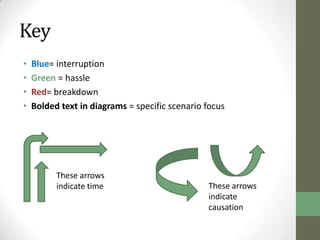
Key
•   Blue= interruption
•   Green = hassle
•   Red= breakdown
•   Bolded text in diagrams = specific scenario focus


          These arrows
          indicate time                         These arrows
                                                indicate
                                                causation
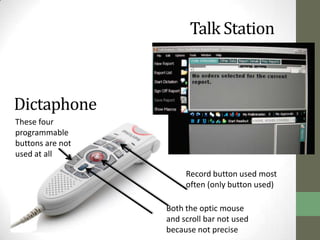
Talk Station


Dictaphone
These four
programmable
buttons are not
used at all

                       Record button used most
                       often (only button used)

                  Both the optic mouse
                  and scroll bar not used
                  because not precise
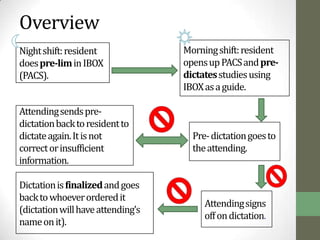
Overview
Night shift: resident              Morning shift: resident
does pre-lim in IBOX               opens up PACS and pre-
(PACS).                            dictates studies using
                                   IBOX as a guide.

Attending sends pre-
dictation back to resident to
dictate again. It is not             Pre- dictation goes to
correct or insufficient              the attending.
information.

Dictation is finalized and goes
back to whoever ordered it
                                        Attending signs
(dictation will have attending’s
                                        off on dictation.
name on it).
Overview Scenario
• Resident radiologist is dictating a case from a ER patient.
• Notices that he must get a hold of the attending radiologist
  immediately because this patient’s condition is critical.
• Must get a hold of the attending to sign off on the dictation
  before the results can go back to the ER physician who
  ordered the scan.
• Radiologist phones attending but there is no answer.
• Radiologist phones other radiologists to see where the
  attending may be or how to get a hold of the attending.
• Calls older radiologist to see what call should be made.
• The whole process has come to a halt because attending
  cannot be reached.
• Tension with the ER as they pressure radiologists to expedite
  the process. ER wants it done fast, RADS want it done
  thoroughly.
Talk Tech Error Scenario
• Radiologist is dictating a study (Dictaphone in hand, thumb on record
  button, eyes are on images).
• He dictates the word “pachyperitonitis”.
• Lets go of the recording button.
• Right after dictates that word, takes eyes of images and looks at talk
  station screen to double check that word was correctly dictated.
• Notices that the word has not been dictated.
• Presses record and speaks into the microphone “pachyperitonitis”.
• Sees the software did not recognize the word again.
• Dictates the word into microphone. Word is not recognized again.
• He puts down the Dictaphone on the desk.
• He uses his mouse to click where the word should be dictated.
• He starts typing the word “pachyperitonitis”.
• He picks up his Dictaphone again and continues dictating the rest of
  his study.
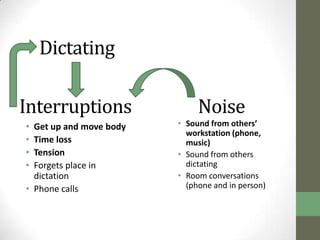
Dictating

Interruptions                 Noise
• Get up and move body   • Sound from others’
                           workstation (phone,
• Time loss                music)
• Tension                • Sound from others
• Forgets place in         dictating
  dictation              • Room conversations
• Phone calls              (phone and in person)
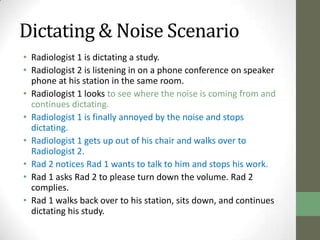
Dictating & Noise Scenario
• Radiologist 1 is dictating a study.
• Radiologist 2 is listening in on a phone conference on speaker
  phone at his station in the same room.
• Radiologist 1 looks to see where the noise is coming from and
  continues dictating.
• Radiologist 1 is finally annoyed by the noise and stops
  dictating.
• Radiologist 1 gets up out of his chair and walks over to
  Radiologist 2.
• Rad 2 notices Rad 1 wants to talk to him and stops his work.
• Rad 1 asks Rad 2 to please turn down the volume. Rad 2
  complies.
• Rad 1 walks back over to his station, sits down, and continues
  dictating his study.
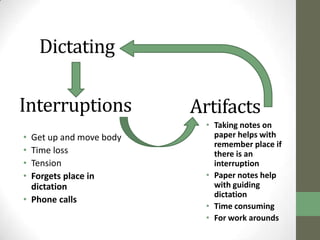
Dictating

Interruptions            Artifacts
                           • Taking notes on
• Get up and move body       paper helps with
                             remember place if
• Time loss                  there is an
• Tension                    interruption
• Forgets place in         • Paper notes help
  dictation                  with guiding
                             dictation
• Phone calls
                           • Time consuming
                           • For work arounds
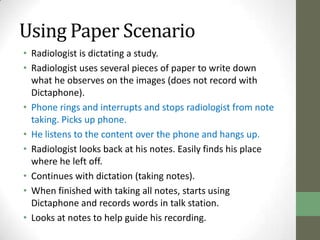
Using Paper Scenario
• Radiologist is dictating a study.
• Radiologist uses several pieces of paper to write down
  what he observes on the images (does not record with
  Dictaphone).
• Phone rings and interrupts and stops radiologist from note
  taking. Picks up phone.
• He listens to the content over the phone and hangs up.
• Radiologist looks back at his notes. Easily finds his place
  where he left off.
• Continues with dictation (taking notes).
• When finished with taking all notes, starts using
  Dictaphone and records words in talk station.
• Looks at notes to help guide his recording.
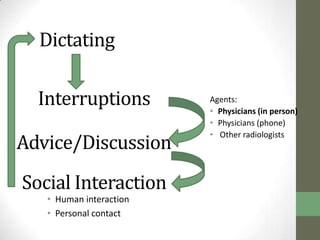
Dictating

  Interruptions          Agents:
                         • Physicians (in person)
                         • Physicians (phone)
                         • Other radiologists
Advice/Discussion
Social Interaction
   • Human interaction
   • Personal contact
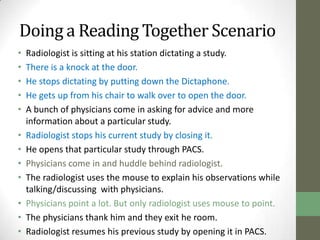
Doing a Reading Together Scenario
•   Radiologist is sitting at his station dictating a study.
•   There is a knock at the door.
•   He stops dictating by putting down the Dictaphone.
•   He gets up from his chair to walk over to open the door.
•   A bunch of physicians come in asking for advice and more
    information about a particular study.
•   Radiologist stops his current study by closing it.
•   He opens that particular study through PACS.
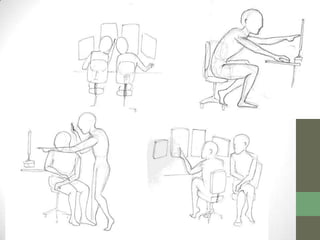
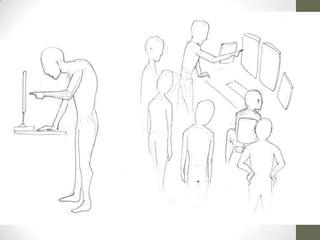
•   Physicians come in and huddle behind radiologist.
•   The radiologist uses the mouse to explain his observations while
    talking/discussing with physicians.
•   Physicians point a lot. But only radiologist uses mouse to point.
•   The physicians thank him and they exit he room.
•   Radiologist resumes his previous study by opening it in PACS.
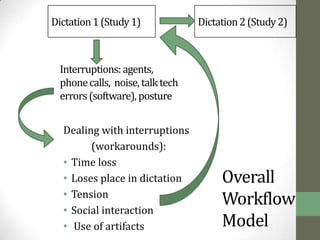
Dictation 1 (Study 1)             Dictation 2 (Study 2)


  Interruptions: agents,
  phone calls, noise, talk tech
  errors (software), posture


  Dealing with interruptions
        (workarounds):
  • Time loss
  • Loses place in dictation           Overall
  • Tension
                                       Workflow
  • Social interaction
  • Use of artifacts                   Model
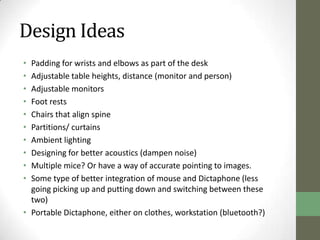
Design Ideas
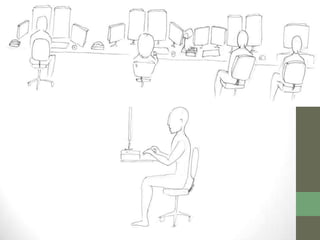
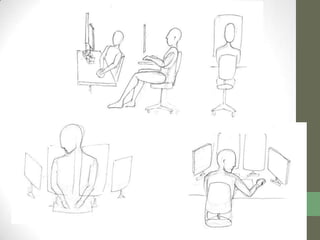
• Padding for wrists and elbows as part of the desk
• Adjustable table heights, distance (monitor and person)
• Adjustable monitors
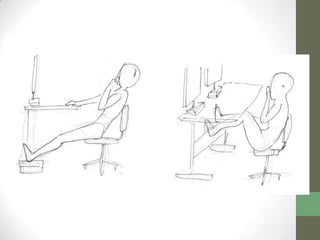
• Foot rests
• Chairs that align spine
• Partitions/ curtains
• Ambient lighting
• Designing for better acoustics (dampen noise)
• Multiple mice? Or have a way of accurate pointing to images.
• Some type of better integration of mouse and Dictaphone (less
  going picking up and putting down and switching between these
  two)
• Portable Dictaphone, either on clothes, workstation (bluetooth?)
Questions?

160 scenarios [dictation]

  • 1.
    Scenarios [Dictation] Cogs 160Final Presentation Jenny Chang, Jingwei Li, Samantha Tse June 2, 2011
  • 2.
    Key • Blue= interruption • Green = hassle • Red= breakdown • Bolded text in diagrams = specific scenario focus These arrows indicate time These arrows indicate causation
  • 3.
    Talk Station Dictaphone These four programmable buttonsare not used at all Record button used most often (only button used) Both the optic mouse and scroll bar not used because not precise
  • 4.
    Overview Night shift: resident Morning shift: resident does pre-lim in IBOX opens up PACS and pre- (PACS). dictates studies using IBOX as a guide. Attending sends pre- dictation back to resident to dictate again. It is not Pre- dictation goes to correct or insufficient the attending. information. Dictation is finalized and goes back to whoever ordered it Attending signs (dictation will have attending’s off on dictation. name on it).
  • 8.
    Overview Scenario • Residentradiologist is dictating a case from a ER patient. • Notices that he must get a hold of the attending radiologist immediately because this patient’s condition is critical. • Must get a hold of the attending to sign off on the dictation before the results can go back to the ER physician who ordered the scan. • Radiologist phones attending but there is no answer. • Radiologist phones other radiologists to see where the attending may be or how to get a hold of the attending. • Calls older radiologist to see what call should be made. • The whole process has come to a halt because attending cannot be reached. • Tension with the ER as they pressure radiologists to expedite the process. ER wants it done fast, RADS want it done thoroughly.
  • 9.
    Talk Tech ErrorScenario • Radiologist is dictating a study (Dictaphone in hand, thumb on record button, eyes are on images). • He dictates the word “pachyperitonitis”. • Lets go of the recording button. • Right after dictates that word, takes eyes of images and looks at talk station screen to double check that word was correctly dictated. • Notices that the word has not been dictated. • Presses record and speaks into the microphone “pachyperitonitis”. • Sees the software did not recognize the word again. • Dictates the word into microphone. Word is not recognized again. • He puts down the Dictaphone on the desk. • He uses his mouse to click where the word should be dictated. • He starts typing the word “pachyperitonitis”. • He picks up his Dictaphone again and continues dictating the rest of his study.
  • 10.
    Dictating Interruptions Noise • Get up and move body • Sound from others’ workstation (phone, • Time loss music) • Tension • Sound from others • Forgets place in dictating dictation • Room conversations • Phone calls (phone and in person)
  • 11.
    Dictating & NoiseScenario • Radiologist 1 is dictating a study. • Radiologist 2 is listening in on a phone conference on speaker phone at his station in the same room. • Radiologist 1 looks to see where the noise is coming from and continues dictating. • Radiologist 1 is finally annoyed by the noise and stops dictating. • Radiologist 1 gets up out of his chair and walks over to Radiologist 2. • Rad 2 notices Rad 1 wants to talk to him and stops his work. • Rad 1 asks Rad 2 to please turn down the volume. Rad 2 complies. • Rad 1 walks back over to his station, sits down, and continues dictating his study.
  • 12.
    Dictating Interruptions Artifacts • Taking notes on • Get up and move body paper helps with remember place if • Time loss there is an • Tension interruption • Forgets place in • Paper notes help dictation with guiding dictation • Phone calls • Time consuming • For work arounds
  • 13.
    Using Paper Scenario •Radiologist is dictating a study. • Radiologist uses several pieces of paper to write down what he observes on the images (does not record with Dictaphone). • Phone rings and interrupts and stops radiologist from note taking. Picks up phone. • He listens to the content over the phone and hangs up. • Radiologist looks back at his notes. Easily finds his place where he left off. • Continues with dictation (taking notes). • When finished with taking all notes, starts using Dictaphone and records words in talk station. • Looks at notes to help guide his recording.
  • 15.
    Dictating Interruptions Agents: • Physicians (in person) • Physicians (phone) • Other radiologists Advice/Discussion Social Interaction • Human interaction • Personal contact
  • 16.
    Doing a ReadingTogether Scenario • Radiologist is sitting at his station dictating a study. • There is a knock at the door. • He stops dictating by putting down the Dictaphone. • He gets up from his chair to walk over to open the door. • A bunch of physicians come in asking for advice and more information about a particular study. • Radiologist stops his current study by closing it. • He opens that particular study through PACS. • Physicians come in and huddle behind radiologist. • The radiologist uses the mouse to explain his observations while talking/discussing with physicians. • Physicians point a lot. But only radiologist uses mouse to point. • The physicians thank him and they exit he room. • Radiologist resumes his previous study by opening it in PACS.
  • 18.
    Dictation 1 (Study1) Dictation 2 (Study 2) Interruptions: agents, phone calls, noise, talk tech errors (software), posture Dealing with interruptions (workarounds): • Time loss • Loses place in dictation Overall • Tension Workflow • Social interaction • Use of artifacts Model
  • 19.
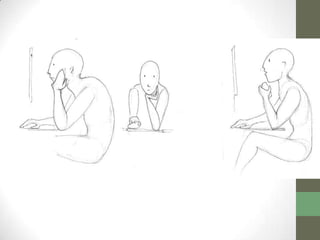
    Design Ideas • Paddingfor wrists and elbows as part of the desk • Adjustable table heights, distance (monitor and person) • Adjustable monitors • Foot rests • Chairs that align spine • Partitions/ curtains • Ambient lighting • Designing for better acoustics (dampen noise) • Multiple mice? Or have a way of accurate pointing to images. • Some type of better integration of mouse and Dictaphone (less going picking up and putting down and switching between these two) • Portable Dictaphone, either on clothes, workstation (bluetooth?)
  • 22.