Accountability
Patient
 Health care organization
 other professionals
 the government
 third-party payers
Professional associations
Lawyers and courts etc
Models of
Professionalism
• Professionals
 provide professional expertise,
 have the freedom to act on their clients’/Pt
behalf,
 practice ethical principles,
 demonstrate accountability in their actions.
Three models of
Professionalism
• Ozar’s
1. COMMERCIAL MODEL
• professionalism is a commercial interchange in
which physical therapy is a product or
commodity and the therapist must compete with
the patient and other professionals to sell
services and maximize profit.
Any duties of the therapist toward the patient
are based on contractual agreements.
Guild Model
• the profession is the transmitter of expertise,
competence, and moral standards.
• The PT functions in a paternalistic role,
providing services to a patient who is the
uninformed, passive recipient of professional
expertise
Interactive model
• PT ,Patient each have different function
• Because the community has given professional
status, the PT is obligated to care for the patient
in need
• Dialogue ,mutual
decisions ,discussion ,autonomy of Pt
• Ideal model for patient care.
• “Enhancing and supporting the patient’s capacity
to make choices”
Physical Therapy & concept of
Professionalism
In early years Physical Therapy’s effort to
professionalize field concentrated on
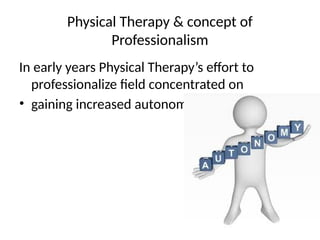
• gaining increased autonomy
Expertise through improving education and
scholarship,
To Gain public recognition
enhancing political power through lobbying efforts
Public image
• 1960 to 1990
• PTs wondered whether
physical therapy was a profession
• concerned with public image of physical therapy
Same time struggle for appropriate degree to offer
baccalaureate…..masters…DPT degree
• DPT degree links various aspects of
professionalization:
• autonomy, attainment of adequate power, and
status.
• The perception is that the DPT will enhance
professionalization,
• enabling physical therapy to enjoy the
professional status and powers
Core values of professionalism
• Accountability
• Altruism
• compassion/caring
• Excellence
• integrity
• professional duty
• social responsibility
Accountability
• A process by which a party justifies its actions &
policies
• active acceptance
of the responsibility
for the diverse roles,
obligations,
and actions of the
physical therapist
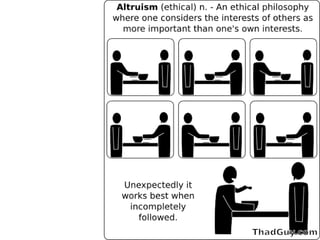
Alturism
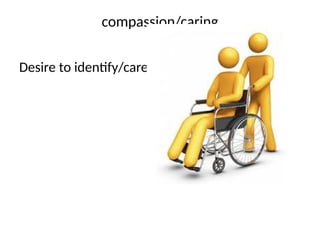
compassion/caring
Desire to identify/care
Excellence
consistently using current knowledge and
theory while understanding personal limits
development of new knowledge.
Integrity
• Integrity is steadfast adherence to high ethical
principles or professional standards
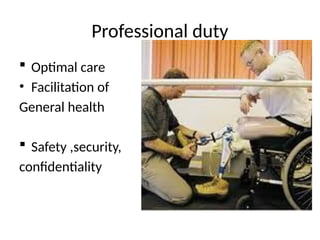
Professional duty
 Optimal care
• Facilitation of
General health
 Safety ,security,
confidentiality
Social responsibility
• Social needs of Pt
• Social/community volunteer
• Collaboration e other health professionals
PROFESSIONALISM AS DESCRIBED IN THE
PHYSICAL THERAPY LITERATURE
• The seven core values of professionalism
• Accountability
• Altruism
• compassion/caring
• Excellence
• integrity
• professional duty
• social responsibility
Individual professionalism
• whether professionals are living up to
professional ideals
• reflection on the personal meaning of
professionalism is crucial for every professional
• Why Oath in PT practice.
• the process of formulating or revising an oath can
be helpful in conceptualizing the obligations and
commitments that a person or group believe are
involved in professional life
Professional organization
• Offers number of functions for its members and
profession ,making structure for meeting responsibilities
Functions:
Ecnomic & social welfare
Practitionaire to ind.organization
Social & moral support
Reinforcing members
Enabling practice easy for Professionals
Help for professional role & education
Obligations
• Setting standards for practice & research
• Ensuring qualification for recruiting in profession
• Maintaining professional traditions
• Anticipating future ,raising expectations
• Advancing well found research , establishing
journals for researches
• Justifying scope of practice
• Spoke person on behalf of profession
• Provide opportunities by selecting representatives
THE WORLD CONFEDERATION FOR PHYSICAL
THERAPY (WCPT)
• 11 founding members (Australia ,Canada , Denmark,
England , Finland, New Zealand, Norway, South Africa,
Sweden, United States, and West Germany)
• first session in 1951
• 82 member organizations,
• more than 225,000 PTs worldwide
• Representing PT internationally
• Collaboration e organization
• Encouraging high standard edu,research,practice
• Communication & exchange of info b/w regions, members

1587315973-3468855lec-7-core-values.pptx

  • 2.
    Accountability Patient  Health careorganization  other professionals  the government  third-party payers Professional associations Lawyers and courts etc
  • 3.
  • 4.
    • Professionals  provideprofessional expertise,  have the freedom to act on their clients’/Pt behalf,  practice ethical principles,  demonstrate accountability in their actions.
  • 5.
    Three models of Professionalism •Ozar’s 1. COMMERCIAL MODEL • professionalism is a commercial interchange in which physical therapy is a product or commodity and the therapist must compete with the patient and other professionals to sell services and maximize profit. Any duties of the therapist toward the patient are based on contractual agreements.
  • 6.
    Guild Model • theprofession is the transmitter of expertise, competence, and moral standards. • The PT functions in a paternalistic role, providing services to a patient who is the uninformed, passive recipient of professional expertise
  • 7.
    Interactive model • PT,Patient each have different function • Because the community has given professional status, the PT is obligated to care for the patient in need • Dialogue ,mutual decisions ,discussion ,autonomy of Pt • Ideal model for patient care. • “Enhancing and supporting the patient’s capacity to make choices”
  • 8.
    Physical Therapy &concept of Professionalism In early years Physical Therapy’s effort to professionalize field concentrated on • gaining increased autonomy
  • 9.
    Expertise through improvingeducation and scholarship,
  • 10.
    To Gain publicrecognition
  • 11.
    enhancing political powerthrough lobbying efforts
  • 12.
    Public image • 1960to 1990 • PTs wondered whether physical therapy was a profession • concerned with public image of physical therapy Same time struggle for appropriate degree to offer baccalaureate…..masters…DPT degree
  • 13.
    • DPT degreelinks various aspects of professionalization: • autonomy, attainment of adequate power, and status. • The perception is that the DPT will enhance professionalization, • enabling physical therapy to enjoy the professional status and powers
  • 14.
    Core values ofprofessionalism • Accountability • Altruism • compassion/caring • Excellence • integrity • professional duty • social responsibility
  • 15.
    Accountability • A processby which a party justifies its actions & policies • active acceptance of the responsibility for the diverse roles, obligations, and actions of the physical therapist
  • 16.
  • 17.
  • 18.
    Excellence consistently using currentknowledge and theory while understanding personal limits development of new knowledge.
  • 19.
    Integrity • Integrity issteadfast adherence to high ethical principles or professional standards
  • 20.
    Professional duty  Optimalcare • Facilitation of General health  Safety ,security, confidentiality
  • 21.
    Social responsibility • Socialneeds of Pt • Social/community volunteer • Collaboration e other health professionals
  • 22.
    PROFESSIONALISM AS DESCRIBEDIN THE PHYSICAL THERAPY LITERATURE • The seven core values of professionalism • Accountability • Altruism • compassion/caring • Excellence • integrity • professional duty • social responsibility
  • 23.
    Individual professionalism • whetherprofessionals are living up to professional ideals • reflection on the personal meaning of professionalism is crucial for every professional • Why Oath in PT practice. • the process of formulating or revising an oath can be helpful in conceptualizing the obligations and commitments that a person or group believe are involved in professional life
  • 24.
    Professional organization • Offersnumber of functions for its members and profession ,making structure for meeting responsibilities Functions: Ecnomic & social welfare Practitionaire to ind.organization Social & moral support Reinforcing members Enabling practice easy for Professionals Help for professional role & education
  • 25.
    Obligations • Setting standardsfor practice & research • Ensuring qualification for recruiting in profession • Maintaining professional traditions • Anticipating future ,raising expectations • Advancing well found research , establishing journals for researches • Justifying scope of practice • Spoke person on behalf of profession • Provide opportunities by selecting representatives
  • 26.
    THE WORLD CONFEDERATIONFOR PHYSICAL THERAPY (WCPT) • 11 founding members (Australia ,Canada , Denmark, England , Finland, New Zealand, Norway, South Africa, Sweden, United States, and West Germany) • first session in 1951 • 82 member organizations, • more than 225,000 PTs worldwide • Representing PT internationally • Collaboration e organization • Encouraging high standard edu,research,practice • Communication & exchange of info b/w regions, members

Editor's Notes

  • #5 Commodity(Marketable item)
  • #6 Guild: An association of persons of the same trade or pursuits, formed to protect mutual interests and maintain standards Paternalistic :A policy or practice of treating or governing people in a fatherly manner, especially by providing for their needs without giving them rights or responsibilities.
  • #16  placing the needs of the patient/client ahead of the physical therapist’s self interest.