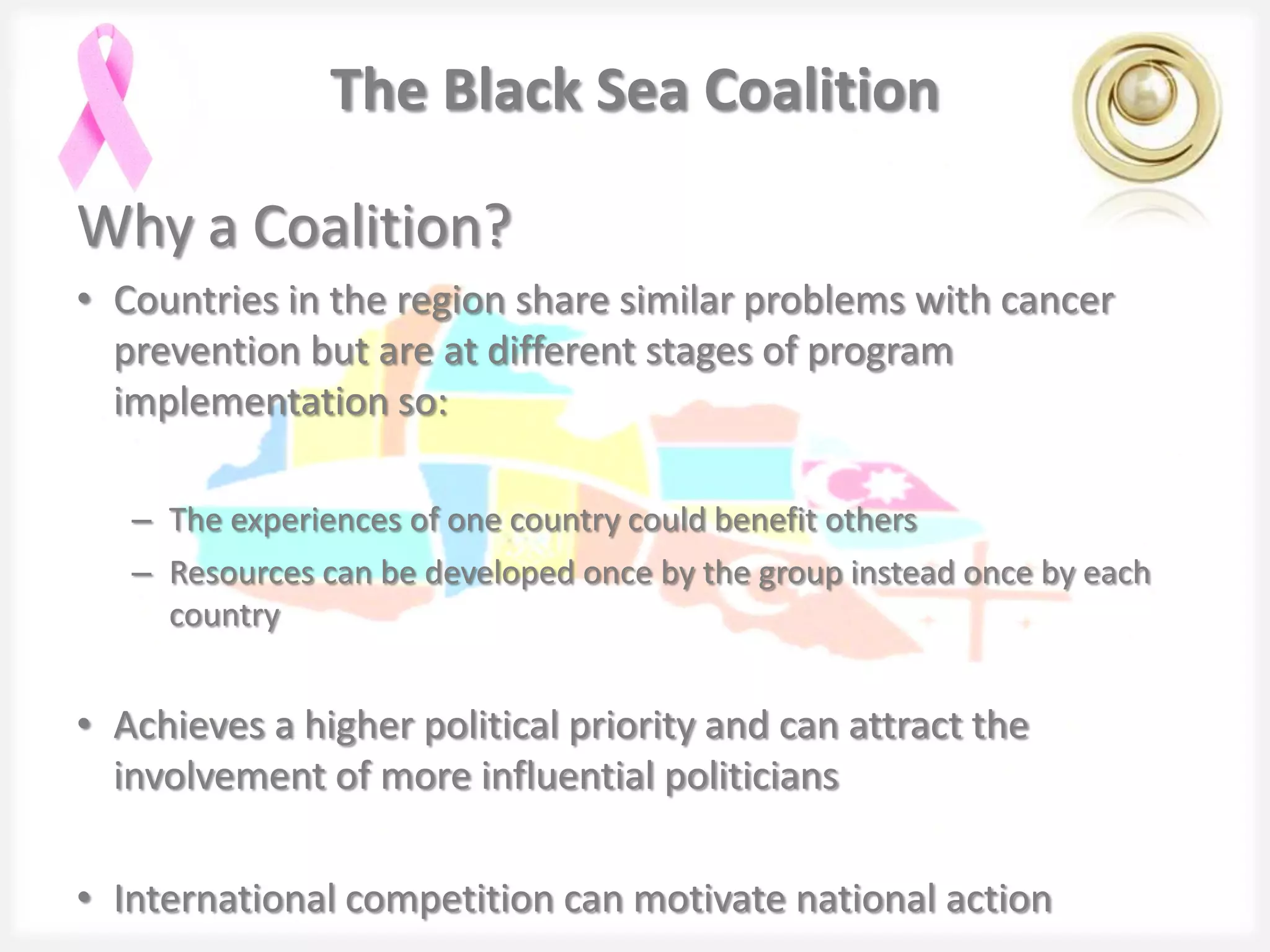
The Black Sea Countries Coalition
                 on
Breast and Cervical Cancer Prevention


                                 Maka Maglakelidze, M.D., MScIH
           Technical Assistant of the Black Sea Countries Coalition
The Black Sea Coalition

What is the Black Sea Coalition?

• A voluntary alliance of policy makers, technical
  experts and clinicians from the countries of the
  Black Sea basin and South Caucasus who wish to
  cooperate and share knowledge to improve breast
  and cervical cancer prevention in their countries
The Black Sea Coalition

Why a Coalition?
• Countries in the region share similar problems with cancer
  prevention but are at different stages of program
  implementation so:

   – The experiences of one country could benefit others
   – Resources can be developed once by the group instead once by each
     country


• Achieves a higher political priority and can attract the
  involvement of more influential politicians

• International competition can motivate national action
Key points supporting
                 the formation of the Coalition

• Ms Sandra Elisabeth Roelofs, First Lady of Georgia and UNFPA
  CO Georgia:
   – Many years of dedication of Mrs. Roelofs towards the issues of healthcare has
     grew into fruitful collaboration of Mrs. Roelofs and UNFPA CO Georgia
• Productive partnership that has realized many successes for
  women’s health in Georgia:
   – The establishment of the breast and cervical cancer screening programs in
     Tbilisi
   – The agreement of the Georgian government to expand the Tbilisi screening
     programs to the rest of Georgia
• Taking the efforts to support knowledge sharing and to
  strengthen partnerships on a regional level:
   ― The 1st Black Sea Countries Conference on Partnership for Breast and Cervical
     Cancer Prevention, held in September 2009 (“Batumi Declaration”)
   ― Support of UNFPA CO offices and the Ministries of Health of Armenia,
     Azerbaijan, Bulgaria, Georgia, Moldova, Romania, Turkey and Ukraine
The Black Sea Coalition

Objectives:
• Identification & sharing of “successful” models
• Use of the website as forum for sharing relevant
  knowledge
• Establishment of regional training centers for
  staff capacity development
• Cooperative development of guidelines &
  protocols in accordance with international
  standards
The Black Sea Coalition

Objectives:
• Joint procurement of equipment & supplies
• Joint programs for advocacy, awareness raising,
  public health education and research
• Development of joint proposals for funding
  through regional programs promoting
  cooperation among the Black Sea countries
• Promote interaction between the member
  countries and relevant international organizations
Coalition Action Plan
                            Strategic Directions:

1. To support effective integration of Breast and Cervical Cancer prevention
     programs into national development agendas.

2. To support public health education and communication on Breast and
   Cervical Cancer prevention.

3. To support capacity development of infrastructure and of
   material/technical basis in the field, at country and regional levels.

4. To support capacity development of the human resources in the field, at
   country and regional levels.

5. To support the development or improvement health information systems
   on Breast and Cervical Cancer.
Financial support

•   Support of the Secretariat for 2010-2011:
― UNFPA CO Georgia
•   Support of the travel/accomodation of the Steering
    Committee (SC) members, UNFPA representatives for the
    SC meetings:
― UNFPA COs
― Ministries of Health
•   Organization of the SC meetings:
― Ministry of Health and UNFPA CO of the hosting country
•   Special arrangements and security measures related to the
    visit of high level political figures:
― Hosting government of the SC meeting
The Black Sea Coalition

Actions so far:
• Agreement of Terms of Reference & Action Plan
• Election of the Steering Committee
• Launch of the website: www.bsc-coalition.com
• Survey of B&C cancer prevention in each country
• Summary of data on awareness and attitudes to B&C
  cancer in each country
• Development of national capacity assessment tools for
  each of breast and cervical cancers
• Capacity building actions running in Georgia: cervical
  cytology, mammography and cancer registration
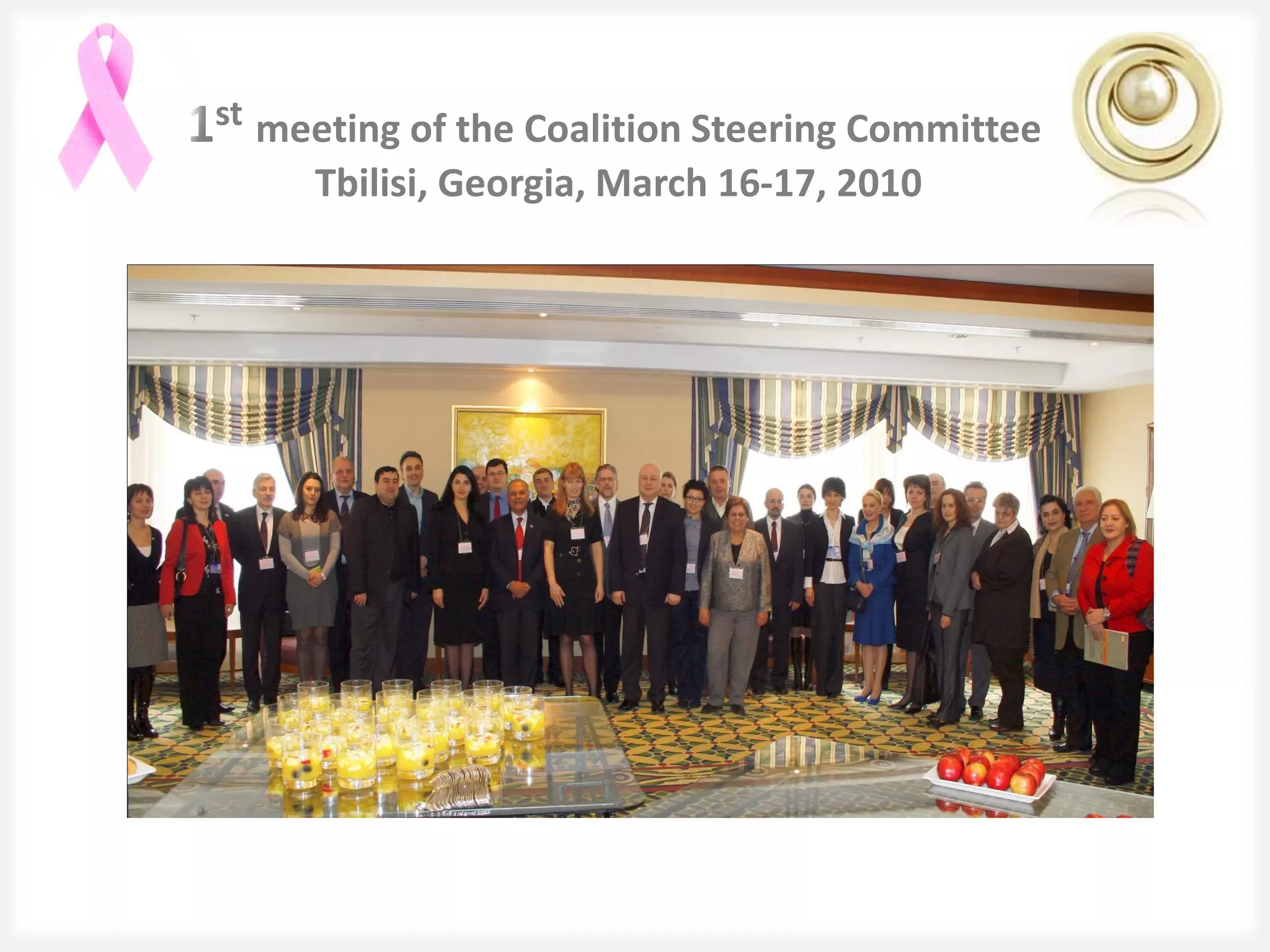
1st meeting of the Coalition Steering Committee
       Tbilisi, Georgia, March 16-17, 2010
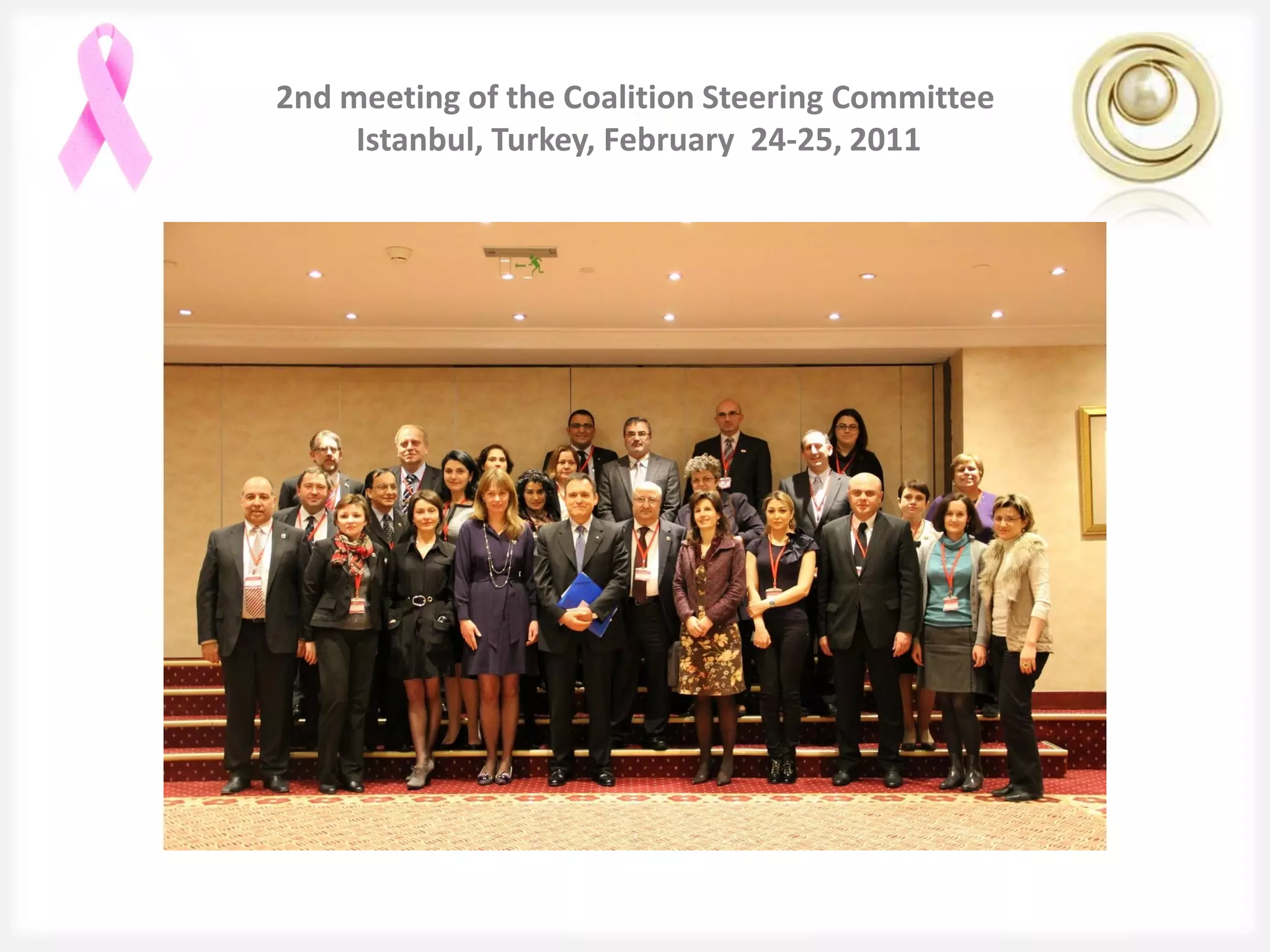
2nd meeting of the Coalition Steering Committee
     Istanbul, Turkey, February 24-25, 2011
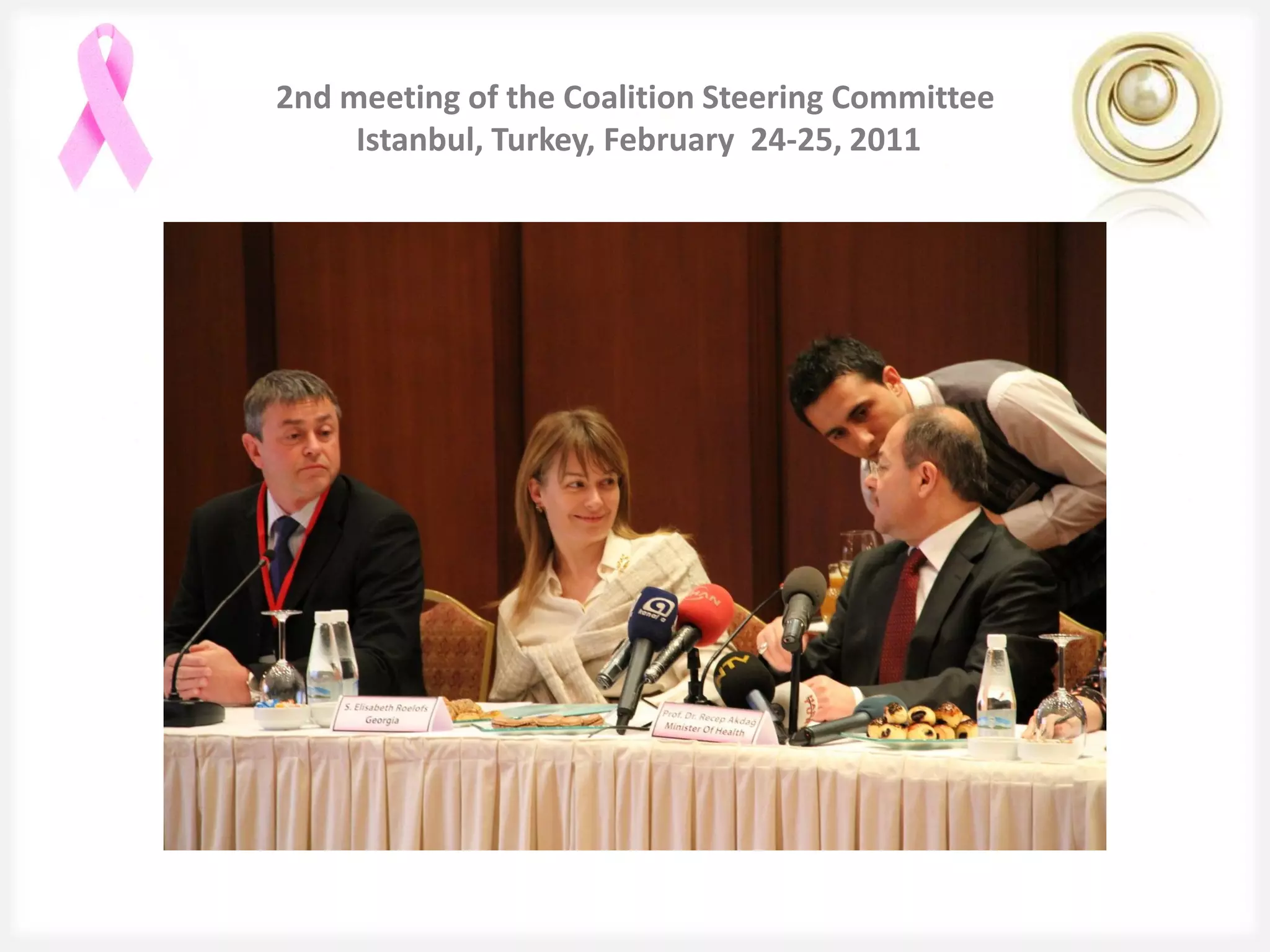
2nd meeting of the Coalition Steering Committee
     Istanbul, Turkey, February 24-25, 2011
Coalition’s role in
                 global health architecture
• MDGs:
  MDGs 4,5 and 6 are focused on global health problems that are addressing or are closely
  linked to women health and MDG 8 itself calls for a global partnership for development.


• A “health lens” on foreign policy:
  linking health and international policies acquiring more and more strategic importance (Oslo
  Ministerial Declaration 2008, the Economic and Social Council (ECOSOC) Ministerial
  Declaration on implementing the internationally agreed goals and commitments in regard to
  global public health 2009)


• Strengthened focus of the international institutions on cancer
  prevention:
  with the increasing trend of premature deaths caused by NCDs, the focus on the
  preventative measures for cancers and Breast and Cervical Cancers particularly as the leading
  forms of cancers in women , from the high level international institutions is strengthened
  (NCDs resolution of the UN General Assembly 2010).
Thank you for your attention…

The Black Sea Countries Coalition on Breast and Cervical Cancer Prevention

  • 1.
    The Black SeaCountries Coalition on Breast and Cervical Cancer Prevention Maka Maglakelidze, M.D., MScIH Technical Assistant of the Black Sea Countries Coalition
  • 2.
    The Black SeaCoalition What is the Black Sea Coalition? • A voluntary alliance of policy makers, technical experts and clinicians from the countries of the Black Sea basin and South Caucasus who wish to cooperate and share knowledge to improve breast and cervical cancer prevention in their countries
  • 3.
    The Black SeaCoalition Why a Coalition? • Countries in the region share similar problems with cancer prevention but are at different stages of program implementation so: – The experiences of one country could benefit others – Resources can be developed once by the group instead once by each country • Achieves a higher political priority and can attract the involvement of more influential politicians • International competition can motivate national action
  • 4.
    Key points supporting the formation of the Coalition • Ms Sandra Elisabeth Roelofs, First Lady of Georgia and UNFPA CO Georgia: – Many years of dedication of Mrs. Roelofs towards the issues of healthcare has grew into fruitful collaboration of Mrs. Roelofs and UNFPA CO Georgia • Productive partnership that has realized many successes for women’s health in Georgia: – The establishment of the breast and cervical cancer screening programs in Tbilisi – The agreement of the Georgian government to expand the Tbilisi screening programs to the rest of Georgia • Taking the efforts to support knowledge sharing and to strengthen partnerships on a regional level: ― The 1st Black Sea Countries Conference on Partnership for Breast and Cervical Cancer Prevention, held in September 2009 (“Batumi Declaration”) ― Support of UNFPA CO offices and the Ministries of Health of Armenia, Azerbaijan, Bulgaria, Georgia, Moldova, Romania, Turkey and Ukraine
  • 5.
    The Black SeaCoalition Objectives: • Identification & sharing of “successful” models • Use of the website as forum for sharing relevant knowledge • Establishment of regional training centers for staff capacity development • Cooperative development of guidelines & protocols in accordance with international standards
  • 6.
    The Black SeaCoalition Objectives: • Joint procurement of equipment & supplies • Joint programs for advocacy, awareness raising, public health education and research • Development of joint proposals for funding through regional programs promoting cooperation among the Black Sea countries • Promote interaction between the member countries and relevant international organizations
  • 7.
    Coalition Action Plan Strategic Directions: 1. To support effective integration of Breast and Cervical Cancer prevention programs into national development agendas. 2. To support public health education and communication on Breast and Cervical Cancer prevention. 3. To support capacity development of infrastructure and of material/technical basis in the field, at country and regional levels. 4. To support capacity development of the human resources in the field, at country and regional levels. 5. To support the development or improvement health information systems on Breast and Cervical Cancer.
  • 8.
    Financial support • Support of the Secretariat for 2010-2011: ― UNFPA CO Georgia • Support of the travel/accomodation of the Steering Committee (SC) members, UNFPA representatives for the SC meetings: ― UNFPA COs ― Ministries of Health • Organization of the SC meetings: ― Ministry of Health and UNFPA CO of the hosting country • Special arrangements and security measures related to the visit of high level political figures: ― Hosting government of the SC meeting
  • 9.
    The Black SeaCoalition Actions so far: • Agreement of Terms of Reference & Action Plan • Election of the Steering Committee • Launch of the website: www.bsc-coalition.com • Survey of B&C cancer prevention in each country • Summary of data on awareness and attitudes to B&C cancer in each country • Development of national capacity assessment tools for each of breast and cervical cancers • Capacity building actions running in Georgia: cervical cytology, mammography and cancer registration
  • 10.
    1st meeting ofthe Coalition Steering Committee Tbilisi, Georgia, March 16-17, 2010
  • 11.
    2nd meeting ofthe Coalition Steering Committee Istanbul, Turkey, February 24-25, 2011
  • 12.
    2nd meeting ofthe Coalition Steering Committee Istanbul, Turkey, February 24-25, 2011
  • 13.
    Coalition’s role in global health architecture • MDGs: MDGs 4,5 and 6 are focused on global health problems that are addressing or are closely linked to women health and MDG 8 itself calls for a global partnership for development. • A “health lens” on foreign policy: linking health and international policies acquiring more and more strategic importance (Oslo Ministerial Declaration 2008, the Economic and Social Council (ECOSOC) Ministerial Declaration on implementing the internationally agreed goals and commitments in regard to global public health 2009) • Strengthened focus of the international institutions on cancer prevention: with the increasing trend of premature deaths caused by NCDs, the focus on the preventative measures for cancers and Breast and Cervical Cancers particularly as the leading forms of cancers in women , from the high level international institutions is strengthened (NCDs resolution of the UN General Assembly 2010).
  • 14.
    Thank you foryour attention…