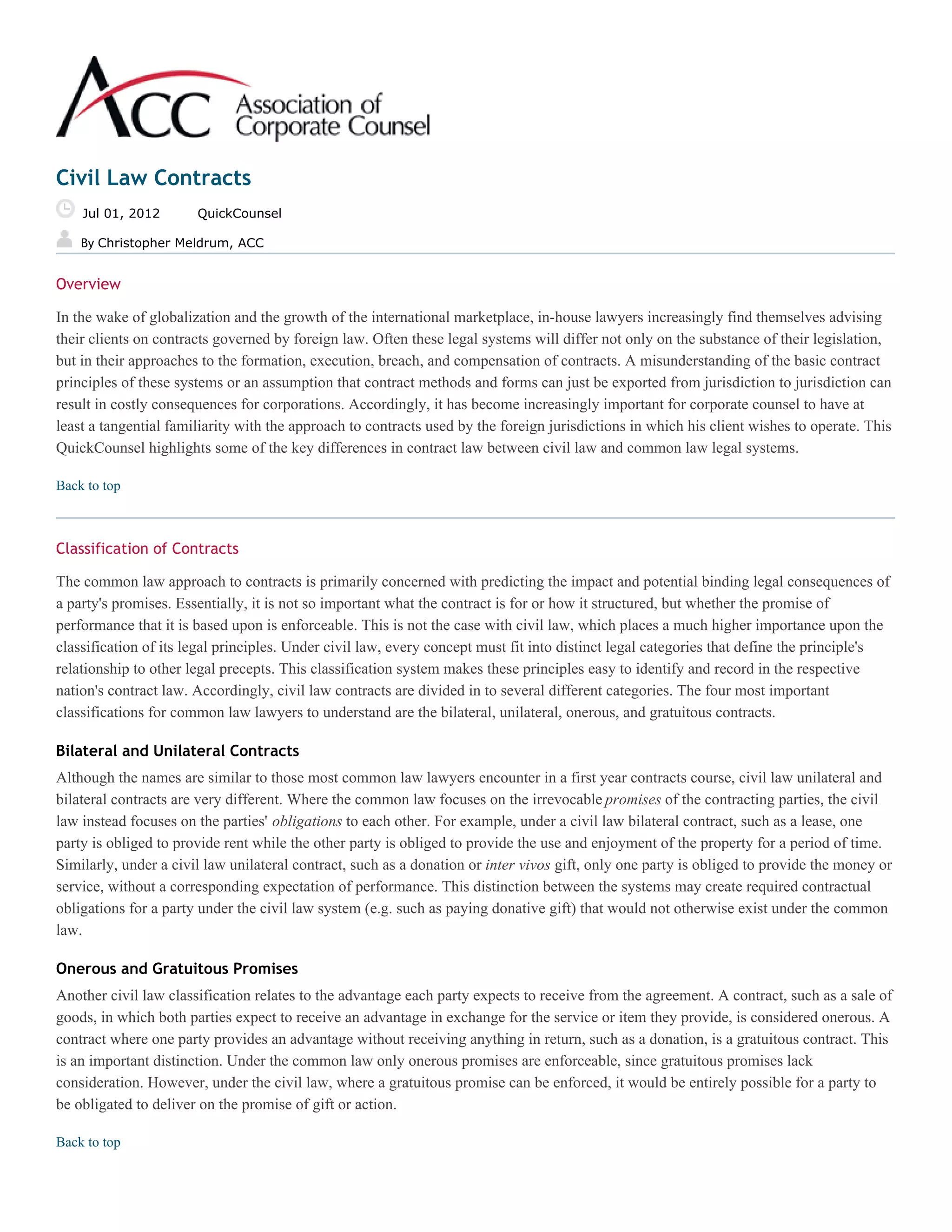
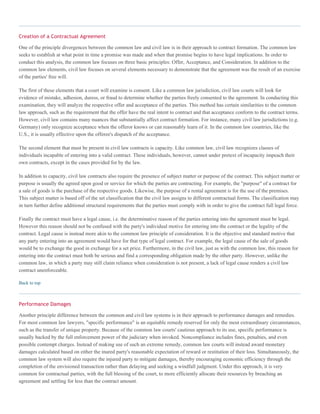
Civil and common law systems differ in their approaches to contract law in several key ways:
1. Civil law places more importance on classifying contracts into categories like bilateral, unilateral, onerous, and gratuitous. These classifications further define contractual requirements.
2. Formation principles in civil law, like consent, capacity, subject matter and legal cause, are similar to but have nuances from common law's offer, acceptance, and consideration.
3. Specific performance is the primary remedy in civil law, while common law prefers monetary damages and mitigation. Civil law courts have weaker enforcement powers for specific performance.