12TH FIVE YEAR PLAN APREM P JOY SC13145 
Faster , More Inclusive and Sustainable Growth
“ for the first time in history, 4 amongst the 10 richest people of 2009 were indians , but three out of every ten poor people in the world in the same year were also indians”
11th Plan: Exclusion and Deprivations 
High growth rate of 7.9% (occasional 9%) 
Human Development Index- dropped to 128th to 134th(rank) in 2011 
Large inequity in incomes. 
 India’s Gini Coefficient has climbed from 0.32 to 0.38 with 0 being the ideal score. 
India spends an mere 5 per cent of its GDP on social protection schemes as compared to more than 15 per cent by Brazil 
“top 10 per cent wage earners in India now make 12 times more than the bottom 10 per cent” 
-OECD Report 2011
12TH FIVE YEAR PLAN
GROWTH STRATEGY 
•Short Term : Reverse the current growth slowdown : 
5.5 percent in 2012-13, 
Aim for 6.5 to 7 percent in 2013-14 
Longer Term : Get back to high growth. This requires accelerating from 5.5% in 2012-13 to over 9% in last two years 
Total overlay of 35,68,626 crore for Centre and states at 2006-07 prices.
INCLUSIVENESS 
a growth process which has the structural characteristics that will promote inclusiveness. 
faster growth in manufacturing, with particular emphasis on the medium, small and micro enterprises --> best scope for absorbing labour currently employed in low productivity occupations. 
special emphasis on expanding access to education, health, sanitation and clean drinking water. 
Improve conditions for SCs, STs, OBCs, Minorities. 
Close gender gaps. 
Balanced development of all the regions.
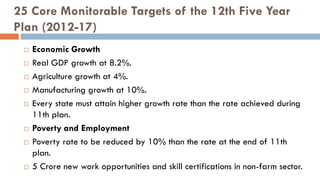
25 Core Monitorable Targets of the 12th Five Year Plan (2012-17) 
Economic Growth 
Real GDP growth at 8.2%. 
Agriculture growth at 4%. 
Manufacturing growth at 10%. 
Every state must attain higher growth rate than the rate achieved during 11th plan. 
Poverty and Employment 
Poverty rate to be reduced by 10% than the rate at the end of 11th plan. 
5 Crore new work opportunities and skill certifications in non-farm sector.
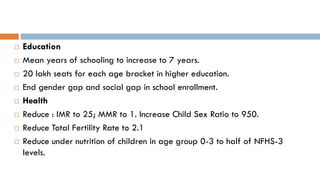
Education 
Mean years of schooling to increase to 7 years. 
20 lakh seats for each age bracket in higher education. 
End gender gap and social gap in school enrollment. 
Health 
Reduce : IMR to 25; MMR to 1. Increase Child Sex Ratio to 950. 
Reduce Total Fertility Rate to 2.1 
Reduce under nutrition of children in age group 0-3 to half of NFHS-3 levels.
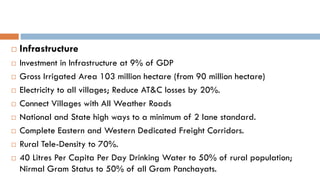
Infrastructure 
Investment in Infrastructure at 9% of GDP 
Gross Irrigated Area 103 million hectare (from 90 million hectare) 
Electricity to all villages; Reduce AT&C losses by 20%. 
Connect Villages with All Weather Roads 
National and State high ways to a minimum of 2 lane standard. 
Complete Eastern and Western Dedicated Freight Corridors. 
Rural Tele-Density to 70%. 
40 Litres Per Capita Per Day Drinking Water to 50% of rural population; Nirmal Gram Status to 50% of all Gram Panchayats.
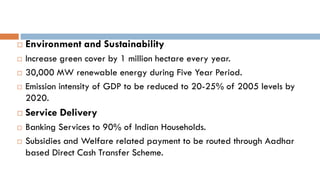
Environment and Sustainability 
Increase green cover by 1 million hectare every year. 
30,000 MW renewable energy during Five Year Period. 
Emission intensity of GDP to be reduced to 20-25% of 2005 levels by 2020. 
Service Delivery 
Banking Services to 90% of Indian Households. 
Subsidies and Welfare related payment to be routed through Aadhar based Direct Cash Transfer Scheme.
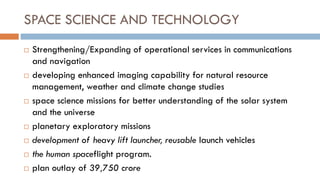
SPACE SCIENCE AND TECHNOLOGY 
Strengthening/Expanding of operational services in communications and navigation 
developing enhanced imaging capability for natural resource management, weather and climate change studies 
space science missions for better understanding of the solar system and the universe 
planetary exploratory missions 
development of heavy lift launcher, reusable launch vehicles 
the human spaceflight program. 
plan outlay of 39,750 crore
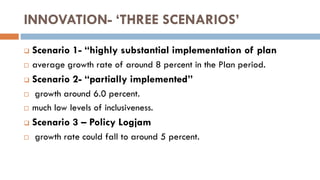
INNOVATION- ‘THREE SCENARIOS’ 
Scenario 1- “highly substantial implementation of plan 
average growth rate of around 8 percent in the Plan period. 
Scenario 2- “partially implemented” 
 growth around 6.0 percent. 
much low levels of inclusiveness. 
Scenario 3 – Policy Logjam 
 growth rate could fall to around 5 percent.
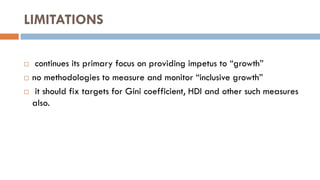
LIMITATIONS 
 continues its primary focus on providing impetus to “growth” 
no methodologies to measure and monitor “inclusive growth” 
 it should fix targets for Gini coefficient, HDI and other such measures also.
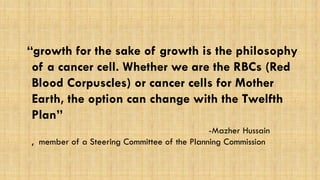
“growth for the sake of growth is the philosophy of a cancer cell. Whether we are the RBCs (Red Blood Corpuscles) or cancer cells for Mother Earth, the option can change with the Twelfth Plan” 
-Mazher Hussain , member of a Steering Committee of the Planning Commission

12th five year plan

  • 1.
    12TH FIVE YEARPLAN APREM P JOY SC13145 Faster , More Inclusive and Sustainable Growth
  • 2.
    “ for thefirst time in history, 4 amongst the 10 richest people of 2009 were indians , but three out of every ten poor people in the world in the same year were also indians”
  • 3.
    11th Plan: Exclusionand Deprivations High growth rate of 7.9% (occasional 9%) Human Development Index- dropped to 128th to 134th(rank) in 2011 Large inequity in incomes.  India’s Gini Coefficient has climbed from 0.32 to 0.38 with 0 being the ideal score. India spends an mere 5 per cent of its GDP on social protection schemes as compared to more than 15 per cent by Brazil “top 10 per cent wage earners in India now make 12 times more than the bottom 10 per cent” -OECD Report 2011
  • 4.
  • 5.
    GROWTH STRATEGY •ShortTerm : Reverse the current growth slowdown : 5.5 percent in 2012-13, Aim for 6.5 to 7 percent in 2013-14 Longer Term : Get back to high growth. This requires accelerating from 5.5% in 2012-13 to over 9% in last two years Total overlay of 35,68,626 crore for Centre and states at 2006-07 prices.
  • 6.
    INCLUSIVENESS a growthprocess which has the structural characteristics that will promote inclusiveness. faster growth in manufacturing, with particular emphasis on the medium, small and micro enterprises --> best scope for absorbing labour currently employed in low productivity occupations. special emphasis on expanding access to education, health, sanitation and clean drinking water. Improve conditions for SCs, STs, OBCs, Minorities. Close gender gaps. Balanced development of all the regions.
  • 7.
    25 Core MonitorableTargets of the 12th Five Year Plan (2012-17) Economic Growth Real GDP growth at 8.2%. Agriculture growth at 4%. Manufacturing growth at 10%. Every state must attain higher growth rate than the rate achieved during 11th plan. Poverty and Employment Poverty rate to be reduced by 10% than the rate at the end of 11th plan. 5 Crore new work opportunities and skill certifications in non-farm sector.
  • 8.
    Education Mean yearsof schooling to increase to 7 years. 20 lakh seats for each age bracket in higher education. End gender gap and social gap in school enrollment. Health Reduce : IMR to 25; MMR to 1. Increase Child Sex Ratio to 950. Reduce Total Fertility Rate to 2.1 Reduce under nutrition of children in age group 0-3 to half of NFHS-3 levels.
  • 9.
    Infrastructure Investment inInfrastructure at 9% of GDP Gross Irrigated Area 103 million hectare (from 90 million hectare) Electricity to all villages; Reduce AT&C losses by 20%. Connect Villages with All Weather Roads National and State high ways to a minimum of 2 lane standard. Complete Eastern and Western Dedicated Freight Corridors. Rural Tele-Density to 70%. 40 Litres Per Capita Per Day Drinking Water to 50% of rural population; Nirmal Gram Status to 50% of all Gram Panchayats.
  • 10.
    Environment and Sustainability Increase green cover by 1 million hectare every year. 30,000 MW renewable energy during Five Year Period. Emission intensity of GDP to be reduced to 20-25% of 2005 levels by 2020. Service Delivery Banking Services to 90% of Indian Households. Subsidies and Welfare related payment to be routed through Aadhar based Direct Cash Transfer Scheme.
  • 11.
    SPACE SCIENCE ANDTECHNOLOGY Strengthening/Expanding of operational services in communications and navigation developing enhanced imaging capability for natural resource management, weather and climate change studies space science missions for better understanding of the solar system and the universe planetary exploratory missions development of heavy lift launcher, reusable launch vehicles the human spaceflight program. plan outlay of 39,750 crore
  • 12.
    INNOVATION- ‘THREE SCENARIOS’ Scenario 1- “highly substantial implementation of plan average growth rate of around 8 percent in the Plan period. Scenario 2- “partially implemented”  growth around 6.0 percent. much low levels of inclusiveness. Scenario 3 – Policy Logjam  growth rate could fall to around 5 percent.
  • 13.
    LIMITATIONS  continuesits primary focus on providing impetus to “growth” no methodologies to measure and monitor “inclusive growth”  it should fix targets for Gini coefficient, HDI and other such measures also.
  • 14.
    “growth for thesake of growth is the philosophy of a cancer cell. Whether we are the RBCs (Red Blood Corpuscles) or cancer cells for Mother Earth, the option can change with the Twelfth Plan” -Mazher Hussain , member of a Steering Committee of the Planning Commission