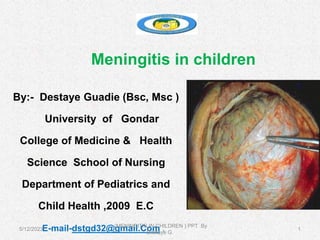
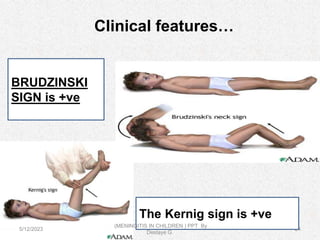
The document discusses meningitis in children, including its anatomy, physiology, epidemiology, etiology, pathogenesis, clinical manifestations, diagnosis, treatment and prevention. It defines meningitis and describes the protective membranes surrounding the brain and spinal cord. Bacteria must enter the bloodstream to cause meningitis by bypassing the blood-brain barrier. The highest incidence is in neonates and children under 5 years old, with various bacteria as common causes depending on age. Clinical features in children include fever, irritability, headache, neck stiffness, and seizures. Diagnosis involves lumbar puncture and CSF analysis. Treatment involves immediate antibiotic therapy effective against the suspected bacteria. Prevention includes immunization, prophylaxis and health education.




![MENINGITIS IN PEDIATRICS [Autosaved].pptx](https://cdn.slidesharecdn.com/ss_thumbnails/meningitisinpediatricsautosaved-240728053107-ec3b7ff1-thumbnail.jpg?width=640&height=640&fit=bounds)


