Sepehr Naimi &
Muhammad Yusro
INTRODUCTION
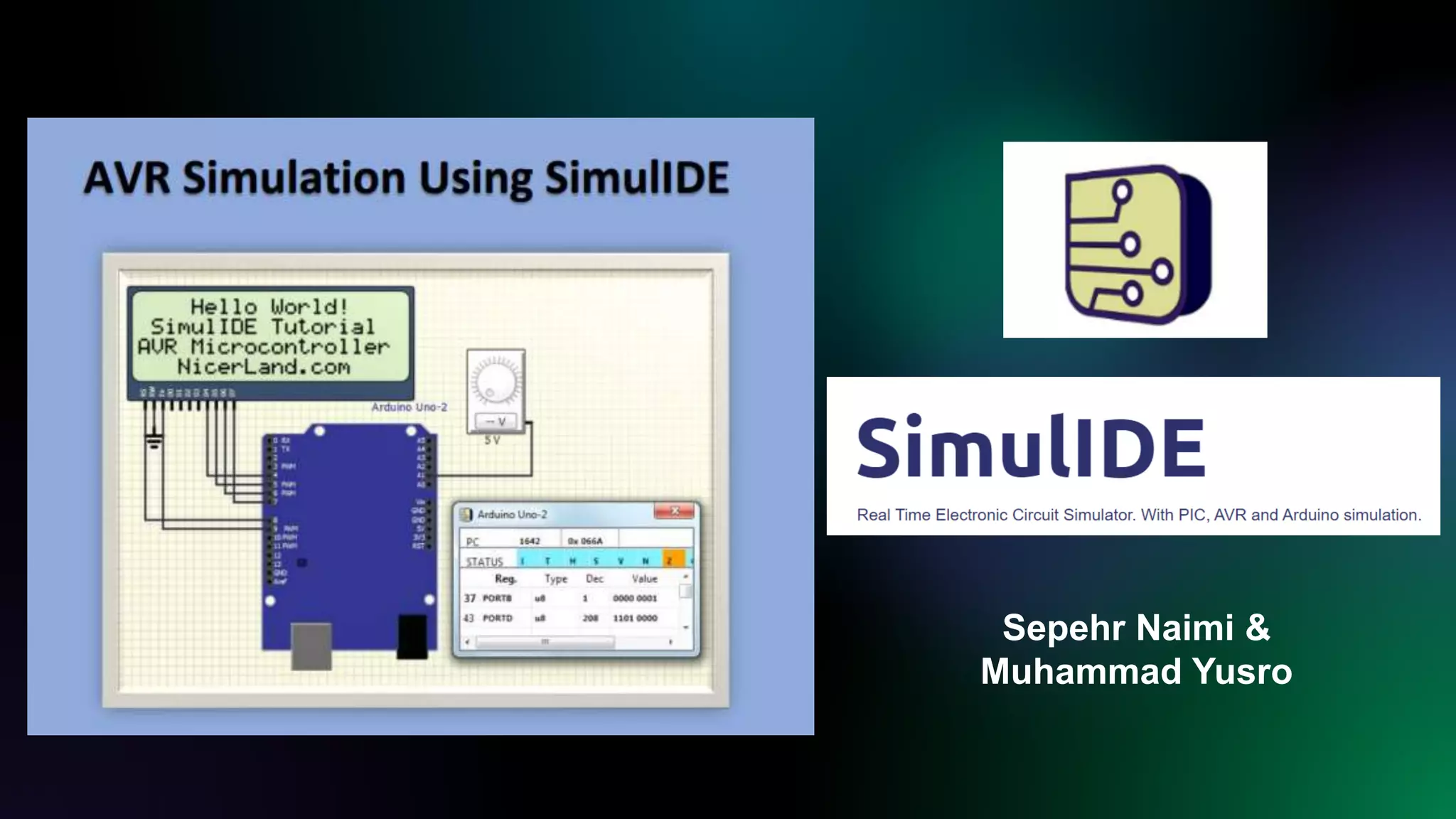
1. SimulIDE is a simple real time electronic circuit simulator, intended for hobbyist or
students to learn and experiment with simple electronic circuits and
microcontrollers, supporting PIC, AVR and Arduino.
2. This is not an accurate simulator for circuit analysis, it aims to be fast, simple and
easy to use, this means simple and not very accurate electronic models and
limited features.
3. Simplicity and ease of use are the key features of this simulator.
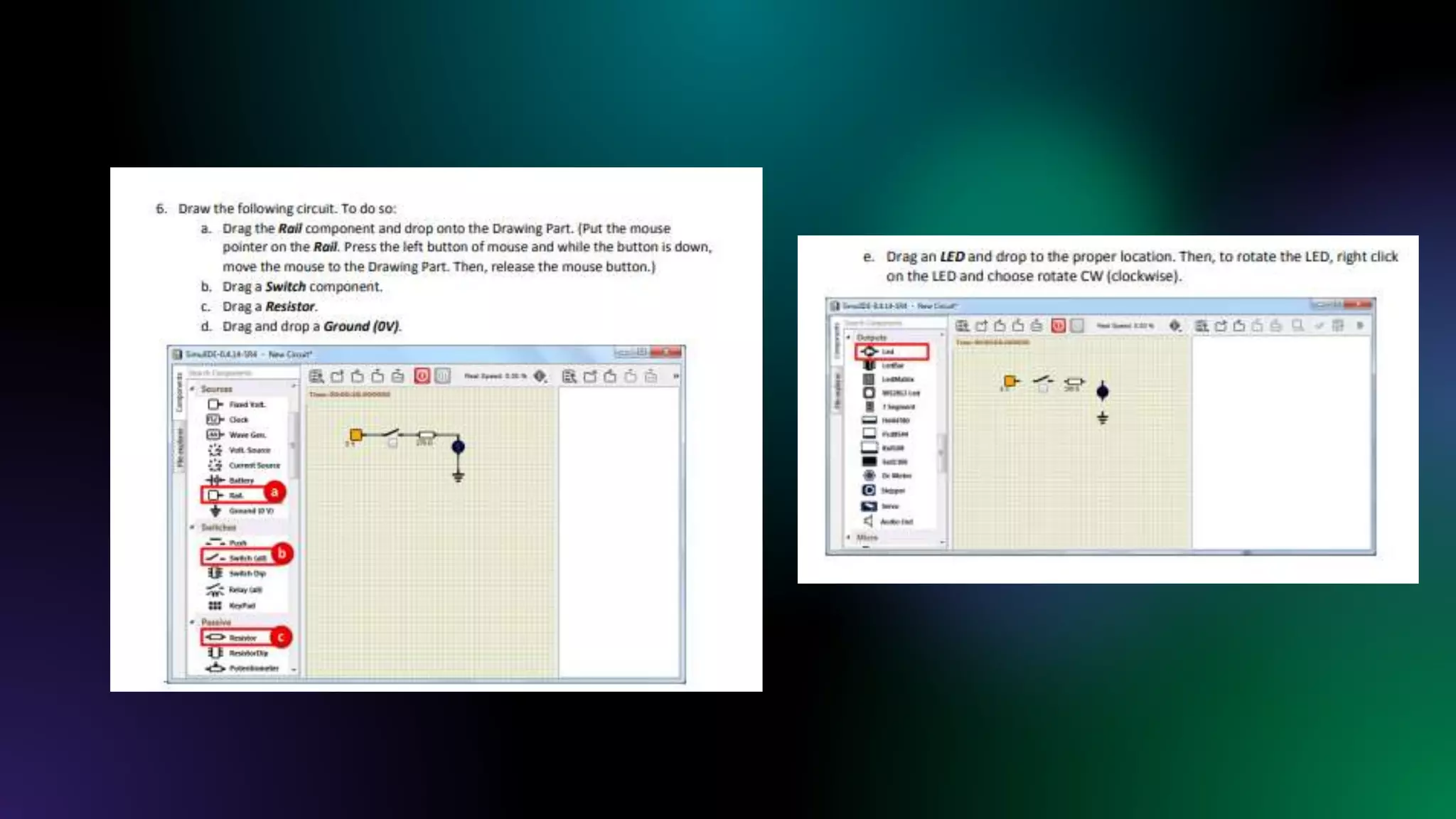
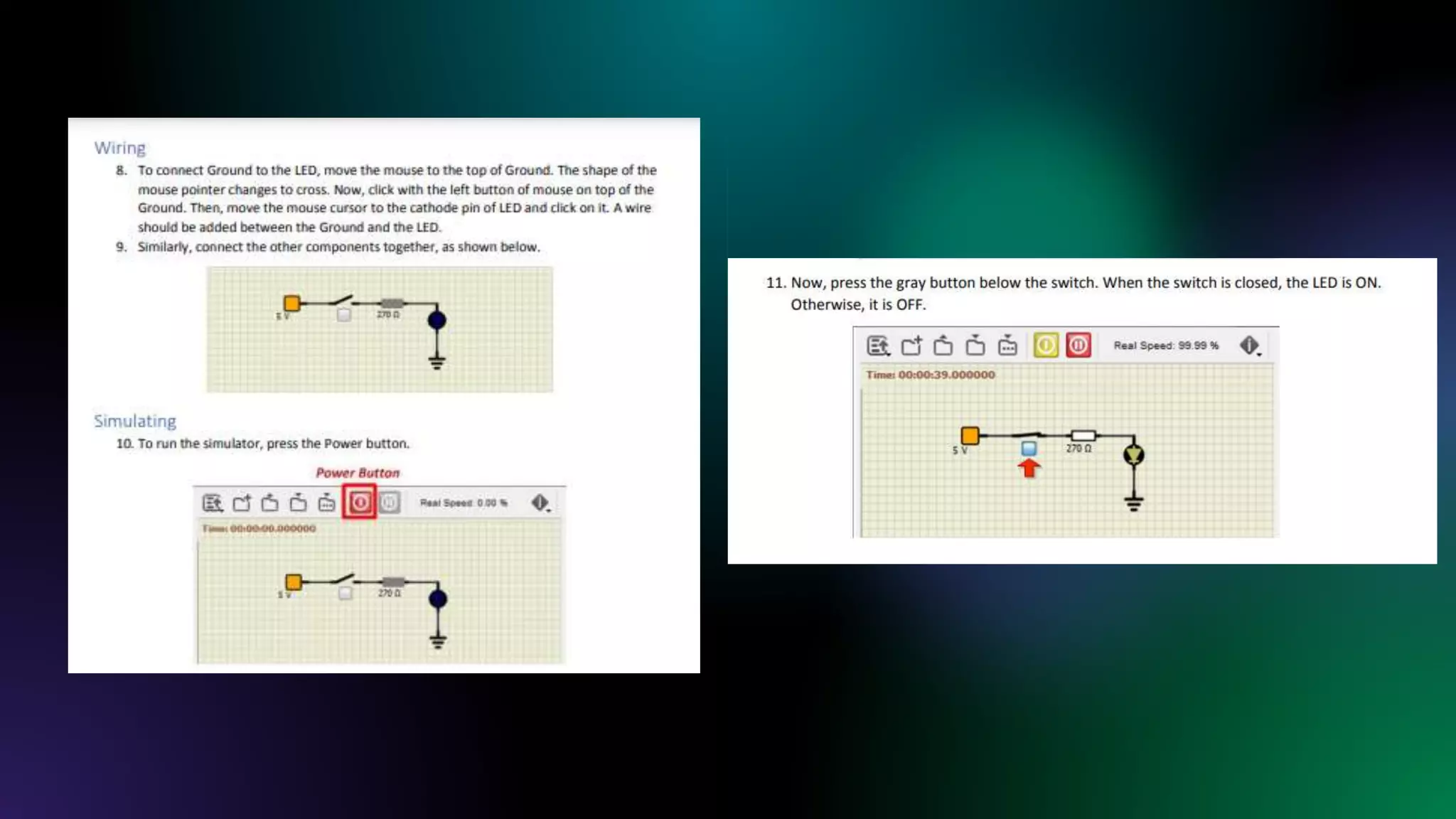
4. You can create, simulate and interact with your circuits within minutes, just drag
components from the list, drop into the circuit, connect them and push power
button to see how it works.
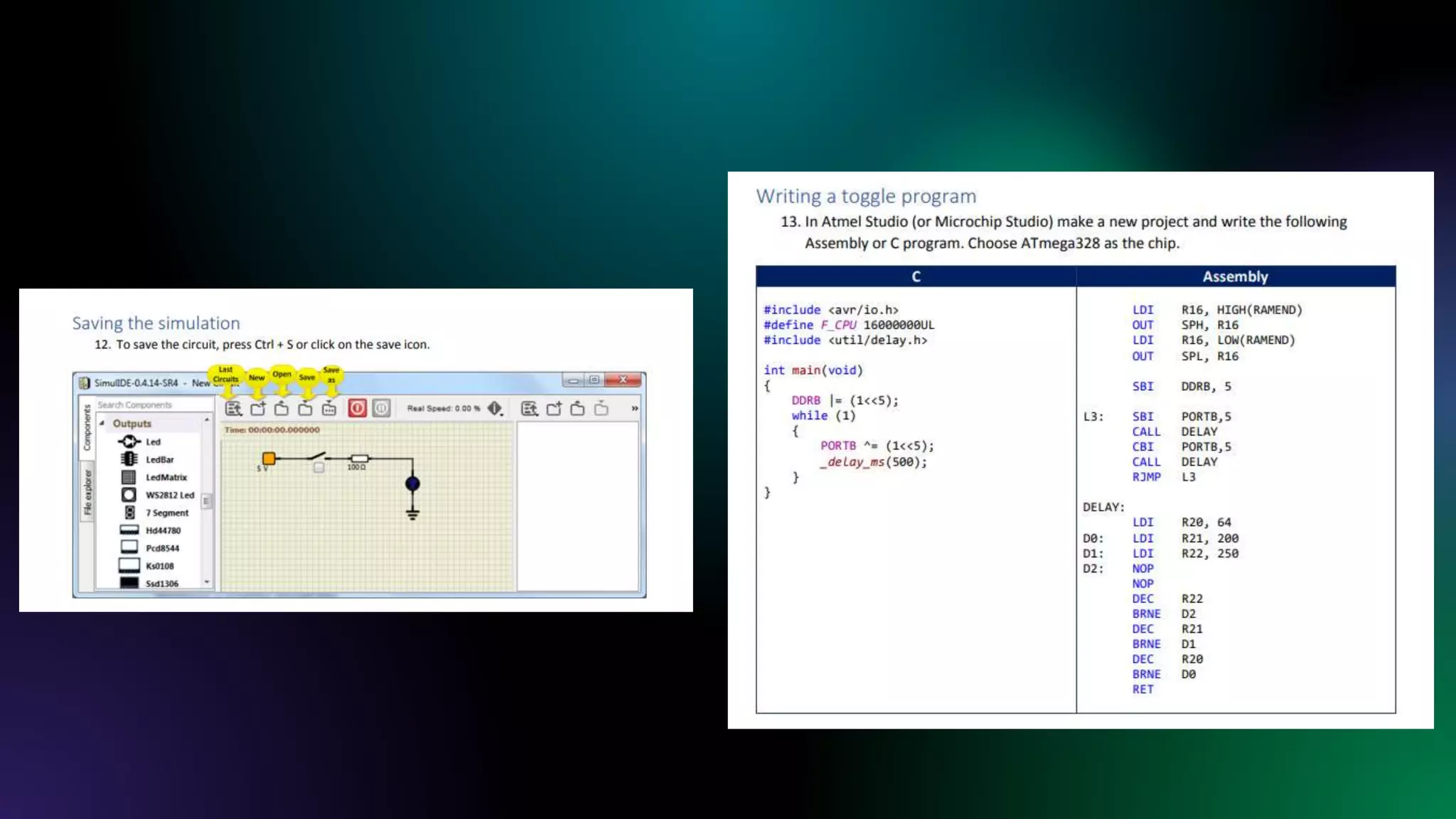
5. SimulIDE also features a code Editor and Debugger for GcBasic, Arduino, PIC
asm and AVR asm. It is still in it's firsts stages of development, with basic
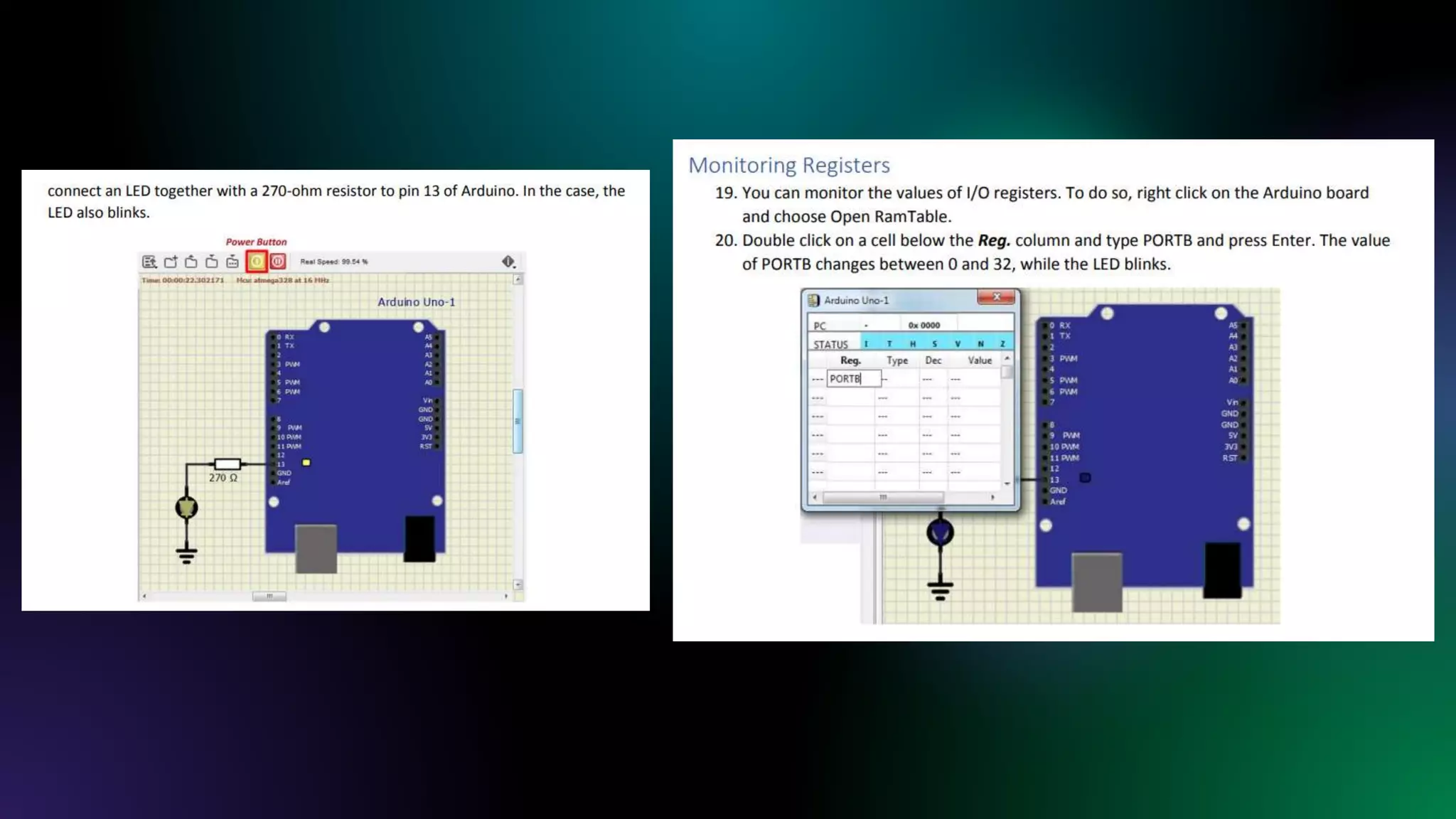
functionalities, but it is possible to write, compile and basic debugging with
breakpoints, watch registers and global variables.
SimulIDE
License: GPLv3.
• Source code:
https://launchpad.net/simulide
Features:
• Analog and Digital components.
• Microcontrollers.
• Code Editor.
• Debugger.
• Subcircuits.
• DIP/Logic Symbols.
• Circuit Animation.
• Basic Shapes.
• Oscilloscope.
• Signal Plotter
• Serial Port Connection.
• Serial Monitor.
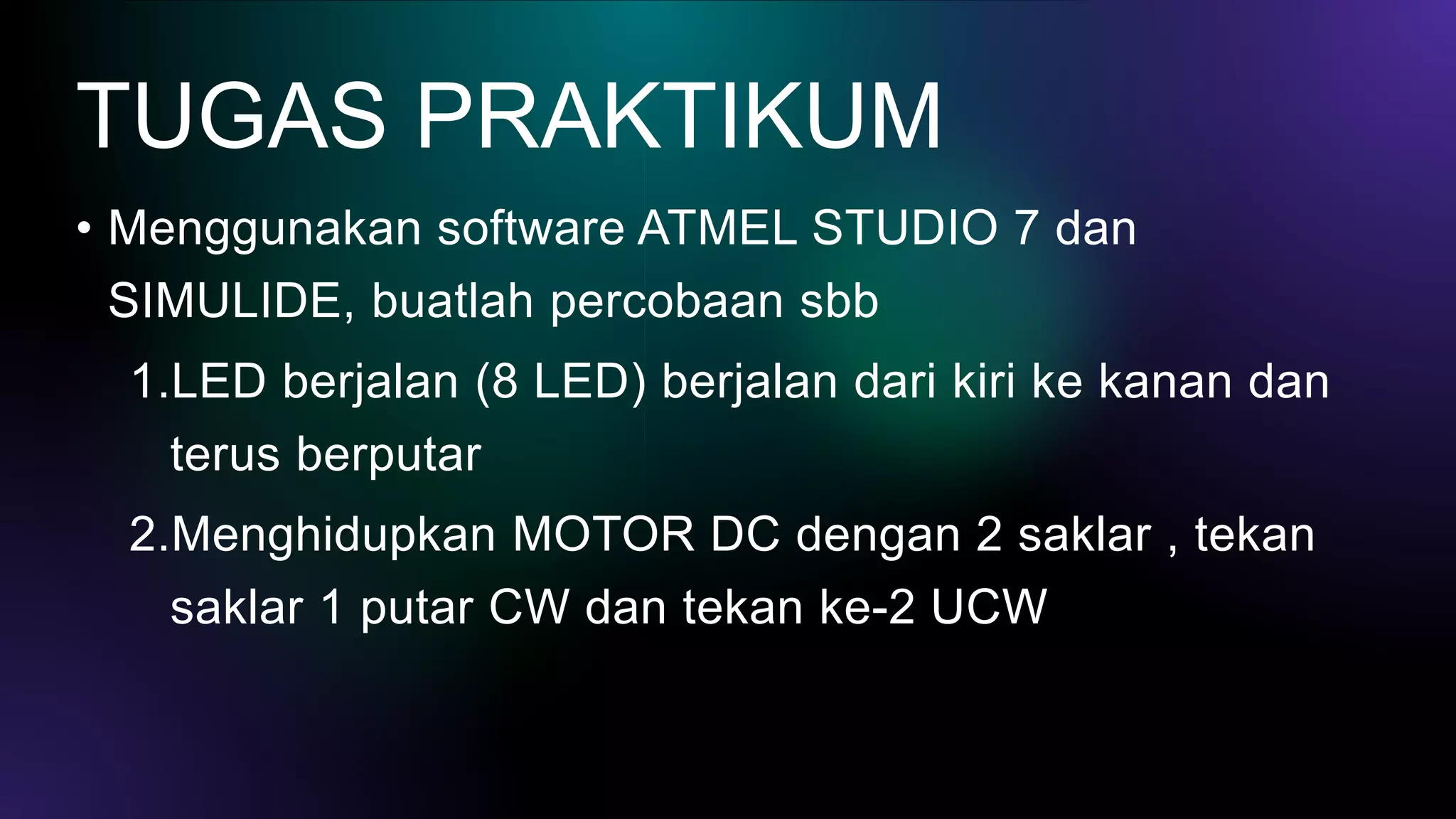
TUGAS PRAKTIKUM
• Menggunakan software ATMEL STUDIO 7 dan
SIMULIDE, buatlah percobaan sbb
1.LED berjalan (8 LED) berjalan dari kiri ke kanan dan
terus berputar
2.Menghidupkan MOTOR DC dengan 2 saklar , tekan
saklar 1 putar CW dan tekan ke-2 UCW
References
• https://www.simulide.com/p/home.html
• https://nicerland.com/eduFiles/AVR/Tutorials/AvrSim
ulationUsingSimulIDE.pdf
• https://www.melbpc.org.au/electronic-circuit-
simulation/?print=pdf
• https://sunupradana.info/tkr/2016/03/01/simulide-
sebagai-solusi-untuk-simulasi-uc-avr-atmega328/

116. 03_INTRODUCTION OF SIMULIDE.pptx

  • 1.
  • 2.
    INTRODUCTION 1. SimulIDE isa simple real time electronic circuit simulator, intended for hobbyist or students to learn and experiment with simple electronic circuits and microcontrollers, supporting PIC, AVR and Arduino. 2. This is not an accurate simulator for circuit analysis, it aims to be fast, simple and easy to use, this means simple and not very accurate electronic models and limited features. 3. Simplicity and ease of use are the key features of this simulator. 4. You can create, simulate and interact with your circuits within minutes, just drag components from the list, drop into the circuit, connect them and push power button to see how it works. 5. SimulIDE also features a code Editor and Debugger for GcBasic, Arduino, PIC asm and AVR asm. It is still in it's firsts stages of development, with basic functionalities, but it is possible to write, compile and basic debugging with breakpoints, watch registers and global variables.
  • 3.
    SimulIDE License: GPLv3. • Sourcecode: https://launchpad.net/simulide Features: • Analog and Digital components. • Microcontrollers. • Code Editor. • Debugger. • Subcircuits. • DIP/Logic Symbols. • Circuit Animation. • Basic Shapes. • Oscilloscope. • Signal Plotter • Serial Port Connection. • Serial Monitor.
  • 13.
    TUGAS PRAKTIKUM • Menggunakansoftware ATMEL STUDIO 7 dan SIMULIDE, buatlah percobaan sbb 1.LED berjalan (8 LED) berjalan dari kiri ke kanan dan terus berputar 2.Menghidupkan MOTOR DC dengan 2 saklar , tekan saklar 1 putar CW dan tekan ke-2 UCW
  • 14.
    References • https://www.simulide.com/p/home.html • https://nicerland.com/eduFiles/AVR/Tutorials/AvrSim ulationUsingSimulIDE.pdf •https://www.melbpc.org.au/electronic-circuit- simulation/?print=pdf • https://sunupradana.info/tkr/2016/03/01/simulide- sebagai-solusi-untuk-simulasi-uc-avr-atmega328/