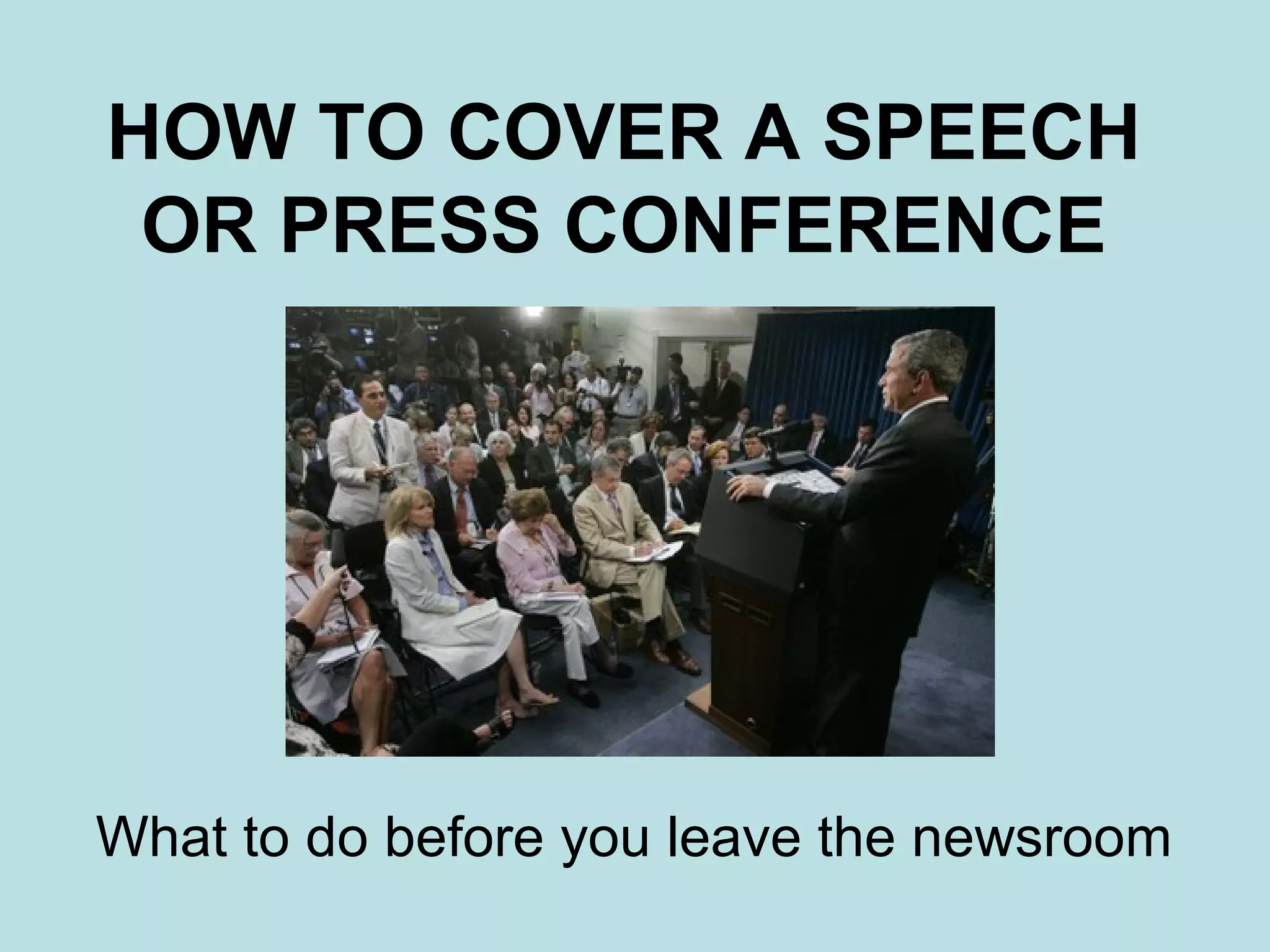
HOW TO COVER A SPEECH
 OR PRESS CONFERENCE


What to do before you leave the newsroom
GETTING READY
You’ve been assigned to
  cover a speech or a
  press conference. Now
  what?
Make these steps part of
  your routine and you’ll
  always be prepared for
  whatever happens:
GET SMART
KNOW THE RULES
LEARN THE ISSUES
TALK TO YOUR EDITOR
FOLLOW A CHECKLIST
GET SMART


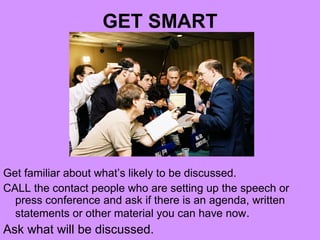
Get familiar about what’s likely to be discussed.
CALL the contact people who are setting up the speech or
  press conference and ask if there is an agenda, written
  statements or other material you can have now.
Ask what will be discussed.
KNOW THE RULES
ASK the contact person: Can I take
 photos? Can I live-blog or tweet?
 Can I use a digital recorder or
 video recorder? Is there a
 company Web site I can link to in
 my stories?
Any special rules or guidelines?
 Dress code?
Do I need a parking or press pass?
 Any special ID? Do I need to check
 through security? Where to pick up
 the press pass?
Do I have to sit in a particular place?
 Can I leave early?
What’s his or her cell phone if I have
 complications?
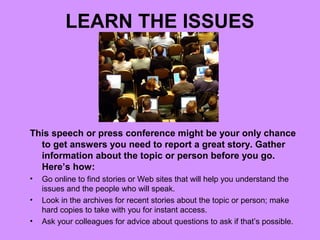
LEARN THE ISSUES


This speech or press conference might be your only chance
  to get answers you need to report a great story. Gather
  information about the topic or person before you go.
  Here’s how:
•   Go online to find stories or Web sites that will help you understand the
    issues and the people who will speak.
•   Look in the archives for recent stories about the topic or person; make
    hard copies to take with you for instant access.
•   Ask your colleagues for advice about questions to ask if that’s possible.
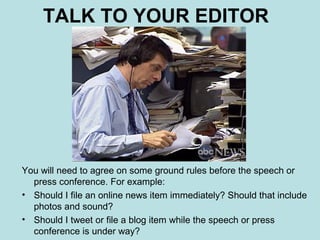
TALK TO YOUR EDITOR


You will need to agree on some ground rules before the speech or
  press conference. For example:
• Should I file an online news item immediately? Should that include
  photos and sound?
• Should I tweet or file a blog item while the speech or press
  conference is under way?
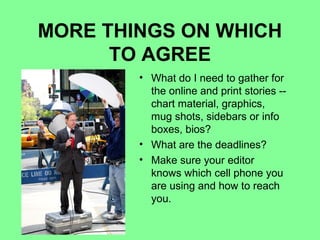
MORE THINGS ON WHICH
      TO AGREE
        • What do I need to gather for
          the online and print stories --
          chart material, graphics,
          mug shots, sidebars or info
          boxes, bios?
        • What are the deadlines?
        • Make sure your editor
          knows which cell phone you
          are using and how to reach
          you.
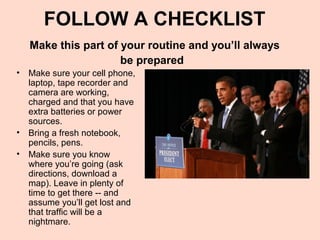
FOLLOW A CHECKLIST
   Make this part of your routine and you’ll always
                     be prepared
• Make sure your cell phone,
  laptop, tape recorder and
  camera are working,
  charged and that you have
  extra batteries or power
  sources.
• Bring a fresh notebook,
  pencils, pens.
• Make sure you know
  where you’re going (ask
  directions, download a
  map). Leave in plenty of
  time to get there -- and
  assume you’ll get lost and
  that traffic will be a
  nightmare.

10.mon pr

  • 1.
    HOW TO COVERA SPEECH OR PRESS CONFERENCE What to do before you leave the newsroom
  • 2.
    GETTING READY You’ve beenassigned to cover a speech or a press conference. Now what? Make these steps part of your routine and you’ll always be prepared for whatever happens: GET SMART KNOW THE RULES LEARN THE ISSUES TALK TO YOUR EDITOR FOLLOW A CHECKLIST
  • 3.
    GET SMART Get familiarabout what’s likely to be discussed. CALL the contact people who are setting up the speech or press conference and ask if there is an agenda, written statements or other material you can have now. Ask what will be discussed.
  • 4.
    KNOW THE RULES ASKthe contact person: Can I take photos? Can I live-blog or tweet? Can I use a digital recorder or video recorder? Is there a company Web site I can link to in my stories? Any special rules or guidelines? Dress code? Do I need a parking or press pass? Any special ID? Do I need to check through security? Where to pick up the press pass? Do I have to sit in a particular place? Can I leave early? What’s his or her cell phone if I have complications?
  • 5.
    LEARN THE ISSUES Thisspeech or press conference might be your only chance to get answers you need to report a great story. Gather information about the topic or person before you go. Here’s how: • Go online to find stories or Web sites that will help you understand the issues and the people who will speak. • Look in the archives for recent stories about the topic or person; make hard copies to take with you for instant access. • Ask your colleagues for advice about questions to ask if that’s possible.
  • 6.
    TALK TO YOUREDITOR You will need to agree on some ground rules before the speech or press conference. For example: • Should I file an online news item immediately? Should that include photos and sound? • Should I tweet or file a blog item while the speech or press conference is under way?
  • 7.
    MORE THINGS ONWHICH TO AGREE • What do I need to gather for the online and print stories -- chart material, graphics, mug shots, sidebars or info boxes, bios? • What are the deadlines? • Make sure your editor knows which cell phone you are using and how to reach you.
  • 8.
    FOLLOW A CHECKLIST Make this part of your routine and you’ll always be prepared • Make sure your cell phone, laptop, tape recorder and camera are working, charged and that you have extra batteries or power sources. • Bring a fresh notebook, pencils, pens. • Make sure you know where you’re going (ask directions, download a map). Leave in plenty of time to get there -- and assume you’ll get lost and that traffic will be a nightmare.