Growing Through Grief Karen L. Kennedy, HTR Horticultural Therapist [email_address]
“ Everybody needs beauty as well as bread, places to play in and pray in, where Nature may heal and cheer and give strength to body and soul alike.”  John Muir
Plants and Life  Flowers and other plants are intertwined in both celebratory and commemorative cultural rituals  Fragrance as well as specific plants are linked to memories of events, places and people Generally, gardens are places where people seek relief from stress, relaxation and joy
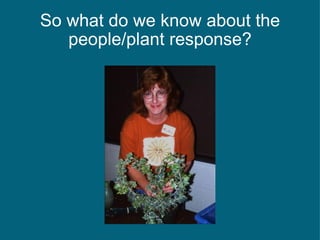
So what do we know about the people/plant response?
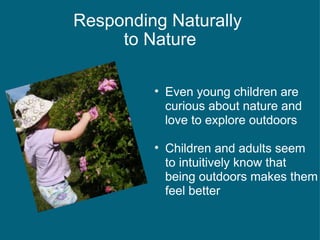
Responding Naturally  to Nature Even young children are curious about nature and love to explore outdoors Children and adults seem to intuitively know that being outdoors makes them feel better
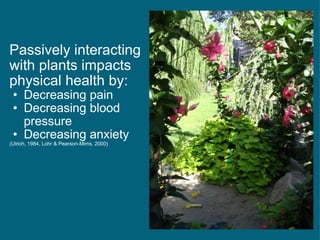
Passively interacting with plants impacts physical health by: Decreasing pain Decreasing blood pressure  Decreasing anxiety (Ulrich, 1984, Lohr & Pearson-Mims, 2000)
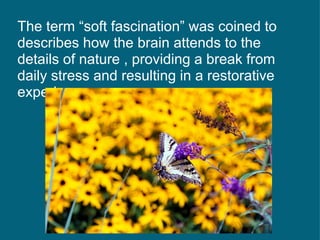
The term “soft fascination” was coined to describes how the brain attends to the details of nature , providing a break from daily stress and resulting in a restorative experience
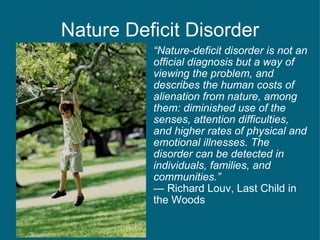
Nature Deficit Disorder “ Nature-deficit disorder is not an official diagnosis but a way of viewing the problem, and describes the human costs of alienation from nature, among them: diminished use of the senses, attention difficulties, and higher rates of physical and emotional illnesses. The disorder can be detected in individuals, families, and communities.” —  Richard Louv, Last Child in the Woods
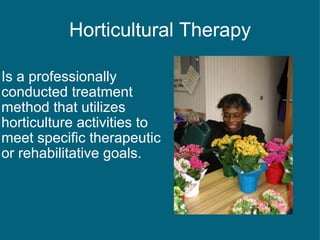
Horticultural Therapy Is a professionally conducted treatment method that utilizes horticulture activities to meet specific therapeutic or rehabilitative goals.
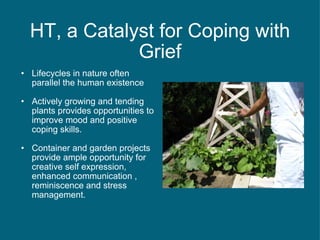
HT, a Catalyst for Coping with Grief Lifecycles in nature often parallel the human existence Actively growing and tending plants provides opportunities to improve mood and positive coping skills. Container and garden projects provide ample opportunity for creative self expression, enhanced communication , reminiscence and stress management.
Topiary: the art of fashioning plants into ornamental shapes
Stuffed Topiary
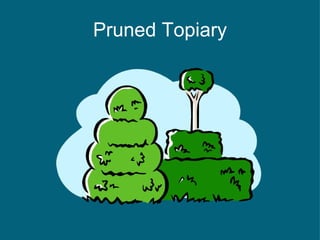
Pruned Topiary
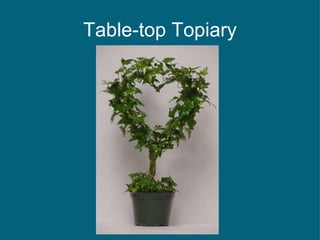
Table-top Topiary
Supplies 14 gauge coated solid electrical wire, in 5’ lengths Wire cutters 6” pots Soil-less growing media Ivy plants, small leaved varieties best for intricate shapes Decorating supplies such as chenille stems, ribbon, dried flowers, markers or other materials to decorate the pot Optional: additional florist wire, floral tape, fishing line
Using the topiary project to facilitate the grieving process:
Selecting the Shape If you could send a message to your loved one, create a symbol or shape that conveys that message. What do you value or treasure about the person you lost? What did they leave you? What stories are left to tell? Create a shape that symbolizes an interest or passion of the person you lost.
Tending the Topiary As the ivy plant grows, continue to wind the stems gently around the wire Place topiary in bright light but out of direct sun Water when dry Use the kitchen sprayer or a gentle garden hose spray to rinse the leaves off now and then As your plant grows and fills in the frame, notice the growth in your life since you first created it.
References The American Horticultural Therapy Association (ahta.org) Haller, R.L., Kramer, C.L., (2006)  Horticultural Therapy Methods, Making Connections in Health Care, Human Service, and Community Programs.  Binghamton, NY: Haworth Press. Simson, S.P., Straus, M. C., (Eds.). (1998).  Horticultural as Therapy, Principles and Practice.  Binghamton, NY: Haworth Press. Majuri, Charles, E. (2009). Upon Reflection: A Theoretical Perspective for Using Horticultural Therapy with Children.  The Journal of Therapeutic Horticulture  . Vol. XIX (65-67) Gallup, B., Reich, B. (1988).  The Complete Book of Topiary.  Workman Publishing Co.

104 b Kennedy presentation

  • 1.
    Growing Through GriefKaren L. Kennedy, HTR Horticultural Therapist [email_address]
  • 2.
    “ Everybody needsbeauty as well as bread, places to play in and pray in, where Nature may heal and cheer and give strength to body and soul alike.” John Muir
  • 3.
    Plants and Life Flowers and other plants are intertwined in both celebratory and commemorative cultural rituals Fragrance as well as specific plants are linked to memories of events, places and people Generally, gardens are places where people seek relief from stress, relaxation and joy
  • 4.
    So what dowe know about the people/plant response?
  • 5.
    Responding Naturally to Nature Even young children are curious about nature and love to explore outdoors Children and adults seem to intuitively know that being outdoors makes them feel better
  • 6.
    Passively interacting withplants impacts physical health by: Decreasing pain Decreasing blood pressure Decreasing anxiety (Ulrich, 1984, Lohr & Pearson-Mims, 2000)
  • 7.
    The term “softfascination” was coined to describes how the brain attends to the details of nature , providing a break from daily stress and resulting in a restorative experience
  • 8.
    Nature Deficit Disorder“ Nature-deficit disorder is not an official diagnosis but a way of viewing the problem, and describes the human costs of alienation from nature, among them: diminished use of the senses, attention difficulties, and higher rates of physical and emotional illnesses. The disorder can be detected in individuals, families, and communities.” — Richard Louv, Last Child in the Woods
  • 9.
    Horticultural Therapy Isa professionally conducted treatment method that utilizes horticulture activities to meet specific therapeutic or rehabilitative goals.
  • 10.
    HT, a Catalystfor Coping with Grief Lifecycles in nature often parallel the human existence Actively growing and tending plants provides opportunities to improve mood and positive coping skills. Container and garden projects provide ample opportunity for creative self expression, enhanced communication , reminiscence and stress management.
  • 11.
    Topiary: the artof fashioning plants into ornamental shapes
  • 12.
  • 13.
  • 14.
  • 15.
    Supplies 14 gaugecoated solid electrical wire, in 5’ lengths Wire cutters 6” pots Soil-less growing media Ivy plants, small leaved varieties best for intricate shapes Decorating supplies such as chenille stems, ribbon, dried flowers, markers or other materials to decorate the pot Optional: additional florist wire, floral tape, fishing line
  • 16.
    Using the topiaryproject to facilitate the grieving process:
  • 17.
    Selecting the ShapeIf you could send a message to your loved one, create a symbol or shape that conveys that message. What do you value or treasure about the person you lost? What did they leave you? What stories are left to tell? Create a shape that symbolizes an interest or passion of the person you lost.
  • 18.
    Tending the TopiaryAs the ivy plant grows, continue to wind the stems gently around the wire Place topiary in bright light but out of direct sun Water when dry Use the kitchen sprayer or a gentle garden hose spray to rinse the leaves off now and then As your plant grows and fills in the frame, notice the growth in your life since you first created it.
  • 19.
    References The AmericanHorticultural Therapy Association (ahta.org) Haller, R.L., Kramer, C.L., (2006) Horticultural Therapy Methods, Making Connections in Health Care, Human Service, and Community Programs. Binghamton, NY: Haworth Press. Simson, S.P., Straus, M. C., (Eds.). (1998). Horticultural as Therapy, Principles and Practice. Binghamton, NY: Haworth Press. Majuri, Charles, E. (2009). Upon Reflection: A Theoretical Perspective for Using Horticultural Therapy with Children. The Journal of Therapeutic Horticulture . Vol. XIX (65-67) Gallup, B., Reich, B. (1988). The Complete Book of Topiary. Workman Publishing Co.

Editor's Notes

  • #7 Famous gall bladder study at Texas A&M University, Roger Ulrich At Euclid Hospital, HT was originally started as an additional tool to address pain mgt through patients potting up herb plants and discussion coping skills, relaxation as related to pain management before taking the plant back to their rooms. In this case both the passive benefits I’ve mentioned and the active benefits of interacting with plants and a therapist are involved. New study with abdominal surgery patients: Patients with plants in their rooms had significantly fewer intakes of pain medication, more positive physiological responses (lower blood pressure and heart rate), less pain, anxiety, and fatigue, and better overall positive and higher satisfaction with their recovery rooms than their counterparts in the control group without plants in their rooms. HortTechnology 10/08
  • #9 Children spend less time outdoors today; free play and discretionary time has decreased Obesity has increased from 4% in the 1960s to 20% in 2004 Obesity, attention-deficit disorder, impaired social skills and what can be characterized as a “ culture of depression” are adding to the stress levels and severely impacting our young. Those are physical and psycho-social characteristics of the changes. And then there is more—less time outdoors, more time with electronic technology, little free and unstructured time, and even a 30 percent decrease in bicycle riding. http://www.childrenandnature.org/ This movement is aimed at bring Nature and play back into the cultural norm for children and families.
  • #10 The focus of HT programs are to maximize social, cognitive, physical and/or psychological functioning and/ or general health and wellness.