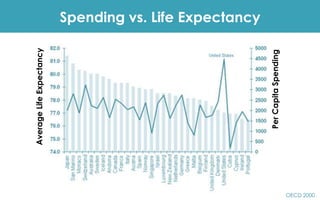
Spending vs. Life Expectancy
OECD 2000
AverageLifeExpectancy
PerCapitaSpending
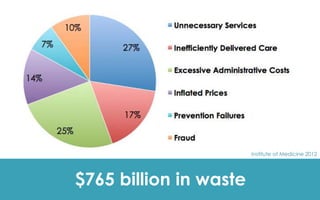
$765 billion in waste
Institute of Medicine 2012
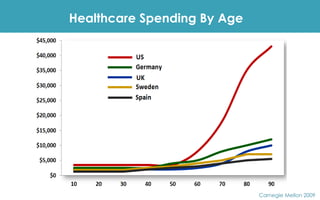
Healthcare Spending By Age
Carnegie Mellon 2009
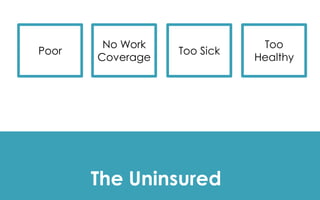
The Uninsured
Poor
No Work
Coverage
Too
Healthy
Too Sick
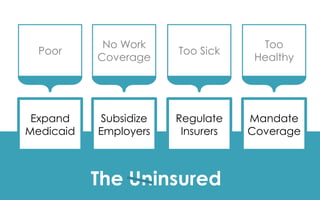
The Uninsured
Poor
No Work
Coverage
Too
Healthy
Too Sick
Expand
Medicaid
Subsidize
Employers
Mandate
Coverage
Regulate
Insurers
Fee for
Service
Fee for
Service
Outcomes
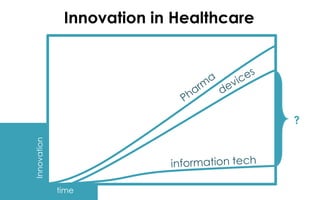
Innovation in Healthcare
time
Innovation
?
In Use Today
This is
ridiculous
but
healthcare
is truly…
TOO
TO FAIL
There are a few good things happening now…
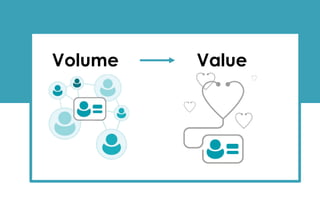
Volume Value
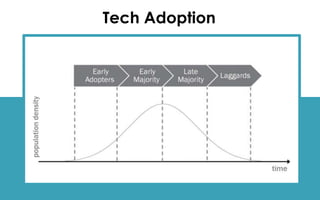
Tech Adoption
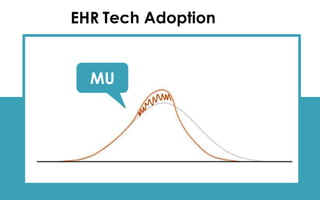
Tech AdoptionEHR
MU
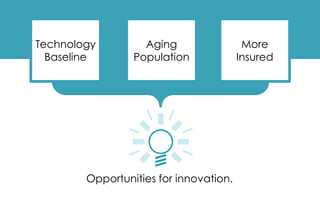
Technology
Baseline

Aging
Population
More
Insured
Opportunities for innovation.
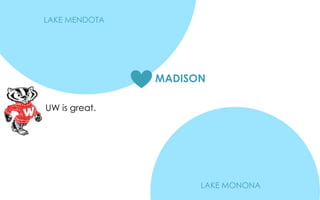
LAKE MENDOTA
LAKE MONONA
MADISON
We’re in
LAKE MENDOTA
LAKE MONONA
MADISON
UW is great.
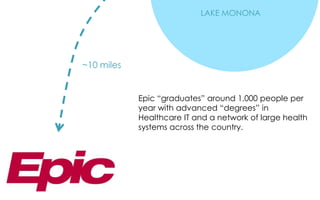
LAKE MONONA
~10 miles
Epic “graduates” around 1,000 people per
year with advanced “degrees” in
Healthcare IT and a network of large health
systems across the country.
LAKE MENDOTA
LAKE MONONA
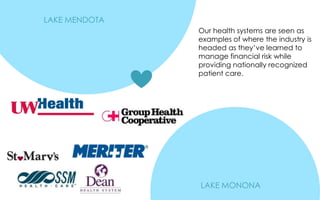
Our health systems are seen as
examples of where the industry is
headed as they’ve learned to
manage financial risk while
providing nationally recognized
patient care.
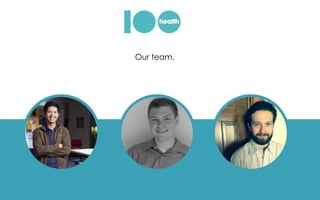
Our team.
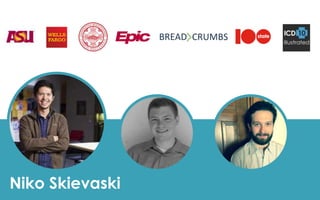
Niko Skievaski
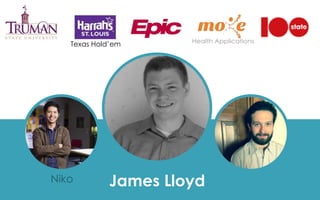
James LloydNiko
Texas Hold’em
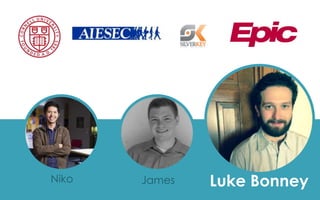
Luke BonneyNiko James
Health systems we’ve worked with:
What
we
do
Resident Entrepreneurs
What
we
do
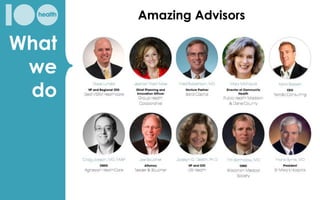
Amazing Advisors
What
we
do
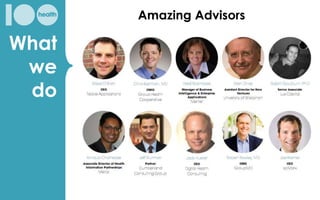
Amazing Advisors
What
we
do
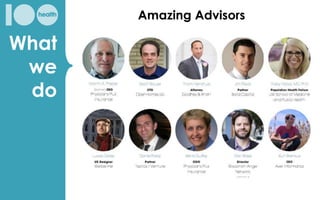
Amazing Advisors
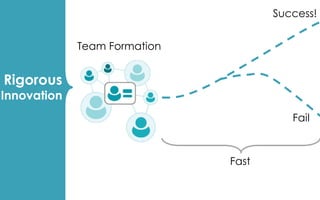
Rigorous
Innovation
Team Formation
Success!
Fail
Fast
Current
Projects
Current
Projects
Preventative Clinics
for a
Healthier Workforce
Current
Projects
The most secure and accesible
way to create your health proxy
and living will.
Current
Projects
Current
Projects
YourGoodNeighbor
Another
thing
that we
do
Startup Staff Augmentation
Customer Acquisition
Integration Consulting
team@100health.it

100health

Editor's Notes

  • #2 Talk with you today about 100health, what we’re up to, and why.
  • #3 Healthcare in the US is not working. It’s hugely inefficient. This inefficiency impacts all of us whether we like it or not, as patients, family members, employees or employers. We spend two times as much as the average OECD nation with no obvious benefits in quality of care. If value in healthcare is a function of quality and costs, we can say that our healthcare system provides the least amount of value.
  • #4 It’s estimated that $765 billion were wasted in 2010. That’s about as much as the entire US defense budget and accounted for 31% of healthcare spending. Almost ⅓ of every dollar spent could have been saved without reducing the quality of care. Here are the areas where efficiencies can be gained. Two big things are going to put a huge amount of strain on the system.
  • #5 Baby boomers are getting to an age where their usage of healthcare will grow exponentially.
  • #6 The reform brought by the affordable care act will give an estimated 30 million more American access to insurance, out of the currently 47 million uninsured. 
  • #7 The poor have access through expanded coverage through Medicaid.Employees at small businesses are supported through subsidies for health insurance to their employersHealth insurance companies were restricted to change more for patients with pre-existing conditionsAnd those of us that think we’re invincible now have mandated coverageIn short, we’re experiencing inefficiency in healthcare on a scale that no other industry has ever faced coupled with a massive shift in demand for services.
  • #8 These are all areas that other industries have made huge strides on using information technology. Why haven’t we seen this in healthcare?The playing field hasn’t been properly set in a long time. The game we’ve asked our healthcare systems to play doesn’t have the right rules. Fee for service doesn’t reward improving health or wellness, it rewards doing more stuff to a patient.
  • #9 Patients don’t have any financial skin in the game, so they’re always incentivized to ask for more. This gives rise to ever increasing costs.That model doesn’t reward improving healthiness in patients, or reducing costs. You don’t need to be efficient to win when your game is fee for service. You only have to do more.
  • #10 The impact of this is extended business cycles, high switching costs, and a natural unease with trying something un-proven. Most innovators switch industries before they successfully implement at a large health system.This highly scientific graph shows that while some areas related to medicine and healthcare have seen incredible innovation over time, the use of information technology has not. There’s been no incentive to become more efficient.

  • #11 Second reason is an industry with culture of risk aversion. When lives are on the line, a doctor and nurse have to check every possible scenario and make only the decisions that have a high likelihood of success. Most health systems are run by these same clinicians. Control, predictability and reliability are highly valued by healthcare leaders, as the should.The industry also has it’s fair share of scar tissue when it comes to enterprise IT solutions. CIO’s have been burned before. There’s been lots of bad systems and failed installs in the 80’s, 90’s and early 2000’s (set the bar pretty low).
  • #12 Second reason is an industry with culture of risk aversion. When lives are on the line, a doctor and nurse have to check every possible scenario and make only the decisions that have a high likelihood of success. Most health systems are run by these same clinicians. Control, predictability and reliability are highly valued by healthcare leaders, as the should.The industry also has it’s fair share of scar tissue when it comes to enterprise IT solutions. CIO’s have been burned before. There’s been lots of bad systems and failed installs in the 80’s, 90’s and early 2000’s (set the bar pretty low).
  • #13 Second reason is an industry with culture of risk aversion. When lives are on the line, a doctor and nurse have to check every possible scenario and make only the decisions that have a high likelihood of success. Most health systems are run by these same clinicians. Control, predictability and reliability are highly valued by healthcare leaders, as the should.The industry also has it’s fair share of scar tissue when it comes to enterprise IT solutions. CIO’s have been burned before. There’s been lots of bad systems and failed installs in the 80’s, 90’s and early 2000’s (set the bar pretty low).
  • #14 Healthcare will--and has to--drastically change over the next few years. We all know that. There are a few very significant things that are starting to change. Fee for service is a failed system, and everyone agrees. The puck is moving; the question is where is it going.
  • #15 Healthcare will--and has to--drastically change over the next few years. We all know that. There are a few very significant things that are starting to change. Fee for service is a failed system, and everyone agrees. The puck is moving; the question is where is it going.
  • #16 Change number 1.As an industry, everyone is gearing up to get ready for this shift. Moving from volume to value, with many groups trying to figure out what it would take to prepare for an ACO type-model.The government has started to say it should cost health systems x dollars to provide care to their diabetic patients. If you spend more than that, it comes from your bottom line. If you spend less than that you get a share in the cost savings. This shift means health systems will need to move into the business of managing risk over the patient populations across the continuum of care where those patients may be seen.
  • #17 The second big change is the impact of the Federal Government’s HITECH act and the implementation of Meaningful Use. Here we see the typical adoption curve.
  • #18 $19 billion dollars has significant shifted the EMR adoption curve. For the first time we’re starting to see true information being generated by health systems as they start to use Enterprise EMR’s. Talking with CIO’s across the industry we’re at the the beginning of the data, information, knowledge curve. People are excited to see what they can start doing with the data they’re starting to generate.
  • #19 So why are we excited about this? The system needs to change because it has to, and for the first time in a long time, it may be ready. At 100health, we think we’re positioned to take advantage of this opportunity.
  • #20 We’re in Madison.The talent here is unparalleled. UW graduates thousands of technologists and engineers a year. We have nationally ranked computer science programs, biomedical engineering programs, entrepreneurship programs and a fabulous business school.
  • #21 We’re in Madison.The talent here is unparalleled. UW graduates thousands of technologists and engineers a year. We have nationally ranked computer science programs, biomedical engineering programs, entrepreneurship programs and a fabulous business school.
  • #22 We also have this little company out in Verona driving talent to Madison from across the country. Epic graduates 1,000 people a year with a degree in Healthcare IT and a network of customers across the country. When those folks decide to leave they typically have financial runway and 1 year non-compete. We’re the place for those folks to go and test their ideas.
  • #23 We have great health care systems here in town. Our health systems saw where the puck was going and went there long ago. They’re seen as examples of where the industry is headed as they’ve learned to manage financial risk while providing nationally recognized patient care.
  • #24 We think the needed change is going to come at the intersection of entrepreneurs learning how to work within this environment, and we think Madison is that environment.
As the three founders of 100heath we are bound together by continuous desire to improve. We all have advanced Epic degrees. And we’re all energized by the opportunity we see in healthcare and in Madison
  • #25 Epic renaissance man. Epic’s business development group, human resources, company wide operationsMaster in economics, paints the world through lens of supply and demand curvesSerial entrepreneur from birth, starting at Wells Fargo, moving to Epic, leaving Epic and starting multiple companies, some of which were even successful
  • #26 Customer leadership experience, working as executive technology lead for Dartmouth, Cornell and Sparrow health systemsBlazed a trail at Epic:Training project auto-graderLead the design and build for Epic’s new internal knowledge management infrastructure, Hubble. The entire company relies on this to find the right answers at the right time.Built Epic Connect - Hub for Epic to easily push and pull information across all customer instances. Pulsar, automating patient safety searchesLeft Epic to join a Madison HIT startup as the CTO and regularly consults with startups across the country on best practices for integrating with Epic
  • #27 closing in on 6 years of experience as part of Epic’s implementation teamLead enterprise installs with teams of over 40 people. Worked directly with executive teams on multi-year change management programsLead Epic’s internal innovation team for 2 years, matching high-potential ideas with talented implementersLead Epic’s large affiliate extension program, built the team and developed the strategyPrevious to Epic worked in startups at Cornell and in Cairo Egypt
  • #28 The core of what we do is build 100health companies. We start with finding great people that we want to work with. Those people could be technologists, entrepreneurs or domain experts within healthcare.
  • #29 We also spend our time finding great problems that we vet through our mentors and advisors. We build teams around those two key ingredients.
  • #30 We also spend our time finding great problems that we vet through our mentors and advisors. We build teams around those two key ingredients.
  • #31 We also spend our time finding great problems that we vet through our mentors and advisors. We build teams around those two key ingredients.
  • #32 When we have a team we push them through our testing process.  Its 3, 4 week pushes with a focus on a few key things:Make progress as quickly as possible towards success or failureProvide structure to allow for clear measurement of progressFocus on customer acquisitionBuild momentum as a teamhave fun We’re gearing up for our next big push. The group isn’t finalized but a few of the contenders right now are:
  • #33 Breadcrumbs - knowledge management for IT systems. Currently live at Nordic, rolling out to Kaiser.
  • #34 Incwell - provides on-site preventative clinics for small to medium sized companies to lower healthcare costs and encourage a healthier workforce.
  • #35 Patient Proxy - Turbo tax for advanced directives.
  • #36 ICD-10 anyone? We crowd source an ICD-10 satire, calling out the most rediculous ICD-10 codes and had artists submit art.
  • #37 Yourgoodneighbor - Focused on aging seniors who want to be independent. Helps them and their families find the right person for the right service at the right price for help at home.
  • #38 Due to our brand and position in Madison, we are approached by a lot of other startups in the healthcare IT and Medical Device fields. We know we can add value to their group, but for whatever reason may not want to work with them as a full 100health company.For groups where we can add value, we’ll work with them in a number of ways, from cash payment, to stock options, to an equity stake.Help them with customer acquisitionHelp them integrate with an EMRHelp them find talentThis is great for us as we can attract the best talent to the 100health team by allowing folks to work as both consultants to existing startups and entrepreneurs on their own companies.Puts us at the middle of the Madison HIT scenePositions us as the landing pad for Epic and UW graduatesRight now we’re building our team to expand capacity and starting to develop a customer pipelineImmediate opportunities include working withIsomarkSyapseBranch 2
  • #39 Looking for entrepreneurs and folks to join the 100health teamLooking for great problems that healthcare needs to solveLooking for mentors and advisors for our 100health companiesLooking to build capacity and raise capital