Alcohol
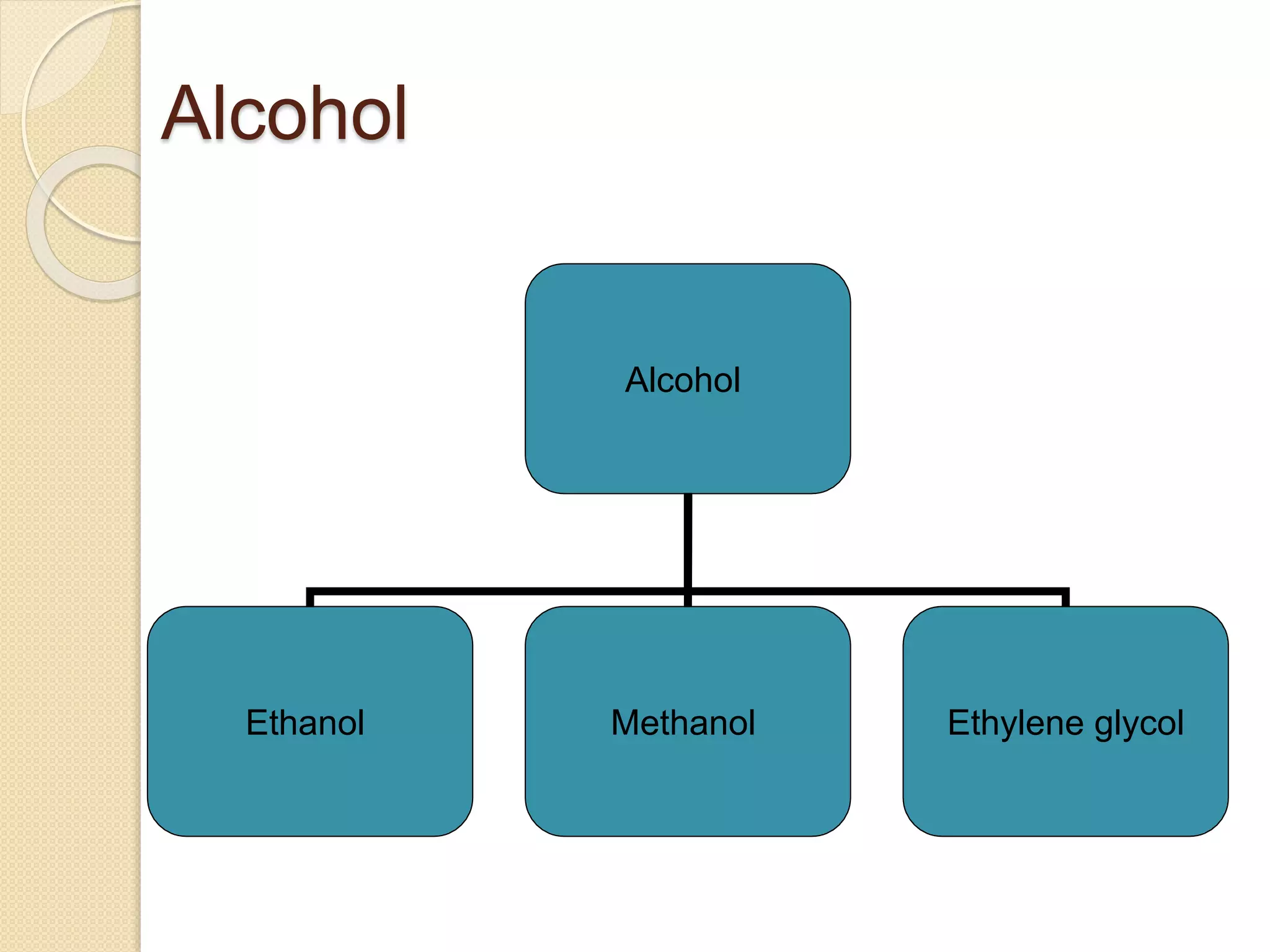
Alcohol
Ethanol Methanol Ethylene glycol
Ethanol
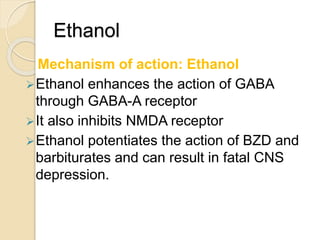
Mechanism of action: Ethanol
Ethanol enhances the action of GABA
through GABA-A receptor
It also inhibits NMDA receptor
Ethanol potentiates the action of BZD and
barbiturates and can result in fatal CNS
depression.
Pharmacodynamics
#.Two effects:
A. Acute effects
B. Chronic effects
Acute effects
1. CNS effects: Sedative & hypnotic
 Sedation, ataxia, impaired judgment,
& slurred speech
 Impairment of driving: 60-
80mg/dLplasma level.
 Gross drunkenness: 120-160 mg/dL
Continued
 Unconsciousness, anesthesia and
cardiac depression: ~ or > 300 mg/dL
 Lethal dose- ~ or > 500 mg/dL
#. Molecular MOA: induces GABA
action at GABA-A and inhibit
glutamate to NMDA-r.
Continued
2. Other organs:
 Depression of heart [low dose] &
vaso-dilation
 Uterine relaxant
 Increases the effect of sulfonylureas
 Boosts up the antiplatelet action of
aspirin.
Chronic effects
#. Both psychologic & physical dependence: An
abstinence syndrome
#. Liver: decreased gluconeogenesis, fat
accumulation ( NAD )- Hepatic dysfunction
 Acetaminophen- to toxic metabolite
#. GIT: Causes inflammation & hemorrhage of
gut
Continued
#. Central nervous system:
 Peripheral neuropathy: common
 Wernicke- Korsakoff’s syndrome:
extra ocular muscle paralysis, ataxia,
confusion, ( delirium tremens)-
( Thiamin )
Continued
#. Cardiovascular system: hypotension,
anemia and MI
#. Endocrine effects: Gynecomastia,
salt retention, testicular atrophy
#. Fetal alcohol syndrome.
#. Neoplasia: Breast cancer etc.
Uses of Ethanol
1.External uses:
 Solvent for many drugs
 Vehicle for medicinal mixtures
 To wash skin burn due to phenol
 As a cool sponge
 Disinfectant for skin & rubefacient in
liniments
Continued
2. Internal uses:
 As a analgesic for trigeminal neuralgia
 In methyl alcohol & ethylene glycol
poisoning
Drug interaction with alcohol
#. Pharmacokinetic
 Enzyme induction on chronic
administration
• Enzyme inhibition on acute intake.
Continued
#. Pharmacodynamic
 Increases the effect of drugs-
sedative hypnotic, TCA, Aspirin, oral
hypo-glycemic drugs.
Treatment of Acute Alcohol
Intoxication
#. Supportive measure:
 Prevent respiratory depression &
aspiration pneumonia
 Maintain respiration and circulation
 Fatal blood concentration: 400mg% &
legal limit of intoxication: 100% 7-10
g/h is metabolized
Continued
 Give fluids and electrolytes
#. Pharmacological measure:
 Give glucose to treat hypoglycemia
and ketosis
 Thiamine [10 mg] is added to protect
against the Wernike-Korsakoff
syndrome
Treatment Alcohol Withdrawal
Syndrome
 Prevent seizures, delirium, &
arrhythmia
 Restore K, Mg, & Phosphate ions
#. Specific therapy:
 A long acting sedative- hypnotic drugs:
e.g. Chlordiazepoxide, diazepam, etc.
 Thiamine 10 mg is suggestive
Continued
 Oxazepam is drug of choice in liver
disease
 Phenytoin is administered for seizure
 Propranolol: to treat tremor
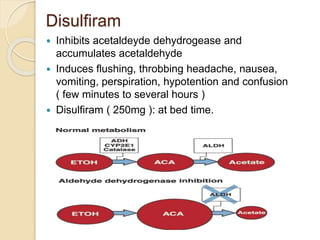
Disulfiram
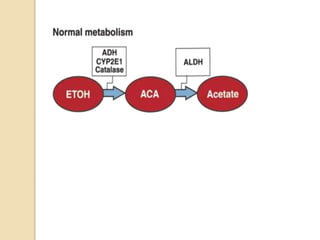
 Inhibits acetaldeyde dehydrogease and
accumulates acetaldehyde
 Induces flushing, throbbing headache, nausea,
vomiting, perspiration, hypotention and confusion
( few minutes to several hours )
 Disulfiram ( 250mg ): at bed time.
Drugs induce “disulfiram- like
reaction”
 Metronidazole
 Cefoperazone,
 Gresiofulvin,
 Chlopropamide,
 Nitrofurantion,
 Diazine
 Chloral hydrate
The drugs reduce craving of
alcohol
 Fluxetine
 Bromocriptine
 Naltrexone
 Acamprosate
Methanol
#. MOA: methanol is
 Metabolized to formadehyde and
formic acid by alcohol dehydrogenase
 Severe acidosis and retinal damage.
#. Intoxication: Visual dysfunction,gut
distress, SOB, loss of conscious,
coma & death
Treatment of Methanol
 Ethanol: 10% in D/W; loading dose 0.7
ml/kg; then 0.15 ml/kg/h )
 Iv sodium bicarbonate for acidosis
 Potassium for hypokalimea
 Fluids and electrolytes
 Keeps patient in dark room
 Hemodialysis
Continued
 Antidote: Fomepizole (100mg) iv is to
be given an inhibitor of Alcohol de-
hydrogenese
 Calcium leucovorin reduces formate in
blood.
Ethylene glycol
 Ethylene glycol poisoning: by
inhalation and skin absorption or by
intake
 It is metabolized by ADH and
formation of oxalic acid- severe
acidosis and nephro-toxicity
Treatment
#. Supportive measure: same
#. Pharmacological measure:
 Prompt ethyl alcohol intravenous
slowly to prevent toxic metabolite of
ethylene glycol
 Fomepizole if necessary

10 Alcohol.pptx

  • 1.
  • 2.
    Ethanol Mechanism of action:Ethanol Ethanol enhances the action of GABA through GABA-A receptor It also inhibits NMDA receptor Ethanol potentiates the action of BZD and barbiturates and can result in fatal CNS depression.
  • 4.
    Pharmacodynamics #.Two effects: A. Acuteeffects B. Chronic effects
  • 5.
    Acute effects 1. CNSeffects: Sedative & hypnotic  Sedation, ataxia, impaired judgment, & slurred speech  Impairment of driving: 60- 80mg/dLplasma level.  Gross drunkenness: 120-160 mg/dL
  • 6.
    Continued  Unconsciousness, anesthesiaand cardiac depression: ~ or > 300 mg/dL  Lethal dose- ~ or > 500 mg/dL #. Molecular MOA: induces GABA action at GABA-A and inhibit glutamate to NMDA-r.
  • 7.
    Continued 2. Other organs: Depression of heart [low dose] & vaso-dilation  Uterine relaxant  Increases the effect of sulfonylureas  Boosts up the antiplatelet action of aspirin.
  • 8.
    Chronic effects #. Bothpsychologic & physical dependence: An abstinence syndrome #. Liver: decreased gluconeogenesis, fat accumulation ( NAD )- Hepatic dysfunction  Acetaminophen- to toxic metabolite #. GIT: Causes inflammation & hemorrhage of gut
  • 9.
    Continued #. Central nervoussystem:  Peripheral neuropathy: common  Wernicke- Korsakoff’s syndrome: extra ocular muscle paralysis, ataxia, confusion, ( delirium tremens)- ( Thiamin )
  • 10.
    Continued #. Cardiovascular system:hypotension, anemia and MI #. Endocrine effects: Gynecomastia, salt retention, testicular atrophy #. Fetal alcohol syndrome. #. Neoplasia: Breast cancer etc.
  • 11.
    Uses of Ethanol 1.Externaluses:  Solvent for many drugs  Vehicle for medicinal mixtures  To wash skin burn due to phenol  As a cool sponge  Disinfectant for skin & rubefacient in liniments
  • 12.
    Continued 2. Internal uses: As a analgesic for trigeminal neuralgia  In methyl alcohol & ethylene glycol poisoning
  • 13.
    Drug interaction withalcohol #. Pharmacokinetic  Enzyme induction on chronic administration • Enzyme inhibition on acute intake.
  • 14.
    Continued #. Pharmacodynamic  Increasesthe effect of drugs- sedative hypnotic, TCA, Aspirin, oral hypo-glycemic drugs.
  • 15.
    Treatment of AcuteAlcohol Intoxication #. Supportive measure:  Prevent respiratory depression & aspiration pneumonia  Maintain respiration and circulation  Fatal blood concentration: 400mg% & legal limit of intoxication: 100% 7-10 g/h is metabolized
  • 16.
    Continued  Give fluidsand electrolytes #. Pharmacological measure:  Give glucose to treat hypoglycemia and ketosis  Thiamine [10 mg] is added to protect against the Wernike-Korsakoff syndrome
  • 17.
    Treatment Alcohol Withdrawal Syndrome Prevent seizures, delirium, & arrhythmia  Restore K, Mg, & Phosphate ions #. Specific therapy:  A long acting sedative- hypnotic drugs: e.g. Chlordiazepoxide, diazepam, etc.  Thiamine 10 mg is suggestive
  • 18.
    Continued  Oxazepam isdrug of choice in liver disease  Phenytoin is administered for seizure  Propranolol: to treat tremor
  • 19.
    Disulfiram  Inhibits acetaldeydedehydrogease and accumulates acetaldehyde  Induces flushing, throbbing headache, nausea, vomiting, perspiration, hypotention and confusion ( few minutes to several hours )  Disulfiram ( 250mg ): at bed time.
  • 20.
    Drugs induce “disulfiram-like reaction”  Metronidazole  Cefoperazone,  Gresiofulvin,  Chlopropamide,  Nitrofurantion,  Diazine  Chloral hydrate
  • 21.
    The drugs reducecraving of alcohol  Fluxetine  Bromocriptine  Naltrexone  Acamprosate
  • 22.
    Methanol #. MOA: methanolis  Metabolized to formadehyde and formic acid by alcohol dehydrogenase  Severe acidosis and retinal damage. #. Intoxication: Visual dysfunction,gut distress, SOB, loss of conscious, coma & death
  • 23.
    Treatment of Methanol Ethanol: 10% in D/W; loading dose 0.7 ml/kg; then 0.15 ml/kg/h )  Iv sodium bicarbonate for acidosis  Potassium for hypokalimea  Fluids and electrolytes  Keeps patient in dark room  Hemodialysis
  • 24.
    Continued  Antidote: Fomepizole(100mg) iv is to be given an inhibitor of Alcohol de- hydrogenese  Calcium leucovorin reduces formate in blood.
  • 25.
    Ethylene glycol  Ethyleneglycol poisoning: by inhalation and skin absorption or by intake  It is metabolized by ADH and formation of oxalic acid- severe acidosis and nephro-toxicity
  • 26.
    Treatment #. Supportive measure:same #. Pharmacological measure:  Prompt ethyl alcohol intravenous slowly to prevent toxic metabolite of ethylene glycol  Fomepizole if necessary