1 night sleep tracking
Group Test: 4 “auto detect” sleep trackers
Maneesh Juneja
19th May 2015
@maneeshjuneja
Maneeshjuneja.com
Disclosure
•I have no commercial ties to any of the manufacturers
of devices in this test
•All devices were purchased with my own funds
Purpose of test
•Examining technology that claims to ‘auto detect’
sleep patterns. No user input required. No buttons to
press. No need to keep phone on at night.
•To compare and contrast the user experience & results
of using these 4 devices to track my sleep during 1
night
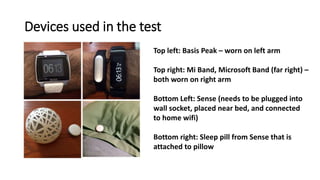
Devices used in the test
Top left: Basis Peak – worn on left arm
Top right: Mi Band, Microsoft Band (far right) –
both worn on right arm
Bottom Left: Sense (needs to be plugged into
wall socket, placed near bed, and connected
to home wifi)
Bottom right: Sleep pill from Sense that is
attached to pillow
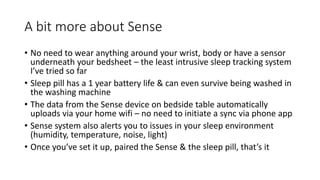
A bit more about Sense
• No need to wear anything around your wrist, body or have a sensor
underneath your bedsheet – the least intrusive sleep tracking system
I’ve tried so far
• Sleep pill has a 1 year battery life & can even survive being washed in
the washing machine
• The data from the Sense device on bedside table automatically
uploads via your home wifi – no need to initiate a sync via phone app
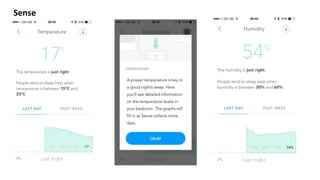
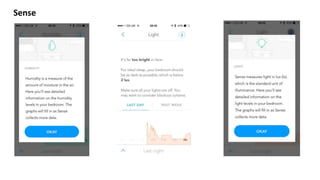
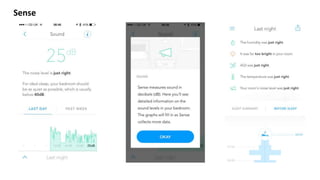
• Sense system also alerts you to issues in your sleep environment
(humidity, temperature, noise, light)
• Once you’ve set it up, paired the Sense & the sleep pill, that’s it
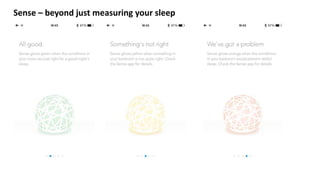
Sense – beyond just measuring your sleep
Sense – checking the quality of my sleep environment
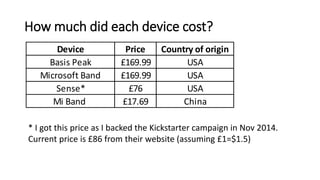
How much did each device cost?
Device Price Country of origin
Basis Peak £169.99 USA
Microsoft Band £169.99 USA
Sense* £76 USA
Mi Band £17.69 China
* I got this price as I backed the Kickstarter campaign in Nov 2014.
Current price is £86 from their website (assuming £1=$1.5)
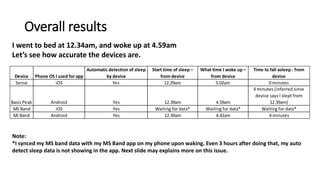
Overall results
I went to bed at 12.34am, and woke up at 4.59am
Let’s see how accurate the devices are.
Note:
*I synced my MS band data with my MS Band app on my phone upon waking. Even 3 hours after doing that, my auto
detect sleep data is not showing in the app. Next slide may explains more on this issue.
Device Phone OS I used for app
Automatic detection of sleep
by device
Start time of sleep –
from device
What time I woke up –
from device
Time to fall asleep - from
device
Sense iOS Yes 12.29am 5.02am 0 minutes
Basis Peak Android Yes 12.39am 4.59am
4 minutes (inferred since
device says I slept from
12.39am)
MS Band iOS Yes Waiting for data* Waiting for data* Waiting for data*
Mi Band Android Yes 12.39am 4.42am 4 minutes
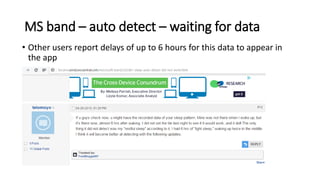
MS band – auto detect – waiting for data
• Other users report delays of up to 6 hours for this data to appear in
the app
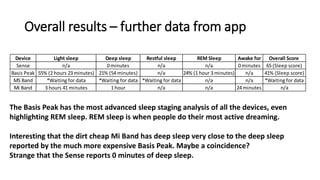
Overall results – further data from app
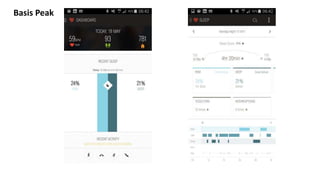
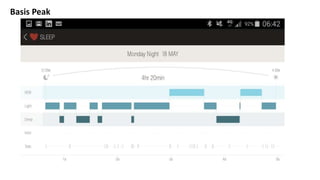
The Basis Peak has the most advanced sleep staging analysis of all the devices, even
highlighting REM sleep. REM sleep is when people do their most active dreaming.
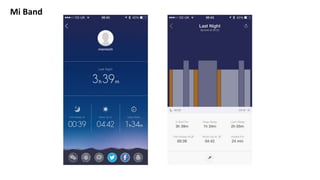
Interesting that the dirt cheap Mi Band has deep sleep very close to the deep sleep
reported by the much more expensive Basis Peak. Maybe a coincidence?
Strange that the Sense reports 0 minutes of deep sleep.
Device Light sleep Deep sleep Restful sleep REM Sleep Awake for Overall Score
Sense n/a 0 minutes n/a n/a 0 minutes 65 (Sleep score)
Basis Peak 55% (2 hours 23 minutes) 21% (54 minutes) n/a 24% (1 hour 3 minutes) n/a 41% (Sleep score)
MS Band *Waiting for data *Waiting for data *Waiting for data n/a n/a *Waiting for data
Mi Band 3 hours 41 minutes 1 hour n/a n/a 24 minutes n/a
Screenshots from each app
Sense
Sense
Sense
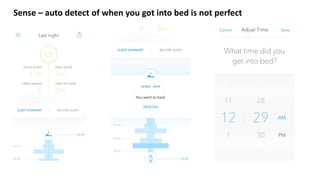
Sense – auto detect of when you got into bed is not perfect
Sense
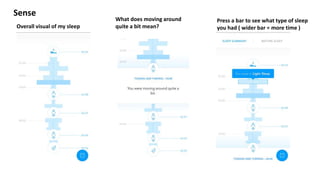
Overall visual of my sleep
What does moving around
quite a bit mean?
Press a bar to see what type of sleep
you had ( wider bar = more time )
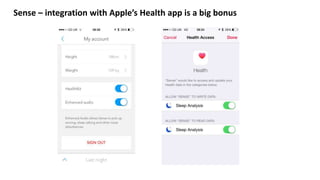
Sense – integration with Apple’s Health app is a big bonus
Basis Peak
Basis Peak
Microsoft Band
Waiting for data
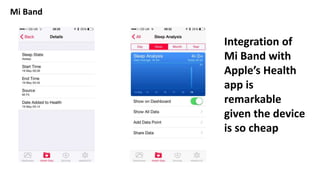
Mi Band
Mi Band
Integration of
Mi Band with
Apple’s Health
app is
remarkable
given the device
is so cheap
Screenshots from web
dashboard
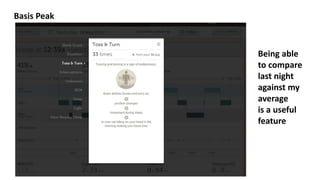
Basis Peak
Being able
to compare
last night
against my
average
is a useful
feature
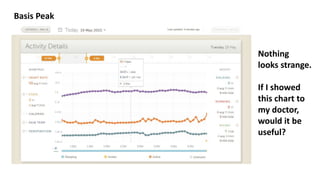
Basis Peak
Nothing
looks strange.
If I showed
this chart to
my doctor,
would it be
useful?
Initial thoughts - 1
• Automatic sleep detection is still not perfect
• Need to determine why data from MS Band takes so many hours to
appear in the app – apparently, the auto detect data has to be
processed in the cloud by some algorithms, hence the delay
• The delay in the MS Band data appearing is annoying from a user
perspective
• Interesting to see Sense helping you monitor your bedroom
environment as well as tracking sleep
• Design of Sense (devices & app) simpler & superior to others
Initial thoughts - 2
• I’m concerned by the definitions of light and deep sleep – shouldn’t
there be standards across all devices and apps? Why does deep
sleep differ depending upon which device I use?
• Integration of sleep data into Apple’s Health app is very useful
(Sense & Mi Band)
• Concerned about accuracy of sleep data now that it’s integrated
with Apple’s health app – especially if one day linked to my medical
records/health insurer’s database/research study
• Could sleep tracking become more accessible via a low cost device
such as a Mi Band?
Initial thoughts - 3
• Sense system may not appeal to those seeking lots of data about
their sleep, but may have wider appeal for average consumer
• Sense is definitely the easiest sleep tracking system to live with
• However, Sense may not be great if you travel a lot, as the device is
plugged into the wall socket
• Further multiple tests needed to observe how insights from each
app develop once more sleep data captured
• Will need to test the ‘smart’ alarm functionality in future too
• Independent validation of data required
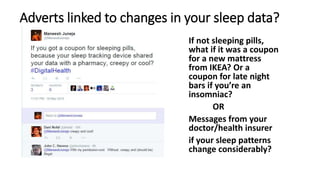
Adverts linked to changes in your sleep data?
If not sleeping pills,
what if it was a coupon
for a new mattress
from IKEA? Or a
coupon for late night
bars if you’re an
insomniac?
OR
Messages from your
doctor/health insurer
if your sleep patterns
change considerably?
How has this testing helped me?
• It’s made me much more conscious of how little I sleep as well as
the quality of my sleep
• I have blackout curtains but here in London, it gets light from
4.30am at the moment, so maybe I need to try going to bed earlier
• I drink coffee even as late as 5pm – could that be impacting my
sleep?
• Two actions for myself over the next week:
• Aim to be in bed by 10.30pm
• No drinking of tea or coffee after 1pm

1 night 'auto detect' sleep tracking - group test 19th may 2015

  • 1.
    1 night sleeptracking Group Test: 4 “auto detect” sleep trackers Maneesh Juneja 19th May 2015 @maneeshjuneja Maneeshjuneja.com
  • 2.
    Disclosure •I have nocommercial ties to any of the manufacturers of devices in this test •All devices were purchased with my own funds Purpose of test •Examining technology that claims to ‘auto detect’ sleep patterns. No user input required. No buttons to press. No need to keep phone on at night. •To compare and contrast the user experience & results of using these 4 devices to track my sleep during 1 night
  • 3.
    Devices used inthe test Top left: Basis Peak – worn on left arm Top right: Mi Band, Microsoft Band (far right) – both worn on right arm Bottom Left: Sense (needs to be plugged into wall socket, placed near bed, and connected to home wifi) Bottom right: Sleep pill from Sense that is attached to pillow
  • 4.
    A bit moreabout Sense • No need to wear anything around your wrist, body or have a sensor underneath your bedsheet – the least intrusive sleep tracking system I’ve tried so far • Sleep pill has a 1 year battery life & can even survive being washed in the washing machine • The data from the Sense device on bedside table automatically uploads via your home wifi – no need to initiate a sync via phone app • Sense system also alerts you to issues in your sleep environment (humidity, temperature, noise, light) • Once you’ve set it up, paired the Sense & the sleep pill, that’s it
  • 5.
    Sense – beyondjust measuring your sleep
  • 6.
    Sense – checkingthe quality of my sleep environment
  • 7.
    How much dideach device cost? Device Price Country of origin Basis Peak £169.99 USA Microsoft Band £169.99 USA Sense* £76 USA Mi Band £17.69 China * I got this price as I backed the Kickstarter campaign in Nov 2014. Current price is £86 from their website (assuming £1=$1.5)
  • 8.
    Overall results I wentto bed at 12.34am, and woke up at 4.59am Let’s see how accurate the devices are. Note: *I synced my MS band data with my MS Band app on my phone upon waking. Even 3 hours after doing that, my auto detect sleep data is not showing in the app. Next slide may explains more on this issue. Device Phone OS I used for app Automatic detection of sleep by device Start time of sleep – from device What time I woke up – from device Time to fall asleep - from device Sense iOS Yes 12.29am 5.02am 0 minutes Basis Peak Android Yes 12.39am 4.59am 4 minutes (inferred since device says I slept from 12.39am) MS Band iOS Yes Waiting for data* Waiting for data* Waiting for data* Mi Band Android Yes 12.39am 4.42am 4 minutes
  • 9.
    MS band –auto detect – waiting for data • Other users report delays of up to 6 hours for this data to appear in the app
  • 10.
    Overall results –further data from app The Basis Peak has the most advanced sleep staging analysis of all the devices, even highlighting REM sleep. REM sleep is when people do their most active dreaming. Interesting that the dirt cheap Mi Band has deep sleep very close to the deep sleep reported by the much more expensive Basis Peak. Maybe a coincidence? Strange that the Sense reports 0 minutes of deep sleep. Device Light sleep Deep sleep Restful sleep REM Sleep Awake for Overall Score Sense n/a 0 minutes n/a n/a 0 minutes 65 (Sleep score) Basis Peak 55% (2 hours 23 minutes) 21% (54 minutes) n/a 24% (1 hour 3 minutes) n/a 41% (Sleep score) MS Band *Waiting for data *Waiting for data *Waiting for data n/a n/a *Waiting for data Mi Band 3 hours 41 minutes 1 hour n/a n/a 24 minutes n/a
  • 11.
  • 12.
  • 13.
  • 14.
  • 15.
    Sense – autodetect of when you got into bed is not perfect
  • 16.
    Sense Overall visual ofmy sleep What does moving around quite a bit mean? Press a bar to see what type of sleep you had ( wider bar = more time )
  • 17.
    Sense – integrationwith Apple’s Health app is a big bonus
  • 18.
  • 19.
  • 20.
  • 21.
  • 22.
    Mi Band Integration of MiBand with Apple’s Health app is remarkable given the device is so cheap
  • 23.
  • 24.
    Basis Peak Being able tocompare last night against my average is a useful feature
  • 25.
    Basis Peak Nothing looks strange. IfI showed this chart to my doctor, would it be useful?
  • 26.
    Initial thoughts -1 • Automatic sleep detection is still not perfect • Need to determine why data from MS Band takes so many hours to appear in the app – apparently, the auto detect data has to be processed in the cloud by some algorithms, hence the delay • The delay in the MS Band data appearing is annoying from a user perspective • Interesting to see Sense helping you monitor your bedroom environment as well as tracking sleep • Design of Sense (devices & app) simpler & superior to others
  • 27.
    Initial thoughts -2 • I’m concerned by the definitions of light and deep sleep – shouldn’t there be standards across all devices and apps? Why does deep sleep differ depending upon which device I use? • Integration of sleep data into Apple’s Health app is very useful (Sense & Mi Band) • Concerned about accuracy of sleep data now that it’s integrated with Apple’s health app – especially if one day linked to my medical records/health insurer’s database/research study • Could sleep tracking become more accessible via a low cost device such as a Mi Band?
  • 28.
    Initial thoughts -3 • Sense system may not appeal to those seeking lots of data about their sleep, but may have wider appeal for average consumer • Sense is definitely the easiest sleep tracking system to live with • However, Sense may not be great if you travel a lot, as the device is plugged into the wall socket • Further multiple tests needed to observe how insights from each app develop once more sleep data captured • Will need to test the ‘smart’ alarm functionality in future too • Independent validation of data required
  • 29.
    Adverts linked tochanges in your sleep data? If not sleeping pills, what if it was a coupon for a new mattress from IKEA? Or a coupon for late night bars if you’re an insomniac? OR Messages from your doctor/health insurer if your sleep patterns change considerably?
  • 30.
    How has thistesting helped me? • It’s made me much more conscious of how little I sleep as well as the quality of my sleep • I have blackout curtains but here in London, it gets light from 4.30am at the moment, so maybe I need to try going to bed earlier • I drink coffee even as late as 5pm – could that be impacting my sleep? • Two actions for myself over the next week: • Aim to be in bed by 10.30pm • No drinking of tea or coffee after 1pm