Audit & Observations
Audit and Observations
Contents:
 Inspection VS Audits
 Introduction
 Benefits of Auditing
 Audit Steps
 Frequency
 Quantifying Results
Audit and Observations
1. Inspection Vs Audits :
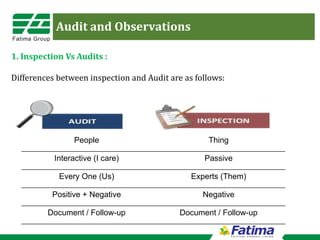
Differences between inspection and Audit are as follows:
People Thing
Interactive (I care) Passive
Every One (Us) Experts (Them)
Positive + Negative Negative
Document / Follow-up Document / Follow-up
Audit and Observations
2. Introduction:
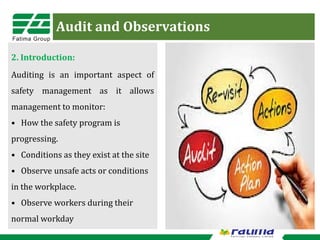
Auditing is an important aspect of
safety management as it allows
management to monitor:
• How the safety program is
progressing.
• Conditions as they exist at the site
• Observe unsafe acts or conditions
in the workplace.
• Observe workers during their
normal workday
Audit and Observations
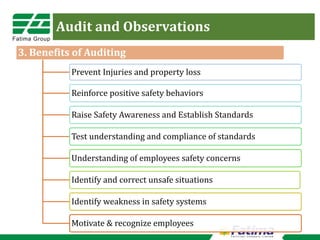
3. Benefits of Auditing
Prevent Injuries and property loss
Reinforce positive safety behaviors
Raise Safety Awareness and Establish Standards
Test understanding and compliance of standards
Understanding of employees safety concerns
Identify and correct unsafe situations
Identify weakness in safety systems
Motivate & recognize employees
Audit and Observations
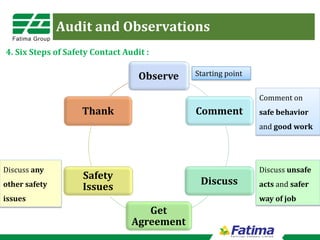
4. Six Steps of Safety Contact Audit :
Observe
Comment
Discuss
Get
Agreement
Safety
Issues
Thank
Starting point
Comment on
safe behavior
and good work
Discuss unsafe
acts and safer
way of job
Discuss any
other safety
issues
Audit and Observations
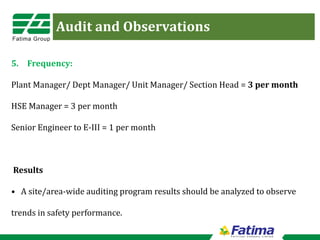
5. Frequency:
Plant Manager/ Dept Manager/ Unit Manager/ Section Head = 3 per month
HSE Manager = 3 per month
Senior Engineer to E-III = 1 per month
Results
• A site/area-wide auditing program results should be analyzed to observe
trends in safety performance.
Audit and Observations
6. Quantifying Results:
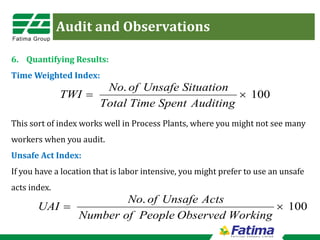
Time Weighted Index:
This sort of index works well in Process Plants, where you might not see many
workers when you audit.
Unsafe Act Index:
If you have a location that is labor intensive, you might prefer to use an unsafe
acts index.
100
.
×
=
Auditing
Spent
Time
Total
Situation
Unsafe
of
No
TWI
100
.
×
=
Working
Observed
People
of
Number
Acts
Unsafe
of
No
UAI
1. Audit and Observations.pdf

1. Audit and Observations.pdf

  • 1.
  • 2.
    Audit and Observations Contents: Inspection VS Audits  Introduction  Benefits of Auditing  Audit Steps  Frequency  Quantifying Results
  • 3.
    Audit and Observations 1.Inspection Vs Audits : Differences between inspection and Audit are as follows: People Thing Interactive (I care) Passive Every One (Us) Experts (Them) Positive + Negative Negative Document / Follow-up Document / Follow-up
  • 4.
    Audit and Observations 2.Introduction: Auditing is an important aspect of safety management as it allows management to monitor: • How the safety program is progressing. • Conditions as they exist at the site • Observe unsafe acts or conditions in the workplace. • Observe workers during their normal workday
  • 5.
    Audit and Observations 3.Benefits of Auditing Prevent Injuries and property loss Reinforce positive safety behaviors Raise Safety Awareness and Establish Standards Test understanding and compliance of standards Understanding of employees safety concerns Identify and correct unsafe situations Identify weakness in safety systems Motivate & recognize employees
  • 6.
    Audit and Observations 4.Six Steps of Safety Contact Audit : Observe Comment Discuss Get Agreement Safety Issues Thank Starting point Comment on safe behavior and good work Discuss unsafe acts and safer way of job Discuss any other safety issues
  • 7.
    Audit and Observations 5.Frequency: Plant Manager/ Dept Manager/ Unit Manager/ Section Head = 3 per month HSE Manager = 3 per month Senior Engineer to E-III = 1 per month Results • A site/area-wide auditing program results should be analyzed to observe trends in safety performance.
  • 8.
    Audit and Observations 6.Quantifying Results: Time Weighted Index: This sort of index works well in Process Plants, where you might not see many workers when you audit. Unsafe Act Index: If you have a location that is labor intensive, you might prefer to use an unsafe acts index. 100 . × = Auditing Spent Time Total Situation Unsafe of No TWI 100 . × = Working Observed People of Number Acts Unsafe of No UAI