
Environmental Design
                                     And Green Design


Design 200: Introduction to Design
                                              The Department of Design
Environmental Design


   •    Environmentally friendly design.

   •    Takes into account facts learned through ecology.

   •    Promotes sustainability.

   •    Humanistic.


Design 200: Introduction to Design
                                     The Department of Design
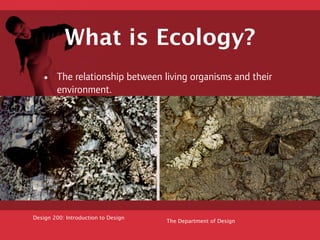
What is Ecology?
   •    The relationship between living organisms and their
        environment.


Design 200: Introduction to Design
                                     The Department of Design
Water Pollution


Design 200: Introduction to Design
                                     The Department of Design
Landfills


Design 200: Introduction to Design
                                     The Department of Design
Ozone Depletion


   •    CFC’s, HCFC’s, HFC’s

   •    Deplete ozone layer.

   •    Also act as greenhouse gases.


Design 200: Introduction to Design
                                     The Department of Design
Greenhouse Effect
   •    25% carbon dioxide increase in atmosphere within last
        200 years:

       •     wood

       •     oil

       •     coal

   •    Methane, CFCs, nitrous oxide and other greenhouse
        gases.

   •    Deforestation
Design 200: Introduction to Design
                                     The Department of Design
Design for the Real
            World

   •    “In this age of mass production when everything must
        be planned and designed, design has become the most
        powerful tool with which man shapes his tools and
        environments (and by extension, society and himself).
        This demands high social and moral responsibility from
        the designer.”

       •     1970, Victor Papanek


Design 200: Introduction to Design
                                     The Department of Design
6 Stages in Product
             Life
   •    Choice of Materials

       •     Including raw materials.

   •    Manufacturing

   •    Packaging

   •    Transportation

   •    Use

   •    Ending Consequences
Design 200: Introduction to Design
                                     The Department of Design
A Green Product

   •    Is not dangerous to people or animals.

   •    Does not use materials from threatened species or
        environments.

   •    Does not consume excessive energy and other
        resources.

   •    Does not produce unnecessary waste.

   •    Does not cause environmental damage.

Design 200: Introduction to Design
                                     The Department of Design
Eco-design Tips

   •    Greater emphasis on quality and performance.

   •    Design product for affordable repair.

   •    Don’t waste natural resources that can’t be replaced on
        a global scale.

   •    Question the ultimate consequences of a new product
        being introduced.

   •    Profit balances and production quotas are not enough.

Design 200: Introduction to Design
                                     The Department of Design
Eco-design Tips

   •    Consider pollution that may occur during
        manufacturing or after use.

   •    Use reclaimed materials that can be reused or recycled.

   •    Avoid excessive packaging.

   •    Research environmental protection laws in market area.


Design 200: Introduction to Design
                                     The Department of Design
4 Steps to Eco-
                 Designing

   •    Educate yourself about environmental issues.

   •    Suggest that design companies formulate an internal
        environmental policy.

   •    Establish a policy regarding purchasing and materials.

   •    Advise clients to become environmentally conscious.


Design 200: Introduction to Design
                                     The Department of Design
Design For
                    Disassembly


   •    Design a product that can be easily disassembled.

   •    Components can be extracted, sorted, recycled or
        maintained.


Design 200: Introduction to Design
                                     The Department of Design
Green Advertising

   •    Claims should be as specific as possible…not vague or
        incomplete.

   •    Claims should reflect disposal options available to local
        consumers.

   •    Claims should be supported by reliable scientific
        evidence.


Design 200: Introduction to Design
                                     The Department of Design
Waste-Management

   •    Source reduction.

   •    Direct reuse of products (closed loop).

   •    Recycling (open loop).

   •    Incineration.

   •    Landfill.


Design 200: Introduction to Design
                                     The Department of Design
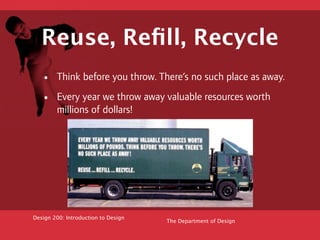
Reuse, Refill, Recycle
   •    Think before you throw. There’s no such place as away.

   •    Every year we throw away valuable resources worth
        millions of dollars!


Design 200: Introduction to Design
                                     The Department of Design
Grolsch Beer
                        Recyclable top seal.
                          Recyclable glass.
                             Reduces litter.


Design 200: Introduction to Design
                                               The Department of Design
Interior Design Tips
   •    Work with other professionals from the ground up in
        the planning of a building.

   •    Consider heating, ventilation, and cooling system; how
        to save money; how to keep air clean and free of mold.

   •    Insulation: more is worth the investment.

   •    Include task lights and natural lighting.

   •    Specify spots for recycling.

   •    Insect and mold resistant moldings.
Design 200: Introduction to Design
                                     The Department of Design
VC Design Tips

   •    Recycled paper for print or packaging; less packaging.

   •    Paper from alternative sources of cellulose (leaf fiber),
        seed fiber (cotton), grass fibers (straw, maize stalks,
        bamboo, bagasse from sugar cane), Bast fibers from
        stems of flax, hemp, and jute.

   •    Paper bleached with hydrogen peroxide instead of
        chlorine bleach.

   •    Water or soy based printing inks.
Design 200: Introduction to Design
                                     The Department of Design
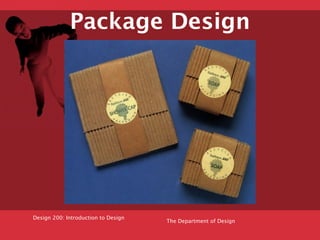
Package Design


Design 200: Introduction to Design
                                     The Department of Design
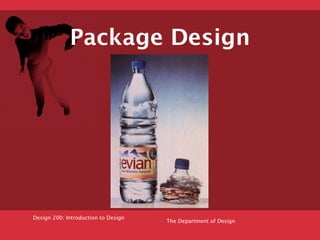
Package Design


Design 200: Introduction to Design
                                     The Department of Design
Biopol Plastic


Design 200: Introduction to Design
                                     The Department of Design
Package Design


Design 200: Introduction to Design
                                     The Department of Design
Tesla Roadster


   •    135 mpg

   •    250 mile range

   •    0 to 60 in 4 seconds

   •    The 2010 Roadster has a base price of US$109,000


Design 200: Introduction to Design
                                     The Department of Design
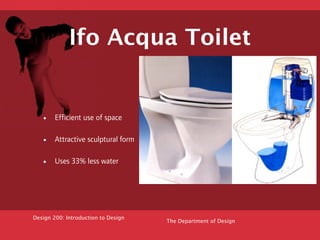
Ifo Acqua Toilet


   •    Efficient use of space

   •    Attractive sculptural form

   •    Uses 33% less water


Design 200: Introduction to Design
                                     The Department of Design
Compact Fluorescents


Design 200: Introduction to Design
                                     The Department of Design
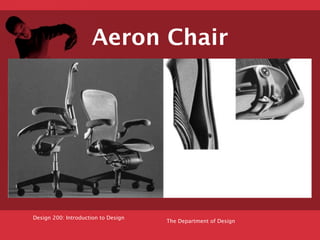
Aeron Chair


Design 200: Introduction to Design
                                     The Department of Design

06 Design & the Environment

  • 1.
    Environmental Design And Green Design Design 200: Introduction to Design The Department of Design
  • 2.
    Environmental Design • Environmentally friendly design. • Takes into account facts learned through ecology. • Promotes sustainability. • Humanistic. Design 200: Introduction to Design The Department of Design
  • 3.
    What is Ecology? • The relationship between living organisms and their environment. Design 200: Introduction to Design The Department of Design
  • 4.
    Water Pollution Design 200:Introduction to Design The Department of Design
  • 5.
    Landfills Design 200: Introductionto Design The Department of Design
  • 6.
    Ozone Depletion • CFC’s, HCFC’s, HFC’s • Deplete ozone layer. • Also act as greenhouse gases. Design 200: Introduction to Design The Department of Design
  • 7.
    Greenhouse Effect • 25% carbon dioxide increase in atmosphere within last 200 years: • wood • oil • coal • Methane, CFCs, nitrous oxide and other greenhouse gases. • Deforestation Design 200: Introduction to Design The Department of Design
  • 8.
    Design for theReal World • “In this age of mass production when everything must be planned and designed, design has become the most powerful tool with which man shapes his tools and environments (and by extension, society and himself). This demands high social and moral responsibility from the designer.” • 1970, Victor Papanek Design 200: Introduction to Design The Department of Design
  • 9.
    6 Stages inProduct Life • Choice of Materials • Including raw materials. • Manufacturing • Packaging • Transportation • Use • Ending Consequences Design 200: Introduction to Design The Department of Design
  • 10.
    A Green Product • Is not dangerous to people or animals. • Does not use materials from threatened species or environments. • Does not consume excessive energy and other resources. • Does not produce unnecessary waste. • Does not cause environmental damage. Design 200: Introduction to Design The Department of Design
  • 11.
    Eco-design Tips • Greater emphasis on quality and performance. • Design product for affordable repair. • Don’t waste natural resources that can’t be replaced on a global scale. • Question the ultimate consequences of a new product being introduced. • Profit balances and production quotas are not enough. Design 200: Introduction to Design The Department of Design
  • 12.
    Eco-design Tips • Consider pollution that may occur during manufacturing or after use. • Use reclaimed materials that can be reused or recycled. • Avoid excessive packaging. • Research environmental protection laws in market area. Design 200: Introduction to Design The Department of Design
  • 13.
    4 Steps toEco- Designing • Educate yourself about environmental issues. • Suggest that design companies formulate an internal environmental policy. • Establish a policy regarding purchasing and materials. • Advise clients to become environmentally conscious. Design 200: Introduction to Design The Department of Design
  • 14.
    Design For Disassembly • Design a product that can be easily disassembled. • Components can be extracted, sorted, recycled or maintained. Design 200: Introduction to Design The Department of Design
  • 15.
    Green Advertising • Claims should be as specific as possible…not vague or incomplete. • Claims should reflect disposal options available to local consumers. • Claims should be supported by reliable scientific evidence. Design 200: Introduction to Design The Department of Design
  • 16.
    Waste-Management • Source reduction. • Direct reuse of products (closed loop). • Recycling (open loop). • Incineration. • Landfill. Design 200: Introduction to Design The Department of Design
  • 17.
    Reuse, Refill, Recycle • Think before you throw. There’s no such place as away. • Every year we throw away valuable resources worth millions of dollars! Design 200: Introduction to Design The Department of Design
  • 18.
    Grolsch Beer Recyclable top seal. Recyclable glass. Reduces litter. Design 200: Introduction to Design The Department of Design
  • 19.
    Interior Design Tips • Work with other professionals from the ground up in the planning of a building. • Consider heating, ventilation, and cooling system; how to save money; how to keep air clean and free of mold. • Insulation: more is worth the investment. • Include task lights and natural lighting. • Specify spots for recycling. • Insect and mold resistant moldings. Design 200: Introduction to Design The Department of Design
  • 20.
    VC Design Tips • Recycled paper for print or packaging; less packaging. • Paper from alternative sources of cellulose (leaf fiber), seed fiber (cotton), grass fibers (straw, maize stalks, bamboo, bagasse from sugar cane), Bast fibers from stems of flax, hemp, and jute. • Paper bleached with hydrogen peroxide instead of chlorine bleach. • Water or soy based printing inks. Design 200: Introduction to Design The Department of Design
  • 21.
    Package Design Design 200:Introduction to Design The Department of Design
  • 22.
    Package Design Design 200:Introduction to Design The Department of Design
  • 23.
    Biopol Plastic Design 200:Introduction to Design The Department of Design
  • 24.
    Package Design Design 200:Introduction to Design The Department of Design
  • 25.
    Tesla Roadster • 135 mpg • 250 mile range • 0 to 60 in 4 seconds • The 2010 Roadster has a base price of US$109,000 Design 200: Introduction to Design The Department of Design
  • 26.
    Ifo Acqua Toilet • Efficient use of space • Attractive sculptural form • Uses 33% less water Design 200: Introduction to Design The Department of Design
  • 27.
    Compact Fluorescents Design 200:Introduction to Design The Department of Design
  • 28.
    Aeron Chair Design 200:Introduction to Design The Department of Design