Diabetic Emergencies
How to assess and manage a patient presenting with a
potential diabetic emergency in a remote area clinic
Competency & Policies
 Competency
 JHAH MSP
3 Potential Emergencies
 Diabetic Ketoacidosis (DKA)
 Hyperosmolar Non Ketotic (HONK) Hyperglycaemia
 Hypoglycaemia
Objectives
To provide the remote clinic nurse with an overview of potential
patient signs and symptoms and their management
Case Study
 23 year old office worker, known diabetic type 1
 Brought in by his colleague as he had been sick
 Recently received bad news from family in Manila
 Has been vomiting all night
 He had been in Bahrain drinking alcohol with a family friend
yesterday to “cheer himself up”
What next?
Start as always with the …
 ABC of resuscitation
 History + examination
 Pregnancy check?
 Blood tests – FBC, U+E, LFTs, CRP, amylase if available
 Blood glucose
 Arterial blood gas (not available in RACs)
 Urinary ketones
Assessment Results
 A - patent
 B - 29 breaths per minute, rapid shallow breaths, 100% on air
 C – BP 102/68. Pulse 107. Cap refill 7 sec
 History – as above
 Examination – slightly tender abdomen
 Bloods taken
 Peripheral blood glucose 160 mg/dL
 Urinary ketones +ve
Impression?
Possible Diagnoses
 Diabetes Ketoacidosis
 pH, blood glucose (serum), ketones
 Metabolic acidosis – other causes
 Sepsis, poisoning
 Pancreatitis
 Gastroenteritis
Diabetic Ketoacidosis (DKA)
Possible Indicators
 Hallmark of type 1 diabetes (insulin insufficiency)
 Previously undiagnosed DM (about 25 – 30%)
 Interruption to normal insulin regime
 Concurrent illness - usually infection
Signs and Symptoms
 Nausea
 Vomiting
 Abdominal pain
 Often preceding polyuria, polydipsia, weight loss
 Drowsiness/confusion/coma (severe)
 Kussmaul respiration - hyperventilation
 ‘Pear drops’ breath
 Sign of associated systemic illness (MI, infection, etc)
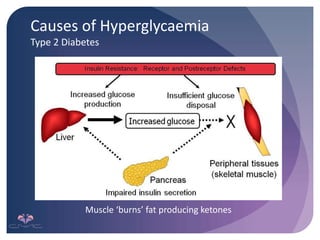
Causes of Hyperglycaemia
Type 2 Diabetes
Muscle ‘burns’ fat producing ketones
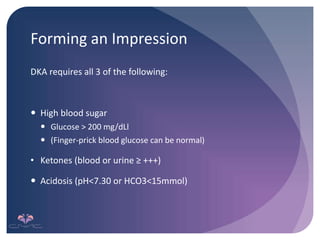
Forming an Impression
DKA requires all 3 of the following:
 High blood sugar
 Glucose > 200 mg/dLl
 (Finger-prick blood glucose can be normal)
• Ketones (blood or urine ≥ +++)
 Acidosis (pH<7.30 or HCO3<15mmol)
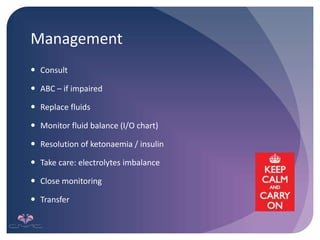
Management
 Consult
 ABC – if impaired
 Replace fluids
 Monitor fluid balance (I/O chart)
 Resolution of ketonaemia / insulin
 Take care: electrolytes imbalance
 Close monitoring
 Transfer
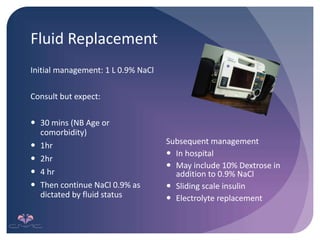
Fluid Replacement
Initial management: 1 L 0.9% NaCl
Consult but expect:
 30 mins (NB Age or
comorbidity)
 1hr
 2hr
 4 hr
 Then continue NaCl 0.9% as
dictated by fluid status
Subsequent management
 In hospital
 May include 10% Dextrose in
addition to 0.9% NaCl
 Sliding scale insulin
 Electrolyte replacement
Consider
• Absence of fever doesn’t mean absence of infection
• Alternative cause for acidosis if glucose and acidosis markedly
out of proportion
• Non specific abdominal does not mean DKA
 Patients with frequent episodes are at increased risk of dying
and diabetic complications
Hyper-Osmolar Non-Ketotic (HONK)
Hyperglycaemic Syndrome (HHS)
Hallmark of type 2 DM
 May occur in:
 Newly diagnosed
 Poor compliance with treatment
 Concurrent illness – especially MI, Infection, CVA
 Drugs – Steroids
 Sugary drinks
Cause and consequences
 Insulin production markedly reduced nut not absent
 No switch to fat metabolism
 No ketones or acidosis
 Loss of intravascular volume
 Mortality higher than DKA
 Comorbidities
 Longer diagnosis time, Electrolyte imbalance
 Cerebral oedema and PE more common
Presentation & Outcome
 Possibly osmotic symptoms
 Dehydration around 10L deficit
 Decreased level of consciousness
 Signs of underlying infection in up to 50%
 +/- thrombo-embolism in up to 30%
 2/3 cases previously undiagnosed
 As high as 50% mortality
Recognition
Diagnosis requires ALL of the following:
 Raised blood glucose (usually >500 mg/dL)
 Absence of ketones (or + or ++ only)
 Serum osmolality >350mmol
Management
 Consult
 Fluid replacement
 Electrolyte replacement
 Caution:
pseudohyponatraemia
 Insulin Search for cause
 Anticoagulation
 Monitor
 Transfer
1 L 0.9% NaCl
 1 hr
 2 hr
 4 hr
 8 hr
 Then continue NaCl 0.9%
as dictated by fluid status
Hypoglycaemia
 The Hypo-kit
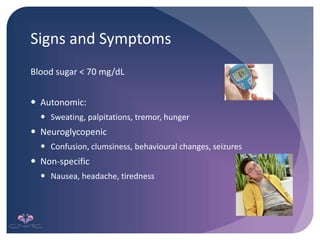
Signs and Symptoms
Blood sugar < 70 mg/dL
 Autonomic:
 Sweating, palpitations, tremor, hunger
 Neuroglycopenic
 Confusion, clumsiness, behavioural changes, seizures
 Non-specific
 Nausea, headache, tiredness
Causes
 Drug Induced
 Insulin,
 Sulphonylureas
 Alcohol
 Reactive Hypoglycaemia
 Post prandial
 Gastric surgery
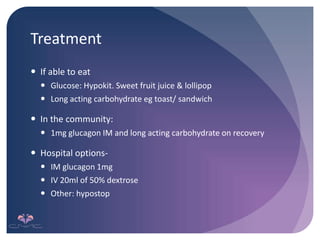
Treatment
 If able to eat
 Glucose: Hypokit. Sweet fruit juice & lollipop
 Long acting carbohydrate eg toast/ sandwich
 In the community:
 1mg glucagon IM and long acting carbohydrate on recovery
 Hospital options-
 IM glucagon 1mg
 IV 20ml of 50% dextrose
 Other: hypostop
Summary
 Diabetic ketoacidosis.
 Management of diabetic ketoacidosis.
 Recognise and manage HONK (HHS)
 Recognise and manage hypoglycaemia.
References
 Hariman, C. (2011) Diabetic Emergencies [Online]. Available at:
https://www.mededcoventry.com/.../Diabetes%20lecture%202011%20-%... Accessed on: 28th July 2015

03e Diabetic Emergencies.pptx

  • 1.
    Diabetic Emergencies How toassess and manage a patient presenting with a potential diabetic emergency in a remote area clinic
  • 2.
    Competency & Policies Competency  JHAH MSP
  • 3.
    3 Potential Emergencies Diabetic Ketoacidosis (DKA)  Hyperosmolar Non Ketotic (HONK) Hyperglycaemia  Hypoglycaemia
  • 4.
    Objectives To provide theremote clinic nurse with an overview of potential patient signs and symptoms and their management
  • 5.
    Case Study  23year old office worker, known diabetic type 1  Brought in by his colleague as he had been sick  Recently received bad news from family in Manila  Has been vomiting all night  He had been in Bahrain drinking alcohol with a family friend yesterday to “cheer himself up”
  • 6.
  • 7.
    Start as alwayswith the …  ABC of resuscitation  History + examination  Pregnancy check?  Blood tests – FBC, U+E, LFTs, CRP, amylase if available  Blood glucose  Arterial blood gas (not available in RACs)  Urinary ketones
  • 8.
    Assessment Results  A- patent  B - 29 breaths per minute, rapid shallow breaths, 100% on air  C – BP 102/68. Pulse 107. Cap refill 7 sec  History – as above  Examination – slightly tender abdomen  Bloods taken  Peripheral blood glucose 160 mg/dL  Urinary ketones +ve
  • 9.
  • 10.
    Possible Diagnoses  DiabetesKetoacidosis  pH, blood glucose (serum), ketones  Metabolic acidosis – other causes  Sepsis, poisoning  Pancreatitis  Gastroenteritis
  • 11.
  • 12.
    Possible Indicators  Hallmarkof type 1 diabetes (insulin insufficiency)  Previously undiagnosed DM (about 25 – 30%)  Interruption to normal insulin regime  Concurrent illness - usually infection
  • 13.
    Signs and Symptoms Nausea  Vomiting  Abdominal pain  Often preceding polyuria, polydipsia, weight loss  Drowsiness/confusion/coma (severe)  Kussmaul respiration - hyperventilation  ‘Pear drops’ breath  Sign of associated systemic illness (MI, infection, etc)
  • 14.
    Causes of Hyperglycaemia Type2 Diabetes Muscle ‘burns’ fat producing ketones
  • 15.
    Forming an Impression DKArequires all 3 of the following:  High blood sugar  Glucose > 200 mg/dLl  (Finger-prick blood glucose can be normal) • Ketones (blood or urine ≥ +++)  Acidosis (pH<7.30 or HCO3<15mmol)
  • 16.
    Management  Consult  ABC– if impaired  Replace fluids  Monitor fluid balance (I/O chart)  Resolution of ketonaemia / insulin  Take care: electrolytes imbalance  Close monitoring  Transfer
  • 17.
    Fluid Replacement Initial management:1 L 0.9% NaCl Consult but expect:  30 mins (NB Age or comorbidity)  1hr  2hr  4 hr  Then continue NaCl 0.9% as dictated by fluid status Subsequent management  In hospital  May include 10% Dextrose in addition to 0.9% NaCl  Sliding scale insulin  Electrolyte replacement
  • 18.
    Consider • Absence offever doesn’t mean absence of infection • Alternative cause for acidosis if glucose and acidosis markedly out of proportion • Non specific abdominal does not mean DKA  Patients with frequent episodes are at increased risk of dying and diabetic complications
  • 19.
    Hyper-Osmolar Non-Ketotic (HONK) HyperglycaemicSyndrome (HHS) Hallmark of type 2 DM  May occur in:  Newly diagnosed  Poor compliance with treatment  Concurrent illness – especially MI, Infection, CVA  Drugs – Steroids  Sugary drinks
  • 20.
    Cause and consequences Insulin production markedly reduced nut not absent  No switch to fat metabolism  No ketones or acidosis  Loss of intravascular volume  Mortality higher than DKA  Comorbidities  Longer diagnosis time, Electrolyte imbalance  Cerebral oedema and PE more common
  • 21.
    Presentation & Outcome Possibly osmotic symptoms  Dehydration around 10L deficit  Decreased level of consciousness  Signs of underlying infection in up to 50%  +/- thrombo-embolism in up to 30%  2/3 cases previously undiagnosed  As high as 50% mortality
  • 22.
    Recognition Diagnosis requires ALLof the following:  Raised blood glucose (usually >500 mg/dL)  Absence of ketones (or + or ++ only)  Serum osmolality >350mmol
  • 23.
    Management  Consult  Fluidreplacement  Electrolyte replacement  Caution: pseudohyponatraemia  Insulin Search for cause  Anticoagulation  Monitor  Transfer 1 L 0.9% NaCl  1 hr  2 hr  4 hr  8 hr  Then continue NaCl 0.9% as dictated by fluid status
  • 24.
  • 25.
    Signs and Symptoms Bloodsugar < 70 mg/dL  Autonomic:  Sweating, palpitations, tremor, hunger  Neuroglycopenic  Confusion, clumsiness, behavioural changes, seizures  Non-specific  Nausea, headache, tiredness
  • 26.
    Causes  Drug Induced Insulin,  Sulphonylureas  Alcohol  Reactive Hypoglycaemia  Post prandial  Gastric surgery
  • 27.
    Treatment  If ableto eat  Glucose: Hypokit. Sweet fruit juice & lollipop  Long acting carbohydrate eg toast/ sandwich  In the community:  1mg glucagon IM and long acting carbohydrate on recovery  Hospital options-  IM glucagon 1mg  IV 20ml of 50% dextrose  Other: hypostop
  • 28.
    Summary  Diabetic ketoacidosis. Management of diabetic ketoacidosis.  Recognise and manage HONK (HHS)  Recognise and manage hypoglycaemia.
  • 29.
    References  Hariman, C.(2011) Diabetic Emergencies [Online]. Available at: https://www.mededcoventry.com/.../Diabetes%20lecture%202011%20-%... Accessed on: 28th July 2015

Editor's Notes

  • #5 Recognise and participate in the management of diabetic ketoacidosis. Recognise Hyperosmolar Non ketotic state Recognise and manage hypoglycaemia.
  • #9 ABG pH 7.20 pO2 16.0 pCO2 2.70 HCO3- 13.8 Na 140 K 4.3
  • #21 Insulin production markedly reduced but NOT absent. No switch to fat metabolism and therefore no ketones or acidosis Gluconeogenesis Loss of intravascular volume Gluconeogenesis (GNG) is a metabolic pathway that results in the generation of glucose from non-carbohydrate carbon substrates such as pyruvate, lactate, glycerol, and glucogenic amino acids. While primarily odd-chain fatty acids can be converted into glucose, it is possible for at least some even-chain fatty acids. Mortality markedly higher compared to DKA Co-morbidities, longer time to diagnosis, electrolyte disturbances Cerebral oedema and Pulmonary Embolism more common
  • #24 Fluid replacement – SLOWER (may be a marker of population not pathology) Electrolyte replacement (pseudohyponatraemia) Insulin – ‘slower’ scale – normally very responsive to IV insulin Search for cause ANTICOAGULATION Monitor 1L 0.9% NaCl 1 hr* 2 hr 4 hr 8 hr Then continue NaCl 0.9% as dictated by fluid status *half the rate of DKA
  • #26 Neuroglycopenia is a medical term that refers to a shortage of glucose (glycopenia) in the brain, usually due to hypoglycemia. Glycopenia affects the function of neurons, and alters brain function and behavior.
  • #28 IV 50% must be given via a large bore securely placed catheter in to a large vein (ACF) to prevent extravasation and tissue loss.