Do we understand what is coming towards us ?
PLM – SOMETHING HAS TO CHANGE
Jos Voskuil
www.virtualdutchman.com
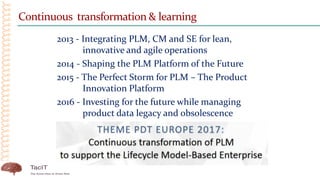
Continuous transformation & learning
2013 - Integrating PLM, CM and SE for lean,
innovative and agile operations
2014 - Shaping the PLM Platform of the Future
2015 - The Perfect Storm for PLM – The Product
Innovation Platform
2016 - Investing for the future while managing
product data legacy and obsolescence
Looking back – The Perfect Storm - 2015
?
?
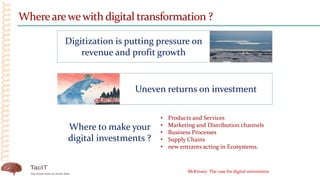
Wherearewewith digital transformation ?
McKinsey: The case for digital reinvention
• Products and Services
• Marketing and Distribution channels
• Business Processes
• Supply Chains
• new entrants acting in Ecosystems.
Where to make your
digital investments ?
Digitization is putting pressure on
revenue and profit growth
Uneven returns on investment
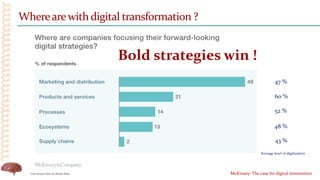
Wherearewith digital transformation ?
McKinsey: The case for digital reinvention
47 %
60 %
52 %
48 %
43 %
Average level of digitization
Bold strategies win !
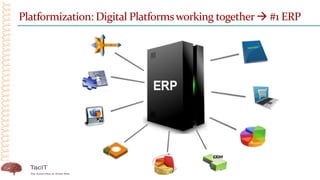
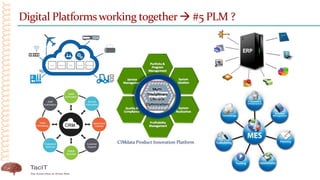
Platformization: Digital Platformsworking together #1 ERP
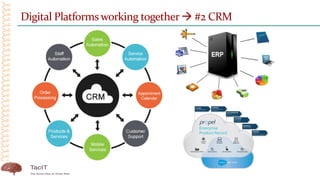
Digital Platformsworking together #2 CRM
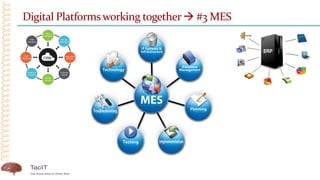
Digital Platformsworking together #3 MES
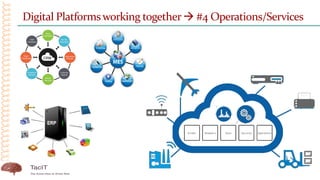
Digital Platformsworking together #4 Operations/Services
Digital Platformsworking together #5 PLM ?
CIMdata Product Innovation Platform
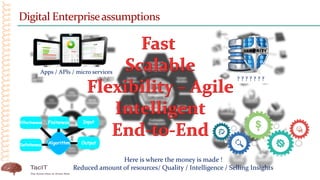
Digital Enterpriseassumptions
Apps / APIs / micro services
? ? ? ? ? ? ?
Here is where the money is made !
Reduced amount of resources/ Quality / Intelligence / Selling Insights
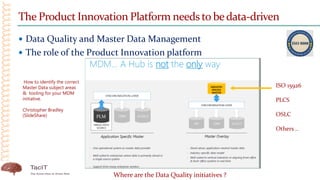
The Product Innovation Platform needs to bedata-driven
 Data Quality and Master Data Management
 The role of the Product Innovation platform
How to identify the correct
Master Data subject areas
& tooling for your MDM
initiative.
Christopher Bradley
(SlideShare) PLM
ISO 15926
PLCS
OSLC
Others ..
Where are the Data Quality initiatives ?
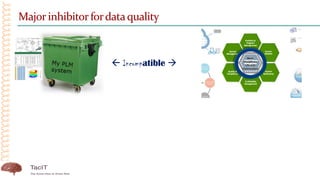
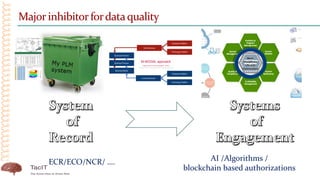
Major inhibitorfordataquality
 Incompatible 
Major inhibitorfordataquality
 Incompatible 
ECR/ECO/NCR/ …. AI /Algorithms /
blockchain based authorizations
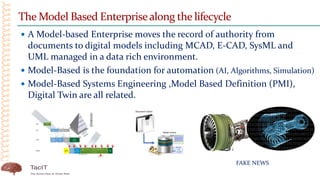
The Model Based Enterprisealong the lifecycle
 A Model-based Enterprise moves the record of authority from
documents to digital models including MCAD, E-CAD, SysML and
UML managed in a data rich environment.
 Model-Based is the foundation for automation (AI, Algorithms, Simulation)
 Model-Based Systems Engineering ,Model Based Definition (PMI),
Digital Twin are all related.
FAKE NEWS
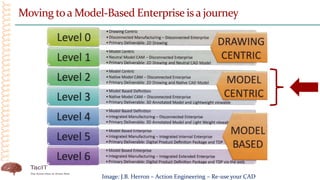
Moving toa Model-Based Enterprise isa journey
Image: J.B. Herron – Action Engineering – Re-use your CAD
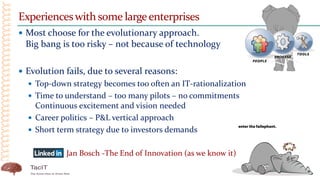
Experienceswith some largeenterprises
 Most choose for the evolutionary approach.
Big bang is too risky – not because of technology
 Evolution fails, due to several reasons:
 Top-down strategy becomes too often an IT-rationalization
 Time to understand – too many pilots – no commitments
Continuous excitement and vision needed
 Career politics – P&L vertical approach
 Short term strategy due to investors demands
Jan Bosch -The End of Innovation (as we know it)
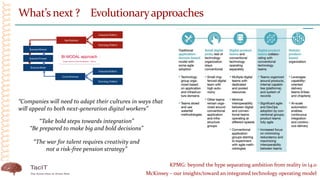
What’s next ? Evolutionaryapproaches
KPMG: beyond the hype separating ambition from reality in i4.0
McKinsey – our insights/toward an integrated technology operating model
“Companies will need to adapt their cultures in ways that
will appeal to both next-generation digital workers”
“Take bold steps towards integration”
“Be prepared to make big and bold decisions”
“The war for talent requires creativity and
not a risk-free pension strategy”
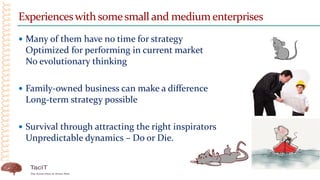
Experienceswith somesmall and medium enterprises
 Many of them have no time for strategy
Optimized for performing in current market
No evolutionary thinking
 Family-owned business can make a difference
Long-term strategy possible
 Survival through attracting the right inspirators
Unpredictable dynamics – Do or Die.
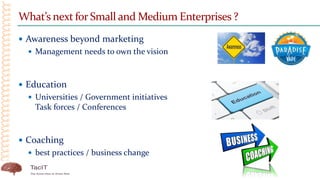
What’s next forSmall and Medium Enterprises ?
 Awareness beyond marketing
 Management needs to own the vision
 Education
 Universities / Government initiatives
Task forces / Conferences
 Coaching
 best practices / business change
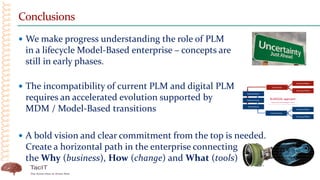
Conclusions
 We make progress understanding the role of PLM
in a lifecycle Model-Based enterprise – concepts are
still in early phases.
 The incompatibility of current PLM and digital PLM
requires an accelerated evolution supported by
MDM / Model-Based transitions
 A bold vision and clear commitment from the top is needed.
Create a horizontal path in the enterprise connecting
the Why (business), How (change) and What (tools)
Jos Voskuil
tacit@planet.nl
@josvoskuil
virtualdutchman.com

PLM something-has-to-change

  • 1.
    Do we understandwhat is coming towards us ? PLM – SOMETHING HAS TO CHANGE Jos Voskuil www.virtualdutchman.com
  • 2.
    Continuous transformation &learning 2013 - Integrating PLM, CM and SE for lean, innovative and agile operations 2014 - Shaping the PLM Platform of the Future 2015 - The Perfect Storm for PLM – The Product Innovation Platform 2016 - Investing for the future while managing product data legacy and obsolescence
  • 3.
    Looking back –The Perfect Storm - 2015 ? ?
  • 4.
    Wherearewewith digital transformation? McKinsey: The case for digital reinvention • Products and Services • Marketing and Distribution channels • Business Processes • Supply Chains • new entrants acting in Ecosystems. Where to make your digital investments ? Digitization is putting pressure on revenue and profit growth Uneven returns on investment
  • 5.
    Wherearewith digital transformation? McKinsey: The case for digital reinvention 47 % 60 % 52 % 48 % 43 % Average level of digitization Bold strategies win !
  • 6.
  • 7.
  • 8.
  • 9.
  • 10.
    Digital Platformsworking together#5 PLM ? CIMdata Product Innovation Platform
  • 11.
    Digital Enterpriseassumptions Apps /APIs / micro services ? ? ? ? ? ? ? Here is where the money is made ! Reduced amount of resources/ Quality / Intelligence / Selling Insights
  • 12.
    The Product InnovationPlatform needs to bedata-driven  Data Quality and Master Data Management  The role of the Product Innovation platform How to identify the correct Master Data subject areas & tooling for your MDM initiative. Christopher Bradley (SlideShare) PLM ISO 15926 PLCS OSLC Others .. Where are the Data Quality initiatives ?
  • 13.
  • 14.
    Major inhibitorfordataquality  Incompatible ECR/ECO/NCR/ …. AI /Algorithms / blockchain based authorizations
  • 15.
    The Model BasedEnterprisealong the lifecycle  A Model-based Enterprise moves the record of authority from documents to digital models including MCAD, E-CAD, SysML and UML managed in a data rich environment.  Model-Based is the foundation for automation (AI, Algorithms, Simulation)  Model-Based Systems Engineering ,Model Based Definition (PMI), Digital Twin are all related. FAKE NEWS
  • 16.
    Moving toa Model-BasedEnterprise isa journey Image: J.B. Herron – Action Engineering – Re-use your CAD
  • 17.
    Experienceswith some largeenterprises Most choose for the evolutionary approach. Big bang is too risky – not because of technology  Evolution fails, due to several reasons:  Top-down strategy becomes too often an IT-rationalization  Time to understand – too many pilots – no commitments Continuous excitement and vision needed  Career politics – P&L vertical approach  Short term strategy due to investors demands Jan Bosch -The End of Innovation (as we know it)
  • 18.
    What’s next ?Evolutionaryapproaches KPMG: beyond the hype separating ambition from reality in i4.0 McKinsey – our insights/toward an integrated technology operating model “Companies will need to adapt their cultures in ways that will appeal to both next-generation digital workers” “Take bold steps towards integration” “Be prepared to make big and bold decisions” “The war for talent requires creativity and not a risk-free pension strategy”
  • 19.
    Experienceswith somesmall andmedium enterprises  Many of them have no time for strategy Optimized for performing in current market No evolutionary thinking  Family-owned business can make a difference Long-term strategy possible  Survival through attracting the right inspirators Unpredictable dynamics – Do or Die.
  • 20.
    What’s next forSmalland Medium Enterprises ?  Awareness beyond marketing  Management needs to own the vision  Education  Universities / Government initiatives Task forces / Conferences  Coaching  best practices / business change
  • 21.
    Conclusions  We makeprogress understanding the role of PLM in a lifecycle Model-Based enterprise – concepts are still in early phases.  The incompatibility of current PLM and digital PLM requires an accelerated evolution supported by MDM / Model-Based transitions  A bold vision and clear commitment from the top is needed. Create a horizontal path in the enterprise connecting the Why (business), How (change) and What (tools)
  • 22.