What does it take
to sink your business?
COVID SILOSor
2
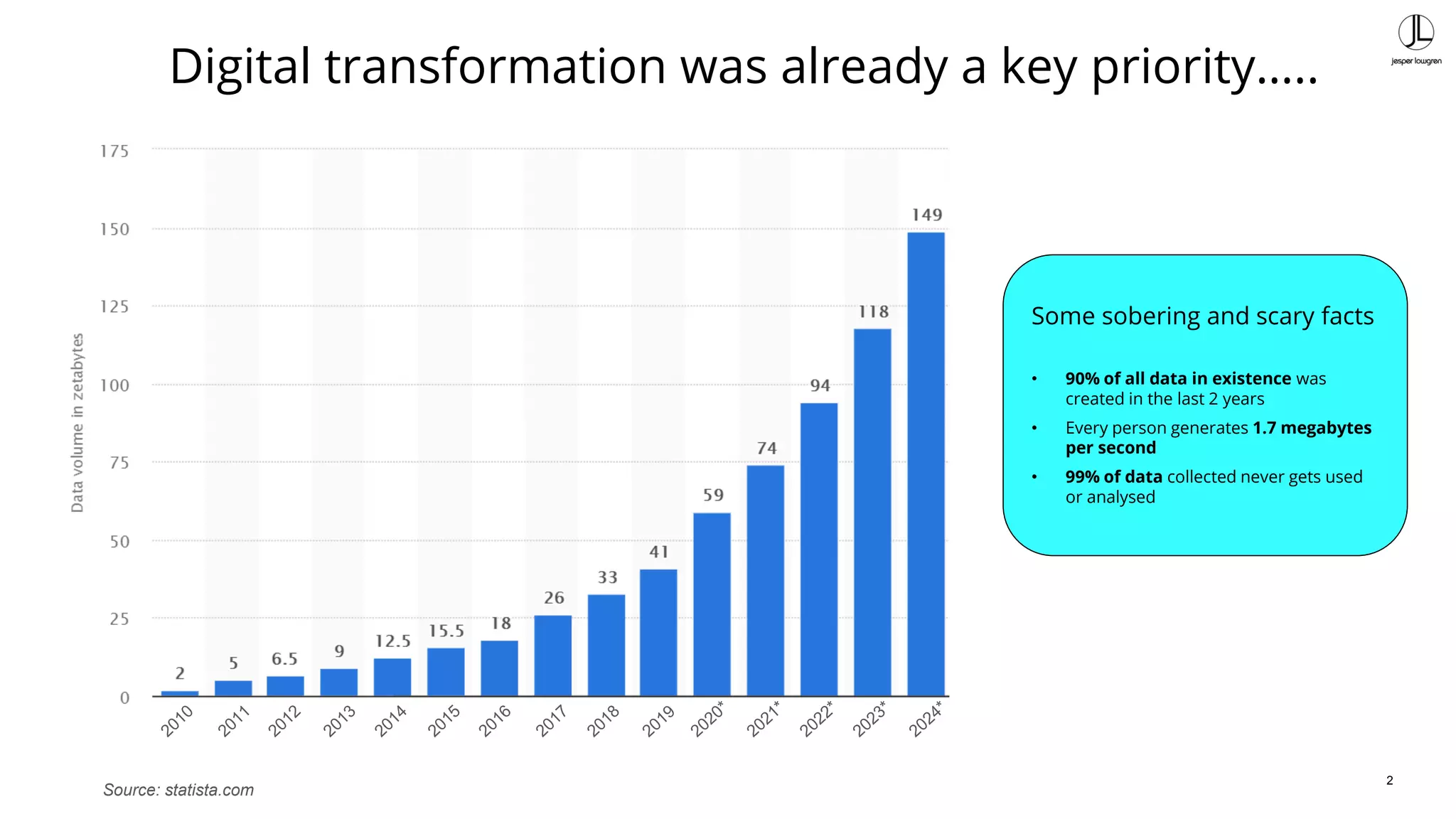
Digital transformation was already a key priority…..
Source: statista.com
Some sobering and scary facts
• 90% of all data in existence was
created in the last 2 years
• Every person generates 1.7 megabytes
per second
• 99% of data collected never gets used
or analysed
3
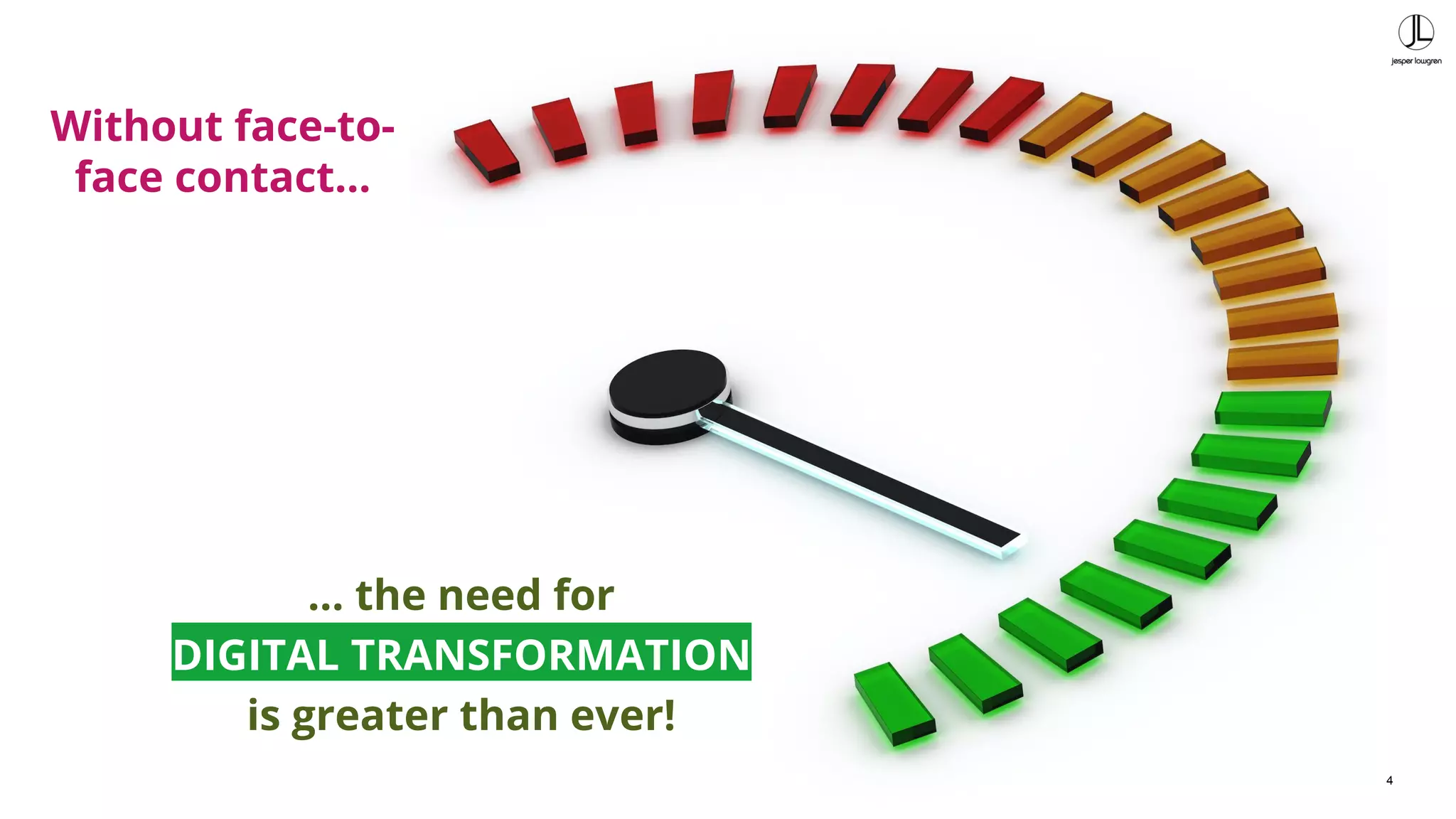
Covid is becoming an accelerant…
4
Without face-to-
face contact…
… the need for
DIGITAL TRANSFORMATION
is greater than ever!
5
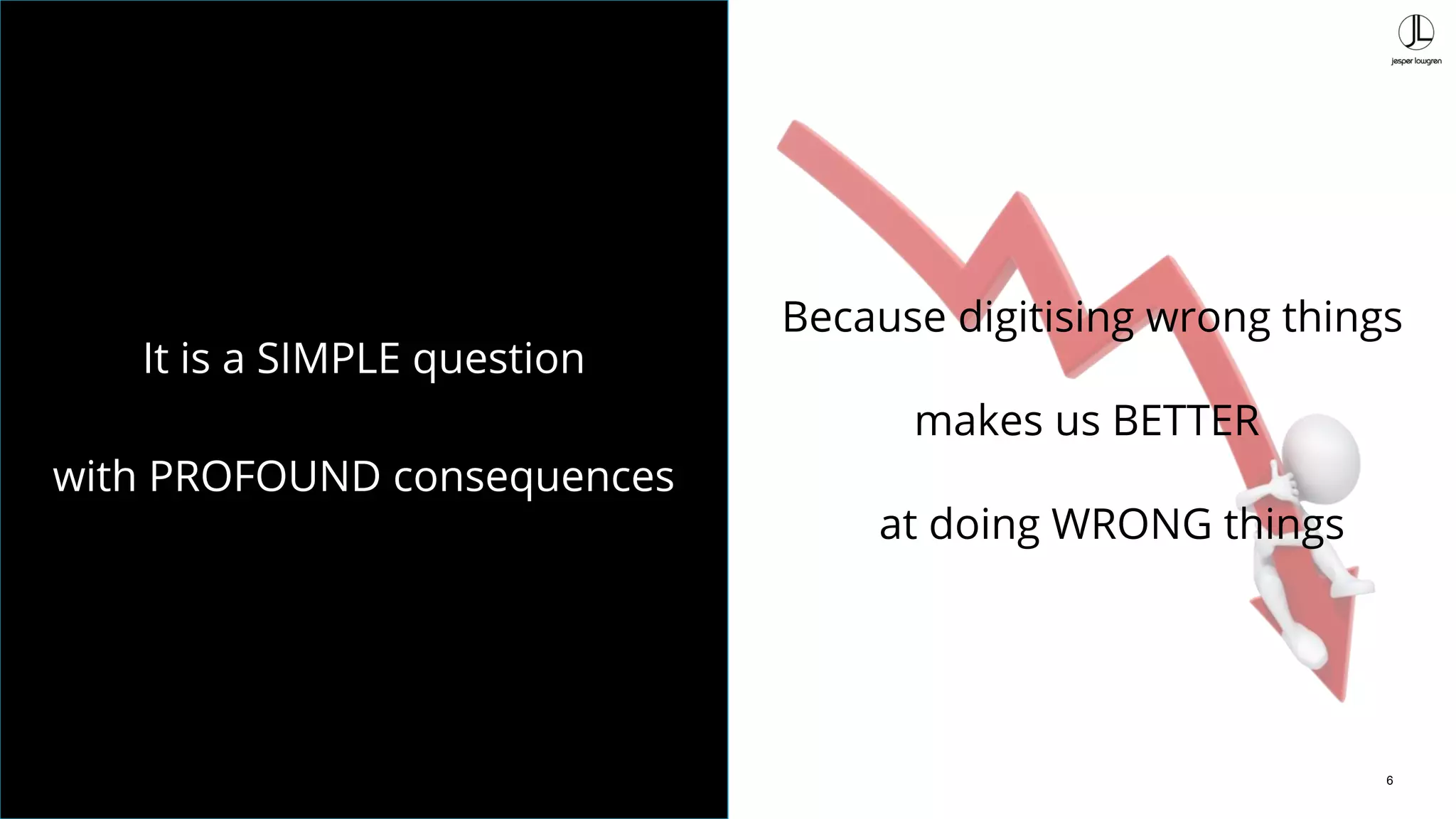
6
at doing WRONG things
Because digitising wrong things
It is a SIMPLE question
with PROFOUND consequences
makes us BETTER
7
Digitising the RIGHT things lead to…
COLLABORATION INFORMED
DECISIONS
AUTOMATION
8
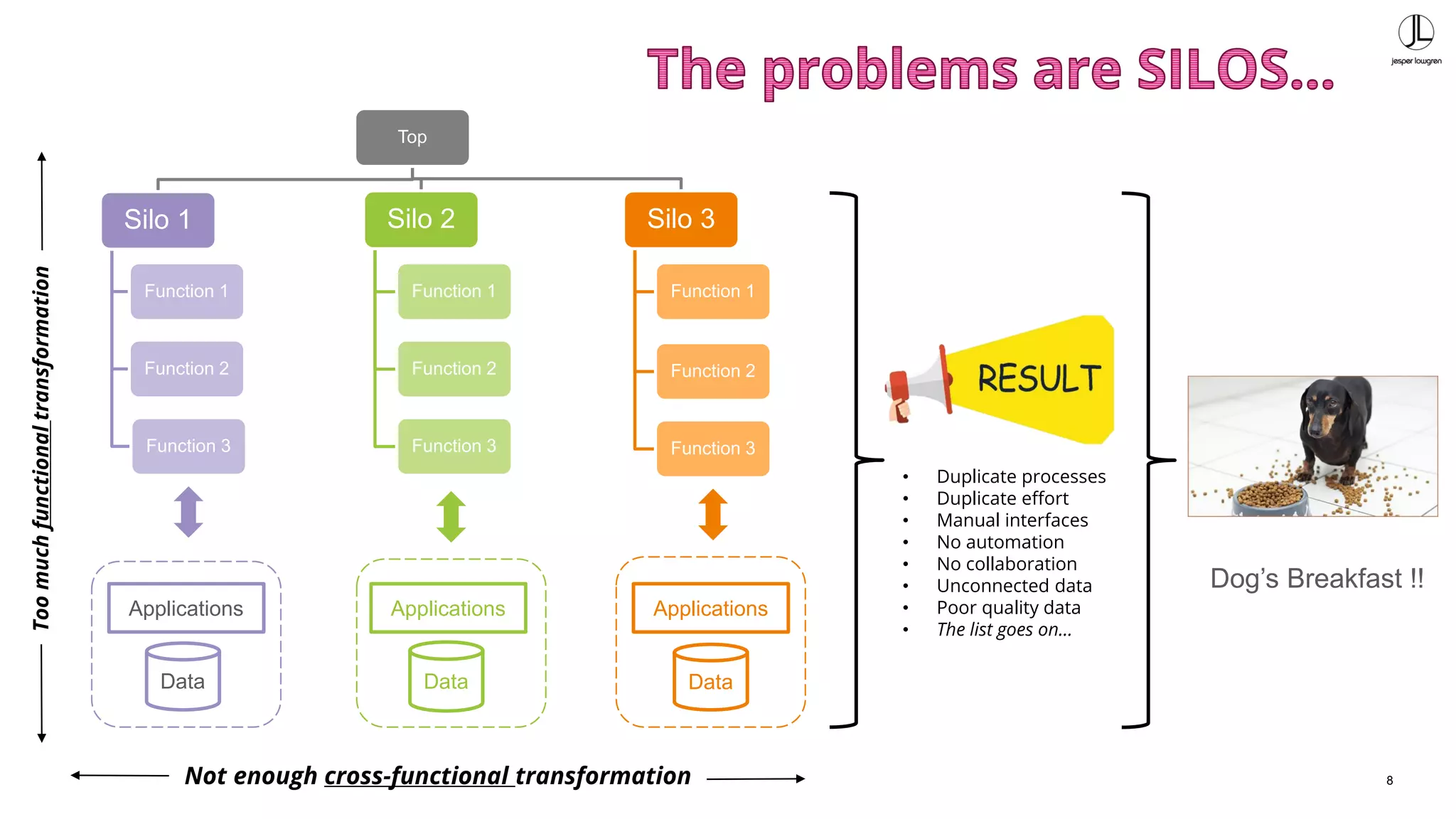
Top
Silo 1
Function 1
Function 2
Function 3
Silo 2
Function 1
Function 2
Function 3
Silo 3
Function 1
Function 2
Function 3
Data
Applications
Data
Applications
Data
Applications
Toomuchfunctionaltransformation
Not enough cross-functional transformation
• Duplicate processes
• Duplicate effort
• Manual interfaces
• No automation
• No collaboration
• Unconnected data
• Poor quality data
• The list goes on…
Dog’s Breakfast !!
9
Easy in concept.
But how do we fix it?
10
Replace Functions with Capabilities…1
Example: Business Capability Map – Level 1 and 2 Capabilities - Department of Human Services Australia
❑ Focuses on WHAT a business does
(rather than HOW it does it)
❑ Each capability is unique
(no duplication)
❑ Enables collaboration
(no artificial silos)
❑ Identifies processes
(level 4 capabilities)
11
Assess current capabilities…1a
Legend
High Capability
Some Capability
Low Capability
Heat-Mapping is a great approach to model current capabilities!
12
Determine future desired capabilities…1b
Legend
High Capability
Some Capability
Low Capability
Heat-Mapping is a great approach to model future capabilities!
Capabilities that
need improvement
13
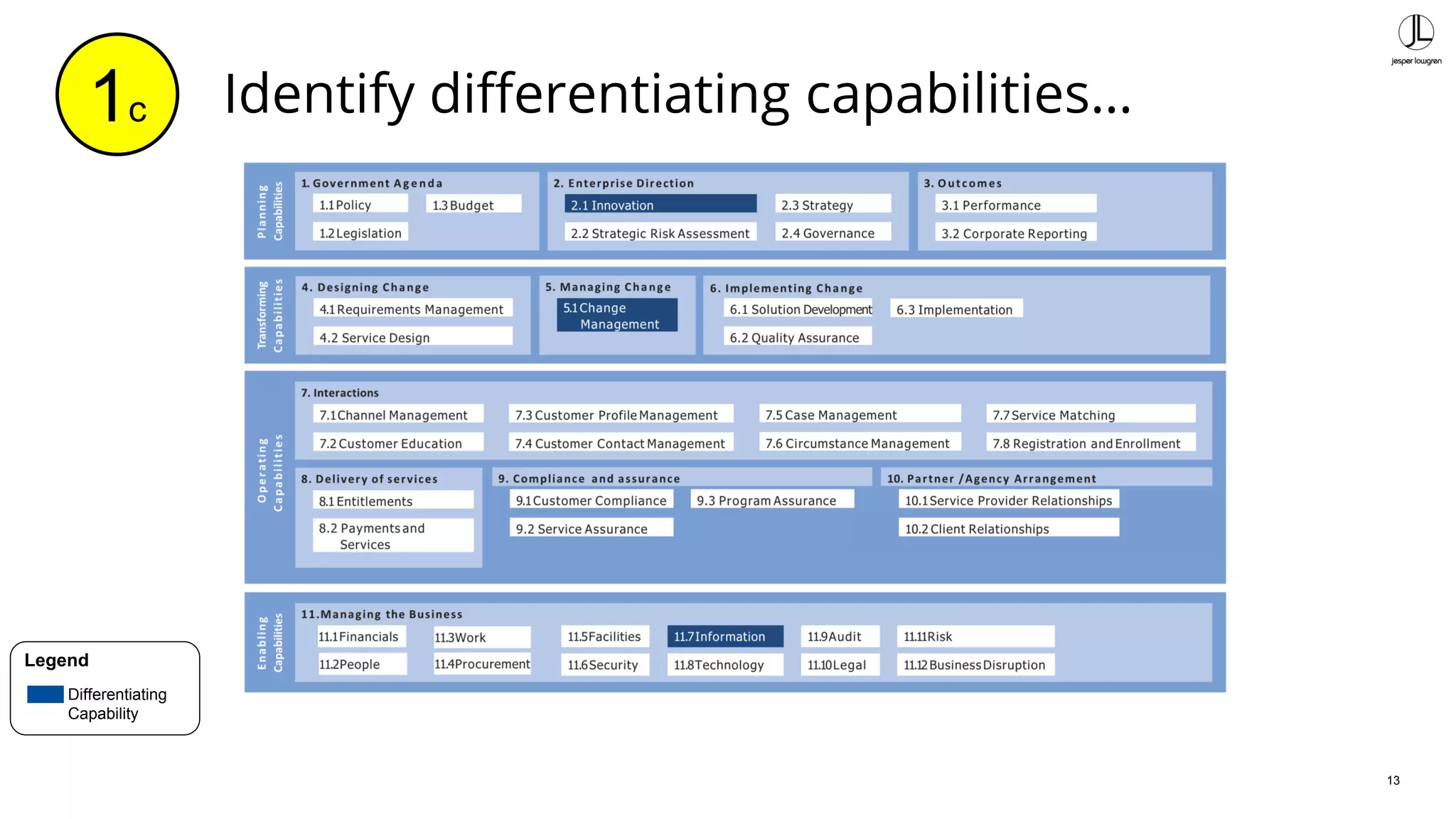
Identify differentiating capabilities…1c
Legend
Differentiating
Capability
14
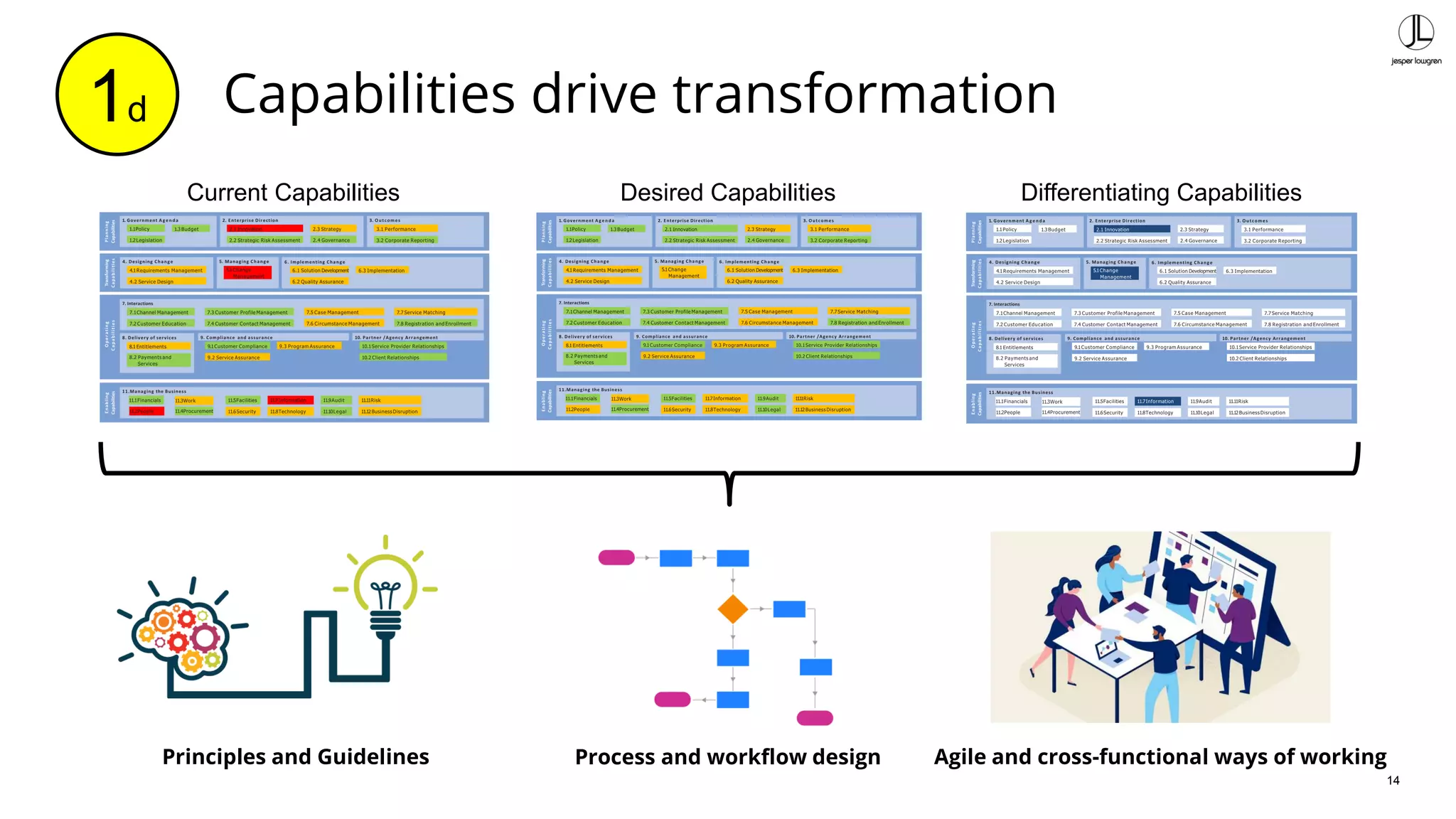
Capabilities drive transformation1d
Current Capabilities Differentiating CapabilitiesDesired Capabilities
Process and workflow designPrinciples and Guidelines Agile and cross-functional ways of working
15
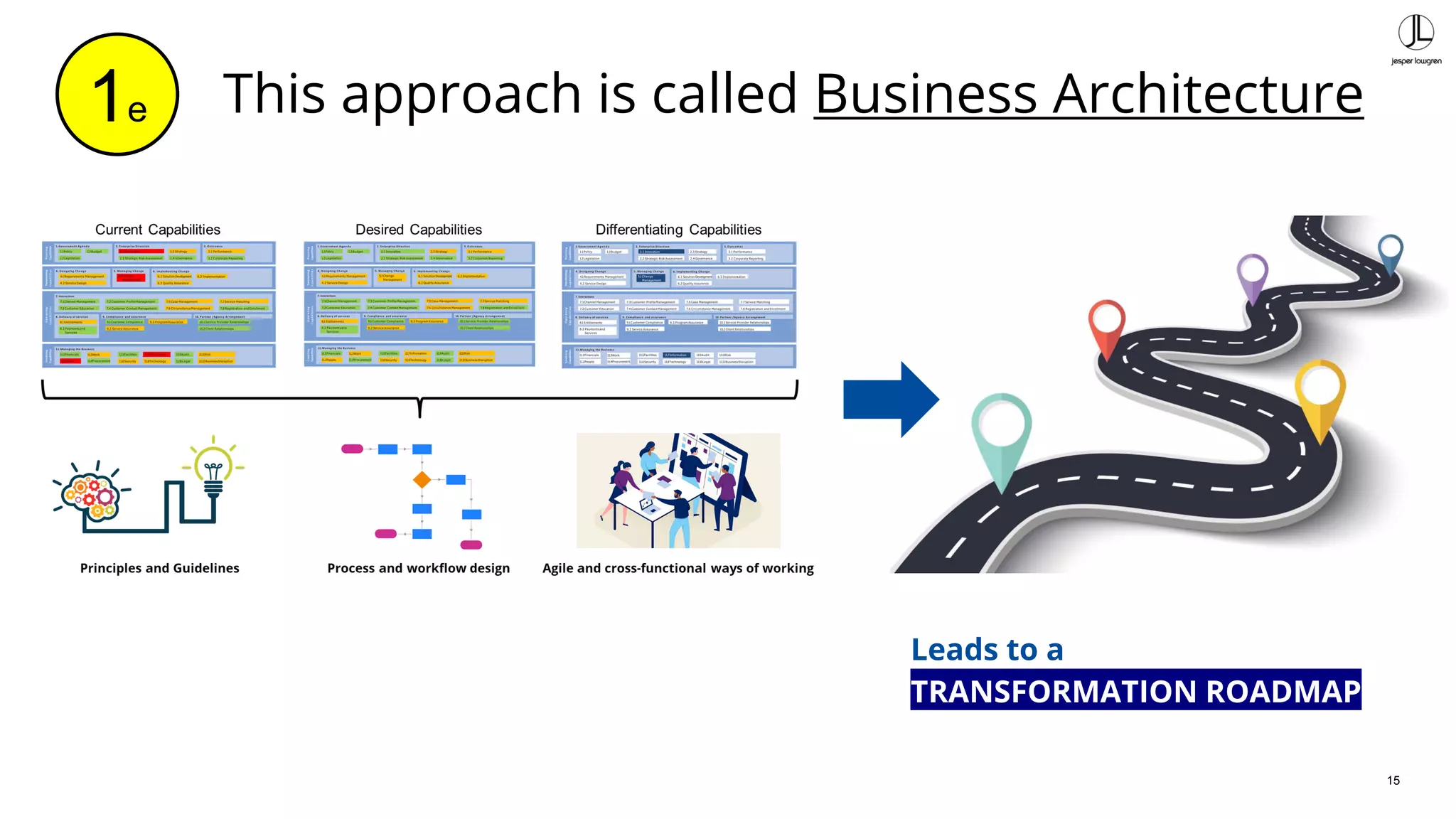
This approach is called Business Architecture1e
Leads to a
TRANSFORMATION ROADMAP
16
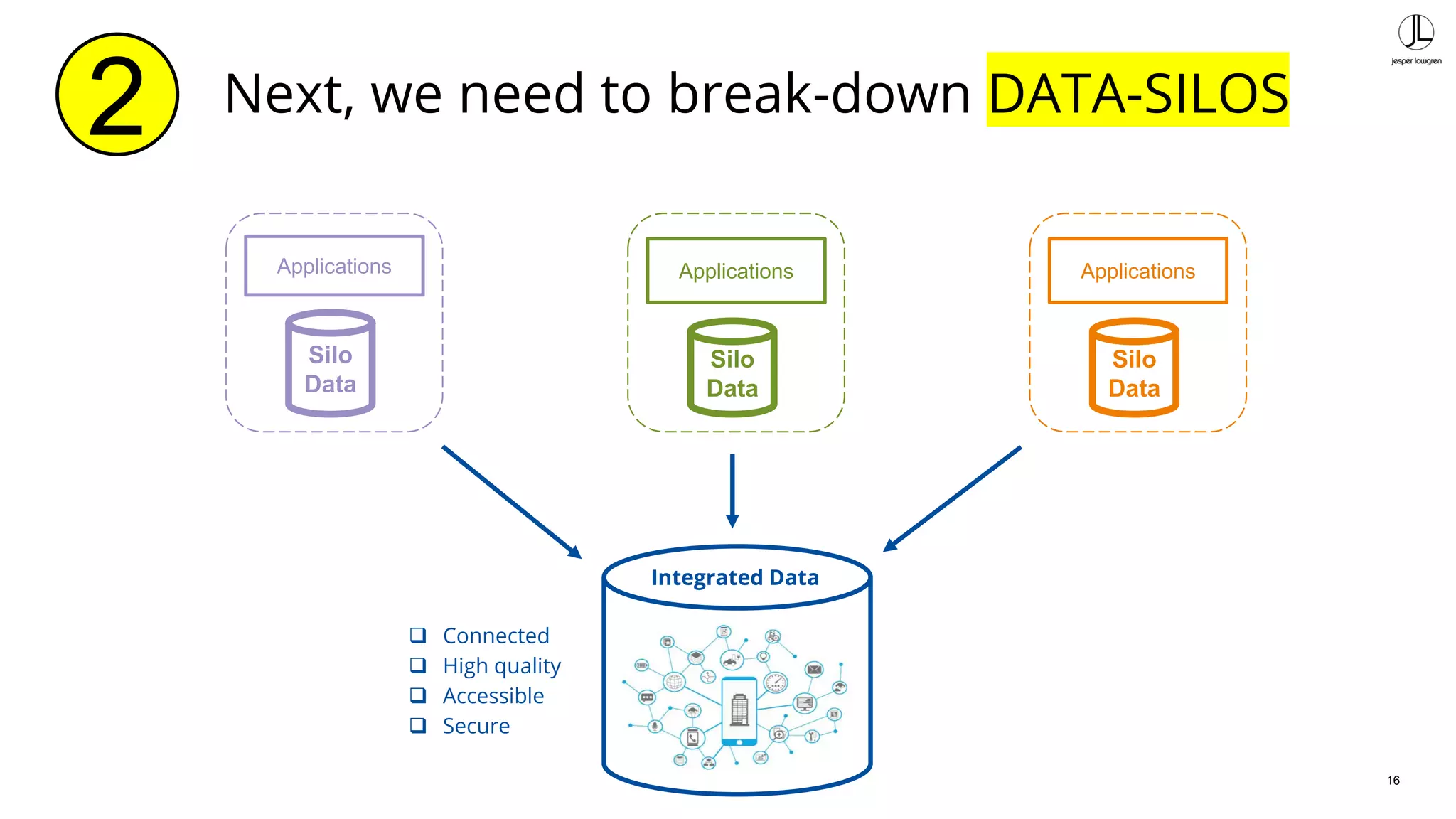
Next, we need to break-down DATA-SILOS2
Silo
Data
Applications
Silo
Data
Applications
Silo
Data
Applications
❑ Connected
❑ High quality
❑ Accessible
❑ Secure
Integrated Data
17
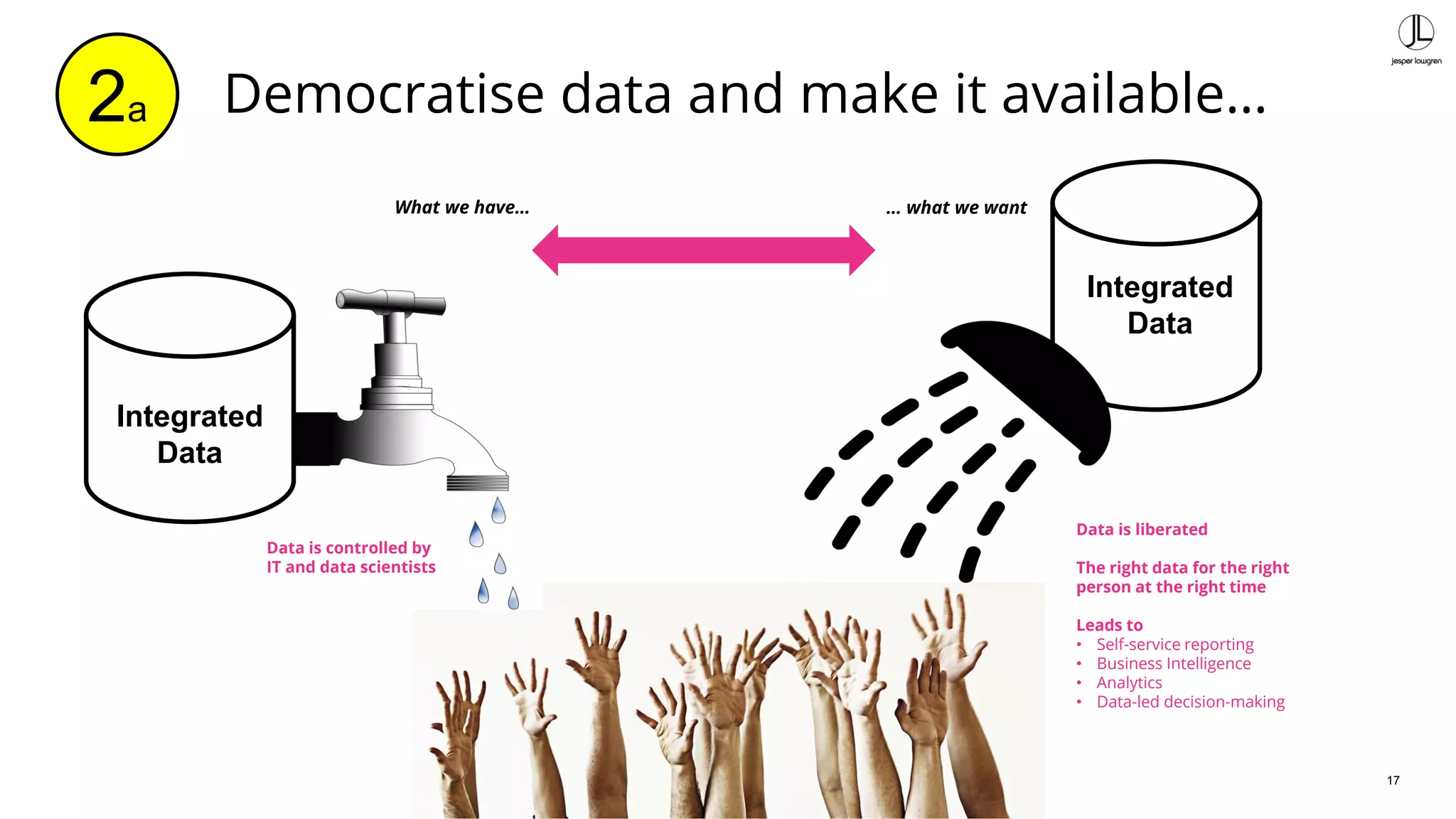
2a Democratise data and make it available…
Data is controlled by
IT and data scientists
Integrated
Data
Data is liberated
The right data for the right
person at the right time
Leads to
• Self-service reporting
• Business Intelligence
• Analytics
• Data-led decision-making
What we have… … what we want
Integrated
Data
18
2b Automate repetitive processes…
Quality data enables AUTOMATION…
Life employees up to perform more
value-added activities
Fun and meaningful stuff…
19
2c Establish Data Governance…
Pro-active management to ensure data is fit-for-purpose All stakeholders are involved in data decision-making
Data governance is a business capability, not an IT capability
20
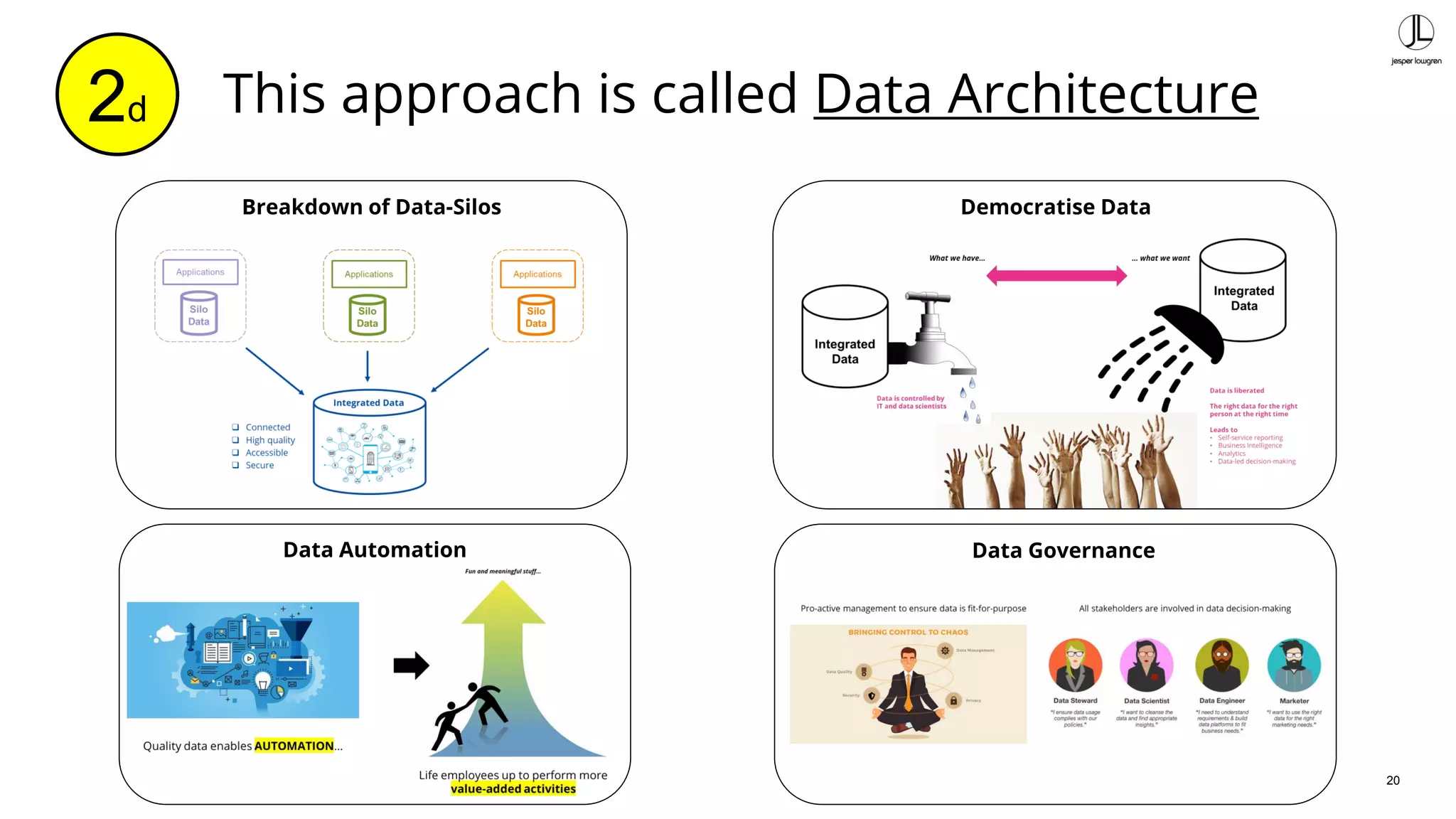
2d This approach is called Data Architecture
Breakdown of Data-Silos Democratise Data
Data Automation Data Governance
21
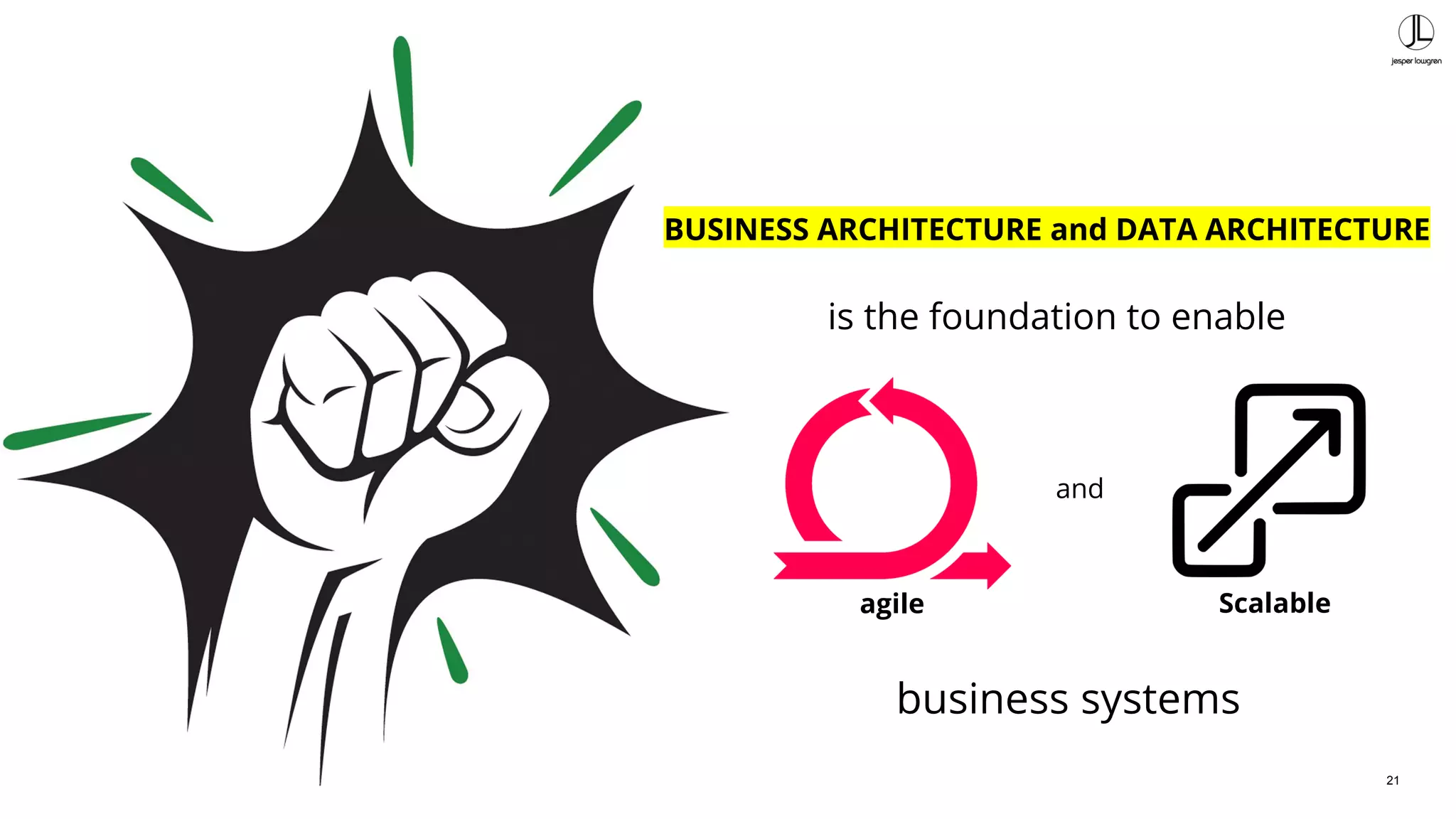
BUSINESS ARCHITECTURE and DATA ARCHITECTURE
is the foundation to enable
business systems
agile
and
Scalable
22
Transformation is
about survival…
It is not the strongest of the species businesses that survives,
nor the most intelligent that survives.
It is the one that is most adaptable to change.
- Darwin paraphrased
23
But TRANSFORMATION is one of the hardest things a business can undertake…
73% of transformation projects fail.
- McKinsey 2015
84% of transformation projects fail.
- McKinsey 2018
Bain & Co 2017
Only 10% of organisations realize their digital ambition.
- Gartner 2018
24
1. Covid is accelerating an already rapid rate of change and disruption
2. Silos form the greatest barrier to change and transformation
3. Business Architecture…
a) Breaks down organisational and operational silos
b) Provides a roadmap for optimal cross-functional transformation and enables agility
4. Data Architecture
a) Breaks down data-silos
b) Democratises and governs data, and enables scale and automation
5. Digital transformation is hard but essential for survival
Summary
Where on the journey are you?
25
Thank you for reading this presentation!
Jesper Lowgren

To Sink or Swim? That is the Question!

  • 1.
    What does ittake to sink your business? COVID SILOSor
  • 2.
    2 Digital transformation wasalready a key priority….. Source: statista.com Some sobering and scary facts • 90% of all data in existence was created in the last 2 years • Every person generates 1.7 megabytes per second • 99% of data collected never gets used or analysed
  • 3.
    3 Covid is becomingan accelerant…
  • 4.
    4 Without face-to- face contact… …the need for DIGITAL TRANSFORMATION is greater than ever!
  • 5.
  • 6.
    6 at doing WRONGthings Because digitising wrong things It is a SIMPLE question with PROFOUND consequences makes us BETTER
  • 7.
    7 Digitising the RIGHTthings lead to… COLLABORATION INFORMED DECISIONS AUTOMATION
  • 8.
    8 Top Silo 1 Function 1 Function2 Function 3 Silo 2 Function 1 Function 2 Function 3 Silo 3 Function 1 Function 2 Function 3 Data Applications Data Applications Data Applications Toomuchfunctionaltransformation Not enough cross-functional transformation • Duplicate processes • Duplicate effort • Manual interfaces • No automation • No collaboration • Unconnected data • Poor quality data • The list goes on… Dog’s Breakfast !!
  • 9.
    9 Easy in concept. Buthow do we fix it?
  • 10.
    10 Replace Functions withCapabilities…1 Example: Business Capability Map – Level 1 and 2 Capabilities - Department of Human Services Australia ❑ Focuses on WHAT a business does (rather than HOW it does it) ❑ Each capability is unique (no duplication) ❑ Enables collaboration (no artificial silos) ❑ Identifies processes (level 4 capabilities)
  • 11.
    11 Assess current capabilities…1a Legend HighCapability Some Capability Low Capability Heat-Mapping is a great approach to model current capabilities!
  • 12.
    12 Determine future desiredcapabilities…1b Legend High Capability Some Capability Low Capability Heat-Mapping is a great approach to model future capabilities! Capabilities that need improvement
  • 13.
  • 14.
    14 Capabilities drive transformation1d CurrentCapabilities Differentiating CapabilitiesDesired Capabilities Process and workflow designPrinciples and Guidelines Agile and cross-functional ways of working
  • 15.
    15 This approach iscalled Business Architecture1e Leads to a TRANSFORMATION ROADMAP
  • 16.
    16 Next, we needto break-down DATA-SILOS2 Silo Data Applications Silo Data Applications Silo Data Applications ❑ Connected ❑ High quality ❑ Accessible ❑ Secure Integrated Data
  • 17.
    17 2a Democratise dataand make it available… Data is controlled by IT and data scientists Integrated Data Data is liberated The right data for the right person at the right time Leads to • Self-service reporting • Business Intelligence • Analytics • Data-led decision-making What we have… … what we want Integrated Data
  • 18.
    18 2b Automate repetitiveprocesses… Quality data enables AUTOMATION… Life employees up to perform more value-added activities Fun and meaningful stuff…
  • 19.
    19 2c Establish DataGovernance… Pro-active management to ensure data is fit-for-purpose All stakeholders are involved in data decision-making Data governance is a business capability, not an IT capability
  • 20.
    20 2d This approachis called Data Architecture Breakdown of Data-Silos Democratise Data Data Automation Data Governance
  • 21.
    21 BUSINESS ARCHITECTURE andDATA ARCHITECTURE is the foundation to enable business systems agile and Scalable
  • 22.
    22 Transformation is about survival… Itis not the strongest of the species businesses that survives, nor the most intelligent that survives. It is the one that is most adaptable to change. - Darwin paraphrased
  • 23.
    23 But TRANSFORMATION isone of the hardest things a business can undertake… 73% of transformation projects fail. - McKinsey 2015 84% of transformation projects fail. - McKinsey 2018 Bain & Co 2017 Only 10% of organisations realize their digital ambition. - Gartner 2018
  • 24.
    24 1. Covid isaccelerating an already rapid rate of change and disruption 2. Silos form the greatest barrier to change and transformation 3. Business Architecture… a) Breaks down organisational and operational silos b) Provides a roadmap for optimal cross-functional transformation and enables agility 4. Data Architecture a) Breaks down data-silos b) Democratises and governs data, and enables scale and automation 5. Digital transformation is hard but essential for survival Summary Where on the journey are you?
  • 25.
    25 Thank you forreading this presentation! Jesper Lowgren