JOBS:
SOFTWARE ENGINEER@HYPERFAIR INC & AGILE COACH@MANAGED DESIGNS
COMMUNITIES:
UGIDOTNET | SCALA MILANO MEETUP
SLIDE & CODE:
HTTPS://GITHUB.COM/RUCKA/JOINTHEEXPERT-WEBDAY-2016
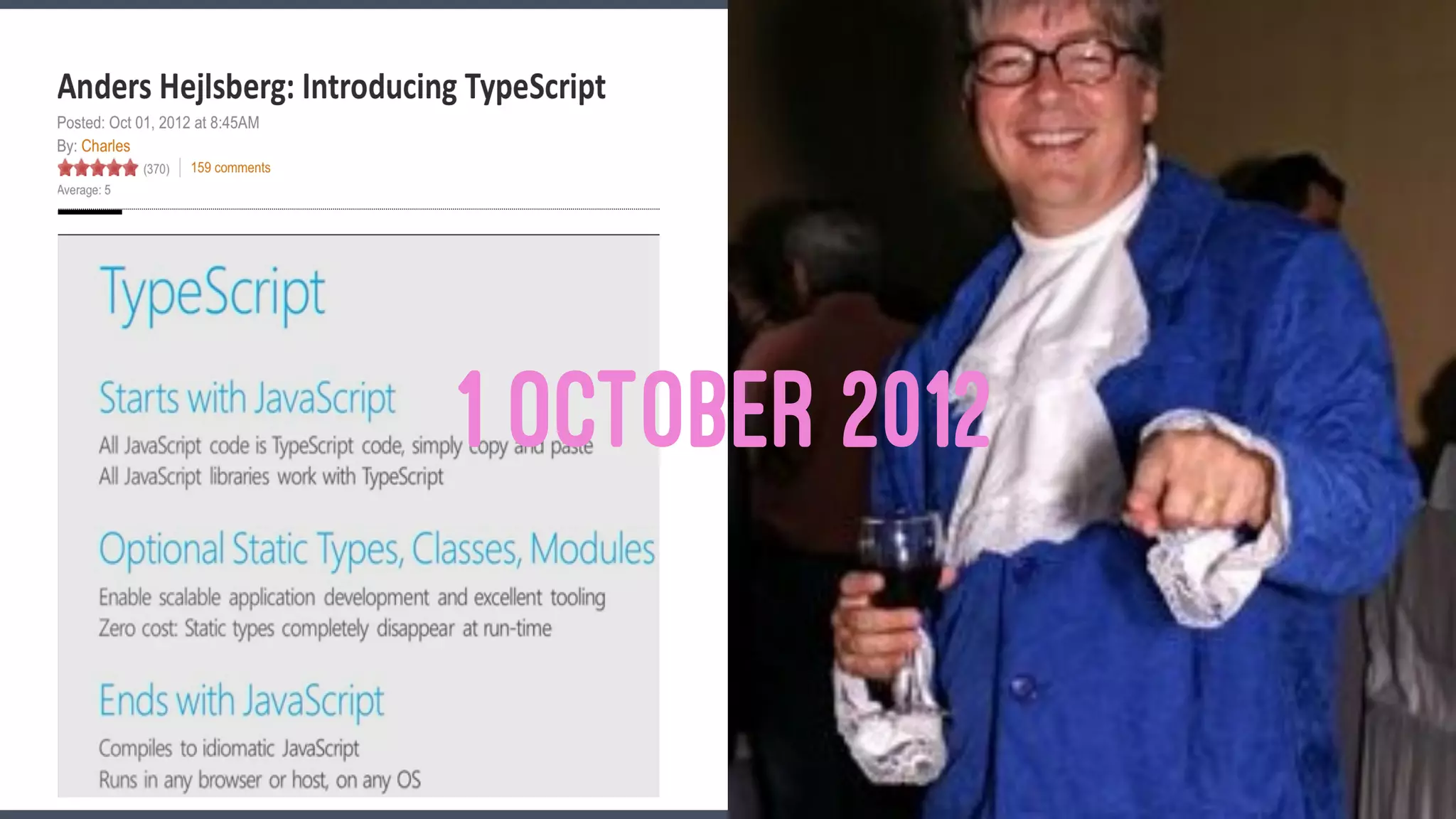
1 OCTOBER 2012
? ==
TYPESCRIPT
WEB + ? ==
TYPESCRIPT
WEB + C# ==
TYPESCRIPT
?
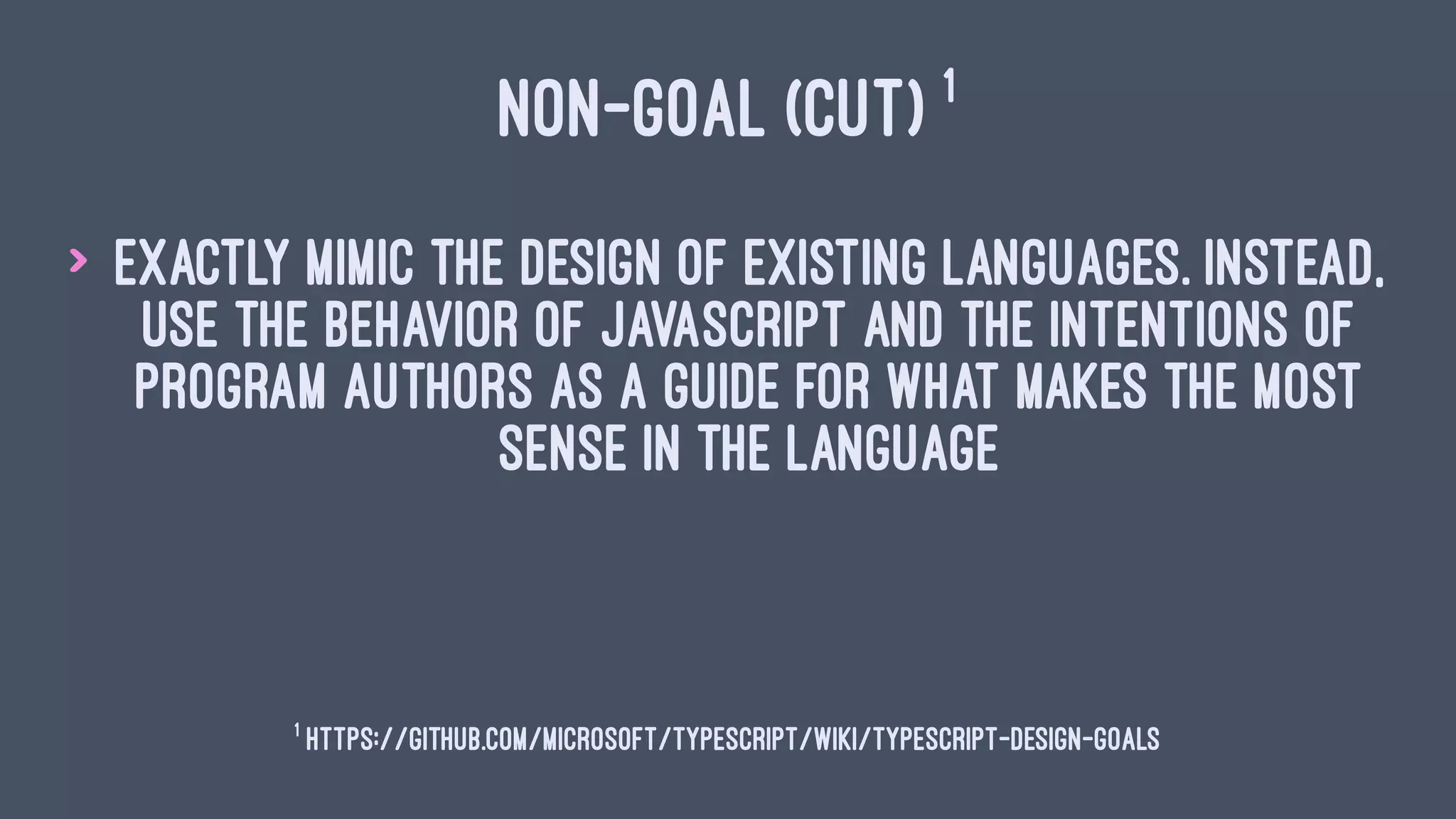
NON-GOAL (CUT) 1
> Exactly mimic the design of existing languages. Instead,
use the behavior of JavaScript and the intentions of
program authors as a guide for what makes the most
sense in the language
1
https://github.com/Microsoft/TypeScript/wiki/TypeScript-Design-Goals
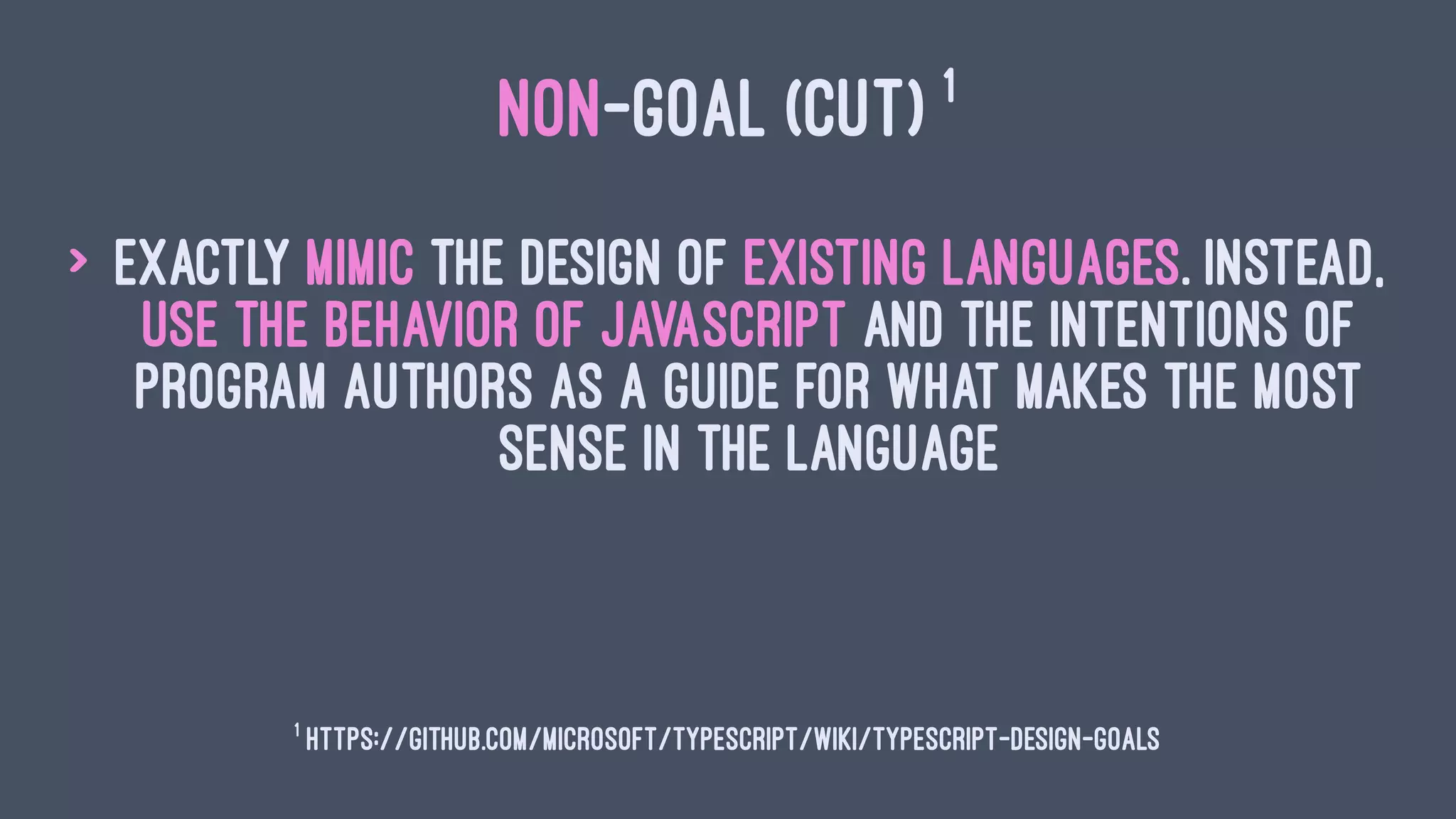
NON-GOAL (CUT) 1
> Exactly mimic the design of existing languages. Instead,
use the behavior of JavaScript and the intentions of
program authors as a guide for what makes the most
sense in the language
1
https://github.com/Microsoft/TypeScript/wiki/TypeScript-Design-Goals
GOALS (CUT) 1
> Align with current and future ECMAScript proposals.
> Use a consistent, fully erasable, structural type
system.
1
https://github.com/Microsoft/TypeScript/wiki/TypeScript-Design-Goals
GOALS (CUT) 1
> Align with current and future ECMAScript proposals.
> Use a consistent, fully erasable, structural type
system.
1
https://github.com/Microsoft/TypeScript/wiki/TypeScript-Design-Goals
USE A CONSISTENT, FULLY ERASABLE, STRUCTURAL TYPE SYSTEM
USE A CONSISTENT, FULLY
ERASABLE, STRUCTURAL TYPE
SYSTEM
USE A CONSISTENT,
FULLY ERASABLE,
STRUCTURAL TYPE
SYSTEM
STRUCTURAL
TYPE SYSTEM
AKA
EXAMPLE
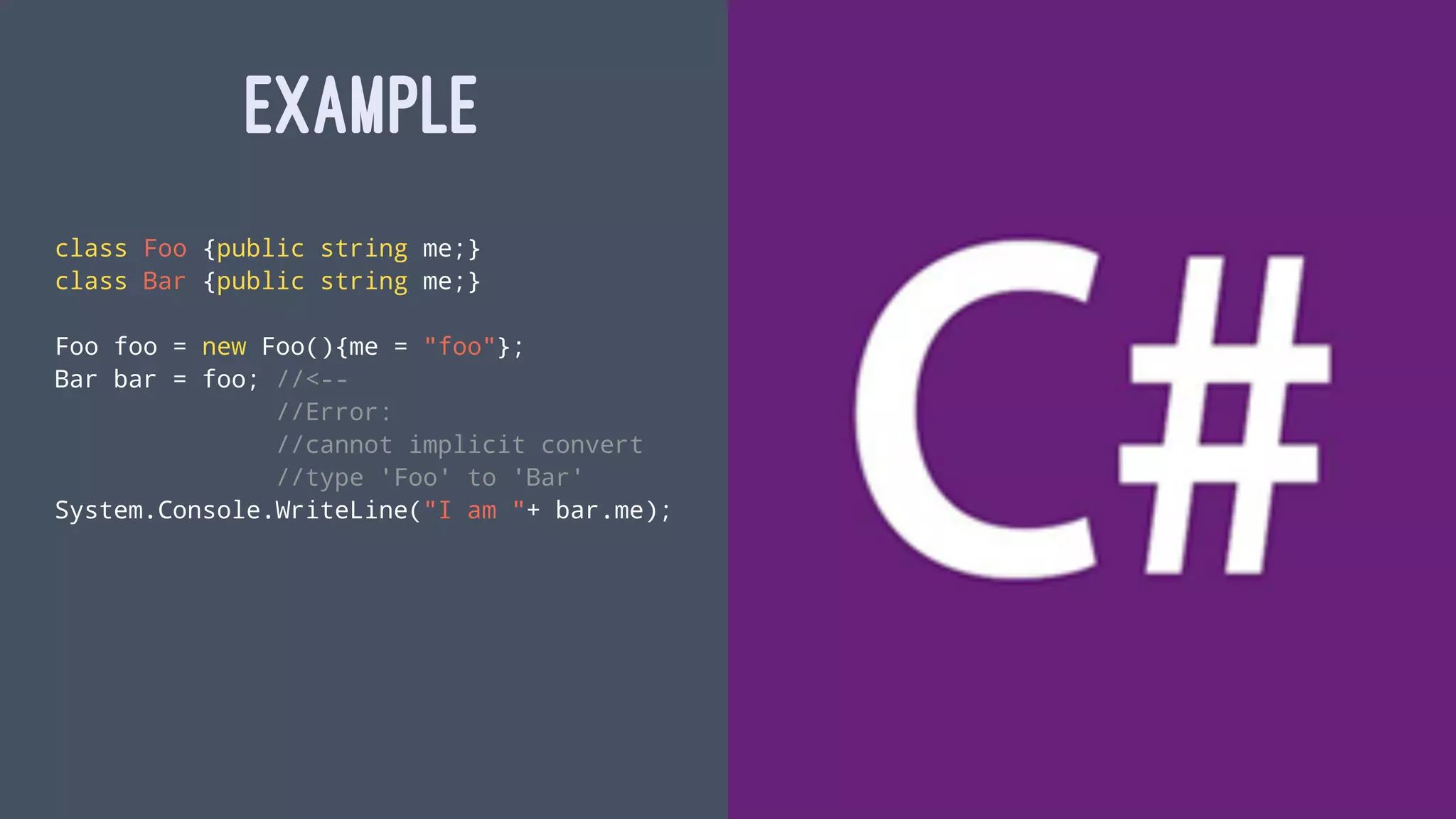
class Foo {public string me;}
class Bar {public string me;}
Foo foo = new Foo(){me = "foo"};
Bar bar = foo; //<--
//Error:
//cannot implicit convert
//type 'Foo' to 'Bar'
System.Console.WriteLine("I am "+ bar.me);
EXAMPLE
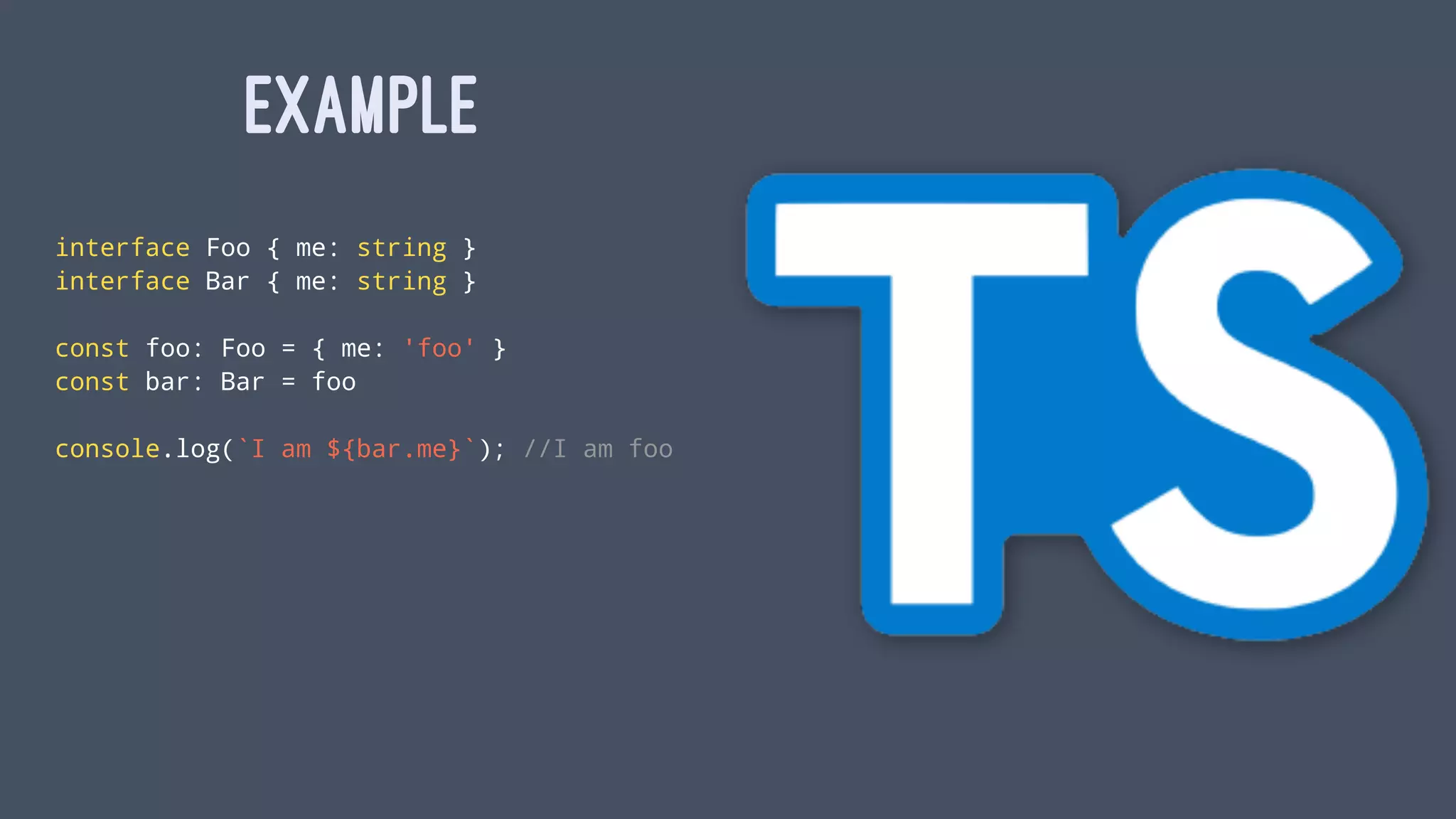
interface Foo { me: string }
interface Bar { me: string }
const foo: Foo = { me: 'foo' }
const bar: Bar = foo
console.log(`I am ${bar.me}`); //I am foo
WEB + C# ==
TYPESCRIPT
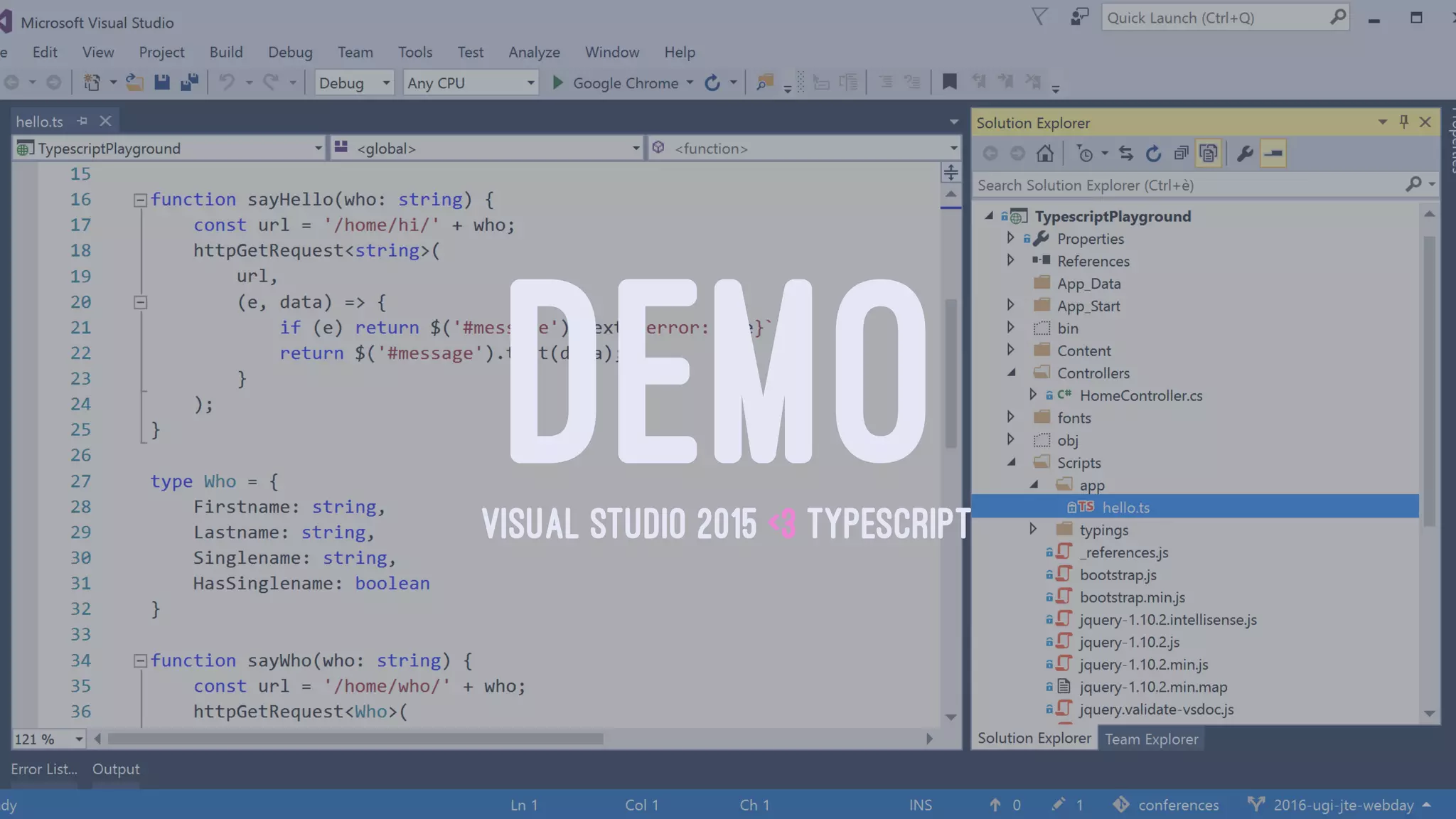
DEMOVISUAL STUDIO 2015 <3 TYPESCRIPT
LET'S PLAY
WITH TYPES
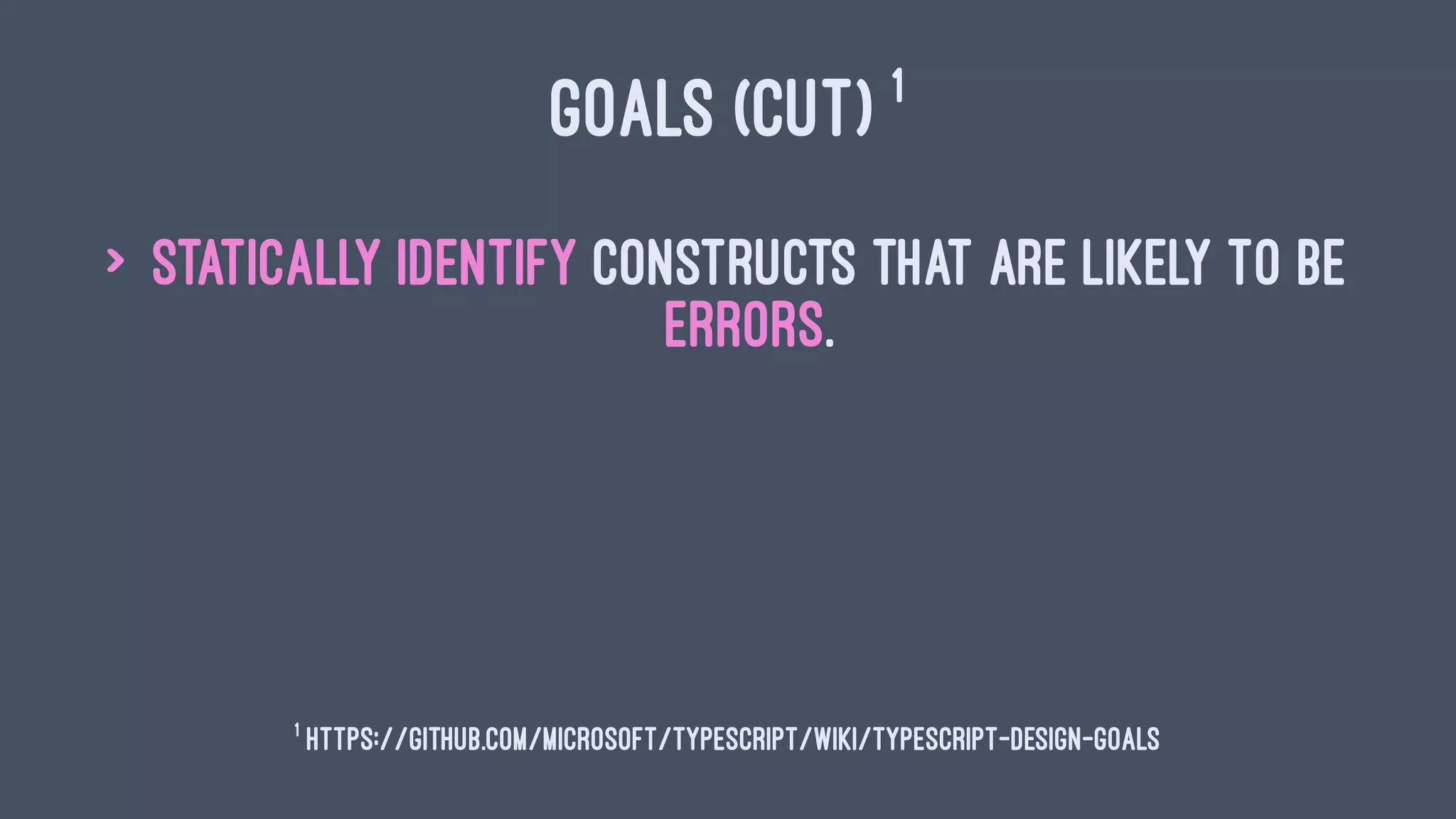
GOALS (CUT) 1
> Statically identify constructs that are likely to be
errors.
1
https://github.com/Microsoft/TypeScript/wiki/TypeScript-Design-Goals
1. PARAMETRIC POLIMORPHISM2
interface Valid<A> { a: A }
interface Invalid<E> { errors: E[] }
function save<A>(data: Valid<A>): void {
alert(`${JSON.stringfy(data.a)} saved!`);
}
function showErrors<E>(data: Invalid<E>): void {
alert(`${JSON.stringfy(data.errors)} :(`);
}
2
https://en.wikipedia.org/wiki/Parametric_polymorphism
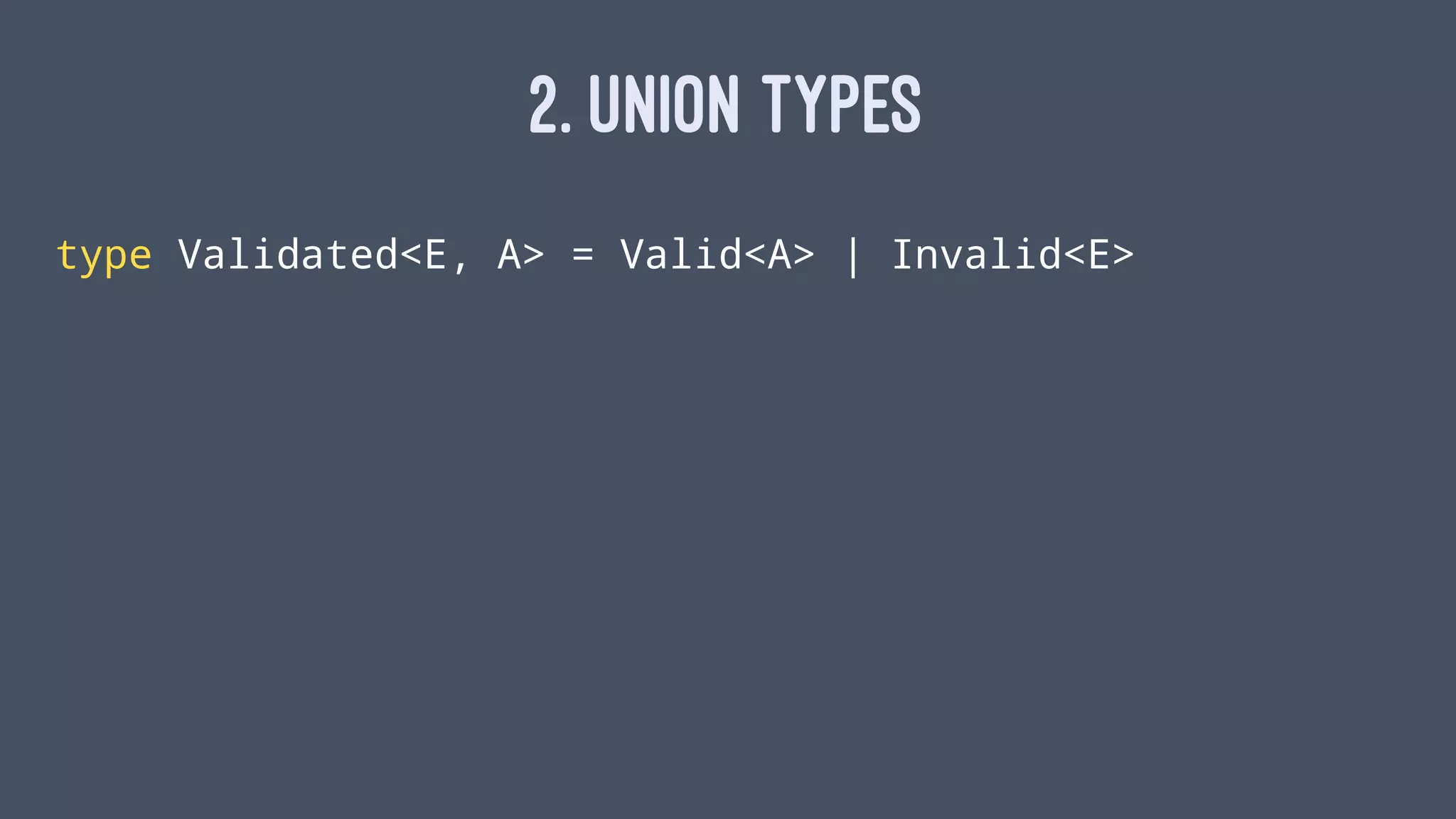
2. UNION TYPES
type Validated<E, A> = Valid<A> | Invalid<E>
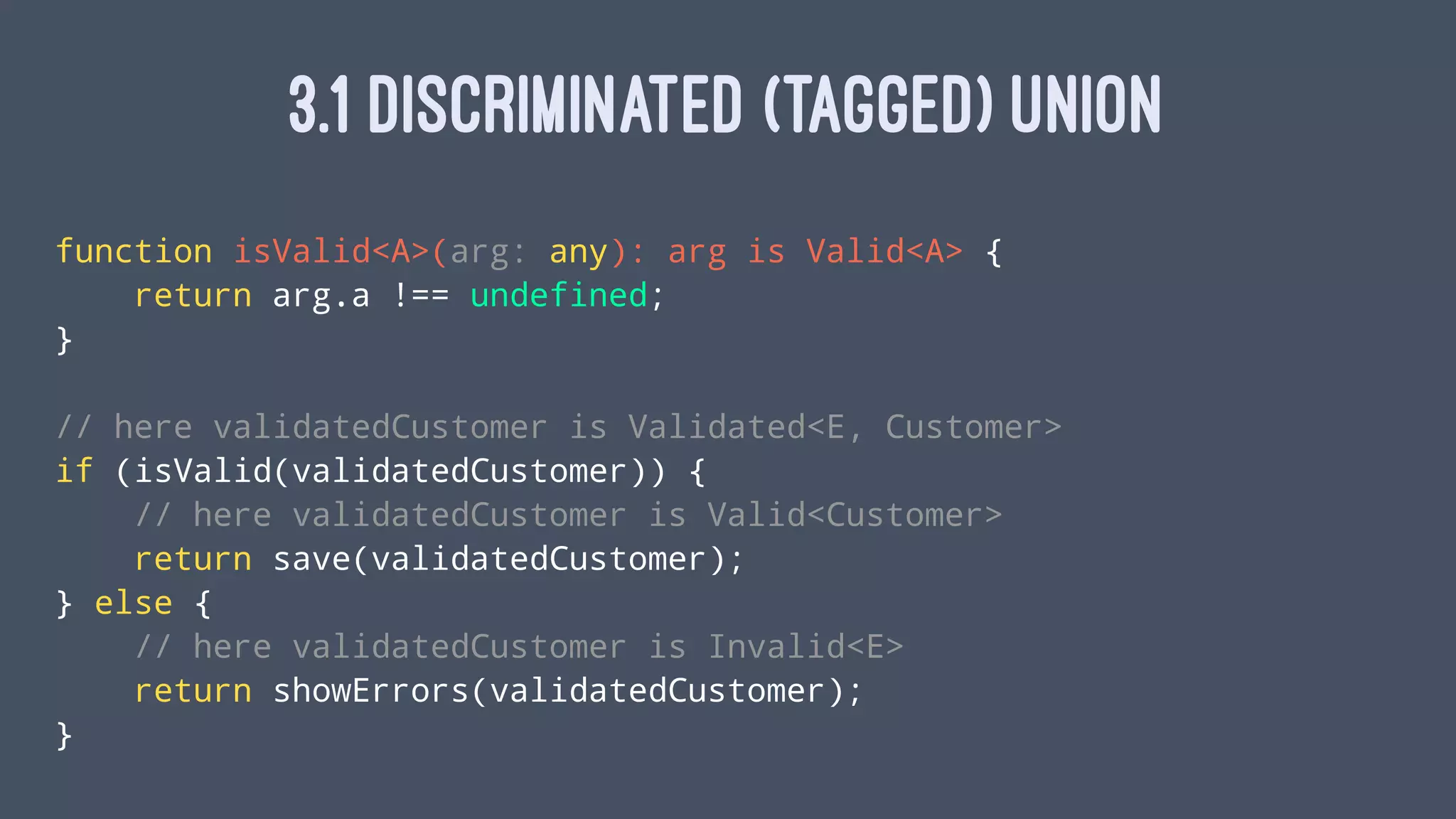
3.1 DISCRIMINATED (TAGGED) UNION
function isValid<A>(arg: any): arg is Valid<A> {
return arg.a !== undefined;
}
// here validatedCustomer is Validated<E, Customer>
if (isValid(validatedCustomer)) {
// here validatedCustomer is Valid<Customer>
return save(validatedCustomer);
} else {
// here validatedCustomer is Invalid<E>
return showErrors(validatedCustomer);
}
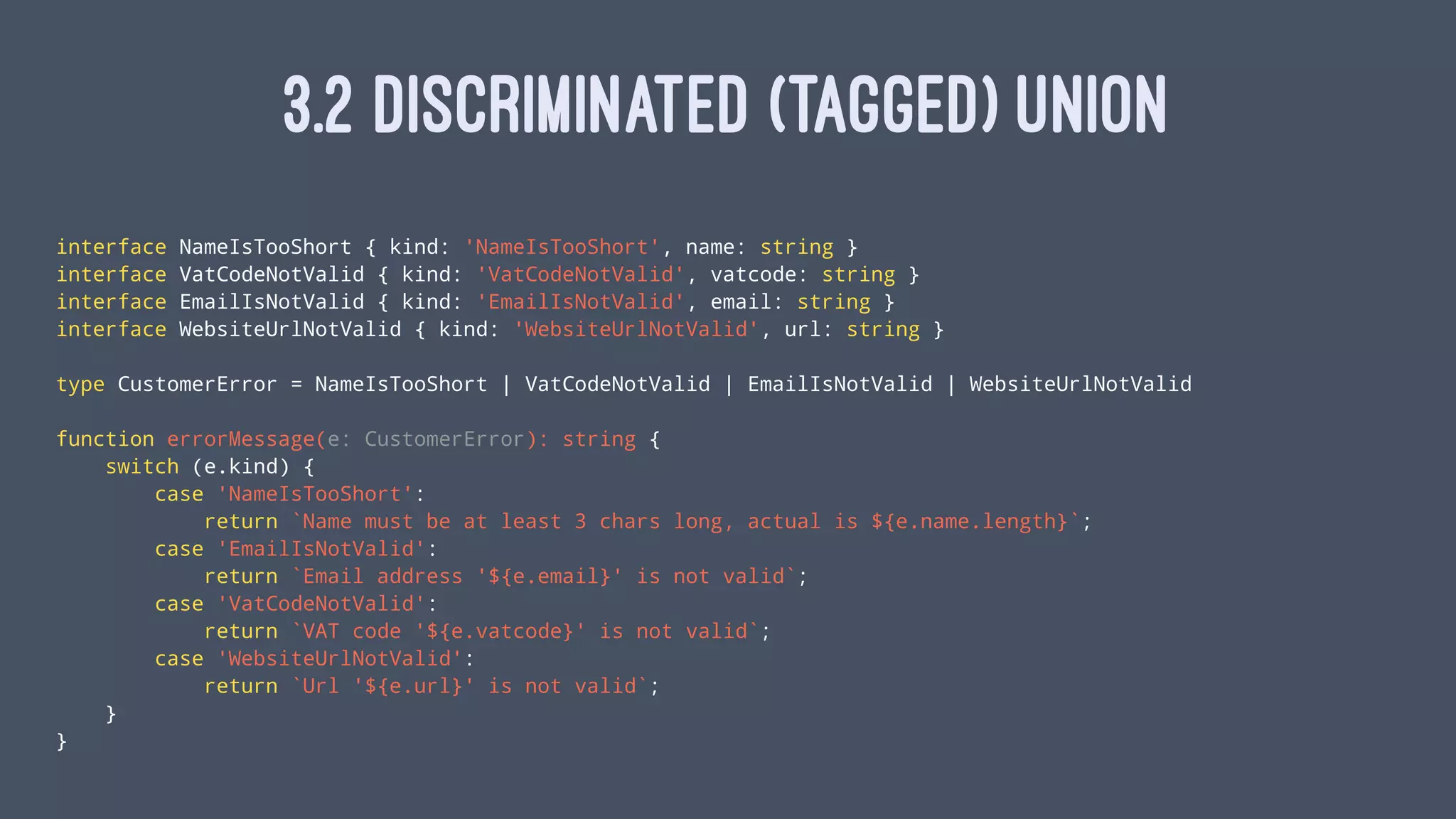
3.2 DISCRIMINATED (TAGGED) UNION
interface NameIsTooShort { kind: 'NameIsTooShort', name: string }
interface VatCodeNotValid { kind: 'VatCodeNotValid', vatcode: string }
interface EmailIsNotValid { kind: 'EmailIsNotValid', email: string }
interface WebsiteUrlNotValid { kind: 'WebsiteUrlNotValid', url: string }
type CustomerError = NameIsTooShort | VatCodeNotValid | EmailIsNotValid | WebsiteUrlNotValid
function errorMessage(e: CustomerError): string {
switch (e.kind) {
case 'NameIsTooShort':
return `Name must be at least 3 chars long, actual is ${e.name.length}`;
case 'EmailIsNotValid':
return `Email address '${e.email}' is not valid`;
case 'VatCodeNotValid':
return `VAT code '${e.vatcode}' is not valid`;
case 'WebsiteUrlNotValid':
return `Url '${e.url}' is not valid`;
}
}
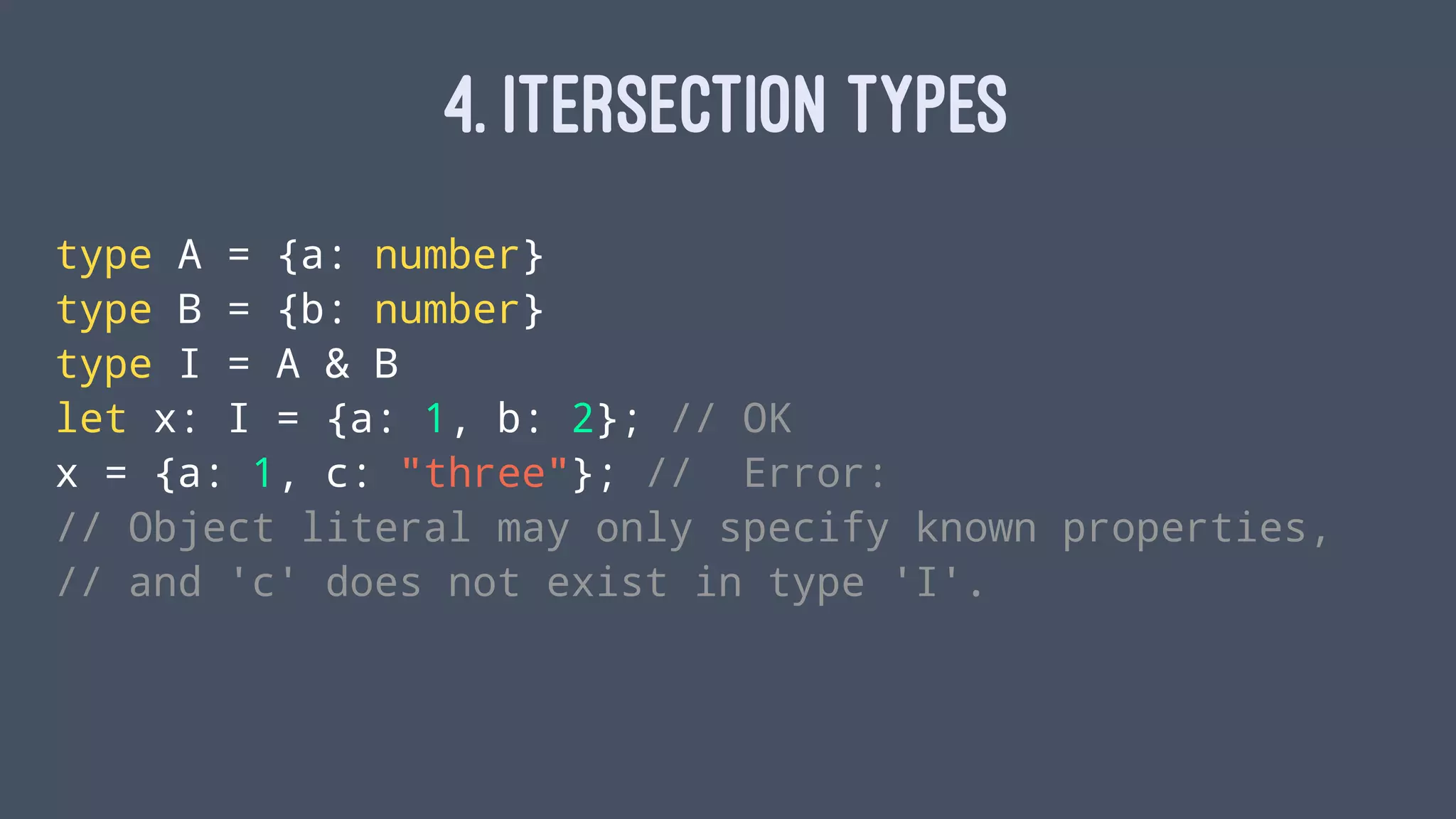
4. ITERSECTION TYPES
type A = {a: number}
type B = {b: number}
type I = A & B
let x: I = {a: 1, b: 2}; // OK
x = {a: 1, c: "three"}; // Error:
// Object literal may only specify known properties,
// and 'c' does not exist in type 'I'.
DEMOFUN(CTIONAL) VALIDATION
USING FUNCTIONAL PROGRAMMING
YOU ARE STILL ALIVE
(MAYBE)
UNDER THE HOOD...
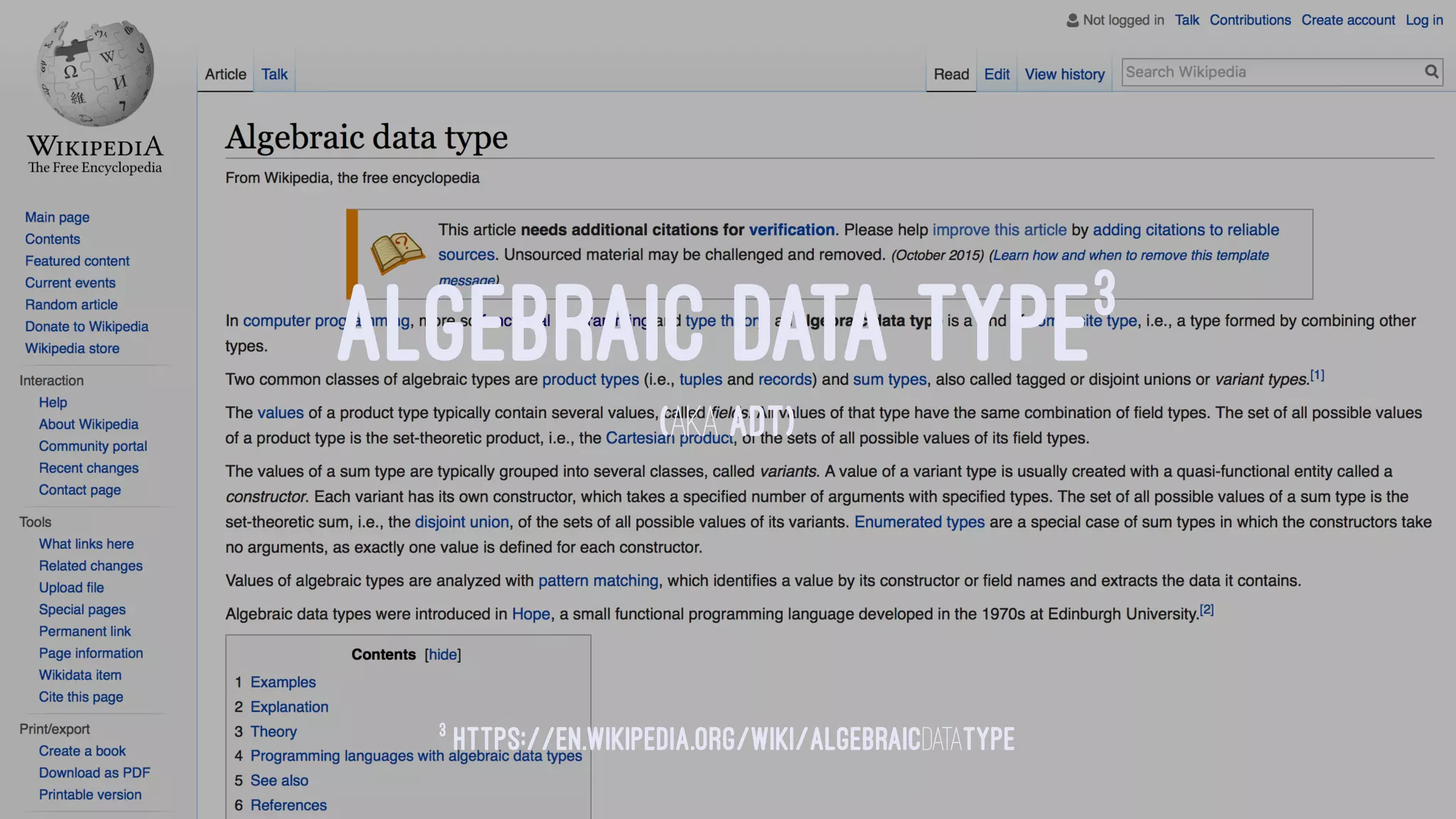
ALGEBRAIC DATA TYPE3
(AKA ADT)
3
https://en.wikipedia.org/wiki/Algebraicdatatype
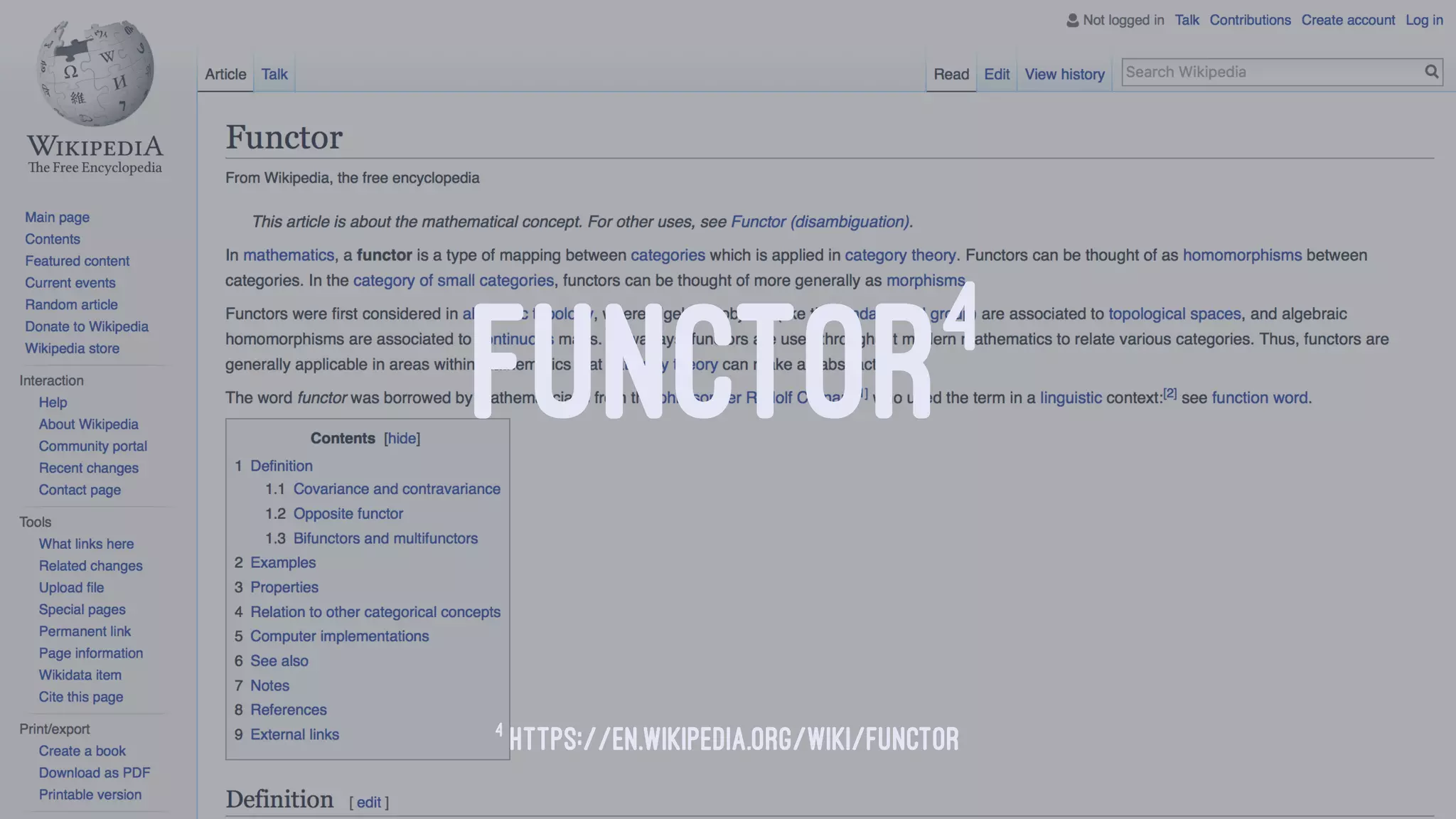
FUNCTOR4
4
https://en.wikipedia.org/wiki/Functor
(A SORT OF)
MONAD5
5
https://en.wikipedia.org/wiki/Monad(functionalprogramming)
(A SORT OF)
APPLICATIVE6
6
that's the only way to manage typescript dependecies with ASP.NET core: http://www.typescriptlang.org/docs/
handbook/asp-net-core.html
HOMEWORK
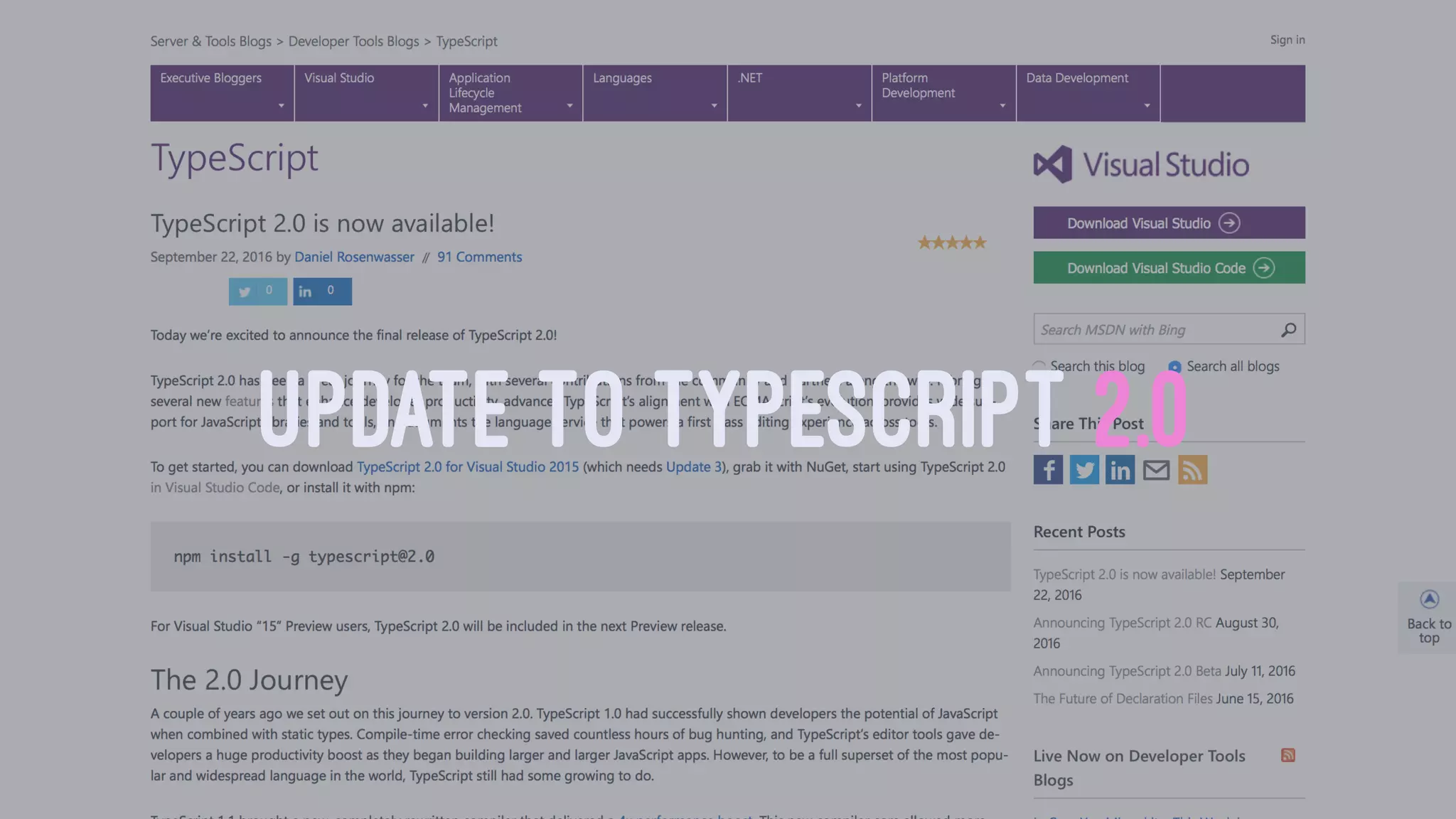
UPDATE TO TYPESCRIPT 2.0
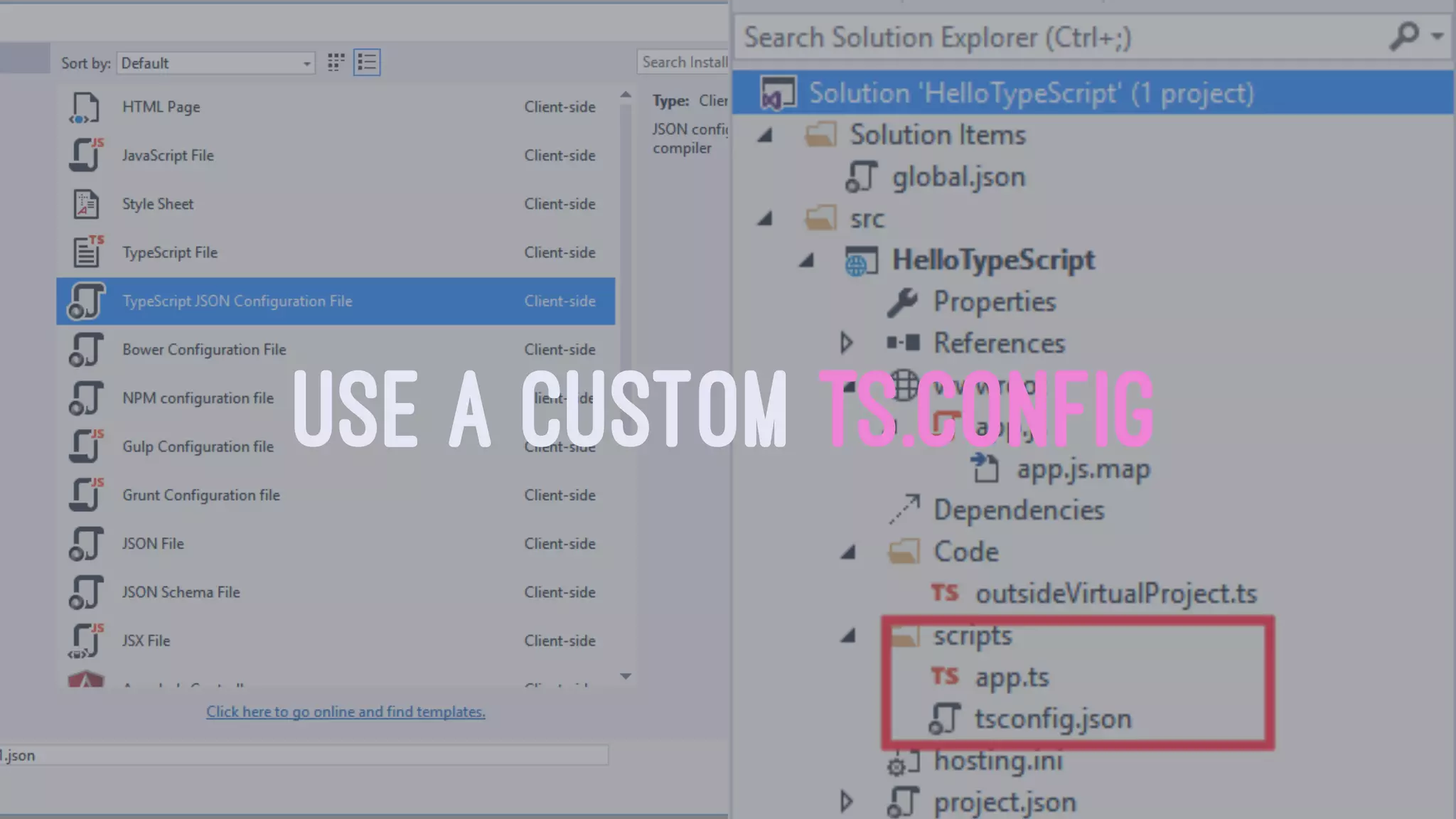
USE A CUSTOM TS.CONFIG
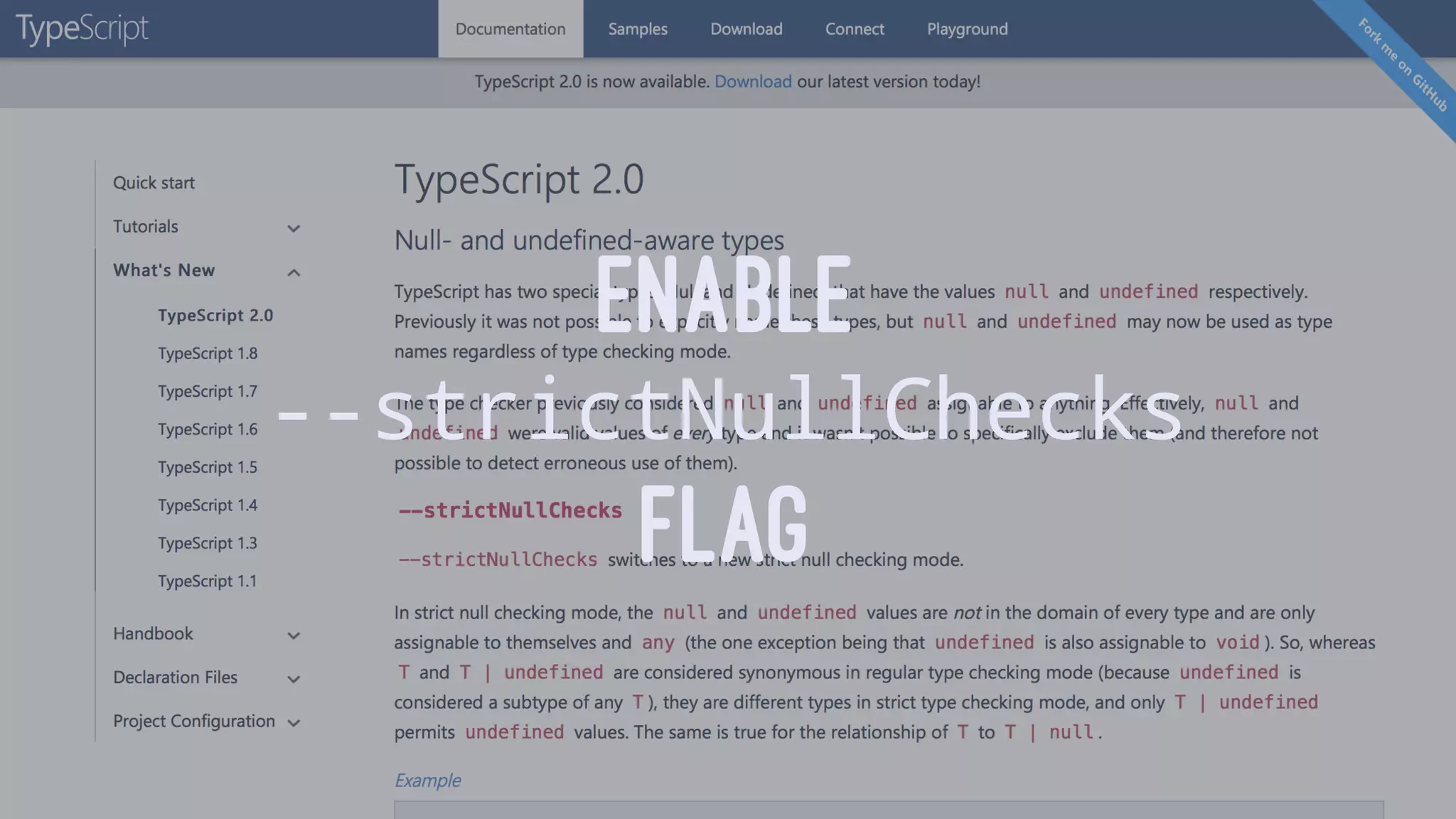
ENABLE
--strictNullChecks
FLAG
USE TSLINT
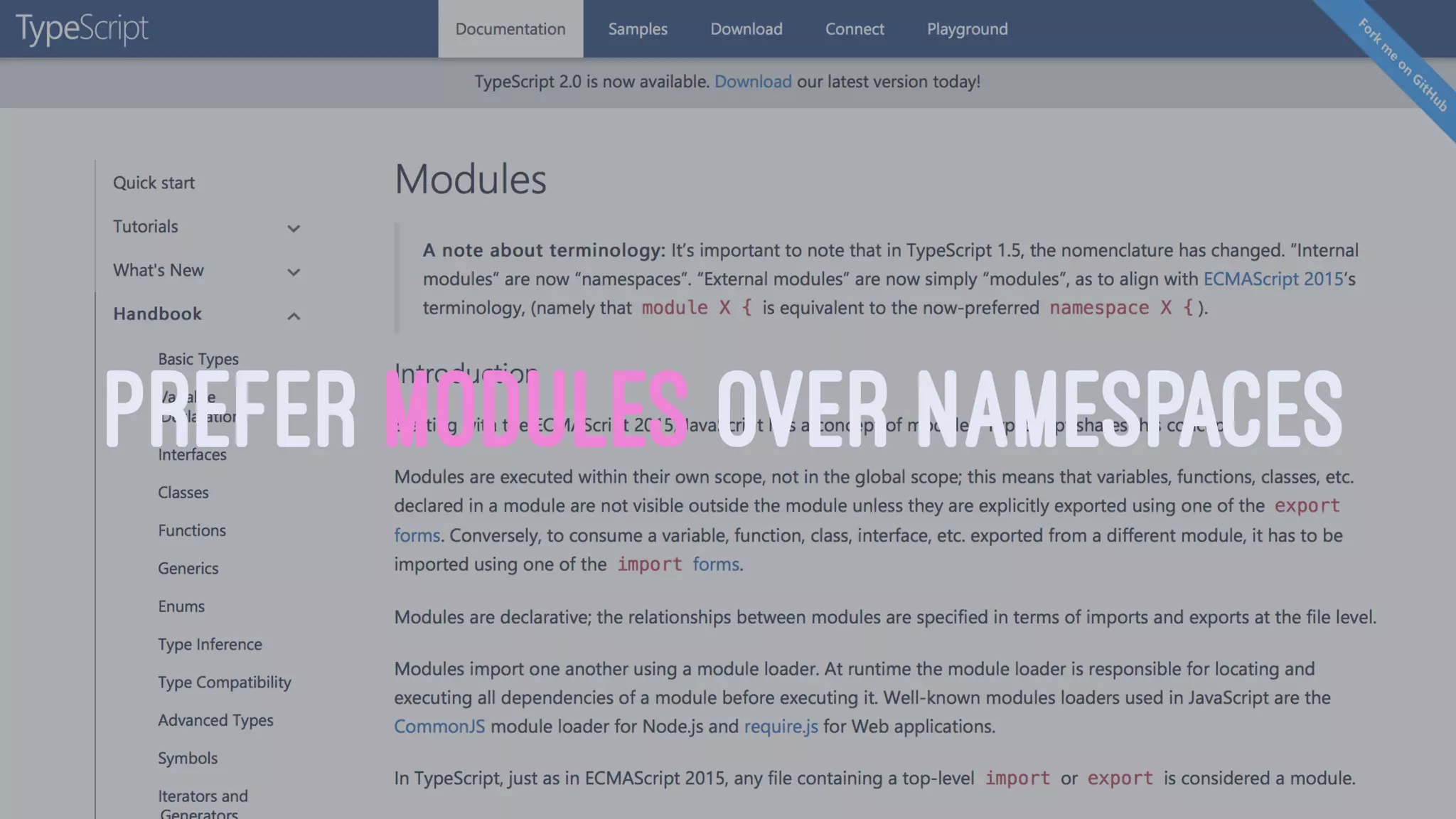
PREFER MODULES OVER NAMESPACES
USE AN ASSET MANAGER LIKE GRUNT,
GULP OR WEBPACK
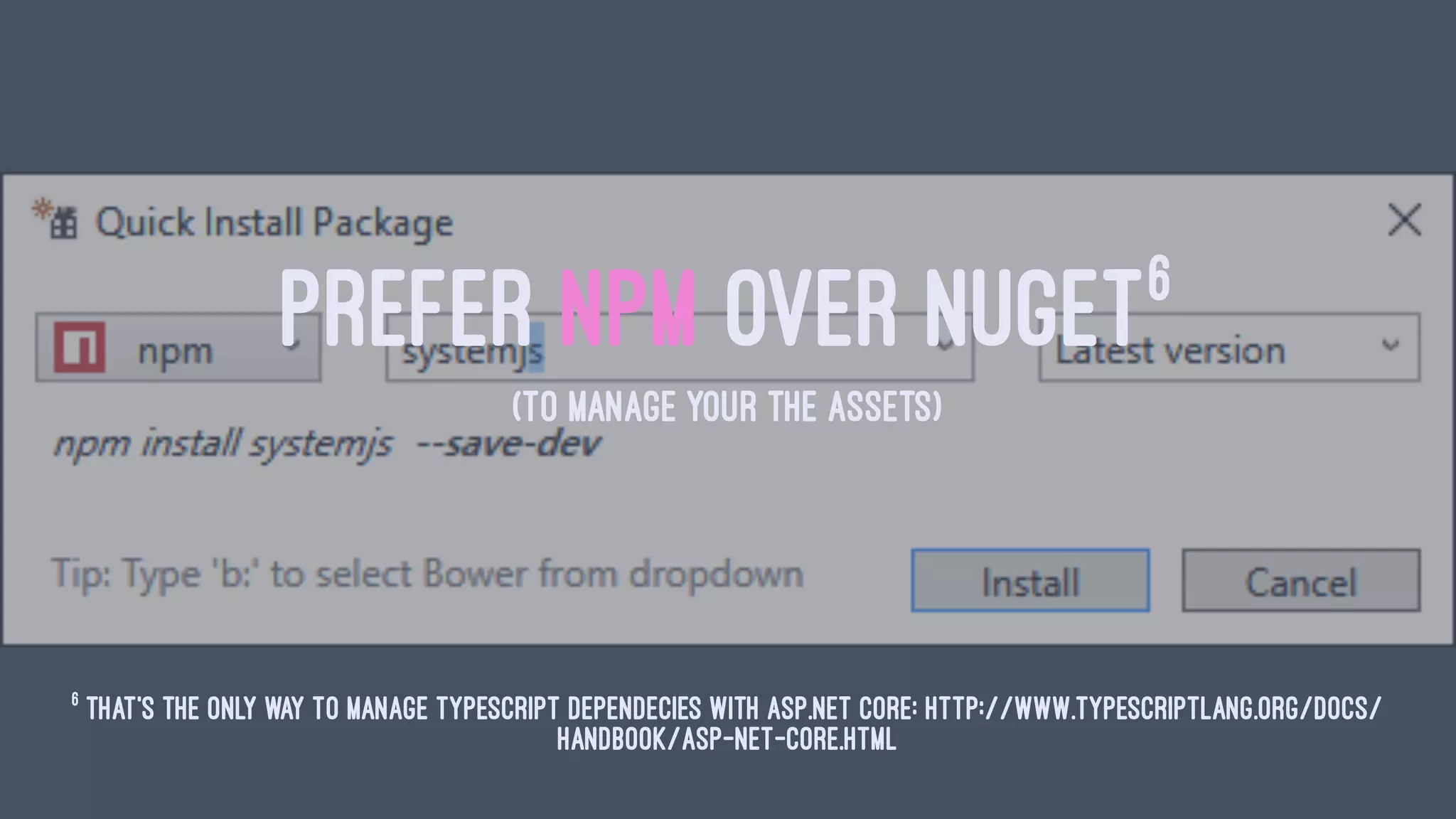
PREFER NPM OVER NUGET6
(TO MANAGE YOUR THE ASSETS)
6
that's the only way to manage typescript dependecies with ASP.NET core: http://www.typescriptlang.org/docs/
handbook/asp-net-core.html
THE RIGHT TOOL
FOR
THE RIGHT JOB
QUESTIONS?
SLIDES
http://www.slideshare.net/rucka/typescript-a-stitch-
in-time-saves-nine
CODE
https://github.com/rucka/JoinTheExpert-WebDay-2016

Ask The Expert - Typescript: A stitch in time saves nine