The analysis and history of the
magazine brand:
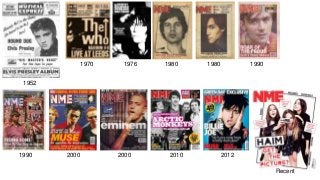
1952
1970 1976 1980 1980 1990
1990 2000 2000 2010 2012
Recent
History of NME
NME stands for ‘New Musical Express’. It’s a British music journalist magazine that has been published since March in
1952. Since then the magazine has almost exclusively focused on the rock, alternative, and indie genres of music. In
the 1970s it was the best selling music magazine in Britain. It actually started as a newspaper and moved into a
magazine format towards the 1980s to the 1990s. The magazines popularity over the years has given them an
opportunity to work with many stars in the music industry and conventionally never fail to deliver a star image on their
magazine covers.
In 1996 the magazine published it’s website and became the biggest music website of its time, with over seven million
visits per month.
Their website now contains all kinds of convergence including reviews, video, blogs, photos, shops, and they even
manage tickets sales for the bands that they include in their magazine. The company also holds the ‘NME Awards’
annually to celebrate all the new music that has turned up in the last year. The members of the public vote for their
favourite bands and they announce the winners at the awards show and in their magazine.
Recently the magazine’s profits have been in decline, due to the continuing poor sales. Ever since September 2015,
the company has been giving away their weekly magazines for free to increase publicity. The magazine now even
covers content on film, games, and fashion (alongside the existing music articles). Ever since around 2010 they’ve
undergone a lot of criticism from the media. An example of this is when NME published their ‘500 Greatest Albums of
All Time’. The Guardian pointed out that in the top five albums of all time includes 4 albums from the same artist, which
was highly criticized. Despite this, the website is still successfully running and the company is still producing
magazines, but how long they will continue to last is difficult to predict. However…
Post 3.
Music magazine case study
Presentation:
Produce your work as a Word document featuring images
and convert it into a flick book
at www.flipsnack.com or http://issuu.com/ (you'll need to
.pdf it first) and then embed it on your blog.
•
Case study a music magazine. Include its history, how it
has developed, how it uses technology, relates to its
audience, who advertises in it and how it is funded.
Use the following sub-headings:
Introduction
•The magazine's content
•The publisher of the magazine
•The typical reader profile
•Layout trademarks of the magazine
•Does the magazine reflect the values of its audience?
Again, images, clips, links etc., are vital and the more in-
depth your case study, the better.
Nme analysis

  • 1.
    The analysis andhistory of the magazine brand:
  • 2.
    1952 1970 1976 19801980 1990 1990 2000 2000 2010 2012 Recent
  • 3.
    History of NME NMEstands for ‘New Musical Express’. It’s a British music journalist magazine that has been published since March in 1952. Since then the magazine has almost exclusively focused on the rock, alternative, and indie genres of music. In the 1970s it was the best selling music magazine in Britain. It actually started as a newspaper and moved into a magazine format towards the 1980s to the 1990s. The magazines popularity over the years has given them an opportunity to work with many stars in the music industry and conventionally never fail to deliver a star image on their magazine covers. In 1996 the magazine published it’s website and became the biggest music website of its time, with over seven million visits per month. Their website now contains all kinds of convergence including reviews, video, blogs, photos, shops, and they even manage tickets sales for the bands that they include in their magazine. The company also holds the ‘NME Awards’ annually to celebrate all the new music that has turned up in the last year. The members of the public vote for their favourite bands and they announce the winners at the awards show and in their magazine. Recently the magazine’s profits have been in decline, due to the continuing poor sales. Ever since September 2015, the company has been giving away their weekly magazines for free to increase publicity. The magazine now even covers content on film, games, and fashion (alongside the existing music articles). Ever since around 2010 they’ve undergone a lot of criticism from the media. An example of this is when NME published their ‘500 Greatest Albums of All Time’. The Guardian pointed out that in the top five albums of all time includes 4 albums from the same artist, which was highly criticized. Despite this, the website is still successfully running and the company is still producing magazines, but how long they will continue to last is difficult to predict. However…
  • 4.
    Post 3. Music magazinecase study Presentation: Produce your work as a Word document featuring images and convert it into a flick book at www.flipsnack.com or http://issuu.com/ (you'll need to .pdf it first) and then embed it on your blog. • Case study a music magazine. Include its history, how it has developed, how it uses technology, relates to its audience, who advertises in it and how it is funded. Use the following sub-headings: Introduction •The magazine's content •The publisher of the magazine •The typical reader profile •Layout trademarks of the magazine •Does the magazine reflect the values of its audience? Again, images, clips, links etc., are vital and the more in- depth your case study, the better.