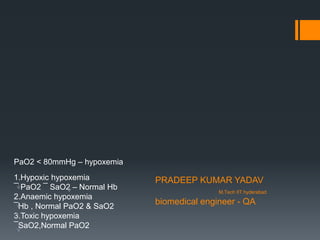
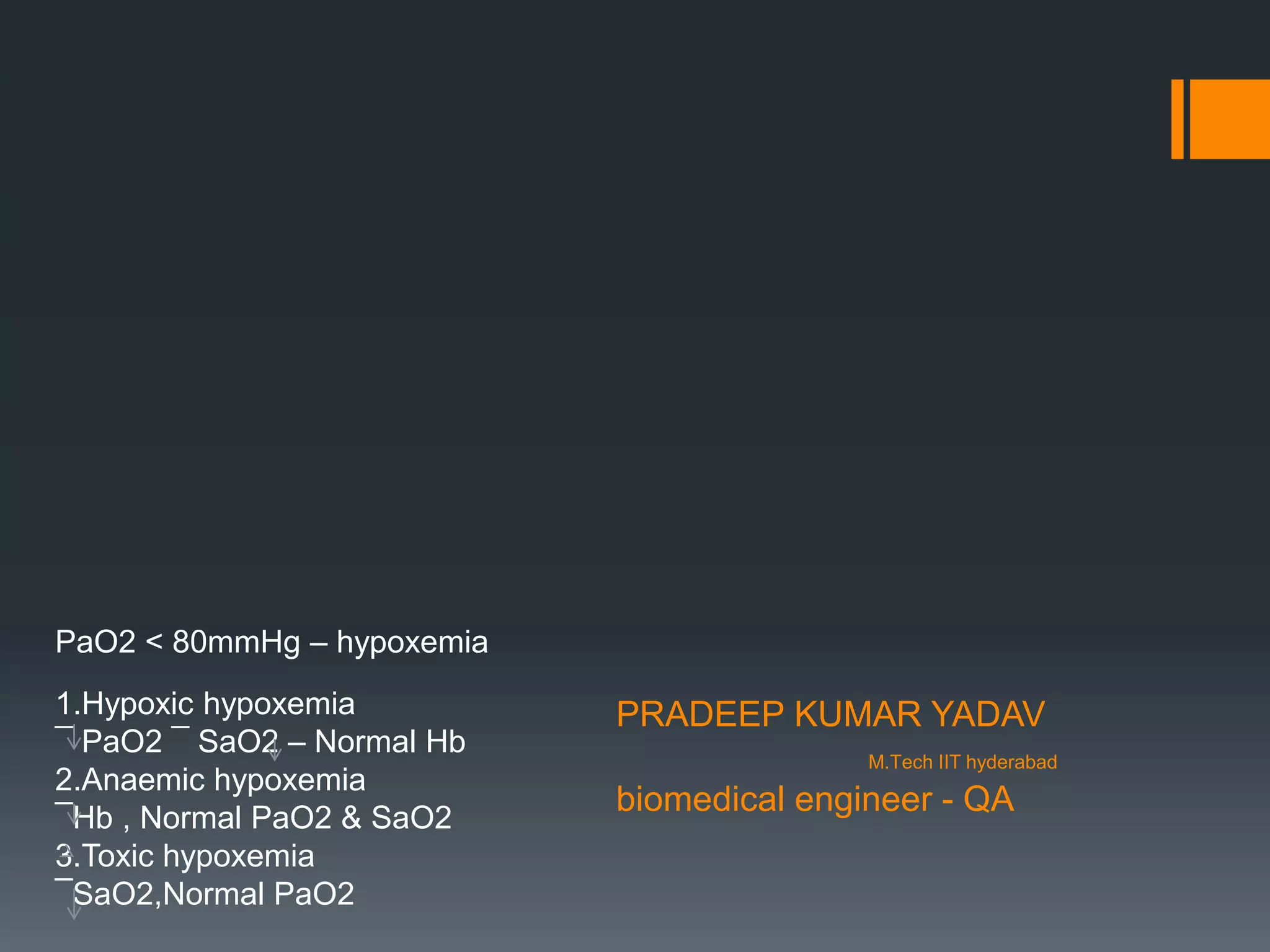
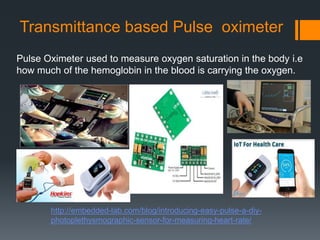
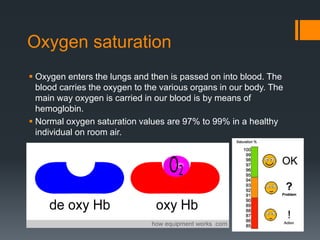
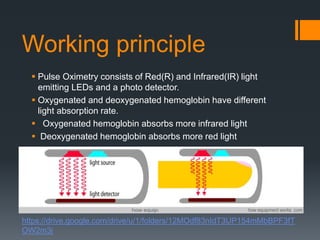
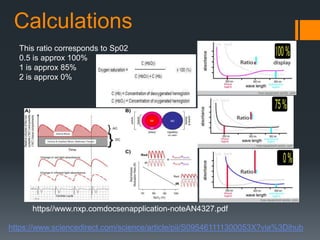
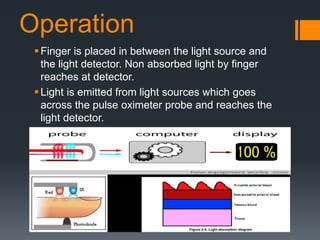
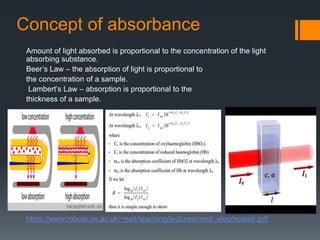
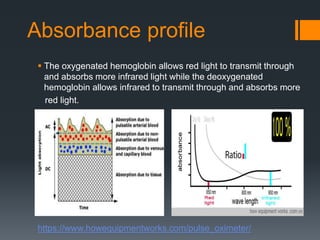
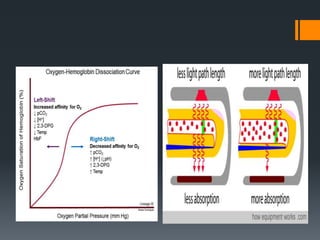
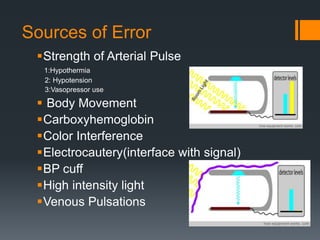
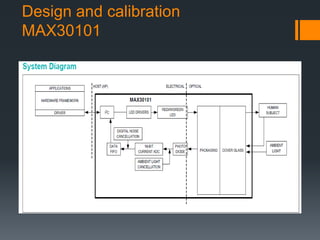
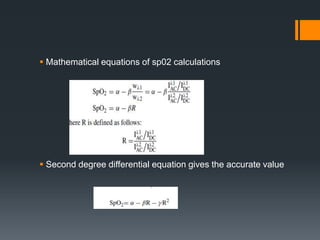
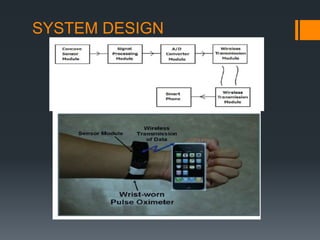
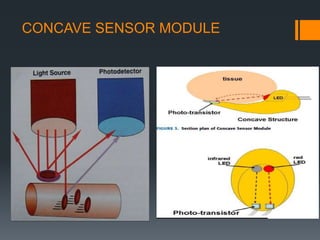
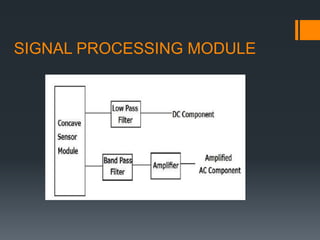
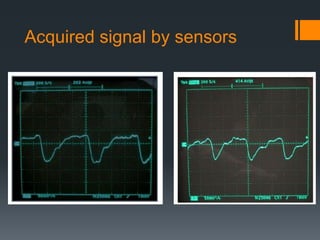
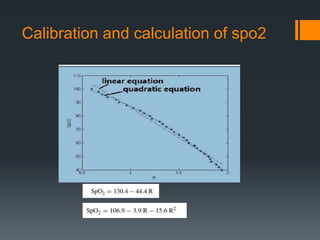
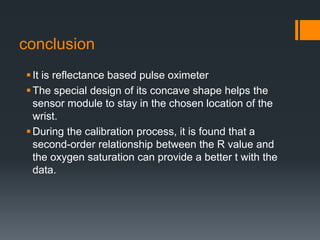
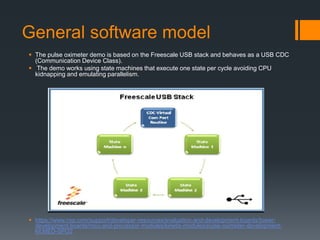
This document discusses pulse oximetry and pulse oximeter design. It explains the working principles of transmittance and reflectance pulse oximeters, how they calculate oxygen saturation levels, and potential sources of error. Key points covered include the use of red and infrared light to measure oxygenated and deoxygenated hemoglobin, Beer's and Lambert's laws regarding light absorption, and the signal processing and calibration methods used to determine oxygen saturation values. Design considerations for pulse oximeter sensors, testing parameters, and general software models are also summarized.



![CTEV [ clubfoot] DR ARUN LAL ,DR MOHAMED ASHRAF travancore medical college k...](https://cdn.slidesharecdn.com/ss_thumbnails/ctevclubfootdrarunlaldrmohamedashraftravancoremedicalcollegekollamkeralaindia-260208063247-18fc466c-thumbnail.jpg?width=640&height=640&fit=bounds)


