













“
“


!
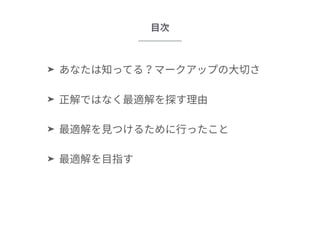
➤
➤
➤
➤


➤
➤ 


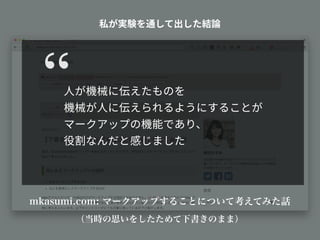
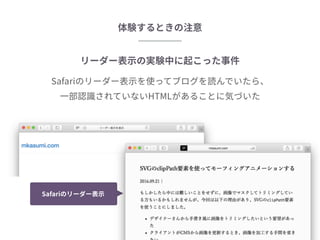
mkasumi.com: マークアップすることについて考えてみた話
(当時の思いをしたためて下書きのまま)


“


“
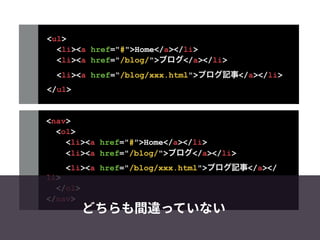
<ul>
<li><a href="#">Home</a></li>
<li><a href="/blog/">ブログ</a></li>
<li><a href=“/blog/xxx.html">ブログ記事</a></li>
</ul>
<nav>
<ol>
<li><a href="#">Home</a></li>
<li><a href="/blog/">ブログ</a></li>
<li><a href="/blog/xxx.html">ブログ記事</a></
li>
</ol>
</nav>
➤
➤
➤
➤


➤
➤
➤
➤


➤
➤
➤


➤


➤
➤
➤
➤


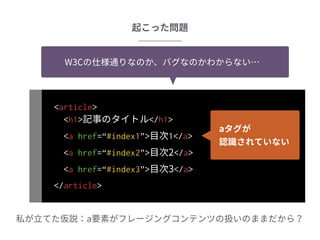
<article>
<h1> </h1>
<a href=“#index1”> 1</a>
<a href=“#index2”> </a>
<a href=“#index3”> </a>
</article>


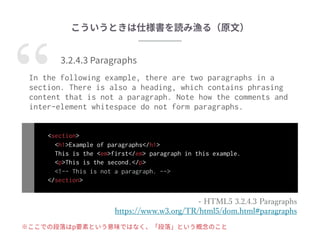
In the following example, there are two paragraphs in a
section. There is also a heading, which contains phrasing
content that is not a paragraph. Note how the comments and
inter-element whitespace do not form paragraphs.
“


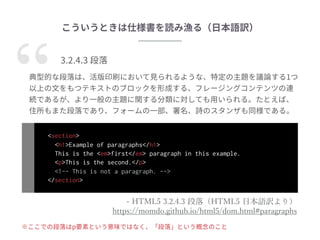
<section>
<h1>Example of paragraphs</h1>
This is the <em>first</em> paragraph in this example.
<p>This is the second.</p>
<!-- This is not a paragraph. -->
</section>
“


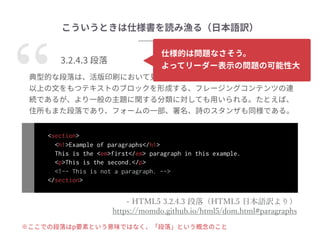
<section>
<h1>Example of paragraphs</h1>
This is the <em>first</em> paragraph in this example.
<p>This is the second.</p>
<!-- This is not a paragraph. -->
</section>
“


<section>
<h1>Example of paragraphs</h1>
This is the <em>first</em> paragraph in this example.
<p>This is the second.</p>
<!-- This is not a paragraph. -->
</section>


マークアップの最適解を
見つけ出す方法
マークアップの最適解を
見つけ出す方法
マークアップの最適解を
見つけ出す方法
マークアップの最適解を
見つけ出す方法

マークアップの最適解を
見つけ出す方法