#survivechange
@milouness
Lesson 1
The Smart One is
responsible!
My father never graduated from high
school, he resented my getting a
college education. In an already
turbulent household, this became
another cause for fights. When I was
an intern for the State Department, a
historian named N. Stephen Kane
told me that he had a similar family
background—his dad and he would
get into fights. Until Stephen realized
that if he was the PHD—he was the
smart one—then it fell on him to be
the adult in the room. If you’re so
smart you know how to fix things,
then it’s up to you to ensure
productive conversations.
Lesson 2
#survivechange
@milouness
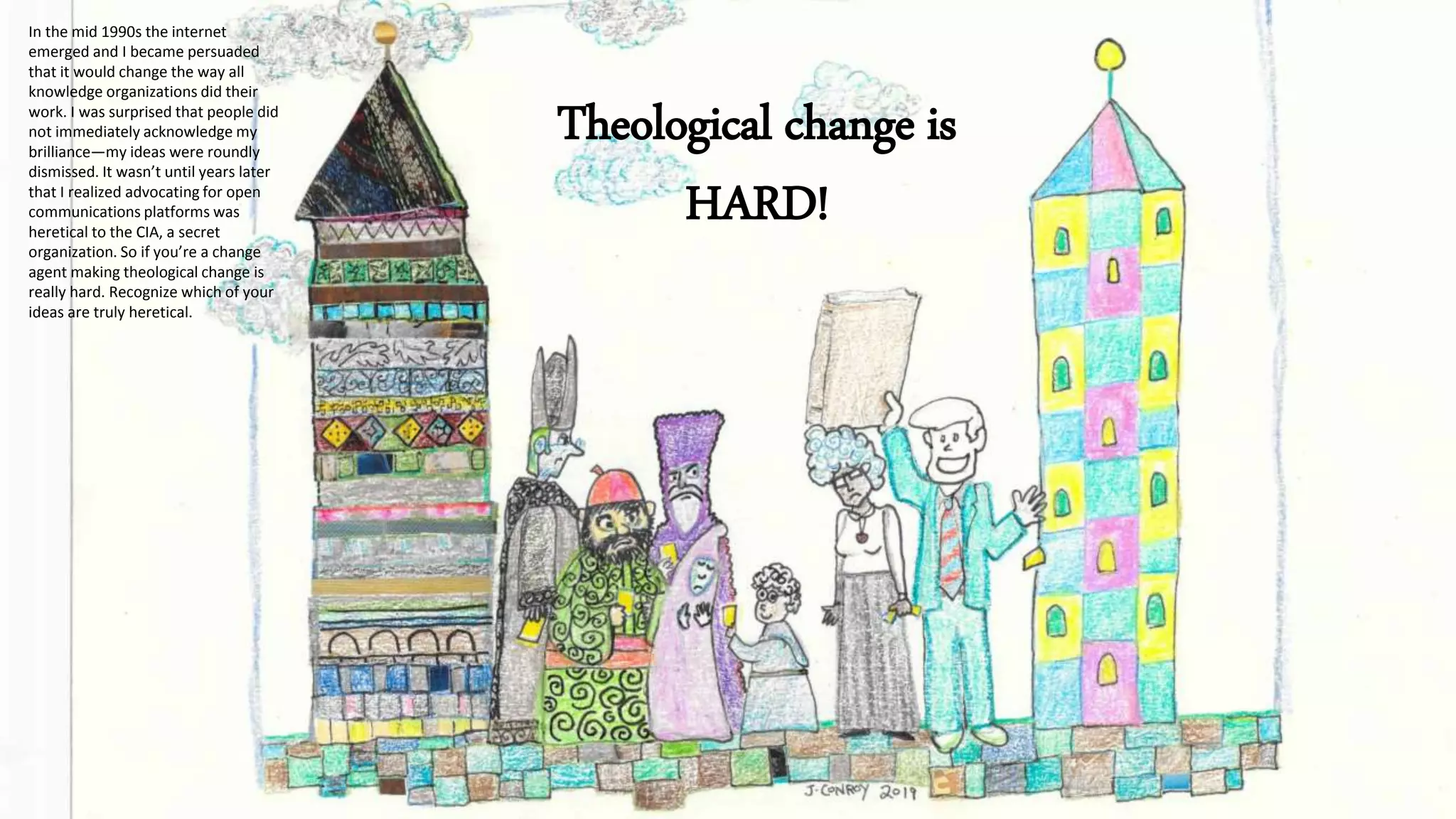
Theological change is
HARD!
In the mid 1990s the internet
emerged and I became persuaded
that it would change the way all
knowledge organizations did their
work. I was surprised that people did
not immediately acknowledge my
brilliance—my ideas were roundly
dismissed. It wasn’t until years later
that I realized advocating for open
communications platforms was
heretical to the CIA, a secret
organization. So if you’re a change
agent making theological change is
really hard. Recognize which of your
ideas are truly heretical.
Lesson 3
#survivechange
@milouness
Comfortable with
being uncomfortable!
So if you’re a change agent, it won’t
be easy and you can easily dismiss
just how difficult and uncomfortable
it can be. You have to learn not only
to tolerate that feeling of discomfort
but to be comfortable with it.
Lesson 4
#survivechange
@milouness
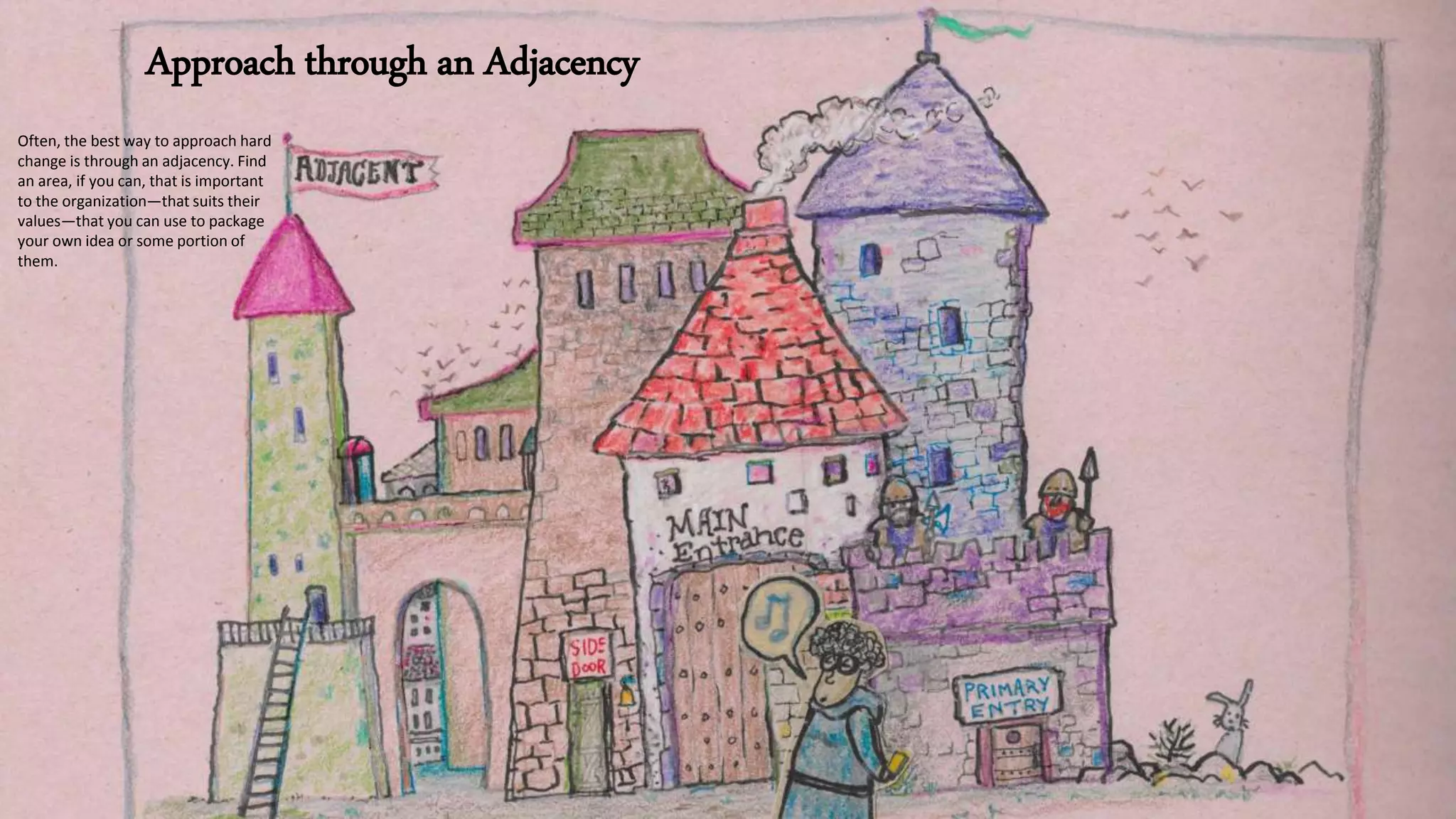
Approach through an Adjacency
Often, the best way to approach hard
change is through an adjacency. Find
an area, if you can, that is important
to the organization—that suits their
values—that you can use to package
your own idea or some portion of
them.
Lesson 5
#survivechange
@milouness
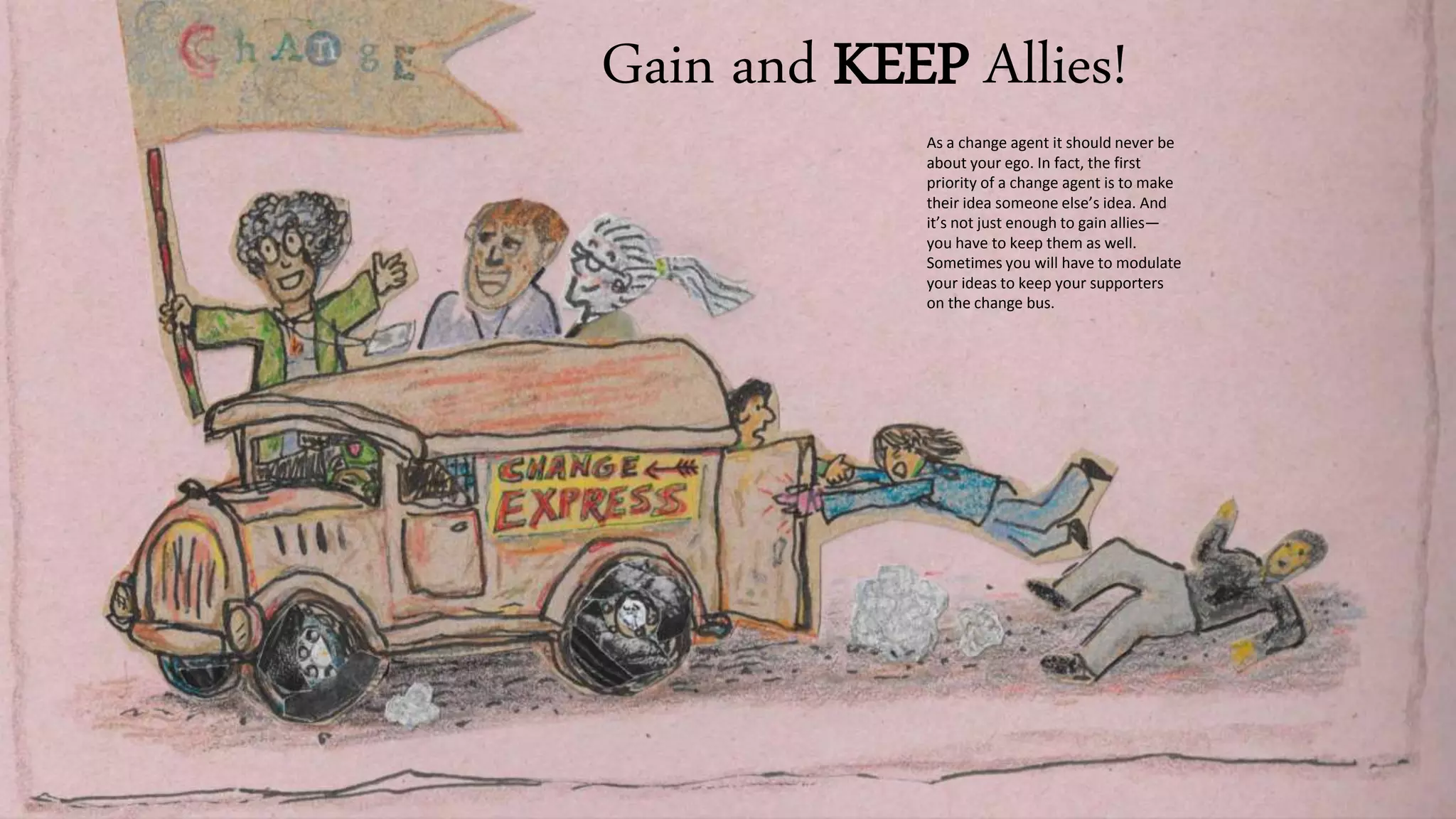
Gain and KEEP Allies!
As a change agent it should never be
about your ego. In fact, the first
priority of a change agent is to make
their idea someone else’s idea. And
it’s not just enough to gain allies—
you have to keep them as well.
Sometimes you will have to modulate
your ideas to keep your supporters
on the change bus.
Lesson 6
#survivechange
@milouness
Befriend Bureaucratic Black Belts
Change agents tend to be dismissive
of bureaucrats. This could be a big
mistake because bureaucrats often
have information that can help their
ideas advance. Take a bureaucratic
black belt to lunch.
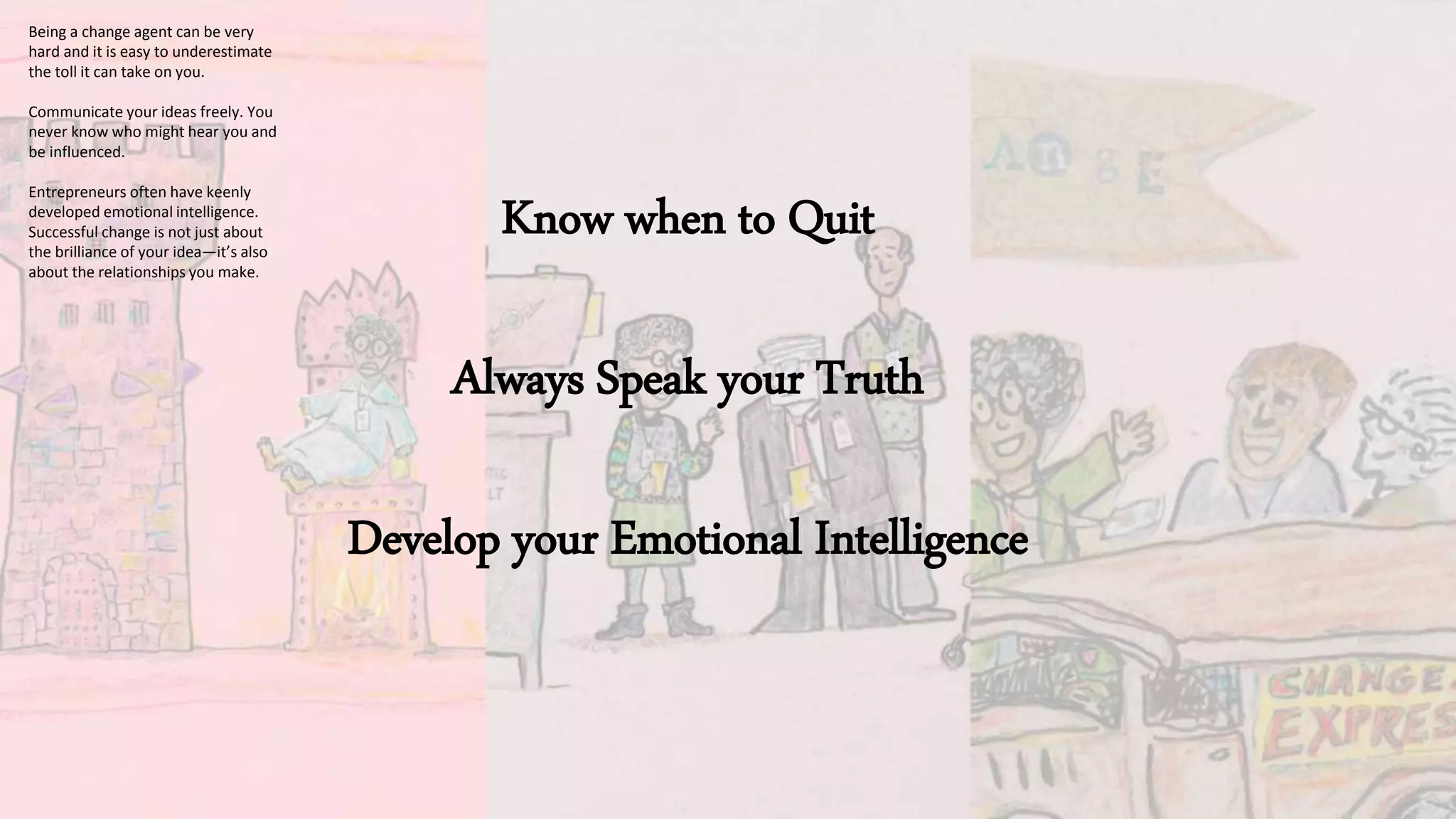
Know when to Quit
Always Speak your Truth
Develop your Emotional Intelligence
Being a change agent can be very
hard and it is easy to underestimate
the toll it can take on you.
Communicate your ideas freely. You
never know who might hear you and
be influenced.
Entrepreneurs often have keenly
developed emotional intelligence.
Successful change is not just about
the brilliance of your idea—it’s also
about the relationships you make.
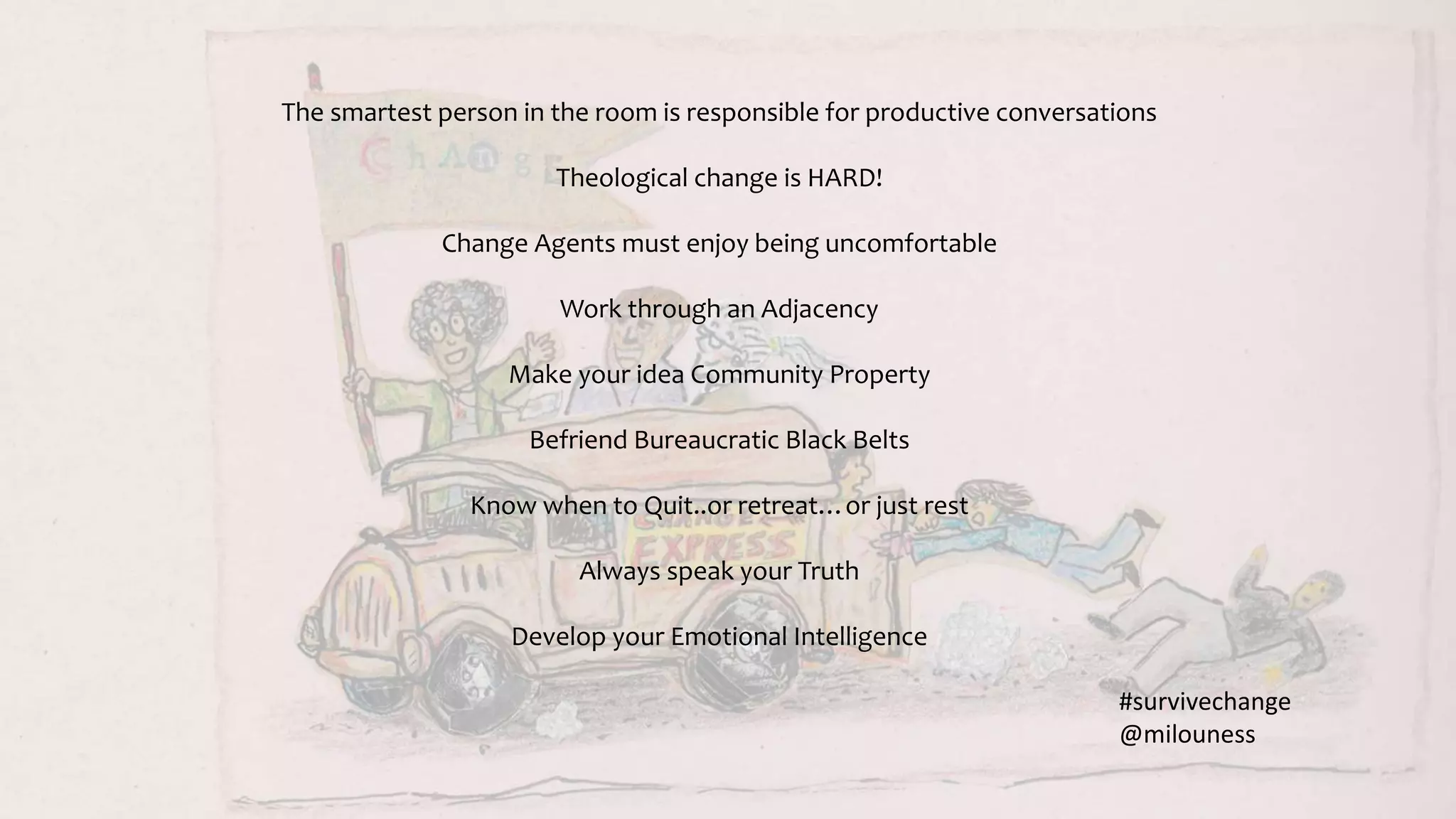
The smartest person in the room is responsible for productive conversations
Theological change is HARD!
Change Agents must enjoy being uncomfortable
Work through an Adjacency
Make your idea Community Property
Befriend Bureaucratic Black Belts
Know when to Quit..or retreat…or just rest
Always speak your Truth
Develop your Emotional Intelligence
#survivechange
@milouness
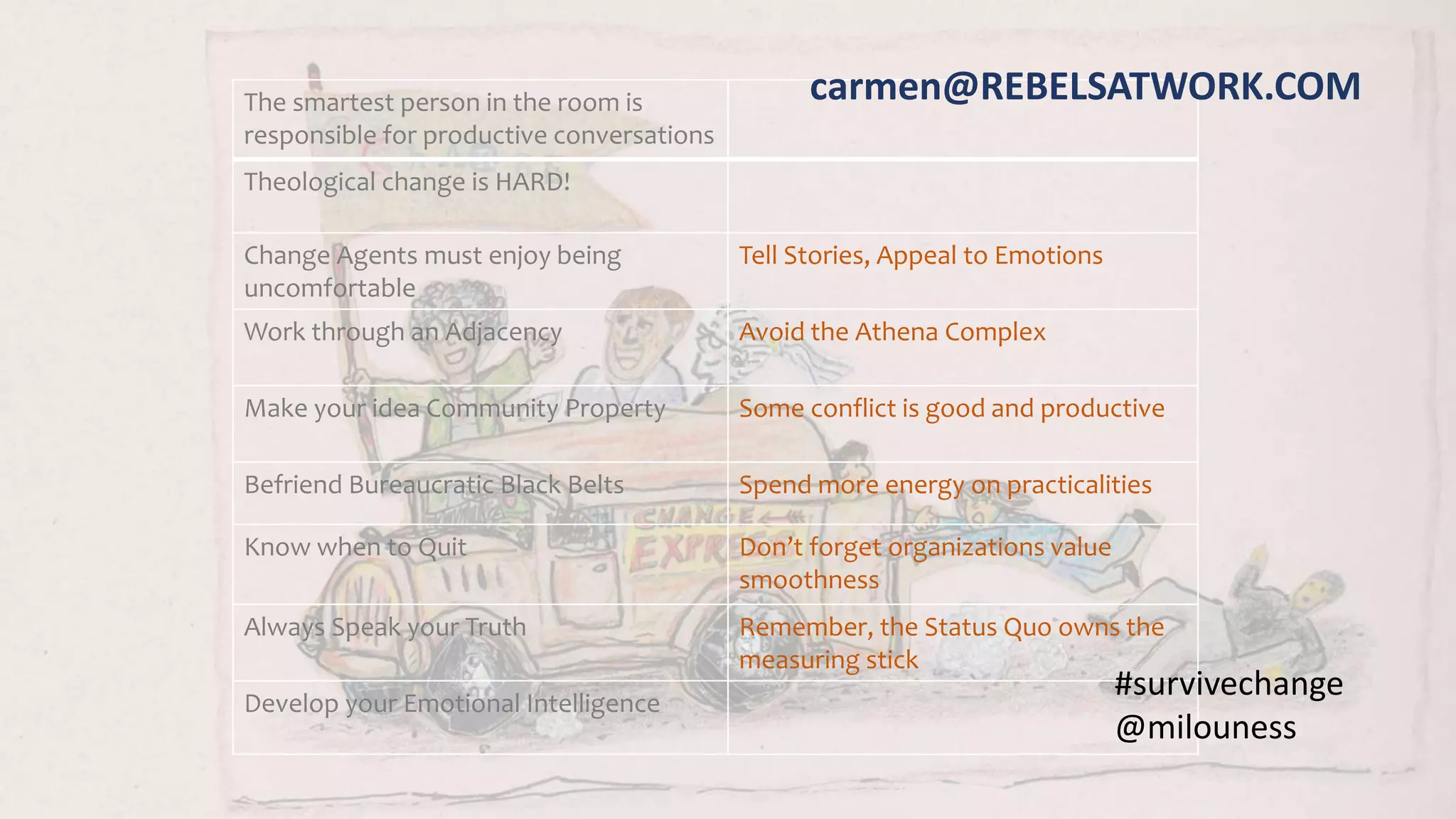
The smartest person in the room is
responsible for productive conversations
Theological change is HARD!
Change Agents must enjoy being
uncomfortable
Tell Stories, Appeal to Emotions
Work through an Adjacency Avoid the Athena Complex
Make your idea Community Property Some conflict is good and productive
Befriend Bureaucratic Black Belts Spend more energy on practicalities
Know when to Quit Don’t forget organizations value
smoothness
Always Speak your Truth Remember, the Status Quo owns the
measuring stick
Develop your Emotional Intelligence
#survivechange
@milouness
carmen@REBELSATWORK.COM
#survivechange
@milouness
Art by John Conroy

So You Want to be a Change Agent: A Survival Guide

  • 1.
  • 2.
    The Smart Oneis responsible! My father never graduated from high school, he resented my getting a college education. In an already turbulent household, this became another cause for fights. When I was an intern for the State Department, a historian named N. Stephen Kane told me that he had a similar family background—his dad and he would get into fights. Until Stephen realized that if he was the PHD—he was the smart one—then it fell on him to be the adult in the room. If you’re so smart you know how to fix things, then it’s up to you to ensure productive conversations.
  • 3.
  • 4.
    Theological change is HARD! Inthe mid 1990s the internet emerged and I became persuaded that it would change the way all knowledge organizations did their work. I was surprised that people did not immediately acknowledge my brilliance—my ideas were roundly dismissed. It wasn’t until years later that I realized advocating for open communications platforms was heretical to the CIA, a secret organization. So if you’re a change agent making theological change is really hard. Recognize which of your ideas are truly heretical.
  • 5.
  • 6.
    Comfortable with being uncomfortable! Soif you’re a change agent, it won’t be easy and you can easily dismiss just how difficult and uncomfortable it can be. You have to learn not only to tolerate that feeling of discomfort but to be comfortable with it.
  • 7.
  • 8.
    Approach through anAdjacency Often, the best way to approach hard change is through an adjacency. Find an area, if you can, that is important to the organization—that suits their values—that you can use to package your own idea or some portion of them.
  • 9.
  • 10.
    Gain and KEEPAllies! As a change agent it should never be about your ego. In fact, the first priority of a change agent is to make their idea someone else’s idea. And it’s not just enough to gain allies— you have to keep them as well. Sometimes you will have to modulate your ideas to keep your supporters on the change bus.
  • 11.
  • 12.
    Befriend Bureaucratic BlackBelts Change agents tend to be dismissive of bureaucrats. This could be a big mistake because bureaucrats often have information that can help their ideas advance. Take a bureaucratic black belt to lunch.
  • 13.
    Know when toQuit Always Speak your Truth Develop your Emotional Intelligence Being a change agent can be very hard and it is easy to underestimate the toll it can take on you. Communicate your ideas freely. You never know who might hear you and be influenced. Entrepreneurs often have keenly developed emotional intelligence. Successful change is not just about the brilliance of your idea—it’s also about the relationships you make.
  • 14.
    The smartest personin the room is responsible for productive conversations Theological change is HARD! Change Agents must enjoy being uncomfortable Work through an Adjacency Make your idea Community Property Befriend Bureaucratic Black Belts Know when to Quit..or retreat…or just rest Always speak your Truth Develop your Emotional Intelligence #survivechange @milouness
  • 15.
    The smartest personin the room is responsible for productive conversations Theological change is HARD! Change Agents must enjoy being uncomfortable Tell Stories, Appeal to Emotions Work through an Adjacency Avoid the Athena Complex Make your idea Community Property Some conflict is good and productive Befriend Bureaucratic Black Belts Spend more energy on practicalities Know when to Quit Don’t forget organizations value smoothness Always Speak your Truth Remember, the Status Quo owns the measuring stick Develop your Emotional Intelligence #survivechange @milouness carmen@REBELSATWORK.COM
  • 16.