MODAL VERBS
MAIN CHARACTERISTICS


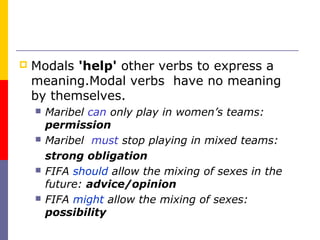
Modals 'help' other verbs to express a
meaning.Modal verbs have no meaning
by themselves.








Maribel can only play in women’s teams:
permission
Maribel must stop playing in mixed teams:
strong obligation
FIFA should allow the mixing of sexes in the
future: advice/opinion
FIFA might allow the mixing of sexes:
possibility
CHARACTERISTICS
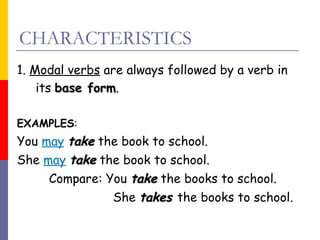
1. Modal verbs are always followed by a verb in
its base form.
form
EXAMPLES:

You may take the book to school.
She may take the book to school.
Compare: You take the books to school.
She takes the books to school.
CHARACTERISTICS
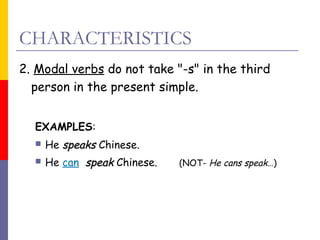
2. Modal verbs do not take "-s" in the third
person in the present simple.
EXAMPLES:


He speaks Chinese.



He can  speak Chinese.

(NOT- He cans speak…)
CHARACTERISTICS
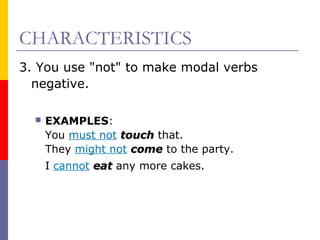
3. You use "not" to make modal verbs
negative.


EXAMPLES:
You must not touch that.
They might not come to the party.
I cannot eat any more cakes.
CHARACTERISTICS
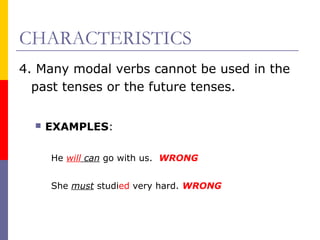
4. Many modal verbs cannot be used in the
past tenses or the future tenses.


EXAMPLES:
He will can go with us. WRONG
She must studied very hard. WRONG
CHARACTERISTICS
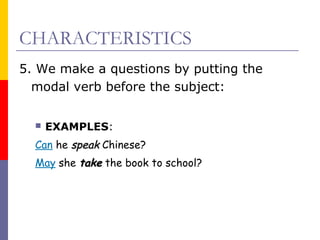
5. We make a questions by putting the
modal verb before the subject:


EXAMPLES:

Can he speak Chinese?
May she take the book to school?

Modal verbs_characteristics

  • 1.
  • 2.
     Modals 'help' otherverbs to express a meaning.Modal verbs have no meaning by themselves.     Maribel can only play in women’s teams: permission Maribel must stop playing in mixed teams: strong obligation FIFA should allow the mixing of sexes in the future: advice/opinion FIFA might allow the mixing of sexes: possibility
  • 3.
    CHARACTERISTICS 1. Modal verbsare always followed by a verb in its base form. form EXAMPLES: You may take the book to school. She may take the book to school. Compare: You take the books to school. She takes the books to school.
  • 4.
    CHARACTERISTICS 2. Modal verbsdo not take "-s" in the third person in the present simple. EXAMPLES:  He speaks Chinese.  He can  speak Chinese. (NOT- He cans speak…)
  • 5.
    CHARACTERISTICS 3. You use"not" to make modal verbs negative.  EXAMPLES: You must not touch that. They might not come to the party. I cannot eat any more cakes.
  • 6.
    CHARACTERISTICS 4. Many modalverbs cannot be used in the past tenses or the future tenses.  EXAMPLES: He will can go with us. WRONG She must studied very hard. WRONG
  • 7.
    CHARACTERISTICS 5. We makea questions by putting the modal verb before the subject:  EXAMPLES: Can he speak Chinese? May she take the book to school?