M A R Í A G O I C O E C H E A M A R K C . M A R I N O
U N I V E R S I T Y C O M P L U T E N S E O F M A D R I D U N I V E R S I T Y O F S O U T H E R N C A L I F O R N I A
Can You Read Me That Story Again?
The Role of the Transcript as Transitional Object
in Interactive Storytelling for Children
ELO 2017 (Dec.1; July 19-22, 2017)
Children interactive narratives
Playing interactive
narratives
Rereading
print
Free interactivity
Variation
Exploration and participation
Making choices
Dynamic
Emergent
Guidance
Repetition
Reviewing and remembering
Confirmation of their expectations
Static
Determined
Disorientation Familiarity
The Habit of Rereading
Repetition allows children to:
• internalize story patterns
• solve linguistic and cognitive puzzles
• reinforce their understanding of the story as well as their cognitive
development
• recognize details they may have missed in previous readings
• fortify their memory
• connect virtual world of the book with their life experiences
Piaget’s child development theories
Child’s cognitive evolution:
From the concrete
To the schematic
To the symbolic
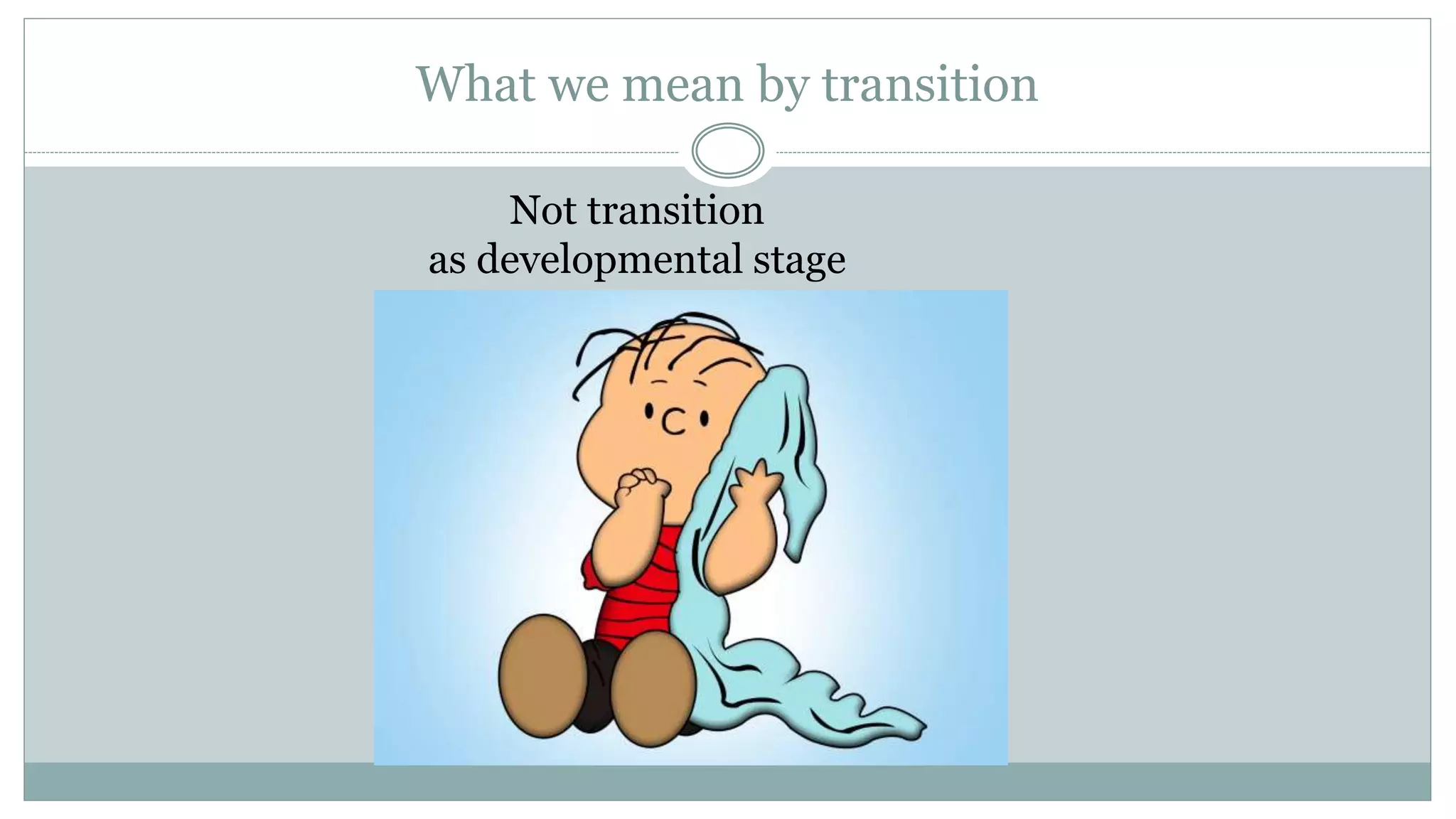
What we mean by transition
Not transition
as developmental stage
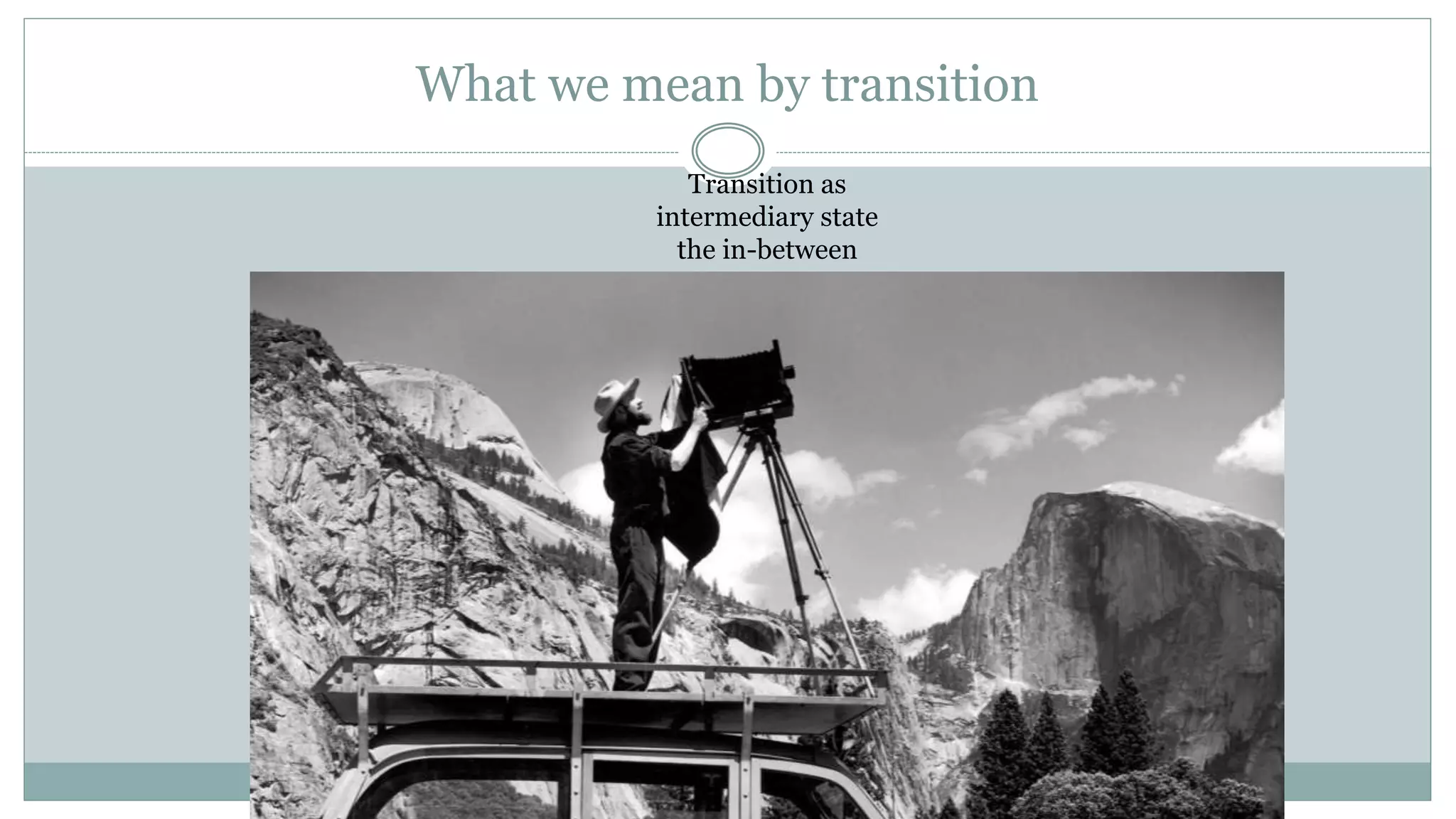
What we mean by transition
Transition as
intermediary state
the in-between
Capturing the Dynamic
Snapshot as transcript
Winnicott’s Transitional Object
“When symbolism is employed the infant is already clearly
distinguishing between fantasy and fact, between inner objects and
external objects, between primary creativity and perception. But the term
transitional object, according to my suggestion, gives room for the
process of becoming able to accept difference and similarity. I think there
is use for a term for the root of symbolism in time, a term that describes
the infant's journey from the purely subjective to objectivity; and
it seems to me that the transitional object (piece of blanket, etc.) is what
we see of this journey of progress towards experiencing.”
(Donald Woods Winnicott:“Transitional Objects and Transitional Phenomena—A Study
of the First Not-Me Possession”, 1953)
George Poulet’s Phenomenology of Reading
 “[T]he extraordinary fact in the case of a book is the falling away of
the barriers between you and it. You are inside it; it is inside
you; there is no longer either outside or inside”
(Georges Poulet: “Criticism and the Experience of Interiority”, 1980)
Gabrielle Schwab’s Stages of Reading
 Schwab: our internalized patterns of reacting to otherness
will influence our reading habits.
1. Introjection Immersive reading, complete fusion with the virtual world
2. Rejection Refusal to accept the contents of the book
3. Projection Not seeing the story due to your own prejudices
4. Reflexivity Self-aware acceptance of the book, even with an
acknowledgement of your own prejudices
Transcripts & Traversals
The transcript, what Nick Montfort has called a traversal, collects
what has happened when the interactor “completes” a work of
Interactive Fiction by going from the beginning until no more can
be narrated, and thus it provides an equivalent sensation to having
read the whole book.
(Nick Monfort. Twisty Little Passages: An Approach to Interactive
Fiction. MIT, p. 24. 2005)
Transcripts in Games
Historical Precedent:
 ELIZA (1966)
 Colossal Cave Adventure (1976)
 Infocom Games (1979-1989, RIP)
 Façade (2005)
Contemporary Interactive Fiction Systems:
 TADS 3
 Inform 7
 Undum
 Inklewriter
Mrs. Wobbles & the Tangerine House
Other Transcripts

Tell me that story again

  • 1.
    M A RÍ A G O I C O E C H E A M A R K C . M A R I N O U N I V E R S I T Y C O M P L U T E N S E O F M A D R I D U N I V E R S I T Y O F S O U T H E R N C A L I F O R N I A Can You Read Me That Story Again? The Role of the Transcript as Transitional Object in Interactive Storytelling for Children
  • 2.
    ELO 2017 (Dec.1;July 19-22, 2017)
  • 4.
    Children interactive narratives Playinginteractive narratives Rereading print Free interactivity Variation Exploration and participation Making choices Dynamic Emergent Guidance Repetition Reviewing and remembering Confirmation of their expectations Static Determined Disorientation Familiarity
  • 5.
    The Habit ofRereading Repetition allows children to: • internalize story patterns • solve linguistic and cognitive puzzles • reinforce their understanding of the story as well as their cognitive development • recognize details they may have missed in previous readings • fortify their memory • connect virtual world of the book with their life experiences
  • 6.
    Piaget’s child developmenttheories Child’s cognitive evolution: From the concrete To the schematic To the symbolic
  • 7.
    What we meanby transition Not transition as developmental stage
  • 8.
    What we meanby transition Transition as intermediary state the in-between
  • 9.
  • 11.
    Winnicott’s Transitional Object “Whensymbolism is employed the infant is already clearly distinguishing between fantasy and fact, between inner objects and external objects, between primary creativity and perception. But the term transitional object, according to my suggestion, gives room for the process of becoming able to accept difference and similarity. I think there is use for a term for the root of symbolism in time, a term that describes the infant's journey from the purely subjective to objectivity; and it seems to me that the transitional object (piece of blanket, etc.) is what we see of this journey of progress towards experiencing.” (Donald Woods Winnicott:“Transitional Objects and Transitional Phenomena—A Study of the First Not-Me Possession”, 1953)
  • 12.
    George Poulet’s Phenomenologyof Reading  “[T]he extraordinary fact in the case of a book is the falling away of the barriers between you and it. You are inside it; it is inside you; there is no longer either outside or inside” (Georges Poulet: “Criticism and the Experience of Interiority”, 1980)
  • 13.
    Gabrielle Schwab’s Stagesof Reading  Schwab: our internalized patterns of reacting to otherness will influence our reading habits. 1. Introjection Immersive reading, complete fusion with the virtual world 2. Rejection Refusal to accept the contents of the book 3. Projection Not seeing the story due to your own prejudices 4. Reflexivity Self-aware acceptance of the book, even with an acknowledgement of your own prejudices
  • 14.
    Transcripts & Traversals Thetranscript, what Nick Montfort has called a traversal, collects what has happened when the interactor “completes” a work of Interactive Fiction by going from the beginning until no more can be narrated, and thus it provides an equivalent sensation to having read the whole book. (Nick Monfort. Twisty Little Passages: An Approach to Interactive Fiction. MIT, p. 24. 2005)
  • 15.
    Transcripts in Games HistoricalPrecedent:  ELIZA (1966)  Colossal Cave Adventure (1976)  Infocom Games (1979-1989, RIP)  Façade (2005) Contemporary Interactive Fiction Systems:  TADS 3  Inform 7  Undum  Inklewriter
  • 16.
    Mrs. Wobbles &the Tangerine House
  • 17.