The Present Perfect Tense
Form and use
MEANING
The present perfect tells us
about the past and the present.
Use
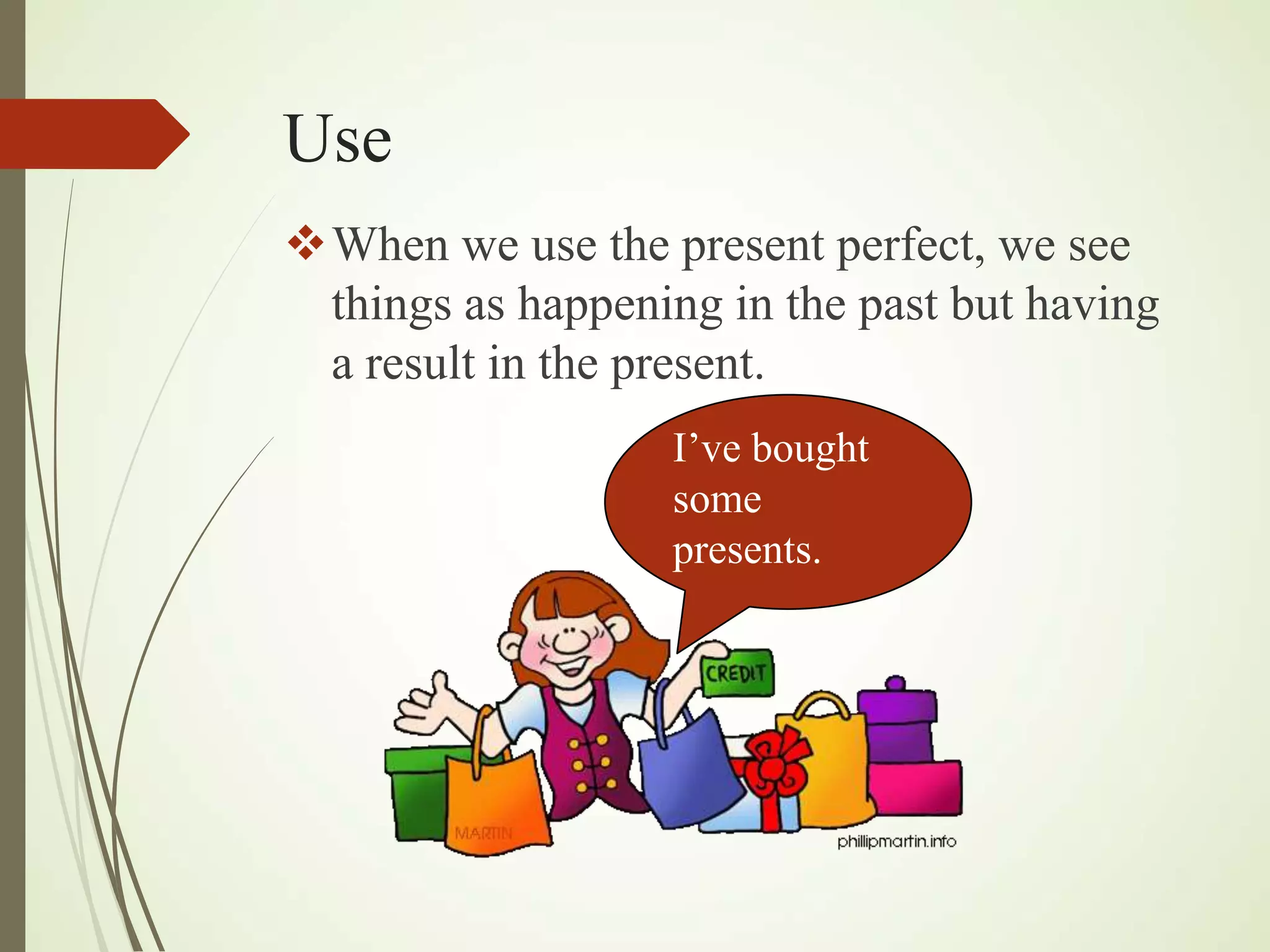
When we use the present perfect, we see
things as happening in the past but having
a result in the present.
I’ve bought
some
presents.
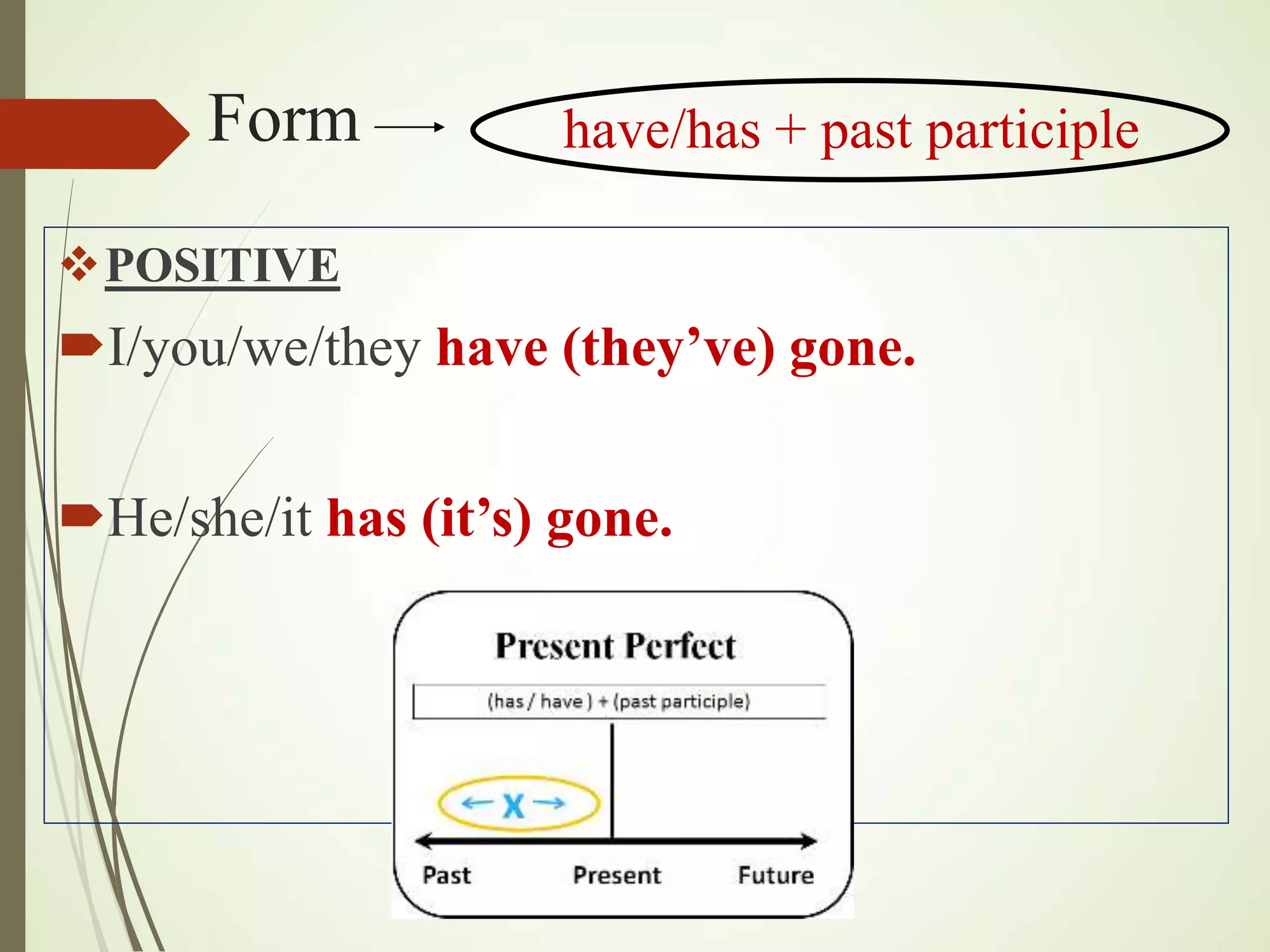
Form
POSITIVE
I/you/we/they have (they’ve) gone.
He/she/it has (it’s) gone.
have/has + past participle
NEGATIVE
I/you/we/they have not gone.
He/she/it hasn‘t gone.
INTERROGATIVE
Have I/you/we/they gone?
 Has he/she/it gone?
SHORT ANSWERS
Yes, I have. / No, I haven’t.
Yes, he has. / No, he hasn’t.
RELATED WORDS
We use the present perfect with today and
phrases with this, e.g. this morning, this week,
this year.
EXAMPLE: I have been here since this morning.
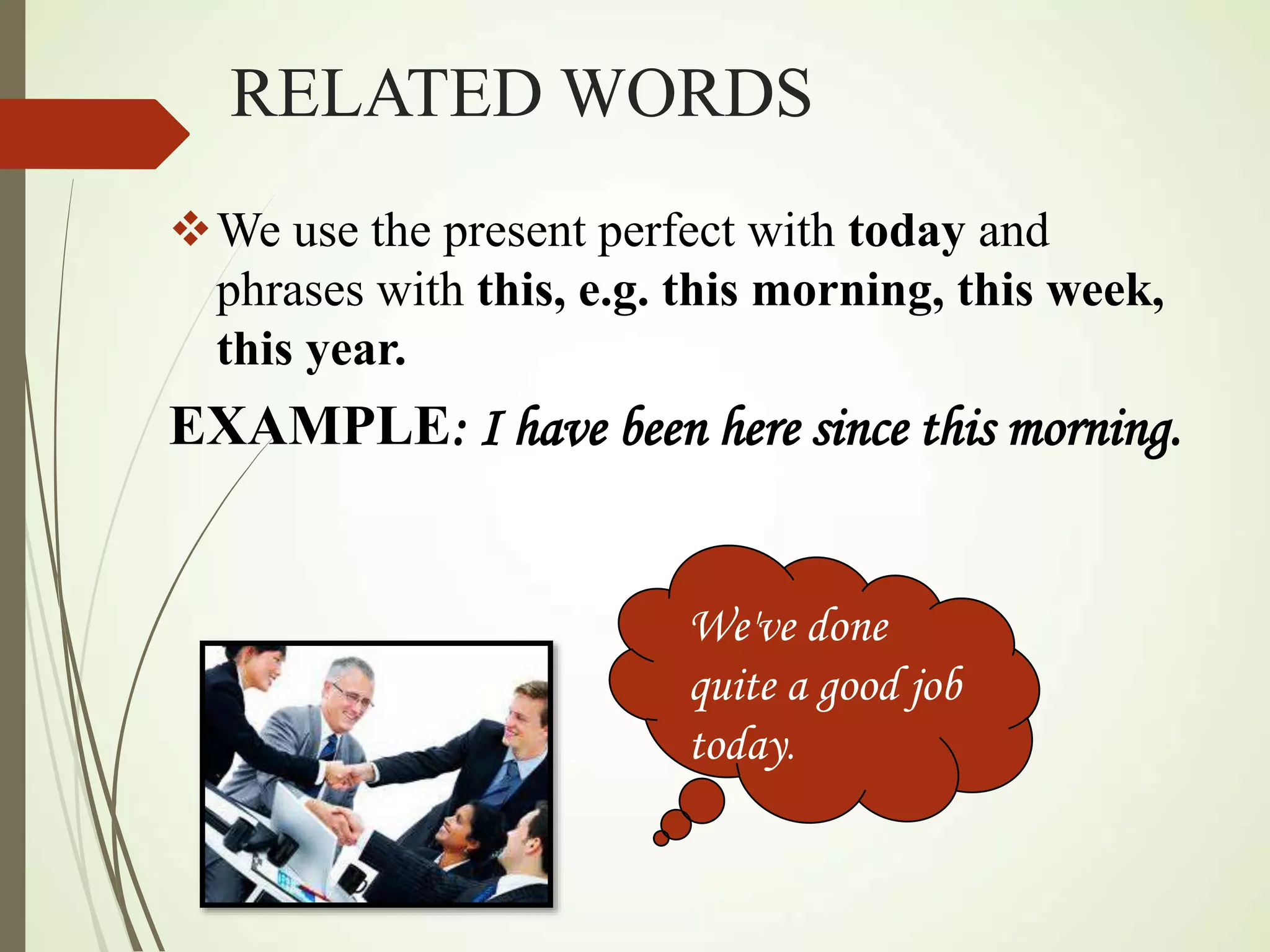
We've done
quite a good job
today.
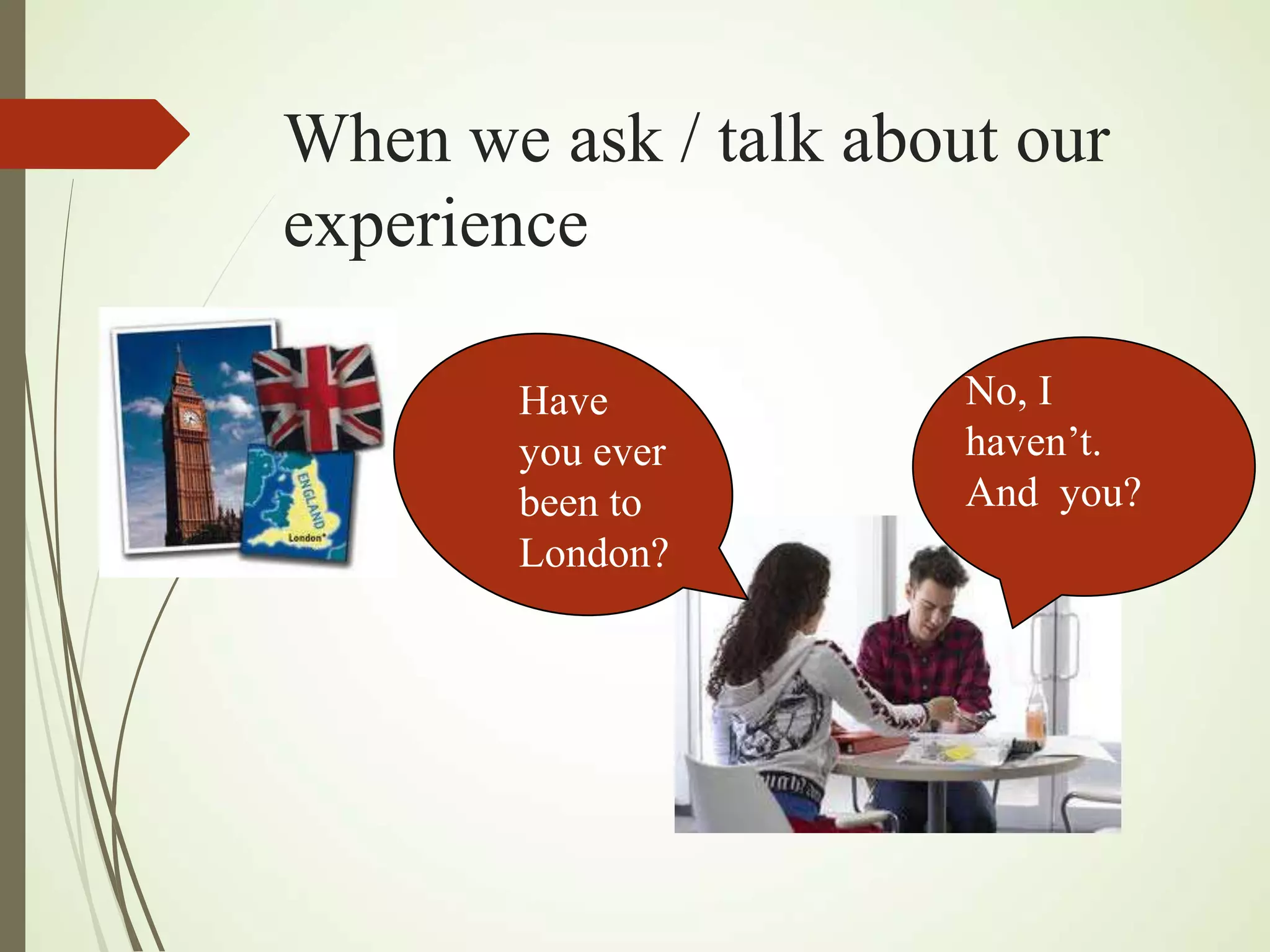
When we ask / talk about our
experience
Have
you ever
been to
London?
No, I
haven’t.
And you?
JUST
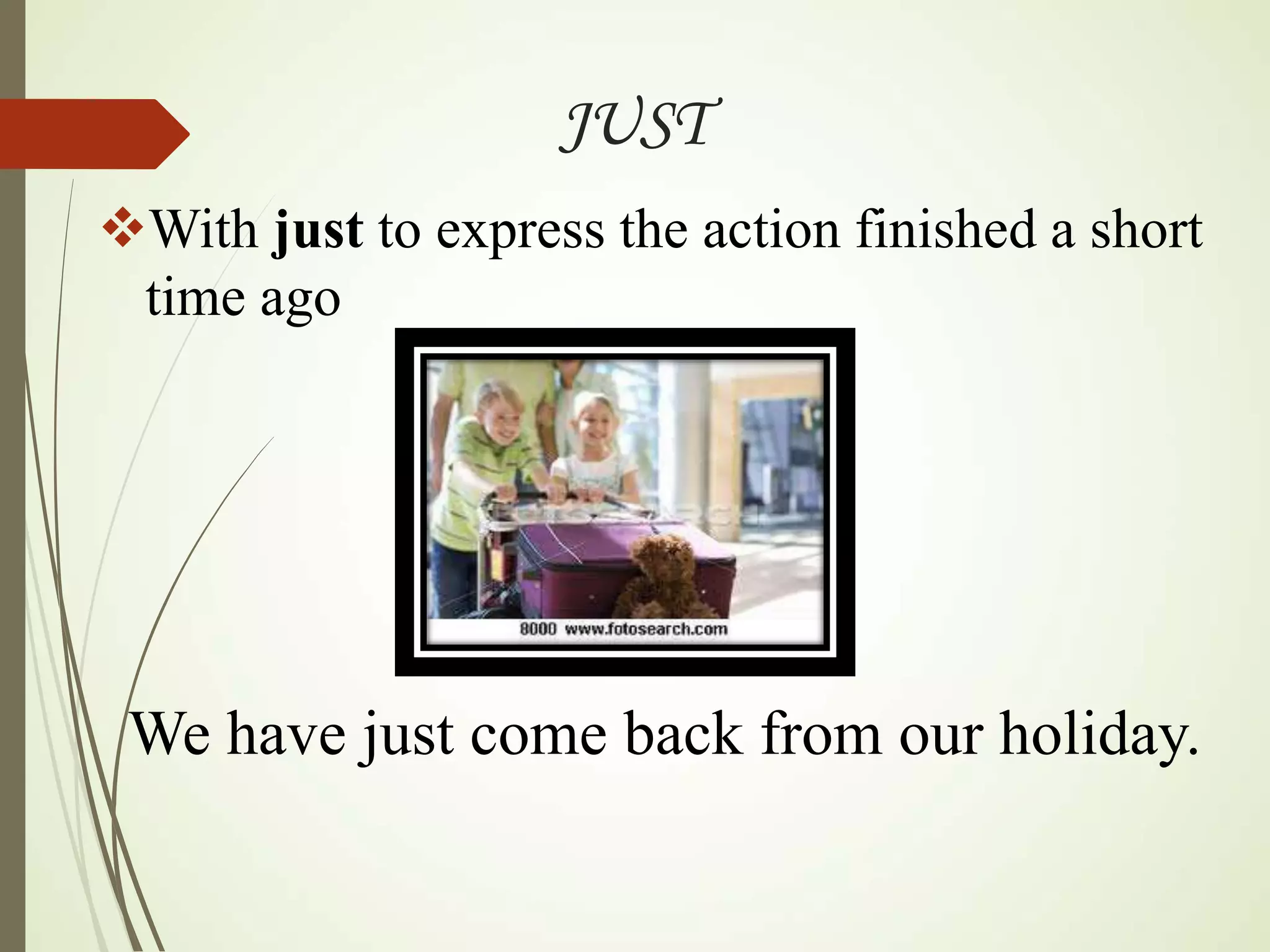
With just to express the action finished a short
time ago
We have just come back from our holiday.
ALREADY
With already meaning “sooner than expected”
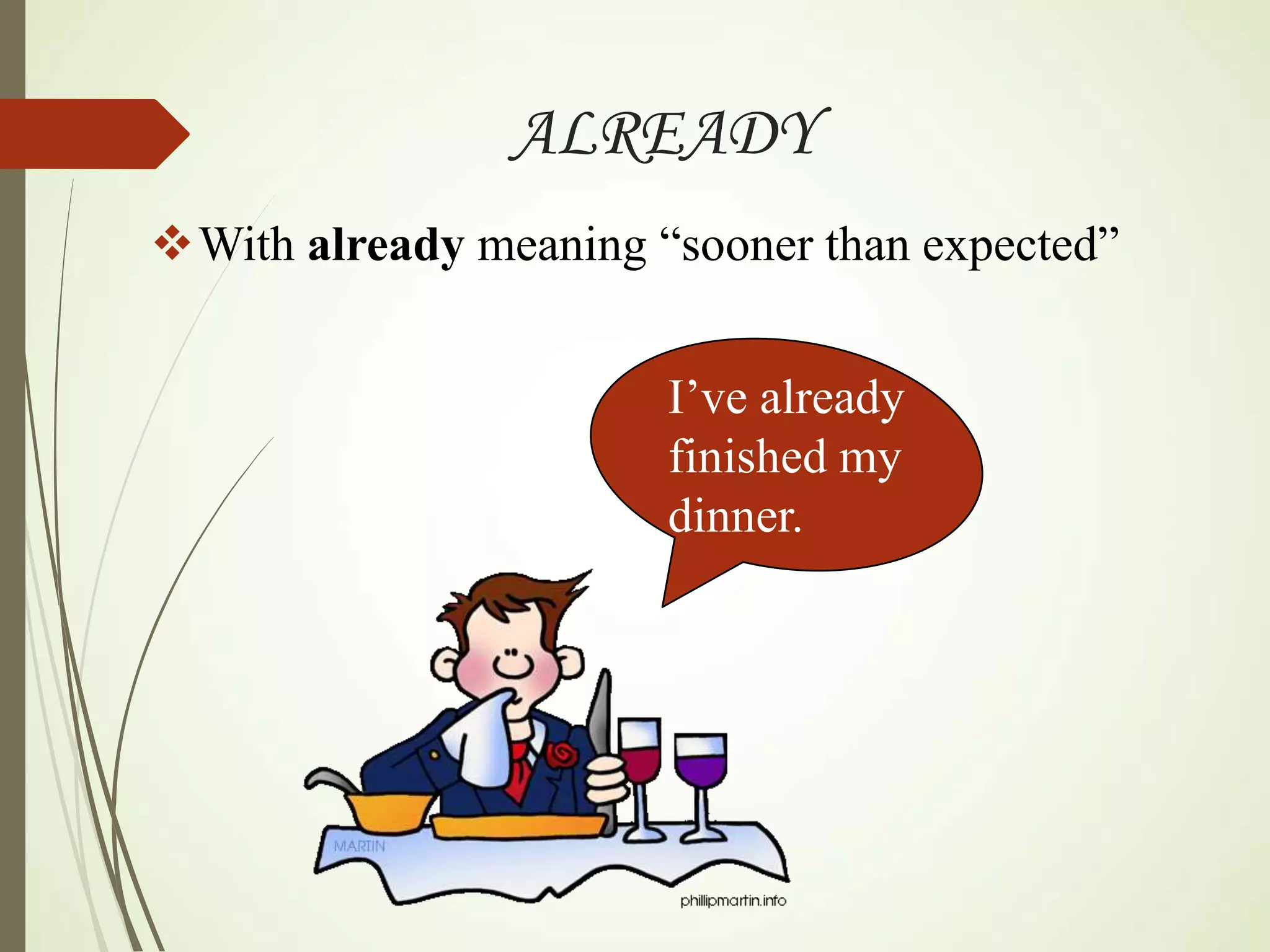
I’ve already
finished my
dinner.
YET
With yet in negative sentences and questions
when we expect something to happen
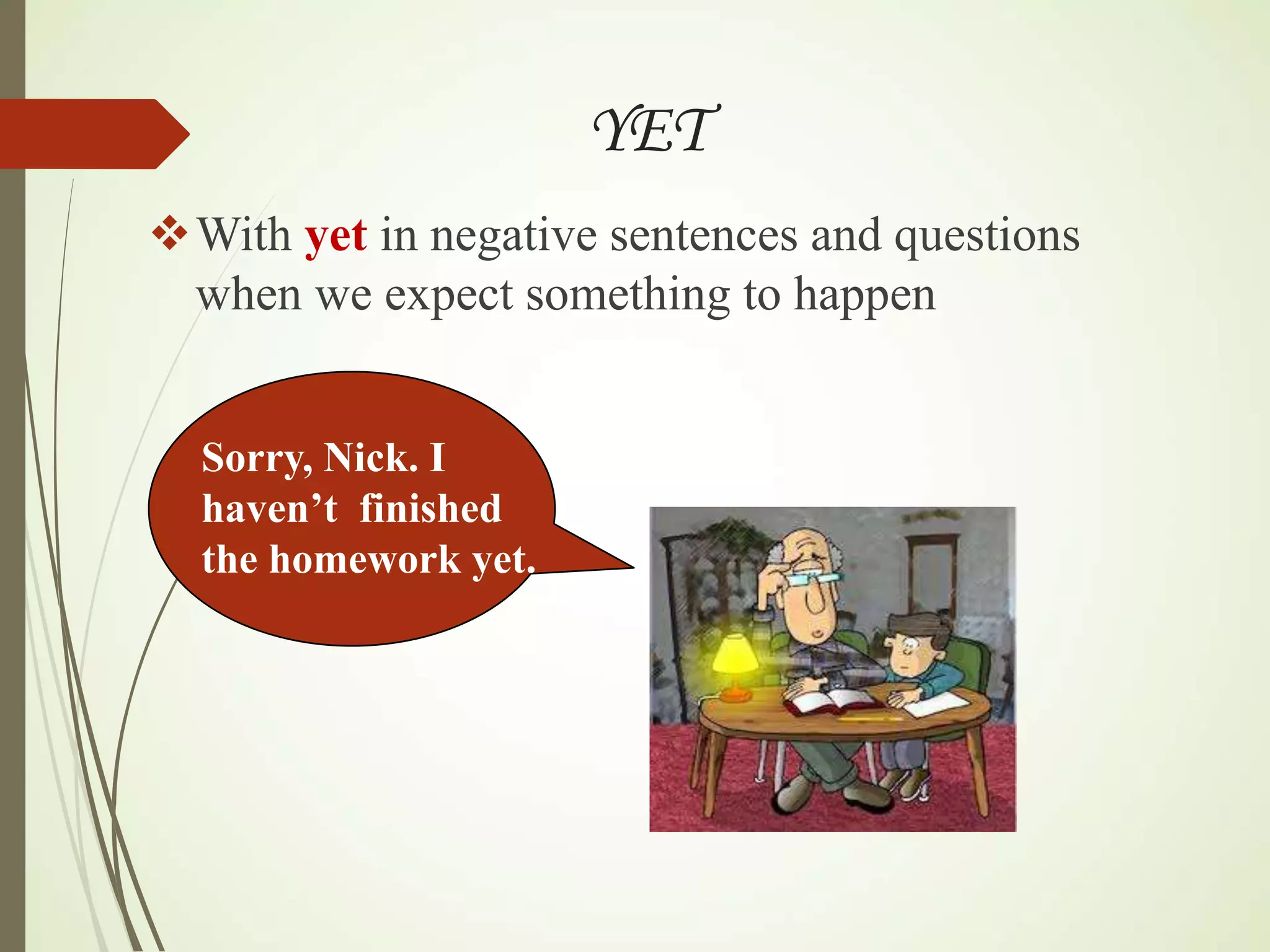
Sorry, Nick. I
haven’t finished
the homework yet.
FOR/SINCE
We use for to say how long this period is (for
three days).
We use since to say when the period began
(since Friday).
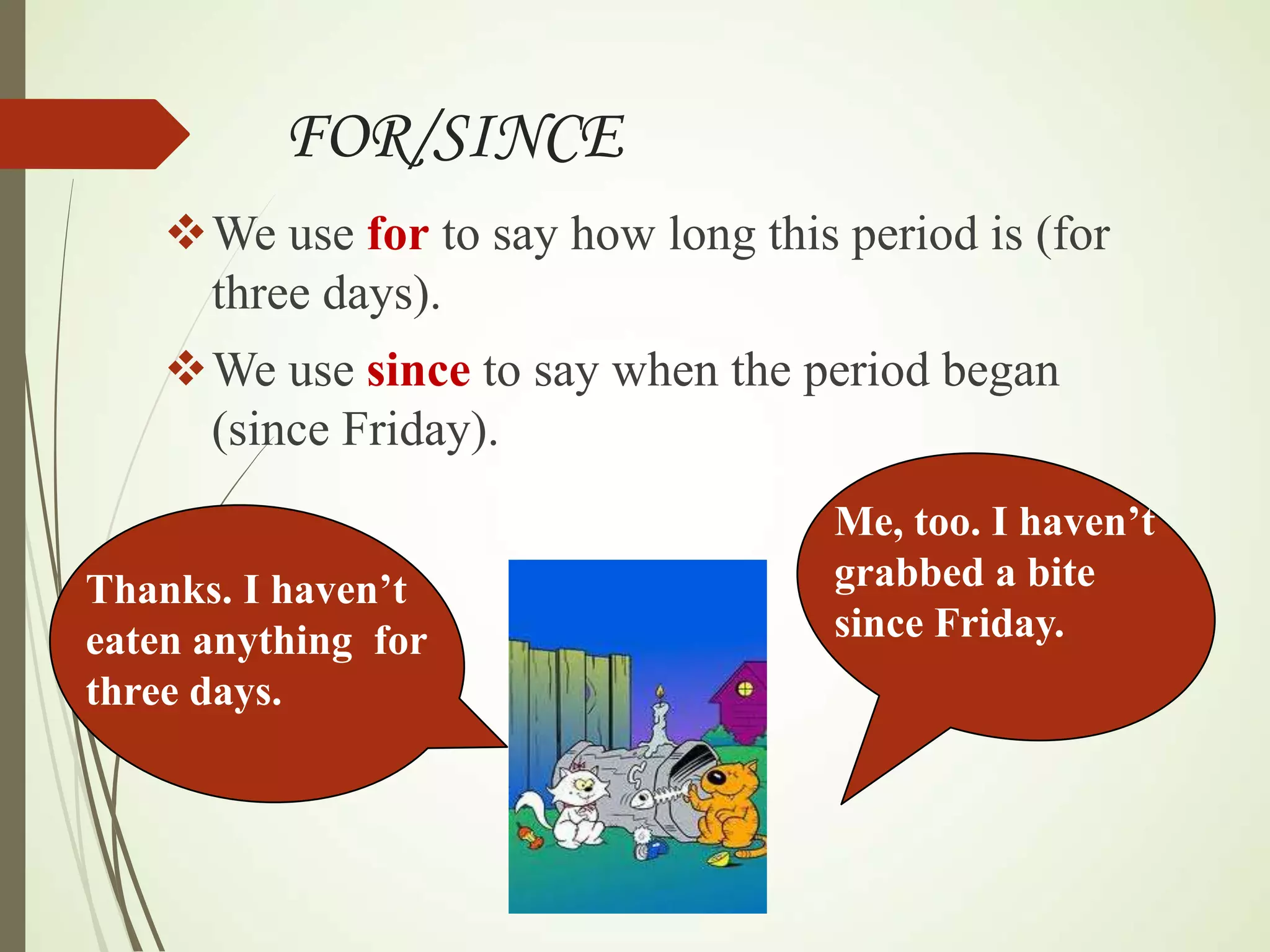
Me, too. I haven’t
grabbed a bite
since Friday.
Thanks. I haven’t
eaten anything for
three days.
NEVER / EVER
We use NEVER as: NOT AT ANY TIME in the
past, including now
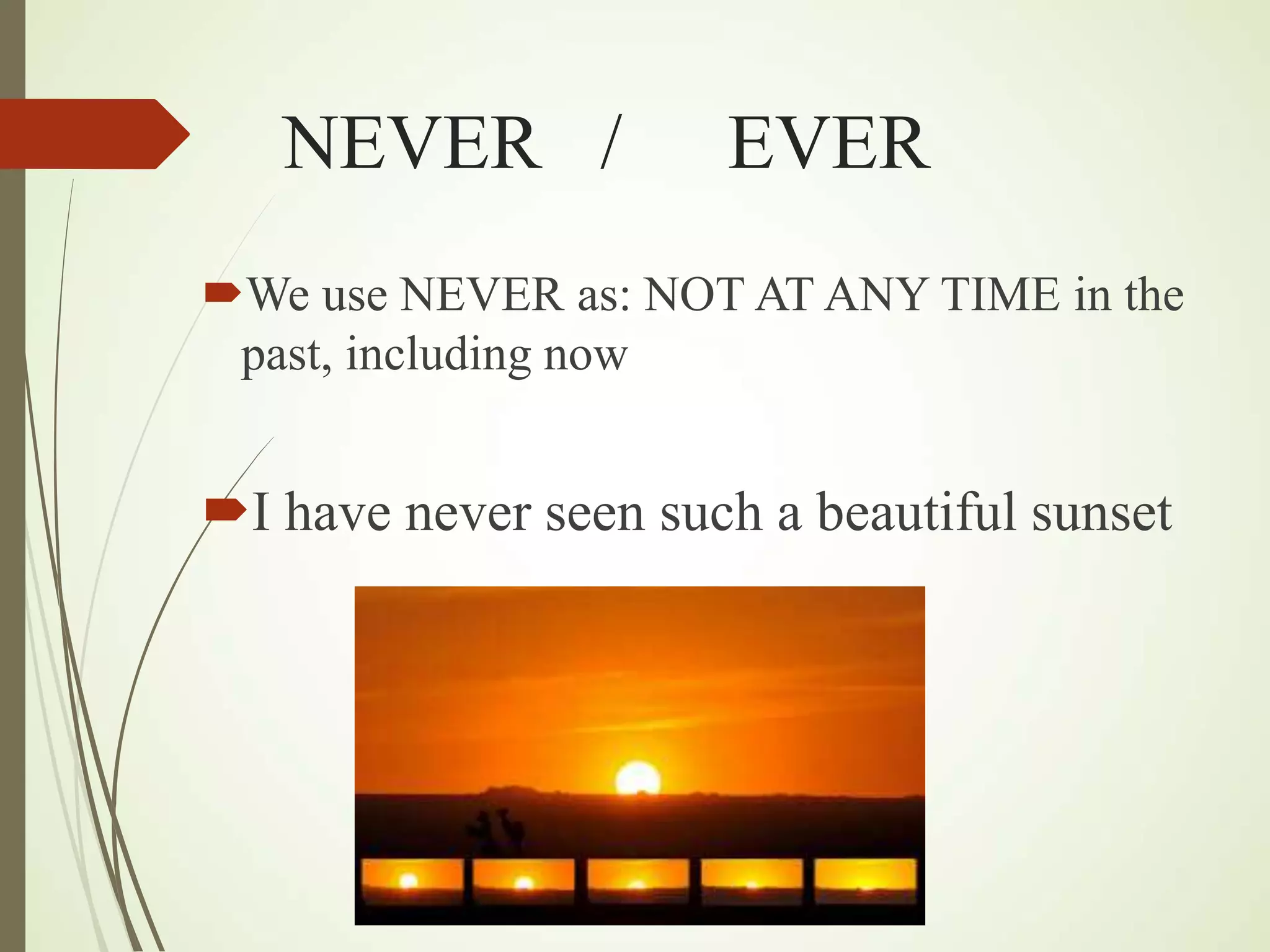
I have never seen such a beautiful sunset
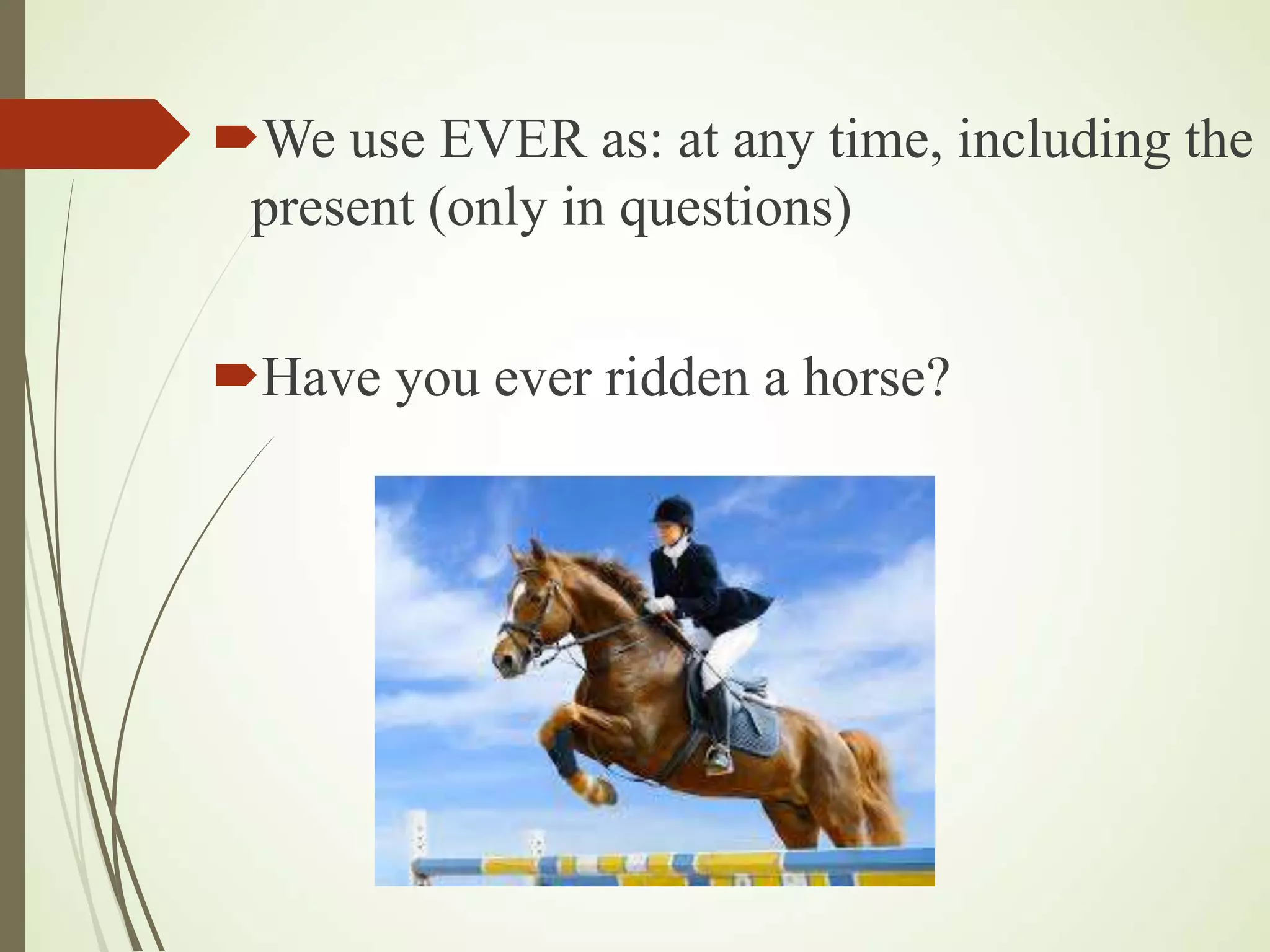
We use EVER as: at any time, including the
present (only in questions)
Have you ever ridden a horse?

The present-perfect-tense2