Better Clinical Decision Support for COVID-19:
Identifying Patients at Highest-Risk
Kathleen Merkley, DNP, APRN, FNP
Senior VP of Professional Services
Leah Evans
Analytics Director, Sr., Outsourcing Services
© 2021 Health Catalyst
Proprietary. Feel free to share but we would appreciate a Health Catalyst citation.
Better Clinical Decision Support for COVID-19
The clinical spectrum of COVID-19 ranges
from asymptomatic to critical illness,
making identifying patients at risk for
respiratory deterioration a vital part of
disease management.
However, with so many aspects of the
SARS-CoV-2 infection unprecedented on
clinical and social levels, it’s not surprising
that healthcare organizations don’t have an
established, reliable tool to predict clinical
deterioration in patients with the virus.
© 2021 Health Catalyst
Proprietary. Feel free to share but we would appreciate a Health Catalyst citation.
Better Clinical Decision Support for COVID-19
With in-hospital mortality for patients with
COVID-19 estimated between 15.3 and
24.5 percent in 2021, a clear opportunity
exists to improve outcomes for individuals
at a high risk of deterioration with better
clinical decision support tools.
Identifying these patients early, however,
requires risk scoring tools that specifically
identify the onset of respiratory failure, the
primary indicator of COVID-19 severity,
rather than commonly used scoring tools
for other acute conditions.
© 2021 Health Catalyst
Proprietary. Feel free to share but we would appreciate a Health Catalyst citation.
An Opportunity for Better Clinical Decision Support Tools:
Existing Risk Scoring May Be Misleading for Patient with COVID-19
Risk-scoring tools exist for common acute
conditions, such as septic shock, hypovolemic
shock, or cardiogenic shock.
But these methods, including the Modified Early
Warning System (MEWS), Sequential Organ
Failure Assessment (SOFA) scores, and
National Early Warning Score 2 (NEWS2),
developed in the U.K. by the National Health
Service (NHS), may be misleading for patients
with COVID-19. COVID-19 primarily manifests
with hypoxemia (a below-normal blood oxygen
level) without associated systemic disturbance.
© 2021 Health Catalyst
Proprietary. Feel free to share but we would appreciate a Health Catalyst citation.
An Opportunity for Better Clinical Decision Support Tools:
Existing Risk Scoring May Be Misleading for Patient with COVID-19
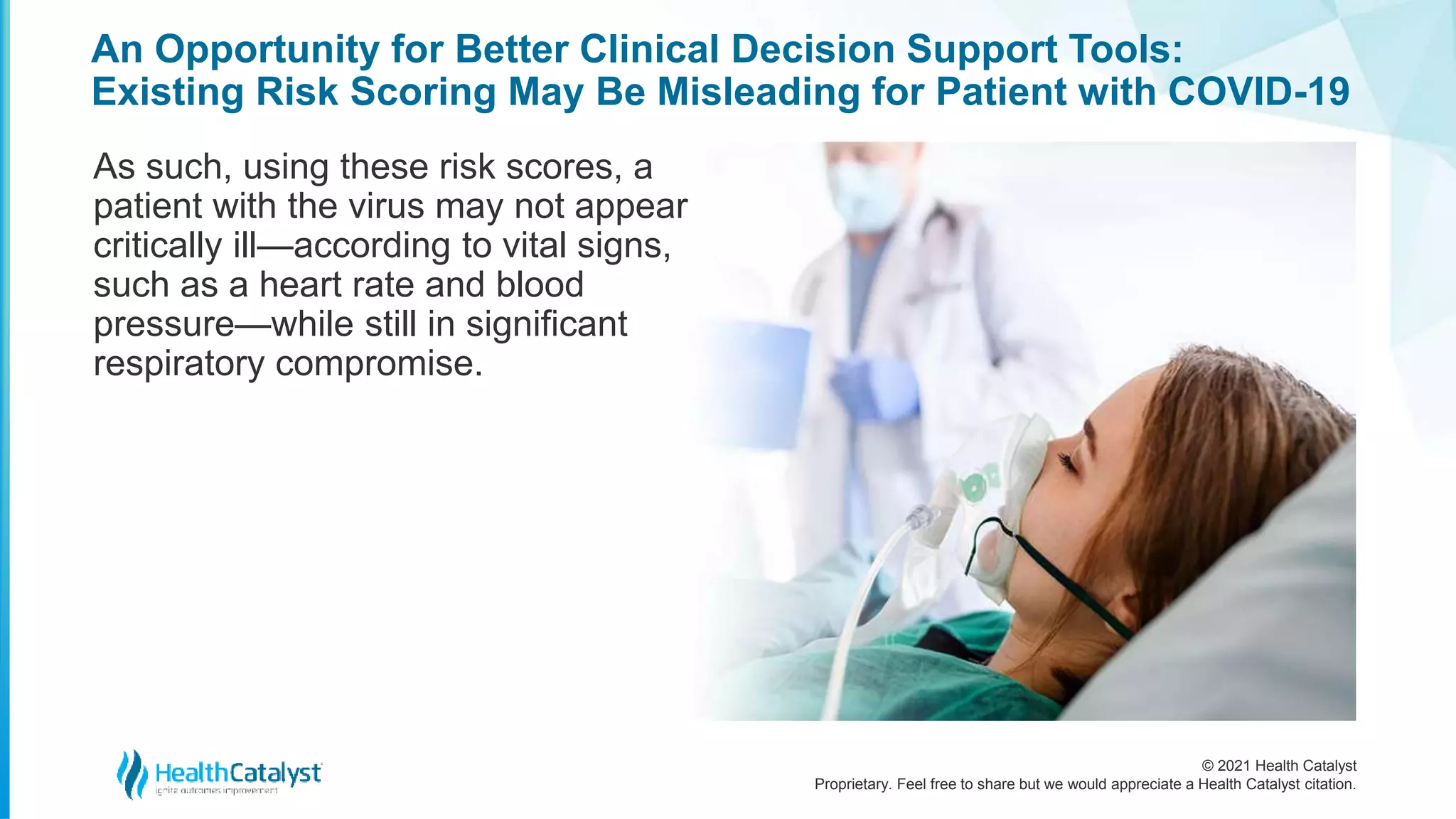
As such, using these risk scores, a
patient with the virus may not appear
critically ill—according to vital signs,
such as a heart rate and blood
pressure—while still in significant
respiratory compromise.
© 2021 Health Catalyst
Proprietary. Feel free to share but we would appreciate a Health Catalyst citation.
An Opportunity for Better Clinical Decision Support Tools:
Existing Risk Scoring May Be Misleading for Patient with COVID-19
For instance, Dr. Guy Glover, a critical
care physician at Guy’s and St Thomas’
NHS Foundation Trust (GSTT) in the
U.K., shared a case typical of how
COVID-19’s unique pattern of
physiology has confounded clinicians
and conventional escalation pathways.
© 2021 Health Catalyst
Proprietary. Feel free to share but we would appreciate a Health Catalyst citation.
An Opportunity for Better Clinical Decision Support Tools:
Existing Risk Scoring May Be Misleading for Patient with COVID-19
In Dr. Glover’s example, a 36-
year-old male presented to the
emergency department with
respiratory symptoms.
The patient had tested positive
for SARS-CoV-2 four days earlier.
The hospital admitted him on
conventional low flow oxygen
and monitored, per the hospital
protocol, with four-to-six-hour
physiological observations and
NEWS2 assessments.
© 2021 Health Catalyst
Proprietary. Feel free to share but we would appreciate a Health Catalyst citation.
An Opportunity for Better Clinical Decision Support Tools:
Existing Risk Scoring May Be Misleading for Patient with COVID-19
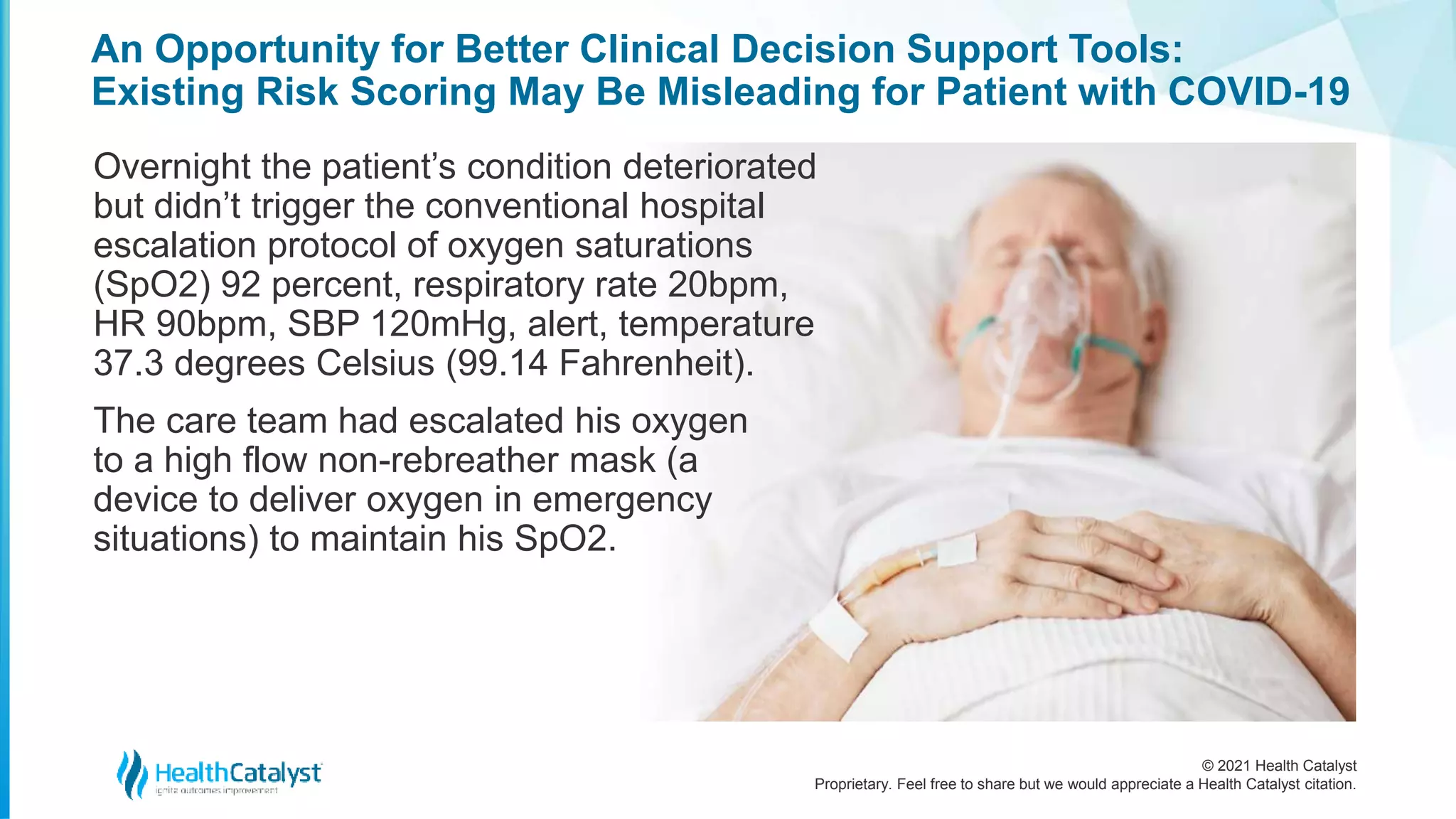
Overnight the patient’s condition deteriorated
but didn’t trigger the conventional hospital
escalation protocol of oxygen saturations
(SpO2) 92 percent, respiratory rate 20bpm,
HR 90bpm, SBP 120mHg, alert, temperature
37.3 degrees Celsius (99.14 Fahrenheit).
The care team had escalated his oxygen
to a high flow non-rebreather mask (a
device to deliver oxygen in emergency
situations) to maintain his SpO2.
© 2021 Health Catalyst
Proprietary. Feel free to share but we would appreciate a Health Catalyst citation.
An Opportunity for Better Clinical Decision Support Tools:
Existing Risk Scoring May Be Misleading for Patient with COVID-19
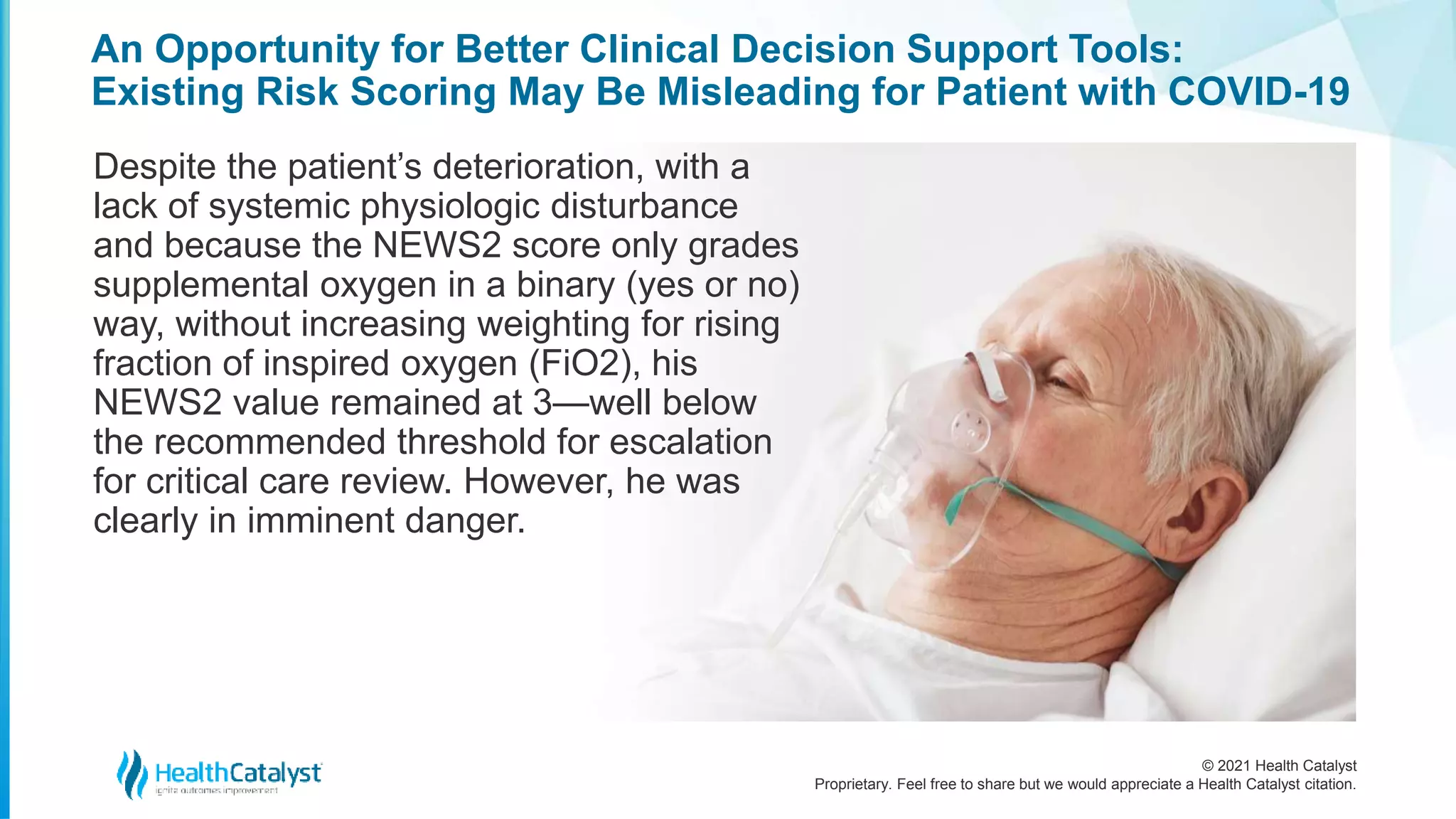
Despite the patient’s deterioration, with a
lack of systemic physiologic disturbance
and because the NEWS2 score only grades
supplemental oxygen in a binary (yes or no)
way, without increasing weighting for rising
fraction of inspired oxygen (FiO2), his
NEWS2 value remained at 3—well below
the recommended threshold for escalation
for critical care review. However, he was
clearly in imminent danger.
© 2021 Health Catalyst
Proprietary. Feel free to share but we would appreciate a Health Catalyst citation.
A Better Way: Data Points to Respiratory Scoring to
More Accurately Predict COVID-19 Severity
In a study conducted at GSTT and led by
Dr. Glover in the U.K., researchers
assessed the widely used NEWS2 score
versus a simple respiratory assessment,
the Respiratory rate—Oxygenation (ROX)
index, as a more sensitive predictor of
deterioration among hospitalized patients
with COVID-19.
© 2021 Health Catalyst
Proprietary. Feel free to share but we would appreciate a Health Catalyst citation.
A Better Way: Data Points to Respiratory Scoring to
More Accurately Predict COVID-19 Severity
The U.K. study leveraged the from a
healthcare-specific data platform (the
Health Catalyst Data Operating System
(DOSTM)) and used an acute deterioration
analytic accelerator dataset, developed for
systemwide quality improvement work.
© 2021 Health Catalyst
Proprietary. Feel free to share but we would appreciate a Health Catalyst citation.
A Better Way: Data Points to Respiratory Scoring to
More Accurately Predict COVID-19 Severity
Employing a nimble and iterative approach,
the U.K. clinicians, analysts, and data
architects quickly adapted the existing
population dataset to flag patients who had
tested positive for COVID-19 and identify
key outcomes, such as the need for
advanced respiratory support alongside
existing measures including:
 cardiac arrest
 critical care admission
 death
© 2021 Health Catalyst
Proprietary. Feel free to share but we would appreciate a Health Catalyst citation.
A Better Way: Data Points to Respiratory Scoring to
More Accurately Predict COVID-19 Severity
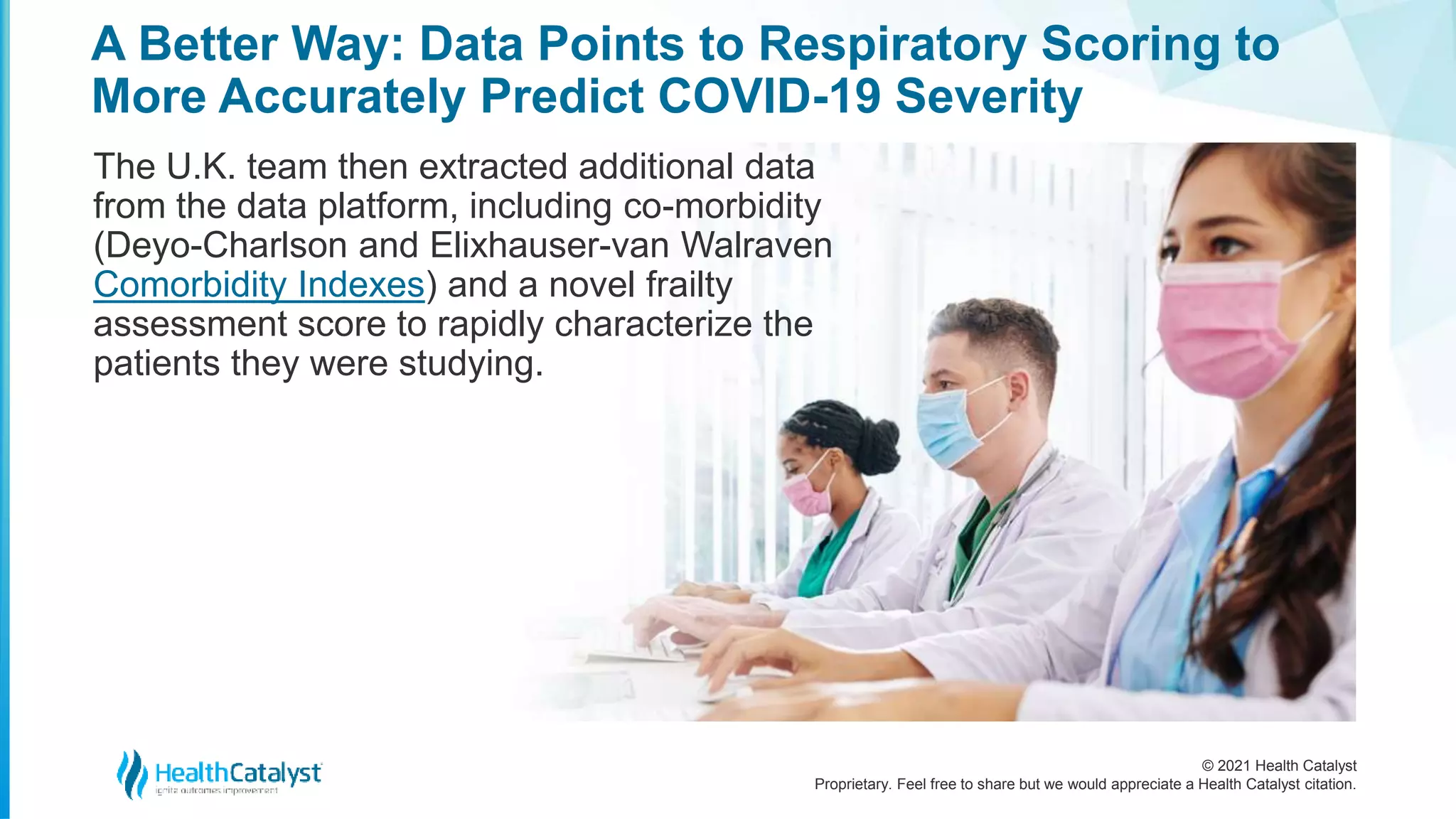
The U.K. team then extracted additional data
from the data platform, including co-morbidity
(Deyo-Charlson and Elixhauser-van Walraven
Comorbidity Indexes) and a novel frailty
assessment score to rapidly characterize the
patients they were studying.
© 2021 Health Catalyst
Proprietary. Feel free to share but we would appreciate a Health Catalyst citation.
A Better Way: Data Points to Respiratory Scoring to
More Accurately Predict COVID-19 Severity
Reporting on 708 cases, the research
demonstrated the earliest singular marker of
clinical deterioration was a rising FiO2.
Additionally, tachypnea (abnormally rapid
breathing) was a late sign of deterioration,
while the cardiovascular parameters
generally didn’t indicate an impending
adverse event.
© 2021 Health Catalyst
Proprietary. Feel free to share but we would appreciate a Health Catalyst citation.
A Better Way: Data Points to Respiratory Scoring to
More Accurately Predict COVID-19 Severity
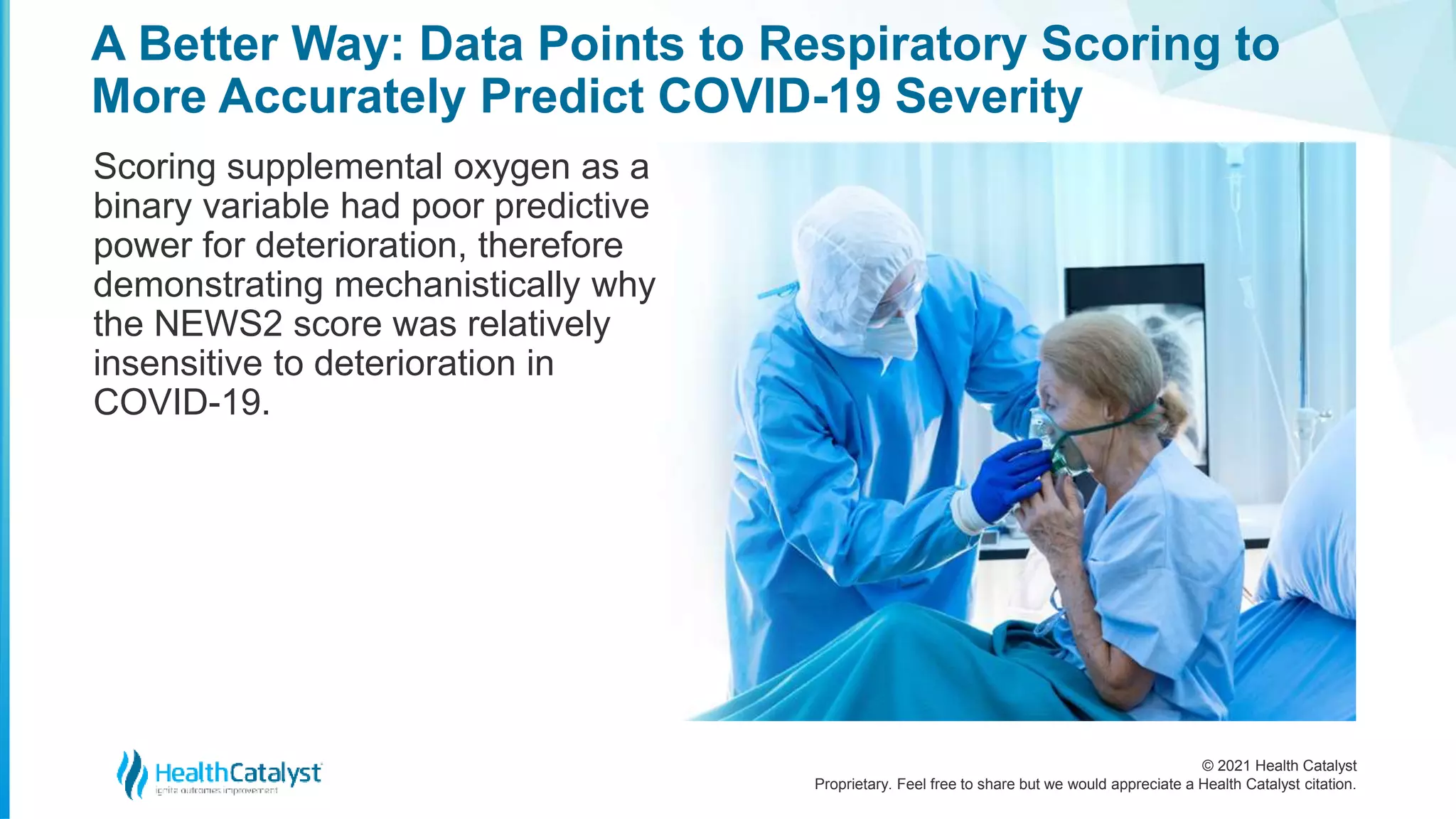
Scoring supplemental oxygen as a
binary variable had poor predictive
power for deterioration, therefore
demonstrating mechanistically why
the NEWS2 score was relatively
insensitive to deterioration in
COVID-19.
© 2021 Health Catalyst
Proprietary. Feel free to share but we would appreciate a Health Catalyst citation.
A Better Way: Data Points to Respiratory Scoring to
More Accurately Predict COVID-19 Severity
The study confirmed that the predictive validity
of the ROX index for COVID-19 deterioration
(a composite outcome of cardiac arrest,
critical care admission, or death) was
significantly greater than the NEWS2.
© 2021 Health Catalyst
Proprietary. Feel free to share but we would appreciate a Health Catalyst citation.
A Better Way: Data Points to Respiratory Scoring to
More Accurately Predict COVID-19 Severity
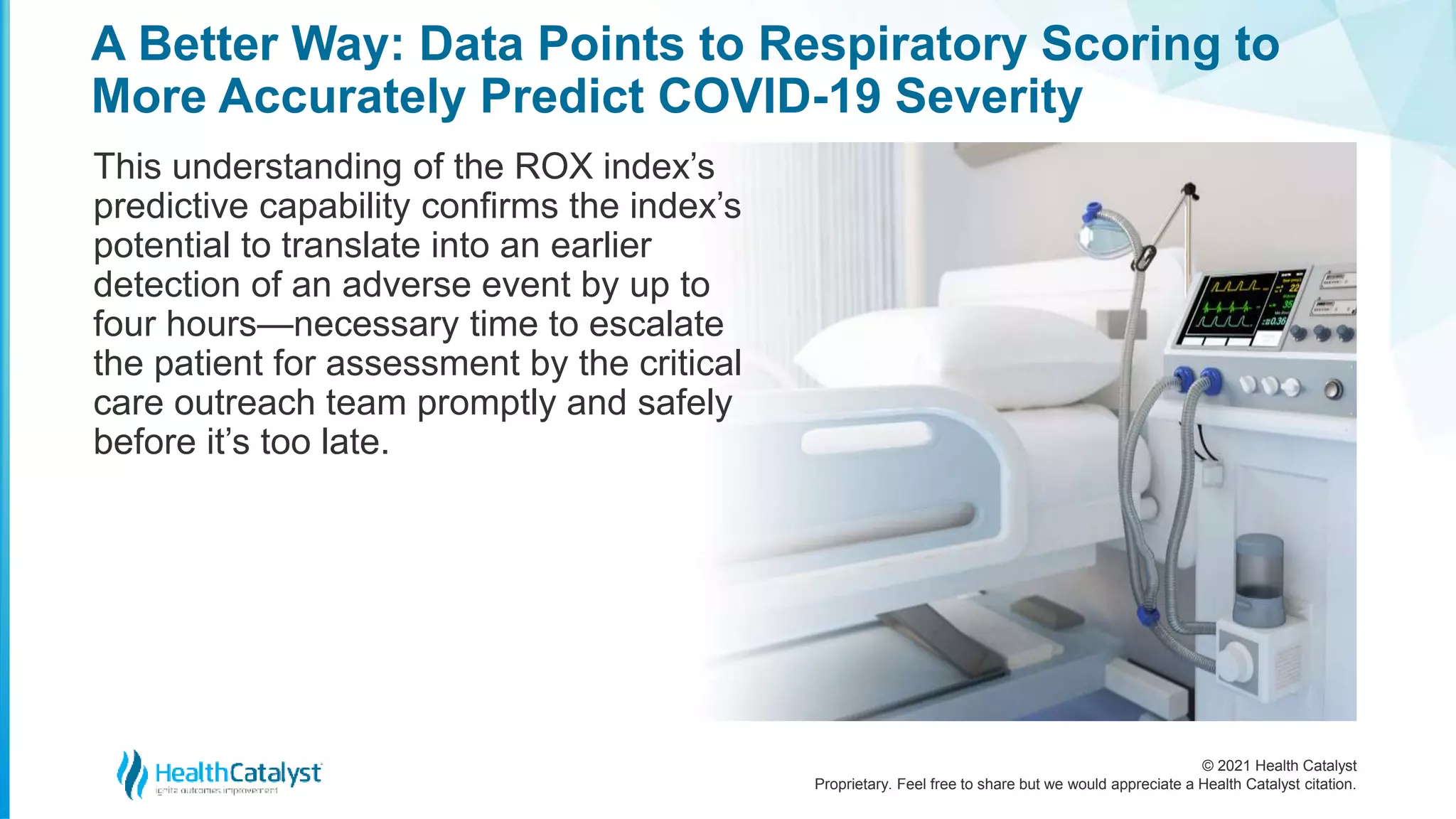
This understanding of the ROX index’s
predictive capability confirms the index’s
potential to translate into an earlier
detection of an adverse event by up to
four hours—necessary time to escalate
the patient for assessment by the critical
care outreach team promptly and safely
before it’s too late.
© 2021 Health Catalyst
Proprietary. Feel free to share but we would appreciate a Health Catalyst citation.
A Better Way: Data Points to Respiratory Scoring to
More Accurately Predict COVID-19 Severity
While the ROX index appears to be
important, the NEWS2 system retains
many advantages for the U.K. NHS due
to its widespread adoption and
standardized approach.
The research group next aims to
incorporate its initial findings into a
modified NEWS-FiO2 model.
© 2021 Health Catalyst
Proprietary. Feel free to share but we would appreciate a Health Catalyst citation.
A Better Way: Data Points to Respiratory Scoring to
More Accurately Predict COVID-19 Severity
The scope of the data platform and the
scalable nature of the datasets will allow
researchers to test the model in larger
patient cohorts (e.g., other respiratory
viral infections) to explore generalizability
of the findings.
© 2021 Health Catalyst
Proprietary. Feel free to share but we would appreciate a Health Catalyst citation.
What Health Systems Need to Create
COVID-19 Deterioration Scoring
To improve risk prediction among patients with
COVID-19 and adopt a respiratory deterioration
scoring process along the lines of the above U.K.
efforts, health systems need key features and
practices in place:
1. Aggregated historical patient data
2. Optimizing response in the deterioration pathway
3. Collaboration between clinicians and data
scientists
© 2021 Health Catalyst
Proprietary. Feel free to share but we would appreciate a Health Catalyst citation.
What Health Systems Need to Create
COVID-19 Deterioration Scoring
1-Aggregated historical patient data
The first step in understanding and optimizing
the deterioration pathway is to aggregate
historical patient data on baseline
characteristics and diagnosis as well as
longitudinal laboratory and physiological data,
then link these values to predictor variables to
patient outcomes.
By characterizing typical patterns of physio-
logical deterioration, these clinicians can
explore these signals can then be explored and
iteratively optimize the warning scores.
© 2021 Health Catalyst
Proprietary. Feel free to share but we would appreciate a Health Catalyst citation.
What Health Systems Need to Create
COVID-19 Deterioration Scoring
2-Optimizing response in the deterioration pathway
Subsequently, care teams must optimize
response in the deterioration pathway—for
example, by measuring and improving the critical
care outreach team’s response times and
escalation to critical care.
In the U.K. study described above, the research
group has further used healthcare vendor
(Health Catalyst) data to report for the first time
that onset of physiological deterioration to critical
care admission associates with mortality.
© 2021 Health Catalyst
Proprietary. Feel free to share but we would appreciate a Health Catalyst citation.
What Health Systems Need to Create
COVID-19 Deterioration Scoring
2-Optimizing response in the deterioration pathway
Furthermore, metrics in the vendor’s acute
deterioration analytic accelerator allow the health
system to track and improve their responsive-
ness to deterioration, with the potential to
improve both clinical and operational outcomes.
© 2021 Health Catalyst
Proprietary. Feel free to share but we would appreciate a Health Catalyst citation.
What Health Systems Need to Create
COVID-19 Deterioration Scoring
3-Collaboration between clinicians and data scientists
Work of this nature requires collaboration
between clinicians and data scientists,
which provides the ability to identify clinical
problems, pose key questions and
hypotheses, and develop data-driven
answers and solutions.
© 2021 Health Catalyst
Proprietary. Feel free to share but we would appreciate a Health Catalyst citation.
Harnessing the Potential for Improved
COVID-19 Outcomes Globally
More robust insight into COVID-19 deterioration
scoring can contribute to improving patient care
and the overall pandemic by saving lives and
decreasing intensive care time for patients.
Applied globally, health systems would
recognize potentially very sick patients
earlier and intervene sooner, improving
the chance for positive outcomes.
© 2021 Health Catalyst
Proprietary. Feel free to share but we would appreciate a Health Catalyst citation.
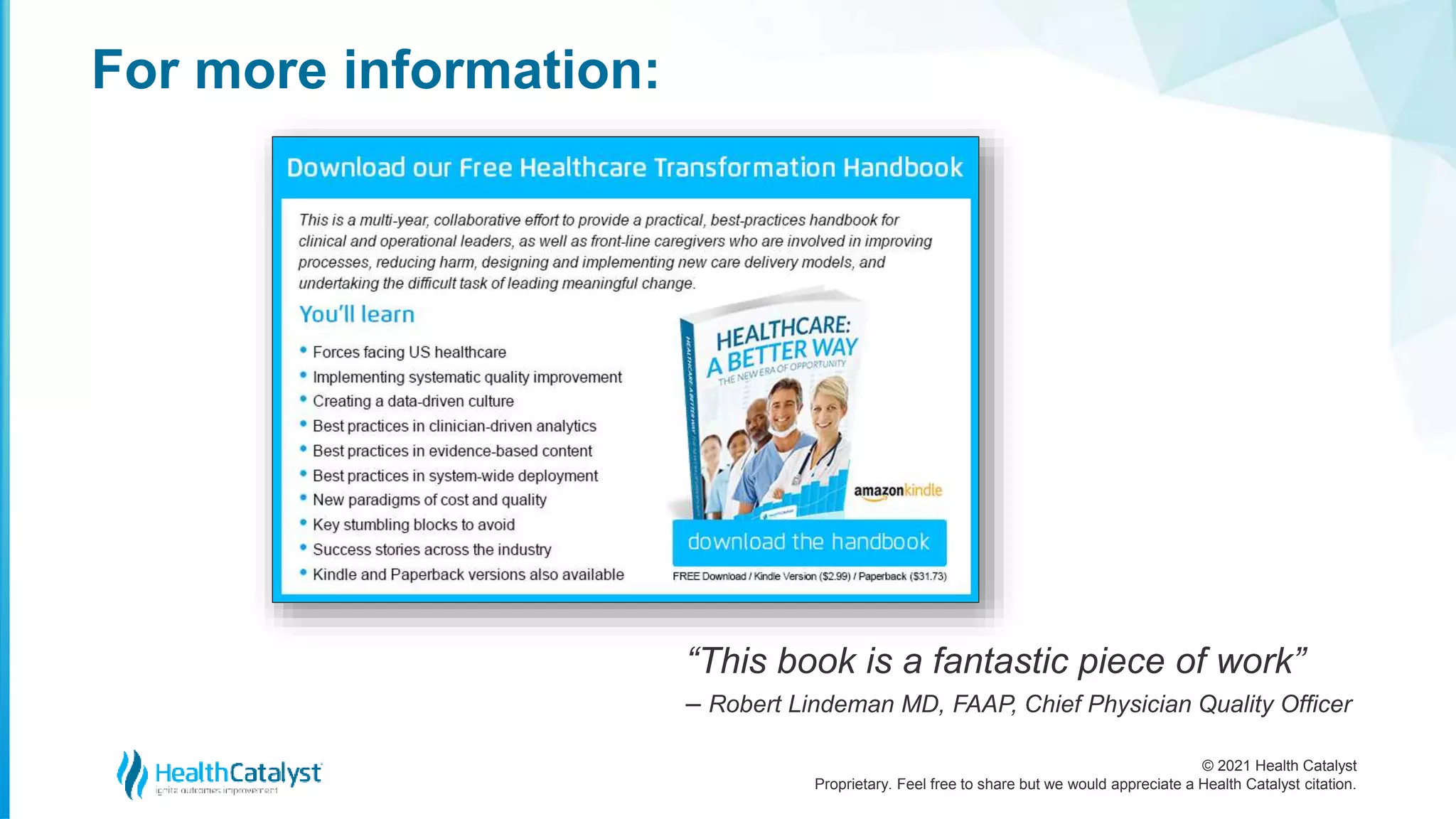
For more information:
“This book is a fantastic piece of work”
– Robert Lindeman MD, FAAP, Chief Physician Quality Officer
© 2021 Health Catalyst
Proprietary. Feel free to share but we would appreciate a Health Catalyst citation.
More about this topic
Link to original article for a more in-depth discussion.
Better Clinical Decision Support for COVID-19: Identifying Patients at Highest-Risk
Data Science Reveals Patients at Risk for Adverse Outcomes Due to COVID-19 Care Disruptions
Health Catalyst Editors
Why Data-Driven Healthcare Is the Best Defense Against COVID-19
Health Catalyst Editors
The Right Way to Build Predictive Models for the Most Vulnerable Patient Populations
Health Catalyst Editors
Healthcare Data Quality: Five Lessons Learned from COVID-19
Taylor Larsen, DOS Marts Data Quality, Director
A Sustainable Healthcare Emergency Management Framework: COVID-19 and Beyond
Holly Rimmasch, Chief Clinical Officer; Ed Corbett, MD, Medical Officer; Anne Marie Bickmore, Chief Product Officer
© 2021 Health Catalyst
Proprietary. Feel free to share but we would appreciate a Health Catalyst citation.
Kathleen Merkley, DNP, APRN joined Health Catalyst in March 2013, as an Engagement
Executive. Prior to coming to HC, she worked for Intermountain Healthcare as the corporate
clinical IT implementation manager. Kathleen is a registered nurse/nurse practitioner and just
received her doctorate in nursing practice from the University of Utah in May 2013.
Other Clinical Quality Improvement Resources
Click to read additional information at www.healthcatalyst.com
Kathleen Merkley, DNP, APRN, FNP
© 2021 Health Catalyst
Proprietary. Feel free to share but we would appreciate a Health Catalyst citation.
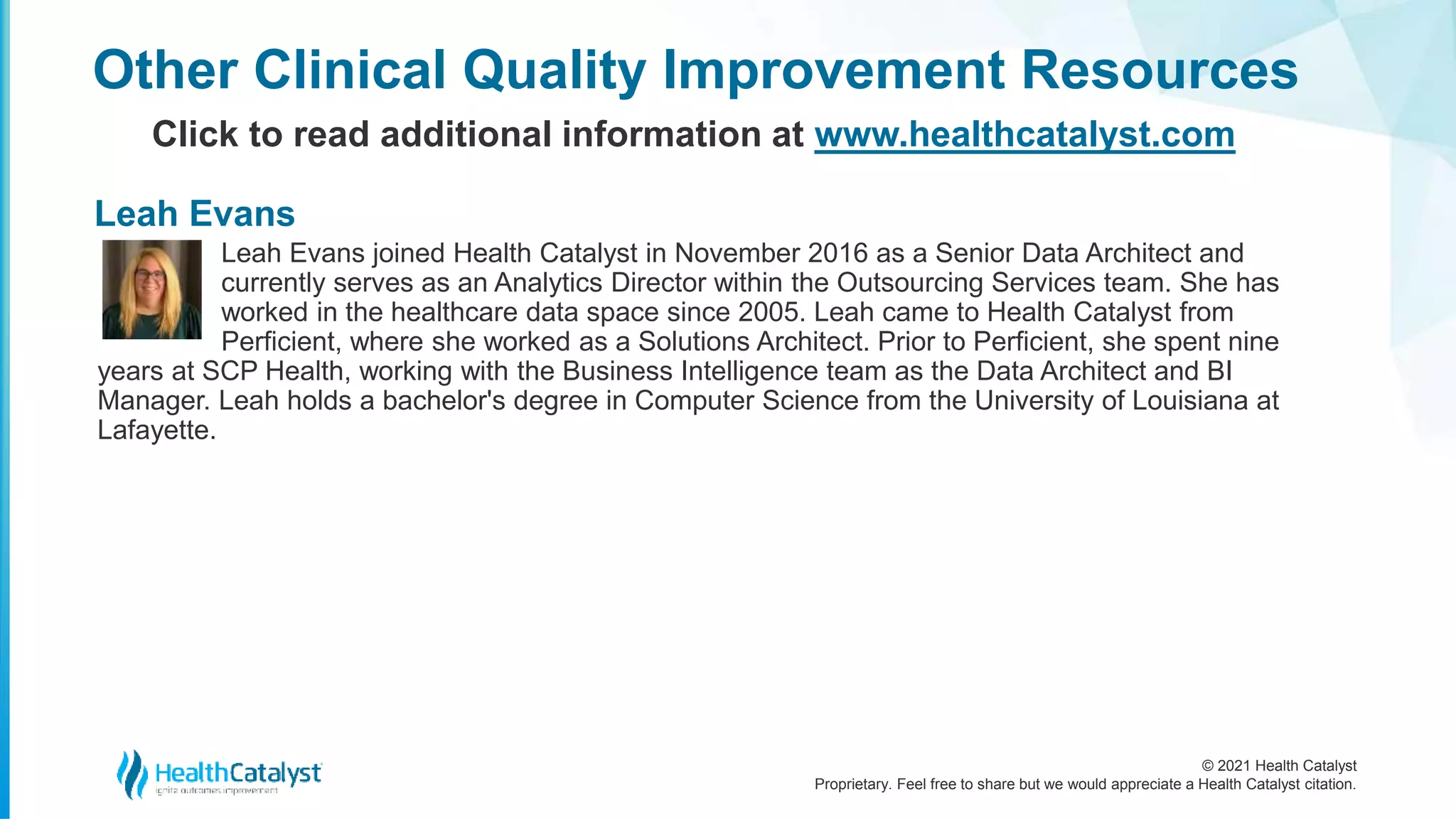
Leah Evans joined Health Catalyst in November 2016 as a Senior Data Architect and
currently serves as an Analytics Director within the Outsourcing Services team. She has
worked in the healthcare data space since 2005. Leah came to Health Catalyst from
Perficient, where she worked as a Solutions Architect. Prior to Perficient, she spent nine
years at SCP Health, working with the Business Intelligence team as the Data Architect and BI
Manager. Leah holds a bachelor's degree in Computer Science from the University of Louisiana at
Lafayette.
Other Clinical Quality Improvement Resources
Click to read additional information at www.healthcatalyst.com
Leah Evans
© 2021 Health Catalyst
Proprietary. Feel free to share but we would appreciate a Health Catalyst citation.
Other Clinical Quality Improvement Resources
Click to read additional information at www.healthcatalyst.com
Health Catalyst is a mission-driven data warehousing, analytics and outcomes-improvement
company that helps healthcare organizations of all sizes improve clinical, financial, and operational
outcomes needed to improve population health and accountable care. Our proven enterprise data
warehouse (EDW) and analytics platform helps improve quality, add efficiency and lower costs in
support of more than 65 million patients for organizations ranging from the largest US health system
to forward-thinking physician practices.
Health Catalyst was recently named as the leader in the enterprise healthcare BI market in
improvement by KLAS and has received numerous best-place-to work awards including Modern
Healthcare in 2013, 2014, and 2015, as well as other recognitions such as “Best Place to work for
Millenials, and a “Best Perks for Women.”

Better Clinical Decision Support for COVID-19: Identifying Patients at Highest-Risk

  • 1.
    Better Clinical DecisionSupport for COVID-19: Identifying Patients at Highest-Risk Kathleen Merkley, DNP, APRN, FNP Senior VP of Professional Services Leah Evans Analytics Director, Sr., Outsourcing Services
  • 2.
    © 2021 HealthCatalyst Proprietary. Feel free to share but we would appreciate a Health Catalyst citation. Better Clinical Decision Support for COVID-19 The clinical spectrum of COVID-19 ranges from asymptomatic to critical illness, making identifying patients at risk for respiratory deterioration a vital part of disease management. However, with so many aspects of the SARS-CoV-2 infection unprecedented on clinical and social levels, it’s not surprising that healthcare organizations don’t have an established, reliable tool to predict clinical deterioration in patients with the virus.
  • 3.
    © 2021 HealthCatalyst Proprietary. Feel free to share but we would appreciate a Health Catalyst citation. Better Clinical Decision Support for COVID-19 With in-hospital mortality for patients with COVID-19 estimated between 15.3 and 24.5 percent in 2021, a clear opportunity exists to improve outcomes for individuals at a high risk of deterioration with better clinical decision support tools. Identifying these patients early, however, requires risk scoring tools that specifically identify the onset of respiratory failure, the primary indicator of COVID-19 severity, rather than commonly used scoring tools for other acute conditions.
  • 4.
    © 2021 HealthCatalyst Proprietary. Feel free to share but we would appreciate a Health Catalyst citation. An Opportunity for Better Clinical Decision Support Tools: Existing Risk Scoring May Be Misleading for Patient with COVID-19 Risk-scoring tools exist for common acute conditions, such as septic shock, hypovolemic shock, or cardiogenic shock. But these methods, including the Modified Early Warning System (MEWS), Sequential Organ Failure Assessment (SOFA) scores, and National Early Warning Score 2 (NEWS2), developed in the U.K. by the National Health Service (NHS), may be misleading for patients with COVID-19. COVID-19 primarily manifests with hypoxemia (a below-normal blood oxygen level) without associated systemic disturbance.
  • 5.
    © 2021 HealthCatalyst Proprietary. Feel free to share but we would appreciate a Health Catalyst citation. An Opportunity for Better Clinical Decision Support Tools: Existing Risk Scoring May Be Misleading for Patient with COVID-19 As such, using these risk scores, a patient with the virus may not appear critically ill—according to vital signs, such as a heart rate and blood pressure—while still in significant respiratory compromise.
  • 6.
    © 2021 HealthCatalyst Proprietary. Feel free to share but we would appreciate a Health Catalyst citation. An Opportunity for Better Clinical Decision Support Tools: Existing Risk Scoring May Be Misleading for Patient with COVID-19 For instance, Dr. Guy Glover, a critical care physician at Guy’s and St Thomas’ NHS Foundation Trust (GSTT) in the U.K., shared a case typical of how COVID-19’s unique pattern of physiology has confounded clinicians and conventional escalation pathways.
  • 7.
    © 2021 HealthCatalyst Proprietary. Feel free to share but we would appreciate a Health Catalyst citation. An Opportunity for Better Clinical Decision Support Tools: Existing Risk Scoring May Be Misleading for Patient with COVID-19 In Dr. Glover’s example, a 36- year-old male presented to the emergency department with respiratory symptoms. The patient had tested positive for SARS-CoV-2 four days earlier. The hospital admitted him on conventional low flow oxygen and monitored, per the hospital protocol, with four-to-six-hour physiological observations and NEWS2 assessments.
  • 8.
    © 2021 HealthCatalyst Proprietary. Feel free to share but we would appreciate a Health Catalyst citation. An Opportunity for Better Clinical Decision Support Tools: Existing Risk Scoring May Be Misleading for Patient with COVID-19 Overnight the patient’s condition deteriorated but didn’t trigger the conventional hospital escalation protocol of oxygen saturations (SpO2) 92 percent, respiratory rate 20bpm, HR 90bpm, SBP 120mHg, alert, temperature 37.3 degrees Celsius (99.14 Fahrenheit). The care team had escalated his oxygen to a high flow non-rebreather mask (a device to deliver oxygen in emergency situations) to maintain his SpO2.
  • 9.
    © 2021 HealthCatalyst Proprietary. Feel free to share but we would appreciate a Health Catalyst citation. An Opportunity for Better Clinical Decision Support Tools: Existing Risk Scoring May Be Misleading for Patient with COVID-19 Despite the patient’s deterioration, with a lack of systemic physiologic disturbance and because the NEWS2 score only grades supplemental oxygen in a binary (yes or no) way, without increasing weighting for rising fraction of inspired oxygen (FiO2), his NEWS2 value remained at 3—well below the recommended threshold for escalation for critical care review. However, he was clearly in imminent danger.
  • 10.
    © 2021 HealthCatalyst Proprietary. Feel free to share but we would appreciate a Health Catalyst citation. A Better Way: Data Points to Respiratory Scoring to More Accurately Predict COVID-19 Severity In a study conducted at GSTT and led by Dr. Glover in the U.K., researchers assessed the widely used NEWS2 score versus a simple respiratory assessment, the Respiratory rate—Oxygenation (ROX) index, as a more sensitive predictor of deterioration among hospitalized patients with COVID-19.
  • 11.
    © 2021 HealthCatalyst Proprietary. Feel free to share but we would appreciate a Health Catalyst citation. A Better Way: Data Points to Respiratory Scoring to More Accurately Predict COVID-19 Severity The U.K. study leveraged the from a healthcare-specific data platform (the Health Catalyst Data Operating System (DOSTM)) and used an acute deterioration analytic accelerator dataset, developed for systemwide quality improvement work.
  • 12.
    © 2021 HealthCatalyst Proprietary. Feel free to share but we would appreciate a Health Catalyst citation. A Better Way: Data Points to Respiratory Scoring to More Accurately Predict COVID-19 Severity Employing a nimble and iterative approach, the U.K. clinicians, analysts, and data architects quickly adapted the existing population dataset to flag patients who had tested positive for COVID-19 and identify key outcomes, such as the need for advanced respiratory support alongside existing measures including:  cardiac arrest  critical care admission  death
  • 13.
    © 2021 HealthCatalyst Proprietary. Feel free to share but we would appreciate a Health Catalyst citation. A Better Way: Data Points to Respiratory Scoring to More Accurately Predict COVID-19 Severity The U.K. team then extracted additional data from the data platform, including co-morbidity (Deyo-Charlson and Elixhauser-van Walraven Comorbidity Indexes) and a novel frailty assessment score to rapidly characterize the patients they were studying.
  • 14.
    © 2021 HealthCatalyst Proprietary. Feel free to share but we would appreciate a Health Catalyst citation. A Better Way: Data Points to Respiratory Scoring to More Accurately Predict COVID-19 Severity Reporting on 708 cases, the research demonstrated the earliest singular marker of clinical deterioration was a rising FiO2. Additionally, tachypnea (abnormally rapid breathing) was a late sign of deterioration, while the cardiovascular parameters generally didn’t indicate an impending adverse event.
  • 15.
    © 2021 HealthCatalyst Proprietary. Feel free to share but we would appreciate a Health Catalyst citation. A Better Way: Data Points to Respiratory Scoring to More Accurately Predict COVID-19 Severity Scoring supplemental oxygen as a binary variable had poor predictive power for deterioration, therefore demonstrating mechanistically why the NEWS2 score was relatively insensitive to deterioration in COVID-19.
  • 16.
    © 2021 HealthCatalyst Proprietary. Feel free to share but we would appreciate a Health Catalyst citation. A Better Way: Data Points to Respiratory Scoring to More Accurately Predict COVID-19 Severity The study confirmed that the predictive validity of the ROX index for COVID-19 deterioration (a composite outcome of cardiac arrest, critical care admission, or death) was significantly greater than the NEWS2.
  • 17.
    © 2021 HealthCatalyst Proprietary. Feel free to share but we would appreciate a Health Catalyst citation. A Better Way: Data Points to Respiratory Scoring to More Accurately Predict COVID-19 Severity This understanding of the ROX index’s predictive capability confirms the index’s potential to translate into an earlier detection of an adverse event by up to four hours—necessary time to escalate the patient for assessment by the critical care outreach team promptly and safely before it’s too late.
  • 18.
    © 2021 HealthCatalyst Proprietary. Feel free to share but we would appreciate a Health Catalyst citation. A Better Way: Data Points to Respiratory Scoring to More Accurately Predict COVID-19 Severity While the ROX index appears to be important, the NEWS2 system retains many advantages for the U.K. NHS due to its widespread adoption and standardized approach. The research group next aims to incorporate its initial findings into a modified NEWS-FiO2 model.
  • 19.
    © 2021 HealthCatalyst Proprietary. Feel free to share but we would appreciate a Health Catalyst citation. A Better Way: Data Points to Respiratory Scoring to More Accurately Predict COVID-19 Severity The scope of the data platform and the scalable nature of the datasets will allow researchers to test the model in larger patient cohorts (e.g., other respiratory viral infections) to explore generalizability of the findings.
  • 20.
    © 2021 HealthCatalyst Proprietary. Feel free to share but we would appreciate a Health Catalyst citation. What Health Systems Need to Create COVID-19 Deterioration Scoring To improve risk prediction among patients with COVID-19 and adopt a respiratory deterioration scoring process along the lines of the above U.K. efforts, health systems need key features and practices in place: 1. Aggregated historical patient data 2. Optimizing response in the deterioration pathway 3. Collaboration between clinicians and data scientists
  • 21.
    © 2021 HealthCatalyst Proprietary. Feel free to share but we would appreciate a Health Catalyst citation. What Health Systems Need to Create COVID-19 Deterioration Scoring 1-Aggregated historical patient data The first step in understanding and optimizing the deterioration pathway is to aggregate historical patient data on baseline characteristics and diagnosis as well as longitudinal laboratory and physiological data, then link these values to predictor variables to patient outcomes. By characterizing typical patterns of physio- logical deterioration, these clinicians can explore these signals can then be explored and iteratively optimize the warning scores.
  • 22.
    © 2021 HealthCatalyst Proprietary. Feel free to share but we would appreciate a Health Catalyst citation. What Health Systems Need to Create COVID-19 Deterioration Scoring 2-Optimizing response in the deterioration pathway Subsequently, care teams must optimize response in the deterioration pathway—for example, by measuring and improving the critical care outreach team’s response times and escalation to critical care. In the U.K. study described above, the research group has further used healthcare vendor (Health Catalyst) data to report for the first time that onset of physiological deterioration to critical care admission associates with mortality.
  • 23.
    © 2021 HealthCatalyst Proprietary. Feel free to share but we would appreciate a Health Catalyst citation. What Health Systems Need to Create COVID-19 Deterioration Scoring 2-Optimizing response in the deterioration pathway Furthermore, metrics in the vendor’s acute deterioration analytic accelerator allow the health system to track and improve their responsive- ness to deterioration, with the potential to improve both clinical and operational outcomes.
  • 24.
    © 2021 HealthCatalyst Proprietary. Feel free to share but we would appreciate a Health Catalyst citation. What Health Systems Need to Create COVID-19 Deterioration Scoring 3-Collaboration between clinicians and data scientists Work of this nature requires collaboration between clinicians and data scientists, which provides the ability to identify clinical problems, pose key questions and hypotheses, and develop data-driven answers and solutions.
  • 25.
    © 2021 HealthCatalyst Proprietary. Feel free to share but we would appreciate a Health Catalyst citation. Harnessing the Potential for Improved COVID-19 Outcomes Globally More robust insight into COVID-19 deterioration scoring can contribute to improving patient care and the overall pandemic by saving lives and decreasing intensive care time for patients. Applied globally, health systems would recognize potentially very sick patients earlier and intervene sooner, improving the chance for positive outcomes.
  • 26.
    © 2021 HealthCatalyst Proprietary. Feel free to share but we would appreciate a Health Catalyst citation. For more information: “This book is a fantastic piece of work” – Robert Lindeman MD, FAAP, Chief Physician Quality Officer
  • 27.
    © 2021 HealthCatalyst Proprietary. Feel free to share but we would appreciate a Health Catalyst citation. More about this topic Link to original article for a more in-depth discussion. Better Clinical Decision Support for COVID-19: Identifying Patients at Highest-Risk Data Science Reveals Patients at Risk for Adverse Outcomes Due to COVID-19 Care Disruptions Health Catalyst Editors Why Data-Driven Healthcare Is the Best Defense Against COVID-19 Health Catalyst Editors The Right Way to Build Predictive Models for the Most Vulnerable Patient Populations Health Catalyst Editors Healthcare Data Quality: Five Lessons Learned from COVID-19 Taylor Larsen, DOS Marts Data Quality, Director A Sustainable Healthcare Emergency Management Framework: COVID-19 and Beyond Holly Rimmasch, Chief Clinical Officer; Ed Corbett, MD, Medical Officer; Anne Marie Bickmore, Chief Product Officer
  • 28.
    © 2021 HealthCatalyst Proprietary. Feel free to share but we would appreciate a Health Catalyst citation. Kathleen Merkley, DNP, APRN joined Health Catalyst in March 2013, as an Engagement Executive. Prior to coming to HC, she worked for Intermountain Healthcare as the corporate clinical IT implementation manager. Kathleen is a registered nurse/nurse practitioner and just received her doctorate in nursing practice from the University of Utah in May 2013. Other Clinical Quality Improvement Resources Click to read additional information at www.healthcatalyst.com Kathleen Merkley, DNP, APRN, FNP
  • 29.
    © 2021 HealthCatalyst Proprietary. Feel free to share but we would appreciate a Health Catalyst citation. Leah Evans joined Health Catalyst in November 2016 as a Senior Data Architect and currently serves as an Analytics Director within the Outsourcing Services team. She has worked in the healthcare data space since 2005. Leah came to Health Catalyst from Perficient, where she worked as a Solutions Architect. Prior to Perficient, she spent nine years at SCP Health, working with the Business Intelligence team as the Data Architect and BI Manager. Leah holds a bachelor's degree in Computer Science from the University of Louisiana at Lafayette. Other Clinical Quality Improvement Resources Click to read additional information at www.healthcatalyst.com Leah Evans
  • 30.
    © 2021 HealthCatalyst Proprietary. Feel free to share but we would appreciate a Health Catalyst citation. Other Clinical Quality Improvement Resources Click to read additional information at www.healthcatalyst.com Health Catalyst is a mission-driven data warehousing, analytics and outcomes-improvement company that helps healthcare organizations of all sizes improve clinical, financial, and operational outcomes needed to improve population health and accountable care. Our proven enterprise data warehouse (EDW) and analytics platform helps improve quality, add efficiency and lower costs in support of more than 65 million patients for organizations ranging from the largest US health system to forward-thinking physician practices. Health Catalyst was recently named as the leader in the enterprise healthcare BI market in improvement by KLAS and has received numerous best-place-to work awards including Modern Healthcare in 2013, 2014, and 2015, as well as other recognitions such as “Best Place to work for Millenials, and a “Best Perks for Women.”