S 
Granadaland 
1956-1990 
Stephen Kelly & Judith Jones
An Oral History 
 2016 is 60th 
anniversary of 
Granada 
 Working with 
Manchester Centre for 
Regional History at 
MMU. 
 Grant from Granada 
Foundation 
 Interviewing wide 
range of staff and jobs 
 Building on our oral 
history of Coronation 
Street
Janice Finch 
Researcher and 
Producer, local 
programmes and World 
In Action, 1984-1999 
‘How Granada got its 
name’
‘Granada Television 
is the finest TV 
company in the 
world, 
New York Times. 
 Started by Sidney 
Bernstein, transmitting in 
1956 to whole of the north 
 Between 1956 & 1990 
considered one of most 
innovative TV companies in 
world 
 After 1990 Broadcasting 
Act, television fragments 
 No longer exists – just part 
of ITV
Sandy Ross 
Granada 1976-86 
Started at GTV as a 
Researcher, later 
Producer 
Later Programme 
Controller and Managing 
Director, Scottish 
Television 
‘The best television 
company in the world!’
What has been 
done so far 
 Recorded older 
memories first 
 Looking at wide range 
of roles 
 Conducted 12 detailed 
interviews so far 
 Still many more to do 
 Keen to source other 
memorabilia like 
photos and scripts
Frank Clarke 
Accounts Clerk 
Joined Granada April 1956 
and worked there until 
1988 
‘The start of Granada TV’
Major areas to emerge 
 The changing technology, nature and culture of television 
 Significance of ‘Northern-ness’ to Granada, and 
Granada’s importance to the region 
 ‘Paternalistic’ nature of the company 
 Pride in unique programmes and talent 
 Management style encouraged innovation and was 
supported by generous budgets 
 Bonding/Canteen and Old School/Stables bars 
 Employment practices
The Concept of Granadaland 
 Regional identity and strong output. 
 Northern presenters: Bob Greaves, Tony Wilson, Brian 
Trueman, Michael Parkinson, Roger Blythe, Anna Ford. 
 Quirky northern documentaries 
 Prominence of Quay Street building 
 Importance to the local economy
Brian Trueman 
Granada Presenter, 1957 
until 1983 
‘Granadaland passports!’
Regional Output 
Strong lineup of local programmes 
 Granada Reports (formerly Scene At Six Thirty) – daily 
half hour news/magazine programme 
 Reports Politics – weekly local politics half hour 
 Reports Extra – weekly local, quirky half hour 
 This Is Your Right – local consumer/rights programme 
 Kick Off – local Sunday football highlights 
 Religious service every Sunday
The 
Company 
 Granada was a paternalistic 
company - ‘Felt like a family’ 
 Employees were well 
rewarded - hours were long 
 ‘Club’ atmosphere. 
Production teams bonded 
 Left-wing & not ashamed of it 
 Employees proud of the 
company and its 
programmes 
 Many still talk of it as being 
‘the best job and best 
company in the world’
June Buchan 
Secretary, London and 
Manchester, 1975-1990 
later Production Assistant 
‘A family firm’
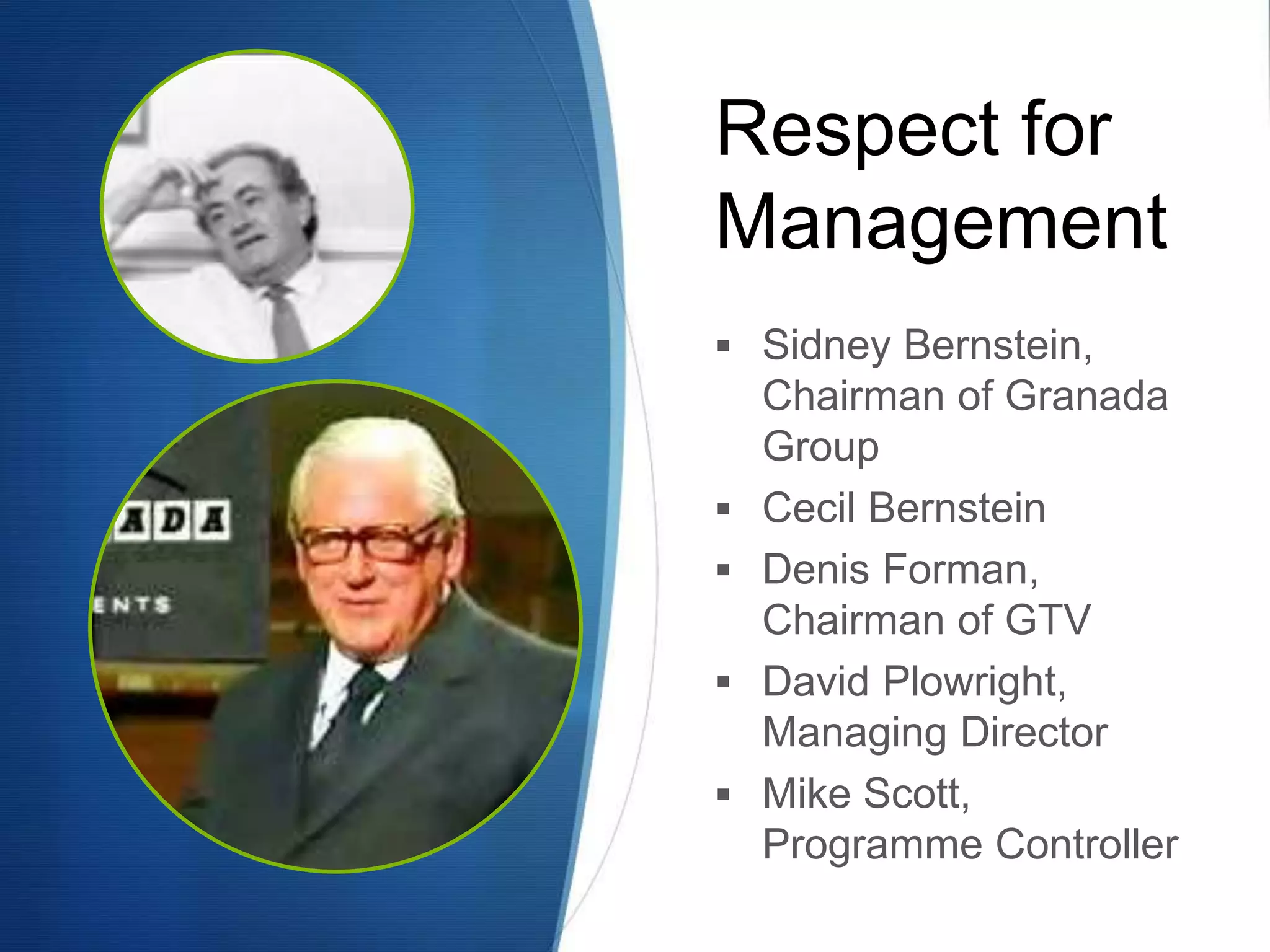
Respect for 
Management 
 Sidney Bernstein, 
Chairman of Granada 
Group 
 Cecil Bernstein 
 Denis Forman, 
Chairman of GTV 
 David Plowright, 
Managing Director 
 Mike Scott, 
Programme Controller
Roland 
Coburn 
Film Editor, Granada, 1972- 
2009 
‘Sir Denis Forman’
Why Was Granada So Unique 
? 
 Range of programmes:- 
 Dramas - Brideshead Revisited, 
Jewel In The Crown, Cracker, 
Coronation Street 
 Innovative current affairs - World 
In Action, Union World, Granada 
Election 500, What the Papers 
Say 
 Documentaries - Birmingham Six, 
Disappearing World, Seven Up 
 Music - Beatles, Johnny Cash, 
Little Richard, Jerry Lee Lewis, 
Blues at Chorlton Station
Brian Trueman 
Granada Presenter, 1957 
until 1983 
‘The Beatles and the 
Rolling Stones’
Unearthing 
talent 
• Michael Parkinson 
• Brian Trueman 
• Paul Greengrass 
• Lord John Birt 
• Anna Ford 
• Dame Margaret Beckett 
• Jack Straw 
• Michael Apted 
• Sir Jeremy Isaacs 
• Sarah Lancashire 
• Richard Madeley 
• Tony Wilson
Bonding 
The Canteen (known as the 
Cannie) 
The Stables – a theatre, then 
bar – later The Old School
Roland 
Coburn 
Film Editor, Granada, 1972- 
2009 
‘The Granada Canteen’
Trade Unions 
 Unions strong throughout commercial television sector 
 Everyone had to be a member – closed shop in most 
areas 
 Strict demarcation rules and working practices
Employment 
Practices 
 Well rewarded – salaries, 
expenses 
 Excellent training for 
technical staff but not 
production staff 
 Good promotion 
opportunities 
 Ethnic minorities hugely 
unrepresented 
 Gender – women in certain 
roles
Wallen 
Matthie 
Joined Granada 1981 as 
a Researcher, left 1997 
‘Numbers of ethnic 
minorities’
Ann Lewis 
Secretary, 1970-78 
Now a journalist and 
filmmaker 
‘Sexism in the workplace’
Where Next? 
Apply for further funding 
Put together a team of 
volunteers 
Collect memorabilia 
Collect photographs 
Set up a dedicated website
Tony Wilson – a great 
Mancunian
S 
Granadaland 
1956-1990 
Stephen Kelly & Judith Jones

Granadaland: Histories and Memories of Granada TV in the North West of England, 1954-1990

  • 1.
    S Granadaland 1956-1990 Stephen Kelly & Judith Jones
  • 2.
    An Oral History  2016 is 60th anniversary of Granada  Working with Manchester Centre for Regional History at MMU.  Grant from Granada Foundation  Interviewing wide range of staff and jobs  Building on our oral history of Coronation Street
  • 3.
    Janice Finch Researcherand Producer, local programmes and World In Action, 1984-1999 ‘How Granada got its name’
  • 4.
    ‘Granada Television isthe finest TV company in the world, New York Times.  Started by Sidney Bernstein, transmitting in 1956 to whole of the north  Between 1956 & 1990 considered one of most innovative TV companies in world  After 1990 Broadcasting Act, television fragments  No longer exists – just part of ITV
  • 5.
    Sandy Ross Granada1976-86 Started at GTV as a Researcher, later Producer Later Programme Controller and Managing Director, Scottish Television ‘The best television company in the world!’
  • 6.
    What has been done so far  Recorded older memories first  Looking at wide range of roles  Conducted 12 detailed interviews so far  Still many more to do  Keen to source other memorabilia like photos and scripts
  • 7.
    Frank Clarke AccountsClerk Joined Granada April 1956 and worked there until 1988 ‘The start of Granada TV’
  • 8.
    Major areas toemerge  The changing technology, nature and culture of television  Significance of ‘Northern-ness’ to Granada, and Granada’s importance to the region  ‘Paternalistic’ nature of the company  Pride in unique programmes and talent  Management style encouraged innovation and was supported by generous budgets  Bonding/Canteen and Old School/Stables bars  Employment practices
  • 9.
    The Concept ofGranadaland  Regional identity and strong output.  Northern presenters: Bob Greaves, Tony Wilson, Brian Trueman, Michael Parkinson, Roger Blythe, Anna Ford.  Quirky northern documentaries  Prominence of Quay Street building  Importance to the local economy
  • 10.
    Brian Trueman GranadaPresenter, 1957 until 1983 ‘Granadaland passports!’
  • 11.
    Regional Output Stronglineup of local programmes  Granada Reports (formerly Scene At Six Thirty) – daily half hour news/magazine programme  Reports Politics – weekly local politics half hour  Reports Extra – weekly local, quirky half hour  This Is Your Right – local consumer/rights programme  Kick Off – local Sunday football highlights  Religious service every Sunday
  • 12.
    The Company Granada was a paternalistic company - ‘Felt like a family’  Employees were well rewarded - hours were long  ‘Club’ atmosphere. Production teams bonded  Left-wing & not ashamed of it  Employees proud of the company and its programmes  Many still talk of it as being ‘the best job and best company in the world’
  • 13.
    June Buchan Secretary,London and Manchester, 1975-1990 later Production Assistant ‘A family firm’
  • 14.
    Respect for Management  Sidney Bernstein, Chairman of Granada Group  Cecil Bernstein  Denis Forman, Chairman of GTV  David Plowright, Managing Director  Mike Scott, Programme Controller
  • 15.
    Roland Coburn FilmEditor, Granada, 1972- 2009 ‘Sir Denis Forman’
  • 16.
    Why Was GranadaSo Unique ?  Range of programmes:-  Dramas - Brideshead Revisited, Jewel In The Crown, Cracker, Coronation Street  Innovative current affairs - World In Action, Union World, Granada Election 500, What the Papers Say  Documentaries - Birmingham Six, Disappearing World, Seven Up  Music - Beatles, Johnny Cash, Little Richard, Jerry Lee Lewis, Blues at Chorlton Station
  • 17.
    Brian Trueman GranadaPresenter, 1957 until 1983 ‘The Beatles and the Rolling Stones’
  • 18.
    Unearthing talent •Michael Parkinson • Brian Trueman • Paul Greengrass • Lord John Birt • Anna Ford • Dame Margaret Beckett • Jack Straw • Michael Apted • Sir Jeremy Isaacs • Sarah Lancashire • Richard Madeley • Tony Wilson
  • 19.
    Bonding The Canteen(known as the Cannie) The Stables – a theatre, then bar – later The Old School
  • 20.
    Roland Coburn FilmEditor, Granada, 1972- 2009 ‘The Granada Canteen’
  • 21.
    Trade Unions Unions strong throughout commercial television sector  Everyone had to be a member – closed shop in most areas  Strict demarcation rules and working practices
  • 22.
    Employment Practices Well rewarded – salaries, expenses  Excellent training for technical staff but not production staff  Good promotion opportunities  Ethnic minorities hugely unrepresented  Gender – women in certain roles
  • 23.
    Wallen Matthie JoinedGranada 1981 as a Researcher, left 1997 ‘Numbers of ethnic minorities’
  • 24.
    Ann Lewis Secretary,1970-78 Now a journalist and filmmaker ‘Sexism in the workplace’
  • 25.
    Where Next? Applyfor further funding Put together a team of volunteers Collect memorabilia Collect photographs Set up a dedicated website
  • 26.
    Tony Wilson –a great Mancunian
  • 27.
    S Granadaland 1956-1990 Stephen Kelly & Judith Jones