A24 Finding Math Elements in Sculptures
Procedure
1. Students studied cubic structures as a form of art in sculpture and
architecture.
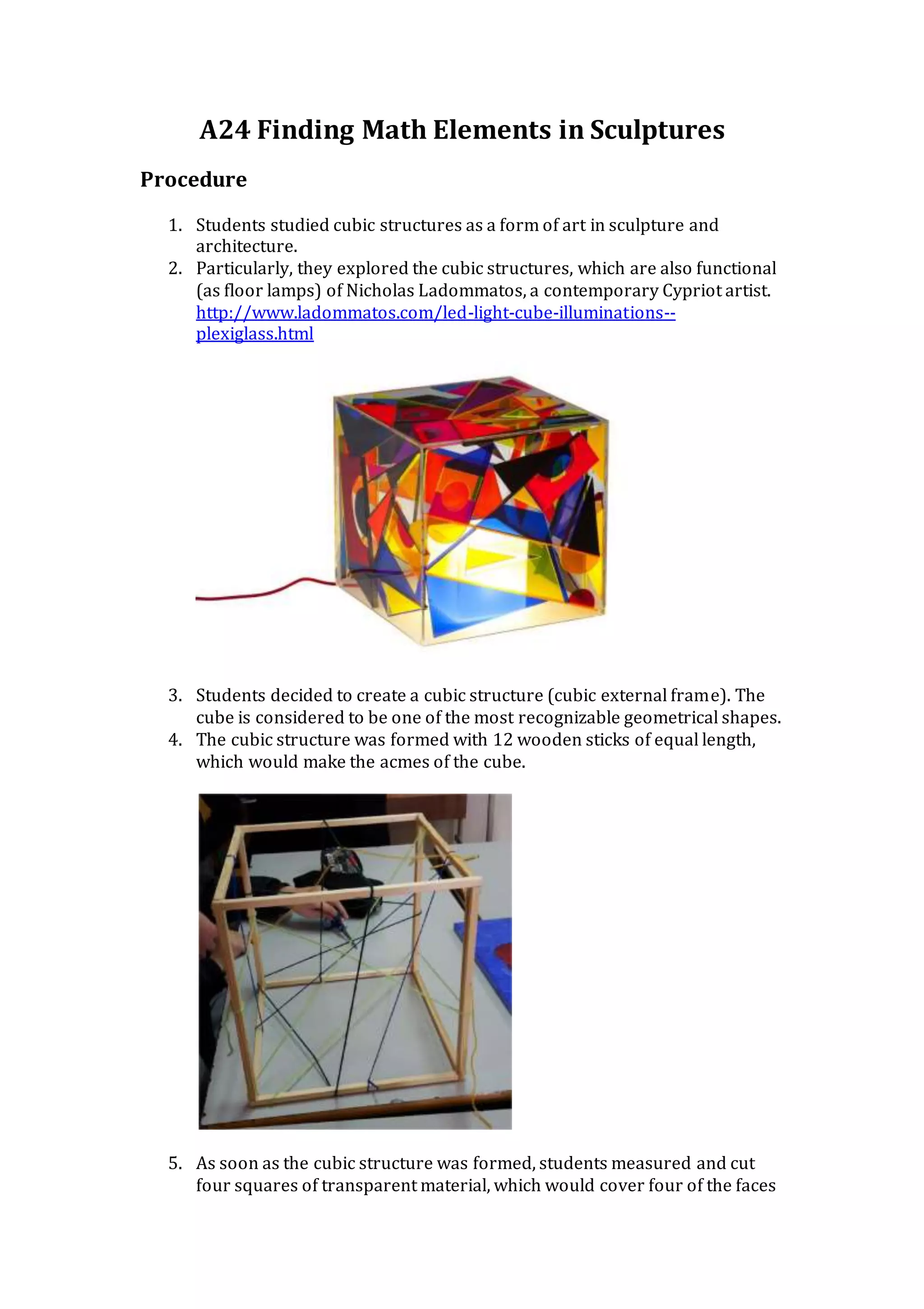
2. Particularly, they explored the cubic structures, which are also functional
(as floor lamps) of Nicholas Ladommatos, a contemporary Cypriot artist.
http://www.ladommatos.com/led-light-cube-illuminations--
plexiglass.html
3. Students decided to create a cubic structure (cubic external frame). The
cube is considered to be one of the most recognizable geometrical shapes.
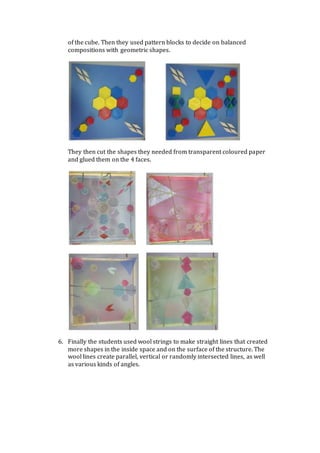
4. The cubic structure was formed with 12 wooden sticks of equal length,
which would make the acmes of the cube.
5. As soon as the cubic structure was formed, students measured and cut
four squares of transparent material, which would cover four of the faces
of the cube. Then they used pattern blocks to decide on balanced
compositions with geometric shapes.
They then cut the shapes they needed from transparent coloured paper
and glued them on the 4 faces.
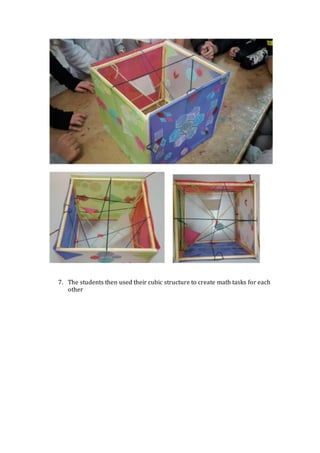
6. Finally the students used wool strings to make straight lines that created
more shapes in the inside space and on the surface of the structure. The
wool lines create parallel, vertical or randomly intersected lines, as well
as various kinds of angles.
7. The students then used their cubic structure to create math tasks for each
other

A24 finding math elements in sculptures

  • 1.
    A24 Finding MathElements in Sculptures Procedure 1. Students studied cubic structures as a form of art in sculpture and architecture. 2. Particularly, they explored the cubic structures, which are also functional (as floor lamps) of Nicholas Ladommatos, a contemporary Cypriot artist. http://www.ladommatos.com/led-light-cube-illuminations-- plexiglass.html 3. Students decided to create a cubic structure (cubic external frame). The cube is considered to be one of the most recognizable geometrical shapes. 4. The cubic structure was formed with 12 wooden sticks of equal length, which would make the acmes of the cube. 5. As soon as the cubic structure was formed, students measured and cut four squares of transparent material, which would cover four of the faces
  • 2.
    of the cube.Then they used pattern blocks to decide on balanced compositions with geometric shapes. They then cut the shapes they needed from transparent coloured paper and glued them on the 4 faces. 6. Finally the students used wool strings to make straight lines that created more shapes in the inside space and on the surface of the structure. The wool lines create parallel, vertical or randomly intersected lines, as well as various kinds of angles.
  • 3.
    7. The studentsthen used their cubic structure to create math tasks for each other