Operation Polaris 2.0
State Superintendent Catherine Truitt
February 7, 2023
Priority: Human Capital
Focusing on the strength
and the quality of the
educator pipeline in our
state, including: teachers,
administrators, and support
personnel in K-12
• Pathways to Excellence
• AP Accelerator
4
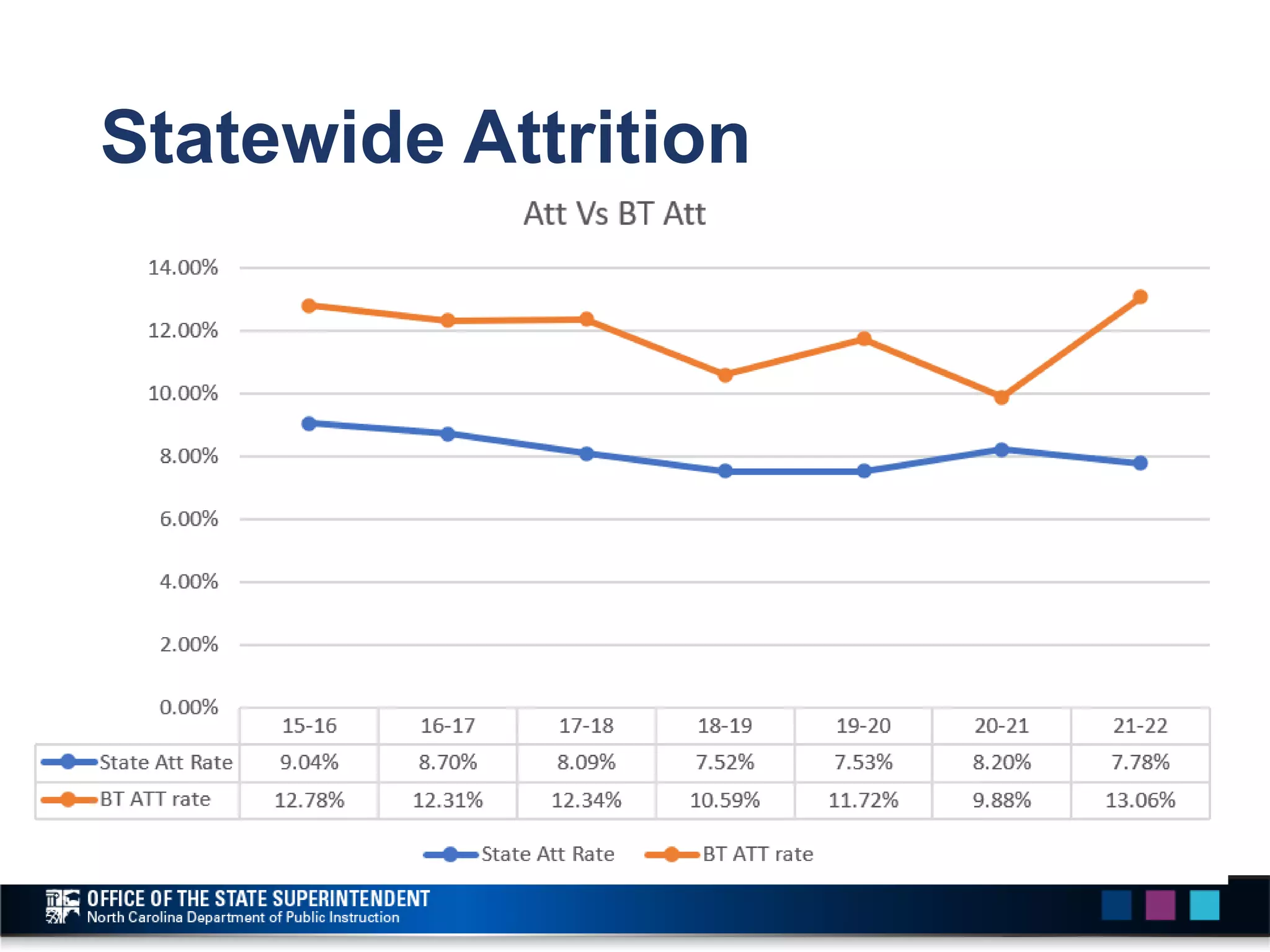
Statewide Attrition
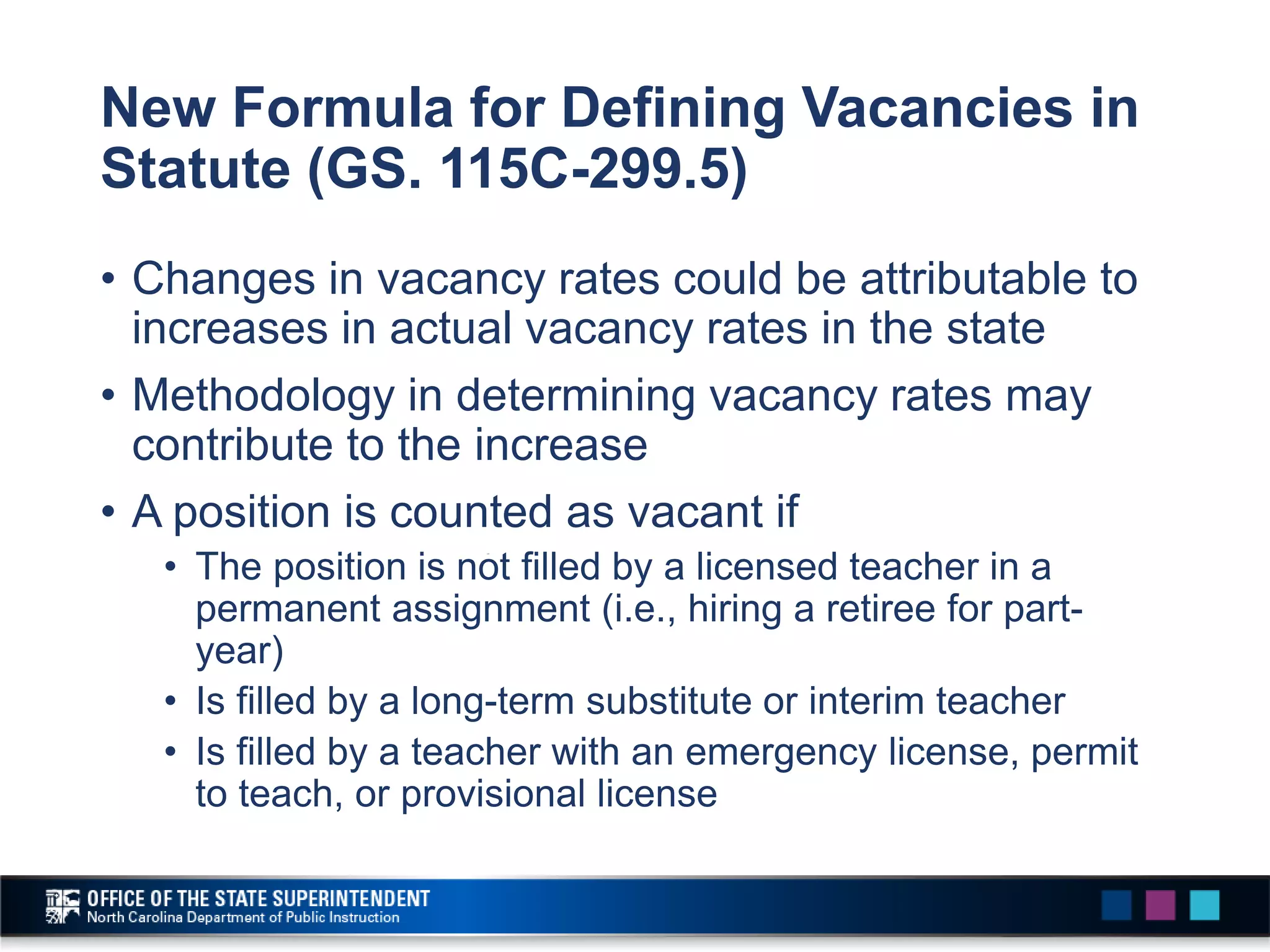
New Formula for Defining Vacancies in
Statute (GS. 115C-299.5)
• Changes in vacancy rates could be attributable to
increases in actual vacancy rates in the state
• Methodology in determining vacancy rates may
contribute to the increase
• A position is counted as vacant if
• The position is not filled by a licensed teacher in a
permanent assignment (i.e., hiring a retiree for part-
year)
• Is filled by a long-term substitute or interim teacher
• Is filled by a teacher with an emergency license, permit
to teach, or provisional license
Priority: Accountability & Testing
Changing the way we think
about school quality and
measuring success based
on student preparedness
for post-secondary plans:
• School Performance
Grade Redesign
• Portrait of a Graduate
7
Priority: Student Support Services
Supporting children through
five key areas: school
facilities, nutrition, safety,
broadband, mental health
support
• Increasing access to no-
cost meals
• Center for Safer Schools
temporary training facility
• NBPSCF
8
Priority: Literacy
Ensuring all children are
reading to learn before the
fourth grade
• Hire and assign 115 early
literacy specialists for NC
school districts
• Continue to collaborate
with higher-ed to monitor
science of reading
integration
9
Office of Learning Recovery and
Acceleration
Assisting schools
through evidence-based
research programs,
policies, and
interventions
• Design and implement
more than 20 state-
and local-level
research and
evaluation studies.
10
Office of District and Regional
Support
Providing
comprehensive, hands-
on support for the state’s
most challenged schools
and districts.
• NC Instructional
Leadership Academy to
support hundreds of
principals statewide
11
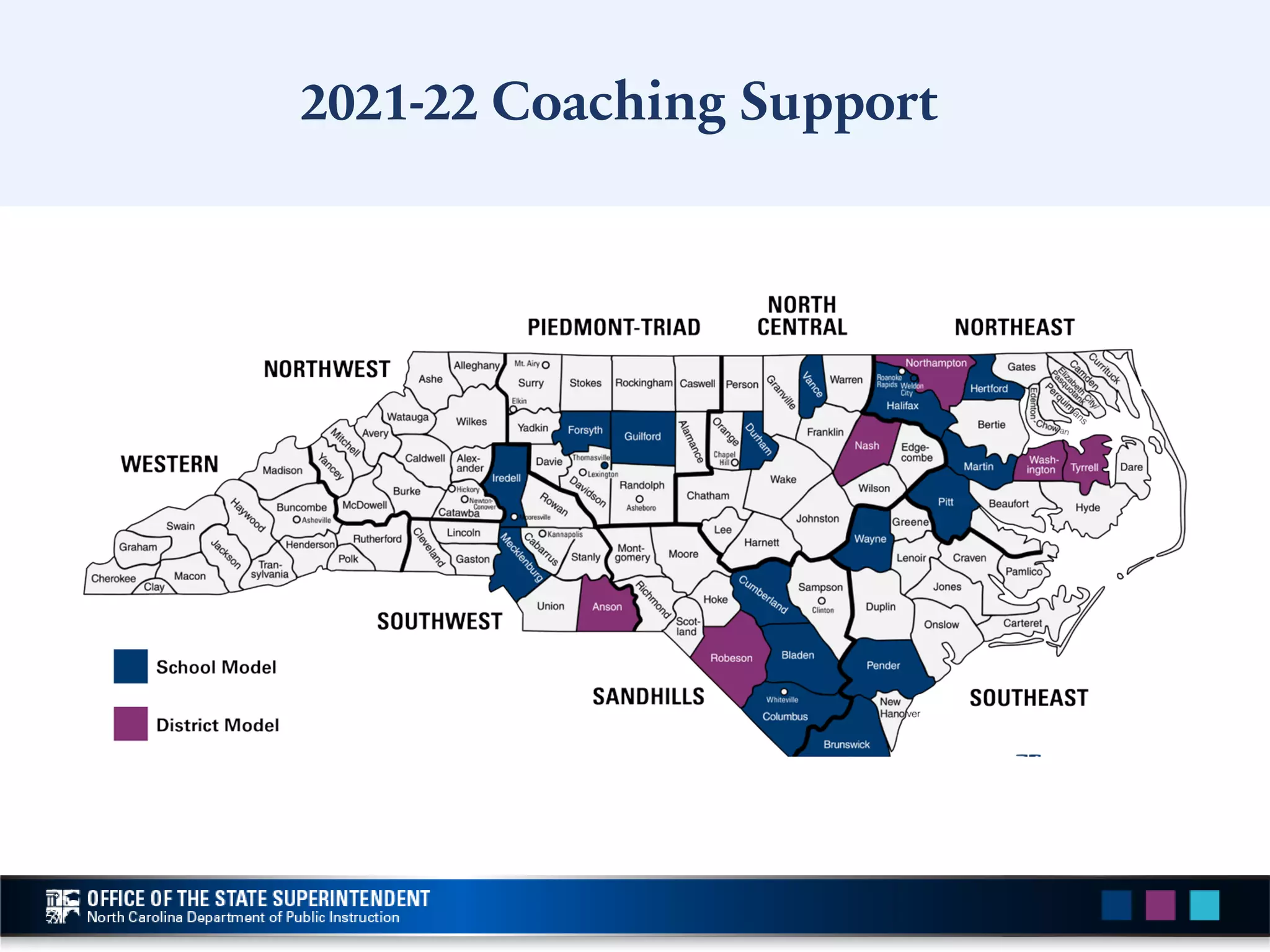
2021-22 Coaching Support
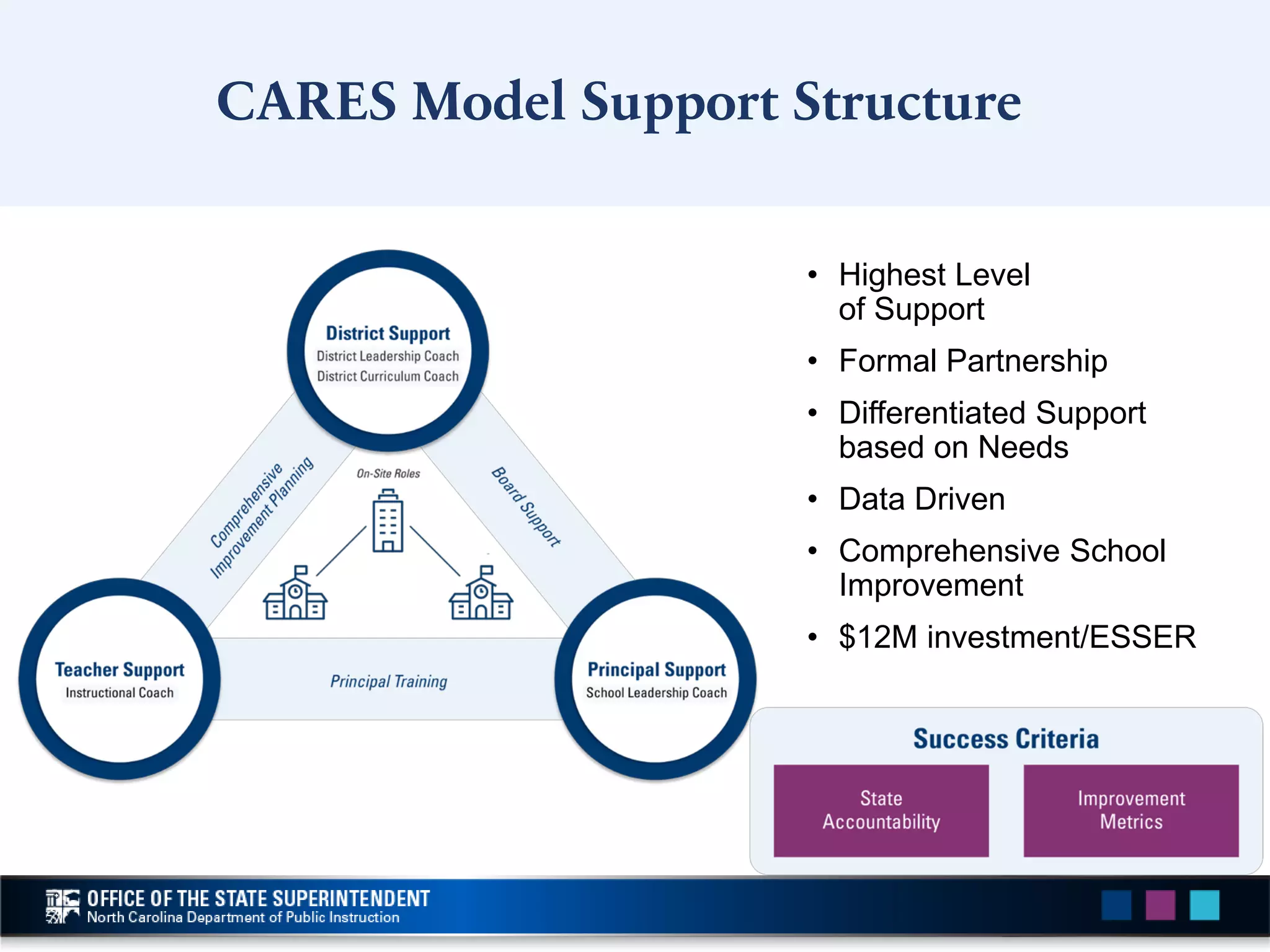
CARES Model Support Structure
• Highest Level
of Support
• Formal Partnership
• Differentiated Support
based on Needs
• Data Driven
• Comprehensive School
Improvement
• $12M investment/ESSER
Support for Principals
• Coaching for LP schools must begin with principals
• “Instructional coaching is a reality in many schools today,
yet administrators often lack experience or background on
how to utilize this professional development model
effectively.” (Johnson, 2016)
• “Given these problems, we propose two recommendations
for creating the organizational contexts in schools that might
improve the implementation of coaching programs. First,
and most importantly, we suggest that districts and/or
program designers assess principals’ readiness for change
in advance of committing coaching resources to achieve
particular instructional goals.” (Matsumura and Wang, 2014)
Low-Performing Schools: an Equity Lens
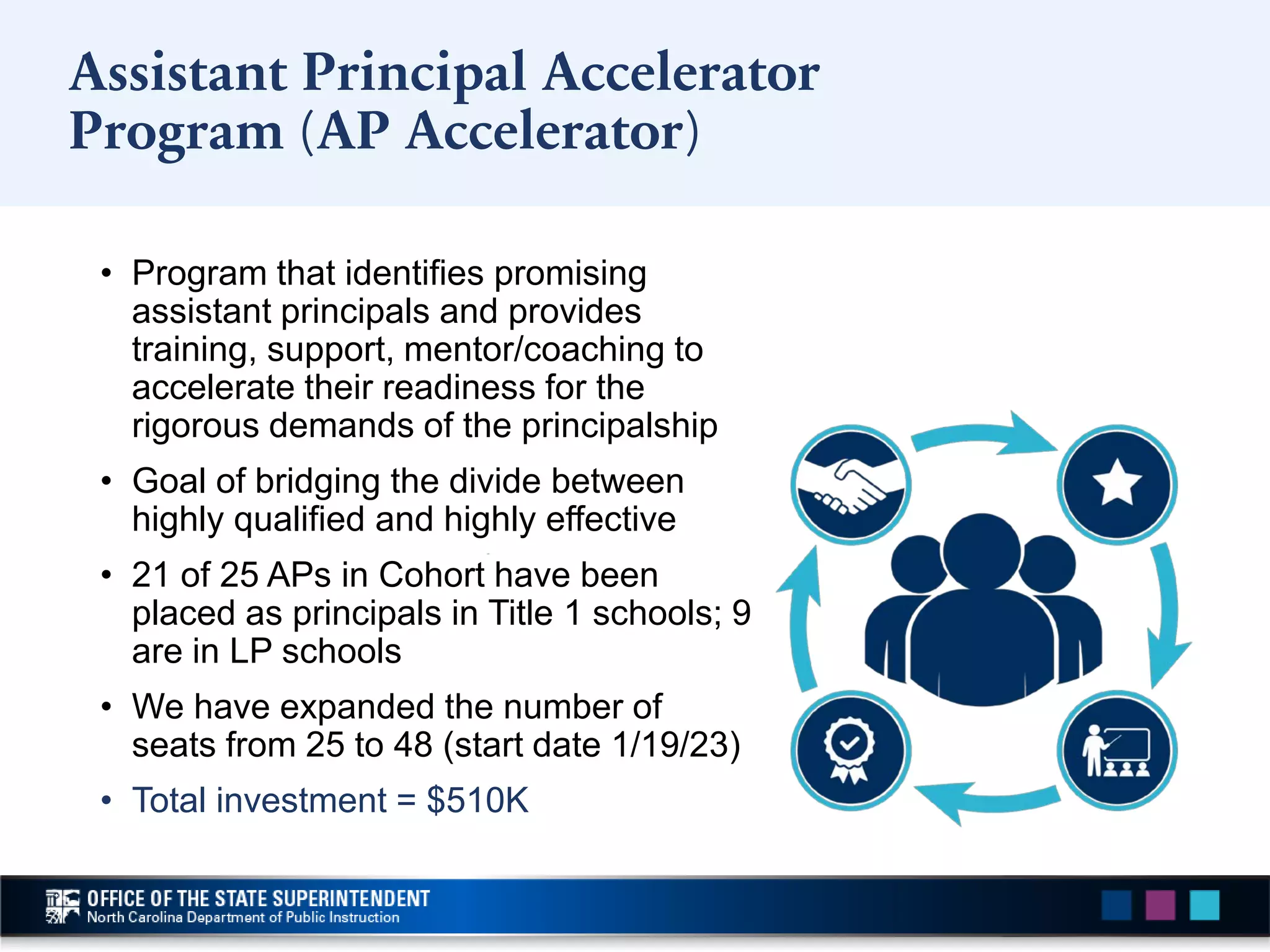
• Program that identifies promising
assistant principals and provides
training, support, mentor/coaching to
accelerate their readiness for the
rigorous demands of the principalship
• Goal of bridging the divide between
highly qualified and highly effective
• 21 of 25 APs in Cohort have been
placed as principals in Title 1 schools; 9
are in LP schools
• We have expanded the number of
seats from 25 to 48 (start date 1/19/23)
• Total investment = $510K
Assistant Principal Accelerator
Program (AP Accelerator)
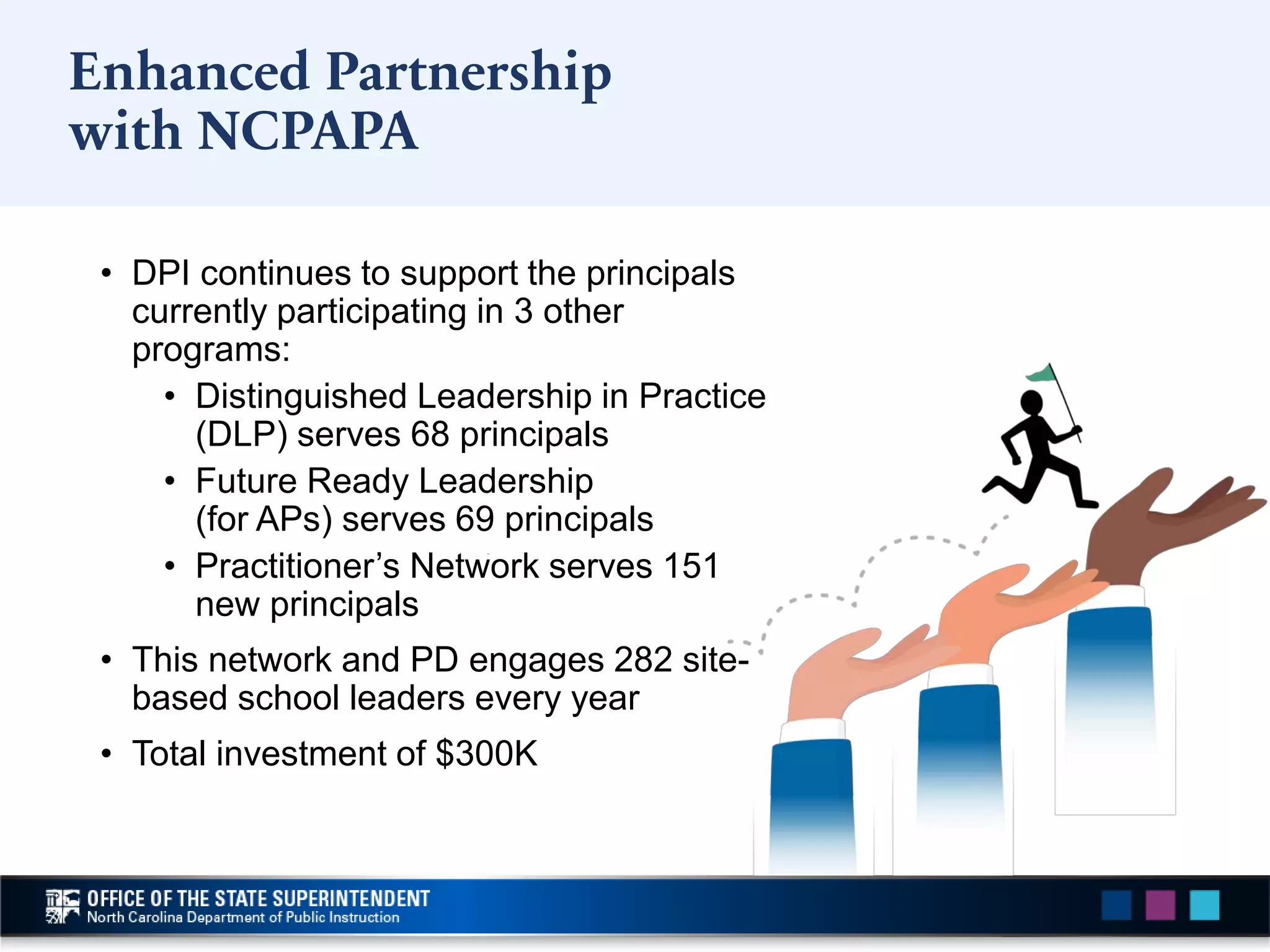
• DPI continues to support the principals
currently participating in 3 other
programs:
• Distinguished Leadership in Practice
(DLP) serves 68 principals
• Future Ready Leadership
(for APs) serves 69 principals
• Practitioner’s Network serves 151
new principals
• This network and PD engages 282 site-
based school leaders every year
• Total investment of $300K
Enhanced Partnership
with NCPAPA
• 1,500 district and school leaders from 60
districts and 13 charters
• 337/426 schools served are LP
• Observation & Feedback
• Leading an Equity-Centered
Student Culture
• Deconstructing Standards
• Data Meetings
• Planning Meetings
• $10M ESSER investment
NC Instructional Leadership
Academy (NCILA)
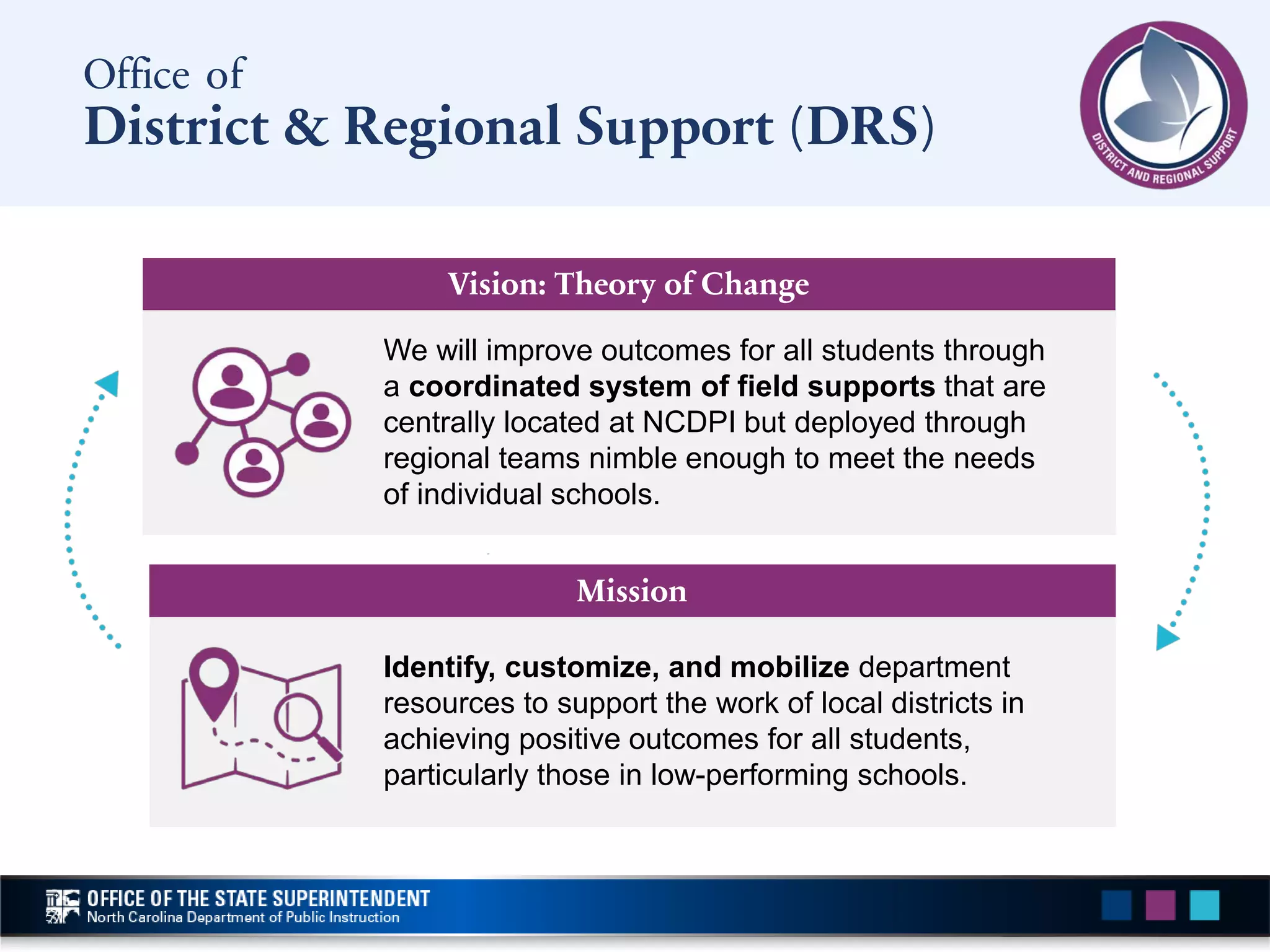
Vision: Theory of Change
Mission
We will improve outcomes for all students through
a coordinated system of field supports that are
centrally located at NCDPI but deployed through
regional teams nimble enough to meet the needs
of individual schools.
Identify, customize, and mobilize department
resources to support the work of local districts in
achieving positive outcomes for all students,
particularly those in low-performing schools.
Office of
District & Regional Support (DRS)
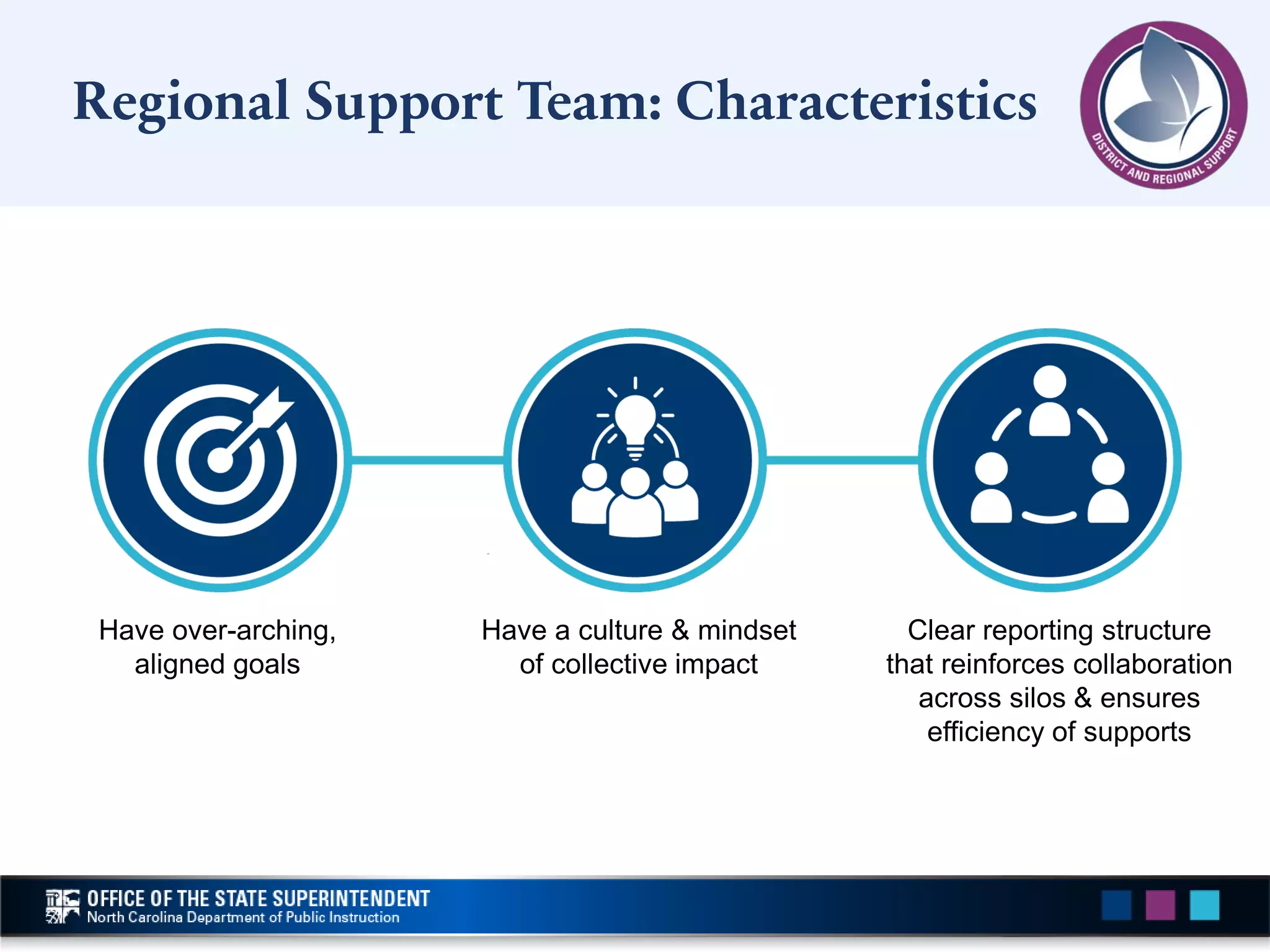
Have a culture & mindset
of collective impact
Have over-arching,
aligned goals
Clear reporting structure
that reinforces collaboration
across silos & ensures
efficiency of supports
Regional Support Team: Characteristics
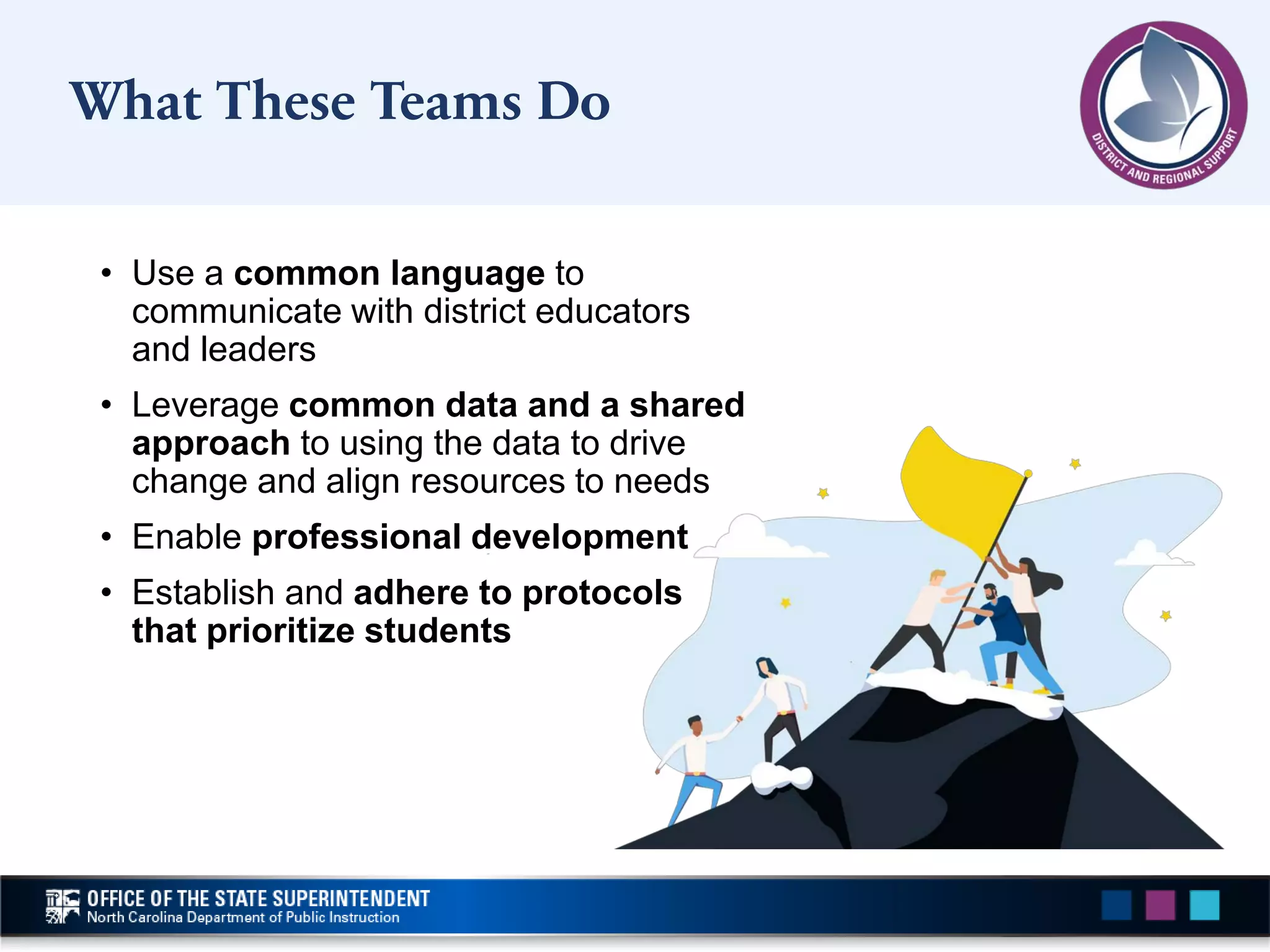
• Use a common language to
communicate with district educators
and leaders
• Leverage common data and a shared
approach to using the data to drive
change and align resources to needs
• Enable professional development
• Establish and adhere to protocols
that prioritize students
What These Teams Do
Legislative Policy Agenda Top Priorities
• Pathways to Excellence
• Career Development Plans
• Computer Science/Workforce Initiatives/CTE
• School Performance Grade Redesign
• Residential Schools
• Protecting our Students
• Create statewide PD platform through NCCAT
Legislative Budget Priorities
• $10M for professional development that can be
targeted to the specific needs of schools and
districts through NCCAT
• $2M for seventeen principal coaches to serve
51 LP-designated schools not currently serve
• Computer Science PD (50% already funded)
• Ensuring we have at least 1 Nurse in every
Tier 1 and 2 School
• Eliminating the Child Nutrition Co-Pay
• School Safety/Center for Safer Schools Grants
Questions?

Supt Truitt - Operation Polaris 2.0.pdf

  • 1.
    Operation Polaris 2.0 StateSuperintendent Catherine Truitt February 7, 2023
  • 4.
    Priority: Human Capital Focusingon the strength and the quality of the educator pipeline in our state, including: teachers, administrators, and support personnel in K-12 • Pathways to Excellence • AP Accelerator 4
  • 5.
  • 6.
    New Formula forDefining Vacancies in Statute (GS. 115C-299.5) • Changes in vacancy rates could be attributable to increases in actual vacancy rates in the state • Methodology in determining vacancy rates may contribute to the increase • A position is counted as vacant if • The position is not filled by a licensed teacher in a permanent assignment (i.e., hiring a retiree for part- year) • Is filled by a long-term substitute or interim teacher • Is filled by a teacher with an emergency license, permit to teach, or provisional license
  • 7.
    Priority: Accountability &Testing Changing the way we think about school quality and measuring success based on student preparedness for post-secondary plans: • School Performance Grade Redesign • Portrait of a Graduate 7
  • 8.
    Priority: Student SupportServices Supporting children through five key areas: school facilities, nutrition, safety, broadband, mental health support • Increasing access to no- cost meals • Center for Safer Schools temporary training facility • NBPSCF 8
  • 9.
    Priority: Literacy Ensuring allchildren are reading to learn before the fourth grade • Hire and assign 115 early literacy specialists for NC school districts • Continue to collaborate with higher-ed to monitor science of reading integration 9
  • 10.
    Office of LearningRecovery and Acceleration Assisting schools through evidence-based research programs, policies, and interventions • Design and implement more than 20 state- and local-level research and evaluation studies. 10
  • 11.
    Office of Districtand Regional Support Providing comprehensive, hands- on support for the state’s most challenged schools and districts. • NC Instructional Leadership Academy to support hundreds of principals statewide 11
  • 12.
  • 13.
    CARES Model SupportStructure • Highest Level of Support • Formal Partnership • Differentiated Support based on Needs • Data Driven • Comprehensive School Improvement • $12M investment/ESSER
  • 14.
  • 15.
    • Coaching forLP schools must begin with principals • “Instructional coaching is a reality in many schools today, yet administrators often lack experience or background on how to utilize this professional development model effectively.” (Johnson, 2016) • “Given these problems, we propose two recommendations for creating the organizational contexts in schools that might improve the implementation of coaching programs. First, and most importantly, we suggest that districts and/or program designers assess principals’ readiness for change in advance of committing coaching resources to achieve particular instructional goals.” (Matsumura and Wang, 2014) Low-Performing Schools: an Equity Lens
  • 16.
    • Program thatidentifies promising assistant principals and provides training, support, mentor/coaching to accelerate their readiness for the rigorous demands of the principalship • Goal of bridging the divide between highly qualified and highly effective • 21 of 25 APs in Cohort have been placed as principals in Title 1 schools; 9 are in LP schools • We have expanded the number of seats from 25 to 48 (start date 1/19/23) • Total investment = $510K Assistant Principal Accelerator Program (AP Accelerator)
  • 17.
    • DPI continuesto support the principals currently participating in 3 other programs: • Distinguished Leadership in Practice (DLP) serves 68 principals • Future Ready Leadership (for APs) serves 69 principals • Practitioner’s Network serves 151 new principals • This network and PD engages 282 site- based school leaders every year • Total investment of $300K Enhanced Partnership with NCPAPA
  • 18.
    • 1,500 districtand school leaders from 60 districts and 13 charters • 337/426 schools served are LP • Observation & Feedback • Leading an Equity-Centered Student Culture • Deconstructing Standards • Data Meetings • Planning Meetings • $10M ESSER investment NC Instructional Leadership Academy (NCILA)
  • 19.
    Vision: Theory ofChange Mission We will improve outcomes for all students through a coordinated system of field supports that are centrally located at NCDPI but deployed through regional teams nimble enough to meet the needs of individual schools. Identify, customize, and mobilize department resources to support the work of local districts in achieving positive outcomes for all students, particularly those in low-performing schools. Office of District & Regional Support (DRS)
  • 20.
    Have a culture& mindset of collective impact Have over-arching, aligned goals Clear reporting structure that reinforces collaboration across silos & ensures efficiency of supports Regional Support Team: Characteristics
  • 21.
    • Use acommon language to communicate with district educators and leaders • Leverage common data and a shared approach to using the data to drive change and align resources to needs • Enable professional development • Establish and adhere to protocols that prioritize students What These Teams Do
  • 22.
    Legislative Policy AgendaTop Priorities • Pathways to Excellence • Career Development Plans • Computer Science/Workforce Initiatives/CTE • School Performance Grade Redesign • Residential Schools • Protecting our Students • Create statewide PD platform through NCCAT
  • 23.
    Legislative Budget Priorities •$10M for professional development that can be targeted to the specific needs of schools and districts through NCCAT • $2M for seventeen principal coaches to serve 51 LP-designated schools not currently serve • Computer Science PD (50% already funded) • Ensuring we have at least 1 Nurse in every Tier 1 and 2 School • Eliminating the Child Nutrition Co-Pay • School Safety/Center for Safer Schools Grants
  • 24.