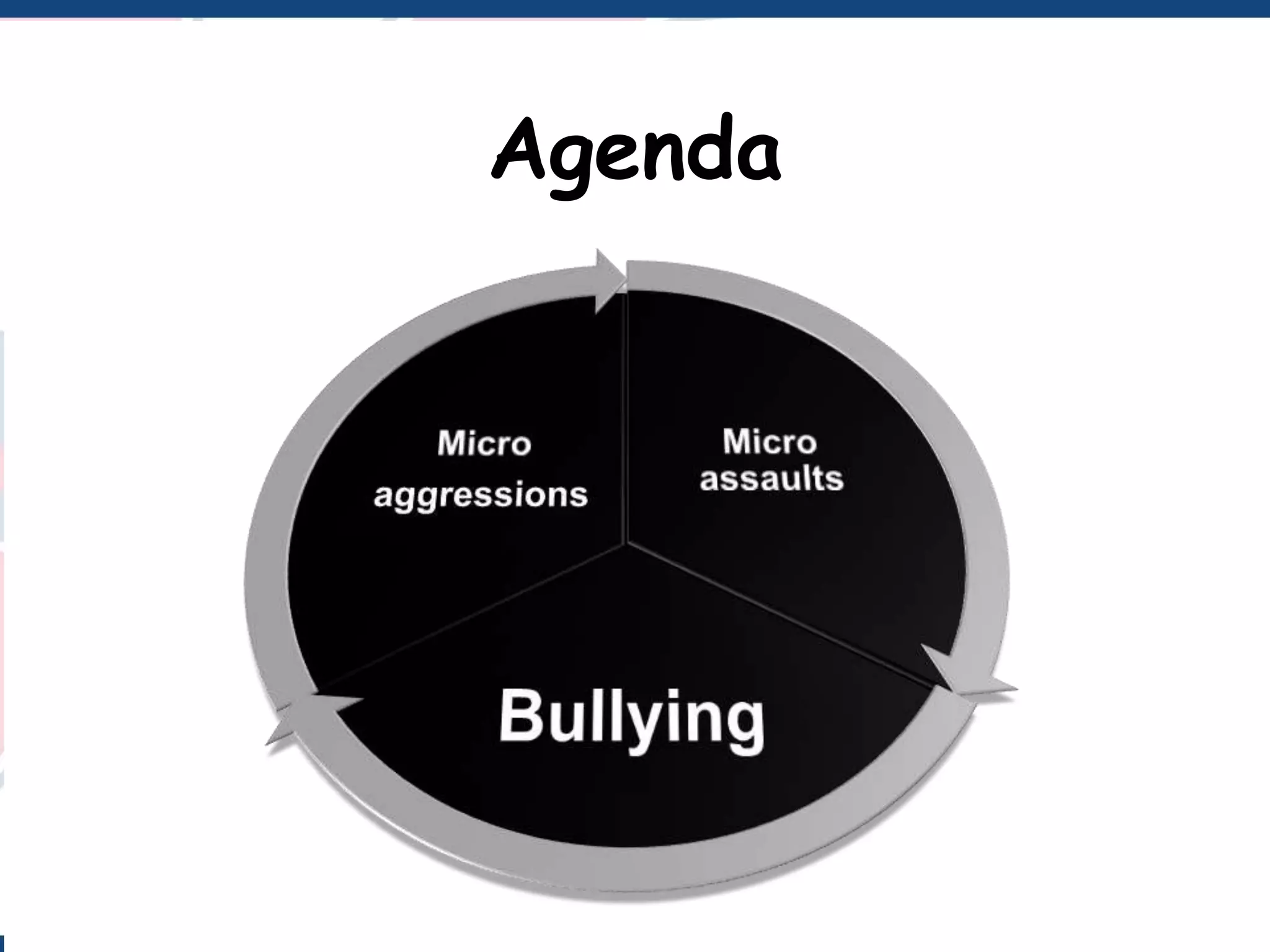
Agenda
Organizational Climate
The events, messages, symbols, core
beliefs, feelings, and much more, which makes
“our community” a welcoming, or not so
welcoming environment
(Virginia Tech)
What are
Microaggressions?
Brief and commonplace indignities,
whether intentional or unintentional,
that communicate hostility or
negative slights and insults that
potentially have harmful or
unpleasant psychological impact.
(Solorzani, Ceja, & Yozzo, 2000; Sue, et.al. 2007)
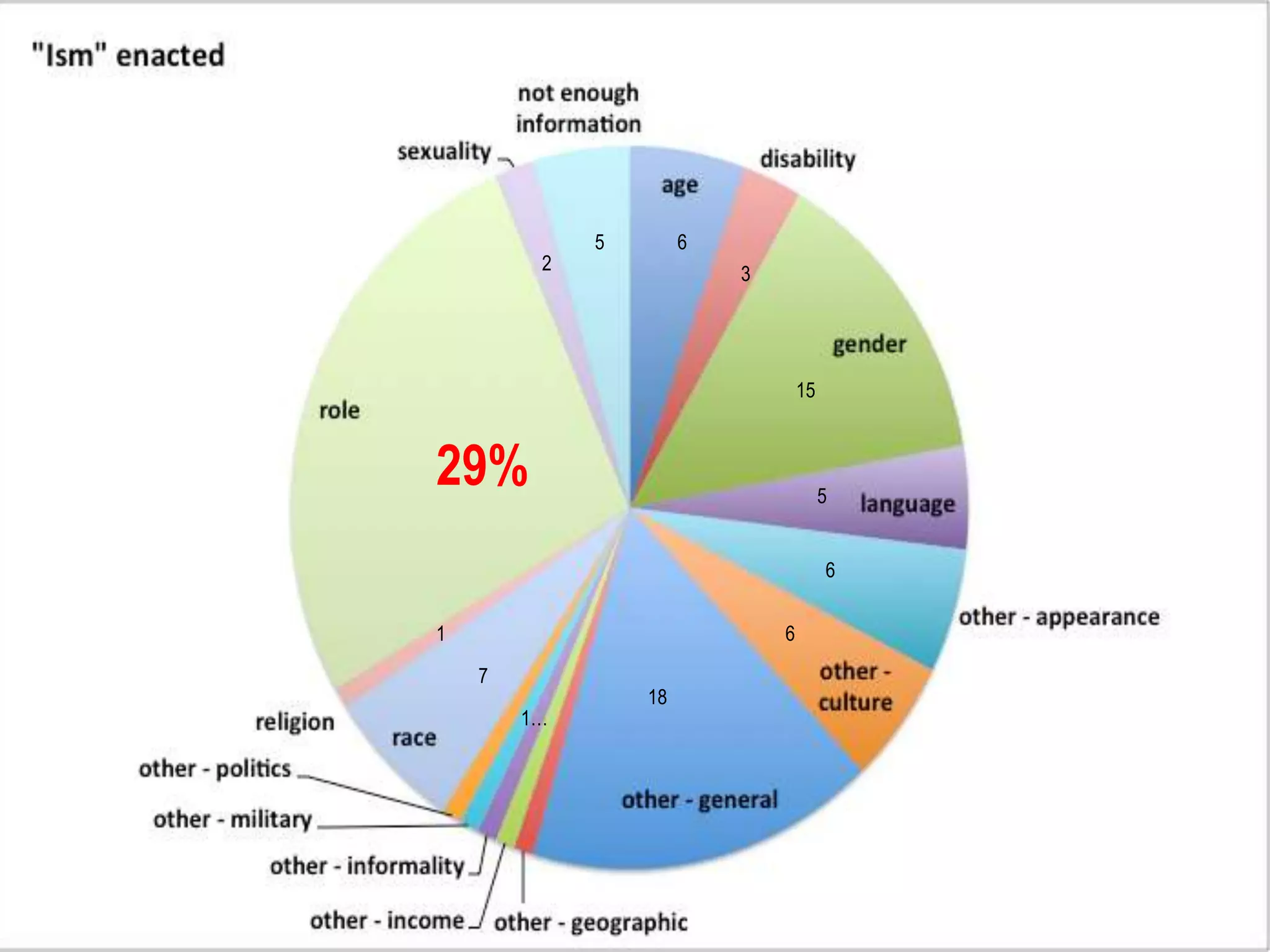
Ism enacted
29%
2
5 6
3
15
5
6
6
18
1…
7
1
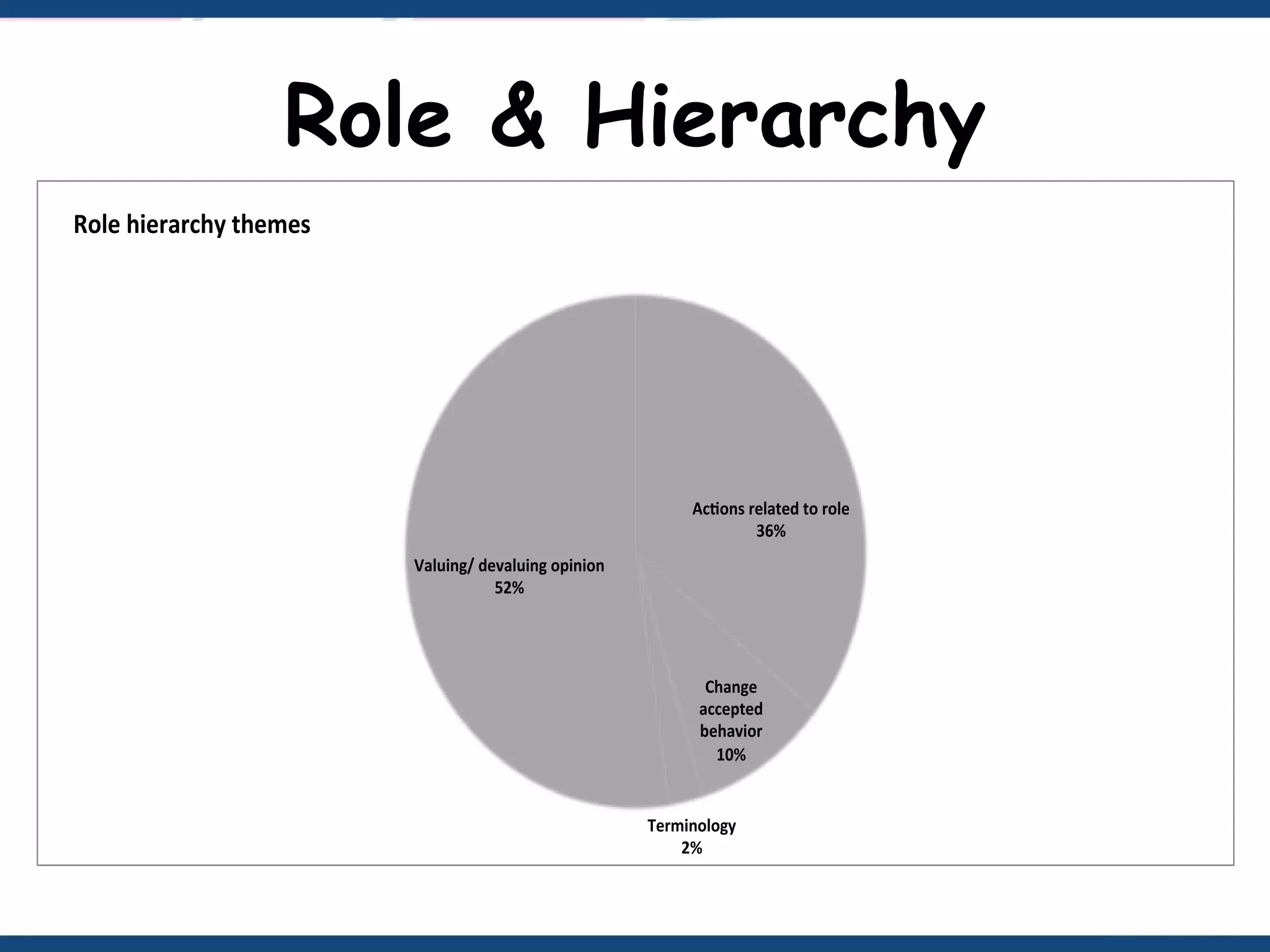
Role & Hierarchy
Ac ons related to role
36%
Change
accepted
behavior
10%
Terminology
2%
Valuing/ devaluing opinion
52%
Role hierarchy themes
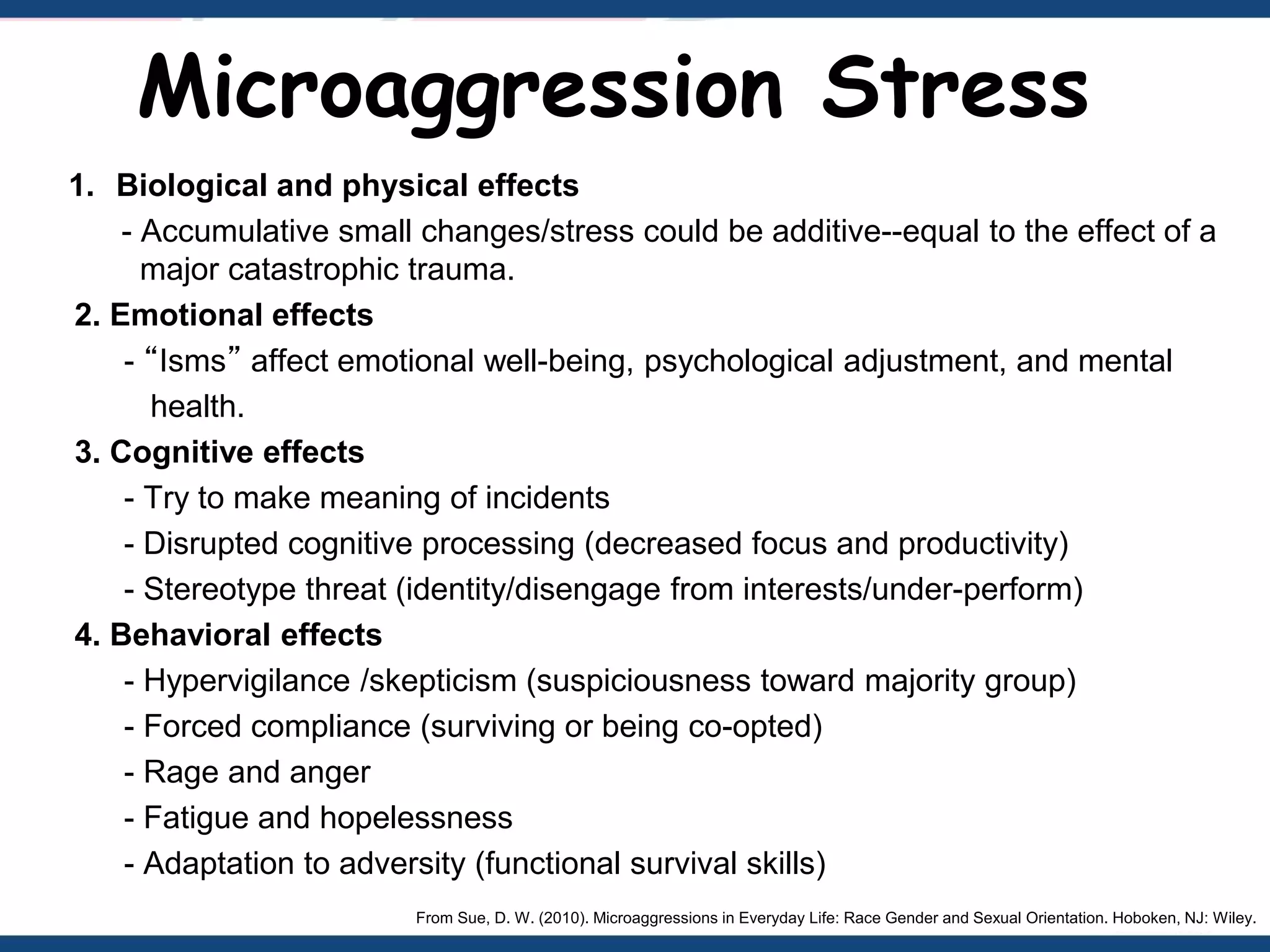
Microaggression Stress
1. Biological and physical effects
- Accumulative small changes/stress could be additive--equal to the effect of a
major catastrophic trauma.
2. Emotional effects
- “Isms” affect emotional well-being, psychological adjustment, and mental
health.
3. Cognitive effects
- Try to make meaning of incidents
- Disrupted cognitive processing (decreased focus and productivity)
- Stereotype threat (identity/disengage from interests/under-perform)
4. Behavioral effects
- Hypervigilance /skepticism (suspiciousness toward majority group)
- Forced compliance (surviving or being co-opted)
- Rage and anger
- Fatigue and hopelessness
- Adaptation to adversity (functional survival skills)
From Sue, D. W. (2010). Microaggressions in Everyday Life: Race Gender and Sexual Orientation. Hoboken, NJ: Wiley.
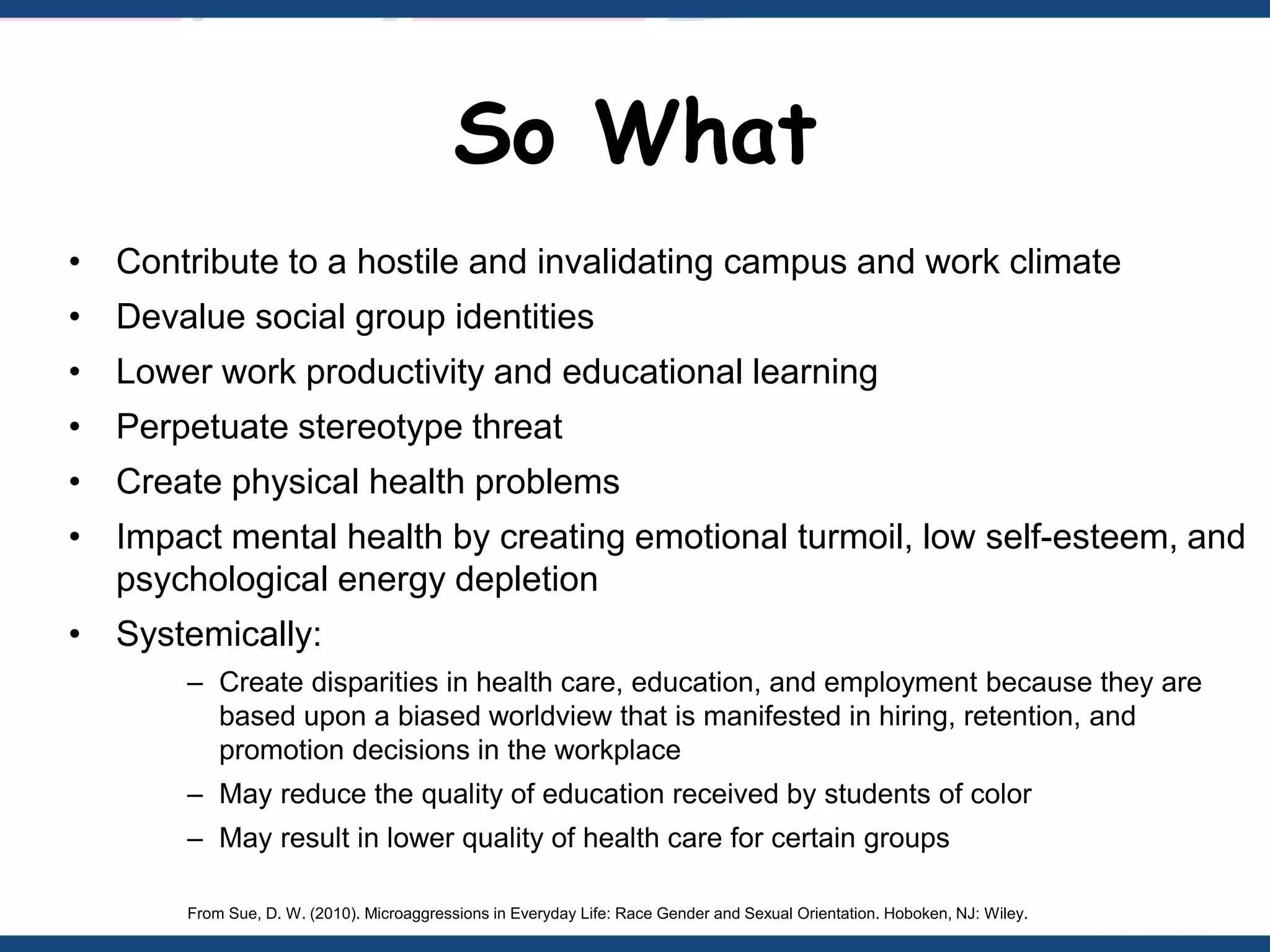
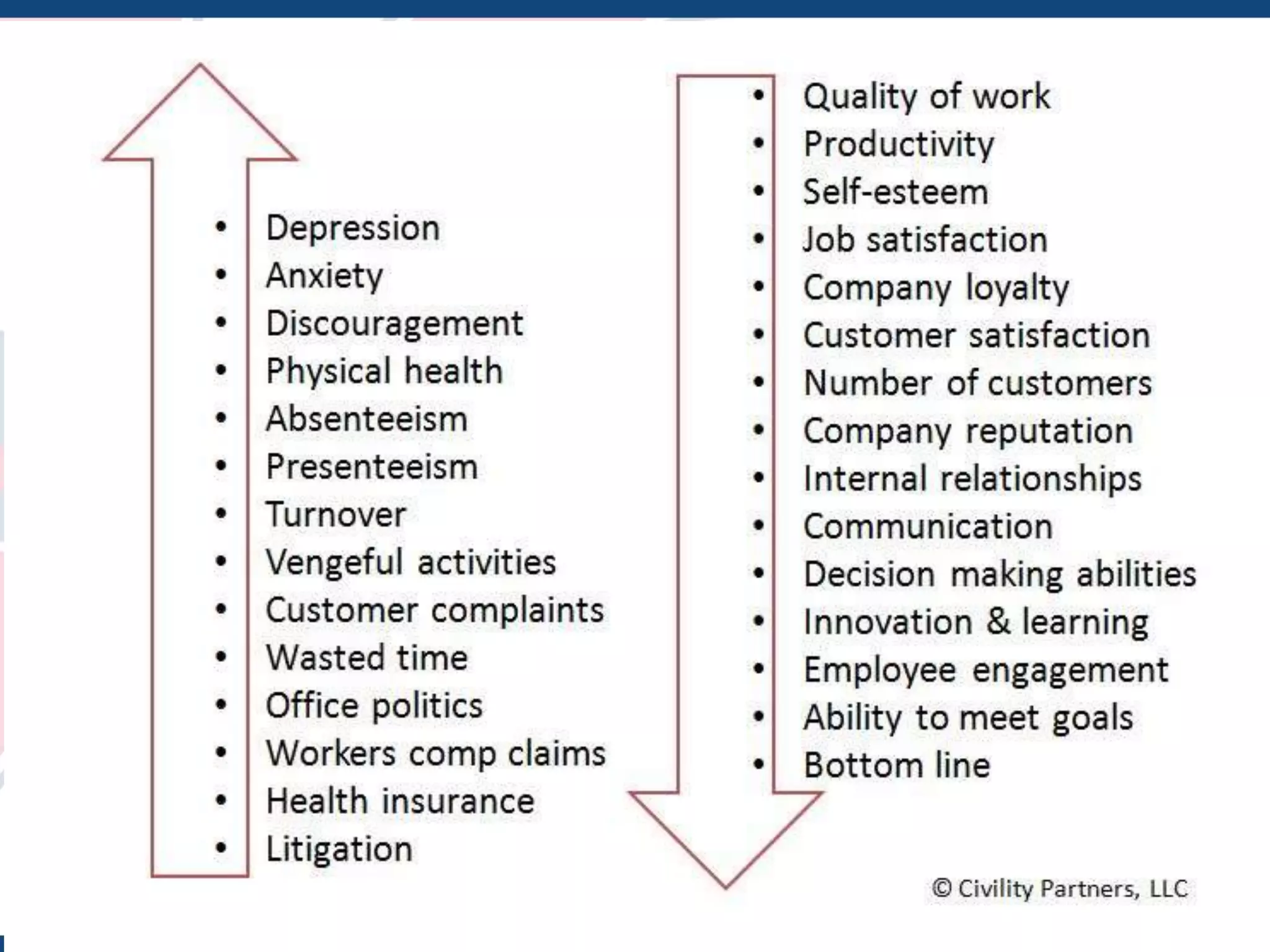
So What
• Contribute to a hostile and invalidating campus and work climate
• Devalue social group identities
• Lower work productivity and educational learning
• Perpetuate stereotype threat
• Create physical health problems
• Impact mental health by creating emotional turmoil, low self-esteem, and
psychological energy depletion
• Systemically:
– Create disparities in health care, education, and employment because they are
based upon a biased worldview that is manifested in hiring, retention, and
promotion decisions in the workplace
– May reduce the quality of education received by students of color
– May result in lower quality of health care for certain groups
From Sue, D. W. (2010). Microaggressions in Everyday Life: Race Gender and Sexual Orientation. Hoboken, NJ: Wiley.
Well-intended
What are
Microassaults?
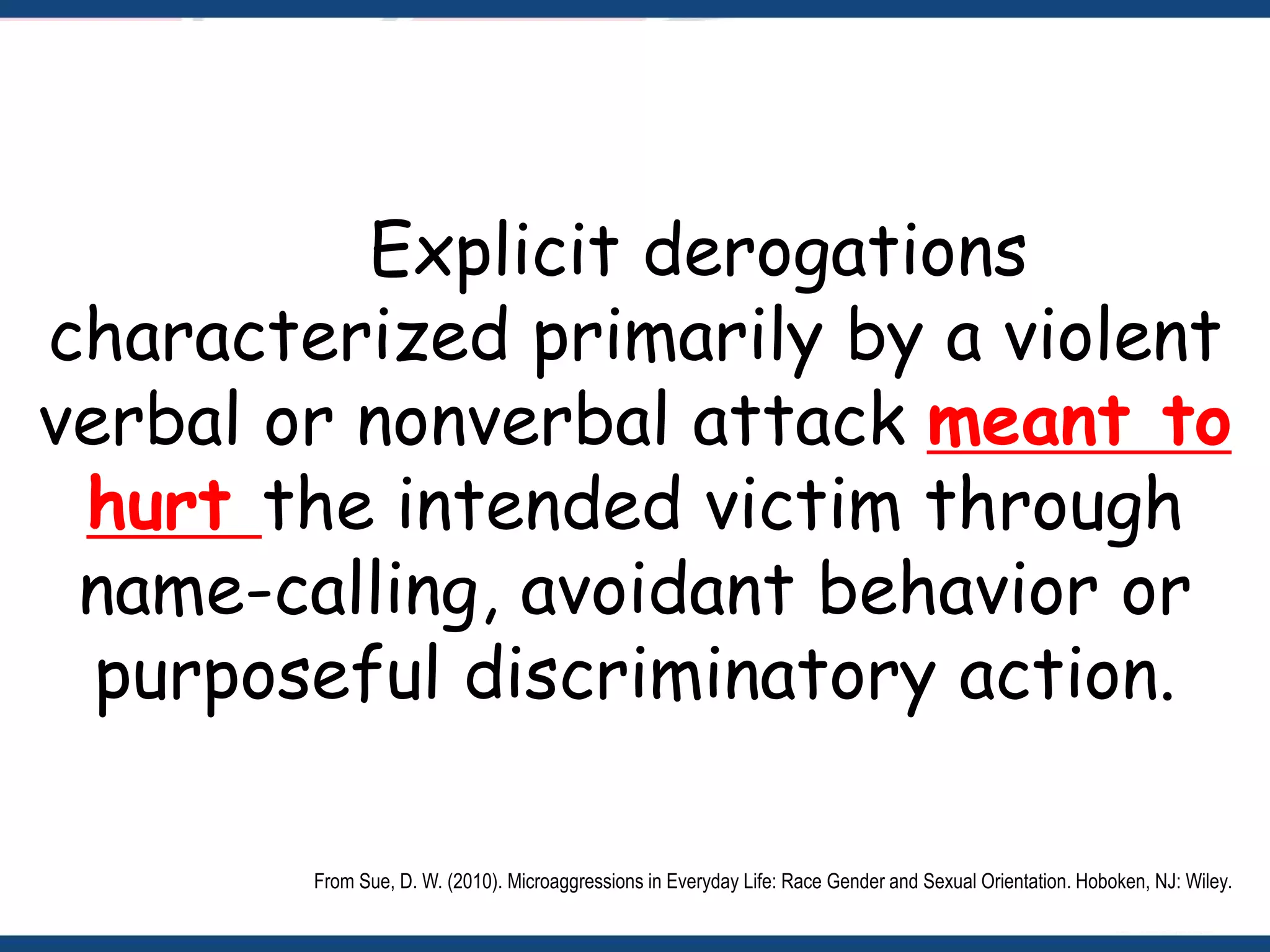
Explicit derogations
characterized primarily by a violent
verbal or nonverbal attack meant to
hurt the intended victim through
name-calling, avoidant behavior or
purposeful discriminatory action.
From Sue, D. W. (2010). Microaggressions in Everyday Life: Race Gender and Sexual Orientation. Hoboken, NJ: Wiley.
Intentional
What is
Workplace Bullying?
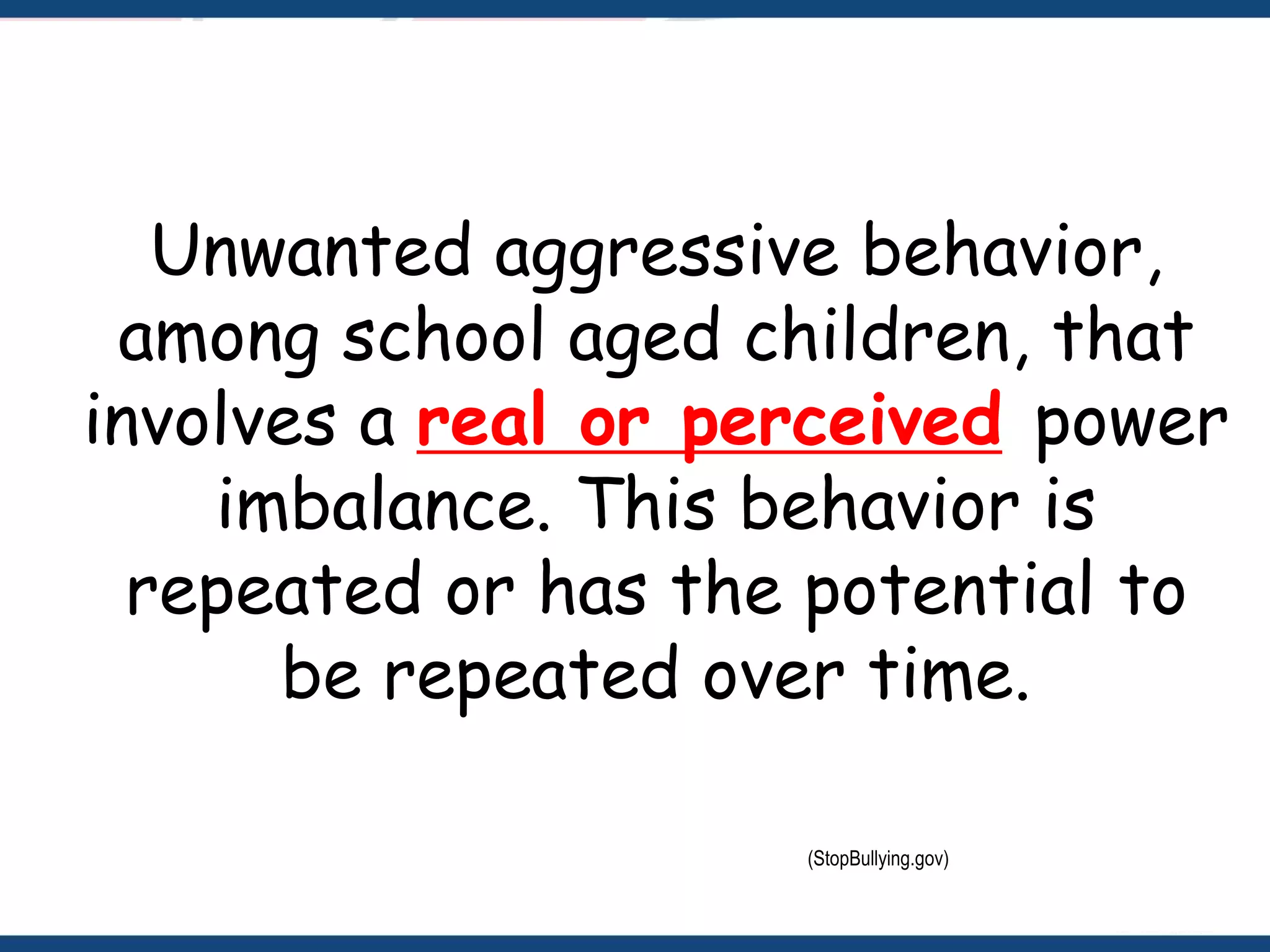
Unwanted aggressive behavior,
among school aged children, that
involves a real or perceived power
imbalance. This behavior is
repeated or has the potential to
be repeated over time.
(StopBullying.gov)
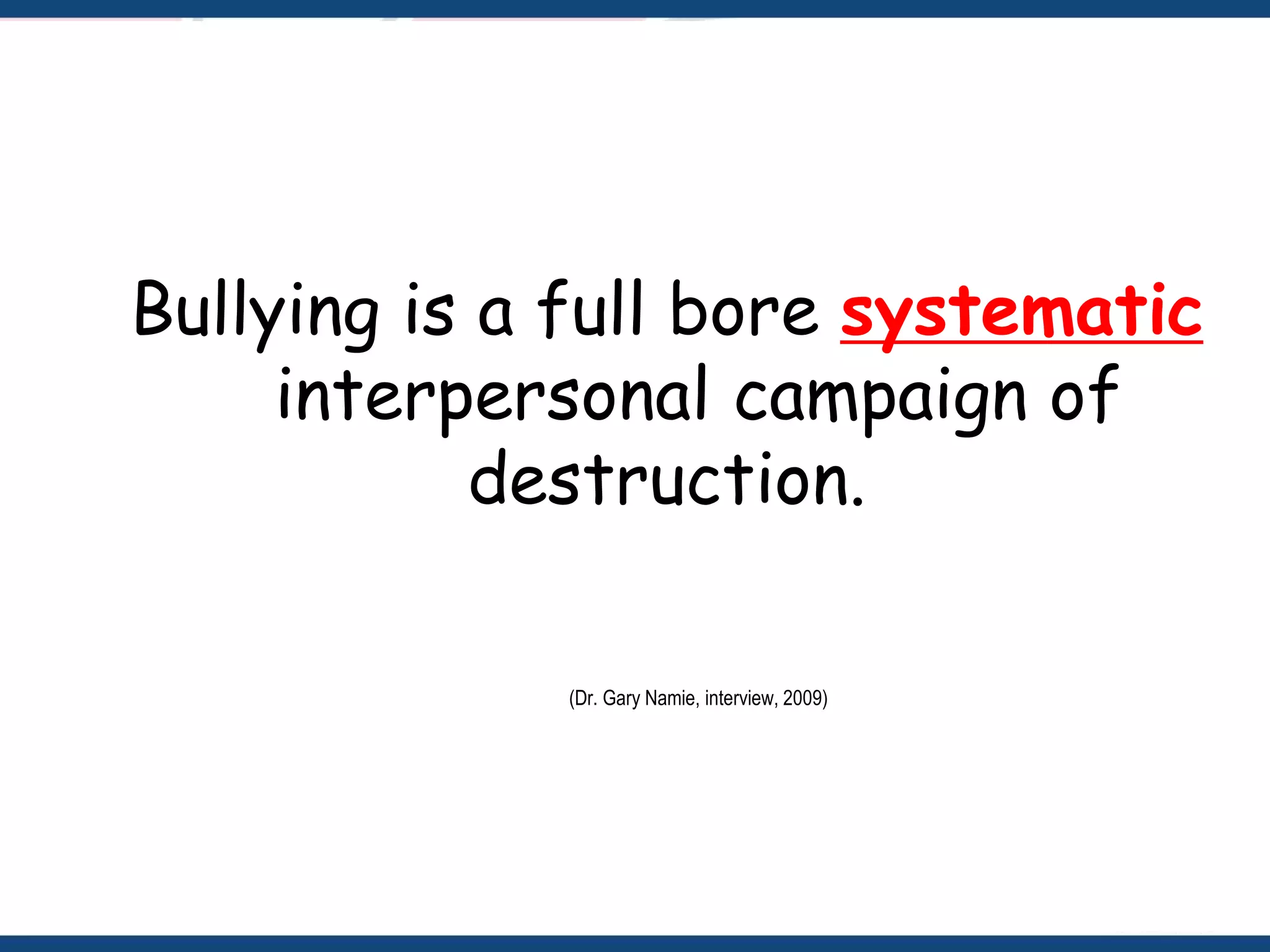
Bullying is a full bore systematic
interpersonal campaign of
destruction.
(Dr. Gary Namie, interview, 2009)
Bully Types
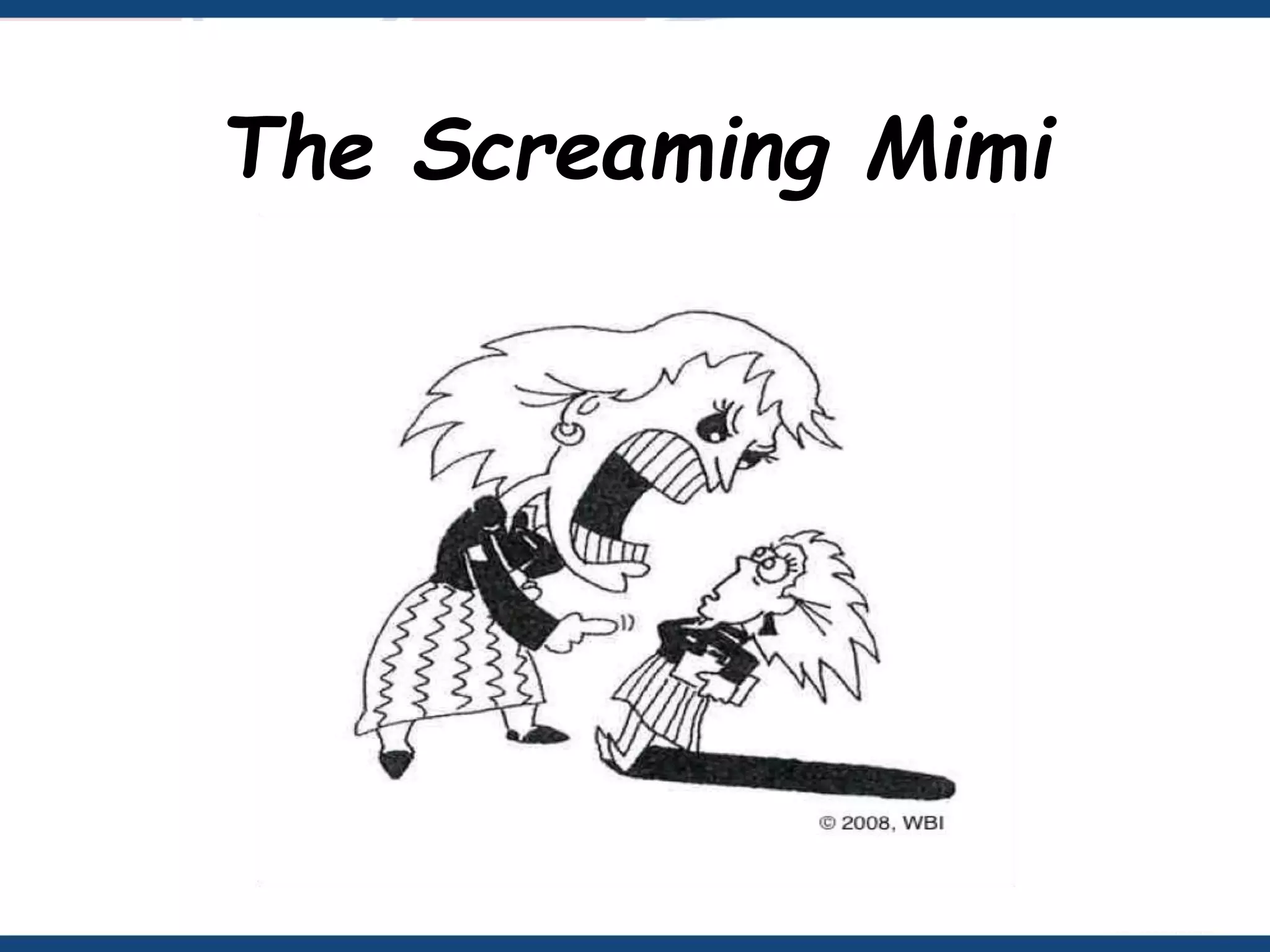
The Screaming Mimi
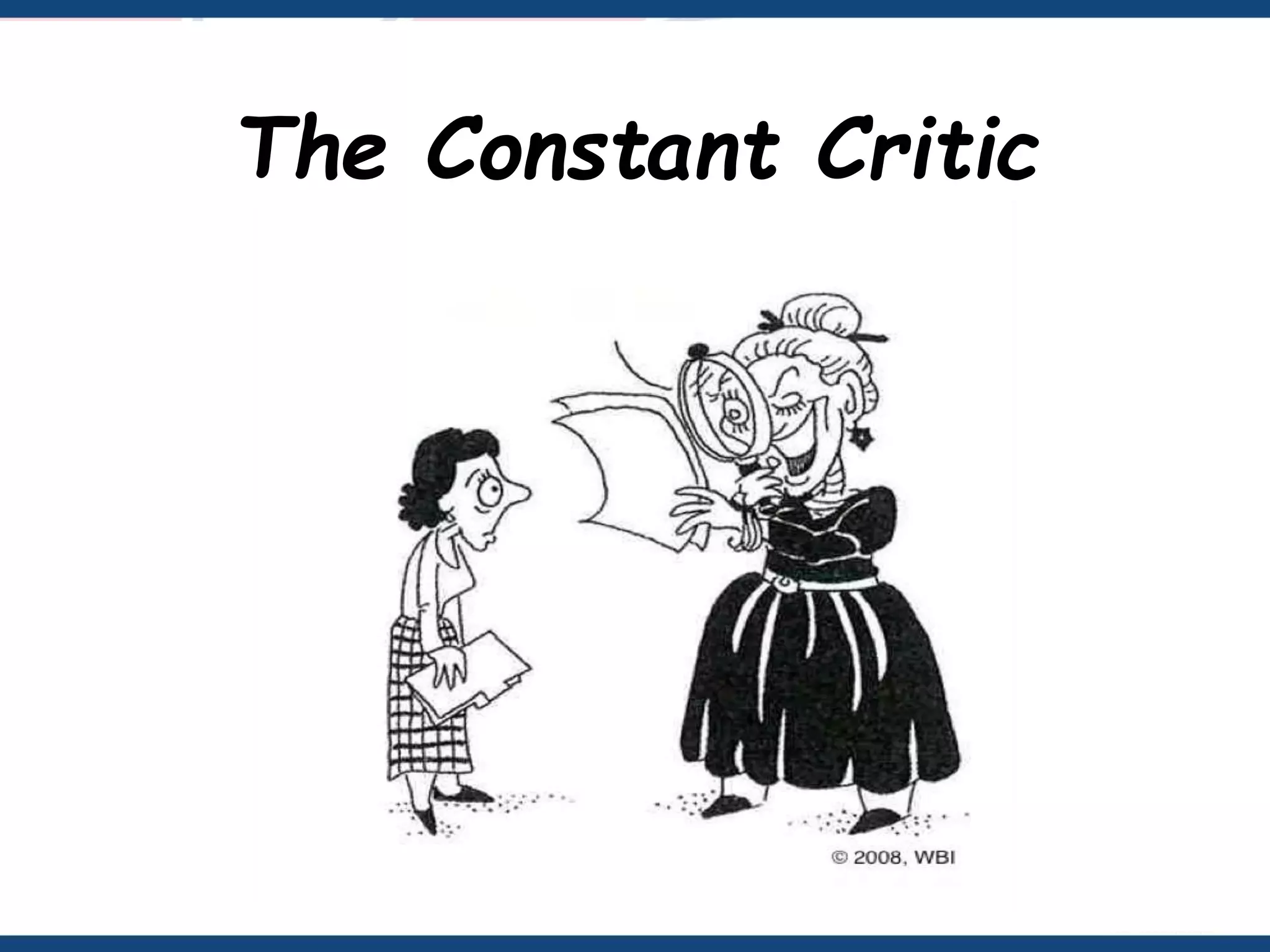
The Constant Critic
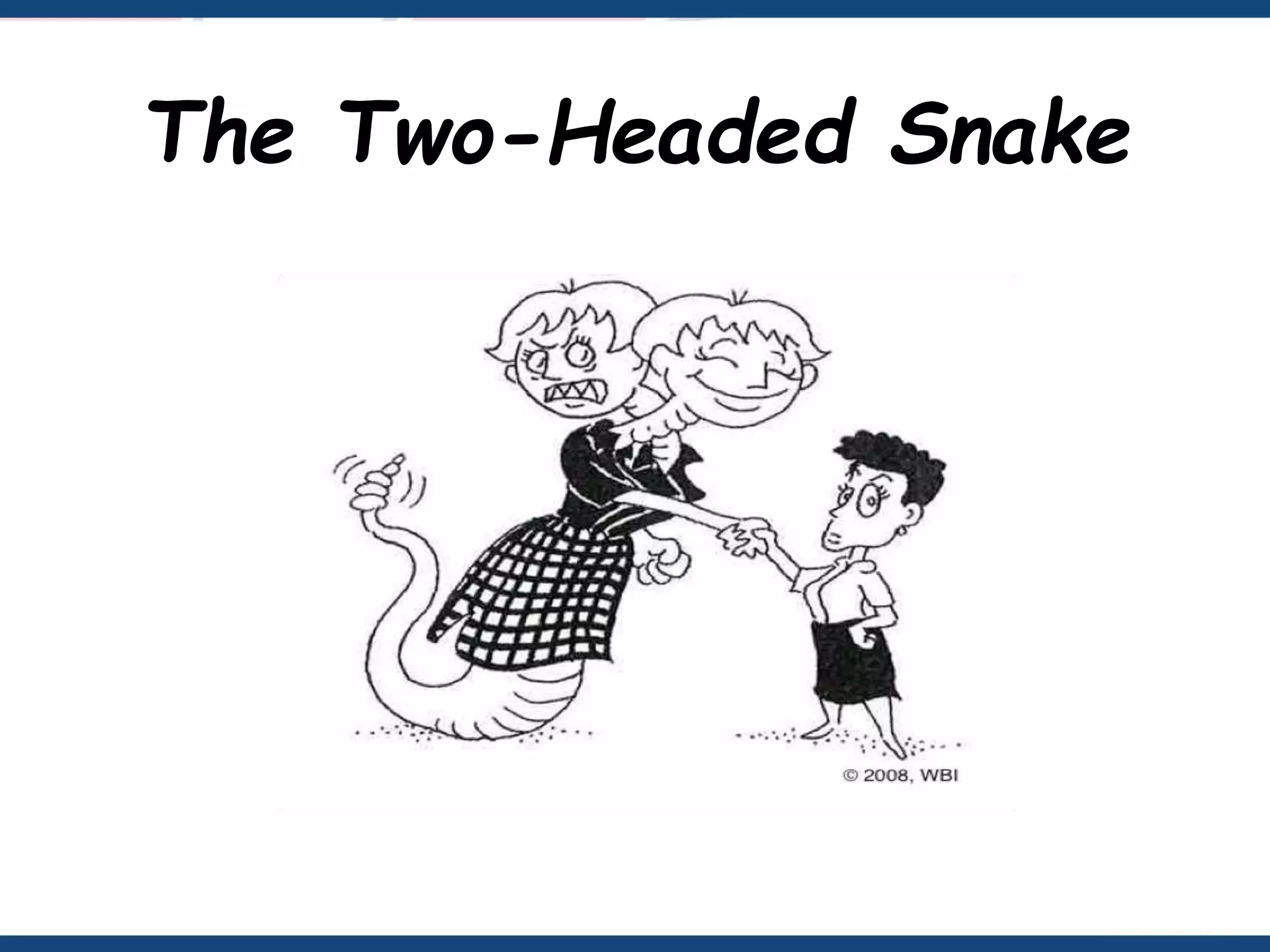
The Two-Headed Snake
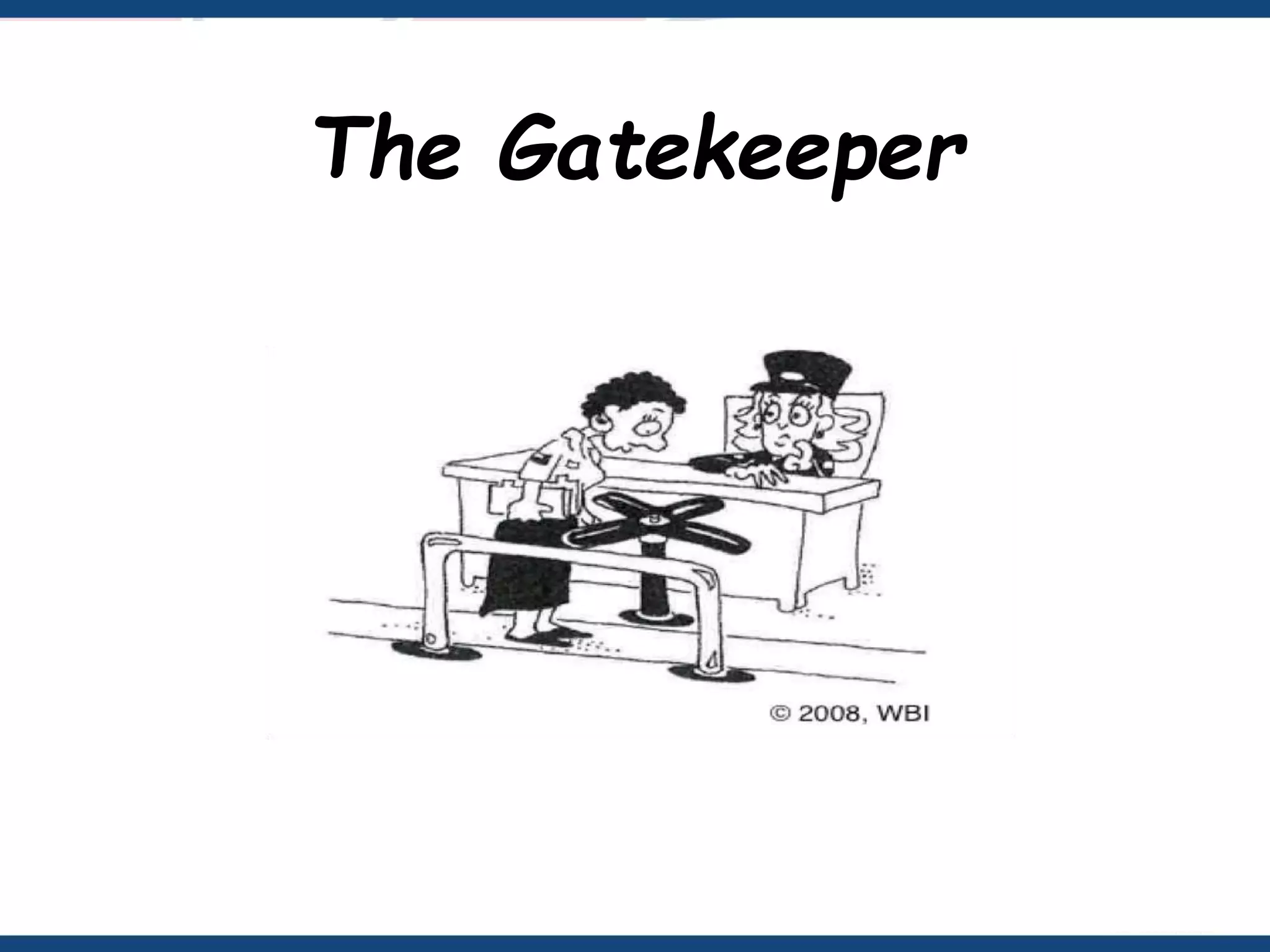
The Gatekeeper
Control
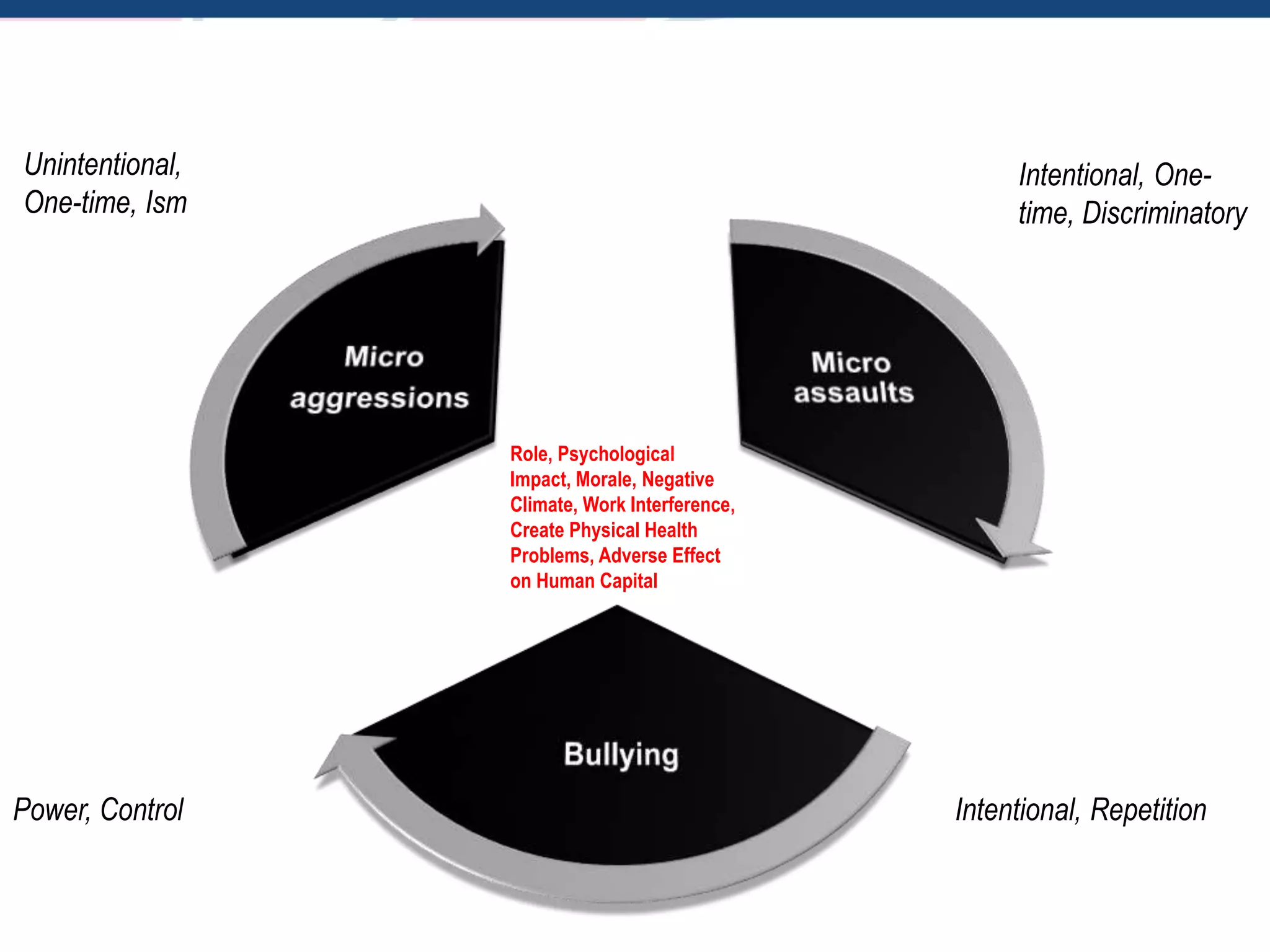
Role, Psychological
Impact, Morale, Negative
Climate, Work Interference,
Create Physical Health
Problems, Adverse Effect
on Human Capital
Intentional, Repetition
Unintentional,
One-time, Ism
Intentional, One-
time, Discriminatory
Power, Control
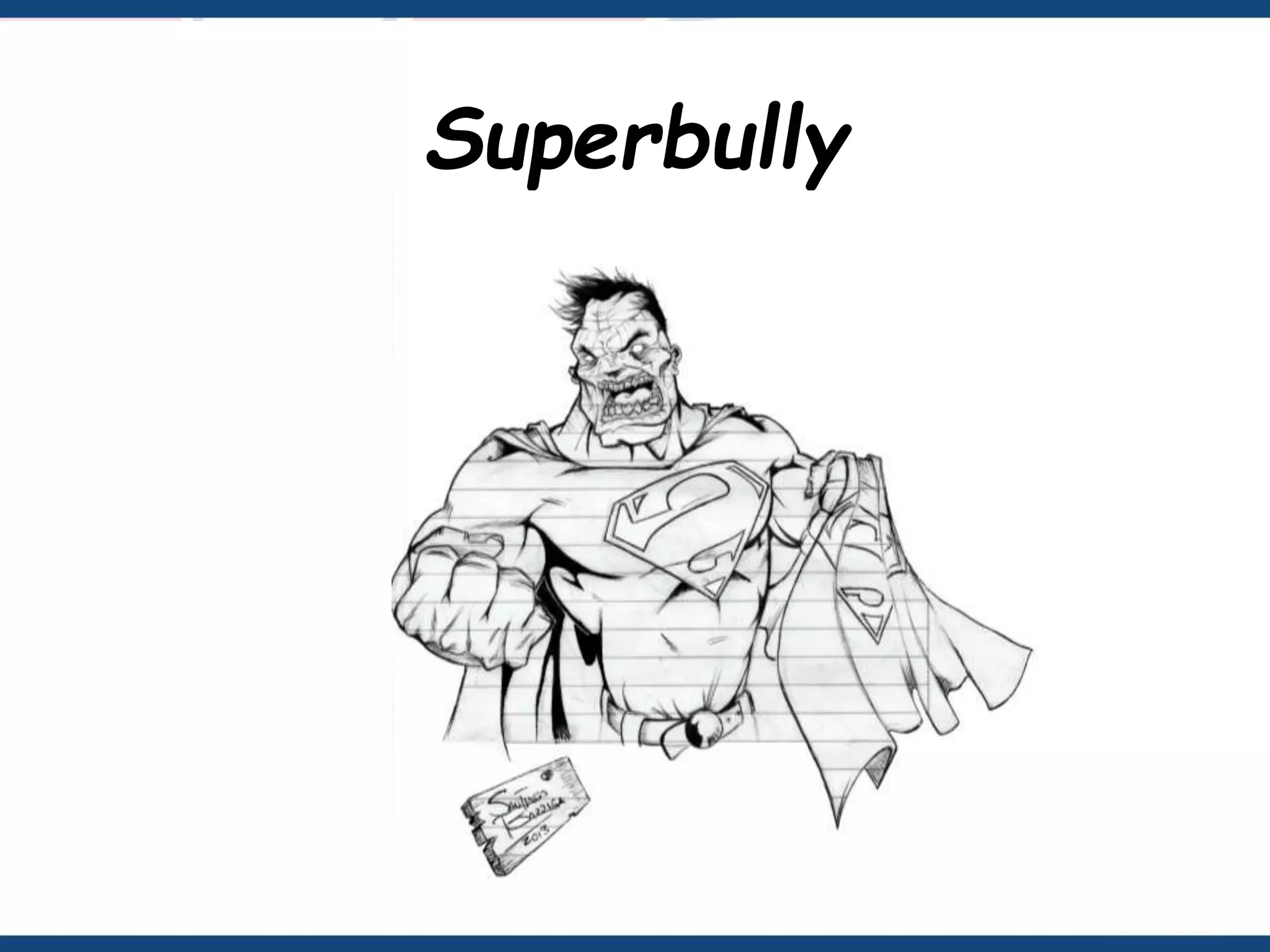
Superbully
Group Activity
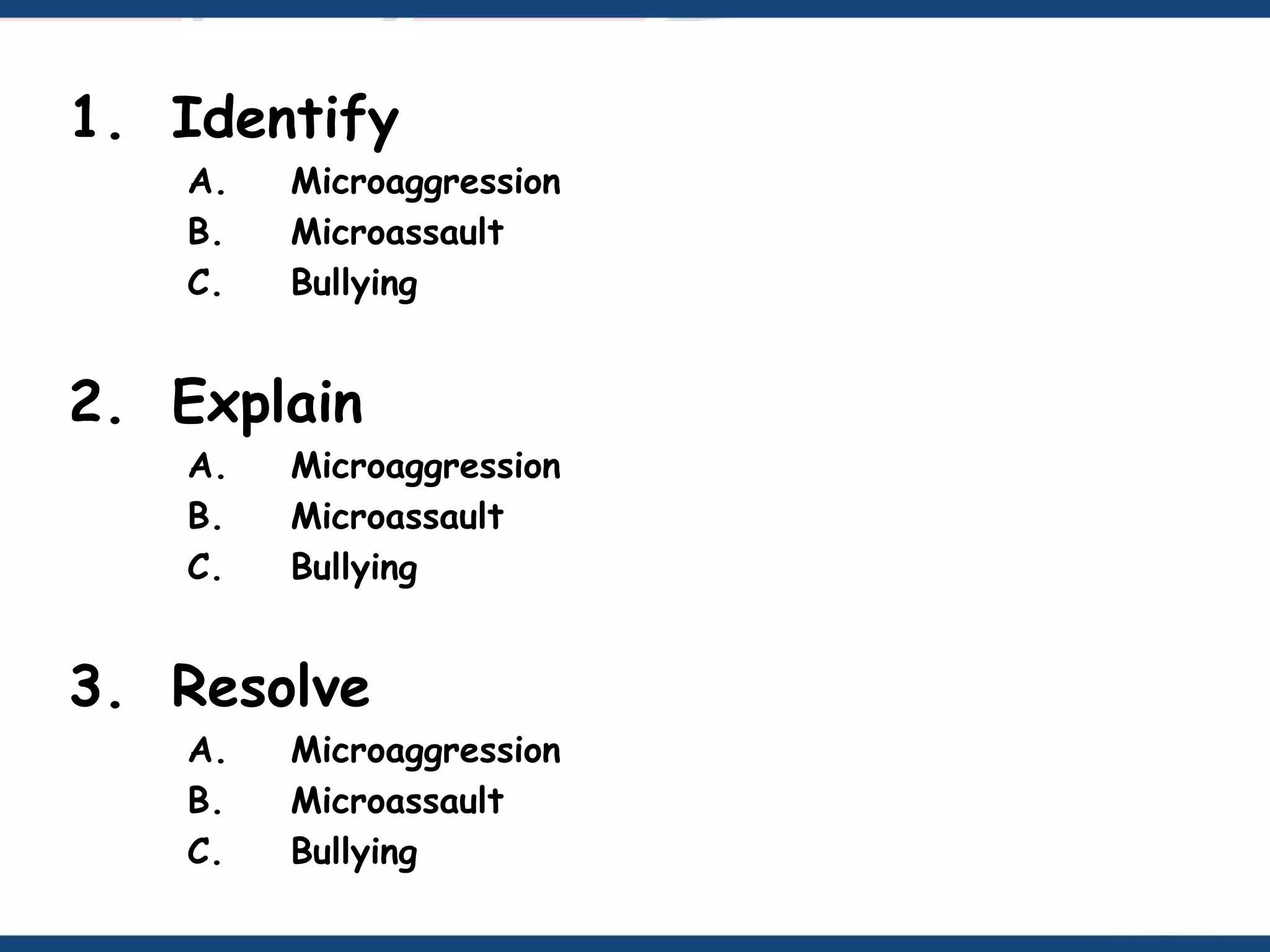
1. Identify
A. Microaggression
B. Microassault
C. Bullying
2. Explain
A. Microaggression
B. Microassault
C. Bullying
3. Resolve
A. Microaggression
B. Microassault
C. Bullying
So What
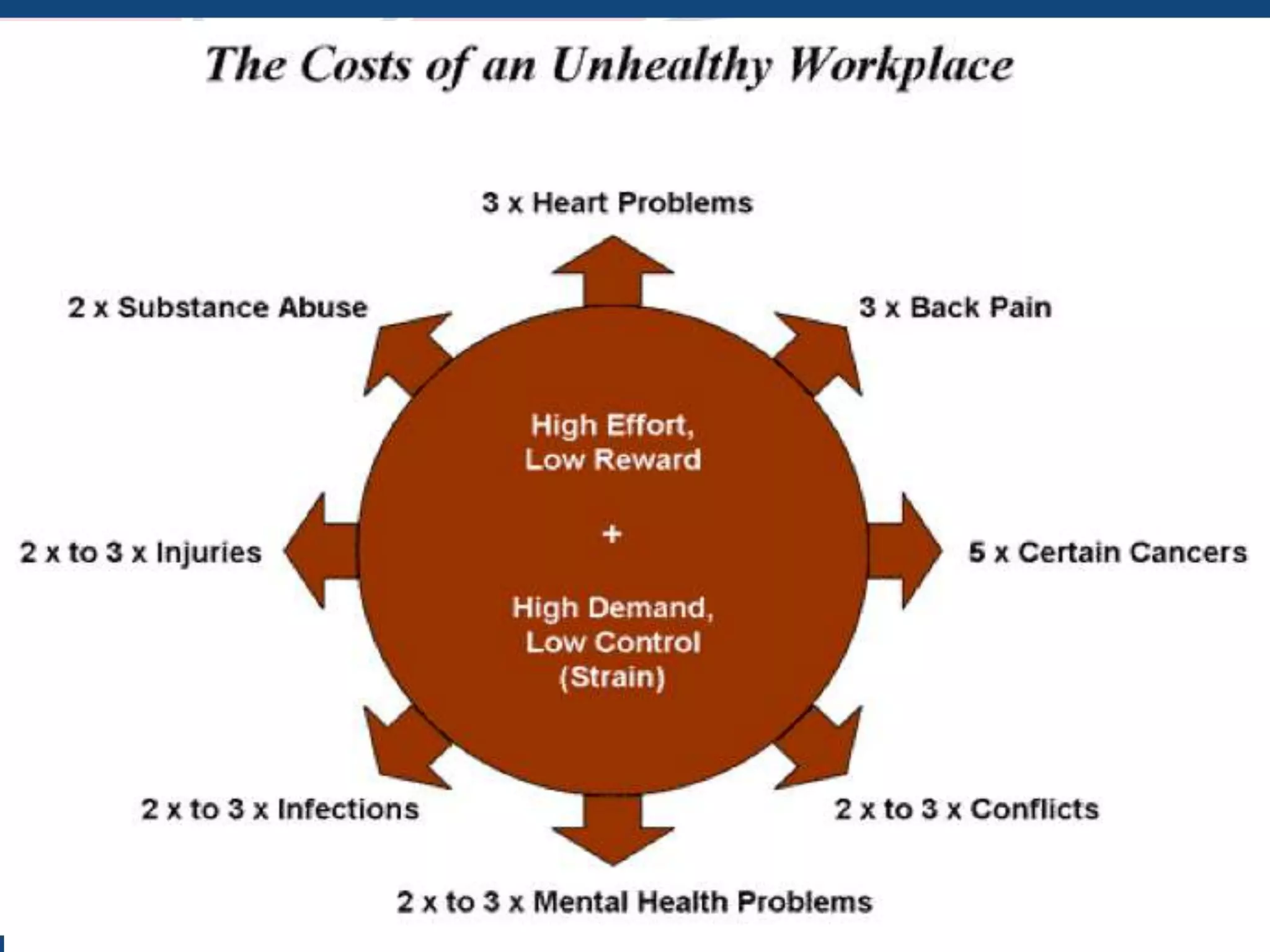
What Cost
So What
Psychological
Influence
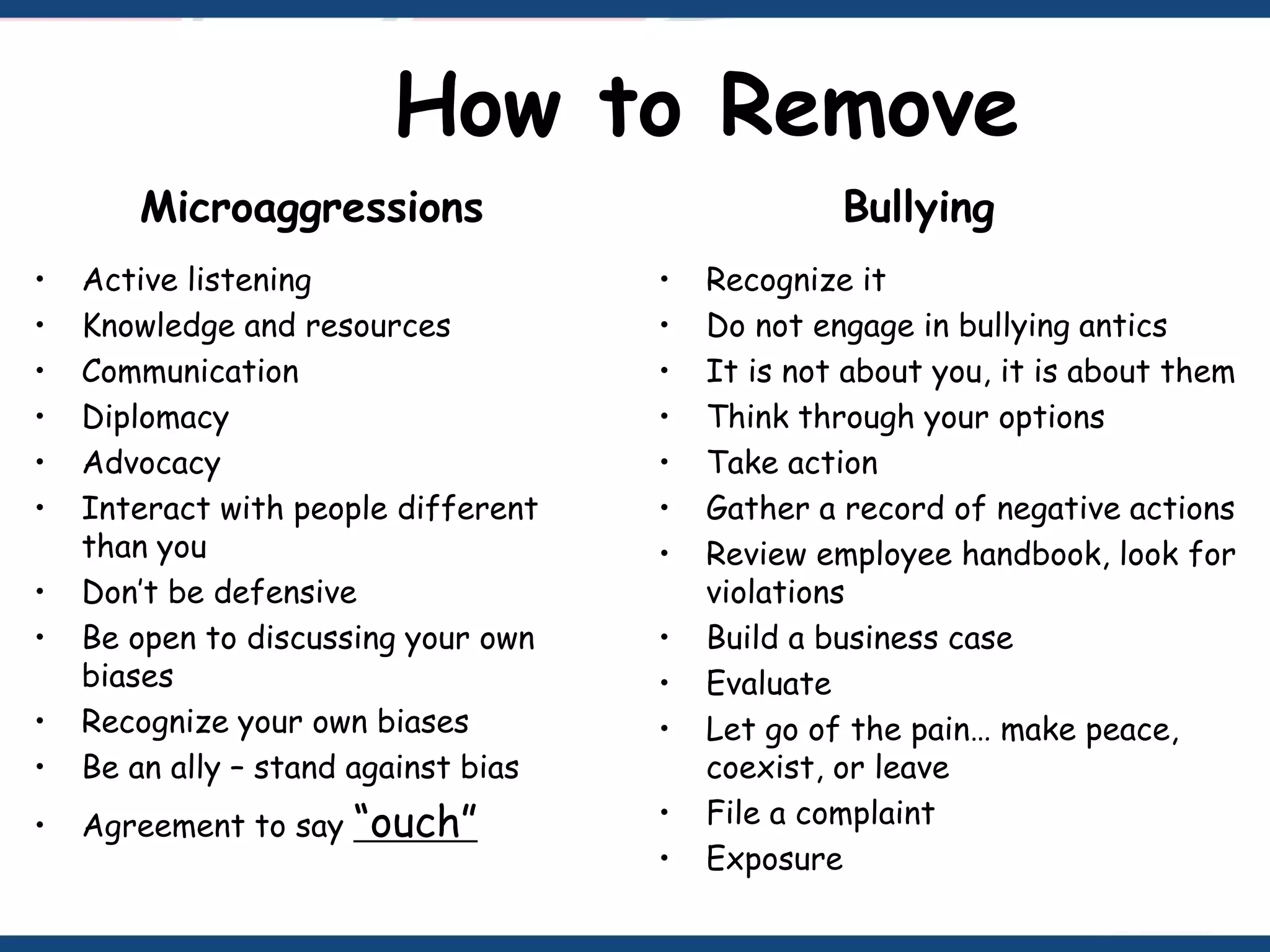
• Active listening
• Knowledge and resources
• Communication
• Diplomacy
• Advocacy
• Interact with people different
than you
• Don’t be defensive
• Be open to discussing your own
biases
• Recognize your own biases
• Be an ally – stand against bias
• Agreement to say “ouch”
How to Remove
Microaggressions Bullying
• Recognize it
• Do not engage in bullying antics
• It is not about you, it is about them
• Think through your options
• Take action
• Gather a record of negative actions
• Review employee handbook, look for
violations
• Build a business case
• Evaluate
• Let go of the pain… make peace,
coexist, or leave
• File a complaint
• Exposure
Thank You

Bullying and microaggression

  • 1.
  • 2.
    Organizational Climate The events,messages, symbols, core beliefs, feelings, and much more, which makes “our community” a welcoming, or not so welcoming environment (Virginia Tech)
  • 3.
  • 4.
    Brief and commonplaceindignities, whether intentional or unintentional, that communicate hostility or negative slights and insults that potentially have harmful or unpleasant psychological impact. (Solorzani, Ceja, & Yozzo, 2000; Sue, et.al. 2007)
  • 5.
  • 6.
    Role & Hierarchy Acons related to role 36% Change accepted behavior 10% Terminology 2% Valuing/ devaluing opinion 52% Role hierarchy themes
  • 7.
    Microaggression Stress 1. Biologicaland physical effects - Accumulative small changes/stress could be additive--equal to the effect of a major catastrophic trauma. 2. Emotional effects - “Isms” affect emotional well-being, psychological adjustment, and mental health. 3. Cognitive effects - Try to make meaning of incidents - Disrupted cognitive processing (decreased focus and productivity) - Stereotype threat (identity/disengage from interests/under-perform) 4. Behavioral effects - Hypervigilance /skepticism (suspiciousness toward majority group) - Forced compliance (surviving or being co-opted) - Rage and anger - Fatigue and hopelessness - Adaptation to adversity (functional survival skills) From Sue, D. W. (2010). Microaggressions in Everyday Life: Race Gender and Sexual Orientation. Hoboken, NJ: Wiley.
  • 8.
    So What • Contributeto a hostile and invalidating campus and work climate • Devalue social group identities • Lower work productivity and educational learning • Perpetuate stereotype threat • Create physical health problems • Impact mental health by creating emotional turmoil, low self-esteem, and psychological energy depletion • Systemically: – Create disparities in health care, education, and employment because they are based upon a biased worldview that is manifested in hiring, retention, and promotion decisions in the workplace – May reduce the quality of education received by students of color – May result in lower quality of health care for certain groups From Sue, D. W. (2010). Microaggressions in Everyday Life: Race Gender and Sexual Orientation. Hoboken, NJ: Wiley.
  • 9.
  • 10.
  • 11.
    Explicit derogations characterized primarilyby a violent verbal or nonverbal attack meant to hurt the intended victim through name-calling, avoidant behavior or purposeful discriminatory action. From Sue, D. W. (2010). Microaggressions in Everyday Life: Race Gender and Sexual Orientation. Hoboken, NJ: Wiley.
  • 12.
  • 13.
  • 14.
    Unwanted aggressive behavior, amongschool aged children, that involves a real or perceived power imbalance. This behavior is repeated or has the potential to be repeated over time. (StopBullying.gov)
  • 15.
    Bullying is afull bore systematic interpersonal campaign of destruction. (Dr. Gary Namie, interview, 2009)
  • 16.
  • 17.
  • 18.
  • 19.
  • 20.
  • 21.
  • 22.
    Role, Psychological Impact, Morale,Negative Climate, Work Interference, Create Physical Health Problems, Adverse Effect on Human Capital Intentional, Repetition Unintentional, One-time, Ism Intentional, One- time, Discriminatory Power, Control
  • 23.
  • 24.
  • 25.
    1. Identify A. Microaggression B.Microassault C. Bullying 2. Explain A. Microaggression B. Microassault C. Bullying 3. Resolve A. Microaggression B. Microassault C. Bullying
  • 26.
  • 28.
  • 29.
  • 30.
  • 31.
    • Active listening •Knowledge and resources • Communication • Diplomacy • Advocacy • Interact with people different than you • Don’t be defensive • Be open to discussing your own biases • Recognize your own biases • Be an ally – stand against bias • Agreement to say “ouch” How to Remove Microaggressions Bullying • Recognize it • Do not engage in bullying antics • It is not about you, it is about them • Think through your options • Take action • Gather a record of negative actions • Review employee handbook, look for violations • Build a business case • Evaluate • Let go of the pain… make peace, coexist, or leave • File a complaint • Exposure
  • 32.

Editor's Notes

  • #3 Also includes: Microinsults are behaviors, actions, or verbal remarks that convey rudeness, insensitivity, or demean an person’s group or social identity or heritage Microinvalidations are actions that exclude, negate, or nullify the psychological thoughts, feelings or experiential reality of people who represent different groups (Sue, et. al., 2007)
  • #5 Also includes: Microinsults are behaviors, actions, or verbal remarks that convey rudeness, insensitivity, or demean an person’s group or social identity or heritage Microinvalidations are actions that exclude, negate, or nullify the psychological thoughts, feelings or experiential reality of people who represent different groups (Sue, et. al., 2007)
  • #12 Also includes: Microinsults are behaviors, actions, or verbal remarks that convey rudeness, insensitivity, or demean an person’s group or social identity or heritage Microinvalidations are actions that exclude, negate, or nullify the psychological thoughts, feelings or experiential reality of people who represent different groups (Sue, et. al., 2007)