Downloaded 20 times














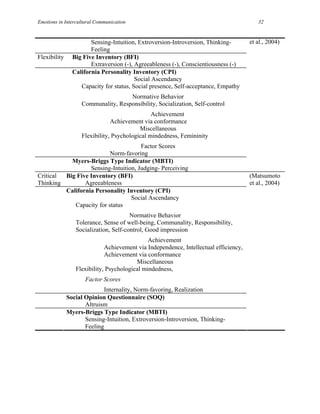

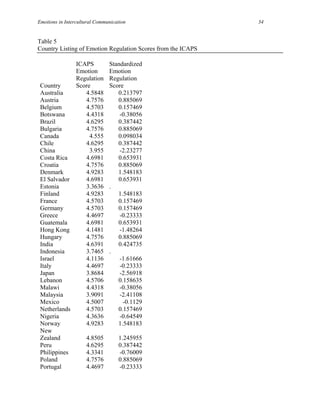
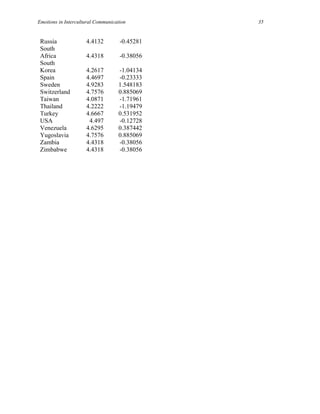

This document discusses emotions and their role in intercultural communication. It argues that the ability to regulate emotions is key to effective intercultural communication and adjustment. It describes how culture influences verbal language, nonverbal behavior, and the communication process. Intercultural communication is defined as involving interactants from different cultures and inherent uncertainty and ambiguity. Conflict and misunderstandings are inevitable in intercultural encounters due to cultural differences in communication norms and decoding of behaviors. The ability to regulate emotions allows for successful resolution of conflicts arising in intercultural interactions and leads to more effective long-term intercultural communication.


