

Alpha Omega Presents 
A CASE STUDY ON BANCO DO BRASIL 
SABAH HUSSAIN 
HARSH KAGDA 
ABISHEK MUNSHI 
TOM YU
Prevailing International Context 
Beneficial
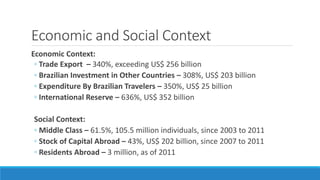
Economic and Social Context 
Economic Context: 
◦ Trade Export – 340%, exceeding US$ 256 billion 
◦ Brazilian Investment in Other Countries – 308%, US$ 203 billion 
◦ Expenditure By Brazilian Travelers – 350%, US$ 25 billion 
◦ International Reserve – 636%, US$ 352 billion 
Social Context: 
◦ Middle Class – 61.5%, 105.5 million individuals, since 2003 to 2011 
◦ Stock of Capital Abroad – 43%, US$ 202 billion, since 2007 to 2011 
◦ Residents Abroad – 3 million, as of 2011
Internationalization Strategy 
Deliberate
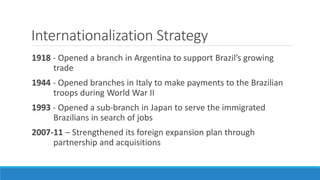
Internationalization Strategy 
1918 - Opened a branch in Argentina to support Brazil’s growing 
trade 
1944 - Opened branches in Italy to make payments to the Brazilian 
troops during World War II 
1993 - Opened a sub-branch in Japan to serve the immigrated 
Brazilians in search of jobs 
2007-11 – Strengthened its foreign expansion plan through 
partnership and acquisitions
Why Internationalize? 
Survival
Why Internationalize? 
Emerging Brazil’s economy 
◦ Take advantage of Brazil’s international momentum, as reflected in its 
higher participation in international trade, increased foreign investments 
by Brazilian multinationals, and escalating travel and spending by Brazilian 
tourists abroad. 
Follow the client approach - Defensive expansion approach 
◦ Motivated by maintaining the existing client base 
Autonomous international expansion 
◦ Take advantage of their presence in foreign markets to learn about the 
host country business environment, gain experience and identify new 
business opportunities
Why Internationalize? 
Debit Card: 8% of Indian adults, 41% of Brazilian and Chinese and 37% of Russian. 
Bank Loans: In Nepal, 39% , while in Indonesia only 18%. 
Formal Bank Account: Globally, 1 in 2 adults—some 2.5 billion people—does not 
have an account. 
Access to Financial Services & Credit: 200 million micro to medium enterprises in 
developing economies lack access. 
Bank Account : Only about 3 in 1000 adults in Central African Republic. 
Opportunities Globally
Foreign Expansion 
BB’s or Brazil’s interest 
International expansion is focused on three main fronts: 
◦ The existence of Brazilian communities abroad 
◦ Transnational spread of Brazilian companies 
◦ The increase in commercial interchange between Brazil and the rest of the 
world. 
Both 
Benefited
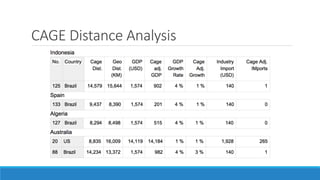
CAGE Distance Analysis
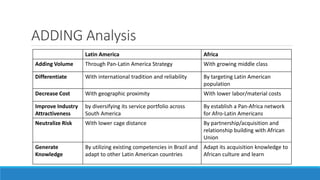
Latin America Africa 
Adding Volume Through Pan-Latin America Strategy With growing middle class 
Differentiate With international tradition and reliability By targeting Latin American 
population 
Decrease Cost With geographic proximity With lower labor/material costs 
Improve Industry 
Attractiveness 
by diversifying its service portfolio across 
South America 
By establish a Pan-Africa network 
for Afro-Latin Americans 
Neutralize Risk With lower cage distance By partnership/acquisition and 
relationship building with African 
Union 
Generate 
Knowledge 
By utilizing existing competencies in Brazil and 
adapt to other Latin American countries 
Adapt its acquisition knowledge to 
African culture and learn 
ADDING Analysis
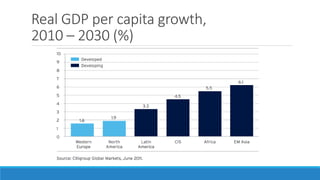
Real GDP per capita growth, 
2010 – 2030 (%)
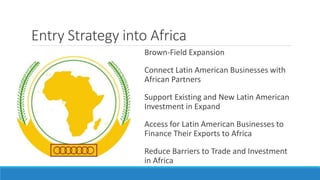
Entry Strategy into Africa 
Brown-Field Expansion 
Connect Latin American Businesses with 
African Partners 
Support Existing and New Latin American 
Investment in Expand 
Access for Latin American Businesses to 
Finance Their Exports to Africa 
Reduce Barriers to Trade and Investment 
in Africa
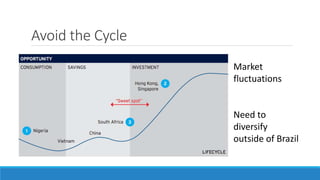
Market 
fluctuations 
Need to 
diversify 
outside of Brazil 
Avoid the Cycle
Internationalization 
◦ Before considering new market, establish rates of 
fixed entry and exit costs 
◦ Greenfield 
◦ Brownfield 
◦ These costs dictate a minimum revenue before entry 
◦ After meeting revenue goals, can exit to pursue 
markets at different inflection points.

Bonco de brasil - presentation

  • 1.
    Alpha Omega Presents A CASE STUDY ON BANCO DO BRASIL SABAH HUSSAIN HARSH KAGDA ABISHEK MUNSHI TOM YU
  • 2.
  • 3.
    Economic and SocialContext Economic Context: ◦ Trade Export – 340%, exceeding US$ 256 billion ◦ Brazilian Investment in Other Countries – 308%, US$ 203 billion ◦ Expenditure By Brazilian Travelers – 350%, US$ 25 billion ◦ International Reserve – 636%, US$ 352 billion Social Context: ◦ Middle Class – 61.5%, 105.5 million individuals, since 2003 to 2011 ◦ Stock of Capital Abroad – 43%, US$ 202 billion, since 2007 to 2011 ◦ Residents Abroad – 3 million, as of 2011
  • 4.
  • 5.
    Internationalization Strategy 1918- Opened a branch in Argentina to support Brazil’s growing trade 1944 - Opened branches in Italy to make payments to the Brazilian troops during World War II 1993 - Opened a sub-branch in Japan to serve the immigrated Brazilians in search of jobs 2007-11 – Strengthened its foreign expansion plan through partnership and acquisitions
  • 6.
  • 7.
    Why Internationalize? EmergingBrazil’s economy ◦ Take advantage of Brazil’s international momentum, as reflected in its higher participation in international trade, increased foreign investments by Brazilian multinationals, and escalating travel and spending by Brazilian tourists abroad. Follow the client approach - Defensive expansion approach ◦ Motivated by maintaining the existing client base Autonomous international expansion ◦ Take advantage of their presence in foreign markets to learn about the host country business environment, gain experience and identify new business opportunities
  • 8.
    Why Internationalize? DebitCard: 8% of Indian adults, 41% of Brazilian and Chinese and 37% of Russian. Bank Loans: In Nepal, 39% , while in Indonesia only 18%. Formal Bank Account: Globally, 1 in 2 adults—some 2.5 billion people—does not have an account. Access to Financial Services & Credit: 200 million micro to medium enterprises in developing economies lack access. Bank Account : Only about 3 in 1000 adults in Central African Republic. Opportunities Globally
  • 9.
    Foreign Expansion BB’sor Brazil’s interest International expansion is focused on three main fronts: ◦ The existence of Brazilian communities abroad ◦ Transnational spread of Brazilian companies ◦ The increase in commercial interchange between Brazil and the rest of the world. Both Benefited
  • 10.
  • 11.
    Latin America Africa Adding Volume Through Pan-Latin America Strategy With growing middle class Differentiate With international tradition and reliability By targeting Latin American population Decrease Cost With geographic proximity With lower labor/material costs Improve Industry Attractiveness by diversifying its service portfolio across South America By establish a Pan-Africa network for Afro-Latin Americans Neutralize Risk With lower cage distance By partnership/acquisition and relationship building with African Union Generate Knowledge By utilizing existing competencies in Brazil and adapt to other Latin American countries Adapt its acquisition knowledge to African culture and learn ADDING Analysis
  • 12.
    Real GDP percapita growth, 2010 – 2030 (%)
  • 13.
    Entry Strategy intoAfrica Brown-Field Expansion Connect Latin American Businesses with African Partners Support Existing and New Latin American Investment in Expand Access for Latin American Businesses to Finance Their Exports to Africa Reduce Barriers to Trade and Investment in Africa
  • 14.
    Market fluctuations Needto diversify outside of Brazil Avoid the Cycle
  • 15.
    Internationalization ◦ Beforeconsidering new market, establish rates of fixed entry and exit costs ◦ Greenfield ◦ Brownfield ◦ These costs dictate a minimum revenue before entry ◦ After meeting revenue goals, can exit to pursue markets at different inflection points.

Editor's Notes

  • #13 In developing economies, 35% of small firms report access to finance as a majorobstacle to their operations. 60% respondents consider access tobasic financial services a significantproblem for households in their country. Only about 3 in 1000 adults inCentral African Republic have a bank account.
  • #14 Growing middle class and insurance market through 2020 Expecting the life insurance and pensions segments to grow the most with the aging population, account for 13% by 2020 Low penetration of banking services, including MNCs $8.4 Billion Imports from Nigeria into Brazil Potential future investment into Europe Large amount of capital stock in Europe Large amount of Brazilians in Europe