





The
Human
Interface
Christopher Fahey


graphpaper.com
@chrisfahey
#ixd10 #human
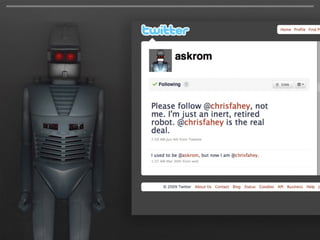
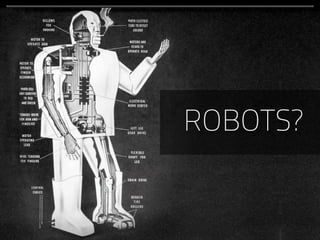
ROBOTS?
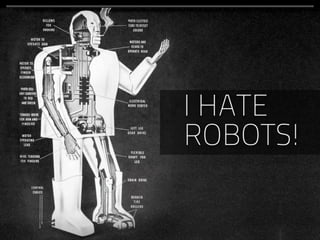
I HATE
ROBOTS!
PYGMALION
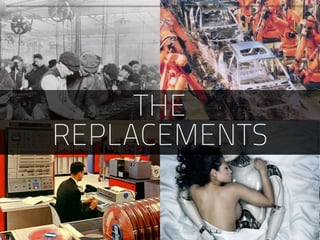
THE
REPLACEMENTS
THE
REPLACEMENTS
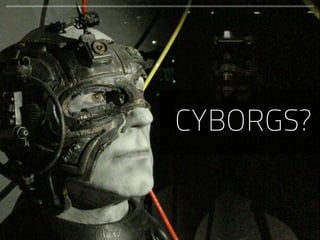
CYBORGS?
”As our worlds become smarter,
and get to know us better and
better, it becomes harder and
harder to say where the world
stops and the person begins.”
- Andy Clarke, “Natural Born Cyborgs”
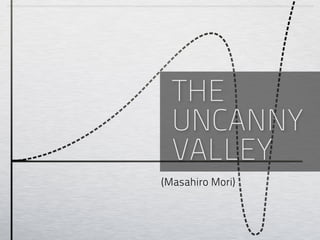
THE
  UNCANNY
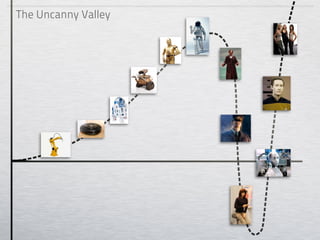
  VALLEY
(Masahiro Mori)
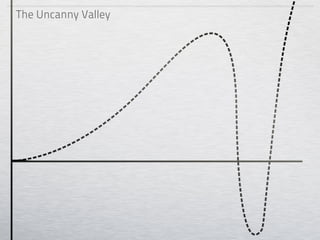
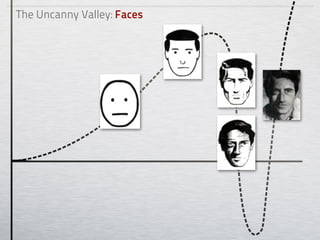
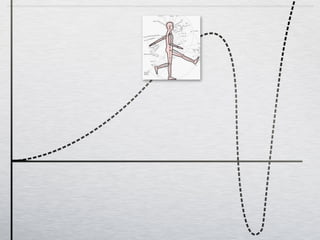
The Uncanny Valley
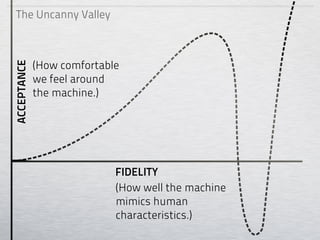
The Uncanny Valley


             (How comfortable
ACCEPTANCE


             we feel around
             the machine.)


                            FIDELITY
                            (How well the machine
                            mimics human
                            characteristics.)
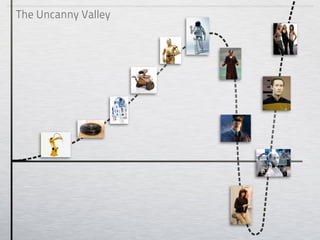
The Uncanny Valley
The Uncanny Valley
Lessons so far:


1. Don’t replace humans.
2. Don’t replicate humans.
Origins
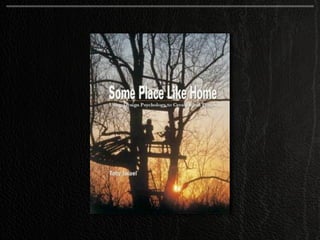
What childhood
   experiences most
powerfully influence your
 approach to interaction
     design today?
Childhood IxD Experiences

1. Taking things apart to see how they work
2. Fixing broken things
3. Creating little worlds
Why?

1. Interaction design is a creative form.
    UX designers want to use technology and
design to create emotional, imaginative, and
deeply human experiences.
Why?

1. Interaction design is a creative form.
    UX designers want to use technology and
design to create emotional, imaginative, and
deeply human experiences.

2. Change is in the air.
   New technologies are converging to permit
new and more compelling interactions.
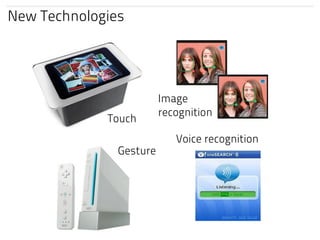
New Technologies


                         Image
                         recognition
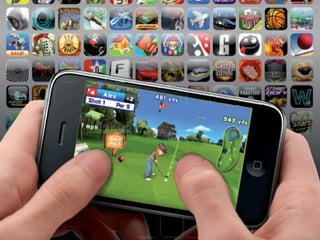
             Touch
                            Voice recognition
               Gesture
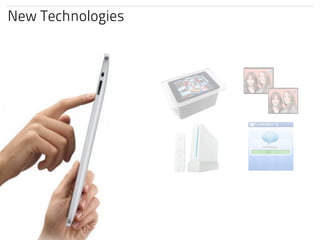
New Technologies
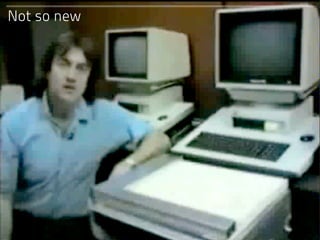
Not so new
Not so new
Not so new
About the
“Human Interface”
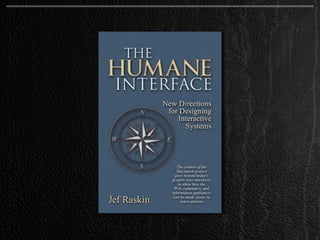
“An interface is humane if it is
responsive to human needs and is
considerate of human frailties.”
- Jef Raskin, “The Humane Interface”
“Design can be easier when we
acknowledge that products share
our homes and malls, and have
wants and lives of their own.”
- Matt Webb, BERG
“If we want users to like our
software, we should design it to
behave like a likeable person.”
- Alan Cooper
We make better
products when we
 think of them as
  human beings.
“The role of technology is to
mirror our humanness. We were
born with everything we need:
good technology reminds us of
that.”
- Jack Dorsey (@jack), CEO Twitter
The Human Interface...
... is about persuasion and seduction
... is smart and has awareness
... is physical, embodied
... is linguistic, poetic, and narrative
... is emotional and feeling
... has a name and an identity
... has a personality
“Want to know what I think the next UI break-
throughs will be? Here are two, both of which can
be considered a return to fundamentals:
1. Command line languages;
2. Physicality: the return to physical devices,
where we control things by physical body
movement, by turning, moving, and manipulating
appropriate mechanical devices.”
- Don Norman, 2007
The Human
 Interface
The Human Interface

Literally, it’s about the ergonomics of the
body and the mind.
The Human Interface

Literally, it’s about the ergonomics of the
body and the mind.


Metaphorically, it’s about removing
abstraction from interactions
Lessons so far:


1. Don’t replace humans.
2. Don’t replicate humans.
Lessons so far:


1. Don’t replace humans.
2. Don’t replicate humans.
           How?
Lessons so far:


1. Don’t replace humans.
2. Don’t replicate humans.
           How?
                  Behavior!
Lessons so far:

Not about mimicking human behavior, but
about reflecting it.
Software that mirrors behavior:
   • Chat and IM reflect the immediacy of communication
   • Social networks mirror the structure of the special
     primacy we give our own friends (vs. everyone else)
   • Twitter reflects the semi-social “cocktail party” model
     of social interaction.
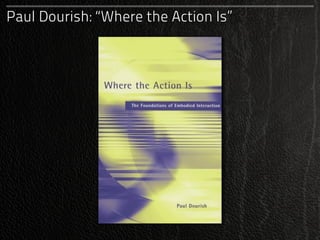
Paul Dourish: “Where the Action Is”
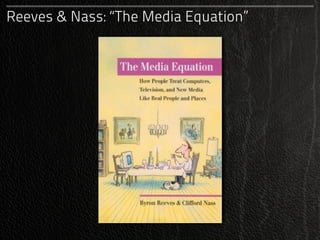
Reeves & Nass: “The Media Equation”
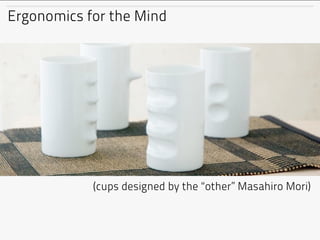
Ergonomics for the Mind


            (cups designed by the “other” Masahiro Mori)
Anthopomorphism
Human-ness
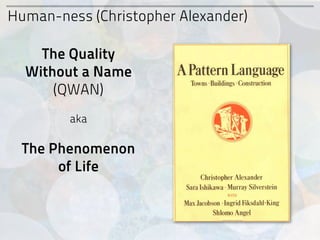
Human-ness (Christopher Alexander)

    The Quality
  Without a Name
      (QWAN)
        aka

  The Phenomenon
       of Life
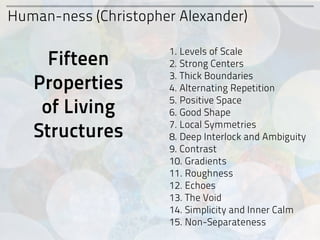
Human-ness (Christopher Alexander)

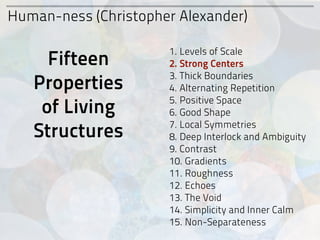
                      1. Levels of Scale
     Fifteen          2. Strong Centers
                      3. Thick Boundaries
   Properties         4. Alternating Repetition
                      5. Positive Space
    of Living         6. Good Shape

   Structures         7. Local Symmetries
                      8. Deep Interlock and Ambiguity
                      9. Contrast
                      10. Gradients
                      11. Roughness
                      12. Echoes
                      13. The Void
                      14. Simplicity and Inner Calm
                      15. Non-Separateness
Human-ness (Christopher Alexander)

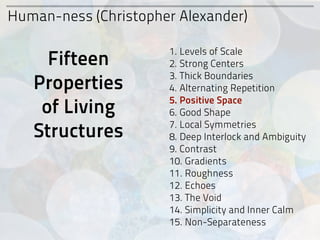
                      1. Levels of Scale
     Fifteen          2. Strong Centers
                      3. Thick Boundaries
   Properties         4. Alternating Repetition
                      5. Positive Space
    of Living         6. Good Shape

   Structures         7. Local Symmetries
                      8. Deep Interlock and Ambiguity
                      9. Contrast
                      10. Gradients
                      11. Roughness
                      12. Echoes
                      13. The Void
                      14. Simplicity and Inner Calm
                      15. Non-Separateness
Human-ness (Christopher Alexander)

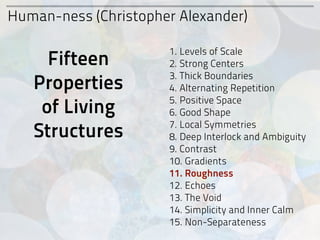
                      1. Levels of Scale
     Fifteen          2. Strong Centers
                      3. Thick Boundaries
   Properties         4. Alternating Repetition
                      5. Positive Space
    of Living         6. Good Shape

   Structures         7. Local Symmetries
                      8. Deep Interlock and Ambiguity
                      9. Contrast
                      10. Gradients
                      11. Roughness
                      12. Echoes
                      13. The Void
                      14. Simplicity and Inner Calm
                      15. Non-Separateness
Human-ness (Christopher Alexander)

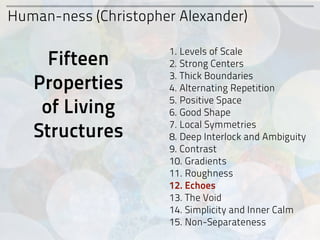
                      1. Levels of Scale
     Fifteen          2. Strong Centers
                      3. Thick Boundaries
   Properties         4. Alternating Repetition
                      5. Positive Space
    of Living         6. Good Shape

   Structures         7. Local Symmetries
                      8. Deep Interlock and Ambiguity
                      9. Contrast
                      10. Gradients
                      11. Roughness
                      12. Echoes
                      13. The Void
                      14. Simplicity and Inner Calm
                      15. Non-Separateness
Human-ness (Christopher Alexander)

                      1. Levels of Scale
     Fifteen          2. Strong Centers
                      3. Thick Boundaries
   Properties         4. Alternating Repetition
                      5. Positive Space
    of Living         6. Good Shape

   Structures         7. Local Symmetries
                      8. Deep Interlock and Ambiguity
                      9. Contrast
                      10. Gradients
                      11. Roughness
                      12. Echoes
                      13. The Void
                      14. Simplicity and Inner Calm
                      15. Non-Separateness
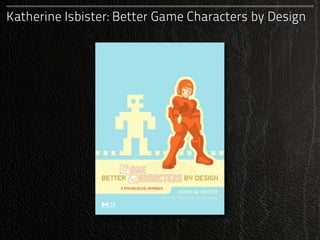
Katherine Isbister: Better Game Characters by Design
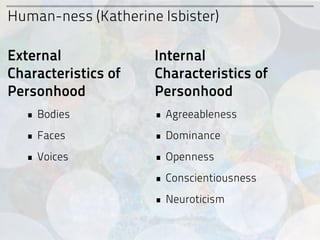
Human-ness (Katherine Isbister)

External             Internal
Characteristics of   Characteristics of
Personhood           Personhood
  • Bodies           • Agreeableness
  • Faces            • Dominance
  • Voices           • Openness
                     • Conscientiousness
                     • Neuroticism
The Three Qualia
 of the Human
    Interface
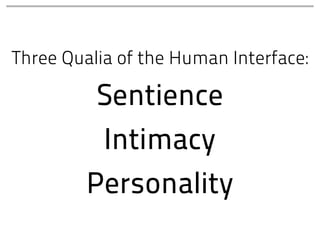
Three Qualia of the Human Interface:

          Sentience
          Intimacy
         Personality
Sentience
Sentience: The ability to feel or
perceive subjectively.
The system is able to collect
robust sensory data from the
world, and make sense of that
data.
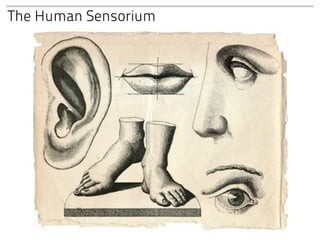
The Human Sensorium
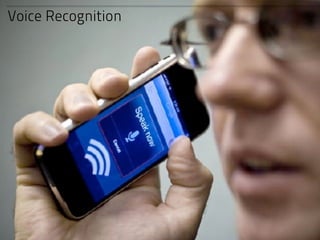
Voice Recognition
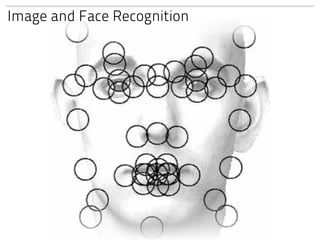
Image and Face Recognition
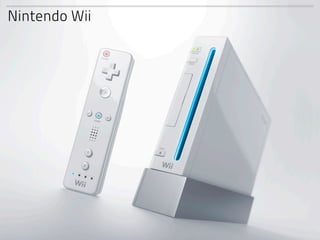
Nintendo Wii
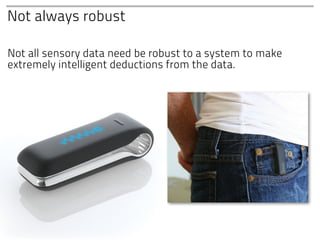
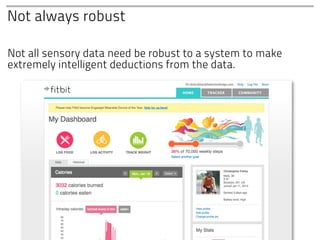
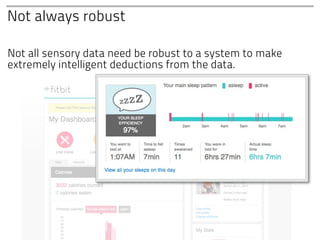
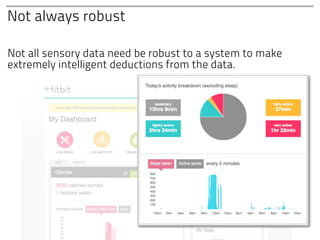
Not always robust

Not all sensory data need be robust to a system to make
extremely intelligent deductions from the data.
Not always robust

Not all sensory data need be robust to a system to make
extremely intelligent deductions from the data.
Not always robust

Not all sensory data need be robust to a system to make
extremely intelligent deductions from the data.
Not always robust

Not all sensory data need be robust to a system to make
extremely intelligent deductions from the data.
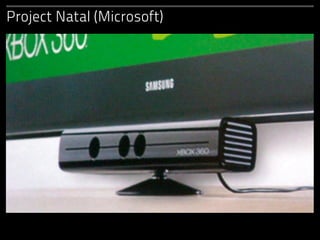
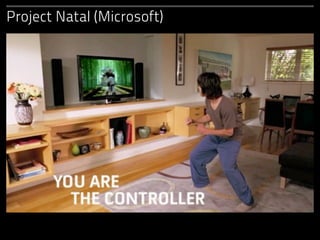
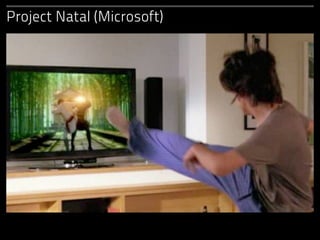
Project Natal (Microsoft)
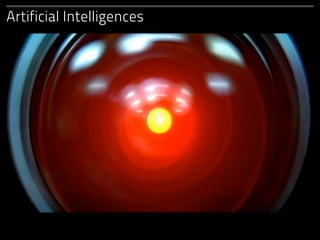
Artificial Intelligences
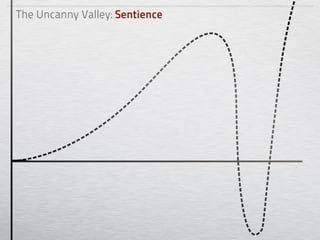
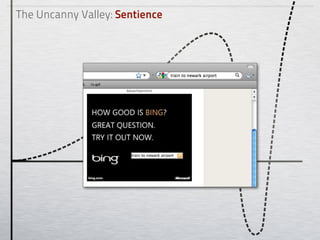
The Uncanny Valley: Sentience


                           Creepy stalker
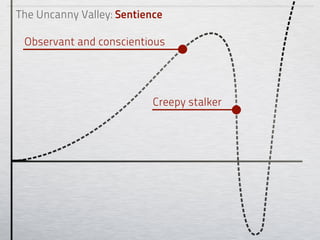
The Uncanny Valley: Sentience

 Observant and conscientious


                           Creepy stalker
Intimacy
2. Intimacy: The quality of being close,
comfortable, and familiar.
The system can interface with
humans extremely closely, up
close and personal, and with
our glad consent.
Intimacy

Intimacy can be facilitated with and through machines:
   • Emotional Intelligence
   • Proximity
   • Presence
   • Social Web
   • Personal Informatics
   • Multiplayer Games
   • Real Time Web
   • Conversations
Intimacy

Intimacy can be facilitated with and through machines:
   • Emotional Intelligence
   • Proximity
   • Presence
   • Social Web
   • Personal Informatics
   • Multiplayer Games
   • Real Time Web
   • Conversations
Intimacy

Intimacy can be facilitated with and through machines:
   • Emotional Intelligence
   • Proximity
   • Presence
   • Social Web
   • Personal Informatics
   • Multiplayer Games
   • Real Time Web
   • Conversations
Intimacy

Intimacy can be facilitated with and through machines:
   • Emotional Intelligence
   • Proximity
   • Presence
   • Social Web
   • Personal Informatics
   • Multiplayer Games
   • Real Time Web
   • Conversations
Intimacy

Intimacy can be facilitated with and through machines:
   • Emotional Intelligence
   • Proximity
   • Presence
   • Social Web
   • Personal Informatics
   • Multiplayer Games
   • Real Time Web
   • Conversations
Intimacy

Intimacy can be facilitated with and through machines:
   • Emotional Intelligence
   • Proximity
   • Presence
   • Social Web
   • Personal Informatics
   • Multiplayer Games
   • Real Time Web
   • Conversations
Intimacy

Intimacy can be facilitated with and through machines:
   • Emotional Intelligence
   • Proximity
   • Presence
   • Social Web
   • Personal Informatics
   • Multiplayer Games
   • Real Time Web
   • Conversations
Intimacy

Intimacy can be facilitated with and through machines:
   • Emotional Intelligence
   • Proximity
   • Presence
   • Social Web
   • Personal Informatics
   • Multiplayer Games
   • Real Time Web
   • Conversations
Intimacy

Intimacy can be facilitated with and through machines:
   • Emotional Intelligence
   • Proximity
   • Presence
   • Social Web
   • Personal Informatics
   • Multiplayer Games
   • Real Time Web
   • Conversations
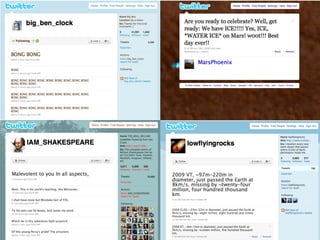
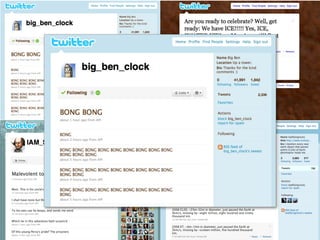
Machines that talk back
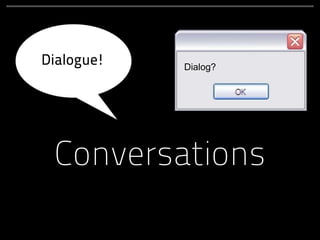
Conversations
Dialogue!   Dialog?


 Conversations
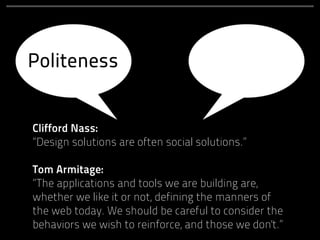
Politeness


Clifford Nass:
“Design solutions are often social solutions.”

Tom Armitage:
“The applications and tools we are building are,
whether we like it or not, defining the manners of
the web today. We should be careful to consider the
behaviors we wish to reinforce, and those we don't.”
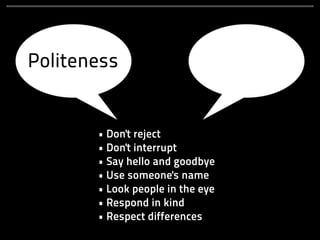
Politeness


       • Don't reject
       • Don't interrupt
       • Say hello and goodbye
       • Use someone's name
       • Look people in the eye
       • Respond in kind
       • Respect differences
Politeness   Praise


  Conversations
Identity
“You are not your job, you're not
how much money you have in the
bank, you're not the car you drive,
you're not the contents of your
wallet, you're not your fucking
khakis.”

- Tyler Durden, “Fight Club”
“You are not your job, you're not
how much money you have in the
bank, you're not the car you drive,
you're not the contents of your
wallet, you're not your fucking
khakis.”
No! You are your fucking khakis!
- Tyler Durden, “Fight Club”
Personality
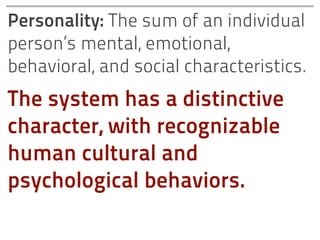
Personality: The sum of an individual
person’s mental, emotional,
behavioral, and social characteristics.
The system has a distinctive
character, with recognizable
human cultural and
psychological behaviors.
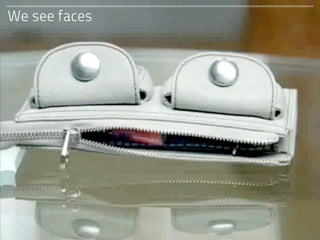
We see faces
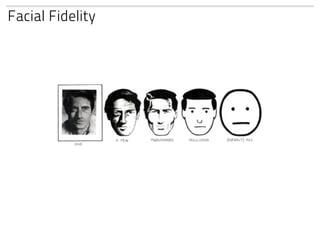
Facial Fidelity
The Uncanny Valley: Faces
Personality
Characteristics
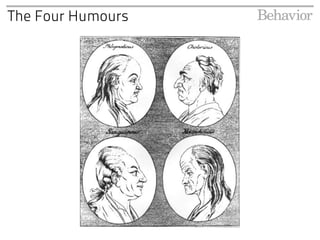
The Four Humours
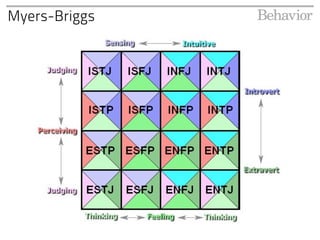
Myers-Briggs
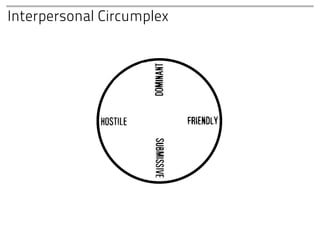
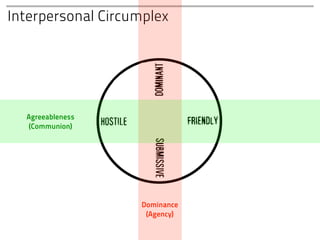
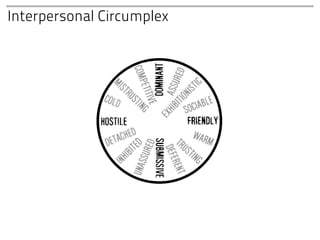
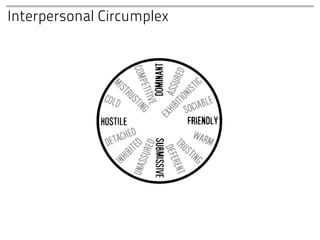
Interpersonal Circumplex


  Agreeableness
   (Communion)


                   Dominance
                    (Agency)
Interpersonal Circumplex
Voice
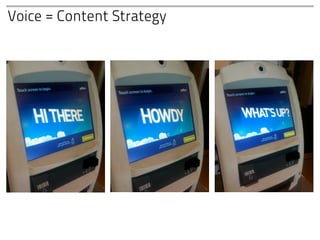
Voice = Content Strategy
Personality

Characters:
  • More than personality: Culture, Style
  • Casting
  • Names
  • Personas
  • Storytelling and Themes
Personality

Characters:
  • More than personality: Culture, Style
  • Casting
  • Names
  • Personas
  • Storytelling and Themes
Personality

Characters:
  • More than personality: Culture, Style
  • Casting
  • Names
  • Personas
  • Storytelling and Themes
Personality

Characters:
  • More than personality: Culture, Style
  • Casting
  • Names
  • Personas
  • Storytelling and Themes
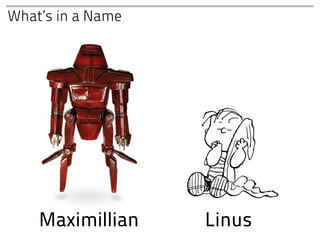
What’s in a Name


    Maximillian    Linus
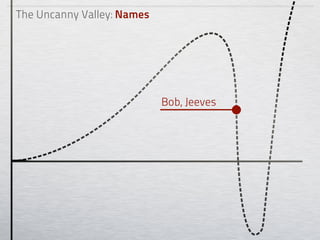
The Uncanny Valley: Names


                            Bob, Jeeves
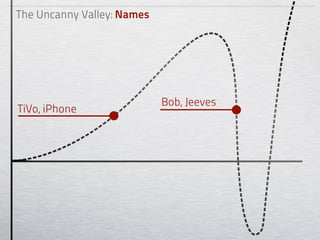
The Uncanny Valley: Names


                            Bob, Jeeves
TiVo, iPhone
Personality

Characters:
  • More than personality: Culture, Style
  • Casting
  • Names
  • Personas
  • Storytelling and Themes
Personality

Characters:
  • More than personality: Culture, Style
  • Casting
  • Names
  • Personas
  • Storytelling and Themes
Brands
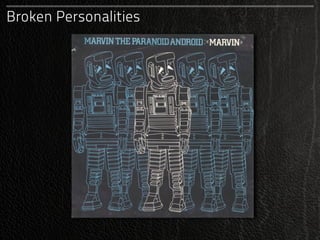
Broken Personalities
Conclusions
The
Human
Interface
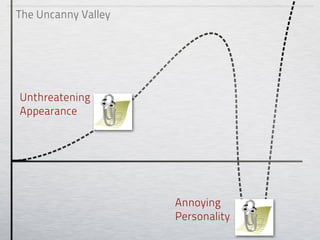
The Uncanny Valley


Unthreatening
Appearance


                     Annoying
                     Personality
Things to try

  • Use pronouns for your product: he, she.
  • Give your application a name
  • Do more visceral prototypes, things that have weight
    and that you can touch.
  • Collaborate with new disciplines
  • Go to a different field’s conference. Go to the Game
    Developer’s Conference, or to SIGGRAPH.
  • Tell more stories! Bring character-driven screenwriting
    and dramaturgy to your experience design.
If we don’t humanize
   our products, our
     products will
    mechanize us.
Thanks!
Christopher Fahey

@chrisfahey

#ixd10 #human


graphpaper.com

The Human Interface