HIGH ALERT MEDICATION
Reported by : VANESA K. DOYDORA, BSN RN
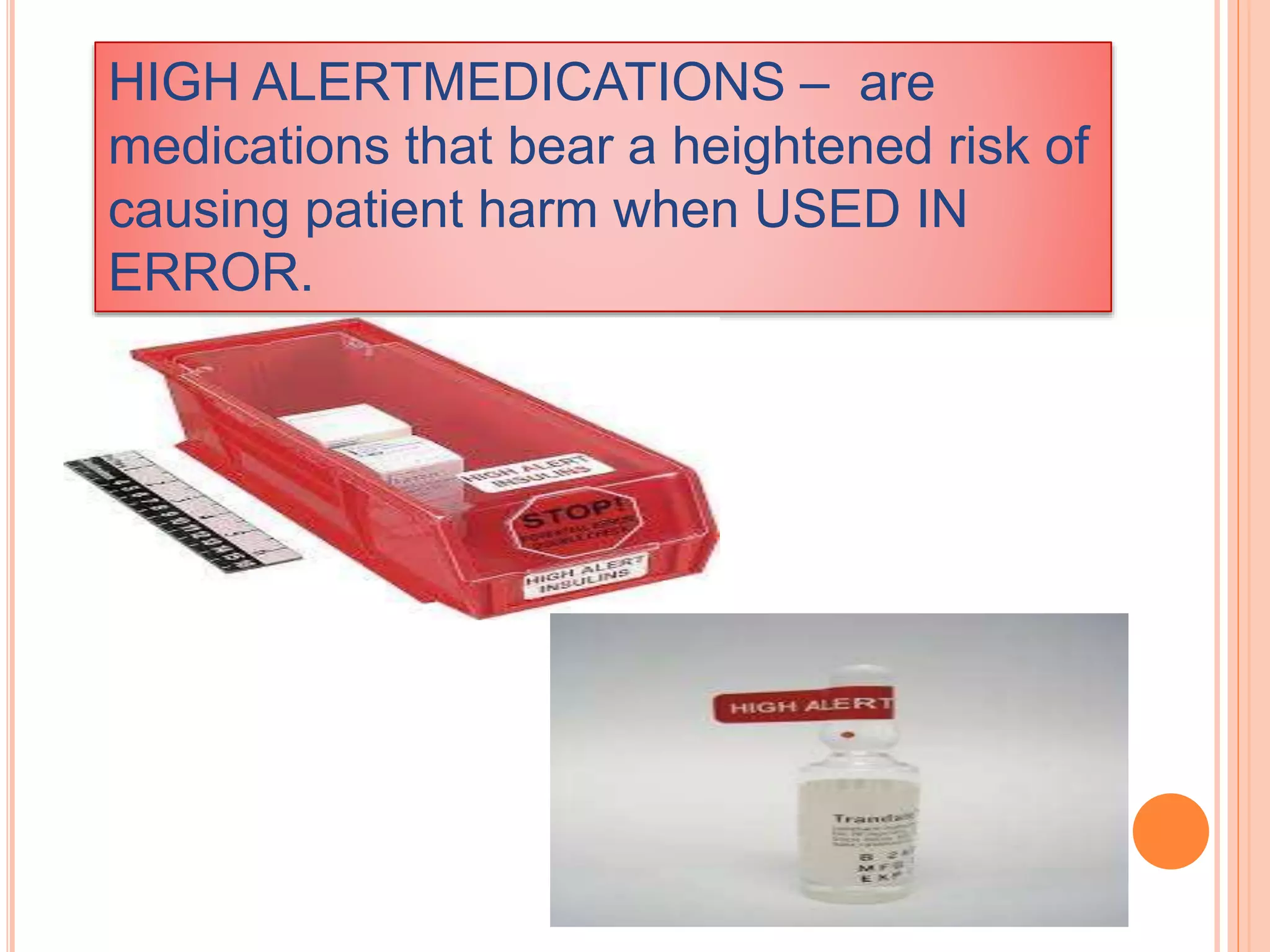
HIGH ALERTMEDICATIONS – are
medications that bear a heightened risk of
causing patient harm when USED IN
ERROR.
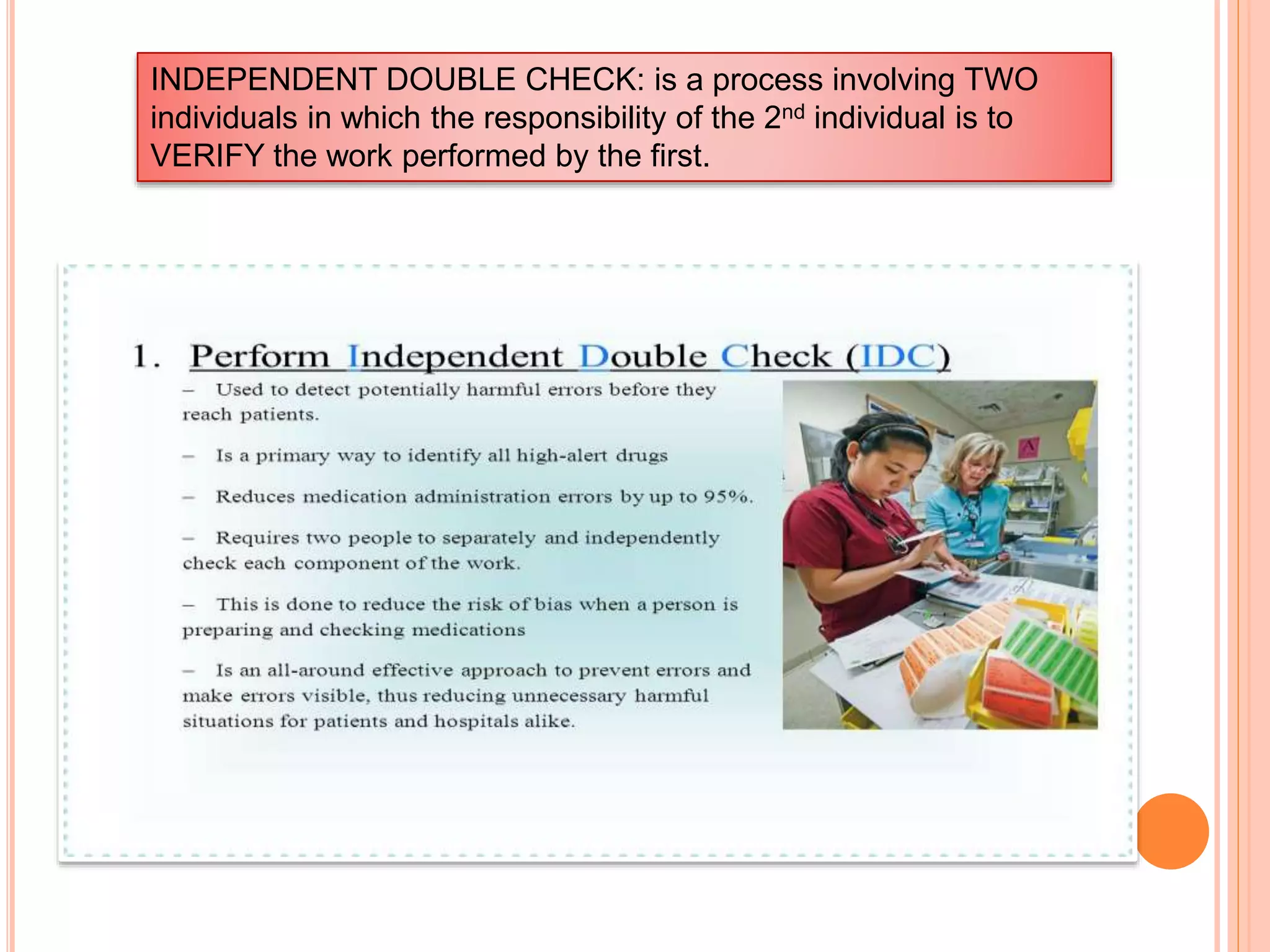
INDEPENDENT DOUBLE CHECK: is a process involving TWO
individuals in which the responsibility of the 2nd individual is to
VERIFY the work performed by the first.
Prohibited abbreviation is
not allowed except (
KCl,NaCl)
Concentrated
Electrolytes should not
be kept in the floor stock
High alert and
concentrated
Electrolytes
Medication
Storage in
locked cabinet
with key with the
head/charge
nurse of the
STORAGE:
The cabinet will have a prominent label
(HIGH ALERT OR CONCENTRATED
ELECTROLYTES) and each
medication are written in RED letter.
Should not be stored as floor stock in
areas that do not have locked cabinets
PRESCRIBING
Will be prescribed only by physician with
complete data of prescriptions.
The pharmacist and nursing staff will not carry
out prescription containing prohibited
abbreviation and he/sh is responsible to return it
back to the prescriber for correction
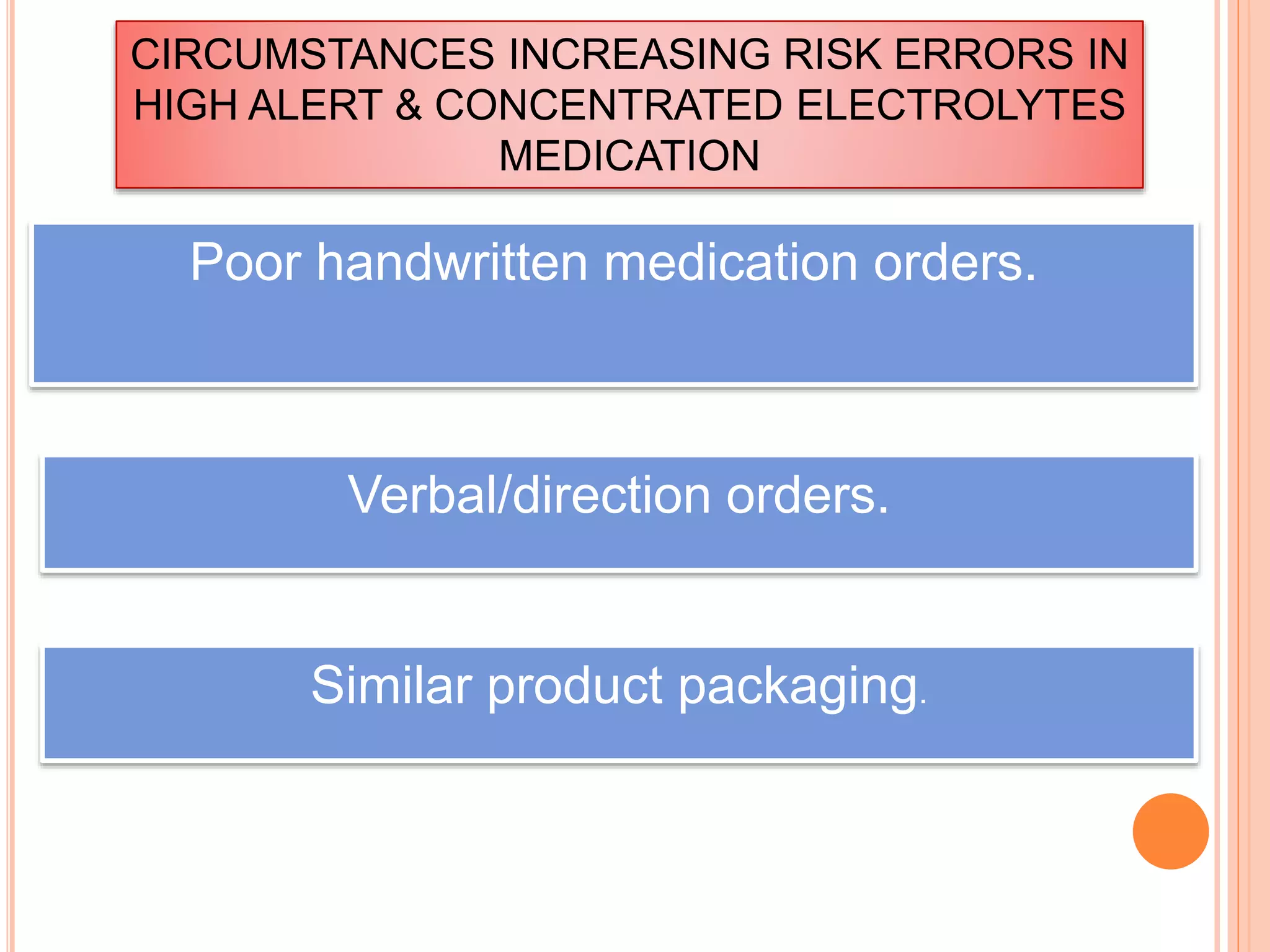
CIRCUMSTANCES INCREASING RISK ERRORS IN
HIGH ALERT & CONCENTRATED ELECTROLYTES
MEDICATION
Poor handwritten medication orders.
Verbal/direction orders.
Similar product packaging.
STRATEGIES TO AVOID ERRORS INVOLVING HIGH
RISK MEDICATIONS
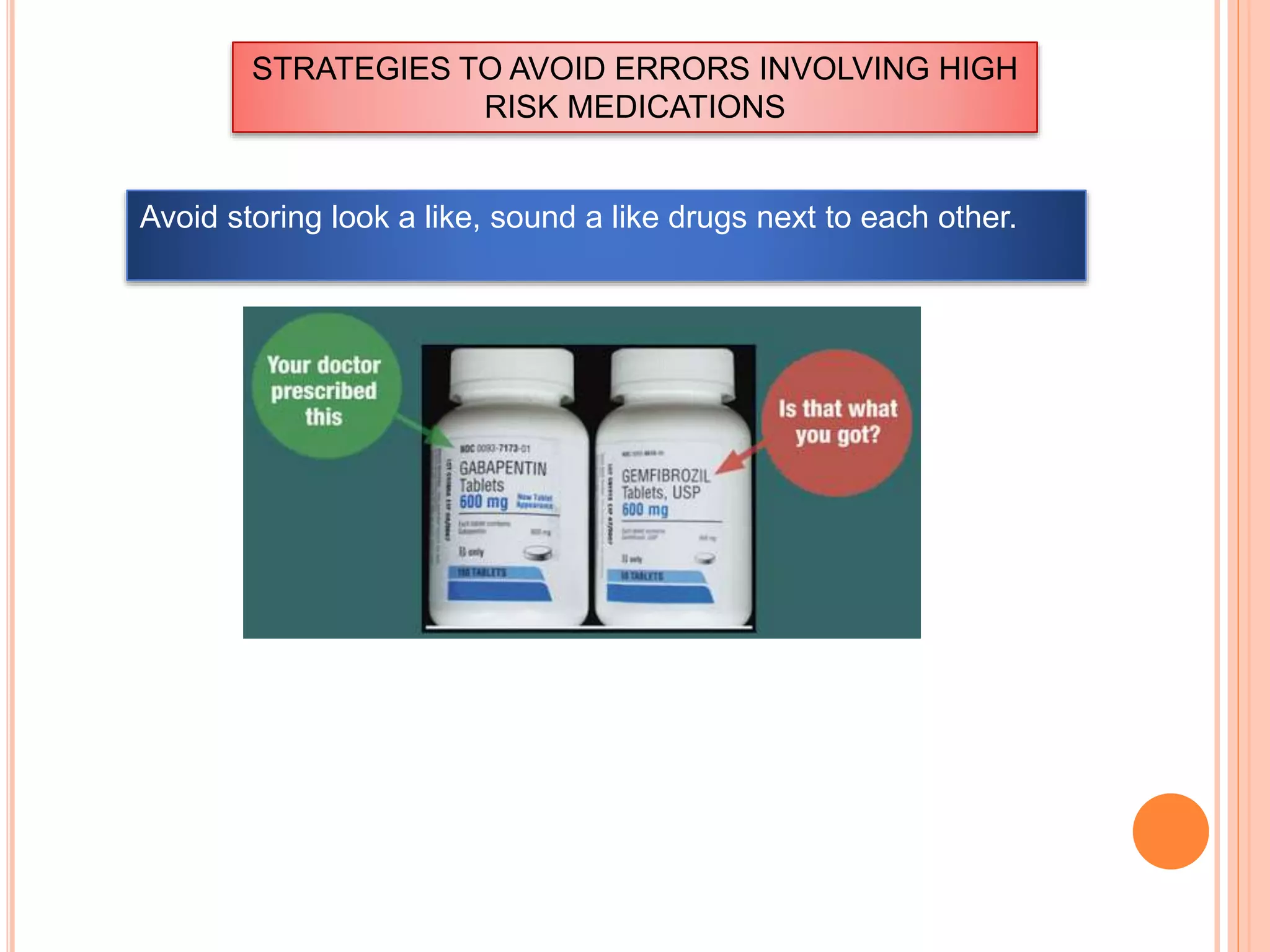
Avoid storing look a like, sound a like drugs next to each other.
High alert medication

High alert medication

  • 1.
    HIGH ALERT MEDICATION Reportedby : VANESA K. DOYDORA, BSN RN
  • 3.
    HIGH ALERTMEDICATIONS –are medications that bear a heightened risk of causing patient harm when USED IN ERROR.
  • 4.
    INDEPENDENT DOUBLE CHECK:is a process involving TWO individuals in which the responsibility of the 2nd individual is to VERIFY the work performed by the first.
  • 5.
    Prohibited abbreviation is notallowed except ( KCl,NaCl) Concentrated Electrolytes should not be kept in the floor stock
  • 6.
    High alert and concentrated Electrolytes Medication Storagein locked cabinet with key with the head/charge nurse of the
  • 7.
    STORAGE: The cabinet willhave a prominent label (HIGH ALERT OR CONCENTRATED ELECTROLYTES) and each medication are written in RED letter. Should not be stored as floor stock in areas that do not have locked cabinets
  • 8.
    PRESCRIBING Will be prescribedonly by physician with complete data of prescriptions. The pharmacist and nursing staff will not carry out prescription containing prohibited abbreviation and he/sh is responsible to return it back to the prescriber for correction
  • 9.
    CIRCUMSTANCES INCREASING RISKERRORS IN HIGH ALERT & CONCENTRATED ELECTROLYTES MEDICATION Poor handwritten medication orders. Verbal/direction orders. Similar product packaging.
  • 10.
    STRATEGIES TO AVOIDERRORS INVOLVING HIGH RISK MEDICATIONS Avoid storing look a like, sound a like drugs next to each other.