Prepared by Trushali Dodiya
Roll no:- 23
Enrollment no:- 4069206420220011
Sem:- 1(M. A.) Batch:- 2022-24
Paper no. :-103 Paper Code:- 22394
Paper name:- Literature of Romantics
Submitted to:- Smt. S. B. Gardi Department of
English, M.K.B.U.
Dated on:- 17/10/2022
Email:- trushalidodiya84@gmail.com
Points to ponder
● Introduction
● Search for Identity
● Human Identity
● Identity of the Creature
● Comparison of Frankenstein
with ‘The Hairy Ape'
● Conclusion
Introduction:-
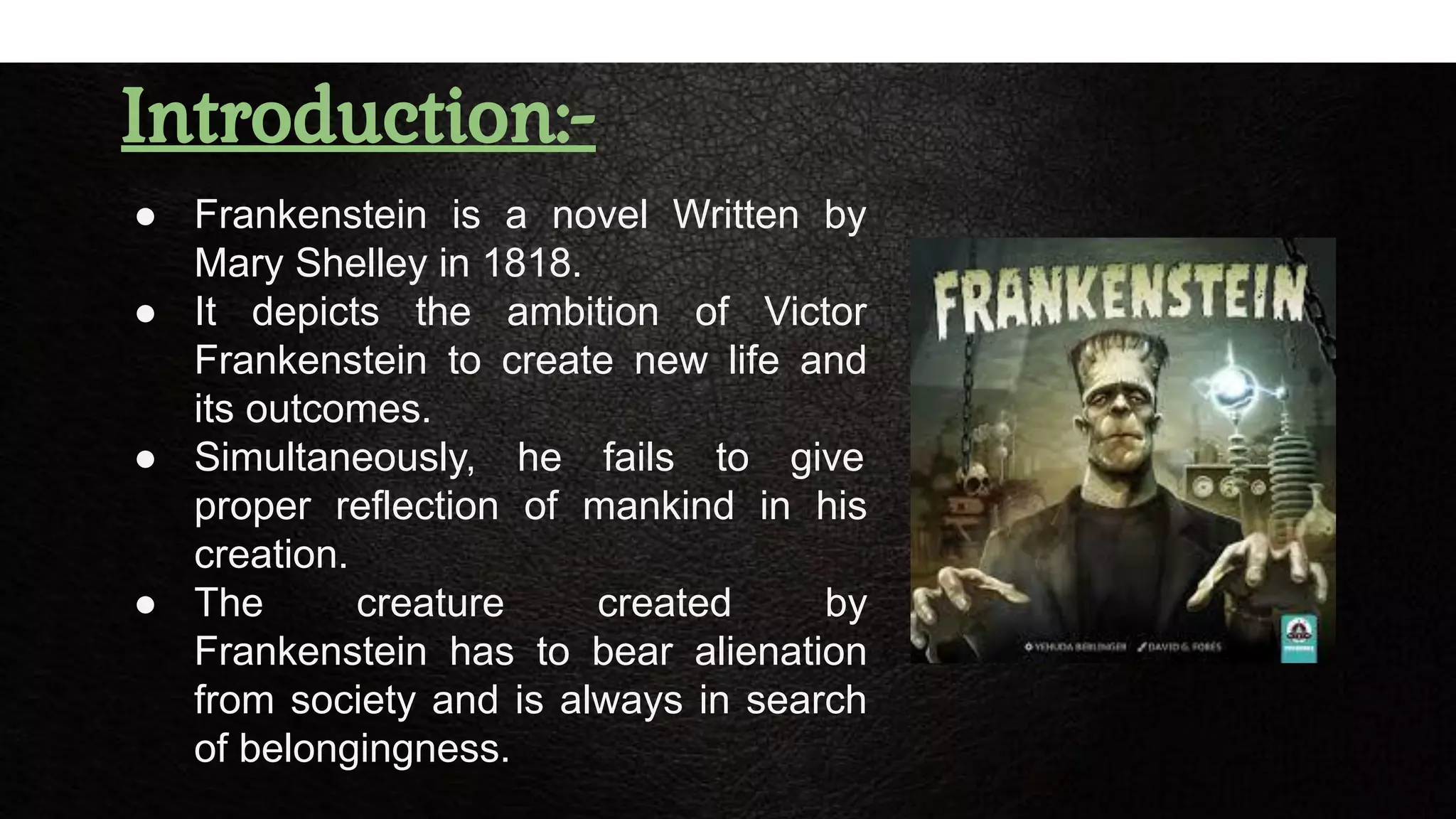
● Frankenstein is a novel Written by
Mary Shelley in 1818.
● It depicts the ambition of Victor
Frankenstein to create new life and
its outcomes.
● Simultaneously, he fails to give
proper reflection of mankind in his
creation.
● The creature created by
Frankenstein has to bear alienation
from society and is always in search
of belongingness.
Search for Identity
● Search for identity is the main theme of
Frankenstein
1. Victor
2. Creature
3. Elizabeth
“A new species would bless me as its creator and
source; many happy and excellent natures would owe
their being to me. No father could claim the gratitude of
his child so completely as I should deserve theirs.” (Shelley)
Search for Human Identity
● After the death of her mother Frankenstein becomes
clear to create a new life. He also starts dreaming to be
God for his invented Race.
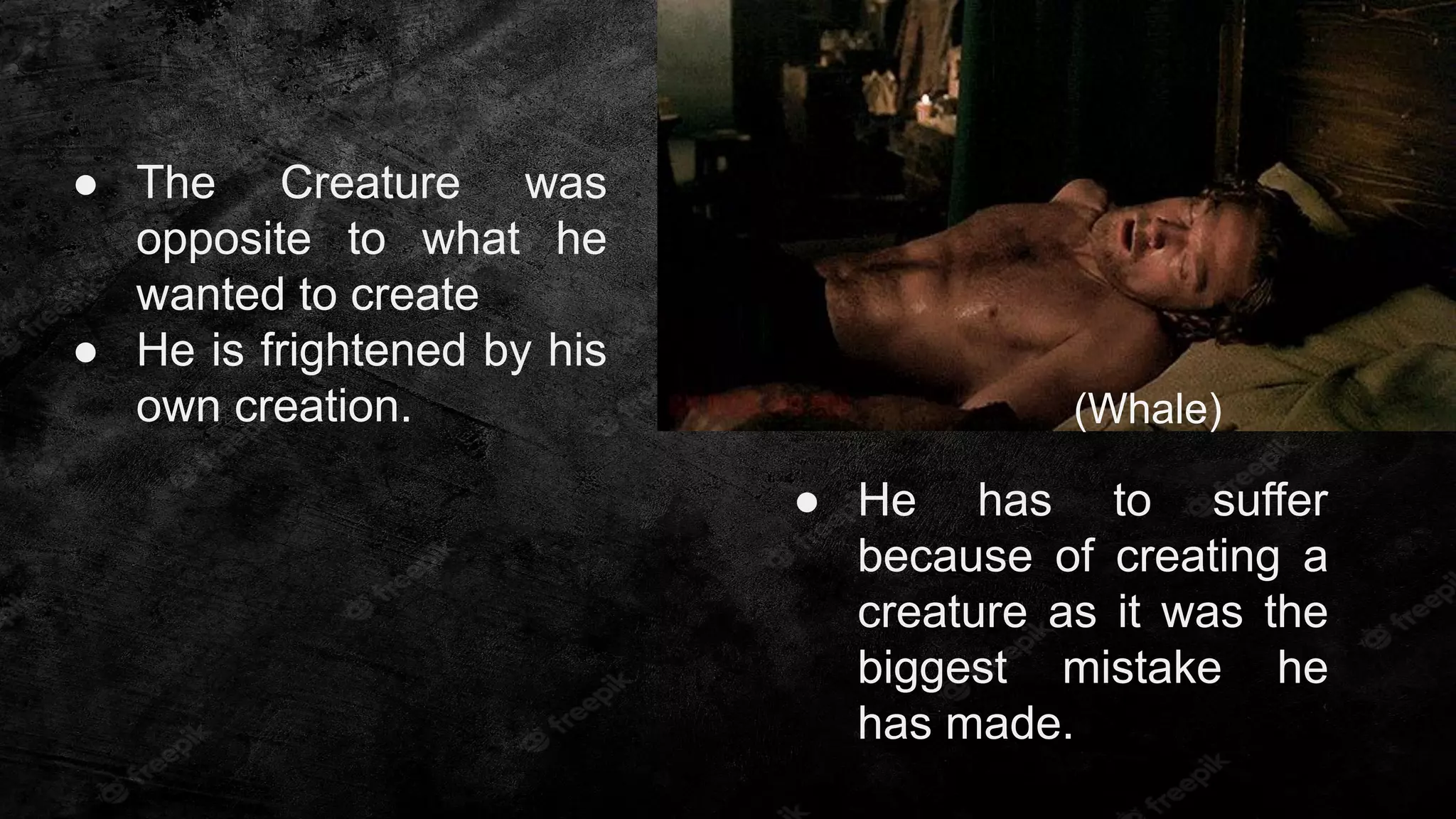
● The Creature was
opposite to what he
wanted to create
● He is frightened by his
own creation.
● He has to suffer
because of creating a
creature as it was the
biggest mistake he
has made.
(Whale)
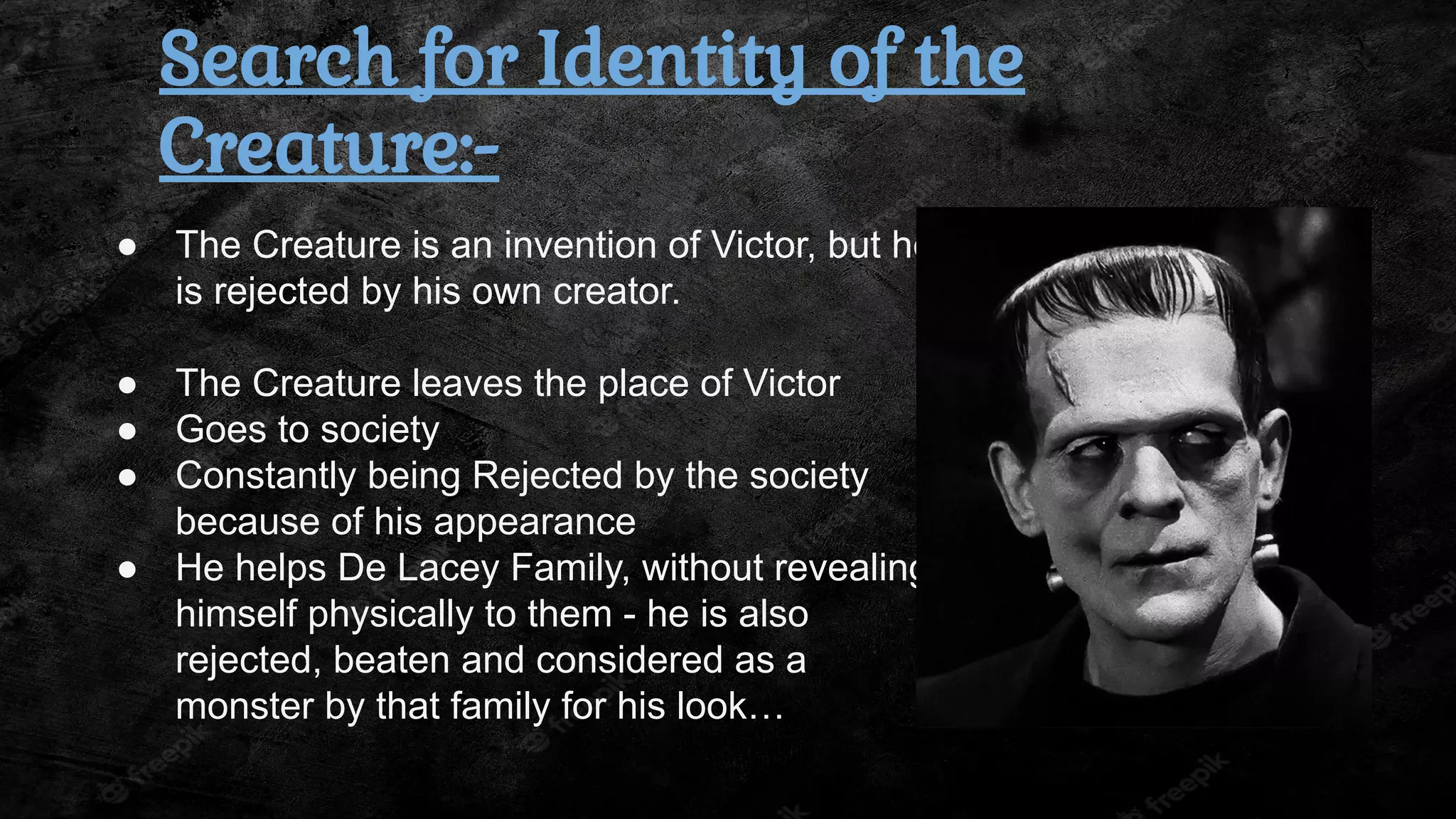
● The Creature is an invention of Victor, but he
is rejected by his own creator.
● The Creature leaves the place of Victor
● Goes to society
● Constantly being Rejected by the society
because of his appearance
● He helps De Lacey Family, without revealing
himself physically to them - he is also
rejected, beaten and considered as a
monster by that family for his look…
Search for Identity of the
Creature:-
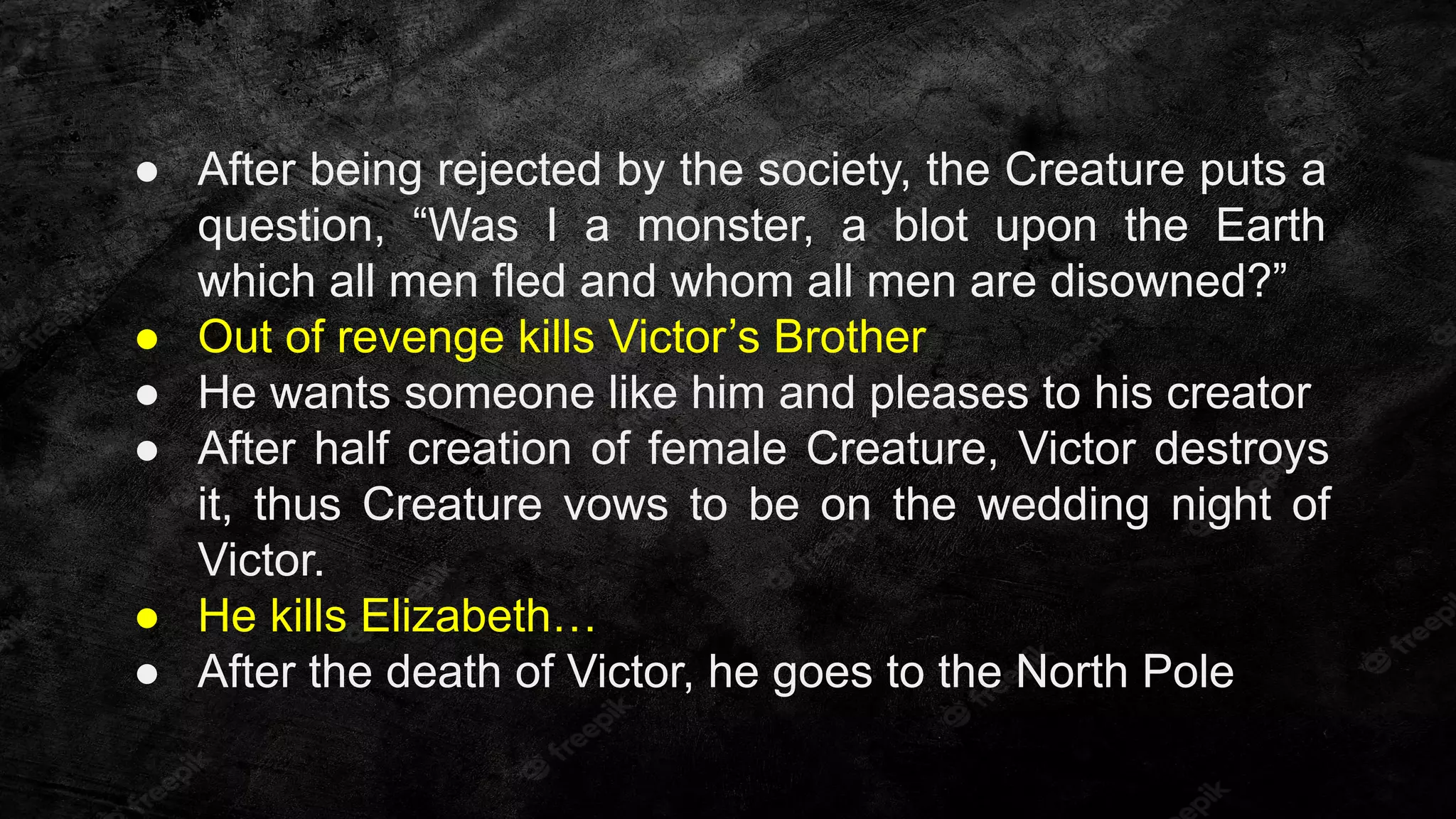
● After being rejected by the society, the Creature puts a
question, “Was I a monster, a blot upon the Earth
which all men fled and whom all men are disowned?”
● Out of revenge kills Victor’s Brother
● He wants someone like him and pleases to his creator
● After half creation of female Creature, Victor destroys
it, thus Creature vows to be on the wedding night of
Victor.
● He kills Elizabeth…
● After the death of Victor, he goes to the North Pole
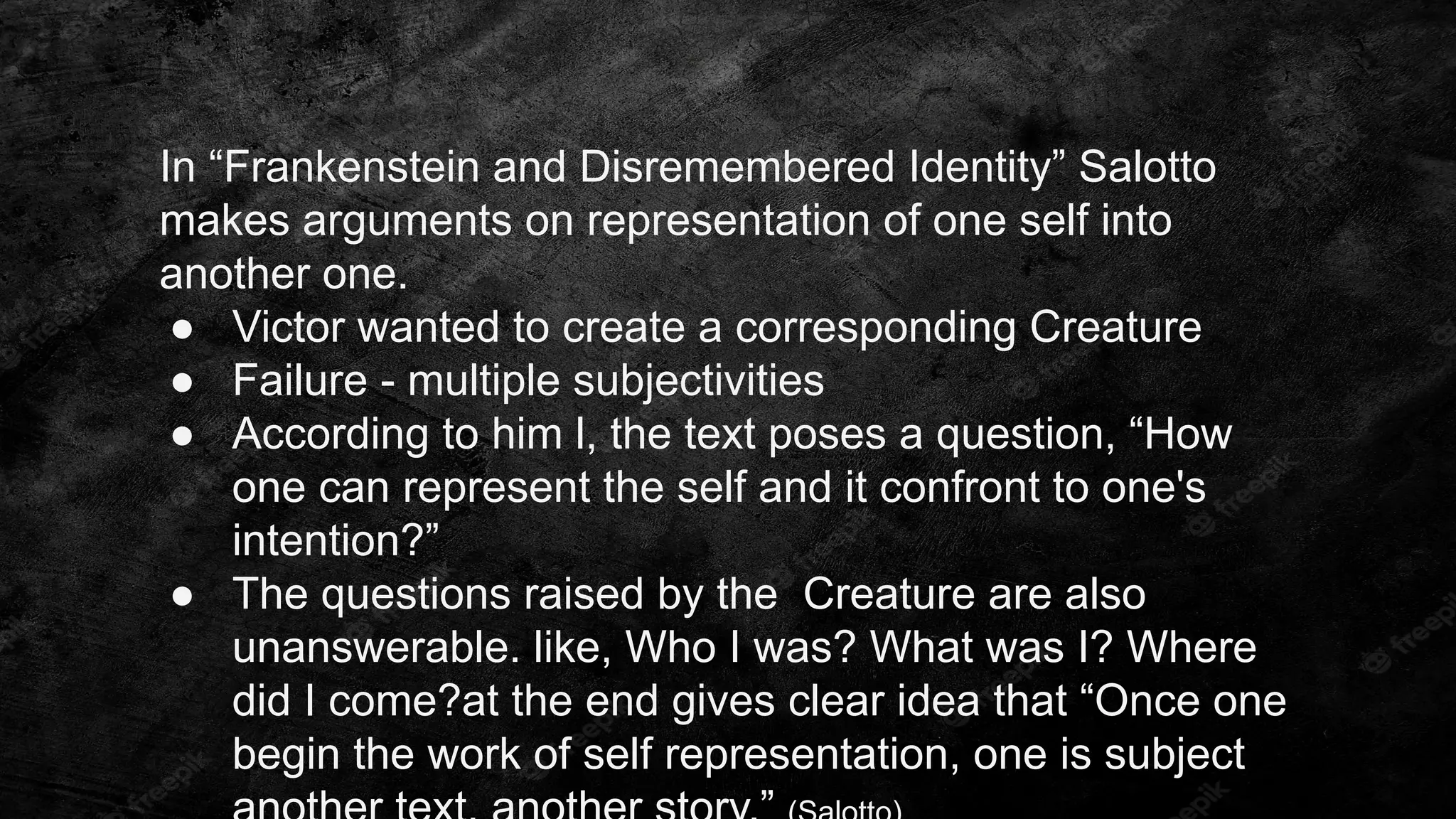
In “Frankenstein and Disremembered Identity” Salotto
makes arguments on representation of one self into
another one.
● Victor wanted to create a corresponding Creature
● Failure - multiple subjectivities
● According to him l, the text poses a question, “How
one can represent the self and it confront to one's
intention?”
● The questions raised by the Creature are also
unanswerable. like, Who I was? What was I? Where
did I come?at the end gives clear idea that “Once one
begin the work of self representation, one is subject
Comparison of
Frankenstein with The
Hairy Ape
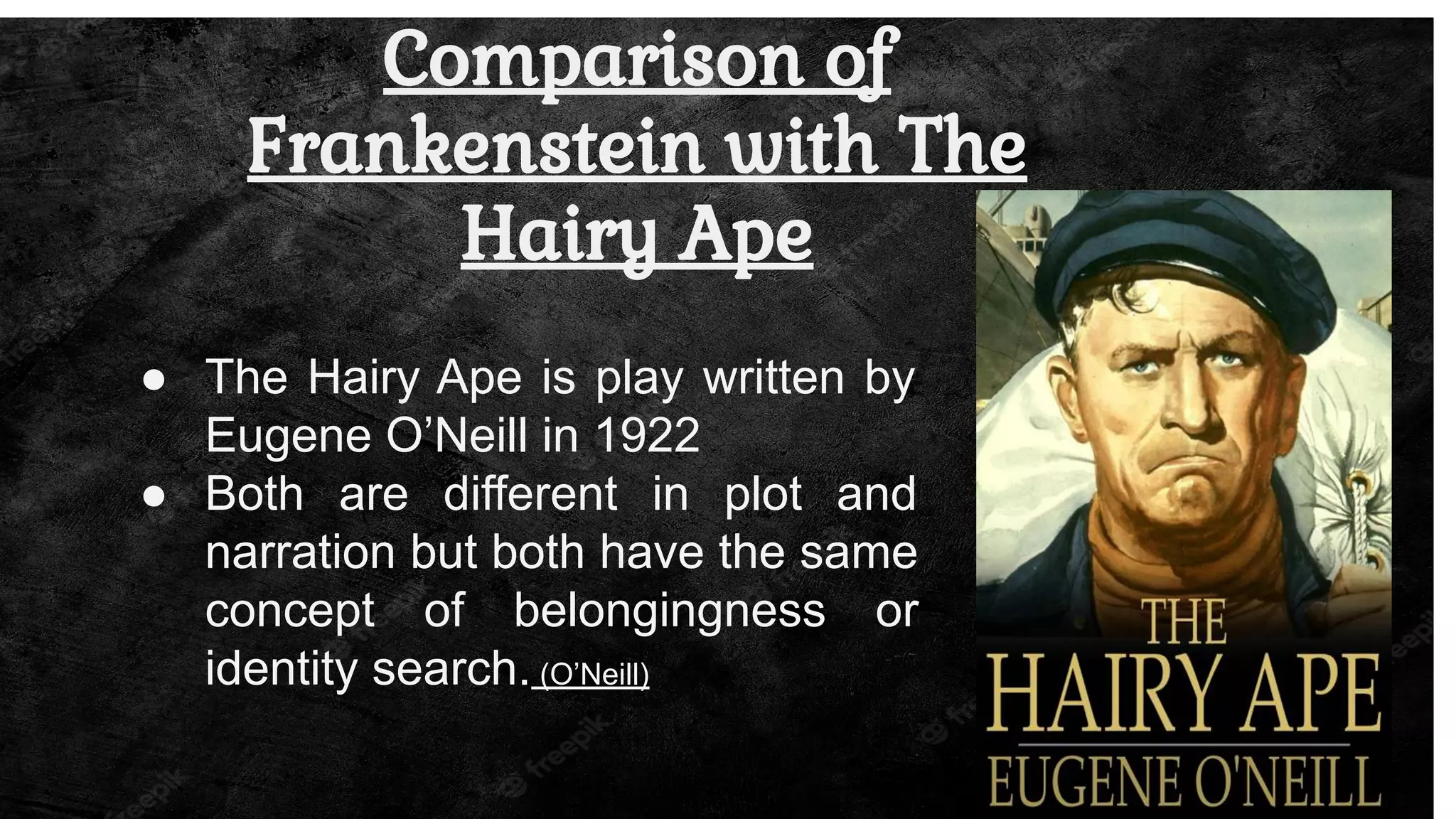
● The Hairy Ape is play written by
Eugene O’Neill in 1922
● Both are different in plot and
narration but both have the same
concept of belongingness or
identity search. (O’Neill)
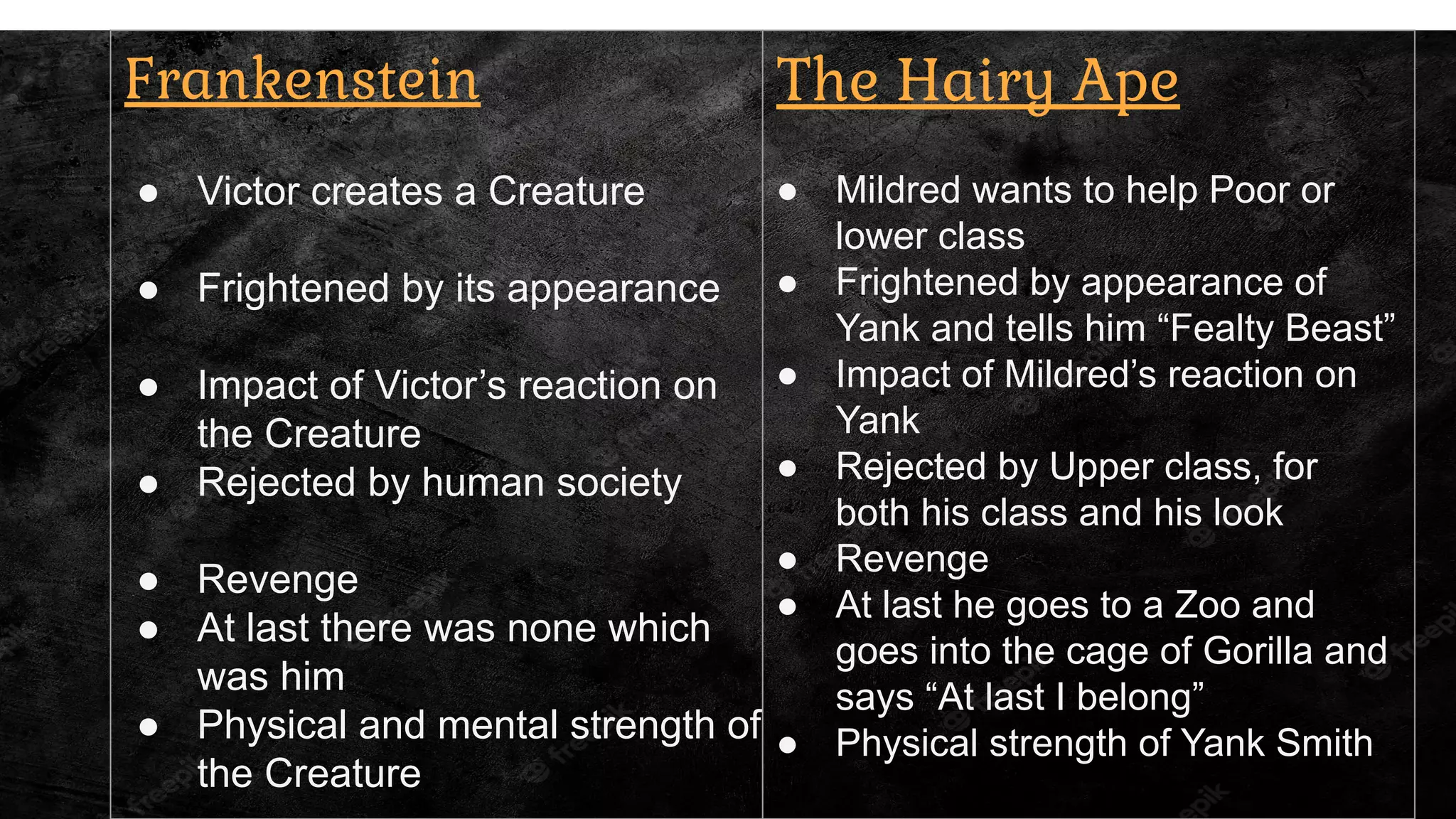
Frankenstein The Hairy Ape
● Victor creates a Creature
● Frightened by its appearance
● Impact of Victor’s reaction on
the Creature
● Rejected by human society
● Revenge
● At last there was none which
was him
● Physical and mental strength of
the Creature
● Mildred wants to help Poor or
lower class
● Frightened by appearance of
Yank and tells him “Fealty Beast”
● Impact of Mildred’s reaction on
Yank
● Rejected by Upper class, for
both his class and his look
● Revenge
● At last he goes to a Zoo and
goes into the cage of Gorilla and
says “At last I belong”
● Physical strength of Yank Smith
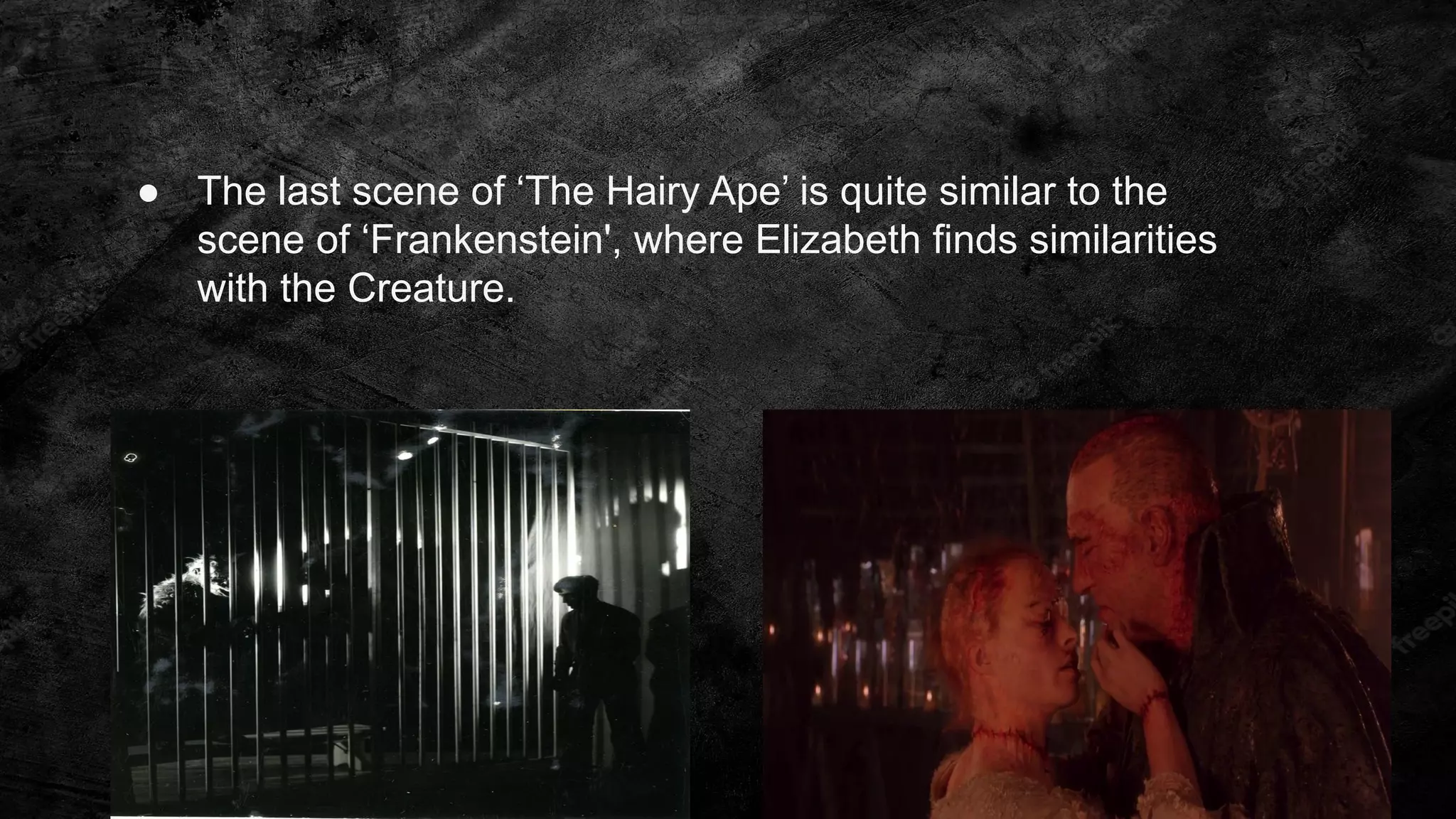
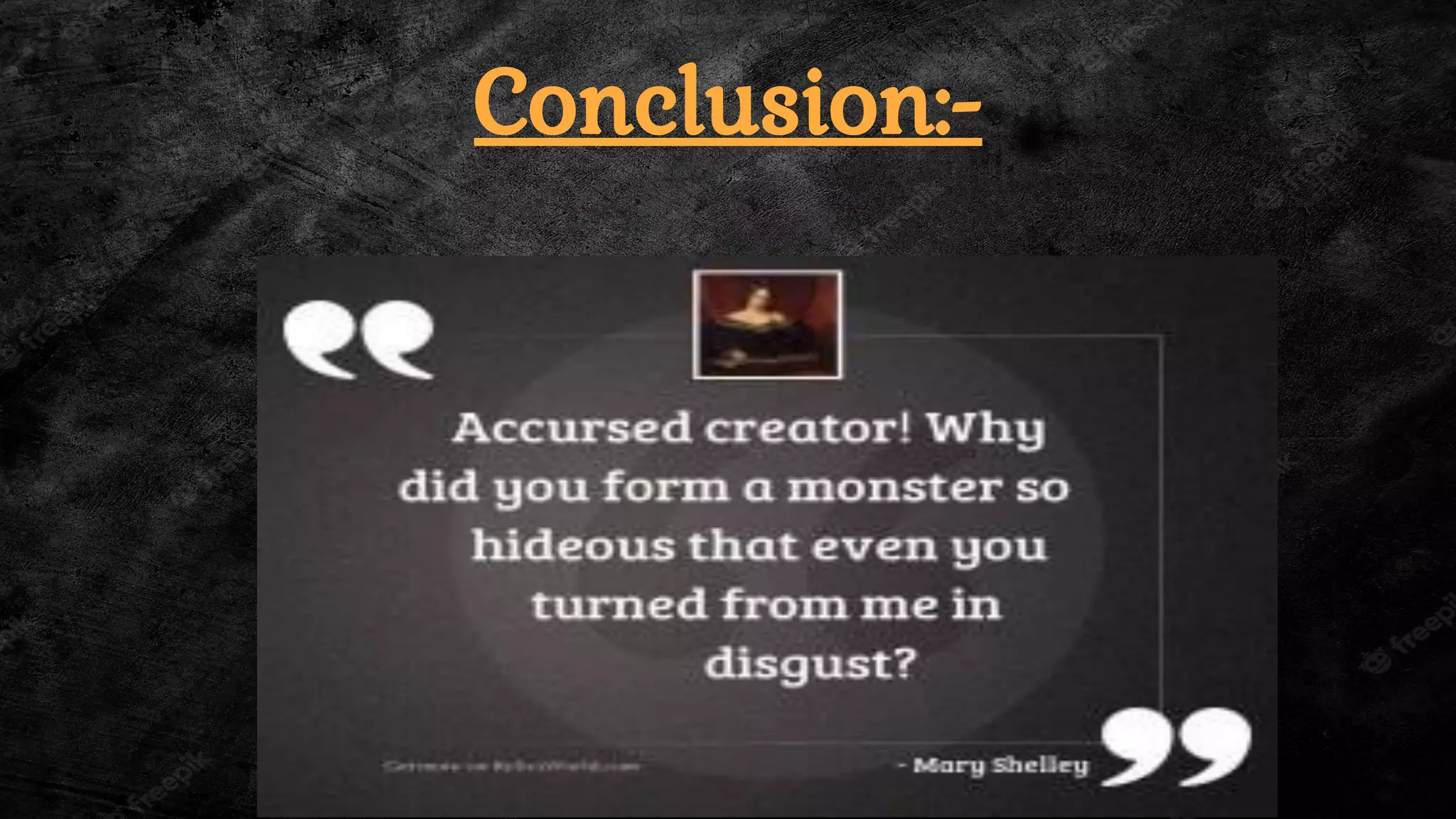
● The last scene of ‘The Hairy Ape’ is quite similar to the
scene of ‘Frankenstein', where Elizabeth finds similarities
with the Creature.
Conclusion:-
Work Cited
O'Neill, Eugene. The Hairy Ape. Australia, Floating Press, 2014.
Salotto, Eleanor. “‘Frankenstein’ and Dis(Re)Membered Identity.” The Journal
of Narrative Technique, vol. 24, no. 3, 1994, pp. 190–211. JSTOR,
http://www.jstor.org/stable/30225415. Accessed 17 Oct. 2022.
Shelley, Mary Wollstonecraft. Frankenstein (Wordsworth Classics)
(Wordsworth Classics). United Kingdom, Wordsworth Classics, 1992.
Whale, James, director. Frankenstein . Universal Picty, 1931.
Thank you

Search for Identity in 'Frankenstein'

  • 2.
    Prepared by TrushaliDodiya Roll no:- 23 Enrollment no:- 4069206420220011 Sem:- 1(M. A.) Batch:- 2022-24 Paper no. :-103 Paper Code:- 22394 Paper name:- Literature of Romantics Submitted to:- Smt. S. B. Gardi Department of English, M.K.B.U. Dated on:- 17/10/2022 Email:- trushalidodiya84@gmail.com
  • 3.
    Points to ponder ●Introduction ● Search for Identity ● Human Identity ● Identity of the Creature ● Comparison of Frankenstein with ‘The Hairy Ape' ● Conclusion
  • 4.
    Introduction:- ● Frankenstein isa novel Written by Mary Shelley in 1818. ● It depicts the ambition of Victor Frankenstein to create new life and its outcomes. ● Simultaneously, he fails to give proper reflection of mankind in his creation. ● The creature created by Frankenstein has to bear alienation from society and is always in search of belongingness.
  • 5.
    Search for Identity ●Search for identity is the main theme of Frankenstein 1. Victor 2. Creature 3. Elizabeth
  • 6.
    “A new specieswould bless me as its creator and source; many happy and excellent natures would owe their being to me. No father could claim the gratitude of his child so completely as I should deserve theirs.” (Shelley) Search for Human Identity ● After the death of her mother Frankenstein becomes clear to create a new life. He also starts dreaming to be God for his invented Race.
  • 7.
    ● The Creaturewas opposite to what he wanted to create ● He is frightened by his own creation. ● He has to suffer because of creating a creature as it was the biggest mistake he has made. (Whale)
  • 8.
    ● The Creatureis an invention of Victor, but he is rejected by his own creator. ● The Creature leaves the place of Victor ● Goes to society ● Constantly being Rejected by the society because of his appearance ● He helps De Lacey Family, without revealing himself physically to them - he is also rejected, beaten and considered as a monster by that family for his look… Search for Identity of the Creature:-
  • 9.
    ● After beingrejected by the society, the Creature puts a question, “Was I a monster, a blot upon the Earth which all men fled and whom all men are disowned?” ● Out of revenge kills Victor’s Brother ● He wants someone like him and pleases to his creator ● After half creation of female Creature, Victor destroys it, thus Creature vows to be on the wedding night of Victor. ● He kills Elizabeth… ● After the death of Victor, he goes to the North Pole
  • 10.
    In “Frankenstein andDisremembered Identity” Salotto makes arguments on representation of one self into another one. ● Victor wanted to create a corresponding Creature ● Failure - multiple subjectivities ● According to him l, the text poses a question, “How one can represent the self and it confront to one's intention?” ● The questions raised by the Creature are also unanswerable. like, Who I was? What was I? Where did I come?at the end gives clear idea that “Once one begin the work of self representation, one is subject
  • 11.
    Comparison of Frankenstein withThe Hairy Ape ● The Hairy Ape is play written by Eugene O’Neill in 1922 ● Both are different in plot and narration but both have the same concept of belongingness or identity search. (O’Neill)
  • 12.
    Frankenstein The HairyApe ● Victor creates a Creature ● Frightened by its appearance ● Impact of Victor’s reaction on the Creature ● Rejected by human society ● Revenge ● At last there was none which was him ● Physical and mental strength of the Creature ● Mildred wants to help Poor or lower class ● Frightened by appearance of Yank and tells him “Fealty Beast” ● Impact of Mildred’s reaction on Yank ● Rejected by Upper class, for both his class and his look ● Revenge ● At last he goes to a Zoo and goes into the cage of Gorilla and says “At last I belong” ● Physical strength of Yank Smith
  • 13.
    ● The lastscene of ‘The Hairy Ape’ is quite similar to the scene of ‘Frankenstein', where Elizabeth finds similarities with the Creature.
  • 14.
  • 15.
    Work Cited O'Neill, Eugene.The Hairy Ape. Australia, Floating Press, 2014. Salotto, Eleanor. “‘Frankenstein’ and Dis(Re)Membered Identity.” The Journal of Narrative Technique, vol. 24, no. 3, 1994, pp. 190–211. JSTOR, http://www.jstor.org/stable/30225415. Accessed 17 Oct. 2022. Shelley, Mary Wollstonecraft. Frankenstein (Wordsworth Classics) (Wordsworth Classics). United Kingdom, Wordsworth Classics, 1992. Whale, James, director. Frankenstein . Universal Picty, 1931.
  • 16.