Download to read offline





![Promise
● Promise.all( [ ] ), Promise.race( [ ] )
● Chaining: then() and catch() return promises
○ Promise() -> then() -> then() -> catch()
https://developer.mozilla.org/en-US/docs/Web/JavaScript/Reference/Global_Objects/Promise
http://www.2ality.com/2014/10/es6-promises-api.html](https://image.slidesharecdn.com/g5addfpmtkaqgsfvy40t-signature-def23658720ce5f306124ae536123ed643e7c52996ad0c3d22b879f4218e8d3e-poli-160122120154/85/Tech-friday-22-01-2016-13-320.jpg)

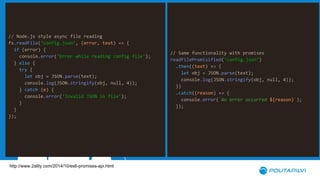



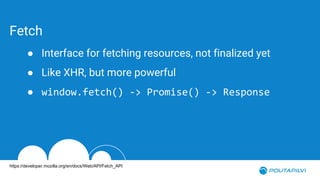


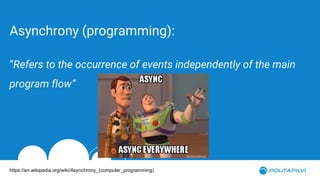
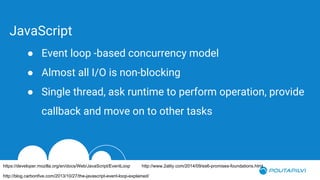
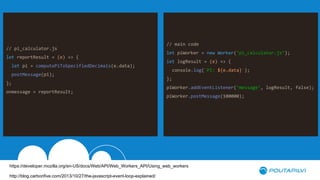
This document discusses asynchronous JavaScript and concurrency in JavaScript. It covers several key points: - JavaScript uses an event loop model where callbacks are used to handle asynchronous operations like I/O instead of blocking. This allows JavaScript to remain single-threaded. - The event loop processes the callback queue synchronously. When a callback finishes, the next message is processed. Timeouts like setTimeout allow callbacks to be delayed. - Promises and the newer async/await syntax provide cleaner ways to handle asynchronous code compared to callbacks alone. Web Workers also allow running scripts in background threads. - Technologies like AJAX and the Fetch API allow asynchronous HTTP requests from JavaScript. This enables asynchronous data fetching, which is


![JavaScript Promises Simplified [Free Meetup]](https://cdn.slidesharecdn.com/ss_thumbnails/promises20241001-241001092110-ceaab0a2-thumbnail.jpg?width=640&height=640&fit=bounds)


