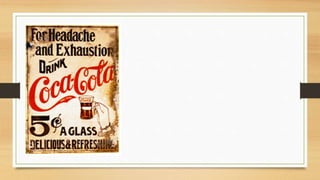
Soft drink advertising
M1: Evaluate different cross media advertising campaigns for
consistency of message assessment
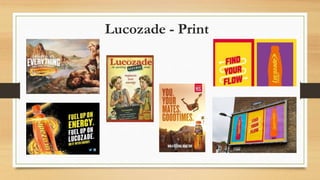
Lucozade - Print
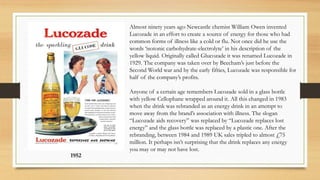
1952
Almost ninety years ago Newcastle chemist William Owen invented
Lucozade in an effort to create a source of energy for those who had
common forms of illness like a cold or flu. Not once did he use the
words ‘isotonic carbohydrate-electrolyte’ in his description of the
yellow liquid. Originally called Glucozade it was renamed Lucozade in
1929. The company was taken over by Beecham’s just before the
Second World war and by the early fifties, Lucozade was responsible for
half of the company’s profits.
Anyone of a certain age remembers Lucozade sold in a glass bottle
with yellow Cellophane wrapped around it. All this changed in 1983
when the drink was rebranded as an energy drink in an attempt to
move away from the brand’s association with illness. The slogan
“Lucozade aids recovery” was replaced by “Lucozade replaces lost
energy” and the glass bottle was replaced by a plastic one. After the
rebranding, between 1984 and 1989 UK sales tripled to almost £75
million. It perhaps isn’t surprising that the drink replaces any energy
you may or may not have lost.
1953
1952 2014 2019
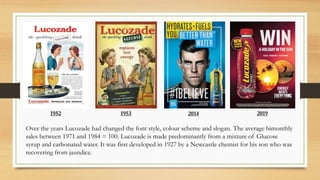
Over the years Lucozade had changed the font style, colour scheme and slogan. The average bimonthly
sales between 1971 and 1984 = 100. Lucozade is made predominantly from a mixture of Glucose
syrup and carbonated water. It was first developed in 1927 by a Newcastle chemist for his son who was
recovering from jaundice.
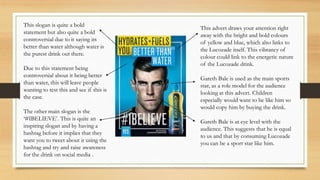
This advert draws your attention right
away with the bright and bold colours
of yellow and blue, which also links to
the Lucozade itself. This vibrancy of
colour could link to the energetic nature
of the Lucozade drink.
Gareth Bale is used as the main sports
star, as a role model for the audience
looking at this advert. Children
especially would want to be like him so
would copy him by buying the drink.
Gareth Bale is at eye level with the
audience. This suggests that he is equal
to us and that by consuming Lucozade
you can be a sport star like him.
This slogan is quite a bold
statement but also quite a bold
controversial due to it saying its
better than water although water is
the purest drink out there.
Due to this statement being
controversial about it being better
than water, this will leave people
wanting to test this and see if this is
the case.
The other main slogan is the
‘#IBELIEVE’. This is quite an
inspiring slogan and by having a
hashtag before it implies that they
want you to tweet about it using the
hashtag and try and raise awareness
for the drink on social media .
Lucozade adverts
• https://www.youtube.com/watch?v=6BCkGrGDD4Q
• https://www.youtube.com/watch?v=zGnrbby2Nok
• https://www.youtube.com/watch?v=JYcHj3_Wz_k
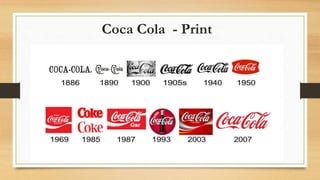
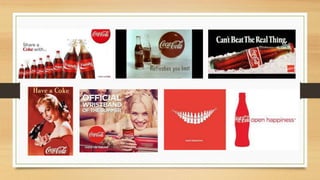
Coca Cola - Print
P1 Soft drink advertising comparisons

P1 Soft drink advertising comparisons

  • 1.
    Soft drink advertising M1:Evaluate different cross media advertising campaigns for consistency of message assessment
  • 2.
  • 3.
    1952 Almost ninety yearsago Newcastle chemist William Owen invented Lucozade in an effort to create a source of energy for those who had common forms of illness like a cold or flu. Not once did he use the words ‘isotonic carbohydrate-electrolyte’ in his description of the yellow liquid. Originally called Glucozade it was renamed Lucozade in 1929. The company was taken over by Beecham’s just before the Second World war and by the early fifties, Lucozade was responsible for half of the company’s profits. Anyone of a certain age remembers Lucozade sold in a glass bottle with yellow Cellophane wrapped around it. All this changed in 1983 when the drink was rebranded as an energy drink in an attempt to move away from the brand’s association with illness. The slogan “Lucozade aids recovery” was replaced by “Lucozade replaces lost energy” and the glass bottle was replaced by a plastic one. After the rebranding, between 1984 and 1989 UK sales tripled to almost £75 million. It perhaps isn’t surprising that the drink replaces any energy you may or may not have lost.
  • 4.
    1953 1952 2014 2019 Overthe years Lucozade had changed the font style, colour scheme and slogan. The average bimonthly sales between 1971 and 1984 = 100. Lucozade is made predominantly from a mixture of Glucose syrup and carbonated water. It was first developed in 1927 by a Newcastle chemist for his son who was recovering from jaundice.
  • 5.
    This advert drawsyour attention right away with the bright and bold colours of yellow and blue, which also links to the Lucozade itself. This vibrancy of colour could link to the energetic nature of the Lucozade drink. Gareth Bale is used as the main sports star, as a role model for the audience looking at this advert. Children especially would want to be like him so would copy him by buying the drink. Gareth Bale is at eye level with the audience. This suggests that he is equal to us and that by consuming Lucozade you can be a sport star like him. This slogan is quite a bold statement but also quite a bold controversial due to it saying its better than water although water is the purest drink out there. Due to this statement being controversial about it being better than water, this will leave people wanting to test this and see if this is the case. The other main slogan is the ‘#IBELIEVE’. This is quite an inspiring slogan and by having a hashtag before it implies that they want you to tweet about it using the hashtag and try and raise awareness for the drink on social media .
  • 6.
    Lucozade adverts • https://www.youtube.com/watch?v=6BCkGrGDD4Q •https://www.youtube.com/watch?v=zGnrbby2Nok • https://www.youtube.com/watch?v=JYcHj3_Wz_k
  • 7.