Syphilis – antenatal screening
algorithm and reporting
Ruth White
2
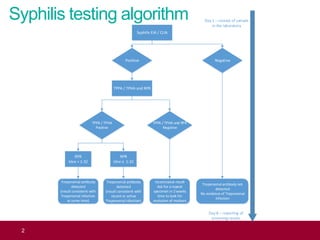
Syphilis testing algorithm
Syphilis EIA / CLIA
Positive Negative
TPPA / TPHA and RPR
TPPA / TPHA
Positive
TPPA / TPHA and RPR
Negative
Treponemal antibody not
detected
No evidence of Treponemal
infection
Inconclusive result
Ask for a repeat
specimen in 2 weeks
time to look for
evolution of markers
Treponemal antibody
detected
(result consistent with
Treponemal infection
at some time)
Treponemal antibody
detected
(result consistent with
recent or active
Treponemal infection)
RPR
titre
RPR
titre < 1:32
Day 1 – receipt of sample
in the laboratory
Day 8 – reporting of
screening results
Interpretation and Management
EIA/CLIA (Total) TPPA/TPHA RPR Clinical comments for reports
1 NEGATIVE Not necessary •Treponemal antibody not detected
•No evidence of treponemal pallidum infection
•Repeat if at risk of recent infection
2 POSITIVE or
Equivocal
POSITIVE NEGATIVE
titre <1:32
•Treponemal antibody detected
•Results consistent with treponemal infection at
some time
•Refer urgently for clinical evaluation
3 POSITIVE or
Equivocal
POSITIVE POSITIVE
titre ≥1:32
•Treponemal antibody detected
•Results consistent with recent or active
treponemal infection
•Refer urgently for clinical evaluation
4 POSITIVE or
Equivocal
NEGATIVE NEGATIVE* •Inconclusive result: repeat specimen
required after 2 weeks. If the same result is
achieved, sample to be sent to reference
laboratory. A report will be issued when the
reference laboratory report is received.
3
A positive RPR, with a negative TPPA/TPHA is an unusual result and both
tests should be repeated in the first instance. If the result is confirmed a
repeat specimen should be requested, and if the same result is achieved
the sample should be sent to the reference lab.
4
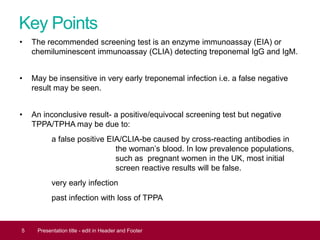
Key Points
• The recommended screening test is an enzyme immunoassay (EIA) or
chemiluminescent immunoassay (CLIA) detecting treponemal IgG and IgM.
• May be insensitive in very early treponemal infection i.e. a false negative
result may be seen.
• An inconclusive result- a positive/equivocal screening test but negative
TPPA/TPHA may be due to:
a false positive EIA/CLIA-be caused by cross-reacting antibodies in
the woman’s blood. In low prevalence populations,
such as pregnant women in the UK, most initial
screen reactive results will be false.
very early infection
past infection with loss of TPPA
5 Presentation title - edit in Header and Footer
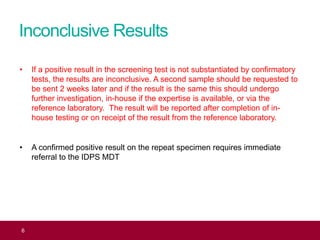
Inconclusive Results
• If a positive result in the screening test is not substantiated by confirmatory
tests, the results are inconclusive. A second sample should be requested to
be sent 2 weeks later and if the result is the same this should undergo
further investigation, in-house if the expertise is available, or via the
reference laboratory. The result will be reported after completion of in-
house testing or on receipt of the result from the reference laboratory.
• A confirmed positive result on the repeat specimen requires immediate
referral to the IDPS MDT
6
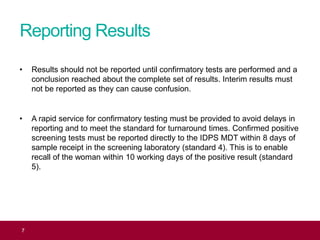
Reporting Results
• Results should not be reported until confirmatory tests are performed and a
conclusion reached about the complete set of results. Interim results must
not be reported as they can cause confusion.
• A rapid service for confirmatory testing must be provided to avoid delays in
reporting and to meet the standard for turnaround times. Confirmed positive
screening tests must be reported directly to the IDPS MDT within 8 days of
sample receipt in the screening laboratory (standard 4). This is to enable
recall of the woman within 10 working days of the positive result (standard
5).
7
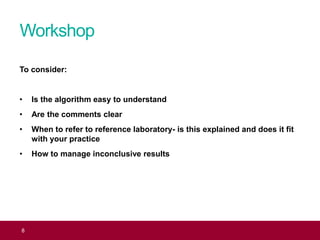
Workshop
8
To consider:
• Is the algorithm easy to understand
• Are the comments clear
• When to refer to reference laboratory- is this explained and does it fit
with your practice
• How to manage inconclusive results

3. Ruth White syphilis presentation march 2019 (rw)

  • 1.
    Syphilis – antenatalscreening algorithm and reporting Ruth White
  • 2.
    2 Syphilis testing algorithm SyphilisEIA / CLIA Positive Negative TPPA / TPHA and RPR TPPA / TPHA Positive TPPA / TPHA and RPR Negative Treponemal antibody not detected No evidence of Treponemal infection Inconclusive result Ask for a repeat specimen in 2 weeks time to look for evolution of markers Treponemal antibody detected (result consistent with Treponemal infection at some time) Treponemal antibody detected (result consistent with recent or active Treponemal infection) RPR titre RPR titre < 1:32 Day 1 – receipt of sample in the laboratory Day 8 – reporting of screening results
  • 3.
    Interpretation and Management EIA/CLIA(Total) TPPA/TPHA RPR Clinical comments for reports 1 NEGATIVE Not necessary •Treponemal antibody not detected •No evidence of treponemal pallidum infection •Repeat if at risk of recent infection 2 POSITIVE or Equivocal POSITIVE NEGATIVE titre <1:32 •Treponemal antibody detected •Results consistent with treponemal infection at some time •Refer urgently for clinical evaluation 3 POSITIVE or Equivocal POSITIVE POSITIVE titre ≥1:32 •Treponemal antibody detected •Results consistent with recent or active treponemal infection •Refer urgently for clinical evaluation 4 POSITIVE or Equivocal NEGATIVE NEGATIVE* •Inconclusive result: repeat specimen required after 2 weeks. If the same result is achieved, sample to be sent to reference laboratory. A report will be issued when the reference laboratory report is received. 3
  • 4.
    A positive RPR,with a negative TPPA/TPHA is an unusual result and both tests should be repeated in the first instance. If the result is confirmed a repeat specimen should be requested, and if the same result is achieved the sample should be sent to the reference lab. 4
  • 5.
    Key Points • Therecommended screening test is an enzyme immunoassay (EIA) or chemiluminescent immunoassay (CLIA) detecting treponemal IgG and IgM. • May be insensitive in very early treponemal infection i.e. a false negative result may be seen. • An inconclusive result- a positive/equivocal screening test but negative TPPA/TPHA may be due to: a false positive EIA/CLIA-be caused by cross-reacting antibodies in the woman’s blood. In low prevalence populations, such as pregnant women in the UK, most initial screen reactive results will be false. very early infection past infection with loss of TPPA 5 Presentation title - edit in Header and Footer
  • 6.
    Inconclusive Results • Ifa positive result in the screening test is not substantiated by confirmatory tests, the results are inconclusive. A second sample should be requested to be sent 2 weeks later and if the result is the same this should undergo further investigation, in-house if the expertise is available, or via the reference laboratory. The result will be reported after completion of in- house testing or on receipt of the result from the reference laboratory. • A confirmed positive result on the repeat specimen requires immediate referral to the IDPS MDT 6
  • 7.
    Reporting Results • Resultsshould not be reported until confirmatory tests are performed and a conclusion reached about the complete set of results. Interim results must not be reported as they can cause confusion. • A rapid service for confirmatory testing must be provided to avoid delays in reporting and to meet the standard for turnaround times. Confirmed positive screening tests must be reported directly to the IDPS MDT within 8 days of sample receipt in the screening laboratory (standard 4). This is to enable recall of the woman within 10 working days of the positive result (standard 5). 7
  • 8.
    Workshop 8 To consider: • Isthe algorithm easy to understand • Are the comments clear • When to refer to reference laboratory- is this explained and does it fit with your practice • How to manage inconclusive results