Homeworking and its effects on productivity
and well-being
Darja REUSCHKE
Associate Professor in Human Geography
University of Southampton, UK
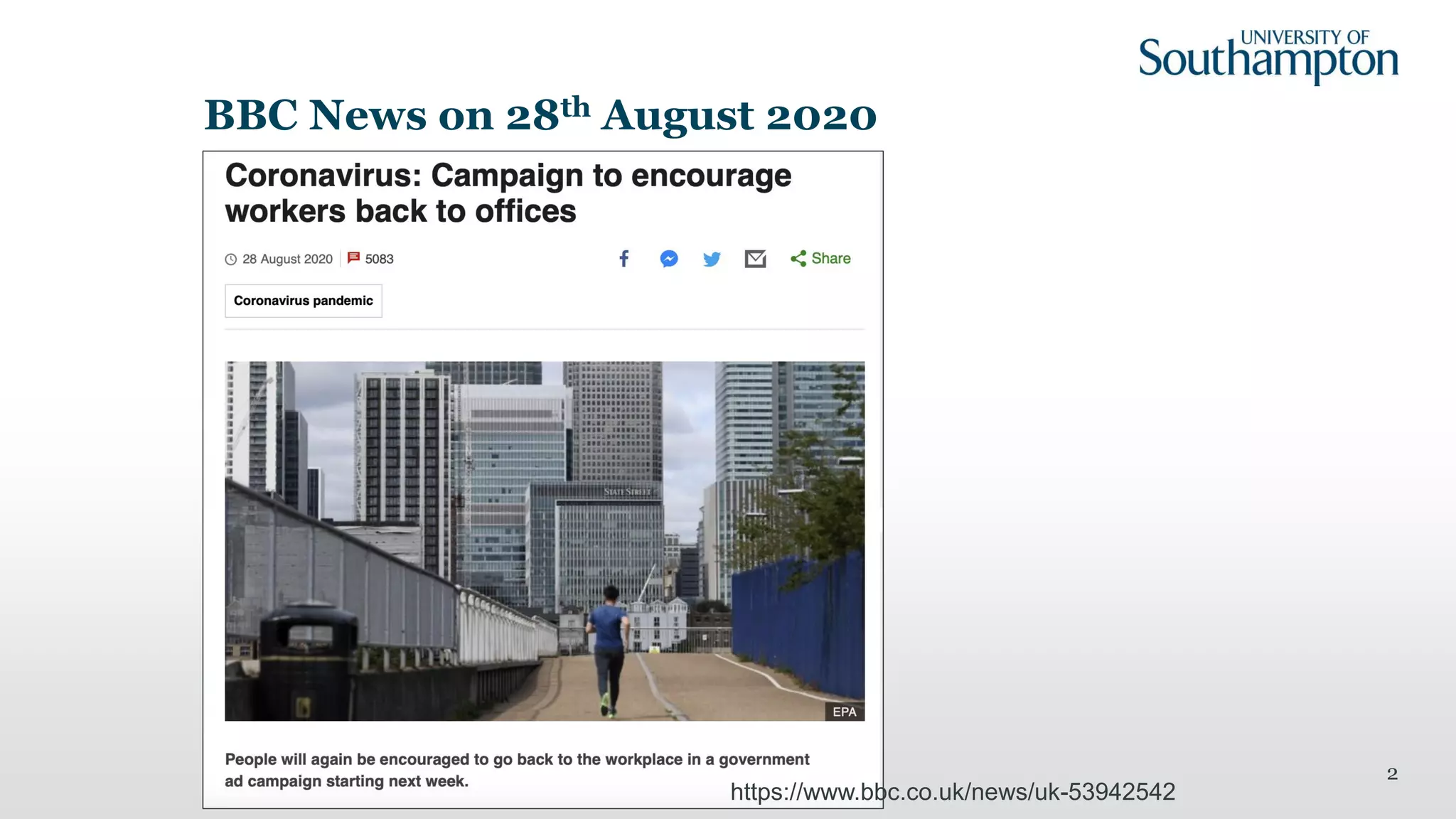
BBC News on 28th August 2020
https://www.bbc.co.uk/news/uk-53942542
2
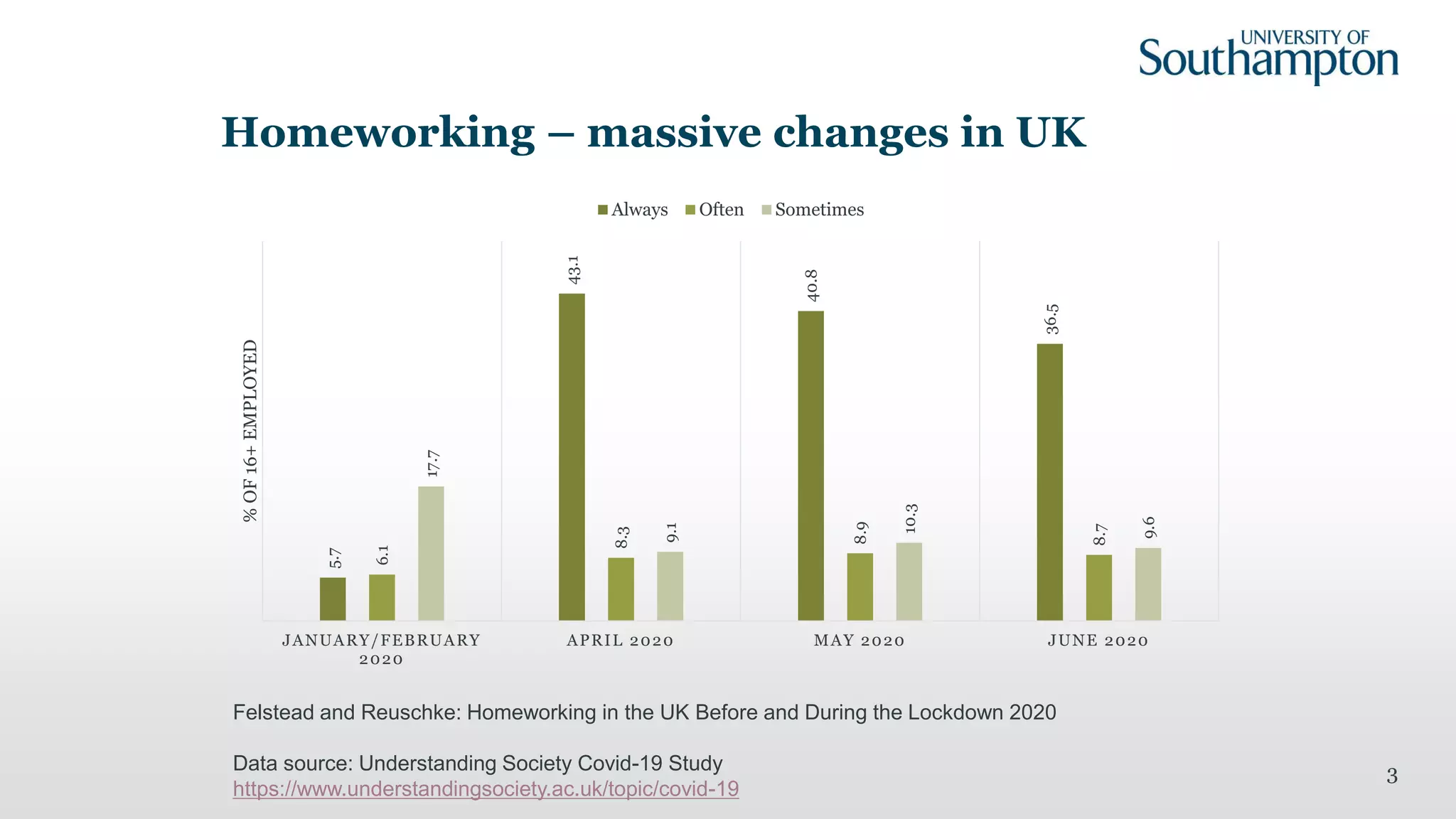
Homeworking – massive changes in UK
5.7
43.1
40.8
36.5
6.1
8.3
8.9
8.7
17.7
9.1
10.3
9.6
JANUARY/FEBRUARY
2020
APRIL 2020 MAY 2020 JUNE 2020
%OF16+EMPLOYED
Always Often Sometimes
Felstead and Reuschke: Homeworking in the UK Before and During the Lockdown 2020
Data source: Understanding Society Covid-19 Study
https://www.understandingsociety.ac.uk/topic/covid-19
3
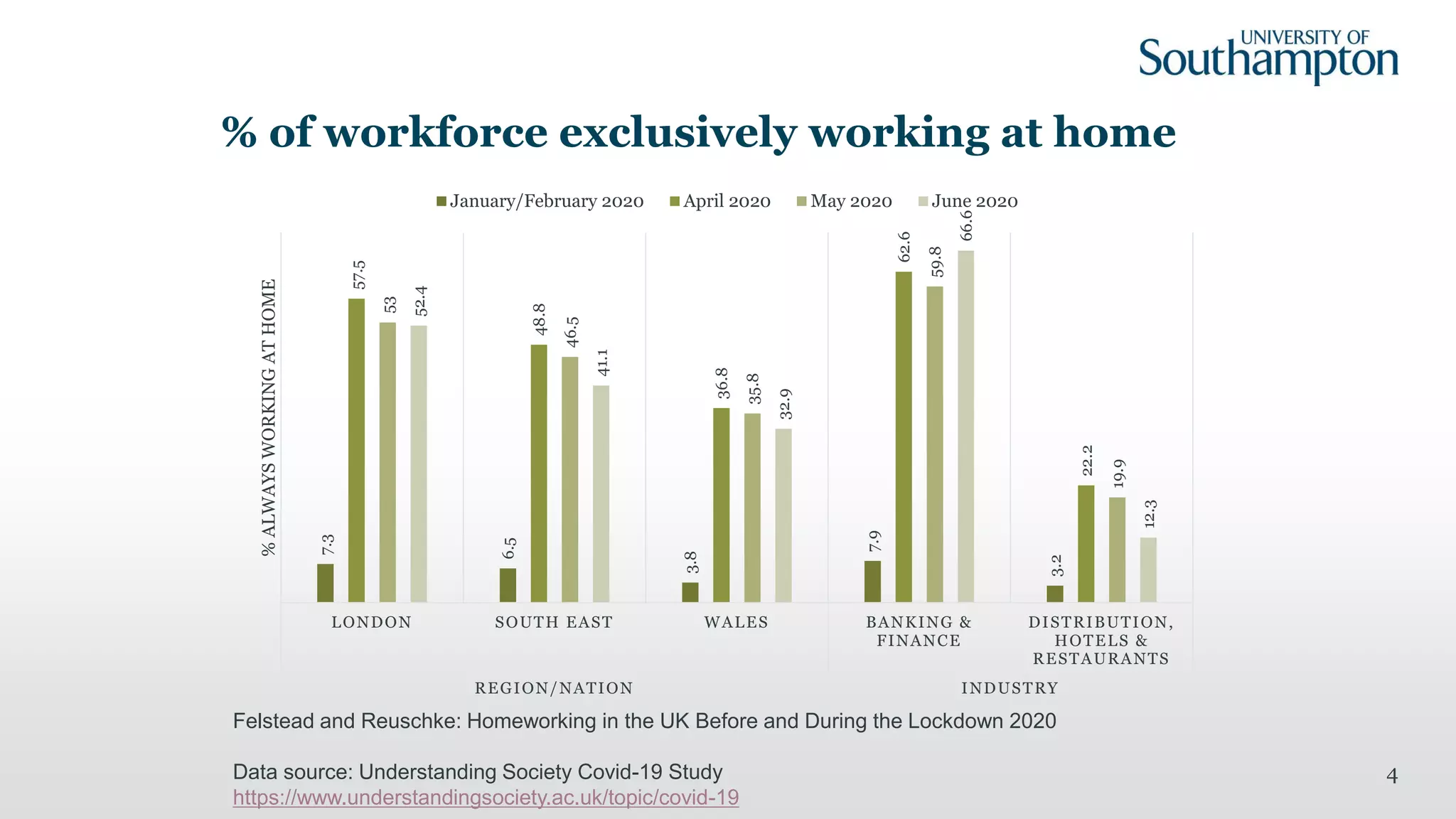
% of workforce exclusively working at home
7.3
6.5
3.8
7.9
3.2
57.5
48.8
36.8
62.6
22.2
53
46.5
35.8
59.8
19.9
52.4
41.1
32.9
66.6
12.3
LONDON SOUTH EAST WALES BANKING &
FINANCE
DISTRIBUTION,
HOTELS &
RESTAURANTS
REGION/NATION INDUSTRY
%ALWAYSWORKINGATHOME
January/February 2020 April 2020 May 2020 June 2020
4
Felstead and Reuschke: Homeworking in the UK Before and During the Lockdown 2020
Data source: Understanding Society Covid-19 Study
https://www.understandingsociety.ac.uk/topic/covid-19
Productivity and homeworking
• Concerns of employers not to have control
• Bloom et al. (2015)
– Randomised control trial of a call centre
– Working at home group outperformed office-bound workers by 13%
– Greater convenience/ease to work at home
– Quietness
5
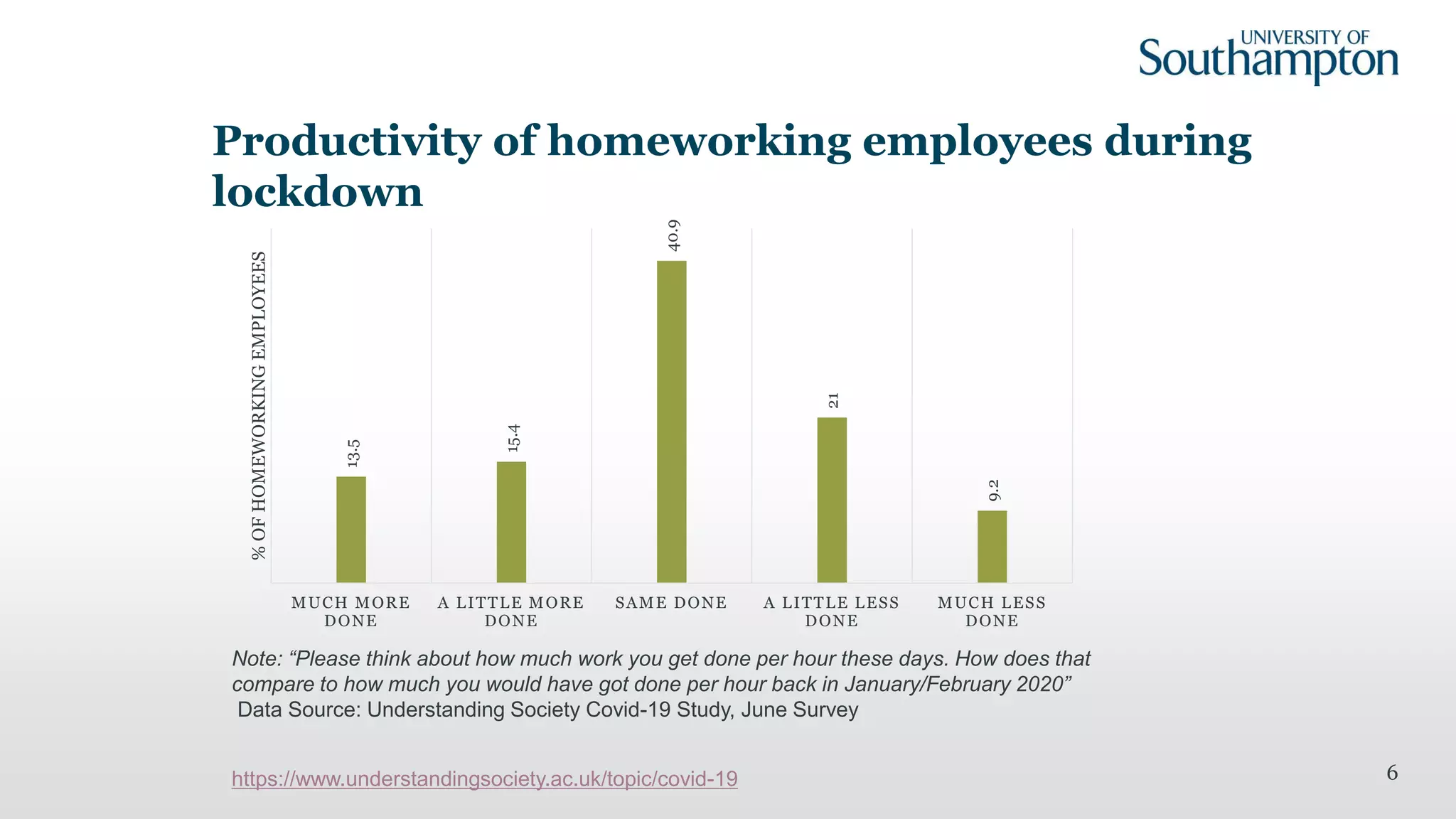
Productivity of homeworking employees during
lockdown
6
13.5
15.4
40.9
21
9.2
MUCH MORE
DONE
A LITTLE MORE
DONE
SAME DONE A LITTLE LESS
DONE
MUCH LESS
DONE
%OFHOMEWORKINGEMPLOYEES
Note: “Please think about how much work you get done per hour these days. How does that
compare to how much you would have got done per hour back in January/February 2020”
Data Source: Understanding Society Covid-19 Study, June Survey
https://www.understandingsociety.ac.uk/topic/covid-19
Homeworking preferences
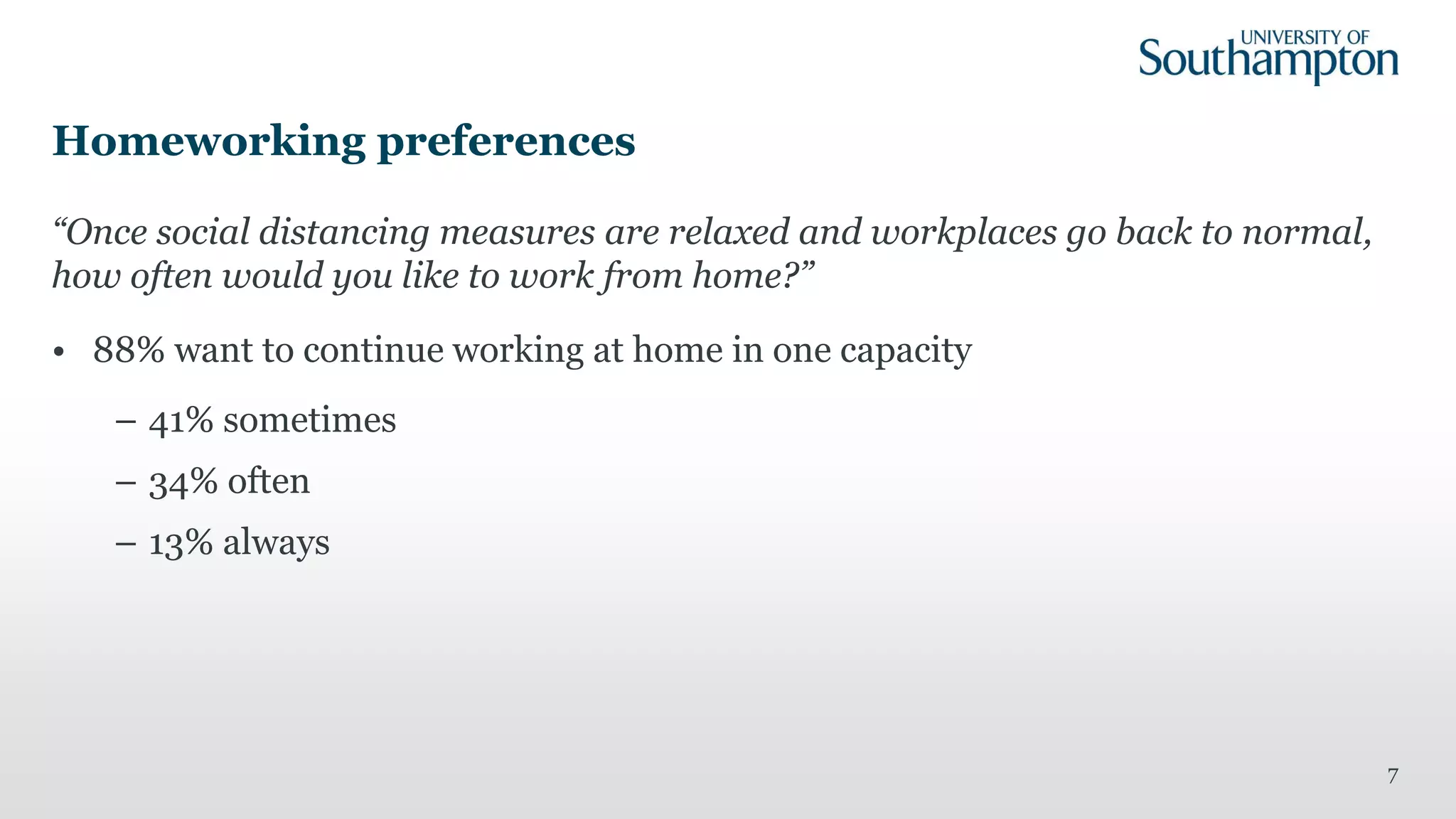
“Once social distancing measures are relaxed and workplaces go back to normal,
how often would you like to work from home?”
• 88% want to continue working at home in one capacity
– 41% sometimes
– 34% often
– 13% always
7
Conclusion and outlook
• Preference for teleworking
• Transport and infrastructure
• Residential areas (suburbs) with high amenities
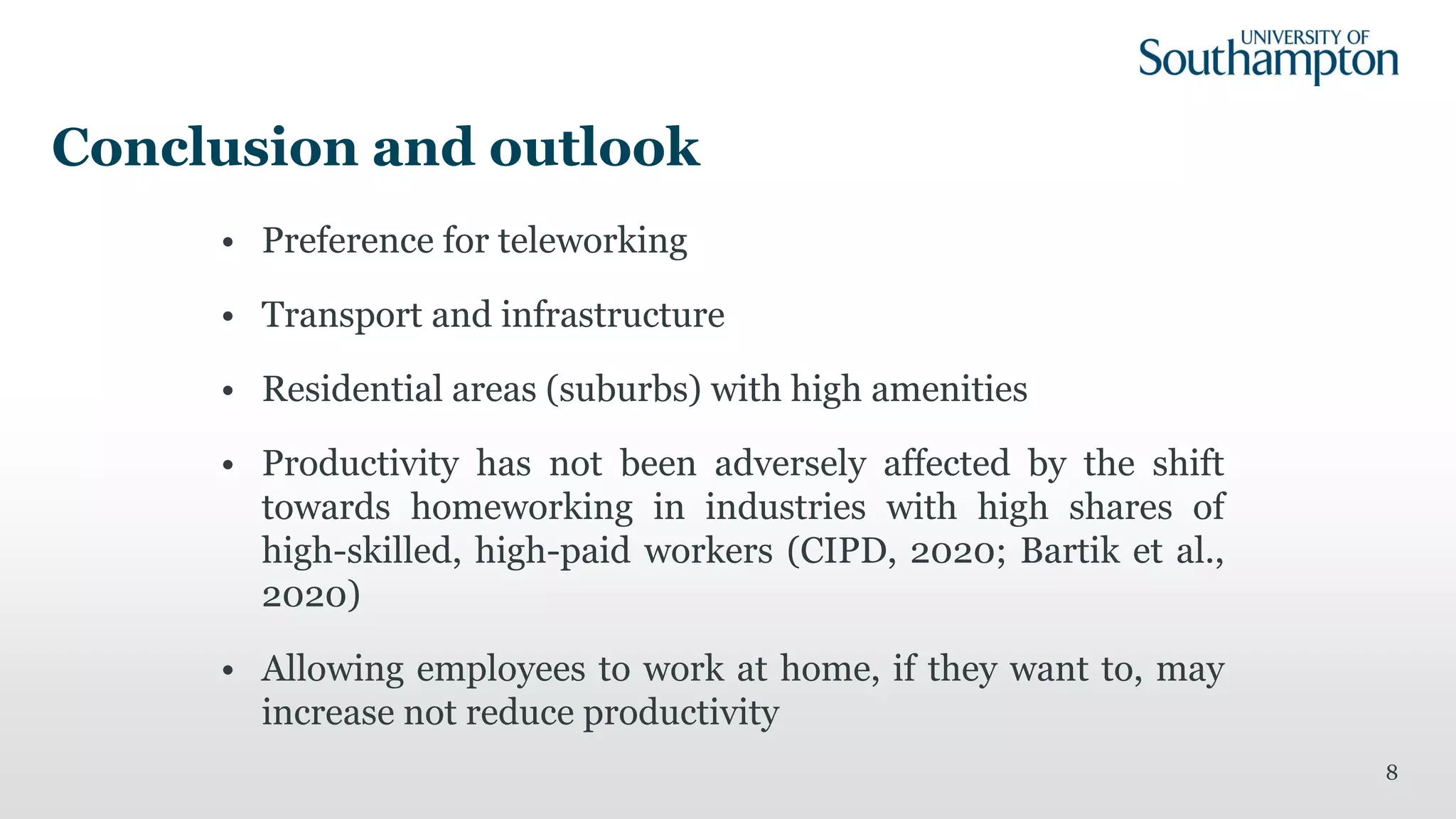
• Productivity has not been adversely affected by the shift
towards homeworking in industries with high shares of
high-skilled, high-paid workers (CIPD, 2020; Bartik et al.,
2020)
• Allowing employees to work at home, if they want to, may
increase not reduce productivity
8
Dr Darja Reuschke
d.reuschke@soton.ac.uk
http://workandhome.ac.uk
Link to reports:
https://wiserd.ac.uk/publications

Homeworking and its effect on productivity and wellbeing - Darja REUSCHKE

  • 1.
    Homeworking and itseffects on productivity and well-being Darja REUSCHKE Associate Professor in Human Geography University of Southampton, UK
  • 2.
    BBC News on28th August 2020 https://www.bbc.co.uk/news/uk-53942542 2
  • 3.
    Homeworking – massivechanges in UK 5.7 43.1 40.8 36.5 6.1 8.3 8.9 8.7 17.7 9.1 10.3 9.6 JANUARY/FEBRUARY 2020 APRIL 2020 MAY 2020 JUNE 2020 %OF16+EMPLOYED Always Often Sometimes Felstead and Reuschke: Homeworking in the UK Before and During the Lockdown 2020 Data source: Understanding Society Covid-19 Study https://www.understandingsociety.ac.uk/topic/covid-19 3
  • 4.
    % of workforceexclusively working at home 7.3 6.5 3.8 7.9 3.2 57.5 48.8 36.8 62.6 22.2 53 46.5 35.8 59.8 19.9 52.4 41.1 32.9 66.6 12.3 LONDON SOUTH EAST WALES BANKING & FINANCE DISTRIBUTION, HOTELS & RESTAURANTS REGION/NATION INDUSTRY %ALWAYSWORKINGATHOME January/February 2020 April 2020 May 2020 June 2020 4 Felstead and Reuschke: Homeworking in the UK Before and During the Lockdown 2020 Data source: Understanding Society Covid-19 Study https://www.understandingsociety.ac.uk/topic/covid-19
  • 5.
    Productivity and homeworking •Concerns of employers not to have control • Bloom et al. (2015) – Randomised control trial of a call centre – Working at home group outperformed office-bound workers by 13% – Greater convenience/ease to work at home – Quietness 5
  • 6.
    Productivity of homeworkingemployees during lockdown 6 13.5 15.4 40.9 21 9.2 MUCH MORE DONE A LITTLE MORE DONE SAME DONE A LITTLE LESS DONE MUCH LESS DONE %OFHOMEWORKINGEMPLOYEES Note: “Please think about how much work you get done per hour these days. How does that compare to how much you would have got done per hour back in January/February 2020” Data Source: Understanding Society Covid-19 Study, June Survey https://www.understandingsociety.ac.uk/topic/covid-19
  • 7.
    Homeworking preferences “Once socialdistancing measures are relaxed and workplaces go back to normal, how often would you like to work from home?” • 88% want to continue working at home in one capacity – 41% sometimes – 34% often – 13% always 7
  • 8.
    Conclusion and outlook •Preference for teleworking • Transport and infrastructure • Residential areas (suburbs) with high amenities • Productivity has not been adversely affected by the shift towards homeworking in industries with high shares of high-skilled, high-paid workers (CIPD, 2020; Bartik et al., 2020) • Allowing employees to work at home, if they want to, may increase not reduce productivity 8
  • 9.