ECTOPIC
PREGNANCY
Tayebeh gharibi
Ectopic Pregnancy
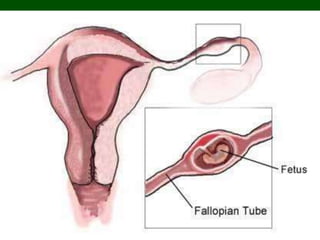
Occurs when the conceptus
implants either outside the uterus
(Fallopian tube, ovary or abdominal
cavity) or in an abnormal position
within the uterus (cornua cervix).
Epidemiology & Risk Factors:
• Between 95% and 98% occur in the
fallopian tube.
• More than 50% of tubal pregnancies are
situated in the ampulla .
• Approximately 20% occur in the isthmus.
• Around 12% are fimbrial.
• Approximately 10% are interstitial.
Understanding
The
Pathophysiology
• In theory, any mechanical or functional
factors that prevent or interfere with the
passage of the fertilized egg to the
uterine cavity may be aetiological factors
for an ectopic pregnancy.
• 50% operated for ectopic pregnancy
have evidence of chronic pelvic
inflammatory disease.
mechnical
• Anatosalpingitisy
• Pelvic surgery
• Iud
• Tumor
• Preferal adheision
• endos
functional
• Hormonal(minipill,iud,ocp)
• Smoking
• endometriosis
Clinical
Features
Vaginal bleeding
- (usually old blood in small
amounts) and chronic pelvic pain (iliac
fossa, sometimes bilateral) are the most
commonly reported symptoms.
General Examination
• Shoulder pain which may occur
secondary to blood irritating the
diaphragm and vascular instability
characterized by low blood pressure,
fainting, dizziness and rapid heart rate
may be noted.
• Symptoms are present in about 59% of
patients and most typical patients whose
ectopic pregnancy has ruptured (intra-
abdominal bleeding).
Gynaecological Examination
• Speculum or bimanual examination must
be performed in an environment where
facilities for resuscitation are available,
as this examination may provoke the
rupture of the tube.
Laparoscopy & Uterine
Curettage
• The mere absence of placental villi in the
curretage does not completely exclude a
diagnosis of ectopic pregnancy because
an ectopic pregnancy in a tube, cornu or
the cervix may partially abort.
Human chorionic gonadotrophin
and transvaginal ultrasound
• One of the most important parameters is
the discriminatory hCG level above
which the gestational sac of an
intrauterine pregnancy should be
detectable by ultrasonography (usually
1000iu/L).
• An empty ectopic sac or a hetero genous
adnexal mass is a more common
ultrasound feature.
• The presence of fluid in the pouch of
Douglas is a non-specific sign of ectopic
pregnancy.
• 10-20% ectopic pregnancies, a
pseudogestational sac is seen as a
small, centrally located endometrial fluid
collection surrounded by a single
echogenic rim.
• Laparoscopy should be considered in
women with hCG above the
discriminatory level and absence of an
Management
• Treating ectopic pregnancy has always
been surgical (salpingectomy or
salpingotomy), either by laparotomy or
laparoscopy.
• Non-surgical (medical) therapeutic
approaches have been introduced, such
as puncture and aspiration of the ectopic
sac, local injections of prostaglandins,
potassium chloride, hyperosmolar
glucose or methotrexate.

Ectopic_pregnancy__663b3454.ppt

  • 1.
  • 2.
    Ectopic Pregnancy Occurs whenthe conceptus implants either outside the uterus (Fallopian tube, ovary or abdominal cavity) or in an abnormal position within the uterus (cornua cervix).
  • 3.
    Epidemiology & RiskFactors: • Between 95% and 98% occur in the fallopian tube. • More than 50% of tubal pregnancies are situated in the ampulla . • Approximately 20% occur in the isthmus. • Around 12% are fimbrial. • Approximately 10% are interstitial.
  • 4.
  • 5.
    • In theory,any mechanical or functional factors that prevent or interfere with the passage of the fertilized egg to the uterine cavity may be aetiological factors for an ectopic pregnancy. • 50% operated for ectopic pregnancy have evidence of chronic pelvic inflammatory disease.
  • 6.
    mechnical • Anatosalpingitisy • Pelvicsurgery • Iud • Tumor • Preferal adheision • endos
  • 7.
  • 8.
  • 9.
    Vaginal bleeding - (usuallyold blood in small amounts) and chronic pelvic pain (iliac fossa, sometimes bilateral) are the most commonly reported symptoms.
  • 10.
    General Examination • Shoulderpain which may occur secondary to blood irritating the diaphragm and vascular instability characterized by low blood pressure, fainting, dizziness and rapid heart rate may be noted. • Symptoms are present in about 59% of patients and most typical patients whose ectopic pregnancy has ruptured (intra- abdominal bleeding).
  • 11.
    Gynaecological Examination • Speculumor bimanual examination must be performed in an environment where facilities for resuscitation are available, as this examination may provoke the rupture of the tube.
  • 12.
    Laparoscopy & Uterine Curettage •The mere absence of placental villi in the curretage does not completely exclude a diagnosis of ectopic pregnancy because an ectopic pregnancy in a tube, cornu or the cervix may partially abort.
  • 16.
    Human chorionic gonadotrophin andtransvaginal ultrasound • One of the most important parameters is the discriminatory hCG level above which the gestational sac of an intrauterine pregnancy should be detectable by ultrasonography (usually 1000iu/L). • An empty ectopic sac or a hetero genous adnexal mass is a more common ultrasound feature.
  • 17.
    • The presenceof fluid in the pouch of Douglas is a non-specific sign of ectopic pregnancy. • 10-20% ectopic pregnancies, a pseudogestational sac is seen as a small, centrally located endometrial fluid collection surrounded by a single echogenic rim. • Laparoscopy should be considered in women with hCG above the discriminatory level and absence of an
  • 18.
  • 19.
    • Treating ectopicpregnancy has always been surgical (salpingectomy or salpingotomy), either by laparotomy or laparoscopy. • Non-surgical (medical) therapeutic approaches have been introduced, such as puncture and aspiration of the ectopic sac, local injections of prostaglandins, potassium chloride, hyperosmolar glucose or methotrexate.