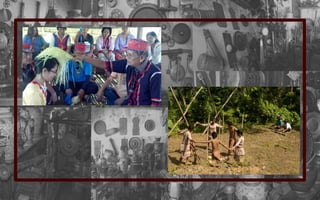
MAMANWA
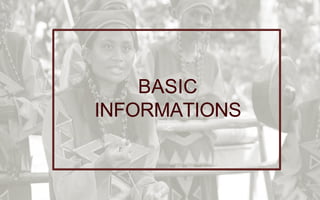
BASIC
INFORMATIONS
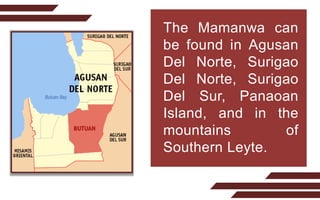
The Mamanwa can
be found in Agusan
Del Norte, Surigao
Del Norte, Surigao
Del Sur, Panaoan
Island, and in the
mountains of
Southern Leyte.
Mamanwa tribe has
been classified as a
Negrito subgroup.
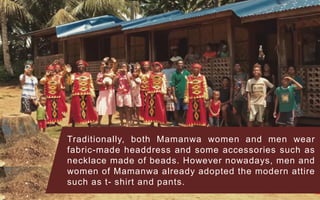
Traditionally, both Mamanwa women and men wear
fabric-made headdress and some accessories such as
necklace made of beads. However nowadays, men and
women of Mamanwa already adopted the modern attire
such as t- shirt and pants.
Settlements are generally small, numbering from
three to twenty households in high ridges or valleys.
The houses are usually arranged in a circle.
BELIEFS,
SUPERSITIONS,
RITUALS AND
CEREMONIES
BIRTH RITUALS
• Mamanwa women during
pregnancy would suppress their
desire for food affecting the
health and growth of their
babies which naturally need
nutritious food, especially while
inside the womb of their
mothers.
• During pregnancy on account of
their elders' prohibition to take
nutritious food items which can
increase the weight of their
unborn babies.
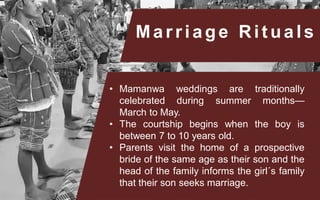
• Mamanwa weddings are traditionally
celebrated during summer months—
March to May.
• The courtship begins when the boy is
between 7 to 10 years old.
• Parents visit the home of a prospective
bride of the same age as their son and the
head of the family informs the girl´s family
that their son seeks marriage.
Marri age Ri t ual s
Death and Mourning Rituals
• They transfer from a place to another especially in case of deaths to leave,
sadness, great sorrows, and forget grief painful memories.
• In Mamanwa, the dead were either laid on a platform built beside a tree or
wrapped in a mat or bamboo slats and hung up on a tree.
Heal i ng Ri t ual s
• Healing rituals are performed by
Baylan/Tambajon (Shaman) who has two
kind namely; those who are specialist in
using herbal medicine to treat illnesses,
and those who are skilled in conducting
rituals and ceremonies
Superstitious beliefs
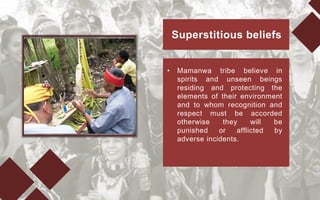
• Mamanwa tribe believe in
spirits and unseen beings
residing and protecting the
elements of their environment
and to whom recognition and
respect must be accorded
otherwise they will be
punished or afflicted by
adverse incidents.
Superstitious beliefs
• Another, when it is a
farm area, releasing a
white chicken will result
to fertility of the soil, it is
believed that this will
increase the harvest.
CEREMONIES
Bonok- Bonok Festival
➢ is a ritual dance originated in Mamanwa tribe. This
festival is celebrated in Surigao. It is also celebrated
in reverence to the Patron Saint San Nicolas de
Tolentino and to reflect the city’s rich cultural
heritage.
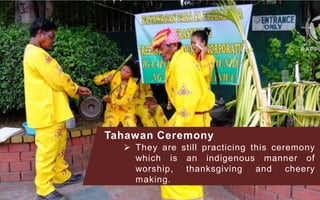
Tahawan Ceremony
➢ They are still practicing this ceremony
which is an indigenous manner of
worship, thanksgiving and cheery
making.
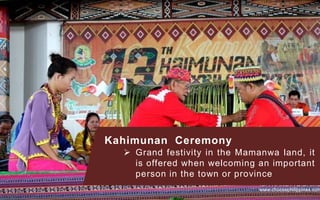
Kahimunan Ceremony
➢ Grand festivity in the Mamanwa land, it
is offered when welcoming an important
person in the town or province
Deities (gods / godesses)
Tahaw
➢ The supreme god
Magbabaya
➢ The supreme deity
Diyatot
➢ The lowest in the rank of the
deities. It believed to dwell in
the balete tree.
ROLES OF MEN
AND WOMEN
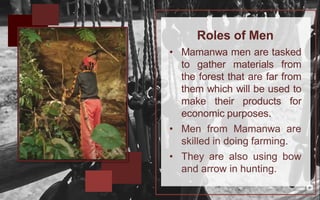
Roles of Men
• Mamanwa men are tasked
to gather materials from
the forest that are far from
them which will be used to
make their products for
economic purposes.
• Men from Mamanwa are
skilled in doing farming.
• They are also using bow
and arrow in hunting.
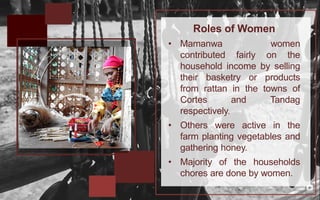
Roles of Women
• Mamanwa women
contributed fairly on the
household income by selling
their basketry or products
from rattan in the towns of
Cortes and Tandag
respectively.
• Others were active in the
farm planting vegetables and
gathering honey.
• Majority of the households
chores are done by women.
LEADERSHIP
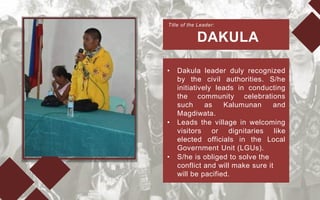
Title of the Leader:
DAKULA
• Dakula leader duly recognized
by the civil authorities. S/he
initiatively leads in conducting
the community celebrations
such as Kalumunan and
Magdiwata.
• Leads the village in welcoming
visitors or dignitaries like
elected officials in the Local
Government Unit (LGUs).
• S/he is obliged to solve the
conflict and will make sure it
will be pacified.
NOTABLE
PERSONALITIES
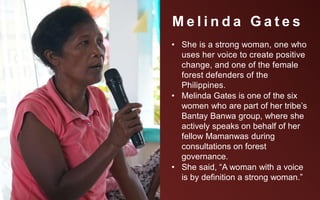
Kandarangen
• She is a strong woman, one who
uses her voice to create positive
change, and one of the female
forest defenders of the
Philippines.
• Melinda Gates is one of the six
women who are part of her tribe’s
Bantay Banwa group, where she
actively speaks on behalf of her
fellow Mamanwas during
consultations on forest
governance.
• She said, “A woman with a voice
is by definition a strong woman.”
M e l i n d a G a t e s
MAMANWA
GROUP5:
Leader: Lucas, Stella
Ass. Leader: Sibunga, Jesseiah
Members:
Aguete, Hannah Joyce N.
De La Cruz, Midsy
Dela Cruz, Joycel
Fagaragan, Lerma
Gajes, Danica
Llanes, Princess Ann Cathlene
Tamayo, Princess Mae
Mamanwa Tribe

  • 1.
  • 2.
  • 3.
    The Mamanwa can befound in Agusan Del Norte, Surigao Del Norte, Surigao Del Sur, Panaoan Island, and in the mountains of Southern Leyte.
  • 4.
    Mamanwa tribe has beenclassified as a Negrito subgroup.
  • 5.
    Traditionally, both Mamanwawomen and men wear fabric-made headdress and some accessories such as necklace made of beads. However nowadays, men and women of Mamanwa already adopted the modern attire such as t- shirt and pants.
  • 6.
    Settlements are generallysmall, numbering from three to twenty households in high ridges or valleys. The houses are usually arranged in a circle.
  • 7.
  • 8.
    BIRTH RITUALS • Mamanwawomen during pregnancy would suppress their desire for food affecting the health and growth of their babies which naturally need nutritious food, especially while inside the womb of their mothers. • During pregnancy on account of their elders' prohibition to take nutritious food items which can increase the weight of their unborn babies.
  • 9.
    • Mamanwa weddingsare traditionally celebrated during summer months— March to May. • The courtship begins when the boy is between 7 to 10 years old. • Parents visit the home of a prospective bride of the same age as their son and the head of the family informs the girl´s family that their son seeks marriage. Marri age Ri t ual s
  • 10.
    Death and MourningRituals • They transfer from a place to another especially in case of deaths to leave, sadness, great sorrows, and forget grief painful memories. • In Mamanwa, the dead were either laid on a platform built beside a tree or wrapped in a mat or bamboo slats and hung up on a tree.
  • 11.
    Heal i ngRi t ual s • Healing rituals are performed by Baylan/Tambajon (Shaman) who has two kind namely; those who are specialist in using herbal medicine to treat illnesses, and those who are skilled in conducting rituals and ceremonies
  • 13.
    Superstitious beliefs • Mamanwatribe believe in spirits and unseen beings residing and protecting the elements of their environment and to whom recognition and respect must be accorded otherwise they will be punished or afflicted by adverse incidents.
  • 14.
    Superstitious beliefs • Another,when it is a farm area, releasing a white chicken will result to fertility of the soil, it is believed that this will increase the harvest.
  • 15.
  • 16.
    Bonok- Bonok Festival ➢is a ritual dance originated in Mamanwa tribe. This festival is celebrated in Surigao. It is also celebrated in reverence to the Patron Saint San Nicolas de Tolentino and to reflect the city’s rich cultural heritage.
  • 17.
    Tahawan Ceremony ➢ Theyare still practicing this ceremony which is an indigenous manner of worship, thanksgiving and cheery making.
  • 18.
    Kahimunan Ceremony ➢ Grandfestivity in the Mamanwa land, it is offered when welcoming an important person in the town or province
  • 19.
    Deities (gods /godesses) Tahaw ➢ The supreme god Magbabaya ➢ The supreme deity Diyatot ➢ The lowest in the rank of the deities. It believed to dwell in the balete tree.
  • 20.
  • 21.
    Roles of Men •Mamanwa men are tasked to gather materials from the forest that are far from them which will be used to make their products for economic purposes. • Men from Mamanwa are skilled in doing farming. • They are also using bow and arrow in hunting.
  • 22.
    Roles of Women •Mamanwa women contributed fairly on the household income by selling their basketry or products from rattan in the towns of Cortes and Tandag respectively. • Others were active in the farm planting vegetables and gathering honey. • Majority of the households chores are done by women.
  • 23.
  • 24.
    Title of theLeader: DAKULA • Dakula leader duly recognized by the civil authorities. S/he initiatively leads in conducting the community celebrations such as Kalumunan and Magdiwata. • Leads the village in welcoming visitors or dignitaries like elected officials in the Local Government Unit (LGUs). • S/he is obliged to solve the conflict and will make sure it will be pacified.
  • 25.
  • 26.
    Kandarangen • She isa strong woman, one who uses her voice to create positive change, and one of the female forest defenders of the Philippines. • Melinda Gates is one of the six women who are part of her tribe’s Bantay Banwa group, where she actively speaks on behalf of her fellow Mamanwas during consultations on forest governance. • She said, “A woman with a voice is by definition a strong woman.” M e l i n d a G a t e s
  • 27.
    MAMANWA GROUP5: Leader: Lucas, Stella Ass.Leader: Sibunga, Jesseiah Members: Aguete, Hannah Joyce N. De La Cruz, Midsy Dela Cruz, Joycel Fagaragan, Lerma Gajes, Danica Llanes, Princess Ann Cathlene Tamayo, Princess Mae