Energy & Climate
Sustainable Development
MD Sayem
Department of Geology &
Mining
University of Barishal
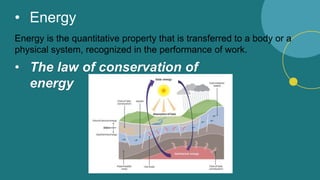
• Energy
Energy is the quantitative property that is transferred to a body or a
physical system, recognized in the performance of work.
• The law of conservation of
energy
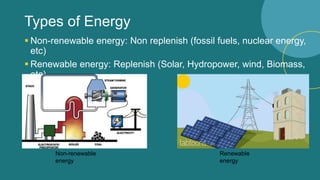
Types of Energy
 Non-renewable energy: Non replenish (fossil fuels, nuclear energy,
etc)
 Renewable energy: Replenish (Solar, Hydropower, wind, Biomass,
etc)
Non-renewable
energy
Renewable
energy
Non-renewable energy [Fossil Fuels]
Buried Plant & Organism and making Fossil
fuels
Mining Fossil Fuels and
Coal, Oil, Natural Gas, Nuclear
energy, etc.
&
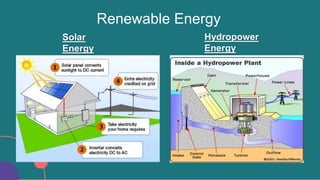
Renewable Energy
Solar
Energy
Hydropower
Energy
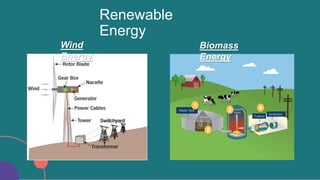
Renewable
Energy
Wind
Energy
Biomass
Energy
Climate
 Climate is the long-term weather pattern in an area, typically
averaged over 30 years.
Climate Change
 When temperature and weather pattern is shifted then it is
known as climate change also global change.
Cause of Climate Change
 Heat-trapping Greenhouse Gases.
 Reflectivity or Absorption of the Sun's Energy.
 Changes in the Earth's Orbit and Rotation.
 Variations in Solar Activity.
 Changes in the Earth's Reflectivity.
 Volcanic Activity.
Climate Change Indicator
 Global warming
 Changes in polar and glacial ice
 Rising sea level and ocean acidity
 Changing wind and weather patterns
 Health and society
 Changing ecosystem
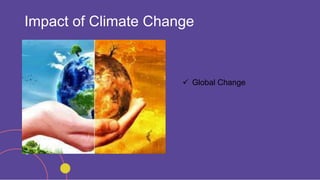
Impact of Climate Change
 Global Change
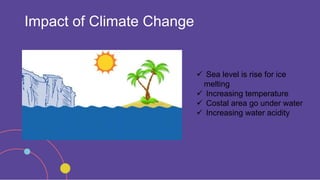
Impact of Climate Change
 Sea level is rise for ice
melting
 Increasing temperature
 Costal area go under water
 Increasing water acidity
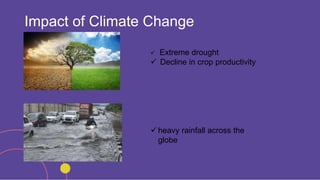
Impact of Climate Change
 Extreme drought
 Decline in crop productivity
 heavy rainfall across the
globe
Impact of Climate Change
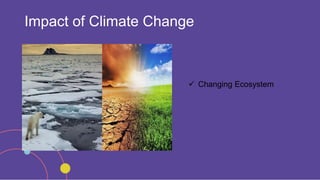
 Changing Ecosystem
Impact of Climate Change
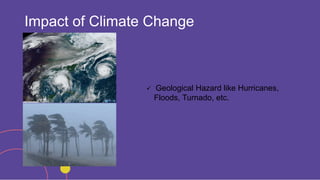
 Geological Hazard like Hurricanes,
Floods, Turnado, etc.

Energy & Climate

  • 1.
    Energy & Climate SustainableDevelopment MD Sayem Department of Geology & Mining University of Barishal
  • 2.
    • Energy Energy isthe quantitative property that is transferred to a body or a physical system, recognized in the performance of work. • The law of conservation of energy
  • 3.
    Types of Energy Non-renewable energy: Non replenish (fossil fuels, nuclear energy, etc)  Renewable energy: Replenish (Solar, Hydropower, wind, Biomass, etc) Non-renewable energy Renewable energy
  • 4.
    Non-renewable energy [FossilFuels] Buried Plant & Organism and making Fossil fuels Mining Fossil Fuels and Coal, Oil, Natural Gas, Nuclear energy, etc. &
  • 5.
  • 6.
  • 7.
    Climate  Climate isthe long-term weather pattern in an area, typically averaged over 30 years. Climate Change  When temperature and weather pattern is shifted then it is known as climate change also global change.
  • 8.
    Cause of ClimateChange  Heat-trapping Greenhouse Gases.  Reflectivity or Absorption of the Sun's Energy.  Changes in the Earth's Orbit and Rotation.  Variations in Solar Activity.  Changes in the Earth's Reflectivity.  Volcanic Activity.
  • 9.
    Climate Change Indicator Global warming  Changes in polar and glacial ice  Rising sea level and ocean acidity  Changing wind and weather patterns  Health and society  Changing ecosystem
  • 10.
    Impact of ClimateChange  Global Change
  • 11.
    Impact of ClimateChange  Sea level is rise for ice melting  Increasing temperature  Costal area go under water  Increasing water acidity
  • 12.
    Impact of ClimateChange  Extreme drought  Decline in crop productivity  heavy rainfall across the globe
  • 13.
    Impact of ClimateChange  Changing Ecosystem
  • 14.
    Impact of ClimateChange  Geological Hazard like Hurricanes, Floods, Turnado, etc.