Downloaded 578 times
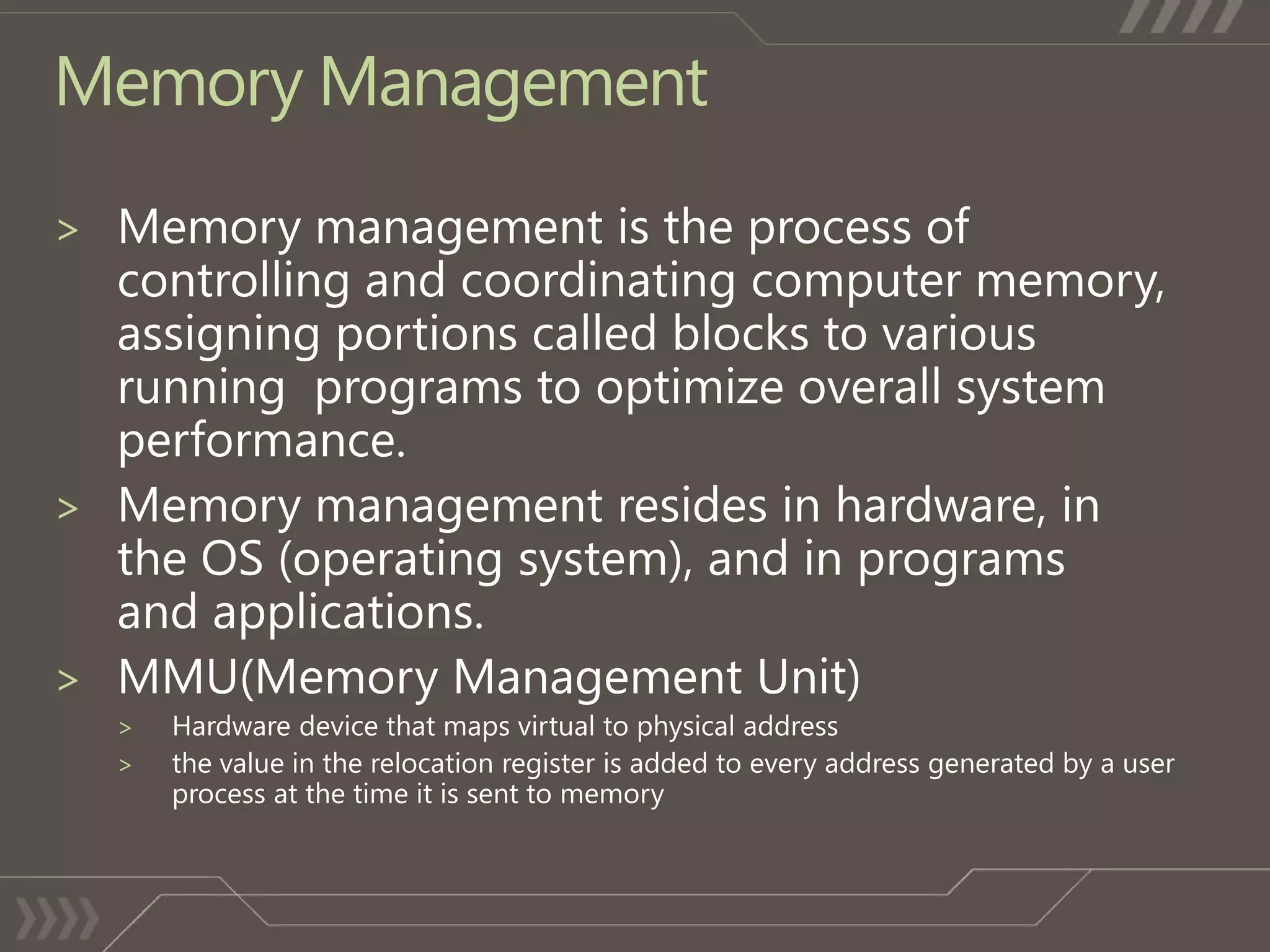
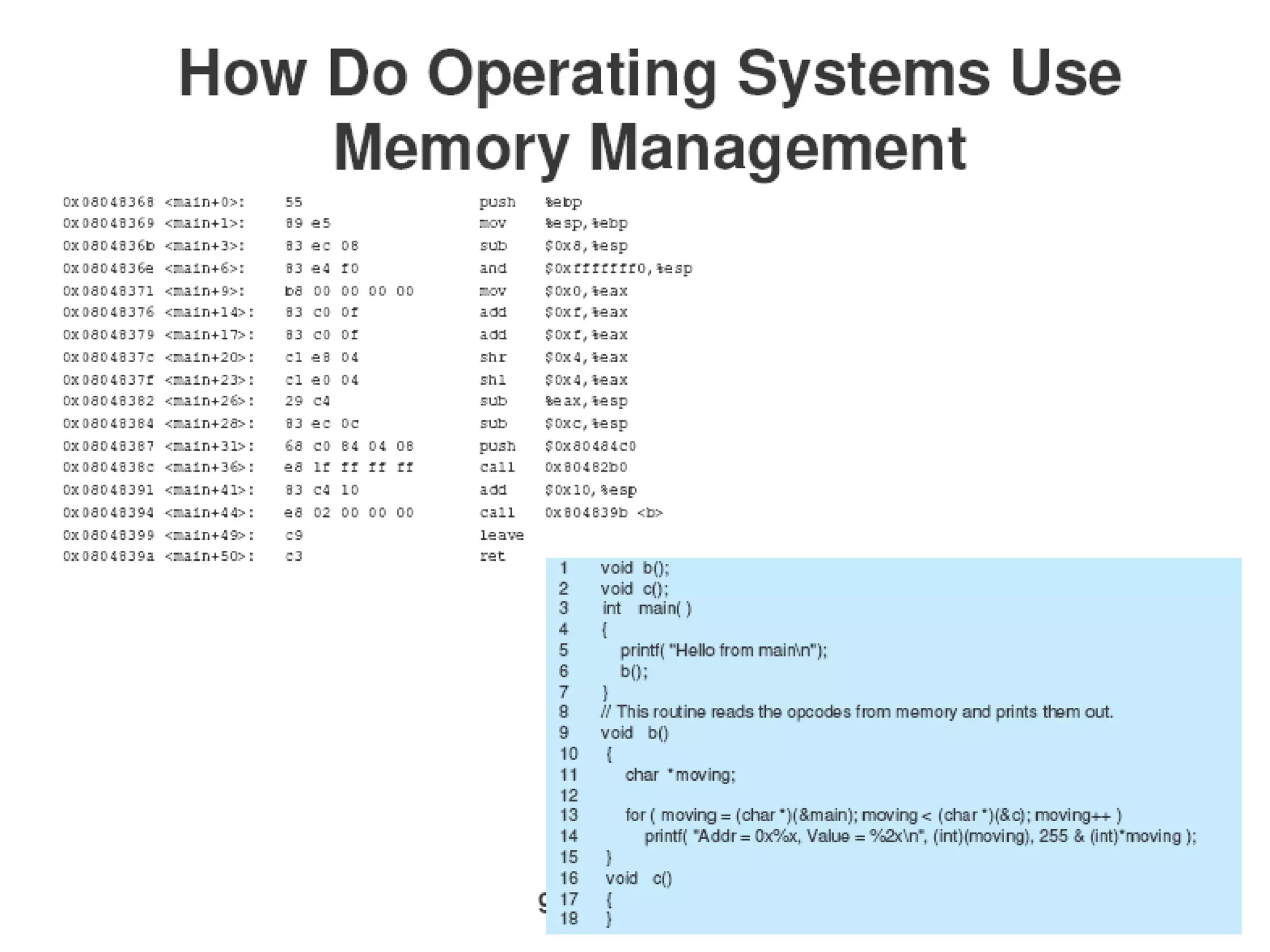
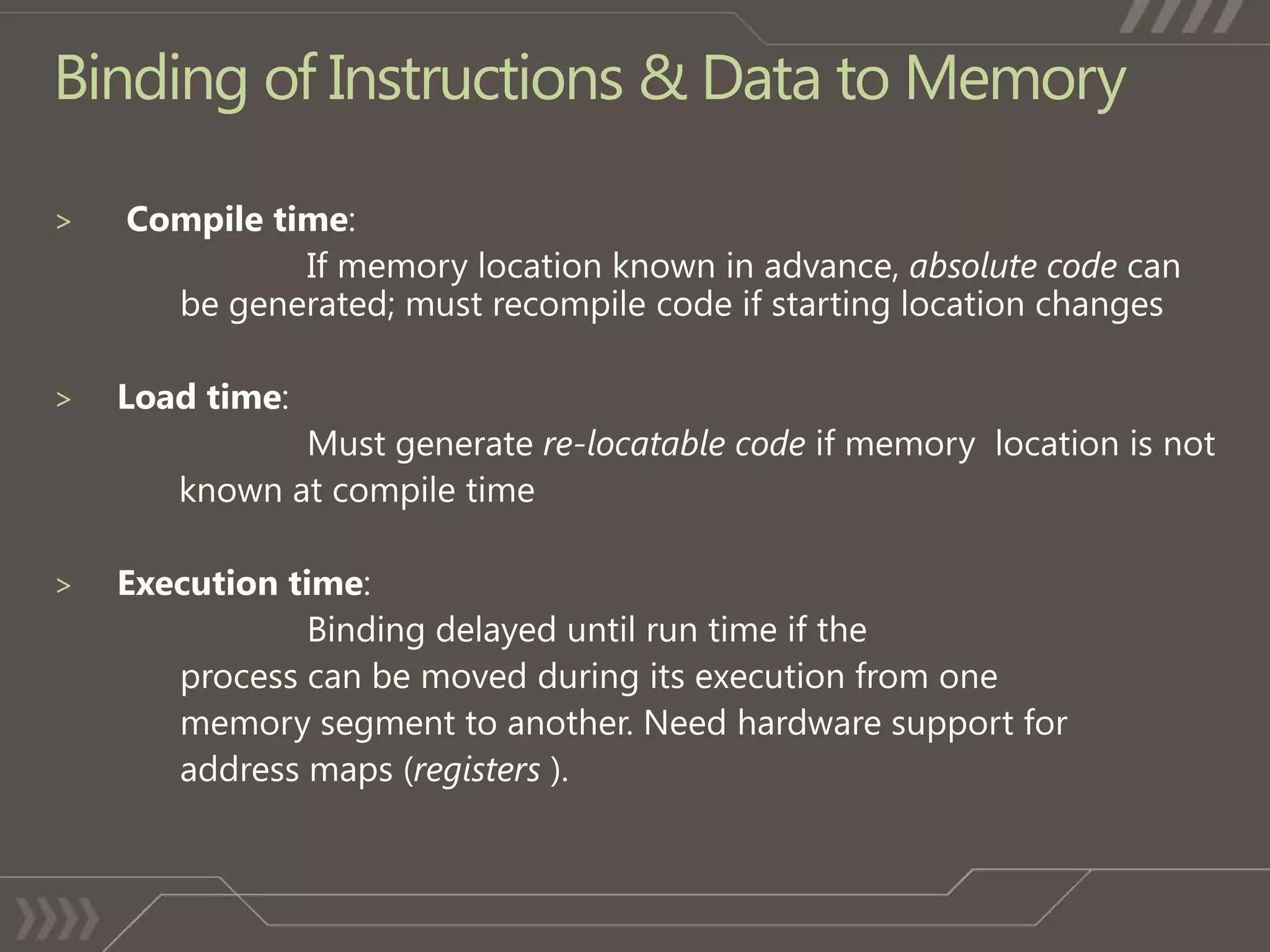
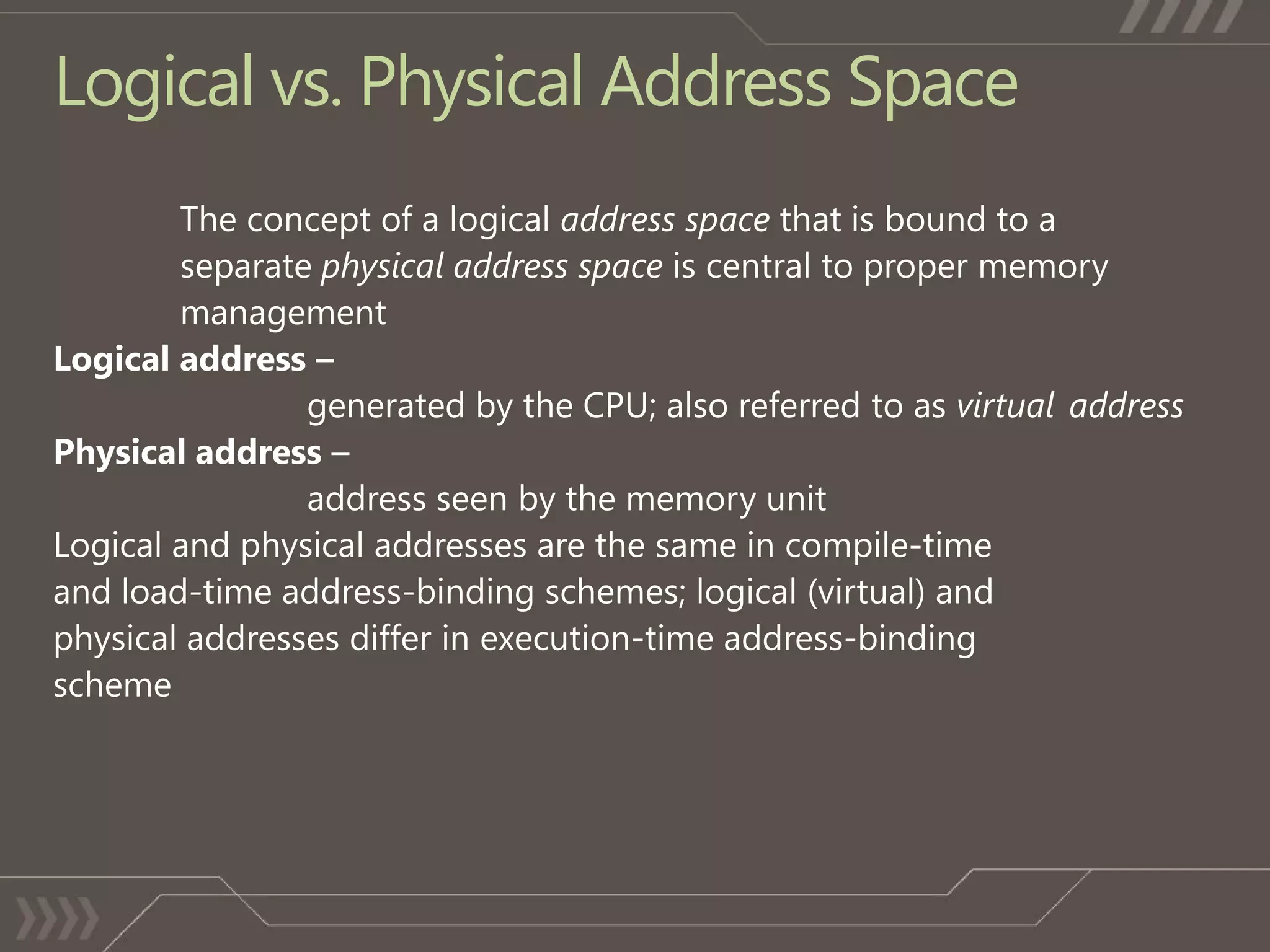
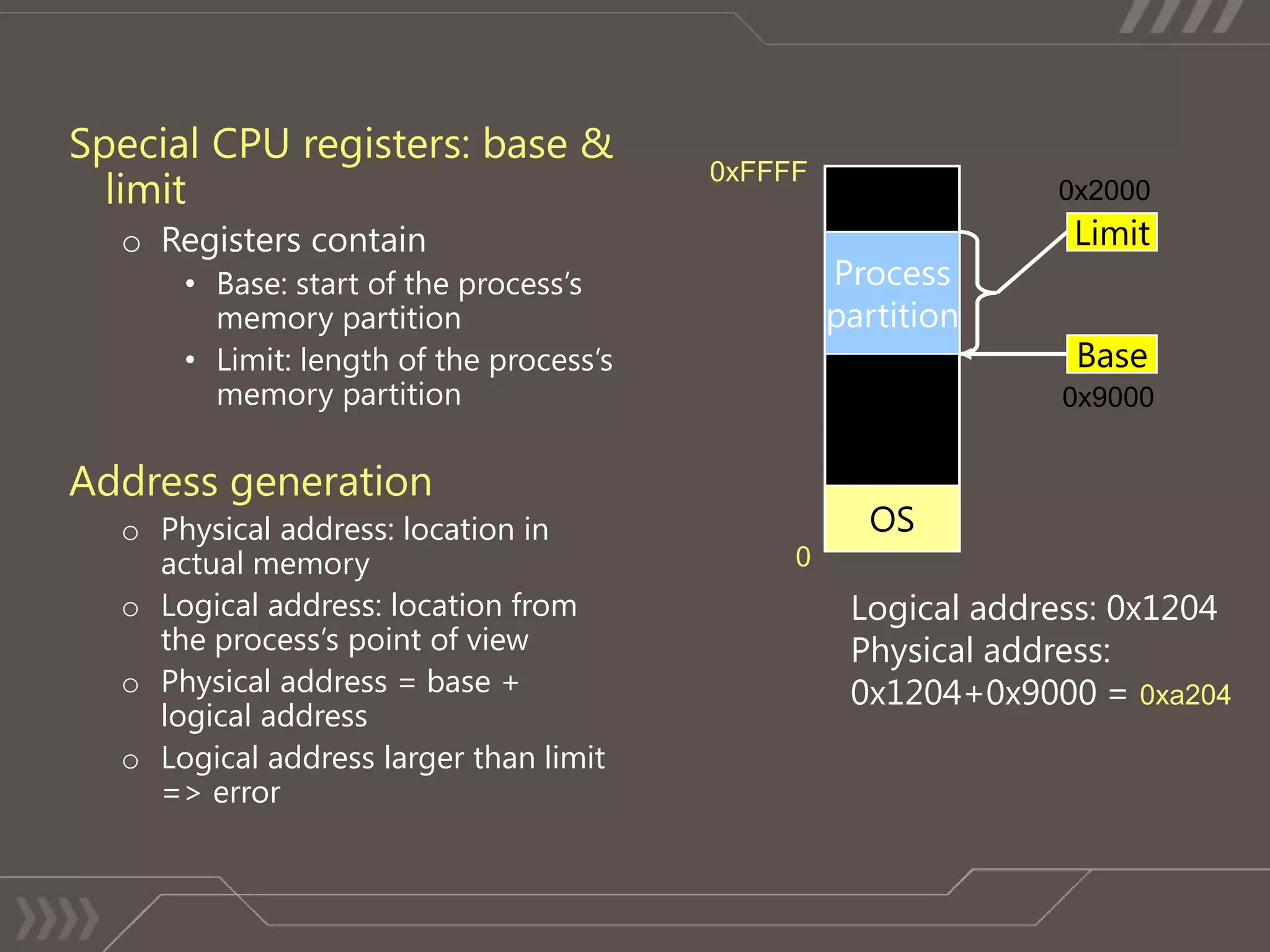
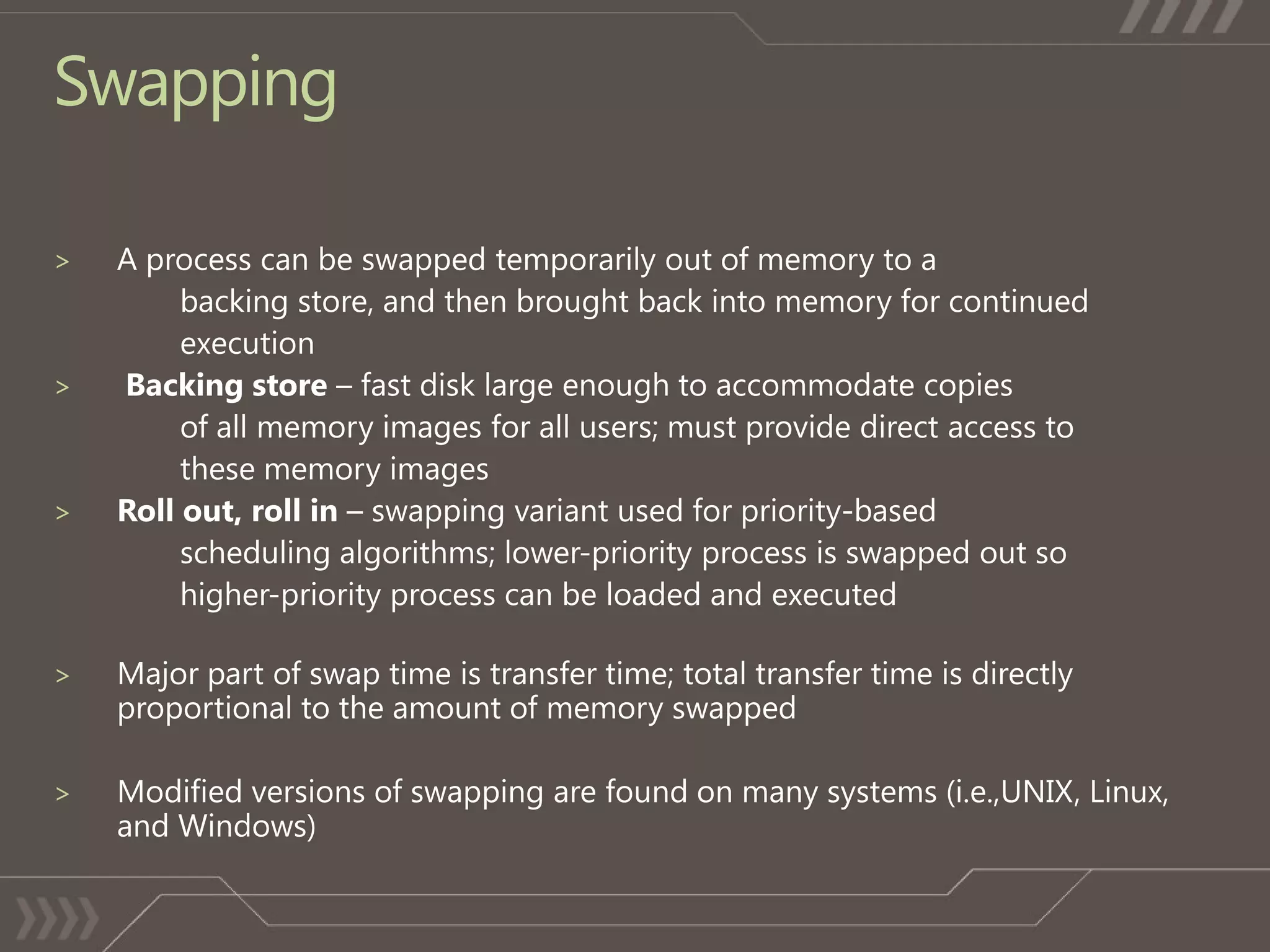
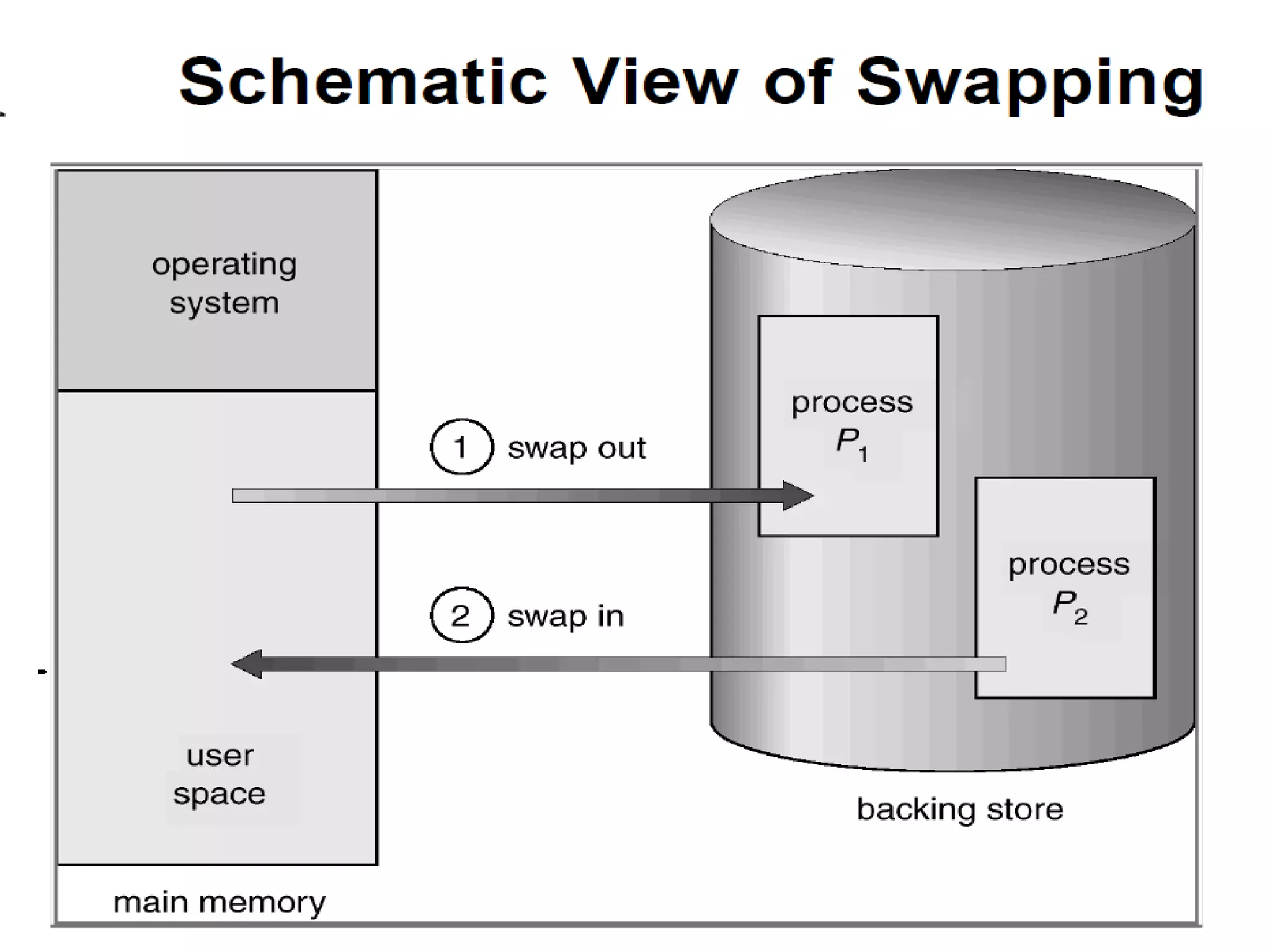
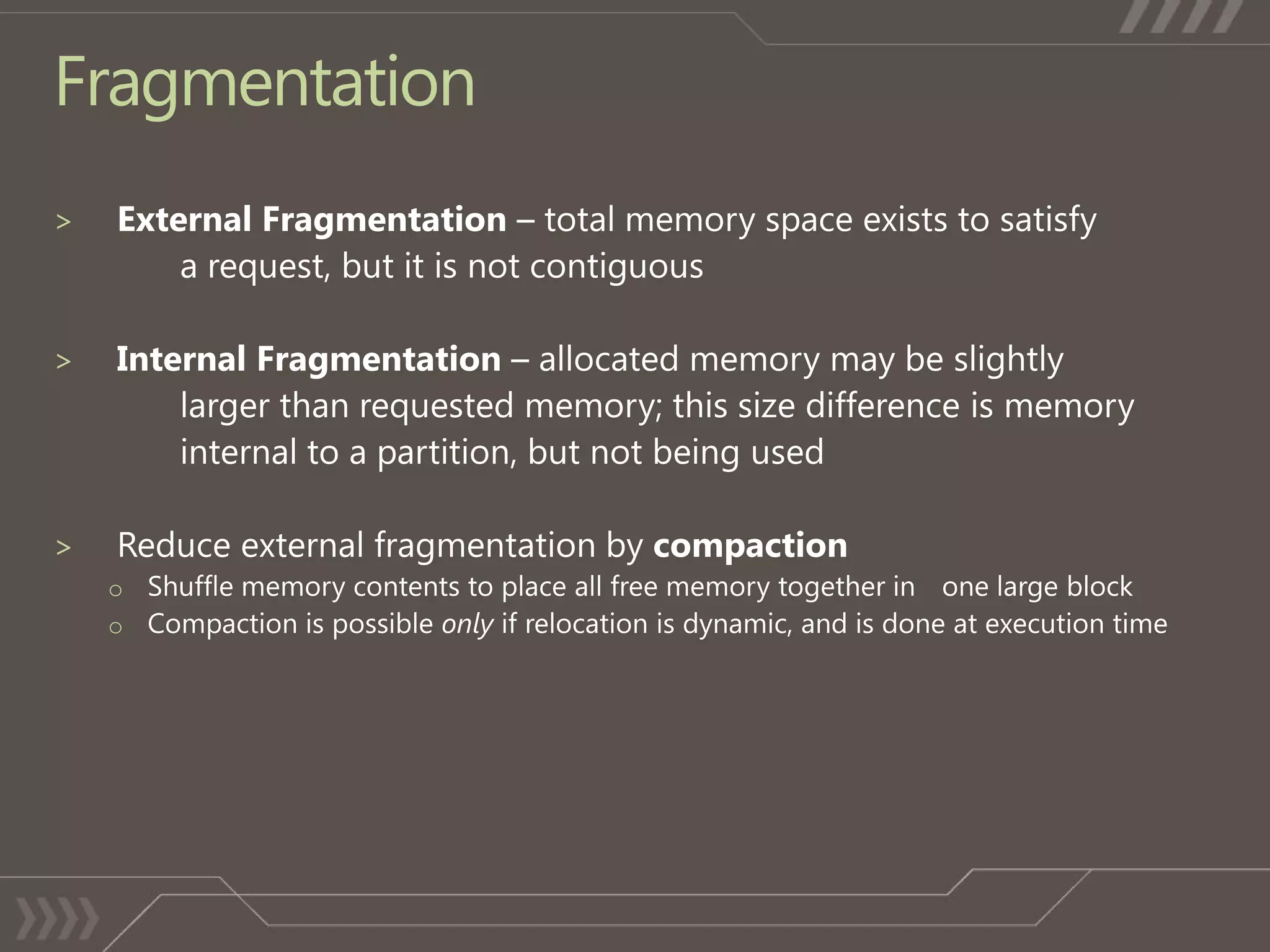
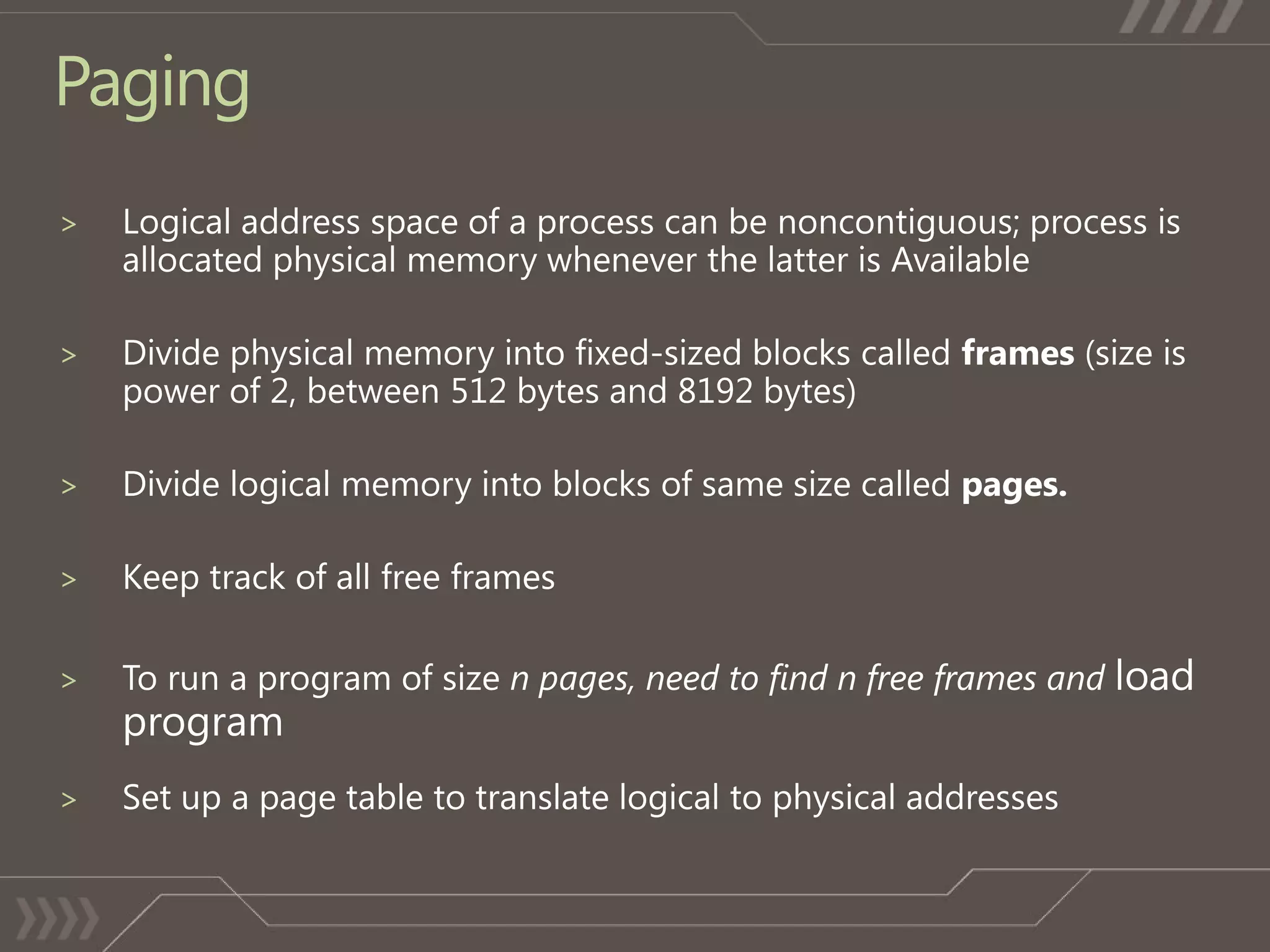
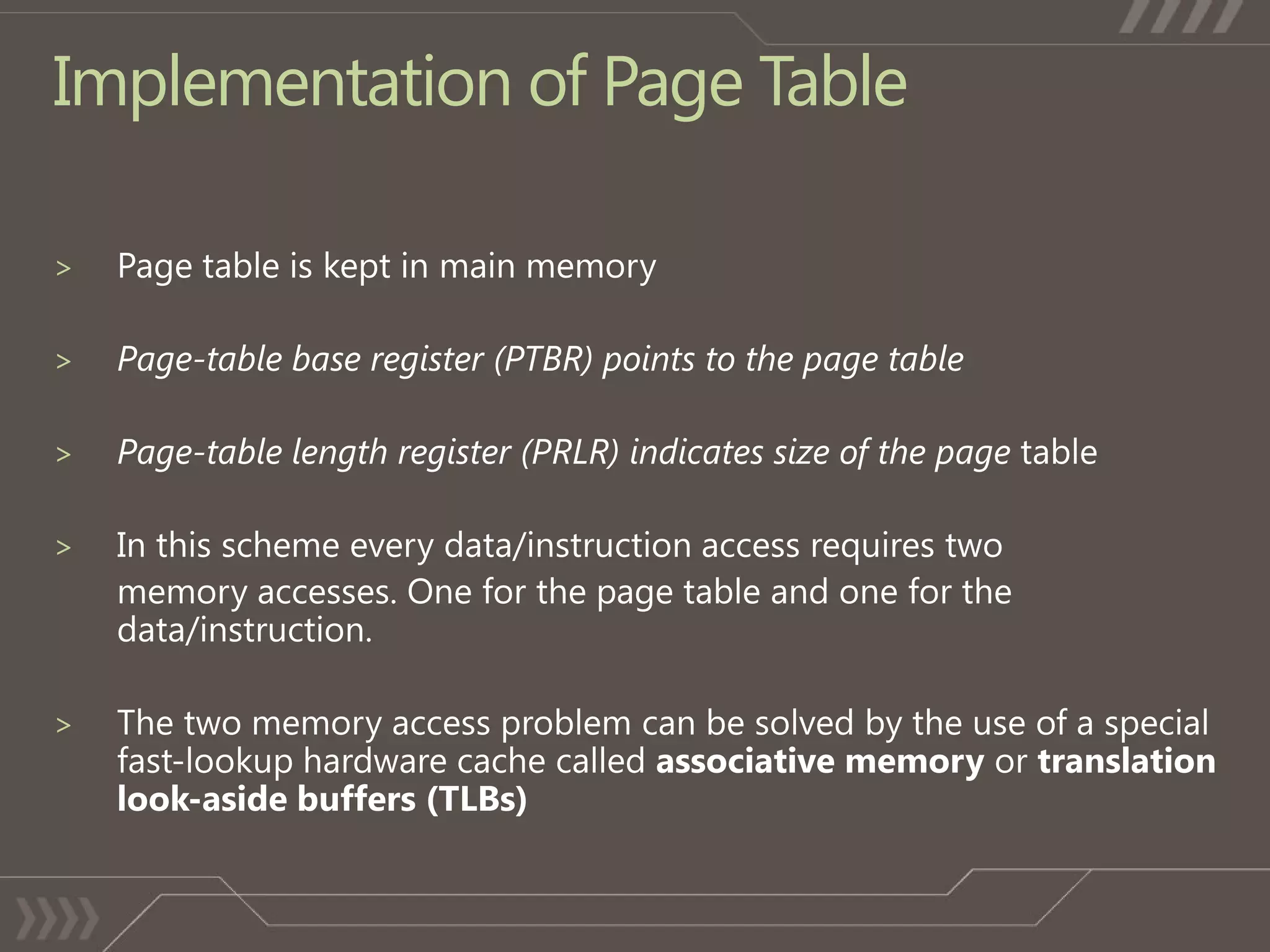
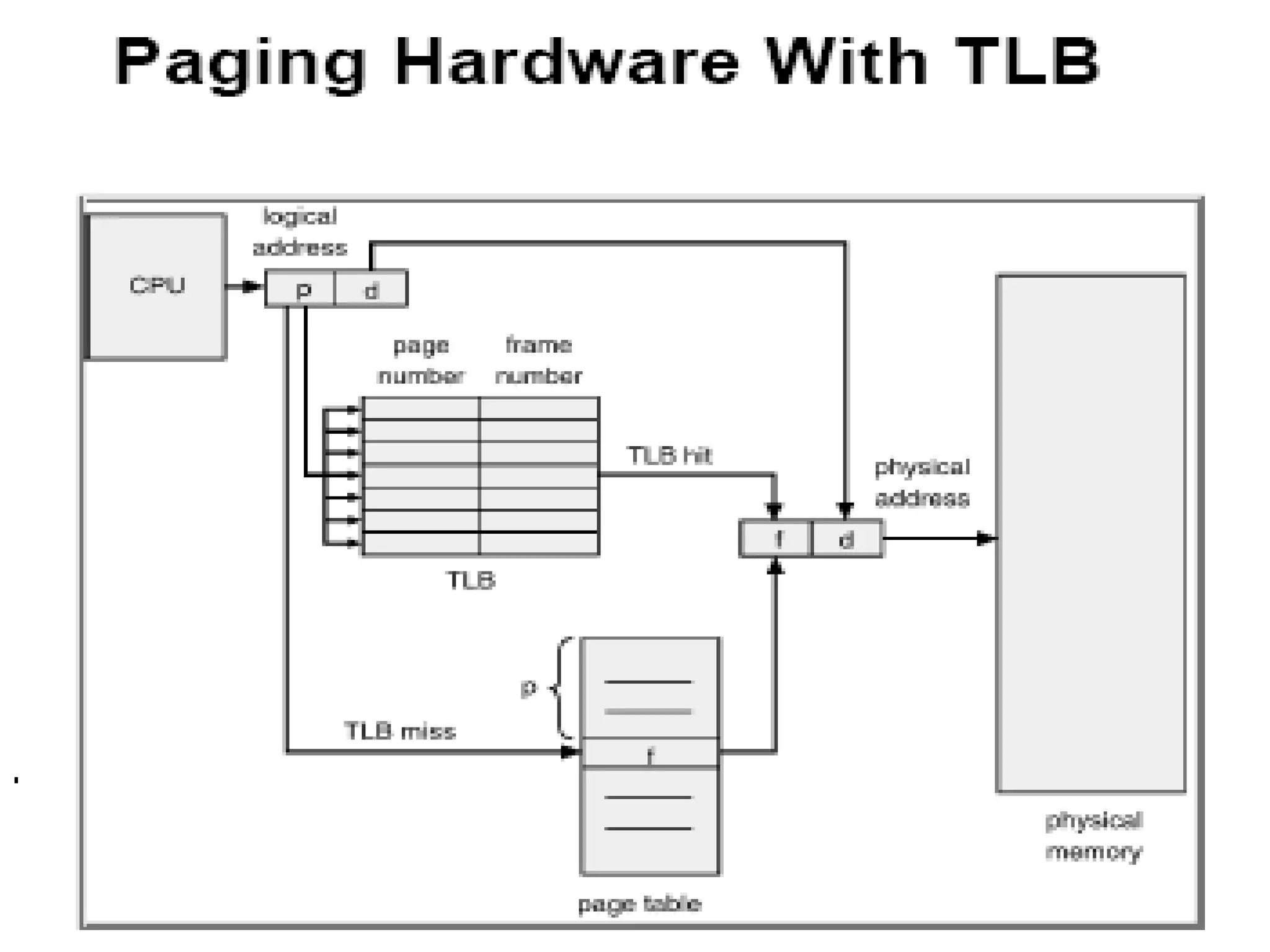
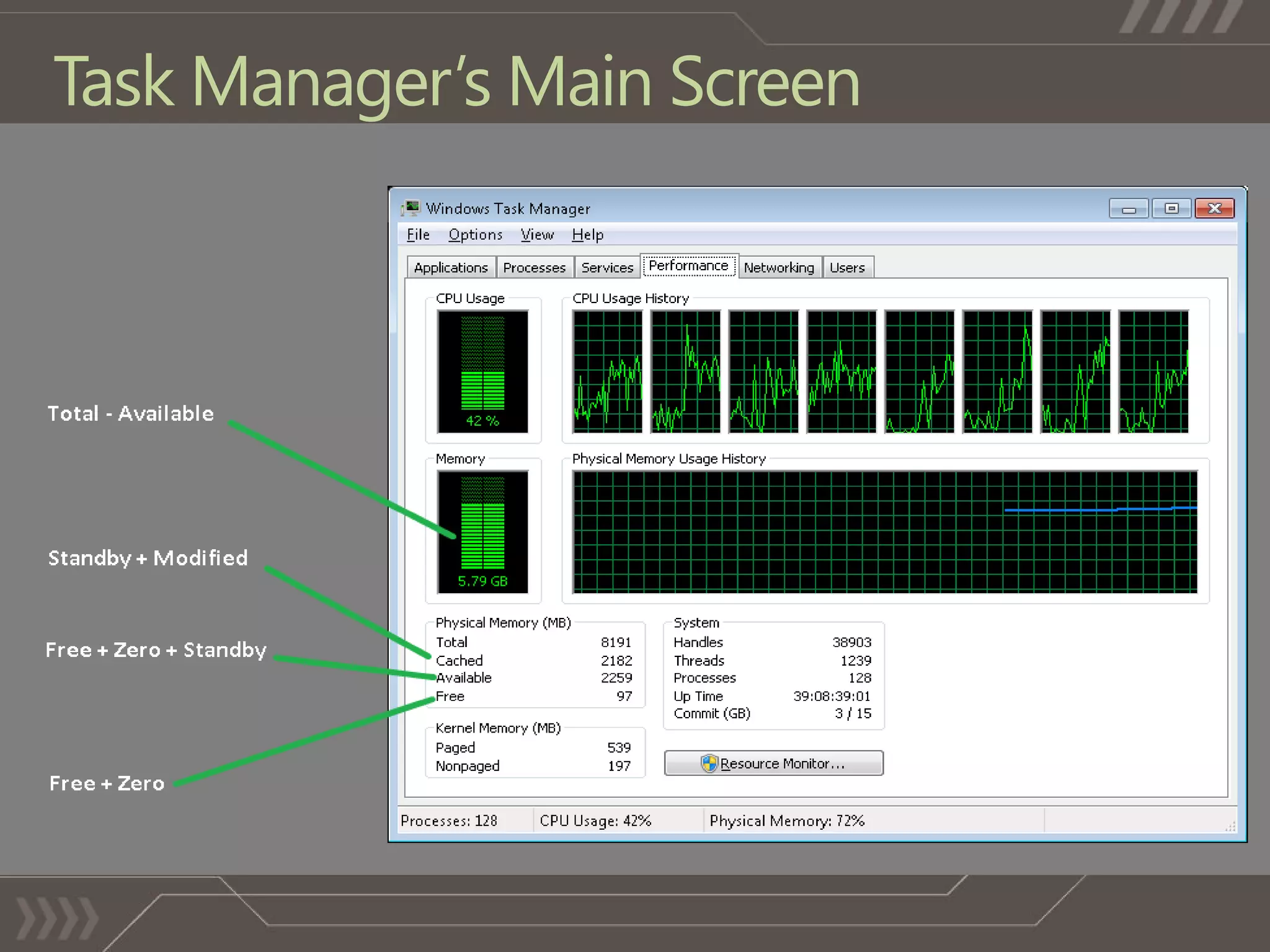
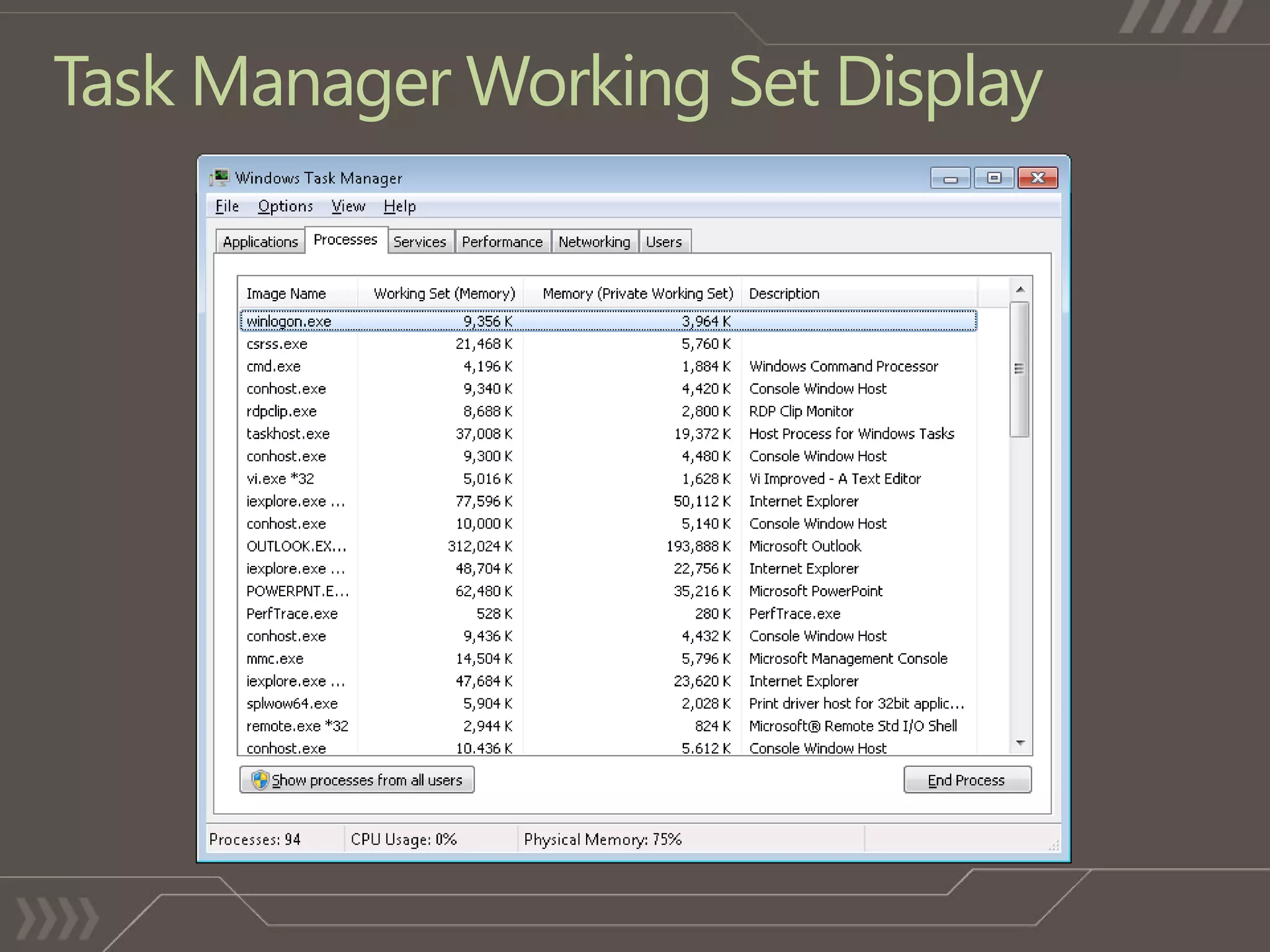
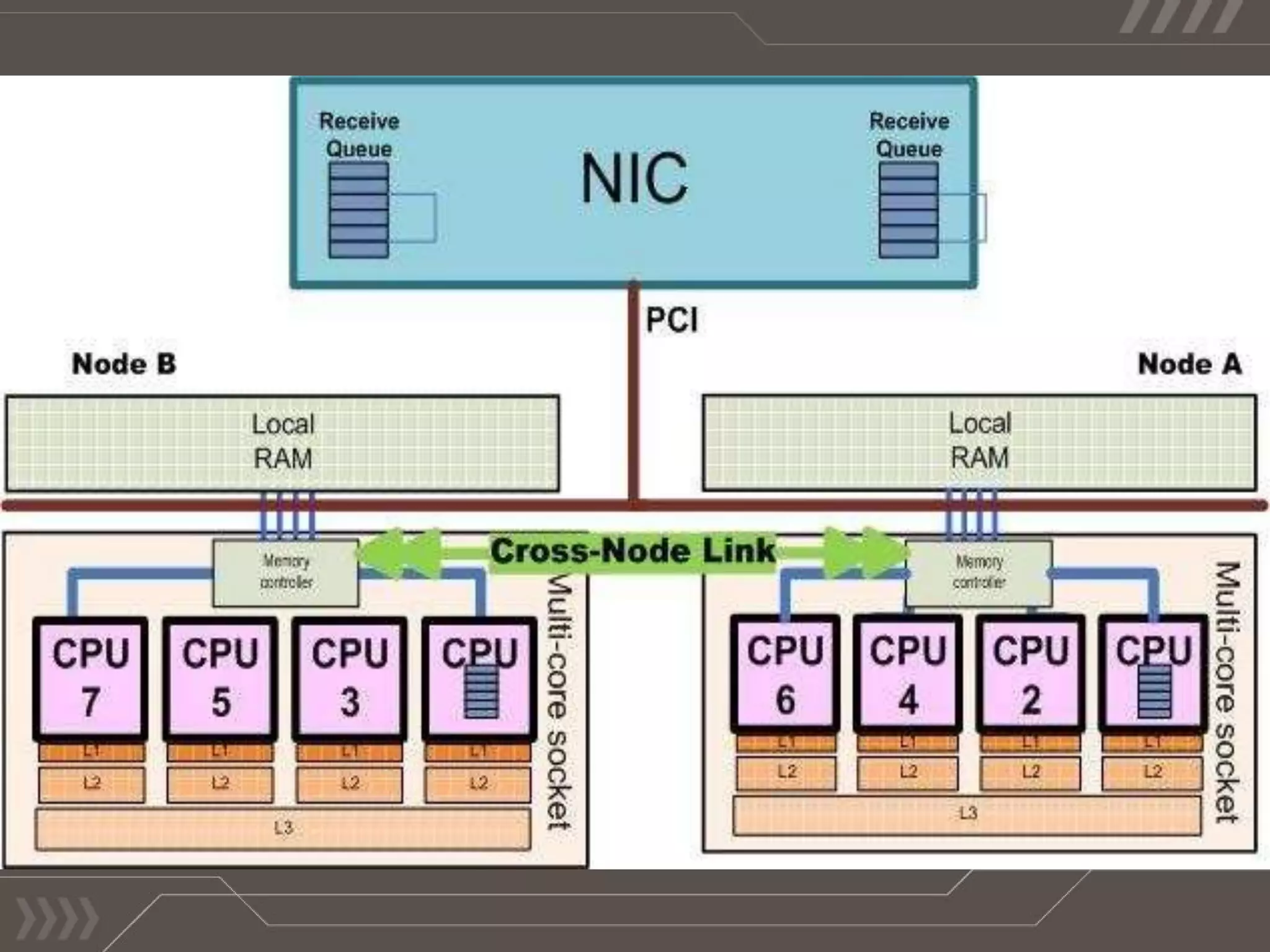
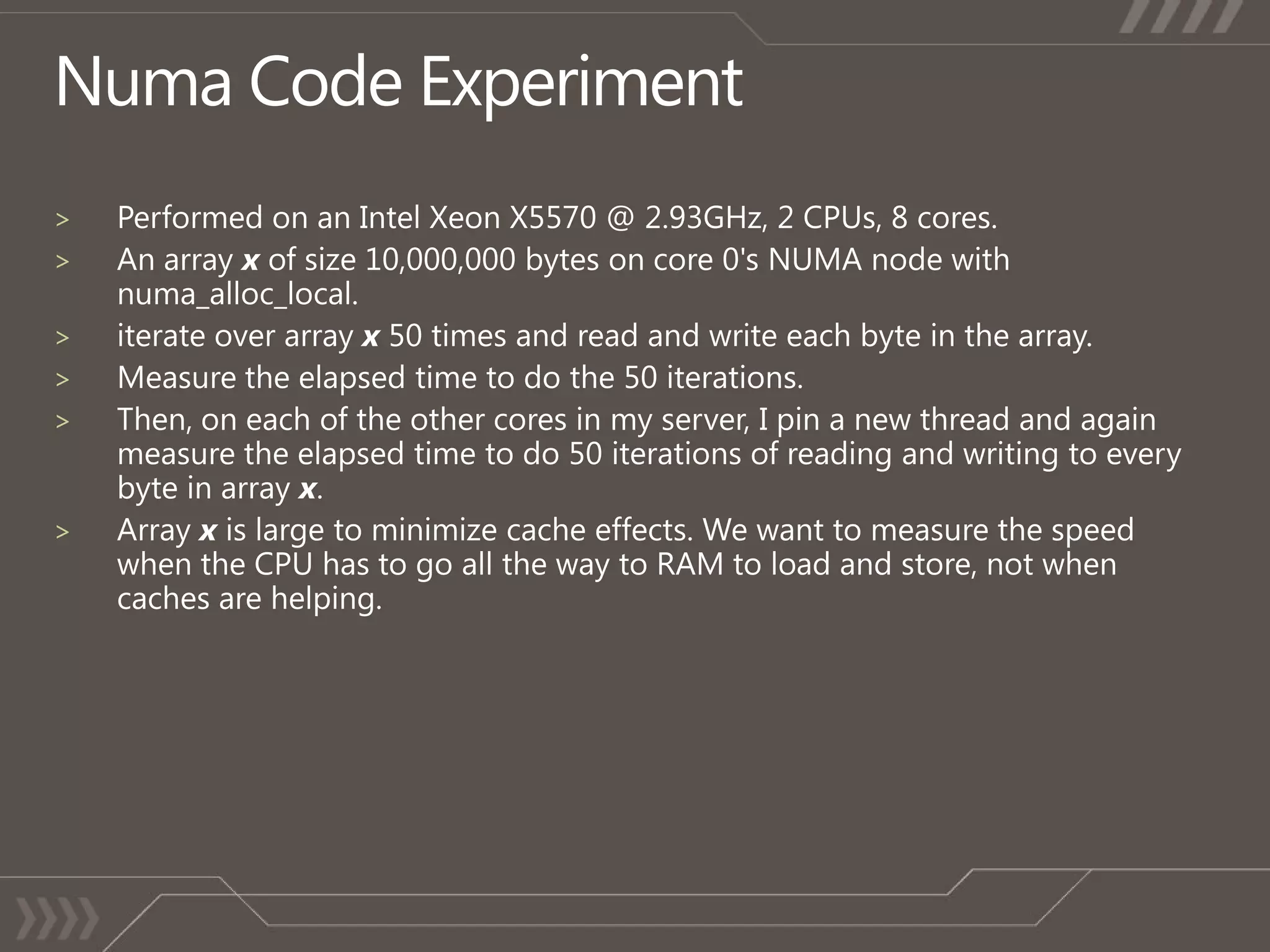
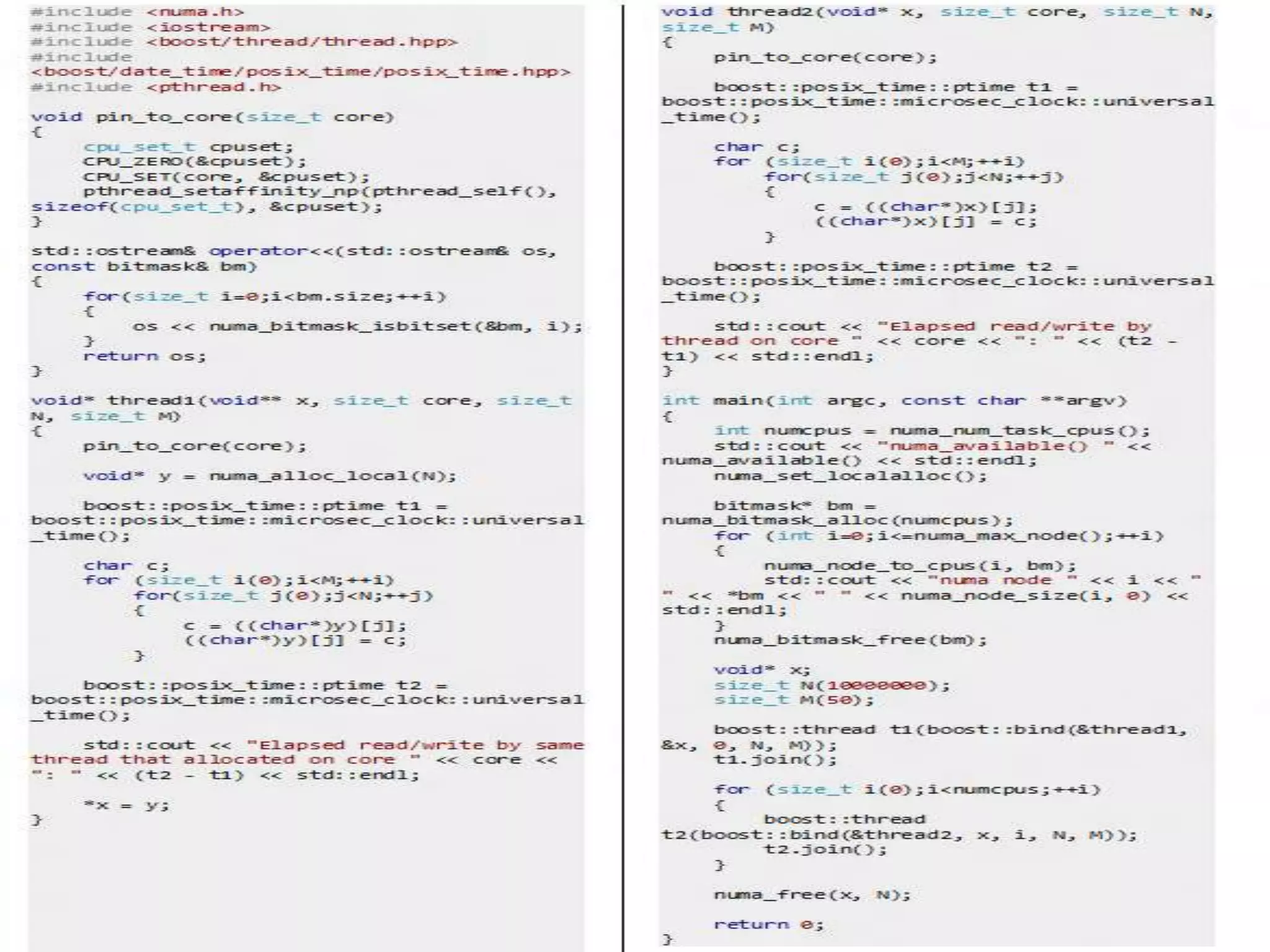
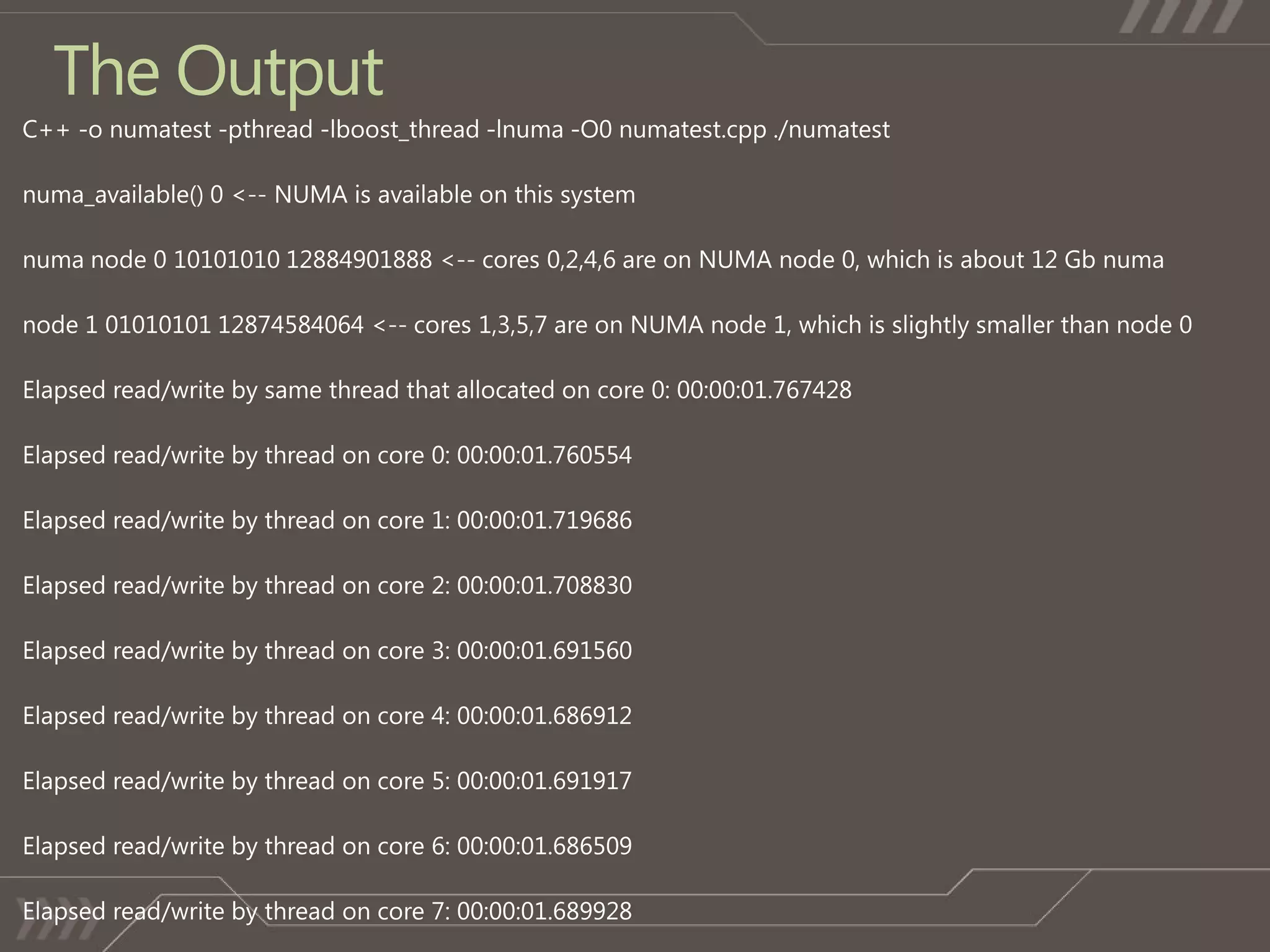



Memory management involves binding instructions and data to memory spaces using logical and physical addresses. The CPU uses base and limit registers to map the logical address space to the physical address space. Logical addresses are converted to physical addresses by adding the base register value. If a logical address is larger than the limit, an error occurs. Swapping and paging are techniques to manage memory fragmentation. Page tables implement paging by mapping logical page numbers to physical page frames. Task Manager displays memory usage and the working set of processes. NVRAM support and PFN locking help optimize memory usage. NUMA architectures scale multiprocessing by grouping CPUs and memory into nodes to reduce access latency.
Discusses memory as a fundamental concept in systems, introducing memory management.
Covers binding of instructions/data to memory, logical vs physical address space, and special CPU registers.
Explains memory management methods such as swapping, fragmentation, paging, and implementation of page tables.
Explains memory management methods such as swapping, fragmentation, paging, and implementation of page tables.
Displays Task Manager's main screen and working set, highlighting memory monitoring tools.
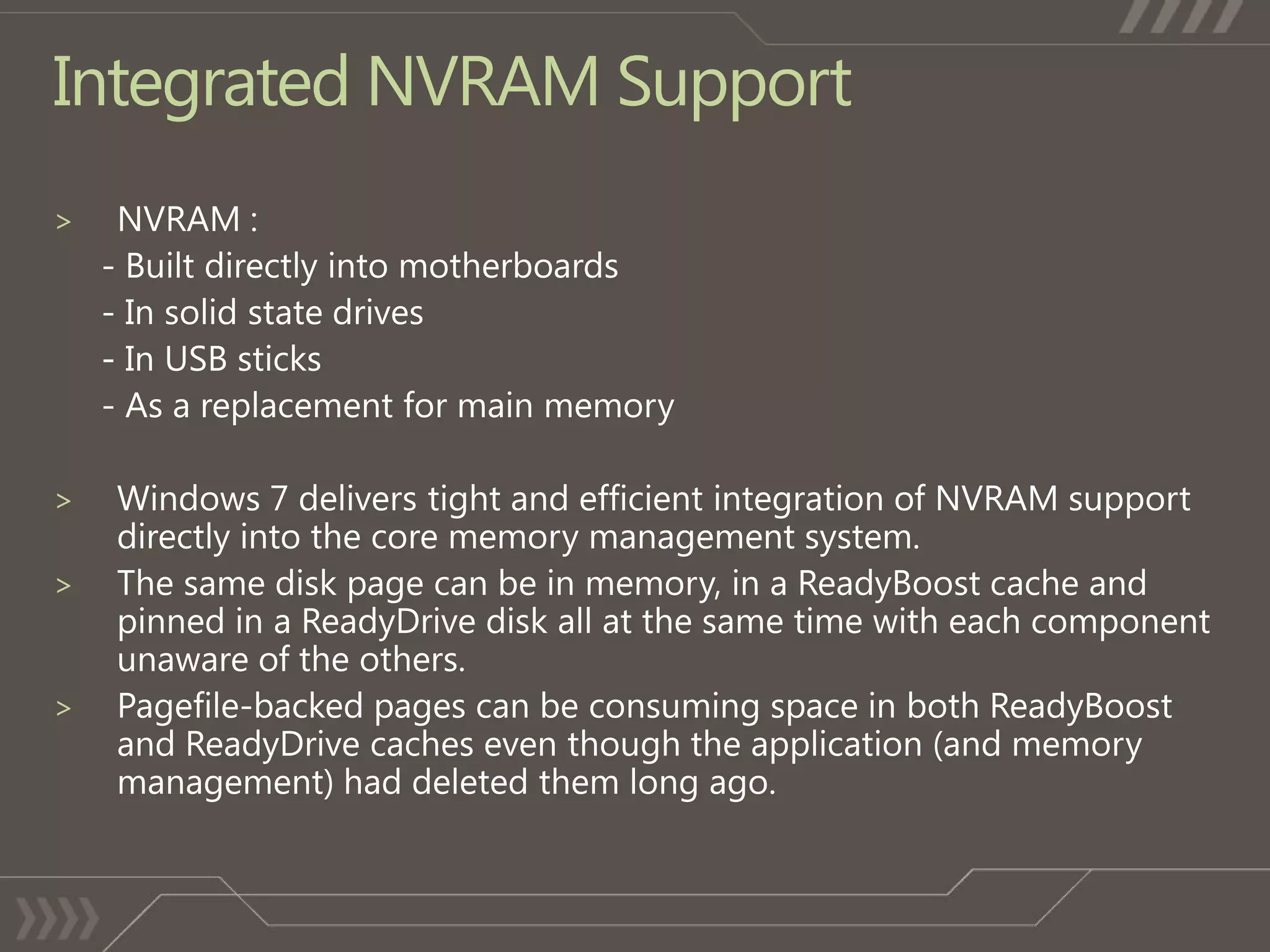
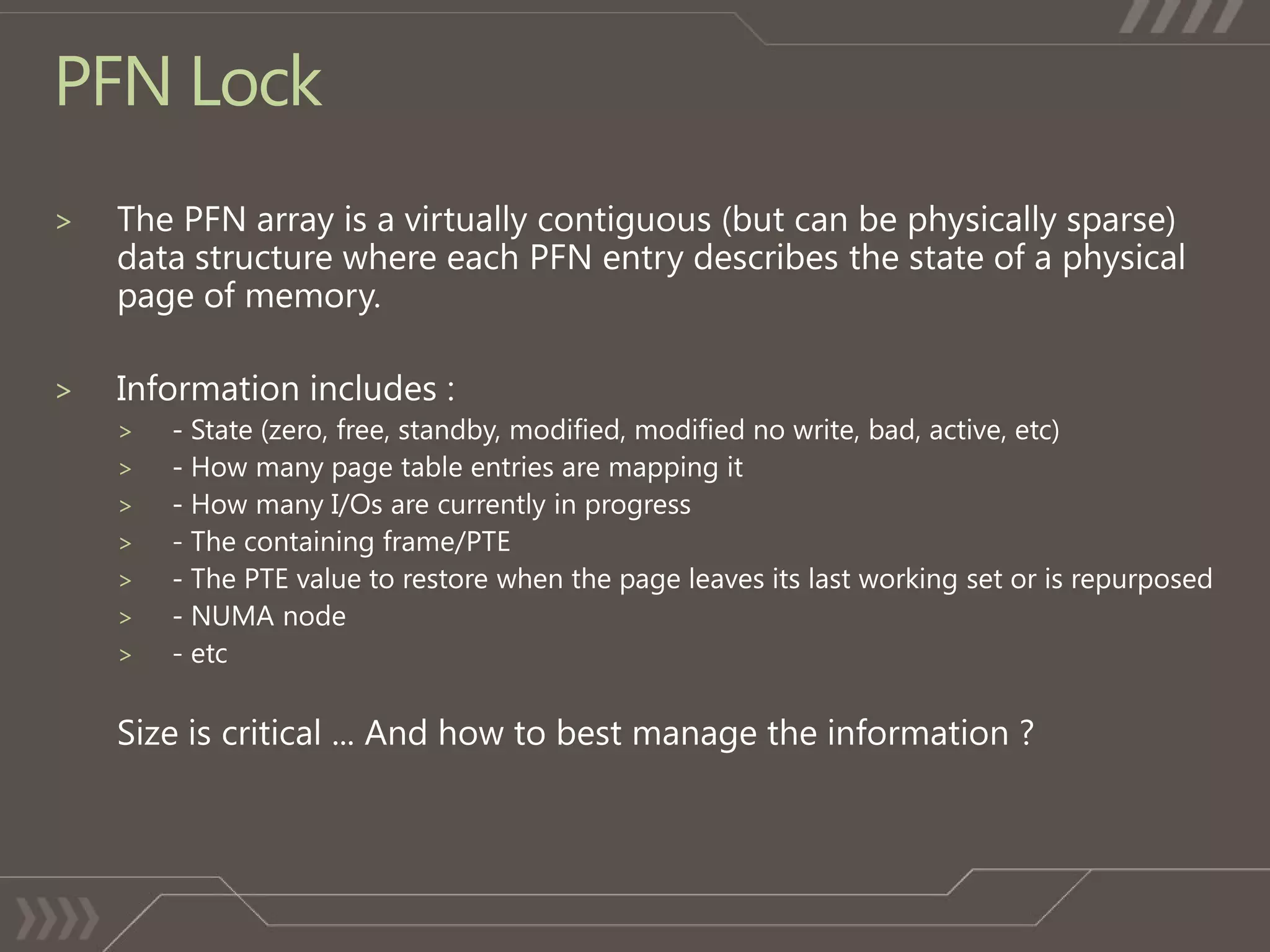
Introduces integrated NVRAM support and PFN lock for efficient memory management.
Describes development of NUMA architectures in the 1990s and their relation to SMP.
Final thoughts and summary of memory management topics discussed.


