

Sermo Barrier Page Test
TP1483
Background: The only physician’s-only social network, Sermo.
Goal: To increase lead rate.
Primary research question: Which barrier page will result in a higher lead rate
for returning visitors?
Approach: A/B variable cluster split test
Experiment ID: Sermo Barrier Page Test
Location: MECLABS Research Library
Test Protocol Number: TP1483
Research Notes:

Experiment: Background
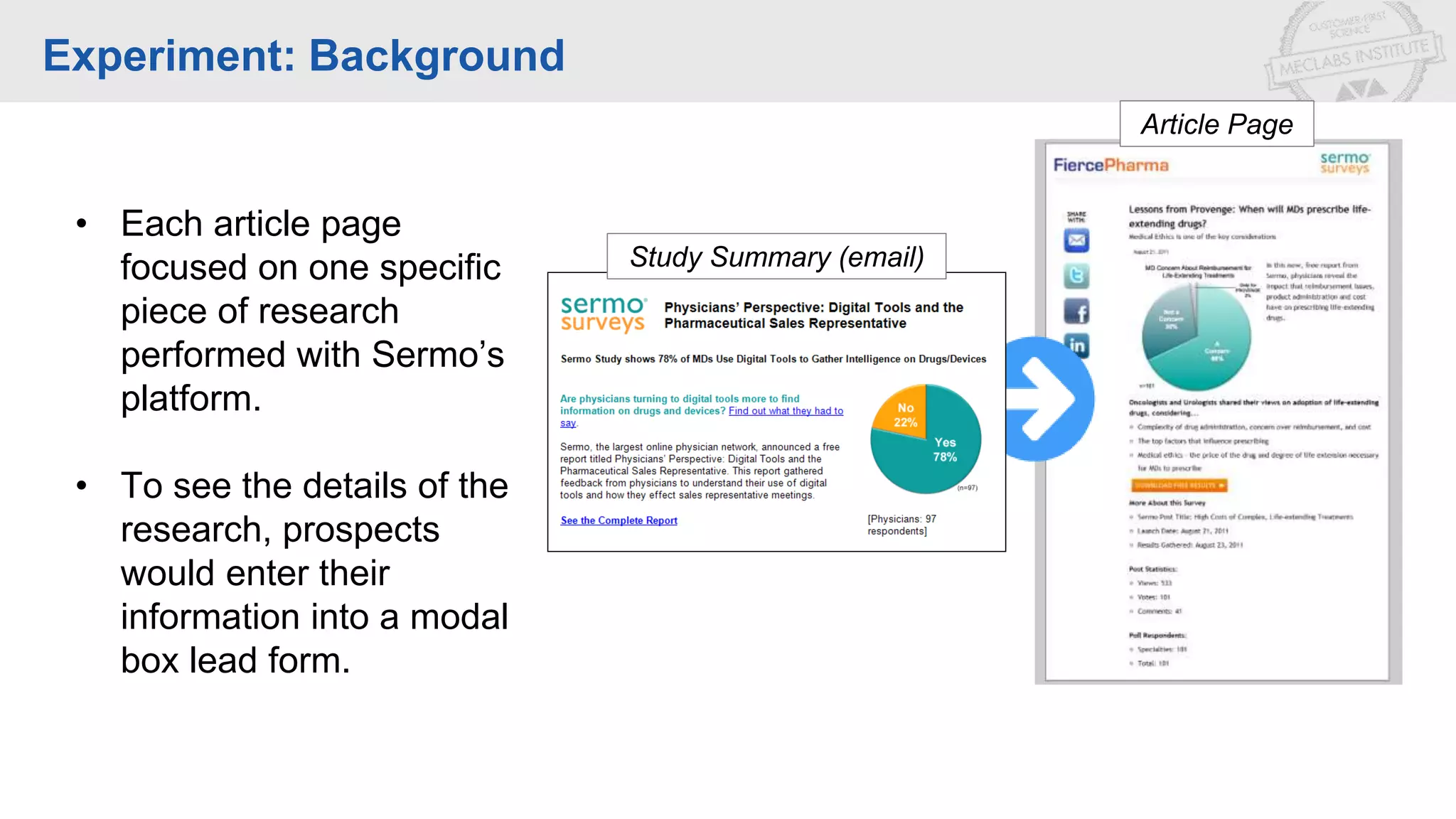
• Each article page
focused on one specific
piece of research
performed with Sermo’s
platform.
• To see the details of the
research, prospects
would enter their
information into a modal
box lead form.
Article Page
Experiment: Background
Study Summary (email)
0.00%
5.00%
10.00%
15.00%
20.00%
25.00%
30.00%
35.00%
40.00%
45.00%
50.00%
Conversion Rate
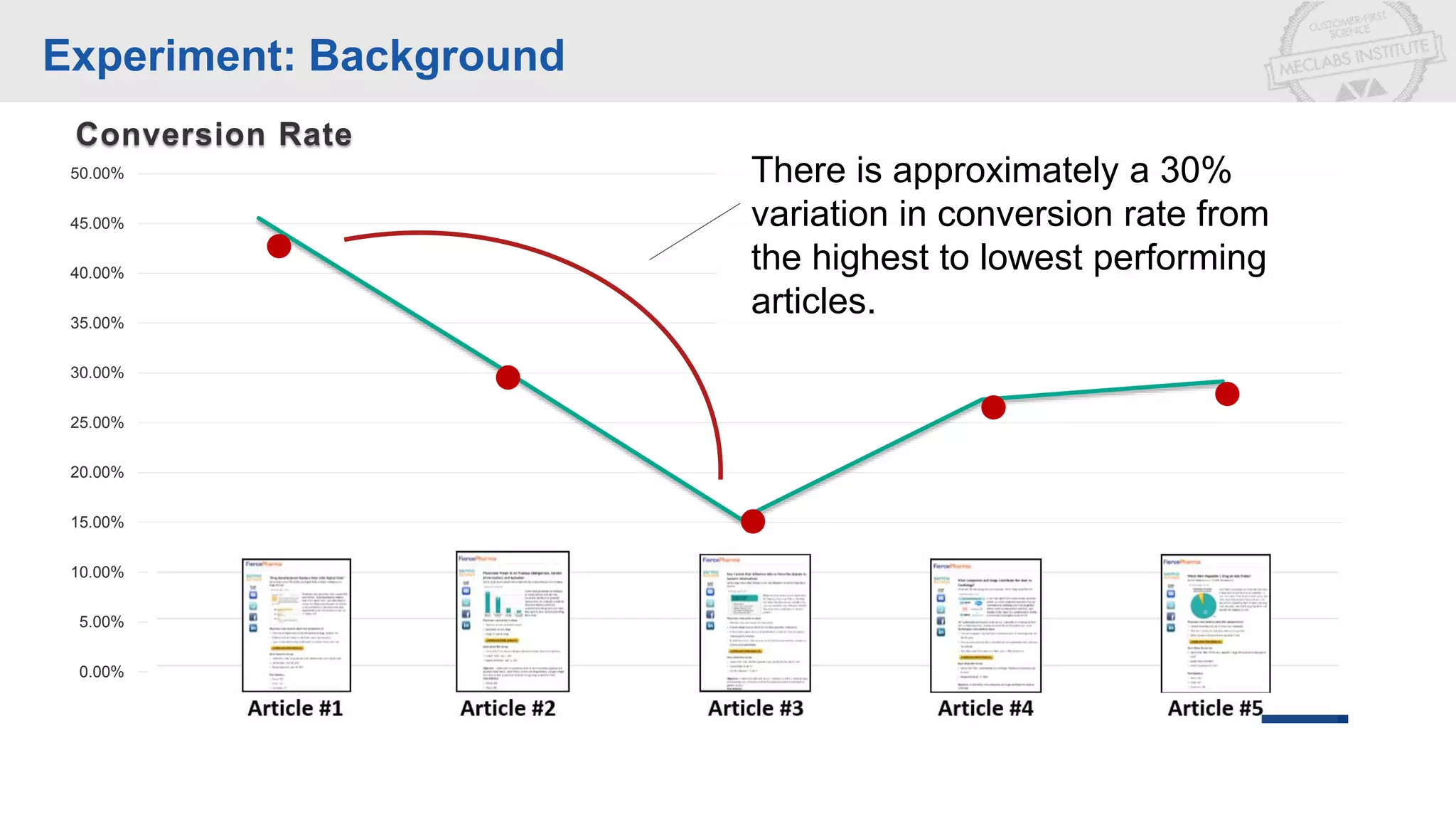
There is approximately a 30%
variation in conversion rate from
the highest to lowest performing
articles.
Article #1 Article #2 Article #3 Article #4 Article #5
Experiment: Background
From Observation to
Hypothesis:
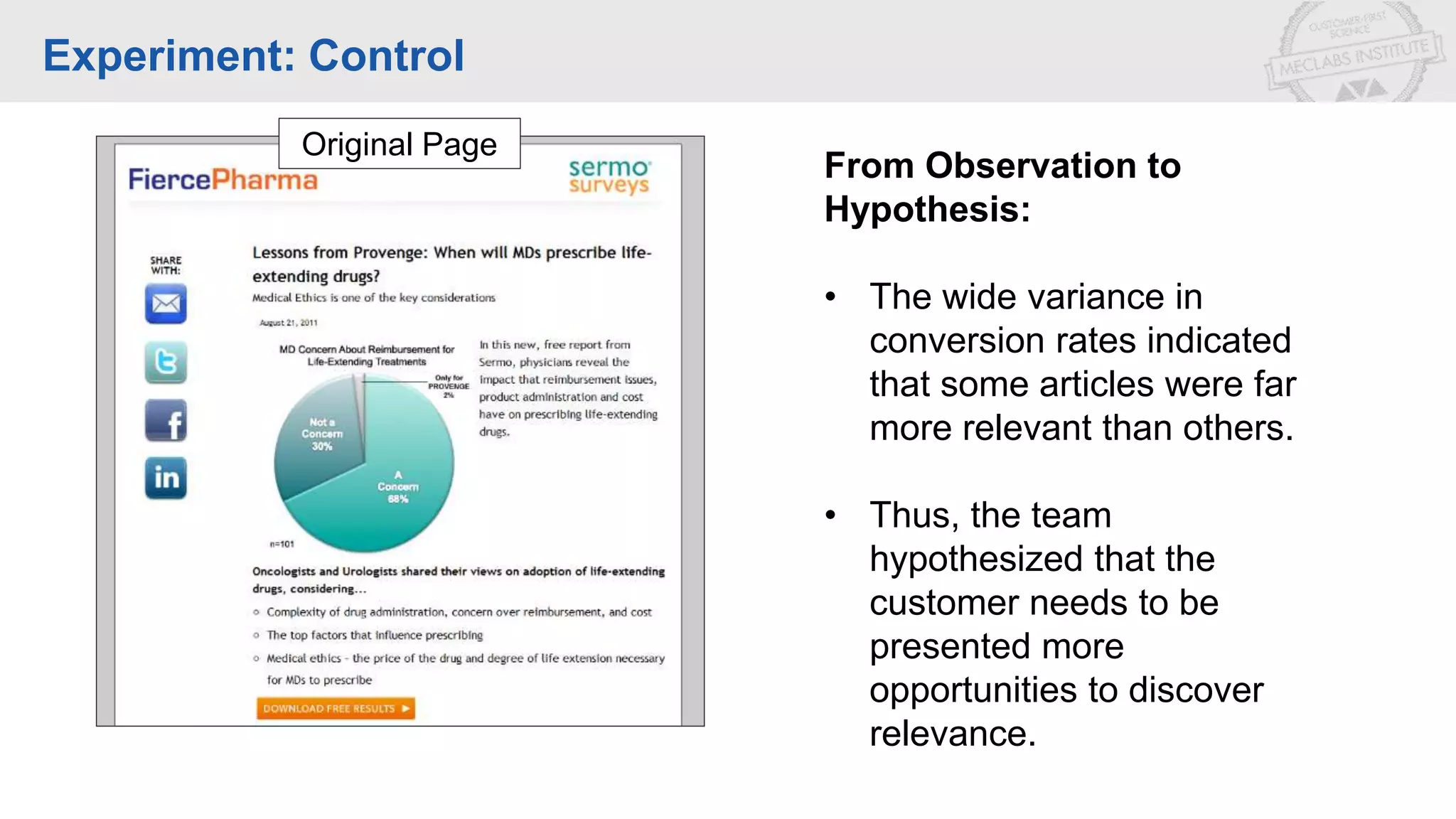
• The wide variance in
conversion rates indicated
that some articles were far
more relevant than others.
• Thus, the team
hypothesized that the
customer needs to be
presented more
opportunities to discover
relevance.
Original Page
Experiment: Control
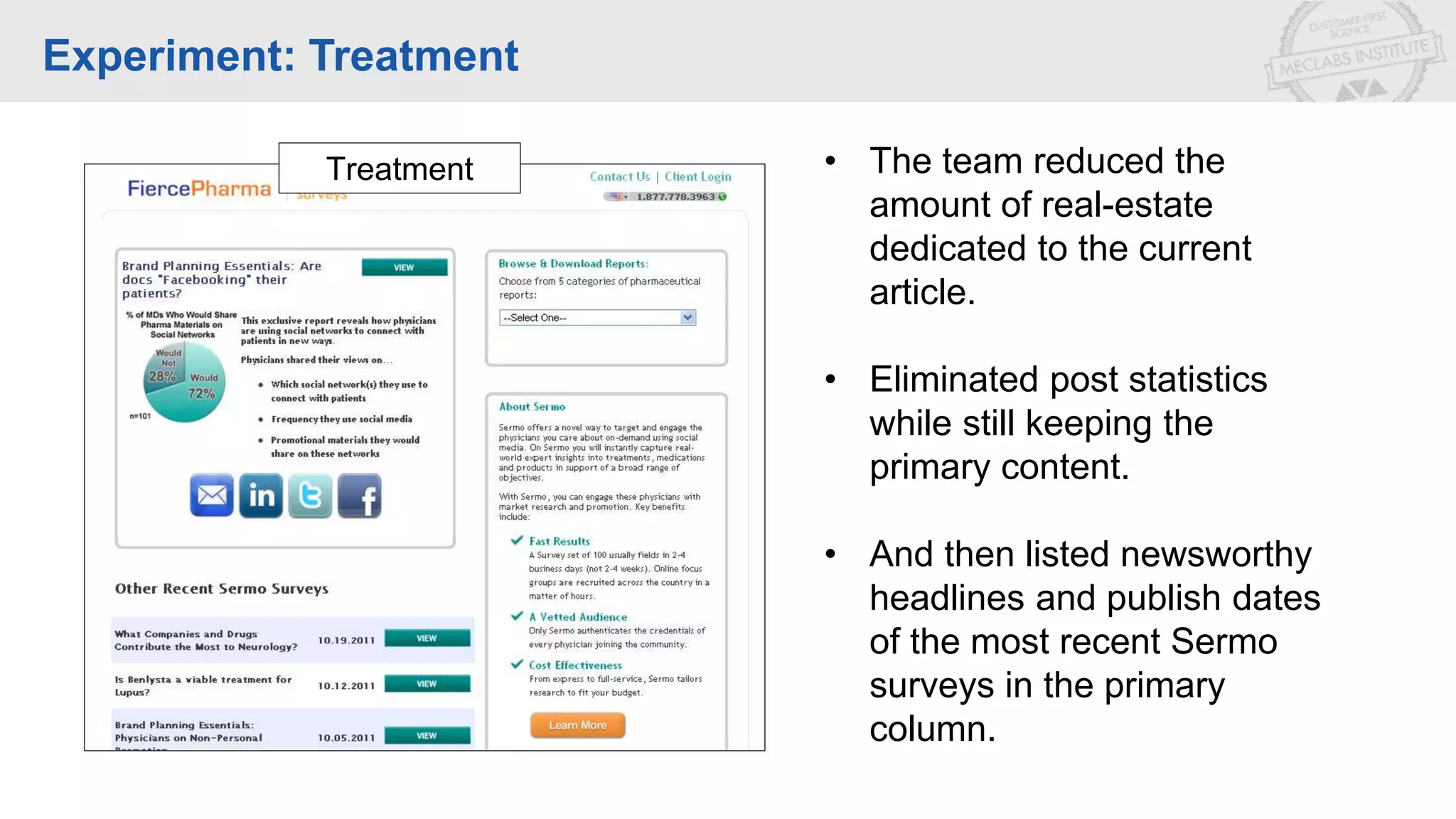
Treatment • The team reduced the
amount of real-estate
dedicated to the current
article.
• Eliminated post statistics
while still keeping the
primary content.
• And then listed newsworthy
headlines and publish dates
of the most recent Sermo
surveys in the primary
column.
Experiment: Treatment
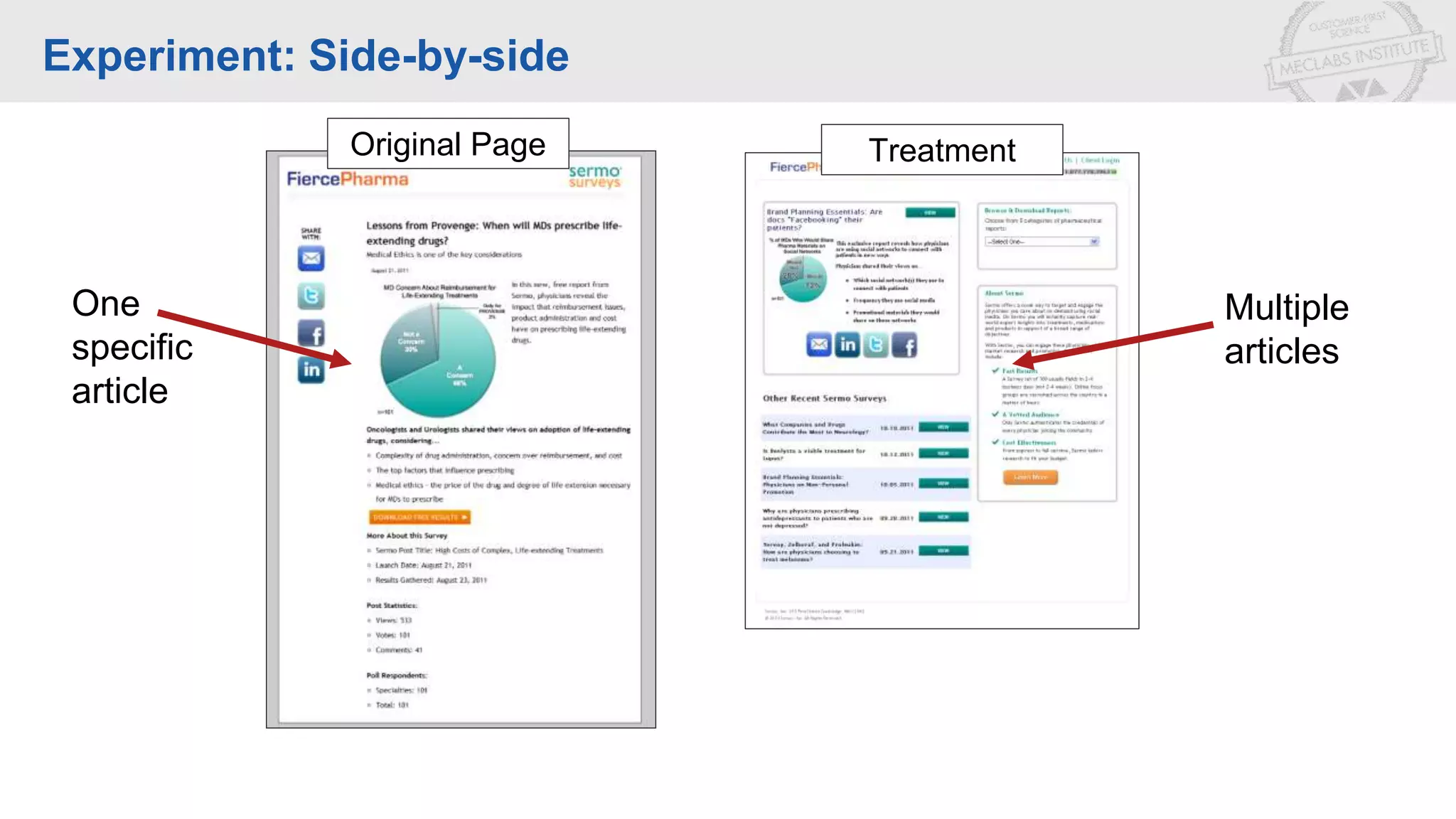
Original Page Treatment
One
specific
article
Multiple
articles
Experiment: Side-by-side
Experiment: Results
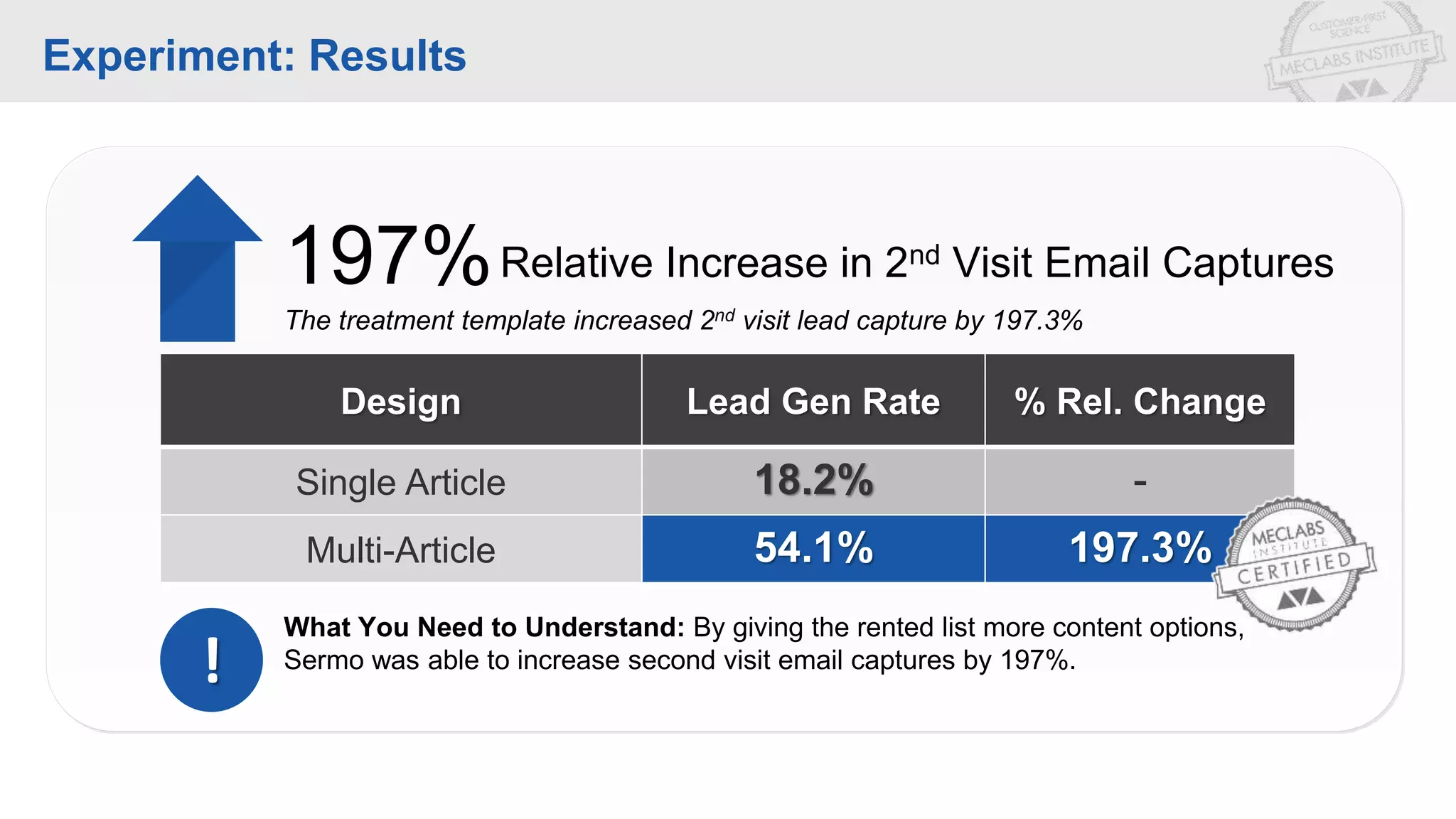
Design Lead Gen Rate % Rel. Change
Single Article 18.2% -
Multi-Article 54.1% 197.3%
197%
The treatment template increased 2nd visit lead capture by 197.3%
!
What You Need to Understand: By giving the rented list more content options,
Sermo was able to increase second visit email captures by 197%.
Relative Increase in 2nd Visit Email Captures
Sermo Barrier Page Test
TP1483

Sermo Article Email Case Study

  • 1.
    Sermo Barrier PageTest TP1483
  • 2.
    Background: The onlyphysician’s-only social network, Sermo. Goal: To increase lead rate. Primary research question: Which barrier page will result in a higher lead rate for returning visitors? Approach: A/B variable cluster split test Experiment ID: Sermo Barrier Page Test Location: MECLABS Research Library Test Protocol Number: TP1483 Research Notes:  Experiment: Background
  • 3.
    • Each articlepage focused on one specific piece of research performed with Sermo’s platform. • To see the details of the research, prospects would enter their information into a modal box lead form. Article Page Experiment: Background Study Summary (email)
  • 4.
    0.00% 5.00% 10.00% 15.00% 20.00% 25.00% 30.00% 35.00% 40.00% 45.00% 50.00% Conversion Rate There isapproximately a 30% variation in conversion rate from the highest to lowest performing articles. Article #1 Article #2 Article #3 Article #4 Article #5 Experiment: Background
  • 5.
    From Observation to Hypothesis: •The wide variance in conversion rates indicated that some articles were far more relevant than others. • Thus, the team hypothesized that the customer needs to be presented more opportunities to discover relevance. Original Page Experiment: Control
  • 6.
    Treatment • Theteam reduced the amount of real-estate dedicated to the current article. • Eliminated post statistics while still keeping the primary content. • And then listed newsworthy headlines and publish dates of the most recent Sermo surveys in the primary column. Experiment: Treatment
  • 7.
  • 8.
    Experiment: Results Design LeadGen Rate % Rel. Change Single Article 18.2% - Multi-Article 54.1% 197.3% 197% The treatment template increased 2nd visit lead capture by 197.3% ! What You Need to Understand: By giving the rented list more content options, Sermo was able to increase second visit email captures by 197%. Relative Increase in 2nd Visit Email Captures
  • 9.
    Sermo Barrier PageTest TP1483