ICE HOCKEY
BY: MARIA
BACKGROUND TO THE SPORT
 The hockey is a game played in the early 1800’s in Nova Scotia by Micmac
Indians.
 It Is a contact team sport played on ice, usually in a rink, in which two
teams of skaters us their sticks to shoot a vulcanized rubber puck into their
opponent's net to score points.
 Is most popular in areas of North America (Canada, the United States and
Europe).
 In North America Ice hockey is the official national winter sport of Canada.
 The first women's world championship was held in 1987
in Toronto, Canada.
THE RINK
 Is an ice rink.
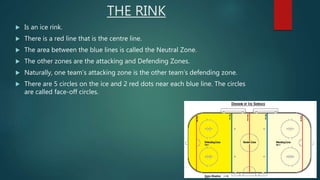
 There is a red line that is the centre line.
 The area between the blue lines is called the Neutral Zone.
 The other zones are the attacking and Defending Zones.
 Naturally, one team’s attacking zone is the other team’s defending zone.
 There are 5 circles on the ice and 2 red dots near each blue line. The circles
are called face-off circles.
EQUIPAMENT
 Body checks are allowed so injuries are a common
occurrence.
 His includes:
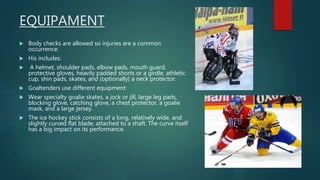
 A helmet, shoulder pads, elbow pads, mouth guard,
protective gloves, heavily padded shorts or a girdle, athletic
cup, shin pads, skates, and (optionally) a neck protector.
 Goaltenders use different equipment:
 Wear specialty goalie skates, a jock or jill, large leg pads,
blocking glove, catching glove, a chest protector, a goalie
mask, and a large jersey.
 The ice hockey stick consists of a long, relatively wide, and
slightly curved flat blade, attached to a shaft. The curve itself
has a big impact on its performance.
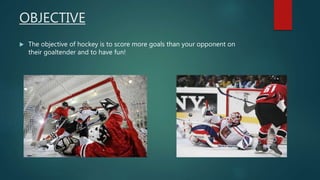
OBJECTIVE
 The objective of hockey is to score more goals than your opponent on
their goaltender and to have fun!
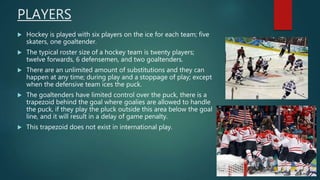
PLAYERS
 Hockey is played with six players on the ice for each team; five
skaters, one goaltender.
 The typical roster size of a hockey team is twenty players;
twelve forwards, 6 defensemen, and two goaltenders.
 There are an unlimited amount of substitutions and they can
happen at any time; during play and a stoppage of play; except
when the defensive team ices the puck.
 The goaltenders have limited control over the puck, there is a
trapezoid behind the goal where goalies are allowed to handle
the puck, if they play the pluck outside this area below the goal
line, and it will result in a delay of game penalty.
 This trapezoid does not exist in international play.
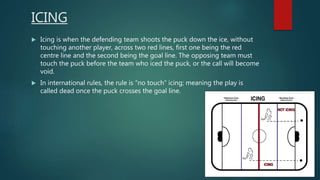
ICING
 Icing is when the defending team shoots the puck down the ice, without
touching another player, across two red lines, first one being the red
centre line and the second being the goal line. The opposing team must
touch the puck before the team who iced the puck, or the call will become
void.
 In international rules, the rule is “no touch” icing; meaning the play is
called dead once the puck crosses the goal line.
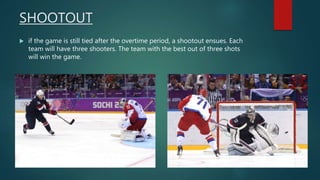
SHOOTOUT
 if the game is still tied after the overtime period, a shootout ensues. Each
team will have three shooters. The team with the best out of three shots
will win the game.
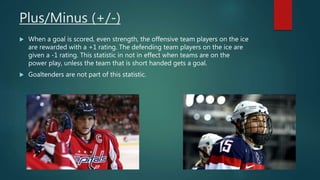
Plus/Minus (+/-)
 When a goal is scored, even strength, the offensive team players on the ice
are rewarded with a +1 rating. The defending team players on the ice are
given a -1 rating. This statistic in not in effect when teams are on the
power play, unless the team that is short handed gets a goal.
 Goaltenders are not part of this statistic.
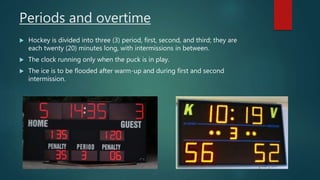
Periods and overtime
 Hockey is divided into three (3) period, first, second, and third; they are
each twenty (20) minutes long, with intermissions in between.
 The clock running only when the puck is in play.
 The ice is to be flooded after warm-up and during first and second
intermission.
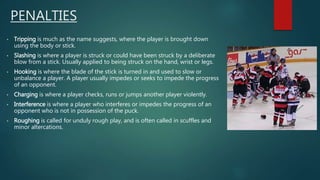
PENALTIES
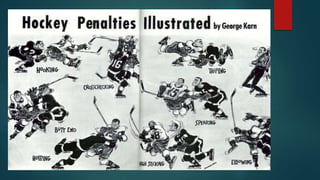
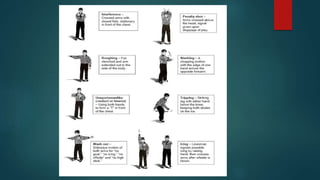
• Tripping is much as the name suggests, where the player is brought down
using the body or stick.
• Slashing is where a player is struck or could have been struck by a deliberate
blow from a stick. Usually applied to being struck on the hand, wrist or legs.
• Hooking is where the blade of the stick is turned in and used to slow or
unbalance a player. A player usually impedes or seeks to impede the progress
of an opponent.
• Charging is where a player checks, runs or jumps another player violently.
• Interference is where a player who interferes or impedes the progress of an
opponent who is not in possession of the puck.
• Roughing is called for unduly rough play, and is often called in scuffles and
minor altercations.
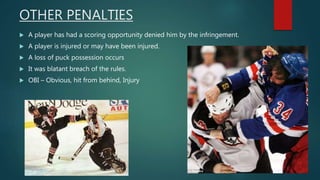
OTHER PENALTIES
 A player has had a scoring opportunity denied him by the infringement.
 A player is injured or may have been injured.
 A loss of puck possession occurs
 It was blatant breach of the rules.
 OBI – Obvious, hit from behind, Injury
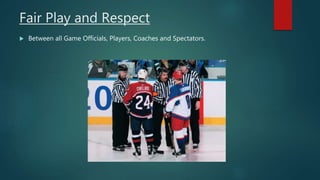
Fair Play and Respect
 Between all Game Officials, Players, Coaches and Spectators.
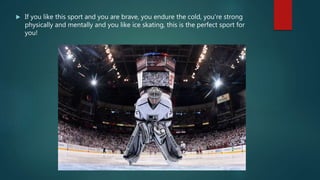
 If you like this sport and you are brave, you endure the cold, you're strong
physically and mentally and you like ice skating, this is the perfect sport for
you!

Ice hockey

  • 1.
  • 2.
    BACKGROUND TO THESPORT  The hockey is a game played in the early 1800’s in Nova Scotia by Micmac Indians.  It Is a contact team sport played on ice, usually in a rink, in which two teams of skaters us their sticks to shoot a vulcanized rubber puck into their opponent's net to score points.  Is most popular in areas of North America (Canada, the United States and Europe).  In North America Ice hockey is the official national winter sport of Canada.  The first women's world championship was held in 1987 in Toronto, Canada.
  • 3.
    THE RINK  Isan ice rink.  There is a red line that is the centre line.  The area between the blue lines is called the Neutral Zone.  The other zones are the attacking and Defending Zones.  Naturally, one team’s attacking zone is the other team’s defending zone.  There are 5 circles on the ice and 2 red dots near each blue line. The circles are called face-off circles.
  • 4.
    EQUIPAMENT  Body checksare allowed so injuries are a common occurrence.  His includes:  A helmet, shoulder pads, elbow pads, mouth guard, protective gloves, heavily padded shorts or a girdle, athletic cup, shin pads, skates, and (optionally) a neck protector.  Goaltenders use different equipment:  Wear specialty goalie skates, a jock or jill, large leg pads, blocking glove, catching glove, a chest protector, a goalie mask, and a large jersey.  The ice hockey stick consists of a long, relatively wide, and slightly curved flat blade, attached to a shaft. The curve itself has a big impact on its performance.
  • 5.
    OBJECTIVE  The objectiveof hockey is to score more goals than your opponent on their goaltender and to have fun!
  • 6.
    PLAYERS  Hockey isplayed with six players on the ice for each team; five skaters, one goaltender.  The typical roster size of a hockey team is twenty players; twelve forwards, 6 defensemen, and two goaltenders.  There are an unlimited amount of substitutions and they can happen at any time; during play and a stoppage of play; except when the defensive team ices the puck.  The goaltenders have limited control over the puck, there is a trapezoid behind the goal where goalies are allowed to handle the puck, if they play the pluck outside this area below the goal line, and it will result in a delay of game penalty.  This trapezoid does not exist in international play.
  • 7.
    ICING  Icing iswhen the defending team shoots the puck down the ice, without touching another player, across two red lines, first one being the red centre line and the second being the goal line. The opposing team must touch the puck before the team who iced the puck, or the call will become void.  In international rules, the rule is “no touch” icing; meaning the play is called dead once the puck crosses the goal line.
  • 8.
    SHOOTOUT  if thegame is still tied after the overtime period, a shootout ensues. Each team will have three shooters. The team with the best out of three shots will win the game.
  • 9.
    Plus/Minus (+/-)  Whena goal is scored, even strength, the offensive team players on the ice are rewarded with a +1 rating. The defending team players on the ice are given a -1 rating. This statistic in not in effect when teams are on the power play, unless the team that is short handed gets a goal.  Goaltenders are not part of this statistic.
  • 10.
    Periods and overtime Hockey is divided into three (3) period, first, second, and third; they are each twenty (20) minutes long, with intermissions in between.  The clock running only when the puck is in play.  The ice is to be flooded after warm-up and during first and second intermission.
  • 11.
    PENALTIES • Tripping ismuch as the name suggests, where the player is brought down using the body or stick. • Slashing is where a player is struck or could have been struck by a deliberate blow from a stick. Usually applied to being struck on the hand, wrist or legs. • Hooking is where the blade of the stick is turned in and used to slow or unbalance a player. A player usually impedes or seeks to impede the progress of an opponent. • Charging is where a player checks, runs or jumps another player violently. • Interference is where a player who interferes or impedes the progress of an opponent who is not in possession of the puck. • Roughing is called for unduly rough play, and is often called in scuffles and minor altercations.
  • 12.
    OTHER PENALTIES  Aplayer has had a scoring opportunity denied him by the infringement.  A player is injured or may have been injured.  A loss of puck possession occurs  It was blatant breach of the rules.  OBI – Obvious, hit from behind, Injury
  • 16.
    Fair Play andRespect  Between all Game Officials, Players, Coaches and Spectators.
  • 17.
     If youlike this sport and you are brave, you endure the cold, you're strong physically and mentally and you like ice skating, this is the perfect sport for you!