Samsung Electronics’ Supply Chain and Workforce in South Korea
Case Study on
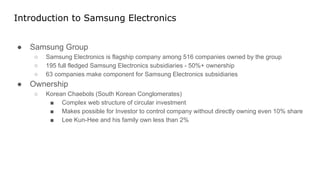
Introduction to Samsung Electronics
● Samsung Group
○ Samsung Electronics is flagship company among 516 companies owned by the group
○ 195 full fledged Samsung Electronics subsidiaries - 50%+ ownership
○ 63 companies make component for Samsung Electronics subsidiaries
● Ownership
○ Korean Chaebols (South Korean Conglomerates)
■ Complex web structure of circular investment
■ Makes possible for Investor to control company without directly owning even 10% share
■ Lee Kun-Hee and his family own less than 2%
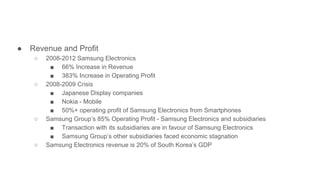
● Revenue and Profit
○ 2008-2012 Samsung Electronics
■ 66% Increase in Revenue
■ 383% Increase in Operating Profit
○ 2008-2009 Crisis
■ Japanese Display companies
■ Nokia - Mobile
■ 50%+ operating profit of Samsung Electronics from Smartphones
○ Samsung Group’s 85% Operating Profit - Samsung Electronics and subsidiaries
■ Transaction with its subsidiaries are in favour of Samsung Electronics
■ Samsung Group’s other subsidiaries faced economic stagnation
○ Samsung Electronics revenue is 20% of South Korea’s GDP
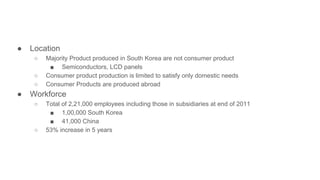
● Location
○ Majority Product produced in South Korea are not consumer product
■ Semiconductors, LCD panels
○ Consumer product production is limited to satisfy only domestic needs
○ Consumer Products are produced abroad
● Workforce
○ Total of 2,21,000 employees including those in subsidiaries at end of 2011
■ 1,00,000 South Korea
■ 41,000 China
○ 53% increase in 5 years
Samsung Electronics’ Domestic Supply Chain
The supply for Samsung Electronics is made on five layers. They are
● First Layer
○ Samsung Group Subsidiaries
○ They are separate companies but operate as single company based on Samsung Electronics’
business plan.
○ Irreplaceable
● Second Layer
○ Transnational Electronics Component Suppliers
○ Strategically Important due to sale and importance of product they supply
○ QualComm, 3Com
○ Irreplaceable
● Third Layer
○ Samsung Electronics outsource manufacturing of parts it can produce itself
○ Low Cost, Production Capacity
○ May lose contract, if any problem with product quality or supply
○ Samsung Electronics at times support them, but it easily cut those that it deems to have lost
value from a business perspective
● Fourth Layer
○ Subcontractors which supply parts that Samsung Electronics can not manufacture itself
○ May lose contract, if any problem with product quality or supply
● Last Layer
○ Small and Medium size parts suppliers or Vendors
○ Frequently switched - Price Competition - Contracts are for a period of a week to few months
○ Price at which parts are supplied are determined by Samsung Electronics
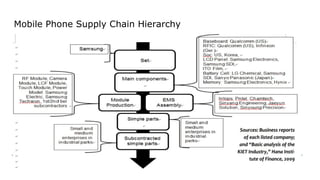
Mobile Phone Supply Chain Hierarchy
Samsung Electronics’ Workers
● No Union Policy
○ It actively intervenes in formation of union even in its suppliers.
○ Union Participation in South Korea’s electronics industry is 3%
○ Careful workplace control and a thorough system of selective inclusion and exclusion
○ Closely monitors workers activity
■ Tapped their phone calls
■ Threaten their family
■ Tracking Device
○ Uses point person system to monitor movements towards union formation on day-to-day basis
■ Staff in labour management department
■ Labor management department supervisor
■ Head of the Labour management department
● Wages
○ Highest Wage in Industry
○ Due to exploitation of subcontractors
■ Wages at subcontractors level is just above minimum legal wage
■ No union is formed at this level also
○ High Wage level in Automobile Industry, where Unions are common
■ Wages of worker at supplier's level is close to OEMs
○ Production level in Samsung can easily regulated as per demand and no minimum wage level
need to be paid in absence of union
■ Leads to large fluctuations in wage level
● Workers at subcontractors must do whatever Samsung Electronics demands to
ensure that the orders keep coming in
● Employment Structure
○ Employs Young girls in production - High School Recruitment
■ Easy to Control
● Long Hour of Work
● Force to quit when old
○ Employs at subcontractor level are women in forties and fifties
■ No wage increase with experience
■ Work for 2-3 years
● Not much skill needed so new hire
● Workers try to find big companies for higher wage
○ In-house subcontractors
Struggle for workers’ health rights and freedom of association
● Occupational Health and Safety
○ Cancer, Nervous and Immune System, Psychological Disorders
○ Support for Health and Rights of People in Semiconductor Industry (SHARPs)
● Union Establishment
○ Samsung Labor Union recently joined Korean Confederation of Trade Unions-affiliated Korean
Metal Workers’ Union
○ Disciplinary Action taken
Reference
In the Belly of the Beast: Samsung Electronics’ Supply Chain and Workforce in
South Korea;Jiwon Han, Wol-san Liem, and Yoomi Lee Research Institute for
Alternative Workers’ Movements, South Korea

Samsung case study

  • 1.
    Samsung Electronics’ SupplyChain and Workforce in South Korea Case Study on
  • 2.
    Introduction to SamsungElectronics ● Samsung Group ○ Samsung Electronics is flagship company among 516 companies owned by the group ○ 195 full fledged Samsung Electronics subsidiaries - 50%+ ownership ○ 63 companies make component for Samsung Electronics subsidiaries ● Ownership ○ Korean Chaebols (South Korean Conglomerates) ■ Complex web structure of circular investment ■ Makes possible for Investor to control company without directly owning even 10% share ■ Lee Kun-Hee and his family own less than 2%
  • 3.
    ● Revenue andProfit ○ 2008-2012 Samsung Electronics ■ 66% Increase in Revenue ■ 383% Increase in Operating Profit ○ 2008-2009 Crisis ■ Japanese Display companies ■ Nokia - Mobile ■ 50%+ operating profit of Samsung Electronics from Smartphones ○ Samsung Group’s 85% Operating Profit - Samsung Electronics and subsidiaries ■ Transaction with its subsidiaries are in favour of Samsung Electronics ■ Samsung Group’s other subsidiaries faced economic stagnation ○ Samsung Electronics revenue is 20% of South Korea’s GDP
  • 4.
    ● Location ○ MajorityProduct produced in South Korea are not consumer product ■ Semiconductors, LCD panels ○ Consumer product production is limited to satisfy only domestic needs ○ Consumer Products are produced abroad ● Workforce ○ Total of 2,21,000 employees including those in subsidiaries at end of 2011 ■ 1,00,000 South Korea ■ 41,000 China ○ 53% increase in 5 years
  • 5.
    Samsung Electronics’ DomesticSupply Chain The supply for Samsung Electronics is made on five layers. They are ● First Layer ○ Samsung Group Subsidiaries ○ They are separate companies but operate as single company based on Samsung Electronics’ business plan. ○ Irreplaceable ● Second Layer ○ Transnational Electronics Component Suppliers ○ Strategically Important due to sale and importance of product they supply ○ QualComm, 3Com ○ Irreplaceable
  • 6.
    ● Third Layer ○Samsung Electronics outsource manufacturing of parts it can produce itself ○ Low Cost, Production Capacity ○ May lose contract, if any problem with product quality or supply ○ Samsung Electronics at times support them, but it easily cut those that it deems to have lost value from a business perspective ● Fourth Layer ○ Subcontractors which supply parts that Samsung Electronics can not manufacture itself ○ May lose contract, if any problem with product quality or supply ● Last Layer ○ Small and Medium size parts suppliers or Vendors ○ Frequently switched - Price Competition - Contracts are for a period of a week to few months ○ Price at which parts are supplied are determined by Samsung Electronics
  • 7.
    Mobile Phone SupplyChain Hierarchy
  • 8.
    Samsung Electronics’ Workers ●No Union Policy ○ It actively intervenes in formation of union even in its suppliers. ○ Union Participation in South Korea’s electronics industry is 3% ○ Careful workplace control and a thorough system of selective inclusion and exclusion ○ Closely monitors workers activity ■ Tapped their phone calls ■ Threaten their family ■ Tracking Device ○ Uses point person system to monitor movements towards union formation on day-to-day basis ■ Staff in labour management department ■ Labor management department supervisor ■ Head of the Labour management department
  • 9.
    ● Wages ○ HighestWage in Industry ○ Due to exploitation of subcontractors ■ Wages at subcontractors level is just above minimum legal wage ■ No union is formed at this level also ○ High Wage level in Automobile Industry, where Unions are common ■ Wages of worker at supplier's level is close to OEMs ○ Production level in Samsung can easily regulated as per demand and no minimum wage level need to be paid in absence of union ■ Leads to large fluctuations in wage level ● Workers at subcontractors must do whatever Samsung Electronics demands to ensure that the orders keep coming in
  • 10.
    ● Employment Structure ○Employs Young girls in production - High School Recruitment ■ Easy to Control ● Long Hour of Work ● Force to quit when old ○ Employs at subcontractor level are women in forties and fifties ■ No wage increase with experience ■ Work for 2-3 years ● Not much skill needed so new hire ● Workers try to find big companies for higher wage ○ In-house subcontractors
  • 11.
    Struggle for workers’health rights and freedom of association ● Occupational Health and Safety ○ Cancer, Nervous and Immune System, Psychological Disorders ○ Support for Health and Rights of People in Semiconductor Industry (SHARPs) ● Union Establishment ○ Samsung Labor Union recently joined Korean Confederation of Trade Unions-affiliated Korean Metal Workers’ Union ○ Disciplinary Action taken
  • 12.
    Reference In the Bellyof the Beast: Samsung Electronics’ Supply Chain and Workforce in South Korea;Jiwon Han, Wol-san Liem, and Yoomi Lee Research Institute for Alternative Workers’ Movements, South Korea