







Explore Starting
Your Own Business
WELCOME
Fox Valley Technical College
Venture Center Background
• Small Business courses offered at FVTC since the mid-80’s
• FVTC launched E-seed™ Entrepreneurship Training
Series with City of Appleton in 2000
• 2004 The FVTC Board of Trustees approves Strategic
Initiative for full-blown entrepreneurship center
• The Venture Center launched in September 2005
• fvtc.edu/VentureCenter
FVTC Venture Center
Vision: A model of innovation and distinction in
entrepreneurship and small business education and
training that helps improve lives and build economies.
Mission: The FVTC Venture Center provides
transformative entrepreneurship & small business
education and training that support people’s goals, a
skilled, entrepreneurial, workforce and the economic
vitality of our communities .
Entrepreneurship is...
“A way of thinking and acting that is opportunity -
obsessed, holistic in approach and leadership
balanced...for the purpose of wealth creation and
capture.”
Babson College
FVTC Venture Center
“State” of Small Business U.S.
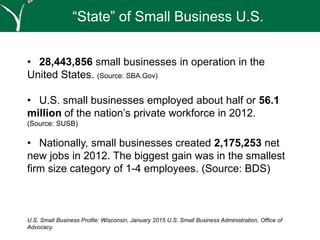
• 28,443,856 small businesses in operation in the
United States. (Source: SBA.Gov)
• U.S. small businesses employed about half or 56.1
million of the nation’s private workforce in 2012.
(Source: SUSB)
• Nationally, small businesses created 2,175,253 net
new jobs in 2012. The biggest gain was in the smallest
firm size category of 1-4 employees. (Source: BDS)
U.S. Small Business Profile: Wisconsin, January 2015 U.S. Small Business Administration, Office of
Advocacy
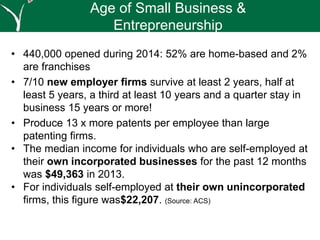
• 440,000 opened during 2014: 52% are home-based and 2%
are franchises
• 7/10 new employer firms survive at least 2 years, half at
least 5 years, a third at least 10 years and a quarter stay in
business 15 years or more!
• Produce 13 x more patents per employee than large
patenting firms.
• The median income for individuals who are self-employed at
their own incorporated businesses for the past 12 months
was $49,363 in 2013.
• For individuals self-employed at their own unincorporated
firms, this figure was$22,207. (Source: ACS)
Age of Small Business &
Entrepreneurship
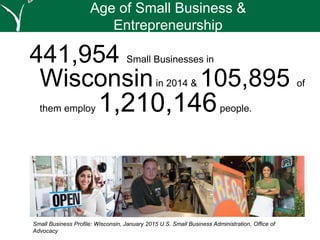
441,954 Small Businesses in
Wisconsinin 2014 & 105,895 of
them employ 1,210,146people.
Age of Small Business &
Entrepreneurship
Small Business Profile: Wisconsin, January 2015 U.S. Small Business Administration, Office of
Advocacy
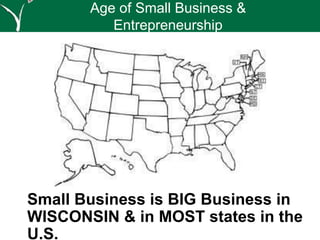
Small Business is BIG Business in
WISCONSIN & in MOST states in the
U.S.
Age of Small Business &
Entrepreneurship
Most of Wisconsin’s small businesses are very
small as 73.5 percent of all businesses did not
have employees and most employers have fewer
than 20 employees.
Small Business Profile: Wisconsin, January 2012 U.S. Small Business Administration, Office of
Advocacy
Age of Small Business &
Entrepreneurship
Entrepreneurs = Spark
“Once you build a successful business, you can do it over
and over; the principles remain the same”
Richard Branson
Age of Small Business &
Entrepreneurship
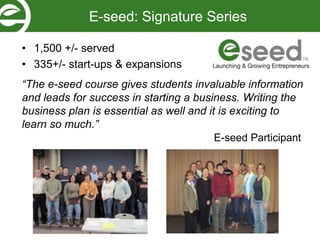
• 1,500 +/- served
• 335+/- start-ups & expansions
“The e-seed course gives students invaluable information
and leads for success in starting a business. Writing the
business plan is essential as well and it is exciting to
learn so much.”
E-seed Participant
E-seed: Signature Series
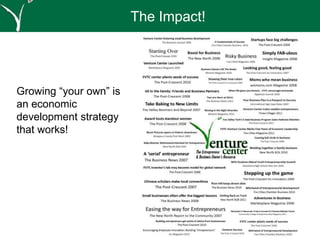
The Impact!
Growing “your own” is
an economic
development strategy
that works!
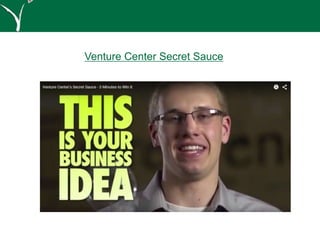
Venture Center Secret Sauce
1. Business Model
2. Business Plan
3. Team
+ 1. Resources
3 Critical Things...PLUS 1!
What characteristics and
skills do you think you need
to be successful launching
and growing a business?
What do you want this
business to
DO FOR or GIVE TO
your life?
ASK
Do I really want to make the
change and take the risks
associated with them to start my
own business?
Do I have the self-
discipline to operate
and manage my
own business?
ASK
ASK
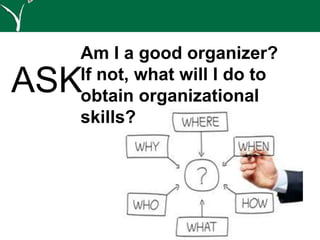
Am I a good organizer?
If not, what will I do to
obtain organizational
skills?
ASK
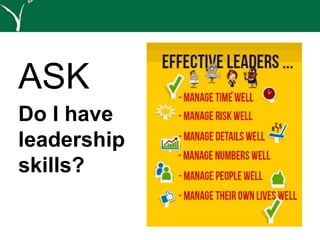
Do I have
leadership
skills?
ASK
Am I a
decision
maker?
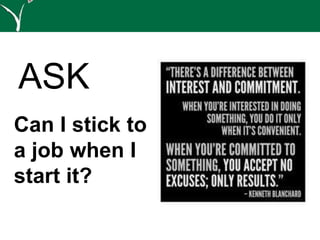
Can I stick to
a job when I
start it?
ASK
24
ASK
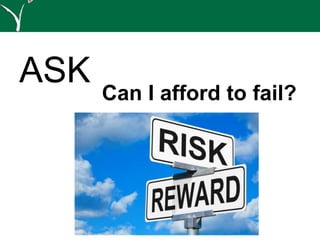
Can I afford to fail?
ASK
Exactly what products or
services will I sell?
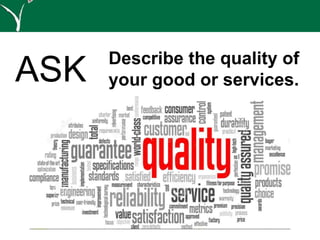
Describe the quality of
your good or services.ASK
ASK
Who are your potential
customers and why will they
buy from you?
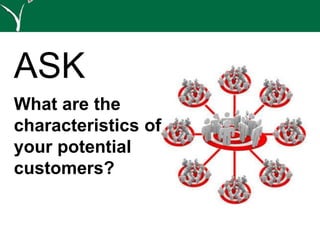
What are the
characteristics of
your potential
customers?
ASK
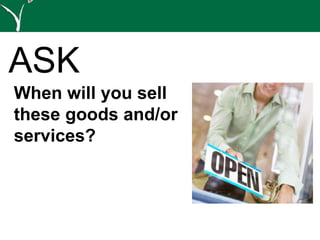
When will you sell
these goods and/or
services?
ASK
ASK
What is your
Competitive Advantage?
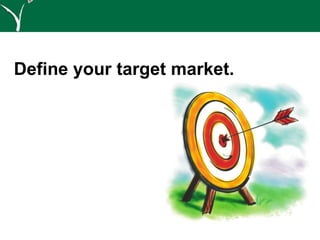
Define your target market.
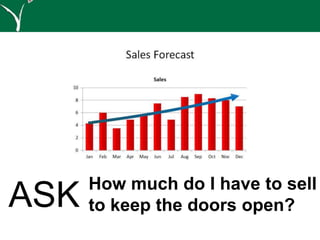
How much do I have to sell
to keep the doors open?ASK
Financial Considerations
20% of the total amount
or more…depending.
BREAK
Entrepreneurship is a discipline
and can be learned.
Business failure is due to
management’s lack of knowledge.
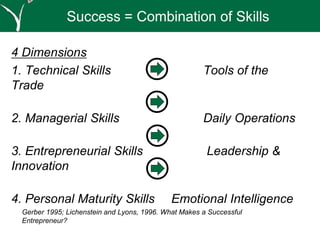
Success = Combination of Skills
Gerber 1995; Lichenstein and Lyons, 1996. What Makes a Successful
Entrepreneur?
4 Dimensions
1. Technical Skills Tools of the
Trade
2. Managerial Skills Daily Operations
3. Entrepreneurial Skills Leadership &
Innovation
4. Personal Maturity Skills Emotional Intelligence
How does your
company make
money?
What’s Your Business Model?
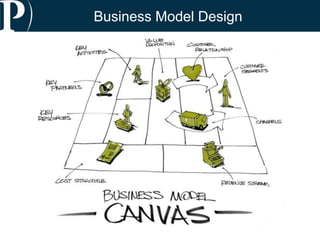
Business Model Design
Plan for Success
The Business Plan
Your
Roadmap
to Success
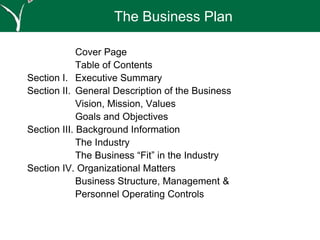
The Business Plan
Cover Page
Table of Contents
Section I. Executive Summary
Section II. General Description of the Business
Vision, Mission, Values
Goals and Objectives
Section III. Background Information
The Industry
The Business “Fit” in the Industry
Section IV. Organizational Matters
Business Structure, Management &
Personnel Operating Controls
The Business Plan
Section V. The Marketing Plan
A). The Market Analysis
Products/Services
Customer Segments/Target Market
Competitive Analysis and Advantage
B). Marketing Strategies w/ Budget
Section VI.The Financial Plan
3-yr. ProForma Financial Statements (Source &
Use, Startup & yr. end Balance Sheets, Profit &
Loss and Cash Flow)
Notes to Financial Projections
Appendix Section: Action Log & Supporting Documents
Accountant
Attorney
Bookkeeper
Financial Institution
Insurance
Marketing & Technology Support
Your TEAM
Show
Me
The
MONEY!
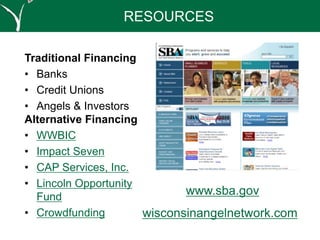
RESOURCES
Traditional Financing
• Banks
• Credit Unions
• Angels & Investors
Alternative Financing
• WWBIC
• Impact Seven
• CAP Services, Inc.
• Lincoln Opportunity
Fund
• Crowdfunding
www.sba.gov
RESOURCES
wisconsinangelnetwork.com
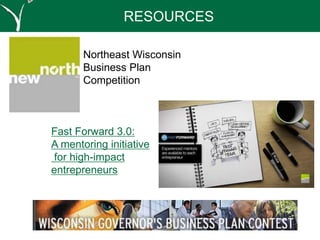
Northeast Wisconsin
Business Plan
Competition
Fast Forward 3.0:
A mentoring initiative
for high-impact
entrepreneurs
RESOURCES
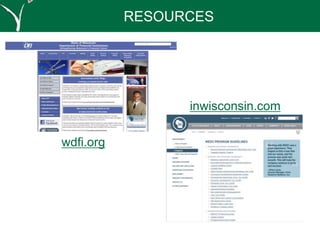
inwisconsin.com
RESOURCES
wdfi.org
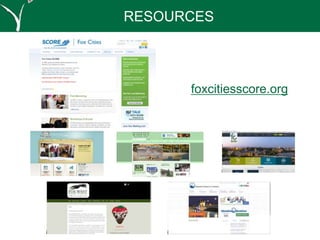
foxcitiesscore.org
RESOURCES
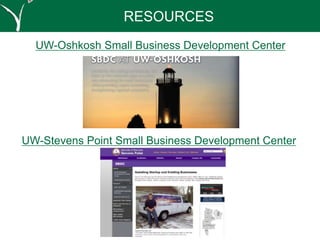
UW-Oshkosh Small Business Development Center
RESOURCES
UW-Stevens Point Small Business Development Center
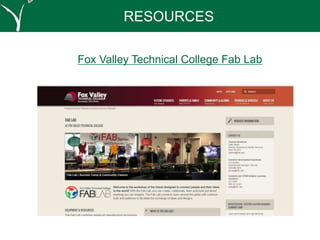
Fox Valley Technical College Fab Lab
RESOURCES
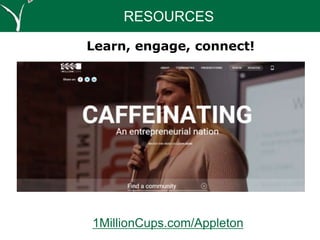
1MillionCups.com/Appleton
Learn, engage, connect!
RESOURCES
Market and Industry
RESEARCH RESOURCES
Census.gov
MyBestSegments
IBISWorld
Industry Trade Organizations
Local municipalities, economic development
organizations, etc.
PROCESS NOT the PLAN
The Business Plan
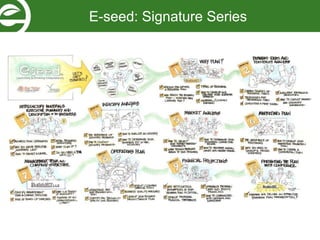
E-seed: Signature Series
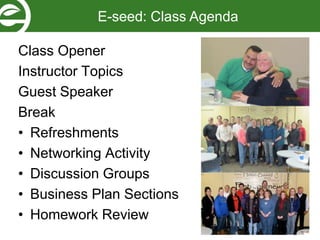
Class Opener
Instructor Topics
Guest Speaker
Break
• Refreshments
• Networking Activity
• Discussion Groups
• Business Plan Sections
• Homework Review
E-seed: Class Agenda
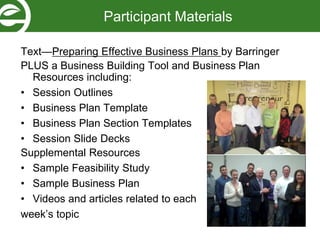
Text—Preparing Effective Business Plans by Barringer
PLUS a Business Building Tool and Business Plan
Resources including:
• Session Outlines
• Business Plan Template
• Business Plan Section Templates
• Session Slide Decks
Supplemental Resources
• Sample Feasibility Study
• Sample Business Plan
• Videos and articles related to each
week’s topic
Participant Materials
Discover. Launch. Impact.
7 Business Principles to Achieve
Creative & Financial Success:
1. Assessing your concept and idea(s)
2. Articulating your unique value
proposition
3. Focusing on your mission
4. Avoiding the time/money squeeze
5. Developing a business mindset
6. Understanding your customer
segments
7. Creating an everyday marketing plan
Not Ready for E-seed, Yet?
This two-day workshop is designed
to help artisan, encore,
independent contractors and solo
entrepreneurs identify their
business opportunities and develop
a value proposition.
Marketing Made Lean is a four-part, 16-hour marketing series for micro
and small businesses.
• Define your business purpose
• Connect with your vision
• Develop marketing channels
• Create customer relationship strategies
• Evaluate marketing ROI and strategy implementation
Increase Customers, Sales and Profits
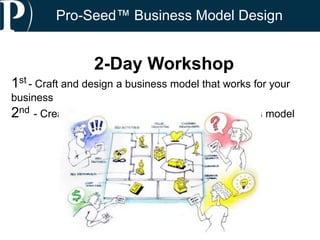
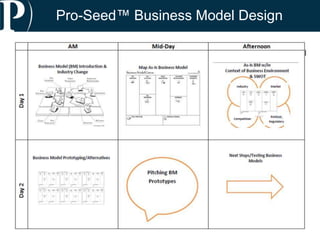
Pro-Seed™ Business Model Design
2-Day Workshop
1st - Craft and design a business model that works for your
business
2nd - Create a business plan to support the business model
Pro-Seed™ Business Model Design
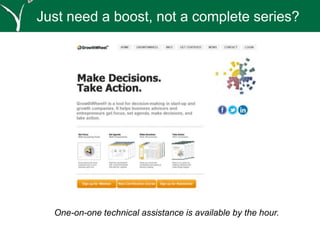
One-on-one technical assistance is available by the hour.
Just need a boost, not a complete series?
The critical things you MUST do
to launch and sustain a business.
• Improve the skill sets needed to run an entrepreneurial firm
or small business.
• Identify your business model and create a business plan.
• Select your Team.
• Determine your financial plan.
• Start selling ASAP!
Amy Pietsch, Director
Fox Valley Technical College Venture Center
920-735-2594
pietsch@fvtc.edu
www.fvtc.edu/venturecenter
www.twitter.com/venturecenterwi
www.twitter.com/1MillionCupsATW
www.facebook.com/venturecenter
Thank You!

Explore Starting Your Own Business

  • 1.
  • 2.
  • 3.
    Fox Valley TechnicalCollege Venture Center Background • Small Business courses offered at FVTC since the mid-80’s • FVTC launched E-seed™ Entrepreneurship Training Series with City of Appleton in 2000 • 2004 The FVTC Board of Trustees approves Strategic Initiative for full-blown entrepreneurship center • The Venture Center launched in September 2005 • fvtc.edu/VentureCenter
  • 4.
    FVTC Venture Center Vision:A model of innovation and distinction in entrepreneurship and small business education and training that helps improve lives and build economies. Mission: The FVTC Venture Center provides transformative entrepreneurship & small business education and training that support people’s goals, a skilled, entrepreneurial, workforce and the economic vitality of our communities .
  • 5.
    Entrepreneurship is... “A wayof thinking and acting that is opportunity - obsessed, holistic in approach and leadership balanced...for the purpose of wealth creation and capture.” Babson College FVTC Venture Center
  • 6.
    “State” of SmallBusiness U.S. • 28,443,856 small businesses in operation in the United States. (Source: SBA.Gov) • U.S. small businesses employed about half or 56.1 million of the nation’s private workforce in 2012. (Source: SUSB) • Nationally, small businesses created 2,175,253 net new jobs in 2012. The biggest gain was in the smallest firm size category of 1-4 employees. (Source: BDS) U.S. Small Business Profile: Wisconsin, January 2015 U.S. Small Business Administration, Office of Advocacy
  • 7.
    • 440,000 openedduring 2014: 52% are home-based and 2% are franchises • 7/10 new employer firms survive at least 2 years, half at least 5 years, a third at least 10 years and a quarter stay in business 15 years or more! • Produce 13 x more patents per employee than large patenting firms. • The median income for individuals who are self-employed at their own incorporated businesses for the past 12 months was $49,363 in 2013. • For individuals self-employed at their own unincorporated firms, this figure was$22,207. (Source: ACS) Age of Small Business & Entrepreneurship
  • 8.
    441,954 Small Businessesin Wisconsinin 2014 & 105,895 of them employ 1,210,146people. Age of Small Business & Entrepreneurship Small Business Profile: Wisconsin, January 2015 U.S. Small Business Administration, Office of Advocacy
  • 9.
    Small Business isBIG Business in WISCONSIN & in MOST states in the U.S. Age of Small Business & Entrepreneurship
  • 10.
    Most of Wisconsin’ssmall businesses are very small as 73.5 percent of all businesses did not have employees and most employers have fewer than 20 employees. Small Business Profile: Wisconsin, January 2012 U.S. Small Business Administration, Office of Advocacy Age of Small Business & Entrepreneurship
  • 11.
    Entrepreneurs = Spark “Onceyou build a successful business, you can do it over and over; the principles remain the same” Richard Branson Age of Small Business & Entrepreneurship
  • 12.
    • 1,500 +/-served • 335+/- start-ups & expansions “The e-seed course gives students invaluable information and leads for success in starting a business. Writing the business plan is essential as well and it is exciting to learn so much.” E-seed Participant E-seed: Signature Series
  • 13.
    The Impact! Growing “yourown” is an economic development strategy that works!
  • 14.
  • 15.
    1. Business Model 2.Business Plan 3. Team + 1. Resources 3 Critical Things...PLUS 1!
  • 16.
    What characteristics and skillsdo you think you need to be successful launching and growing a business?
  • 17.
    What do youwant this business to DO FOR or GIVE TO your life?
  • 18.
    ASK Do I reallywant to make the change and take the risks associated with them to start my own business?
  • 19.
    Do I havethe self- discipline to operate and manage my own business? ASK
  • 20.
    ASK Am I agood organizer? If not, what will I do to obtain organizational skills?
  • 21.
  • 22.
  • 23.
    Can I stickto a job when I start it? ASK
  • 24.
  • 25.
    ASK Exactly what productsor services will I sell?
  • 26.
    Describe the qualityof your good or services.ASK
  • 27.
    ASK Who are yourpotential customers and why will they buy from you?
  • 28.
    What are the characteristicsof your potential customers? ASK
  • 29.
    When will yousell these goods and/or services? ASK
  • 30.
  • 31.
  • 32.
    How much doI have to sell to keep the doors open?ASK
  • 33.
    Financial Considerations 20% ofthe total amount or more…depending.
  • 34.
  • 35.
    Entrepreneurship is adiscipline and can be learned.
  • 36.
    Business failure isdue to management’s lack of knowledge.
  • 37.
    Success = Combinationof Skills Gerber 1995; Lichenstein and Lyons, 1996. What Makes a Successful Entrepreneur? 4 Dimensions 1. Technical Skills Tools of the Trade 2. Managerial Skills Daily Operations 3. Entrepreneurial Skills Leadership & Innovation 4. Personal Maturity Skills Emotional Intelligence
  • 38.
    How does your companymake money? What’s Your Business Model?
  • 39.
  • 40.
  • 41.
  • 42.
    The Business Plan CoverPage Table of Contents Section I. Executive Summary Section II. General Description of the Business Vision, Mission, Values Goals and Objectives Section III. Background Information The Industry The Business “Fit” in the Industry Section IV. Organizational Matters Business Structure, Management & Personnel Operating Controls
  • 43.
    The Business Plan SectionV. The Marketing Plan A). The Market Analysis Products/Services Customer Segments/Target Market Competitive Analysis and Advantage B). Marketing Strategies w/ Budget Section VI.The Financial Plan 3-yr. ProForma Financial Statements (Source & Use, Startup & yr. end Balance Sheets, Profit & Loss and Cash Flow) Notes to Financial Projections Appendix Section: Action Log & Supporting Documents
  • 44.
  • 45.
  • 46.
    Traditional Financing • Banks •Credit Unions • Angels & Investors Alternative Financing • WWBIC • Impact Seven • CAP Services, Inc. • Lincoln Opportunity Fund • Crowdfunding www.sba.gov RESOURCES wisconsinangelnetwork.com
  • 47.
    Northeast Wisconsin Business Plan Competition FastForward 3.0: A mentoring initiative for high-impact entrepreneurs RESOURCES
  • 48.
  • 49.
  • 50.
    UW-Oshkosh Small BusinessDevelopment Center RESOURCES UW-Stevens Point Small Business Development Center
  • 51.
    Fox Valley TechnicalCollege Fab Lab RESOURCES
  • 52.
  • 53.
    Market and Industry RESEARCHRESOURCES Census.gov MyBestSegments IBISWorld Industry Trade Organizations Local municipalities, economic development organizations, etc.
  • 54.
    PROCESS NOT thePLAN The Business Plan
  • 55.
  • 56.
    Class Opener Instructor Topics GuestSpeaker Break • Refreshments • Networking Activity • Discussion Groups • Business Plan Sections • Homework Review E-seed: Class Agenda
  • 57.
    Text—Preparing Effective BusinessPlans by Barringer PLUS a Business Building Tool and Business Plan Resources including: • Session Outlines • Business Plan Template • Business Plan Section Templates • Session Slide Decks Supplemental Resources • Sample Feasibility Study • Sample Business Plan • Videos and articles related to each week’s topic Participant Materials
  • 58.
    Discover. Launch. Impact. 7Business Principles to Achieve Creative & Financial Success: 1. Assessing your concept and idea(s) 2. Articulating your unique value proposition 3. Focusing on your mission 4. Avoiding the time/money squeeze 5. Developing a business mindset 6. Understanding your customer segments 7. Creating an everyday marketing plan Not Ready for E-seed, Yet? This two-day workshop is designed to help artisan, encore, independent contractors and solo entrepreneurs identify their business opportunities and develop a value proposition.
  • 59.
    Marketing Made Leanis a four-part, 16-hour marketing series for micro and small businesses. • Define your business purpose • Connect with your vision • Develop marketing channels • Create customer relationship strategies • Evaluate marketing ROI and strategy implementation Increase Customers, Sales and Profits
  • 60.
    Pro-Seed™ Business ModelDesign 2-Day Workshop 1st - Craft and design a business model that works for your business 2nd - Create a business plan to support the business model
  • 61.
  • 62.
    One-on-one technical assistanceis available by the hour. Just need a boost, not a complete series?
  • 63.
    The critical thingsyou MUST do to launch and sustain a business. • Improve the skill sets needed to run an entrepreneurial firm or small business. • Identify your business model and create a business plan. • Select your Team. • Determine your financial plan. • Start selling ASAP!
  • 64.
    Amy Pietsch, Director FoxValley Technical College Venture Center 920-735-2594 pietsch@fvtc.edu www.fvtc.edu/venturecenter www.twitter.com/venturecenterwi www.twitter.com/1MillionCupsATW www.facebook.com/venturecenter Thank You!